
- Home
- »
- Medical Devices
- »
-
Thailand Aesthetic Health Market Size Report, 2026-2033GVR Report cover

Thailand Aesthetic Health Market (2026 - 2033)
Size, Share & Trends Analysis By Product (Devices, Injectables), By End-use (MedSpas, Aesthetic Surgery Centers), Consumer Behavior, Key Companies, Competitive Analysis, And Segment Forecasts
Market Size, 2025
$185.7MMarket Estimate, 2026
$207.6MMarket Forecast, 2033
$451.2MCAGR, 2026–2033
11.7%Thailand Aesthetic Health Market Summary
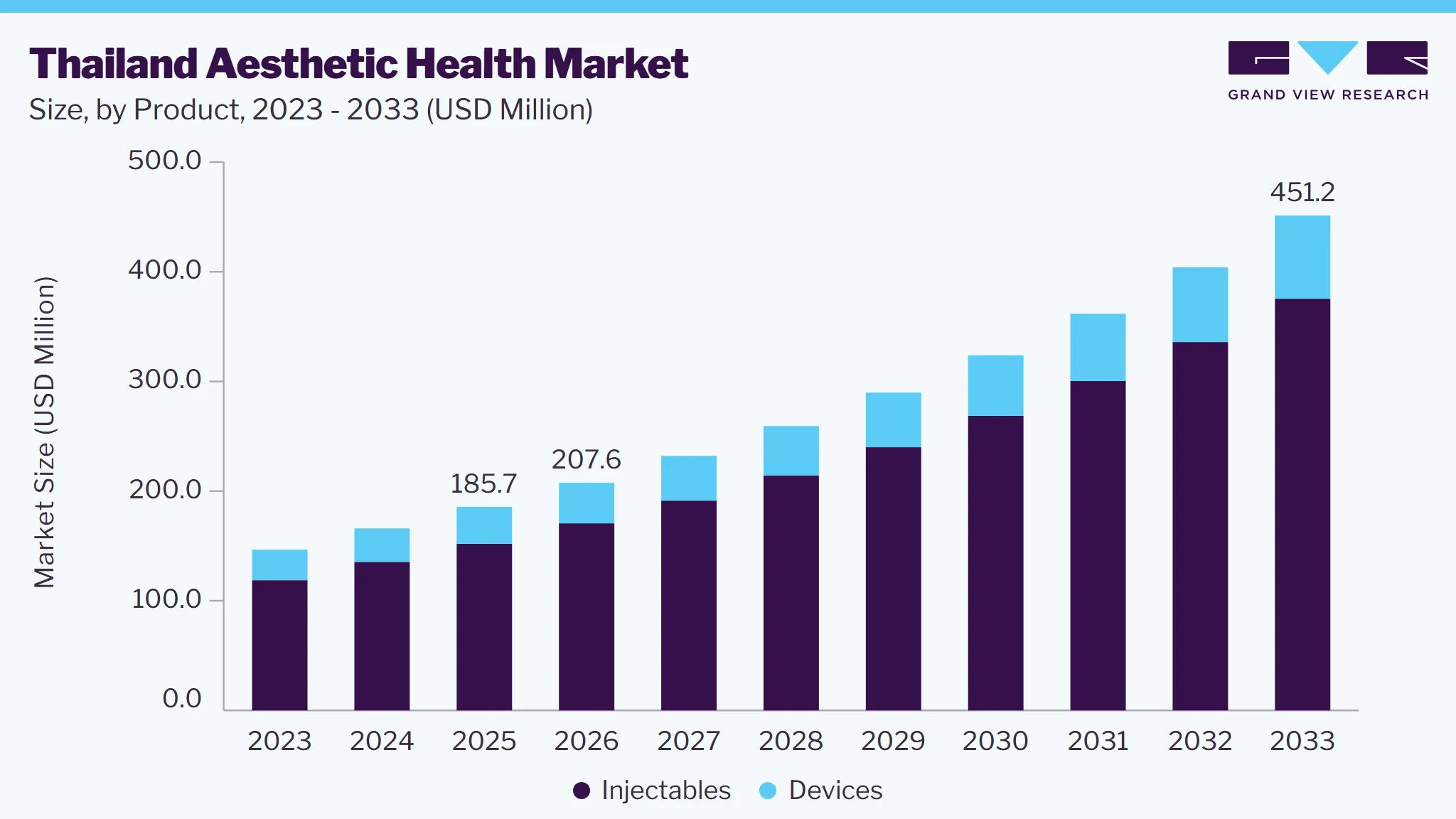
The Thailand aesthetic health market size was valued at USD 185.7 million in 2025 and is projected to grow from USD 207.6 million in 2026 to USD 451.2 million by 2033, at a CAGR of 11.7% from 2026 to 2033. The market is supported by strong demand for minimally invasive and non-surgical aesthetic procedures, particularly injectables, skin rejuvenation, laser treatments, and body-contouring procedures.
Key Market Trends & Insights
- By product: Injectables segment held the highest market share of 81.9% in 2025.
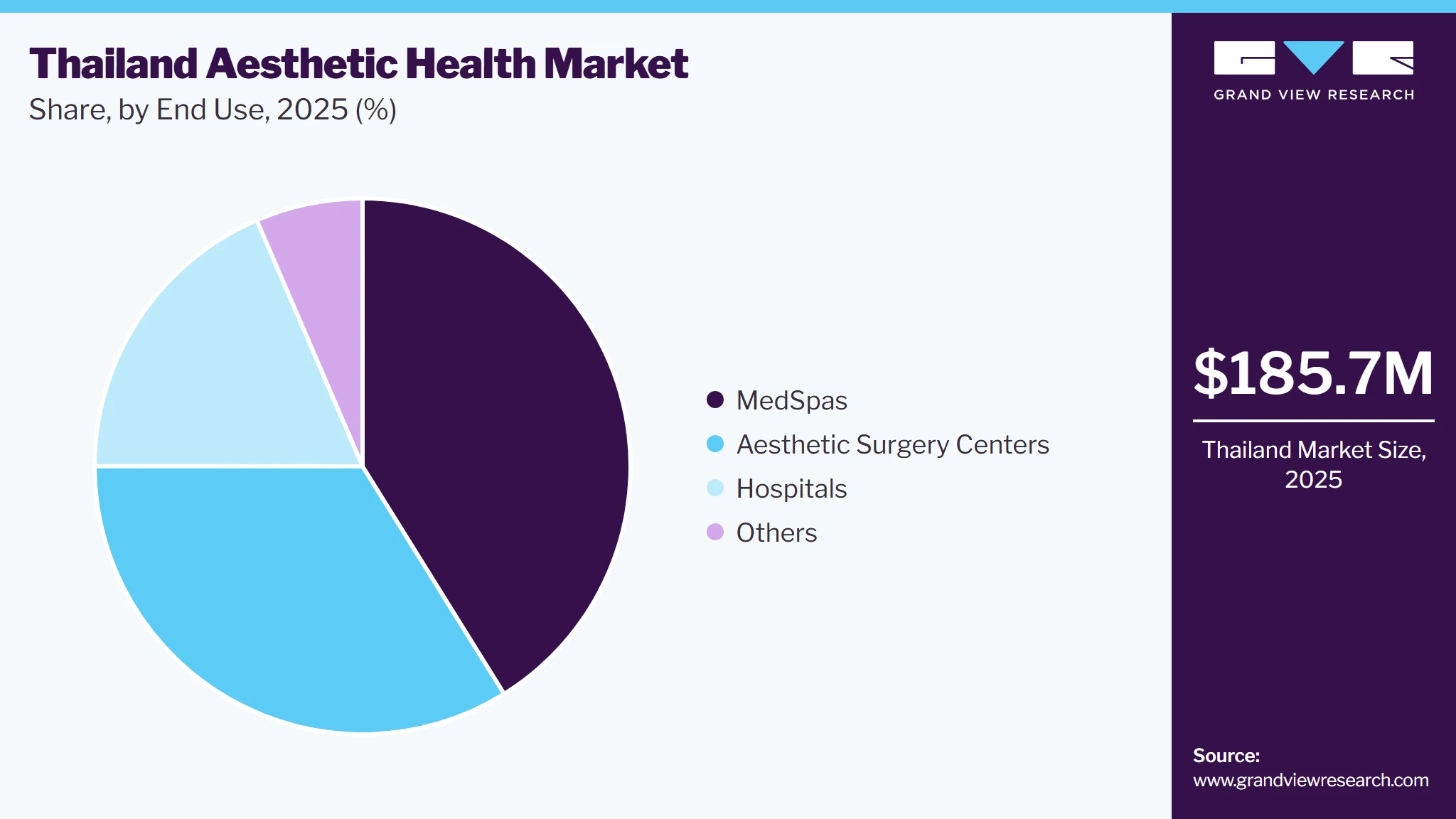
- By end use: Medspas segment held a leading market share of 41.1% in 2025.
Market Size & Forecast
- Market size in 2025: USD 185.7 million
- Estimated market size in 2026: USD 207.6 million
- Projected market size by 2033: USD 451.2 million
- CAGR (2026-2033): 11.7%
Three ways to get this report
Buy it, customize it, or ask a question.Ask an Analyst
A direct answer, usually in 1 working day
- AccessReport author, directly
- Reply timeWithin 1 working day
- No sales callDirect answer only
- FormatEmail reply
- CostFree, no cost
Get the Full Report
What the study covers
- FormatsPDF · Excel · Dashboard
- Timeline2026–2033 annual, 2025 base
- Coverage20+ countries, 5 regions
- Companies10+ key players profiled
Customize the Report
20% free customization
- IncludeCountries, segments, points
- TailorTo your product definition
- ExtendDeeper competitor detail
- OrA fully bespoke study
- Turnaround5–10 working days
 Source: Grand View Research, IR Documents, Primary Interviews, Paid DatabasesTo learn more about this report,
 Download Free Sample Report
Consumers are increasingly seeking treatments that deliver visible improvements with minimal downtime and can be incorporated into their regular work and social routines. Thailand's established network of aesthetic clinics, dermatology centers, medical spas, and specialized providers gives consumers broad access to these procedures, while the country's reputation for healthcare and beauty services also attracts international patients. The Tourism Authority of Thailand has actively promoted the country as a health and wellness destination, with medical, health, and wellness visitors representing 1.5% of international arrivals and generating an average spending of USD 3,040.6 (THB 100,259) per trip, supporting the wider ecosystem for elective aesthetic services.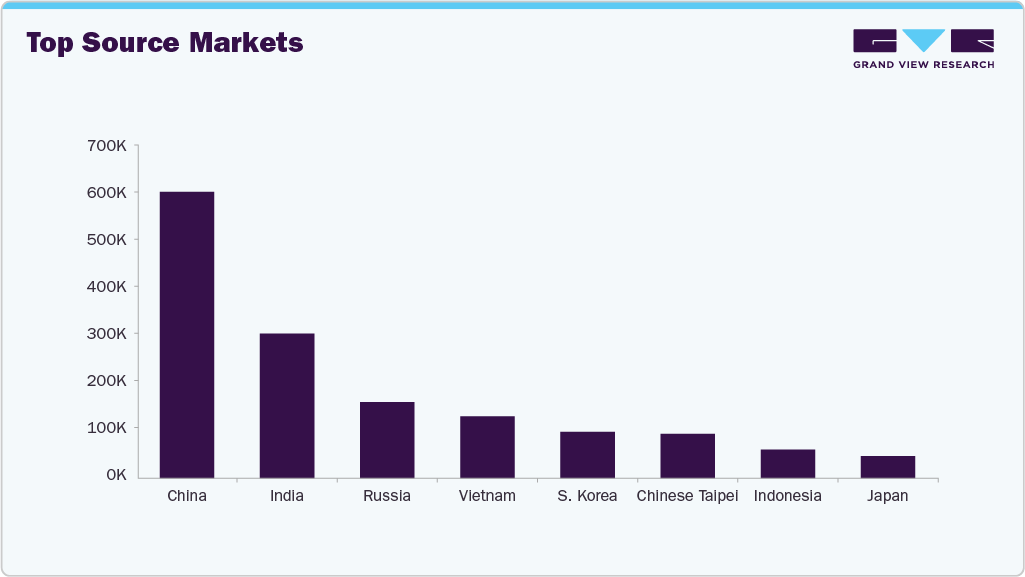 To learn more about this report, Download Free Sample Report
 Medical and beauty tourism is expected to remain an important growth driver, particularly for premium clinics and facilities offering multiple aesthetic procedures. Thailand's combination of experienced aesthetic practitioners, established private healthcare infrastructure, international connectivity, and tourism services allows international consumers to combine aesthetic treatment with travel and wellness activities. At the same time, domestic demand is supported by growing interest in appearance maintenance, facial aesthetics, skin quality, and minimally invasive procedures.
Recent industry activity demonstrates continued investment in Thailand. For instance, in May 2026, Samyang Biopharm officially launched its polymer-based dermal filler, Lafullen, in Thailand, marking the company's entry into the country's market and introducing another filler option for Thai physicians. Similarly, Galderma opened a Bangkok office in 2026 and announced plans to strengthen its local presence and partnerships with aesthetic clinics, indicating continued investment by major international aesthetics companies in Thailand.
Market Dynamics
The market is experiencing steady growth, driven by a growing consumer focus on physical appearance, rising demand for minimally invasive aesthetic procedures, expanding aesthetic clinic networks, increasing medical tourism, and increasing adoption of advanced aesthetic technologies. The market encompasses a broad range of non-invasive, minimally invasive, and surgical aesthetic procedures, including botulinum toxin injections, dermal fillers, skin rejuvenation, laser treatments, hair removal, body contouring, skin tightening, thread lifting, and cosmetic surgery. Thailand's established healthcare infrastructure and reputation as a medical-tourism destination further support demand from both domestic and international patients.
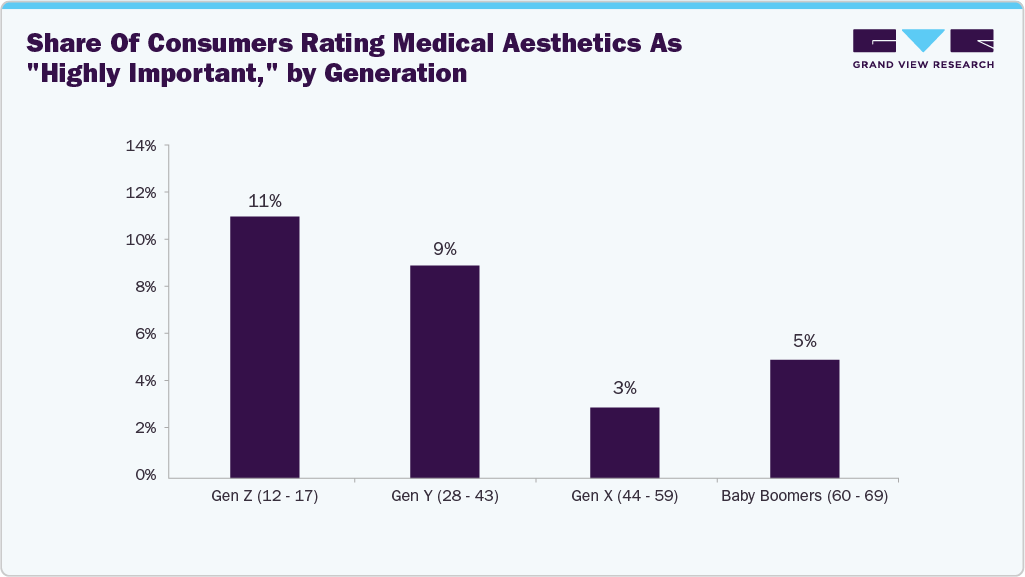
The growing interest in aesthetic treatments among younger consumers is becoming an important market driver. Younger adults are increasingly seeking treatments at earlier stages to maintain skin quality, prevent visible signs of aging, and improve facial appearance, rather than waiting for pronounced signs of aging to develop. Social media, beauty-focused digital content, and greater awareness of aesthetic procedures are encouraging consumers to consider preventive and maintenance-oriented treatments, including skin rejuvenation, laser treatments, facial injectables, and skin-tightening procedures. This shift is also increasing demand for treatments with minimal downtime and natural-looking results, encouraging aesthetic clinics to develop younger-focused treatment packages and long-term skin-maintenance programs.
 To learn more about this report, Download Free Sample Report
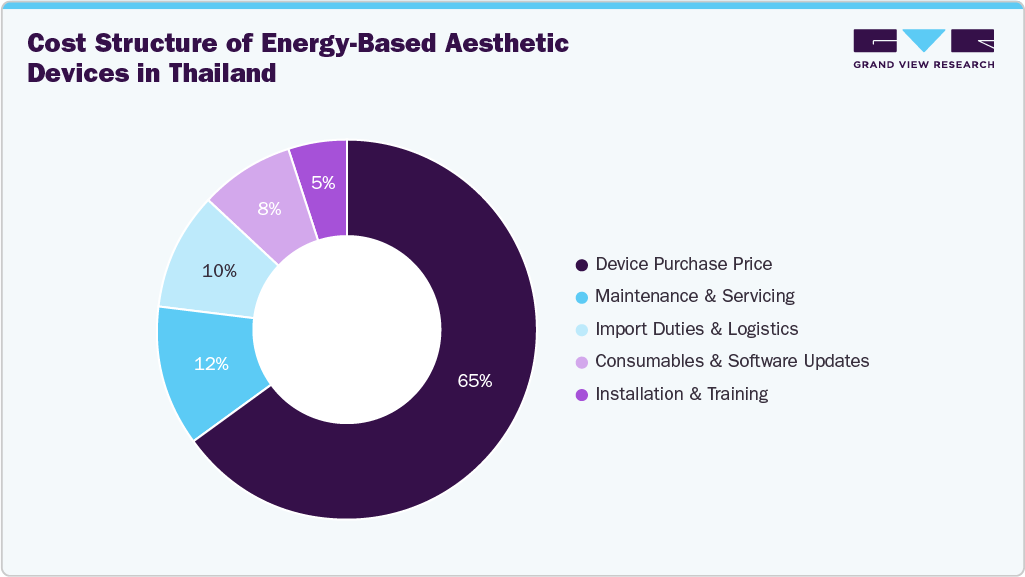
 High capital and maintenance costs for advanced aesthetic devices and treatment equipment can limit their adoption among smaller clinics and independent aesthetic centers in Thailand. Technologies such as lasers, radiofrequency, HIFU, and other energy-based systems require significant upfront investment, as well as ongoing expenses for maintenance, consumables, software updates, and staff training. These costs can make it difficult for smaller providers to introduce advanced treatments or regularly upgrade their equipment, particularly when they also face strong price competition.
 To learn more about this report, Download Free Sample Report
 As a result, the availability of advanced aesthetic procedures may remain concentrated among large hospitals, established aesthetic clinic chains, and premium providers, limiting broader market penetration.
Market Concentration & Characteristics
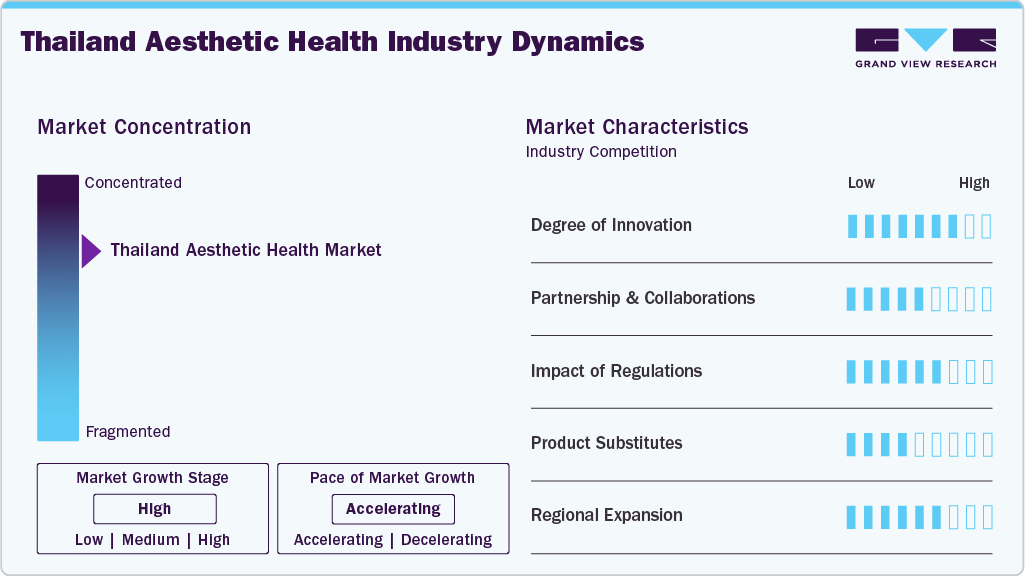
Thailand aesthetic health industry is highly competitive and relatively fragmented, with established hospitals, dermatology clinics, aesthetic centers, medical spas, and specialized cosmetic surgery providers competing across a broad range of minimally invasive and non-invasive procedures. Market participants offer diverse portfolios spanning botulinum toxin and dermal fillers, laser and light-based treatments, radiofrequency and HIFU technologies, skin rejuvenation, hair removal, body contouring, and cosmetic surgery.
Competition is increasingly driven by the adoption of advanced aesthetic technologies, treatment personalization, physician expertise, competitive pricing, brand reputation, and patient experience. Providers are expanding their treatment portfolios toward combination therapies, premium injectables, energy-based procedures, and technology-enabled treatment planning to differentiate their services. The market is further influenced by Thailand's established medical-tourism ecosystem, with international patients contributing to demand for cosmetic and aesthetic procedures.
 To learn more about this report, Download Free Sample Report
 Thailand aesthetic health industry is characterized by a high degree of innovation, supported by the continuous introduction of advanced energy-based devices, injectables, skin-rejuvenation technologies, and treatment platforms. Aesthetic providers are increasingly adopting technologies such as Pico lasers, HIFU, radiofrequency, advanced skin-tightening systems, and combination treatment platforms to improve treatment precision, patient comfort, and clinical outcomes. For example, Thailand's FDA has specifically recognized Pico Laser as a medical device used for pigmentation treatment, tattoo removal, and collagen stimulation, while requiring appropriate registration and professional use.
Thailand aesthetic health industry is witnessing increasing collaborations among aesthetic clinics, medical device companies, international aesthetic groups, distributors, and research institutions, with partnerships increasingly focused on expanding advanced aesthetic treatments, strengthening clinical capabilities, improving practitioner training, and introducing international treatment protocols. These collaborations are helping local clinics access advanced technologies while enabling international companies to establish stronger distribution, clinical, and service networks in Thailand. For instance, SBC Medical Group entered into a consulting partnership with Thailand-based BLEZ ASIA in November 2025, supporting the development of a dermatology-focused aesthetic clinic in Bangkok through clinical protocol development, medical-device selection, and management expertise; the collaboration subsequently supported the launch of a dedicated pico-laser aesthetic dermatology section in May 2026.
Thailand aesthetic health industry operates under a regulatory framework overseen primarily by the Thai Food and Drug Administration (Thai FDA), with requirements varying according to whether an aesthetic product is classified as a medical device, cosmetic, or pharmaceutical product. Aesthetic medical devices, such as energy-based devices, implants, and certain injectable products, are subject to risk-based medical device requirements, with Thailand using Class 1 to Class 4 risk classifications aligned with the ASEAN Medical Device Directive; manufacturers and importers must obtain the applicable listing, notification, or license before commercial distribution. Injectable hyaluronic acid dermal fillers are specifically included among medical devices that require permission for sale, thereby increasing regulatory oversight of injectable aesthetic products. Cosmetic products, including skincare products used in aesthetic settings, generally require notification to the Thai FDA before manufacture or import for sale and must comply with requirements covering product information, ingredients, labeling, and safety.
The market faces moderate competition from non-invasive, minimally invasive, and non-procedural alternatives that can reduce demand for more intensive aesthetic procedures among patients seeking lower downtime, fewer injections, or gradual improvements. Depending on the treatment objective, substitutes include topical skincare and cosmeceutical products, chemical peels, facial treatments, and lifestyle or wellness-based approaches. The growing availability of combination and “treatment stacking” approaches is also increasing substitution and complementarity among individual aesthetic modalities, as consumers can combine different energy-based treatments and injectable therapies to address specific skin concerns rather than undergoing a single intensive procedure.
The market is experiencing steady regional expansion beyond Bangkok as aesthetic clinics, hospitals, and wellness providers increasingly establish or strengthen their presence in major medical-tourism destinations such as Phuket, Pattaya, Chiang Mai, and other provincial markets. This expansion is supported by rising domestic demand, medical tourism, improving private healthcare infrastructure, and growing consumer interest in aesthetic and wellness services. Thailand had more than 6,600 government-registered aesthetic clinics, with a substantial number located outside Bangkok, indicating a broadening provider base across the country. As a result, regional expansion is enabling aesthetic providers to reach international tourists and affluent local consumers beyond Bangkok while supporting Thailand's broader positioning as a medical-aesthetic and wellness destination.
Analyst Perspective
The market represents an established segment of the country’s aesthetic medicine and cosmetic procedure landscape, supported by demand for both surgical and non-surgical treatments. The procedure mix includes facial aesthetic procedures, breast and body procedures, injectables, skin rejuvenation, hair removal, skin tightening, and non-surgical body-contouring treatments. Demand is supported by the growing adoption of minimally invasive, non-surgical aesthetic treatments, particularly injectable and energy-based procedures. The market is also supported by the broadening range of aesthetic treatment options available to consumers, spanning facial rejuvenation, body contouring, laser-based treatments, injectables, and surgical procedures.
Product Insights
The injectables segment dominated the market, accounting for the largest share of 81.9% in 2025, and is expected to witness the fastest CAGR of 11.9% over the forecast period. The growth is attributed to the high suitability of injectable procedures for Thailand's clinic-based aesthetic ecosystem. Botulinum toxin, hyaluronic acid dermal fillers, skin boosters, and biostimulators are increasingly attractive because they provide visible facial rejuvenation and contouring with relatively short treatment sessions, limited downtime, and the ability to repeat or combine treatments according to individual aesthetic goals. The repeat-treatment nature of these products is another important growth factor, as their effects generally require maintenance, generating recurring patient visits and supporting stable treatment volumes for aesthetic clinics.
The devices segment is expected to witness a significant CAGR over the forecast period. The growth is driven by increasing adoption of laser, intense pulsed light (IPL), radiofrequency (RF), ultrasound/HIFU, body-contouring, and other energy-based aesthetic technologies for skin rejuvenation, pigmentation, hair removal, skin tightening, acne treatment, and body shaping. Devices are particularly attractive to Thai aesthetic clinics because they enable multiple treatment indications from a single platform, allowing providers to develop combination treatment programs and generate recurring visits while offering consumers non-invasive or minimally invasive alternatives to surgery and injectables. Demand is further supported by Thailand's positioning as a health, beauty, and wellness destination, with the Tourism Authority actively promoting Thai medical and beauty services to international travelers.
End Use Insights
The medspas segment dominated the market, accounted for the largest revenue share in 2025, and is expected to witness the fastest CAGR over the forecast period. The growth is driven by consumers' preference for convenient, specialized, and minimally invasive aesthetic care outside traditional hospital settings. Medspas offer multiple treatments, including botulinum toxin, dermal fillers, biostimulators, skin rejuvenation, laser, and body-contouring procedures, in a single setting, enabling patients to receive personalized treatment plans with shorter appointment times, limited downtime, greater privacy, and easier access to routine follow-up and maintenance treatments. Thailand's strong healthcare and tourism ecosystem provides medspas with access to both domestic consumers and international patients, particularly in major destinations such as Bangkok, Phuket, and other tourism hubs.
 To learn more about this report, Download Free Sample Report
 The aesthetic surgery centers segment is expected to witness significant CAGR over the forecast period, driven by consumers seeking specialized facilities for more complex and comprehensive aesthetic procedures that require dedicated surgical infrastructure, experienced aesthetic surgeons, anesthesia support, and postoperative monitoring. Compared with other facilities, aesthetic surgery centers are better equipped to perform procedures such as facelift, rhinoplasty, blepharoplasty, breast augmentation, liposuction, and other surgical body-contouring procedures, while providing consultation, procedure, recovery, and follow-up services within a dedicated setting. In Thailand, the availability of specialized aesthetic surgery centers, particularly in major urban and medical-tourism destinations, also makes these facilities attractive to patients seeking surgeon-led care, advanced operating facilities, privacy, comprehensive treatment planning, and coordinated postoperative care.
Key Thailand Aesthetic Health Company Insights
The market is highly competitive, with established global aesthetic technology companies, injectable manufacturers, local distributors, aesthetic clinics, and hospitals competing across facial aesthetics, skin rejuvenation, body contouring, hair removal, skin tightening, and other aesthetic procedures. Key participants are expanding their presence through advanced laser and light-based platforms, radiofrequency and ultrasound technologies, injectables, skin boosters, and multi-modality aesthetic systems to address growing demand for minimally invasive and personalized treatments.
Key Thailand Aesthetic Health Companies
The following key companies have been profiled for this study on the Thailand aesthetic health market:
-
Candela Corporation
-
Sisram Medical (Alma Lasers)
-
Wingderm Electro-optics, Ltd.
-
WON TECH Co,
-
Ipsen
-
Medytox.
-
Merz GmbH and Co. KGaA
-
Cynosure Lutronic
-
Galderma
-
Sinclair
-
Prollenium Medical Technologies
-
Tiger Aesthetics Medical (Suneva Medical, Inc.)
-
HUGEL, Inc.
-
Teoxane
Competitive Benchmarking
Category
Operating Strategies
Competitive Edge
Weakness
Established Players (Galderma, AbbVie / Allergan Aesthetics, Merz Aesthetics, Candela Corporation, Sisram Medical (Alma Lasers))
- Expand premium aesthetic portfolios covering injectables, energy-based devices, skin rejuvenation, body contouring, and anti-aging treatments to address diverse consumer needs.
- Strengthen partnerships with aesthetic clinics, hospitals, distributors, and physicians to expand product availability and reinforce physician adoption across Thailand.
- Strong international brand recognition, established physician networks, and broad product portfolios provide an advantage in Thailand's highly competitive aesthetic environment.
- Advanced injectables and energy-based technologies, combined with clinical evidence, physician training, and product innovation, support premium positioning.
- Premium product pricing and treatment costs can limit adoption among price-sensitive consumers and smaller aesthetic clinics.
- Dependence on regulatory approvals, local distributors, and physician adoption can increase commercialization timelines and operating complexity.
Emerging Players (Cynosure Lutronic, Hugel, Medytox, WONTECH, Classys)
- Focus on differentiated, minimally invasive, and cost-effective aesthetic technologies, particularly laser, energy-based devices, injectables, and skin-rejuvenation solutions.
- Build partnerships with local distributors, aesthetic clinics, and physicians to accelerate market entry and expand geographic coverage beyond Bangkok.
- Faster product innovation and specialized technologies allow emerging players to target high-growth niches such as skin tightening, resurfacing, body contouring, and facial aesthetics.
- Competitive pricing and flexible commercialization models can make products attractive to independent clinics and mid-sized aesthetic centers.
- Lower brand recognition and smaller physician networks than those of established global aesthetic companies can limit adoption in premium clinics.
- Dependence on local distributors and regulatory registration may slow product launches and geographic expansion.
Recent Development
-
In May 2026, Samyang Biopharm launched Lafullen, its polymer-based dermal filler in Thailand, marking the company's entry into the country's aesthetic medicine market. The Bangkok launch event introduced the PCL-based filler to approximately 150 physicians, with the company planning further commercialization and physician education activities in Thailand.
-
In June 2025, Wingderm participated in IMCAS Asia in Bangkok, showcasing advanced medical aesthetic devices such as Mesoskin, Lasermach, and Renuva. The event focused on Asia’s growing market and enabled Wingderm to align with trends, gain practitioner insights, and strengthen local partnerships for strategic expansion.
Thailand Aesthetic Health Market Report Scope
Report Attribute
Details
Market size in 2025
USD 185.7 million
Estimated market size in 2026
USD 207.6 million
Projected market size by 2033
USD 451.2 million
Growth rate
CAGR of 11.7% from 2026 to 2033
Historical data
2021 - 2025
Forecast period
2026 - 2033
Quantitative units
Revenue in USD million and CAGR from 2026 to 2033
Report coverage
Revenue forecast, company ranking, competitive landscape, growth factors, and trends
Segments covered
Product, end use
Country scope
Thailand
Key companies profiled
Candela Corporation; Sisram Medical (Alma Lasers); Wingderm Electro-optics Ltd.; Ipsen; Medytox.; Merz GmbH and Co. KGaA; Cynosure Lutronic; WON TECH Co,; Galderma; Sinclair; Prollenium Medical Technologies; Tiger Aesthetics Medical (Suneva Medical, Inc.); HUGEL, Inc.; Teoxane
Customization scope
Free report customization (equivalent up to 8 analyst’s working days) with purchase. Addition or alteration to country, regional, and segment scope
Pricing and purchase options
Avail customized purchase options to meet your exact research needs. Explore purchase options
Thailand Aesthetic Health Market Report Segmentation
This report forecasts revenue growth and provides an analysis of the latest industry trends in each of the sub-segments from 2021 to 2033. For this study, Grand View Research has segmented the Thailand aesthetic health market report based on product, and end use:
-
Product Outlook (Revenue, USD Million, 2021 - 2033)
-
Device
-
Medical Laser-based Devices
-
Light-based Devices / IPL
-
Radiofrequency (RF)-based Devices
-
Ultrasound-based Devices
-
Microneedling Devices
-
Microdermabrasion Devices
-
Other Aesthetic Devices
-
-
Injectables
-
Botulinum Toxin
-
Dermal Fillers
-
Hyaluronic Acid - Monophasic
-
Hyaluronic Acid - Biphasic
-
Collagen & PMMA-based Fillers
-
-
Biostimulators
-
Calcium Hydroxylapatite (CaHA)
-
Poly-L-Lactic Acid (PLLA)
-
Polycaprolactone (PCL)
-
-
Bioregenerative / Other Injectables
-
PN/PDRN
-
PDRN
-
PN Injectables
-
-
-
-
End Use Outlook (Revenue, USD Million, 2021 - 2033)
-
MedSpas
-
Aesthetic Surgery Centers
-
Hospitals
-
Others
-
Research Methodolog
The Thailand aesthetic health market figures in this report are based on a proven research process that combines executive interviews with secondary research from proprietary databases, company filings, and recognized regulatory and institutional sources. Market size is built through value-chain sizing-reconciling supply-side and demand-side estimates-and triangulated with bottom-up and top-down approaches. Every estimate passes multiple levels of expert validation before publication, with each Thailand aesthetic health segment quantified using the revenue-capture definitions in the table below.
Segment Definition
Segment - Product
Revenue capture definition
Device
Revenue is generated through the capital procurement, leasing, and commercial distribution of energy-based aesthetic systems and body-contouring hardware to healthcare providers across Thailand. Manufacturers and regional distributors derive income from high-value upfront equipment sales, recurring orders for specialized treatment tips or handpieces, software licenses, dynamic cooling consumables, and long-term technical maintenance service contracts.
Injectables
Revenue flows from the high-volume sale of pre-filled dermal fillers, neurotoxins, biostimulators, mesotherapy solutions, and tissue-regenerative matrices. Pharmaceutical suppliers and authorized aesthetic distributors capture revenue through direct-to-clinic product sales, multi-syringe or multi-vial clinic bulk packages, and recurring re-orders driven by Thailand's high procedural volume and short patient re-treatment cycles.
Segment -End Use
Revenue capture definition
MedSpas
Revenue is generated through high-throughput commercial sales, corporate franchise supply agreements, and rapid-turnaround aesthetic inventory replenishment. Manufacturers and distributors monetize this expanding segment by supplying user-friendly, low-downtime energy devices, non-surgical body-shaping workstations, and popular regenerative skin-booster injectables tailored to Thailand's fast-growing urban lifestyle and domestic consumer demographic.
Aesthetic Surgery Centers
Revenue flows via specialized surgical procurement channels and direct-to-physician accounts. Product suppliers capture high-margin revenue through premium structural injectables, surgical-grade energy devices used for intraoperative skin tightening, and post-operative recovery or scar-management products utilized by plastic surgeons executing complex cosmetic procedures.
Hospitals
Revenue is captured through formal institutional procurement systems, public and private hospital tenders, and rigid medical supply contracts across Thailand’s major private hospital networks. Value is generated via large-scale capital hardware installations, hospital-wide consumable fulfillment agreements, and specialized medical-grade aesthetic products integrated into comprehensive dermatological and reconstructive care units.
Others
Revenue is generated through secondary or specialized service providers, including independent boutique medical clinics, standalone dermatology suites, academic aesthetic training centers, and luxury wellness or medical tourism resorts. Income is captured through direct-to-practitioner sales, specialized training kit purchases, and boutique wholesale agreements for niche regenerative and anti-aging product formulations.
Estimation Model
Methodology Stage
Key Question
Process Steps
Data Sources
Scope Definition
What aesthetic treatments and products are included in the Thailand market being sized?
1. Define aesthetic treatment categories
2. Segment by treatment and end user
3. Establish Thailand geographic scope
4. Establish geographic, temporal, and utilization scopePrimary & Secondary: Field research, Department of Health Service Support, Thai Customs, professional associations
Build the Product Base
How many aesthetic treatment providers, patients, and annual treatment procedures are there in Thailand?
1. Identify aesthetic treatment providers
2. Estimate active practitioners and facilities
3. Define the addressable patient base
4. Estimate treatment capacityPrimary & Secondary: Department of Health Service Support, Thai FDA, Medical Council / National sources
Estimate Penetration
How frequently are aesthetic treatments performed, and what share of the addressable population receives treatment?
1. Estimate treatment penetration
2. Determine treatments per patient
3. Assess provider utilization
4. Validate procedure volumesPrimary: Interviews with dermatologists, plastic surgeons, aesthetic physicians, clinic operators
Revenue Conversion
What is the monetary value of aesthetic treatments performed in Thailand?
1. Collect treatment ASPs
2. Calculate volume × ASP
3. Include repeat treatments and consultations
4. Cross-check with sales and import dataPrimary & Secondary: Hospital/clinic price schedules, manufacturer price catalogs, distributor pricing, Thai Customs
Delivered Customizations
Client Request
Customization Delivered
Value Adds
Competitive Analysis
Conducted a comprehensive competitive landscape assessment of Thailand's aesthetic market, covering aesthetic clinics, hospitals, dermatology centers, cosmetic surgery facilities, and medical aesthetic chains. The analysis evaluated key players based on treatment portfolios, including injectables, energy-based devices, body contouring, skin rejuvenation, hair removal, and facial aesthetics. It assessed pricing strategies, product availability, distribution networks, physician adoption, brand positioning, technology differentiation, international partnerships, and clinic expansion strategies. The analysis also considered the growing role of medical tourism and premium aesthetic services in Thailand.
Enables stakeholders to understand competitive intensity, positioning strategies, pricing differences, and treatment portfolio gaps within Thailand's aesthetic ecosystem. The analysis supports competitor benchmarking, product positioning, channel expansion, partnership identification, and investment prioritization. It also helps companies identify opportunities arising from premium treatments, medical tourism, clinic chains, and increasing demand for advanced aesthetic technologies.
Market Dynamics Analysis
Conducted a detailed assessment of the key factors shaping Thailand's aesthetic market, including rising consumer interest in appearance enhancement, increasing acceptance of minimally invasive procedures, growth of aesthetic clinics, medical tourism, social-media-driven beauty trends, and greater availability of advanced aesthetic technologies. The analysis also evaluated economic factors such as consumer purchasing power, discretionary healthcare spending, tourism activity, inflation, healthcare expenditure, and pricing sensitivity. Supply-side factors, including physician availability, technology adoption, product imports, distributor networks, and competition among clinics, were also assessed.
Helps stakeholders identify the major growth drivers, restraints, opportunities, and demand-side shifts influencing Thailand's aesthetic market. The analysis supports pricing strategies, treatment portfolio optimization, geographic expansion, product localization, and channel planning. It also enables companies to assess how economic conditions, tourism trends, consumer spending, and changing beauty preferences may influence demand for aesthetic procedures.
PESTEL Analysis
Conducted a Thailand-specific PESTEL assessment covering political, economic, social, technological, environmental, and legal factors affecting the aesthetic market. The analysis evaluated healthcare and medical-device regulations, import requirements, economic and tourism conditions, disposable income and consumer spending, changing beauty preferences, aging demographics, social-media influence, adoption of advanced aesthetic technologies, digital clinic platforms, sustainability considerations, and regulatory requirements for aesthetic devices, injectables, and cosmetic procedures.
Enables stakeholders to evaluate the external factors that can influence market development, investment decisions, commercialization, and operational risks in Thailand. The assessment helps organizations anticipate regulatory changes, economic fluctuations, consumer behavior shifts, technology adoption patterns, import-related challenges, and sustainability requirements while developing market-entry and expansion strategies.
Frequently Asked Questions About This Report
The Thailand aesthetic health market size was valued at USD 185.7 million in 2025 and is estimated at USD 207.6 million in 2026.
The Thailand aesthetic health market is expected to grow at a CAGR of 11.7% from 2026 to 2033, reaching USD 451.2 million by 2033.
By Product, the injectables segment held the highest market share of 81.9% in 2025.
The market is supported by strong demand for minimally invasive and non-surgical aesthetic procedures, particularly injectables, skin rejuvenation, laser treatments, and body-contouring procedures. Consumers are increasingly seeking treatments that provide visible improvements with limited downtime and can be incorporated into regular work and social routines.
Some key players operating in market includes Candela Corporation; Sisram Medical (Alma Lasers); Wingderm Electro-optics Ltd.; Ipsen; Medytox.; Merz GmbH and Co. KGaA; Cynosure Lutronic; Wingderm Electro-optics Ltd.; WON TECH Co,; Galderma; Sinclair; Prollenium Medical Technologies; Tiger Aesthetics Medical (Suneva Medical, Inc.); HUGEL, Inc.; Teoxane
By end use, the medspas segment held a leading market share of 41.1% in 2025.
About the Author(s)
Medical Devices Research Team
Healthcare · Medical DevicesThis report was authored by the medical devices research team at Grand View Research - comprising two research analysts, one senior research analyst, and one industry expert - with specialized expertise in the medical devices segment of the healthcare industry. All findings are based on proprietary healthcare databases, executive interviews, and regulatory analysis, subject to internal peer review prior to publication.
Last Updated:
Speak to Analyst

Customize this report to your needs - add regions, segments, or data points, with 20% free customization.
Or view our licence options:


ISO 9001:2015 & 27001:2022 Certified
We are GDPR and CCPA compliant! Your transaction & personal information is safe and secure. For more details, please read our privacy policy.


