
- Home
- »
- Animal Health
- »
-
U.S. Companion Animal Osteoarthritis Market Report, 2033GVR Report cover

U.S. Companion Animal Osteoarthritis Market (2025 - 2033) Size, Share & Trends Analysis Report By Product (Biologics, Pharmaceuticals, Viscosupplements, Nutritional Supplements), By Animal, By Route of Administration, By End-use, And Segment Forecasts
U.S. Companion Animal Osteoarthritis Market Summary
The U.S. companion animal osteoarthritis market size was estimated at USD 776.97 million in 2024 and is projected to reach USD 4,197.40 million by 2033, growing at a CAGR of 22.55% from 2025 to 2033. Key factors expected to drive the market include the rising prevalence of osteoarthritis, increasing R&D initiative, emerging novel treatments, and increasing awareness campaigns.
Key Market Trends & Insights
- By end use, e-commerce is expected to grow fastest over the forecast period in the U.S. market.
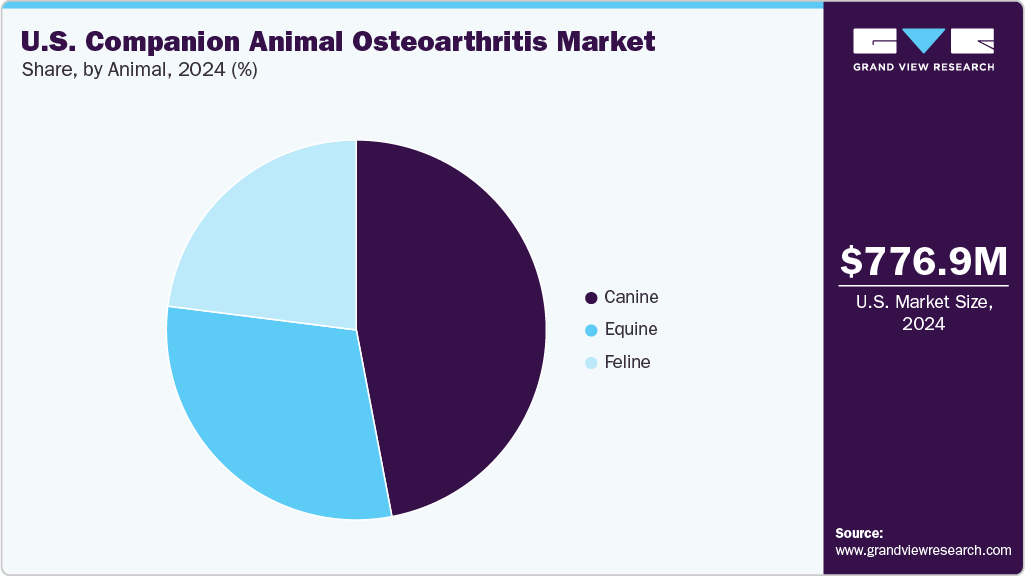
- By animal type, the canine segment held the highest market share of 46.9% in 2024.
- Based on product, the biologics segment held the highest market share of 53.3% in 2024.
- By route of administration, injectables segment including intra-muscular, intra-articular, and others, are expected to grow fastest over the forecast period.
Market Size & Forecast
- 2024 Market Size: USD 776.97 Million
- 2033 Projected Market Size: USD 4,197.40 Millionn
- CAGR (2025-2033): 22.55%
Three ways to get this report
Buy it, customize it, or ask a question.Ask an Analyst
Analyst response in 1 business day
- AccessReport author, directly
- Reply timeWithin 1 working day
- No sales callDirect answer only
- FormatEmail reply
- CostFree, no cost
Get the Full Report
What the study covers
- FormatsPDF · Excel · Dashboard
- Timeline2025–2033 annual, 2024 base
- Coverage20+ countries, 5 regions
- Companies10+ key players profiled
Customize the Report
20% free customization
- IncludeCountries, segments, points
- TailorTo your product definition
- ExtendDeeper competitor detail
- OrA fully bespoke study
- Turnaround5–10 working days
The U.S. companion animal osteoarthritis (CA OA) market is undergoing robust growth, fueled by innovation, increased clinical awareness, and broader access to diverse treatment options. A convergence of advanced therapies, preventive care initiatives, and owner-driven demand is reshaping how OA is managed in pets, particularly dogs. One of the most promising developments is the advancement of gene therapy, exemplified by CureLab Veterinary’s ElenaVet, which demonstrated a remarkable 90% success rate in reducing pain and improving mobility in dogs with OA. This breakthrough highlights a shift toward disease-modifying approaches that offer longer-term benefits compared to conventional pain management therapies.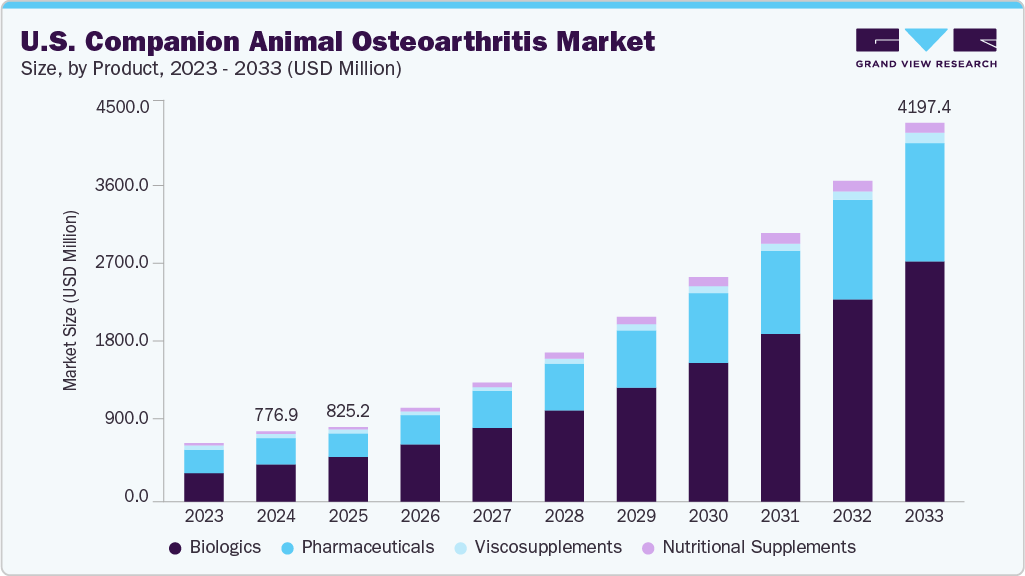 Source: Grand View Research, IR Documents, Primary Interviews, Paid DatabasesTo learn more about this report,
 Download Free Sample Report
 At the same time, veterinary-led awareness campaigns-as reported by DVM360-are raising the standard of care by emphasizing early detection, mobility screening, and proactive OA management. This growing clinical emphasis has led to better-informed pet owners and more timely treatment initiation, expanding the overall addressable market.
Complementing these efforts is the increasing availability of nutritional supplements specifically formulated for canine OA. The recent U.S. launch of a new supplement (DVM360) provides a non-prescription option for managing early-stage or adjunctive care, especially for cost-conscious pet owners or those seeking holistic solutions.
In parallel, regenerative therapies, such as stem cell treatments, are gaining momentum in specialty practices and progressive clinics. As outlined by Fitzpatrick Referrals, these therapies offer minimally invasive solutions that focus on joint restoration rather than symptom suppression-aligning with rising expectations for long-lasting, restorative care.
Further strengthening the market is a growing pipeline of oral therapeutics, including Can-Fite and Vetbiolix’s Piclidenoson, currently in advanced clinical development. This A3 adenosine receptor agonist is positioned to offer a convenient, non-invasive treatment option with global peak sales projected to exceed $445 million by 2034. Its progress reflects strong investor and clinical confidence in oral OA therapies as viable alternatives to injectables and NSAIDs.
In conclusion, the U.S. CA OA market is being driven by a comprehensive, multi-modal evolution-from cutting-edge gene and cell therapies to increased practitioner education and owner engagement. This diversified ecosystem improves patient outcomes and solidifies the U.S. as a global front-runner in advancing osteoarthritis care for companion animals.
Case Study - Equine Arthritis
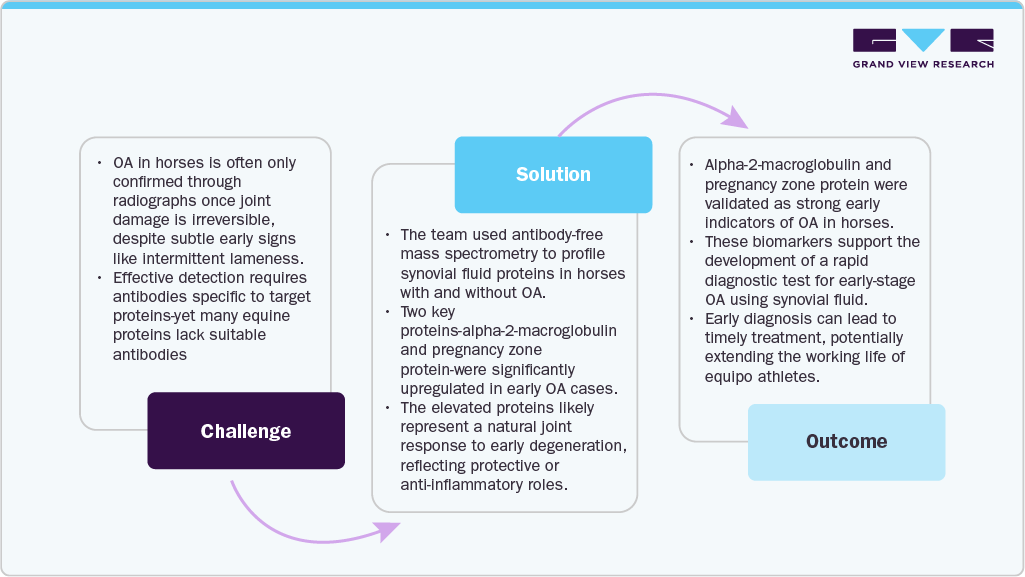
Researchers at Cornell’s College of Veterinary Medicine conducted a proteomic analysis of equine synovial fluid to identify protein markers that differentiate healthy joints from those early in the osteoarthritis (OA) process. Their goal was to improve early diagnosis and intervention via stall-side testing.
 To learn more about this report, Download Free Sample Report
 This study demonstrates a powerful approach-using mass spectrometry to overcome diagnostic limitations and identify early-stage OA biomarkers in horses. The discovery of alpha‑2‑macroglobulin and pregnancy zone protein as differentially expressed in early OA could shift clinical practice by enabling stall-side detection long before radiographic changes occur. These findings represent a foundational advance toward proactive joint care in equine athletes.
Market Concentration & Characteristics
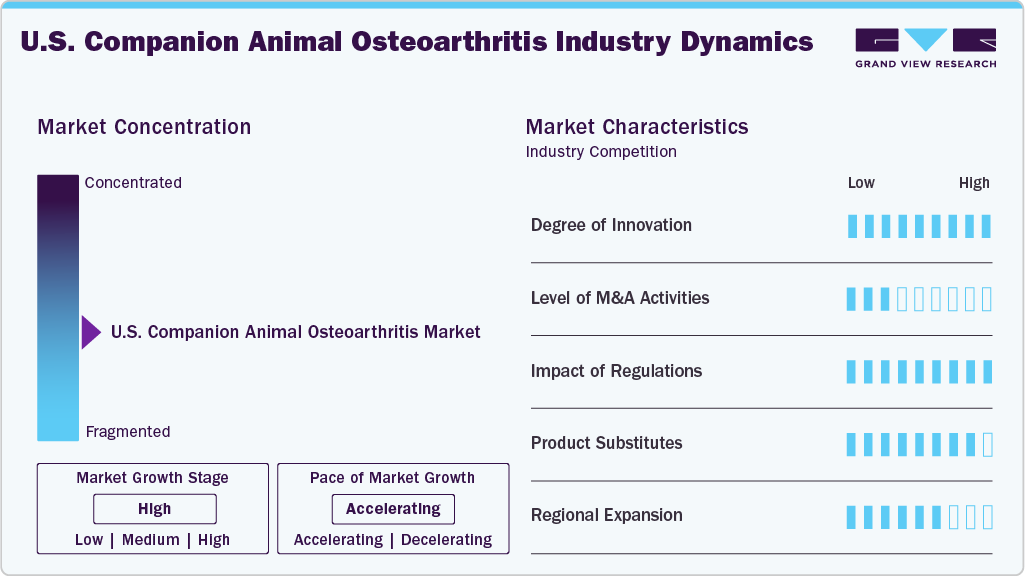
The U.S. companion animal osteoarthritis market is demonstrating strong targeted innovation, particularly in pain management and chronic care solutions. Companies are prioritizing specialized, next-generation therapies such as gene therapy, monoclonal antibodies, and regenerative treatments tailored for osteoarthritis. Innovations such as CureLab Veterinary’s ElenaVet gene therapy and Zoetis’ monoclonal antibody Librela reflect the U.S. market’s focus on long-acting, minimally invasive solutions that go beyond traditional NSAIDs. This innovation is supported by a robust clinical research ecosystem and strong demand from informed pet owners seeking advanced, premium care.
In the U.S. companion animal osteoarthritis market, moderate M&A activity is being driven by both established animal health companies and emerging specialty firms focused on advanced pain and joint care solutions. U.S.-based companies are strategically acquiring manufacturing, R&D, and service assets to expand their capabilities in biologics, regenerative medicine, and chronic disease management. This includes acquisitions aimed at boosting domestic production, accelerating clinical development, and enhancing market access for innovative OA therapies-reflecting a consolidation trend aligned with growing demand for cutting-edge, localized veterinary care.
 To learn more about this report, Download Free Sample Report
 Regulations are increasingly shaping the U.S. companion animal osteoarthritis market, particularly with the growing use of advanced biologic therapies such as monoclonal antibodies. Since the FDA’s 2023 approval of Librela for canine OA, regulatory agencies have intensified their focus on safety monitoring and adverse event reporting. The FDA has enhanced post-market surveillance efforts by updating pharmacovigilance protocols and labeling requirements to ensure the safe use of these novel treatments. This evolving regulatory landscape is prompting manufacturers to maintain rigorous clinical data, provide transparent risk communication, and work closely with veterinarians. In addition, new standardized treatment protocols for canine OA, such as those recently developed for veterinarians, reflect the industry’s move towards more consistent and compliant care practices under these regulatory guidelines.
In the U.S. companion animal osteoarthritis market, while leading companies such as Zoetis, Boehringer Ingelheim, Dechra Pharmaceuticals, and Merck maintain strong positions, there is a growing demand for alternative and cost-effective treatment options. Increasing awareness of the long-term risks associated with NSAIDs and a rising consumer preference for wellness-focused care are driving adoption of both generic pharmaceuticals and complementary therapies. For example, Felixvet recently launched Carprofen Soft Chewable Tablets, a generic alternative to Zoetis’ Rimadyl, providing equivalent safety and efficacy in managing OA-related pain and inflammation. These chewables come in multiple strength with palatable beef flavoring to improve compliance. In addition, natural, plant-based options such as cannabidiol (CBD) products from U.S. companies such as Fusion CBD Products continue to gain traction, reflecting the increasing popularity of holistic and wellness-oriented solutions among American pet owners.
Within the U.S., regional expansion is being driven by both large and emerging companies seeking to strengthen their presence in underserved or high-growth areas. Veterinary chains and specialty providers are scaling operations by investing in advanced diagnostic centers, mobile care units, and rehabilitation facilities in suburban and rural regions. For example, companies are expanding access to innovative OA treatments such as regenerative medicine and monoclonal antibodies by integrating them into local veterinary networks, improving availability beyond urban hubs. This trend supports broader market penetration and enhances geographic equity in companion animal OA care.
Product Insights
The biologics segment-comprising monoclonal antibodies (mAbs), stem cells, and platelet-rich plasma (PRP)-is dominating the market with a share of 53.3% in 2024 and is expected to grow at the fastest rate over the forecast period driven by its superior efficacy, longer duration of action, and fewer side effects compared to traditional NSAIDs. Monoclonal antibodies such as Zoetis’ Librela and Solensia have gained strong traction following their FDA approvals, offering monthly, targeted pain relief with high owner compliance.
Simultaneously, regenerative therapies such as stem cell treatments and PRP are becoming more widely adopted in U.S. veterinary practices and equine clinics due to their ability to reduce inflammation and promote joint repair. The growing body of clinical evidence, combined with increasing pet owner demand for advanced and long-acting solutions, is fueling rapid expansion of the biologics segment across both canine and feline OA care in the U.S. market.
Animal Insights
The canine segment is leading the U.S. companion animal osteoarthritis market in 2024, driven by the high prevalence of OA in dogs, increased pet ownership, and growing awareness of chronic pain management. Dogs are the most commonly diagnosed species with osteoarthritis in the U.S., particularly among aging and large-breed pets. The segment is experiencing strong growth due to increased availability of advanced treatment options through veterinary channels.
 To learn more about this report, Download Free Sample Report
 For example, the rising use of stem cell therapies in specialty clinics across the U.S. is offering long-term relief for dogs with moderate to severe OA, especially those unresponsive to conventional medications. In addition, the growing emphasis on mobility assessments, wellness programs, and premium canine supplements is further fueling market expansion as pet owners increasingly prioritize long-term joint health and quality of life.
Route of Administration Insights
The injectables segment is dominating the U.S. companion animal osteoarthritis market in 2024 and is projected to grow at the fastest rate over the forecast period, driven by the demand for effective, long-acting treatments. Injectable therapies-such as intra-articular stem cell treatments and subcutaneous regenerative biologics-offer rapid relief and extended duration compared to oral or topical alternatives, which often require daily dosing and show variable absorption.
In the U.S., many specialty and referral clinics are increasingly utilizing platelet-rich plasma (PRP) injections for canine and equine patients with moderate to severe OA, especially those not responding to standard therapies. The convenience of less frequent administration and the ability to deliver targeted, localized relief are boosting compliance and pet comfort. This shift in clinical practice is driving veterinarians and pet owners to favor injectables as the primary modality for managing chronic osteoarthritis.
End Use Insights
The veterinary hospitals and clinics dominate the U.S. companion animal osteoarthritis market in 2024, serving as the primary centers for diagnosis, treatment, and ongoing management of OA in pets. These facilities are equipped with advanced diagnostic imaging and offer access to cutting-edge therapies such as monoclonal antibodies such as Zoetis’ Librela and regenerative medicine options including stem cell treatments. The professional expertise available in these settings is critical for administering injectable medications and managing complex care protocols. For instance, specialty veterinary centers such as Banfield Pet Hospital have integrated comprehensive OA management programs that combine diagnostics with tailored treatment plans, driving higher treatment adoption. In addition, increased awareness among U.S. pet owners about OA symptoms and the benefits of early intervention has led to more frequent veterinary visits and greater demand for personalized, premium care, reinforcing the dominance of veterinary clinics.
Meanwhile, the e-commerce segment in the U.S. companion animal OA market is projected to grow at the fastest rate due to the increasing preference for convenience and cost-effective access to pet medications and supplements. Platforms such as Chewy and 1-800-PetMeds have capitalized on this trend by offering auto-ship programs for joint supplements and prescription refills, alongside educational resources on managing chronic conditions. Telehealth services, such as those provided by Vetster, are also gaining popularity, enabling pet owners to consult veterinarians remotely and obtain treatment guidance without clinic visits. The widespread internet access and a strong culture of online shopping in the U.S. further fuel this growth, making it easier for owners to manage osteoarthritis therapy from home while maintaining continuity of care.
Key U.S. Companion Animal Osteoarthritis Company Insights
The U.S. companion animal osteoarthritis market is rapidly evolving with strong innovation in advanced pain management therapies such as monoclonal antibodies, gene therapy, and regenerative medicine. Regulatory scrutiny has increased post-approval safety monitoring, prompting manufacturers to ensure rigorous clinical compliance. Growing demand for cost-effective alternatives and wellness-focused care is driving adoption of generics and natural supplements. Regional expansion by veterinary providers is improving access to cutting-edge treatments beyond urban centers, while moderate M&A activity supports consolidation and growth in advanced OA care solutions.
Key U.S. Companion Animal Osteoarthritis Companies:
- Zoetis Inc.
- Boehringer Ingelheim
- Elanco Animal Health
- American Regent, Inc.
- Merck Animal Health (Merck & Co. Inc)
- Vetoquinol S.A.
- Ceva Sante Animale
- Virbac
- Biogenesis Bago
- Ardent Animal Health, LLC
- PetVivo Holdings, Inc. (Spryng)
- VetStem, Inc.
- Enso Discoveries
- Contura Vet US
- T-Cyte Therapeutics
- MEDREGO LLC
Recent Developments
-
In April 2025, Felixvet launched Carprofen Soft Chewable Tablets, a new generic treatment for managing pain and inflammation associated with osteoarthritis and postoperative recovery in dogs. These tablets are therapeutically equivalent to Rimadyl (Zoetis), offering the same safety and efficacy. Available in 25 mg, 75 mg, and 100 mg strengths, each tablet is scored for accurate dosing and flavored with beef to enhance palatability
-
In February 2025, Zoetis announced a U.S. label update for Librela (bedinvetmab injection), its once-monthly monoclonal antibody treatment for canine osteoarthritis pain. The update includes new safety information based on post-approval data, advising veterinarians to discuss potential adverse reactions with pet owners.
U.S. Companion Animal Osteoarthritis Market Report Scope
Report Attribute
Details
Market size value in 2025
USD 825.22 million
Revenue forecast in 2033
USD 4,197.40 million
Growth rate
CAGR of 22.55% from 2025 to 2033
Base year for estimation
2024
Actual Data
2021 - 2023
Forecast period
2025 - 2033
Quantitative units
Revenue in USD million/billion and CAGR from 2025 to 2033
Report coverage
Revenue forecast, company ranking, competitive landscape, growth factors, and trends
Segments covered
Product, animal, route of administration, end use
Country scope
U.S.
Key companies profiled
Zoetis Inc.; Boehringer Ingelheim; Elanco Animal Health; American Regent, Inc.; Merck Animal Health (Merck & Co. Inc); Vetoquinol S.A.; Ceva Sante Animale; Virbac; Biogenesis Bago; Ardent Animal Health, LLC; PetVivo Holdings, Inc. (Spryng); VetStem, Inc.; Enso Discoveries; Contura Vet US; T-Cyte Therapeutics; MEDREGO LLC
Customization scope
Free report customization (equivalent up to 8 analysts working days) with purchase. Addition or alteration to country, regional & segment scope.
Pricing and purchase options
Avail customized purchase options to meet your exact research needs. Explore purchase options
U.S. Companion Animal Osteoarthritis Market Report Segmentation
This report forecasts revenue growth at country level and provides an analysis of the latest industry trends in each of the sub-segments from 2021 to 2033. For this study, Grand View Research has segmented the U.S. companion animal osteoarthritis market report based on product, animal, route of administration, and end use:
-
Product Outlook (Revenue, USD Million, 2021 - 2033)
-
Biologics
-
Stem Cells
-
Platelet-Rich Plasma (PRP)
-
Monoclonal Antibodies (mAb)
-
Other Biologics
-
-
Viscosupplements
-
Pharmaceuticals
-
Steroids
-
NSAIDS
-
Others
-
-
Nutritional Supplements
-
-
Animal Outlook (Revenue, USD Million, 2021 - 2033)
-
Canine
-
Equine
-
Feline
-
-
Route of Administration Outlook (Revenue, USD Million, 2021 - 2033)
-
Oral
-
Injectable
-
Intra-muscular
-
Intra-articular
-
Other Injectable
-
-
Topical
-
-
End Use Outlook (Revenue, USD Million, 2021 - 2033)
-
Veterinary Hospitals/Clinics
-
E-commerce
-
Others
-
Frequently Asked Questions About This Report
The U.S. companion animal (CA) osteoarthritis (OA) market size was estimated at USD 0.78 billion in 2024 and is expected to reach USD 0.83 billion in 2025.
The global companion animal (CA) osteoarthritis (OA) market is expected to grow at a compound annual growth rate of 22.55% from 2025 to 2030 to reach USD 4,197.40 million by 2033.
Which segment accounted for the largest U.S. companion animal (CA) osteoarthritis (OA) market share?By product, biologics segment, comprising monoclonal antibodies (mAbs), stem cells, and platelet-rich plasma (PRP), is dominating the market with a share of 53.3% in 2024 and is expected to grow at the fastest rate over the forecast period driven by its superior efficacy, longer duration of action, and fewer side effects compared to traditional NSAIDs. Monoclonal antibodies like Zoetis’ Librela and Solensia have gained strong traction following their FDA approvals, offering monthly, targeted pain relief with high owner compliance.
Some key players operating in the companion animal (CA) osteoarthritis (OA) market include Zoetis Inc., Boehringer Ingelheim, Elanco Animal Health, American Regent, Inc., Merck Animal Health (Merck & Co. Inc), Vetoquinol S.A., Ceva Sante Animale, Virbac, Biogenesis Bago, Ardent Animal Health, LLC, PetVivo Holdings, Inc. (Spryng), VetStem, Inc., Enso Discoveries, Contura Vet US, T-Cyte Therapeutics, and MEDREGO LLC.
Key factors that are driving the market growth include rising prevalence of osteoarthritis, increasing R&D initiative, emerging novel treatments, and increasing awareness campaigns.
About the Author(s)
Animal Health Research Team
Healthcare · Animal HealthThis report was authored by the animal health research team at Grand View Research - comprising two research analysts, one senior research analyst, and one industry expert - with specialized expertise in the animal health segment of the healthcare industry. All findings are based on proprietary healthcare databases, executive interviews, and regulatory analysis, subject to internal peer review prior to publication.
Last Updated:
Speak to Analyst

Customize this report to your needs - add regions, segments, or data points, with 20% free customization.
Or view our licence options:


ISO 9001:2015 & 27001:2022 Certified
We are GDPR and CCPA compliant! Your transaction & personal information is safe and secure. For more details, please read our privacy policy.


