Market Size & Trends
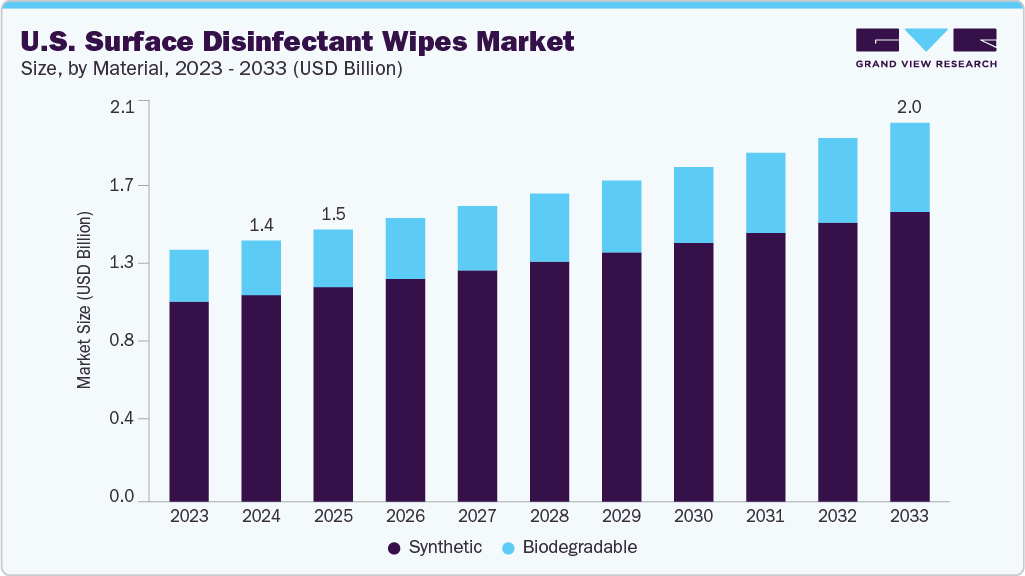
The U.S. surface disinfectant wipes market size was valued at USD 1,403.5 million in 2024 and is projected to reach USD 2,037.6 million by 2033, growing at a CAGR of 4.2% from 2025 to 2033. A primary catalyst for this growth has been the heightened public awareness of health and hygiene, particularly following the COVID-19 pandemic. The pandemic highlighted the importance of regular surface disinfection to prevent the spread of viruses and bacteria, resulting in a surge in demand for convenient cleaning solutions, such as disinfectant wipes. Surveys indicate that a substantial portion of Americans intend to maintain the rigorous cleaning practices adopted during the pandemic, with 85% planning to continue their heightened hygiene routines and 50% specifically aiming to disinfect high-touch surfaces regularly.
Healthcare-associated infections (HAIs) have also played a crucial role in driving demand. In the U.S., about 1 in every 31 hospitalized patients suffers from an HAI, resulting in hundreds of thousands of cases and substantial healthcare costs annually. Hospitals, clinics, and surgical centers have responded by increasing their use of surface disinfectant wipes, which offer a fast, effective, and consistent method for sterilizing surfaces and reducing infection risks. Stricter infection control protocols in healthcare facilities have further entrenched the use of these wipes as an essential tool for patient and staff safety.
The commercial and institutional sectors, including offices, schools, hospitality, and food service, have also contributed to market growth. These environments require reliable and easy-to-use disinfection methods to comply with evolving public health regulations and to reassure employees, customers, and guests. The reopening of public and private spaces post-pandemic has been accompanied by the adoption of heightened cleaning protocols, with surface disinfectant wipes being a preferred choice for their convenience and efficacy.
Consumer preferences and behavioral shifts have further propelled market expansion. Americans increasingly prioritize cleaning products that are effective, durable, and convenient. The ready-to-use format of wipes, along with their proven ability to eliminate a wide range of pathogens, appeals to both households and businesses seeking quick and reliable solutions. The ease of use and portability of wipes make them especially popular for residential use, where families seek to maintain a clean and safe environment, particularly in homes with vulnerable individuals such as children or the elderly.
Environmental sustainability is emerging as a significant trend influencing the market. There is growing demand for eco-friendly and biodegradable surface disinfectant wipes, driven by consumer and institutional preferences for sustainable products. Companies are responding by launching wipes made from plant-based materials and biodegradable substrates, aligning with environmentally preferred purchasing policies in many U.S. states and federal contracts. This shift toward greener alternatives is expected to create new growth opportunities in the coming years.
Market dynamics and competition have evolved in response to surging demand. Major brands like Clorox and Lysol have expanded production and streamlined product lines, while private label brands have gained market share by offering value-priced alternatives. The rise of online shopping for cleaning supplies and the adoption of sustainable products have also influenced purchasing behavior, ensuring that the demand for surface disinfectant wipes remains robust across various channels and consumer segments.
The industry faces several significant challenges, chief among them being environmental concerns. Most disinfectant wipes are made from non-biodegradable materials like plastics, which contribute to landfill waste and environmental pollution. As the volume of single-use wipes increases, so does the scrutiny from both regulators and environmentally conscious consumers, leading to growing demand for sustainable alternatives. However, the transition to biodegradable and eco-friendly wipes is hampered by higher production costs, which can be a barrier in price-sensitive markets. Additionally, the chemicals used in many wipes-such as triclosan and benzalkonium chloride-raise health and ecological concerns, with ongoing debates about their long-term impact and potential to contribute to antimicrobial resistance.
The market also contends with supply chain and regulatory challenges. Volatility in raw material prices and disruptions in global supply chains can hinder consistent production and availability of disinfectant wipes, especially during periods of heightened demand. Moreover, the sector faces intense competition and pricing pressures, as many brands offer similar products, making differentiation difficult and sometimes leading to the proliferation of counterfeit or substandard wipes that can erode consumer trust. Regulatory scrutiny is increasing, with governments implementing stricter guidelines on the production, use, and disposal of disinfectant wipes to address both safety and environmental issues. Manufacturers must therefore invest in ongoing innovation, compliance, and quality assurance to remain competitive and meet evolving market and regulatory expectations.
Material Insights
The synthetic surface disinfectant wipes were the largest material category, exceeding 79.0% revenue share in 2024. Synthetic and biodegradable disinfectant wipes differ primarily in their materials, environmental impact, and market positioning. Synthetic wipes are typically made from petroleum-based fibers such as polyester and polypropylene. These materials make the wipes strong, durable, and resistant to tearing, which is especially important for heavy-duty cleaning in industrial, commercial, and healthcare settings. Their cost-effectiveness, stemming from mass production and established supply chains, has made synthetic wipes widely available and affordable. Additionally, their convenience and reliable cleaning performance have cemented their popularity in high-traffic environments where quick and effective disinfection is crucial.
The growth of synthetic wipes is primarily attributed to their performance and price advantages. Businesses and institutions often prioritize durability and cost, making synthetic wipes the go-to choice for large-scale operations. The ability to produce these wipes at scale and distribute them efficiently through both traditional and online channels has further fueled their market penetration. As a result, synthetic wipes remain dominant in sectors where strength, reliability, and affordability are paramount.
The biodegradable wipes segment is expected to grow at a CAGR of 5.6% from 2025 to 2033. Biodegradable wipes are made from plant-based fibers such as cotton, bamboo, or wood pulp. These materials allow the wipes to break down naturally, reducing their environmental footprint and addressing growing concerns about plastic waste and microplastic pollution. The rise in environmental awareness among consumers has been a significant driver for the growth of biodegradable wipes. People are increasingly seeking sustainable alternatives that align with their values, especially as awareness of the ecological impact of single-use plastics grows.
Regulatory and social pressures have also played a key role in the adoption of biodegradable wipes. Governments and organizations are implementing stricter sustainability standards, encouraging the use of eco-friendly products. In response, manufacturers are innovating to produce biodegradable wipes that offer cleaning efficacy comparable to their synthetic counterparts, making them more appealing to a broader range of consumers. Health and wellness trends further support this shift, as biodegradable wipes are often marketed as hypoallergenic, gentle, and free from harsh chemicals, making them especially attractive for baby care and personal hygiene.
Pack Size Insights
Packs containing 51 to 75 surface disinfectant wipes were the largest segment in the market, accounting for over 30% of the revenue share in 2024 because they offer an optimal balance between convenience, affordability, and practicality for everyday consumers. Households and small businesses prefer this pack size as it provides enough wipes to last through frequent cleaning routines without the bulk or storage challenges associated with larger containers. The moderate size also makes these packs easy to handle and store, catering to the needs of families, office staff, and small-scale commercial operations who require reliable hygiene solutions but do not want to commit to oversized or more expensive bulk options. This segment’s popularity is further supported by the heightened focus on cleanliness and quick, effective disinfection in the wake of recent public health concerns, making these packs the go-to choice for routine use.
Packs containing over 100 wipes are driven by their increasing adoption in high-traffic commercial, institutional, and healthcare environments. Facilities such as hospitals, clinics, schools, and large offices require frequent and large-scale surface disinfection to comply with stringent infection control protocols and to ensure the safety of staff, patients, and visitors. Larger packs minimize the need for constant restocking, reduce operational interruptions, and offer cost efficiencies for organizations managing extensive cleaning regimens. The surge in demand for these bulk packs is driven by the ongoing emphasis on infection prevention, particularly in sectors where maintaining a sterile environment is critical, and by the growing awareness of the importance of robust hygiene practices in both public and private spaces.
Application Insights
Healthcare is the largest application segment, accounting for over 29.0% revenue share, driven by the critical need for infection prevention and control in medical environments. Hospitals, clinics, and other healthcare facilities continue to face persistent threats from healthcare-associated infections (HAIs), which affect approximately 1 in every 31 hospitalized patients in the United States and result in substantial health and economic burdens. To combat this, these institutions adhere to strict hygiene protocols, relying heavily on surface disinfectant wipes for rapid and effective cleaning of high-touch areas such as bed rails, medical equipment, and work surfaces. The convenience and proven efficacy of wipes in eliminating a broad spectrum of pathogens make them indispensable for maintaining sterile environments and protecting both patients and healthcare workers.
Moreover, the increasing volume and complexity of medical procedures-including surgeries and the use of advanced medical devices-have amplified the demand for reliable disinfection solutions. As healthcare systems expand and the population ages, the frequency of patient care activities increases, further driving the need for efficient cleaning products, such as surface disinfectant wipes. Regulatory requirements and accreditation standards also mandate rigorous infection control practices, reinforcing the central role of disinfectant wipes in healthcare settings. This sustained, high-volume demand ensures that healthcare remains the dominant application for surface disinfectant wipes in the U.S. market.
The use of surface disinfectant wipes in the hospitality industry is driven by the critical need to maintain high hygiene standards and provide a safe environment for guests and staff. Hotels, restaurants, and similar establishments are frequented by numerous people daily, resulting in frequent contact with shared surfaces, including tables, menus, door handles, and restroom fixtures. These high-touch areas can easily become breeding grounds for bacteria and viruses, increasing the risk of cross-contamination and potential outbreaks. Disinfectant wipes offer a convenient, fast, and effective solution for cleaning and sanitizing these surfaces, enabling staff to quickly address hygiene needs throughout the day without the need for complex equipment or lengthy procedures.
Moreover, the visible use of disinfectant wipes reassures guests about the establishment’s commitment to cleanliness and safety, which is especially important in the post-pandemic era where consumer expectations for hygiene have risen sharply. The hospitality sector often opts for wipes because they are easy to use, require no preparation or dilution, and can be safely used in public spaces without the need for personal protective equipment. This not only streamlines cleaning operations but also helps businesses comply with health regulations and industry standards. The availability of wipes tailored for different surfaces-such as sensitive wipes for guest rooms and stronger formulations for kitchens-further enhances their utility and effectiveness in diverse hospitality settings.
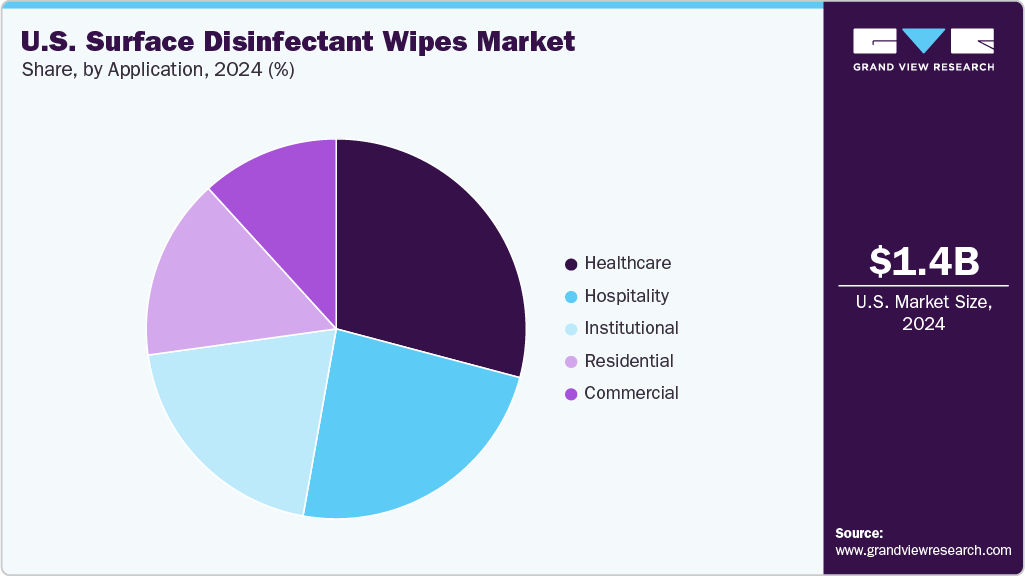
The residential segment is the fastest-growing application for surface disinfectant wipes, expected to grow at a CAGR of 5.0% over the forecast period, fueled by a significant shift in consumer behavior following the COVID-19 pandemic. Heightened public awareness of hygiene and the risk of infectious diseases has prompted more households to adopt regular surface disinfection routines. Families increasingly value the convenience, portability, and quick action of disinfectant wipes for everyday cleaning tasks, from kitchen counters to children’s toys and frequently touched surfaces. The desire to maintain a safe and healthy living environment-especially in homes with children, elderly individuals, or immunocompromised members-continues to drive robust demand for these products.
Additionally, the trend toward convenient, ready-to-use cleaning solutions aligns with the busy lifestyles of modern households and the need for time-saving products. The market has responded with a wide variety of packaging options and formulations tailored to residential use, making wipes more accessible and appealing to a broad consumer base. As a result, the residential segment is projected to grow at a faster rate than other applications, reflecting the ongoing prioritization of cleanliness and health in American homes.
Key U.S. Surface Disinfectant Wipes Company Insights
Key players operating in the U.S. surface disinfectant wipes market are undertaking various initiatives to strengthen their presence and increase the reach of their products and services. Strategies such as expansion activities and partnerships are key in propelling the market growth.
Key U.S. Surface Disinfectant Wipes Companies:
- The Clorox Company
- 3M
- Kimberly-Clark Corporation
- Reckitt Benckiser Group plc
- PDI
- Metrex Research
- Procter & Gamble
- S. C. Johnson & Son
- Nice-Pak
- Diamond Wipes International Inc.
- Albaad
- STERIS
- Crosstex Sanitex
U.S. Surface Disinfectant Wipes Market Report Scope
|
Report Attribute
|
Details
|
|
Market size value in 2025
|
USD 1,462.5 million
|
|
Revenue forecast in 2033
|
USD 2,037.6 million
|
|
Growth rate
|
CAGR of 4.2% from 2025 to 2033
|
|
Base year for estimation
|
2024
|
|
Historical data
|
2021 - 2023
|
|
Forecast period
|
2025 - 2033
|
|
Quantitative units
|
Revenue in USD million/billion and CAGR from 2025 to 2033
|
|
Report coverage
|
Revenue forecast, company ranking, competitive landscape, growth factors, and trends
|
|
Segments covered
|
Material, pack size, application
|
|
Country scope
|
U.S.
|
|
Key companies profiled
|
The Clorox Company; 3M; Kimberly-Clark Corporation; Reckitt Benckiser Group plc; PDI; Metrex Research; Procter & Gamble; S. C. Johnson & Son; Nice-Pak; Diamond Wipes International Inc.; Albaad; STERIS; Crosstex Sanitex
|
|
Customization scope
|
Free report customization (equivalent up to 8 analysts working days) with purchase. Addition or alteration to country, regional & segment scope.
|
|
Pricing and purchase options
|
Avail customized purchase options to meet your exact research needs. Explore purchase options
|
U.S. Surface Disinfectant Wipes Market Report Segmentation
This report forecasts revenue growth at the country level and provides an analysis of the latest industry trends in each sub-segment from 2021 to 2033. For this study, Grand View Research has segmented the U.S. surface disinfectant wipes market report based on material, pack size, and application:
-
Material Outlook (Revenue, USD Million, 2021 - 2033)
-
Pack Size Outlook (Revenue, USD Million, 2021 - 2033)
-
< 25 pcs
-
26 - 50pcs
-
51 - 75 pcs
-
76 - 100 pcs
-
100 pcs
-
Application Outlook (Revenue, USD Million, 2021 - 2033)
-
Residential
-
Commercial
-
Healthcare
-
Hospitality
-
Institutional

 Download Sample Report
















