
- Home
- »
- Communication Services
- »
-
Very Small Aperture Terminal (VSAT) Market Report, 2033GVR Report cover

Very Small Aperture Terminal (VSAT) Market (2026 - 2033)
Size, Share & Trends Analysis Report By Solution (Equipment, Support Services), By Platform, By Frequency, By Network Architecture, By Design, By Application, By Vertical, By Region, And Segment Forecasts
Market Size, 2025
$3.3BMarket Estimate, 2026
$3.6BMarket Forecast, 2033
$8.0BCAGR, 2026–2033
12.0%Very Small Aperture Terminal (VSAT) Market Summary
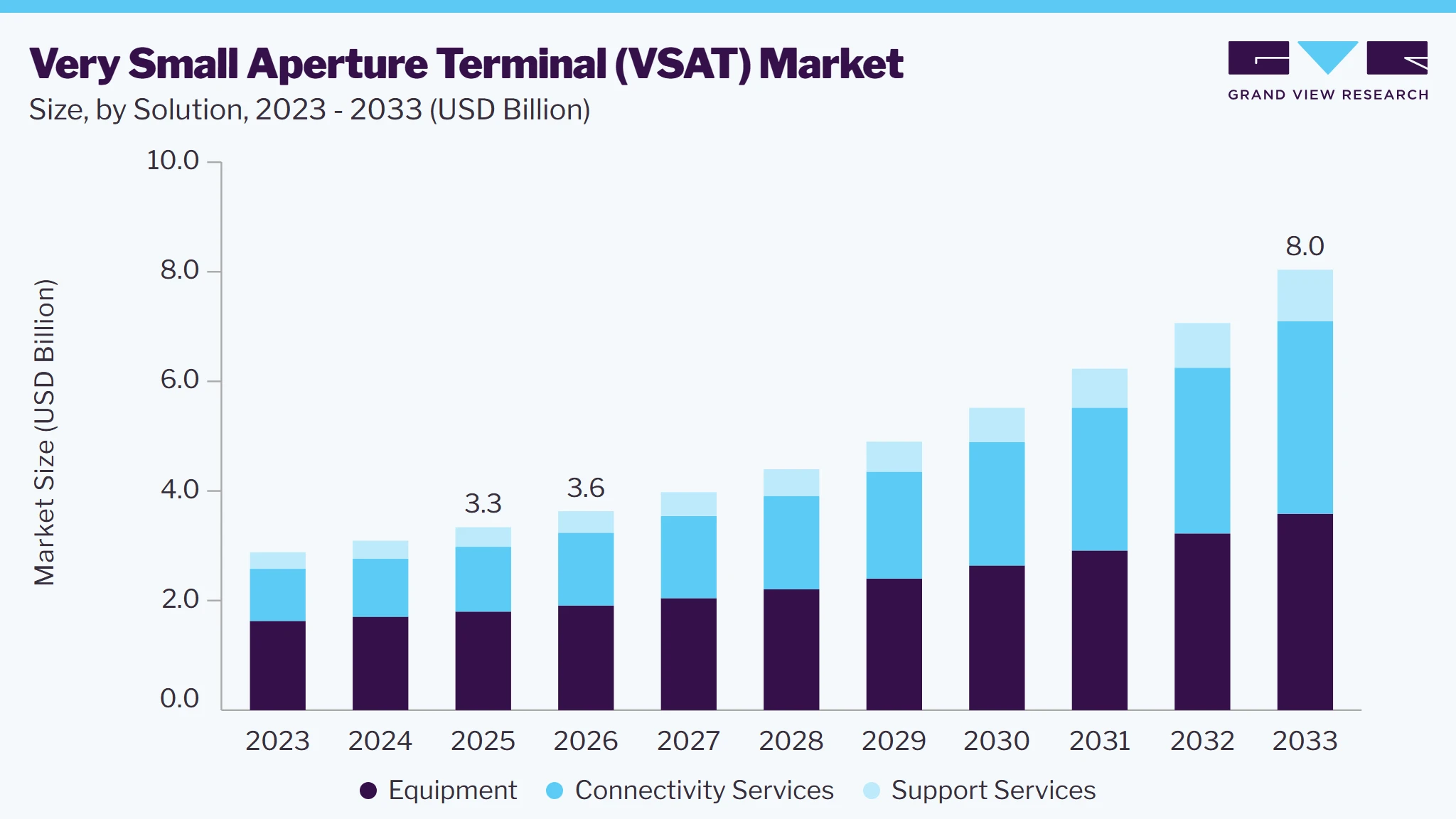
The global very small aperture terminal (VSAT) market size was valued at USD 3.3 billion in 2025 and is projected to grow from USD 3.6 billion in 2026 to USD 8.0 billion by 2033, at a CAGR of 12.0% from 2026 to 2033. North America dominated the market, accounting for a revenue share of 30.8% in 2025. VSAT is a satellite communication (SATCOM) technology using small dish antennas to transmit and receive data through satellite networks.
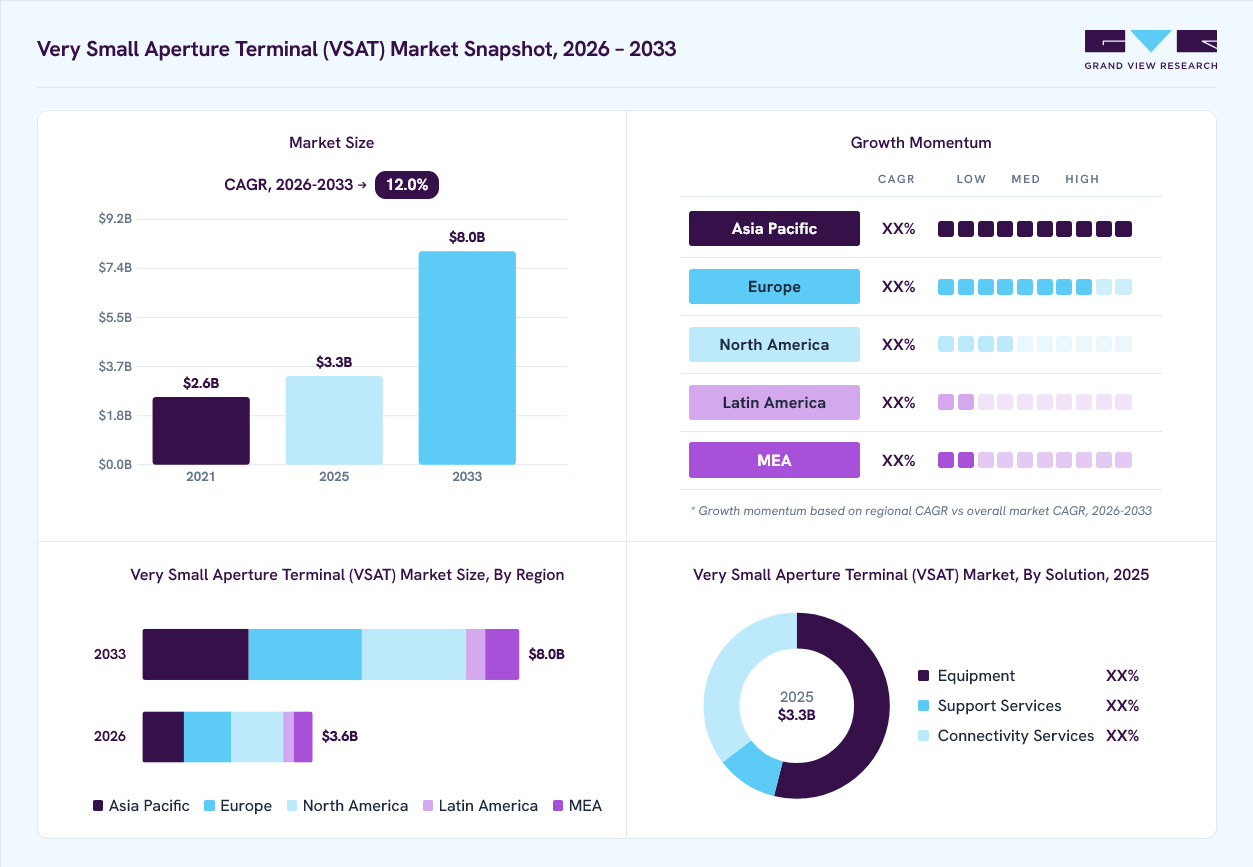 Source: Grand View Research, IR Documents, Primary Interviews, Paid DatabasesTo learn more about this report,
 Download Free Sample Report
Key Market Trends & Insights
- By solution: Equipment segment dominated the market, with a revenue share of 53.9% in 2025
- By platform: Land VSAT segment held the largest market share of 52.1% in 2025
- By frequency: Ku-Band segment accounted for the largest revenue share of 41.7% in 2025
- By network architecture: Star Topology segment accounted for the largest revenue share in 2025
- By design: Rugged VSAT segment accounted for the largest revenue share in 2025.
Regional Highlights
- Largest regional market: North America (30.8% revenue share, 2025)
- Fastest-growing regional market: Asia Pacific (highest CAGR, 2026-2033)
- By country: The U.S. held the largest market share in 2025.
Market Size & Forecast
- Market size in 2025: USD 3.3 Billion
- Estimated market size in 2026: USD 3.6 Billion
- Projected market size by 2033: USD 8.0 Billion
- CAGR (2026-2033): 12.0%
Three ways to get this report
Buy it, customize it, or ask a question.Ask an Analyst
Analyst response in 1 business day
- AccessReport author, directly
- Reply timeWithin 1 working day
- No sales callDirect answer only
- FormatEmail reply
- CostFree, no cost
Get the Full Report
What the study covers
- FormatsPDF · Excel · Dashboard
- Timeline2026–2033 annual, 2025 base
- Coverage20+ countries, 5 regions
- Companies10+ key players profiled
Customize the Report
20% free customization
- IncludeCountries, segments, points
- TailorTo your product definition
- ExtendDeeper competitor detail
- OrA fully bespoke study
- Turnaround5–10 working days
The demand for very small aperture terminal is surging across various industries due to its ability to offer reliable, high-speed communication services to connect remote locations. Moreover, the growing demand for high-throughput satellite services and mobile VSAT solutions is expected to fuel market growth.
The convergence of IoT and M2M communication is anticipated to be a key driver propelling the growth of the very small aperture terminal market. The VSAT system is renowned for its robustness in satellite communication systems. It is crucial as organizations increasingly rely on IoT for automation and real-time data processing, thus stimulating market growth.
The growing demand for stable satellite communication solutions supports the market expansion. Companies heavily depend on VSAT to ensure dependable connectivity, particularly in underserved and rural areas. This ensures productivity and facilitates informed decision-making processes. Such widespread necessity is anticipated to fuel a gradual rise in the VSAT market.
 To learn more about this report, Download Free Sample Report
In addition, the growing demand for VSAT systems at remote locations, such as oil and gas rigs, to transfer data and communicate from offshore locations is expected to support the market's growth. For instance, in January 2022, Nelco Ltd. secured a contract worth USD 400 million from Oil and Natural Gas Corporation (ONGC) to provide satellite communication services at offshore locations. The project involves supplying, commissioning, and maintaining ONGC's dedicated VSAT-based network.
However, one of the primary barriers to entry into the very small aperture terminal market is the high initial investment. Deploying VSAT infrastructure may financially burden numerous firms, particularly smaller entities. This financial constraint hampers potential expansion efforts and dampens market adoption rates. Furthermore, regulatory issues represent another significant obstacle in the market landscape. Diverse locations may enforce distinct regulations, thereby complicating the deployment and operation of VSAT systems. The intricate nature of navigating these legal frameworks often entails substantial costs and time investments, leading several organizations to opt against investing in VSAT technology.
Market Dynamics
The very small aperture terminal (VSAT) market is witnessing steady growth due to rising demand for reliable satellite based communication across remote, offshore, aviation, maritime, defense, and enterprise applications. Increasing digital transformation, expansion of satellite constellations, growing deployment of high throughput satellites (HTS), and the need for resilient communication infrastructure are strengthening market demand. Continuous advancements in software defined networking, electronically steered antennas, and multi orbit satellite connectivity are further enhancing VSAT performance while enabling broader commercial adoption.
Many industries, including mining, oil & gas, maritime, defense, utilities, and rural telecommunications, operate in locations where terrestrial fiber and cellular infrastructure are unavailable or economically impractical to deploy. Organizations increasingly require uninterrupted connectivity to support operational monitoring, workforce communications, cloud applications, safety systems, and digital transformation initiatives, creating sustained demand for satellite communication solutions.
Very small aperture terminal (VSAT) systems provide dependable broadband connectivity regardless of geographic limitations by using satellite networks rather than terrestrial infrastructure. Modern VSAT solutions support high speed data transmission, voice, video, IoT connectivity, and mission critical communications across remote environments. Their ability to deliver reliable connectivity with expanding high throughput satellite capacity continues to accelerate deployment across commercial, government, and defense sectors, supporting long-term market growth.
Deploying VSAT infrastructure requires significant investment in satellite terminals, antennas, network equipment, installation, spectrum access, and ongoing bandwidth subscriptions. Organizations must also account for maintenance expenses, network management, and specialized technical expertise, which makes overall ownership costs considerably higher than those of conventional terrestrial communication alternatives.
The financial burden is particularly significant for small enterprises, rural organizations, and developing economies with limited communication budgets. Cost sensitive commercial sectors often postpone deployments or adopt lower capacity communication alternatives, slowing penetration in emerging markets. Although satellite technology continues to become more efficient, high capital and operational expenditure remain a key challenge limiting wider market adoption.
The rapid deployment of Low Earth Orbit satellite constellations, combined with growing integration of GEO, MEO, and LEO networks, is transforming global satellite communications. Improvements in satellite capacity, reduced latency, enhanced coverage, and intelligent network management are enabling more flexible and efficient connectivity solutions across multiple industries.
VSAT vendors are increasingly developing multi-orbit compatible terminals, software-defined platforms, and electronically steered antennas capable of seamlessly switching between different satellite networks. These innovations create opportunities across enterprise connectivity, maritime, aviation, defense, disaster recovery, and IoT applications. Companies investing in next-generation satellite technologies, integrated connectivity platforms, and managed network services are well positioned to capture future market expansion.
Analyst Perspective
The very small aperture terminal market is evolving as satellite communication becomes an essential component of enterprise digital infrastructure and mission critical connectivity. Demand is being supported by expanding remote operations, increasing reliance on cloud-based applications, and the need for resilient communication networks beyond terrestrial coverage. The emergence of high throughput satellites, software-defined networking, electronically steered antennas, and multi-orbit connectivity is reshaping competitive differentiation across the industry. Future investments are expected to focus on integrated satellite communication platforms, managed connectivity services, and next generation multi orbit terminals, while strategic partnerships among satellite operators, equipment manufacturers, and communication service providers continue to intensify market competition.
Solution Insights
Based on solution, the equipment segment led the market with the largest revenue share of 53.9% in 2025. The segment's dominance can be attributed to the growing focus on digital transformation and the increasing adoption of cloud-based services that create opportunities for VSAT equipment vendors. VSAT systems enable organizations to access cloud resources, deploy software-defined networking (SDN) solutions, and support emerging technologies such as edge computing and 5G networks. The demand for advanced VSAT equipment is anticipated to grow as businesses focus on digitalization to enhance efficiency, flexibility, and competitiveness.
The connectivity services segment is anticipated to register the highest growth over the forecast period. The growth in this market segment can be attributed to the rising demand for VSAT technology that offers faster data transfer speeds for applications requiring real-time communication and large data transmission. Moreover, the expansion of VSAT connectivity services is driven by the globalization of businesses and the need for seamless communication across dispersed locations. VSAT networks provide reliable and secure communication links for multinational corporations, enabling them to connect remote offices, offshore sites, and mobile assets with headquarters and data centers.
Platform Insights
Based on platform, the land VSAT segment led the market with the largest revenue share of 52.1% in 2025. Land VSAT systems' versatility and flexibility make them well-suited for a wide range of applications across various industries. From emergency response and disaster recovery to oil and gas exploration, mining operations, and maritime communications, land VSAT systems provide reliable connectivity in environments where terrestrial infrastructure may be limited or unreliable, thereby dominating the market.
The maritime VSAT segment is expected to grow at the fastest growth rate during the forecast period. The major factor driving the growth is the increasing demand for connectivity at sea. As maritime vessels become increasingly digitized and connected, there is a growing need for reliable, high-speed internet access to support a wide range of applications, including crew welfare, operational efficiency, safety, and regulatory compliance. Maritime VSAT systems offer a solution to these connectivity challenges by providing continuous, global coverage and enabling seamless communication between vessels, shore-based operations, and satellite offices.
Frequency Insights
Based on frequency, the Ku-band segment led the market with the largest revenue share of 41.7% in 2025. The dominance of Ku-band VSAT can be attributed to its adaptability and compatibility with a wide range of satellite terminals and antennas. Whether deployed on land, sea, or air, Ku-band VSAT systems can seamlessly integrate into existing networks and infrastructure, facilitating rapid deployment and scalability. Within the Ku-band frequency range, VSAT systems offer ample bandwidth to support diverse data-intensive applications, including broadband internet access, video conferencing, and multimedia streaming. This bandwidth abundance makes Ku-band VSAT an attractive choice for businesses, governments, and consumers seeking high-speed connectivity solutions.
The Ka-band segment is expected to register high growth during the forecast period. Ka-band operates at a higher frequency spectrum than traditional Ku-band, offering a significant advantage: It offers a much larger bandwidth capacity, enabling significantly faster data transfer speeds and increasing demand. This caters to applications requiring real-time communication, high-resolution video streaming, and large data transmission. In addition, as Ka-band technology matures, equipment costs are expected to decrease, making it a more competitive option for a wider range of users.
Network Architecture Insights
Based on network architecture, the star topology segment led the market with the largest revenue share of 36.7% in 2025. The star topology is a simple yet powerful structure that leads the market due to its ease of deployment and management, especially for large networks. The star topology's scalability allows for seamless network expansion, while the central hub facilitates control, monitoring, and security. Despite the market's growth and emergence of new technologies, the star topology's cost-effectiveness, dedicated data paths, and reliable performance solidify its position as the king of VSAT network architectures.
The mesh topology segment is anticipated to grow significantly through the forecast period. Mesh networks offer redundancy, meaning data can take alternative paths if a terminal fails, enhancing reliability in critical applications. This advantage is particularly attractive for remote deployments where maintaining a central hub might be challenging. However, the increased complexity of managing mesh networks and potentially higher equipment costs compared to star topologies limit their widespread adoption. As technology advances and network management solutions evolve, mesh topology might see a larger market share, especially for applications prioritizing reliability in harsh or remote environments.
Design Insights
Based on design, the rugged VSAT segment led the market with the largest revenue share of 77.1% in 2025. Rugged VSATs provide robust protection for equipment in platforms and cabinets. They shield against lightning strikes and minimize shock hazards, making them ideal for harsh environments. In contrast, non-rugged VSATs are suitable for commercial applications such as ATMs and televisions, where environmental conditions are less demanding.
The non-rugged VSAT segment is anticipated to grow substantially throughout the forecast period. Non-rugged VSATs are experiencing significant growth, driven by their versatility and reliability in delivering high-speed internet, voice, and data services to remote locations worldwide. Their simpler design and lower cost than their rugged counterparts make them ideal for ATMs, point-of-sale systems, and internet access in semi-urban areas. As industries increasingly rely on seamless communication networks for operations, the demand for non-rugged VSAT systems has surged, with projections indicating sustained expansion fueled by ongoing technological innovations and the imperative for global connectivity.
Vertical Insights
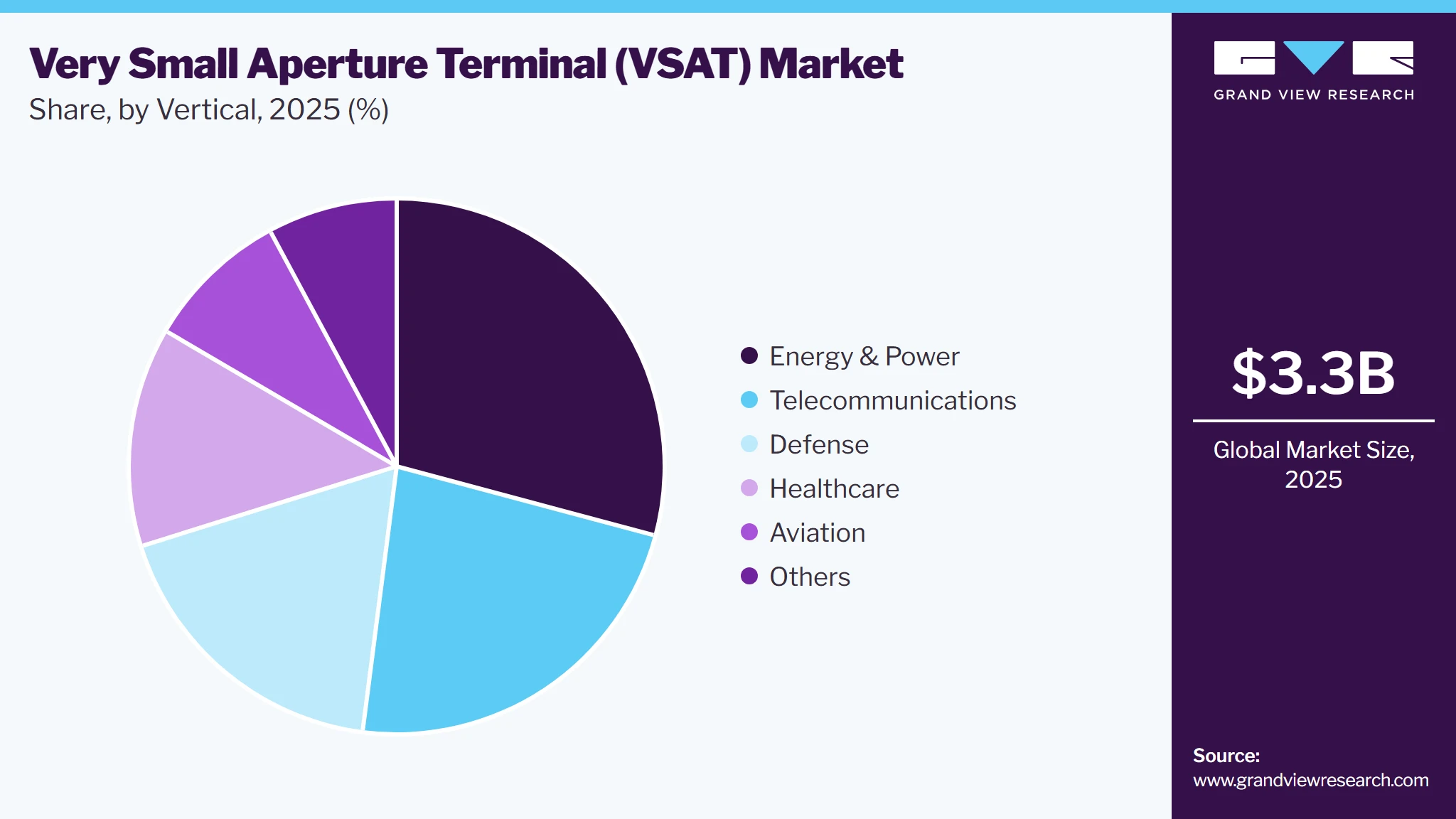
Based on vertical, the energy & power segment led the market with the largest revenue share of 29.2% in 2025. VSAT systems are crucial in the energy and power sector, providing a reliable communication backbone for remote and often harsh environments. This technology helps ensure efficient operations and data transmission where traditional infrastructure might be limited. With energy and power operations often located in geographically isolated areas, VSAT technology emerges as the linchpin for seamless connectivity, enabling real-time monitoring, control, and optimization of critical assets and operations. The demand for VSAT systems within this sector continues to escalate, driven by the imperative for uninterrupted communication to ensure operational efficiency, safety, and regulatory compliance.
 To learn more about this report, Download Free Sample Report
The telecommunications segment is expected to register high growth during the forecast period. VSAT technology has emerged as a pivotal solution for telecom operators, enabling them to extend their reach into underserved and remote areas where traditional terrestrial infrastructure is inadequate or economically unfeasible. As the demand for broadband connectivity, mobile services, and digital applications continues to escalate globally, the market for VSAT systems in the telecom sector is witnessing significant growth.
Application Insights
Based on application, the data transfer segment led the market with the largest revenue share of 33.6% in 2025. The demand for VSAT systems for data transfer applications has witnessed an unprecedented surge, propelled by the exponential growth of digitalization across industries and regions. These applications, leveraging the high-speed and reliable connectivity provided by VSAT technology, facilitate seamless transmission of large volumes of data, ranging from multimedia content to critical operational information, in remote and underserved areas. The segment's growth is expected to propel as organizations increasingly prioritize efficient data exchange for enhanced productivity and decision-making.
The private network segment is expected to grow significantly during the forecast period. This growth is fueled by the imperative for secure, high-speed private communication solutions that cater specifically to the needs of enterprises. VSAT systems offer a compelling proposition by enabling the establishment of dedicated private networks, ensuring reliable connectivity for critical operations across diverse industries. As businesses prioritize data security, reliability, and scalability in their network infrastructure, the versatility and robustness of VSAT systems make them an increasingly preferred choice.
Regional Insights
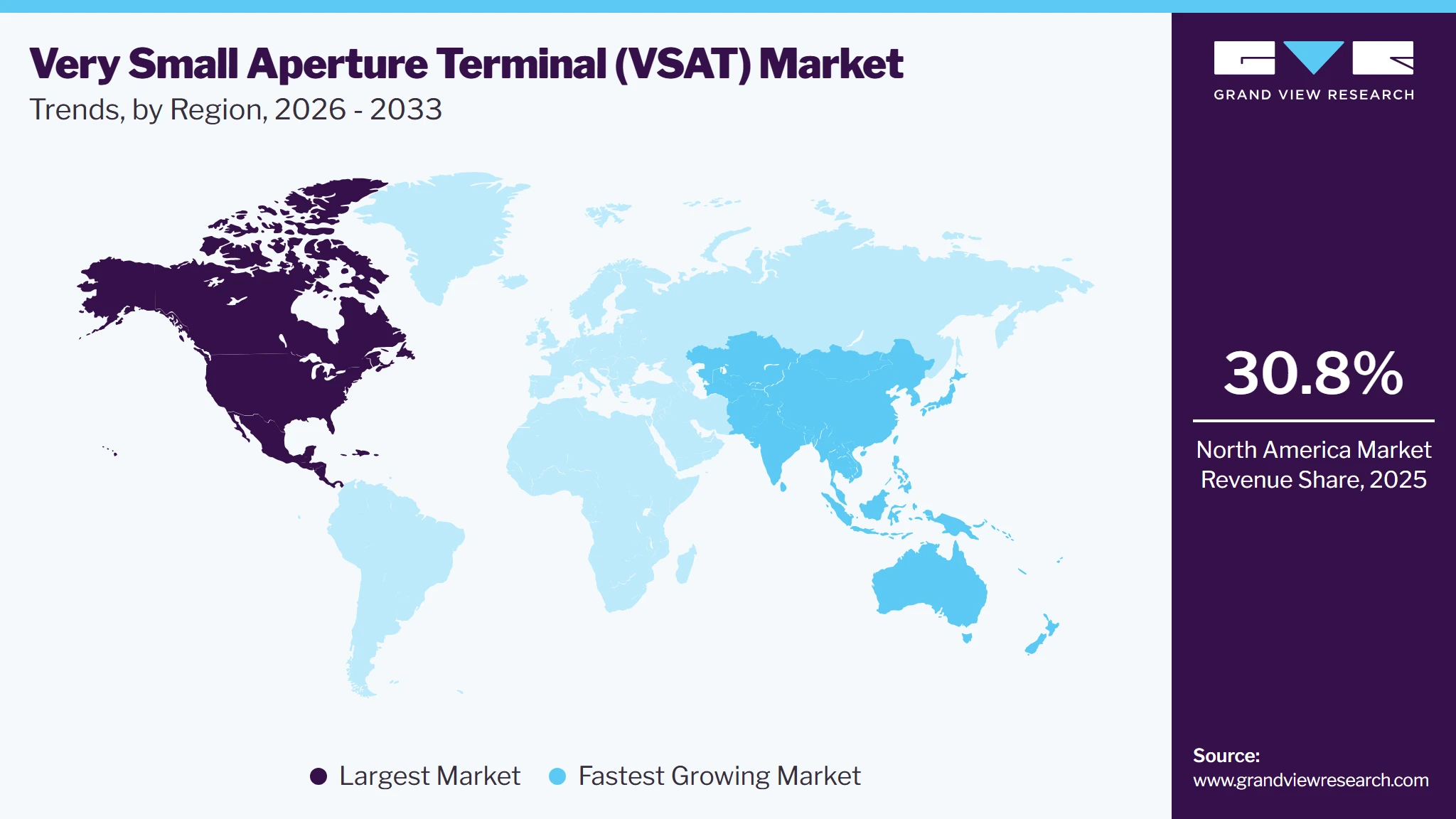
North America dominated the global very small aperture terminal market with the largest revenue share of 30.8% in 2025. The dominance can be attributed to the presence of several leading players in the region, such as Echostar Corporation, L3Harris Technologies, Inc., Intelsat, and Viasat, Inc. Moreover, increasing demand for reliable communication solutions in remote and underserved areas is predicted to fuel market growth.
 To learn more about this report, Download Free Sample Report
U.S. Very Small Aperture Terminal (VSAT) Market Trends
The very small aperture terminal market in the U.S. held the largest share in the North America region in 2025. In recent years, there has been a notable increase in VSAT terminal shipments, driven by the rising demand for high-speed internet connectivity in remote and underserved areas across the U.S.
Europe Very Small Aperture Terminal (VSAT) Market Trends
The very small aperture terminal (VSAT) market in Europe is expected to grow significantly from 2024 to 2030. Managed service offerings and cloud-based VSAT solutions are gaining popularity, providing flexibility, scalability, and cost-effectiveness for European businesses and organizations, thereby fueling market growth.
Asia Pacific Very Small Aperture Terminal (VSAT) Market Trends
The very small aperture terminal (VSAT) market in Asia Pacific is experiencing the highest growth. With a vast geographical expanse and diverse economic landscapes, Asia Pacific presents unique opportunities and challenges for VSAT deployment; beyond the traditional sectors, such as maritime and energy, Asia Pacific showcases increasing adoption of VSAT in areas like agriculture, where satellite-based precision farming solutions are revolutionizing agricultural practices. In addition, the region witnesses a surge in demand for VSAT in disaster response and humanitarian efforts, leveraging satellite communication for rapid deployment of connectivity in crises.
Key Very Small Aperture Terminal (VSAT) Company Insights
Some key companies operating in the market include Echostar Corporation (Hughes Network Systems, LLC.), Gilat Satellite Networks Ltd., Intelsat, and Viasat, Inc.
-
Hughes Network Systems, LLC (Echostar Corporation) is a leading provider of satellite-based broadband solutions and managed network services, catering to both consumer and enterprise markets globally. With a history spanning over four decades, Hughes has established itself as a pioneer in satellite communications technology, specializing in developing and deploying innovative VSAT systems, satellite modems, and network management platforms.
-
Gilat Satellite Networks Ltd. is a leading global provider of satellite-based broadband communication solutions, catering to a wide range of industries and applications. With over three decades of experience, the company specializes in developing innovative VSAT technology, including ground segment equipment, satellite modems, and satellite networks.
L3Harris Technologies, Inc., Orbit Communication Systems Ltd, Thuraya Telecommunications Company, and Singtel are some of the emerging market participants.
-
L3Harris Technologies, Inc. is a global aerospace and defense technology company renowned for its innovative solutions across a broad spectrum of industries. With a rich legacy of over a century, L3Harris specializes in providing advanced communication, surveillance, and reconnaissance systems, as well as electronic warfare, avionics, and space technology solutions.
-
Thuraya Telecommunications Company is a leading provider of mobile satellite communication solutions, offering voice, data, and broadband services to customers across the globe.
Key Very Small Aperture Terminal (VSAT) Companies:
The following are the leading companies in the very small aperture terminal (VSAT) market.
- Orbit Communication Systems Ltd
- L3Harris Technologies, Inc.
- Gilat Satellite Networks Ltd.
- AsiaSatellite.co
- Cobham Satcom
- Echostar Corporation
- ODN, Inc.
- Singtel
- Thuraya Telecommunications Company
- Viasat Inc.
Competitive Benchmarking
Category
Operating Strategies
Competitive Edge
Weakness
Established Players (L3Harris Technologies, Inc., Gilat Satellite Networks Ltd., EchoStar Corporation, Cobham Satcom, Viasat Inc.)
- These players are focused on developing advanced VSAT platforms, expanding managed connectivity services, investing in multi-orbit satellite technologies, strengthening defense and enterprise contracts, and pursuing strategic partnerships to broaden global service coverage.
- These players have strong global presence, comprehensive product portfolios, extensive satellite communication expertise, established customer relationships, advanced R&D capabilities, and large-scale service networks enable them to compete across commercial and government markets.
- Large VSAT providers often rely on substantial investments in satellite infrastructure, global service networks, and continuous technology upgrades. These high operational and capital requirements can increase costs and reduce flexibility, making it more difficult to quickly adapt to changing customer demands and emerging market opportunities.
Emerging Players (Orbit Communication Systems Ltd., Thuraya Telecommunications Company)
- These players are focused on specialized VSAT applications, regional market expansion, customized communication solutions, strategic collaborations, and targeted investments in niche satellite communication segments.
- These players have strong expertise in selected applications, flexible solution development, faster response to customer-specific requirements, and growing presence in regional satellite communication markets.
- Limited product portfolios and regional operations can reduce the ability of smaller companies to meet diverse customer requirements across multiple industries. As a result, they often focus on niche markets while facing challenges in securing large, complex projects.
Recent Developments
-
In May 2024, Eutelsat Group expanded its collaboration with InterSAT, a prominent satellite service provider in Africa, to bolster InterSAT's presence in the Pan-African enterprise and retail sectors. This strategic partnership, spanning multiple years, entails adding Ku-Band capacity over Central and Eastern Africa via Eutelsat's EUTELSAT 70B satellite to InterSAT's existing offerings.
-
In April 2024, Satcom Global and Intelsat strengthened their partnership through a new global agreement. This collaboration expands the reach and capabilities of Satcom Global’s AuraNow VSAT solution, powered by Intelsat's advanced Ku-band network. AuraNow offers businesses unparalleled flexibility and scalability in their satellite communication needs.
-
In September 2023, L3Harris Technologies, Inc. was awarded a five-year contract worth USD 125.1 million from the Defense Logistics Agency to repair parts and supply spares for very small aperture terminal transmission systems the company had built.
Very Small Aperture Terminal (VSAT) Market Report Scope
Report Attribute
Details
Market size in 2025
USD 3.3 billion
Estimated market size in 2026
USD 3.6 billion
Projected market size by 2033
USD 8.0 billion
Growth rate
CAGR of 12.0% from 2026 to 2033
Base year for estimation
2025
Historical data
2021 - 2024
Forecast period
2026 - 2033
Quantitative units
Revenue in USD million/billion and CAGR from 2026 to 2033
Report coverage
Revenue forecast, company market share, competitive landscape, growth factors, and trends
Segments covered
Solution, platform, frequency, network architecture, design, application, vertical, region
Regional scope
North America; Europe; Asia Pacific; Latin America; MEA
Country scope
U.S.; Canada; Mexico; Germany; U.K.; France; China; Japan; India; South Korea; Australia; Brazil; Kingdom of Saudi Arabia; UAE; South Africa
Key companies profiled
Orbit Communication Systems Ltd; L3Harris Technologies, Inc.; Gilat Satellite Networks Ltd.; AsiaSatellite.co; Cobham Satcom; Echostar Corporation; ODN, Inc.; Singtel, Thuraya Telecommunications Company; Viasat Inc.
Customization scope
Free report customization (equivalent up to 8 analysts' working days) with purchase. Addition or alteration to country, regional & segment scope.
Pricing and purchase options
Avail customized purchase options to meet your exact research needs. Explore purchase options
Global Very Small Aperture Terminal (VSAT) Market Report Segmentation
The report forecasts revenue growth at global, regional, and country levels and provides an analysis of the latest industry trends in each of the sub-segments from 2021 to 2033. For this study, Grand View Research has segmented the global very small aperture terminal (VSAT) market report based on solution, platform, frequency, network architecture, design, application, vertical, and region:
-
Solution Outlook (Revenue, USD Million, 2021 - 2033)
-
Equipment
-
Fixed
-
Portable
-
-
Support Services
-
Connectivity Services
-
-
Platform Outlook (Revenue, USD Million, 2021 - 2033)
-
Land VSAT
-
Maritime VSAT
-
Airborne VSAT
-
-
Frequency Outlook (Revenue, USD Million, 2021 - 2033)
-
Ku-Band
-
Ka-Band
-
C-Band
-
S-Band
-
Others
-
-
Network Architecture Outlook (Revenue, USD Million, 2021 - 2033)
-
Star Topology
-
Mesh Topology
-
Hybrid Topology
-
Point-to-Point Links
-
-
Design Outlook (Revenue, USD Million, 2021 - 2033)
-
Rugged VSAT
-
Non-Rugged VSAT
-
-
Application Outlook (Revenue, USD Million, 2021 - 2033)
-
Data Transfer
-
Voice Communications
-
Private Network
-
Broadcasting
-
Others
-
-
Vertical Outlook (Revenue, USD Million, 2021 - 2033)
-
Healthcare
-
Energy & Power
-
Defense
-
Telecommunications
-
Aviation
-
Others
-
-
Regional Outlook (Revenue, USD Million, 2021 - 2033)
-
North America
-
U.S.
-
Canada
-
Mexico
-
-
Europe
-
UK
-
Germany
-
France
-
-
Asia Pacific
-
China
-
India
-
Japan
-
Australia
-
South Korea
-
-
Latin America
-
Brazil
-
-
Middle East & Africa
-
Kingdom of Saudi Arabia (KSA)
-
UAE
-
South Africa
-
-
Research Methodology
The very small aperture terminal (VSAT) market figures in this report are based on a proven research process that combines executive interviews with secondary research from proprietary databases, company filings, and recognized regulatory and institutional sources. Market size is built through value-chain sizing - reconciling supply-side and demand-side estimates - and triangulated with bottom-up and top-down approaches. Every estimate passes multiple levels of expert validation before publication, with each very small aperture terminal (VSAT) segment quantified using the revenue-capture definitions in the table below.
Segment Definition
Segment - Solution
Revenue capture definition
Equipment
The segment revenue generated from antennas, satellite modems, indoor and outdoor units (IDUs/ODUs), RF equipment, Block Upconverters (BUCs), Low Noise Block Downconverters (LNBs), hub and gateway equipment, mounting hardware, and related accessories required for VSAT network deployment. The segment includes both fixed and portable equipment.
- Fixed: The segment revenue generated from fixed antennas, modems, RF equipment, indoor units, outdoor units, gateways, and associated installation hardware for stationary locations.
- Portable: The segment revenue generated from flyaway systems, vehicle-mounted terminals, compact antennas, portable communication kits, and field-deployable satellite equipment.
Support Services
The segment revenue generated from installation, commissioning, maintenance, technical support, network monitoring, system upgrades, consulting, training, repair services, and managed operational support.
Connectivity Services
The segment revenue generated from satellite bandwidth subscriptions, managed network connectivity, airtime services, leased satellite capacity, network access fees, service-level agreements, and recurring communication service contracts.
Segment - Platform
Revenue capture definition
Land VSAT
The segmentRevenue generated from Land VSAT including, the connectivity subscriptions, and support services for land-based applications, including enterprise sites, government facilities, mining operations, utilities, oil & gas fields, construction sites, and rural broadband networks.
Maritime VSAT
The segment revenue generated from Maritime VSAT includes satellite connectivity services, airtime subscriptions, installation, and maintenance for commercial ships, offshore platforms, fishing vessels, cruise ships, naval vessels, and other marine assets.
Airborne VSAT
The segment revenue generated from airborne VSAT includes in-flight connectivity equipment, satellite bandwidth services, installation, certification, maintenance, and managed communication services for commercial, business, and military aircraft.
Segment - Frequency
Revenue capture definition
Ku-Band
The segment revenue generated from the Ku-band includes satellite bandwidth subscriptions, managed connectivity services, installation, maintenance, and network management for enterprises, maritime, broadcasting, and government applications.
Ka-Band
The segment revenue generated by Ka-band includes high-throughput satellite (HTS) connectivity services, broadband subscriptions, installation, managed services, and maintenance supporting high-speed satellite communications.
C-Band
The segment revenue generated from C-band includes satellite capacity services, connectivity subscriptions, installation, support, and maintenance for broadcasting, enterprise communications, and regions requiring reliable weather-resistant connectivity.
S-Band
The segment revenue generated from S-band includes satellite communication services, network subscriptions, installation, and maintenance for specialized government, defense, emergency response, and mobile communication applications.
Others
The segment revenue generated from others operating in other frequency bands such as X-band, L-band, and other specialized bands, including equipment sales, satellite connectivity services, bandwidth subscriptions, installation, and technical support for niche commercial, government, and military applications.
Segment - Network Architecture
Revenue capture definition
Star Topology
The segment revenue is generated from star topology by centralized network infrastructure, satellite connectivity services, bandwidth subscriptions, installation, network management, and maintenance for star configured deployments.
Mesh Topology
The segment revenue generated from mesh topology includes peer-to-peer networking equipment, satellite connectivity services, network software, installation, maintenance, and managed communication services that support direct terminal to terminal connectivity.
Hybrid Topology
The segment revenue generated from the integrated combining star and mesh topology, including network equipment, software platforms, connectivity services, installation, optimization, and ongoing support services.
Point-to-Point Links
The segment revenue generated from point to point Links includes satellite bandwidth services, specialized networking equipment, installation, maintenance, and managed connectivity contracts for secure site to site communications.
Segment - Design
Revenue capture definition
Rugged VSAT
The segment revenue generated from the ruggedized VSAT includes antennas and communication equipment designed for harsh environments, along with installation, maintenance, managed services, and satellite connectivity subscriptions for defense, energy, mining, and other industrial applications.
Non-Rugged VSAT
The segment revenue generated from the non-rugged VSAT includes satellite connectivity services, installation, technical support, maintenance, and managed communication services for enterprises, government, retail, education, and general commercial applications.
Segment - Application
Revenue capture definition
Data Transfer
The segment revenue generated from data transfer, satellite bandwidth subscriptions, managed connectivity services, and support solutions used for broadband internet access, enterprise networking, cloud connectivity, IoT communication, and data transmission.
Voice Communications
The segment revenue generated from voice communications includes VoIP-enabled VSAT equipment, airtime services, communication subscriptions, installation, and maintenance supporting voice communication over satellite networks.
Private Network
The segment revenue generated from private network, secure connectivity services, network management, equipment sales, installation, and maintenance for private enterprise and government communication networks.
Broadcasting
The segment revenue generated from broadcasting, satellite uplink and downlink services, bandwidth leasing, content distribution services, installation, and maintenance for television, radio, and media broadcasting applications.
Others
The segment revenue generated from others includes remote monitoring, SCADA, telemetry, emergency response, distance learning, public safety, and other specialized satellite communication applications, including equipment, connectivity, and support services.
Segment - Vertical
Revenue capture definition
Healthcare
The segment's revenue is generated from healthcare through satellite connectivity services, managed network solutions, installation, and maintenance, supporting telemedicine, remote healthcare facilities, emergency medical communications, and healthcare data connectivity.
Energy & Power
The segment revenue is generated from energy & power, satellite bandwidth services, network management, installation, and maintenance for oil & gas operations, power utilities, renewable energy sites, offshore platforms, and remote energy infrastructure.
Defense
The segment's defense revenue includes secure satellite communication systems, managed connectivity services, installation and maintenance, and long-term defense communication contracts for military and government applications.
Telecommunications
The segment revenue is generated from telecommunications, satellite backhaul services, broadband connectivity subscriptions, managed network services, installation, and maintenance supporting telecom operators and communication service providers.
Aviation
The segment revenue is generated from aviation, such as in-flight connectivity systems, satellite bandwidth services, installation, certification, maintenance, and managed communication services for commercial, business, and military aircraft.
Others
The segment revenue is generated from other sectors, such as maritime, mining, transportation, public safety, disaster recovery, and other commercial or government sectors.
Estimation Model
Layer Name
Key Question
Description
Addressable Industry Assessment
Which industries generate demand for VSAT solutions?
This layer identifies industries that require satellite communication, including defense, maritime, aviation, energy, telecommunications, mining, healthcare, and government. It evaluates remote connectivity requirements, digital infrastructure gaps, and communication reliability needs. The assessment establishes the addressable market across commercial and public-sector applications.
Solution Adoption Analysis
Which VSAT products and services are being adopted?
This layer evaluates adoption across equipment, connectivity services, managed services, frequency bands, and network architectures. It analyzes customer purchasing behavior, technology migration, satellite capacity utilization, and service preferences. Demand patterns are assessed across fixed, portable, and mobile deployments.
Technology & Regional Deployment
Where is deployment expanding and which technologies are driving growth?
This layer examines deployment across North America, Europe, Asia Pacific, Latin America, and the Middle East & Africa. It evaluates investments in GEO, MEO, LEO, and multi-orbit networks alongside high-throughput satellites and software-defined networking. Regional infrastructure investments and digital inclusion initiatives are incorporated into demand estimation.
Market Revenue Forecast
What is the long-term revenue opportunity?
This layer combines equipment sales, recurring connectivity services, support contracts, replacement cycles, and satellite capacity demand to estimate market revenue. Pricing trends, technology adoption, competitive intensity, and industry investment patterns are incorporated into forecasting. The model produces comprehensive revenue projections across all market segments.
Delivered Customizations
This report has been delivered with the following In-depth customizations
Client Request
Customization Delivered
Value Adds
Regional Very Small Aperture Terminal Market Opportunity Assessment
Country/region-wise market sizing and forecasts
Analysis of demand, adoption trends, and regulatory landscape
Identification of high-growth regions and investment hotspots
Identified region-specific growth opportunities
Supported expansion and go-to-market strategy
Enabled informed regional investment decisions
Cross-Segmentation Analysis for the Very Small Aperture Terminal Market
Criss-cross market analysis by solution, platform, frequency, network architecture, design, application, vertical
Demand and adoption assessment across key segments
Segment attractiveness and growth potential benchmarking
Identified high-potential market segments
Supported targeted product positioning and marketing strategy
Improved customer and segment prioritization
Competitive Benchmarking and Strategic Positioning in the Very Small Aperture Terminal Market
Benchmarking of key competitors across products, pricing, partnerships, and innovation
Comparative assessment of market share, capabilities, and strategies
Analysis of competitive strengths, gaps, and differentiation areas
Identified competitive white spaces and growth gaps
Supported strategic positioning and differentiation
Enabled data-driven competitive strategy development
Frequently Asked Questions About This Report
North America dominated the global market with the largest revenue share of 30.8% in 2025.
Asia Pacific is the fastest-growing region over the forecast period.
Land VSAT segment held the largest market share of 52.1% in 2025, while maritime VSAT segment is expected to be the fastest-growing market.
The global very small aperture terminal market size was valued at USD 3.3 billion in 2025 and is estimated at USD 3.6 billion in 2026.
The global very small aperture terminal market is expected to grow at a CAGR of 12.0% from 2026 to 2033, reaching USD 8.0 billion by 2033.
Some key players operating in the VSAT market include Orbit Communication Systems Ltd; L3Harris Technologies, Inc.; Gilat Satellite Networks Ltd.; AsiaSatellite.co; Cobham Satcom; Echostar Corporation; ODN, Inc.; Singtel, Thuraya Telecommunications Company; and Viasat Inc.
The demand for very small aperture terminal is surging across various industries due to its ability to offer reliable, high-speed communication services to connect remote locations.
Ku-Band segment accounted for the largest revenue share of 41.7% in 2025, and Ka-Band segment is second fastest growing market
Equipment segment dominated the market, with a revenue share of 53.9% in 2025. The segment's dominance can be attributed to the growing focus on digital transformation and the increasing adoption of cloud-based services that create opportunities for VSAT equipment vendors.
About the Author(s)
Communication Services Research Team
Technology · Communication ServicesThis report was authored by the communication services research team at Grand View Research - comprising two research analysts, one senior research analyst, and one industry expert - with specialized expertise in the communication services segment of the technology industry. All findings are based on proprietary technology databases, executive interviews, and regulatory analysis, subject to internal peer review prior to publication.
Last Updated:
Speak to Analyst

Customize this report to your needs - add regions, segments, or data points, with 20% free customization.
Or view our licence options:


ISO 9001:2015 & 27001:2022 Certified
We are GDPR and CCPA compliant! Your transaction & personal information is safe and secure. For more details, please read our privacy policy.


