
- Home
- »
- Medical Devices
- »
-
Zirconia Based Dental Materials Market Report, 2026-2033GVR Report cover

Zirconia Based Dental Materials Market (2026 - 2033)
Size, Share & Trends Analysis Report By Type, By Material Grade, By Manufacturing Process, By Clinical Application, By End User, By Distribution Channel, By Region, And Segment Forecasts
Market Size, 2025
$1.2BMarket Estimate, 2026
$1.3BMarket Forecast, 2033
$2.3BCAGR, 2026–2033
8.4%Zirconia Based Dental Materials Market Summary
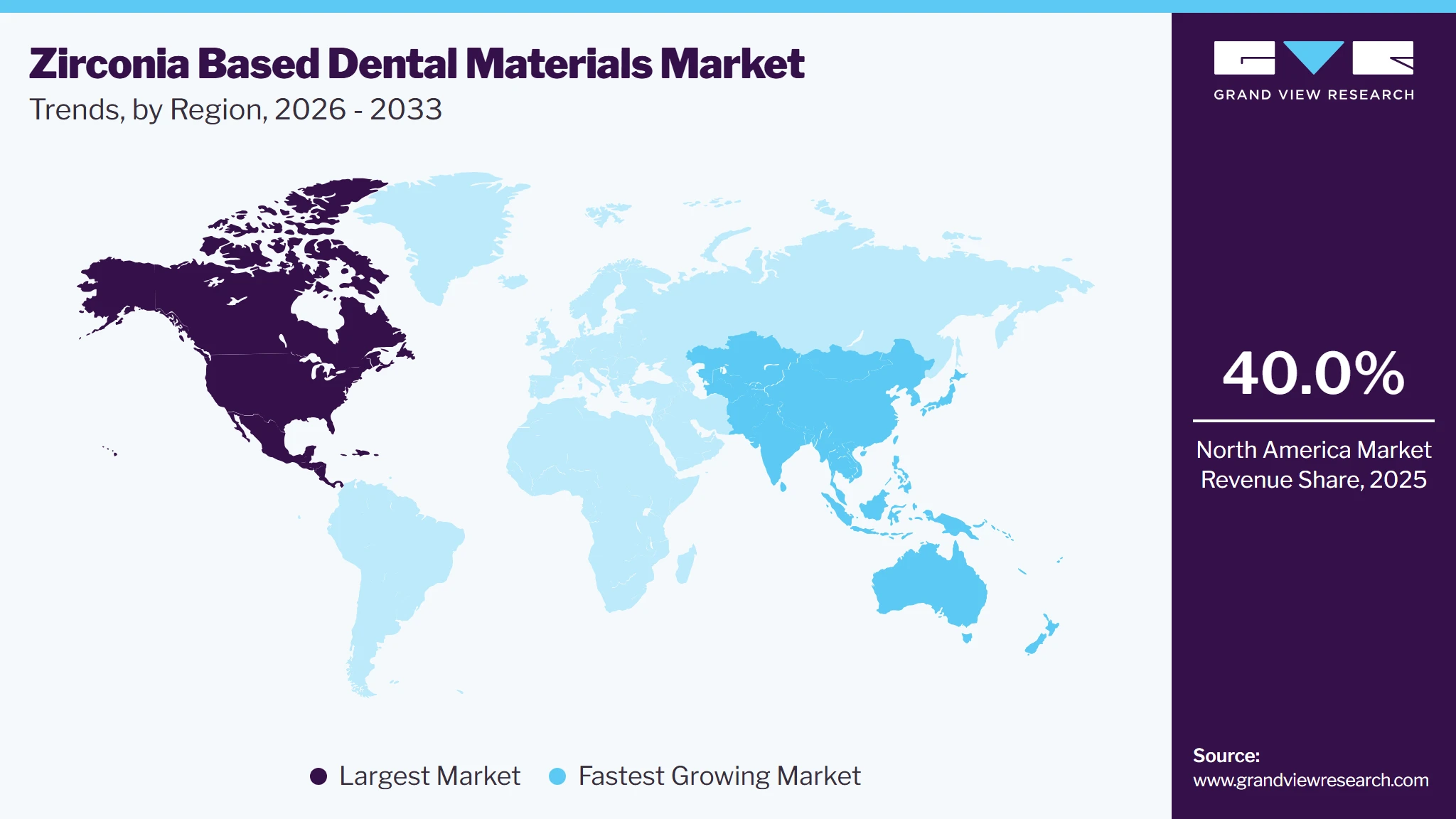
The global zirconia based dental materials market size was valued at USD 1.2 billion in 2025 and is projected to grow from USD 1.3 billion in 2026 to USD 2.3 billion by 2033, at a CAGR of 8.4% from 2026 to 2033. North America dominated the market, accounting for the largest revenue share of 40.0% in 2025.
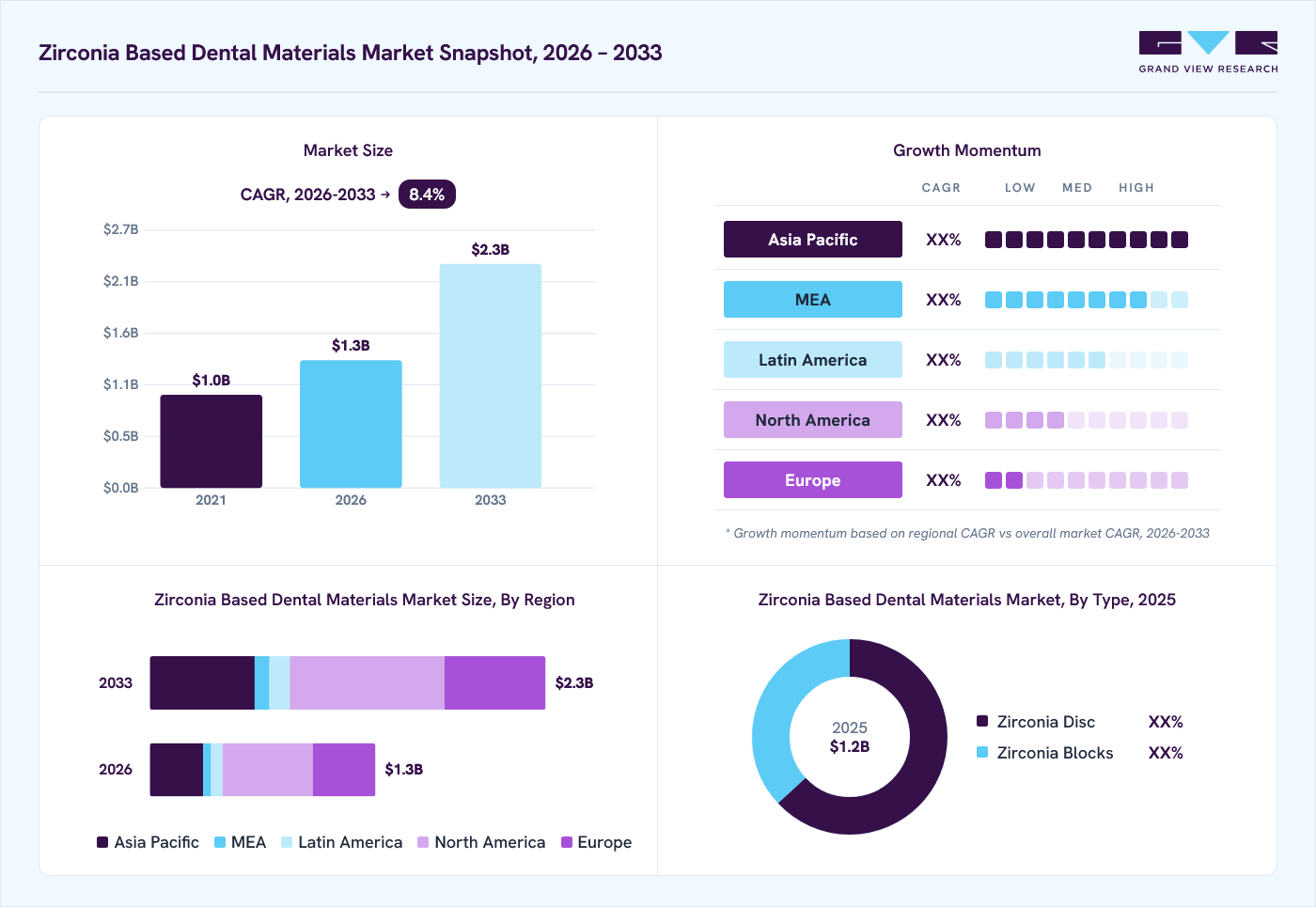 Source: Grand View Research, IR Documents, Primary Interviews, Paid DatabasesTo learn more about this report,
 Download Free Sample Report
Key Market Trends & Insights
- By type: Zirconia disc held the largest revenue share of 63.1% in 2025
- By material grade: 3Y-TZP held the largest revenue share of 35.9% in 2025
- By manufacturing process: CAD/CAM milling held the largest revenue share of 82.4% in 2025
- By clinical application: Single crowns held the largest revenue share of 42.5% in 2025
- By end user: Dental laboratories held the largest revenue share of 45.3% in 2025
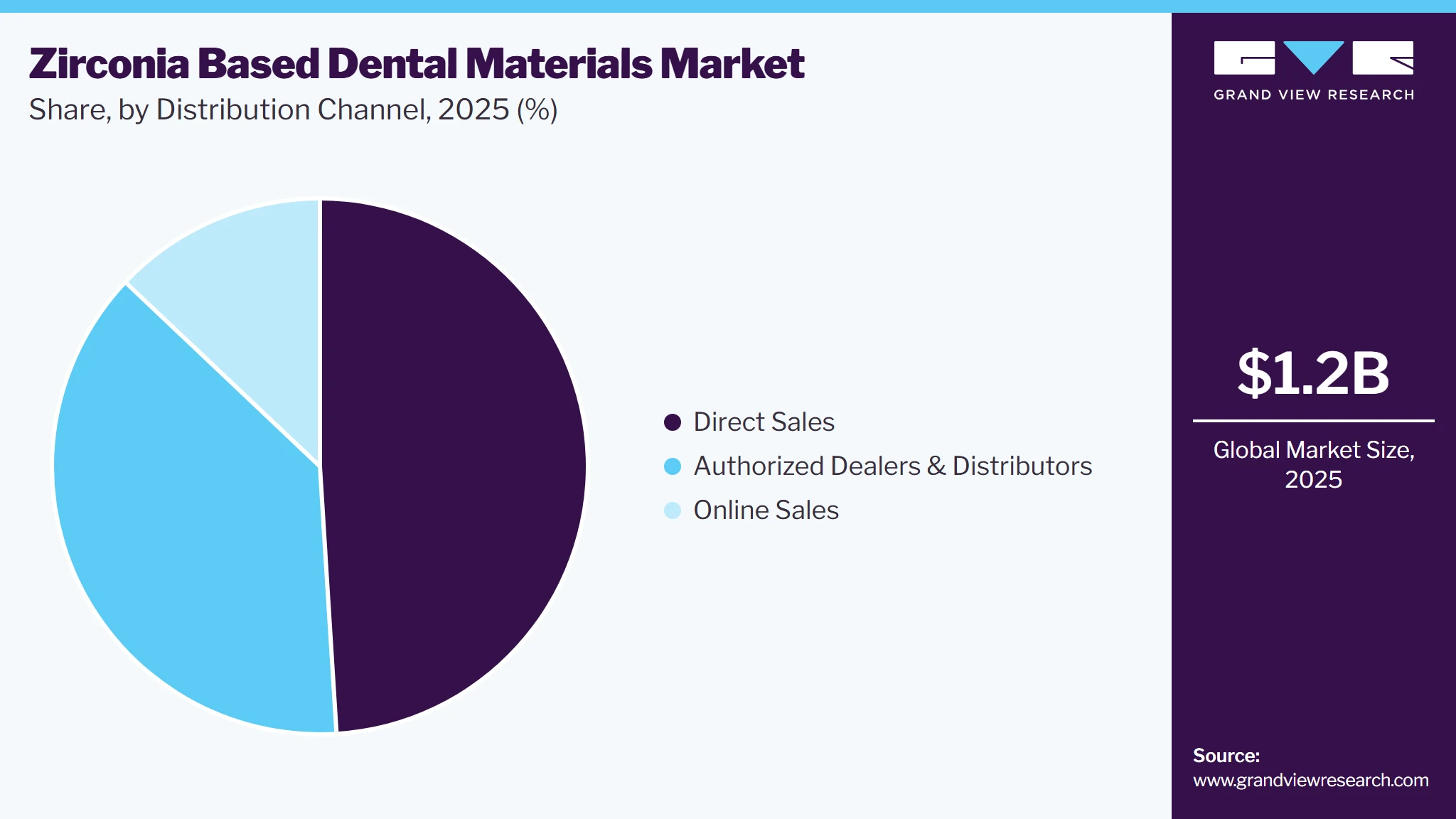
- By distribution channel: Direct sales held the largest revenue share of 49.0% in 2025
Regional Highlights
- Largest regional market: North America (40.0% revenue share, 2025)
- Fastest-growing regional market: Asia Pacific (highest CAGR, 2026-2033)
- By country: The U.S. held the largest share in 2025
Market Size & Forecast
- Market Size in 2025: USD 1.2 Billion
- Estimated Market Size in 2026: USD 1.3 Billion
- Projected Market Size by 2026: USD 2.3 Billion
- CAGR (2026-2033): 8.4%
Three ways to get this report
Buy it, customize it, or ask a question.Ask an Analyst
Analyst response in 1 business day
- AccessReport author, directly
- Reply timeWithin 1 working day
- No sales callDirect answer only
- FormatEmail reply
- CostFree, no cost
Get the Full Report
What the study covers
- FormatsPDF · Excel · Dashboard
- Timeline2026–2033 annual, 2025 base
- Coverage20+ countries, 5 regions
- Companies10+ key players profiled
Customize the Report
20% free customization
- IncludeCountries, segments, points
- TailorTo your product definition
- ExtendDeeper competitor detail
- OrA fully bespoke study
- Turnaround5–10 working days
The growth of the global zirconia based dental materials industry is driven by the increasing demand for durable, highly aesthetic, and biocompatible dental restorations, along with the rising prevalence of dental disorders such as tooth decay, tooth loss, and periodontal diseases.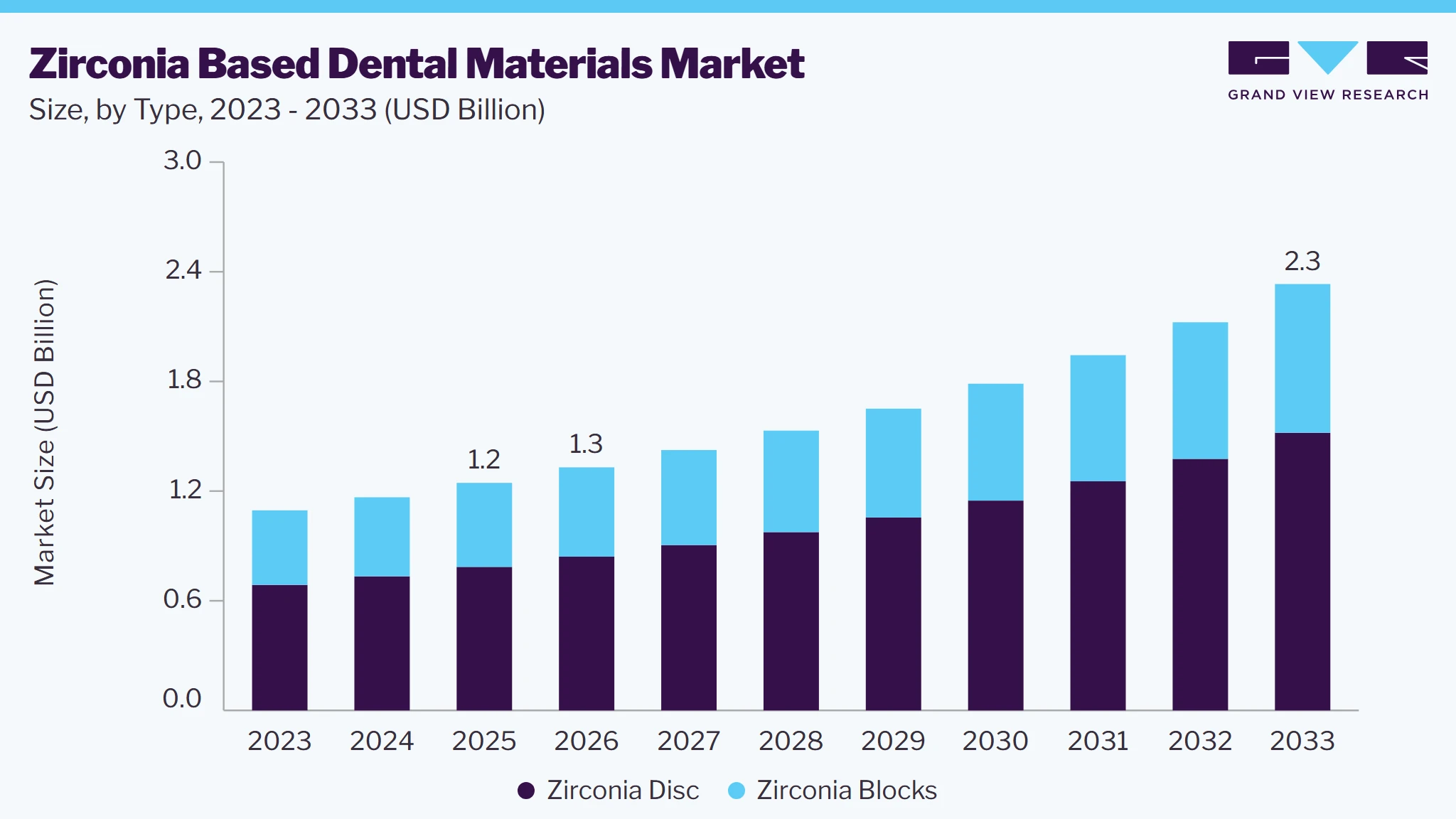 To learn more about this report, Download Free Sample Report
An aging population, growing awareness of oral health, and higher spending on cosmetic dentistry have significantly increased the adoption of zirconia crowns, bridges, veneers, implant abutments, and full-arch prostheses. Compared with traditional metal-based restorations, zirconia offers superior strength, natural tooth-like appearance, excellent wear resistance, and minimal risk of allergic reactions, making it a preferred material among both dentists and patients. In August 2025, according to the World Health Organization (WHO), dental caries is the most common noncommunicable disease globally, affecting approximately 2.5 billion people worldwide. The organization also estimates that around 2 billion people have caries in permanent teeth and 510 million children have caries in primary teeth. As untreated dental caries often leads to tooth damage, tooth loss, and the need for restorative procedures, demand for durable and aesthetic materials such as zirconia for crowns, bridges, implant-supported restorations, and prostheses continue to increase.
Comparative Analysis of HUGE Zirconia Dental Materials
Product
Type
Bending Strength (MPa)
Translucency
Fracture Toughness (MPa·m<sup>1/2</sup>)
Available Shades
High Strength HT
3Y-TZP
1400
40%
≥5
White
High Translucency ST
3Y-TZP
1100
43%
≥5
White, A1, A2, A3, A3.5, A4, B1, B2, B3, B4, C1, C2, C3, C4, D2, D3, D4
Multi-layered High Translucency MHT
3Y-TZP
1100
43%
≥5 (Dentin)
A Light, A Dark
Anterior Translucency AT
5Y-TZP
700
49%
≥3.5
White, A1, A2, A3, A3.5, A4, B1, B2, B3, B4, C1, C2, C3, C4, D2, D3, D4
Gradient Multilayer GM-3D
Incisal: 5Y-TZP
Dentin: 4Y-TZP
Incisal: 700
Dentin: 1060
Incisal: 57%
Dentin: 43%
≥5 (Dentin)
Hollywood White, A1, A2, A3, A3.5, A4, B1, B2, B3, B4, C1, C2, C3, C4, D2, D3, D4, Bleach
Dentin: 4Y-TZP
Incisal: 700
Incisal: 700
Dentin: 1200
Incisal: 57%
Dentin: 43%
≥5 (Dentin)
A1, A2, A3, A3.5, A4, B1, B2, B3, B4, C1, C2, C3, C4, D2, D3, D4, Bleach
Source: Shandong Huge Dental Material Corporation
The table compares the technical specifications of the HUGE zirconia product portfolio, highlighting differences in material composition, strength, translucency, fracture toughness, and shade availability. High Strength HT provides the highest bending strength (1,400 MPa) for durable posterior restorations, while Anterior Translucency (AT) offers the highest translucency (49%) for esthetic anterior crowns. High Translucency ST and MHT balance strength and esthetics for versatile restorations. GM-3D and MM-4D feature multilayer 4Y/5Y zirconia structures that combine natural translucency with high mechanical strength, making them suitable for premium, lifelike restorations across both anterior and posterior applications.
Consumer Perception and Preferences
Consumers prefer zirconia based dental materials that combine superior esthetics, durability, biocompatibility, and long-term clinical performance. Purchasing decisions are becoming more evidence-driven, with dentists and dental laboratories prioritizing materials supported by clinical validation, high flexural strength, natural translucency, and compatibility with digital CAD/CAM workflows. Growing awareness of multilayer zirconia, high-translucency formulations, and metal-free restorations has shifted preferences toward premium zirconia materials that deliver both functional reliability and lifelike aesthetics.
Key Consumer Preferences
-
Natural aesthetics: Dental professionals and patients prefer high-translucency and multilayer zirconia that closely mimics the appearance of natural teeth.
-
High strength and durability: Materials offering excellent flexural strength, fracture resistance, and long-term clinical performance are favored for crowns, bridges, and implant restorations.
-
Digital workflow compatibility: CAD/CAM-compatible zirconia blocks and discs that enable precise, efficient fabrication are preferred.
-
Biocompatibility and metal-free restorations: Growing demand for metal-free, hypoallergenic materials drives preference for zirconia over conventional metal-based restorations.
-
Trusted brands and clinical evidence: Buyers favor products from established manufacturers with proven clinical performance, regulatory approvals, and strong technical support.
- Value and workflow efficiency: Dental laboratories and clinics prioritize zirconia materials that offer consistent quality, simplified processing, reduced chairside adjustments, and cost-effective long-term outcomes.
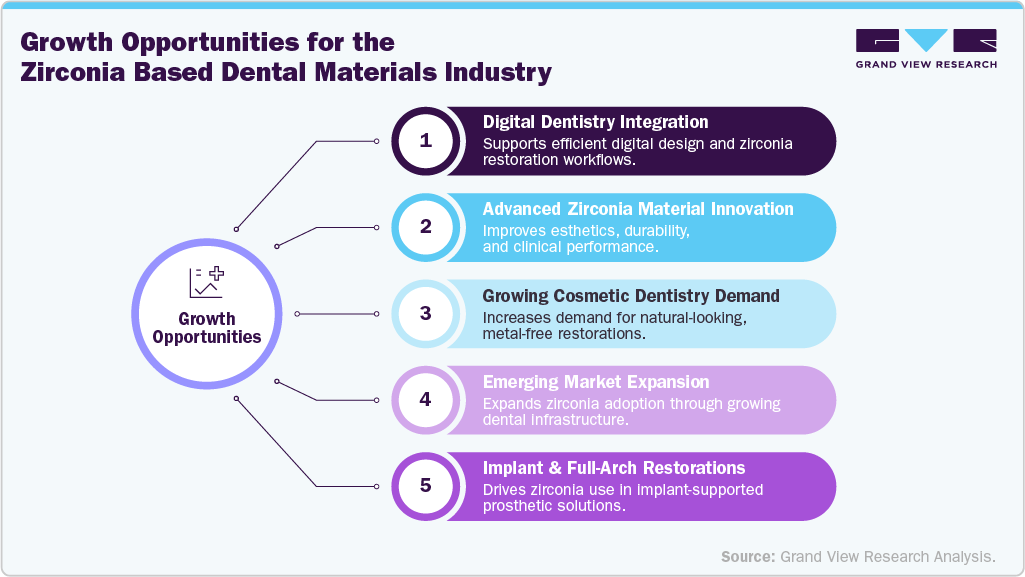 To learn more about this report, Download Free Sample Report
Market Dynamics
The zirconia based dental materials market is experiencing steady growth due to the increasing prevalence of dental diseases, rising demand for aesthetic and metal-free dental restorations, and the growing number of restorative and prosthetic dental procedures worldwide. An aging population, increasing awareness of oral health, and greater acceptance of cosmetic dentistry are driving demand for zirconia-based crowns, bridges, and dentures. The rapid adoption of digital dentistry, including CAD/CAM systems, intraoral scanners, and digital workflows, is further supporting market expansion by improving the precision, efficiency, and consistency of zirconia restorations. Continuous advancements in high-translucency and multilayer zirconia materials are enhancing the strength-aesthetics balance, making zirconia suitable for a wider range of clinical applications. In addition, expanding dental care infrastructure, increasing investments in modern dental laboratories, and improving access to advanced restorative treatments in emerging economies are creating new growth opportunities. However, the relatively high cost of zirconia materials and the investment required for digital manufacturing equipment remain challenges for some dental practices and laboratories, particularly in cost-sensitive markets.
The rising prevalence of dental diseases is a major driver of growth in the zirconia based dental materials market. Conditions such as dental caries, tooth decay, periodontal disease, cracked teeth, and tooth loss are becoming more common due to aging populations, poor oral hygiene, unhealthy diets, and lifestyle changes. These conditions often require restorative treatments such as crowns, bridges, and dentures, in which zirconia has become a preferred material for its high strength, durability, biocompatibility, and natural tooth-like appearance. Patients are also placing greater importance on aesthetics, leading dentists to recommend metal-free zirconia restorations instead of traditional metal-based alternatives. In addition, growing awareness of preventive and restorative dental care, combined with increased access to dental services, has resulted in a higher number of restorative procedures worldwide. As demand for long-lasting, aesthetically pleasing dental restorations continues to rise, adoption of zirconia discs and blocks by dental laboratories and clinics is expected to increase, supporting steady market growth.
The high cost of zirconia materials remains a significant restraint for the market, particularly in price-sensitive regions. Zirconia discs and blocks are generally more expensive than conventional restorative materials because of the advanced manufacturing processes, strict quality standards, and specialized equipment required for their production and processing. In addition to material costs, dental clinics and laboratories often need to invest in CAD/CAM systems, milling machines, sintering furnaces, and trained professionals to produce zirconia restorations efficiently. These investments increase the overall cost of treatment, making zirconia restorations less affordable for many patients without adequate insurance coverage or reimbursement. Small dental laboratories and clinics may also hesitate to adopt zirconia based workflows because of the high initial capital investment. Although Zirconia offers excellent long-term performance and durability, its higher upfront cost compared with alternative materials continues to limit adoption in certain markets, especially where cost remains a primary factor in treatment decisions.
The expansion of dental care infrastructure in emerging markets presents a strong growth opportunity for the zirconia based dental materials market. Countries across the Asia Pacific, Latin America, the Middle East, and parts of Africa are investing in modern dental clinics, hospitals, dental laboratories, and digital dentistry technologies to improve access to oral healthcare services. Rising healthcare expenditure, increasing disposable incomes, expanding dental insurance coverage, and growing awareness of oral health are encouraging more patients to seek restorative and cosmetic dental treatments. At the same time, many dental laboratories are adopting CAD/CAM systems and digital workflows, increasing the demand for high-quality zirconia discs and blocks. Governments and private healthcare providers are also supporting the modernization of dental infrastructure through investments in advanced equipment and professional training. As access to quality dental care continues to improve in these regions, manufacturers of zirconia based dental materials have significant opportunities to expand their customer base, strengthen distribution networks, and increase market penetration.
Market Concentration & Characteristics
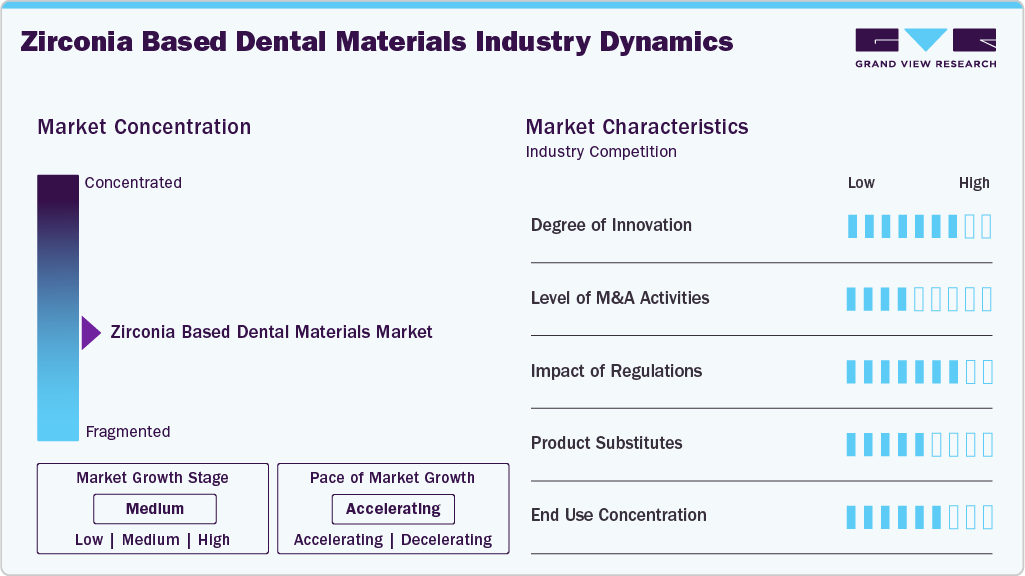
The zirconia based dental materials industry is characterized by a high degree of innovation, driven by continuous advancements in material science and digital dentistry. Manufacturers are introducing multi-layer zirconia discs with enhanced translucency, strength gradients, and natural shade transitions to improve esthetics and clinical performance while simplifying restorative workflows. For instance, Kuraray Noritake Dental offers its KATANA Zirconia portfolio of multilayer products, including UTML, STML, HTML PLUS, and YML, providing optimized color, translucency, and strength gradation for a wide range of dental restorations. These innovations continue to support wider adoption of CAD/CAM-based zirconia restorations across dental laboratories and clinics.
The market has witnessed moderate merger and acquisition activity, with leading dental manufacturers expanding their restorative materials and digital dentistry portfolios. Companies are acquiring dental material manufacturers, digital workflow developers, and laboratory solution companies to strengthen their product offerings. These strategic acquisitions enable companies to deliver integrated restorative solutions involving zirconia materials, scanners, milling systems, and design software.
 To learn more about this report, Download Free Sample Report
The market is significantly influenced by regulatory requirements governing dental materials and medical devices. Zirconia products must comply with quality, biocompatibility, mechanical performance, and manufacturing standards before commercialization. In major markets such as the U.S. and Europe, manufacturers must meet FDA regulations, ISO 6872 standards for dental ceramics, and the European Medical Device Regulation (MDR 2017/745). Compliance with these regulatory requirements increases development costs but ensures product safety, durability, and clinical reliability.
The zirconia based dental materials market faces moderate competition from alternative restorative materials, including lithium disilicate glass ceramics, porcelain-fused-to-metal (PFM) restorations, composite resin materials, and metal alloys. Lithium disilicate is commonly preferred for highly esthetic anterior restorations, while PFM restorations continue to be used in cost-sensitive applications. However, zirconia remains the preferred material for posterior restorations, implant-supported prostheses, and full-arch rehabilitations due to its superior mechanical strength, fracture resistance, biocompatibility, and long-term clinical performance.
Demand for zirconia-based dental materials is highly concentrated among dental laboratories, dental clinics, and DSO-affiliated dental practices, which perform a large volume of restorative and prosthetic procedures. Dental laboratories account for a substantial share of zirconia consumption due to their extensive use of CAD/CAM milling systems for fabricating crowns, bridges, implant restorations, and full-arch prostheses. Growing adoption of digital dentistry and increasing investments in in-house milling technologies are also driving zirconia utilization across independent dental clinics, academic institutions, and specialized implant centers.
Analyst Perspective
The zirconia based dental materials market is expected to grow steadily, driven by rising demand for aesthetic, durable, and metal-free dental restorations and the increasing prevalence of dental disorders worldwide. The growing adoption of digital dentistry and CAD/CAM technologies is accelerating the use of zirconia materials in restorative and prosthetic procedures. Continuous advancements in zirconia, including improved strength, translucency, and machining efficiency, are further enhancing product adoption. In addition, expanding access to dental care, increasing investments in advanced dental technologies, and rising awareness of cosmetic dentistry in emerging economies are expected to create significant growth opportunities for the market.
Type Insights
The zirconia disc segment dominated the zirconia based dental materials industry, accounting for 63.1% of the market in 2025. This dominance is supported by continuous innovation in multilayer zirconia discs, which offer improved strength, translucency, and esthetics for fabricating monolithic crowns and bridges using CAD/CAM systems. Manufacturers are introducing advanced zirconia discs to meet the growing demand for highly aesthetic and durable restorations. For instance, in April 2024 , Sagemax launched the NexxZr+ Multi 2.0 Disc, featuring a multilayer composition combining 4Y-TZP and 5Y-TZP zirconia, with flexural strength of 850 MPa in the cervical region and 650 MPa in the incisal region, enabling the production of natural-looking single-tooth and bridge restorations for both anterior and posterior applications. Such technological advancements have accelerated the adoption of zirconia discs among dental laboratories and clinics, reinforcing their leading market position.
The zirconia blocks segment is expected to grow at a significant CAGR during the forecast period, driven by the increasing demand for high-performance CAD/CAM materials that deliver consistent quality, precision, and manufacturing efficiency in digital dentistry. Dental laboratories are adopting advanced zirconia blocks that offer superior mechanical properties, excellent machinability, and reliable batch-to-batch consistency for producing crowns, bridges, and implant-supported restorations. Reflecting this trend, in April 2026 , Zirbet introduced its next-generation AG System Zirconia Blocks, powered by SINOCera technology. The product emphasizes vertically integrated manufacturing, enabling stringent quality control from raw material selection to final inspection, ensuring consistent performance and precision required by modern dental laboratories. Such product innovations are expected to accelerate the adoption of zirconia blocks in digital restorative workflows during the forecast period.
Material Grade Insights
The 3Y-TZP segment dominated the zirconia based dental materials market, accounting for 35.9% of the market in 2025. This dominance is supported by the widespread preference for high-strength zirconia in posterior crowns, long-span bridges, implant abutments, and full-arch prostheses, where mechanical durability is critical. Containing approximately 3 mol% yttria, 3Y-TZP exhibits flexural strength exceeding 1,000 MPa and excellent fracture toughness, making it the preferred material for load-bearing restorations. Its long-established clinical performance, cost-effectiveness, and compatibility with CAD/CAM manufacturing have reinforced its adoption across dental laboratories and clinics for routine restorative procedures.
The multi-layer zirconia segment is expected to grow at a significant CAGR during the forecast period, driven by the increasing demand for highly aesthetic, high-strength restorative materials that support minimally invasive and same-day digital dentistry. Multi-layer zirconia combines natural color gradients, enhanced translucency, and superior mechanical performance, reducing the need for manual staining and improving workflow efficiency. In October 2025, Dentsply Sirona introduced the CEREC Cercon 4D Multidimensional Zirconia Block, featuring proprietary three-dimensional layering technology that mimics natural dentin and enamel while providing flexural strength exceeding 1,100 MPa. The material also enables minimum wall thicknesses of 0.5 mm for single-unit crowns and 0.6 mm for bridges, preserving more natural tooth structure, while its sintering time of less than 14 minutes supports efficient chairside CAD/CAM restorations. These technological advancements are expected to accelerate the adoption of multi-layer zirconia in modern restorative dentistry.
“Based on our clinical research with CEREC Cercon 4D zirconia blocks, the 3D shading has provided an accurate shade match and blends well with the adjacent enamel. The milled restorations fit very well and have a very smooth surface finish when hand polished,” says Dr. Dennis J. Fasbinder, Clinical Professor, University of Michigan School of Dentistry.
Manufacturing Process Insights
The CAD/CAM milling segment dominated the market, accounting for 82.4% share in 2025. This dominance is supported by continuous advancements in dental milling systems that improve processing efficiency, precision, and compatibility with zirconia materials. The increasing adoption of digital workflows in dental clinics and laboratories has accelerated demand for high-performance CAD/CAM equipment capable of producing accurate crowns, bridges, implant restorations, and full-arch prostheses. In June 2026, ZOTION launched its I5 Dental Milling Machine, featuring an upgraded hardware platform, a high-definition touchscreen interface, simplified operation, enhanced processing speed, and expanded compatibility with a wider range of dental materials. Designed for dental clinics and small-to-medium laboratories, the system reduces the technical learning curve while improving productivity and manufacturing accuracy. Such technological innovations continue to reinforce the dominance of CAD/CAM milling in zirconia-based dental restoration manufacturing.
The 3D printable zirconia segment is expected to grow at the fastest CAGR during the forecast period, driven by the increasing adoption of additive manufacturing for customized dental restorations, reduced material waste, and rapid prototyping. Unlike conventional subtractive milling, 3D printing enables the production of complex geometries with greater design flexibility while improving manufacturing efficiency. Continuous advancements in printable zirconia materials and ceramic printing technologies are accelerating commercialization.
Clinical Application Insights
The single crowns segment dominated the zirconia based dental materials market, accounting for 42.5% of the market in 2025. This dominance is supported by the increasing preference for minimally invasive, tooth-preserving restorations and the widespread use of zirconia for replacing damaged individual teeth. Single crowns remain the most frequently performed indirect restorative procedure due to the high incidence of cracked teeth, large restorations, and endodontically treated teeth. Continuous advancements in chairside CAD/CAM systems and high-strength zirconia have further accelerated adoption by enabling same-day crown fabrication with improved esthetics and clinical durability.
The full-arch fixed prostheses (All-on-4/All-on-6) segment in the zirconia based dental materials industry is expected to grow at the fastest CAGR during the forecast period. This growth can be attributed to the increasing demand for permanent, implant-supported solutions for edentulous patients and advancements in full-arch digital workflows. Modern monolithic zirconia prostheses provide superior fracture resistance, low wear, and excellent esthetics compared with conventional acrylic restorations, making them preferred for full-mouth rehabilitation.
End User Insights
The dental laboratories segment dominated the market, accounting for 45.3% share in 2025. This dominance is driven by the increasing consolidation of dental laboratories, rising investments in digital manufacturing capabilities, and expanding partnerships aimed at strengthening large-scale production of customized dental restorations. Strategic collaborations are enabling laboratories to enhance operational efficiency and broaden their customer reach. In July 2026, CenterGate Capital partnered with Canadian Dental Labs (CDL), Canada's leading manufacturer of dental prosthetics and orthodontic appliances. CDL serves more than 5,000 independent dental professionals and dental service organizations across Canada, reinforcing the growing role of centralized laboratory networks in supplying high-quality zirconia-based restorations.
The dental clinics segment is expected to grow at the fastest CAGR during the forecast period. Growth is driven by the rapid expansion of organized dental clinic networks, increasing investments in digital dentistry, and rising patient demand for aesthetic and restorative procedures. Larger clinic chains are strengthening their clinical infrastructure and expanding access to advanced restorative treatments, including zirconia crowns, bridges, and implant-supported prostheses. In February 2026 , Clove Dental launched 48 new clinics in a single day, expanding its network to 715 clinics across 26 cities. The network is supported by more than 1,700 dentists and 1,100 dental assistants and has treated over 3.5 million patients, highlighting the growing scale of organized dental care and the increasing demand for zirconia-based restorative materials.
Distribution Channel Insights
The direct sales segment dominated the zirconia based dental materials industry, accounting for 49.0% share in 2025. This dominance is driven by manufacturers' increasing preference for direct engagement with dental laboratories, DSOs, and large dental clinic chains to provide customized product portfolios, technical training, installation support, and after-sales services. Direct sales channels enable suppliers to build long-term customer relationships, offer tailored pricing, and accelerate the adoption of advanced zirconia materials and CAD/CAM solutions. This trend has been reinforced by strategic partnerships between manufacturers and laboratory networks.
 To learn more about this report, Download Free Sample Report
The online sales segment is expected to grow at the fastest CAGR during the forecast period, driven by the increasing digitalization of dental procurement, rising preference for e-commerce platforms among dental laboratories and clinics, and the availability of a broad portfolio of zirconia discs, blocks, milling tools, and CAD/CAM materials through manufacturer-owned online stores. Online channels offer convenient product comparison, transparent pricing, faster order fulfillment, and direct access to technical documentation and customer support, making procurement more efficient.
Regional Insights
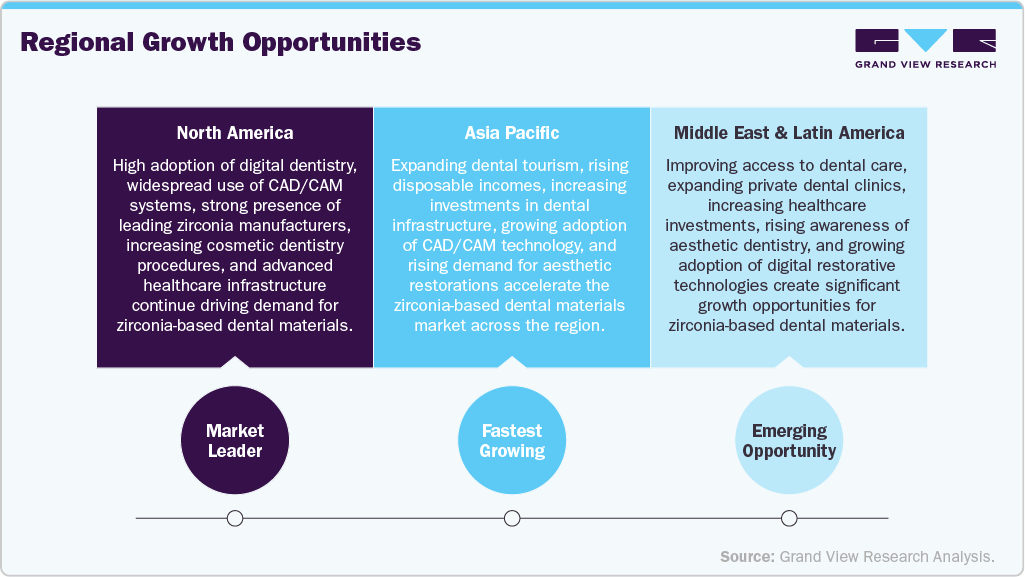
The North America zirconia based dental materials market accounted for the largest revenue share of 40.0% in 2025, supported by the region's advanced digital dentistry ecosystem, high adoption of CAD/CAM restorative workflows, and increasing demand for aesthetic and implant-supported restorations. The widespread presence of dental laboratories, DSOs, and specialty clinics has accelerated the use of zirconia discs and blocks for crowns, bridges, and full-arch prostheses. According to the American Dental Association (ADA), U.S. dental expenditures reached approximately USD 189 billion in 2024, increasing by around 4% from 2023, reflecting continued investment in advanced restorative materials and digital dental technologies that are expected to support zirconia demand through 2025 and 2026.
 To learn more about this report, Download Free Sample Report
U.S. Zirconia Based Dental Materials Market Trends
The U.S. zirconia based dental materials industry is experiencing strong growth, driven by the increasing adoption of CAD/CAM restorations, chairside dentistry, and implant-supported prosthetic procedures. Growing investments by dental laboratories and clinics in digital manufacturing technologies continue to increase zirconia utilization. According to the American Dental Association Health Policy Institute, there were 202,485 professionally active dentists in the U.S. in 2024, providing a large clinical base capable of adopting advanced zirconia restorative materials and digital workflows.
Europe Zirconia Based Dental Materials Market Trends
Europe is witnessing steady market growth owing to its well-established dental laboratory industry and increasing preference for metal-free restorations. Germany, Italy, France, and the UK remain major markets due to strong dental manufacturing capabilities, favorable reimbursement in selected procedures, and growing demand for cosmetic and implant dentistry. Continuous innovation in multilayer zirconia materials and digital prosthetic manufacturing further supports regional growth.
The UK zirconia based dental materials market is expanding due to increasing restorative treatment volumes, rising demand for aesthetic dentistry, and continued adoption of digital workflows in dental practices. According to NHS England, 21,162 children aged 5-9 years were admitted to hospitals for tooth decay during 2024/25, highlighting the significant burden of oral disease and the growing need for restorative dental treatments, including zirconia-based prostheses.
Asia Pacific Zirconia Based Dental Materials Market Trends
The Asia Pacific zirconia based dental materials industry is expected to grow at the fastest CAGR during the forecast period, driven by the expanding private dental clinic networks, rising disposable incomes, increasing dental tourism, and growing investments in digital dentistry. Rapid adoption of CAD/CAM systems and greater awareness of aesthetic restorations are accelerating zirconia material consumption across the region. In February 2026, Clove Dental expanded its network to over 715 clinics across 26 Indian cities, strengthening access to advanced restorative treatments and increasing demand for zirconia materials in India.
The China zirconia based dental materials market is witnessing strong growth due to the rapid adoption of digital dentistry, expanding dental laboratory infrastructure, and increasing demand for aesthetic and implant-supported restorations. The presence of domestic zirconia manufacturers, coupled with rising investments by global companies, is strengthening the local supply chain and manufacturing capabilities. For instance, in April 2026, Ivoclar Vivadent Group established its first manufacturing facility in mainland China with a phase-one investment of USD 10 million to build an automated dental medical device production line. This investment is expected to enhance local production capacity, improve product availability, and support the growing adoption of advanced zirconia-based dental materials across China.
Latin America Zirconia Based Dental Materials Market Trends
The Latin America zirconia based dental materials industry is expected to grow steadily due to increasing demand for cosmetic dentistry, expanding dental tourism, and improving access to restorative dental care. Brazil and Argentina remain key markets owing to their large dental professional base and growing adoption of digital dental technologies. Increasing investments in CAD/CAM laboratories and implant dentistry continue to drive demand for zirconia across the region.
MEA Zirconia Based Dental Materials Market Trends
The Middle East & Africa zirconia based dental materials industry is experiencing steady growth due to rising investments in private dental clinics, increasing awareness of aesthetic dentistry, and the modernization of dental healthcare infrastructure. Countries including Saudi Arabia, the UAE, and South Africa are expanding access to advanced restorative and implant treatments through investments in digital dentistry. Growing demand for high-quality, metal-free restorations is expected to further drive the adoption of zirconia across the region.
 To learn more about this report, Download Free Sample Report
Key Zirconia Based Dental Materials Company Insights
Some of the key companies in the zirconia based dental materials market include 3M; Ivoclar Vivadent; Kuraray Noritake Dental, Inc. (Kuraray America, Inc.); Argen; Dentsply Sirona; B&D Dental Technology; GC Corporation; VITA North America (VITA Zahnfabrik); Dental Direkt; Pritidenta; Sagemax; and METOXIT AG. Organizations are focusing on increasing customer base to gain a competitive edge in the industry. Therefore, key players are pursuing several strategic initiatives, including product launches and partnerships with other major companies.
Key Zirconia Based Dental Materials Companies
The following key companies have been profiled for this study of the zirconia based dental materials market.
-
3M
-
Ivoclar Vivadent
-
Kuraray Noritake Dental, Inc. (Kuraray America, Inc.)
-
Argen
-
Dentsply Sirona
-
B&D Dental Technology
-
GC Corporation
-
VITA North America (VITA Zahnfabrik)
-
Dental Direkt
-
Pritidenta (imes-icore GmbH)
-
Sagemax
-
METOXIT AG
-
Institut Straumann AG
Competitive Benchmarking
Category
Operating Strategies
Competitive Edge
Weakness
Established Players (3M, Ivoclar Vivadent, Dentsply Sirona, GC Corporation)
Focus on expanding premium zirconia disc and block portfolios with high-translucency, multilayer, and high-strength materials for CAD/CAM workflows.
Strengthening market presence through collaborations with dental laboratories, dental clinics, universities, CAD/CAM equipment manufacturers, and distributors.
Strong global brand recognition, extensive product portfolios, advanced R&D capabilities, and established manufacturing infrastructure.
Long-standing relationships with dental professionals, comprehensive technical support, and compatibility with leading CAD/CAM systems.
Premium pricing limits adoption in cost-sensitive markets.
Competition from lower-cost regional manufacturers and pricing pressure in emerging markets may impact profitability.
Emerging Players (Argen, B&D Dental Technology, Dental Direkt, Pritidenta)
Focus on specialized zirconia materials with enhanced aesthetics, strength, and milling performance while offering competitive pricing and flexible product customization.
Expand through partnerships with regional distributors, dental laboratories, milling centers, and digital dentistry providers.
Strong focus on niche product innovation, faster product development cycles, competitive pricing, and greater flexibility in responding to customer requirements.
Ability to offer customized zirconia solutions and build strong relationships with independent dental laboratories and regional distributors supports market expansion.
Lower marketing budgets, narrower product portfolios, and limited manufacturing scale may restrict international expansion.
Dependence on distributor networks and increasing competition from multinational companies can affect long-term market growth.
Recent Developments
-
In May 2026, Shofu, Tosoh Corporation, Mitsui Chemicals, and Orbray launched a joint verification project to recycle zirconia waste generated during dental prosthetic manufacturing. The initiative aimed to establish a circular recycling process for dental zirconia materials, with practical commercialization targeted for fiscal 2028.
-
In February 2026, Zahn Dental, the dental laboratory business of Henry Schein, launched Zirlux Independence ML, a multi-layered zirconia disc manufactured in the U.S. using imported materials. The product was introduced to provide dental laboratories with enhanced strength, superior esthetics, and improved efficiency for digital restorative workflows.
“The introduction of Zirlux Independence ML solidifies our commitment to providing dental laboratories with a premium, yet affordable zirconia,” said Rita Acquafredda, President, Global Dental Lab & Prosthetic Solutions, Zahn Dental. “Our lab partners need a zirconia that can easily fit into their existing workflows, helping them improve production and increase their profitability.”
-
In February 2025, Dentsply Sirona launched Cercon yo ML in the U.S., a 4Y/5Y yttrium-optimized multilayer zirconia disc designed for a wide range of restorations, including All-on-X cases. The product offered enhanced translucency, high strength, lifelike esthetics, and rapid sintering capabilities, helping dental laboratories and clinics improve restorative efficiency and workflow.
"Smarter zirconia is here. With Cercon yo ML, we're setting a new standard in restorative dentistry," says Jennifer Kelly, Vice President, Lab Materials, Digital Services & Atlantis at Dentsply Sirona. "This advanced zirconia combines excellent strength, natural esthetics, and precision. Its multilayer design and True Color Technology allow dental professionals to achieve lifelike restorations effortlessly, empowering practices and labs to deliver the best possible outcomes for their patients."
Zirconia Based Dental Materials Market Report Scope
Report Attribute
Details
Market size value in 2025
USD 1.2 billion
Estimated market size in 2026
USD 1.3 billion
Projected market size by 2033
USD 2.3 billion
Growth rate
CAGR of 8.4% from 2026 to 2033
Base year for estimation
2025
Actual estimates/Historical data
2021 - 2024
Forecast period
2026 - 2033
Quantitative units
Revenue in USD million/billion and CAGR from 2026 to 2033
Report coverage
Revenue forecast, company ranking, competitive landscape, growth factors, and trends
Segments covered
Type, material grade, manufacturing process, clinical application, end user, distribution channel, region
Regional scope
North America; Europe; Asia Pacific; Latin America; Middle East & Africa
Country scope
U.S.; Canada; Mexico; UK; Germany; France; Italy; Spain; Denmark; Sweden; Norway; Japan; China; India; Thailand; Australia; South Korea; Brazil; Argentina; South Africa; Saudi Arabia; UAE; Kuwait
Key companies profiled
3M; Ivoclar Vivadent; Kuraray Noritake Dental, Inc.; Argen; Dentsply Sirona; B&D Dental Technology; GC Corporation; VITA North America (VITA Zahnfabrik); Dental Direkt; Pritidenta (imes-icore GmbH); Sagemax; METOXIT AG; Institut Straumann AG
Customization scope
Free report customization (equivalent up to 8 analyst’s working days) with purchase. Addition or alteration to country, regional & segment scope
Pricing and purchase options
Avail customized purchase options to meet your exact research needs. Explore purchase options
Global Zirconia Based Dental Materials Market Report Segmentation
This report forecasts revenue growth at the global, regional & country levels and provides an analysis of the latest industry trends in each of the sub-segments from 2021 to 2033. For this study, Grand View Research has segmented the global zirconia based dental materials market report based on type, material grade, manufacturing process, clinical application, end user, distribution channel, and region:
-
Type Outlook (Revenue, USD Million/Billion, 2021 - 2033)
-
Zirconia Disc
-
Zirconia Blocks
-
-
Material Grade Outlook (Revenue, USD Million/Billion, 2021 - 2033)
-
3Y-TZP
-
4Y-PSZ
-
5Y-PSZ
-
Multi-layer Zirconia
-
Other Advanced Grades
-
-
Manufacturing Process Outlook (Revenue, USD Million/Billion, 2021 - 2033)
-
CAD/CAM Milling
-
Pressable Zirconia
-
3D Printable Zirconia
-
-
Clinical Application Outlook (Revenue, USD Million/Billion, 2021 - 2033)
-
Single Crowns
-
Tooth-Supported Bridges
-
Implant-Supported Restorations
-
Implant Crowns
-
Implant Bridges
-
-
Full-Arch Fixed Prostheses (All-on-4/All-on-6)
-
Inlays & Onlays
-
Veneers
-
Zirconia Abutments
-
Dentures & Denture Frameworks (Zirconia-Based)
-
-
End User Outlook (Revenue, USD Million/Billion, 2021 - 2033)
-
Dental Laboratories
-
Dental Clinics
-
Independent Dental Clinics
-
DSO-Affiliated Dental Clinics
-
-
Academic & Research Institutes
-
-
Distribution Channel Outlook (Revenue, USD Million/Billion, 2021 - 2033)
-
Direct Sales
-
Authorized Dealers & Distributors
-
Online Sales
-
-
Regional Outlook (Revenue, USD Million/Billion, 2021 - 2033)
-
North America
-
U.S.
-
Canada
-
Mexico
-
-
Europe
-
UK
-
Germany
-
France
-
Italy
-
Spain
-
Denmark
-
Sweden
-
Norway
-
-
Asia Pacific
-
Japan
-
China
-
India
-
Thailand
-
Australia
-
South Korea
-
-
Latin America
-
Brazil
-
Argentina
-
-
Middle East & Africa
-
South Africa
-
Saudi Arabia
-
UAE
-
Kuwait
-
-
Research Methodology
The zirconia based dental materials market figures in this report are based on a proven research process that combines executive interviews with secondary research from proprietary databases, company filings, and recognized regulatory and institutional sources. Market size is built through value-chain sizing-reconciling supply-side and demand-side estimates-and triangulated with bottom-up and top-down approaches. Every estimate passes multiple levels of expert validation before publication, with each zirconia based dental materials segment quantified using the revenue-capture definitions in the table below.
Segment Definition
Segment - Type
Revenue capture definition
Zirconia Disc
Revenue from zirconia discs includes sales of circular zirconia blanks used in CAD/CAM milling systems for manufacturing dental crowns, bridges, implant-supported restorations, and other fixed prosthetic restorations. This segment includes monolithic, multilayer, high-translucency, and high-strength zirconia discs supplied to dental laboratories, milling centers, and dental clinics.
Zirconia Blocks
Revenue from zirconia blocks includes sales of pre-shaped zirconia blocks designed for chairside and laboratory CAD/CAM systems to fabricate single-unit restorations, including crowns, inlays, onlays, veneers, and small bridges. The segment covers various grades of zirconia blocks, including high-translucency and multilayer products, supplied to dental clinics, dental laboratories, and digital dentistry providers.
Estimation Model
Market Estimation Approach
Description
Bottom-Up Estimation
The market is estimated by analyzing the annual volume of zirconia-based dental restorations performed across dental laboratories, dental clinics, and hospitals at the country, regional, and global levels. The assessment incorporates the utilization of zirconia discs and zirconia blocks across dental crowns, dental bridges, and dentures. Restoration procedure volumes, average selling prices of zirconia materials, CAD/CAM adoption rates, and laboratory utilization patterns are used to derive the overall market value.
Top-Down Approach
The market estimation begins with an assessment of the global dental materials and digital dentistry market, followed by evaluating the share contributed by zirconia-based dental materials through secondary research and expert validation. The analysis considers key market indicators such as the volume of crown, bridge, and denture procedures, demand for metal-free and aesthetic restorations, increasing prevalence of tooth loss, and growth in cosmetic and restorative dentistry.
Supply-Side Analysis
The analysis considers production capacity, annual shipments of zirconia discs and zirconia blocks, manufacturing capabilities, product portfolio diversification, average selling prices, regulatory approvals, and regional distribution networks. In addition, factors such as partnerships with dental laboratories, product innovations in multilayer and high-translucency zirconia, inventory movement, and geographic revenue contribution are assessed to estimate the overall market size and supply potential.
Customization Table
This report has been delivered with the following In-depth customizations
CLIENT REQUEST
CUSTOMIZATION DELIVERED
VALUE ADDS
Zirconia-Based Dental Materials Product Portfolio & Application Analysis
Conducted a comprehensive assessment of the zirconia-based dental materials product portfolio, including zirconia discs and zirconia blocks. Evaluated product adoption across key restorative applications, including dental crowns, dental bridges, and dentures. The analysis also examined material selection preferences among dental laboratories, dental clinics, hospitals, and CAD/CAM milling centers, while identifying trends in digital dentistry adoption, product utilization, esthetic requirements, and restoration-specific material preferences.
Helps stakeholders identify high-growth product segments, understand application-wise demand, evaluate purchasing trends across dental care settings, and optimize product portfolios based on evolving restorative dentistry requirements, digital workflow adoption, and end-user preferences.
End-user Adoption & Procurement Landscape Analysis
Analyzed the adoption of zirconia-based dental materials across dental laboratories, dental clinics, hospitals, and CAD/CAM milling centers. Assessed procurement practices, purchasing criteria, material replacement cycles, demand for zirconia discs versus zirconia blocks, inventory management, digital workflow integration, and the impact of restorative procedure volumes on purchasing decisions. The study also evaluated regional demand patterns and the influence of dental infrastructure, reimbursement policies, and CAD/CAM technology adoption on product utilization.
Enables manufacturers to strengthen commercial strategies, identify high-demand end-user segments, optimize distribution networks, improve procurement planning, and expand market penetration across established and emerging dental care markets.
Product Positioning & Manufacturer Competitiveness Assessment
Evaluated leading zirconia-based dental material manufacturers based on product portfolio breadth, material strength, CAD/CAM compatibility, manufacturing capabilities, geographic presence, pricing strategies, regulatory compliance, and distribution strength. The assessment also analyzed recent product launches, innovations in multilayer and high-translucency zirconia materials, portfolio expansion initiatives, and competitive differentiation across the global zirconia-based dental materials market.
Supports competitive benchmarking, identifies product development opportunities, enables portfolio differentiation, strengthens go-to-market strategies, and helps companies enhance their competitive positioning through material innovation, manufacturing excellence, and expansion into high-growth restorative dentistry markets.
Frequently Asked Questions About This Report
Based on type, the zirconia disc segment held the largest share of 63.1% in 2025 and is the fastest-growing segment over the forecast period.
Key players include 3M, Ivoclar Vivadent, Kuraray Noritake Dental, Inc., Argen, Dentsply Sirona, B&D Dental Technology, GC Corporation, VITA North America (VITA Zahnfabrik), Dental Direkt, Pritidenta (imes-icore GmbH), Sagemax, METOXIT AG, and Institut Straumann AG.
Asia Pacific is the fastest-growing region over the forecast period.
The 3Y-TZP held the largest share of 35.9% in 2025, while multi-layer zirconia is a significant growing segment over the forecast period.
The CAD/CAM milling held the largest share of 82.4% in 2025, while 3D printable zirconia is the fastest growing segment over the forecast period.
The dental laboratories held the largest share of 45.3% in 2025, while dental clinics is the fastest growing segment over the forecast period.
Key factors include the rising prevalence of dental diseases, increasing demand for aesthetic and metal-free dental restorations, and the growing number of restorative and prosthetic dental procedures worldwide.
The global zirconia based dental materials market size was valued at USD 1.2 billion in 2025 and is estimated at USD 1.3 billion for 2026.
North America dominated with a 40.0% revenue share in 2025.
The global zirconia based dental materials market is expected to grow at a CAGR of 8.4% from 2026 to 2033, reaching USD 2.3 billion.
About the Author(s)
Medical Devices Research Team
Healthcare · Medical DevicesThis report was authored by the medical devices research team at Grand View Research - comprising two research analysts, one senior research analyst, and one industry expert - with specialized expertise in the medical devices segment of the healthcare industry. All findings are based on proprietary healthcare databases, executive interviews, and regulatory analysis, subject to internal peer review prior to publication.
Last Updated:
Speak to Analyst

Customize this report to your needs - add regions, segments, or data points, with 20% free customization.
Or view our licence options:


ISO 9001:2015 & 27001:2022 Certified
We are GDPR and CCPA compliant! Your transaction & personal information is safe and secure. For more details, please read our privacy policy.


