How UK Consumers Are Redefining Electronics Buying
What if the most connected consumers in the world are also the most cautious buyers?
That is precisely what the data shows. In the UK, 97% of people use their smartphones every single day. Yet those same consumers will spend weeks researching before purchasing a new device. They wait for sales. They compare reviews. They rarely act on impulse.
This tension between daily dependence and deliberate purchase behavior defines the UK consumer electronics demand today. For brand leaders, understanding it across every major category is not optional. It is strategic.
A Market Built on Value, Driven by Intelligence
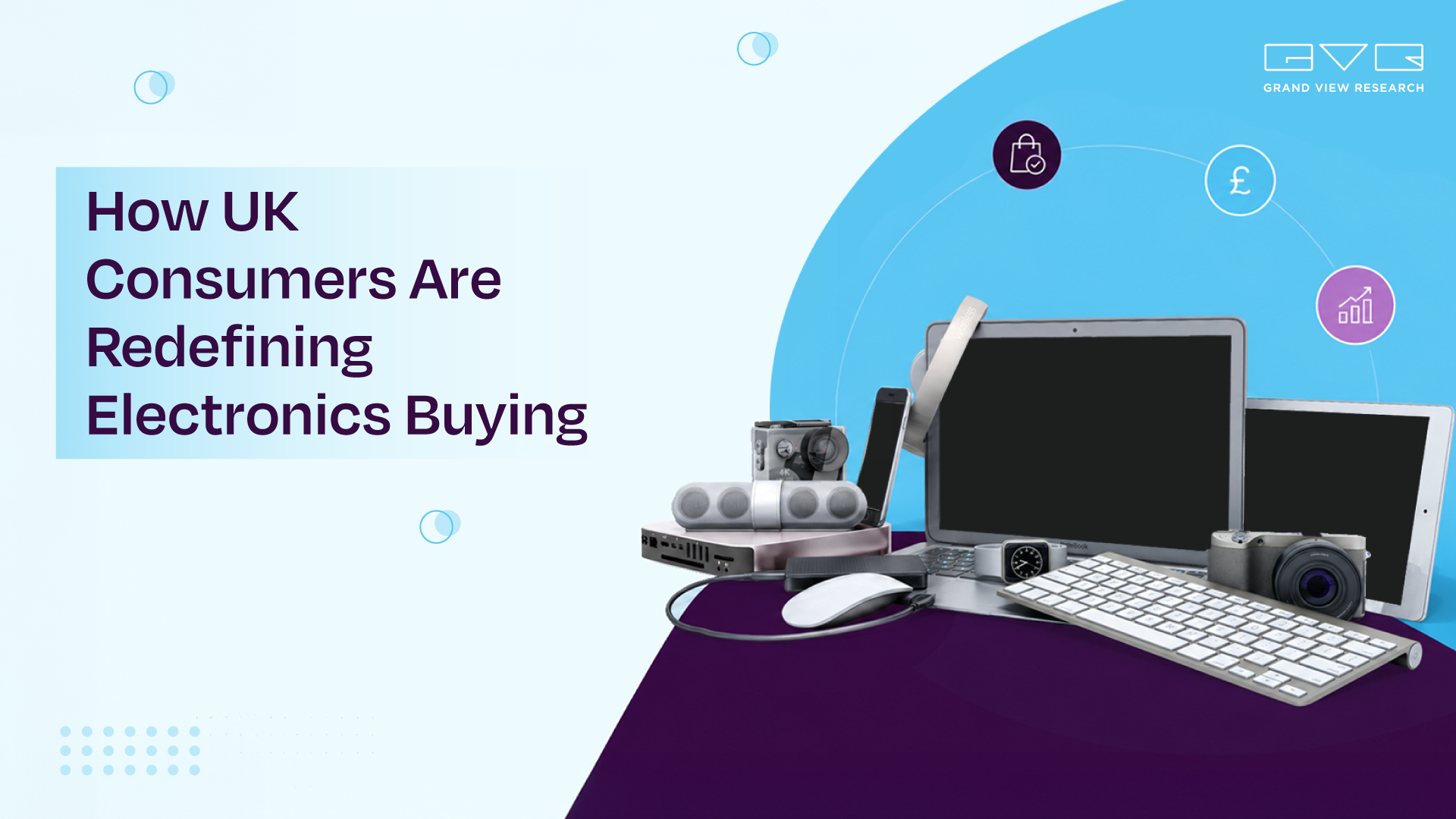
Grand View Research’s Voice of Consumer identified eight major electronics categories among UK consumers and highlighted how two key forces are currently shaping consumer behavior.
The first is price sensitivity. Rising living costs have made affordability the primary purchase trigger in virtually every segment. From gaming consoles to wearables to personal computers, consumers are asking one question first: Is this worth it?
The second is demand for smarter technology. AI-powered features, smart connectivity, and health integration are no longer selling points. They are baseline expectations. Consumers want devices that adapt to their lives, not just perform tasks.
Brands that communicate value and intelligence together will win. Those that lead with only one will struggle.
Eight Categories and UK Consumer Mindset
Smartphones: Always On, Rarely Impulsive
The smartphone is the most embedded device in British life. Usage is near-universal and daily. Yet only 11% of UK smartphone consumers buy one on impulse. Most wait until a device fails or becomes too outdated to use comfortably.
“Consumers across Britain are embracing smarter strategies, with 66% saying they often or always check reviews before buying anything” - Samsung Newsroom UK, 2026
UK smartphone consumers prioritize performance, camera quality, and battery life. They also increasingly factor in sustainability. Longer software support, repairability, and trade-in programs are now part of the purchase conversation.
Tablets: The Productive Middle Ground
Tablets sit at the intersection of entertainment and productivity. With 62% of UK tablet consumers engaging weekly and 31% daily, they have become go-to devices for remote work, video calls, learning, and streaming.
8 in 10 tablet purchases are planned in advance. UK buyers research thoroughly, compare specifications, and rarely buy on a whim. When it comes to buying tablets, brand consciousness is very high among UK consumers.
Personal Computers: The Decade-Long Decision
The personal computer is perhaps the most deliberate purchase in consumer electronics. According to UK personal computer consumer insights, most UK consumers replace their PCs only once every 10 years, making every purchase decision a long-term commitment.
HP leads the category with 84% brand awareness and the highest NPS score of 80, built on consistent reliability and broad product range.
AI-powered PCs are driving a new wave of interest, particularly among professionals and students in Britain who need multitasking power, enhanced security, and smart performance features. Similarly, hybrid work has further elevated demand for reliable, portable machines with long battery life.
Televisions: The Planned Centerpiece
UK TV consumers replace their televisions roughly every five years, with 9 out of 10 purchases are planned. This is not a spontaneous category. It is one where consumers invest real time in making the right choice.
Smart TVs now dominate demand in the UK, with built-in streaming access to Netflix, Amazon Prime, and iPlayer. OLED and QLED displays are becoming more affordable, raising picture quality expectations across all price segments. AI-powered features, including automatic picture enhancement and content recommendations, are rapidly becoming standard.
Gaming Consoles: High Engagement, High Price Sensitivity
Gaming consoles attract some of the most engaged users in the electronics market in the UK. Among active users, nearly one-third play several times a week or more. Entertainment is the core use case, though many consoles now double as streaming and media hubs.
"The availability of games on PlayStation was overall the most influential factor to gamers when making a console purchase." -CMA GOV.UK, 2022
73% of UK buyers are price sensitive and cite affordability as their primary purchase influence. The high cost of hardware, accessories, and subscription services creates real friction. UK gaming console consumer insights highlight that most buyers plan their purchase carefully and wait for the right moment to commit.
Cameras: Purposeful, Precise, Patient
The camera category serves a dedicated segment. Everyday photography has largely migrated to smartphones, but serious enthusiasts and content creators continue to invest in dedicated camera equipment.
UK Camera Buyers in this category are highly deliberate. Most purchase a camera only once every five years or more. Performance and reliability top the decision criteria at 71%, followed by value for money and brand trust.
AI-driven autofocus, mirrorless technology, and improved image processing are the features attracting new buyers into the category.
Speakers and Headphones: Everyday Audio, Considered Purchase
Personal audio is deeply embedded in daily UK life. 33% of consumers use speakers and headphones multiple times a day. For example, commutes, workouts, remote work, and relaxation all depend on personal audio devices.
Sony leads brand awareness at 79%. JBL holds the highest NPS score of 66, earning strong loyalty through reliable sound quality and value for money.
According to UK speakers and headphones consumer insights, most buyers wait until their existing device wears out before upgrading. Noise cancellation, voice assistant integration, and battery life are now the key purchase evaluation criteria.
Wearables: From Fitness Tracker to Health Companion
Wearables are one of the fastest-evolving categories in UK consumer electronics. 56% of users engage with their devices daily or multiple times a day. Fitness tracking remains the primary use case, but health monitoring, smart notifications, and AI-driven wellness insights are rapidly expanding the value these devices offer consumers.
Wearable devices could help support the government's 10 Year Health Plan by preventing, detecting, and mitigating diseases. Examples include smartwatches and continuous glucose monitors. – UK parliament, Parliamentary Office of Science and Technology (POST), 2025
Price sensitivity is significant, with 70% of buyers prioritizing affordability. Brand consciousness is also among the highest across categories, with 93% of UK wearables consumers considering brand reputation in their purchase decisions.
The Future of Consumer Electronics in the UK
The UK-specific consumer insights across all eight electronics categories reveal a clear and consistent trend. The consumers in the UK are becoming more deliberate, research-driven, and price sensitive in their purchasing behavior. Performance, reliability, AI-enabled functionality, and long-term usability now matter more than impulse buying or brand visibility alone. As sustainability, smart integration, and health-focused technologies continue to reshape the market, the brands that prioritize trust, innovation, and real consumer value will be best positioned to lead the next phase of the UK consumer electronics industry.
To schedule a free market intelligence database demo, please complete the form below:
Service Guarantee
-
Insured Buying
This report has a service guarantee. We stand by our report quality.
-
Confidentiality
Your transaction & personal information is safe and secure.
-
Custom research service
Design an exclusive study to serve your research needs.
-
24/5 Research support
Get your queries resolved from an industry expert.