
- Home
- »
- Healthcare IT
- »
-
Telemedicine Market Size, Share & Trends Report 2026-2033GVR Report cover
![Telemedicine Market (2026 - 2033)Report]()
Telemedicine Market (2026 - 2033)
Size, Share & Trends Analysis Report By Component (Products, Services), By Modality (Store & Forward, Real Time), By Application (Teleradiology, Telepsychiatry, Telepsychiatry), By Delivery Mode, By Facility, By End-user, By Region, And Segment Forecasts
Market Size, 2025
$130.5BMarket Estimate, 2026
$157.9BMarket Forecast, 2033
$514.2BCAGR, 2026–2033
18.4%Telemedicine Market Summary
The global telemedicine market size was valued at USD 130.5 billion in 2025 and is projected to grow from USD 157.9 billion in 2026 to USD 514.2 billion by 2033, at a CAGR of 18.4% from 2026 to 2033. North America dominated the global market with the largest revenue share of 34.4% in 2025. The global telemedicine market is experiencing a transformative surge, propelled by industry consolidation, strategic partnerships, and a growing wave of healthcare consumerism.

Key Market Trends & Insights
- By component: Product segment led the market with the largest revenue share of 51.2% in 2025.
- By modality: Real time segment led the market with the largest revenue share of 38.2% in 2025.
- By application: Telepathology segment led the market with the largest revenue share of 20.5% in 2025.
- By delivery mode: Web/mobile segment led the market with the largest revenue share of 79.0% in 2025.
- By facility: Tele-home segment led the market with the largest revenue share of 50.3% in 2025.
Regional Highlights
- Largest regional market: North America (34.4% revenue share, 2025)
- Fastest-growing regional market: Asia Pacific (highest CAGR, 2026-2033)
- By country: The telemedicine market in the U.S. held the largest share in the North America region in 2025.
Market Size & Forecast
- Market size in 2025: USD 130.5 Billion
- Estimated market size in 2026: USD 157.9 Billion
- Projected market size by 2033: USD 514.2 Billion
- CAGR (2026-2033): 18.4%
As leading organizations join forces and invest in innovative care models, the landscape is being reshaped to deliver more accessible, efficient, and patient-centered healthcare. The collaboration between MedStar Health and DispatchHealth in April 2024-designed to bring acute care directly to recently discharged patients-exemplifies how strategic initiatives are expanding telemedicine’s reach and impact.
Market Dynamics
The demand for telemedicine services has surged in recent years, primarily due to technological advancements, increased accessibility, and the need to address persistent healthcare challenges such as cost containment, access limitations, and chronic disease management. Telemedicine encompasses a broad range of services including remote consultations, virtual visits, remote patient monitoring, and wearable health technologies. These services facilitate diagnosis of common illnesses, follow-up care post-procedures or hospitalizations, behavioral health therapy, and chronic condition management, among others. While telehealth adoption is increasing among clinicians and patients, certain clinical scenarios still necessitate in-person visits due to the nature of the condition or provider preference.The telemedicine market has attracted substantial public and private investment. Venture capital and private equity funding have accelerated the development of telemedicine platforms, virtual consultation services, remote monitoring solutions, and AI-driven diagnostic tools. Government initiatives, such as expanded telehealth coverage under the Centers for Medicare & Medicaid Services (CMS), have further incentivized telemedicine adoption, especially among underserved populations.Major Consolidation Moves in Post-Acute Care
Significant market consolidation has occurred in the post-acute care sector, reflecting investor confidence in remote and cost-effective healthcare delivery. Notable transactions include CVS Health’s acquisition of Signify Health for USD 8 billion and ATI Physical Therapy’s USD 2.5 billion merger. Additional key deals in 2025 include:Table 1 Top Deals of the Telemedicine Market
Target Acquirer Acquirer Sector Year Amount (USD Million) Catapult Health Teladoc Health Preventative Care 2025 65 AGNES Connect UniDoc Health Corp. Telemedicine 2025 0.175 Further analyses of acquisitions involving Amedisys, Nichii Holdings, Kindred at Home, LHC Group, Apria, DigitalBridge Group, AeroCare Holdings, and others will be included in the detailed report. Limited healthcare infrastructure in developing regions remains a key restraint for the telehealth market, as inadequate availability of hospitals, diagnostic facilities, trained medical professionals, and digital health systems restricts the effective delivery of virtual care services. In many low- and middle-income countries, weak primary healthcare networks and insufficient connectivity infrastructure limit the ability to support consistent teleconsultations, remote monitoring, and digital health record integration. This results in fragmented care delivery and reduces the overall effectiveness of telehealth solutions in these regions.
In addition, poor internet penetration, unreliable electricity supply, and limited access to digital devices further hinder the adoption of telehealth and telemedicine platforms. The lack of interoperability between existing healthcare systems and digital tools also creates operational challenges for seamless data exchange and care coordination. As a result, despite increasing demand for remote healthcare services, infrastructure gaps continue to restrict scalability and limit the full potential of telehealth expansion in emerging and underserved markets.
The integration of artificial intelligence (AI) is creating substantial growth opportunities for the telemedicine market by enhancing the efficiency, accuracy, and scalability of virtual healthcare services. As telemedicine platforms handle increasing volumes of patient interactions, AI-powered tools are helping healthcare providers streamline clinical workflows and improve care delivery. AI-based virtual assistants and chatbots can perform initial patient assessments, collect medical histories, evaluate symptoms, and direct patients to the most appropriate level of care before a consultation. This reduces the administrative burden on clinicians and shortens patients' waiting times. In addition, machine learning algorithms analyze large datasets from electronic health records, wearable devices, and remote monitoring systems to identify health trends and support clinical decision-making. In specialties such as cardiology, endocrinology, and respiratory care, AI can help detect potential health risks, monitor disease progression, and generate personalized care recommendations. These capabilities improve patient engagement and enable more proactive healthcare management, making telemedicine services more effective and attractive to healthcare organizations seeking to optimize resource utilization while maintaining high standards of care. For instance, in April 2026, South Korea and Indonesia announced the piloting of AI-based teleconsultation services to improve access to primary healthcare in underserved areas. The initiative uses machine learning to support triage, diagnostics, and preventive care, while easing pressure on hospitals.
Market Concentration & Characteristics
Advancements in telecommunications and integrated medical technologies, such as AI diagnostics, IoT-enabled wearables, and remote monitoring are revolutionizing telemedicine. These innovations enhance real-time care, improve chronic disease management, and support proactive interventions. Cloud-based EMRs and AI-driven triage tools further streamline operations and improve patient outcomes, making telemedicine a scalable, cost-effective solution for rising healthcare demands. For instance, in May 2024, Apollo Telehealth, in partnership with the Government of Manipur, inaugurated a telemedicine-driven Primary Health Centre (PHC) in Borobeka. This initiative addresses the healthcare challenges faced by communities in conflict-affected and remote areas of Manipur.
M&A activity is strong, with key players such as Teladoc Health, American Well, and MDLive expanding through strategic acquisitions. Deals including Teladoc’s purchase of Livongo and CVS Health’s acquisition of Signify Health illustrate efforts to diversify services and strengthen chronic care and post-acute offerings. For instance, in March 2025, UniDoc Health Corp. acquired AGNES Connect software from AMD Telemedicine, a move aimed at enhancing its NEIL Connect platform. The acquisition includes AGNES Connect's software, intellectual property, trademarks, customer subscriptions, and the AMD Telemedicine brand.
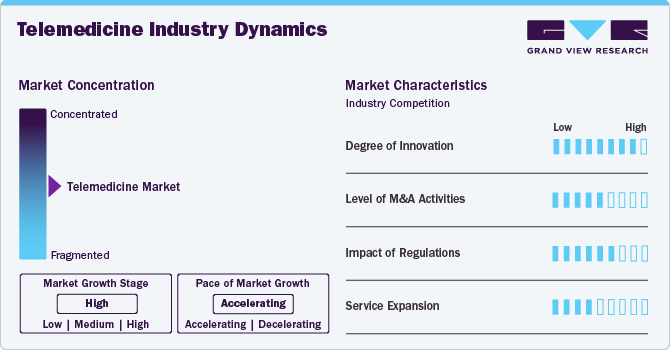
Regulatory flexibility post-COVID-19 has significantly boosted telehealth adoption. Extensions of Medicare/Medicaid reimbursement relaxed cross-state licensing, and broader service coverage have increased provider participation and patient access, though regional disparities and compliance challenges remain.
Service expansion in the telemedicine market is evident in Hyundai Motor India Foundation’s July 2024 launch of five telemedicine clinics in Pune, Maharashtra, under the Sparsh Sanjeevani program. This initiative enhances healthcare access in underserved areas and reflects the sector's rapid growth, with India’s telemedicine market projected to hit USD 5.5 billion by 2025.
Analyst Perspective
The telemedicine market is transitioning from a pandemic-driven adoption model to a core component of healthcare delivery, supported by growing demand for convenient, accessible, and cost-effective care. Increasing prevalence of chronic diseases, physician shortages, rising healthcare costs, and expanding digital health infrastructure are accelerating the adoption of virtual consultations, remote patient monitoring, behavioral health services, and specialist telehealth programs. Healthcare providers and payers are increasingly integrating telemedicine into routine care pathways to improve patient engagement, expand access, and optimize resource utilization.
The market’s competitive advantage is expected to increasingly depend on the ability of vendors to deliver integrated virtual care ecosystems that combine teleconsultation, remote monitoring, AI-driven clinical decision support, patient engagement tools, and seamless interoperability with electronic health records. Advances in artificial intelligence, mobile health technologies, cloud-based healthcare platforms, and reimbursement support are expected to further strengthen market adoption. As healthcare systems continue to prioritize value-based care and digital transformation, telemedicine platforms are evolving into essential healthcare infrastructure, creating long-term opportunities for companies with scalable technology, strong provider networks, regulatory expertise, and comprehensive virtual care capabilities.
Drivers of Telemedicine Market Growth
The demand for telemedicine services has surged in recent years, primarily due to technological advancements, increased accessibility, and the need to address persistent healthcare challenges such as cost containment, access limitations, and chronic disease management. Telemedicine encompasses a broad range of services including remote consultations, virtual visits, remote patient monitoring, and wearable health technologies. These services facilitate diagnosis of common illnesses, follow-up care post-procedures or hospitalizations, behavioral health therapy, and chronic condition management, among others. While telehealth adoption is increasing among clinicians and patients, certain clinical scenarios still necessitate in-person visits due to the nature of the condition or provider preference.
The COVID-19 pandemic accelerated telemedicine adoption globally, underscoring its strategic value in healthcare delivery. As healthcare systems transition into the post-pandemic era, frameworks such as “Leading Practices for the Future of Telemedicine” have emerged to support sustainable and scalable telemedicine integration. Key recommendations include:
-
Data-Driven Decision-Making: Collection and analysis of granular telemedicine usage and outcome data to inform policy and operational decisions.
-
Innovative Financing Models: Development of sustainable funding mechanisms to support telemedicine services.
-
Inclusive Governance: Engagement of all stakeholders, including patients and providers, in telemedicine policy formulation and implementation.
-
Integration into Care Models:
Embedding telemedicine within routine healthcare delivery to enhance accessibility and operational efficiency.
Market Trends and Consumer Preferences
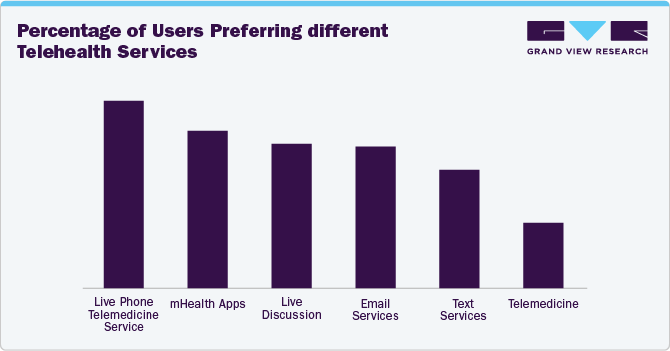
Recent trends show a growing preference for non-video telehealth options like audio calls and messaging, which enhance accessibility for underserved populations such as older adults, rural residents, and the uninsured. Rock Health’s 2022 survey found that 80% of consumers have used telemedicine, highlighting its role in reducing healthcare disparities. This shift is driving demand for multi-modal telehealth platforms that support quality care and build patient trust. Telemedicine-including virtual visits, remote monitoring, and wearable tech is reshaping healthcare by supporting services like diagnosis, post-procedure follow-ups, talk therapy, and chronic care management. While widely accepted, some services still require in-person visits due to clinical needs or provider preferences.
Funding and Investment Outlook
The telemedicine market has attracted substantial public and private investment, particularly following the COVID-19 pandemic. Venture capital and private equity funding have accelerated the development of telemedicine platforms, virtual consultation services, remote monitoring solutions, and AI-driven diagnostic tools. Government initiatives, such as expanded telehealth coverage under the Centers for Medicare & Medicaid Services (CMS), have further incentivized telemedicine adoption, especially among underserved populations.
Quality, Safety, and Efficiency Enhancements
Telemedicine solutions contribute to improved healthcare accessibility, quality, and patient safety. Technologies such as electronic Intensive Care Units (e-ICU) and electronic care (eCare) systems enable continuous patient monitoring, reducing the risk of undetected adverse events. According to the Agency for Healthcare Research and Quality (AHRQ), telemedicine adoption has improved patient care delivery by minimizing missed symptoms and adverse effects.
Telemedicine also supports health education and information dissemination, facilitating advanced patient-centered care and improving access in remote areas. Additionally, telemedicine has demonstrated potential to reduce emergency room visits and hospitalization rates, contributing to overall healthcare cost containment.
Challenges and Market Restraints
Despite the positive outlook, the telemedicine market faces challenges including regulatory variability, reimbursement complexities, technology integration issues, and cybersecurity concerns. The digital divide remains a barrier to equitable access, particularly among older adults and socioeconomically disadvantaged populations. Addressing these challenges requires coordinated efforts in policy development, technology standardization, and workforce training.
Component Insights
Based on component, the products’ segment led the market with the largest revenue share of 51.2% in 2025. However, the services segment is expected to grow at the fastest CAGR over the forecast period. This can be attributed to the widespread adoption of various medical peripheral devices, audio equipment, microphones, display screens, and videoconferencing devices used to facilitate virtual visits. For instance, Teladoc Health, Inc. provides several devices, including Xpress & Xpress Cart, TV Pro & TV Pro+, Lite with Boom Camera, and Viewpoint Cart, to facilitate clinical collaboration and point-of-care visits.
Service segment is expected to witness fastest growth with a CAGR of 18.90% over the forecast period, owing to expanding field of remote patient monitoring, widespread use of teleconsulting between patients and clinicians, between physicians, and between surgeons and students is estimated to propel the segment growth. In December 2021, the Common Services Centre of the Ministry of Electronics and Information Technology in India launched CSC Health Services Helpdesk chatbot-based helpline on WhatsApp. This solution provides teleconsultation services for people living in rural parts of India.
Modality Insights
Based on modality, the real time segment led the market with the largest revenue share of 38.2% in 2025. Moreover, this segment is expected to grow substantially over the forecast period Modality segment is divided into real-time, store and forward, and other technologies such as remote patient monitoring. This growth can be attributed to increasing demand for on-demand medical consultations, adoption of mHealth and virtual video visits, and availability of services from major market players.

The store and forward segment accounted for a significant share of the telemedicine market in 2025, driven by its ability to facilitate asynchronous exchange of medical information between patients and healthcare providers. Store-and-forward telemedicine enables healthcare professionals to collect, store, and securely transmit patient data, including medical images, diagnostic reports, clinical histories, and other health records, for later review and assessment. The model is particularly valuable in specialties such as radiology, dermatology, pathology, ophthalmology, and chronic disease management, where real-time interaction is not always required.
Application Insights
Based on application, the telepathology segment led the market with the largest revenue share of 20.5% in 2025. However, the teleradiology segment is expected to grow at the fastest CAGR over the forecast period. As healthcare providers adopt teleradiology workflows, service offerings within radiology sub-segments expand, and teleradiology practices are regulated, this segment is expected to grow. Key growth drivers for this segment include integrating Artificial Intelligence (AI) into teleradiology, implementing a Picture Archiving and Communication System (PACS), and increasing R&D activities in eHealth. For instance, telemedicine service provider Heidelberg Medical Consultancy & Health Tourism Pvt. Ltd. specializes in providing customized, affordable, high-quality radiology reporting solutions for dental specialists and practices.
Telepsychiatry is projected to grow fastest at a rate over the forecast period due to increasing prevalence of mental and behavioral health disorders, growing awareness, and adoption of telepsychiatry services. For instance, MDlive, Inc. (Evernorth) provides counseling and psychiatric sessions for a range of conditions such as anxiety, depression, trauma & PTSD, panic disorders, and more.
Delivery Model Insights
Based on delivery mode, the web/mobile segment led the market with the largest revenue share of 79.0% in 2025. In addition, this segment is expected to grow at the fastest CAGR over the forecast period and is predicted to grow at fastest rate during the forecast period, owing to increasing prevalence of smartphone usage, mHealth adoption, and healthcare consumerism. This segment is further subdivided into audio/text-based and visualized access to care. Tech companies that provide mobile and web-based solutions are the key players in this segment. The adoption of visualized care delivery solutions is expected to be driven by increasing user awareness, introducing technologically advanced solutions, and penetrating cloud-based solutions.
The growth of the call centers segment is evident from the establishment of a COVID-19 telemedicine consultation call center by the Hyderabad Police in Telangana, India, in April 2021. The call center was launched to provide prompt responses to COVID-related queries from citizens.
Facility Insights
Based on facility, the tele-home segment led the market with the largest revenue share of 50.3% in 2025. In addition, this segment is expected to grow at the fastest CAGR over the forecast period. Furthermore, the growing geriatric population, increased prevalence of chronic diseases, and awareness of telemedicine solutions fuel the market growth.
Tele-hospitals segment is anticipated to experience a significant growth rate as adoption of remote patient monitoring devices increases. This growth can be attributed to government initiatives, rising patient awareness of health concerns, and widespread access to internet-based solutions. For instance, Koninklijke Philips N.V. has a Tele-ICU program allowing doctors to remotely monitor ICU beds. The beds have cameras and special tools to help predict what might happen to patients.
End-user Insights
Based on end use, the patients’ segment led the market with the largest revenue share of 37.0% in 2025. However, the providers segment is expected to grow at the fastest CAGR over the forecast period. This can be attributed to patients using telemedicine services for various health issues, from mild to emergency situations. To cater to diverse needs of patients, market players such as VSee offer a range of solutions, including telemedicine software, remote patient monitoring dashboards, and API & SDKs across various clinical specialties.
Provider segment is expected to grow at fastest growth rate during the forecast period, driven by ability of telemedicine solutions to improve the quality of healthcare services and provide healthcare providers with convenient access to patient records, improved decision support, workflows, and analytics. For instance, eHealth solutions offer healthcare professionals the convenience of patient scheduling and data management, which is expected to drive providers' adoption of telemedicine solutions over the forecast period.
Regional Insights
North America dominated the Telemedicine market with the largest revenue share of 34.4% in 2025. This can be attributed to region's advanced healthcare facilities, and a strong presence of key market players. Companies such as Teladoc Health, American Well Corporation, and Zoom Video Communications are based in the U.S., implementing strategic initiatives to increase their market share.

U.S. Telemedicine Market Trends
The telemedicine market in the U.S. held the largest share in the North America region in 2025. Increasing home care adoption by patients, growing demand for mobile technologies, and increased healthcare expenditure are expected to drive the market's growth over the forecast period. For instance, according to the National Health Expenditure (NHE) Fact Sheet, the U.S. spent USD 4.3 Trillion on healthcare.
Asia Pacific Telemedicine Market Trends
Asia Pacific is expected to register the fastest CAGR during the forecast period, driven by the region’s large and aging population, rising internet and smartphone penetration, expanding digital health infrastructure, and growing demand for affordable, accessible healthcare services. The need to overcome geographical barriers and shortages of healthcare professionals, particularly across rural and underserved areas, is further accelerating telemedicine adoption. India, China, Japan, South Korea, and Australia are among the key markets contributing to regional growth. In India, the government-backed eSanjeevani platform has emerged as a major driver of large-scale telemedicine adoption, facilitating more than 493 million consultations as of August 16, 2026, with the platform connecting healthcare providers and patients across rural, remote, and underserved areas.
Key Telemedicine Company Insights
MDlive, Inc. (Evernorth), American Well Corporation, and Teladoc Health, Inc. are some of the dominant players operating in telemedicine market.
-
MDlive, Inc. (Evernorth) offers affordable, predictable, and simple healthcare solutions.
-
American Well Corporation delivers providers, payers, and Amwell Converge platform solutions.
-
Teladoc Health, Inc. has more than 12,000 clients across the globe and provides virtual care, such as mental health, primary care, and chronic condition management.
Key Telemedicine Companies:
The following key companies have been profiled for this study on the telemedicine market.
-
MDlive, Inc. (Evernorth)
-
American Well Corporation
-
Twilio Inc.
-
Teladoc Health, Inc.
-
Doctor On Demand, Inc. (Included Health)
-
Zoom Video Communications, Inc.
-
SOC Telemed, Inc.
-
NXGN Management, LLC
-
Poly (HP, Inc.)
-
Practo
-
VSee
Competitive Benchmarking
Category
Operating Strategies
Competitive Edge
Weakness
Established Players (Teladoc Health, Inc., American Well Corporation, MDLIVE (Evernorth), Doctor On Demand (Included Health), Twilio Inc., Zoom Video Communications, Inc.)
- Expand virtual care ecosystems through acquisitions, payer-provider partnerships, and integration with EHR, remote patient monitoring, and digital health platforms. Invest in AI-enabled triage, virtual consultations, behavioral health services, chronic disease management, and enterprise telehealth solutions to strengthen market leadership.
- Strong brand recognition, extensive provider networks, and large patient user bases across multiple care settings. Robust technology infrastructure, broad service portfolios, established payer relationships, and proven scalability support widespread adoption among healthcare organizations.
- High operational and compliance costs associated with cybersecurity, regulatory requirements, and platform maintenance. Complex organizational structures and integration challenges may slow innovation and adaptation to evolving healthcare delivery models.
Emerging & Specialized Players (SOC Telemed, NXGN Management, LLC, Practo, VSee, Poly)
- Focus on specialized telehealth applications such as virtual specialty care, tele-ICU services, provider workflow optimization, and regional telemedicine expansion. Leverage flexible deployment models, customer-centric innovation, and targeted partnerships to address specific healthcare delivery needs.
- Greater agility in responding to emerging clinical requirements and healthcare technology trends. Ability to offer specialized solutions, customized implementations, and focused support for niche telemedicine use cases and underserved markets.
- Limited financial resources, smaller provider networks, and narrower geographic presence compared to large telehealth leaders. Lower brand visibility and restricted platform scale may limit penetration into large healthcare systems and enterprise contracts.
Recent Developments
-
In March 2026, VSee showcased its autonomous AI telehealth robot at HIMSS 2026, designed to independently navigate hospital corridors and reach patients' bedsides without onsite staff assistance. The solution expands VSee's telemedicine capabilities into virtual rounding, tele-ICU, telestroke, emergency response, and after-hours care, while strengthening its position in AI-enabled hospital-based virtual care. The launch also creates opportunities for VSee to expand enterprise health-system deployments and cross-sell its telehealth platform and AI workflow solutions
-
In March 2026, Zoom expanded its healthcare solutions to improve clinical workflows and patient engagement. Zoom Contact Center became available in Epic Toolbox and was scheduled for general availability in April 2026, extending Zoom’s integration with healthcare workflows.
-
In October 2024, AMD Global Telemedicine partnered with Carefluence, an innovator in interoperability solutions, to enhance AMD’s robust telehealth solutions, provide continuity of care, and enhance clinical outcomes.
Telemedicine Market Report Scope
Report Attribute
Details
Market size value in 2025
USD 130.5 billion
Estimated market size in 2026
USD 157.9 billion
Projected market size by 2033
USD 514.2 billion
Growth rate
CAGR of 18.4% from 2026 to 2033
Historical data
2021 - 2024
Forecast period
2026 - 2033
Quantitative units
Revenue in USD million/billion and CAGR from 2026 to 2033
Report coverage
Revenue forecast, company ranking, competitive landscape, growth factors, and trends
Segments covered
Component, modality, application, delivery mode, facility, end-use, region
Regional scope
North America; Europe; Asia Pacific; Latin America; MEA
Country scope
U.S.; Canada; Mexico; UK; Germany; France; Italy; Spain; Netherlands; Sweden; Russia; Switzerland; Denmark; Norway; Japan; China; India; South Korea; Australia; Singapore; Malaysia; Thailand; Brazil; Argentina; South Africa; Saudi Arabia; UAE; Israel; Kuwait
Key companies profiled
MDlive, Inc. (Evernorth); American Well Corporation; Twilio Inc.; Teladoc Health, Inc.; Doctor On Demand, Inc. (Included Health); Zoom Video Communications, Inc.; SOC Telemed, Inc.; NXGN Management, LLC; Poly (HP, Inc.); Practo; VSee
Customization scope
Free report customization (equivalent up to 8 analysts' working days) with purchase. Addition or alteration to country, regional & segment scope.
Pricing and purchase options
Avail customized purchase options to meet your exact research needs. Explore purchase options
Global Telemedicine Market Report Segmentation
This report forecasts revenue growth at the global, regional & country level and provides an analysis of the latest trends and opportunities in each of the sub-segments from 2021 to 2033. For this report, Grand View Research has segmented the global telemedicine market report based on component, modality, application, delivery model, facility, end-user, and region:
-
Component Outlook (Revenue, USD Billion, 2021 - 2033)
-
Product
-
Hardware
-
Software
-
Others
-
-
Services
-
Tele-consulting
-
Tele-monitoring
-
Tele-education
-
-
-
Modality Outlook (Revenue, USD Billion, 2021 - 2033)
-
Store and forward
-
Real time
-
Others
-
-
Application Outlook (Revenue, USD Billion, 2021 - 2033)
-
Teleradiology
-
Telepsychiatry
-
Telepathology
-
Teledermatology
-
Telecardiology
-
Others
-
-
Delivery Mode Outlook (Revenue, USD Billion, 2021 - 2033)
-
Web/Mobile
-
Audio/ Text-based
-
Visualized
-
-
Call Centers
-
-
Facility Outlook (Revenue, USD Billion, 2021 - 2033)
-
Tele-hospital
-
Tele-home
-
-
End User Outlook (Revenue, USD Billion, 2021 - 2033)
-
Providers
-
Payers
-
Patients
-
Others
-
-
Regional Outlook (Revenue, USD Billion, 2021 - 2033)
-
North America
-
U.S.
-
Canada
-
-
Europe
-
Germany
-
UK
-
France
-
Italy
-
Spain
-
Sweden
-
Denmark
-
Norway
-
Netherlands
-
Russia
-
Switzerland
-
-
Asia Pacific
-
China
-
India
-
Japan
-
Australia
-
South Korea
-
Thailand
-
Singapore
-
Malaysia
-
-
Latin America
-
Brazil
-
Mexico
-
Argentina
-
-
MEA
-
South Africa
-
Saudi Arabia
-
UAE
-
Kuwait
- Israel
-
-
Research Methodology
Segment Definition
Segment - Component
Revenue capture definition
Product
Refers to the technology infrastructure and tools required to support telemedicine services, including hardware devices, software platforms, and related solutions that enable remote healthcare delivery.
Hardware
Physical equipment used in telemedicine, such as cameras, microphones, diagnostic peripherals, remote patient monitoring devices, wearable sensors, telemedicine carts, and communication systems that facilitate virtual healthcare interactions.
Software
Digital platforms and applications that enable telemedicine services, including video conferencing solutions, electronic health record (EHR) integration software, telehealth management systems, scheduling tools, patient portals, and remote monitoring platforms.
Others (Product)
Includes ancillary telemedicine technologies such as networking equipment, data storage systems, cybersecurity solutions, cloud infrastructure, and integrated communication tools that support telehealth operations.
Services
Professional and clinical services delivered through telemedicine platforms, allowing healthcare providers to offer consultations, monitoring, education, and follow-up care remotely.
Tele-consulting
Remote consultation services that connect patients with healthcare professionals through digital communication channels for diagnosis, treatment recommendations, follow-up visits, and specialist consultations.
Tele-monitoring
Remote monitoring of patients' health conditions using connected devices and digital platforms that transmit clinical data such as blood pressure, glucose levels, heart rate, oxygen saturation, and other health metrics to healthcare providers.
Tele-education
Remote delivery of medical education, training, and knowledge-sharing programs for healthcare professionals, caregivers, and patients through digital communication technologies and virtual learning platforms.
Segment - Component
Revenue capture definition
Store and Forward
An asynchronous telemedicine model where medical data, images, videos, laboratory reports, or patient records are collected and transmitted to healthcare professionals for review and diagnosis at a later time.
Real Time
A synchronous telemedicine model that enables live interaction between patients and healthcare providers through video conferencing, telephone calls, or online communication platforms for immediate consultation and care.
Others
Includes hybrid telemedicine approaches, remote patient monitoring modalities, mobile health (mHealth) applications, and emerging communication methods that combine elements of synchronous and asynchronous care delivery.
Segment - Application
Revenue capture definition
Teleradiology
The remote transmission, interpretation, and reporting of medical imaging studies such as X-rays, CT scans, MRIs, and ultrasounds by radiologists located at different sites.
Telepsychiatry
Delivery of mental health and psychiatric services through telecommunication technologies, including psychological assessments, therapy sessions, medication management, and behavioral health consultations.
Telepathology
Remote examination and diagnosis of pathology specimens using digital imaging, microscopy, and communication technologies that allow pathologists to analyze samples without being physically present.
Teledermatology
Remote diagnosis, consultation, and management of skin conditions using digital images, video consultations, and electronic communication between dermatologists and patients or primary care providers.
Telecardiology
Remote cardiovascular care involving consultation, monitoring, diagnosis, and management of heart-related conditions using telecommunication technologies and connected cardiac monitoring devices.
Others
Includes telemedicine applications across specialties such as tele-neurology, tele-oncology, tele-endocrinology, tele-ophthalmology, tele-rehabilitation, tele-intensive care (Tele-ICU), and tele-pediatrics.
Segment - Delivery Mode
Revenue capture definition
Web/Mobile
Telemedicine services delivered through web-based portals, smartphone applications, and tablet-based platforms that enable patients and providers to access healthcare remotely.
Audio/Text-based
Telemedicine interactions conducted through voice calls, SMS messaging, secure messaging platforms, chatbots, emails, and text-based communication channels without video support.
Visualized
Healthcare services delivered through video conferencing, image sharing, live video consultations, and other visual communication technologies that facilitate face-to-face virtual interactions.
Call Centers
Centralized telehealth support centers that provide healthcare guidance, triage services, appointment scheduling, nursing support, emergency response coordination, and medical consultations via telephone.
Segment - Facility
Revenue capture definition
Tele-hospital
Telemedicine services delivered within hospital settings, enabling healthcare professionals to provide remote consultations, specialist support, diagnostics, and patient management across healthcare facilities.
Tele-home
Home-based telemedicine services that allow patients to receive consultations, monitoring, chronic disease management, rehabilitation, and follow-up care from their residences using digital health technologies.
Segment - End User
Revenue capture definition
Providers
Healthcare organizations and professionals, including hospitals, clinics, physicians, specialists, nursing facilities, and healthcare networks that use telemedicine platforms to deliver patient care.
Payers
Public and private health insurers, government healthcare programs, employers, and reimbursement organizations that finance, reimburse, or facilitate telemedicine services within healthcare benefit plans.
Patients
Individuals who use telemedicine platforms to access medical consultations, disease management services, remote monitoring, preventive care, and follow-up treatment from healthcare providers.
Others
Includes employers, academic institutions, research organizations, government agencies, military healthcare systems, long-term care facilities, and community health organizations utilizing telemedicine solutions.
Estimation Model
The telemedicine market is estimated using a triangulated analytical framework combining bottom-up, demand-side, and supply-side approaches. The objective is to derive market size and structure through independent validation across multiple analytical lenses.
The study integrates primary industry benchmarks, secondary research inputs, and modeled assumptions to develop a consolidated view of market revenue across regions and segments.
Model 1: Healthcare Utilization-Based Model
This model estimates telemedicine revenue based on healthcare service consumption patterns.
Approach: Bottom-up demand estimation
Key Inputs:
-
Total outpatient and primary care visit volumes
-
Telemedicine penetration across care settings
-
Average revenue per virtual consultation
-
Specialty-wise visit distribution
Method: Market size is derived by applying telemedicine penetration rates to total healthcare utilization and multiplying by average revenue per interaction.
Model 2: Platform Monetization Model
This model estimates revenue generated through digital health platforms and subscription-based services.
Approach: User and transaction-based modeling
Key Inputs:
-
Monthly Active Users (MAU)
-
Paying user conversion rates
-
Subscription pricing and ARPU
-
Consultation frequency per user
-
Platform transaction fees
Method: Revenue is calculated based on monetized user base and platform-level revenue streams.
Model 3: Remote Care and Infrastructure Model
This model captures revenue from telemedicine-enabled infrastructure and connected care services.
Approach: Supply-side ecosystem modeling
Key Inputs:
-
Remote patient monitoring (RPM) patient base
-
Chronic disease prevalence and adoption rates
-
Connected device penetration
-
SaaS and platform licensing benchmarks
Method: Revenue is estimated from RPM services, connected devices, and healthcare SaaS offerings.
Data Inputs
The analysis is based on a combination of:
-
Global healthcare utilization datasets
-
Digital health platform reports and filings
-
Telemedicine adoption studies
-
Reimbursement and policy frameworks
-
Industry benchmarks for pricing, penetration, and user behavior
Key Assumptions
The model incorporates the following assumptions:
-
Gradual increase in telemedicine penetration across outpatient care
-
Expansion of hybrid care models combining virtual and in-person care
-
Increasing adoption of remote patient monitoring in chronic disease management
-
Regional differences in digital health infrastructure and reimbursement systems
-
Gradual consolidation of minor specialty categories over time
Validation Approach
Model outputs are reviewed through:
-
Cross-comparison of utilization and platform-based estimates
-
Benchmarking against historical telehealth growth trends
-
Sensitivity checks on penetration and ARPU assumptions
-
Regional aggregation consistency checks
Delivered Customizations
This report has been delivered with the following In-depth customizations
Client Request
Customization Delivered
Value Adds
Telemedicine Adoption & Virtual Care Utilization Analysis
Developed a tailored analysis of the global telemedicine market focused on virtual consultations, telehealth platforms, remote patient monitoring, telepsychiatry, telecardiology, teledermatology, and chronic disease management services. The study assessed adoption trends across hospitals, clinics, physician practices, payers, employers, and patients while evaluating healthcare digitization initiatives, broadband accessibility, reimbursement policies, and patient preferences influencing virtual care utilization.
Enables stakeholders to understand evolving healthcare delivery models, identify high-growth telemedicine service segments, assess patient engagement opportunities, and evaluate the impact of virtual care on healthcare accessibility, operational efficiency, clinical outcomes, and long-term market expansion.
Remote Care Technologies, Reimbursement & Clinical Integration Assessment
Delivered a customized evaluation of telemedicine utilization across video consultations, mobile health applications, remote monitoring devices, AI-enabled triage tools, digital communication platforms, and specialty telehealth services. The analysis assessed reimbursement frameworks, regulatory requirements, provider adoption patterns, workflow integration challenges, patient satisfaction trends, and demand for technology-enabled healthcare services supporting preventive care and chronic disease management.
Provides actionable insights into changing reimbursement landscapes, commercially attractive service categories, technology adoption trends, and emerging opportunities associated with remote patient monitoring, specialist consultations, reduced healthcare costs, improved care coordination, and enhanced patient outcomes.
Digital Health Infrastructure, Regulatory Environment & Competitive Landscape Assessment
Conducted a focused assessment of the telemedicine ecosystem, including telehealth platforms, cloud-based healthcare infrastructure, interoperability requirements, cybersecurity frameworks, data privacy regulations, healthcare provider networks, and competitive positioning. The analysis evaluated implementation challenges, licensing requirements, connectivity barriers, technology adoption rates, platform scalability, and competitive differentiation strategies among telemedicine providers and technology vendors.
Supports strategic planning for telehealth investments, platform development, healthcare partnerships, geographic expansion initiatives, and market entry strategies by identifying adoption drivers, regulatory challenges, revenue opportunities, infrastructure requirements, and competitive advantages across the global telemedicine value chain.
Frequently Asked Questions About This Report
Some key players operating in the telemedicine market include MDlive, Inc. (Evernorth); American Well Corporation; Twilio Inc.; Teladoc Health, Inc.; Doctor On Demand, Inc. (Included Health); Zoom Video Communications, Inc.; SOC Telemed, Inc.; NXGN Management, LLC; Plantronics, Inc.; Practo; and VSee.
Key factors driving the telemedicine market include the growing need to reduce the cost of care, consolidation across the industry, and other strategic initiatives by key companies, as well as healthcare consumerism.
North America dominated the telemedicine market in 2025 with a share of over 34.4%. This is owing to rising digitalization across healthcare, advanced healthcare facilities, and the adoption of telemedicine solutions.
Based on component, the products’ segment led the market with the largest revenue share of 51.2% in 2025.
Based on modality, the real time segment led the market with the largest revenue share of 38.2% in 2025.
Based on application, the telepathology segment led the market with the largest revenue share of 20.5% in 2025.
Based on delivery mode, the web/mobile segment led the market with the largest revenue share of 79.0% in 2025. In addition, this segment is expected to grow at the fastest CAGR over the forecast period.
The global telemedicine market size was estimated at USD 130.5 billion in 2025 and is expected to reach USD 157.9 billion in 2026.
The global telemedicine market is expected to grow at a compound annual growth rate of 18.4% from 2026 to 2033 to reach USD 514.2 billion by 2033.
About the Author(s)
Healthcare IT Research Team
Healthcare · Healthcare ITThis report was authored by the healthcare it research team at Grand View Research - comprising two research analysts, one senior research analyst, and one industry expert - with specialized expertise in the healthcare it segment of the healthcare industry. All findings are based on proprietary healthcare databases, executive interviews, and regulatory analysis, subject to internal peer review prior to publication.
Last Updated:
Speak to Analyst


Customize this report to your needs — add regions, segments, or data points, with 20% free customization.
Or view our licence options:


ISO 9001:2015 & 27001:2022 Certified
We are GDPR and CCPA compliant! Your transaction & personal information is safe and secure. For more details, please read our privacy policy.


