
- Home
- »
- Consumer F&B
- »
-
Egg Market Size, Share And Growth, Industry Report, 2033GVR Report cover

Egg Market (2026 - 2033) Size, Share & Trends Analysis Report By Product (Brown Eggs, White Eggs), By Production Category (Cage-Free, Organic, Pasture-Raised), By End-use Application (B2B, B2C), By Region, And Segment Forecasts
Market Size, 2025
$352.2BMarket Estimate, 2026
$373.3BMarket Forecast, 2033
$585.4BCAGR, 2026–2033
6.6%Egg Market Summary
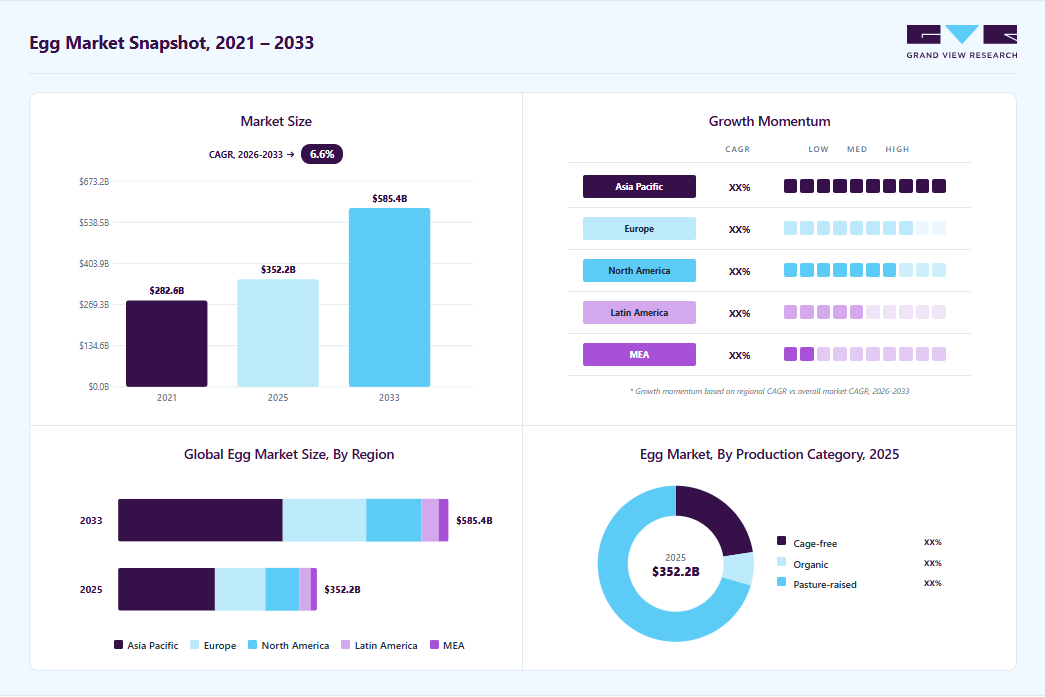
The global egg market size was estimated at USD 352.17 billion in 2025 and is projected to reach USD 585.37 billion by 2033, growing at a CAGR of 6.6% from 2026 to 2033. The market growth is primarily driven by rising demand for high-protein and nutrient-rich food products, coupled with the increasing use of eggs in the food processing industry for bakeries, confectioneries, and ready-to-eat applications.
 Source: Grand View Research, IR Documents, Primary Interviews, Paid DatabasesTo learn more about this report,
 Download Free Sample Report
 Key Market Trends & Insights
- The Asia Pacific dominated the eggs industry in 2025 with the revenue share of 48.66%.
- China is expected to grow at the fastest CAGR of 8.0% over the forecast period.
- By product, the brown eggs product segment held the largest market share of 62.7% in 2025.
- By production category, the pasture-raised segment dominated the market in 2025.
- By end use application, the B2B segment held the largest market share in 2025.
Market Size & Forecast
- 2025 Market Size: USD 352.17 Billion
- 2033 Projected Market Size: USD 585.37 Billion
- CAGR (2026-2033): 6.6%
- Asia Pacific: Largest market in 2025
Three ways to get this report
Buy it, customize it, or ask a question.Ask an Analyst
Analyst response in 1 business day
- AccessReport author, directly
- Reply timeWithin 1 working day
- No sales callDirect answer only
- FormatEmail reply
- CostFree, no cost
Get the Full Report
What the study covers
- FormatsPDF · Excel · Dashboard
- Timeline2026–2033 annual, 2025 base
- Coverage20+ countries, 5 regions
- Companies10+ key players profiled
Customize the Report
20% free customization
- IncludeCountries, segments, points
- TailorTo your product definition
- ExtendDeeper competitor detail
- OrA fully bespoke study
- Turnaround5–10 working days
Growing consumer preference for convenient and functional high-protein sources is driving the growth of the eggs industry. With increasing health awareness and busy lifestyles, consumers are seeking protein-rich foods that are easy to prepare and integrate into their daily diet. Eggs and processed egg products meet this demand by providing high-quality, bioavailable protein along with essential nutrients, including vitamins, minerals, and healthy fats. Moreover, the acceptance of ready-to-eat meals, protein snacks, and fortified food products has boosted the use of egg-based ingredients across retail and foodservice sectors, strengthening their position as a preferred and versatile source of functional nutrition.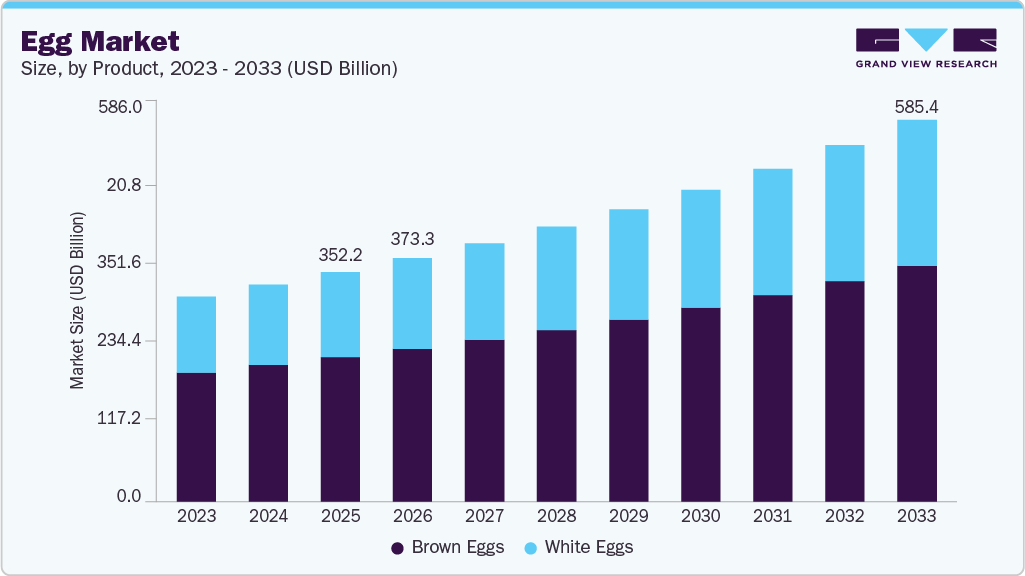 To learn more about this report, Download Free Sample Report
 The increasing adoption of processed egg products across the food processing industry is strengthening market growth. Eggs play a significant role as natural emulsifiers, binders, and stabilizers in various applications, including bakery, confectionery, sauces, and ready-to-eat meals. According to the U.S. Department of Agriculture’s (USDA) Food Safety and Inspection Service (FSIS), of the 93.1 billion eggs consumed in 2022, approximately 29.7% were processed into liquid, frozen, or powdered form, widely used in industrial food manufacturing. This shift toward processed egg products not only enhances production efficiency and shelf stability but also improves food safety and consistency, making them an indispensable component of large-scale food production.
Product Insights
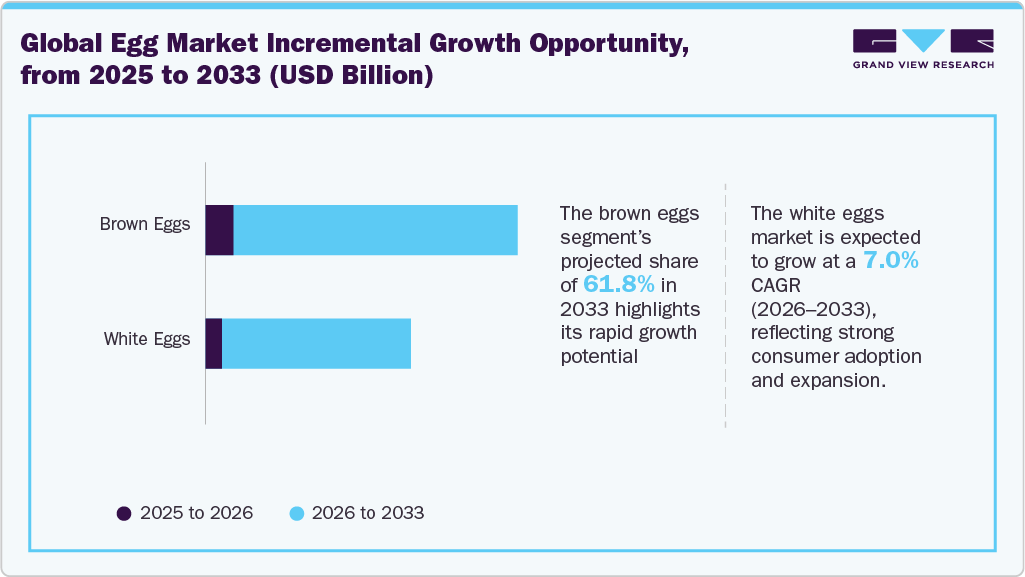
The brown eggs segment dominated the eggs market, accounting for the largest revenue share of 62.7% in 2025, driven by changing consumer preferences and health perceptions. Many consumers perceive brown eggs as more natural, wholesome, and nutritionally superior to white eggs, even though the nutritional differences are minimal. This perception has enhanced their appeal, particularly among buyers seeking healthy and premium products. In addition, brown eggs are commonly associated with free-range, organic, and cage-free farming practices. These egg production practices address growing concerns about animal welfare and sustainable food production.
 To learn more about this report, Download Free Sample Report
 The white eggs product segment is expected to grow at the fastest CAGR of 7.0% over the forecast period. White eggs are popular mainly because they are cost-effective and widely preferred by consumers. Hens like the White Leghorn, which lay white eggs, need less feed and produce more eggs than brown-egg layers, making production cheaper. This leads to lower prices, which attract buyers in food service, retail, and processing industries. White eggs also have a plain appearance that works well for industrial uses such as baking and making other egg products, where shell color does not matter. Their widespread presence in supermarkets and their association with everyday meals make them even more popular. In regions like Asia and countries such as the U.S., strong supply chains help maintain the availability and affordability of white eggs amid surging demand for protein.
Production Category Insights
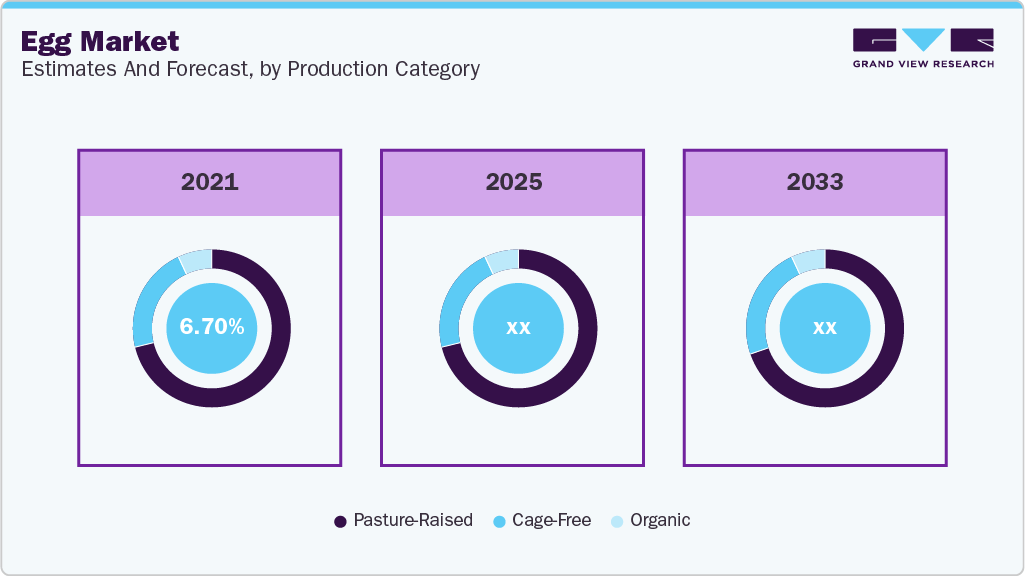
The pasture-raised production category held the largest revenue share of the eggs industry in 2025. Consumers are increasingly looking for eggs with better nutrition and produced sustainably. In October 2022, according to the National Library of Medicine, studies show that eggs from pasture-raised hens contain more omega-3 fatty acids, carotenoids, and vitamins than those from cage-free hens because the former eat a more diverse, richer, and natural diet. Pasture-raising also lowers feed costs and benefits the environment, which attracts both producers and buyers who care about sustainability. These factors, combined with superior nutrition and sustainable production practices, have elevated pasture-raised eggs to a premium category, enabling them to achieve high revenue performance in the competitive global eggs market.
 To learn more about this report, Download Free Sample Report
 The organic segment is expected to grow at the fastest CAGR over the forecast period, driven by increasing consumer demand for clean-label, ethically sourced, and environmentally sustainable food products. Under the U.S. Department of Agriculture’s (USDA) National Organic Program (NOP), requirements for certified organic eggs include hens that are fed organic and non-GMO feed, raised without antibiotics or synthetic pesticides, and provided access to the outdoors. In February 2025, according to the United Egg Producers (UEP), organic shell egg production accounted for approximately 20.5 million hens, representing about 7% of the total U.S. table egg layer flock.
Moreover, increasing consumer awareness of food traceability, environmental sustainability, and animal welfare has been a key catalyst for expanding the organic production system. Growing adoption of certified organic standards across the poultry sector reflects a shift toward premium, health-oriented protein sources.
End-Use Application Insights
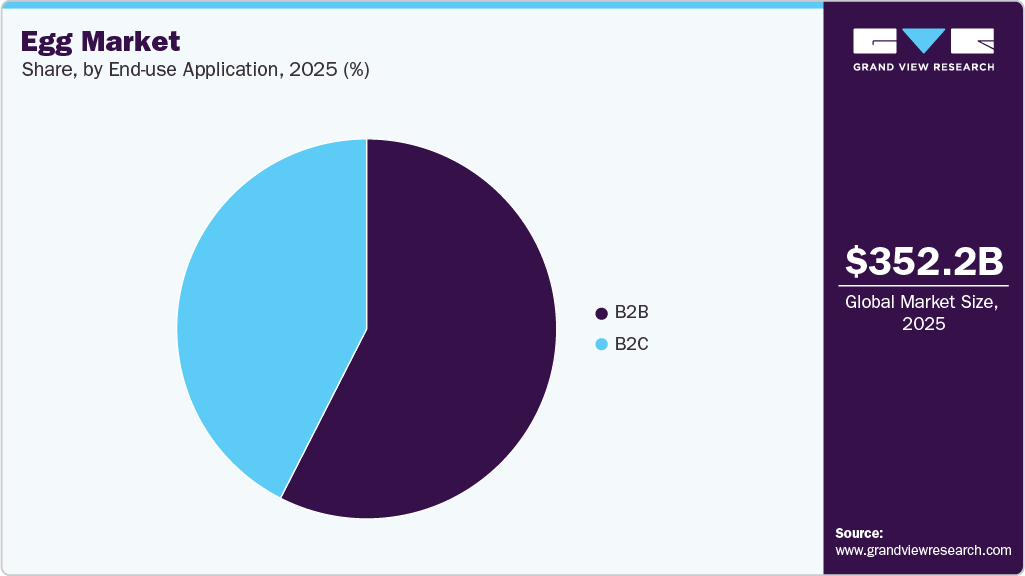
The B2B application segment dominated the eggs market, accounting for the largest revenue share in 2025, driven by growing demand for convenient, high-protein formulations and standardized ingredients across bakery, confectionery, dairy, and processed food sectors. According to the United Egg Producers (UEP), around 258 million egg cases were produced in the U.S. in 2024, with nearly 29% rocessed into egg products for industrial use. Food manufacturers and service operators are increasingly preferring egg-based ingredients for their formulation efficiency, reduced waste, and superior food safety. The expansion of automated egg-breaking plants, infrared drying systems, and aseptic packaging technologies further supports large-scale production and consistent quality.
The growth of the global processed food industry continues to drive the adoption of egg products and components such as albumen powder, yolk paste, and whole egg blends to enhance texture, emulsification, and nutritional value. Regulatory standards set by the European Food Safety Authority (EFSA) and the Codex Alimentarius ensure quality, safety, and traceability of products in industrial applications. This shift toward clean-label, protein-rich, and sustainably sourced ingredients is driving reformulation across bakery, confectionery, and dairy categories.
Increasing awareness of the benefits of eggs is driving demand for them as an affordable, nutrient-dense source of high-quality protein. Eggs remain a dietary staple across both developed and emerging economies, consumed in various forms, such as boiled, fried, scrambled, or incorporated into home-baked goods. Government nutrition programs and dietary guidelines in many regions promote egg consumption to combat protein deficiency and enhance food security. Moreover, the increasing accessibility of fresh and processed eggs through organized retail, e-commerce grocery platforms, and expanding cold chain networks has further supported household demand. As health-conscious consumers continue to favor protein-rich and versatile food options, the household consumption segment remains a key market growth driver.
 To learn more about this report, Download Free Sample Report
 The B2C segment is projected to grow at the fastest CAGR from 2026 to 2033, driven by consumer preferences for freshness assurance, immediate availability, and the ability to inspect perishable products in person. Traditional retail formats, such as supermarkets, hypermarkets, grocery stores, and wholesale markets, are crucial in regions with limited online penetration, where in-store shopping remains the dominant mode of purchase. Retail chains such as Tesco, Carrefour, Walmart, and local wholesalers are increasingly stocking specialty ranges, including organic, cage-free, and pasture-raised, to meet the shifting demand.
The growing digitalization in food retail and evolving consumer purchasing patterns are prompting e-commerce platforms and company-owned websites to sell fresh shell eggs, processed products, and specialty offerings such as organic or cage-free varieties. The convenience of doorstep delivery, real-time product tracking, and subscription-based fresh food services continues to accelerate product adoption. Improved cold-chain logistics and advanced packaging ensure product safety and freshness during transit. Furthermore, the rise of direct-to-consumer (D2C) models enables producers to enhance brand loyalty and profitability by bypassing traditional intermediaries, positioning online retail as a key growth driver for the global market.
Regional Insights
The North America eggs market is expected to experience substantial growth over the forecast period, driven by strong consumer demand for protein-rich and convenient food products. The region benefits from advanced poultry farming practices, large-scale production facilities, and high demand across the food processing, bakery, and nutraceutical industries. Key players such as Cal-Maine Foods, Michael Foods, Rose Acre Farms, and Hillandale Farms continue to invest in cage-free, organic, and value-added egg production to align with shifting consumer preferences. Technological advancements in egg processing, particularly in liquid, frozen, and powdered egg formats, support market expansion by enhancing product shelf life and versatility. According to the U.S. Department of Agriculture (USDA), total monthly egg production in the U.S. reached 8.92 billion eggs in November 2024, with a majority allocated for table consumption. Canada and Mexico are experiencing strong growth, driven by the expansion of food manufacturing and rising consumer health awareness. As reported by Statistics Canada, Canadian egg farmers produced 915.0 million dozen eggs in 2024, marking an increase of 4.3% from 2023. The regional market is projected to continue growing, driven by sustainability initiatives and the transition toward animal welfare and environmentally friendly production systems.
U.S. Eggs Market Trends
The U.S. eggs industry led North America in 2025, driven by increasing consumer focus on protein-rich and convenient food options. Per capita egg consumption reached 273 eggs in 2024, reflecting rising demand across foodservice, bakery, and ready-to-eat segments. The market is witnessing a strong shift toward cage-free and organic production, supported by sustainability and animal welfare initiatives. Moreover, technological advancements in egg processing are aiding in enhancing the shelf life of products and expanding industrial applications in nutraceuticals and functional foods.
Europe Eggs Market Trends
The Europe eggs industry accounted for a significant revenue share of 25.4% in 2025. An increasing consumer preference for sustainably produced, traceable, and organic eggs is driving market growth in this region. The European Union collectively produced around 6.7 million tons of eggs in 2024, reflecting a well-established, well-regulated poultry sector. Countries such as Germany, France, and the UK are leading producers, driven by strong demand from the bakery, confectionery, and food processing industries. Stringent EU regulations on animal welfare and food safety have encouraged the adoption of cage-free systems and advanced egg processing technologies, positioning Europe as a mature yet innovation-oriented market.
The eggs market in the UK is projected to grow at the fastest CAGR from 2026 to 2033. In the UK, egg production reached 11.9 billion eggs in 2024, reflecting steady growth in domestic supply and consumption. Per capita egg consumption increased to 199 eggs per person, due to the rising popularity of free-range and organic eggs as consumers prioritize sustainability and animal welfare. The demand for value-added and processed egg products is also expanding, driven by the growth of the bakery, confectionery, and foodservice sectors. Moreover, ongoing industry efforts to transition toward 100% cage-free production and enhance supply chain transparency are further strengthening the country’s position in Europe.
Asia Pacific Egg Market Trends
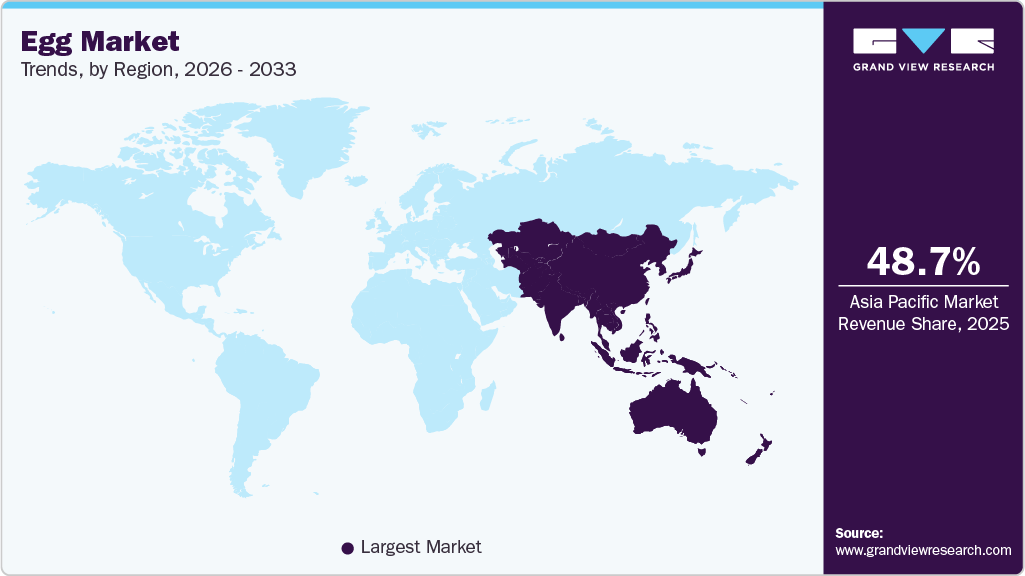
The Asia Pacific dominated the eggs industry in 2025 with the revenue share of 48.66% and is expected to grow at the fastest CAGR of 6.9% from 2026 to 2033. The region has emerged as the world’s largest producer and consumer of eggs, driven by rapid population growth, urbanization, and rising income levels. According to the Food and Agriculture Organization (FAO), Asia accounted for over 64% of global egg production in 2023, led by China, India, Indonesia, and Japan. China dominated the regional market with large-scale, industrialized poultry farms and the increasing adoption of processed egg products, while India’s expanding food processing and bakery industries are driving a surge in demand for liquid and powdered eggs. Growing consumer awareness of high-protein diets and increasing availability of value-added, packaged egg products are further supporting market expansion across emerging economies in Southeast Asia.
 To learn more about this report, Download Free Sample Report
 China is expected to grow at the fastest CAGR of 8.0% over the forecast period. As the largest egg producer and consumer in the APAC region, it drives other markets through strong demand. Moreover, its value-added segments, especially processed products like egg white powder, are expanding robustly due to increased preference for convenience. This growth is further supported by rising protein consumption, urbanization, and modern poultry practices, which in turn are propelling the momentum of China as the fastest-growing egg market country in the Asia Pacific.
Key Egg Company Insights
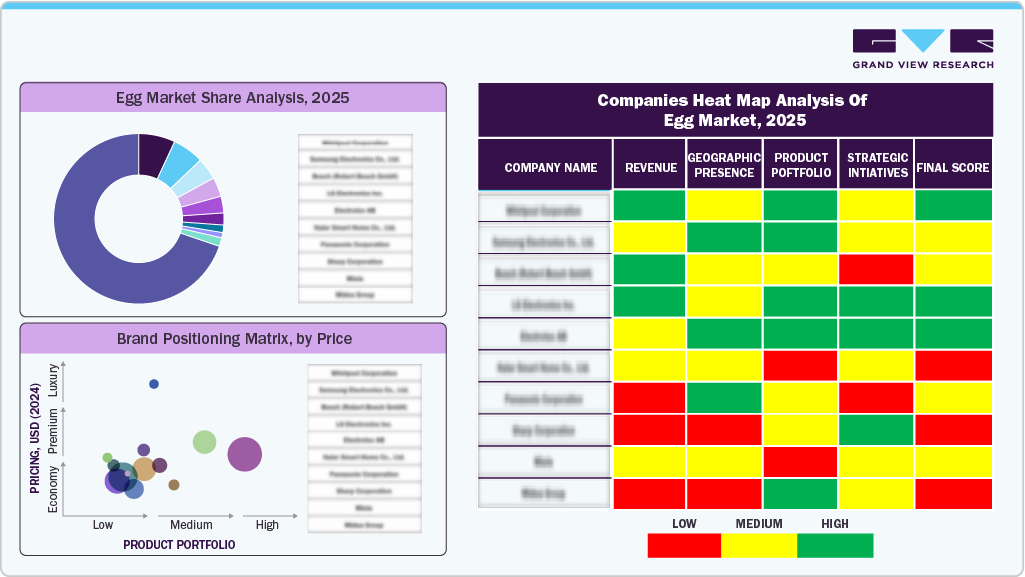
Some of the key players in the eggs market include Cal-Maine Foods, Inc.; Michael Foods, Inc.; Rose Acre Farms, Inc; Hillandale Farms.
 To learn more about this report, Download Free Sample Report
 -
Cal-Maine Foods, Inc. is the largest producer and distributor of fresh shell eggs in the U.S., offering a wide range of egg and egg products with a focus on quality, safety, and sustainability. In 2025, the company managed approximately 48.3 million laying hens and achieved annual net sales of USD 4.3 billion. Cal-Maine Foods sells around 1.3 billion dozen eggs annually, highlighting its strong scale and market leadership.
Key Egg Companies:
The following key companies have been profiled for this study on the egg market.
- Cal-Maine Foods, Inc.
- Michael Foods, Inc.
- Rose Acre Farms, Inc.
- Hillandale Farms
- Interovo Egg Group BV
- OVOBEL
- IGRECA
- Venkys India
- SKMEgg.com
- Versova
Recent Developments
-
In January 2026, Egglife Foods launched a value-sized 18-count pack of its Original Egg White Wraps at 60 Costco locations across the Northeast, priced at USD 10.99. The Costco-exclusive pack caters to rising demand for high-protein, low-carb wrap alternatives and is available for a limited period in the refrigerated deli section.
-
In August 2025, Global Eggs acquired Spain’s El Granjero to expand its European presence. The deal adds significant production capacity to its Hevo Group business, strengthening its footprint in the European egg market.
-
In March 2025, Global Eggs, a Brazilian company, acquired Hillandale Farms for USD 1.1 billion, doubling its production capacity and building on Hillandale’s 2024 revenue of approximately USD 2 billion. The combined entity is well-positioned to leverage economies of scale and cross-border expertise.
-
In June 2024, Cal-Maine Foods, Inc. completed the acquisition of all ISE America, Inc. assets for approximately USD 110 million. The acquisition included shell egg production and processing facilities with 4.7 million laying hens, feed mills, 4,000 acres of land, an egg products facility, and a customer distribution network across the Northeast and Mid-Atlantic states.
Egg Market Report Scope
Report Attribute
Details
Market value size in 2026
USD 373.34 billion
Revenue forecast in 2033
USD 585.37 billion
Growth rate
CAGR of 6.6% from 2026 to 2033
Actuals
2021 - 2025
Forecast period
2026 - 2033
Quantitative units
Revenue in USD billion and CAGR from 2026 to 2033
Report coverage
Revenue forecast, company ranking, competitive landscape, growth factors, and trends
Segments covered
Product, production category, end use application, and region
Regional scope
North America; Europe; Asia Pacific; Central & South America; Middle East & Africa
Country scope
U.S.; Canada; Mexico; Germany; UK; France; Italy; Spain; China; India; Japan; Australia & New Zealand; South Korea; Brazil; Argentina; South Africa; Saudi Arabia; UAE; Qatar; Oman; Kuwait; Bahrain
Key companies profiled
Cal-Maine Foods, Inc.; Michael Foods, Inc.; Rose Acre Farms, Inc.; Hillandale Farms; Interovo Egg Group BV; OVOBEL; IGRECA; Venkys India; SKMEgg.com; Versova
Customization scope
Free report customization (equivalent up to 8 analysts’ working days) with purchase. Addition or alteration to country, regional & segment scope.
Pricing and purchase options
Avail customized purchase options to meet your exact research needs. Explore purchase options
Global Egg Market Report Segmentation
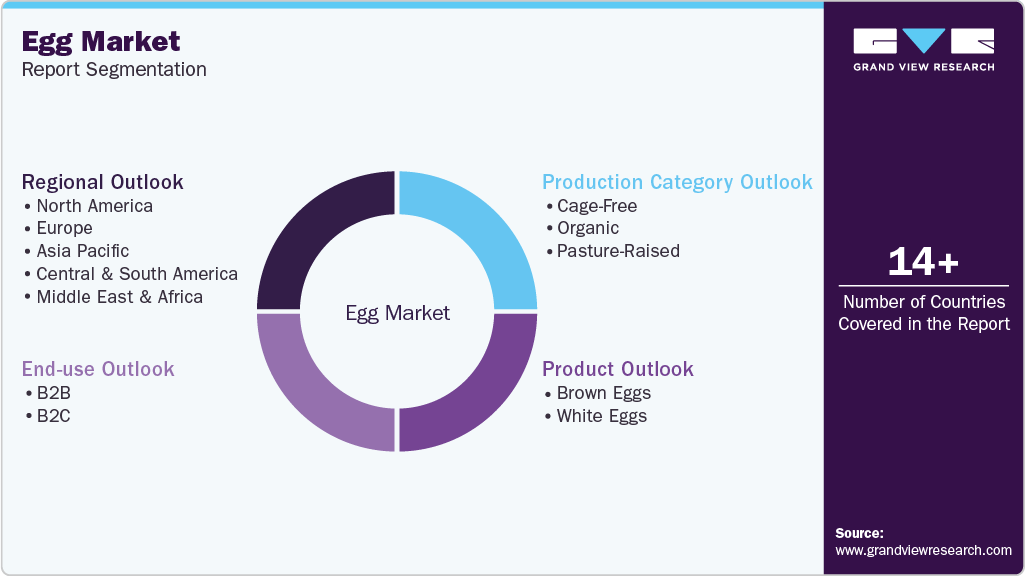
This report forecasts revenue growth at the global, regional, and country levels and provides an analysis of the latest industry trends and opportunities in each of the sub-segments from 2021 to 2033. For the purpose of this study, Grand View Research has segmented the global egg market report based on product, production category, end use application, and region:
 To learn more about this report, Download Free Sample Report
 -
Product Outlook (Revenue, USD Billion, 2021 - 2033)
-
Brown Eggs
-
White Eggs
-
-
Production Category Outlook (Revenue, USD Billion, 2021 - 2033)
-
Cage-Free
-
Organic
-
Pasture-Raised
-
-
End Use Application Outlook (Revenue, USD Billion, 2021 - 2033)
-
B2B
-
Processing Industry
-
Bakery & Confectionery
-
Processed and Convenience Foods
-
Dairy and Dairy Products
-
Nutritional & Functional Food
-
-
Foodservice Industry
-
-
B2C
-
Hypermarket/Supermarket
-
Grocery Stores
-
Online
-
Company-Owned Websites
-
E-Commerce
-
-
Others (Wholesalers, etc.)
-
-
-
Regional Outlook (Revenue, USD Billion, 2021 - 2033)
-
North America
-
U.S.
-
Canada
-
Mexico
-
-
Europe
-
Germany
-
UK
-
France
-
Italy
-
Spain
-
-
Asia Pacific
-
China
-
India
-
Japan
-
South Korea
-
Australia & New Zealand
-
-
Central & South America
-
Brazil
-
Argentina
-
-
Middle East & Africa
-
Saudi Arabia
-
South Africa
-
UAE
-
-
About the Author(s)
Consumer F&B Research Team
Consumer Goods · Consumer F&BThis report was authored by the consumer f&b research team at Grand View Research - comprising two research analysts, one senior research analyst, and one industry expert - with specialized expertise in the consumer f&b segment of the consumer goods industry. All findings are based on proprietary consumer goods databases, executive interviews, and regulatory analysis, subject to internal peer review prior to publication.
Last Updated:
Speak to Analyst

Customize this report to your needs - add regions, segments, or data points, with 20% free customization.
Or view our licence options:


ISO 9001:2015 & 27001:2022 Certified
We are GDPR and CCPA compliant! Your transaction & personal information is safe and secure. For more details, please read our privacy policy.


