
- Home
- »
- Specialty Glass, Ceramic & Fiber
- »
-
Electrical Insulation Tape Market Size & Share Report, 2033GVR Report cover

Electrical Insulation Tape Market (2026 - 2033)
Size, Share & Trends Analysis Report By Product (PVC Tapes, Rubber Tapes, Polyester Tapes), By End-use (Electrical & Electronics, Automotive, Aerospace, Construction, Telecommunication), By Region, And Segment Forecasts
Market Size, 2025
$16.0BMarket Estimate, 2026
$16.9BMarket Forecast, 2033
$24.0BCAGR, 2026–2033
5.2%Electrical Insulation Tape Market Summary
The global electrical insulation tape market size was valued at USD 16.0 billion in 2025 and is projected to grow from USD 16.9 billion in 2026 to USD 24.0 billion by 2033, at a CAGR of 5.2% from 2026 to 2033. Asia Pacific market dominated, with a revenue share of 42.4% in 2025. The global push for infrastructure development, particularly in emerging economies, is a primary driver for the market growth.
 Source: Grand View Research, IR Documents, Primary Interviews, Paid DatabasesTo learn more about this report,
 Download Free Sample Report
 Key Market Trends & Insights
- By product: PVC tapes segment led the market with the largest revenue share of 60.8% in 2025.
- By end-use: Electrical & electronics segment led the market with the largest revenue share of 52.7% in 2025.
Regional Highlights
- Largest regional market: Asia Pacific (42.4% revenue share, 2025)
- By country: China held the largest market share in 2025.
Market Size & Forecast
- Market size in 2025: USD 16.0 Billion
- Estimated market size in 2026: USD 16.9 Billion
- Projected market size by 2033: USD 24.0 Billion
- CAGR (2026-2033): 5.2%
Three ways to get this report
Buy it, customize it, or ask a question.Ask an Analyst
A direct answer, usually in 1 working day
- AccessReport author, directly
- Reply timeWithin 1 working day
- No sales callDirect answer only
- FormatEmail reply
- CostFree, no cost
Get the Full Report
What the study covers
- FormatsPDF · Excel · Dashboard
- Timeline2026–2033 annual, 2025 base
- Coverage20+ countries, 5 regions
- Companies10+ key players profiled
Customize the Report
20% free customization
- IncludeCountries, segments, points
- TailorTo your product definition
- ExtendDeeper competitor detail
- OrA fully bespoke study
- Turnaround5–10 working days
As countries invest in expanding their power grids, constructing new buildings, and upgrading transportation systems, the demand for reliable electrical insulation solutions increases. Electrical insulation tapes are essential in ensuring the safety and efficiency of electrical installations in these projects.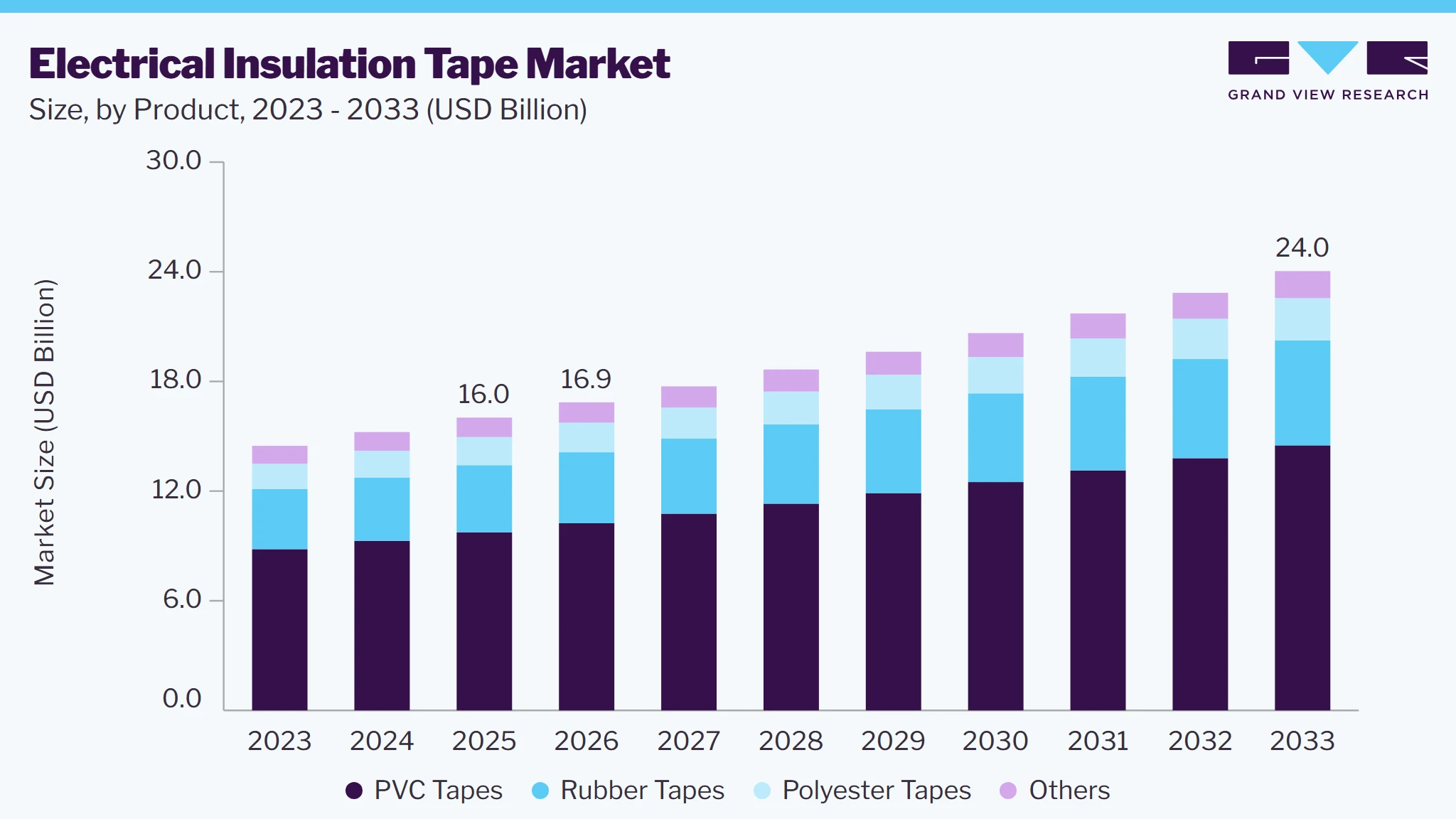 To learn more about this report, Download Free Sample Report
 The automotive sector's growth, especially the increasing adoption of electric vehicles (EVs), significantly contributes to the electrical insulation tape industry. EVs require advanced electrical systems and components, necessitating high-quality insulation products to ensure safety and performance. Electrical insulation tapes are used extensively in EVs for wire harnessing, battery insulation, and construction. The global production of motor vehicles, including EVs, continues to rise, further propelling the demand for electrical insulation tapes.
The proliferation of electronic devices and the miniaturization of components have increased the need for effective insulation solutions. Electrical insulation tapes play a crucial role in protecting sensitive electronic components from electrical interference and ensuring device reliability. The aerospace industry's growth, coupled with the development of advanced technologies like 5G and IoT, is driving the demand for high-performance insulation products.
Market Dynamics
The electrical insulation tape market is witnessing steady growth due to increasing investments in power transmission and distribution infrastructure, rising electrification projects, and expanding industrial automation across developed and emerging economies. The growing adoption of renewable energy systems, electric vehicles, and advanced electronics has increased the need for reliable insulation materials that ensure electrical safety and equipment durability. Manufacturers are focusing on developing high-performance tapes with improved heat resistance, flame retardancy, and environmental compliance to meet evolving industry requirements. Continuous technological advancements in adhesive formulations and backing materials are further supporting product innovation.
Global investments in power generation, transmission, and distribution networks are significantly driving demand for electrical insulation tapes. Governments and utility providers are modernizing aging electrical grids while expanding electricity access in developing regions. Electrical insulation tapes are widely used in cable jointing, wire harnessing, transformer insulation, and electrical maintenance activities, making them essential components in infrastructure development. The expansion of smart grids and renewable energy installations has further strengthened product demand across utility applications.
The rapid growth of industrial automation, construction activities, and commercial infrastructure is also contributing to increased consumption of electrical insulation tapes. Manufacturing plants, data centers, transportation systems, and industrial machinery require reliable insulation solutions to ensure operational safety and minimize electrical failures. Increasing investments in electric vehicle charging infrastructure and high-voltage electrical systems are creating additional opportunities for advanced insulation tape manufacturers.
The market faces challenges due to fluctuations in the prices of key raw materials such as PVC, rubber, acrylic adhesives, silicone, and specialty polymers. These materials are largely dependent on petrochemical feedstocks, making manufacturers vulnerable to changes in crude oil prices, supply chain disruptions, and geopolitical uncertainties. Rising production costs often reduce profit margins and create pricing pressure in highly competitive regional markets. Additionally, environmental regulations restricting certain plastic materials and chemical additives require manufacturers to invest in sustainable alternatives, increasing production complexity.
The transition toward renewable energy, electric mobility, and environmentally sustainable electrical products presents significant growth opportunities for the electrical insulation tape market. Manufacturers are increasingly developing halogen-free, flame-retardant, recyclable, and low-VOC insulation tapes that comply with stringent environmental and electrical safety standards. Advanced products designed for high-temperature applications, battery insulation, aerospace systems, and smart electrical equipment are expanding the market beyond conventional electrical applications. Growing investments in research and development are expected to accelerate innovation and create new opportunities across industrial, automotive, electronics, and energy sectors.
Market Concentration & Characteristics
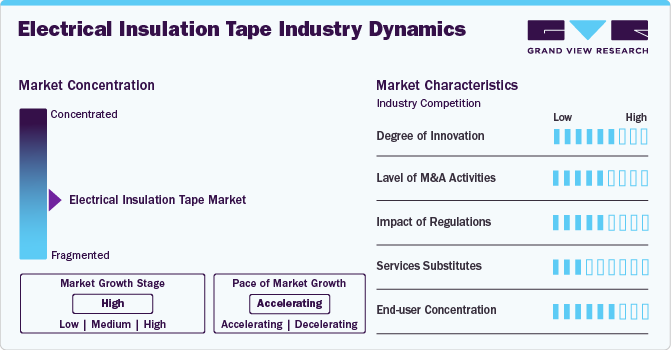
The electrical insulation tape industry demonstrates a moderately concentrated structure, with a few prominent players such as 3M, Nitto Denko, and Tesa SE holding significant market shares globally. The degree of innovation within the market is steady, characterized by ongoing advancements in adhesive technologies, thermal resistance, and flame-retardant properties. Manufacturers are increasingly developing environmentally friendly and halogen-free insulation tapes in response to rising demand for sustainable products. Product differentiation is largely driven by performance attributes such as dielectric strength, temperature endurance, and compatibility with various wire products.
 To learn more about this report, Download Free Sample Report
 Regulatory impacts play a notable role in shaping market dynamics, especially in regions with stringent green building standards and environmental certification programs. Policies promoting sustainable construction and reducing carbon emissions are indirectly propelling the adoption of electrical insulation tapes. Substitutes such as lime and gypsum plasters present competition, particularly in urban markets where convenience and faster drying times are preferred. However, these substitutes often lack the ecological benefits of earthen options, which maintain a stronghold in the natural building segment. End user concentration is varied, with both individual homebuilders and commercial green building developers showing interest, though residential adoption, especially among eco-conscious consumers, dominates the landscape.
Analyst Perspective
The electrical insulation tape market is evolving from a conventional electrical consumables industry into a technology-driven market focused on high-performance insulation materials, advanced adhesive technologies, flame-retardant formulations, high-temperature resistant tapes, and sustainable insulation solutions. Growth is being supported by increasing investments in power transmission and distribution infrastructure, industrial automation, electric vehicles, renewable energy projects, and expanding electronics manufacturing. End users increasingly demand insulation tapes that provide superior dielectric strength, thermal stability, durability, and long-term reliability while ensuring compliance with stringent electrical safety standards. Innovation is centered on advanced polymer engineering, halogen-free and environmentally friendly materials, pressure-sensitive adhesive technologies, lightweight insulation solutions, and application-specific products designed for next-generation electrical and electronic systems.
End Use Insights
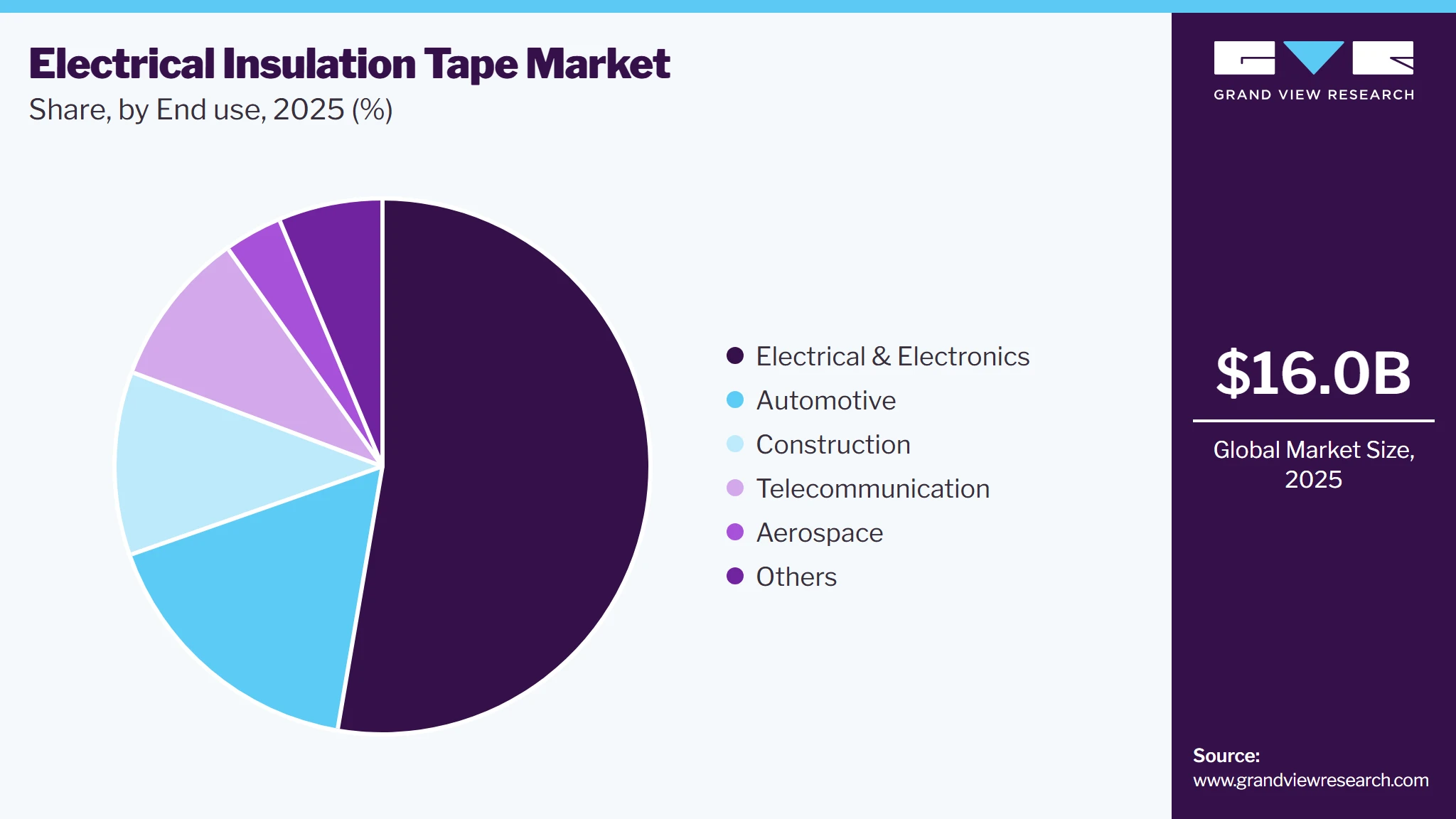
Based on end use, the electrical & electronics segment led the market with the largest revenue share of 52.7% in 2025 and is expected to grow at a CAGR of 5.3% over the forecast period, driven by rapid advancements in technology and the increasing complexity of electrical systems across various industries. As electronic devices become more compact and powerful, the demand for high-performance insulation materials has surged. Electrical insulation tapes are crucial in ensuring safety, preventing short circuits, and maintaining the efficiency of circuits and components.
 To learn more about this report, Download Free Sample Report
 The automotive segment is expected to grow at the fastest CAGR of 5.8% over the forecast period, driven by the rising adoption of electric and hybrid vehicles, increasing vehicle electrification, and the growing complexity of automotive electrical systems. As modern vehicles incorporate a higher number of electronic components for functions such as infotainment, safety, navigation, and powertrain control, the demand for reliable insulation materials has surged. Electrical insulation tapes are used extensively for wire harnessing, cable wrapping, and component shielding to ensure optimal performance, safety, and longevity of the vehicle’s electrical systems.
Product Insights
Based on product, the PVC tapes segment led the market with the largest revenue share of 60.8% in 2025 and is expected to grow at a CAGR of 5.1% over the forecast period, driven by their excellent electrical insulating properties, flexibility, and durability. These tapes are widely used across residential, commercial, and industrial applications due to their ability to withstand high voltage, resist moisture and abrasion, and maintain adhesion over a wide temperature range. In addition, the growing automotive and aerospace industries are major contributors to the rising consumption of PVC tapes. Their flame-retardant and self-extinguishing properties make them ideal for ensuring safety in electrical circuits and automotive wiring systems. Technological advancements in manufacturing have further enhanced the performance of PVC tapes, such as the development of lead-free and low-VOC variants that align with environmental regulations.
The rubber tapes segment is expected to grow at the fastest CAGR of 5.7% over the forecast period, driven by their enhanced performance in moisture- and weather-exposed environments. These tapes are commonly used in outdoor electrical installations, underground cabling, and harsh industrial settings where resistance to water, UV rays, and ozone is critical. Moreover, the increasing focus on renewable energy infrastructure and smart grid development globally is fueling demand for high-performance materials like rubber tapes, which ensure long-lasting insulation and system reliability.
Regional Insights
The North America electrical insulation tape industry is primarily driven by the region’s established electrical infrastructure and high safety standards. Technological advancements and a strong focus on energy efficiency are pushing demand for premium insulation products in utilities, construction, and industrial automation. The growth of the electric vehicle market, particularly in the U.S. and Canada, is also contributing to rising consumption of heat- and chemical-resistant tapes for battery assemblies and wiring harnesses. Furthermore, a surge in home renovation and smart home projects is increasing the use of electrical insulation products in residential settings. Innovation in flame-retardant and environmentally friendly tapes is encouraged by strict regulatory oversight from agencies like OSHA and the EPA.
U.S. Electrical Insulation Tape Market Trends
The market for electrical insulation tape in the U.S. is driven by a mix of regulatory compliance, infrastructure modernization, and rapid adoption of green energy solutions. Upgrades to the national grid and transmission lines, along with robust investments in electric vehicles and charging stations, are expanding the demand for advanced insulation products. The construction industry's continued growth, coupled with energy-efficient retrofitting of buildings, drives the use of insulation tapes in both commercial and residential sectors. High standards set by ANSI, UL, and NFPA encourage the use of certified, high-performance insulation tapes. In addition, the industrial automation and data center sectors are key consumers due to their need for precise, durable wiring systems.
Asia Pacific Electrical Insulation Tape Market Trends
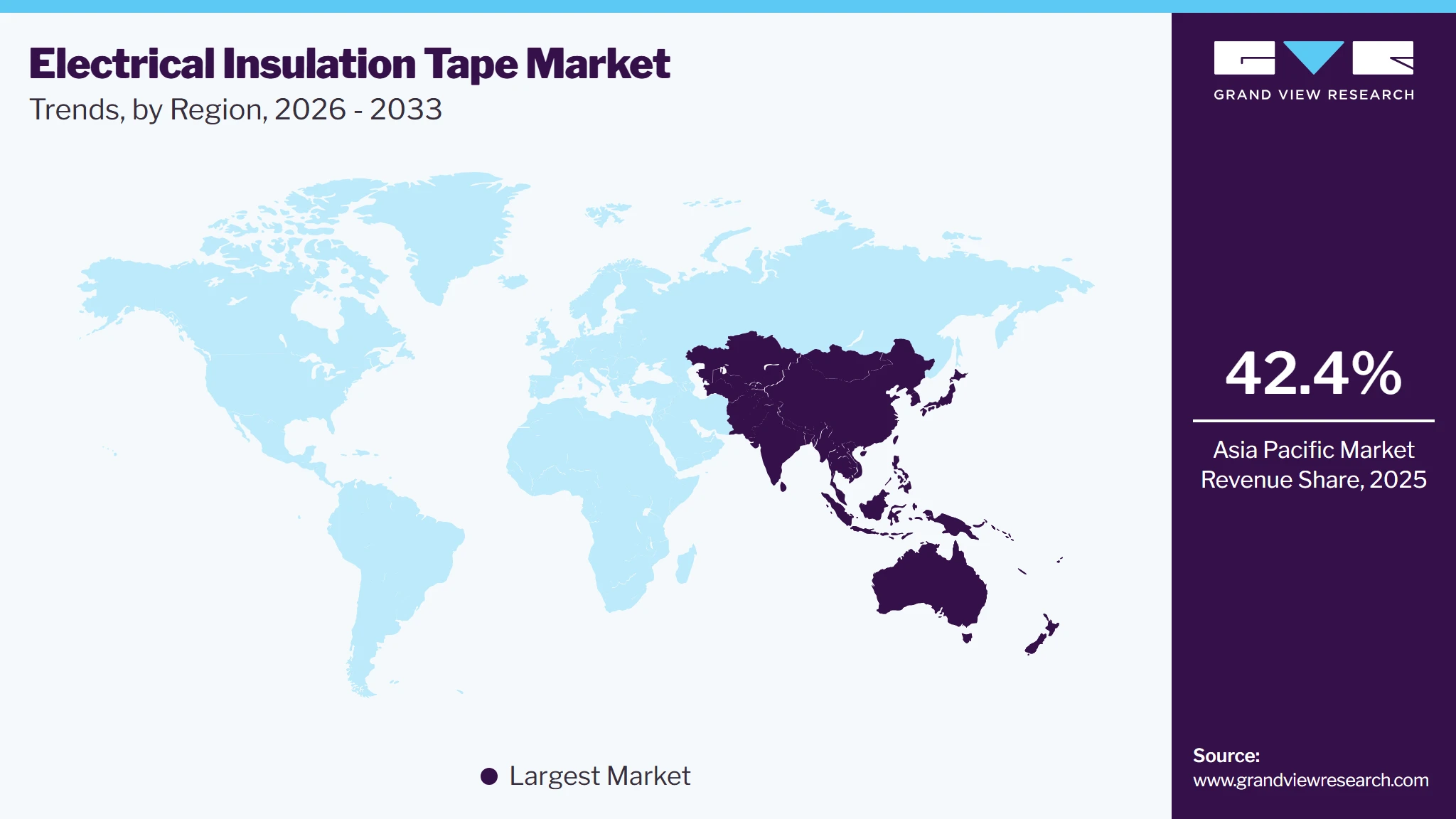
Asia Pacific dominated the electrical insulation tape market with the largest revenue share of 42.4% in 2025, driven by rapid industrialization and the growing demand for electricity across developing economies such as India, Indonesia, and Vietnam. Rising infrastructure development, particularly in smart grids and renewable energy, contributes to the surge in demand for reliable electrical insulation products. The region is also experiencing significant expansion in the automotive and electronics manufacturing sectors, where insulation tapes are essential for wire harnessing and circuit protection. Government initiatives to enhance energy efficiency and safety standards are pushing the adoption of high-performance insulation products.
 To learn more about this report, Download Free Sample Report
 The electrical insulation tape market in China held the largest share in the Asia Pacific region in 2025. China electrical insulation tape industry is driven by its massive manufacturing sector, particularly in electronics, consumer appliances, and electric vehicles (EVs). The country’s focus on advancing its renewable energy capacity, especially solar and wind, has significantly increased the demand for electrical components requiring reliable insulation. Strong government support for the development of EV infrastructure and smart city projects further accelerates market growth. Domestic demand is also spurred by continuous upgrades in transmission and distribution networks. Moreover, China is a leading producer and exporter of electrical insulation tapes, supported by robust supply chains and large-scale production capabilities.
Europe Electrical Insulation Tape Market Trends
Europe electrical insulation tape industry is driven by the region’s strong emphasis on sustainability, energy efficiency, and stringent regulatory frameworks. The EU’s policies toward carbon neutrality and smart infrastructure are encouraging the use of advanced insulation products in power systems and renewable energy installations. Growth in the automotive industry, particularly electric and hybrid vehicles, is significantly influencing demand for high-performance electrical insulation. The presence of well-established automotive and electronics manufacturers in countries like Germany and France fosters steady demand. Europe also sees increased end use of insulation tapes in wind energy and offshore platforms, necessitating highly durable and weather-resistant products.
Germany electrical insulation tape industry is driven by strong regulatory frameworks and environmental compliance, such as those outlined by the DIN and RoHS standards, that prompt innovation in sustainable and halogen-free tape solutions. Ongoing R&D by both multinational and local companies is enhancing the market’s technological edge. Germany’s export-oriented economy supports the production of high-quality insulation tapes for international markets. This combination of engineering excellence and environmental focus positions Germany as a key driver within the European market.
Latin America Electrical Insulation Tape Market Trends
The Latin America electrical insulation tape industry is influenced by increasing electrification and infrastructure development across emerging economies such as South Korea, Argentina, and Chile. Urban expansion and rural electrification programs are promoting the use of electrical insulation products in both public and private sector projects. The growth of industrial sectors such as mining, oil & gas, and manufacturing also supports the demand for durable and cost-effective insulation tapes. Regulatory improvements and increased awareness of electrical safety are gradually driving the adoption of higher-quality products in the region.
Middle East & Africa Electrical Insulation Tape Market Trends
The Middle East & Africa (MEA) electrical insulation tape industry is driven by rapid urbanization, expansion of utility grids, and rising investments in infrastructure and construction. Countries such as the UAE, Saudi Arabia, and South Africa are witnessing major developments in commercial buildings, industrial zones, and residential housing, all requiring reliable electrical insulation solutions. The increasing penetration of renewable energy projects, such as solar power plants in desert regions, is fueling the need for heat- and UV-resistant insulation tapes. In the oil & gas sector, electrical insulation products are essential for safety in harsh operational environments. MEA also benefits from the growing deployment of smart city initiatives and digital infrastructure, leading to more complex and safety-conscious electrical systems.
Key Electrical Insulation Tape Company Insights
Some of the key players operating in the market include tesa SE and Saint-Gobain
-
tesa SE is a leading global manufacturer of adhesive solutions, known for its high-quality electrical insulation tapes used across automotive, electronics, and industrial sectors. The company offers a wide range of products, including PVC insulation tapes, fabric-based electrical tapes, and high-temperature-resistant solutions designed for secure wire bundling, splicing, and insulation. Tesa’s tapes are valued for their durability, flame retardancy, and strong adhesion under various environmental conditions.
-
Saint-Gobain is a French multinational with a diverse product portfolio that includes advanced products and adhesives, such as electrical insulation tapes. Through its Performance Plastics division, the company manufactures high-performance insulation tapes made from products such as PTFE, glass cloth, and silicone, which are widely used in electrical, aerospace, and industrial end uses. These tapes offer excellent thermal resistance, dielectric strength, and reliability under demanding conditions.
Nitto Denko Corporation and Avery Dennison Corporation are some of the emerging market participants in the electrical insulation tape industry.
-
Nitto Denko Corporation is a major Japanese manufacturer of functional Products, including a comprehensive range of electrical insulation tapes. Its offerings include PVC, polyester, polyimide, and rubber-based tapes used for wire harnessing, circuit board protection, and thermal management. Nitto’s tapes are engineered to withstand high voltages, temperatures, and harsh environments, making them ideal for use in automotive, electronics, and energy sectors.
-
Avery Dennison Corporation, headquartered in the U.S., is a global player in product science and manufacturing, with a strong footprint in pressure-sensitive adhesive products, including electrical insulation tapes. The company offers a range of tapes used in electrical protection, cable management, and shielding End Uses, especially in automotive and Aerospace. Avery Dennison's products are designed for high-temperature performance, chemical resistance, and long-term reliability.
Key Electrical Insulation Tape Companies:
The following key companies have been profiled for this study on the electrical insulation tape market.
-
tesa SE
-
Saint-Gobain
-
Nitto Denko Corporation
-
Avery Dennison Corporation
-
3M
-
IPG
-
HellermannTyton
-
TERAOKA SEISAKUSHO CO., LTD.
-
Shurtape Technologies, LLC
-
Pidilite Industries Ltd.
Competitive Benchmarking
Category
Operating Strategies
Competitive Edge
Weakness
Established Players (3M, tesa SE, Saint-Gobain, Nitto Denko Corporation, Avery Dennison Corporation)
- Expand manufacturing capacity and strengthen global distribution networks to meet growing demand from electrical, automotive, and industrial sectors.
- Invest in R&D to develop high-performance, flame-retardant, halogen-free, and sustainable electrical insulation tapes.
- Form strategic partnerships with OEMs, utilities, electronics manufacturers, and automotive companies while expanding specialty product portfolios through acquisitions and innovation.
- Strong global brand recognition and extensive distribution networks.
- Broad product portfolios covering multiple insulation, bonding, and industrial tape applications.
- Advanced material science capabilities, robust R&D investments, and strong financial resources supporting continuous innovation.
- High manufacturing and operating costs across global production facilities.
- Greater exposure to fluctuations in petrochemical-based raw material prices.
- Longer product development and commercialization timelines due to complex organizational structures and regulatory compliance requirements.
Emerging Players (IPG, HellermannTyton, TERAOKA SEISAKUSHO CO., LTD., Shurtape Technologies, LLC, Pidilite Industries Ltd.)
- Focus on specialized electrical insulation tapes for regional industries, utilities, and industrial maintenance applications.
- Expand through distributor partnerships, localized manufacturing, and customer-specific product development.
- Develop cost-effective and application-specific insulation solutions while increasing presence in high-growth emerging markets.
- Greater flexibility in customizing products for specific customer and industry requirements.
- Faster product development cycles and quicker response to evolving market demands.
- Competitive pricing strategies and strong regional market presence in selected geographies and end-use industries.
- Limited global manufacturing footprint and distribution reach compared to multinational competitors.
- Lower brand visibility in international markets and dependence on regional sales channels.
- Relatively limited financial resources for large-scale acquisitions, advanced R&D, and global expansion initiatives.
Recent Developments
-
In December 2022, Shurtape Technologies, LLC announced its acquisition of Pro Tapes & Specialties, Inc., a tape manufacturer catering to various sectors such as graphic arts, precision die-cutting and fabricating, library and school supplies, retail, general industrial end uses, and custom converting services. This strategic acquisition is expected to strengthen Shurtape’s ability to offer a wider selection of products and improved service capabilities, allowing the company to better address the changing needs of its customers.
Electrical Insulation Tape Market Report Scope
Report Attribute
Details
Market size in 2025
USD 16.0 billion
Estimated market size in 2026
USD 16.9 billion
Projected market size by 2033
USD 24.0 billion
Growth rate
CAGR of 5.2% from 2026 to 2033
Base year for estimation
2025
Historical data
2021 - 2024
Forecast period
2026 - 2033
Quantitative units
Revenue in USD million/billion and CAGR from 2026 to 2033
Report coverage
Revenue forecast, company ranking, competitive landscape, growth factors, and trends
Segments covered
Product, end-use, region
Regional scope
North America; Europe; Asia Pacific; Central & South America; Middle East & Africa
Country scope
U.S.; Canada; Mexico; UK; Germany; France; Italy; Spain; China; India; Japan; South Korea
Key companies profiled
tesa SE; Saint-Gobain; Nitto Denko Corporation; Avery Dennison Corporation; 3M; IPG; HellermannTyton; TERAOKA SEISAKUSHO CO., LTD.; Shurtape Technologies, LLC; Pidilite Industries Ltd.
Customization scope
Free report customization (equivalent up to 8 analysts' working days) with purchase. Addition or alteration to country, regional & segment scope.
Pricing and purchase options
Avail customized purchase options to meet your exact research needs. Explore purchase options
Global Electrical Insulation Tape Market Report Segmentation
This report forecasts revenue growth at the global, regional, and country levels and provides an analysis of the latest industry trends in each of the sub-segments from 2021 to 2033. For this study, Grand View Research has segmented the global electrical insulation tape market report based on product, end use, and region.:
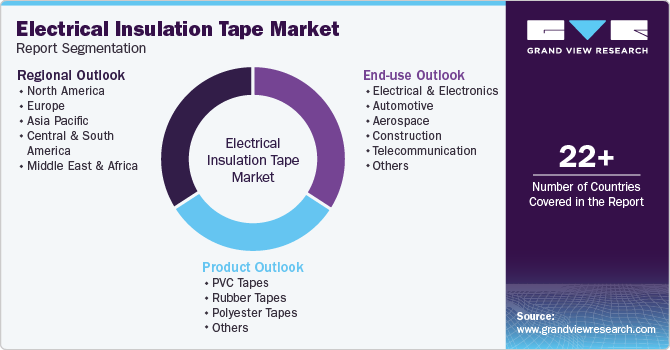 To learn more about this report, Download Free Sample Report
 -
Product Outlook (Revenue, USD Million, 2021 - 2033)
-
PVC Tapes
-
Rubber Tapes
-
Polyester Tapes
-
Others
-
-
End Use Outlook (Revenue, USD Million, 2021 - 2033)
-
Electrical & Electronics
-
Automotive
-
Aerospace
-
Construction
-
Telecommunication
-
Others
-
-
Regional Outlook (Revenue, USD Million, 2021 - 2033)
-
North America
-
U.S.
-
Canada
-
Mexico
-
-
Europe
-
Germany
-
UK
-
France
-
Italy
-
Spain
-
-
Asia Pacific
-
China
-
Japan
-
India
-
South Korea
-
-
Central & South America
-
Middle East & Africa
-
Research Methodology
The electrical insulation tape market figures in this report are based on a proven research process that combines executive interviews with secondary research from proprietary databases, company filings, and recognized regulatory and institutional sources. Market size is built through value-chain sizing-reconciling supply-side and demand-side estimates-and triangulated with bottom-up and top-down approaches. Every estimate passes multiple levels of expert validation before publication, with each electrical insulation tape segment quantified using the revenue-capture definitions in the table below
Segment Definition
Segment - Product
Revenue capture definition
PVC Tapes
Revenue generated from the sale of polyvinyl chloride (PVC) electrical insulation tapes used for wire insulation, cable harnessing, color coding, splicing, and general-purpose electrical maintenance due to their excellent dielectric strength, flexibility, flame resistance, and moisture protection.
Rubber Tapes
Revenue generated from the sale of rubber-based electrical insulation tapes, including self-fusing and self-amalgamating tapes, primarily used for high-voltage cable splicing, moisture sealing, primary electrical insulation, and electrical equipment protection in demanding industrial and utility applications.
Polyester Tapes
Revenue generated from the sale of polyester electrical insulation tapes designed for high-temperature electrical insulation, motor winding, transformer insulation, coil wrapping, capacitor manufacturing, and electronic component protection requiring superior thermal and mechanical performance.
Others
Revenue generated from the sale of specialty electrical insulation tapes such as silicone tapes, polyimide tapes, PTFE tapes, glass cloth tapes, mica tapes, and other advanced insulation tapes used in high-temperature, high-voltage, aerospace, renewable energy, and specialized industrial applications.
Segment - End Use
Revenue capture definition
Electrical & Electronics
Revenue generated from the sale of electrical insulation tapes used in electrical equipment, power distribution systems, transformers, switchgear, motors, generators, control panels, consumer electronics, and electronic assemblies for insulation, protection, and cable management.
Automotive
Revenue generated from the sale of electrical insulation tapes used in automotive wiring harnesses, electric vehicles, battery systems, sensors, lighting systems, engine compartments, and electronic control units to ensure electrical safety, vibration resistance, and thermal protection.
Aerospace
Revenue generated from the sale of electrical insulation tapes used in aircraft electrical wiring, avionics, aerospace electronics, communication systems, and high-performance cable assemblies requiring lightweight materials, flame resistance, and high-temperature durability.
Construction
Revenue generated from the sale of electrical insulation tapes used in residential, commercial, and industrial construction projects for electrical wiring installation, cable jointing, conduit systems, electrical maintenance, and power distribution infrastructure.
Telecommunication
Revenue generated from the sale of electrical insulation tapes used in telecommunication networks, fiber-optic installations, communication cables, data centers, base stations, and network equipment for cable insulation, protection, bundling, and environmental sealing.
Others
Revenue generated from the sale of electrical insulation tapes used across renewable energy systems, railways, marine, industrial machinery, utilities, mining, healthcare equipment, and other specialized applications requiring reliable electrical insulation and mechanical protection.
Estimation Model
Layer Name
Key Question
Description
Electrical Infrastructure & Industrial Activity
Where is electrical insulation tape demand generated?
Estimates demand based on electrical infrastructure development, power transmission and distribution projects, industrial manufacturing, construction activities, telecommunications expansion, and electrification across major regions.
End-use Industry Demand
Which industries consume electrical insulation tapes?
Evaluates consumption across electrical & electronics, automotive, aerospace, construction, telecommunication, utilities, renewable energy, and other industrial sectors where insulation, cable protection, and wire management are essential.
Product Penetration & Material Mix
Which types of electrical insulation tapes are being adopted?
Assesses demand by product type including PVC tapes, rubber tapes, polyester tapes, and other specialty insulation tapes based on voltage requirements, operating temperatures, environmental conditions, regulatory compliance, and application-specific performance.
Revenue Validation & Market Assessment
What is the total revenue generated from electrical insulation tapes?
Consolidates regional demand, industry-wise consumption, product pricing, manufacturer sales, distribution channels, import-export trends, and company revenues to validate the overall electrical insulation tape market size and forecast.
Delivered Customizations
This report has been delivered with the following In-depth customizations
Client Request
Customization Delivered
Value Adds
Competitive landscape assessment
Comprehensive benchmarking of leading manufacturers based on product portfolios, manufacturing capabilities, pricing strategies, distribution networks, capacity expansions, mergers & acquisitions, strategic partnerships, innovation activities, and recent business developments.
Assists companies in identifying competitive advantages, benchmarking industry leaders, evaluating market positioning, recognizing partnership or acquisition opportunities, and strengthening long-term competitive strategies.
Regulatory and standards analysis
Detailed review of international and regional electrical safety regulations, environmental compliance requirements, product certification standards, flame-retardancy specifications, RoHS, REACH, UL, IEC, and other industry-specific standards affecting product development and commercialization.
Helps manufacturers achieve regulatory compliance, reduce certification risks, accelerate product approvals, support international market entry, and enhance customer confidence through certified, standards-compliant products.
Market forecasting and strategic opportunity assessment
Customized revenue forecasts, demand outlook, emerging application analysis, investment opportunity mapping, customer trend evaluation, and strategic growth scenarios based on evolving industry dynamics and technological advancements.
Supports long-term business planning, investment prioritization, market entry strategies, capacity expansion decisions, and identification of high-growth opportunities across products, regions, and end-use industries.
Frequently Asked Questions About This Report
Asia Pacific market dominated, with a revenue share of 42.4% in 2025.
Electrical & electronics segment led the market with the largest revenue share of 52.7% in 2025.
PVC tapes segment led the market with the largest revenue share of 60.8% in 2025.
The electrical insulation tapes market size was valued at USD 16.0 billion in 2025 and is estimated at USD 16.9 billion in 2026.
The electrical insulation tapes market is expected to grow at a CAGR of 5.2% from 2026 to 2033, reaching USD 24.0 billion by 2033.
Key players include tesa SE, Saint-Gobain, Nitto Denko Corporation, Avery Dennison Corporation, 3M, IPG, HellermannTyton, TERAOKA SEISAKUSHO CO., LTD., Shurtape Technologies, LLC, and Pidilite Industries Ltd.
The electrical insulation tape market is driven by rising demand from the automotive and electronics sectors, growing infrastructure development, advancements in adhesive technologies, and increasing regulatory focus on electrical safety.
About the Author(s)
Specialty Glass, Ceramic & Fiber Research Team
Advanced Materials · Specialty Glass, Ceramic & FiberThis report was authored by the specialty glass, ceramic & fiber research team at Grand View Research - comprising two research analysts, one senior research analyst, and one industry expert - with specialized expertise in the specialty glass, ceramic & fiber segment of the advanced materials industry. All findings are based on proprietary advanced materials databases, executive interviews, and regulatory analysis, subject to internal peer review prior to publication.
Last Updated:
Speak to Analyst

Customize this report to your needs - add regions, segments, or data points, with 20% free customization.
Or view our licence options:


ISO 9001:2015 & 27001:2022 Certified
We are GDPR and CCPA compliant! Your transaction & personal information is safe and secure. For more details, please read our privacy policy.


