
- Home
- »
- Advanced Interior Materials
- »
-
Engineered Fibers Market Size & Share Report, 2026-2033GVR Report cover

Engineered Fibers Market (2026 - 2033)
Size, Share & Trends Analysis Report By Fiber Type (Aramid Fibers, Carbon Fibers, Glass Fibers), By End-use Industry (Automotive, Healthcare), By Region, And Segment Forecasts
Market Size, 2025
$12.7BMarket Estimate, 2026
$13.4BMarket Forecast, 2033
$19.6BCAGR, 2026–2033
5.6%Engineered Fibers Market Summary
The global engineered fibers market size was valued at USD 12.7 billion in 2025 and is projected to grow from USD 13.4 billion in 2026 to USD 19.6 billion by 2033, at a CAGR of 5.6% from 2026 to 2033. Asia Pacific dominated the engineered fibers market with the largest revenue share of 35.8% in 2025. due to their superior performance characteristics such as strength, durability, flexibility, and resistance to moisture and chemicals.
 Source: Grand View Research, IR Documents, Primary Interviews, Paid DatabasesTo learn more about this report,
 Download Free Sample Report
Key Market Trends & Insights
- By fiber type: Carbon fibers segment held the largest market share of 41.5% in 2025.
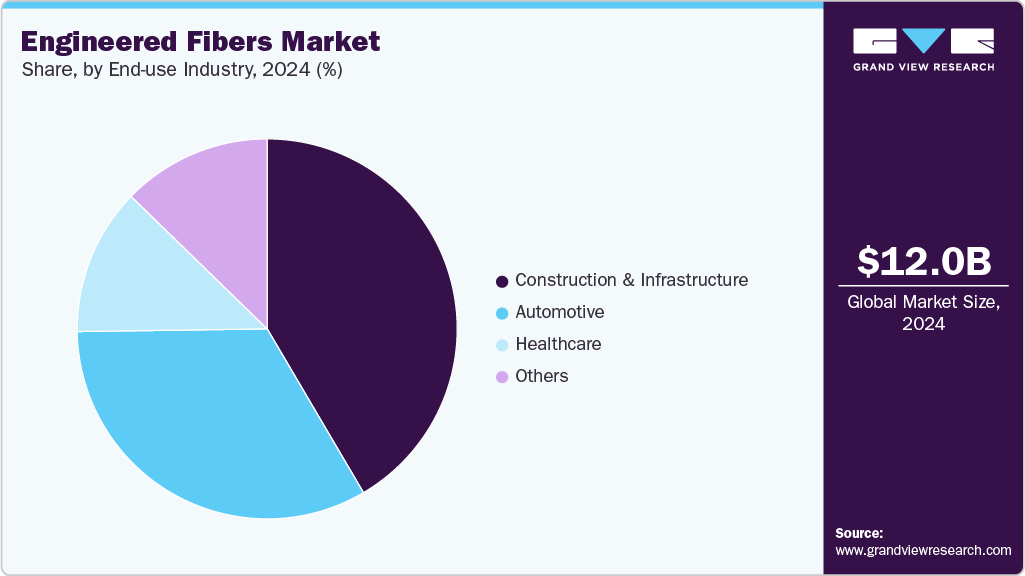
- By end use: Construction & infrastructure segment held the largest market share of 41.5% in 2025.
Regional Highlights
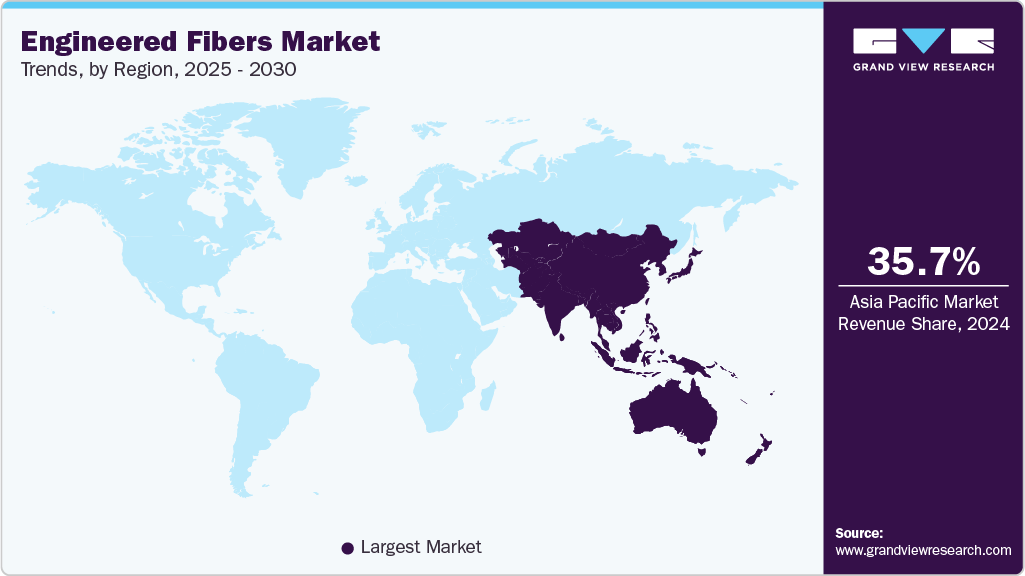
- Largest regional market: Asia Pacific (35.8% revenue share, 2025)
- By country: China held the largest market share in 2025
Market Size & Forecast
- Market size in 2025: USD 12.7 Billion
- Estimated market size in 2026: USD 13.4 Billion
- Projected market size by 2033: USD 19.6 Billion
- CAGR (2026-2033): 5.6%
Prism AI by Grand View Research Free to tryAsk a question about the engineered fibers marketTry asking✓Every figure cited from GVR research Prefer the report? Download free sample →
These fibers, including aramid, carbon, polyester, and nylon, are increasingly being used across industries such as automotive, aerospace, construction, medical textiles, and fashion. As global manufacturing and infrastructure development expand, engineered fibers are favored for their cost-effectiveness and adaptability over traditional natural fibers. One of the main drivers behind this growing demand is the rising emphasis on sustainability and lightweight materials in sectors like transportation and packaging. Engineered fibers help reduce overall material weight, contributing to improved fuel efficiency and lower emissions. Additionally, the booming demand for high-performance apparel in sports and defense, along with increasing investments in smart textiles and wearable technology, is pushing the market forward. Their consistent quality and ability to be tailored for specific applications make them indispensable in modern product design and innovation.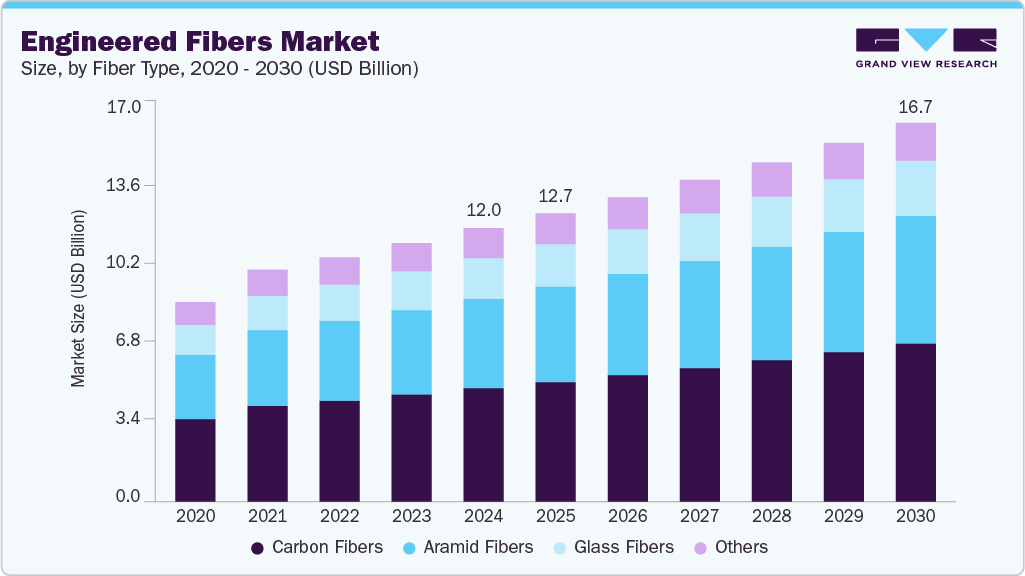 To learn more about this report, Download Free Sample Report
Innovations in engineered fibers are also propelling their adoption. Developments such as bio-based and biodegradable synthetic fibers, nanofiber technology, and smart textiles integrated with sensors or responsive features are redefining the capabilities of man-made materials. Companies are also investing in closed-loop recycling systems and sustainable production processes to address environmental concerns. These technological advancements are not only expanding the application scope of engineered fibers but are also aligning with global sustainability goals, ensuring continued market growth.
Market Dynamics
The engineered fibers market is witnessing steady growth due to rising demand for high-performance, lightweight, and durable materials across industries such as automotive, aerospace, construction, healthcare, textiles, and industrial manufacturing. Manufacturers are increasingly adopting engineered fibers to improve product strength, thermal resistance, chemical stability, and overall performance while reducing weight. Growing investments in advanced material technologies, expanding infrastructure development, and the increasing focus on sustainable and recyclable fiber solutions are further supporting market expansion. Additionally, continuous innovation in fiber engineering and the development of bio-based and specialty fibers are creating new growth opportunities worldwide.
Industries such as automotive, aerospace, and industrial manufacturing are increasingly replacing conventional materials with engineered fibers to improve product performance while reducing overall weight. These fibers provide excellent mechanical strength, corrosion resistance, thermal stability, and durability, making them suitable for demanding applications. The growing adoption of lightweight materials also helps manufacturers improve energy efficiency and meet stringent environmental regulations.
The expansion of electric vehicles, renewable energy projects, and advanced industrial equipment is further driving demand for engineered fibers. Wind turbine blades, battery components, composite structures, and protective equipment increasingly rely on engineered fibers to enhance operational efficiency and product lifespan. Continuous investments in advanced manufacturing technologies are further strengthening market growth.
The production of engineered fibers requires advanced manufacturing technologies, specialized raw materials, and significant capital investment, making these products more expensive than conventional fibers. Price volatility of raw materials and energy-intensive manufacturing processes further increase production costs. These factors can limit adoption, particularly among small manufacturers and price-sensitive industries, while also affecting profit margins during periods of raw material cost fluctuations.
Increasing environmental awareness and stricter sustainability regulations are encouraging manufacturers to develop recyclable, biodegradable, and bio-based engineered fibers. Industries are actively investing in sustainable fiber technologies that reduce carbon emissions without compromising performance. Growing research activities, circular economy initiatives, and expanding applications in medical textiles, protective clothing, and advanced composites are expected to create significant long-term growth opportunities for the engineered fibers market.
Market Concentration & Characteristics
The engineered fibers industry is moderately concentrated, with a few major players such as DuPont, Teijin, Toray Industries, and Mitsubishi Chemical holding significant market shares. These companies benefit from strong R&D capabilities, established supply chains, and proprietary technologies, which create high entry barriers for new competitors. The market concentration is more pronounced in specialized fiber segments like aramid and carbon fibers, where innovation, compliance with strict industry standards, and capital-intensive production processes limit the number of capable producers. However, growing demand in emerging economies is encouraging regional players to expand, gradually diversifying the competitive landscape.
 To learn more about this report, Download Free Sample Report
While engineered fibers offer distinct advantages, they face competition from both natural fibers (like cotton, wool, and hemp) and newer bio-based alternatives. Natural fibers can serve as viable substitutes in applications where sustainability and biodegradability are critical, such as packaging or fashion, especially when cost or environmental impact is a concern. Additionally, advances in bio-engineered fibers, such as those derived from algae, bamboo, or regenerated cellulose (e.g., lyocell), present eco-friendly alternatives that mimic the performance of synthetic fibers. As consumer preferences and regulations shift towards greener products, the presence and impact of substitutes are expected to increase, pushing engineered fiber producers to innovate further.
Analyst Perspective
The engineered fibers market is expected to witness steady growth, supported by increasing demand for lightweight, high-strength, and durable materials across automotive, aerospace, construction, healthcare, and industrial applications. Manufacturers are focusing on developing advanced fiber technologies that offer improved mechanical performance, thermal resistance, and sustainability to meet evolving industry requirements. The growing adoption of electric vehicles, renewable energy infrastructure, and high-performance composites is further expanding the application scope of engineered fibers. In addition, investments in bio-based materials, recycling technologies, and advanced manufacturing processes are expected to enhance product innovation and create long-term growth opportunities for market participants.
Fiber Type Insights
Based on fiber type, the carbon fibers segment led the market with the largest revenue share of 41.5% in 2025 and is expected to grow at a CAGR of 5.7% over the forecast period. fueled by their unmatched strength-to-weight ratio, corrosion resistance, and increasing affordability due to advancements in production techniques. Demand for carbon fibers is surging in industries like aerospace, automotive, renewable energy (particularly wind turbines), and sports equipment, where lightweight and high-performance materials are critical. As electric vehicles and sustainable infrastructure projects gain momentum, carbon fibers are increasingly favored over traditional metals and other composites, propelling their rapid market expansion and positioning them as the key growth engine within t core component in modern infrastructure development.he engineered fibers sector.
Aramid fiber is experiencing rapid growth due to its exceptional strength, heat resistance, and lightweight properties. Widely used in aerospace, defense, automotive, and protective apparel, aramid fibers like Kevlar and Twaron offer high performance under extreme conditions, making them indispensable for applications such as ballistic protection, flame-retardant clothing, and high-performance composites. The established presence of major manufacturers like DuPont and Teijin, along with stringent safety standards in defense and industrial sectors, continues to drive steady demand and solidify aramid's leading position in the market.
End Use Industry Insights
Based on end use industry, the construction & infrastructure segment led the market with the largest revenue share of 41.5% in 2025 and is expected to grow at a CAGR of 5.7% over the forecast period. due to its widespread use in concrete reinforcement, insulation materials, geotextiles, and structural composites. Engineered fibers such as glass, basalt, and polypropylene are incorporated into building materials to enhance durability, reduce cracking, and improve resistance to environmental stress. The global push for resilient infrastructure, especially in developing economies, along with ongoing urbanization and government-backed infrastructure projects, ensures consistent demand from this sector. Their role in enhancing the longevity and performance of construction materials makes engineered fibersa
 To learn more about this report, Download Free Sample Report
The automotive industry is the fastest-growing segment for engineered fibers, driven by the increasing demand for lightweight, fuel-efficient, and high-performance vehicles. Engineered fibers like carbon, aramid, and high-tenacity polyester are being used to replace metal components, reducing vehicle weight and emissions while maintaining safety and durability. The rapid shift toward electric vehicles (EVs) is further accelerating the use of advanced fiber composites in battery housings, interiors, and structural parts. With automakers seeking materials that combine strength, efficiency, and sustainability, the automotive sector is emerging as a key driver of innovation and growth in the engineered fibers industry.
Regional Insights
Asia Pacific dominated the engineered fibers market with the largest revenue share of 35.8% in 2025, due to rapid industrialization, urbanization, and large-scale infrastructure development across countries like China, India, Japan, and South Korea. The region benefits from a strong manufacturing base, cost-effective labor, and favorable government policies supporting industrial growth. With growing demand from construction, automotive, electronics, and textiles, the region has become a key center for producing and consuming engineered fibers. Additionally, increasing investment in renewable energy and defense sectors is boosting the use of high-performance fibers such as carbon and aramid. Asia Pacific’s competitive advantage in low-cost manufacturing and export capabilities further strengthens its dominance in the global market.
 To learn more about this report, Download Free Sample Report
China Engineered Fibers Market Trends
The engineered fibers market in China held the largest share in the Asia Pacific region in 2025. China, one of the largest economies in Asia Pacific, is at the forefront of the engineered fibers market due to its expansive construction activities, large-scale manufacturing sector, and leadership in automotive production. China’s “Belt and Road” infrastructure initiative and increasing urban development are creating strong demand for durable, lightweight, and efficient materials, key attributes of engineered fibers. The country also invests heavily in electric vehicles (EVs), wind energy, and high-speed rail, all utilizing high-performance fibers. China’s domestic production of polyester, nylon, and emerging bio-based fibers, combined with its strong export orientation, makes it a global powerhouse in engineered fiber production. Furthermore, the government's emphasis on innovation and sustainability accelerates the development of advanced fiber technologies.
North America Engineered Fibers Market Trends
North America holds a significant position in the engineered fibers market, supported by high adoption in aerospace, defense, healthcare, and high-performance automotive industries. The region benefits from advanced research and development infrastructure, strict regulatory standards, and a mature industrial ecosystem demanding premium engineered materials. Applications such as ballistic protection, advanced composites in aircraft and vehicles, and medical-grade textiles fuel demand. Additionally, the growing push for sustainable and lightweight materials in manufacturing aligns with the increasing use of engineered fibers. The presence of major market players and strong institutional support for innovation continues to keep North America highly competitive.
The U.S. engineered fibers market is seeing significant growth since the U.S. has a well-established aerospace and defense sector, where high-performance fibers such as aramid and carbon fibers are extensively used. Automotive OEMs increasingly adopt lightweight composites to meet fuel efficiency and emission standards, driving further demand. The U.S. is also a center for technological advancements in smart textiles and medical fabrics, leveraging its strong academic and industrial research institutions. Furthermore, government defense spending and investment in infrastructure and clean energy contribute to sustained growth. With companies like DuPont and Hexcel headquartered in the U.S., the country plays a key role in setting technological and quality standards in the global engineered fibers market.
Europe Engineered Fibers Market Trends
Europe is a mature and innovation-driven market for engineered fibers, marked by high environmental consciousness and advanced industrial applications. The region’s commitment to sustainability has led to the adoption of bio-based and recyclable fiber alternatives. Key industries such as automotive, aerospace, renewable energy, and construction drive demand for engineered fibers, especially in countries like Germany, France, and the UK. European Union regulations on waste management and material efficiency are pushing companies to innovate, adopt circular economy practices, and develop advanced, eco-friendly fiber products. Additionally, Europe's emphasis on energy-efficient buildings and infrastructure provides further impetus for fiber-reinforced construction materials.
The Germany engineered fibers market is driven by the country’s renowned high-tech automotive and industrial sectors, where the need for lightweight, durable materials is critical. German manufacturers extensively use carbon and aramid fibers in automotive body parts, industrial machinery, and building reinforcements. Germany is also a hub for research in composite materials, often collaborating with academic institutions and private firms to advance fiber technologies. With a strong focus on quality, precision, and innovation, Germany continues to set the benchmark for engineered fiber usage across Europe.
Central & South America Engineered Fibers Market Trends
Central & South America is an emerging market for engineered fibers, showing steady growth as the region modernizes its infrastructure and expands its industrial base. Brazil, Argentina, and Chile are leading demand in sectors such as construction, transportation, and packaging. Engineered fibers are being adopted in civil engineering applications like concrete reinforcement and road stabilization, improving structural durability in a cost-effective manner. Although the market is not as technologically advanced as North America or Europe, increasing foreign direct investment and growing awareness about high-performance materials are fostering regional market development. However, dependency on imports and economic instability in some countries could pose challenges to sustained growth.
Middle East & Africa Engineered Fibers Market Trends
The Middle East & Africa region is witnessing gradual growth in the engineered fibers market, primarily driven by large-scale construction, oil and gas projects, and infrastructure development. Countries like Saudi Arabia, the UAE, and Qatar are investing heavily in megaprojects such as NEOM and Expo-related infrastructure, where high-performance and durable construction materials are required. These projects use engineered fibers to reinforce concrete, insulation, and specialty fabrics. In Africa, market growth is slower but rising, especially in countries investing in road networks, housing, and water management systems. Limited local manufacturing capabilities and a heavy reliance on imports currently restrict the pace of growth, but increasing industrialization and international partnerships are expected to support market expansion in the coming years.
Key Engineered Fibers Company Insights
Some of the key players operating in the market include Owens Corning and DuPont
-
Owens Corning is a globally recognized manufacturer of building materials and composites, particularly known for its expertise in fiberglass technologies. The company plays a significant role in the engineered fibers industry through its advanced glass fiber reinforcements used in construction, wind energy, transportation, and infrastructure sectors.
-
DuPont is a pioneer in materials science and a key innovator in the market. The company is best known for developing high-performance aramid fibers such as Kevlar and Nomex, which are widely used in protective clothing, aerospace, defense, automotive components, and industrial filtration systems. DuPont’s engineered fibers are engineered for extreme durability, thermal stability, and chemical resistance, supporting a wide range of high-risk and high-performance applications.
Solvay S.A., and Mitsubishi Chemical Group, are some of the emerging market participants in the engineered fibers market.
-
Solvay S.A. is a leading global supplier of advanced materials and specialty chemicals, with a strong portfolio in engineered fiber composites. The company offers high-performance materials designed for lightweighting, thermal management, and chemical resistance, key requirements across the automotive, aerospace, electronics, and industrial markets. Solvay’s engineered fiber solutions are integral to reducing environmental impact while maintaining structural integrity and performance in demanding applications. Its commitment to innovation and sustainability makes it a critical player in evolving high-performance fiber technologies.
-
Mitsubishi Chemical Group is a diversified chemical conglomerate with a prominent carbon fiber and advanced materials market presence. Through its carbon fiber brand PYROFIL, the company delivers high-strength, lightweight engineered fibers used extensively in aerospace, automotive, sporting goods, and industrial machinery. Mitsubishi Chemical is known for its focus on high-value applications and continuous innovation in fiber technology, enabling improved mechanical properties, design flexibility, and sustainability.
Key Engineered Fibers Companies
The following key companies have been profiled for this study on the engineered fibers market.
-
Owens Corning
-
DuPont
-
Solvay S.A.
-
Mitsubishi Chemical Group
-
Hexcel Corporation
-
Teijin Limited.
-
Hyosung Advanced Materials.
-
Toray Industries, Inc.
-
SGL Carbon
-
Honeywell International
Competitive Benchmarking
Category
Operating Strategies
Competitive Edge
Weakness
Established Players (Owens Corning, DuPont, Solvay S.A., Mitsubishi Chemical Group, Hexcel Corporation, Teijin Limited, Toray Industries, Inc.)
- Expand global manufacturing capabilities and production capacity.
- Invest in advanced high-performance and lightweight fiber technologies.
- Strengthen market position through product innovation, strategic collaborations, and long-term supply agreements.
- Strong global brand recognition and diversified engineered fiber portfolios.
- Advanced R&D capabilities with proprietary material technologies.
- Extensive manufacturing footprint, technical expertise, and well-established distribution networks.
- High capital investment and manufacturing costs.
- Exposure to raw material price volatility and supply chain disruptions.
- Strict regulatory compliance and lengthy product qualification processes across end-use industries.
Emerging Players (Hyosung Advanced Materials, SGL Carbon, Honeywell International)
- Focus on expanding specialty engineered fiber offerings for high-growth applications.
- Develop customer-specific solutions through technology innovation and strategic partnerships.
- Increase regional presence by targeting aerospace, automotive, energy, and industrial markets.
- Strong expertise in specialty and high-performance engineered fibers.
- Ability to rapidly develop application-specific products for niche markets.
- Growing presence in advanced composites and next-generation lightweight materials.
- Smaller global manufacturing footprint compared to market leaders.
- Higher dependence on selected industries and regional demand.
- Limited economies of scale and relatively lower investment capacity for global expansion.
Recent Developments
-
In May 2025, Teijin Frontier developed a new high-performance polyester fabric with a natural fiber-like texture and appearance, aiming to combine functionality with sustainability.
-
In January 2024, Toray introduced TORAYCA M46X, a carbon fiber with high tensile strength, enhancing its portfolio for aerospace and industrial applications.
Engineered Fibers Market Report Scope
Report Attribute
Details
Market size in 2025
USD 12.7 billion
Estimated market size in 2026
USD 13.4 billion
Projected market size by 2033
USD 19.6 billion
Growth rate
CAGR of 5.6% from 2026 to 2033
Base year for estimation
2025
Historical data
2021 - 2024
Forecast period
2026 - 2033
Quantitative units
Revenue in USD million/billion, and CAGR from 2026 to 2033
Report coverage
Revenue forecast, company ranking, competitive landscape, growth factors, and trends
Segments covered
Fiber type, end use industry, and region
Regional scope
North America; Europe; Asia Pacific; Central & South America; Middle East & Africa
Country scope
U.S.; Canada; Mexico; UK; Germany; France; Italy; Spain; China; India; Japan; South Korea
Key companies profiled
Owens Corning; DuPont; Solvay S.A.; Mitsubishi Chemical Group; Hexcel Corporation; Teijin Limited; Hyosung Advanced Materials; Toray Industries, Inc.; Honeywell International; SGL Carbon
Customization scope
Free report customization (equivalent up to 8 analysts' working days) with purchase. Addition or alteration to country, regional & segment scope.
Pricing and purchase options
Avail customized purchase options to meet your exact research needs. Explore purchase options
Global Engineered Fibers Market Report Segmentation
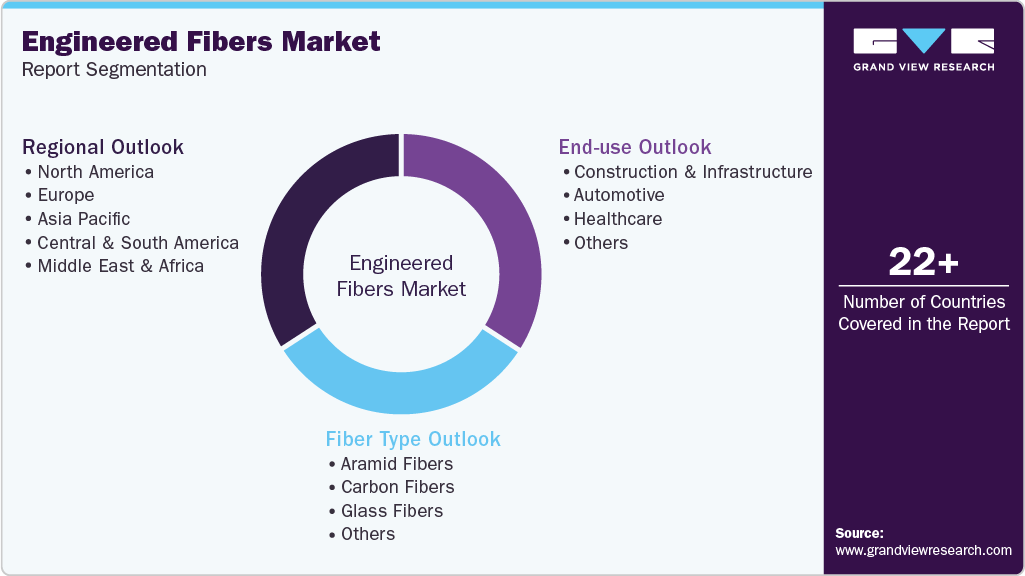
This report forecasts revenue growth at the global, regional, and country levels and provides an analysis of the latest industry trends in each of the sub-segments from 2021 to 2033. For this study, Grand View Research has segmented the global engineered fibers market report based on fiber type, end use industry, and region:
 To learn more about this report, Download Free Sample Report
-
Fiber Type Outlook (Revenue, USD Million, 2021 - 2033)
-
Aramid Fibers
-
Carbon Fibers
-
Glass Fibers
-
Others
-
-
End Use Industry Outlook (Revenue, USD Million, 2021 - 2033)
-
Construction & Infrastructure
-
Automotive
-
Healthcare
-
Others
-
-
Regional Outlook (Revenue, USD Million, 2021 - 2033)
-
North America
-
U.S.
-
Canada
-
Mexico
-
-
Europe
-
Germany
-
UK
-
France
-
Italy
-
Spain
-
-
Asia Pacific
-
China
-
Japan
-
India
-
South Korea
-
-
Central & South America
-
Middle East & Africa
-
Research Methodology
The engineered fibers market figures in this report are based on a proven research process that combines executive interviews with secondary research from proprietary databases, company filings, and recognized regulatory and institutional sources. Market size is built through value-chain sizing - reconciling supply-side and demand-side estimates - and triangulated with bottom-up and top-down approaches. Every estimate passes multiple levels of expert validation before publication, with each engineered fibers segment quantified using the revenue-capture definitions in the table below.
Segment Definition
Segment
Revenue capture definition
Fiber Type
Aramid Fibers
Revenue generated from the sale of engineered aramid fibers used in protective apparel, aerospace components, automotive parts, electrical insulation, and industrial reinforcement applications owing to their exceptional strength, heat resistance, and durability.
Carbon Fibers
Revenue generated from the sale of engineered carbon fibers utilized in aerospace, automotive, wind energy, sporting goods, and industrial composite applications due to their high strength-to-weight ratio, stiffness, and corrosion resistance.
Glass Fibers
Revenue generated from the sale of engineered glass fibers used in construction materials, automotive components, electrical insulation, wind turbine blades, marine products, and reinforced composites because of their mechanical strength, thermal stability, and cost efficiency.
Others
Revenue generated from the sale of other engineered fibers, including basalt, ceramic, ultra-high-molecular-weight polyethylene (UHMWPE), and specialty synthetic fibers, employed in industrial, defense, healthcare, and high-performance engineering applications for their specialized performance characteristics.
End Use Industry
Construction & Infrastructure
Revenue generated from the utilization of engineered fibers in construction and infrastructure applications, including concrete reinforcement, insulation materials, roofing, bridges, tunnels, and composite building components to enhance structural strength, durability, and longevity.
Automotive
Revenue generated from the application of engineered fibers in automotive components such as body panels, interior parts, tires, braking systems, battery enclosures, and lightweight composite structures to improve fuel efficiency, safety, and vehicle performance.
Healthcare
Revenue generated from the use of engineered fibers in healthcare applications, including surgical sutures, medical textiles, wound care products, implants, protective clothing, and medical device components due to their biocompatibility, strength, and sterilization resistance.
Others
Revenue generated from the application of engineered fibers across aerospace, defense, marine, electronics, energy, sporting goods, industrial manufacturing, and consumer products where high-performance materials are required for enhanced durability, lightweight properties, and operational efficiency.
Estimation Model
Layer No.
Layer Name
Key Question
Description
01
Macroeconomic & End-Use Industry Assessment
Which industries and macroeconomic factors are driving demand for engineered fibers?
Evaluates demand across construction & infrastructure, automotive, healthcare, aerospace, defense, electronics, wind energy, industrial manufacturing, and other sectors by analyzing industrial production, infrastructure investments, lightweight material adoption, manufacturing activity, regulatory standards, and regional economic growth.
02
Fiber Type & Application Penetration Analysis
Which engineered fiber types and applications contribute the most to market revenue?
Assesses the adoption of aramid fibers, carbon fibers, glass fibers, and other engineered fibers based on their mechanical properties, thermal resistance, lightweight characteristics, production volumes, application suitability, technological advancements, and material substitution trends across end-use industries.
03
Manufacturer Revenue & Supply Chain Validation
How much revenue is generated by engineered fiber manufacturers and suppliers?
Estimates market size through company revenues, production capacities, capacity utilization rates, pricing trends, raw material availability, manufacturing technologies, distribution networks, and value chain analysis, validated through primary interviews and secondary industry sources.
04
Regional Demand & Forecast Validation
How will regional demand and market opportunities evolve over the forecast period?
Validates market estimates by evaluating regional consumption patterns, industrial expansion, infrastructure development, automotive production, renewable energy investments, government regulations, sustainability initiatives, technological innovations, import-export dynamics, and future investment trends across major geographic markets.
Delivered Customizations
This report has been delivered with the following In-depth customizations
Client Request
Customization Delivered
Value Adds
Regional Market Analysis
Comprehensive regional assessment covering market size, growth trends, demand outlook, end-use industry analysis, regulatory framework, import-export scenario, investment activities, and country-level opportunities across North America, Europe, Asia Pacific, Latin America, and the Middle East & Africa.
Enables businesses to identify high-growth regional markets, optimize expansion strategies, evaluate country-specific risks and opportunities, and allocate investments based on regional demand and competitive intensity.
Competitive Benchmarking
In-depth benchmarking of leading engineered fiber manufacturers based on product portfolio, manufacturing capabilities, production capacity, geographic presence, pricing strategies, technological advancements, R&D investments, strategic partnerships, mergers & acquisitions, and sustainability initiatives.
Helps stakeholders assess competitive positioning, identify market gaps, benchmark best industry practices, understand competitor strengths and weaknesses, and formulate effective growth and differentiation strategies.
Supply Chain & Sustainability Analysis
Detailed evaluation of the complete value chain, including raw material sourcing, fiber manufacturing, processing technologies, distribution channels, pricing trends, supplier ecosystem, recycling infrastructure, circular economy initiatives, carbon reduction strategies, and compliance with environmental regulations.
Provides actionable insights to optimize procurement strategies, improve supply chain resilience, reduce operational costs, ensure regulatory compliance, achieve sustainability goals, and strengthen long-term business competitiveness.
Frequently Asked Questions About This Report
Asia Pacific held the highest revenue market share of 35.8% in 2025, driven by rapid industrialization, expanding automotive and construction sectors, strong manufacturing capabilities, and increasing investments in advanced composite materials.
The aramid fibers segment is the fastest growing fiber type in the engineered fibers market.
The automotive segment is the fastest growing end use segment in the engineered fibers market.
The construction & infrastructure segment accounted for the largest revenue share of 41.5% in 2025, driven by increasing demand for high-strength, durable, and corrosion-resistant materials for buildings, bridges, tunnels, roads, and other infrastructure projects.
The carbon fibers segment held the highest revenue share of 41.5% in 2025, driven by its exceptional strength-to-weight ratio, corrosion resistance, and increasing adoption across aerospace, automotive, wind energy, and high-performance industrial applications.
Some of the key players operating in the engineered fibers market include Owens Corning, DuPont, Solvay S.A., Mitsubishi Chemical Group, Hexcel Corporation, Teijin Limited, Hyosung Advanced Materials, Toray Industries, Inc., Honeywell International, and SGL Carbon.
The engineered fibers market size was estimated at USD 12.7 billion in 2025 and is expected to reach USD 13.4 billion in 2026.
The engineered fibers market is expected to grow at a compound annual growth rate of 5.6% from 2026 to 2033 to reach USD 19.6 billion by 2033.
The engineered fibers market is primarily driven by rising demand for lightweight, high-strength, and high-performance materials across the automotive, aerospace, construction, healthcare, and renewable energy industries.
About the Author(s)
Advanced Interior Materials Research Team
Advanced Materials · Advanced Interior MaterialsThis report was authored by the advanced interior materials research team at Grand View Research - comprising two research analysts, one senior research analyst, and one industry expert - with specialized expertise in the advanced interior materials segment of the advanced materials industry. All findings are based on proprietary advanced materials databases, executive interviews, and regulatory analysis, subject to internal peer review prior to publication.
Last Updated:
Speak to Analyst

Customize this report to your needs - add regions, segments, or data points, with 20% free customization.
Or view our licence options:


ISO 9001:2015 & 27001:2022 Certified
We are GDPR and CCPA compliant! Your transaction & personal information is safe and secure. For more details, please read our privacy policy.


