
- Home
- »
- Organic Chemicals
- »
-
Glutaraldehyde Market Size, Share & Growth Report, 2033GVR Report cover

Glutaraldehyde Market (2026 - 2033)
Size, Share & Trends Analysis Report By Product (Glutaraldehyde 25%, Glutaraldehyde 50%), By Application (Disinfection & Sterilization, Pesticide, Electron & Light Microscopy), By Region, And Segment Forecasts
Market Size, 2025
$763.0MMarket Estimate, 2026
$798.6MMarket Forecast, 2033
$1,094.9MCAGR, 2026–2033
4.6%Glutaraldehyde Market Summary
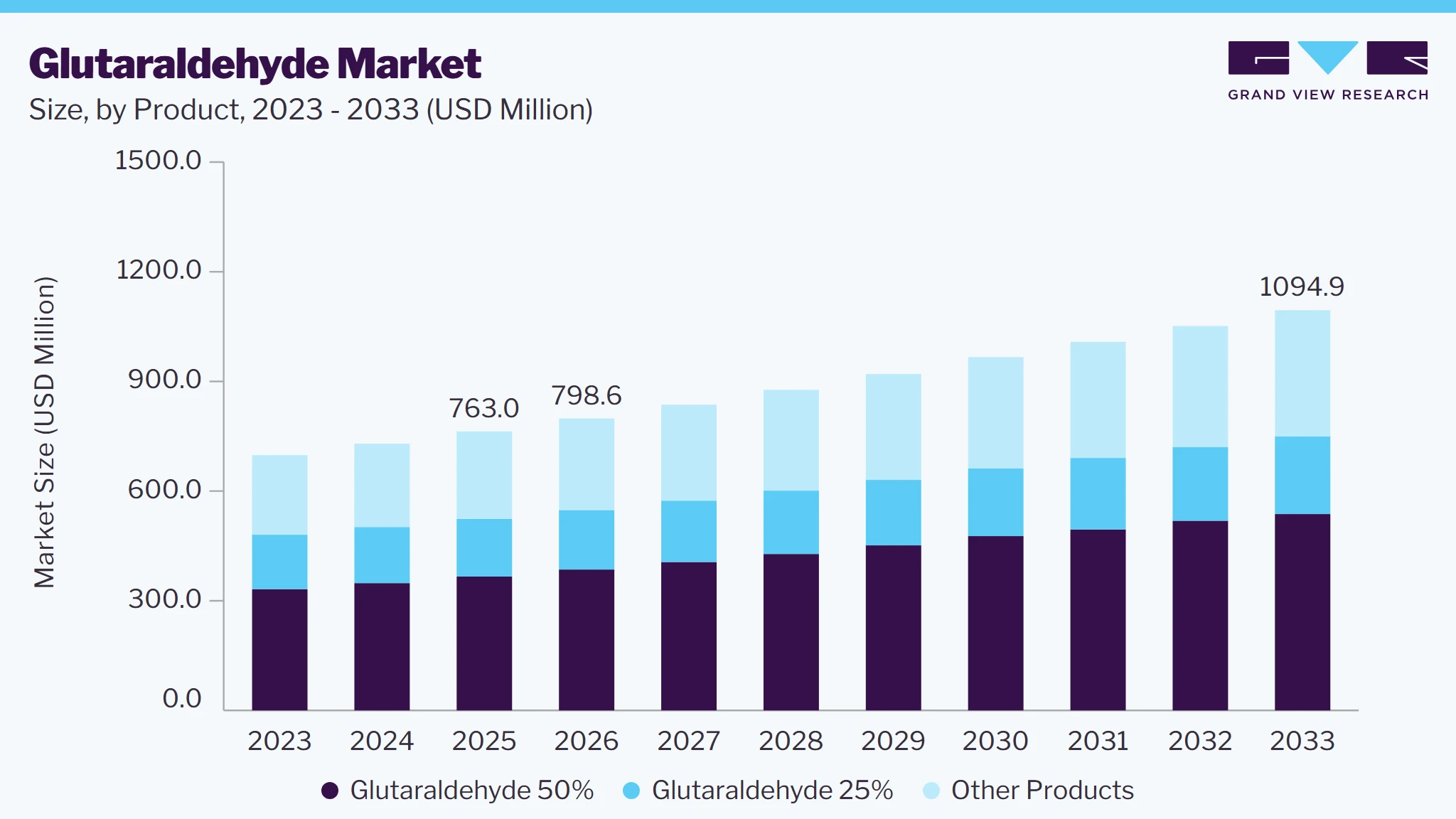
The global glutaraldehyde market size was valued at USD 763.0 million in 2025 and is projected to grow from USD 798.6 million in 2026 to USD 1,094.9 million by 2033, at a CAGR of 4.6% from 2026 to 2033. The market in Europe dominated with a revenue share of 45.5% in 2025. The growth of this market across the world can be attributed to a significant surge in the demand for high-level disinfectants and chemical sterilants from the global healthcare industry amid growing awareness about hygiene and sanitation among consumers.
 Source: Grand View Research, IR Documents, Primary Interviews, Paid DatabasesTo learn more about this report,
 Download Free Sample Report
Key Market Trends & Insights
- By product: Glutaraldehyde 50% segment held the largest market share of 48.0% in 2025.
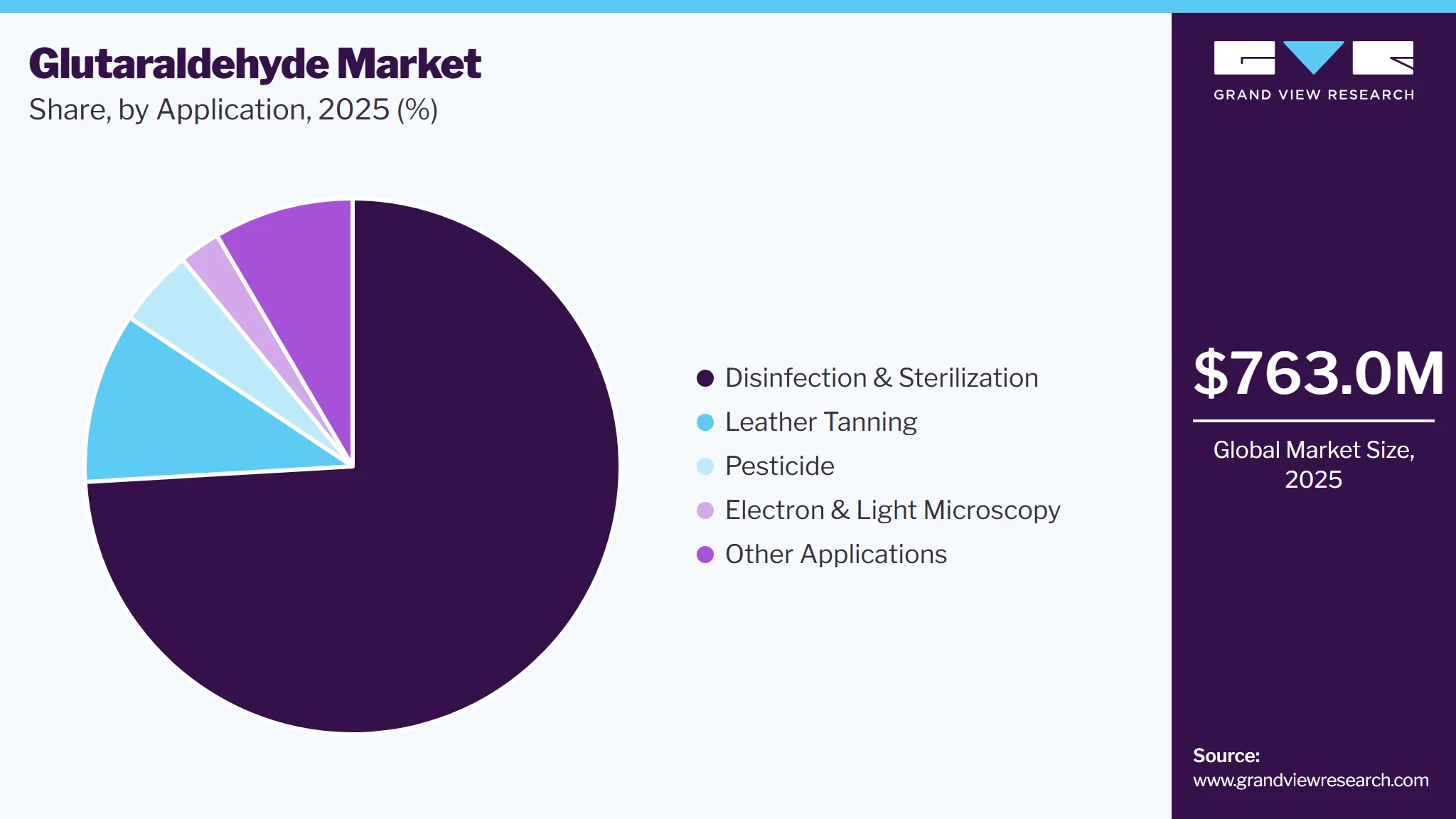
- By application: Disinfection & sterilization segment held the largest market share of 74.1% in 2025.
Regional Highlights
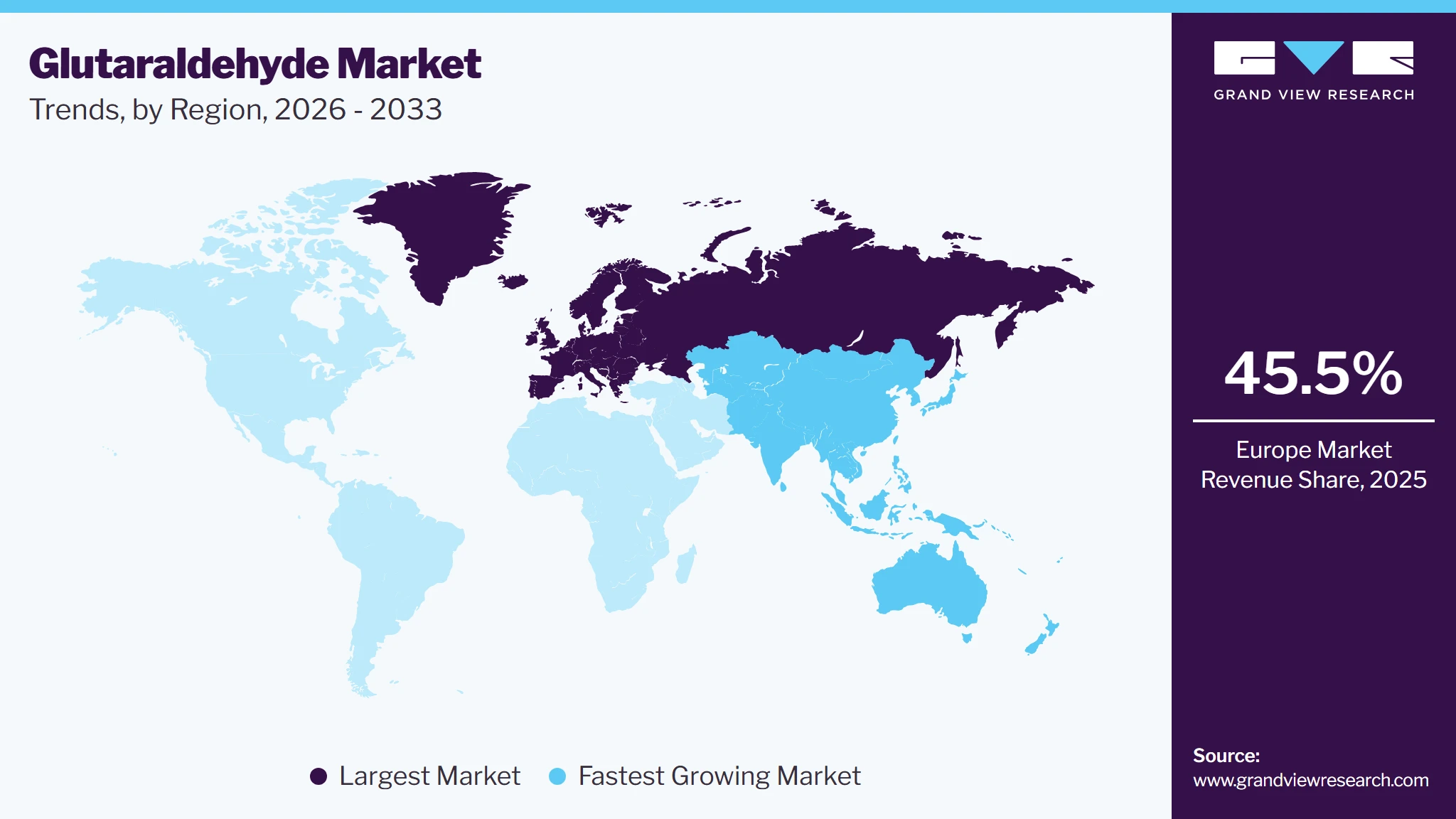
- Largest regional market: Europe (45.5% revenue share, 2025)
- Fastest-growing regional market: Asia Pacific (highest CAGR, 2026-2033)
- By country: Germany held the largest market share in 2025.
Market Size & Forecast
- Market size in 2025: USD 763.0 Million
- Estimated market size in 2026: USD 798.6 Million
- Projected market size by 2033: USD 1,094.9 Million
- CAGR (2026-2033): 4.6%
Prism AI by Grand View Research Free to tryAsk a question about the glutaraldehyde marketTry asking✓Every figure cited from GVR research Prefer the report? Download free sample →Glutaraldehyde is widely used as a cold sterilant to disinfect different heat-sensitive healthcare instruments, such as endoscopes, bronchoscopes, and dialysis equipment. Glutaraldehyde (C5H8O2) is an active ingredient used in the form of aqueous solution, which is activated by an alkaline buffer like sodium bicarbonate. Different companies like ACURO ORGANICS LIMITED; ASP; BASF SE; Fengchen Group Co., Ltd.; and Hebei Guanlang Biotechnology Co., Ltd., are involved in the production of different grades of the product for the disinfection of healthcare equipment.
 To learn more about this report, Download Free Sample Report
C5H8O2 is used in the oil & gas industry for the inhibition of surface-reducing bacteria. It is also used as a corrosion control solution. North America is one of the prominent producers of crude oil in the world. As per the U.S. Energy Information Administration, crude oil production in the country grew from 11.3 million barrels in 2021 to 11.9 million barrels in 2022. The growth in crude oil production in the U.S. is anticipated to trigger the demand for C5H8O2 in the coming years, thereby acting as an opportunity for the growth of glutaraldehyde industry in the country.
In addition to the application of the product in healthcare, it is also used as a biocide in water treatment to control the growth of microorganisms like bacteria and algae in cold water systems, pulp and paper mills, and oil and gas wells. As per the International Trade Administration, wastewater treatment market in India is projected to grow from USD 1.31 billion in 2020 to USD 2.08 billion by 2025, at a CAGR of 9.7%. This further provides the opportunity for the C5H8O2 market in the country. Other industrial applications of the product are in leather tanning to improve the quality and durability of leather.
Two different processes are employed for the synthesis of the product, depending on the type of raw materials used. The traditional process involves the production using methyl vinyl ether, acrolein, nitrogen, and 2-methoxy 3,4 dihydropyran while the other method involves the synthesis of glutaral using cyclopentane. C5H8O2 is supplied in different percentages, mainly 4%, 15%, 25%, and 45% as per its application in different industries. It is also available in its bis (sodium bisulfate) adduct form. In addition, the anhydrous form of glutaraldehyde is not available owing to its unstable nature.
Market Dynamics
Glutaraldehyde is a highly effective biocidal and crosslinking chemical widely used as a disinfectant, sterilizing agent, fixative, preservative, and industrial biocide. It plays a critical role in healthcare, water treatment, leather processing, oil & gas, and laboratory applications due to its broad-spectrum antimicrobial properties and excellent chemical stability. Growing emphasis on infection control and industrial hygiene continues to support market growth globally.
The growing need for effective infection prevention and sterilization is a major factor driving the glutaraldehyde market. Glutaraldehyde is extensively used for high-level disinfection and sterilization of medical instruments, surgical equipment, endoscopes, and other heat-sensitive devices that cannot be sterilized using conventional thermal methods. Rising healthcare expenditure and expanding healthcare infrastructure continue to strengthen market demand.
In addition, increasing awareness regarding hospital-acquired infections (HAIs), stricter infection control protocols, and growing diagnostic and surgical procedures are driving the adoption of high-performance disinfectants. Continuous investments in healthcare facilities across both developed and emerging economies are expected to further support market expansion.
The use of glutaraldehyde is associated with occupational health risks, including skin irritation, respiratory discomfort, and eye irritation resulting from prolonged exposure. Consequently, regulatory agencies have implemented stringent workplace safety guidelines governing its handling, storage, and application. Also, the increasing preference for less hazardous sterilization technologies and environmentally safer disinfectants may limit market growth in certain applications. Compliance with evolving environmental and occupational safety regulations may also increase operating costs for manufacturers and end users.
Growing industrial demand for effective microbial control is creating significant opportunities for glutaraldehyde manufacturers. The compound is increasingly utilized as a biocide in industrial water treatment systems, cooling towers, wastewater treatment facilities, and oil & gas production operations to prevent microbial contamination and biofouling. The expanding industrial infrastructure and rising investments in water treatment facilities worldwide are expected to increase demand for high-performance antimicrobial chemicals. Continued development of industrial process efficiency solutions is likely to support long-term market growth.
Analyst Perspective
The glutaraldehyde market is increasingly being shaped by the rising importance of advanced disinfection, infection control, and industrial microbial management. While healthcare sterilization continues to represent the largest application segment, emerging opportunities are developing across water treatment, oil & gas operations, animal health, and specialty industrial biocides. Manufacturers are focusing on high-purity formulations, regulatory compliance, and application-specific product development to strengthen their competitive position. The expanding healthcare infrastructure and growing emphasis on industrial hygiene are expected to support steady long-term demand for glutaraldehyde.
Product Insights
Based on product, the glutaraldehyde 50% segment led the market with the largest revenue share of 48.0% in 2025, as the product is effective against a wide range of microorganisms and is used in various applications including healthcare equipment sterilization, leather fixatives, and chemical intermediates. It is the most commonly used cross-linking agent in processes where enhanced material strength and durability are required. Many companies produce 50% glutaraldehyde for various applications such as medical device disinfection and biocide in the oil field. The microbial solution containing 50% C5H8O2 is used to remove bacteria for increasing operational efficiency in EOR (enhanced oil recovery) and water flooding applications.
Other percentages of glutaraldehyde include 2.45%, 24%, 2.0%, 5%, 8%, and 2.2±0.2%, among others. These percentages of glutaraldehyde are not specific or bound to any application but are used in different end-use applications including water treatment, adhesive, preservative, and medical device disinfectant. A few companies like Neon Corporation and others provide a mixture of glutaraldehyde and quaternary ammonium as an active ingredient for disinfectant purposes. Moreover, CIDEX Activated Glutaraldehyde Solution is a 2.45% glutaraldehyde brand manufactured and supplied by ASP. Other brands of 2.45% glutaraldehyde include Endokleena and Endox.
Application Insights
Based on application, the disinfection & sterilization segment held the dominating revenue share of 74.1% in 2025. Glutaraldehyde is a cold sterilant, used for the disinfection of heat-resistant hospital equipment such as endoscopes, bronchoscopes, dental equipment, and other clinical instruments. Different companies like ACURO ORGANICS LIMITED; ASP; BASF SE; Fengchen Group Co., Ltd.; and Hebei Guanlang Biotechnology Co., Ltd., among others, are involved in the production of different grades of glutaraldehyde for the disinfection of healthcare equipment.
 To learn more about this report, Download Free Sample Report
As a disinfection and sterilizing agent, the product is used in water treatment plants. Its solution is added to kill pathogens like viruses, bacteria and fungi. The aqueous product solution at 45%-50% w/w is used as a microbicide as it inhibits the growth of algae deposits and other microorganisms. In some cases, the product used in water treatment is more diluted (less than 10%). In addition, the product is also used as a biocide in metalworking fluids and in oil and gas pipelines.
Glutaraldehyde is used as a crosslinking agent in the leather tanning process to increase the durability and quality of leather. In addition, it increases the resistance to heat, water, and microorganisms, which makes it suitable for the manufacture of footwear and accessories in the fashion industry. The cross-linking of glutaraldehyde makes the leather more resistant to water absorption.
Regional Insights
Europe dominated the glutaraldehyde market with the largest revenue share of 45.5% in 2025. The flourishing healthcare industry in UK, France, Germany, and Spain is anticipated to drive the demand for glutaraldehyde in Europe in the coming years. As per the European Federation of Pharmaceutical Industries and Associations, the region accounted for a share of 23.4% of global pharmaceutical sales in the same year. Notably, healthcare spending in Europe constituted a share of 9.3% of its GDP in 2021, underscoring the significance of the pharmaceutical and healthcare industries in the region. Thus, the developing healthcare sector in the region is further expected to drive the demand for the product in the upcoming years.
 To learn more about this report, Download Free Sample Report
However, countries such as Spain, Bulgaria, and Romania have also witnessed rapid growth in their agriculture industry, thereby leading to increased investments in this industry. It has resulted in the large-scale adoption of improved water preservation techniques. This trend of surging agricultural production amid limited farming land in the region further fuels the demand for agrochemicals, including pesticides, across Europe. Consequently, the progressive developments in the agrochemicals industries in the region are expected to fuel the demand for glutaraldehyde in Europe throughout the forecast period.
Key Companies & Market Share Insights
Players in the market have adopted the strategy of new product launches to enhance their product portfolios and increase their consumer reach. For instance, in 2022, Neogene added COMPANION RTU (ready-to-use) disinfectant to its biosecurity portfolio. This product is formulated for use in animal care facilities, animal laboratories, and veterinary units. The newly introduced product is a combination of glutaraldehyde and quaternary ammonia.
Moreover, in 2022, BASF SE also unveiled its latest range of solutions – Tinopal (having glutaral as an active ingredient) to cater to the requirements of home care, industrial and institutional cleaning, and personal care product market. This product launch is expected to help the company strengthen its product portfolio of industrial and institutional cleaning chemicals. In the third quarter of 2023 the prices of glutaraldehyde in North America witnessed a slight decline owing to the decrease in the demand for the product from the end-use industries.
Key Glutaraldehyde Companies:
The following key companies have been profiled for this study on the glutaraldehyde market.
-
ACURO ORGANICS LIMITED
-
ASP
-
BASF SE
-
Becta Laboratories
-
Fengchen Group Co., Ltd
-
Hebei Guanlang Biotechnology Co., Ltd.
-
LANXESS
-
Neogen Corporation
-
Shandong Lircon Medical Technology Co., Ltd.
Competitive Benchmarking
Category
Operating Strategies
Competitive Edge
Weakness
Established Players (BASF SE, LANXESS, Neogen Corporation, ASP)
Expanding specialty biocide and disinfection portfolios to address evolving healthcare and industrial requirements.
Strengthening global distribution networks and regulatory compliance to enhance market penetration.
Strong global manufacturing capabilities ensure consistent product quality and reliable supply.
Extensive technical expertise supports development of high-performance disinfectant and biocidal formulations.
Stringent regulatory compliance increases operational costs and product approval timelines.
Dependence on industrial and healthcare demand exposes growth to regulatory and procurement changes.
Emerging Players (ACURO ORGANICS LIMITED, Becta Laboratories, Fengchen Group Co., Ltd., Hebei Guanlang Biotechnology Co., Ltd., Shandong Lircon Medical Technology Co., Ltd.)
Expanding regional manufacturing capabilities and strengthening distribution partnerships to increase market presence.
Focusing on application-specific formulations for healthcare, laboratory, and industrial disinfection markets.
Competitive pricing and regional expertise support growth in emerging healthcare and industrial markets.
Flexible production capabilities enable rapid response to customer-specific formulation requirements.
Limited global footprint may restrict participation in multinational procurement contracts.
Smaller operational scale can reduce competitiveness against established global chemical manufacturers.
Glutaraldehyde Market Report Scope
Report Attribute
Details
Market size in 2025
USD 763.0 million
Estimated market size in 2026
USD 798.6 million
Projected market size by 2033
USD 1,094.9 million
Growth rate
CAGR of 4.6% from 2026 to 2033
Base year for estimation
2025
Historical data
2021 - 2024
Forecast period
2026 - 2033
Quantitative units
Revenue in USD million/billion, and CAGR from 2026 to 2033
Report coverage
Revenue forecast, company ranking, competitive landscape, growth factors, and trends
Segments covered
Product, Application, Region
Regional scope
North America; Europe; Asia Pacific; Latin America; MEA
Country scope
U.S.; Canada; Germany; UK; France; Italy; Spain; China; Japan; India; South Korea; Brazil; Argentina; Saudi Arabia; South Africa
Key companies profiled
ACURO ORGANICS LIMITED; ASP; BASF SE; Becta Laboratories; Fengchen Group Co., Ltd.; Hebei Guanlang Biotechnology Co., Ltd.; LANXESS; Neogen Corporation; Shandong Lircon Medical Technology Co., Ltd.
Customization scope
Free report customization (equivalent up to 8 analysts' working days) with purchase. Addition or alteration to country, regional & segment scope.
Pricing and purchase options
Avail customized purchase options to meet your exact research needs. Explore purchase options
Global Glutaraldehyde Market Report Segmentation
This report forecasts revenue growth at global, regional, and country levels and provides an analysis of the latest industry trends in each of the sub-segments from 2021 to 2033. For this study, Grand View Research has segmented the global glutaraldehyde market report based on product, application, and region:
 To learn more about this report, Download Free Sample Report
-
Product Outlook (Revenue, USD Million, 2021 - 2033)
-
Glutaraldehyde 25%
-
Glutaraldehyde 50%
-
Other Products
-
-
Application Outlook (Revenue, USD Million, 2021 - 2033)
-
Disinfection & Sterilization
-
Leather Tanning
-
Pesticide
-
Electron & Light Microscopy
-
Other Applications
-
-
Regional Outlook (Revenue, USD Million, 2021 - 2033)
-
North America
-
U.S.
-
Canada
-
Mexico
-
-
Europe
-
Germany
-
UK
-
France
-
Spain
-
Italy
-
-
Asia Pacific
-
China
-
India
-
Japan
-
South Korea
-
-
Central & South America
-
Brazil
-
Argentina
-
-
Middle East & Africa
-
Saudi Arabia
-
South Africa
-
-
Research Methodology
The glutaraldehyde market figures in this report are based on a proven research process that combines executive interviews with secondary research from proprietary databases, company filings, and recognized regulatory and institutional sources. Market size is built through value-chain sizing - reconciling supply-side and demand-side estimates - and triangulated with bottom-up and top-down approaches. Every estimate passes multiple levels of expert validation before publication, with each glutaraldehyde segment quantified using the revenue-capture definitions in the table below.
Segment Definition
Segment - Product
Revenue capture definition
Glutaraldehyde 25%
Revenue is generated through the supply of lower-concentration glutaraldehyde formulations used in healthcare, laboratory, water treatment, and industrial applications requiring controlled antimicrobial performance.
Glutaraldehyde 50%
As the dominant product segment, revenue is captured through high-concentration formulations supplied for medical sterilization, industrial biocides, water treatment, oil & gas operations, and specialty chemical applications requiring enhanced efficacy.
Other Products
This segment captures revenue from customized glutaraldehyde concentrations and specialty formulations developed to meet specific industrial, laboratory, and commercial application requirements.
Segment - Application
Revenue capture definition
Disinfection & Sterilization
As the dominant application segment, revenue is generated through the use of glutaraldehyde for high-level disinfection and sterilization of medical devices, surgical instruments, endoscopes, and healthcare equipment requiring broad-spectrum antimicrobial protection.
Leather Tanning
Revenue is supported by glutaraldehyde utilization in leather processing to improve tanning efficiency, product quality, and preservation characteristics during manufacturing operations.
Pesticide
Revenue is derived from the use of glutaraldehyde as an antimicrobial component and preservative in agricultural and pesticide formulations requiring microbial stability.
Electron & Light Microscopy
Revenue is generated through laboratory-grade glutaraldehyde supplied as a tissue fixative for electron and light microscopy applications in biological research, diagnostics, and scientific studies.
Other Applications
This segment captures revenue from industrial water treatment, oil & gas production, paper processing, chemical manufacturing, and various specialty industrial applications utilizing glutaraldehyde as an effective biocide and crosslinking agent.
Estimation Model
Layer Name
Key Question
Description
End Use Industry Layer
What forms the addressable base?
Identify global healthcare facilities, industrial water treatment systems, oil & gas operations, leather processing units, and laboratory infrastructure utilizing antimicrobial and sterilization chemicals.
Application Adoption Layer
Where is glutaraldehyde utilized?
Estimate the proportion of facilities adopting glutaraldehyde-based products for disinfection, sterilization, biocidal treatment, tissue fixation, and industrial microbial control applications.
Consumption Intensity Layer
How much glutaraldehyde is consumed?
Analyze concentration requirements, treatment frequency, equipment sterilization cycles, industrial processing volumes, and application-specific usage rates to determine annual glutaraldehyde consumption.
Revenue Layer
How is market revenue generated?
Revenue is generated through the sale of glutaraldehyde formulations supplied to healthcare providers, industrial water treatment operators, oil & gas companies, leather manufacturers, research laboratories, and specialty chemical users worldwide.
Delivered Customizations
This report has been delivered with the following In-depth customizations
Client Request
Customization Delivered
Value Adds
Regional Segmentation
The study delivers additional country-level insights covering Australia, Indonesia, and the United Arab Emirates, evaluating glutaraldehyde demand across healthcare sterilization, water treatment, animal health, and industrial biocide applications.
Enables stakeholders to identify emerging demand centers, assess country-specific consumption trends, and formulate targeted expansion strategies across high-growth healthcare and industrial markets.
Cross-Segmentation Analysis
The study delivers detailed cross-segmentation analysis assessing glutaraldehyde demand across major applications by concentration grade, highlighting consumption patterns, performance requirements, and growth opportunities across end-use industries.
Helps companies identify high-value concentration-application combinations, optimize product portfolios, and prioritize investments based on evolving customer requirements and industry-specific demand.
Opportunity Assessment
The study delivers comprehensive assessment of emerging opportunities across healthcare infrastructure expansion, industrial water treatment, oil & gas operations, and advanced infection control solutions requiring high-performance biocides.
Supports strategic planning by identifying future revenue opportunities, evaluating underserved application areas, and aligning product development with evolving industrial and healthcare market requirements.
Frequently Asked Questions About This Report
The global glutaraldehyde market size was valued at USD 763.0 million in 2025 and is estimated at USD 798.6 million for 2026.
Some key players operating in the glutaraldehyde market include ACURO ORGANICS LIMITED, ASP, BASF SE, Becta Laboratories, Fengchen Group Co., Ltd, Hebei Guanlang Biotechnology Co., Ltd., LANXESS, Neogen Corporation, Shandong Lircon Medical Technology Co., Ltd.
Key factors that are driving the market growth include increasing demand for high-level disinfectants and chemical sterilants from the global healthcare industry amid growing awareness about hygiene and sanitation among consumers.
The global glutaraldehyde market is expected to grow at a CAGR of 4.6% from 2026 to 2033, reaching USD 1,094.9 million by 2033.
Europe dominated the glutaraldehyde market with the largest revenue share of 45.5% in 2025.
The disinfection & sterilization segment dominated the glutaraldehyde market in 2025, accounting for 74.1% of market revenue, owing to its widespread use as a high-level disinfectant and sterilizing agent in healthcare and industrial settings.
The glutaraldehyde 50% segment is projected to witness the fastest growth during the forecast period, registering a CAGR of 4.9% from 2026 to 2033, driven by increasing demand for effective disinfection solutions across healthcare, water treatment, and industrial applications.
Asia Pacific is projected to be the fastest-growing regional market during the forecast period, registering a CAGR of 5.2% from 2026 to 2033, supported by expanding healthcare infrastructure, growing industrial activities, and increasing investments in water treatment facilities.
Growing demand for high-level disinfectants in healthcare facilities, coupled with expanding applications in water treatment, oil & gas, and industrial processing, presents a significant opportunity for the glutaraldehyde market during the forecast period.
About the Author(s)
Organic Chemicals Research Team
Bulk Chemicals · Organic ChemicalsThis report was authored by the organic chemicals research team at Grand View Research - comprising two research analysts, one senior research analyst, and one industry expert - with specialized expertise in the organic chemicals segment of the bulk chemicals industry. All findings are based on proprietary bulk chemicals databases, executive interviews, and regulatory analysis, subject to internal peer review prior to publication.
Last Updated:
Speak to Analyst

Customize this report to your needs - add regions, segments, or data points, with 20% free customization.
Or view our licence options:


ISO 9001:2015 & 27001:2022 Certified
We are GDPR and CCPA compliant! Your transaction & personal information is safe and secure. For more details, please read our privacy policy.


