
- Home
- »
- Medical Devices
- »
-
Healthcare CDMO Market Size & Share Report, 2026-2033GVR Report cover

Healthcare Contract Development And Manufacturing Organization Market (2026 - 2033)
Size, Share & Trends Analysis Report By Type (Small Molecule, Large Molecule), By Product (Pharmaceutical, Medical Devices), By Service, By Workflow, By Therapeutic Area, By End-use, By Region, And Segment Forecasts
Market Size, 2025
$300.7BMarket Estimate, 2026
$326.6BMarket Forecast, 2033
$648.1BCAGR, 2026–2033
10.3%Healthcare Contract Development And Manufacturing Organization Market Summary
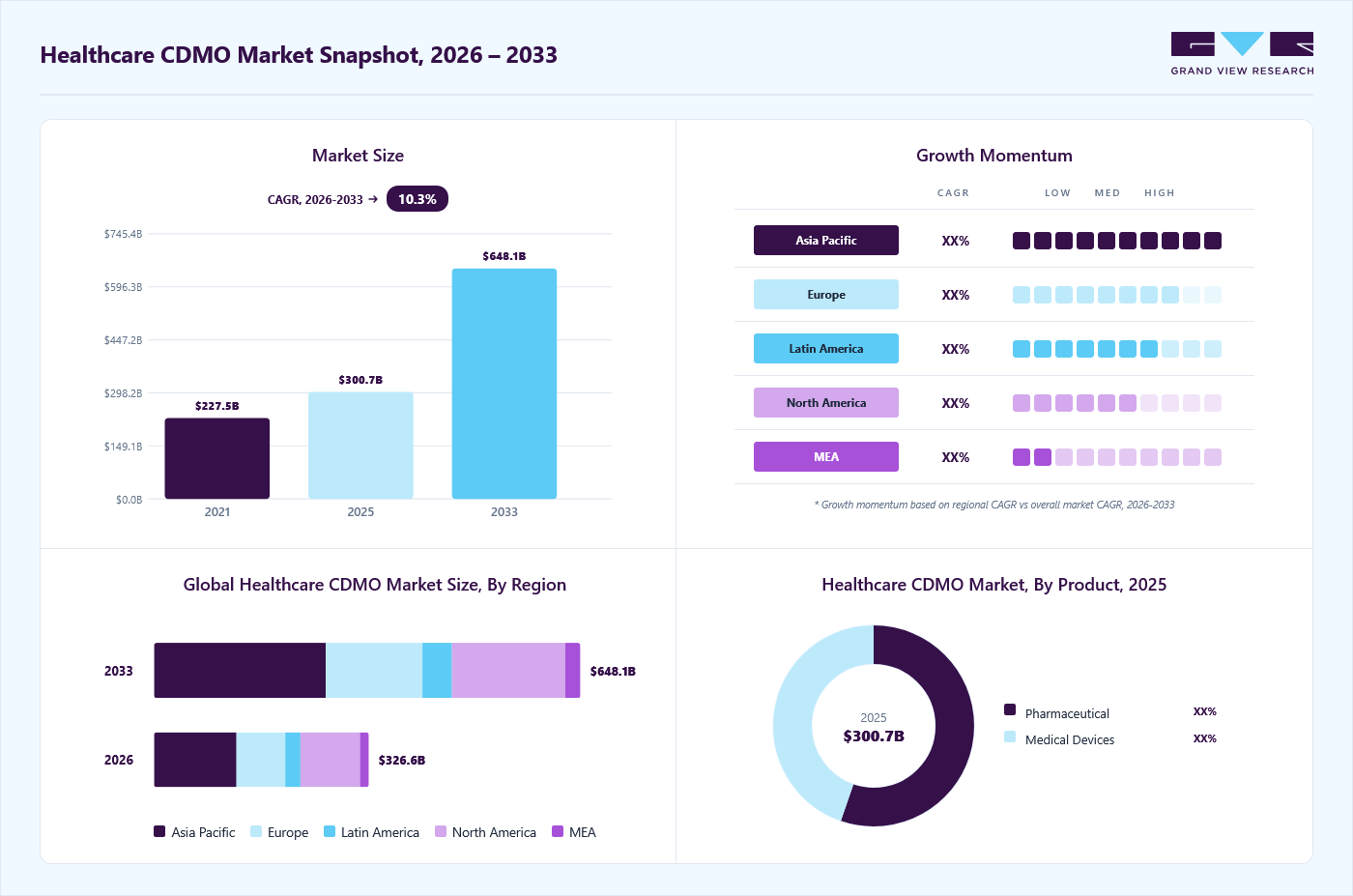
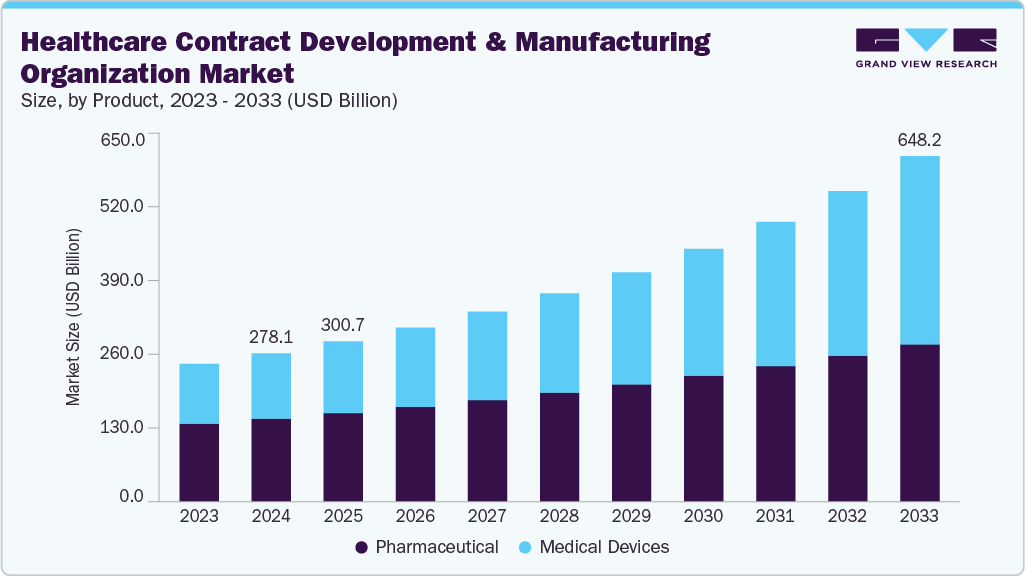
The global healthcare contract development and manufacturing organization (CDMO) market size was valued at USD 300.7 billion in 2025 and is projected to grow from USD 326.6 billion in 2026 to USD 648.1 billion by 2033, at a CAGR of 10.3% from 2026 to 2033. The Asia Pacific held the largest share of 38.2% of the global market in 2025. The market growth is driven by rising demand for outsourced services, expansion of product pipelines, and an increasing focus on cost optimization by life sciences companies.
 Source: Grand View Research, IR Documents, Primary Interviews, Paid DatabasesTo learn more about this report,
 Download Free Sample Report
Key Market Trends & Insights
- By type: small molecule segment held the largest share of 36.7% in 2025.
- By product: Pharmaceutical segment held the largest share of 55.2% in 2025.
- By service: Contract manufacturing segment accounted for 59.8% share of the market in 2025.
- By workflow: Commercial segment held the largest share of 87.8% in 2025.
- By therapeutic area: Oncology segment accounted for 23.1% of the industry in 2025.
Regional Highlights
- Largest regional market: Asia Pacific (38.2% revenue share, 2025)
- By country: China led the Asia Pacific market in 2025.
Market Size & Forecast
- Market size in 2025: USD 300.7 Billion
- Estimated market size in 2026: USD 326.6 Billion
- Projected market size by 2033: USD 648.1 Billion
- CAGR (2026-2033): 10.3%
Three ways to get this report
Buy it, customize it, or ask a question.Ask an Analyst
Analyst response in 1 business day
- AccessReport author, directly
- Reply timeWithin 1 working day
- No sales callDirect answer only
- FormatEmail reply
- CostFree, no cost
Get the Full Report
What the study covers
- FormatsPDF · Excel · Dashboard
- Timeline2026–2033 annual, 2025 base
- Coverage20+ countries, 5 regions
- Companies10+ key players profiled
Customize the Report
20% free customization
- IncludeCountries, segments, points
- TailorTo your product definition
- ExtendDeeper competitor detail
- OrA fully bespoke study
- Turnaround5–10 working days
Besides, the outsourcing strategies have been widely adopted as pharmaceutical and biotechnology companies seek to mitigate operational complexities while maintaining scalability and flexibility. Besides, the rising need for accelerated drug development timelines, the surge in biologics and biosimilars production, and the globalization of clinical & commercial supply chains contribute to market growth. In addition, the rapidly aging population, patent expirations, rising antibiotic resistance, and the rising need for personalized medicine are some of the key factors fueling the growth of the healthcare contract development and manufacturing organization industry.In addition, for many pharmaceutical companies, innovation and speed to clinic are considered highly significant for market growth. Numerous small- to mid-sized firms and specialty pharmaceutical players depend on meeting these critical requirements in the industry. Many CDMOs and CROs have positioned themselves as one-stop-shop providers, with the CRO model encompassing a range of services from API development to dosage form, and from early-stage development through commercialization. Thus, to deliver such comprehensive solutions, CDMOs must maintain a broad range of enabling technologies and specialized capabilities tailored to address complex challenges, thereby further accelerating market entry.
 To learn more about this report, Download Free Sample Report
Significant investments in capacity expansion, infrastructure modernization, and advanced technology integration within the CDMO sector support the market growth. In addition, companies are investing in R&D to discover new compounds and develop the next big blockbusters, significantly increasing the number of generic manufacturers. According to the American Journal of Managed Care, the pharmaceutical market will be driven by unmet needs across various disorders, and R&D activities to develop orphan therapies will increase, as the orphan drug market is likely to reach USD 262 billion by 2024. As of 2019, the National Institutes of Health Office of Rare Diseases Research has identified roughly 7,000 orphan diseases. About 1,043 projects on orphan diseases were reported to be in the development stage, of which 822 were in clinical development.
Furthermore, among pharmaceutical & medical devices companies, technological advancements have been incorporated with the support of CDMO services, enabling greater efficiency and precision in drug discovery, development, and manufacturing. Besides, automation, advanced analytics, and artificial intelligence have been increasingly adopted to streamline processes and reduce error rates.
Likewise, artificial intelligence and machine learning remain significant areas of interest for pharmaceutical investments, as they may support the identification & development of treatments across preclinical validation, target identification, and the efficiency of clinical development. Moreover, mergers and acquisitions are likely to increase among pharmaceutical and biopharmaceutical companies to diversify their product portfolios, expand their geographical footprints, and mitigate R&D risks. Such factors are expected to drive the market growth.
Market Dynamics
The Healthcare CDMO market is undergoing structural transformation as pharmaceutical, biotechnology, and medical device companies increasingly outsource development and manufacturing activities to improve speed, flexibility, and capital efficiency. Growth is being driven by biologics expansion, rising clinical pipelines, advanced therapies, and increasing demand for integrated development-to-commercialization services.
A primary growth driver for the Healthcare CDMO market is the rapid expansion of biologics, biosimilars, cell and gene therapies, antibody-drug conjugates (ADCs), mRNA platforms, and personalized medicines. These products require highly specialized manufacturing infrastructure, sophisticated analytical capabilities, and stringent regulatory compliance, making in-house production increasingly uneconomical for many pharmaceutical and biotechnology companies. As a result, outsourcing has evolved from a cost-reduction strategy into a strategic growth enabler.
Recent industry trends indicate substantial investments in biologics manufacturing, high-potency APIs, continuous manufacturing technologies, digital manufacturing systems, and advanced synthesis platforms. CDMOs are expanding capabilities in flow chemistry, automation, and advanced biologics production to address growing demand for next-generation therapies. Capacity expansion initiatives and strategic acquisitions remain prevalent as organizations seek to strengthen geographic reach and specialized service offerings.
Additionally, supply chain diversification initiatives and sourcing strategies are creating new outsourcing opportunities, particularly in the Asia-Pacific markets. Pharmaceutical companies are prioritizing resilient and geographically diversified manufacturing networks, further strengthening the role of CDMOs as strategic partners. These factors collectively position outsourcing as one of the strongest long-term growth engines for the healthcare CDMO industry.
Despite strong growth prospects, regulatory complexity remains one of the most significant constraints facing healthcare CDMOs. Manufacturers must comply with evolving requirements from regulatory authorities such as the FDA, EMA, PMDA, and other global agencies. Maintaining compliance across multiple jurisdictions requires substantial investments in quality systems, documentation processes, validation protocols, data integrity controls, and workforce training. Any inspection observations or compliance failures can delay product approvals, disrupt manufacturing schedules, and negatively impact customer relationships. Furthermore, global supply chain disruptions, geopolitical uncertainties, and raw material dependencies continue to create operational challenges. Together, regulatory burdens, infrastructure requirements, and capacity utilization risks may moderate profitability and create barriers for smaller CDMOs seeking to scale operations globally.
Market Concentration & Characteristics
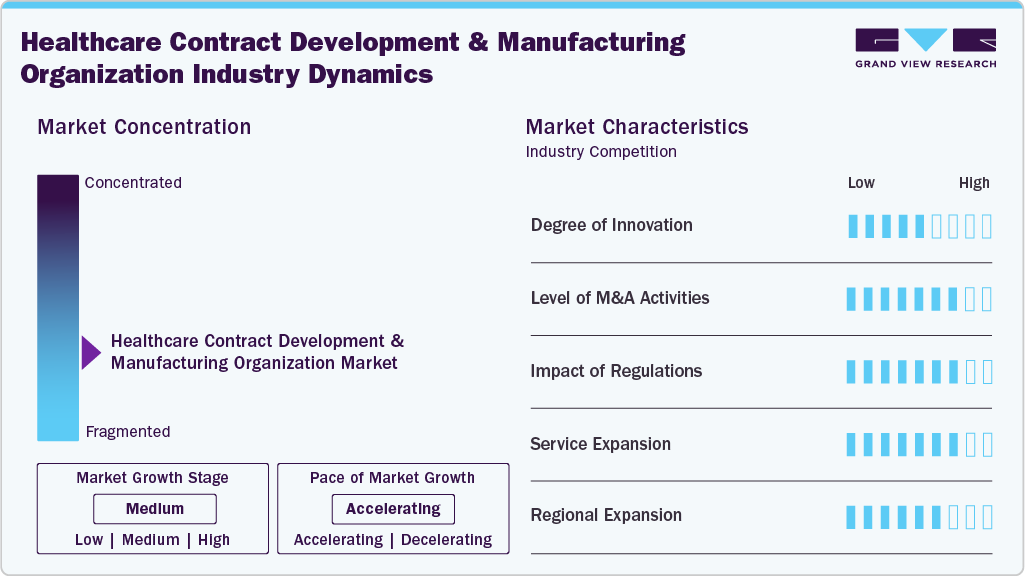
The healthcare contract development and manufacturing organization market is in the growth stage, and growth is accelerating. The market is characterized by the degree of innovation, level of M&A activities, regulatory impact, service expansion, and regional expansion.
Advanced technologies like continuous manufacturing, digital platforms, and innovative biologics production drive the degree of innovation. The rising demand for cell and gene therapies, mRNA platforms, and personalized medicine has accelerated R&D investments. CDMOs are embracing innovation to differentiate their service offerings and improve efficiency, scalability, and regulatory compliance amid increasingly complex pharmaceutical pipelines.
 To learn more about this report, Download Free Sample Report
M&A activity in the healthcare contract development and manufacturing organization industry continues strongly, fueled by the need for expanded capabilities, geographic reach, and specialized skills. Strategic acquisitions focus on biologics, cell and gene therapy platforms, and fill-finish services. This allows companies to enhance their end-to-end offerings, boost competitiveness, and build long-term client partnerships within an increasingly fragmented global outsourcing landscape.
The sector is significantly shaped by evolving global regulatory frameworks that govern quality, safety, and data integrity. Stricter monitoring by the FDA and EMA agencies has raised compliance costs and elevated industry standards. CDMOs with robust quality systems and regulatory know-how are better positioned to gain client trust and seize opportunities in the highly regulated therapeutic market.
Service expansion within the CDMO sector responds to client demands for integrated, end-to-end solutions. Many companies are broadening their capabilities across drug discovery, formulation, clinical trial supply, and large-scale manufacturing. Investments are also targeting high-potency APIs, biologics, and advanced therapies. This strategic expansion enables CDMOs to offer increased flexibility, lessen outsourcing complexity, and improve client retention.
Regional expansion has become a vital growth strategy for CDMOs aiming to support global pharmaceutical pipelines. Facilities are being built or expanded in emerging markets like Asia-Pacific and Latin America to capitalize on cost advantages and rising local demand. Thus, growth in North America and Europe emphasizes advanced therapies and regulatory compliance, ensuring well-balanced global service coverage.
Analyst Perspective
The Healthcare CDMO market is expected to remain one of the fastest-growing outsourced healthcare services segments through 2033, supported by expanding biologics pipelines, advanced therapy commercialization, and increasing reliance on external manufacturing partners. Continued investments in biologics capacity, cell and gene therapy platforms, digital manufacturing, and integrated development-to-commercialization services are likely to reshape competitive positioning across the industry. Companies capable of combining global regulatory expertise, flexible capacity, advanced technology platforms, and end-to-end service offerings will be best positioned to capture long-term market share. While regulatory complexity and capital intensity will remain key challenges, sustained outsourcing and innovation-driven demand are expected to support double-digit market growth over the forecast period.
Opportunity Analysis
The healthcare CDMO market is experiencing significant growth due to changing dynamics in the pharmaceutical and biotechnology industries. Companies increasingly outsource to reduce operational complexity, accelerate their time-to-market, and optimize costs. The rising demand for biologics, biosimilars, cell and gene therapies, and mRNA-based platforms has led to a substantial need for specialized development and manufacturing services, making CDMOs essential strategic partners.
In addition, the increasing number of small and mid-sized biopharma companies lacking in-house capabilities drives the demand for comprehensive end-to-end solutions. Moreover, CDMOs offer integrated services from drug discovery to commercialization as clients prioritize efficiency, speed, and flexibility. This expansion into emerging markets and the globalization of supply chains further emphasizes the need for CDMOs with scalable operations and global regulatory expertise. Furthermore, investments in advanced technologies will likely improve competitiveness in the market. Such factors are expected to drive the market.
Impact of U.S. Tariffs on the Global Healthcare Contract Development And Manufacturing Organization Market
U.S. tariffs have impacted the healthcare CDMO industry, affecting costs, supply chains, and partnerships. Besides, higher tariffs on raw materials and APIs from countries like China and India have raised input costs for CDMOs dependent on international sourcing. These increased costs have led to more expensive drug development and manufacturing for pharmaceutical clients. Besides, the supply chain disruptions have prompted CDMOs to relocate operations, further managing tariff impact. While CDMOs in North America have benefited from rising domestic demand, smaller companies have faced challenges to stay competitive. This uncertainty surrounding tariffs has also caused delays in cross-border collaboration, impacting product development timelines. However, CDMOs with manufacturing networks & compliance capabilities have found new opportunities amid these challenges. Those who can navigate changing trade dynamics and optimize supply chains will likely seize emerging business prospects in this tariff-affected environment.
Technological Advancements
 To learn more about this report, Download Free Sample Report
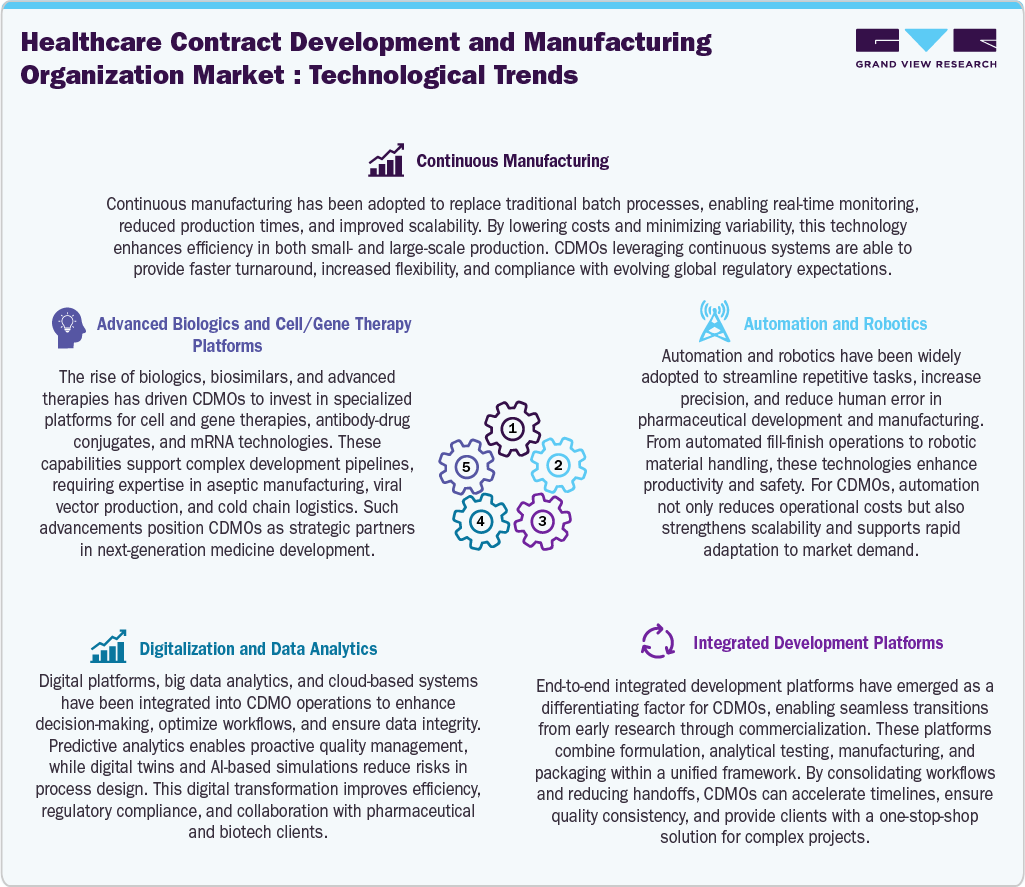
Technological innovations are reshaping the Healthcare CDMO sector, improving efficiency, quality, and creativity across the entire value chain. The shift towards continuous manufacturing has enabled smoother production processes and enhanced scalability while complying with stringent global quality regulations, a trend anticipated to propel market growth. In addition, the growing complexity of pharmaceutical pipelines is fueling investment in biologics and cell- and gene-therapy platforms. Moreover, CDMOs are adopting specialized capabilities in viral vector production, aseptic processing, and mRNA technologies to meet the rising demand for personalized treatments. Furthermore, these advancements reinforce the essential role of CDMOs in developing innovative therapeutics. Besides, incorporating digital tools and data analytics improves operational workflows, ensures data accuracy, and enables predictive quality control. This approach emphasizes efficiency, consistency, and adaptability, positioning CDMOs as versatile partners capable of addressing the dynamic challenges within the industry.
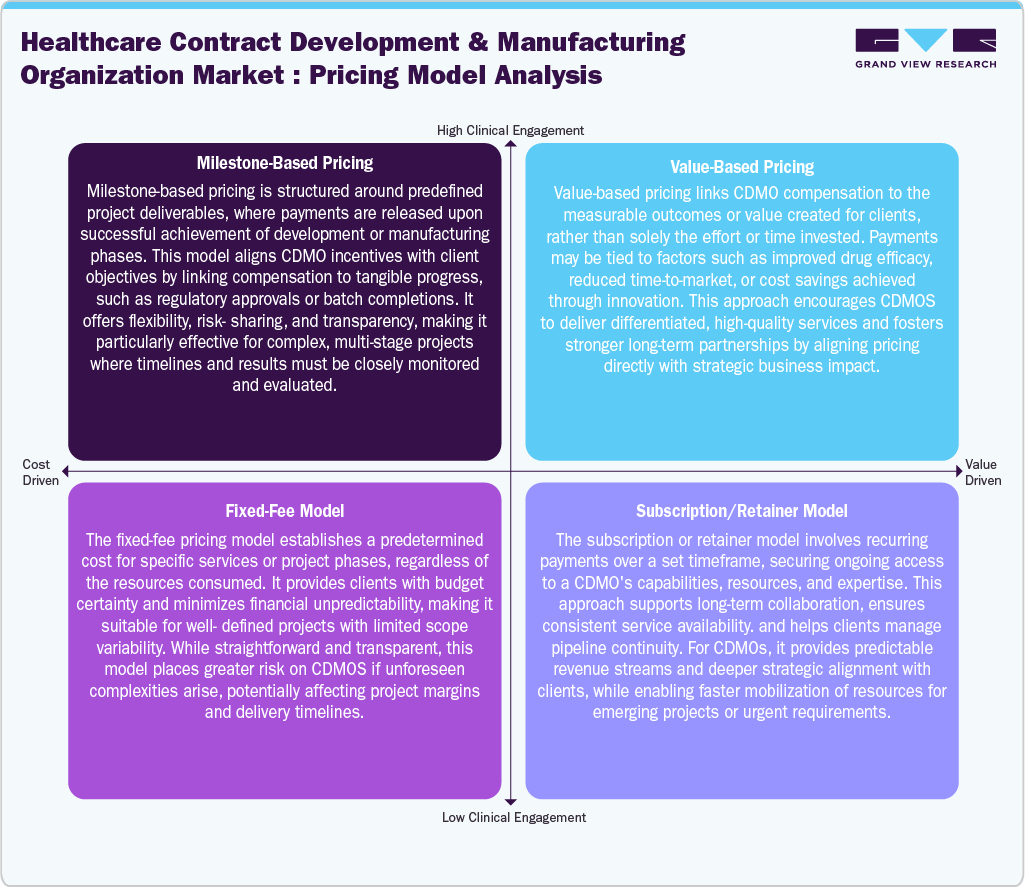
Pricing Model Analysis
 To learn more about this report, Download Free Sample Report
Healthcare CDMOs employ pricing models based on client and project requirements, as well as financial predictability. For instance, milestone-based pricing links payments to deliverables like regulatory submissions and clinical trials, fueling the transparency and mutual risk-sharing. In addition, value-based pricing focuses on measurable outcomes, incentivizing innovation by offering compensation to reduce costs and accelerate time-to-market. Moreover, the fixed-fee model provides budget certainty for clearly defined projects but can expose CDMOs to risk with unexpected complexities. Furthermore, subscription or retainer models ensure ongoing payments for continuous resource access, promoting stability and predictable revenue for both parties
Type Insights
The small-molecule segment accounted for the largest revenue share, at 36.7%, in 2025. For small molecules, CDMOs offer comprehensive services, including active pharmaceutical ingredient (API) development, formulation, analytical testing, and commercial manufacturing. These molecules are a critical part of the pharmaceutical outsourcing sector and remain prevalent in therapeutic pipelines due to growing patent expirations, an increasing demand for generics, and the rising complexity of drug design, which have accelerated the need for outsourcing. By utilizing specialized expertise, global supply chains, and advanced technology, CDMOs significantly reduce time-to-market and ensure compliance with quality standards for small-molecule products.
The large molecule segment is expected to grow significantly during the forecast period. The rise of biologics, biosimilars, and advanced therapies drives the segment. CDMOs are investing in infrastructure for recombinant proteins, monoclonal antibodies, and cell and gene therapies. In addition, these projects demand complex manufacturing capabilities, strict quality controls, and advanced cold-chain logistics. Pharmaceutical and biotech companies increasingly rely on CDMOs to accelerate biologics development, reduce costs, and ensure regulatory compliance. With the growing demand for targeted and personalized treatments, large-molecule-focused CDMOs are well-positioned to capture long-term opportunities in the global healthcare CDMO market.
Product Insights
The pharmaceutical segment dominated the healthcare contract development and manufacturing organization industry with the largest revenue share of 55.2% in 2025. The market services play a critical role in supporting pharmaceutical companies across drug development. By providing expertise in formulation, clinical supply, manufacturing, and regulatory compliance, CDMOs help optimize efficiency and reduce time-to-market. In addition, patent expirations, complex drug pipelines, and rising cost pressures have backed outsourcing strategies, enabling pharma firms to focus on R&D innovation. CDMOs offering integrated solutions are increasingly preferred, as they streamline processes from active pharmaceutical ingredient (API) synthesis to commercial-scale production. With the pharmaceutical sector prioritizing innovation, scalability, and global supply chains, CDMOs remain essential strategic partners for new growth opportunities.
The medical devices segment is expected to grow significantly during the forecast period. The market is driven by growing requirements for services across the design, prototyping, testing, and manufacturing. In addition, regulatory compliance, cost pressures, and the need for advanced materials have strengthened reliance on CDMOs. Specialized providers deliver expertise in precision engineering, sterile packaging, and scalability for complex devices. Moreover, with growing demand for combination products and minimally invasive technologies, CDMOs offering integrated device solutions are increasingly positioned as key enablers of innovation, speed-to-market, and global competitiveness in the medical device sector. Such factors are expected to drive the market.
Service Insights
The contract manufacturing segment accounted for 59.8% of the healthcare contract development and manufacturing organization market in 2025. In healthcare CDMO, contract manufacturing enables pharmaceutical and biotech companies to outsource production processes, allowing them to focus on innovation and commercialization. The market players offer a range of services for API synthesis, formulation, dosage manufacturing, packaging, and distribution. Besides, it provides scalability, cost efficiency, and access to specialized technologies, particularly for companies without in-house capacity. Increasing complexity in biologics, injectables, and high-potency APIs has heightened reliance on CDMOs with advanced infrastructure. Regulatory compliance and quality assurance remain critical, with leading CDMOs differentiating through global networks and integrated supply solutions. Thus, the manufacturing continues to drive significant growth within the broader healthcare CDMO outsourcing market.
The contract development segment is expected to grow significantly during the forecast period. The segment is accelerating early-stage drug discovery and formulation, further contributing to market growth. These services include preclinical testing, process optimization, analytical method development, and clinical trial material preparation. Besides, in pharmaceutical and biotech companies, contract development supports reducing risk, enhancing efficiency, and access specialized expertise by outsourcing development activities. Moreover, CDMOs with integrated development and manufacturing platforms offer a seamless pathway from concept to commercialization, strengthening their position as strategic partners in managing complex pipelines and driving faster market entry.
Workflow Insights
The commercial segment dominated the healthcare contract development and manufacturing organization industry, accounting for the largest revenue share of 87.8% in 2025. Commercial-scale capabilities are vital to healthcare CDMOs, supporting pharmaceutical and biotech companies in transitioning from clinical development to market-ready production. CDMOs provide large-scale manufacturing, packaging, labeling, and global distribution services emphasizing quality, compliance, and scalability. With rising global demand for small and large molecules, CDMOs offering end-to-end commercial solutions are positioned to become long-term partners in sustaining product availability and global market success.
On the other hand, the clinical segment is projected to grow at a significant CAGR during the forecast period. Clinical-stage services within healthcare CDMOs focus on supporting drug candidates through development trials. Offerings include formulation, clinical trial material manufacturing, packaging, labeling, and logistics management. CDMOs ensure regulatory compliance while optimizing timelines and reducing risks during critical phases of clinical development. They enable smaller biotech and specialty pharma companies to advance therapies efficiently by providing flexibility and scalability. Besides, integrated CDMO platforms support the bridge to the transition from clinical to commercial stages, ensuring continuity and accelerating speed-to-market in an increasingly competitive healthcare landscape.
Therapeutic Area Insights
The oncology segment accounted for 23.1% of the CDMO industry in 2025. The segment growth is driven by the rising complexity of cancer drug pipelines, including targeted therapies, immunotherapies, and antibody-drug conjugates, which require advanced development and manufacturing capabilities, further contributing to market growth. In addition, CDMOs provide expertise in high-potency APIs, sterile injectables, and biologics, ensuring quality and compliance in highly regulated environments. Thus, as the incidence of cancer rises, CDMOs increasingly focus on offering specialized oncology solutions, further strengthening partnerships.
The autoimmune diseases segment is expected to grow significantly during the forecast period. The growing prevalence of autoimmune diseases has created opportunities for healthcare CDMOs to support the development of biologics, biosimilars, and targeted therapies. These treatments demand complex manufacturing, robust analytical testing, and regulatory compliance. Moreover, CDMOs provide expertise in formulation, sterile production, and delivery systems tailored to autoimmune drugs, which is expected to drive the market over the estimated time period.
End-use Insights
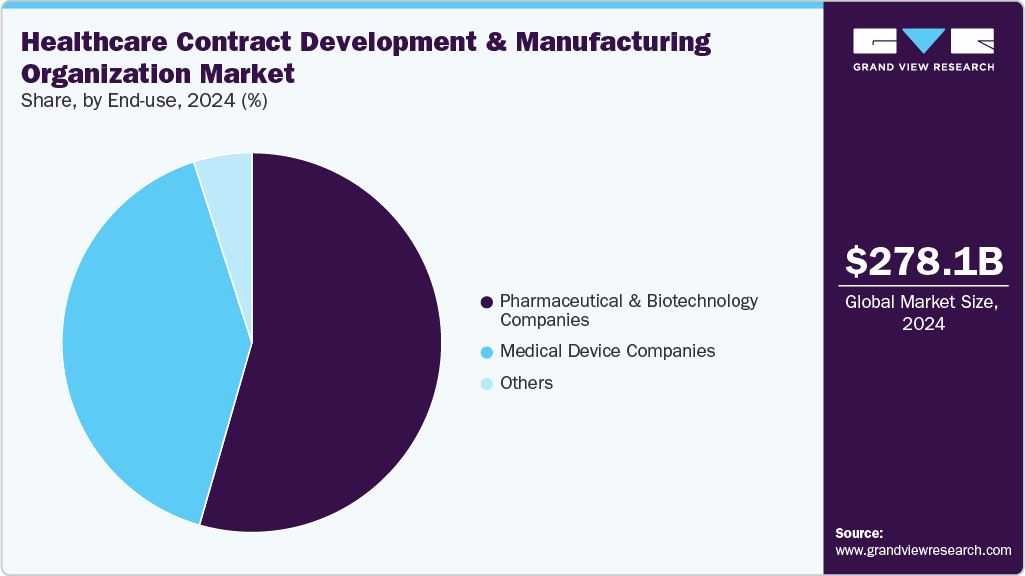
The pharmaceutical & biotechnology companies segment accounted for 55.1% of the healthcare CDMO market in 2025. Healthcare CDMOs are essential collaborators for pharmaceutical and biotechnology companies, delivering comprehensive outsourcing services throughout the drug development process. They enhance scalability, reduce costs, and support global supply chains for pharma firms while providing biotech innovators with critical infrastructure, technical know-how, and regulatory support. There is a growing preference for integrated service models that cover all phases, from discovery to commercialization. As drug pipelines become more complex and the need for faster market entry increases, CDMOs enable both pharma and biotech companies to focus on innovation while relying on outsourced expertise for operational tasks and compliance.
 To learn more about this report, Download Free Sample Report
The medical device companies segment is expected to grow at the second-highest CAGR during the forecast period. Medical device companies are increasingly partnering with Healthcare CDMOs to access specialized design, testing, and manufacturing capabilities. CDMOs support compliance with stringent regulatory standards while enabling scalability and cost efficiency. Outsourcing helps device companies accelerate innovation and market entry from prototyping to full-scale production. As demand for complex and combination products grows, CDMOs with integrated healthcare expertise provide significant value by ensuring quality, efficiency, and global distribution support for medical device manufacturers. Such factors are expected to drive the market.
Regional Insights
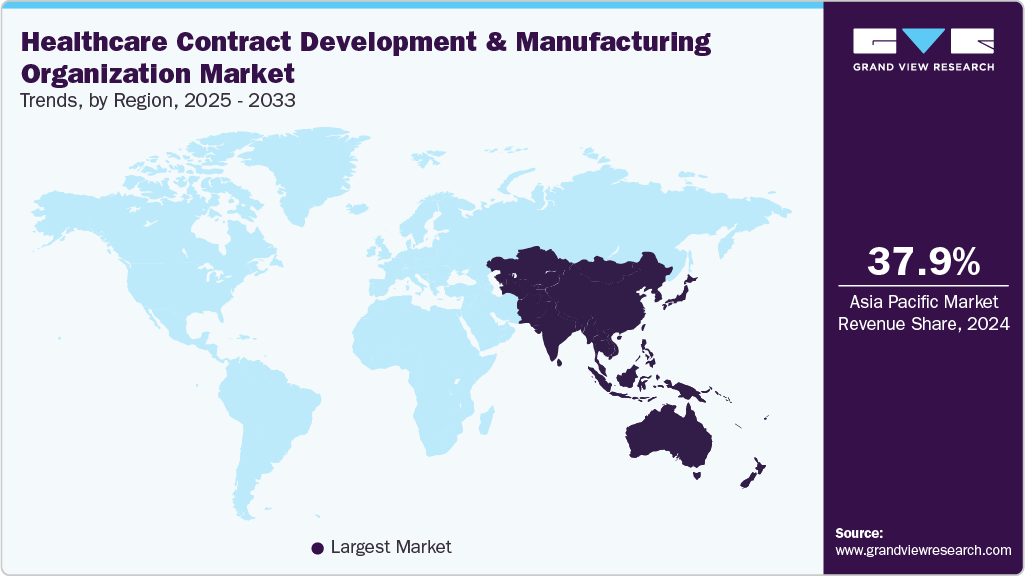
Asia Pacific dominated the global healthcare contract development and manufacturing organization industry in 2025, accounting for 38.2% of revenue. The growth is driven by rising pharmaceutical outsourcing, increasing demand for biologics, and cost advantages. Countries such as China, India, Japan, and South Korea are some of the major countries in the region, focusing on expanding manufacturing capacities & specialized expertise. Besides, investments in advanced bioprocessing, continuous manufacturing, and digital technologies enhance service efficiency and contribute to market growth. In addition, multinational companies are increasingly partnering with regional CDMOs to gain access to scalable and cost-effective solutions. Regulatory harmonization, supportive government policies, and growing clinical trial activities further strengthen new growth opportunities for the healthcare CDMO industry.
 To learn more about this report, Download Free Sample Report
China Healthcare Contract Development And Manufacturing Organization Market Trends
The healthcare contract development and manufacturing organization market in China is witnessing new growth opportunities due to strong government initiatives, rising biologics production, and increasing pharmaceutical outsourcing. Local CDMOs are investing heavily in biologics, biosimilars, and cell & gene therapy capabilities, while enhancing compliance with NMPA and global regulatory standards. Besides, strategic partnerships with multinational companies strengthen the market presence, and large-scale manufacturing facilities enable global supply. In addition, a growing number of clinical trial activities & demand for cost-effective development solutions are further accelerating market growth.
The Japan healthcare contract development and manufacturing organization market growth is driven by the rising demand for innovative therapies, advanced biopharmaceutical research, and increasing pharmaceutical outsourcing. In the Asia Pacific region, the Japanese CDMOs specialize in high-value services including sterile injectables, biosimilars, and precision medicine. Besides, regulatory alignment under the PMDA ensures stringent quality standards, fueling investment in manufacturing and new service innovations. Besides, partnerships among domestic players and global pharmaceutical companies are strengthening capabilities in biologics and advanced therapies. With an emphasis on innovation, reliability, and compliance, the country remains a critical market for CDMOs offering high-end, specialized healthcare manufacturing services.
The India healthcare contract development and manufacturing organization market is experiencing rapid expansion, driven by cost advantages, a strong generics base, and rising demand for biologics. The CDMOs in the market are expanding into complex formulations, biosimilars, and biologics manufacturing while enhancing regulatory compliance to meet FDA, EMA, and WHO standards. Besides, strategic collaborations with global pharmaceutical companies have increased outsourcing opportunities, creating new avenues for market growth. Investments in capacity expansion, sterile facilities, & advanced technologies are enabling the country to transition from low-cost manufacturing to high-value CDMO services, positioning it as a key global outsourcing market.
North America Healthcare Contract Development And Manufacturing Organization Market Trends
The North America healthcare contract development and manufacturing organization market is expected to grow at a significant CAGR over the forecast period. The market growth is attributed to increasing demand for biologics, sterile injectables, and advanced therapies. Pharmaceutical and biotech companies opt to outsource their development and manufacturing processes to accelerate time-to-market, reduce costs, and more effectively leverage specialized expertise. Moreover, technological advancements and sophisticated bioprocessing techniques are adopted to improve operational efficiency and product quality. Furthermore, stringent regulatory requirements from the FDA and GMP standards are critical for ensuring market safety and efficacy. Besides, the growth is supported by robust R&D activities, a favorable healthcare infrastructure, and an increasing focus on personalized medicine, further fueling North America's role as a leading hub for CDMO services.
The healthcare contract development and manufacturing organization industry in the U.S. accounted for the highest share of North America in 2025, owing to strong outsourcing demands from pharmaceutical and biotech companies, especially for biologics, cell & gene therapies, and sterile injectables. Besides, integrating automation, digitalization, and advanced bioprocessing technologies drives the manufacturing process. Regulatory compliance with FDA and GMP standards is crucial for operational practices and client trust. With increased R&D activity and a focus on innovative therapies, the U.S. is positioned as a leading market for contract development and manufacturing services.
The Canada healthcare contract development and manufacturing organization market is expected to grow at a significant CAGR during the forecast period. The market is driven by the outsourcing of biologics, advanced therapies, and sterile injectables by pharmaceutical & biotech companies. Investments in modern facilities, automation, and advanced bioprocessing are improving operational capabilities. Compliance with Health Canada and GMP standards guarantees quality & safety, contributing to market growth. Other factors contributing to market growth include a skilled workforce, robust R&D infrastructure, and a presence in the U.S., making Canadian CDMOs appealing partners for efficient, high-quality contract development and manufacturing solutions in the global market.
Europe Healthcare Contract Development And Manufacturing Organization Market Trends
Europe's healthcare contract development and manufacturing organization industry is evolving rapidly, supported by a strong pharmaceutical base, advanced biopharmaceutical research, and growing biologics requirements in the market. CDMOs in the region are expanding specialized capabilities in sterile manufacturing, biosimilars, and complex formulations, further supporting the market. Besides, stringent EMA regulations drive quality-focused operations, while innovation in continuous manufacturing and digital solutions enhances competitiveness in the market. In addition, strategic collaboration with global pharma and biotech market players and rising outsourcing fuel the market growth. Thus, the region remains a critical hub for high-value CDMO services, particularly in advanced therapy medicinal products (ATMPs), further fueling the market.
The healthcare contract development and manufacturing organization market in Germany accounted for the largest share in 2025. This growth can be attributed to strong pharmaceutical manufacturing hubs, an advanced R&D ecosystem, and leadership in high-quality biologics & biosimilars. In addition, the CDMOs in Germany are emphasizing precision, compliance with EMA and local BfArM regulations, and investment in state-of-the-art technologies. Besides, the growing demand for sterile injectables, high-potency APIs, and advanced therapies encourages facility expansion and collaboration with multinational companies. In addition, key proximity in European markets and the presence of highly skilled talent in the country are fueling the requirement for high-value CDMO services.
The UK healthcare contract development and manufacturing organization market is expected to grow significantly over the forecast period. The country's growth is fueled by strong biotech innovation, advanced academic research, and supportive regulatory frameworks. CDMOs in the country are expanding expertise in cell & gene therapies, personalized medicines, and clinical trial manufacturing, further supporting market growth. In addition, strategic partnerships with global pharmaceutical companies and rising investments in advanced bioprocessing technologies are enhancing the country's service offerings. With an emphasis on regulatory alignment under the MHRA and access to a skilled workforce, the country is positioning itself as a center for innovative-driven CDMO services in Europe.
Latin America Healthcare Contract Development and Manufacturing Organization Market Trends
The healthcare contract development and manufacturing organization industry in the Latin America region is expected to grow significantly over the estimated time period. In Latin America, the market is developing steadily, supported by growing pharmaceutical outsourcing, government healthcare initiatives, and increasing local demand for affordable therapies. Besides, Brazil and Argentina are leading countries in the region with expanding manufacturing infrastructure & partnerships with multinational companies. In addition, regulatory environments are improving in the region, leading to increased investment in sterile manufacturing and generics. While challenges such as supply chain inefficiencies and economic volatility persist, the region offers untapped opportunities for CDMOs seeking to expand regional presence and serve diverse healthcare needs.
The Brazil healthcare contract development and manufacturing organization market is growing, driven by rising pharmaceutical outsourcing & government focus on improving healthcare access. Local CDMOs are strengthening generics, biosimilars, and sterile manufacturing capabilities supported by ANVISA regulations and international partnerships, contributing to market growth. Besides, increasing investments in infrastructure and collaborations with global pharmaceutical companies fuel market growth.
Middle East & Africa Healthcare Contract Development And Manufacturing Organization Market Trends
The healthcare contract development and manufacturing organization industry in MEA is expected to experience steady growth due to rising demand for affordable medicines, increasing government healthcare investments, and growing clinical research activity. Regional CDMOs are expanding generic and sterile manufacturing capabilities while focusing on compliance with international regulatory standards. Besides, partnerships with multinational companies are being established to enhance expertise and infrastructure, further contributing to market growth.
The UAE healthcare contract development and manufacturing organization market is experiencing growth driven by strong government healthcare initiatives and an expanding pharmaceutical industry. CDMOs increasingly focus on generics, sterile manufacturing, and packaging services to meet client requirements. Compliance with international standards and investment in modern facilities enhance market competitiveness. In addition, strategic partnerships with global pharmaceutical companies further strengthen the market presence, making the UAE an emerging outsourcing destination in the Middle East and offering scalability and high-quality manufacturing solutions. Such factors are expected to drive the market over the estimated time period.
Key Healthcare Contract Development And Manufacturing Organization Company Insights
The key players operating across the market are adopting strategic initiatives such as service launches, mergers & acquisitions, partnerships & agreements, and expansions to gain a competitive edge in the market. For instance, in March 2024, Alcami Corporation mentioned a strategic partnership with Tanvex CDMO. The collaboration will enable both companies to deliver an integrated offering spanning the full value chain, from bulk drug substance development and manufacturing to finished drug products. In addition, clients will benefit from Tanvex’s high-capacity biologics production capabilities combined with Alcami’s expertise in sterile liquid and lyophilized filling, packaging, and labeling. The company further mentioned that this collaboration will expand high-quality service offerings for mutual clients.
Key Healthcare Contract Development And Manufacturing Organization Companies
The following key companies have been profiled for this study on the healthcare contract development and manufacturing organization market.
-
Catalent Inc. (a Novo Holdings company)
-
Lonza
-
Recipharm AB
-
Siegfried Holding AG
-
Thermo Fisher Scientific, Inc.
-
Labcorp
-
Jabil Inc
-
Syngene International Limited
-
IQVIA Inc.
-
Almac Group
-
Ajinomoto Bio-Pharma
-
Adare Pharma Solutions
-
Alcami Corporation
-
Vetter Pharma International
Competitive Benchmarking
Category
Operating Strategies
Competitive Edge
Weakness
Established Players (Lonza, Thermo Fisher Scientific Inc., Catalent, Inc., Recipharm)
- Expand end-to-end offerings from development through commercial manufacturing.
- Invest in biologics, cell & gene therapy, fill-finish, and global manufacturing footprints through acquisitions and capacity expansions.
- Strong regulatory track record, validated facilities, and multinational delivery capabilities.
- Ability to support large-scale commercial production with integrated service platforms.
- Higher operating costs and longer decision-making cycles can reduce flexibility.
- Large infrastructure investments increase exposure to capacity utilization risks during demand fluctuations.
Emerging Players (Syngene International, Alcami Corporation, Adare Pharma Solutions)
- Focus on niche modalities such as HPAPIs, biologics, peptides, and specialized formulation services.
- Build strategic partnerships with biotech innovators and emerging pharmaceutical companies.
- Greater operational agility and faster customization for client-specific programs.
- Competitive pricing and specialization in high-growth therapeutic and technology segments.
- Limited commercial-scale manufacturing capacity compared to global leaders.
- Higher dependence on a concentrated client base and project pipeline.
Recent Developments
-
In March 2025, Syngene International announced its first U.S. facility in Maryland, a 17,000-square-foot cGMP-compliant site designed to expand its CDMO capabilities. This expansion aligns with Syngene’s global expansion strategy by strengthening its presence in the U.S. market, improving supply chain resilience, and enhancing client proximity. The Maryland site further enhances the company’s biologics operations in India, increasing total single-use bioreactor capacity from 20,000 to 50,000 liters. In addition, the company continues to provide integrated services spanning early development through commercial manufacturing.
-
In February 2025, Jabil mentioned the acquisition of Pharmaceutics International, Inc. (Pii), a CDMO, to expand support for drug development clients. Adding Pii broadens Jabil’s pharmaceutical capabilities, enabling end-to-end assistance from clinical trial phases to large-scale commercialization. This acquisition will strengthen Jabil’s position in the development and production of advanced drug delivery systems, including on-body pumps, pen injectors, auto-injectors, and inhalers.
-
In December 2024, Novo Holdings mentioned the successful acquisition of Catalent for approximately USD 16.5 billion. As part of this acquisition, the company will be selling three of Catalent’s nearly 50 global sites to Novo Nordisk A/S. The three fill-finish sites being acquired by Novo Nordisk are located in the U.S., Italy, and Belgium.
Healthcare Contract Development And Manufacturing Organization Market Report Scope
Report Attribute
Details
Market size value in 2025
USD 300.7 billion
Market size value in 2026
USD 326.6 billion
Revenue forecast in 2033
USD 648.1 billion
Growth rate
CAGR of 10.3% from 2026 to 2033
Historical data
2021 - 2025
Forecast period
2026 - 2033
Quantitative units
Revenue in USD million/billion, and CAGR from 2026 to 2033
Report coverage
Revenue forecast, company ranking, competitive landscape, growth factors, and trends
Segments covered
Type, product, service, workflow, therapeutic area, end-use, region
Regional scope
North America; Europe; Asia Pacific; Latin America; MEA
Country scope
U.S.; Canada; Mexico; Germany; UK; France; Italy; Spain; Norway; Denmark; Sweden; China; Japan; India; South Korea; Australia; Thailand; Brazil; Argentina; Saudi Arabia; South Africa; UAE; Kuwait; Israel; Oman; Qatar
Key companies profiled
Catalent Inc. (a Novo Holdings company); Lonza; Recipharm AB; Siegfried Holding AG; Thermo Fisher Scientific, Inc.; Labcorp; Jabil Inc.; Syngene International Limited; IQVIA Inc.; Almac Group; Ajinomoto Bio-Pharma; Adare Pharma Solutions; Alcami Corporation; Vetter Pharma International
Customization scope
Free report customization (equivalent up to 8 analysts' working days) with purchase. Addition or alteration to country, regional & segment scope.
Pricing and purchase options
Avail customized purchase options to meet your exact research needs. Explore purchase options
Global Healthcare Contract Development And Manufacturing Organization Market Report Segmentation
This report forecasts revenue growth at the global, regional, and country levels and provides an analysis of the latest industry trends in each of the sub-segments from 2021 to 2033. For this study, Grand View Research has segmented the global healthcare contract development and manufacturing organization market report based on type, product, service, workflow, therapeutic area, end-use, and region:
-
Type Outlook (Revenue, USD Million, 2021 - 2033)
-
Small Molecule
-
Branded
-
Generic
-
-
Large Molecule
-
Biologics
-
Biosimilar
-
-
Medical Device
-
Diagnostics
-
Therapeutics
-
-
-
Product Outlook (Revenue, USD Million, 2021 - 2033)
-
Pharmaceutical
-
API
-
Traditional API
-
HP-API
-
Biologics
-
Others
-
-
Drug Product
-
Oral topical dose
-
Semi-solid dose
-
Liquid dose
-
Others
-
-
-
Medical Devices
-
Class I
-
Class II
-
Class III
-
-
-
Service Outlook (Revenue, USD Million, 2021 - 2033)
-
Contract Development
-
Pre-formulation & Formulation Development Service
-
Process Development & Optimization
-
Analytical Testing & Method Validation
-
Scale-up & Tech Transfer
-
-
Contract Manufacturing
-
API Manufacturing
-
Finished drug products Manufacturing
-
Medical Devices & Combination Products
-
-
Packaging and labelling
-
Regulatory Affairs
-
Others
-
-
Workflow Outlook (Revenue, USD Million, 2021 - 2033)
-
Clinical
-
Commercial
-
-
Therapeutic Area Outlook (Revenue, USD Million, 2021 - 2033)
-
Oncology
-
Infectious Diseases
-
Neurological Disorders
-
Cardiovascular Diseases
-
Metabolic Disorders
-
Autoimmune Diseases
-
Respiratory Diseases
-
Ophthalmology
-
Gastrointestinal Disorders
-
Orthopedic Diseases
-
Dental Diseases
-
Others
-
-
End-use Outlook (Revenue, USD Million, 2021 - 2033)
-
Pharmaceutical & Biotechnology Companies
-
Medical Device Companies
-
Others
-
-
Regional Outlook (Revenue, USD Million, 2021 - 2033)
-
North America
-
U.S.
-
Canada
-
Mexico
-
-
Europe
-
UK
-
Germany
-
France
-
Italy
-
Spain
-
Denmark
-
Sweden
-
Norway
-
-
Asia Pacific
-
Japan
-
China
-
India
-
Australia
-
Thailand
-
South Korea
-
Latin America
-
-
Latin America
-
Brazil
-
Argentina
-
-
Middle East & Africa
-
South Africa
-
UAE
-
Saudi Arabia
-
Kuwait
-
Qatar
-
Oman
-
-
Research Methodology
The Healthcare CDMO market figures in this report are based on a proven research process that combines executive interviews with secondary research from proprietary databases, company filings, and recognized regulatory and institutional sources. Market size is built through value-chain sizing - reconciling supply-side and demand-side estimates - and triangulated with bottom-up and top-down approaches. Every estimate passes multiple levels of expert validation before publication, with each Healthcare CDMO segment quantified using the revenue-capture definitions in the table below.
Segment Definition
Segment
Definition
Product
Traditional API
Small-molecule APIs manufactured using conventional chemical synthesis processes. Revenue includes process development, scale-up, and commercial production.
HP-API
Highly potent APIs requiring specialized containment facilities. Revenue includes high-containment manufacturing and handling services.
Biologics
Biologically derived APIs such as proteins, antibodies, and recombinant products. Revenue reflects biologic process development and manufacturing contracts.
Synthesis
Synthetic
APIs produced through chemical synthesis routes. Revenue includes process chemistry and manufacturing services.
Biotech
APIs produced through fermentation, cell culture, or recombinant technologies. Revenue includes upstream and downstream bioprocessing services.
Drug Type
Innovative
APIs supporting novel drug candidates and patented therapeutics. Revenue driven by development-intensive programs.
Generics
APIs supporting off-patent drugs. Revenue derived from cost-efficient large-scale manufacturing contracts.
Workflow
Clinical
Services supporting preclinical through clinical-stage manufacturing, including small-batch production and process development.
Commercial
Large-scale manufacturing services supporting approved products and market supply.
Application
Oncology
APIs used in cancer therapies, including targeted therapies and cytotoxic drugs.
Hormonal
APIs used in endocrine and hormone-related treatments.
Glaucoma
APIs incorporated into ophthalmic therapies for glaucoma management.
Cardiovascular Disease
APIs utilized in cardiac and vascular disease treatments.
Diabetes
APIs used in anti-diabetic therapeutics and metabolic disease management.
Others
APIs serving infectious diseases, neurology, respiratory, immunology, and additional therapeutic categories.
Market estimation Approach - Bottom-up Market estimation
Title
Details
Supply-Side Build
- Count global CDMO facilities (est. 3,000+)
- Average revenue per facility by tier
- Tier 1 (> $500M): ~30 players
- Tier 2 ($50M-$500M): ~250 players
- Tier 3 (< $50M): ~2,700+ players
- Sum across facility types → baseline
Demand-Side Validation
- Global pharma/biotech pipeline: ~18,000 compounds
- % outsourced to CDMOs (~65%)
- Average CDMO spend per compound by stage
- Discovery: $0.5-2M • Clinical: $5-50M
- Commercial: $20-200M/year
- Aggregate across pipeline stages
Cross-Check & Reconcile
- Compare supply vs. demand estimates
- Apply market share data from top CDMOs
- Top 10 CDMOs = ~35-40% of market
- Adjust for M&A / capacity changes
- Validate against GVR baseline: $300.7B
- Apply 10.3% CAGR to project forward
Delivered Customizations
This report has been delivered with the following In-depth customizations
Client Request
Customization Delivered
Value Adds
Healthcare CDMO Market Trends & Opportunity Assessment
Assessment of outsourcing trends, biologics and advanced therapy demand, modality-wise growth (small molecules, biologics, CGT, mRNA), clinical-to-commercial transitions, capacity expansion activities, M&A trends, and regional growth opportunities.
Identifies high-growth outsourcing segments, emerging technologies, investment hotspots, unmet manufacturing demand, and expansion opportunities.
Competitive Landscape & Market Share Assessment
Evaluation of established and emerging CDMOs based on manufacturing scale, service integration, technology platforms, regulatory track record, geographic reach, partnership activity, and commercialization capabilities.
Highlights competitive intensity, white-space opportunities, differentiation strategies, partnership potential, and market entry pathways.
Technology, Capacity & Regulatory Landscape Review
Analysis of biologics manufacturing, HPAPI capabilities, cell & gene therapy platforms, continuous manufacturing, digital manufacturing adoption, fill-finish technologies, FDA/EMA compliance trends, and supply-chain resilience initiatives.
Supports investment prioritization, capacity planning, technology roadmap development, regulatory readiness, and long-term growth strategies.
Frequently Asked Questions About This Report
The global healthcare contract development and manufacturing organization market size was valued at USD 300.6 billion in 2025 and is expected to reach USD 326.6 billion in 2026.
The market growth is driven by rising demand for outsourced services, expansion of pharmaceutical pipelines, and an increasing focus on cost optimization by life sciences companies. These outsourcing strategies have been widely adopted as pharmaceutical & biotechnology companies seek to mitigate operational complexities while maintaining scalability and flexibility, further contributing to market growth.
The global healthcare contract development and manufacturing organization market is expected to grow at a compound annual growth rate of 10.3% from 2026 to 2033 to reach USD 648.1 billion by 2033.
Some key players operating in the healthcare contract development and manufacturing organization market include Catalent Inc. (a Novo Holdings company), Lonza, Recipharm AB, Siegfried Holding AG, Thermo Fisher Scientific, Inc., Labcorp, Jabil Inc, Syngene International Limited, IQVIA Inc., Almac Group, Ajinomoto Bio-Pharma, Adare Pharma Solutions, Alcami Corporation, and Vetter Pharma International among others.
Asia Pacific dominated the healthcare contract development and manufacturing organization market with a share of 38.2% in 2025.
The pharmaceutical segment dominated the healthcare contract development and manufacturing organization industry with the largest revenue share of 55.2% in 2025.
The contract manufacturing segment dominated the healthcare contract development and manufacturing organization industry with the largest revenue share of 59.8% in 2025.
The oncology segment dominated the healthcare contract development and manufacturing organization industry with the largest revenue share of 23.1% in 2025.
The pharmaceutical & biotechnology companies segment dominated the healthcare contract development and manufacturing organization industry with the largest revenue share of 55.1% in 2025.
About the Author(s)
Medical Devices Research Team
Healthcare · Medical DevicesThis report was authored by the medical devices research team at Grand View Research - comprising two research analysts, one senior research analyst, and one industry expert - with specialized expertise in the medical devices segment of the healthcare industry. All findings are based on proprietary healthcare databases, executive interviews, and regulatory analysis, subject to internal peer review prior to publication.
Last Updated:
Speak to Analyst

Customize this report to your needs - add regions, segments, or data points, with 20% free customization.
Or view our licence options:


ISO 9001:2015 & 27001:2022 Certified
We are GDPR and CCPA compliant! Your transaction & personal information is safe and secure. For more details, please read our privacy policy.


