
- Home
- »
- Biotechnology
- »
-
Immune Repertoire Sequencing Market Size Report, 2033GVR Report cover

Immune Repertoire Sequencing Market (2026 - 2033)
Size, Share & Trends Analysis Report By Product & Service, By Type, By Application, By End-use (Academic & Research Institutes, Pharmaceutical & Biotechnology Companies), By Region, And Segment Forecasts
Market Size, 2025
$364.1MMarket Estimate, 2026
$404.8MMarket Forecast, 2033
$894.2MCAGR, 2026–2033
12.0%Immune Repertoire Sequencing Market Summary
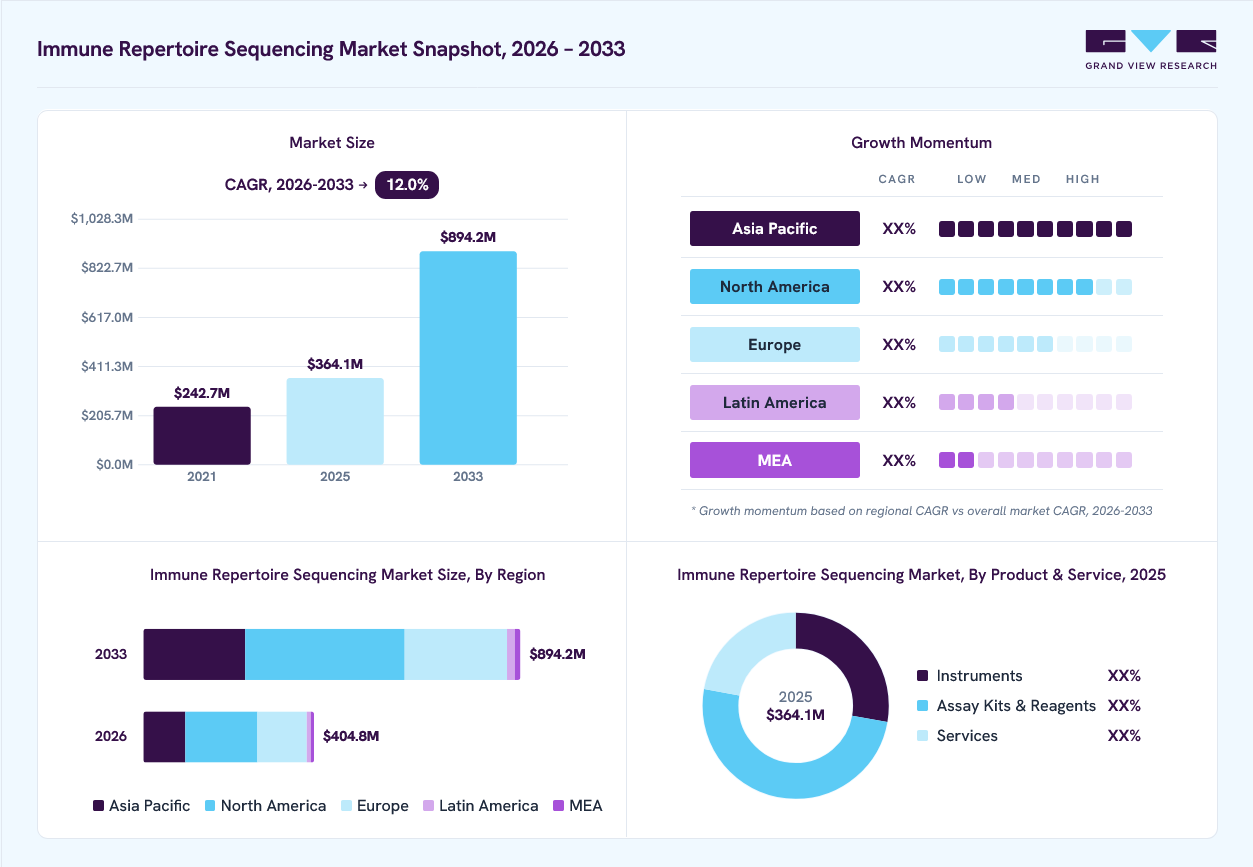
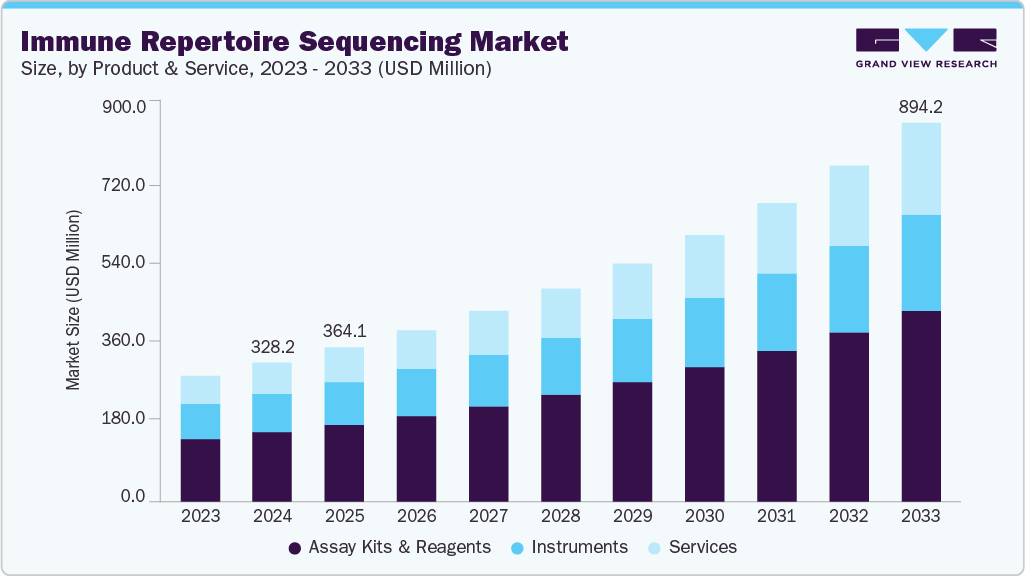
The global immune repertoire sequencing market size was valued at USD 364.1 million in 2025 and is projected to grow from USD 404.8 million in 2026 to USD 894.2 million by 2033, at a CAGR of 12.0% from 2026 to 2033. North America dominated the market, accounting for a revenue share of 42.1% in 2025. The increasing adoption of next-generation sequencing technologies, applications in immunotherapy and vaccine development, and investments in precision medicine research drive the market growth.
 Source: Grand View Research, IR Documents, Primary Interviews, Paid DatabasesTo learn more about this report,
 Download Free Sample Report
 Key Market Trends & Insights
- By product & service: Assay kits & reagents segment held the largest revenue share of over 50.0% in 2025.
- By type: Bulk immune repertoire sequencing segment held the largest revenue share of over 64.2% in 2025.
- By application: Oncology & cancer immunotherapy segment held the largest revenue share of over 38.0% in 2025.
- By end use: Academic & research institutes segment held the largest revenue share of over 46.8% in 2025.
Regional Highlights
- Largest regional market: North America (42.1% revenue share, 2025)
- Fastest-growing regional market: Asia Pacific (highest CAGR, 2026-2033)
- By country: The U.S. held the largest market share in 2025.
Market Size & Forecast
- Market size in 2025: USD 364.1 Million
- Estimated market size in 2026: USD 404.8 Million
- Projected market size by 2033: USD 894.2 Million
- CAGR (2026-2033): 12.0%
Three ways to get this report
Buy it, customize it, or ask a question.Ask an Analyst
Analyst response in 1 business day
- AccessReport author, directly
- Reply timeWithin 1 working day
- No sales callDirect answer only
- FormatEmail reply
- CostFree, no cost
Get the Full Report
What the study covers
- FormatsPDF · Excel · Dashboard
- Timeline2026–2033 annual, 2025 base
- Coverage20+ countries, 5 regions
- Companies10+ key players profiled
Customize the Report
20% free customization
- IncludeCountries, segments, points
- TailorTo your product definition
- ExtendDeeper competitor detail
- OrA fully bespoke study
- Turnaround5–10 working days
 To learn more about this report, Download Free Sample Report
 Growth of immunotherapy, oncology, and autoimmune research
The growing applications of immunotherapy, oncology, and autoimmune research are the main factors driving demand in the immune repertoire sequencing (IRS) market. Researchers and clinicians are increasingly relying on immune profiling as precision medicine advances to comprehend the intricacies of the human immune system. The IRS enables the analysis of B-cell and T-cell receptor repertoires in great detail, providing important insights into immune responses associated with infectious diseases, cancer, autoimmune disorders, and transplant rejection.
Major commercially available kits for TCR profiling
Kit
Species
Protocol
UMI
Input material
Sequencing
Analysis
Milaboratories
Mouse, human, and monkey
Multiplex PCR
Yes
Up to 500 ng
Illumina
MIXCR and MIGEC
NEBNext immune sequencing
Mouse and human
5′ RACE
Yes
10 ng-1 µg RNA or RNA-contained cells
Illumina Miseq
Presto (Galaxy)
SMARTer TCR a/b profiling
Mouse and human
SMART technology
No
10 ng-3 µg of RNA or 50-10,000 cells
Illumina Miseq
Any softwares
iRepertoire
Mouse and human
arm-PCR
No
50 ng-1 µg RNA
Illumina
iRepertoire
Source: Frontiers in Genetics, Secondary Research, Grand View Research
Moreover, as more healthcare systems and research institutions use high-throughput immune sequencing for diagnostic and prognostic applications, the growing prevalence of infectious and autoimmune diseases fuels market expansion. The technology's usefulness in immunology and vaccine development is enhanced by its ability to describe immune diversity and track the progression of disease. The market's growth has also been accelerated by rising investments from biotechnology and pharmaceutical firms to incorporate immune repertoire sequencing into drug discovery pipelines.
Advances in sequencing and genomics technologies
Technological advancements in next-generation sequencing (NGS) have become a major growth driver for the immune repertoire sequencing industry. Continuous improvements in sequencing chemistry, library preparation, and bioinformatics have made immune profiling faster, more accurate, and cost-effective, enabling large-scale analysis of immune receptors. The falling cost of sequencing has expanded access beyond major research centers to clinical and diagnostic laboratories, supporting broader adoption across immunology, oncology, and drug discovery.
Moreover, advancements like spatial transcriptomics, single-cell sequencing, and multi-omics integration are expanding the scope of immune analysis. The use of these technologies in precision medicine and biomarker discovery is fueled by their comprehensive insights into immune cell function, antigen specificity, and disease mechanisms. Global demand for sophisticated IRS platforms and analytical solutions is predicted to increase as these tools become more widely available and clinically relevant.
Market Dynamics
The immune repertoire sequencing market is witnessing steady growth, driven by the increasing adoption of precision medicine, expanding applications in oncology, autoimmune and infectious disease research, and rising demand for biomarker discovery. Growing use of immune repertoire analysis in immunotherapy development, vaccine research, and clinical diagnostics, coupled with increasing investments in genomics and translational research, is further supporting market expansion. In addition, the integration of advanced bioinformatics and AI-enabled data analysis tools is expected to accelerate the adoption of immune repertoire sequencing over the forecast period.
Advancements in high-throughput sequencing technologies are driving the growth of the immune repertoire sequencing market by enabling faster, more accurate, and cost-effective analysis of T-cell receptor (TCR) and B-cell receptor (BCR) repertoires. Continuous improvements in sequencing chemistry, automation, multiplexing, and bioinformatics have increased the depth, sensitivity, and scalability of immune profiling, allowing researchers to analyze millions of immune receptor sequences in a single run. These capabilities are expanding the use of immune repertoire sequencing in oncology, infectious diseases, autoimmune disorders, vaccine research, and precision medicine.
For instance, in October 2024, Illumina launched the MiSeq i100 series, a compact benchtop sequencing platform designed to deliver faster turnaround times, simplified workflows, and improved accessibility for research laboratories. The platform supports high-quality immune profiling while lowering operational complexity and sequencing costs, enabling broader adoption of immune repertoire sequencing across academic research, clinical laboratories, and biopharmaceutical development.
The high cost of sequencing technologies remains a key challenge for the immune repertoire sequencing market. Implementing immune repertoire sequencing workflows requires significant investment in sequencing instruments, sample preparation systems, specialized reagents, library preparation kits, and quality control tools. Although sequencing costs have declined over the years, the overall cost of generating high-quality immune repertoire data remains substantial, particularly for large-scale studies and longitudinal research programs.
Moreover, immune repertoire sequencing generates vast amounts of complex data that require advanced computational infrastructure, robust data storage, and specialized bioinformatics expertise for analysis and interpretation. The need for skilled personnel and sophisticated analytical software further increases operational costs, limiting adoption among smaller laboratories, academic institutions, and healthcare facilities in cost-sensitive regions. As a result, financial constraints continue to limit the global integration of immune repertoire sequencing into routine clinical and research applications.
Market Concentration & Characteristics
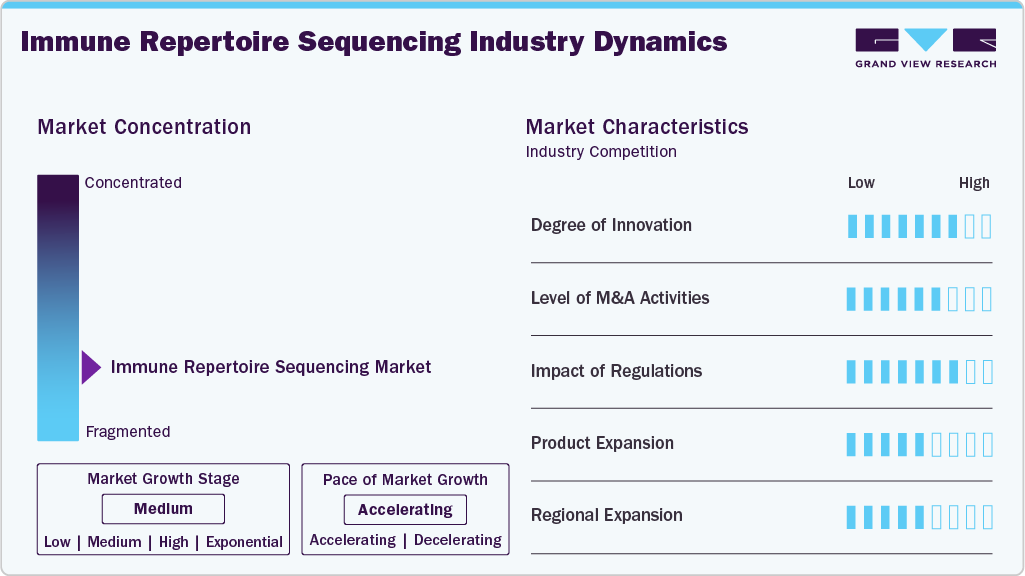
The immune repertoire sequencing market demonstrates a high degree of innovation driven by advancements in next-generation sequencing (NGS), bioinformatics, and single-cell analysis. A deeper understanding of immune diversity and clonal evolution is made possible by increased sequencing accuracy, throughput, and cost-effectiveness. Immune repertoire sequencing is now a crucial tool in immunotherapy, vaccine research, and disease diagnostics thanks to the combination of AI, cloud-based analytics, and innovative library preparation techniques, which also improve data interpretation and workflow automation.
The immune repertoire sequencing industry exhibits a moderate yet rising level of M&A activity, driven by growing interest in immune profiling and precision medicine. As the industry becomes more consolidated and technologically synergistic, major genomics and biopharma companies are expanding their sequencing, bioinformatics, and immune-profiling capabilities by acquiring or working with niche companies.
 To learn more about this report, Download Free Sample Report
 Regulations significantly impact the immune repertoire sequencing market, as strict FDA and international standards for NGS-based diagnostics necessitate thorough validation and data quality assurance. These standards improve clinical confidence, data security, and reliability while increasing development costs and time to market. This supports the wider use of immune repertoire sequencing in research and diagnostics.
Product expansion in the market for immune repertoire sequencing is accelerating as businesses launch sophisticated assay kits, integrated sequencing workflows, and AI-driven analysis tools. These developments enhance the precision of immune profiling and broaden its applications in immunotherapy, vaccine development, and clinical diagnostics, thereby propelling market expansion and wider adoption.
The regional expansion of the immune repertoire sequencing industry is characterized by established dominance in North America, driven by a robust research infrastructure, growing genomics initiatives, increasing healthcare investment, and rising demand in nations such as China, India, and Japan.
Analyst Perspective
The immune repertoire sequencing market is expected to witness strong growth, driven by the increasing adoption of next-generation sequencing (NGS) in immunology research, oncology, infectious disease studies, and precision medicine. Growing demand for comprehensive analysis of T-cell and B-cell receptor repertoires is accelerating the use of immune repertoire sequencing in biomarker discovery, immunotherapy development, and vaccine research. Advancements in sequencing technologies and bioinformatics, along with rising investments in translational research and clinical applications, are expected to support long-term market expansion. Market participants are focusing on developing high-throughput sequencing solutions and advanced analytical tools to improve workflow efficiency, data accuracy, and immune profiling capabilities.
Product & Service Insights
Based on product & service, the assay kits & reagents segment held the largest revenue share of over 50.0% in 2025, and is expected to witness the fastest growth throughout the forecast period. The increasing use of immune repertoire sequencing workflows, which rely on premium library preparation kits, amplification reagents, and consumables, is driving its expansion. The position of this segment has been further reinforced by ongoing advancements in reagent chemistries and ready-to-use kits, which enable precise, repeatable, and economical sequencing in both clinical and research applications.
The services segment is expected to witness a significant CAGR during the forecast period. A growing number of researchers and businesses are relying on service providers for high-quality, cost-effective, and rapid turnaround solutions, as immune repertoire analysis requires specialized expertise and advanced data processing.
Type Insights
Based on type, the bulk immune repertoire sequencing segment held the largest revenue share of over 64.2% in 2025, owing to its cost-effectiveness, high throughput, and suitability for large-scale population studies. Because it offers strong insights into overall immune diversity at a significantly lower cost than single-cell approaches, its widespread adoption in oncology, vaccine research, and autoimmune disease profiling further solidifies its position.
The single-cell immune repertoire sequencing segment is expected to exhibit the fastest CAGR over the forecast period, due to its capacity to offer high-resolution insights into paired chain information and clonal dynamics at the individual cell level. Adoption is being accelerated by the expanding use of precision immunology, antibody discovery, and advanced oncology research, as scientists look for more precise and in-depth descriptions of immune cell populations.
Application Insights
Based on application, the oncology & cancer immunotherapy segment held the largest revenue share of over 38.0% in 2025. This is primarily attributed to its cost-effectiveness, consistency in quality, and scalability in production. Synthetic supplements offer precise formulations and standardized dosages, making them a preferred choice for both consumers and manufacturers seeking reliable and affordable options.
The infectious diseases & vaccine development segment is expected to register the fastest CAGR over the forecast period, due to the growing need for immune repertoire profiling to monitor pathogen-specific immune responses, assess vaccine efficacy, and facilitate rapid vaccine design. The growing global emphasis on pandemic preparedness and new infectious threats further accelerates the segment's growth.
End-use Insights
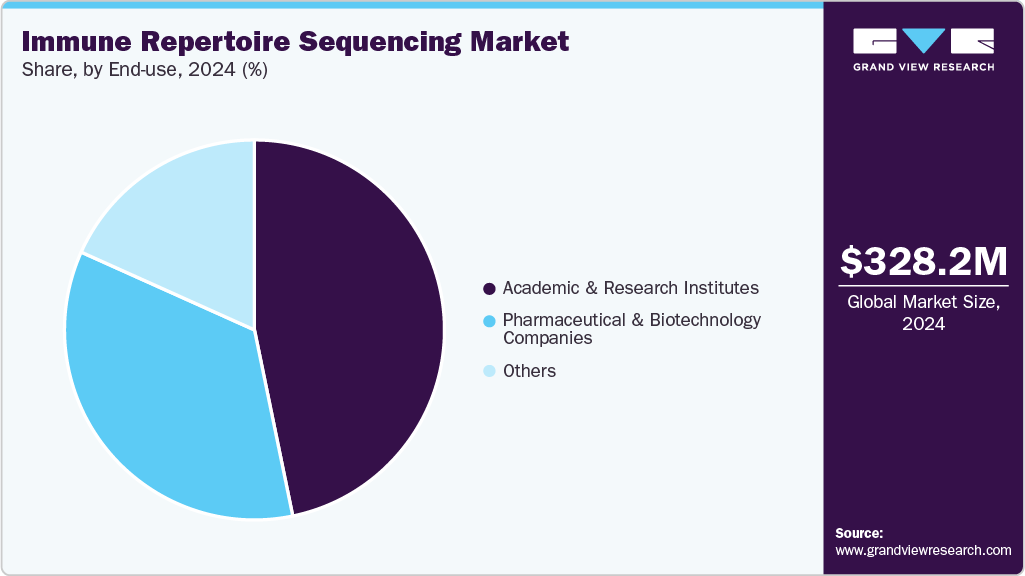
Based on end use, the academic & research institutes segment held the largest revenue share of over 46.8% in 2025. Robust funding support, ongoing large-scale research projects, and the extensive use of advanced sequencing platforms across research centers and universities further support the segment's dominance.
 To learn more about this report, Download Free Sample Report
 The pharmaceutical & biotechnology companies segment is expected to register the fastest CAGR over the forecast period. Growing investments in immunotherapy development, the increasing use of high-throughput immune-profiling tools for biomarker discovery, and the expansion of clinical pipelines targeting oncology, infectious diseases, and autoimmune disorders are the primary drivers of this growth.
Regional Insights
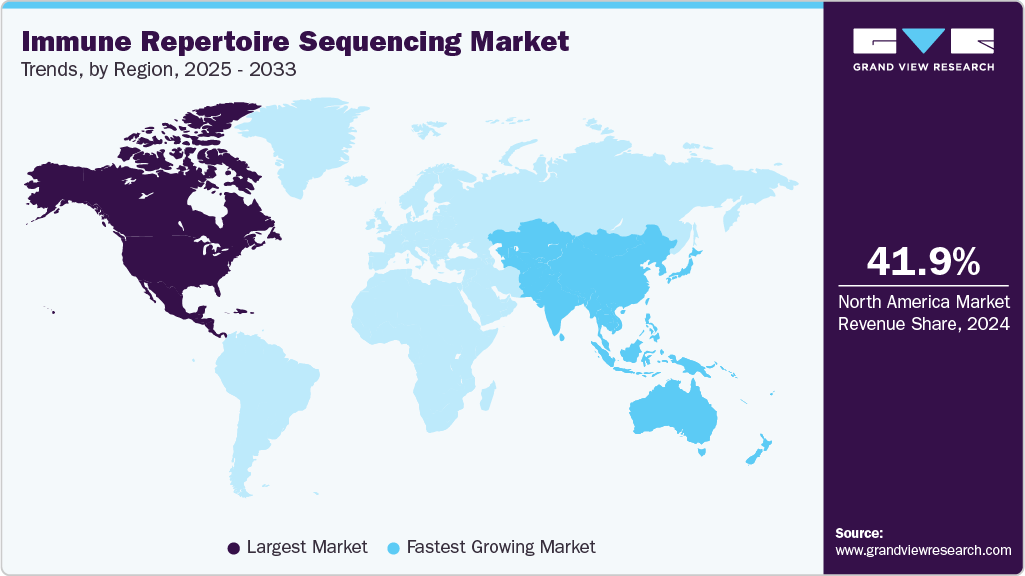
North America dominated the immune repertoire sequencing market with the largest revenue share of 42.1% in 2025, driven by innovations in immune monitoring, vaccine development, and cell therapy applications. Moreover, the regional demand has been further accelerated by partnerships among pharmaceutical companies, biotech companies, and academic institutions.
 To learn more about this report, Download Free Sample Report
 U.S. Immune Repertoire Sequencing Market Trends
The immune repertoire sequencing market in the U.S. held the largest share in the North America region in 2025. The U.S. immune repertoire sequencing industry has experienced rapid growth, owing to substantial government funding for genomics and immunology research, a robust healthcare infrastructure, and the early adoption of cutting-edge sequencing platforms. Key players, including Adaptive Biotechnologies, Illumina, and Thermo Fisher Scientific, continue to expand their portfolios, which further drives demand in the market.
Europe Immune Repertoire Sequencing Market Trends
The Europe immune repertoire sequencing industry is witnessing steady growth, supported by strong public-private research collaborations, a harmonized regulatory framework, and a focus on precision and translational medicine. Moreover, the growth of high-throughput sequencing labs and the regional focus on sustainable biopharmaceutical innovation support market development.
The UK immune repertoire sequencing market is expanding due to robust genomics research, government-backed health programs, and strong academic-industry partnerships. The UK’s National Health Service (NHS) Genomic Medicine Service and the 100,000 Genomes Project have laid the groundwork for integrating immune repertoire sequencing into clinical workflows. For instance, in November 2023, Oxford Nanopore and Genomics England in the UK collaborated on long-read sequencing for rare diseases, advancing innovations that enhance immune repertoire profiling and multiomic analysis.
The immune repertoire sequencing market in Germany is expected to grow during the forecast period. Germany is a leading European market for immune repertoire sequencing, supported by advanced healthcare infrastructure, strong R&D investment, and government initiatives such as "Industrie 4.0" and the "Health Research Framework Programme." Immune repertoire sequencing is actively used in cancer and autoimmune research by research institutes like the Max Planck Institute and DKFZ, enhancing Germany's standing as a regional center for immunogenomics innovation.
Asia Pacific Immune Repertoire Sequencing Market Trends
The Asia Pacific immune repertoire sequencing industry is projected to record the fastest CAGR of 13.32% from 2025 to 2033, driven by rising investments in genomics, expanding biotechnology capabilities, and a growing burden of infectious and chronic diseases. The increasing demand for personalized medicine, coupled with regional partnerships and infrastructure development, is driving the rapid adoption of immune profiling technologies.
The China immune repertoire sequencing market is expected to grow during the forecast period. China is a major player in immune repertoire sequencing, supported by government initiatives such as “Healthy China 2030,” robust biotech growth, and large-scale genomics projects.
The immune repertoire sequencing market in Japan is expected to grow steadily during the forecast period. This growth is driven by precision medicine initiatives, advanced biotech research, and government programs, such as the “Moonshot R&D Program.”
Middle East Immune Repertoire Sequencing Market Trends
The Middle East & Africa immune repertoire sequencing industry is still in the early stages of development. Still, it shows strong potential due to growing investments in life sciences, rising awareness of genomic medicine, and expanding healthcare infrastructure. The region is increasingly engaging in collaborations to build local sequencing capabilities and foster biotechnology innovation.
Kuwait's immune repertoire sequencing market is gradually emerging as a prominent segment, supported by efforts to modernize healthcare and promote biomedical research. Collaborations with foreign organizations and academic institutions are helping establish sequencing and bioinformatics capabilities in the nation.
Key Immune Repertoire Sequencing Company Insights
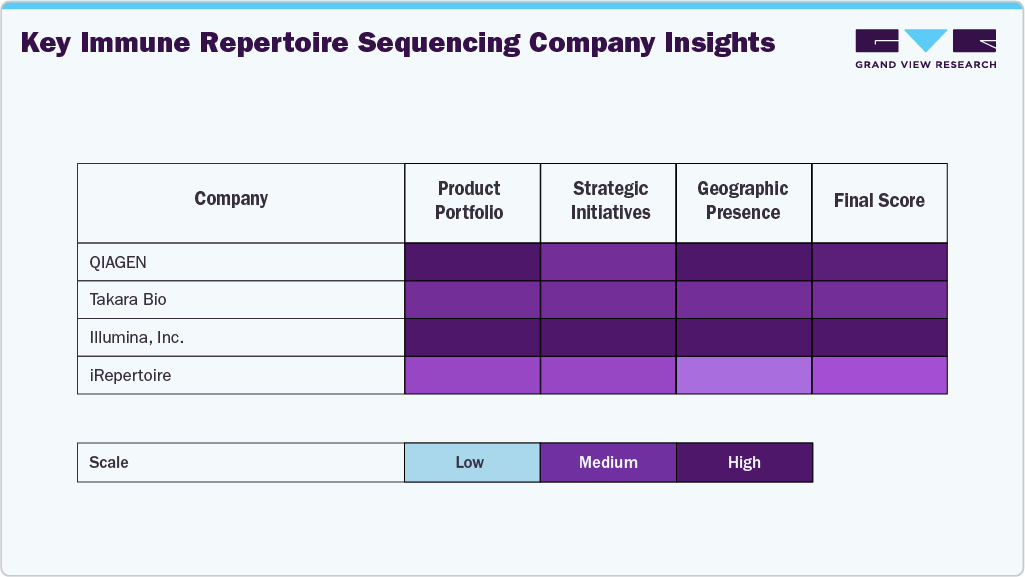
The immune repertoire sequencing market is shaped by a strong presence of established players that continue to dominate through robust product portfolios, advanced sequencing technologies, and sustained investments in R&D. Leading companies such as QIAGEN, New England Biolabs, Takara Bio, Illumina, Inc., and BGI have secured significant market share owing to their comprehensive assay kits, high-performance sequencing platforms, and global distribution networks that support both clinical and research applications.
 To learn more about this report, Download Free Sample Report
 The immune repertoire sequencing market is evolving through a combination of technology innovation and expanding distribution networks. Leading assay and sequencing technology providers, including Cellecta, Inc., iRepertoire, Celemics, Inc., and QIAGEN, are advancing repertoire profiling capabilities across T-cell and B-cell applications, while companies such as Nucleus Biotech, BioCat, and regional scientific distributors support the availability of specialized assays and sequencing solutions across key markets. This combination of technology development, service providers, and distribution channels is contributing to broader adoption of immune repertoire sequencing across research, biotechnology, pharmaceutical, and clinical applications.
Key Immune Repertoire Sequencing Companies:
The following are the leading companies in the immune repertoire sequencing market.
- QIAGEN
- New England Biolabs
- Takara Bio
- Illumina, Inc.
- iRepertoire
- BGI
- Danaher
- Creative Biolabs
- Cellecta Inc.
- Celemics, Inc.
Competitive Benchmarking
Category
Operating Strategies
Competitive Edge
Weakness
Established Players (QIAGEN, Illumina, Danaher, Takara Bio, etc.)
- Expand integrated immune repertoire sequencing workflows through advanced library preparation kits, sequencing platforms, and bioinformatics solutions.
- Strong R&D capabilities and established customer bases, enabling continuous innovation in precision medicine and immunology research.
- High dependence on research funding and adoption of advanced sequencing technologies.
Emerging Players (iRepertoire, Creative Biolabs, Nucleus Biotech, Celemics, Inc.)
- Focus on specialized immune repertoire sequencing services, customized assays, and targeted immune profiling applications.
- High technical specialization with flexible, customer-specific sequencing and bioinformatics solutions.
- Limited global commercial presence and financial resources compared to multinational competitors.
Recent Developments
- In January 2026, Parse Biosciences launched an integrated immune repertoire and whole transcriptome analysis workflow within its Trailmaker platform. The solution unified repertoire and transcriptional data, enabling comprehensive immune profiling, clonotype visualization, differential expression analysis, and streamlined end-to-end workflows for immunology research.
Immune Repertoire Sequencing Market Report Scope
Report Attribute
Details
Market size in 2025
USD 364.1 million
Estimated market size in 2026
USD 404.8 million
Projected market size by 2033
USD 894.2 million
Growth rate
CAGR of 12.0% from 2026 to 2033
Historical data
2021 - 2025
Forecast period
2026 - 2033
Quantitative units
Revenue in USD million, and CAGR from 2026 to 2033
Report coverage
Revenue forecast, company ranking, competitive landscape, growth factors, and trends
Segments covered
Product & service, type, application, end use, region
Regional scope
North America; Europe; Asia Pacific; Latin America; MEA
Country scope
U.S., Canada, Mexico, UK, Germany, France, Italy, Spain, Norway, Denmark, Sweden, China, Japan, India, South Korea, Australia, Thailand, Brazil, Argentina, Saudi Arabia, South Africa, UAE, Kuwait
Key companies profiled
QIAGEN; New England Biolabs; Takara Bio; Illumina, Inc.; iRepertoire; BGI; Danaher; Creative Biolabs; Nucleus Biotech; Celemics, Inc.
Customization scope
Free report customization (equivalent up to 8 analysts' working days) with purchase. Addition or alteration to country, regional & segment scope.
Pricing and purchase options
Avail customized purchase options to meet your exact research needs. Explore purchase options
Global Immune Repertoire Sequencing Market Report Segmentation
This report forecasts revenue growth and provides an analysis on the latest trends in each of the sub-segments from 2021 to 2033. For this report, Grand View Research has segmented the global immune repertoire sequencing market report based on product & service, type, application, end-use, and region:
-
Product & Service Outlook (Revenue, USD Million, 2021 - 2033)
-
Instruments
-
Assay Kits & Reagents
-
TCR kits
-
BCR kits
-
Others
-
-
Services
-
-
Type Outlook (Revenue, USD Million, 2021 - 2033)
-
Bulk immune‑repertoire sequencing
-
Single‑cell immune‑repertoire sequencing
-
-
Application Outlook (Revenue, USD Million, 2021 - 2033)
-
Oncology & Cancer Immunotherapy
-
Autoimmune & Inflammatory Diseases
-
Infectious Diseases & Vaccine Development
-
Transplantation & Immune Tolerance
-
Others
-
-
End-use Outlook (Revenue, USD Million, 2021 - 2033)
-
Academic & Research Institutes
-
Pharmaceutical & Biotechnology Companies
-
Others
-
-
Regional Outlook (Revenue, USD Million, 2021 - 2033)
-
North America
-
U.S.
-
Canada
-
Mexico
-
-
Europe
-
Germany
-
UK
-
France
-
Italy
-
Spain
-
Denmark
-
Sweden
-
Norway
-
-
Asia Pacific
-
China
-
Japan
-
India
-
South Korea
-
Australia
-
Thailand
-
-
Latin America
-
Brazil
-
Argentina
-
-
MEA
-
South Africa
-
Saudi Arabia
-
UAE
-
Kuwait
-
-
Research Methodology
The immune repertoire sequencing market figures in this report are based on a proven research process that combines executive interviews with secondary research from proprietary databases, company filings, and recognized regulatory and institutional sources. Market size is built through value-chain sizing - reconciling supply-side and demand-side estimates - and triangulated with bottom-up and top-down approaches. Every estimate passes multiple levels of expert validation before publication, with each immune repertoire sequencing segment quantified using the revenue-capture definitions in the table below.
Segment Definition
Segment -Product & Service
Revenue Capture Definition
Instruments
Revenue generated from instruments used to perform immune repertoire sequencing workflows, including sample preparation, nucleic acid processing, sequencing, and data acquisition. These systems enable high-throughput analysis of T-cell receptor (TCR) and B-cell receptor (BCR) repertoires, supporting immunology research, biomarker discovery, and clinical applications.
Assay Kits & Reagents
This segment captures income from consumables used throughout immune repertoire sequencing workflows, including assay kits, reagents, enzymes, primers, buffers, and library preparation components. The segment encompasses T-cell receptor (TCR) kits, B-cell receptor (BCR) kits, and other specialized reagent solutions designed for immune receptor amplification, sequencing library preparation, target enrichment, and assay optimization across research and clinical applications.
Services
Market value in this category stems from outsourced immune repertoire sequencing services, including sample processing, sequencing, bioinformatics analysis, data interpretation, and customized reporting. These services support academic research, clinical studies, pharmaceutical development, and biomarker discovery programs.
Segment - Type
Revenue Capture Definition
Bulk Immune-Repertoire Sequencing
Revenue generated from sequencing solutions designed to analyze pooled populations of immune cells, providing comprehensive characterization of T-cell and B-cell receptor diversity, clonality, and immune responses across biological samples. These approaches are widely used in translational research, immunotherapy development, and disease monitoring.
Single-cell Immune-Repertoire Sequencing
This segment reflects income from sequencing technologies capable of profiling immune receptor sequences at the individual cell level. These solutions enable simultaneous analysis of receptor diversity, gene expression, and cellular phenotype, supporting advanced immunology research, precision medicine, and cell therapy development.
Segment - Application
Revenue Capture Definition
Oncology & Cancer Immunotherapy
Revenue derived from immune repertoire sequencing applications focused on characterizing immune responses in cancer, evaluating T-cell and B-cell clonality, identifying predictive biomarkers, monitoring treatment response, and supporting the development of immunotherapies and personalized oncology strategies.
Autoimmune & Inflammatory Diseases
This segment captures income from immune repertoire sequencing used to investigate immune dysregulation associated with autoimmune and inflammatory disorders. These applications facilitate disease mechanism studies, biomarker identification, therapeutic monitoring, and precision treatment development.
Infectious Diseases & Vaccine Development
Market value arises from immune repertoire sequencing employed to evaluate adaptive immune responses against infectious agents, characterize immune receptor diversity, support vaccine development, and monitor vaccine efficacy and immune protection.
Transplantation & Immune Tolerance
Revenue originates from immune repertoire sequencing applications used to assess immune compatibility, monitor graft rejection, evaluate immune reconstitution, and study mechanisms underlying immune tolerance in organ and stem cell transplantation.
Others
This segment reflects earnings from immune repertoire sequencing applications beyond the primary therapeutic areas, including allergy research, aging studies, rare diseases, regenerative medicine, and other emerging immunology applications.
Segment - End Use
Revenue Capture Definition
Academic & Research Institutes
Revenue generated from immune repertoire sequencing products and services utilized by universities, government organizations, and research institutes conducting studies in immunology, genomics, oncology, infectious diseases, and translational medicine.
Pharmaceutical & Biotechnology Companies
This segment captures income from immune repertoire sequencing technologies adopted by pharmaceutical and biotechnology companies for immunotherapy development, biomarker discovery, clinical research, drug development, and precision medicine initiatives.
Others
Market value in this category stems from the adoption of immune repertoire sequencing by contract research organizations (CROs), clinical laboratories, hospitals, public health organizations, and other institutions supporting specialized research and diagnostic applications.
Estimation Model
Section
Methodology
Description
Top‑Down
Commodity Flow Analysis
Market size was estimated by analyzing revenues generated by key immune repertoire sequencing solution providers, including manufacturers of sequencing platforms, library preparation kits, reagents, software, and related services. Data were collected from company annual reports, investor presentations, product portfolios, and premium industry databases. Revenue contributions from private companies were assessed through secondary research and validated through primary interviews to derive the overall market value.
Parent Market
Parent Market & Penetration‑Based Analysis
The immune repertoire sequencing market was evaluated within the broader Next‑Generation Sequencing (NGS) Market. Adoption rates of immune repertoire sequencing across immunology, oncology, infectious disease research, autoimmune disease studies, transplant monitoring, and biopharmaceutical R&D were analyzed to estimate the addressable market and segment‑level opportunities.
Segmentation
Country‑Level Segment Share Modeling
Market shares for product, sequencing type, application, and end‑use segments were derived using country‑specific NGS adoption rates, research funding, biopharmaceutical R&D investments, precision medicine initiatives, and sequencing research activity. Weighted average calculations were performed to determine regional and global segment distributions.
Validation
Data Triangulation & Validation Model
Market estimates were validated through triangulation of secondary research, primary interviews, company‑level revenue assessments, sequencing workflow analysis, end‑user adoption trends, and demand‑side evaluations to ensure consistency and accuracy across all market segments and geographies.
Forecasting
Forecasting & CAGR Modeling
Market forecasts were developed using historical trends in NGS adoption, growth in immuno‑oncology research, increasing demand for precision medicine, expansion of cell and gene therapy research, advancements in sequencing, and rising investments in genomics and translational research. Regression‑based analysis and triangulation were applied to project future market growth and CAGR.
Delivered Customizations
This report has been delivered with the following In-depth customizations
Client Request
Customization Delivered
Value Adds
Application & End-user Cross-Segmentation Analysis for Immune Repertoire Sequencing
Customized cross-segmentation analysis across key applications including oncology & cancer immunotherapy, autoimmune & inflammatory diseases, infectious diseases & vaccine development, and transplantation & immune tolerance by end users such as academic & research institutes, pharmaceutical & biotechnology companies, and clinical laboratories. Includes adoption trends for bulk and single-cell immune repertoire sequencing technologies.
Enables clients to identify the highest-growth application-end user combinations, prioritize commercialization opportunities, benchmark technology adoption across research and clinical settings, and optimize product development and go-to-market strategies.
Competitive Benchmarking & Product Portfolio Assessment
Comprehensive benchmarking of leading immune repertoire sequencing companies based on sequencing platforms, assay kits (TCR/BCR), service capabilities, bioinformatics offerings, geographic presence, strategic collaborations, R&D focus, pricing strategies, and innovation pipeline. Includes competitive assessment across instruments, reagents, and sequencing services.
Supports competitive positioning, identifies portfolio gaps and partnership opportunities, evaluates technology differentiation, and enables informed investment, product expansion, and market entry decisions.
Clinical Research & Biomarker Opportunity Assessment
Comprehensive analysis of immune repertoire sequencing adoption across oncology, autoimmune diseases, infectious diseases, transplantation, and vaccine research. Includes biomarker development trends, clinical trial landscape, translational research activity, and assessment of emerging therapeutic opportunities by geography and end user.
Helps clients identify high-potential clinical applications, evaluate biomarker commercialization opportunities, prioritize therapeutic focus areas, and align product development with evolving clinical and translational research trends.
Frequently Asked Questions About This Report
The global immune repertoire sequencing market size was estimated at USD 364.1 million in 2025 and is expected to reach USD 404.8 million in 2026.
Some key players operating in the immune repertoire sequencing market include QIAGEN; New England Biolabs; Takara Bio; Illumina, Inc.; iRepertoire; BGI; Danaher; Creative Biolabs; Nucleus Biotech; Celemics, Inc.
Key factors driving the growth of the immune repertoire sequencing market include the rising adoption of precision medicine, the increasing prevalence of cancer and autoimmune diseases, advancements in high-throughput sequencing technologies, and the growing demand for biomarker discovery and immunotherapy development.
The assay kits & reagents segment held the largest revenue share of over 50.0% in 2025.
The bulk immune repertoire sequencing segment held the largest revenue share of over 64.2% in 2025.
The oncology & cancer immunotherapy segment held the largest revenue share of over 38.0% in 2025.
The academic & research institutes segment held the largest revenue share of over 46.8% in 2025.
The global immune repertoire sequencing market is expected to grow at a compound annual growth rate of 12.0% from 2026 to 2033 to reach USD 894.2 million by 2033.
North America dominated the immune repertoire sequencing market with a share of 42.1% in 2025. This is attributable to its strong genomic research ecosystem, high adoption of advanced sequencing technologies, and significant investments in precision medicine initiatives.
About the Author(s)
Biotechnology Research Team
Healthcare · BiotechnologyThis report was authored by the biotechnology research team at Grand View Research - comprising two research analysts, one senior research analyst, and one industry expert - with specialized expertise in the biotechnology segment of the healthcare industry. All findings are based on proprietary healthcare databases, executive interviews, and regulatory analysis, subject to internal peer review prior to publication.
Last Updated:
Speak to Analyst

Customize this report to your needs - add regions, segments, or data points, with 20% free customization.
Or view our licence options:


ISO 9001:2015 & 27001:2022 Certified
We are GDPR and CCPA compliant! Your transaction & personal information is safe and secure. For more details, please read our privacy policy.


