
- Home
- »
- Electronic & Electrical
- »
-
India Household Appliances Market, Industry Report, 2030GVR Report cover

India Household Appliances Market (2025 - 2030) Size, Share & Trends Analysis Report By Product (Major Appliances, Small Appliances) By Distribution Channel (Hypermarkets & Supermarkets, Electronic Stores, Exclusive Brand Outlets, Online), And Segment Forecasts
India Household Appliances Market Trends
The India household appliances market size was estimated at USD 22.45 billion in 2024 and is expected to grow at a CAGR of 7.2% from 2025 to 2030. The growth of the Indian household appliances industry is driven by rising disposable incomes, rapid urbanization, increasing electrification in rural areas, and a growing middle class with evolving lifestyles. Additionally, technological advancements, smart appliance adoption, and government initiatives like "Make in India" and rural electrification programs are fueling demand. The expansion of e-commerce and improved retail infrastructure also contribute to easier access and wider product availability, further accelerating market growth.
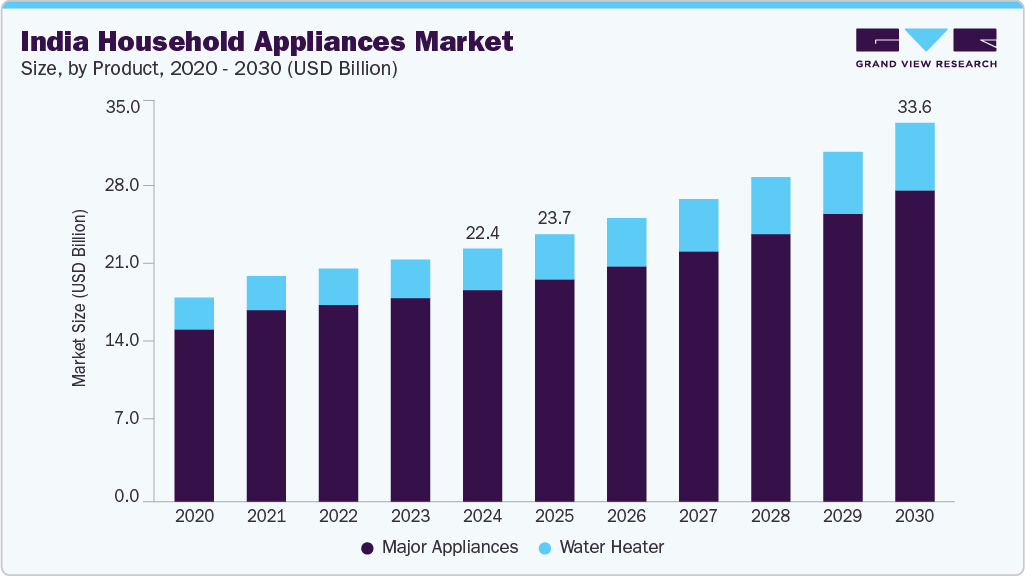 Source: Grand View Research, IR Documents, Primary Interviews, Paid DatabasesTo learn more about this report,
 Download Free Sample Report
 The India household appliances market is experiencing robust growth, fueled by rising disposable incomes, urbanization, and shifting consumer preferences. According to an article by the Times of India published in May 2025, in FY25, average monthly spending on consumer durables surged by 72%, a dramatic increase from the 6% rise in FY24, reflecting a growing trend in home ownership and the subsequent demand for appliances and home furnishings. The major domestic appliances market experienced an 18% value-based growth in the first half of 2024, with premium segments like 9 kg+ washing machines expanding by 30% and energy-efficient air conditioners by 59%.
Technology and innovation play a crucial role in shaping market dynamics. Consumers are increasingly drawn to smart, energy-efficient appliances that offer advanced features such as IoT connectivity, automation, and AI integration. Manufacturers are concentrating on product differentiation, enhanced energy ratings, and eco-friendly appliances to meet evolving consumer preferences. Additionally, the availability of financing options and appealing EMI schemes further encourages the purchase of premium products.
For instance, in April 2025, Samsung introduced India-centric advanced AI-powered features in its air conditioners, refrigerators, and other appliances. The company's AI technology, dubbed "AI Desi," aims to enhance the user experience with features such as personalized recommendations and smart home automation. According to the Times of India, Samsung's AI-powered appliances are designed to learn users' preferences and adapt to their needs. The features include smart temperature control, energy efficiency, and voice control through Samsung's Bixby virtual assistant.
Government initiatives such as “Make in India,” increased rural electrification, and improved infrastructure have expanded the market beyond metro cities. The growing penetration of e-commerce platforms has made household appliances more accessible to consumers in Tier 2 and Tier 3 cities, offering competitive pricing and a wide product range. These factors collectively contribute to the sustained growth of the household appliances market in India.
Consumer Insights
 To learn more about this report, Download Free Sample Report
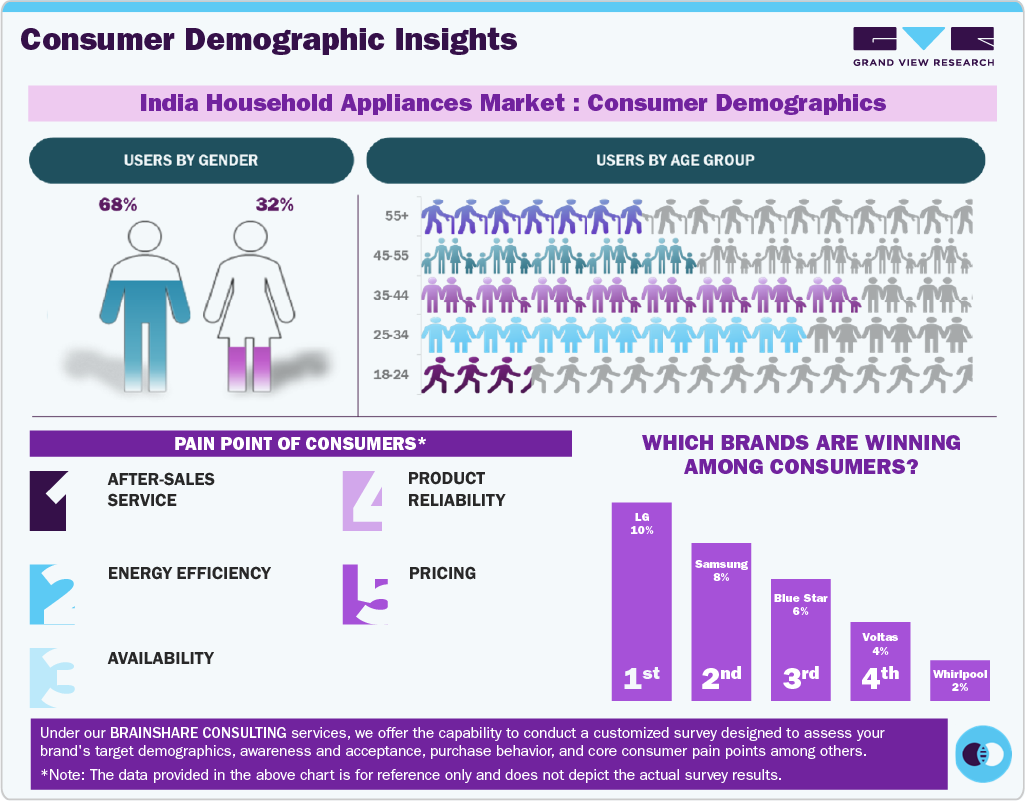
 Consumers in the India household appliances industry face several pain points that impact their purchasing decisions and satisfaction. One of the primary concerns is inadequate after-sales service, with many consumers reporting delays, lack of responsiveness, and poor technician training. This issue is especially critical in Tier 2 and Tier 3 cities, where service networks are less developed. Additionally, inconsistent product reliability and performance often lead to frustration, especially when appliances fail shortly after purchase or do not meet advertised standards.
Another significant pain point is the high cost of energy-efficient or smart appliances, which can deter budget-conscious consumers. While there is growing awareness about the benefits of such products, the upfront investment remains a barrier for many. Consumers also express dissatisfaction with limited product availability in rural areas, complex user interfaces for older users, and confusing warranty or return policies. These challenges highlight the need for brands to improve product quality, pricing accessibility, and customer service to better meet evolving consumer expectations.
Pricing Analysis
 To learn more about this report, Download Free Sample Report
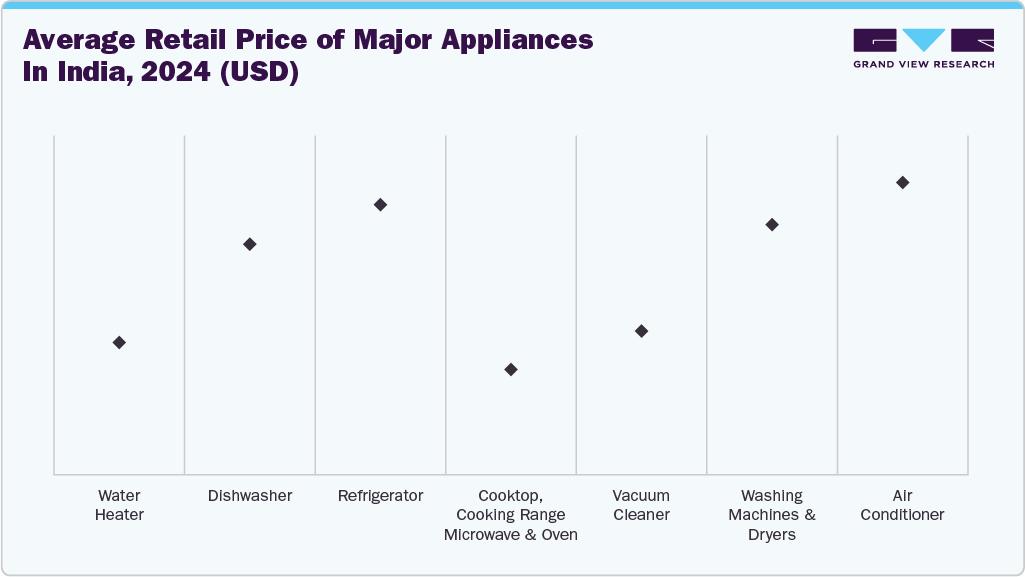
 The pricing analysis of major appliances in India reveals a broad cost range influenced by product functionality, energy efficiency, and brand perception. Refrigerators and air conditioners equipped with inverter compressors, multi-stage filters, and smart controls generally fall into the higher price category. Washing machines and dryers are priced at a premium for fully automatic, front-load, and energy-efficient models with advanced wash settings. Dishwashers, still emerging in urban markets, are typically mid-to-high in pricing based on capacity, water usage, and drying features. Smaller appliances like microwaves, ovens, and cooktops are positioned in the lower pricing tier, though convection and built-in models are priced higher. Vacuum cleaners and water heaters are moderately priced, with factors such as suction power, storage type, and instant heating capabilities affecting overall cost.
Product Insights
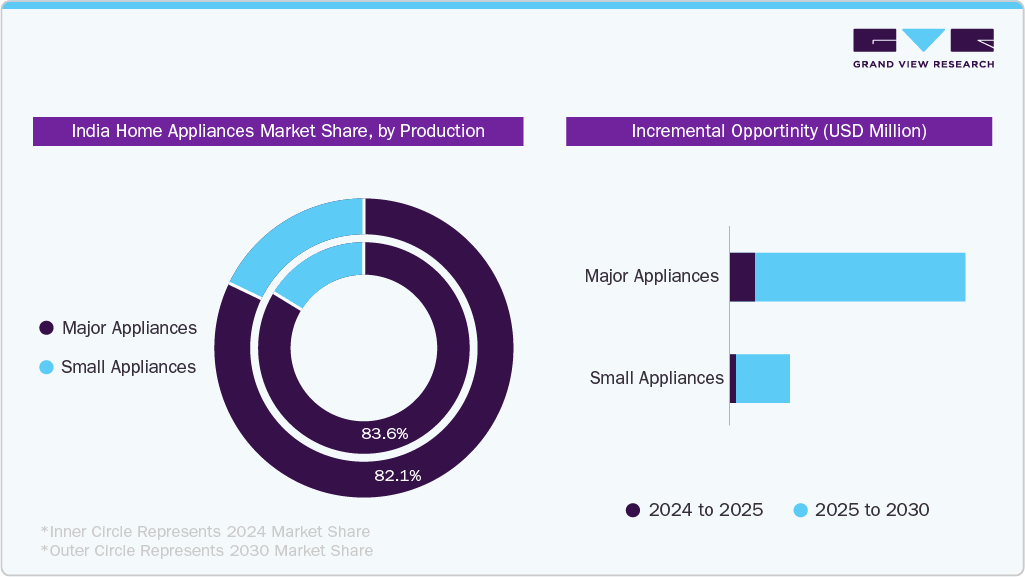
In 2024, the major appliances market accounted for a dominant revenue share of 83.6%, primarily due to the country's rising middle-class population and rapid urbanization. As more households gain access to stable electricity and modern housing, there is a growing demand for essential appliances like refrigerators, washing machines, and air conditioners. These items, often considered necessities in urban households, drive higher spending compared to smaller, non-essential appliances. Additionally, the increasing availability of consumer financing options and government initiatives to boost rural electrification have further supported the penetration of major appliances across both urban and semi-urban areas.
Moreover, technological advancements and increased awareness around energy efficiency have led to greater consumer interest in upgrading to newer, more efficient models of large appliances. Brands are also offering localized features tailored to Indian consumers, enhancing the appeal of these products. The long replacement cycle of major appliances, coupled with their higher average selling price compared to small appliances, contributes significantly to their revenue share. All these factors combined have solidified the major appliances segment as the primary revenue driver in India’s household appliances market.
 To learn more about this report, Download Free Sample Report
 The smaller appliances market is projected to grow at a CAGR of 8.6% from 2025 to 2030, As more Indian households shift toward nuclear family structures and urban living, demand for compact, multi-functional appliances like mixer grinders, air fryers, and electric kettles is surging. Additionally, government initiatives promoting electrification and digital infrastructure, combined with increased e-commerce penetration, are making small appliances more accessible across urban and rural markets alike. The trend toward smart, energy-efficient products is also accelerating growth in this segment.
Distribution Channel Insights
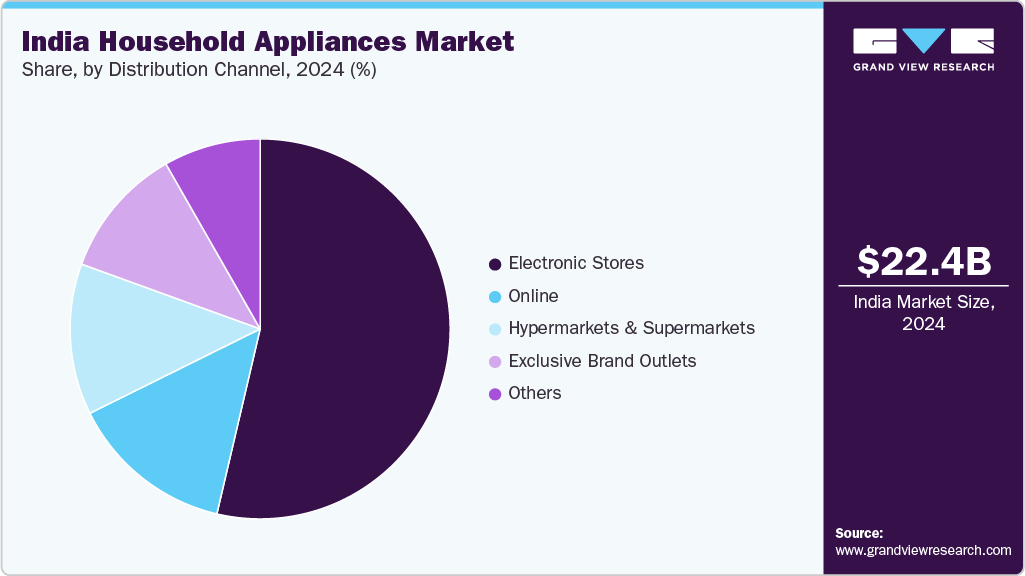
The sales of household appliances through electronic stores channels accounted for a revenue share of 53.66% in 2024, primarily because they offer a wide range of products, competitive pricing, and the advantage of physical product demonstrations, which many Indian consumers still prefer before making purchase decisions. These stores often provide immediate product availability, financing options, and in-store promotions, making them attractive to price-sensitive and quality-conscious buyers. Additionally, the trust and familiarity associated with established retail chains, especially in Tier 1 and Tier 2 cities, continue to drive high footfall and conversion rates, contributing to their dominant share in the market.
 To learn more about this report, Download Free Sample Report
 Household appliances sales through online channels are projected to grow at a CAGR of 6.6% from 2025 to 2030, due to increasing consumer preference for convenience, wider product selection, and competitive pricing available on e-commerce platforms. Busy lifestyles and the working population favor shopping from home, avoiding physical store visits while accessing detailed product information, customer reviews, and easy price comparisons.
Key India Household Appliances Company Insights
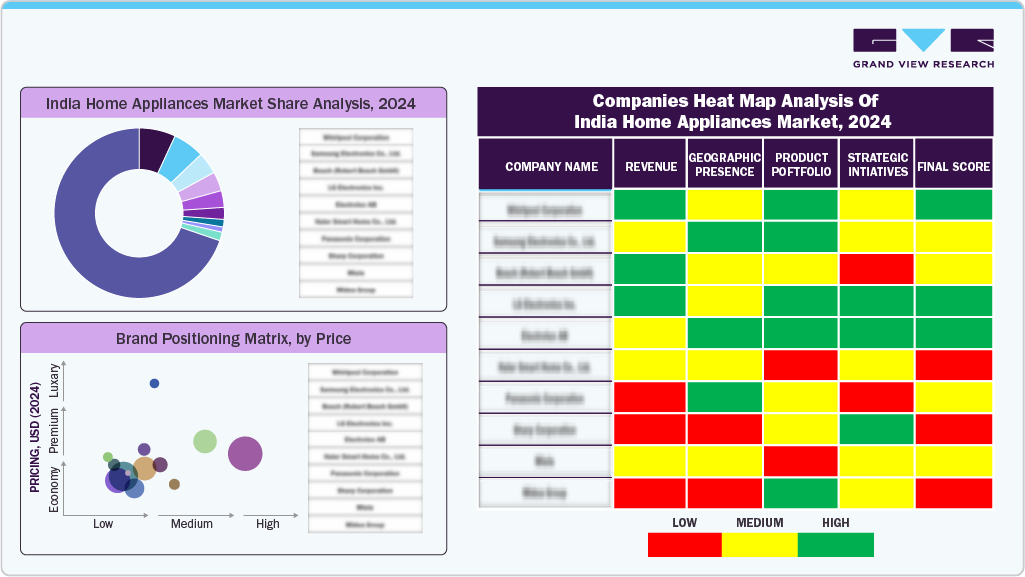
Key companies in the India household appliances market employ diverse strategies to sustain competitiveness, focusing on continuous innovation in smart, energy-efficient, and connected appliances that cater to evolving consumer demands. They emphasize sustainability by incorporating eco-friendly materials and designs to align with increasing environmental awareness. These companies also invest heavily in expanding their distribution networks, combining traditional retail and e-commerce channels to enhance accessibility and customer convenience. Strategic collaborations with technology firms enable them to integrate IoT and automation features into products, improving user experience. In addition, they prioritize after-sales services and warranty programs to strengthen customer loyalty and differentiate themselves in a fragmented and competitive market.
 To learn more about this report, Download Free Sample Report
 Key India Household Appliances Companies:
- LG Electronics
- Samsung Electronics
- Whirlpool Corporation
- Godrej Appliances
- Haier Appliances India
- IFB Industries
- Bosch Household Appliances
- Voltas (Tata Group)
- Panasonic India
- Havells India (including Lloyd)
- Blue Star
- Electrolux
- Crompton Greaves Consumer Electricals
- Bajaj Electricals
- Morphy Richards (part of Bajaj Electricals in India)
Three ways to get this report
Buy it, customize it, or ask a question.Ask an Analyst
Analyst response in 1 business day
- AccessReport author, directly
- Reply timeWithin 1 working day
- No sales callDirect answer only
- FormatEmail reply
- CostFree, no cost
Get the Full Report
What the study covers
- FormatsPDF · Excel · Dashboard
- Timeline2025–2030 annual, 2024 base
- Coverage20+ countries, 5 regions
- Companies10+ key players profiled
Customize the Report
20% free customization
- IncludeCountries, segments, points
- TailorTo your product definition
- ExtendDeeper competitor detail
- OrA fully bespoke study
- Turnaround5–10 working days
Recent Developments
-
In March 2025, Thomson, a French consumer electronics brand, has launched its small household appliances in India through a partnership with Flipkart, facilitated by LicenseWorks, India's leading brand licensing agency. The launch includes a range of kitchen appliances such as juice mixers, sandwich makers, and electric cookers, as well as seasonal appliances like geysers and room heaters, and other household appliances including dry and steam irons.
India Household Appliances Market Report Scope
Report Attribute
Details
Market size value in 2025
USD 23.71 billion
Revenue forecast in 2030
USD 33.63 billion
Growth rate
CAGR of 7.2% from 2025 to 2030
Actual data
2018 - 2024
Forecast period
2025 - 2030
Quantitative units
Revenue in USD million/billion, volume in thousand units, CAGR from 2025 to 2030
Report coverage
Revenue forecast, volume forecast, company ranking, competitive landscape, growth factors, and trends
Segments covered
Product, distribution channel
Key companies profiled
LG Electronics; Samsung Electronics; Whirlpool Corporation; Godrej Appliances; Haier Appliances India; IFB Industries; Bosch Household Appliances; Voltas (Tata Group); Panasonic India; Havells India (including Lloyd); Blue Star; Electrolux; Crompton Greaves Consumer Electricals; Bajaj Electricals; Morphy Richards (part of Bajaj Electricals in India)
Customization scope
Free report customization (equivalent up to 8 analysts’ working days) with purchase. Addition or alteration to country, regional & segment scope.
Pricing and purchase options
Avail customized purchase options to meet your exact research needs. Explore purchase options.
India Household Appliances Market Report Segmentation
This report forecasts volume & revenue growth at the country level and provides an analysis of the latest industry trends in each of the sub-segments from 2018 to 2030. For this study, Grand View Research has segmented the India household appliances market report based on product, and distribution channel:
-
Product Outlook (Volume, Thousand Units; Revenue, USD Million, 2018 - 2030)
-
Major Appliances
-
Water Heater
-
Dishwasher
-
Refrigerator
-
Cooktop, Cooking Range, Microwave, and Oven
-
Vacuum Cleaner
-
Washing Machine and Dryers
-
Air Conditioner
-
-
Small Appliances
-
Coffee Makers
-
Toasters
-
Juicers, Blenders and Food Processors
-
Hair Dryers
-
Irons
-
Deep Fryers
-
Space Heaters
-
Electric Trimmers and Shavers
-
Air Purifiers
-
Humidifiers & Dehumidifiers
-
Rice Cookers & Steamers
-
Air Fryers
-
-
-
Distribution Channel Outlook (Volume, Thousand Units; Revenue, USD Million, 2018 - 2030)
-
Hypermarkets & Supermarkets
-
Electronic Stores
-
Exclusive Brand Outlets
-
Online
-
Others
-
Frequently Asked Questions About This Report
The India household appliances market size was estimated at USD 22.45 billion in 2024
The India household appliances market is expected to grow at a CAGR of 7.2% from 2025 to 2030 to reach USD 33.63 billion by 2030.
In 2024, the major appliances market accounted for a dominant 83.6% share of India’s appliance revenue primarily due to the country's rising middle-class population and rapid urbanization. As more households gain access to stable electricity and modern housing, there is a growing demand for essential appliances like refrigerators, washing machines, and air conditioners
Some prominent players in the India Household appliances market include LG Electronics, Samsung Electronics, Whirlpool Corporation, Godrej Appliances, Haier Appliances India, IFB Industries, Bosch Household Appliances, Voltas (Tata Group), Panasonic India, Havells India (including Lloyd), Blue Star, Electrolux, Crompton Greaves Consumer Electricals, Bajaj Electricals, Morphy Richards (part of Bajaj Electricals in India)
The Indian household appliances market is driven by rising disposable incomes, rapid urbanization, increasing electrification in rural areas, and a growing middle class with evolving lifestyles. Additionally, technological advancements, smart appliance adoption, and government initiatives like "Make in India" and rural electrification programs are fueling demand.
About the Author(s)
Electronic & Electrical Research Team
Consumer Goods · Electronic & ElectricalThis report was authored by the electronic & electrical research team at Grand View Research - comprising two research analysts, one senior research analyst, and one industry expert - with specialized expertise in the electronic & electrical segment of the consumer goods industry. All findings are based on proprietary consumer goods databases, executive interviews, and regulatory analysis, subject to internal peer review prior to publication.
Last Updated:
Speak to Analyst

Customize this report to your needs - add regions, segments, or data points, with 20% free customization.
Or view our licence options:


ISO 9001:2015 & 27001:2022 Certified
We are GDPR and CCPA compliant! Your transaction & personal information is safe and secure. For more details, please read our privacy policy.


