
- Home
- »
- Clinical Diagnostics
- »
-
Liquid Biopsy For Early Cancer Detection And Monitoring Market Report 2033GVR Report cover

Liquid Biopsy For Early Cancer Detection And Monitoring Market (2026 - 2033)
Size, Share & Trends Analysis Report By Biomarker (Circulating Tumor DNA (ctDNA), Circulating Tumor Cells (CTCs)), By Technology, By Cancer, By End Use, By Region, And Segment Forecasts
Market Size, 2025
$2.5BMarket Estimate, 2026
$2.8BMarket Forecast, 2033
$6.2BCAGR, 2026–2033
12.3%Liquid Biopsy For Early Cancer Detection And Monitoring Market Summary
The global liquid biopsy for early cancer detection and monitoring market size was valued at USD 2.5 billion in 2025 and is projected to grow from USD 2.8 billion in 2026 to USD 6.2 billion by 2033, at a CAGR of 12.3% from 2026 to 2033. North America dominated the market, accounting for a revenue share of 38.6% in 2025. The increasing emphasis on liquid biopsy for early cancer detection and monitoring is largely driven by the growing demand for minimally invasive cancer diagnostics and advancements in molecular testing technologies.
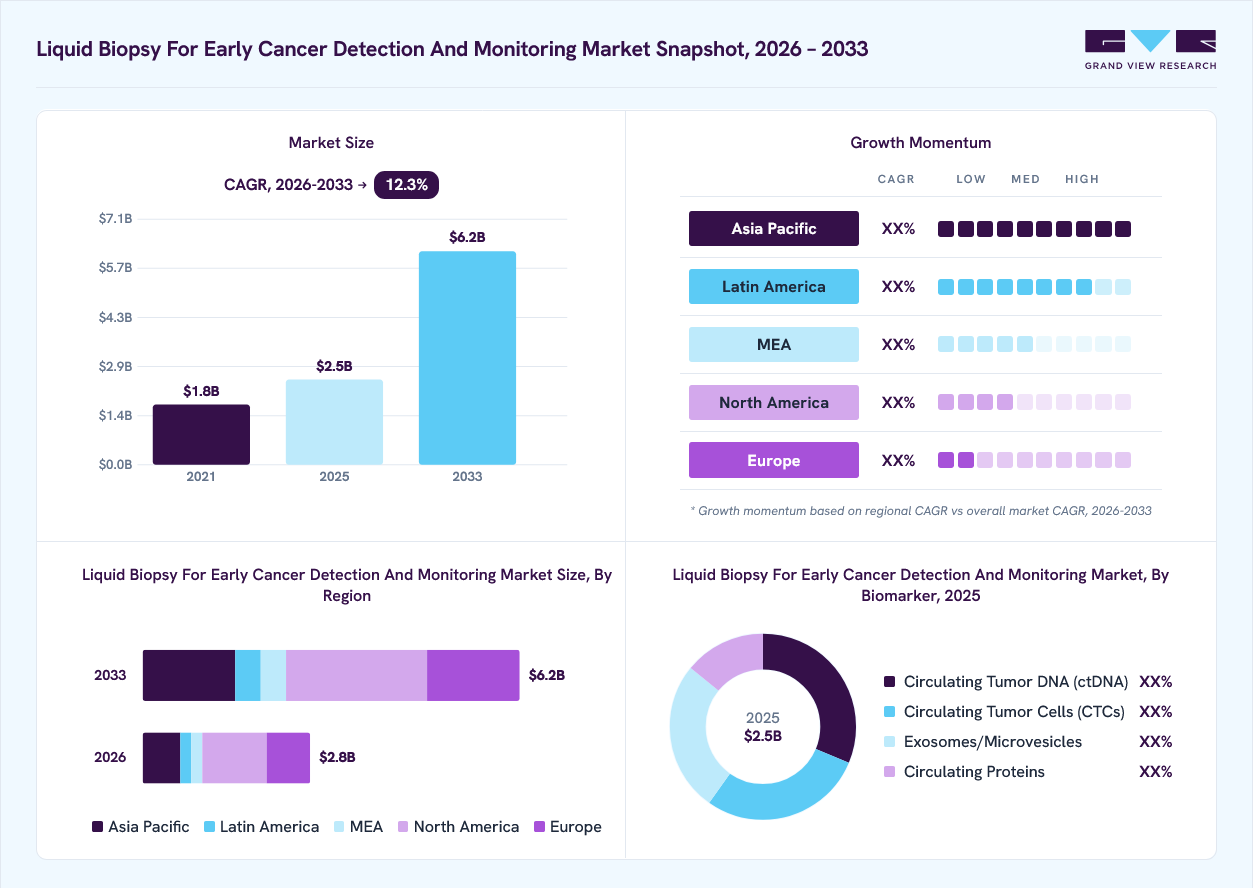 Source: Grand View Research, IR Documents, Primary Interviews, Paid DatabasesTo learn more about this report,
 Download Free Sample Report
Key Market Trends & Insights
- By biomarker: Circulating tumor DNA (ctDNA) segment led the market with the largest revenue share of 31.3% in 2025.
- By technology: NGS (Next-Generation Sequencing) segment led the market with the largest revenue share of 23.9% in 2025.
- By cancer type: Lung cancer segment led the market with the largest revenue share of 22.8% in 2025.
- By end use: Hospital segment led the market with the largest revenue share of 42.5% in 2025.
Regional Highlights
- Largest regional market: North America (38.6% revenue share, 2025)
- Fastest-growing regional market: Asia Pacific (highest CAGR, 2026-2033)
- By country: The U.S. held the largest market share in 2025.
Market Size & Forecast
- Market size in 2025: USD 2.5 Billion
- Estimated market size in 2026: USD 2.8 Billion
- Projected market size by 2033: USD 6.2 Billion
- CAGR (2026-2033): 12.3%
Prism AI by Grand View Research Free to tryAsk a question about the liquid biopsy for early cancer detection and monitoring marketTry asking✓Every figure cited from GVR research Prefer the report? Download free sample →
Technologies within this segment include platforms for analyzing circulating tumor DNA (ctDNA), circulating tumor cells (CTCs), and other biomarkers from body fluids, offering a less invasive alternative to tissue biopsies. These solutions are increasingly integrated into oncology practices for early detection, therapy selection, and disease monitoring across clinical and research environments.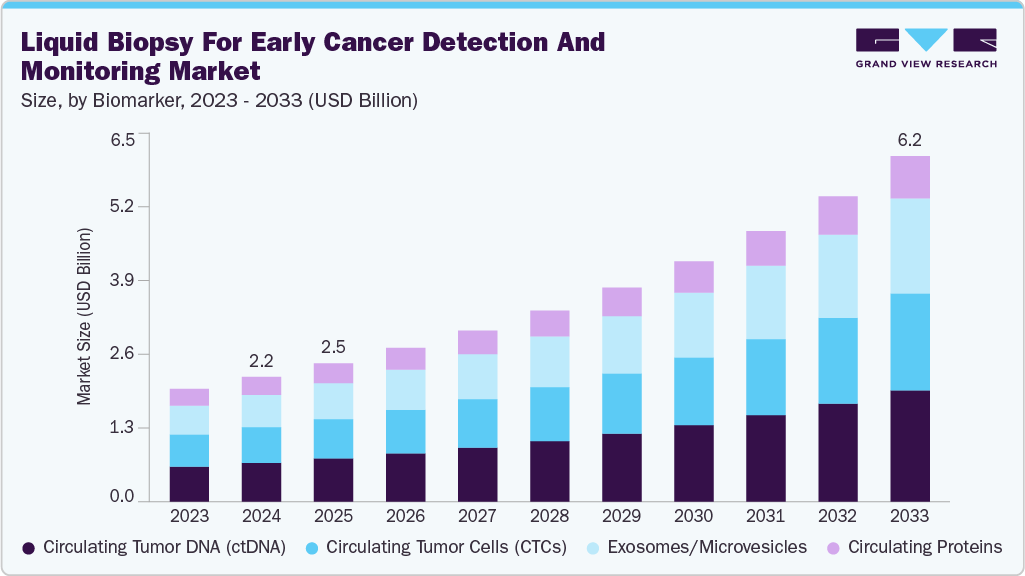 To learn more about this report, Download Free Sample Report
The adoption of liquid biopsy is supported by rising cancer incidence and the growing need for non-invasive methods that allow frequent monitoring with minimal discomfort to patients. The ability to detect tumor-related genetic changes in real time provides oncologists with valuable information for treatment decisions and early intervention strategies.
Moreover, the adoption of liquid biopsy is increasing as the field moves toward precision oncology, where genomic and molecular insights inform treatment decisions and long-term care. High-sensitivity techniques supported by next-generation sequencing, digital PCR workflows, and advancing bioinformatics tools help detect low-frequency variants, minimal residual disease, and emerging resistance signals. Additionally, efforts in multi-cancer early detection and assay panels that analyze multiple biomarkers such as DNA, RNA fragments, epigenetic signatures, and extracellular vesicle content are broadening clinical applications from late-stage management to risk assessment and population-level screening.
Furthermore, the market is shaped by evidence-generation programs, regulatory support, and payer assessments that focus on clinical value and cost-effectiveness compared to traditional tissue-based methods. Challenges still exist, such as variations in assay performance across platforms, a lack of standardization in sample collection and analysis, and difficulties in interpreting weak signals in early disease stages. Limited reimbursement in some regions also impacts accessibility. Ongoing clinical trials, real-world studies, and data-sharing initiatives are expected to bring clarity, improve guidelines, and promote wider adoption of liquid biopsy for early detection and continuous cancer monitoring.
 To learn more about this report, Download Free Sample Report
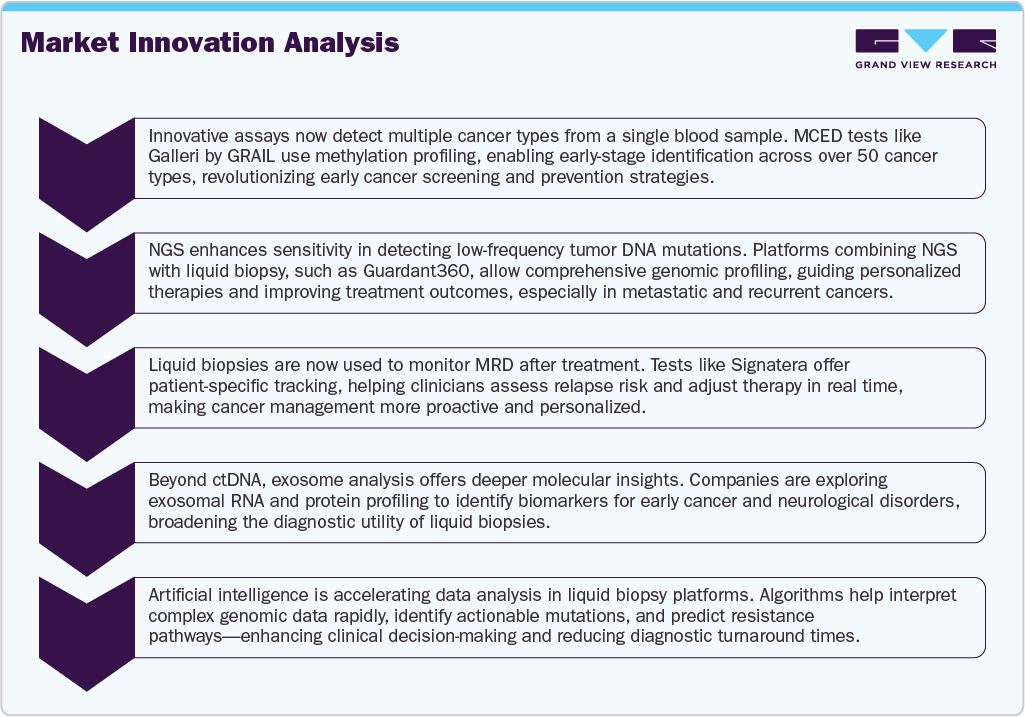
Innovation in liquid biopsy for early detection and monitoring emphasizes accuracy, accessibility, and clinical applicability. Multi-omics integration, AI-driven interpretation, and advanced sequencing transform detection and tracking processes, enabling higher sensitivity for early-stage disease and more personalized treatment planning.
Developments such as multi-cancer detection assays and near-patient platforms aim to extend liquid biopsies outside centralized facilities, enhancing convenience and supporting large-scale screening initiatives. Progress in minimal residual disease detection and continuous monitoring is expected to drive broader clinical uptake and strengthen liquid biopsy’s role in oncology care.
Market Dynamics
The liquid biopsy for early cancer detection and monitoring market is expanding rapidly due to increasing cancer incidence, growing demand for minimally invasive diagnostic methods, and advancements in next-generation sequencing (NGS) and circulating tumor DNA (ctDNA) technologies. Rising adoption of precision oncology, companion diagnostics, and biomarker-based monitoring is improving early cancer detection and treatment decisions. However, high testing costs, reimbursement limitations, and clinical validation challenges restrain market growth. Increasing investments in multi-cancer early detection (MCED) tests, AI-enabled genomic analysis, and expanding clinical applications are expected to create significant long-term growth opportunities.
The increasing incidence of cancer worldwide is a major driver of the liquid biopsy for early cancer detection and monitoring market. Early diagnosis significantly improves treatment outcomes and survival rates, prompting healthcare systems to adopt minimally invasive diagnostic technologies capable of detecting cancer at earlier stages. Liquid biopsy technologies, including circulating tumor DNA (ctDNA), circulating tumor cells (CTCs), cell-free DNA (cfDNA), and exosome analysis, enable real-time tumor profiling and disease monitoring through a simple blood sample, reducing the need for invasive tissue biopsies. Growing adoption of precision oncology and personalized treatment strategies is further accelerating demand for liquid biopsy-based diagnostics.
A recent example is the Global Cancer Statistics 2024 published by the American Cancer Society (ACS), which estimated approximately 2.0 million new cancer cases and over 611,000 cancer deaths in the United States during 2024. Additionally, the World Health Organization (WHO) estimated that around 20 million new cancer cases and 9.7 million cancer deaths occurred globally in 2022, with the global cancer burden expected to continue increasing over the coming decades. The growing patient population is accelerating investments in non-invasive early cancer detection and monitoring technologies.
Despite significant technological advances, widespread adoption of liquid biopsy remains constrained by limited clinical validation across multiple cancer types and inconsistent reimbursement policies. While liquid biopsy has demonstrated strong clinical utility in several advanced cancers, its application for population-wide early cancer screening requires extensive prospective clinical evidence to establish sensitivity, specificity, and clinical utility. Variability in biomarker performance, differences in assay platforms, and challenges in detecting very low levels of circulating tumor DNA during early-stage disease continue to limit routine clinical implementation.
Reimbursement also remains a major barrier. Many liquid biopsy tests are reimbursed only for specific clinical indications, particularly in advanced or metastatic cancers, while coverage for multi-cancer early detection (MCED) screening remains limited. In 2024, the U.S. Centers for Medicare & Medicaid Services (CMS) continued reimbursement for selected FDA-approved companion diagnostic liquid biopsy tests but broader reimbursement for asymptomatic population screening has yet to be established. These reimbursement gaps, combined with the high cost of NGS-based assays, continue to restrict adoption across many healthcare systems.
The rapid development of multi-cancer early detection (MCED) tests presents one of the most significant growth opportunities for the liquid biopsy market. MCED technologies utilize circulating tumor DNA methylation patterns, genomic alterations, and other blood-based biomarkers to detect multiple cancers before symptoms appear. Growing investments from biotechnology companies, healthcare providers, and governments are accelerating large-scale clinical validation studies aimed at integrating liquid biopsy into routine cancer screening programs. As precision oncology becomes a standard of care, demand for minimally invasive tests supporting early detection, treatment selection, recurrence monitoring, and minimal residual disease (MRD) assessment is expected to rise substantially.
A notable example is the NHS England rollout of the NHS-Galleri trial, one of the world's largest clinical evaluations of blood-based MCED testing. As of 2024, the study had enrolled more than 140,000 participants to evaluate whether the Galleri blood test can detect multiple cancers before symptoms develop. In parallel, the National Cancer Institute (NCI) continues to support the Cancer Screening Research Network (CSRN) to accelerate evaluation of emerging cancer screening technologies, including liquid biopsy. These initiatives are expected to strengthen clinical evidence and create substantial long-term opportunities for liquid biopsy adoption.
Market Concentration & Characteristics
Innovation in liquid biopsy is high, driven by the demand for non-invasive, highly sensitive, and clinically reliable cancer detection tools. Advancements such as multi-omics integration, AI-driven data interpretation, and next-generation sequencing are improving diagnostic accuracy and utility. The development of multi-cancer early detection (MCED) tests and real-time monitoring solutions reflects the market’s focus on personalized oncology care. These innovations aim to reduce reliance on invasive tissue biopsies and provide actionable insights for early interventions.
Mergers and acquisitions are active as major diagnostics and biotech firms acquire specialized liquid biopsy developers to expand their oncology portfolios. Strategic collaborations between technology providers and research organizations are also common, focusing on enhancing assay performance and accelerating commercialization. Partnerships for co-development of tests and access to bioinformatics platforms further strengthen product capabilities and market reach.
 To learn more about this report, Download Free Sample Report
Regulatory frameworks significantly influence market growth, particularly in regions like the U.S. and Europe, where agencies such as the FDA and EMA set strict validation and approval requirements for liquid biopsy assays. Compliance with quality and clinical utility standards is essential for securing reimbursement and driving adoption. Evolving regulations around precision medicine and early detection initiatives are creating opportunities for liquid biopsy integration into cancer screening programs.
Product development is robust, with companies introducing assays capable of detecting multiple biomarkers, including ctDNA, CTCs, and epigenetic markers. There is a trend toward creating comprehensive test panels and improving assay sensitivity for early-stage cancers and minimal residual disease detection. Additionally, developers are focusing on enhancing turnaround times and integrating bioinformatics tools for real-time reporting to support clinical decision-making.
Regional expansion efforts are accelerating, particularly in Asia-Pacific and Latin America, where rising cancer incidence and improving healthcare infrastructure are creating new opportunities. Companies are forming partnerships with local diagnostic providers and investing in affordable liquid biopsy solutions for broader accessibility. While North America and Europe remain dominant due to advanced healthcare systems, emerging markets are expected to contribute significantly to volume growth in the coming years.
Biomarker Insights
Based on biomarker, the circulating tumor DNA (ctDNA) segment led the market with the largest revenue share of 31.3% in 2025, driven by its high sensitivity and specificity in detecting cancer-related genetic alterations through minimally invasive blood tests. This biomarker is widely used for early detection, therapy selection, and monitoring minimal residual disease, reducing dependence on invasive tissue biopsies and increasing patient compliance. In July 2024, Guardant Health received FDA approval for its Shield blood test, a ctDNA-based screening tool for colorectal cancer in adults aged 45 and older at average risk. This milestone marks the first FDA-approved blood test for colorectal cancer screening using ctDNA technology, emphasizing its clinical value in early detection and routine cancer screening efforts. Such advancements are expected to promote broader adoption, reinforcing ctDNA’s leading role in the global liquid biopsy market for early cancer detection and monitoring.
The exosomes and microvesicles segment is expected to grow at the fastest CAGR during the forecast period, driven by their potential to provide comprehensive molecular information through analysis of RNA, DNA, and proteins enclosed within extracellular vesicles. These biomarkers are gaining attention for their role in early cancer detection, prognosis, and therapeutic response monitoring, as they reflect the dynamic molecular status of tumors in real time. Advances in isolation and characterization techniques, including ultracentrifugation and microfluidics, have improved the sensitivity and reproducibility of exosome-based assays. The growing interest in liquid biopsy solutions for multi-cancer screening and monitoring drug resistance further increases demand for this biomarker. Increasing research investments and integration with next-generation sequencing platforms are expected to enhance their clinical adoption, making exosomes and microvesicles a key growth driver in the global liquid biopsy market for early cancer detection and monitoring.
Technology Insights
Based on technology, the NGS (Next-Generation Sequencing) segment led the market with the largest revenue share of 23.9% in 2025, driven by its unparalleled capability for comprehensive genomic profiling with high accuracy and scalability. NGS enables simultaneous detection of multiple genetic alterations in circulating tumor DNA, making it the go‑to choice for multi-gene panels, personalized oncology, and treatment monitoring. Its high sensitivity allows detection of low-frequency variants, which is critical in early cancer detection and tracking minimal residual disease. A significant milestone occurred in September 2024, when Foundation Medicine’s FoundationOne Liquid CDx-an NGS-based liquid biopsy test-received expanded FDA approval as a companion diagnostic for identifying BRCA1/2 and ATM mutations in metastatic castration‑resistant prostate cancer patients eligible for Lynparza combination therapy. This approval reinforces NGS-based liquid biopsy as a clinically validated tool for guiding targeted therapy across multiple advanced cancers. Continued advances in cloud-based bioinformatics, automation, and integration with AI-driven decision support are further enhancing the adoption and accessibility of NGS within the global liquid biopsy for early cancer detection and monitoring market.
The microarray segment is expected to experience significant growth during the forecast period, driven by its ability to analyze multiple biomarkers simultaneously with high throughput and accuracy. This technology allows for efficient profiling of genetic alterations, epigenetic markers, and expression patterns in circulating tumor DNA, RNA, and other liquid biopsy components, making it valuable for early cancer detection and comprehensive monitoring. The increasing demand for multiplex testing in precision oncology and the need for cost-effective solutions for large-scale population screening are key factors supporting microarray adoption. Integration with advanced bioinformatics and miniaturized platforms enhances turnaround time and reduces complexity, making the technology more accessible for clinical use. These factors collectively position microarray technology as a key contributor to the global liquid biopsy market for early cancer detection and monitoring.
Cancer Insights
Based on cancer, the lung cancer segment led the market with the largest revenue share of 22.8% in 2025, driven by its high global incidence and mortality, which makes early detection and treatment critical. Liquid biopsy allows non-invasive and repeatable sampling-ideal for detecting actionable mutations like EGFR, KRAS, and ALK via circulating tumor DNA (ctDNA)-enhancing personalized treatment decisions and real‑time disease monitoring. A notable milestone occurred in November 2024, when Foundation Medicine’s FoundationOne Liquid CDx, an NGS‑based liquid biopsy test, received FDA approval as a companion diagnostic for identifying MET exon 14 skipping alterations in patients with metastatic non‑small cell lung cancer who are eligible for TEPMETKO (tepotinib). This is the first FDA-approved liquid biopsy companion diagnostic for this mutation, expanding precision oncology capabilities in lung cancer care and reinforcing the utility of liquid biopsy in guiding targeted treatments.
As such, regulatory advancements and technology improvements continue, lung cancer remains the most significant cancer segment within the global liquid biopsy market for early cancer detection and monitoring, supported by increasing integration into clinical guidelines and treatment pathways. The breast cancer segment is projected to grow at the fastest rate over the forecast period, driven by rising awareness and a focus on early detection, as well as the limitations of traditional screening methods like mammography in certain patient groups. Liquid biopsy provides a minimally invasive alternative that can detect circulating tumor DNA and other biomarkers, enabling timely diagnosis, recurrence monitoring, and treatment response assessment. Technological advances in multi-gene panel testing and integration with advanced bioinformatics platforms improve the accuracy and predictive ability of liquid biopsies in breast cancer care. Growing clinical trials evaluating liquid biopsy for early-stage detection and minimal residual disease further broaden its applications. These trends and increasing adoption in oncology practices position breast cancer as a high-growth segment within the global liquid biopsy market for early cancer detection and monitoring.
End Use Insights
Based on end use, the hospital segment led the market with the largest revenue share of 42.5% in 2025. Hospitals dominated the market in 2024, driven by their role as primary centers for cancer diagnosis, treatment planning, and ongoing patient monitoring. The growing emphasis on precision medicine and early detection programs has led hospitals to adopt liquid biopsy as a complementary or alternative tool to traditional tissue biopsies, reducing patient discomfort and enabling faster turnaround for actionable results. Key factors contributing to this dominance include the ability of liquid biopsy to monitor treatment response, detect minimal residual disease, and identify emerging resistance mutations without repeated invasive procedures. Integration with advanced sequencing technologies and bioinformatics platforms has further strengthened its clinical utility. These advantages ensure that hospitals remain the leading end user segment in the global liquid biopsy for early cancer detection and monitoring market.
 To learn more about this report, Download Free Sample Report
The diagnostic laboratories segment is expected to grow at the fastest CAGR over the forecast period, driven by rising demand for specialized molecular testing and the scalability of liquid biopsy solutions in centralized settings. These laboratories offer high-throughput testing and advanced bioinformatics capabilities, enabling accurate detection of cancer biomarkers such as circulating tumor DNA (ctDNA), exosomes, and microRNAs. Their capacity to manage large sample volumes while providing rapid, actionable results positions them as a critical part of early cancer detection and continuous monitoring strategies.
Collaborations between diagnostic laboratories, hospitals, and oncology centers, along with the establishment of regional and national reference facilities, are further supporting adoption. Technological progress in next-generation sequencing (NGS), digital PCR, and automation is improving turnaround times and cost-efficiency, while remote sample collection and courier networks are enhancing patients' accessibility. These factors collectively make diagnostic laboratories a significant growth driver in the global liquid biopsy for early cancer detection and monitoring market.
Regional Insights
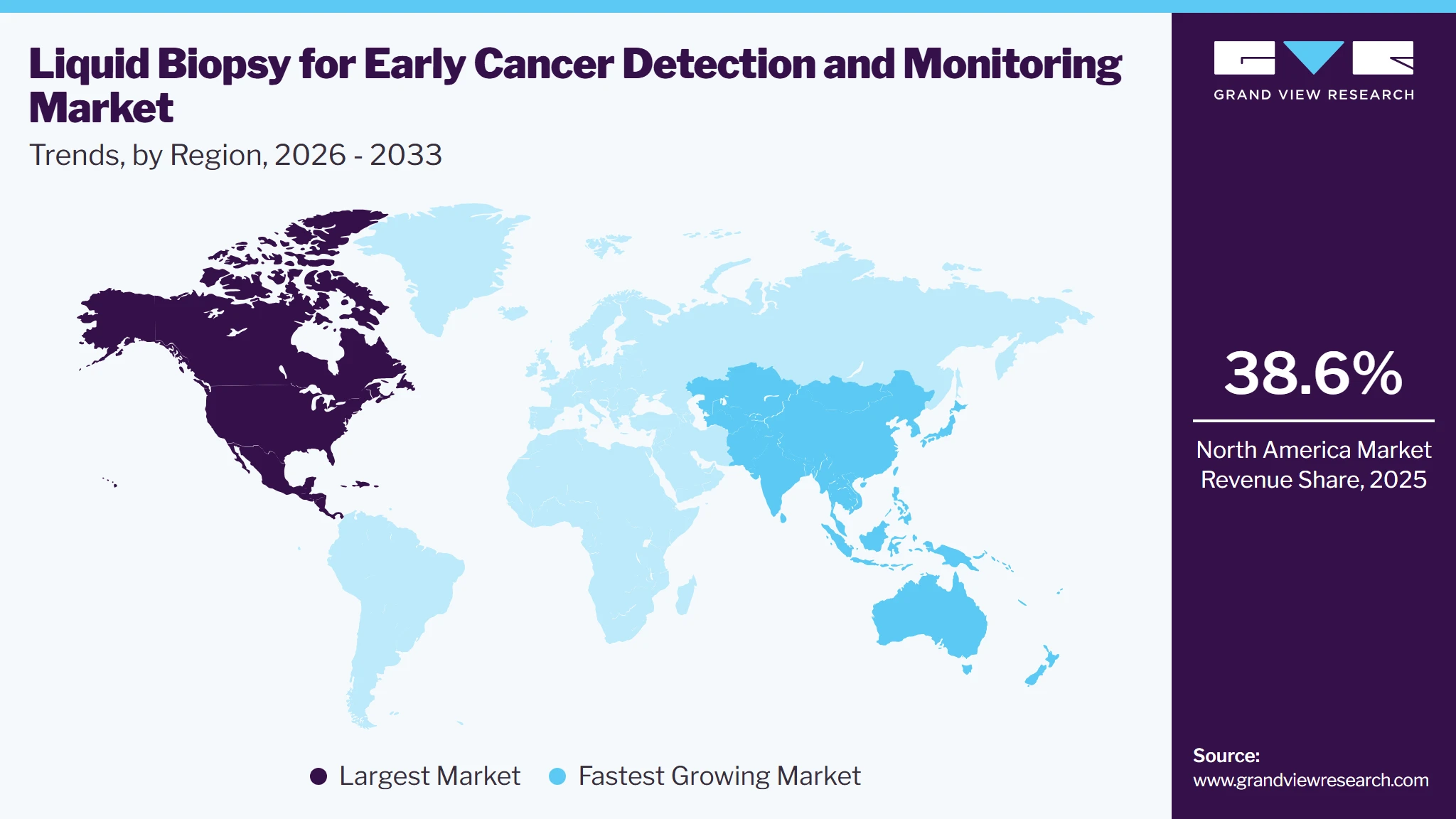
North America liquid biopsy for early cancer detection and monitoring market accounted for the largest revenue share of 38.6% in 2025. North America dominates the liquid biopsy for early cancer detection and monitoring market due to advanced healthcare infrastructure, strong adoption of precision oncology, and significant investments in innovative diagnostic technologies. The region benefits from extensive clinical trials, favorable regulatory frameworks, and the integration of liquid biopsy into cancer care guidelines. Technological progress in next-generation sequencing and bioinformatics, combined with growing initiatives for early cancer screening, drives uptake across hospitals, diagnostic centers, and research institutions, reinforcing North America’s leading position in clinical adoption and innovation.
 To learn more about this report, Download Free Sample Report
In August 2024, the U.S. Food and Drug Administration approved Guardant Health’s Shield test as the first blood-based colorectal cancer screening option for average-risk adults, along with Medicare coverage eligibility. This regulatory milestone highlights the region’s proactive approach to expanding access to non-invasive cancer screening methods. It demonstrates how policy support accelerates the adoption of liquid biopsy solutions in early detection programs.
U.S. Liquid Biopsy for Early Cancer Detection and Monitoring Market Trends
The liquid biopsy for early cancer detection and monitoring market, U.S. held the largest share in the North America region in 2025. The U.S. leads the North American market, driven by strong regulatory support, growing precision medicine programs, and increasing focus on early cancer screening. High cancer incidence rates and the demand for non-invasive testing have accelerated adoption across hospitals, oncology centers, and research facilities. Expanding use of next-generation sequencing, AI-powered data analysis, and real-time monitoring platforms is boosting market growth. In addition, favorable reimbursement frameworks and national initiatives to improve early detection reinforce the U.S. position as a key market for liquid biopsy innovation.
Europe Liquid Biopsy for Early Cancer Detection and Monitoring Market Trends
Europe is witnessing steady growth in the liquid biopsy for early cancer detection and monitoring market, driven by rising cancer incidence and growing emphasis on personalized treatment strategies. Adoption is increasing as healthcare systems prioritize non-invasive diagnostic solutions that enable early detection and continuous disease monitoring. Countries such as Germany, the UK, and France are leading the market with substantial investments in precision oncology and the integration of liquid biopsy into clinical workflows. In addition, expanding research programs, supportive government initiatives, and improvements in bioinformatics infrastructure are enhancing accessibility and strengthening regional adoption.
The UK liquid biopsy for early cancer detection and monitoring market is growing steadily, supported by increasing focus on early cancer diagnosis and national screening initiatives. Government programs promoting precision medicine and research funding are accelerating adoption across hospitals, oncology centers, and diagnostic laboratories. Demand for non-invasive solutions is rising as clinicians seek alternatives to tissue biopsies for greater patient comfort and faster turnaround times. Advancements in bioinformatics and the integration of liquid biopsy into clinical trials are positioning the UK as an essential hub for innovation in this field. Notably, in May 2025, NHS England became the first health service in the world to adopt a “blood-test-first” liquid biopsy policy for lung and breast cancer, enabling ctDNA testing before tissue biopsy and fast-tracking targeted therapy-pilot data showed patients received treatment up to 16 days earlier with an estimated annual NHS cost savings of approximately USD 14.8 million.
The Germany liquid biopsy for early cancer detection and monitoring market shows strong growth in the liquid biopsy for early cancer detection and monitoring market, supported by its advanced healthcare system and growing emphasis on precision oncology. Adoption is driven by national initiatives promoting early cancer diagnosis and integrating molecular testing into standard care. Demand for non-invasive diagnostic tools is increasing across hospitals, research institutions, and specialized oncology centers as clinicians seek faster and safer alternatives to tissue biopsy. Innovation in multi-cancer detection panels and real-time monitoring platforms further strengthens adoption across clinical practice.
Asia Pacific Liquid Biopsy for Early Cancer Detection and Monitoring Market
Asia Pacific is the fastest-growing region in the market, driven by increasing cancer awareness, expanding healthcare infrastructure, and rising adoption of precision medicine. Countries like China, India, and Japan invest heavily in early detection programs and advanced diagnostics to improve cancer outcomes. The demand for non-invasive, cost-effective solutions continues to grow, especially in urban centers where public screening programs are expanding. Technological innovations, government health initiatives, and global collaborations are increasing the adoption of liquid biopsy across the region. In June 2025, BioLink Therapeutics announced India’s first high-specificity point-of-care liquid biopsy platform for rapid screening of breast, colorectal, lung, and prostate cancers-a non-invasive 15-minute test validated on over 5,000 patient samples and designed for use in primary health centers and urban clinics-marking a major step toward accessible precision oncology in underserved areas, reinforcing Asia Pacific’s strong growth in the liquid biopsy for early cancer detection and monitoring market.
The Japan liquid biopsy for early cancer detection and monitoring market shows steady and gradual growth in the liquid biopsy for early cancer detection and monitoring market, supported by an aging population and increasing demand for accurate, non-invasive diagnostics. The country’s well-established healthcare system and strong biotechnology sector are driving the adoption of liquid biopsy in clinical and research settings. Clinicians in oncology centers and diagnostic laboratories are increasingly favoring faster, less invasive alternatives to tissue biopsy, while efforts to develop portable and high-sensitivity platforms are gaining traction.
In July 2023, Japan’s Ministry of Health, Labour and Welfare (MHLW) granted national reimbursement coverage for Guardant Health’s Guardant360 CDx, a ctDNA-based companion diagnostic used in metastatic non‑small cell lung cancer and other advanced solid tumors. This marks a key milestone toward integrating liquid biopsy into standard cancer care.
The China liquid biopsy for early cancer detection and monitoring market represents a significant growth opportunity in the liquid biopsy for early cancer detection and monitoring market, driven by the country’s growing cancer burden, large population base, and expanding healthcare infrastructure. Government-led initiatives focused on precision medicine and early cancer diagnosis are accelerating the adoption of liquid biopsy technologies. Increased investments in genomic research and the rise of domestic diagnostic companies are fostering innovation in ctDNA and multi-cancer detection platforms. The demand for cost-effective, non-invasive solutions creates a competitive landscape that encourages local development and international partnerships, strengthening China’s role as a key growth market in this segment.
Latin America Liquid Biopsy for Early Cancer Detection And Monitoring Market
Latin America is seeing steady growth in liquid biopsy for early cancer detection and monitoring, supported by efforts to strengthen cancer diagnostics and broaden access to new technologies. Brazil accounts for the largest share, and Argentina is growing significantly, reflecting initiatives to upgrade oncology services and adopt minimally invasive testing approaches. Higher cancer burden, expanding screening awareness, and gradual movement toward precision oncology influence use across the region.
The Brazil liquid biopsy for early cancer detection and monitoring market is expanding as demand for non-invasive diagnostic options rises alongside the country’s growing cancer burden. National initiatives promoting early detection and precision medicine support adoption across oncology centers and diagnostic laboratories. Investments in molecular diagnostics infrastructure and the integration of liquid biopsy into research programs are driving clinical use. Growing awareness of screening and the need for cost-effective solutions in public and private healthcare settings reinforces Brazil’s position as a key market within Latin America.
Middle East And Africa Liquid Biopsy for Early Cancer Detection And Monitoring Market
The Middle East and Africa region shows emerging growth in the liquid biopsy for early cancer detection and monitoring market, driven by increasing cancer awareness, broader healthcare access, and investments in advanced diagnostics. Countries such as the UAE, Saudi Arabia, and South Africa are incorporating liquid biopsy into oncology services as part of national precision medicine strategies. Although infrastructure and cost challenges persist in several areas, demand for accurate, non-invasive diagnostic tools is rising. Research partnerships, pilot programs, and expanding cancer screening initiatives are expected to improve accessibility and support adoption across key markets.
Key Liquid Biopsy for Early Cancer Detection And Monitoring Company Insights
Key players in the market are adopting strategies to strengthen their market position. These efforts focus on expanding access to liquid biopsy tests, improving early detection capabilities through advanced biomarker analysis, and enhancing clinical utility with technologies such as next-generation sequencing and AI-driven platforms. Companies are also prioritizing collaborations, regulatory approvals, and decentralized testing models to remain competitive in the market.
Key Liquid Biopsy For Early Cancer Detection And Monitoring Companies:
The following key companies have been profiled for this study on the liquid biopsy for early cancer detection and monitoring market.
-
GRAIL, Inc.
-
Exact Sciences Corporation
-
AnchorDx
-
Burning Rock Biotech Limited
-
GENECAST
-
Guardant Health
-
Myriad Genetics, Inc.
-
Elypta AB
-
Lucence Health Inc.
-
Freenome Holdings, Inc.
-
Oncimmune
Competitive Benchmarking
Category
Operating Strategies
Competitive Edge
Weakness
Well-Established Players (Guardant Health, GRAIL, Roche Diagnostics, Illumina, Thermo Fisher Scientific, QIAGEN, Exact Sciences)
- Focus on expanding comprehensive liquid biopsy portfolios through next-generation sequencing (NGS), circulating tumor DNA (ctDNA) assays, methylation-based multi-cancer early detection (MCED) tests, and AI-enabled bioinformatics platforms. Emphasize collaborations with hospitals, cancer centers, diagnostic laboratories, pharmaceutical companies, and research institutes while investing in companion diagnostics, clinical validation studies, regulatory approvals, and global commercialization through strategic partnerships, acquisitions, and continuous product innovation.
- Strong global commercial presence, established oncology diagnostic portfolios, extensive regulatory expertise, advanced genomic sequencing capabilities, robust bioinformatics platforms, and significant R&D investments. Integrated solutions comprising sequencing instruments, assay kits, reagents, software, and data analytics enable high diagnostic accuracy, efficient workflow integration, and widespread adoption across precision oncology and cancer monitoring applications.
- High R&D expenditure, extensive clinical validation requirements, increasing regulatory compliance costs, reimbursement uncertainties for emerging screening applications, and dependence on advanced laboratory infrastructure. Large organizations may also face longer commercialization timelines, complex regulatory pathways, and continuous investment requirements to maintain technological leadership.
Emerging & Regional Players (Freenome, Natera, Burning Rock Biotech, Lucence, Singlera Genomics, regional molecular diagnostics companies)
- Focus on innovative liquid biopsy technologies, AI-driven biomarker discovery, cost-effective genomic testing, methylation assays, minimal residual disease (MRD) monitoring, and multi-cancer early detection solutions. Emphasize regional expansion, collaborations with academic institutions, cancer hospitals, pharmaceutical companies, and clinical research organizations while strengthening localized manufacturing, precision oncology capabilities, and personalized cancer diagnostics.
- High innovation capability, rapid assay development, competitive pricing, strong specialization in oncology biomarkers, and agility in adopting emerging genomic technologies. Advanced AI-based analytics, customized testing solutions, and faster commercialization of novel liquid biopsy assays enable rapid penetration into precision oncology and decentralized cancer diagnostics markets.
- Limited global commercial presence, smaller laboratory infrastructure, lower brand recognition, dependence on external funding and strategic partnerships, and challenges in obtaining regulatory approvals across multiple countries. Emerging companies may also face scalability constraints, limited reimbursement coverage, and intense competition from multinational molecular diagnostics companies with broader genomic testing portfolios and stronger global distribution networks.
Recent Developments
-
In June 2025, Abu Dhabi-based M42, in collaboration with AstraZeneca and SOPHiA GENETICS, launched a liquid biopsy initiative in the UAE that integrates the MSK-ACCESS assay into the national testing infrastructure. This initiative, targeting cancers such as lung, breast, and colorectal, strengthens adoption within the liquid biopsy for early cancer detection and monitoring market by expanding molecular profiling capabilities and supporting precision oncology in the region.
-
In April 2025, SOPHiA GENETICS and AstraZeneca expanded their collaboration to globally deploy the MSK-ACCESS ctDNA assay powered by SOPHiA’s DDM platform. This initiative, aimed at enabling access across 30 oncology centers and supporting decentralized cancer profiling, reinforces the growth of the liquid biopsy for early cancer detection and monitoring market by enhancing global availability of advanced molecular testing solutions.
-
In January 2025, Guardant Health received Medicare coverage for its Guardant Reveal liquid biopsy test, which is used to monitor disease recurrence in colorectal cancer patients following curative intent therapy. This reimbursement milestone supports wider adoption of surveillance testing and strengthens the growth of the liquid biopsy for early cancer detection and monitoring market by improving accessibility and integration into clinical practice.
Liquid Biopsy For Early Cancer Detection And Monitoring Market Report Scope
Report Attribute
Details
Market size in 2025
USD 2.5 billion
Estimated market size in 2026
USD 2.8 billion
Projected market size by 2033
USD 6.2 billion
Growth rate
CAGR of 12.3% from 2026 to 2033
Historical data
2021 - 2024
Forecast period
2026 - 2033
Quantitative units
Revenue in USD million/billion and CAGR from 2026 to 2033
Report coverage
Revenue forecast, company ranking, competitive landscape, growth factors, and trends
Segments covered
Biomarker, cancer, technology, end use, regional
Regional scope
North America; Europe; Asia Pacific; Latin America; MEA
Country scope
U.S.; Canada; Mexico; Germany; UK; France; Italy; Spain; Denmark; Sweden; Norway; Japan; China; India; South Korea; Australia; Thailand; Brazil; Argentina; South Africa; Saudi Arabia; UAE; Kuwait
Key companies profiled
GRAIL, Inc.; Exact Sciences Corporation; AnchorDx; Burning Rock Biotech Limited; GENECAST; Guardant Health; Myriad Genetics, Inc.; Elypta AB; Lucence Health Inc.; Freenome Holdings, Inc.; Oncimmune
Customization scope
Free report customization (equivalent up to 8 analysts' working days) with purchase. Addition or alteration to country, regional & segment scope.
Pricing and purchase options
Avail customized purchase options to meet your exact research needs. Explore purchase options
Global Liquid Biopsy For Early Cancer Detection And Monitoring Market Report Segmentation
This report forecasts revenue growth and provides an analysis of the latest trends in each of the sub-segments from 2021 to 2033. For this study, Grand View Research has segmented the global liquid biopsy for early cancer detection and monitoring market based on biomarker, technology, cancer, end use, and region:
-
Biomarker Outlook (USD Million; 2021 - 2033)
-
Circulating Tumor DNA (ctDNA)
-
Circulating Tumor Cells (CTCs)
-
Exosomes/Microvesicles
-
Circulating Proteins
-
-
Technology Outlook (USD Million; 2021 - 2033)
-
NGS (Next-Generation Sequencing)
-
PCR-based assays (Digital PCR, RT-PCR)
-
Microarray
-
Epigenomics / Methylation assays
-
Others
-
-
Cancer Outlook (USD Million; 2021 - 2033)
-
Lung Cancer
-
Breast Cancer
-
Colorectal Cancer
-
Prostate Cancer
-
Others
-
-
End Use Outlook (USD Million; 2021 - 2033)
-
Hospitals
-
Diagnostic Laboratories
-
Others
-
-
Regional Outlook (USD Million, 2021 - 2033)
-
North America
-
U.S.
-
Canada
-
Mexico
-
-
Europe
-
UK
-
Germany
-
France
-
Italy
-
Spain
-
Denmark
-
Sweden
-
Norway
-
-
Asia Pacific
-
Japan
-
China
-
India
-
Australia
-
South Korea
-
Thailand
-
-
Latin America
-
Brazil
-
Argentina
-
-
Middle East & Africa
-
South Africa
-
Saudi Arabia
-
UAE
-
Kuwait
-
-
Research Methodology
The liquid biopsy for early cancer detection and monitoring market figures in this report are based on a proven research process that combines executive interviews with secondary research from proprietary databases, company filings, and recognized regulatory and institutional sources. Market size is built through value-chain sizing - reconciling supply-side and demand-side estimates - and triangulated with bottom-up and top-down approaches. Every estimate passes multiple levels of expert validation before publication, with each liquid biopsy for early cancer detection and monitoring segment quantified using the revenue-capture definitions in the table below.
Segment Definition
Segment - Biomarker
Revenue capture definition
Circulating Tumor DNA (ctDNA)
Revenue generated from ctDNA-based liquid biopsy assays, consumables, sequencing services, and software used for early cancer detection, treatment selection, and disease monitoring.
Circulating Tumor Cells (CTCs)
Revenue generated from CTC isolation platforms, enrichment systems, detection assays, imaging technologies, and laboratory services supporting cancer diagnosis, prognosis, and therapeutic monitoring.
Exosomes/Microvesicles
Revenue generated from exosome and extracellular vesicle-based liquid biopsy assays, isolation kits, biomarker analysis platforms, and associated laboratory diagnostic services.
Circulating Proteins
Revenue generated from protein biomarker assays detecting circulating cancer-associated proteins for early diagnosis, disease monitoring, recurrence assessment, and companion diagnostic applications.
Segment - Technology
Revenue capture definition
NGS (Next-Generation Sequencing)
Revenue generated from NGS-based liquid biopsy platforms, sequencing reagents, bioinformatics software, and genomic testing services supporting comprehensive cancer biomarker analysis.
PCR-based Assays (Digital PCR, RT-PCR)
Revenue generated from PCR-based liquid biopsy assays, reagents, instruments, and testing services for highly sensitive detection of circulating cancer biomarkers.
Microarray
Revenue generated from microarray-based platforms, consumables, and analytical services used for multiplex genomic profiling and cancer biomarker identification in liquid biopsy applications.
Epigenomics / Methylation Assays
Revenue generated from methylation-based liquid biopsy tests, epigenomic analysis platforms, reagents, and software supporting multi-cancer early detection and disease monitoring.
Others
Revenue generated from emerging liquid biopsy technologies including nanotechnology, mass spectrometry, AI-enabled biomarker analysis, and novel molecular diagnostic platforms.
Segment - End Use
Revenue capture definition
Hospitals
Revenue generated from liquid biopsy testing performed in hospitals for cancer diagnosis, precision oncology, treatment monitoring, recurrence surveillance, and companion diagnostic applications.
Diagnostic Laboratories
Revenue generated from liquid biopsy assays conducted in independent and reference laboratories providing genomic testing, biomarker profiling, and molecular diagnostic services for oncology.
Others
Revenue generated from liquid biopsy testing in academic research institutes, cancer centers, pharmaceutical companies, contract research organizations, and clinical trial settings.
Segment - Cancer
Revenue capture definition
Lung Cancer
Revenue generated from liquid biopsy tests supporting early detection, mutation profiling, treatment selection, minimal residual disease assessment, and monitoring of lung cancer patients.
Breast Cancer
Revenue generated from liquid biopsy assays used for breast cancer screening, biomarker analysis, treatment monitoring, recurrence detection, and precision oncology applications.
Colorectal Cancer
Revenue generated from liquid biopsy diagnostics supporting colorectal cancer screening, molecular profiling, recurrence surveillance, and personalized treatment decision-making using blood-based biomarkers.
Prostate Cancer
Revenue generated from liquid biopsy tests detecting prostate cancer biomarkers for early diagnosis, treatment response evaluation, disease progression monitoring, and recurrence assessment.
Others
Revenue generated from liquid biopsy applications across pancreatic, ovarian, liver, gastric, melanoma, and other solid or hematologic malignancies requiring biomarker-based diagnostics.
Estimation Model
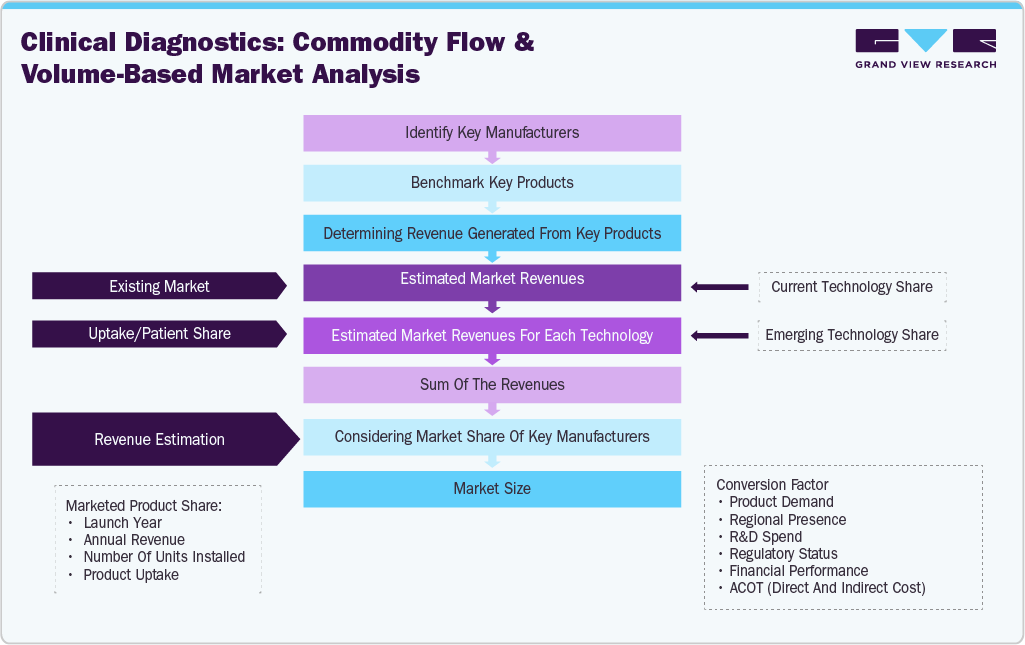
The Liquid Biopsy for Early Cancer Detection and Monitoring market is estimated using a combination of bottom-up and top-down forecasting methodologies. Market revenue is calculated by analyzing sales of liquid biopsy assays, sequencing platforms, PCR systems, consumables, reagents, bioinformatics software, and laboratory testing services across hospitals, diagnostic laboratories, cancer centers, and research institutions. Segment-level estimates are developed based on biomarker, technology, cancer type, end use, and geography. Secondary research from company annual reports, regulatory agencies, scientific publications, clinical trial databases, and government health organizations is validated through primary interviews with oncologists, molecular pathologists, laboratory directors, diagnostic manufacturers, researchers, and key opinion leaders. Historical testing volumes, cancer incidence, technology adoption, pricing trends, reimbursement policies, and regulatory approvals are incorporated through data triangulation to generate accurate market forecasts and segment-level estimates.
 To learn more about this report, Download Free Sample Report
Delivered Customizations
This report has been delivered with the following In-depth customizations
Client Request
Customization Delivered
Value Adds
Liquid Biopsy Competitive Landscape & Technology Assessment – ctDNA, NGS, Molecular Diagnostics & Precision Oncology
Assessed the global liquid biopsy ecosystem across diagnostic manufacturers, cancer centers, hospitals, diagnostic laboratories, academic research institutes, pharmaceutical companies, and contract research organizations. Evaluated leading providers of circulating tumor DNA (ctDNA), circulating tumor cell (CTC), exosome, and methylation-based liquid biopsy solutions, including next-generation sequencing (NGS), PCR-based assays, bioinformatics platforms, and companion diagnostics.
Enabled benchmarking of leading liquid biopsy providers, identified innovation opportunities in multi-cancer early detection (MCED), AI-enabled genomic analytics, advanced sequencing technologies, methylation-based diagnostics, and integrated bioinformatics platforms.
Liquid Biopsy Regulatory, Clinical Guidelines & Reimbursement Assessment
Analyzed evolving regulatory frameworks governing liquid biopsy technologies across major global markets, including IVD approvals, laboratory accreditation standards, clinical validation requirements, reimbursement policies, companion diagnostic regulations, and oncology clinical practice guidelines. Assessed the impact of regulatory developments, healthcare reimbursement reforms, and clinical evidence generation on commercialization, clinical adoption, and utilization of liquid biopsy technologies.
Supported regulatory risk assessment, identified commercialization and reimbursement challenges, evaluated compliance readiness among diagnostic manufacturers and clinical laboratories, and highlighted the impact of evolving regulatory standards, reimbursement frameworks, and clinical guidelines on market growth, technology adoption, and competitive positioning in precision oncology.
Frequently Asked Questions About This Report
Based on biomarker, the circulating tumor DNA (ctDNA) segment dominated the global market and accounted for the largest revenue share of 31.3% in 2025.
The global liquid biopsy for early cancer detection and monitoring market is expected to grow at a CAGR of 12.3% from 2026 to 2033, reaching USD 6.2 billion by 2033.
The global liquid biopsy for early cancer detection and monitoring market size was valued at USD 2.5 billion in 2025 and is estimated at USD 2.8 billion for 2026.
Some key players operating in the liquid biopsy for early cancer detection and monitoring market include GRAIL, Inc.; Exact Sciences Corporation; AnchorDx; Burning Rock Biotech Limited; GENECAST; Guardant Health; Myriad Genetics, Inc.; Elypta AB; Lucence Health Inc.; Freenome Holdings, Inc.; Oncimmune
The liquid biopsy for early cancer detection and monitoring market is driven by the growing adoption of liquid biopsy for early cancer detection and monitoring is a major driver in the molecular diagnostics market. Unlike traditional tissue biopsies, liquid biopsies offer a minimally invasive approach by analyzing circulating tumor DNA (ctDNA), exosomes, or circulating tumor cells (CTCs) from a simple blood sample.
Asia Pacific is the fastest-growing region in the market, driven by increasing cancer awareness, expanding healthcare infrastructure, and rising adoption of precision medicine.
Based on technology, the NGS (Next-Generation Sequencing) segment led the market with the largest revenue share of 23.9% in 2025, driven by its unparalleled capability for comprehensive genomic profiling with high accuracy and scalability.
Based on cancer type, the lung cancer segment led the market with the largest revenue share of 22.8% in 2025, driven by its high global incidence and mortality, which makes early detection and treatment critical. Liquid biopsy allows non-invasive and repeatable sampling-ideal for detecting actionable mutations like EGFR, KRAS, and ALK via circulating tumor DNA (ctDNA)-enhancing personalized treatment decisions and real‑time disease monitoring.
North America liquid biopsy for early cancer detection and monitoring market accounted for the largest revenue share of 38.6% in 2025 due to advanced healthcare infrastructure, strong adoption of precision oncology, and significant investments in innovative diagnostic technologies.
About the Author(s)
Clinical Diagnostics Research Team
Healthcare · Clinical DiagnosticsThis report was authored by the clinical diagnostics research team at Grand View Research - comprising two research analysts, one senior research analyst, and one industry expert - with specialized expertise in the clinical diagnostics segment of the healthcare industry. All findings are based on proprietary healthcare databases, executive interviews, and regulatory analysis, subject to internal peer review prior to publication.
Last Updated:
Speak to Analyst

Customize this report to your needs - add regions, segments, or data points, with 20% free customization.
Or view our licence options:


ISO 9001:2015 & 27001:2022 Certified
We are GDPR and CCPA compliant! Your transaction & personal information is safe and secure. For more details, please read our privacy policy.


