
- Home
- »
- Medical Devices
- »
-
Metal Implants And Medical Alloys Market Size Report, 2033GVR Report cover

Metal Implants And Medical Alloys Market (2026 - 2033)
Size, Share & Trends Analysis Report By Type (Titanium, Stainless Steel, Cobalt-Chromium), By Application (Orthopedic, Cardiovascular, Dental, Neurological), By End-use, By Region, And Segment Forecasts
Market Size, 2025
$19.7BMarket Estimate, 2026
$21.5BMarket Forecast, 2033
$40.3BCAGR, 2026–2033
9.4%Metal Implants And Medical Alloys Market Summary
The global metal implants and medical alloys market size was valued at USD 19.7 billion in 2025 and is projected to grow from USD 21.5 billion in 2026 to USD 40.3 billion by 2033, growing at a CAGR of 9.4% from 2026 to 2033. North America dominated the market, accounting for the largest global share of 48.7% in 2025. The market for metal implants and medical alloys is expanding due to the growing number of trauma cases and musculoskeletal disorders, and an aging population that requires long-term solutions for movement.
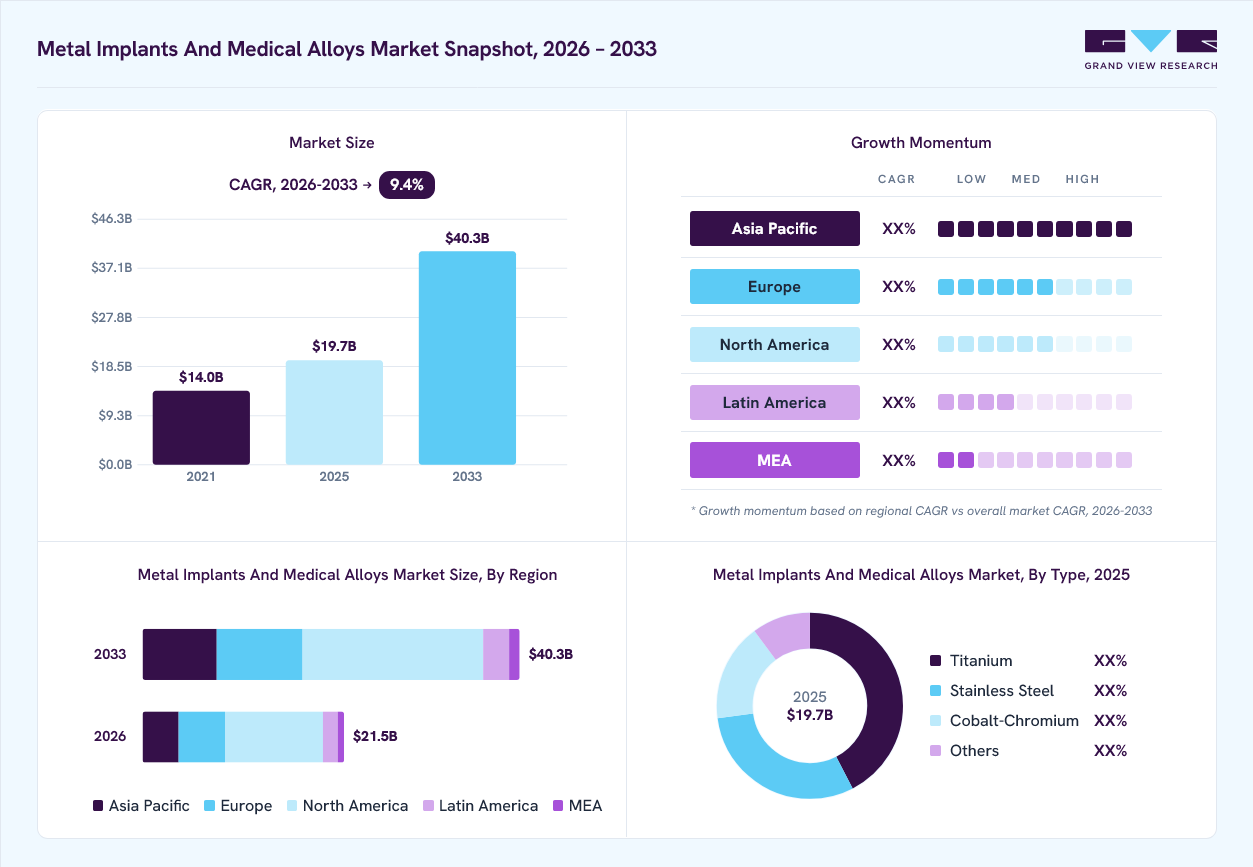 Source: Grand View Research, IR Documents, Primary Interviews, Paid DatabasesTo learn more about this report,
 Download Free Sample Report
Key Market Trends & Insights
- By type: Titanium segment led the market with the largest revenue share of 42.4% in 2025.
- By application: Orthopedic segment led the market with the largest share of 55.9% in 2025.
- By end-use: Hospital segment led the market with the largest revenue share of 76.3% in 2025.
Regional Highlights
- Largest regional market: North America (48.7% revenue share, 2025)
- By country: The U.S. held the largest share of North America in 2025.
Market Size & Forecast
- Market size in 2025: USD 19.7 Billion
- Estimated market size in 2026: USD 21.5 Billion
- Projected market size by 2033: USD 40.3 Billion
- CAGR (2026-2033): 9.4%
Prism AI by Grand View Research Free to tryAsk a question about the metal implants and medical alloys marketTry asking✓Every figure cited from GVR research Prefer the report? Download free sample →
The durability and biocompatibility of implants are being improved by developments in alloys, specifically titanium and cobalt-chromium, and the market is expanding more quickly due to the use of minimally invasive procedures and 3D-printed, patient-specific implants.Amnovis reported in September 2024 that more than 50,000 titanium 3D-printed medical implants have been delivered since 2021. This accomplishment has accelerated production and reduced costs for implants used in orthopedic, craniomaxillofacial, and spinal procedures. Metal implants are largely driven by the rising incidence of musculoskeletal disorders, fractures, and degenerative diseases, and the world's rapidly aging population. While younger populations are increasingly affected by sports injuries and traffic accidents, older patients are anticipated to experience joint degradation and fragility fractures.
 To learn more about this report, Download Free Sample Report
This growing and diverse patient base has steadily increased demand for dependable implant solutions that can restore mobility, lessen pain, and enhance general quality of life. In July 2022, according to the World Health Organization, approximately 1.71 billion people globally live with musculoskeletal conditions, which are the leading cause of disability worldwide. WHO’s initiatives, such as Rehabilitation 2030 and the Package of Interventions for Rehabilitation, aim to address the growing global rehabilitation needs associated with musculoskeletal conditions.
Advancing Orthopedic Implants Through Personalization, 3D Printing, and Next-Gen Metal Solutions
The market is growing rapidly due to the growing use of customized solutions and minimally invasive surgical techniques. To achieve a true anatomical fit, reduce the risk of surgical complications, and speed up recovery, surgeons increasingly use 3D-printed, patient-specific implants. In emerging markets, access to the latest surgical technologies is increasing, and the combination of efficiency and personalization influences the next stage of innovation and promotes wider acceptance. 3D Systems' VSP PEEK Cranial Implant, the first patient-specific 3D-printed cranial implant made of medical-grade PEEK, was approved by the FDA under 510(k) in April 2024. This milestone creates a scalable platform for customized cranial reconstruction that expanded into spine, trauma, and craniomaxillofacial implant applications in the larger metal and advanced biomaterials market.
Product
Company
Stage
Key Details
Persona Revision SoluTion Femur,
Zimmer Biomet
FDA 510(k) clearance in March2025
Designed for patients with metal allergies; uses a titanium alloy and special surface-hardening to reduce the release of allergenic metals.
Freedom Titan PCK Revision Knee System
Maxx Orthopedics, Inc.
FDA 510(k) clearance in September 2024
It is intended to enhance knee mechanics (balance, motion) using improved congruency and stability. It is part of their metal-component knee system.
Nitric Oxide-Generating Metallic Wires for Enhanced Metal Implants
In July 2024, a new method for enhancing metallic implants through localized nitric oxide (NO) generation was described in an article published in Communications Materials. Based on their strength and biocompatibility, metallic prostheses are used widely; however, implant-associated infections remain a significant problem. This study shows how common implant alloys can be converted into catalytic surfaces that actively produce NO with an effortless heat treatment, providing a novel antibacterial approach.
Study Highlights
-
Problem Addressed: Persistent biofilm-related infections that resist antibiotics and immune defenses.
-
Innovation: Calcination endows stainless steel and stellite wires with catalytic properties to generate NO from endogenous prodrugs.
-
Comparative Results:
-
Stellite wires produced 57% higher NO output than stainless steel.
-
Titanium and silver showed negligible activity.
-
-
Mechanism: Formation of oxide layers and increased surface roughness enhanced catalytic activity, particularly in stellite.
-
Clinical Value:
-
Continuous, drug-free antibacterial action.
-
Biocompatible, non-toxic, and safe for cell proliferation.
-
Potential to reduce implant failure, antibiotic use, and treatment costs.
-
FDA Research on Biological Responses to Metal Containing Devices
In June 2022, the FDA’s Center for Devices and Radiological Health (CDRH) highlighted critical gaps in understanding immune and inflammatory reactions to implanted metals such as titanium, cobalt chromium, and stainless steel. While these alloys are standard in prostheses, some patients experience adverse responses, prompting multiple FDA-led research initiatives.
Key Research Areas
-
Adverse Outcomes: Clarifying the scope and frequency of implant-related complications using real-world data.
-
Corrosion & Wear: Developing in vitro tests and thresholds for debris release.
-
Device Characteristics: Studying how alloy type, design, and implant site impact immune responses.
-
Immune Response Models: Advancing 3D culture and microfluidic models to predict hypersensitivity.
-
Standardized Sampling: Improving methods for analyzing corrosion/wear byproducts in tissues and fluids.
-
Diagnostics Optimization: Refining tests for metal sensitivity and aligning regulatory standards.
-
Biomarker Development: Identifying markers to predict or monitor adverse reactions for pre-implant screening.
Market Implication
These initiatives highlight a strict regulatory focus on alloy safety, device testing, and long-term outcomes. For manufacturers, this means increased scrutiny and opportunities to differentiate through next-gen biocompatible alloys, novel surface modifications, standardized testing protocols, and predictive diagnostics that enhance safety and regulatory compliance.
3D Printing Metal Implants in Orthopedic Surgery
3D printing, also known as additive manufacturing, is rapidly transforming orthopedic surgery by enabling the creation of patient-specific metal implants. Traditional implants often fail to fully match the anatomical and biomechanical needs of individual patients, leading to suboptimal outcomes. Additive manufacturing allows for the fabrication of complex, customized, and biocompatible implants, addressing limitations of conventional methods and improving surgical precision, implant integration, and overall patient outcomes.
In September 2023, an article in the Journal of Orthopaedic Translation examined the development, applications, and prospects of additive manufacturing (3D printing) for metal prostheses in orthopedics. Although they are frequently used for joint replacement, spinal fusion, fracture fixation, and the repair of bone tumor defects, traditional implants frequently fall behind individual patients' anatomical and biomechanical requirements. By enabling a way to fabricate intricate, personalized, and biocompatible implants for each patient, 3D printing technology provides an advanced method.
Key Highlights from the Review
 To learn more about this report, Download Free Sample Report
3D Printing of Metal Implants in Orthopedic Surgery: Methods, Materials, Applications, and Future Prospects
Category
Details
3D Printing Methods
Selective Laser Sintering (SLS), Selective Laser Melting (SLM), Electron Beam Melting (EBM), Laser Direct Metal Deposition (LMD); each varies in accuracy, cost, and material compatibility
Materials Used
Titanium alloys, Cobalt-Chromium, Stainless Steel, Nickel Titanium (NiTi); chosen for mechanical strength and biocompatibility
Clinical Applications
Orthopedic trauma (fracture fixation), Spinal fusion cages, Joint replacement (hip, knee, ankle), Bone tumor defect repair with patient-specific implants
Advantages
Personalized designs from CT/MRI imaging; Improved osseointegration and nutrient permeability; Reduced mechanical mismatch and stress shielding; Faster production, lower cost, high reproducibility
Limitations
Requires complex modeling software and CAD expertise; High standards for 3D printing metals; Evolving regulatory and legal frameworks; Post-processing steps (grinding, coating, oxidation) add time and complexity
Future Prospects
Integration with AI, 4D printing, and big data for advanced precision, intelligence, and personalization in orthopedics
Investment Trends in Orthopedics
Furthermore, investors within the orthopedic sector are demonstrating caution, leading to a deceleration in investment flow. However, current trends indicate a pivot in investor interest towards sectors characterized by innovation, specifically enabling technology and sports medicine. Based on data extracted from 282 orthopedic funding announcements from 2016 to present, a 5% increase in total funding post-COVID has been observed, with notable activity increased by the unique market conditions of 2021.
 To learn more about this report, Download Free Sample Report
While overall investment activity has decreased in the last two years, investments with disclosed funding amounts have seen a 10% growth post-pandemic, particularly towards later-stage companies and substantial investments to drive profitability.
Market Dynamics
The metal implants and medical alloys market is experiencing steady growth, driven by the increasing prevalence of orthopedic disorders, cardiovascular diseases, dental conditions, and trauma-related injuries that require implant-based treatments. Rising demand for joint replacement surgeries, spinal procedures, and dental implants, coupled with the growing aging population, is supporting the adoption of high-performance medical alloys such as titanium, stainless steel, and cobalt-chromium. Continuous advancements in biomaterials, additive manufacturing (3D printing), and surface modification technologies are further enhancing implant durability, biocompatibility, and patient outcomes, contributing to market expansion. For instance, in September 2025, Zimmer Biomet introduced the Persona Revision Solution Femur, designed to improve fixation and flexibility in complex knee revision procedures, reflecting the industry's focus on advanced implant technologies.
Continuous innovation in medical-grade alloys is significantly expanding the clinical applications of metallic implants across orthopedics, cardiovascular, dental, neurological, craniofacial, and trauma procedures. Manufacturers are investing in next-generation titanium alloys, cobalt-chromium alloys, stainless steel, nitinol, and surface-engineered materials that offer superior biocompatibility, corrosion resistance, fatigue strength, wear resistance, and longer implant life. These advancements improve implant performance while reducing revision surgeries, enabling wider adoption of metallic implants in both conventional and minimally invasive procedures. Furthermore, innovations such as antibacterial alloy coatings, porous metal structures, and shape-memory alloys are broadening the use of medical alloys in complex implantable devices. For instance, in February 2025, Meril expanded its cardiovascular surgical portfolio by introducing the Dafodil Neo bioprosthetic valve, MILTONIA mechanical heart valve with titanium-reinforced components, advanced surgical sutures, and specialized cardiac needles, strengthening its portfolio of high-performance medical implant materials for cardiovascular procedures.
Advancing Orthopedic Implants Through Personalization, 3D Printing, and Next-Gen Metal Solutions
The orthopedic implants market is being driven by the growing adoption of patient-specific implants, advances in 3D printing technology, and the development of high-performance metal materials. Customized implants improve anatomical fit, surgical precision, and long-term clinical outcomes, while additive manufacturing enables the production of complex implant geometries with reduced lead times. In addition, next-generation materials such as porous titanium alloys and advanced cobalt-chromium alloys enhance osseointegration, durability, and implant longevity, supporting the increasing demand for personalized orthopedic care. The following recent developments showcase the increasing adoption of advanced metal implants and innovative alloy materials designed to enhance implant performance and longevity.
Month & Year
Company
Recent Developments
March 2026
Croom Medical
Showcased its TALOS tantalum 3D-printed orthopedic implant components at RAPID + TCT 2026, highlighting porous metal solutions that enhance osseointegration and support patient-specific implant designs.
March 2026
IMPLANET
Received FDA clearance for its 3D-printed Swingo anterior cervical cage, expanding its portfolio of additively manufactured spinal implants.
February 2026
AnyShape
Announced that it produced more than 200 patient-specific 3D-printed titanium implants during 2025, demonstrating increasing clinical adoption of customized orthopedic implants.
September 2024
Maxx Orthopedics
Received FDA 510(k) clearance for the Freedom Titan PCK Revision Knee System and partnered with UNIK Orthopedics to provide patient-specific surgical planning and personalized knee implant solutions.
Medical-grade alloys used in implantable devices must comply with rigorous international standards for biocompatibility, corrosion resistance, mechanical strength, fatigue performance, sterilization, and long-term safety. Before commercialization, implant manufacturers must undergo extensive preclinical testing, clinical evaluation, material characterization, and regulatory review, significantly increase development costs and extend time-to-market. Regulatory changes such as the European Union Medical Device Regulation (EU MDR) have further increased compliance requirements, particularly for implantable medical devices, delaying product launches and increasing certification costs. For instance, the MedTech Europe regulates over 500,000 medical technologies under the EU MDR framework, with implantable devices classified among the highest-risk categories requiring extensive clinical evidence.
Additive manufacturing creates significant growth opportunities for the metal implants and medical alloys market by enabling the production of customized implants with highly complex geometries that cannot be manufactured using conventional techniques. Technologies such as selective laser melting (SLM), electron beam melting (EBM), and direct metal laser sintering (DMLS) are increasingly used to manufacture titanium, cobalt-chromium, and stainless-steel implants with optimized porosity, lightweight structures, and enhanced osseointegration. In December 2024, Zimmer Biomet launched the OsseoFit Stemless Shoulder System, incorporating a 3D-printed porous titanium structure manufactured using additive manufacturing technology. The implant was designed to improve biological fixation, preserve bone stock, and enhance long-term implant stability.
Expanding Adoption of Smart Implants and Digital Orthopedic Technologies
The growing integration of smart implants, sensor-enabled orthopedic devices, and digital health technologies presents a significant growth opportunity for the orthopedic implants market. Smart implants capable of monitoring implant performance, joint movement, and patient recovery in real time can improve clinical outcomes, enable personalized rehabilitation, and reduce the risk of complications. Coupled with advancements in robotics, artificial intelligence, and remote patient monitoring, these innovations are expected to enhance surgical precision, optimize post-operative care, and drive the next generation of orthopedic treatment. In March 2026, Zimmer Biomet presented clinical data at the American Academy of Orthopedic Surgeons Annual Meeting demonstrating that its Persona IQ smart knee implant, featuring embedded sensors and remote monitoring capabilities, was associated with lower revision rates, fewer infections, and improved post-operative patient management compared with conventional implants.
Market Concentration & Characteristics
The metal implants and medical alloys industry is highly innovative, with large R&D expenditures in surface coatings, additive manufacturing, and cutting-edge implant materials. Technological integration with imaging, navigation, and robotic-assisted surgery improves precision in tendon repair and joint replacement operations. Researchers at WSU created a 3D-printed, infection-resistant titanium implant in November 2023 that kills 87% of staph bacteria while preserving tissue compatibility, which could lead to better results in knee and hip surgeries. The invention, which is being patented for potential surgical applications, blends tantalum and copper in titanium alloys.
There is moderate M&A activity, primarily due to bigger orthopedic companies purchasing niche businesses specializing in advanced metal alloys, surface treatments, or regenerative scaffolds. Specifically, in sports medicine and joint repair applications, these strategic acquisitions expand product portfolios and expedite access to unique technologies. Even though it is substantial, this kind of activity remains concentrated and is not yet common in the market.
 To learn more about this report, Download Free Sample Report
The medical alloys and metal implants industry requires strict regulatory oversight. New prostheses must be approved by the FDA and CE Mark, specifically if they contain unique alloys or surface modifications. Regulatory barriers are lower for standard titanium or stainless steel prostheses but higher for hybrid or bioactive alloys. Adherence to safety and efficacy standards directly impacts timelines for product launches and surgeon adoption rates.
Businesses increasingly go beyond traditional devices to provide postoperative rehabilitation, intraoperative support, and thorough surgeon training. These programs seek to improve surgical workflow efficiency and foster brand loyalty. The market leaders are increasing their efforts to differentiate their product lines and present complete assistance throughout the surgical care continuum, even though the widespread use of these integrated solutions has been slow.
Geographic expansion drives growth, especially in Asia-Pacific and Latin America, where increased sports injuries and orthopedic cases drive the need for premium devices. These areas continue to lag behind the U.S. and Western Europe in terms of procedure volume and technological integration, even with growing adoption. Businesses are concentrating on emerging markets through strategic distribution agreements and regional educational programs to exploit growth prospects.
Analyst Perspective
The metal implants and medical alloys market is driven by the increasing incidence of musculoskeletal, cardiovascular, and dental disorders, along with the growing demand for joint replacement and reconstructive procedures. Technological advancements in biocompatible alloys, patient-specific implants, additive manufacturing, and minimally invasive surgical techniques are accelerating market growth. Furthermore, the expanding aging population, rising healthcare expenditure, and continuous innovations in implant materials are supporting the widespread adoption of advanced metal implant solutions.
Type Insights
Based on type, the titanium segment led the market with the largest revenue share of 42.4% in 2025. The material is preferred for orthopedic, dental, and spinal implants due to its superior strength-to-weight ratio, outstanding biocompatibility, and high corrosion resistance, contributing to the segment's dominance. Titanium provides strong osseointegration, improving stability in the long term and lowering implant failure rates. A custom 3D printed titanium Talus bone implant offers greater mobility than traditional ankle fusion and was used in the first-ever joint replacement surgery performed on a 38-year-old patient by Hyderabad's Yashoda Hospitals in September 2025. A significant breakthrough in orthopedics and joint replacement technology was made during the procedure, which used CT-based imaging to produce an accurate, biocompatible duplicate of the patient's Talus bone.
The stainless steel segment is anticipated to grow at a significant CAGR over the forecast period, due to its high strength-to-weight ratio, corrosion resistance, and widespread use in orthopedic and dental prostheses and surgical instruments. Its cost-effectiveness and established manufacturing processes further support increased utilization. In October 2022, Rosies Base highlighted its nano-structured stainless steel (nanoSUS) designed for medical devices, offering higher strength, improved processing, and novel biological properties compared with conventional surgical-grade stainless steel. The material aims to enhance precision manufacturing for advanced medical applications.
Application Insights
Based on application, the orthopedic segment led the market with the largest revenue share of 55.9% in 2025. Increasing rates of bone fractures, arthritis, and degenerative joint diseases, and also an aging population in need of hip and knee replacements, are the primary drivers of this segment's dominance. The growing use of joint reconstruction prostheses and sophisticated fixation devices has further solidified the dominant position of this segment. Auxein debuted a new range of orthopedic and arthroscopy products at MEDICA 2024 in November 2024. These products included trauma plating, cannulated screws, nailing systems, and bioabsorbable anchors. To strengthen its position in the broader metal implant market, the company also obtained EU-MDR certification for its trauma plating, screws, and nailing systems.
The cardiovascular segment is anticipated to grow significantly over the forecast period. This is fueled by the increasing incidence of heart conditions, the rising need for pacemaker leads, valves, and stents, and ongoing advancements in alloy-based materials that advance biocompatibility and durability. Growth in this market is anticipated to be further accelerated by increasing procedural volumes and technological developments in minimally invasive cardiac procedures. In March 2025, Meril launched an advanced cardiovascular surgical portfolio featuring titanium-reinforced mechanical heart valves, pyrolytic carbon alloy components, and stainless-steel sutures, enhancing implant durability and surgical precision.
End-use Insights
Based on end-use, the hospital segment led the market with the largest revenue share of 76.3% in 2025. This dominance can be attributed to the many intricate orthopedic and cardiovascular procedures conducted in these environments, the access to innovative surgical equipment, and an abundance of qualified medical specialists with expertise in implant surgery. Robust reimbursement frameworks and patient preferences for comprehensive care further support the leading position of the segment. In February 2024, SIMS Hospital in Chennai's Asian Orthopaedic Institute unveiled a new ceramic knee replacement system during a masterclass surgery. This launch highlights the hospital's dedication to incorporating advanced implant technology in orthopedic treatments.
 To learn more about this report, Download Free Sample Report
The outpatient facilities segment is expected to grow fastest during the forecast period. This is demonstrated by the growing trend toward less invasive procedures, shorter hospital stays, and the financial benefits of ambulatory care. Growth in this market is expected to be accelerated by the growing popularity of same-day surgeries and technological developments, making it possible to perform effective implant procedures outside conventional hospital settings. In January 2025, Northtowns Ambulatory Surgery Center in Buffalo became the world’s second site to perform a total shoulder arthroplasty using Zimmer Biomet’s new OsseoFit Stemless Shoulder System, a 3D-printed porous metal implant designed for bone preservation and improved fixation.
Regional Insights
North America dominated the metal implants and medical alloys market with the largest revenue share of 48.7% in 2025. The high incidence of orthopedic conditions has developed a healthcare system, and widespread use of the latest surgical technologies is propelling North America. Favorable reimbursement policies and the growing demand for trauma fixation and joint reconstruction devices further reinforced the region's leadership. Health Canada approved starting a first-in-human clinical trial of Nanochon's 3D-printed Chondrograft implant for knee cartilage restoration in July 2025. Its goal is to offer minimally invasive treatment with quicker recovery and functional improvement.
 To learn more about this report, Download Free Sample Report
U.S. Metal Implants And Medical Alloys Market Trends
The market in the U.S. held the largest share in the North America region in 2025. High surgical procedure volumes, substantial healthcare spending, and the presence of major industry players propel the U.S. market. Its market position was strengthened by the expanding use of titanium and cobalt-chromium prostheses in orthopedic, dental, and cardiovascular applications. Using the Freedom Total Knee implant from Maxx Orthopedics and the TMINI Miniature Robotic System, THINK Surgical performed the first robotically assisted procedure in the U.S. in April 2025. Through precise implant planning and placement made possible by this integration, total knee arthroplasty results and alignment are improved.
Europe Metal Implants And Medical Alloys Market Trends
The metal implants and medical alloys market in Europe is expected to grow significantly over the forecast period due to the growing number of elderly people and the rising prevalence of cardiovascular and musculoskeletal disorders. Regional adoption is driven by improvements in surgical technologies, positive healthcare programs, and rising patient awareness of minimally invasive procedures. The first implants in CE-mark nations were made in June 2025 when Boston Scientific introduced its TAXUS Element Paclitaxel-Eluting Coronary Stent System in Europe. The platinum-chromium alloy used in the stent provides enhanced radial strength, flexibility, and visibility in addition to thinner struts and better drug delivery.
The UK metal implants and medical alloys market is expected to grow significantly during the forecast period due to increased procedures performed in orthopedic and dental applications. Adoption is accelerated by the NHS's expanding access to public healthcare services and its growing emphasis on innovative implant technologies. In June 2024, Osteotec partnered with Additive Surgical to exclusively distribute its 3D-printed spinal prostheses in the UK, offering surgeons customizable, clinician-driven solutions. The collaboration aims to enhance patient outcomes with advanced biomimetic implant designs and rapid iterative manufacturing.
Asia Pacific Metal Implants And Medical Alloys Market Trends
The metal implants and medical alloys market in Asia is expected to register the fastest growth rate over the forecast period. Rapid urbanization, growing healthcare infrastructure, and rising healthcare costs are expected to propel the Asia Pacific industry to the fastest growth rate during the forecast period. The need for implant procedures has increased due to an increase in trauma cases and an aging population, and patients looking for affordable, yet the latest surgical options are driven to medical tourism. In February 2024, ZimVie launched its next-generation TSX dental implant in Japan, designed for immediate loading, predictable placement, and long-term peri-implant health. The implant integrates with ZimVie’s digital workflows and existing surgical protocols to enhance efficiency and clinical outcomes.
China metal implants and medical alloys market is anticipated to register considerable growth during the forecast period due to the country's rapidly improving healthcare infrastructure and growing healthcare expenditures. A significant amount of trauma cases, an aging population, and an increase in orthopedic disorders are driving the demand for prostheses. Technological developments in alloy-based solutions and robust government support for domestic manufacturing are driving market expansion. A February 2025 article in the International Journal of Extreme Manufacturing covered biomedical products through additive manufacturing. The study demonstrated how 3D and 4D printing technologies improve biocompatibility, decrease material waste, and increase customization for titanium, stainless steel, and cobalt-chromium prostheses.
Latin America Metal Implants And Medical Alloys Market Trends
The metal implants and medical alloys market in Latin America is anticipated to grow considerably over the forecast period due to rising orthopedic and dental procedure volumes and easier access to healthcare services. Adoption is accelerated by rising awareness of innovative surgical options and growing investments in the area by global medtech companies. For USD 89.8 million in May 2024, Osstem Implant purchased the Brazilian dental business Implacil de Bortoli, acquiring complete control of a company that held 14% of the Brazilian dental implant market. By strengthening Osstem's position in South America, the acquisition is anticipated to improve product offerings through advanced R&D and cross-selling, supporting dental implant technology innovation and market expansion.
Argentina metal implants and medical alloys market is anticipated to grow considerably during the forecast period. The growing need for orthopedic prostheses and the prevalence of musculoskeletal disorders are expected to drive significant market growth. Sanatorio Güemes Hospital in Buenos Aires successfully implemented MicroPort Endovastec's Talos Thoracic Stent Graft System for commercial use in July 2025. By using a specially designed stent graft to treat a Stanford type B aortic dissection, the procedure reduced the chance of spinal cord damage and helped restore blood flow.
Middle East and Africa Metal Implants And Medical Alloys Market Trends
The metal implants and medical alloys market in MEA is anticipated to witness considerable growth over the forecast period due to the rising rates of chronic diseases, traffic accidents, and the growing use of advanced surgical techniques. Opportunities for market expansion are being created by growing investments in healthcare infrastructure and encouraging government policies. To create a Center of Excellence for Brain-Computer Interface and promote the development of BCI-based treatments, Paradromics and Neom of Saudi Arabia announced a strategic alliance in February 2025. Through its Connexus Brain-Computer Interface (neurological implant), the company assists patients who suffer from severe paralysis in regaining communication.
The UAE metal implants and medical alloys market is anticipated to grow considerably during the forecast period. With the help of sophisticated medical facilities, growing healthcare spending, and a strong government initiative to establish the UAE as a medical tourism hub, this sector is expected to grow significantly over the forecast period. Metallic biomaterials, their fabrication processes, and their uses in surgical applications have been emphasized in a December 2022 article about using additive manufacturing technologies for orthopedic prostheses published in the UAE-focused Journal of Manufacturing and Materials Processing. The study highlighted the mechanical strength and biocompatibility of titanium alloys and other metals as the ideal implant materials.
Key Metal Implants And Medical Alloys Company Insights
Key participants in the metal implants and medical alloys industry focus on devising innovative business growth strategies, such as expanding their product portfolios, partnerships and collaborations, mergers and acquisitions, and business footprints.
Key Metal Implants and Medical Alloys Companies
The following key companies have been profiled for this study on the metal implants and medical alloys market.
-
Carpenter Technology Corporation (CRS Holdings, LLC)
-
dsm-firmenich (Royal DSM)
-
Johnson Matthey
-
ATI
-
AMETEK Inc
-
Aperam S.A.
-
QuesTek Innovations LLC
-
Fort Wayne Metals Research Products, LLC
-
Ulbrich Stainless Steels & Special Metals Inc.
Competitive Benchmarking
Category
Operating Strategies
Competitive Edge
Weakness
Established Players (e.g., Carpenter Technology Corporation, dsm-firmenich, Johnson Matthey, ATI, AMETEK Inc., Aperam S.A.)
- Invest in advanced biomaterials, high-performance titanium and cobalt-chromium alloys, precision manufacturing, and material innovation. Expand production capabilities, strengthen partnerships with medical device manufacturers, and focus on regulatory compliance and quality assurance to meet evolving implant requirements.
- Strong expertise in metallurgy and specialty alloys, global manufacturing footprint, established customer relationships, advanced R&D capabilities, and proven ability to supply high-quality medical-grade materials for implant applications.
- High capital investment requirements, exposure to fluctuations in raw material prices, stringent regulatory and quality standards, and dependence on demand from medical device manufacturers and healthcare markets.
Emerging Players (e.g., QuesTek Innovations LLC, Fort Wayne Metals Research Products, LLC, Boston Centerless)
- Focus on developing specialized medical alloys, precision metal components, additive manufacturing materials, and customized solutions for implant manufacturers. Emphasize material engineering, rapid product development, and collaboration with OEMs to address evolving clinical requirements.
- High flexibility in material customization, expertise in niche medical alloys and precision processing, faster innovation cycles, and the ability to develop application-specific solutions for implant manufacturers.
- Smaller production capacity limited global presence, lower brand recognition, and fewer financial resources compared with larger specialty materials companies. They may also face challenges in scaling production and expanding customer relationships across international markets.
Recent Developments
-
In April 2025, restor3d raised USD 38 million to expand its 3D-printed orthopedic implant portfolio. The funding supports the launch of four new osseointegrative systems: the Veritas reverse shoulder, Total Identity 3DP porous cementless knee, Kinos modular stem total ankle, and Velora 3DP porous hip cup. All are designed to enhance bone ingrowth into metal implants and improve surgical precision through AI-driven planning and design.
-
In March 2025, Zimmer Biomet showcased its newly cleared Persona Revision SoluTion Femur alongside hip and knee reconstruction advancements at the AAOS Annual Meeting, reinforcing its leadership in metal-based orthopedic implants.
-
In September 2024, Maxx Orthopedics received FDA 510(k) clearance for its Freedom Titan PCK Revision Knee System, featuring titanium stems and a TiNbN coating designed to reduce metal ion release and address metal sensitivity in joint replacement patients.
Metal Implants And Medical Alloys Market Report Scope
Report Attribute
Details
Market size value in 2025
USD 19.7 billion
Market size value in 2026
USD 21.5 billion
Revenue forecast in 2033
USD 40.3 billion
Growth rate
CAGR of 9.4% from 2026 to 2033
Historical data
2021 - 2025
Forecast period
2026 - 2033
Quantitative units
Revenue in USD billion, and CAGR from 2026 to 2033
Report coverage
Revenue forecast, company ranking, competitive landscape, growth factors, and trends
Segments covered
Type, application, end-use, region
Regional scope
North America; Europe; Asia Pacific; Latin America; MEA
Country scope
U.S.; Canada; Mexico; Germany; UK; France; Italy; Spain; Norway; Denmark; Sweden; China; Japan; India; South Korea; Australia; Thailand; Brazil; Argentina; Saudi Arabia; South Africa; UAE; Kuwait
Key companies profiled
Carpenter Technology Corporation (CRS Holdings, LLC.); dsm-firmenich (Royal DSM); Johnson Matthey; ATI; AMETEK Inc; Aperam S.A.; QuesTek Innovations LLC; Fort Wayne Metals Research Products, LLC; Ulbrich Stainless Steels & Special Metals Inc.; Boston Centerless
Customization scope
Free report customization (equivalent up to 8 analysts' working days) with purchasse. Addition or alteration to country, regional & segment scope.
Pricing and purchase options
Avail customized purchase options to meet your exact research needs. Explore purchase options
Global Metal Implants And Medical Alloys Market Report Segmentation
This report forecasts revenue growth and provides, at global, regional, and country levels, an analysis of the latest trends in each of the sub-segments from 2021 to 2033. For this report, Grand View Research has segmented the global metal implants and medical alloys market report based on type, application, end-use, and region:
 To learn more about this report, Download Free Sample Report
-
Type Outlook (Revenue USD Million, 2021 - 2033)
-
Titanium
-
Stainless Steel
-
Cobalt-Chromium
-
Others
-
-
Application Outlook (Revenue USD Million, 2021 - 2033)
-
Orthopedic
-
Joint Reconstruction Devices
-
Knee Reconstruction Devices
-
Hip Reconstruction Devices
-
Shoulder Reconstruction Devices
-
Other Joint Reconstruction Devices
-
-
Spinal Implants
-
Spinal Fusion Devices
-
Motion Preservation Devices
-
Vertebral Compression Fracture Devices
-
Spinal Decompression Devices
-
-
Trauma Fixation Devices
-
Metal Plates & Screws
-
Pins
-
Nails & Rods
-
Wires
-
-
-
Cardiovascular
-
Implantable Cardiac Defibrillators (ICDs)
-
Implantable Cardiac Pacemakers (ICPs)
-
Mechanical Heart Valves
-
Stents
-
Guidewires
-
-
Dental
-
Dental Implants
-
Orthodontic Appliances
-
Metal Bridges & Crowns
-
-
Craniomaxillofacial Applications
-
Facial Implants
-
Cranial Implants
-
-
-
Neurological
-
-
End-use Outlook (Revenue USD Million, 2021 - 2033)
-
Hospitals and Clinics
-
Outpatients Facilities
-
-
Regional Outlook (Revenue, USD Million, 2021 - 2033)
-
North America
-
U.S.
-
Canada
-
Mexico
-
-
Europe
-
UK
-
Germany
-
France
-
Italy
-
Spain
-
Denmark
-
Sweden
-
Norway
-
-
Asia Pacific
-
Japan
-
China
-
India
-
Australia
-
South Korea
-
Thailand
-
-
Latin America
-
Brazil
-
Argentina
-
-
Middle East & Africa
-
South Africa
-
Saudi Arabia
-
UAE
-
Kuwait
-
-
Research Methodology
The metal implants and medical alloys market figures in this report are based on a proven research process that combines executive interviews with secondary research from proprietary databases, company filings, and recognized regulatory and institutional sources. Market size is built through value-chain sizing - reconciling supply-side and demand-side estimates - and triangulated with bottom-up and top-down approaches. Every estimate passes multiple levels of expert validation before publication, with each metal implants and medical alloys segment quantified using the revenue-capture definitions in the table below.
Segment Definition
Segment - Type
Revenue capture definition
Titanium
A lightweight, biocompatible metal widely used in implants due to its strength, corrosion resistance, and excellent osseointegration.
Stainless Steel
A durable, corrosion-resistant alloy commonly used in orthopedic implants, trauma fixation devices, and surgical instruments.
Cobalt-Chromium
A high-strength, wear-resistant alloy used in load-bearing orthopedic and dental implants.
Others
Includes alternative implant materials such as tantalum, nitinol, ceramics, and specialty metal alloys.
Segment - Application
Revenue capture definition
Orthopedic
Medical applications involving the treatment and reconstruction of bones, joints, ligaments, and the musculoskeletal system.
Cardiovascular
Medical applications involving the diagnosis and treatment of heart and blood vessel disorders.
Dental
Medical applications involving the restoration or replacement of teeth and supporting oral structures.
Neurological
Medical applications related to the treatment of the brain, spinal cord, and peripheral nervous system.
Segment - End use
Revenue capture definition
Hospitals and Clinics
Healthcare facilities that perform medical procedures and provide patient care using implantable devices.
Outpatient Facilities
Healthcare centers where medical procedures are performed without requiring overnight hospitalization.
Estimation Model
1. Research Methodology
Market estimates were developed through a combination of secondary research, primary interviews, company financial analysis, regulatory publications, and validation with orthopedic surgeons, healthcare providers, implant manufacturers, distributors, and industry experts.
2. Market Sizing Approach
The market size was estimated using a triangulation approach comprising procedure volumes, implant utilization rates, average selling prices (ASPs), healthcare expenditure, company revenues, and regional adoption trends to validate the overall market value.
3. Procedure Volume Model
The addressable market was estimated by evaluating the volume of orthopedic, cardiovascular, dental, neurological, and other implant procedures, and converting eligible procedures into demand for metal implants and metal alloy-based devices based on implant penetration rates.
4. Revenue Estimation Model
Market revenue was calculated using average selling prices of metal implants, procedure volumes, product mix by material type, replacement surgeries, and sales across hospitals, clinics, ambulatory surgical centers, and other healthcare facilities.
5. Company Revenue Validation
The estimated market size was cross validated using publicly available revenues, product portfolios, annual reports, regulatory filings, strategic partnerships, and regional presence of leading metal implant manufacturers and medical device companies.
6. Forecast Development
Forecasts were developed based on the rising prevalence of musculoskeletal and cardiovascular disorders, increasing procedure volumes, growing adoption of minimally invasive surgeries, technological advancements in implant materials, expansion of 3D-printed implants, and improving healthcare infrastructure.
7. Segmentation Methodology
Market segmentation was established using a weighted index based on material type, application, end user, procedure volume, technology adoption, healthcare expenditure, and regional demand patterns.
8. Scope & Assumptions
The market is measured in USD and includes metal implants and metal alloy-based medical devices used across orthopedic, cardiovascular, dental, neurological, and other clinical applications. The study covers titanium, stainless steel, cobalt-chromium, and other metal alloys used in implantable medical devices across hospitals, clinics, outpatient facilities, and other healthcare settings worldwide.
Delivered Customizations
This report has been delivered with the following In-depth customizations
Client Request
Customization Delivered
Value Adds
Application-wise Market Revenue Assessment
Conducted a detailed evaluation of metal implant demand across orthopedic, spinal, dental, cardiovascular, trauma, and craniofacial applications. The study analyzed procedure volumes, implant utilization, material preferences, and regional demand trends to estimate market revenue by application.
Supports strategic investment decisions by identifying high-growth therapeutic areas, optimizing product portfolios, and prioritizing expansion into emerging clinical applications.
Material-wise Market Assessment
Delivered a comprehensive assessment of the market based on alloy composition, including titanium alloys, stainless steel, cobalt-chromium alloys, nitinol, magnesium alloys, and other specialty materials. The analysis covers material properties, application trends, regulatory requirements, and adoption across orthopedic, dental, spinal, cardiovascular, and trauma implants.
Enables stakeholders to identify high-growth material segments, optimize material selection, align R&D with clinical requirements, and evaluate opportunities for next-generation implant materials.
Competitive Landscape
Assessed the competitive positioning of leading manufacturers, including their product portfolios, alloy innovations, manufacturing technologies (additive manufacturing, precision machining, surface treatments), strategic partnerships, and recent product launches.
Helps manufacturers benchmark competitors, identify innovation opportunities, strengthen product differentiation, evaluate partnership prospects, and accelerate commercialization of advanced implant technologies.
Frequently Asked Questions About This Report
The global metal implants and medical alloys market is expected to grow at a CAGR of 9.4% from 2026 to 2033, reaching USD 40.3 billion in 2033.
Key factors include the rising demand for biocompatible and high-performance medical alloys, increasing orthopedic and dental implant procedures, advancements in additive manufacturing and surface engineering, growing preference for minimally invasive surgeries, and continuous innovation in titanium, cobalt-chromium, stainless steel, and nitinol-based implants.
The titanium segment led the market with a 42.4% revenue share in 2025 and is expected to register the fastest growth over the forecast period, driven by its superior biocompatibility, high strength-to-weight ratio, excellent corrosion resistance, and increasing use in orthopedic, dental, spinal, and cardiovascular implants.
Orthopedic applications accounted for the largest revenue share of 55.9% in 2025, driven by the high volume of joint replacement, trauma fixation, and spinal procedures while cardiovascular is the fastest growing segment.
Hospitals and clinics held the largest share of 76.3% in 2025, while outpatients facilities and is the fastest-growing segment.
Carpenter Technology Corporation (CRS Holdings, LLC.); dsm-firmenich (Royal DSM); Johnson Matthey; ATI; AMETEK Inc; Aperam S.A.; QuesTek Innovations LLC; Fort Wayne Metals Research Products, LLC; Ulbrich Stainless Steels & Special Metals Inc.; Boston Centerless
The global metal implants and medical alloys market size was valued at USD 19.7 billion in 2025 and is estimated at USD 21.5 billion for 2026.
North America dominated the market with a 48.7% revenue share in 2025, driven by a high volume of orthopedic procedures, advanced healthcare infrastructure, strong presence of leading implant manufacturers, and rapid adoption of innovative biocompatible medical alloys and implant technologies.
Asia Pacific is expected to register the fastest growth over the forecast period, driven by expanding healthcare infrastructure, rising orthopedic procedure volumes, increasing healthcare expenditure, a large patient population, and growing adoption of advanced metal implant technologies.
About the Author(s)
Medical Devices Research Team
Healthcare · Medical DevicesThis report was authored by the medical devices research team at Grand View Research - comprising two research analysts, one senior research analyst, and one industry expert - with specialized expertise in the medical devices segment of the healthcare industry. All findings are based on proprietary healthcare databases, executive interviews, and regulatory analysis, subject to internal peer review prior to publication.
Last Updated:
Speak to Analyst

Customize this report to your needs - add regions, segments, or data points, with 20% free customization.
Or view our licence options:


ISO 9001:2015 & 27001:2022 Certified
We are GDPR and CCPA compliant! Your transaction & personal information is safe and secure. For more details, please read our privacy policy.


