
- Home
- »
- Medical Devices
- »
-
Middle East Biopharmaceutical Contract Research Organization Market Report 2033GVR Report cover

Middle East Biopharmaceutical Contract Research Organization Market (2026 - 2033) Size, Share & Trends Analysis Report By Type (Drug Discovery, Pre-clinical, and Clinical), By Product, By Service, By Therapeutic Area, By End Use, By Country, And Segment Forecasts
Market Size, 2025
$937.5MMarket Estimate, 2026
$1,003.9MMarket Forecast, 2033
$1,736.5MCAGR, 2026–2033
8.1%Middle East Biopharmaceutical CRO Market Summary
The Middle East biopharmaceutical contract research organization (CRO) market size was valued at USD 937.5 million in 2025 and is projected to grow from USD 1,003.9 million in 2026 to USD 1,736.5 million by 2033, growing at a CAGR of 8.1% from 2026 to 2033. The Saudi Arabia biopharmaceutical contract research organization market held the largest share in the Middle East market in 2025. The biopharmaceutical CRO market in the region is driven by rising investment in healthcare research, expanding clinical trial infrastructure, and increasing prevalence of chronic and lifestyle-related diseases.
Key Market Trends & Insights
- Based on type, the clinical segment held the largest market share of 75.5% in 2025.
- By product, the monoclonal antibodies (mABs) segment held the largest market share in 2025.
- Based on service, the clinical monitoring segment held the largest market share in 2025.
- By therapeutic area, oncology dominated with the largest revenue share in 2025.
- Based on end use, the large pharmaceutical & biotechnology companies segment held the largest market share in 2025.
Market Size & Forecast
- 2025 Market Size: USD 937.5 Million
- 2033 Projected Market Size: USD 1,736.5 Million
- CAGR (2026-2033): 8.1%
Prism AI by Grand View Research Free to tryAsk a question about the middle east biopharmaceutical contract research organization marketTry asking✓Every figure cited from GVR research Prefer the report? Download free sample →
Some other factors contributing to market growth include enhanced regulatory frameworks, the establishment of biotech hubs, and the rising need for precision medicine, which are attracting global sponsors to the region. Besides, the growing adoption of digital health technologies, decentralized trials, AI-driven analytics, and real-time data platforms is accelerating market growth. Such factors are expected to drive the market. Expanding clinical trial infrastructure is fueling the Middle East biopharmaceutical CRO market. Countries such as Saudi Arabia, the UAE, and Qatar are investing heavily in research hospitals, specialized trial centers, biobanks, and digital data platforms. These upgrades strengthen site capacity, improve patient recruitment, and support complex studies in oncology, CNS, and advanced therapies. Modern regulatory frameworks, faster ethics approvals, and the integration of e-clinical and remote monitoring technologies further enhance operational efficiency. Collaboration between academic institutions, global sponsors, and local CROs is also increasing, creating a robust ecosystem for high-quality, large-scale clinical research. This expanding infrastructure significantly boosts CRO demand and accelerates biopharmaceutical development in the region.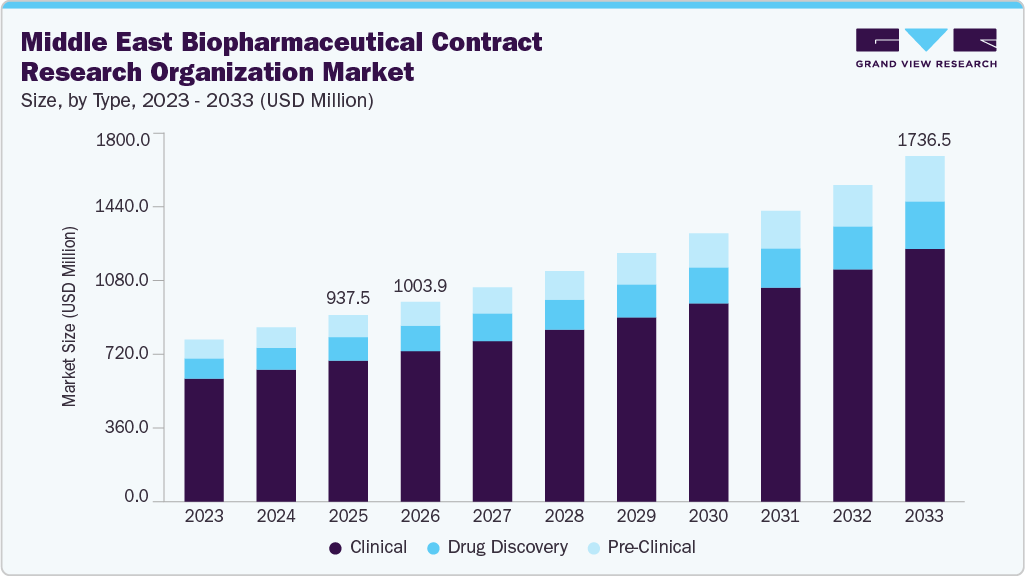 Source: Grand View Research, IR Documents, Primary Interviews, Paid DatabasesTo learn more about this report,
 Download Free Sample Report
Moreover, the rising prevalence of chronic and lifestyle-related diseases such as diabetes, obesity, cardiovascular diseases, cancer, and respiratory disorders is increasing due to aging populations, sedentary lifestyles, and dietary changes. This growing disease burden creates a strong demand for new therapeutics and large-scale clinical trials. CROs benefit from access to diverse patient populations, which enables faster enrollment and the generation of robust data. Governments across Saudi Arabia, the UAE, and Qatar are prioritizing early diagnosis and advanced treatment programs, further fueling research activity. As biopharma companies expand their pipelines to target chronic diseases, the need for specialized CRO services in preclinical, clinical, and real-world evidence studies continues to accelerate the market.
The growing adoption of digital health technologies is significantly boosting the Middle East biopharmaceutical CRO market. Countries such as Saudi Arabia, the UAE, and Qatar are integrating AI-driven analytics, electronic data capture, remote monitoring tools, telemedicine, and digital biomarkers into clinical research. These technologies enhance patient engagement, improve data accuracy, and reduce trial timelines. Digital platforms also support decentralized and hybrid clinical trials, expanding regional participation and reducing operational barriers. CROs leveraging these tools can manage complex protocols more efficiently, attract global sponsors, and deliver higher-quality outcomes. As healthcare systems continue digital transformation, the demand for tech-enabled CRO services in the region is rising rapidly in the market. Such factors are expected to drive market growth.
Impact of U.S. Tariffs on the Middle East Biopharmaceutical CRO Market
The U.S. tariffs impact the Middle East biopharmaceutical CRO market by changing global supply chains, investment patterns, and outsourcing practices. With increased tariffs on biotech materials, lab equipment, and pharmaceutical components, U.S. drug developers face higher operational costs. This situation encourages them to seek more cost-effective research locations, making the Middle East an appealing option due to its improving R&D infrastructure and proactive regulatory framework. Consequently, U.S. sponsors are prompted to diversify their partnerships beyond traditional markets, such as China. As a result, CROs in countries such as Saudi Arabia, the UAE, and Qatar are seeing an increase in collaboration inquiries, higher trial volumes, and more opportunities in areas such as biologics, biosimilars, and specialty therapeutics. Thus, U.S. tariffs are driving a surge in regional outsourcing needs and fostering strategic collaborations in the biopharmaceutical sector.
Technological Advancements
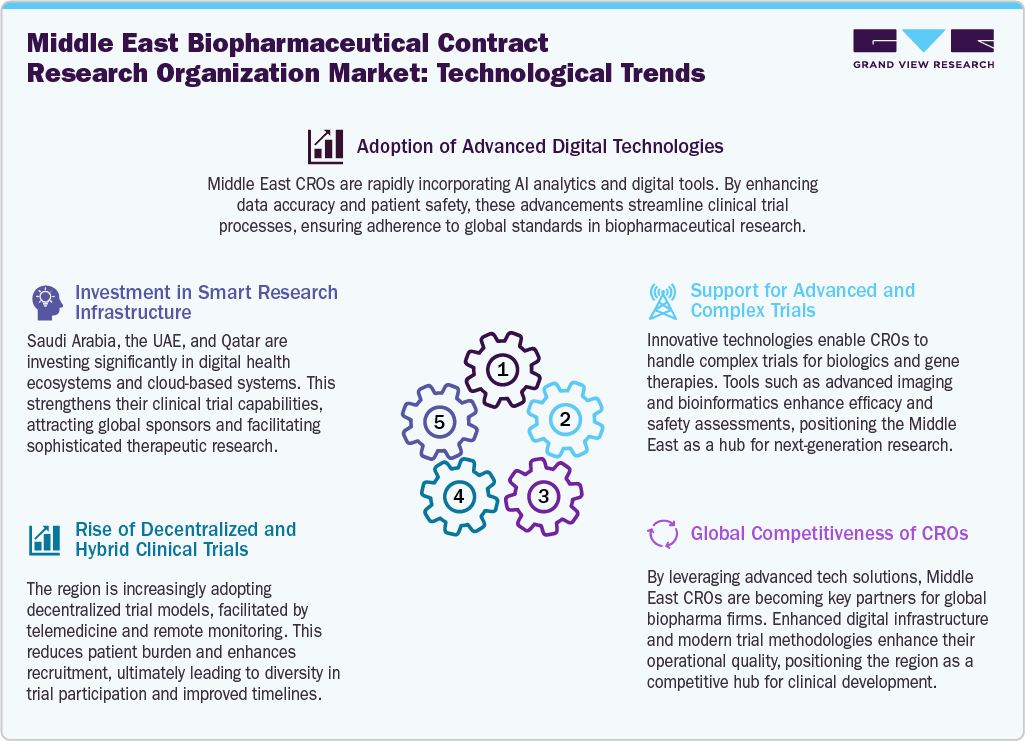
Technological advancements are significantly accelerating the growth of the Middle East Biopharmaceutical CRO market. The adoption of AI-driven analytics, digital biomarkers, e-clinical platforms, and real-time data monitoring is improving trial accuracy, reducing timelines, and enhancing patient safety.
 To learn more about this report, Download Free Sample Report
Countries like Saudi Arabia, the UAE, and Qatar are investing heavily in smart research infrastructure, including cloud-based data systems, advanced imaging, genomics platforms, and digital health ecosystems. These technologies support complex trials involving biologics, mABs, and cell & gene therapies, enabling CROs to manage sophisticated protocols efficiently. The rise of decentralized and hybrid clinical trials, supported by remote patient monitoring and telemedicine, further strengthens regional trial capabilities. Thus, these innovations position Middle Eastern CROs as competitive, tech-enabled partners for global biopharmaceutical development.
Pricing Model Analysis
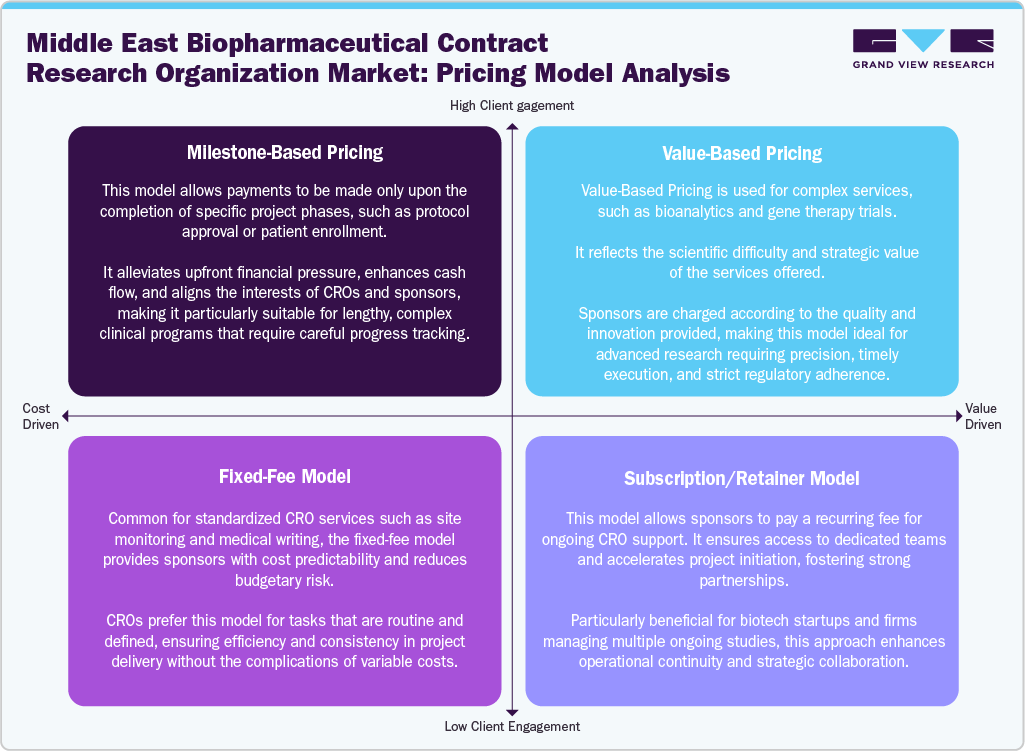
In the Middle East biopharmaceutical CRO market, pricing strategies are evolving to accommodate diverse sponsor expectations and increasingly complex research needs. Milestone-based pricing is widely used, allowing sponsors to pay at key development stages, improving financial flexibility and risk sharing.
 To learn more about this report, Download Free Sample Report
Value-based pricing is gaining traction for high-impact services, such as bioanalytics, mAb studies, and cell & gene therapy trials, where pricing reflects the scientific complexity and quality of outcomes. The fixed-fee model remains common for standardized tasks, such as monitoring, data management, and regulatory submissions, offering cost predictability. Meanwhile, subscription or retainer models are emerging for long-term partnerships, enabling continuous access to specialized teams and digital platforms. Thus, these models support transparency, scalability, and improved sponsor–CRO collaboration.
Market Dynamics
The growing number of clinical trials in the Middle East is emerging as a key factor driving the biopharmaceutical CRO market in the region. Countries like Saudi Arabia, the UAE, and Qatar are seeing increased involvement in clinical research activities, driven by rising investments in their healthcare sectors and improvements in research facilities. For instance, in May 2025, Medicus Pharma received approval from the UAE DOH to begin a Phase 2 clinical trial of a non-invasive BCC treatment across four hospitals, with IROS, a UAE-based CRO, coordinating the study. Similarly, in May 2025, KFSHRC and Cellenkos signed an MOU to launch Saudi-U.S. clinical trial collaborations, starting with Treg therapies for GVHD and aplastic anemia, while expanding into ALS, cardiovascular, and cell therapy infrastructure. Several multinational pharmaceutical and biotech companies are finding the Middle East an ideal region for multicenter clinical trials due to the diversity of its patient base and the presence of numerous advanced hospitals and research facilities. Government programs that focus on increasing the region's capacity to develop innovative drugs and fast-track drug development are also helping drive the number of clinical trials ahead. Thus, the growing number of clinical trials is expected to drive market growth over the analysis period.
Differences in regulatory processes across the Middle East will continue to be an obstacle to the development of the biopharmaceutical CRO market in the region. The approval process for conducting clinical trials, the role of ethics committees, and different documentation requirements in countries such as Saudi Arabia, the UAE, and Qatar, among others, can contribute to delays in starting clinical trials and coordinating multi-country clinical trials. In addition, changing regulations governing biologics and advanced therapies could pose compliance challenges for CROs conducting clinical trials across multiple countries. Thus, the lack of standardized guidelines for conducting clinical trials in the Middle East could complicate the approval process, in turn, impacting the market growth in the region.
The Middle East biopharmaceutical contract research organization (CRO) market is experiencing robust growth, driven by rising healthcare investments, increased clinical trial activity, and a focus on advanced therapeutics, including biologics, biosimilars, and cell & gene therapies. Countries like Saudi Arabia, the UAE, and Qatar are enhancing their research ecosystems through the establishment of biotech hubs, genomics initiatives, and supportive regulatory changes, rendering the region a compelling option for global sponsors. In addition, CROs are benefiting from diverse patient demographics, improved recruitment capabilities, and a surge in collaborations with academic medical institutions. Moreover, the growing implementation of digital health technologies, decentralized trials, and AI-driven data platforms is further optimizing operational efficiency and enhancing trial quality. Furthermore, growing interest in areas such as oncology, CNS, rare diseases, and immunology, which increases the demand for specialized preclinical and clinical services. As biopharma innovation accelerates, CROs that provide integrated, tech-enabled, and regulatory-compliant solutions are strategically positioned to seize emerging opportunities in the Middle Eastern drug development landscape. Such factors are expected to provide numerous opportunities for the growth of the market.
Market Concentration & Characteristics
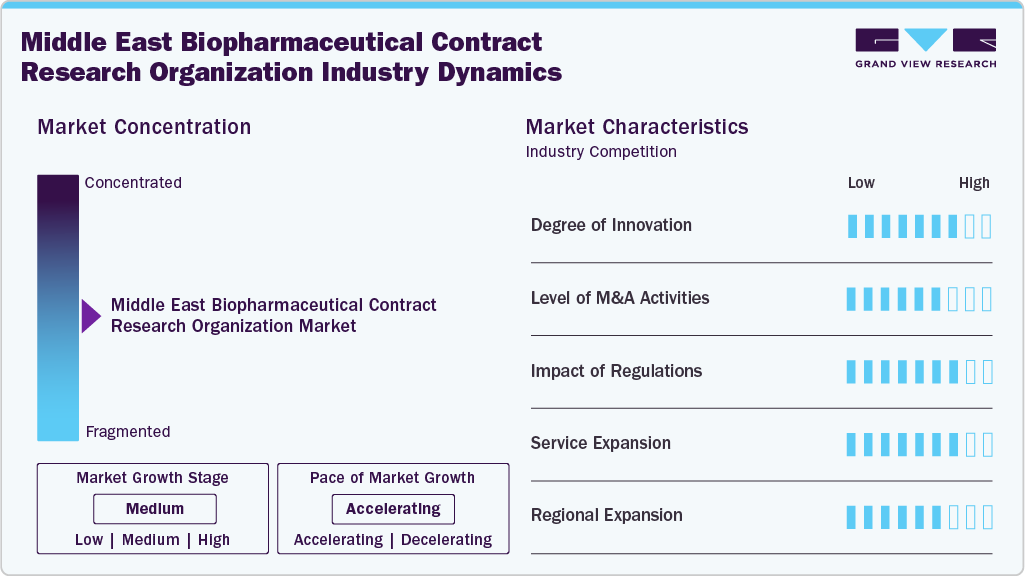
The biopharmaceutical contract research organization’s market growth stage is medium, with growth accelerating. The market is characterized by the degree of innovation, level of M&A activities, regulatory impact, service expansion, and regional expansion.
Innovation in the Middle East is gaining momentum with the integration of decentralized trials, AI-driven patient recruitment, digital biomarkers, and real-time clinical data platforms. These advancements are enhancing the efficiency of trials, improving data quality, and shortening development timelines crucial for biologics, cell & gene therapies, and personalized medicine initiatives. Regional CROs are increasingly adopting these technologies to provide high-value, tech-enabled research solutions that meet global standards.
 To learn more about this report, Download Free Sample Report
There is a noticeable increase in collaboration, partnerships, and mergers and acquisitions, particularly between global CROs and local healthcare institutions. These activities are enhancing regional capabilities and therapeutic expertise in the Middle East. Such consolidation not only strengthens local infrastructure but also enhances scientific knowledge and provides access to advanced technologies, enabling CROs to scale their operations and streamline processes, thereby becoming vital partners in comprehensive drug development.
Regulatory bodies in the Middle East, like the SFDA, MOHAP, and MOPH, are rolling out clearer guidelines, expedited approval pathways, and more stringent compliance requirements for biologics and advanced therapies. This shift has created an increased demand for CROs with robust regulatory intelligence, documentation support, and pharmacovigilance expertise. CROs play a critical role in helping sponsors navigate the evolving regulatory landscape, ensuring data integrity, patient safety, and efficient approvals.
Regional CROs are expanding their service offerings to encompass discovery support, bioanalytics, regulatory consulting, medical writing, pharmacovigilance, and real-world evidence generation. By adopting a full-spectrum approach, these organizations enhance project continuity and minimize the need for multiple service providers, positioning themselves as integrated development partners capable of supporting all phases of innovation from preclinical research through to commercialization.
With increased investments in research hubs across Saudi Arabia, the UAE, and Qatar, CROs are expanding their regional presence to capitalize on improved trial infrastructure and diverse patient populations. Establishing hubs in the Middle East accelerates patient recruitment efforts, strengthens site collaboration, and alleviates operational challenges. These expansions enhance the competitive landscape and position for global biopharmaceutical development.
Type Insights
On the basis of type, the clinical segment held the largest market share, accounting for a revenue share of 75.5% in 2025. The segment is driven by expanding investments in R&D, specialized hospitals, and trial infrastructure. Other factors contributing to segment growth include enhanced regulatory pathways, which enable faster approvals and higher compliance, thereby increasing demand for professional clinical operations support. Besides, the diversity of patient populations, improved recruitment capabilities, and expanding investigator networks across leading academic and private hospitals are encouraging biopharmaceutical companies to outsource their clinical operations. Such factors are expected to drive segment growth.
The pre-clinical segment is expected to grow at the fastest CAGR during the forecast period. The segment is driven by increasing investment in biotechnology parks, toxicology labs, genomics centers, and advanced research facilities. Besides, rising focus on biologics, biosimilars, cell and gene therapies, and novel oncology pipelines is expected to boost the segment growth. In addition, increasing collaborations between universities, research institutes, and global pharma companies are further boosting outsourcing requirements. Moreover, supportive funding programs, growing startup activity, and rising interest in translational research are accelerating demand for CROs that offer cost-efficient, high-quality pre-clinical services. Such factors are expected to boost the segment growth.
Product Insights
On the basis of product, the monoclonal antibodies (mABs) segment dominated the market with the largest revenue share in 2025. The segment is driven by the rising incidence of cancer, autoimmune disorders, and infectious diseases, and increasing adoption of targeted mAb therapies. Besides, most CROs benefit from the need for specialized bioanalytics, immunogenicity testing, PK/PD studies, and complex clinical trial management required for mABs, which is expected to boost the segment's growth. In addition, growing collaborations with global pharmaceutical companies, improved regulatory pathways for biologics, and the expansion of precision medicine support market growth. Thus, such innovations are expected to enable precise disease targeting, reduce toxicity, and improve clinical outcomes, thereby further accelerating the development of new drugs.
The nucleic acid therapeutics segment is expected to grow at the fastest CAGR during the forecast period. The growth in this market segment can be attributed to rising interest in the use of precision medicines in the region, the increase in clinical trials related to RNA therapeutics, and growing research on biologicals in countries such as Saudi Arabia and the United Arab Emirates. The growth in biotechnology collaborations, along with the increasing involvement of regional research institutes in gene and cell therapy studies, is also driving demand for specialized CRO services. In addition, increasing reliance of pharmaceutical firms on CROs for advanced nucleic acid drug research and clinical trials is propelling growth in this segment.
Service Insights
On the basis of service, clinical monitoring accounted for the largest revenue share in 2025, driven by the expansion of clinical trial activities, rising disease burden, and increased investments in healthcare research infrastructure. Currently, faster study approvals and higher compliance standards are expected to drive the requirement for clinical monitoring. Besides, the growing adoption of digital monitoring platforms, remote site management, and risk-based monitoring is expected to drive market growth. Moreover, robust collaboration among academic hospitals, research centers, and CROs further strengthens site quality, fueling demand for specialized clinical monitoring services. Such factors are expected to drive the market over the estimated time period.
The regulatory/medical affairs segment is expected to grow at the fastest rate during the forecast period. The segment is driven by the increasing healthcare regulations and expanding clinical research capacity. Besides, the growing interest in biologics, cell and gene therapies, and personalized medicine is expected to drive demand for specialized documentation, safety reporting, and compliance support, thereby supporting market growth. Moreover, global sponsors entering the region rely on CROs for local regulatory intelligence, submission management, and alignment with authorities, which further contributes to the segment's growth. These factors are expected to drive the market over the estimated time period.
Therapeutic Area Insights
On the basis of therapeutic area, the oncology segment accounted for the largest share of the market in 2025, driven by the rising incidence of cancer, rapid adoption of advanced therapeutics, and ongoing advancements in targeted and immuno-oncology treatments. In addition, increasing investments in oncology research infrastructure, precision medicine centers, and genomic programs are expected to drive segment growth. Some other factors contributing to segment growth include regulatory support for accelerated approvals, adoption of advanced technologies such as AI and biomarkers for trial optimization, and strategic collaborations between CROs and biopharma companies to enhance efficiency and data quality, positioning oncology CROs as pivotal partners in innovative cancer drug development. Such factors are expected to drive the market over the estimated time period.
The infectious diseases segment is projected to be the second-fastest-growing segment during the forecast period, driven by increased emphasis on regional disease surveillance programs, rising research into vaccines and antiviral drug development, and enhanced investments by countries in public health infrastructure in the region. Moreover, the growing collaboration between healthcare organizations and pharmaceutical firms in infectious disease research is driving increased demand for clinical research organization services in the region.
End Use Insights
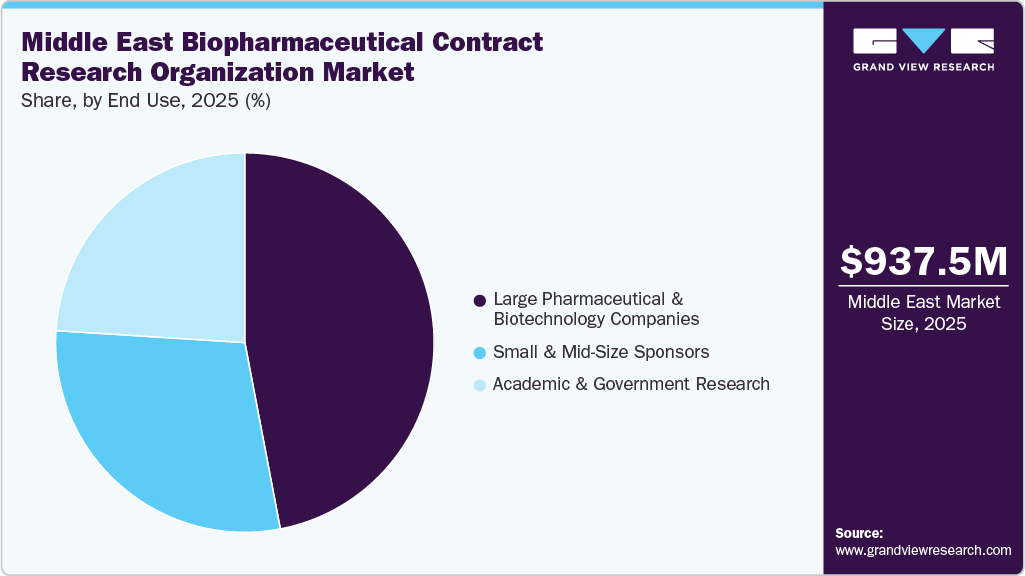
On the basis of end use, the large pharmaceutical and biotechnology companies segment accounted for the largest share in 2025. The growth of this segment is driven by the increasing collaboration of biopharmaceutical CROs, expanding pipelines with complex biologics, gene therapies, vaccines, & monoclonal antibodies, as well as the rising requirement for advanced analytics capabilities that large companies prefer to outsource for optimizing costs and speed in drug innovation. Besides, rising R&D costs and increased pressure to shorten drug development timelines are expected to drive market growth. In addition, shifting trends toward decentralized trials, precision medicine, and the generation of real-world evidence expand the demand for integrated, tech-enabled CRO solutions, which are contributing to segment growth. Thus, as the innovation accelerates, strategic collaborations with CROs enable pharmaceutical and biotech companies to focus on core discovery while leveraging end-to-end outsourced expertise to accelerate commercialization and strengthen competitive advantage.
 To learn more about this report, Download Free Sample Report
The academic & government research segment is projected to grow at the second-fastest CAGR over the forecast period. The factors contributing to the growth of the market segment include increasing government backing for medical research, rising investment in biotechnology and life sciences research, and increased partnerships among universities, hospitals, and biopharmaceutical organizations in the Middle East. Countries in the region are implementing measures to develop clinical research infrastructure, along with initiatives to drive innovation through healthcare transformation projects. Moreover, the growing involvement of academic organizations in biologics, genomics, and infectious diseases research has driven up CRO demand.
Country Insights
The biopharmaceutical CRO industry in Saudi Arabia accounted for the largest market share in the Middle East, owing to the rising prevalence of chronic and rare diseases, increasing demand for advanced clinical trials, and a shift toward outsourced R&D to enhance efficiency and reduce costs. In addition, most of the CROs are expanding their capabilities with the support of government funding, regulatory modernization by SFDA, and the growth of research hubs such as King Abdullah International Medical Research Center, further attracting global sponsors. Moreover, growing partnerships between multinational pharma companies and local CROs are strengthening capabilities in biologics, biosimilars, and cell-gene therapy research. In addition, rapid infrastructure development, skilled scientific talent, and increasing outsourcing to reduce R&D timelines support market growth. Such factors are expected to drive market growth.
The UAE biopharmaceutical CRO industry is expected to witness the fastest CAGR during the forecast period, driven by strong government support, advanced healthcare and research infrastructure, and fast regulatory approvals that attract global drug developers. Moreover, the country’s market is fueled by the rising burden of chronic diseases and the availability of a diverse patient population, further increasing the need for biopharmaceutical CRO services. In addition, increasing partnerships among international CROs, local hospitals, and research institutes further strengthens capabilities. Such factors are expected to drive the market over the estimated time period.
Key Middle East Biopharmaceutical CRO Company Insights
Major players in the global market are pursuing various strategic initiatives, including acquisitions, mergers, service launches, partnerships, expansions, and collaborations, to expand geographic presence and strengthen competitive positioning. For instance, in August 2025, Biomapas, a CRO supporting pharmaceutical & biotech companies, acquired Delta PV, a prominent pharmacovigilance firm based in Istanbul. This acquisition enhances Biomapas’ global drug safety portfolio and deepens its reach across rapidly expanding markets such as Europe, the CIS region, Asia-Pacific, and the Middle East and North Africa. The acquisition will help the company to deliver broader, more integrated safety solutions to clients across the globe.
Key Middle East Biopharmaceutical CRO Companies
-
LabCorp (Covance)
-
IQVIA
-
ICON
-
Thermo Fisher Scientific / PPD
-
Lonza Group
-
WuXi AppTec
-
Syneos Health
-
Charles River Laboratories
-
Parexel
-
Medpace
-
Fortrea
-
Catalent
-
Worldwide Clinical Trials
-
Clinipace
Competitive Benchmarking
Operating Strategies
Competitive Edge
Weaknesses
- Mature Players: LabCorp (Covance)
- Established biopharmaceutical CROs in the Middle East mainly focus on expanding clinical research, biologics testing, regulatory support, and trial management services.
- Many firms are strengthening partnerships with hospitals, research institutes, and pharmaceutical companies across the UAE and Saudi Arabia to improve regional presence.
- Large CROs benefit from strong regulatory knowledge, experienced research teams, and access to advanced healthcare infrastructure.
- Their ability to manage multicountry clinical studies and provide specialized biologics research support helps them secure long-term projects.
- High operational costs, complex regulatory processes, and shortages of specialized clinical research professionals remain key challenges.
- In addition, maintaining advanced laboratory infrastructure and international quality standards increases overall expenses.
- Emerging Players: Fortrea
- Emerging CROs are focusing on niche areas such as biosimilars, precision medicine, decentralized trials, and early-stage biologics research.
- Many smaller firms use flexible pricing models and digital technologies to attract regional biotech startups and small pharmaceutical companies.
- Newer CROs often offer faster project execution, customized research support, and greater operational flexibility.
- Their growing use of digital trial platforms and data-driven research tools also helps improve efficiency and client engagement.
- Limited funding, smaller research networks, and lower international exposure can restrict expansion opportunities for emerging firms.
- Dependence on fewer clients and limited large-scale project experience may also affect long-term revenue stability.
Recent Developments:
-
In November 2025, the King Abdullah International Medical Research Center (KAIMRC) and Massachusetts-based Flagship Pioneering announced a strategic collaboration to run clinical trials for innovative therapeutics in Saudi Arabia. The initiative aims to combine U.S. scientific innovation with Saudi Arabia’s expanding clinical research capabilities to accelerate the development of next-generation medicines worldwide. The partnership was unveiled during the U.S.–Saudi Investment Forum in Washington, D.C., highlighting growing bilateral cooperation in advanced biomedical research.
-
In December 2024, Ellipses Pharma Limited launched a landmark Phase 1/2 oncology clinical trial in the UAE, one of the first large-scale studies of its type in the country. After receiving clearance from national regulatory authorities and the health departments, the trial begins at two leading Abu Dhabi institutions: Cleveland Clinic Abu Dhabi and Tawam Hospital. A third site is expected to join once approvals are finalized. Patient enrollment is already underway, marking an important step forward for the region’s expanding clinical research ecosystem.
Middle East Biopharmaceutical CRO Market Report Scope
Report Attribute
Details
Market size value in 2025
USD 937.5 million
Market size value in 2026
USD 1,003.9 million
Revenue forecast in 2033
USD 1,736.5 million
Growth rate
CAGR of 8.1% from 2026 to 2033
Actual Data
2021 - 2025
Forecast period
2026 - 2033
Quantitative units
Revenue in USD million and CAGR from 2026 to 2033
Report coverage
Revenue forecast, company ranking, competitive landscape, growth factors, and trends
Segments covered
Type, product, service, therapeutic area, end use, country
Regional scope
Middle East
Country scope
Saudi Arabia; UAE; Kuwait; Oman; Qatar
Key companies profiled
LabCorp (Covance); IQVIA; ICON; Thermo Fisher Scientific / PPD; Lonza Group; WuXi AppTec; Syneos Health; Charles River Laboratories; Parexel; Medpace; Fortrea; Catalent; Worldwide Clinical Trials; Clinipace (Caidya)
Customization scope
Free report customization (equivalent up to 8 analysts working days) with purchase. Addition or alteration to country, regional & segment scope.
Pricing and purchase options
Avail customized purchase options to meet your exact research needs. Explore purchase options
Middle East Biopharmaceutical CRO Market Report Segmentation
This report forecasts revenue growth at the countries’ level and provides an analysis of the latest industry trends in each of the sub-segments from 2021 to 2033. For this study, Grand View Research has segmented the Middle East biopharmaceutical contract research organization market report based on type, product, service, therapeutic area, end use, and country.
-
Type Outlook (Revenue, USD Million, 2021 - 2033)
-
Drug Discovery
-
Target Validation
-
Lead Identification
-
Lead Optimization
-
-
Pre-Clinical
-
Clinical
-
Phase I Trial Services
-
Phase II Trial Services
-
Phase III Trial Services
-
Phase IV Trial Services
-
-
-
Product Outlook (Revenue, USD Million, 2021 - 2033)
-
Monoclonal Antibodies (mABs)
-
Recombinant Proteins & Enzymes
-
Vaccines
-
Cell & Gene Therapies
-
Nucleic Acid Therapeutics
-
Others
-
-
Service Outlook (Revenue, USD Million, 2021 - 2033)
-
Project Management/Clinical Supply Management
-
Data Management
-
Regulatory/Medical Affairs
-
Medical Writing
-
Clinical Monitoring
-
Quality Management/ Assurance
-
Bio-statistics
-
Investigator Payments
-
Laboratory
-
Patient And Site Recruitment
-
Technology
-
Others
-
-
Therapeutic Area Outlook (Revenue, USD Million, 2021 - 2033)
-
Oncology
-
CNS Disorders
-
Infectious Diseases
-
Immunological Disorders
-
Cardiovascular Diseases
-
Respiratory Diseases
-
Diabetes
-
Ophthalmology
-
Pain Management
-
Others
-
-
End Use Outlook (Revenue, USD Million, 2021 - 2033)
-
Large Pharmaceutical & Biotechnology Companies
-
Small & Mid-Size Sponsors
-
Academic & Government Research
-
-
Country Outlook (Revenue, USD Million, 2021 - 2033)
-
Middle East
-
UAE
-
Saudi Arabia
-
Kuwait
-
Qatar
-
Oman
-
-
Delivered Customizations
This report has been delivered with the following In-depth customizations
Client Request
Customization Delivered
Value Adds
Middle East Biopharmaceutical CRO Infrastructure & Regulatory Landscape Assessment
Conducted a detailed assessment of the Middle East biopharmaceutical CRO market with emphasis on clinical research infrastructure, biologics trial activity, regulatory frameworks, and expanding healthcare research investments across Saudi Arabia, the UAE, and Qatar. The study examined regional clinical trial capabilities, partnerships between hospitals and CROs, patient recruitment trends, and operational challenges linked to multicountry studies and biologics research programs.
Helps stakeholders understand the evolving clinical research environment in the Middle East, identify attractive outsourcing destinations, evaluate regulatory and operational barriers, and assess long term growth opportunities within the regional biopharmaceutical research sector.
Biologics Research Outsourcing & Clinical Trial Demand Analysis
Delivered a focused analysis of outsourcing demand related to biologics, biosimilars, monoclonal antibodies, and precision medicine research within the Middle East. The assessment covered biotechnology investments, rising participation in clinical trials, demand for specialized CRO support services, and increasing involvement of regional healthcare institutions in advanced therapeutic research programs.
Provides insights into high growth research segments, emerging biologics development opportunities, and areas where CROs can expand specialized service offerings to support pharmaceutical and biotechnology companies operating in the region.
Digital Clinical Trials & Advanced Research Capability Assessment
Developed an evaluation of digital transformation trends within the Middle East biopharmaceutical CRO market, including decentralized clinical trials, remote patient monitoring, AI driven data management, and electronic trial platforms. The study also reviewed investments in laboratory modernization, data analytics capabilities, and research technologies supporting faster and more efficient clinical operations.
Supports strategic planning by identifying technology adoption trends, operational improvement opportunities, underserved research capabilities, and future investment areas linked to advanced clinical trial management and digital healthcare research solutions.
Frequently Asked Questions About This Report
The Middle East biopharmaceutical contract research organization market size was estimated at USD 937.5 million in 2025 and is expected to reach USD 1,003.9 million in 2026.
The Middle East biopharmaceutical contract research organization market is expected to grow at a compound annual growth rate of 8.1% from 2025 to 2033 to reach USD 1,736.5 million by 2033.
By type, the clinical segment held the largest market share, accounting for a revenue share of 75.5% in 2025. The segment is driven by expanding investments in R&D, specialized hospitals, and trial infrastructure. Some other factors contributing to segment growth include enhanced regulatory pathways, which enable faster approvals and higher compliance, thereby increasing demand for professional clinical operations support. Such factors are expected to drive the market growth.
Some key players operating in the Middle East biopharmaceuticals CRO market include LabCorp (Covance), IQVIA, ICON, Thermo Fisher Scientific / PPD, Lonza Group, WuXi AppTec, Syneos Health, Charles River Laboratories, Parexel, Medpace, Fortrea, Catalent, Worldwide Clinical Trials, and Clinipace (Caidya), among others.
Key factors driving market growth include rising investment in healthcare research, expanding clinical trial infrastructure, and the increasing prevalence of chronic and lifestyle-related diseases. Some other factors contributing to market growth include enhanced regulatory frameworks, the establishment of biotech hubs, and the rising need for precision medicine, which are attracting global sponsors to the region. These factors are expected to drive the market growth.
About the Author(s)
Medical Devices Research Team
Healthcare · Medical DevicesThis report was authored by the medical devices research team at Grand View Research - comprising two research analysts, one senior research analyst, and one industry expert - with specialized expertise in the medical devices segment of the healthcare industry. All findings are based on proprietary healthcare databases, executive interviews, and regulatory analysis, subject to internal peer review prior to publication.
Last Updated:
Speak to Analyst

Customize this report to your needs - add regions, segments, or data points, with 20% free customization.
Or view our licence options:


ISO 9001:2015 & 27001:2022 Certified
We are GDPR and CCPA compliant! Your transaction & personal information is safe and secure. For more details, please read our privacy policy.


