Middle East Fertilizer Bag Market Summary
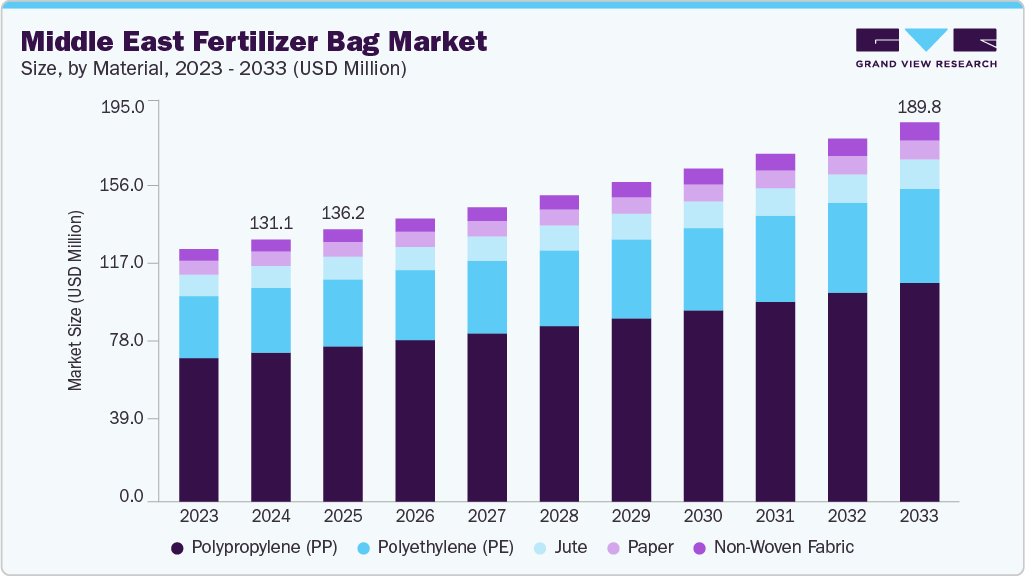
The Middle East fertilizer bag market size was valued at USD 131.1 million in 2024 and is expected to reach USD 189.8 million by 2033, growing at a CAGR of 4.2% from 2025 to 2033. The industry is driven by the region’s expanding agricultural activities, supported by government initiatives for food security.
Key Market Trends & Insights
- Saudi Arabia dominated the Middle East fertilizer bag market with the largest revenue share of over 40.0% in 2024 and is expected to grow at a substantial CAGR of 4.9% from 2025 to 2033.
- By material, the non-woven fabric segment is expected to grow at a considerable CAGR of 4.8% from 2025 to 2033 in terms of revenue.
- By size, the less than 10 kg segment is expected to grow at a considerable CAGR of 5.2% from 2025 to 2033 in terms of revenue.
- By closure type, the drawstring segment is expected to grow at a considerable CAGR of 4.7% from 2025 to 2033 in terms of revenue.
- By application, the organic fertilizers segment is expected to grow at a considerable CAGR of 5.2% from 2025 to 2033 in terms of revenue.
Market Size & Forecast
- 2024 Market Size: USD 131.1 Million
- 2033 Projected Market Size: USD 189.8 Million
- CAGR (2025-2033): 4.2%
- Saudi Arabia: Largest market in 2024
Additionally, the rising demand for chemical and organic fertilizers fuels the need for durable and cost-effective packaging solutions. The growing focus on agricultural expansion driven by national food security goals is driving the growth of the market. Countries such as Saudi Arabia and the UAE are making significant investments to reduce their dependence on food imports by enhancing domestic crop production, especially in desert farming and hydroponics. For instance, Saudi Arabia’s Vision 2030 plan includes initiatives to boost sustainable agriculture. This rise in fertilizer consumption for crops has increased the demand for durable and efficient fertilizer packaging solutions like woven polypropylene (PP) bags, which offer strength and moisture protection in arid conditions.
Governments across the Middle East are providing subsidies and logistical support for the distribution of fertilizers to farmers, especially in rural and remote areas. This has spurred demand for fertilizer bags that can handle long-distance transport while maintaining product quality. For example, the Omani government supports fertilizer distribution through the Oman Food Investment Holding Company, which relies heavily on efficient packaging to maintain supply chain integrity. The need for customizable, UV-resistant, and tear-resistant bags is rising in tandem with these programs, pushing manufacturers to innovate in both material and design.
The Middle East is home to several large-scale fertilizer manufacturers such as SABIC, Ma’aden, and Qatar Fertiliser Company (QAFCO), which are expanding their production to meet both domestic and export demands. With increasing fertilizer output, especially of urea and nitrogen-based fertilizers, there is a parallel need for high-capacity, weather-resistant bags. These include FIBC (Flexible Intermediate Bulk Containers) and BOPP laminated bags, which offer high load-bearing capacity and brand-friendly surfaces. This production growth cycle is directly contributing to an uptick in regional demand for specialized fertilizer packaging solutions.
Market Concentration & Characteristics
The industry is tightly linked to the agricultural and fertilizer sectors, making it sensitive to seasonal cycles, government subsidies, and trade regulations. A rise in crop production or government fertilizer support programs directly boosts demand for bags. Conversely, disruptions in fertilizer production or import restrictions can cause short-term slowdowns in bag demand. The cyclical nature of fertilizer procurement creates fluctuating yet predictable demand patterns in the packaging industry.
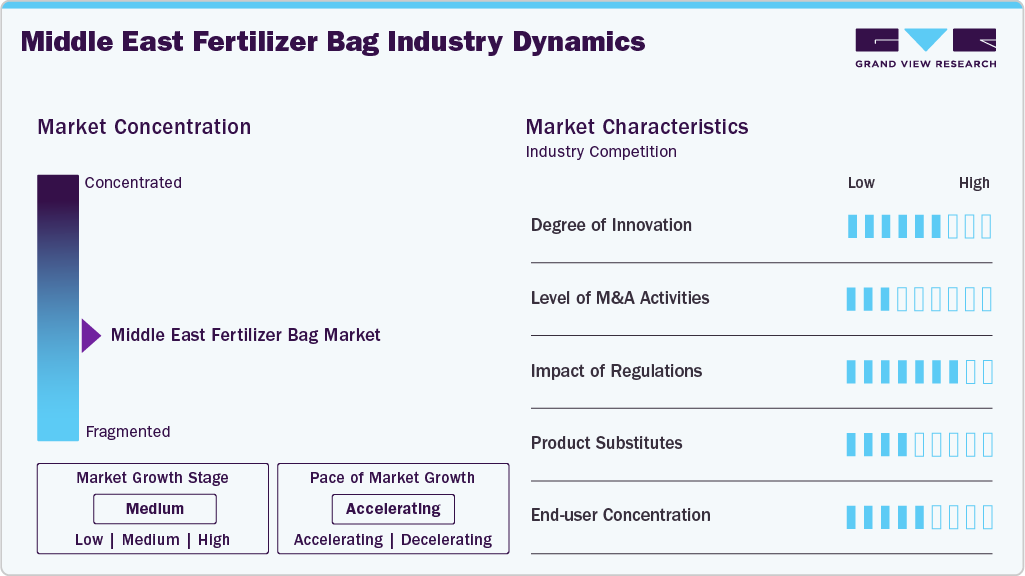
This industry is highly material-sensitive, with a strong preference for polypropylene (PP), BOPP (biaxially oriented polypropylene), and polyethylene-based bags due to their durability, cost-effectiveness, and ability to withstand extreme weather. UV-resistance, moisture barriers, and printability are key performance differentiators, especially in desert climates. Manufacturers must consistently innovate in materials and coatings to meet the technical demands of fertilizer producers, especially for storage in outdoor and high-temperature environments.
Material Insights
The polypropylene (PP) segment recorded the largest revenue share of over 56.0% in 2024. PP bags are the most widely used in the fertilizer industry due to their high tensile strength, moisture resistance, and durability. They are lightweight, easy to transport, and available in woven and laminated forms, making them suitable for both bulk and retail fertilizer packaging. Increasing demand from large-scale agricultural distributors, along with advancements in woven PP manufacturing technology, further supports their dominance. Rising fertilizer exports also boost demand for PP bags due to their high load-bearing capacity and suitability for long-distance shipping.
Non-woven fabric segment is expected to grow at the fastest CAGR of 4.8% during the forecast period. Non-woven fabric bags are made using synthetic fibers bonded together mechanically, thermally, or chemically, rather than weaving or knitting. They are lightweight, reusable, and customizable in terms of size, color, and branding. In the fertilizer industry, they are gaining traction for both retail and promotional packaging. Rising demand for reusable and durable packaging solutions is fueling the growth of non-woven fabric bags.
Size Insights
The 50-100 kg segment recorded the largest revenue share of over 30.0% in 2024. Bags in the 50-100 kg range are primarily used in large-scale commercial farming, agro-industrial operations, and fertilizer distribution hubs. They are suited for bulk transactions where minimizing packaging costs per unit of fertilizer is crucial. This segment is also common in regions with extensive cereal, sugarcane, and plantation crop farming. The main driver is the need to reduce per-unit transportation and packaging costs for very large farms and agribusinesses.
The less than 10 kg segment is expected to grow at the fastest CAGR of 5.2% during the forecast period. These bags are typically used for retail and small-scale agricultural needs, such as home gardening, landscaping, or specialty crops. These bags are popular in urban and peri-urban areas where small landholdings dominate, and they often feature consumer-friendly packaging with branding, instructions, and resealable options. They are also common for premium or specialty fertilizers like micronutrient blends, water-soluble fertilizers, and organic variants.
Closure Type Insights
The sewn closure segment recorded the largest share of over 47.0% in 2024. Sewn closures involve stitching the bag’s open end with industrial thread, creating a permanent and robust seal. They are common in woven polypropylene bags used for large fertilizer quantities, ensuring high tensile strength and preventing leakage. Sewing can be done manually or via automated bag-closing machines. This closure type is driven by the demand for maximum strength and protection in bulk fertilizer packaging. Agricultural wholesalers and industrial users prefer sewn closures for their ability to withstand rough handling and stacking during storage and transport.
The drawstring segment is projected to grow at the fastest CAGR of 4.7% during the forecast period. Drawstring closures use a cord, rope, or string integrated into the bag’s opening, which can be pulled to tighten and secure the contents. This closure type is typically used in woven or fabric-based fertilizer bags, offering reusability and ease of opening and closing without additional tools. Drawstring bags are often lightweight and are suitable for smaller fertilizer quantities or retail packaging. The demand for drawstring closures is driven by the increasing preference for reusable and user-friendly packaging, particularly among small-scale farmers and home gardeners.
Application Insights
The chemical fertilizers segment recorded the largest market revenue share of over 54.0% in 2024. Chemical fertilizers are synthetic or inorganic compounds designed to supply essential nutrients such as nitrogen (N), phosphorus (P), and potassium (K) to crops for rapid and targeted growth. These bags also often have UV protection to prevent degradation during outdoor storage and transport. The demand for fertilizer bags in chemical fertilizer applications is driven by large-scale commercial farming, high agricultural productivity needs, and the growing use of high-yield crop varieties.
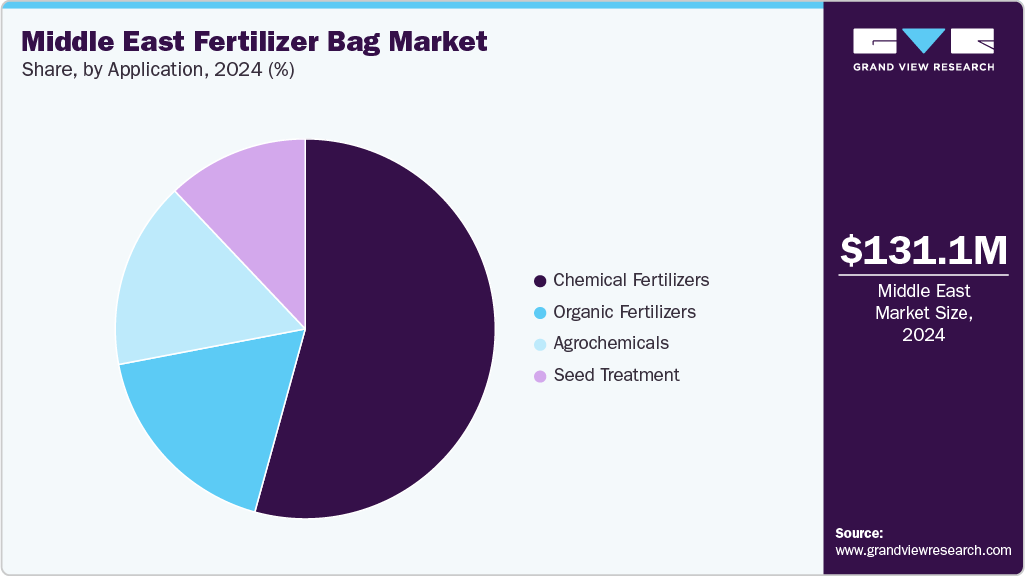
The organic fertilizers segment is expected to grow at the fastest CAGR of 5.2% during the forecast period. Organic fertilizers are derived from natural sources such as compost, manure, bone meal, and plant-based materials, supplying nutrients slowly and improving soil health over time. Packaging for organic fertilizers often emphasizes eco-friendly materials, biodegradable liners, and appealing branding for retail markets, as these products target environmentally conscious consumers and niche agricultural sectors. Rising consumer preference for organic food, expanding organic farming acreage, and stricter government regulations on chemical fertilizer usage are key growth drivers for fertilizer bags in this segment.
Country Insights
Saudi Arabia dominated the region and accounted for the largest revenue share of over 40.0% in 2024 and is expected to grow at the fastest CAGR of 4.9% over the forecast period. Saudi Arabia is one of the largest fertilizer producers in the region, with companies such as SABIC leading the market. The fertilizer bag industry benefits from both domestic demand and export-oriented production. The government’s Vision 2030 plan emphasizes agricultural modernization, further boosting the need for advanced fertilizer packaging.
UAE Fertilizer Bag Market Trends
The fertilizer bag industry in the UAE is supported by its expanding agricultural sector and government initiatives to enhance food security. The country imports a significant portion of its fertilizers, but also has local production capabilities. The demand for high-quality, durable fertilizer packaging is rising due to increased agricultural investments and the need for efficient storage solutions.
Omar Fertilizer Bag Market Trends
Oman’s fertilizer bag industry is closely tied to its growing agricultural and industrial sectors. The country produces urea and ammonia, requiring specialized packaging for storage and transport. The government encourages local manufacturing, which supports the demand for high-quality fertilizer bags.
Kuwait Fertilizer Bag Market Trends
Kuwait has a well-established petrochemical industry, which includes fertilizer production. The fertilizer bag market is driven by both domestic agricultural needs and exports. The government is investing in food security projects, increasing the demand for efficient fertilizer packaging.
Key Middle East Fertilizer Bag Companies Insights
Key players operating in the Middle East fertilizer bag market are undertaking various initiatives to strengthen their presence and increase the reach of their products and services. Strategies such as expansion activities and partnerships are key in propelling the market growth.
Key Middle East Fertilizer Bag Companies:
- Amcor plc
- Swiss Pac UAE
- Middle East Plastic Bags Industries L.L.C.
- Akma Packaging Industries LLC
- Desert Group
- Türkkraft
- Aalmir Plastic Industries
- Albustan Co-Packing LLC
- Miller Weldmaster
- Sun Packaging Company S.A.O.C
Middle East Fertilizer Bag Market Report Scope
|
Report Attribute
|
Details
|
|
Market size value in 2025
|
USD 136.2 million
|
|
Revenue forecast in 2033
|
USD 189.8 million
|
|
Growth rate
|
CAGR of 4.2% from 2025 to 2033
|
|
Historical data
|
2021 - 2023
|
|
Forecast period
|
2025 - 2033
|
|
Quantitative units
|
Revenue in USD million/billion, and CAGR from 2025 to 2033
|
|
Report coverage
|
Revenue forecast, competitive landscape, growth factors, and trends
|
|
Segments covered
|
Material, size, closure type, application, countries
|
|
Country scope
|
UAE; Saudi Arabia; Oman; Kuwait; Qatar; Bahrain; Israel; Turkey
|
|
Key companies profiled
|
Amcor plc; Swiss Pac UAE; Middle East Plastic Bags Industries L.L.C.; Akma Packaging Industries LLC; Desert Group; Türkkraft; Aalmir Plastic Industries; Albustan Co-Packing LLC; Miller Weldmaster; Sun Packaging Company S.A.O.C
|
|
Customization scope
|
Free report customization (equivalent up to 8 analyst’s working days) with purchase. Addition or alteration to country, regional, and segment scope.
|
|
Pricing and purchase options
|
Avail customized purchase options to meet your exact research needs. Explore purchase options
|
Middle East Fertilizer Bag Market Report Segmentation
This report forecasts revenue growth at the regional and country levels and provides an analysis of the latest industry trends in each of the sub-segments from 2021 to 2033. For this study, Grand View Research has segmented the Middle East fertilizer bag market report based on material, size, closure type, application, and country:
-
Material Outlook (Revenue, USD Million, 2021 - 2033)
-
Polypropylene (PP)
-
Polyethylene (PE)
-
Jute
-
Paper
-
Non-woven Fabric
-
Size Outlook (Revenue, USD Million, 2021 - 2033)
-
Less than 10 kg
-
10-25 kg
-
25-50 kg
-
50-100 kg
-
More than 100 kg
-
Closure Type Outlook (Revenue, USD Million, 2021 - 2033)
-
Drawstring
-
Plastic Tie
-
Wire Tie
-
Sewn Closure
-
Glued Closure
-
Application Outlook (Revenue, USD Million, 2021 - 2033)
-
Chemical Fertilizers
-
Organic Fertilizers
-
Seed Treatment
-
Agrochemicals
-
Country Outlook (Revenue, USD Million, 2021 - 2033)
-
UAE
-
Saudi Arabia
-
Oman
-
Kuwait
-
Qatar
-
Bahrain
-
Israel
-
Turkey
Frequently Asked Questions About This Report
b. The Middle East fertilizer bag market was estimated at around USD 131.1 million in the year 2024 and is expected to reach around USD 136.2 million in 2025.
b. The Middle East fertilizer bag market is expected to grow at a compound annual growth rate of 4.2% from 2025 to 2033 to reach around USD 189.8 billion by 2033.
b. The chemical fertilizers segment emerged as the dominating application segment in the Middle East fertilizer bag market due to its high usage in large-scale agriculture and the need for moisture-resistant, durable packaging to maintain product efficacy during transport and storage.
b. The key players in the Middle East fertilizer bag market include Amcor plc; Swiss Pac UAE; Middle East Plastic Bags Industries L.L.C.; Akma Packaging Industries LLC; Desert Group; Türkkraft; Aalmir Plastic Industries; Albustan Co-Packing LLC; Miller Weldmaster; and Sun Packaging Company S.A.O.C
b. The market is driven by the region’s expanding agricultural activities supported by government initiatives for food security.

 Download Sample Report
















