
- Home
- »
- Plastics, Polymers & Resins
- »
-
Polyamino Acid Polymers Market Size Report, 2026-2033GVR Report cover
![Polyamino Acid Polymers Market (2026 - 2033)Report]()
Polyamino Acid Polymers Market (2026 - 2033)
Size, Share & Trends Analysis Report By Product Type (Polyglutamic Acid (PGA), Polyaspartic Acid (PASP)), By Application (Personal Care & Cosmetics, Water Treatment, Detergents & Cleaners, Agriculture), By Region, And Segment Forecasts
Market Size, 2025
$638.6MMarket Estimate, 2026
$681.9MMarket Forecast, 2033
$2,206.8MCAGR, 2026–2033
18.3%Polyamino Acid Polymers Market Summary
The global polyamino acid polymers market size was valued at USD 638.6 million in 2025 and is projected to grow from USD 681.9 million in 2026 to reach USD 2,206.8 million by 2033, at a CAGR of 18.3% from 2026 to 2033. Asia Pacific held the largest global revenue share of 42.8% in 2025. Increasing demand for polyamino acid polymers from pharmaceutical and biotechnology companies, cosmetics and skincare manufacturers, water treatment facilities, agriculture, construction, and industrial processing sectors is supporting the polyamino acid polymers industry’s growth.

Key Market Trends & Insights
- By product type: Polyglutamic acid (PGA) is anticipated to grow at a CAGR of 19.0% from 2026 to 2033.
- By application: Biomedical & specialty is expected to grow at a 20.0% CAGR in terms of revenue from 2026 to 2033.
Regional Highlights
- Largest regional market: Asia Pacific (42.8% revenue share, 2025)
- By country: India is expected to grow at a CAGR of 20.7% from 2026 to 2033.
Market Size & Forecast
- Market size in 2025: USD 638.6 Million
- Estimated market size in 2026: USD 681.9 Million
- Projected market size by 2033: USD 2,206.8 Million
- CAGR (2026-2033): 18.3%
These polymers help end users improve product performance through their biocompatibility, biodegradability, enhanced drug solubility, and environmental sustainability. Their eco-friendly profile and functional versatility make them increasingly suitable for a wide range of commercial and industrial applications. Rapid advancement of targeted therapeutic technologies is emerging as a key trend in the polyamino acid polymers market. Manufacturers are increasingly developing stimuli-responsive PGA-based nanoparticles that selectively release active compounds in specific biological environments, particularly tumor microenvironments. Demand is growing across targeted drug delivery, tissue engineering, and nanomedicine applications where precision treatment and reduced systemic toxicity are critical. The market is also witnessing increased research into multifunctional polymer carriers designed to improve therapeutic efficacy and overcome multidrug resistance.
Growing demand for biocompatible and biodegradable materials across pharmaceutical, biotechnology, cosmetics, skincare, water treatment, agriculture, construction, and industrial processing sectors is a major driver for the polyamino acid polymers market. Polyamino acid polymers offer enhanced drug solubility, excellent biological compatibility, and environmentally sustainable performance, making them suitable for diverse end-use applications. Increasing emphasis on eco-friendly materials and regulatory support for sustainable products is further accelerating adoption across industries seeking safer and more efficient polymer-based solutions.
Expansion of advanced biomedical technologies presents a significant opportunity for the polyamino acid polymers industry. Polyamino acid polymers are increasingly being utilized in regenerative medicine, tissue engineering scaffolds, and next-generation drug delivery systems, where biodegradability and controlled-release capabilities are essential. In addition, growing investments in sustainable agriculture, water treatment, and green industrial processes are creating demand for environmentally friendly polymer materials. Their ability to combine high functionality with reduced environmental impact is expected to support long-term market growth.
Market Dynamics
Growing adoption of polyamino acids in premium personal care and cosmetics is a direct market driver because these materials fit the current formulation direction of the beauty industry. Premium skincare brands are moving toward high-function, low-irritation, and biodegradable ingredients that can deliver visible performance without compromising label positioning. Polyglutamic acid is especially relevant because it supports strong moisture retention, film formation, and skin-conditioning performance, which makes it suitable for serums, creams, masks, and anti-aging products. This is important in a category where product differentiation is increasingly based on ingredient functionality rather than only packaging or branding.
A major factor behind this trend is the continued premiumization of skincare. Consumers are spending more on targeted products that address hydration, barrier repair, dullness, and early signs of aging, and these claims require ingredients that justify higher price points. Polyamino acids fit this requirement because they offer measurable formulation benefits and align with the clean-label and sustainable beauty movement. Their biodegradability and bio-based origin also support brand positioning in markets where shoppers are increasingly sensitive to ingredient safety, environmental impact, and traceability. As a result, manufacturers are using them not as commodity additives but as functional actives that improve both performance and brand value.
Technical challenges in large-scale manufacturing are a major restraint on the polyamino acids market because the economics of the product are highly sensitive to fermentation control, molecular-weight consistency, and downstream recovery efficiency. In PGA production, product accumulation increases broth viscosity, which makes mixing, oxygen transfer, and separation more difficult at scale. This creates a widening gap between laboratory yields and commercial plant stability, especially when producers transition from small fermenters to high-volume operations. For the market, the implication is that supply growth is often slower than demand growth in application-led segments such as personal care, water treatment, and agriculture, because capacity cannot be expanded quickly without process redesign and tighter control systems.
Growing demand for environmentally friendly water treatment chemicals presents a significant opportunity for the polyamino acid polymers market. Polyaspartic acid (PASP) and polyglutamic acid (PGA) are increasingly gaining attention as biodegradable alternatives to conventional phosphonate- and acrylic-based additives used in industrial water treatment systems. Rising regulatory pressure on phosphorus-containing chemicals, increasing investments in wastewater treatment infrastructure, and stronger sustainability targets across industries such as power generation, oil & gas, chemicals, and municipal utilities are supporting the adoption of bio-based scale inhibitors and dispersants. In addition, expanding industrialization and water reuse initiatives in Asia Pacific, the Middle East, and Latin America are creating favorable conditions for the wider commercialization of polyamino acid polymers, thereby offering long-term growth opportunities for manufacturers and technology developers.
Market Concentration & Characteristics
The polyamino acid polymers market growth stage is high, and the pace of growth is accelerating. The market exhibits slight consolidation, with key players dominating the industry landscape. Major companies such as Bloomage Biotechnology Corp., Ltd., Vedan Biotechnology Corporation Co., Ltd., Shandong Freda Biotechnology, Nanjing Shineking Biotech Co., Ltd., Ecovia Bio, Yuanlian Chemical, Hebei Think-Do Chemicals, Shandong ThFine Chemical Co., Ltd., Shijiazhuang Lemandou Chemicals Co., Ltd., and others play a significant role in shaping the market dynamics. These leading players often drive innovation in the market by introducing new products, technologies, and materials to meet the industry's evolving demands.
The degree of innovation in the polyamino acid polymers industry is supported by continuous improvements in product performance, processing efficiency, and sustainability. Recent innovations such as bio-based formulations, better biodegradability, and enhanced compatibility with coatings, detergents, and water treatment applications are expanding market use. Advanced synthesis methods are also helping reduce production costs and improve consistency. These developments strengthen demand by meeting regulatory and environmental requirements, while also creating new opportunities for high-value, eco-friendly applications across industrial and consumer segments.
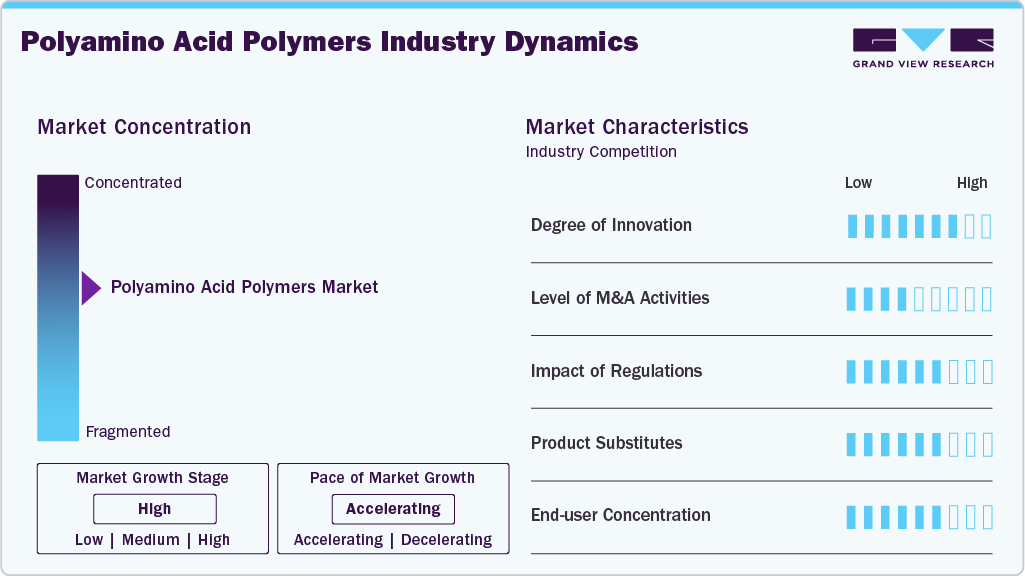
Chemical registration and compliance regulations such as the U.S. Toxic Substances Control Act (TSCA) and the EU REACH and CLP frameworks play an important role in shaping the Polyamino Acid Polymers market. These regulations require manufacturers to conduct regulatory assessments, maintain safety documentation, review impurities, and ensure proper classification and labeling before commercializing new polymer grades or production methods. As a result, compliance increases operational and administrative costs, particularly for smaller companies and new entrants. However, established manufacturers with strong regulatory expertise and existing substance approvals benefit from faster market access, improved customer confidence, and more efficient expansion across international markets.
Analyst Perspective
The polyamino acid polymers market is evolving from a primarily adoption-led phase to a value-focused growth stage, driven by rising demand for biodegradable and high-performance chemical solutions. Increasing use in water treatment, agriculture, detergents, personal care, healthcare, and industrial applications is strengthening market prospects as sustainability and regulatory compliance gain importance. Advances in PASP, PGA, and other bio-based polymers are expanding functionality and application scope. Competitive advantage will increasingly depend on innovation, production scalability, application expertise, and sustainability initiatives. While raw material volatility, pricing pressure, and competition remain challenges, companies with strong technology platforms and diversified end-use exposure are expected to secure long-term growth opportunities.
Product Type Insights
The polyaspartic acid (PASP) segment dominated the polyamino acid polymers market, accounting for a revenue share of 56.4% in 2025, and is forecast to grow at a 17.7% CAGR from 2026 to 2033. Segment growth is driven by continuous advances in fermentation technology and process automation, which enable precise control over molecular weight distribution and the D-/L-glutamic acid monomer composition. This allows manufacturers to tailor PGA grades for specific end-use requirements ranging from cosmetic formulations to industrial and medical applications. High-molecular-weight variants provide superior water retention and barrier functionality, while customized grades improve formulation stability and performance. These capabilities support product differentiation, enhance application efficiency, and strengthen the role of polyamino acid polymers in high-value, sustainability-focused markets.
The polyglutamic acid (PGA) polyamino acid polymers segment is expected to expand at a 19.0% CAGR over the forecast period. PASP represents a significant product segment within the market, driven by its biodegradability, water solubility, and environmental sustainability. Demand is increasing as industries seek alternatives to phosphate-based, non-biodegradable chemicals that comply with environmental regulations and support sustainability objectives. PASP is extensively utilized in water treatment, agriculture, and industrial applications for its ability to inhibit scale formation, reduce corrosion, and enhance nutrient efficiency. As a fully biodegradable substitute for petroleum-based materials such as polyacrylic acid (PAA) and sodium polyacrylate, PASP decomposes into harmless natural compounds within weeks, making it well aligned with circular economy and environmental compliance requirements.
Application Insights
The water treatment segment led the polyamino acid polymers industry, accounting for 37.1% of the revenue share in 2025, and is projected to grow at a 17.9% CAGR from 2026 to 2033. The water treatment segment is gaining traction due to the increasing demand for sustainable, biodegradable alternatives to conventional treatment chemicals. Polyamino acid polymers, particularly PGA, are utilized as dispersants, scale inhibitors, flocculants, and chelating agents in industrial and municipal water treatment systems. Their biodegradability, low toxicity, and ability to improve water treatment efficiency align with tightening environmental regulations and the growing emphasis on reducing the ecological impact of treatment operations.

The biomedical & specialty segment is expected to grow at the fastest CAGR of 20.0% over the forecast period.The biomedical and specialty segment represents a high-value application area for polyamino acid polymers, supported by increasing demand for advanced biomaterials in regenerative medicine, tissue engineering, drug delivery, wound care, and implantable devices. Polyamino acid polymers offer excellent biocompatibility, biodegradability, and tunable mechanical properties, making them suitable for scaffolds, hydrogels, bioinks, and controlled-release therapeutic systems. Growing investment in precision medicine, 3D bioprinting, and next-generation tissue repair technologies is further accelerating the adoption of amino acid-based polymer materials across biomedical applications.
Regional Insights
The Asia Pacific polyamino acid polymers market held the largest revenue share of 42.8% in 2025. The region is expected to grow at a CAGR of 19.4% over the forecast period. Rapid industrialization and continued expansion of manufacturing activities are supporting the strong growth of the Asia Pacific market. According to UNIDO, the region remained a key global manufacturing center in 2025, with robust production growth across major economies. This industrial ecosystem is driving demand for polyamino acid polymers such as PGA and PASP in specialty chemicals, water treatment, agrochemicals, and industrial formulations. Rising urbanization, expanding consumer markets, and increasing preference for biodegradable, high-performance materials are further accelerating adoption across healthcare, personal care, and environmental applications throughout the region.

Steady growth in agricultural production and increasing adoption of resource-efficient farming practices are driving demand for polyamino acid polymers in India. According to the Economic Survey 2025-26, expansion in agriculture and allied activities, supported by favorable monsoon conditions and productivity improvements, is strengthening the use of PASP-based solutions for micro-irrigation, soil conditioning, and nutrient management. Government initiatives promoting water conservation technologies, along with the transition toward high-value crops and precision agriculture, are further encouraging demand for biodegradable additives that enhance water retention and fertilizer efficiency.
North America Polyamino Acid Polymers Market Trends
North America is a key growth region for the polyamino acid polymers industry, supported by strong demand from advanced healthcare and specialty material applications. The region’s high healthcare expenditure and emphasis on premium medical products are driving the adoption of PGA and PASP in biomedical devices, wound management, drug delivery systems, and other high-value applications. Growing preference for biocompatible and biodegradable materials is further strengthening market demand across performance-focused healthcare sectors. The market is also benefiting from increasing utilization of polyamino acid polymers in personal care and cosmetic formulations. Rising consumer preference for sustainable, multifunctional, and skin-friendly ingredients is encouraging the use of PGA and PASP in skincare, haircare, moisturizing products, cleansing formulations, and hydrogel-based systems. Their excellent water-retention capacity, film-forming properties, biodegradability, and controlled-release performance continue to support wider adoption across innovative beauty and specialty formulation applications in North America.
U.S. Polyamino Acid Polymers Market Trends
Expansion of advanced healthcare manufacturing and biomedical innovation is significantly driving demand for polyamino acid polymers in the U.S. Increasing utilization of these materials in drug delivery systems, regenerative medicine, wound care products, and hydrogel-based formulations is accelerating market growth. Strong healthcare expenditure, extensive access to medical services, and a well-established clinical infrastructure continue to support the adoption of high-performance biomaterials. Polyamino acid polymers are increasingly preferred for specialty medical applications due to their ability to enhance therapeutic efficacy, improve material-handling characteristics, and support better patient outcomes.
Europe Polyamino Acid Polymers Market Trends
Europe's polyamino acid polymers industry is expanding due to increasing adoption of biodegradable and biocompatible materials in healthcare, medical devices, drug delivery, and regenerative medicine applications. Demand is also rising in personal care and cosmetics, where these polymers are valued for their moisturizing, conditioning, and film-forming properties. Additionally, stringent sustainability policies, circular economy initiatives, and growing preference for bio-based, environmentally responsible ingredients are encouraging broader use of polyamino acid polymers across industrial, healthcare, and consumer product sectors throughout the region.
Central & South America Polyamino Acid Polymers Market Trends
Growing consumer markets, improving healthcare infrastructure, and rising preference for environmentally friendly ingredients are driving demand for polyamino acid polymers across Central & South America. These polymers are increasingly utilized in personal care, healthcare, household cleaning, water treatment, and specialty industrial applications due to their biodegradability and functional benefits. Expanding use in skincare, haircare, wound care, and drug delivery products is further supporting market growth, while strong demand from cosmetics and healthcare sectors continues to encourage the adoption of high-performance specialty polymer formulations.
Middle East and Africa Polyamino Acid Polymers Market Trends
Increasing consumer preference for biodegradable and high-performance ingredients is driving demand in the Middle East & Africa polyamino acid polymers industry. Rising adoption of sustainable formulations across FMCG, healthcare, and personal care applications is supporting the use of polyamino acid polymers in detergents, cosmetics, hygiene products, and specialty cleaning solutions. Growing urban populations and expanding industrial activities are further encouraging the transition toward environmentally responsible additives. Additionally, ongoing investments in water treatment, sanitation infrastructure, and healthcare services are strengthening demand for advanced polymer technologies that offer improved efficiency, safety, and regulatory compliance across diverse end-use sectors.
Key Polyamino Acid Polymers Company Insights
Some of the key players operating in the market include Bloomage Biotechnology Corp., Ltd. and Nanjing Shineking Biotech Co., Ltd.
-
Bloomage Biotechnology Corp., Ltd. participates in the polyamino acid polymers market through its extensive biotechnology and biomaterials portfolio, which includes amino acids, polypeptides, proteins, nucleotides, and other bioactive ingredients. Supported by strong R&D capabilities and a global commercial presence, the company serves the pharmaceutical, cosmetic, medical device, and food industries with advanced bio-based material solutions.
-
Nanjing Shineking Biotech Co., Ltd. is a biotechnology manufacturer focused on polyamino acid polymers, including polyglutamic acid (PGA). The company supplies products for cosmetics, agriculture, healthcare, water treatment, and industrial applications. Its emphasis on bio-based innovation, sustainable polymer technologies, and commercial-scale production supports its strong presence in the global market.
Ecovia Bio & Yuanlian are some of the emerging participants in the polyamino acid polymers market.
-
Ecovia Bio is a biotechnology company focused on producing γ-polyglutamic acid (γ-PGA)-based biopolymers for applications in personal care, agriculture, hygiene, water treatment, and industrial markets. Leveraging advanced fermentation technology, the company offers biodegradable, bio-based alternatives to conventional synthetic polymers, meeting the growing demand for sustainable, high-performance material solutions.
-
Yuanlian Chemical is a growing participant in the polyamino acid polymers industry, with a focus on polyaspartic acid (PASP) and related biodegradable additives. The company serves water treatment, agriculture, detergent, and industrial sectors, offering environmentally friendly solutions for scale control, dispersion, and nutrient management, supported by ongoing R&D and capacity expansion initiatives.
Key Polyamino Acid Polymers Companies
The following key companies have been profiled for this study of the polyamino acid polymers market.
-
Bloomage Biotechnology Corp., Ltd.
-
Vedan Biotechnology Corporation Co., Ltd.
-
Shandong Freda Biotechnology
-
Nanjing Shineking Biotech Co., Ltd.
-
Ecovia Bio
-
Yuanlian Chemical
-
Hebei Think-Do Chemicals
-
Shandong ThFine Chemical Co., Ltd
-
Shijiazhuang Lemandou Chemicals Co., Ltd.
Competitive Benchmarking
Operating Strategies
Competitive Edge
Weaknesses
Mature Players: Bloomage Biotechnology Corp., Ltd.; Vedan Biotechnology Corporation Co., Ltd.; Shandong Freda Biotechnology; Nanjing Shineking Biotech Co., Ltd.; Shijiazhuang Lemandou Chemicals Co.
- Extensive portfolios of polyamino acid polymers, including polyglutamic acid (PGA), polyaspartic acid (PASP), and related biodegradable functional materials for water treatment, agriculture, personal care, healthcare, and industrial applications.
- Continuous investment in biotechnology-based production processes, product performance enhancement, and sustainable polymer innovation.
- Large-scale manufacturing capabilities and established distribution networks supporting global commercial demand across multiple end-use industries.
- Strong expertise in fermentation technologies, amino acid chemistry, and biodegradable polymer development.
- Economies of scale and integrated production facilities enable cost competitiveness and consistent product quality.
- Well-established customer relationships and diversified presence across water treatment, agriculture, cosmetics, healthcare, and specialty chemical sectors.
- Exposure to fluctuations in raw material availability and fermentation feedstock costs can impact profitability.
- Increasing regulatory requirements related to environmental compliance, product registration, and sustainability standards require ongoing investment.
- Dependence on demand growth from water treatment, agriculture, and consumer product industries may affect market stability during economic slowdowns.
Emerging Players: Ecovia Bio; Yuanlian Chemical; Hebei Think-Do Chemicals; Shandong ThFine Chemical Co., Ltd.
- Focus on polyamino acid polymers such as polyaspartic acid (PASP), polyglutamic acid (PGA), and related biodegradable specialty additives for water treatment, agriculture, detergents, and industrial applications.
- Emphasis on cost-effective production, customized formulations, and application-specific solutions tailored to regional customer requirements.
- Expanding product portfolios through investments in green chemistry, biodegradable polymer technologies, and sustainable performance additives.
- Strong specialization in environmentally friendly polymer technologies aligned with tightening sustainability and regulatory requirements.
- Flexible manufacturing operations enable faster product customization and responsiveness to niche market opportunities.
- Competitive pricing strategies support penetration into developing markets and emerging application segments.
- Limited global brand recognition and smaller distribution networks compared to established multinational chemical companies.
- Lower production capacities may restrict participation in large-scale supply contracts and global procurement programs.
- Greater dependence on regional markets and narrower product portfolios can increase exposure to competitive and demand fluctuations.
Recent Developments
-
In May 2026, Hebei Think-Do Chemicals launched its Phase II expansion project to increase production capacity for biodegradable chelating agents and polyamino acid polymer products. The investment enhances manufacturing efficiency and strengthens the company’s ability to meet rising demand for sustainable specialty chemicals. The expansion further supports the supply of environmentally friendly solutions, including polyaspartic acid-based products, across water treatment, agriculture, and industrial applications.
-
In September 2025, Ecovia Bio commissioned a new commercial-scale production facility in Livonia, Michigan, establishing the first dedicated U.S. manufacturing site for polyglutamic acid (PGA) and its derivatives. The investment enhances domestic production capacity, strengthens local supply security, and reduces lead times for downstream formulators. It also supports the growing demand for biodegradable polymer solutions across water treatment, personal care, agricultural, and specialty industrial applications.
Polyamino Acid Polymers Market Report Scope
Report Attribute
Details
Market size in 2025
USD 638.6 million
Estimated market size in 2026
USD 681.9 million
Projected market size by 2033
USD 2,206.8 million
Growth rate
CAGR of 18.3% from 2026 to 2033
Historical data
2021 - 2025
Forecast period
2026 - 2033
Quantitative units
Revenue in USD million, volume in tons, and CAGR from 2026 to 2033
Report coverage
Revenue & volume forecast, competitive landscape, growth factors, and trends
Segments covered
Product type, application, region
Regional scope
North America; Europe; Asia Pacific; Central & South America; Middle East & Africa
Country Scope
U.S.; Canada; Mexico; Germany; UK; France; Italy; Spain; China; India; Japan; South Korea; Australia; Brazil; Argentina; Saudi Arabia; UAE; South Africa
Key companies profiled
Bloomage Biotechnology Corp., Ltd.; Vedan Biotechnology Corporation Co., Ltd.; Shandong Freda Biotechnology; Nanjing Shineking Biotech Co., Ltd.; Ecovia Bio; Yuanlian Chemical; Hebei Think-Do Chemicals; Shandong ThFine Chemical Co., Ltd.; Shijiazhuang Lemandou Chemicals Co., Ltd.
Customization scope
Free report customization (equivalent to up to 8 analyst working days) with purchase. Addition or alteration to country, regional & segment scope
Pricing and purchase options
Avail customized purchase options to meet your exact research needs. Explore purchase options
Global Polyamino Acid Polymers Market Report Segmentation
This report forecasts revenue & volume growth at the global, regional, and country levels and provides an analysis of the latest industry trends across sub-segments from 2021 to 2033. For this study, Grand View Research has segmented the global polyamino acid polymers market report based on product type, application, and region:

-
Product Type Outlook (Volume, Tons; Revenue, USD Million, 2021 - 2033)
-
Polyglutamic Acid (PGA)
-
Polyaspartic Acid (PASP)
-
-
Application Outlook (Volume, Tons; Revenue, USD Million, 2021 - 2033)
-
Personal Care & Cosmetics
-
Skincare
-
Haircare
-
Anti-aging Formulation
-
Sunscreen & UV-protection formulations
-
Sheet masks & dermal delivery systems
-
-
Water Treatment
-
Scale inhibitors (cooling towers, boilers)
-
Corrosion inhibition systems
-
Dispersants for suspended solids
-
Industrial wastewater treatment
-
-
Detergents & Cleaners
-
Laundry detergents
-
Automatic dishwashing detergents
-
Industrial & institutional cleaners (I&I)
-
Hard surface cleaners
-
-
Agriculture
-
Fertilizer additives (nutrient retention enhancers)
-
Soil conditioners (moisture retention, structure improvement)
-
Controlled-release fertilizers
-
Plant growth stimulants
-
-
Biomedical & Specialty
-
Drug delivery systems (nanocarriers, hydrogels)
-
Tissue engineering scaffolds
-
Wound care materials
-
Surgical materials / bio-adhesives
-
-
Other applications
-
-
Regional Outlook (Volume, Tons; Revenue, USD Million, 2021 - 2033)
-
North America
-
U.S.
-
Canada
-
Mexico
-
-
Europe
-
Germany
-
UK
-
France
-
Italy
-
Spain
-
-
Asia Pacific
-
China
-
India
-
Japan
-
South Korea
-
Australia
-
-
Central & South America
-
Brazil
-
Argentina
-
-
Middle East & Africa
-
Saudi Arabia
-
UAE
-
South Africa
-
-
Research Methodology
Segment Definition
Segment - Product Type
Revenue capture definition
Polyglutamic Acid (PGA)
Revenue is generated from the sale of polyglutamic acid for use in water treatment, personal care, agriculture, and specialty formulations. Demand is driven by PGA’s biodegradability, moisture-retention capability, and functional performance in applications requiring sustainable, high-value ingredients. Growth is further driven by increasing use in cosmetics, fertilizer additives, skincare formulations, and environmentally friendly industrial products, where mildness, film-forming ability, and natural polymer characteristics are important.
Polyaspartic Acid (PASP)
Revenue is generated through the supply of polyaspartic acid for water treatment, detergents, scale inhibition, coatings, and industrial additives. PASP is valued for its strong chelating, dispersing, and anti-scaling properties, making it suitable for applications that require high efficiency and low environmental impact. Sales are supported by rising demand for biodegradable water-treatment solutions, cleaning formulations, agricultural inputs, and industrial process chemicals, in which performance, sustainability, and regulatory compliance are key purchasing factors.
Segment - Application
Revenue capture definition
Personal Care & Cosmetics
Revenue is captured through polyaspartic acid (PASP) supplied for skincare formulations, hair care products, cosmetics, personal hygiene products, and specialty beauty applications. Value is driven by moisture retention, biodegradability, conditioning performance, formulation stability, and compatibility with sustainable product requirements. Demand is supported by growing consumer preference for eco-friendly ingredients, increasing adoption of clean-label cosmetics, and rising investments in premium personal care formulations.
Water Treatment
Revenue is generated through PASP utilized in industrial water treatment, cooling water systems, boiler treatment, desalination facilities, and municipal water processing applications. Pricing is influenced by scale inhibition efficiency, corrosion control, dispersion performance, biodegradability, and compliance with environmental regulations. Growth is supported by increasing water scarcity concerns, expanding industrial water reuse initiatives, and rising investments in sustainable water management infrastructure.
Detergents & Cleaners
Revenue is captured through PASP supplied for household detergents, industrial cleaners, dishwashing formulations, laundry products, and specialty cleaning solutions. Value is driven by chelation performance, anti-scaling properties, detergent efficiency enhancement, biodegradability, and reduced environmental impact. Demand is supported by growing consumption of household cleaning products, stricter regulations on phosphate-based additives, and increasing preference for environmentally responsible cleaning formulations.
Agriculture
Revenue is generated through PASP used in fertilizers, soil conditioners, micronutrient delivery systems, irrigation applications, and crop protection formulations. Pricing is supported by nutrient retention capabilities, water management efficiency, soil compatibility, biodegradability, and improved agricultural productivity. Demand is strengthened by increasing focus on sustainable farming practices, rising fertilizer efficiency requirements, and growing adoption of advanced agricultural input technologies across commercial farming operations.
Biomedical & Specialty
Revenue is captured through PASP utilized in drug delivery systems, biomedical materials, tissue engineering applications, medical formulations, and specialty industrial products. Value is driven by biocompatibility, non-toxicity, biodegradability, functional versatility, and regulatory compliance. Growth is supported by expanding research activities, increasing demand for advanced biomaterials, and the development of innovative healthcare and specialty chemical applications requiring sustainable polymer technologies.
Other Applications
Revenue comes from specialized applications, including oilfield chemicals, industrial processing aids, coatings additives, dispersants, corrosion inhibitors, and emerging advanced material technologies. Value is supported by application-specific performance benefits, operational efficiency improvements, environmental compatibility, and product innovation. These niche segments create opportunities for premium formulations, technological differentiation, and diversified revenue streams across multiple industrial end-use markets.
Estimation Model
Layer Name
Key Question
Description
Top-Down Polyamino Acid Polymers Demand Assessment Layer
What defines market boundaries?
This layer establishes global polyamino acid polymer demand across water treatment, agriculture, detergents, personal care, healthcare, oilfield chemicals, industrial processing, and specialty chemical applications. Demand is filtered through macro drivers such as environmental regulations, water conservation initiatives, sustainable agriculture adoption, industrialization, urbanization, and increasing preference for biodegradable chemical solutions. This defines the total addressable market based on polyamino acid polymer consumption across key end-use sectors.
End-Use Demand Validation Layer
Where is demand generated?
This layer maps demand across scale inhibition and dispersion systems, fertilizer additives, detergent formulations, personal care ingredients, water treatment chemicals, medical materials, and industrial process additives. Market sizing is aligned with performance requirements, including biodegradability, chelation efficiency, anti-scaling performance, nutrient delivery enhancement, low toxicity, process stability, and environmental compatibility across diverse operating conditions.
Consumption-to-Revenue Conversion Layer
Who captures market revenue?
This layer translates production volumes and application consumption into revenue potential using polymer dosage rates, formulation requirements, molecular weight grades, functional modifications, and application-specific performance specifications. Pricing differentials across commodity-grade, industrial-grade, agricultural-grade, and specialty polyamino acid polymer formulations are incorporated to estimate value realization across manufacturers, formulators, distributors, and downstream end users.
Regional Demand Verification Layer
How are assumptions validated?
This layer validates demand distribution across Asia Pacific, North America, Europe, Latin America, and the Middle East & Africa by assessing water treatment investments, agricultural modernization programs, industrial manufacturing growth, detergent and personal care consumption, and sustainability-driven regulatory frameworks. Regional infrastructure development, environmental compliance requirements, supply chain dynamics, and end-use industry expansion are used to verify market penetration assumptions and strengthen forecast reliability.
Delivered Customizations
This report has been delivered with the following In-depth customizations
Client Request
Customization Delivered
Value Adds
Detailed Commercial Technology
Delivered a detailed assessment of commercial production technologies used for polyglutamic acid and polyaspartic acid manufacturing, including microbial fermentation platforms, strain development approaches, downstream purification methods, process yield optimization techniques, and product performance characteristics. The analysis evaluated technology maturity, commercialization status, scalability potential, and application suitability across agriculture, personal care, healthcare, and industrial sectors.
Supported technology evaluation and investment planning. Identified commercially viable production routes, operational advantages, and technology differentiation factors. Improved understanding of process economics, scalability constraints, and future innovation pathways. Enabled informed decisions regarding technology licensing, partnerships, and production expansion strategies.
Production Capacity Benchmarking
Conducted comprehensive benchmarking of major polyamino acid polymer producers based on installed production capacity, capacity expansion initiatives, manufacturing footprint, process integration levels, product specialization, and regional supply capabilities. The study compared competitive manufacturing positions across PGA and PASP product categories.
Supported competitive intelligence and supply-side market assessment. Identified leading production hubs, capacity concentration trends, and potential supply-demand imbalances. Improved understanding of manufacturing competitiveness and future capacity expansion strategies. Enabled informed sourcing, partnership, and market entry decisions.
Pricing Analysis
Delivered detailed pricing analysis covering polyglutamic acid, polyaspartic acid, agricultural-grade formulations, cosmetic-grade products, and specialty industrial variants across key global markets. The assessment evaluated fermentation feedstock costs, production economics, purification requirements, regional supply-demand dynamics, logistics expenses, and end-use industry demand trends influencing market pricing structures.
Supported procurement optimization and pricing strategy development. Improved understanding of production cost drivers, premium product pricing differentials, and regional price variations. Assisted in supplier evaluation, contract negotiations, and profitability assessment. Enabled proactive management of raw material, manufacturing, and supply chain cost risks.
Frequently Asked Questions About This Report
The global polyamino acid polymers market size was valued at USD 638.6 million in 2025 and is estimated at USD 681.9 million for 2026.
The global polyamino acid polymers market is expected to grow at a CAGR of 18.3% from 2026 to 2033, reaching USD 2,206.8 million by 2033.
The polyaspartic acid (PASP) polyamino acid polymers segment dominated the market across product type segmentation in terms of revenue, accounting for 56.4% market share in 2025, and is forecast to grow at a 17.7% CAGR from 2026 to 2033.
The Asia Pacific polyamino acid polymers industry held the largest revenue share of 42.8% in 2025. The region is expected to grow at a CAGR of 19.4% over the forecast period.
Increasing demand for polyamino acid polymers from pharmaceutical and biotechnology companies, cosmetics and skincare manufacturers, water treatment facilities, agriculture, construction, and industrial processing sectors is supporting market growth.
Major companies such as Bloomage Biotechnology Corp., Ltd., Vedan Biotechnology Corporation Co., Ltd., Shandong Freda Biotechnology, Nanjing Shineking Biotech Co., Ltd., Ecovia Bio, Yuanlian Chemical, Hebei Think-Do Chemicals, Shandong ThFine Chemical Co., Ltd., Shijiazhuang Lemandou Chemicals Co., Ltd., and others are the key market players.
The water treatment segment led with a 37.1% revenue share in 2025, while biomedical & specialty is the fastest-growing application.
Rapid advancement of targeted therapeutic technologies is emerging as a key trend in the polyamino acid polymers market. Manufacturers are increasingly developing stimuli-responsive PGA-based nanoparticles capable of selectively releasing active compounds within specific biological environments, particularly tumor microenvironments.
Growing demand for environmentally friendly water treatment chemicals presents a significant opportunity for the polyamino acid polymers market. Polyaspartic acid (PASP) and polyglutamic acid (PGA) are increasingly gaining attention as biodegradable alternatives to conventional phosphonate- and acrylic-based additives used in industrial water treatment systems. Rising regulatory pressure on phosphorus-containing chemicals, increasing investments in wastewater treatment infrastructure, and stronger sustainability targets across industries such as power generation, oil & gas, chemicals, and municipal utilities are supporting the adoption of bio-based scale inhibitors and dispersants.
About the Author(s)
Plastics, Polymers & Resins Research Team
Bulk Chemicals · Plastics, Polymers & ResinsThis report was authored by the plastics, polymers & resins research team at Grand View Research - comprising two research analysts, one senior research analyst, and one industry expert - with specialized expertise in the plastics, polymers & resins segment of the bulk chemicals industry. All findings are based on proprietary bulk chemicals databases, executive interviews, and regulatory analysis, subject to internal peer review prior to publication.
Last Updated:
Speak to Analyst


Customize this report to your needs — add regions, segments, or data points, with 20% free customization.
Or view our licence options:


ISO 9001:2015 & 27001:2022 Certified
We are GDPR and CCPA compliant! Your transaction & personal information is safe and secure. For more details, please read our privacy policy.


