
- Home
- »
- Biotechnology
- »
-
Synthetic DNA Market Size, Share, Trends Report 2026-2033GVR Report cover

Synthetic DNA Market (2026 - 2033)
Size, Share & Trends Analysis Report By Product & Services (Oligonucleotide Synthesis, Gene Synthesis), By Technology, By Application (Research & Development, Therapeutics & Vaccines), By End Use, By Region, And Segment Forecasts
Market Size, 2025
$4.1BMarket Estimate, 2026
$4.8BMarket Forecast, 2033
$14.2BCAGR, 2026–2033
16.9%Synthetic DNA Market Summary
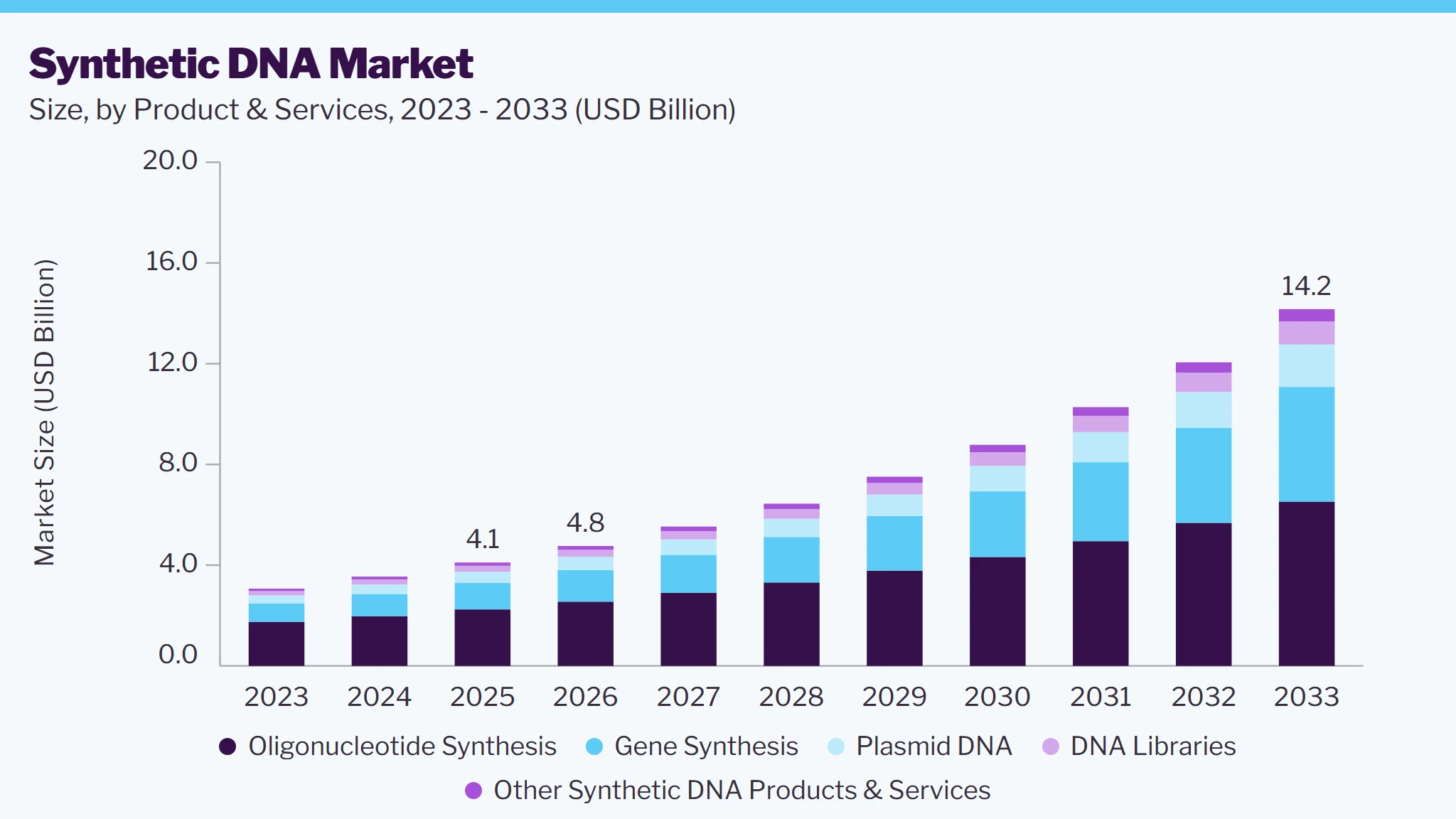
The global synthetic DNA market size was valued at USD 4.1 billion in 2025 and is projected to grow from USD 4.8 billion in 2026 to USD 14.2 billion by 2033, at a CAGR of 16.9% from 2026 to 2033. North America dominated the market, accounting for a revenue share of 39.8% in 2025. Investment in synthetic DNA development, advances in targeted delivery technologies, and growing adoption of programmable cell-engineering approaches for precision medicine.
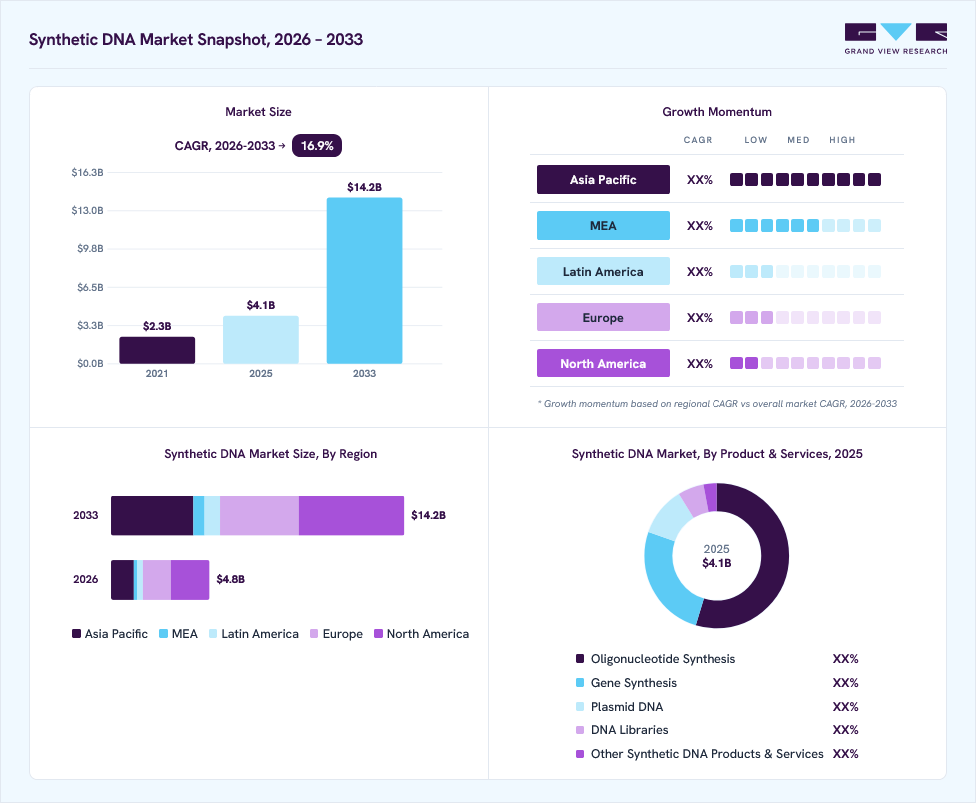 Source: Grand View Research, IR Documents, Primary Interviews, Paid DatabasesTo learn more about this report,
 Download Free Sample Report
 Key Market Trends & Insights
- By product and services: The oligonucleotide synthesis segment held the largest revenue share of 54.6% in 2025.
- By technology: The chemical/solid-phase synthesis segment held the largest share of 56.9% in 2025.
- By application: The research & development segment held the largest share of 43.5% in 2025.
- By end use: The pharmaceutical & biotechnology companies segment held the largest revenue share of 41.4% in 2025.
Regional Highlights
- Largest regional market: North America (39.8% revenue share, 2025)
- Fastest-growing regional market: Asia Pacific (highest CAGR, 2026-2033)
- By country: The U.S. held the largest market share in 2025
Market Size & Forecast
- Market size in 2025: USD 4.1 Billion
- Estimated market size in 2026: USD 4.8 Billion
- Projected market size by 2033: USD 14.2 Billion
- CAGR (2026-2033): 16.9%
Three ways to get this report
Buy it, customize it, or ask a question.Ask an Analyst
A direct answer, usually in 1 working day
- AccessReport author, directly
- Reply timeWithin 1 working day
- No sales callDirect answer only
- FormatEmail reply
- CostFree, no cost
Get the Full Report
What the study covers
- FormatsPDF · Excel · Dashboard
- Timeline2026–2033 annual, 2025 base
- Coverage20+ countries, 5 regions
- Companies10+ key players profiled
Customize the Report
20% free customization
- IncludeCountries, segments, points
- TailorTo your product definition
- ExtendDeeper competitor detail
- OrA fully bespoke study
- Turnaround5–10 working days
 To learn more about this report, Download Free Sample Report
 Market Dynamics
The synthetic DNA market is witnessing significant growth, driven by increasing demand for custom DNA sequences across synthetic biology, gene editing, drug discovery, diagnostics, and therapeutic development. Growing adoption of CRISPR-based technologies and advances in genetic engineering are increasing the need for high-quality synthetic genes, oligonucleotides, and complex DNA constructs. In addition, improvements in enzymatic and chemical DNA synthesis are enabling longer, more accurate, and scalable DNA production, supporting applications in biopharmaceutical research, cell and gene therapy, and molecular diagnostics. The expanding use of synthetic DNA in research and commercial biotechnology applications is expected to support market growth over the forecast period.
Growing demand for synthetic DNA in gene therapy, mRNA therapeutics, vaccines, and biopharmaceutical applications is driving the synthetic DNA market by increasing the need for longer, higher complexity, high-purity synthetic DNA. This demand is also encouraging collaborations to improve the scale and quality of synthetic DNA production. For instance, in March 2025, Syngoi Technologies and Ribbon Bio entered a strategic collaboration to develop and manufacture gram-scale, clinical- and commercial-ready synthetic DNA for gene therapies. The growing use of synthetic DNA in therapeutic development is supporting market growth.
“Our collaboration with Syngoi is yet another transformative step in the field of genetic medicine. Syngoi’s manufacturing capabilities will enable us together to produce synthetic DNA through a streamlined process that enables our customers to improve the safety profile of their innovative gene therapies, to deliver transformative next-generation solutions for the health of people and the planet. We look forward to working together to advance our technology.” - Jodi Barrientos, CEO of Ribbon Bio.
Challenges in achieving high accuracy and purity remain a key restraint for the synthetic DNA market, particularly as DNA constructs become longer and more complex. According to an article published by Ribbon Bio in August 2026, conventional phosphoramidite-based synthesis and plasmid-based workflows can introduce sequence errors, truncated products, endotoxins, host proteins, and other contaminants. These issues increase quality-control requirements, production time, and costs, creating challenges in producing long, complex, and therapeutic-grade synthetic DNA.
The use of synthetic DNA for data storage is generating opportunities for the synthetic DNA market by expanding its applications beyond healthcare and biotechnology. For instance, in March 2026, imec and Atlas Data Storage announced a strategic partnership to advance DNA-based data storage using scalable synthetic DNA synthesis technologies. This collaboration aims to develop high-density, long-term data storage solutions, creating new applications for synthetic DNA.
"To make DNA-based digital data storage viable, the synthesis throughput needs to scale by several orders of magnitude over today’s approach. To meet this challenge, we anchored our solution on silicon, leveraging the very large-scale integration benefits afforded by CMOS technology. Our collaboration with imec was crucial to build the nano device layer on top of our CMOS ASIC. Imec's 300mm silicon platform is key to reach the necessary throughput and scale.” - Siraj Nour ElAhmadi, Atlas Chief Operating Officer
Market Concentration & Characteristics
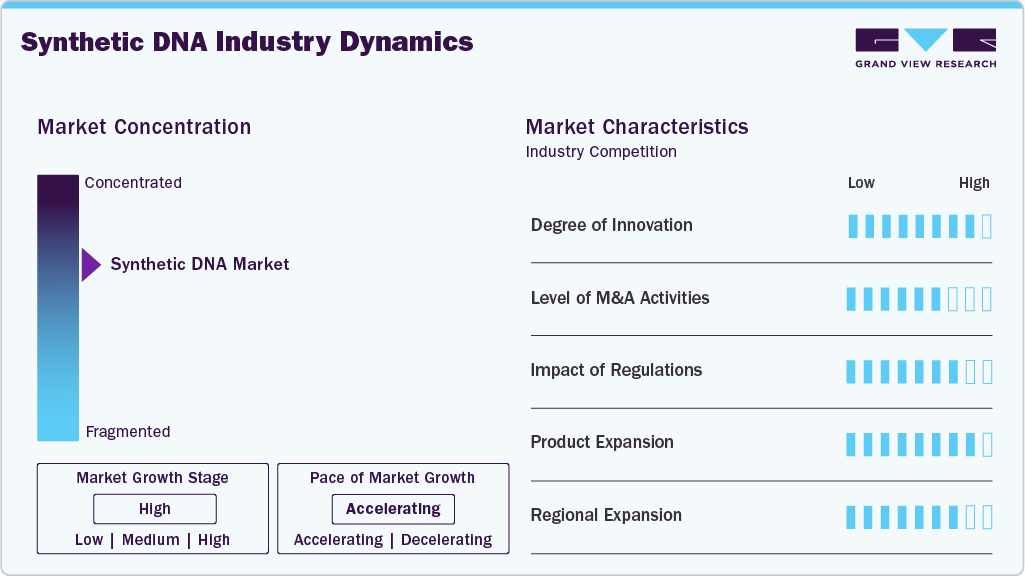
The degree of innovation in the synthetic DNA industry is high, driven by advances in DNA synthesis technologies, automation, and high-throughput sequence production. For instance, according to an article published in Nature Biotechnology in August 2026, researchers introduced a high-throughput DNA synthesis method that enables the parallel production of more than 1,000 distinct gene fragments in a single reaction. This advancement improves the scalability and efficiency of synthetic DNA production and supports applications in synthetic biology and genetic engineering.
The synthetic DNA market is witnessing M&A activity as companies invest in advanced DNA synthesis technologies. For instance, in January 2025, Maravai LifeSciences acquired the intellectual property and related assets of Molecular Assemblies, which developed enzymatic DNA synthesis technology. This acquisition added Molecular Assemblies’ Fully Enzymatic Synthesis™ technology to Maravai’s portfolio, strengthening Maravai’s enzymatic DNA synthesis capabilities and supporting the development of nucleic acid products for applications including synthetic DNA.
“Molecular Assemblies is the original leader in enzymatic oligo synthesis, with strong foundational IP. Their team has made great strides in designing and developing an enzymatic DNA synthesis platform with exciting technical advantages over traditional chemical synthesis. We plan to further evolve and enhance Molecular Assemblies’ workflows to push the limits of oligo length and purity, and to lower costs by vertically integrating NTPs and enzymes from our TriLink and Alphazyme businesses.”
-Trey Martin, CEO of Maravai LifeSciences.
 To learn more about this report, Download Free Sample Report
 The synthetic DNA market is increasingly influenced by biosecurity and sequence-screening requirements aimed at reducing the risk of misuse of synthetic nucleic acids. Regulatory frameworks address the screening of DNA sequences for potential sequences of concern, verification of customer legitimacy, and monitoring of synthetic nucleic acid orders. These requirements are shaping purchasing and screening practices across the industry while supporting responsible access to synthetic DNA and strengthening biosecurity controls.
The synthetic DNA market is witnessing product expansion through the introduction of longer and more complex DNA constructs. For instance, in October 2025, Ansa Biotechnologies launched its 50 kb Clonal DNA product, offering sequence-perfect synthetic DNA constructs of up to 50 kb through its enzymatic DNA synthesis platform. In addition, this launch expanded the available length range for synthetic DNA and supports applications in synthetic genomics, metabolic engineering, agriculture, and cell and gene therapy research.
“For years, scientists have been limited by what they could build, not what they could imagine. By delivering 50 kb sequence-perfect DNA in weeks, and guaranteeing it on time, we’re unlocking the next era of biological design, where imagination, not manufacturing, sets the limits.”
- Jason T. Gammack Chief Executive Officer of Ansa Biotechnologies
The synthetic DNA market is witnessing regional expansion as companies establish additional manufacturing and innovation capabilities to meet demand for synthetic DNA. For instance, in March 2026, 4basebio announced the lease of a new innovation hub and manufacturing facility in Cambridge, UK, dedicated to research-use and high-quality synthetic DNA manufacturing. Moreover, approximately 26,500-square-foot facility likely to include specialized laboratories and space for future expansion, strengthening 4basebio’s synthetic DNA manufacturing capacity and supporting applications in gene and cell therapies, genome editing, mRNA vaccines, and DNA vaccines.
Our customers rely on us to provide high quality synthetic DNA to meet demand for next generation genomic therapies including RNA therapeutics, cell and gene therapy, and vaccine development. This new facility strengthens our ability to support our customers as they advance their drug development through clinical phases. We're proud to be part of Cambridge's world-class life sciences ecosystem, and deliver on our commitment to becoming the partner of choice for our partners"
-Dr Amy Walker, Chief Executive Officer of 4basebio
Analyst Perspective
The synthetic DNA market is expected to witness high growth, driven by increasing demand for custom DNA sequences across biotechnology, pharmaceutical research, diagnostics, and synthetic biology applications. Growing adoption of gene synthesis for research, therapeutic development, and molecular biology is supporting market expansion. Advancements in DNA synthesis technologies, automation, sequence optimization, and high-throughput platforms are further improving synthesis efficiency, accuracy, and scalability. Market participants are focusing on product innovation, expanded synthesis capabilities, strategic collaborations, and advanced manufacturing platforms to address the evolving requirements of researchers, biotechnology companies, pharmaceutical manufacturers, and other end users.
Product & Services Insights
The oligonucleotide synthesis segment accounted for the largest revenue share of 54.6% in 2025, driven by increasing demand for custom DNA sequences across research, diagnostics, therapeutics, and synthetic biology applications. For instance, in May 2025, Oligo Factory launched a low-scale oligonucleotide synthesis capability for custom DNA and RNA oligonucleotides, expanding its synthesis capacity to support therapeutic, diagnostic, and life-science applications. Growing demand for customized oligonucleotides is expected to strengthen the segment’s position in the synthetic DNA market.
The gene synthesis segment is expected to register the fastest CAGR over the forecast period, supported by increasing demand for customized DNA constructs across synthetic biology, drug discovery, gene and cell therapy, and research applications. For instance, in May 2025, Bioneer announced the development of a gene synthesis technology capable of synthesizing and assembling DNA sequences up to 100 kb in length. The technology is designed to support complex genome design and high-throughput gene synthesis, expanding the scope of synthetic DNA applications.
Technology Insights
The chemical/solid-phase synthesis segment dominated the market with a share of 56.9% in 2025, driven by the established use of phosphoramidite chemistry in oligonucleotide production. The method enables controlled nucleotide addition on solid supports and is widely used for synthesizing custom DNA sequences. In addition, improvements in phosphoramidite chemistry and solid-support materials are improving synthesis efficiency and sequence quality.
The enzymatic DNA synthesis segment is expected to register the fastest CAGR over the forecast period. Growth is anticipated to be driven by increasing demand for longer and more complex DNA sequences for gene editing, cell therapy, and synthetic biology applications. For instance, in May 2026, 4basebio commercially launched its high-capacity enzymatic ssDNA platform, enabling production of DNA constructs up to 10,000 nucleotides for CRISPR-based gene editing and other genetic therapies. This launch demonstrates the increasing application of enzymatic DNA synthesis for long-form DNA production.
“The launch of our ssDNA platform marks a pivotal milestone in our mission to provide the foundational tools for genomic medicine and personalized therapies. By replacing legacy chemical synthesis with our scalable, cell-free enzymatic approach, we are empowering our partners to design therapies without the traditional constraints of length or sequence complexity. We are not just providing DNA; we are enhancing the reliability and safety profile required for life-changing therapeutics.”
- Amy Walker, CEO of 4basebio
Application Insights
The research & development segment dominated the market with the largest share of 43.5% in 2025, owing to its increasing use of synthetic DNA in genetic engineering, synthetic biology, drug discovery, and molecular research. For instance, in June 2025, Wellcome reported that UK researchers had begun developing technology to create the first synthetic human chromosome, with the work aimed at advancing research into human health and potential applications such as cell therapies. The development reflects the growing use of synthetic DNA in advanced biological research.
“Our DNA determines who we are and how our bodies work. With recent technological advances, the SynHG project is at the forefront of one of the most exciting areas of scientific research. Through creating the necessary tools and methods to synthesise a human genome, we will answer questions about our health and disease that we cannot even anticipate yet, in turn transforming our understanding of life and wellbeing.”
-Michael Dunn, Director of Discovery Research at Wellcome
The therapeutic & vaccines segment is expected to register the fastest CAGR over the forecast period, driven by increasing use of synthetic DNA in vaccine development, gene therapies, and other therapeutic applications. Synthetic DNA is used to design and produce plasmid DNA, gene constructs, and other genetic templates required for therapeutic development. In addition, growing investment in mRNA vaccines, personalized medicine, and cell and gene therapies is increasing the demand for synthetic DNA across therapeutic manufacturing and clinical development.
End Use Insights
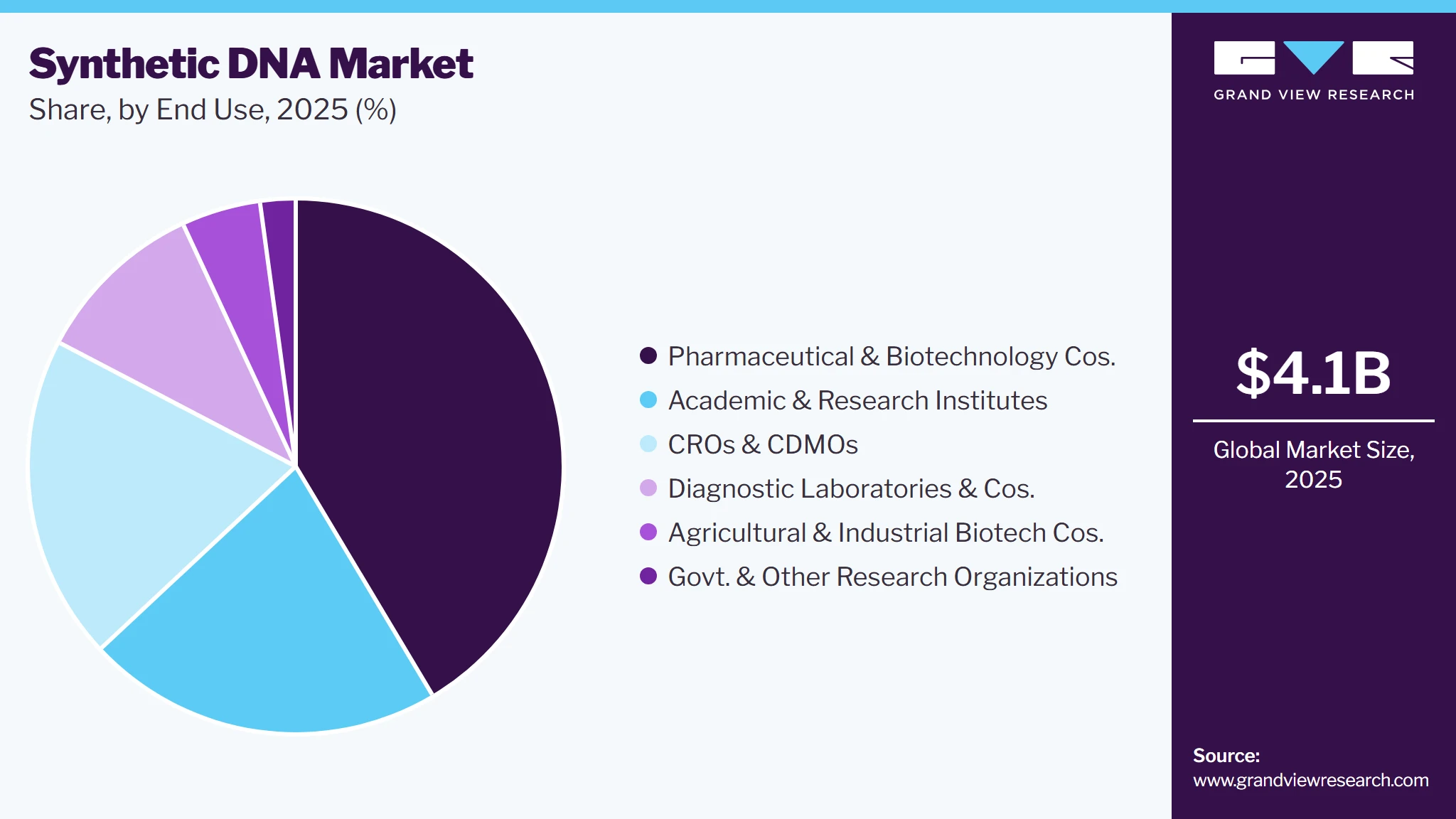
The pharmaceutical & biotechnology companies segment held the largest share of 41.4% in 2025, owing to increasing adoption of synthetic DNA in drug discovery, vaccine development, gene therapies, and biopharmaceutical research. For instance, in July 2024, Touchlight entered into a licensing agreement with GSK to provide access to its enzymatic dbDNA technology for the development and production of GSK’s mRNA-based products. The collaboration reflects growing adoption of synthetic DNA technologies by pharmaceutical companies.
“GSK is a global leader in vaccination, and we are delighted they have licensed our proprietary enzymatic dbDNA technology for the development and production of their mRNA-based products. The adoption of Touchlight’s enzymatic DNA is gathering pace and becoming an important part of the advanced therapy supply chain. Our technology delivers the speed, scalability and high-quality DNA products that are essential for the next generation of mRNA therapeutics”.
Jonny Ohlson, Executive Chair and Founder of Touchlight
 To learn more about this report, Download Free Sample Report
 The CROs & CDMOs segment is projected to witness the fastest CAGR from 2026 to 2033, driven by increasing outsourcing of drug discovery, preclinical research, therapeutic development, and manufacturing activities. These organizations use synthetic DNA for gene synthesis, molecular research, assay development, and production of genetic constructs for pharmaceutical programs. In addition, the expansion of outsourced research and biomanufacturing services is increasing demand for customized DNA synthesis capabilities among CROs and CDMOs.
Regional Insights
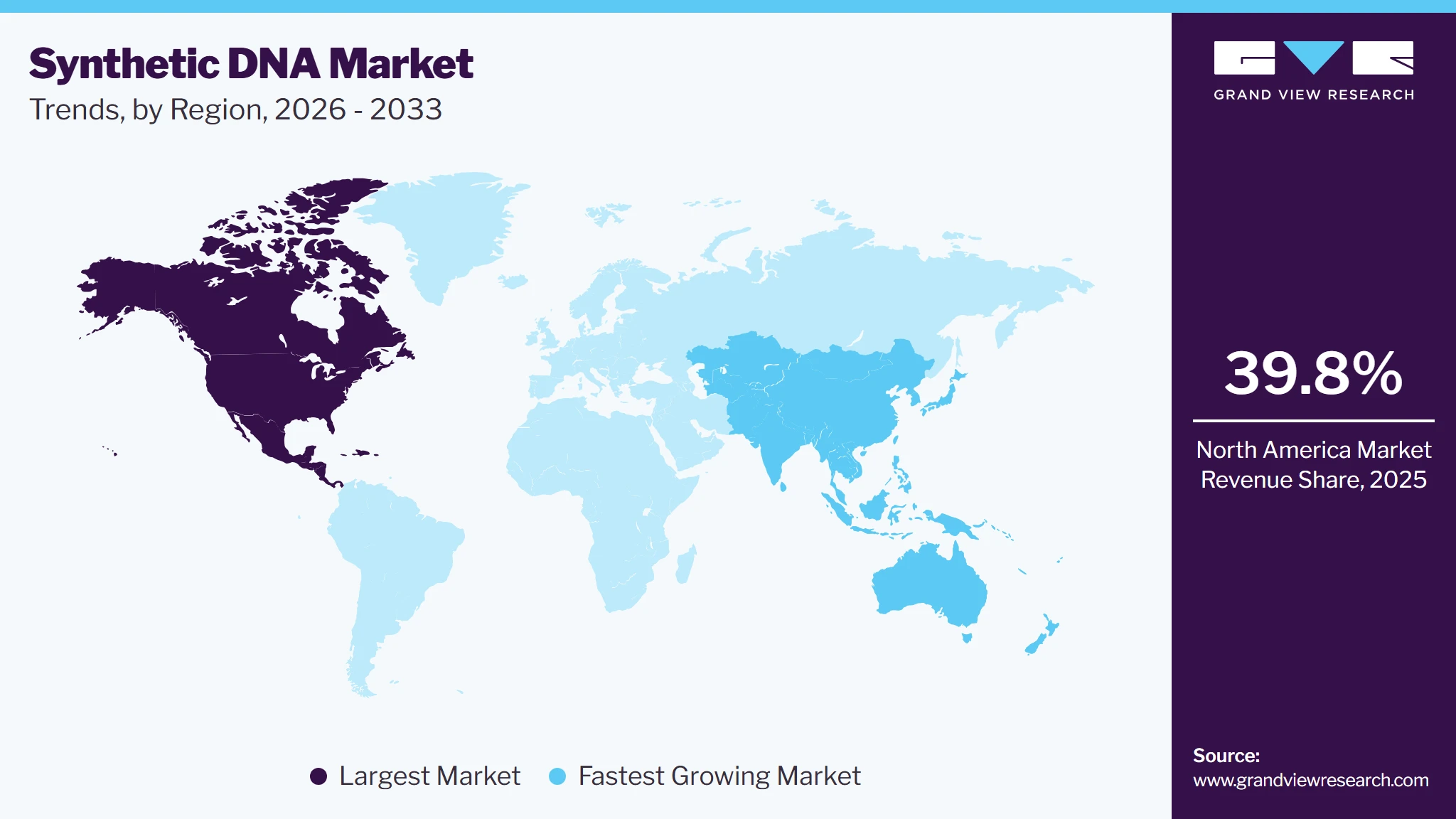
The North America synthetic DNA market dominated the global market, accounting for the largest share of 39.8% in 2025. The market is driven by strong synthetic biology activity, established DNA synthesis infrastructure, and demand from pharmaceutical and biotechnology companies. For instance, in May 2025, Twist Bioscience and Ginkgo Bioworks revised a three-year agreement valued at USD 15 million, under which Ginkgo will continue purchasing Twist’s synthetic DNA products and Twist will gain rights to certain long-DNA technologies. This agreement reinforces commercial demand for synthetic DNA and supports the development of longer DNA synthesis capabilities in the region.
 To learn more about this report, Download Free Sample Report
 “DNA synthesis is a core technology for synthetic biology and we’re happy to combine some of our long DNA technology with Twist to hopefully see more and varied offerings in the market Twist has been an amazing and close partner over many years for Ginkgo and this updated agreement enables us to keep that close relationship while having more flexibility in when and how we order DNA from Twist.”
-Jason Kelly, CEO of Ginkgo Bioworks.
U.S. Synthetic DNA Market Trends
The synthetic DNA industry in the U.S. is expected to grow over the forecast period, driven by the expansion of DNA synthesis into new commercial applications. For instance, in May 2025, Twist Bioscience spun out its DNA data storage business as Atlas Data Storage, which secured USD 155 million in seed financing to advance DNA-based data storage technology. This development reflects growing commercial interest in using synthetic DNA as a high-density medium for long-term data storage.
“There are many applications of synthetic DNA with the potential to have an incredible impact on the world. With this spin out, both Twist and Atlas are able to move with full force in growing those applications”
-Emily M. Leproust, Ph.D., CEO and co-founder of Twist.
Europe Synthetic DNA Market Trends
The synthetic DNA market in Europe was identified as a lucrative region, supported by advances in DNA synthesis technologies and emerging applications in data storage. For instance, in March 2026, Belgium-based imec entered into a strategic partnership with Atlas Data Storage to scale DNA-based data storage using synthetic DNA, with imec also investing in the company. In addition, this collaboration focuses on increasing DNA synthesis throughput through semiconductor-based technology, addressing a key requirement for commercial DNA data storage.
The UK synthetic DNA market is anticipated to grow over the forecast period, supported by established synthetic biology capabilities and investment in high-throughput DNA synthesis infrastructure. According to an economic impact evaluation published by BBSRC in October 2024, the Synthetic Biology for Growth programme invested in four DNA foundries and two centers focused on DNA synthesis and DNA construct development. In addition, the infrastructure supports automated DNA assembly, high-throughput gene synthesis, and construction of large DNA sequences for academic and industrial applications.
The synthetic DNA market in Germany is expected to show significant growth over the forecast period, supported by advances in synthetic biology and research into engineered DNA structures. For instance, in February 2026, researchers at the University of Cologne developed an artificial DNA base pair based on halogen bonding that could be incorporated into a growing DNA strand by a DNA polymerase. Moreover, this development expands the scope of synthetic DNA research for potential applications in synthetic biology, diagnostics, and therapeutics.
Asia Pacific Synthetic DNA Market Trends
The Asia Pacific synthetic DNA market is expected to register the fastest CAGR of 20.1% during the forecast period, supported by expanding synthetic biology research, rising demand for custom gene synthesis, and increasing DNA synthesis capacity. The region is also benefiting from greater adoption of synthetic DNA in research and development, therapeutics, diagnostics, and genetic engineering. Declining synthesis costs and improvements in high-throughput production are further supporting wider use of synthetic DNA across biotechnology applications.
The China synthetic DNA market is expected to show significant growth over the forecast period, supported by advances in DNA synthesis accuracy and the development of high-fidelity DNA production methods. For instance, in March 2026, researchers at the Chinese Academy of Sciences developed an automated magnetic-bead error-correction method for synthetic DNA, achieving up to 99.1% error-free DNA under optimized conditions. Moreover, this development addresses synthesis errors that can limit the production of longer and more complex DNA sequences, supporting applications in synthetic biology and genetic engineering.
The synthetic DNA market in Japan is supported by advances in long-DNA synthesis and increasing demand for complex genetic constructs. For instance, in January 2025, Japan-based Synplogen raised Series D financing from Meiji Holdings and Taiyo Holdings to advance its proprietary DNA synthesis and DNA library construction technologies. This financing supports the development of ultra-long and complex DNA synthesis capabilities for applications in gene therapy and biomanufacturing.
Latin America Synthetic DNA Market Trends
The synthetic DNA industry in Latin America is anticipated to witness gradual growth, supported by increasing adoption of gene synthesis and oligonucleotide technologies in academic and biotechnology research. Growing demand for customized DNA sequences, primers, probes, and genetic constructs is expanding the use of DNA synthesis services. Such improvements in synthesis automation and access to local molecular biology infrastructure are also supporting research and development activities across the region.
MEA Synthetic DNA Market Trends
The synthetic DNA market in Middle East and Africa (MEA) is expected to witness steady growth, supported by expanding genomics research, increasing biotechnology investment, and rising demand for customized DNA in research and genetic medicine. Growth in gene therapy and molecular diagnostics is increasing the need for synthetic DNA and related genetic constructs, while the development of regional biotechnology infrastructure is improving access to advanced genetic technologies.
Key Synthetic DNA Company Insights
Synthetic DNA market is witnessing significant growth, driven by increasing demand for customized DNA sequences across synthetic biology, gene editing, molecular diagnostics, therapeutics, vaccine development, and agricultural biotechnology. Advances in DNA synthesis technologies are improving speed, accuracy, and scalability while enabling the production of longer and more complex genetic constructs. In addition, the expanding adoption of CRISPR-based genome engineering and precision medicine is further driving demand for synthetic genes, oligonucleotides, and engineered DNA sequences. The market is also benefiting from rising investments in genomics research, drug discovery, cell and gene therapy, and synthetic biology, supported by increasing research and development activities.
Key Synthetic DNA Companies
The following key companies have been profiled for this study on the synthetic DNA market.
-
Twist Bioscience
-
Integrated DNA Technologies, Inc (acquired by Danaher Corporation)
-
GenScript
-
Thermo Fisher Scientific Inc.
-
Eurofins Genomics
-
GENEWIZ (Azenta US Inc.)
-
BIONEER CORPORATION
-
Biosearch Technologies (acquired by LGC Limited)
-
Elegen Corporation
-
Ribbon Bio
Competitive Benchmarking
Category
Operating Strategies
Competitive Edge
Weakness
Established Players (Twist Bioscience, Integrated DNA Technologies, Inc, GenScript, Thermo Fisher Scientific Inc., Eurofins Genomics, GENEWIZ (Azenta US Inc.), BIONEER CORPORATION, Biosearch Technologies)
- Expand DNA synthesis capacity, automation, complex DNA production, and strategic partnerships across genomics and biotechnology applications.
- Strong manufacturing infrastructure, broad portfolios, global reach, established customer bases, and advanced synthesis capabilities.
- High manufacturing costs, complex quality-control requirements, and challenges in producing long or complex DNA sequences.
Emerging Players (Elegen Corporation, Ribbon Bio)
- Develop advanced platforms for long, complex, high-quality, and cell-free DNA synthesis with faster production workflows.
- Innovative synthesis technologies, long-DNA capabilities, faster turnaround, and potential to overcome conventional synthesis limitations.
- Smaller scale, limited market reach, high development costs, and challenges in achieving large-scale commercial production.
Recent Developments
- In May 2026, Ribbon Bio launched MiroSynth Cell-Free DNA, a synthetic DNA product manufactured without bacterial cloning, along with the MiroMine in-lab cell-free DNA production kit. The launches are designed to enable faster and more flexible production of complex DNA while reducing limitations associated with conventional bacterial cloning workflows.
“Today marks a pivotal moment for Ribbon Bio as we evolve from a service provider and become a true enabler, by making DNA design and assembly more accessible. By combining our MiroSynth DNA and proprietary assembly algorithms with our new MiroMine kits, we are expanding access to complex DNA and putting greater control directly into the hands of scientists. As advances in human, animal, and planetary health are increasingly constrained by access to DNA, we believe cell‑free technologies like MiroSynth are essential to removing that bottleneck and accelerating the progress towards a healthier people and a healthier planet.”
- Jodi Barrientos, CEO, Ribbon Bio
- In January 2026, Integrated DNA Technologies (IDT) partnered with Ansa Biotechnologies to expand its synthetic biology portfolio with Ansa’s Clonal DNA and XL Clonal DNA products, ranging from 100 bp to 50 kb. The collaboration provides IDT customers with access to sequence-perfect, long and complex DNA constructs for applications including cell and gene therapy research, vaccine development, and agrigenomics.
“Customers face unprecedented complexity in their research, and they deserve solutions that make progress simpler and faster IDT’s partnership with Ansa reflects the combination of proven reliability and trust with innovation in synthetic biology to deliver exactly that. This collaboration will help ensure researchers can come to IDT for their needs across every dimension of complexity, enabling breakthroughs that truly matter.”
-IDT President Ajay Gannerkote.
- In March 2025, Integrated DNA Technologies (IDT) partnered with Elegen to launch an early-access program for ENFINIA Plasmid DNA, enabling rapid synthesis of NGS-verified, high-complexity clonal genes ranging from 5 kb to 15 kb. The partnership expanded IDT’s synthetic biology portfolio by providing customers with faster access to long and complex DNA, addressing limitations in conventional DNA synthesis.
“IDT has continued to bolster its synthetic biology offerings and capabilities with new products and enhancements, as well as a U.S. facility expansion, to boost our throughput and efficiency over the last 12 months. Our partnership with Elegen allows us to offer customers competitively priced long and complex DNA that they can pair with IDT’s extensive portfolio of custom synthetic biology solutions.”
-Sandy Ottensmann, VP/General Manager, Gene Writing & Editing Business Unit at IDT.
Synthetic DNA Market Report Scope Table
Report Attribute
Details
Market size in 2025
USD 4.1 billion
Estimated market size in 2026
USD 4.8 billion
Projected market size by 2033
USD 14.2 billion
Growth rate
CAGR of 16.9% from 2026 to 2033
Actual data
2021 - 2025
Forecast period
2026 - 2033
Quantitative units
Revenue in USD billion, and CAGR from 2026 to 2033
Report coverage
Revenue forecast, company ranking, competitive landscape, growth factors, and trends
Segments covered
Product & services, technology, application, end use, region
Regional scope
North America; Europe; Asia Pacific; Latin America; MEA
Country scope
U.S.; Canada; Mexico; UK; Germany; France; Italy; Spain; Norway; Denmark; Sweden; China; Japan; India; South Korea; Australia; Thailand; Brazil; Argentina; Saudi Arabia; South Africa; UAE; Kuwait
Key companies profiled
Twist Bioscience; Integrated DNA Technologies Inc. (acquired by Danaher Corporation); GenScript; Thermo Fisher Scientific Inc.; Eurofins Genomics; GENEWIZ (Azenta US Inc.); BIONEER CORPORATION; Biosearch Technologies (acquired by LGC Limited); Elegen Corporation; Ribbon Bio
Customization scope
Free report customization (equivalent up to 8 analysts' working days) with purchase. Addition or alteration to country, regional & segment scope.
Pricing and purchase options
Avail customized purchase options to meet your exact research needs. Explore purchase options
Global Synthetic DNA Market Report Segmentation
This report forecasts revenue growth at global, regional, and country levels and provides an analysis of the latest trends in each of the sub-segments from 2021 to 2033. For this report, Grand View Research has segmented the global synthetic DNA industry based on product & services, technology, application, end use, and region
-
Product & Service Outlook (Revenue, USD Billion, 2021 - 2033)
-
Oligonucleotide Synthesis
-
Gene Synthesis
-
Plasmid DNA
-
DNA Libraries
-
Other Synthetic DNA Products & Services
-
-
Technology Outlook (Revenue, USD Billion, 2021 - 2033)
-
Chemical/Solid-Phase Synthesis
-
Enzymatic DNA Synthesis
-
Array-/Chip-Based DNA Synthesis
-
Others
-
-
Application Outlook (Revenue, USD Billion, 2021 - 2033)
-
Research & Development
-
Diagnostics
-
Therapeutics & Vaccines
-
Synthetic Biology (incl. Industrial & Agri-Food Biotech)
-
Other Applications
-
-
End Use Outlook (Revenue, USD Billion, 2021 - 2033)
-
Pharmaceutical & Biotechnology Companies
-
Academic & Research Institutes
-
CROs & CDMOs
-
Diagnostic Laboratories & Companies
-
Agricultural & Industrial Biotechnology Companies
-
Government & Other Research Organizations
-
-
Regional Outlook (Revenue, USD Billion, 2021 - 2033)
-
North America
-
U.S.
-
Canada
-
Mexico
-
-
Europe
-
UK
-
Germany
-
France
-
Italy
-
Spain
-
Denmark
-
Sweden
-
Norway
-
-
Asia Pacific
-
Japan
-
China
-
India
-
Australia
-
Thailand
-
South Korea
-
-
Latin America
-
Brazil
-
Argentina
-
-
Middle East and Africa (MEA)
-
South Africa
-
Saudi Arabia
-
UAE
-
Kuwait
-
-
Research Methodology
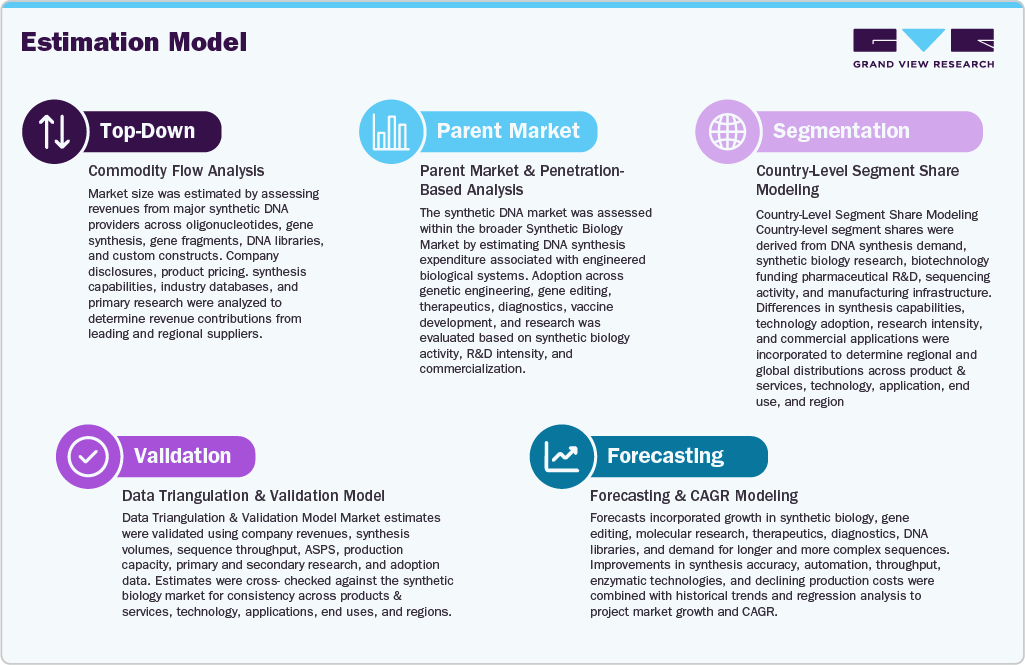
The synthetic DNA market figures in this report are based on a proven research process that combines executive interviews with secondary research from proprietary databases, company filings, and recognized regulatory and institutional sources. Market size is built through value-chain sizing-reconciling supply-side and demand-side estimates-and triangulated with bottom-up and top-down approaches. Every estimate passes multiple levels of expert validation before publication, with each synthetic DNA segment quantified using the revenue-capture definitions in the table below.
Segment Definition
Segment - Product & Services
Revenue Capture Definition
Oligonucleotide Synthesis
Revenue generated from chemically or enzymatically synthesized oligonucleotides, including short custom DNA sequences, primers, probes, and other sequence-defined oligos used in research, diagnostics, therapeutics, and molecular biology applications.
Gene Synthesis
This segment captures income from custom gene synthesis services and products used to construct defined DNA sequences, genes, coding regions, and genetic constructs for research, synthetic biology, protein expression, and therapeutic development.
Plasmid DNA
Market value in this category stems from synthetic plasmid DNA products and services, including custom plasmid construction, cloning, sequence verification, and plasmid preparation for research, gene expression, vaccine development, and cell and gene therapy applications.
DNA Libraries
Revenue generated from synthetic DNA libraries, including diverse collections of oligonucleotide or gene sequences designed for screening, directed evolution, functional genomics, protein engineering, and synthetic biology applications.
Other Synthetic DNA Products & Services
This segment captures income from synthetic DNA products and services not classified under oligonucleotide synthesis, gene synthesis, plasmid DNA, or DNA libraries, including custom DNA constructs, sequence variants, and specialized DNA design and synthesis services.
Segment- Technology
Revenue Capture Definition
Chemical/Solid-Phase Synthesis
Market value in this category stems from DNA synthesis using chemical or solid-phase methods, where nucleotide building blocks are sequentially assembled on a solid support to produce defined oligonucleotide and DNA sequences.
Enzymatic DNA Synthesis
Revenue generated from enzymatic approaches that use DNA polymerases or other enzymes to assemble DNA sequences, supporting synthesis of oligonucleotides and longer DNA constructs with applications in research and biotechnology.
Array-/Chip-Based DNA Synthesis
This segment captures income from high-throughput DNA synthesis performed on microarrays, chips, or other spatially addressable platforms to generate large numbers of distinct DNA sequences simultaneously.
Others
Market value in this category stems from synthetic DNA technologies that do not fall under chemical/solid-phase, enzymatic, or array-/chip-based synthesis approaches.
Segment- Application
Revenue Capture Definition
Research & Development
Revenue generated from synthetic DNA products and services used in research and development activities, including molecular biology, gene cloning, sequencing workflows, functional genomics, protein engineering, and experimental biology.
Diagnostics
This segment captures income from synthetic DNA products used in molecular diagnostic development and testing, including primers, probes, controls, standards, and other sequence-defined materials for detecting or characterizing biological targets.
Therapeutics & Vaccines
Market value in this category stems from synthetic DNA products and services supporting therapeutic and vaccine development, including plasmid DNA, genetic constructs, oligonucleotides, and DNA-based components used in preclinical and manufacturing workflows.
Synthetic Biology (incl. Industrial & Agri-Food Biotech)
Revenue generated from synthetic DNA technologies used to design, construct, and optimize biological systems for synthetic biology, metabolic engineering, industrial biotechnology, agricultural biotechnology, and food-related applications.
Other Applications
This segment captures income from synthetic DNA products and services used in applications outside research and development, diagnostics, therapeutics and vaccines, and synthetic biology, including specialized biotechnology and testing applications.
Segment- End Use
Revenue Capture Definition
Pharmaceutical & Biotechnology Companies
Market value in this category stems from synthetic DNA products and services used by pharmaceutical and biotechnology companies for drug discovery, therapeutic development, vaccine research, genetic engineering, biomarker research, and bioprocess development.
Academic & Research Institutes
Revenue generated from synthetic DNA products and services purchased or utilized by universities, research institutes, government laboratories, and other scientific organizations for molecular biology, genomics, synthetic biology, and related research.
CROs & CDMOs
This segment captures income from synthetic DNA technologies used by contract research, development, and manufacturing organizations to provide outsourced research, assay development, genetic engineering, process development, and manufacturing support.
Diagnostic Laboratories & Companies
Market value in this category stems from synthetic DNA products used by diagnostic laboratories and companies for assay development, molecular testing, validation, quality control, and development of diagnostic technologies.
Agricultural & Industrial Biotechnology Companies
Revenue generated from synthetic DNA products and services used in agricultural and industrial biotechnology for genetic engineering, strain development, metabolic engineering, crop research, microbial optimization, and bio-based product development.
Government & Other Research Organizations
This segment captures income from synthetic DNA products and services used by government agencies, public research laboratories, and other research organizations for biotechnology, genomics, biological research, and specialized scientific programs.
 To learn more about this report, Download Free Sample Report
 Delivered Customizations
This report has been delivered with the following In-depth customizations
Client Request
Customization Delivered
Value Adds
Synthetic DNA Turnaround Time & Quality Benchmarking
Comparative assessment of synthesis turnaround times, sequence complexity handling, accuracy, quality-control requirements, and delivery specifications across selected providers or product types.
Help clients to benchmark service performance, identify customer priorities, and assess areas for service differentiation.
Synthetic DNA Pricing & Cost Structure Assessment
Assessment of pricing for selected DNA products based on sequence length, complexity, modifications, purification, and order volume.
Help clients understand pricing drivers, benchmark costs, and assess pricing opportunities.
Synthetic DNA Order Volume & Customer Demand Assessment
Analysis of order-size patterns, repeat purchasing, custom versus standard sequence requirements, and demand characteristics across selected customer groups.
Helps clients understand purchasing behavior and better align production and service offerings with customer needs.
Frequently Asked Questions About This Report
The global synthetic DNA market size was valued at USD 4.1 billion in 2025 and is estimated at USD 4.8 billion for 2026.
The global synthetic DNA market is expected to grow at a CAGR of 16.9% from 2026 to 2033, reaching USD 14.2 billion by 2033.
North America dominated with a 39.8% revenue share in 2025.
Market growth is driven by investment in synthetic DNA development, advances in targeted delivery technologies, and growing adoption of programmable cell-engineering approaches for precision medicine.
Key market players include Twist Bioscience, Integrated DNA Technologies, Inc (acquired by Danaher Corporation), GenScript, Thermo Fisher Scientific Inc., Eurofins Genomics, GENEWIZ (Azenta US Inc.), BIONEER CORPORATION, Biosearch Technologies (acquired by LGC Limited), Elegen Corporation, and Ribbon Bio
Asia Pacific is the fastest-growing region over the forecast period.
The chemical/solid-phase synthesis segment led with a 56.9% revenue share in 2025 while enzymatic DNA synthesis segment is second fastest growing market.
The research & development segment led with a 43.5% revenue share in 2025 while therapeutic & vaccines segment is expected to be the fastest-growing market.
The oligonucleotide synthesis segment led with a 54.6% revenue share in 2025, driven by increasing demand for custom DNA sequences across research, diagnostics, therapeutics, and synthetic biology applications.
About the Author(s)
Biotechnology Research Team
Healthcare · BiotechnologyThis report was authored by the biotechnology research team at Grand View Research - comprising two research analysts, one senior research analyst, and one industry expert - with specialized expertise in the biotechnology segment of the healthcare industry. All findings are based on proprietary healthcare databases, executive interviews, and regulatory analysis, subject to internal peer review prior to publication.
Last Updated:
Speak to Analyst

Customize this report to your needs - add regions, segments, or data points, with 20% free customization.
Or view our licence options:


ISO 9001:2015 & 27001:2022 Certified
We are GDPR and CCPA compliant! Your transaction & personal information is safe and secure. For more details, please read our privacy policy.


