
- Home
- »
- Medical Devices
- »
-
U.S. AI-enabled Ophthalmic Diagnostic Devices Market Report, 2033GVR Report cover

U.S. AI-enabled Ophthalmic Diagnostic Devices Market (2026 - 2033)
Size, Share & Trends Analysis Report By Cmponent (Fundus Cameras, OCT/OCTA Systems, Ultra-widefield Imaging Systems, Slit Lamp Imaging Systems), By Application, By End Use, And Segment Forecasts
Market Size, 2025
$64.3MMarket Estimate, 2026
$72.5MMarket Forecast, 2033
$267.2MCAGR, 2026–2033
20.5%U.S. AI-enabled Ophthalmic Diagnostic Devices Market Summary
The U.S. AI-enabled ophthalmic diagnostic devices market size was valued at USD 64.3 million in 2025 and is projected to grow from USD 72.5 million in 2026 to USD 267.2 million by 2033, at a CAGR of 20.5% from 2026 to 2033. The market is experiencing rapid growth as healthcare providers increasingly adopt artificial intelligence to address rising demand for early detection of retinal diseases, improve screening efficiency, and overcome shortages of ophthalmologists in primary care settings. AI-enabled retinal imaging systems have evolved from decision-support tools to autonomous diagnostic platforms capable of identifying diabetic retinopathy and other sight-threatening diseases without specialist interpretation.
Key Market Trends & Insights
- By component: The fundus cameras segment held the highest market share of 38.2% in 2025.
- By application: The diabetic retinopathy detection segment held a leading market share of 37.2% in 2025.
- By end use: The specialty clinics segment held a leading market share in 2025.
Market Size & Forecast
- Market size in 2025: USD 64.3 Million
- Estimated market size in 2026: USD 72.5 Million
- Projected market size by 2033: USD 267.2 Million
- CAGR (2026-2033): 20.5%
Prism AI by Grand View Research Free to tryAsk a question about the U.S. AI-enabled ophthalmic diagnostic devices marketTry asking✓Every figure cited from GVR research Prefer the report? Download free sample →
One of the primary drivers of market growth is the increasing prevalence of diabetes and diabetic retinopathy (DR) across the U.S., creating a substantial need for scalable screening solutions. According to the CDC's Vision and Eye Health Surveillance System (VEHSS), an estimated 9.6 million Americans were living with diabetic retinopathy in 2021, including approximately 1.84 million individuals with vision-threatening diabetic retinopathy. The prevalence is projected to increase substantially, with 14.7 million Americans expected to be affected by 2050, highlighting the growing burden of diabetes-related vision impairment in the U.S. This growing disease burden is encouraging healthcare systems to implement AI-enabled retinal screening technologies that can accurately identify patients requiring specialist referral while improving screening compliance in primary care settings.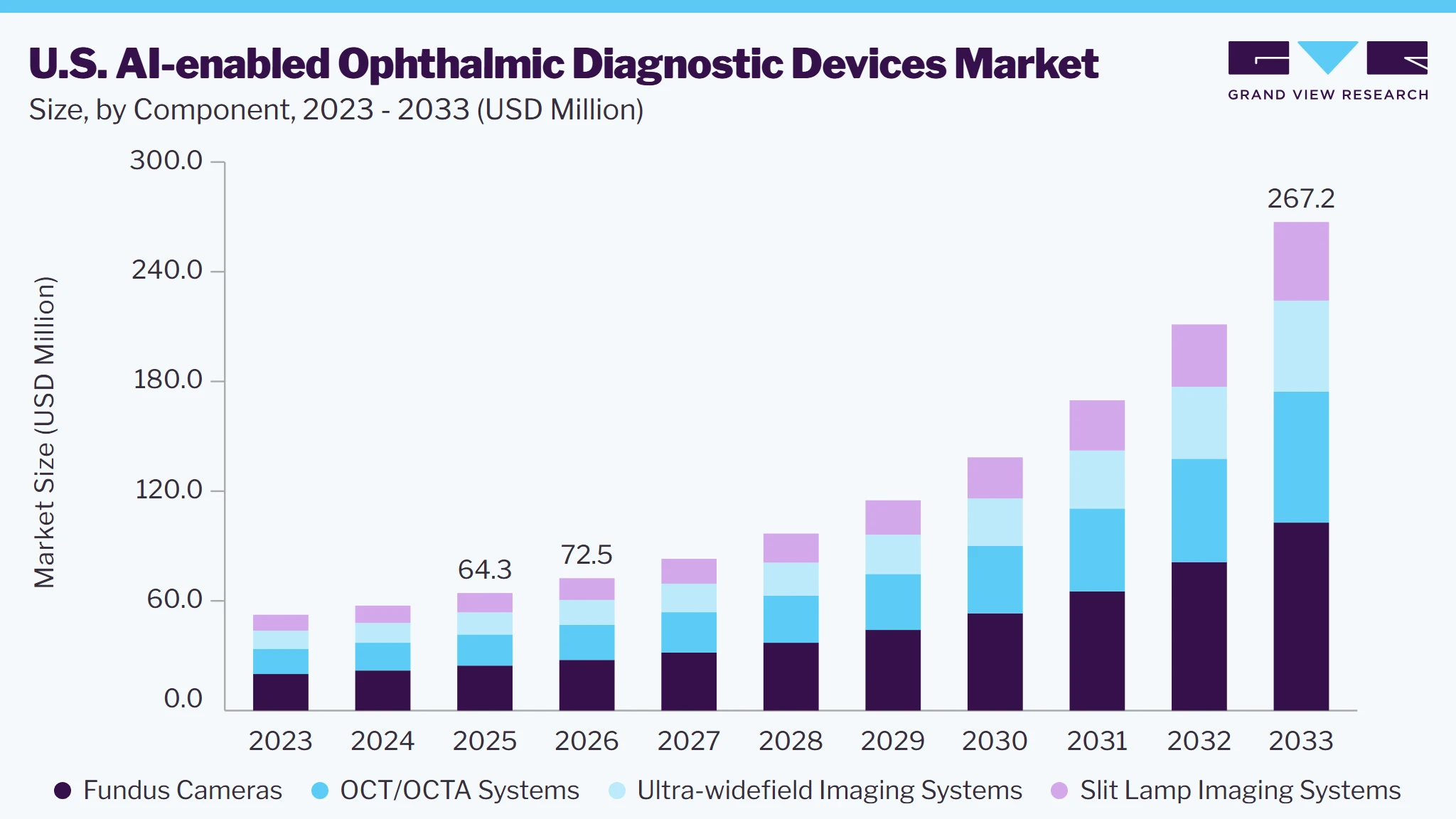 Source: Grand View Research, IR Documents, Primary Interviews, Paid DatabasesTo learn more about this report,
 Download Free Sample Report
Technological innovation and continued FDA clearances are further accelerating market expansion. In May 2024, the FDA cleared the Optomed Aurora handheld fundus camera integrated with AEYE Health's autonomous AI software (AEYE-DS), enabling portable diabetic retinopathy screening in virtually any healthcare setting across the U.S. The handheld system performs autonomous image analysis within approximately one minute, allowing screening to move beyond traditional eye clinics into primary care offices, pharmacies, and community health centers. This approval significantly broadened the accessibility of AI-enabled ophthalmic diagnostics and strengthened the commercialization of portable retinal imaging solutions in the U.S.
Moreover, AI-powered portable screening solutions are increasingly supporting early detection in primary care settings, reducing dependence on specialist availability while expanding access to vision care in underserved and remote communities. These innovations are strengthening the role of autonomous retinal diagnostics within routine diabetes management and preventive healthcare. To strengthen this trend, research presented at ENDO 2025 by investigators from the University of Texas Health Science Center at Houston introduced the Simple Mobile AI Retina Tracker (SMART), an AI-powered mobile retinal screening application capable of detecting and staging diabetic retinopathy with more than 99% accuracy in under one second. Designed to operate on internet-enabled devices, including basic smartphones, the solution enables primary care providers to incorporate retinal screening into routine diabetes care while expanding access to high-quality ophthalmic assessments in regions with limited specialist availability.
The market is also benefiting from growing clinical acceptance and supportive diabetes care guidelines. The American Diabetes Association (ADA) Standards of Care 2025 recognize FDA-authorized autonomous AI systems, including AEYE-DS (AEYE Health), EyeArt (Eyenuk), and LumineticsCore (Digital Diagnostics), as validated alternatives for diabetic retinopathy screening when appropriately implemented. The guidelines specifically recommend the use of retinal photography with remote reading or FDA-authorized AI algorithms to improve access to diabetic retinopathy screening, particularly in settings where access to eye care specialists is limited.
In addition, the ADA notes that prospective multicenter clinical trials have demonstrated the diagnostic accuracy of each of these autonomous AI platforms, supporting their integration into routine diabetes care. These AI-enabled screening services are also covered by most U.S. insurance plans, further reducing financial barriers to adoption and facilitating broader implementation across primary care and endocrinology practices. As healthcare providers continue to prioritize preventive care, early disease detection, and workflow automation, AI-enabled ophthalmic diagnostic devices are expected to play an increasingly important role in improving vision care outcomes across the U.S.
Market Dynamics
The U.S. AI-enabled ophthalmic diagnostic devices industry is witnessing robust growth as hospitals, ophthalmology clinics, optometry practices, academic medical centers, and primary care facilities increasingly adopt artificial intelligence (AI)-powered diagnostic technologies to improve the early detection, diagnosis, and management of vision-threatening eye diseases. The market comprises a broad range of AI-enabled ophthalmic diagnostic solutions, including AI-integrated fundus cameras, optical coherence tomography (OCT) systems, retinal imaging platforms, visual field analyzers, corneal topographers, and cloud-based image analysis software that assist clinicians in detecting retinal and optic nerve abnormalities with greater speed and accuracy. These technologies are increasingly being integrated into clinical workflows to enhance diagnostic efficiency, support clinical decision-making, reduce interpretation variability, and enable large-scale screening programs.
The increasing prevalence of vision-threatening eye diseases in the U.S. is a major driver accelerating the adoption of AI-enabled ophthalmic diagnostic devices. Age-related eye disorders such as diabetic retinopathy (DR), glaucoma, and age-related macular degeneration (AMD) are becoming more common due to the aging population, the growing burden of diabetes, and longer life expectancy. The growing disease burden further highlights this opportunity. According to the CDC Vision and Eye Health Surveillance System (VEHSS), approximately 4.2 million Americans were living with glaucoma, including 1.5 million people with vision-affecting glaucoma. In addition, the CDC estimates that 19.8 million Americans aged 40 years and older were living with age-related macular degeneration (AMD), including 1.49 million with vision-threatening AMD, demonstrating the substantial population requiring routine retinal monitoring and early diagnosis. As these diseases often progress without noticeable symptoms in their early stages, there is an increasing need for rapid, accurate, and scalable screening solutions that enable timely intervention before irreversible vision loss occurs. AI-powered ophthalmic diagnostic devices integrated with fundus cameras, optical coherence tomography (OCT), and retinal imaging systems can automatically analyze retinal images, identify subtle pathological changes, prioritize high-risk patients, and assist clinicians in making faster and more accurate diagnoses.
The U.S. market is moderately consolidated, with leading companies such as Topcon Healthcare, Carl Zeiss Meditec AG, Heidelberg Engineering, NIDEK Co., Ltd., Canon Medical Systems Corporation, Digital Diagnostics Inc., AEYE Health, and Eyenuk, Inc. holding significant market positions across AI-assisted retinal imaging, optical coherence tomography (OCT), fundus photography, and autonomous ophthalmic screening solutions. These companies offer comprehensive portfolios comprising AI-enabled fundus cameras, OCT systems, retinal imaging devices, visual field analyzers, corneal imaging systems, cloud-based image management platforms, and artificial intelligence software designed to improve the detection and diagnosis of ophthalmic diseases. Their solutions support the identification and monitoring of diabetic retinopathy (DR), glaucoma, age-related macular degeneration (AMD), diabetic macular edema (DME), retinal vascular diseases, and other vision-threatening ocular conditions through automated image analysis and clinical decision support.
Market Characteristics
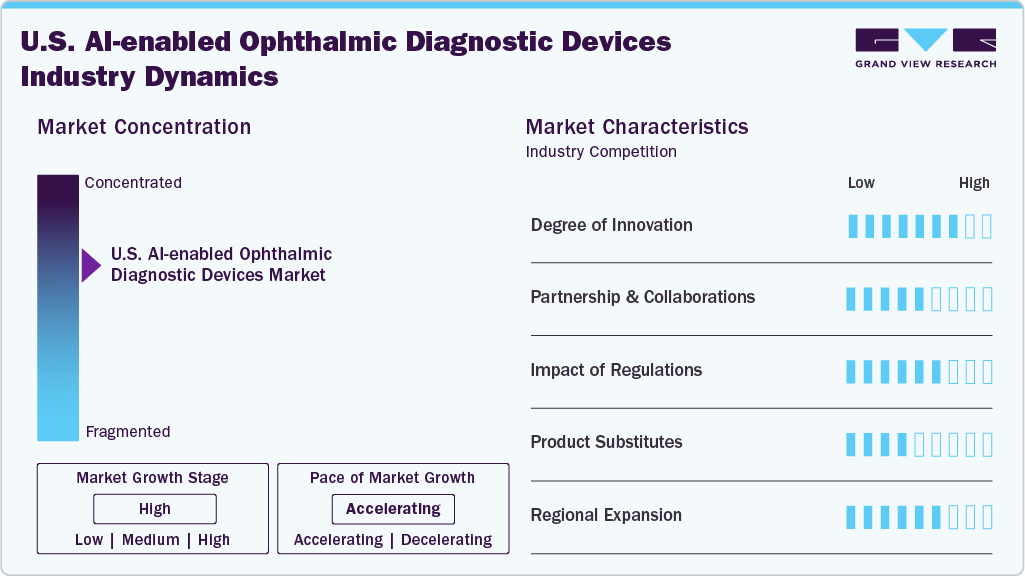
The AI-enabled ophthalmic diagnostic devices industry is moderately consolidated, with leading companies such as Toku Eyes, Digital Diagnostics Inc., Eyenuk, Inc., AEYE Health, Optos, Notal Vision, Inc., Carl Zeiss AG, Canon Medical Systems, Topcon Corporation, Optomed holding significant market positions across AI-assisted retinal imaging, optical coherence tomography (OCT), fundus photography, and autonomous ophthalmic screening solutions. These companies offer comprehensive portfolios comprising AI-enabled fundus cameras, OCT systems, retinal imaging devices, visual field analyzers, corneal imaging systems, cloud-based image management platforms, and artificial intelligence software designed to improve the detection and diagnosis of ophthalmic diseases. Their solutions support the identification and monitoring of diabetic retinopathy (DR), glaucoma, age-related macular degeneration (AMD), diabetic macular edema (DME), retinal vascular diseases, and other vision-threatening ocular conditions through automated image analysis and clinical decision support.
The U.S. AI-enabled ophthalmic diagnostic devices industry is characterized by a high degree of innovation, driven by rapid advancements in artificial intelligence, deep learning algorithms, cloud-based image analytics, and multimodal ophthalmic imaging technologies. Manufacturers are increasingly developing AI-enabled diagnostic platforms capable of automatically detecting and classifying retinal and optic nerve diseases from fundus photographs and optical coherence tomography (OCT) images with high accuracy, enabling earlier disease detection and improved clinical decision-making. For instance, in May 2024 AEYE Health received FDA clearance for AEYE-DS autonomous AI diagnostic system for use with the Optomed Aurora handheld fundus camera.
 To learn more about this report, Download Free Sample Report
The market is witnessing a significant increase in strategic partnerships and collaborations as ophthalmic device manufacturers, AI companies, healthcare technology providers, academic research institutions, and healthcare delivery networks work together to accelerate innovation, improve clinical decision support, and expand access to AI-enabled eye disease screening. These collaborations are focused on integrating AI algorithms with ophthalmic imaging devices, enhancing interoperability with cloud-based healthcare platforms and electronic health record (EHR) systems, validating AI technologies through clinical research, and expanding the adoption of autonomous screening solutions across primary care, optometry, and ophthalmology settings.
The market operates within a stringent regulatory framework primarily overseen by the U.S. FDA, which ensures the safety, effectiveness, quality, and clinical performance of ophthalmic diagnostic devices and artificial intelligence-enabled Software as a Medical Device (SaMD). As AI technologies become increasingly integrated into retinal imaging systems, optical coherence tomography (OCT), fundus cameras, and clinical decision support platforms, regulatory oversight has intensified to address challenges related to algorithm transparency, clinical validation, cybersecurity, real-world performance monitoring, and lifecycle management of AI models. For instance, in January 2025, the FDA issued the draft guidance titled "Artificial Intelligence-Enabled Device Software Functions: Lifecycle Management and Marketing Submission Recommendations," outlining recommendations for manufacturers regarding clinical validation, transparency, risk management, change control, cybersecurity, and post-market monitoring throughout the lifecycle of AI-enabled medical devices.
The U.S. AI-enabled ophthalmic diagnostic devices industry faces competition from several conventional diagnostic modalities and alternative eye examination approaches that may reduce the adoption of AI-enabled diagnostic technologies, particularly in healthcare facilities with budget constraints or limited digital infrastructure. Traditional ophthalmic diagnostic methods, including manual slit-lamp biomicroscopy, indirect ophthalmoscopy, optical coherence tomography (OCT) interpretation by ophthalmologists, fundus photography without AI-assisted analysis, visual field testing, and fluorescein angiography, continue to serve as the standard of care across many hospitals and ophthalmology practices. These conventional diagnostic approaches are supported by well-established clinical workflows, extensive physician familiarity, and broad reimbursement, making them a preferred choice for many providers despite requiring specialist interpretation and longer assessment times.
The market is experiencing significant regional expansion as ophthalmic device manufacturers, AI companies, healthcare providers, and integrated delivery networks continue to broaden access to AI-enabled eye care solutions across hospitals, ophthalmology clinics, optometry practices, primary care centers, retail health clinics, and community healthcare settings. Companies are increasingly expanding their commercial footprint by deploying AI-powered retinal imaging systems, cloud-based diagnostic platforms, and autonomous screening technologies beyond specialized ophthalmology practices to improve access to early eye disease detection in underserved and rural populations.
Analyst Perspective
The U.S. market has emerged as one of the fastest-growing segments within the broader ophthalmic diagnostics and digital healthcare industry, driven by the increasing prevalence of vision-threatening eye diseases, growing demand for early disease detection, expanding adoption of artificial intelligence in clinical practice, and continuous advancements in ophthalmic imaging technologies. Ophthalmic diagnostics are increasingly evolving from conventional image acquisition toward intelligent, AI-assisted diagnostic ecosystems that enable automated image interpretation, clinical decision support, and predictive disease analytics. As healthcare providers prioritize early intervention and precision medicine, AI-enabled diagnostic devices are becoming an integral component of modern eye care delivery across hospitals, ophthalmology clinics, optometry practices, and teleophthalmology networks throughout the U.S.
Component Insights
The fundus cameras segment dominated the market and accounted for the largest share of 38.2% in 2025. The segment's leadership is primarily driven by the widespread installation of advanced fundus cameras across hospitals, specialty clinics, and diagnostic centers. These imaging platforms serve as the foundation for AI-enabled diagnostics by generating the high-quality retinal and anterior segment images required for automated detection of diabetic retinopathy (DR). Recent industry developments further highlight the growth of segment. For instance, in April 2025, the FDA granted 510(k) clearance for the CLARUS 700 from Carl Zeiss Meditec, an ultra-widefield retinal imaging system incorporating AI-enabled capabilities, reflecting continued innovation in advanced ophthalmic imaging technologies for clinical diagnosis.
The OCT/OCTA systems segment is expected to witness the significant CAGR over the forecast period, owing to the rapid adoption of artificial intelligence algorithms that enhance the detection, classification, and monitoring of retinal diseases while leveraging existing ophthalmic imaging infrastructure. AI software can be integrated in OCT/OCTA systems through cloud-based or on-premise platforms, enabling healthcare providers to improve diagnostic accuracy without substantial capital investment in new equipment. Key market players are increasingly focusing on strategic initiatives to strengthen their market presence and accelerate the adoption of AI-enabled ophthalmic diagnostic solutions across the U.S. For instance, in May 2025, Topcon Healthcare announced the acquisition of RetInSight GmbH, an AI software company specializing in OCT image analysis. The acquisition aims to integrate advanced AI algorithms into Topcon's Harmony digital health platform, enabling automated interpretation of retinal OCT scans and enhancing clinical decision support across ophthalmic practices.
Application Insights
The diabetic retinopathy detection dominated the market and held the largest revenue share in 2025. The growth is primarily attributed to the growing burden of diabetes and diabetic eye disease across the U.S., creating a strong need for efficient and scalable screening solutions. Increasing awareness regarding the importance of annual diabetic eye screening, coupled with expanding teleophthalmology programs and the integration of AI into routine retinal imaging workflows, has further accelerated adoption of AI-enabled diabetic retinopathy detection solutions. Moreover, the availability of FDA-authorized autonomous AI systems capable of delivering rapid and accurate screening results has enabled healthcare providers to improve screening efficiency, particularly in primary care settings and underserved communities where access to ophthalmologists remains limited. The American Diabetes Association (ADA) Standards of Care 2025 continued to recognize FDA-authorized autonomous AI systems, including LumineticsCore, EyeArt, and AEYE-DS, as validated options for diabetic retinopathy screening when implemented in appropriate clinical settings. These developments highlight the growing adoption of AI software, which improves screening efficiency, reduces physician workload, and expands access to retinal disease detection.
The age-related macular degeneration (AMD) segment is expected to witness a significant CAGR over the forecast period. The growth is driven by the rapidly aging U.S. population, increasing prevalence of retinal disorders, and growing demand for early disease detection to prevent irreversible vision loss. AI-enabled ophthalmic diagnostic devices, particularly those integrated with optical coherence tomography (OCT) and fundus imaging systems, are increasingly being adopted to assist clinicians in identifying early structural changes associated with AMD, improving diagnostic accuracy, and enabling timely intervention. According to the National Eye Institute (NEI), nearly 20 million people in the U.S. are living with some form of AMD, making it one of the leading causes of vision impairment among older adults.
End Use Insights
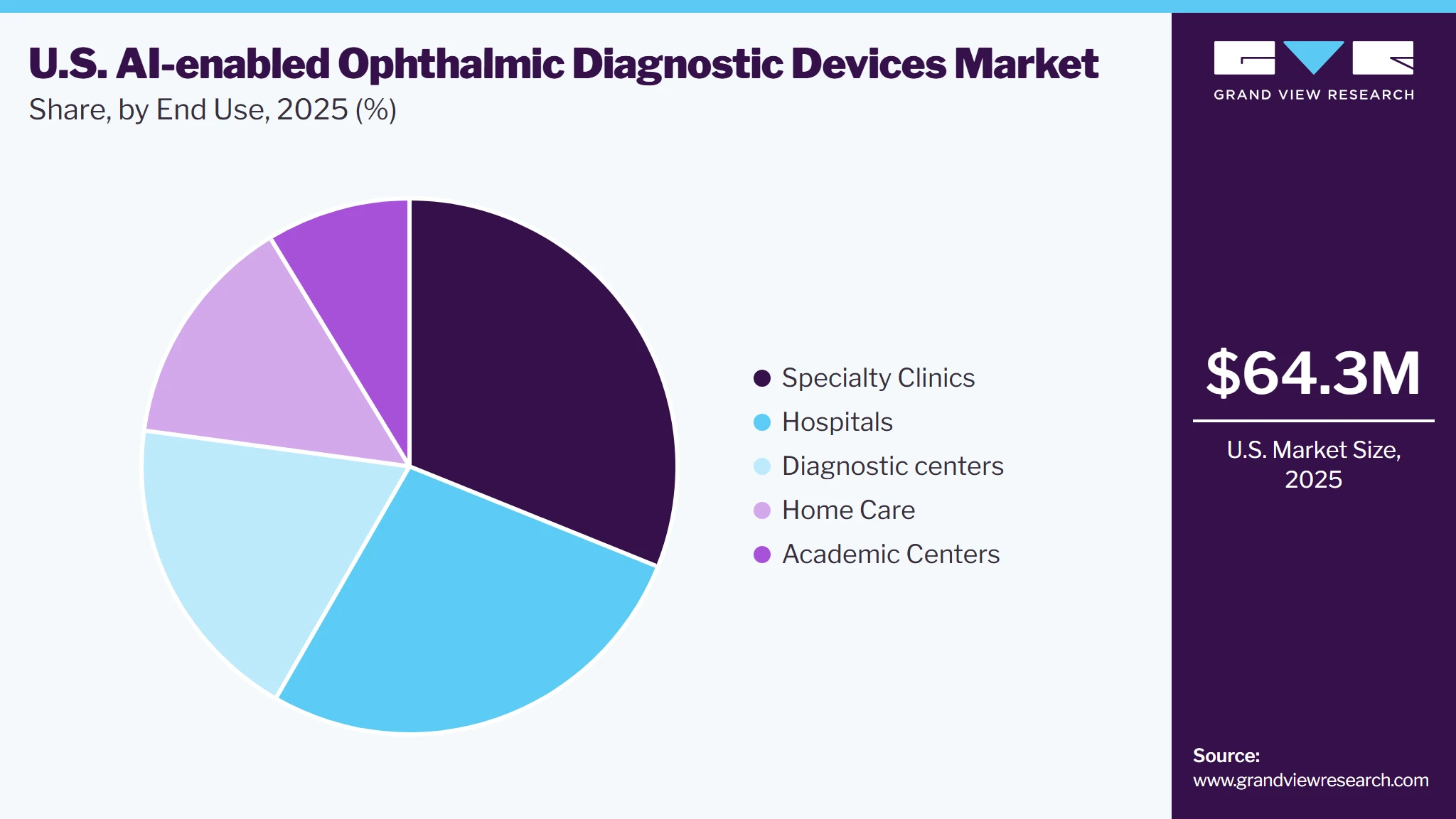
The specialty clinics segment dominated the market in 2025. The growth is attributed to the high volume of ophthalmic consultations, widespread availability of advanced retinal imaging infrastructure, and increasing integration of artificial intelligence into routine clinical workflows. Specialty clinics serve as the primary settings for the diagnosis and management of diabetic retinopathy (DR), age-related macular degeneration (AMD), glaucoma, diabetic macular edema (DME), and other vision-threatening disorders, resulting in substantial demand for AI-enabled fundus cameras, OCT/OCTA systems, and diagnostic software. To further strengthen AI adoption and improve clinical workflow efficiency, leading industry participants are actively pursuing strategic collaborations with healthcare technology providers. For instance, in January 2026, LumineticsCore announced a partnership with Artisight to integrate its FDA-authorized autonomous AI software for diabetic retinopathy screening into Artisight's smart hospital platform. The collaboration enables hospitals and clinics to incorporate AI-driven retinal screening into routine clinical workflows, improving screening efficiency and expanding access to early detection services.
 To learn more about this report, Download Free Sample Report
The home care segment is anticipated to grow at fastest rate over the forecast period. The growth is driven by the increasing adoption of teleophthalmology, remote patient monitoring, and AI-enabled software solutions that facilitate early detection and follow-up of eye diseases outside traditional clinical settings. While advanced ophthalmic imaging devices such as fundus cameras and OCT/OCTA systems continue to be predominantly used in hospitals and specialty clinics, growing digital health infrastructure and cloud-based AI platforms are enabling patients to participate in remote vision monitoring and virtual eye care programs under the supervision of eye care professionals. The rising prevalence of chronic diseases such as diabetes, coupled with the need for regular retinal assessments and improved access to eye care for elderly individuals and patients in underserved areas, is further supporting the adoption of home-based ophthalmic monitoring solutions. In addition, increasing investments in connected healthcare technologies and remote care models are expected to accelerate the integration of AI-enabled ophthalmic software into home care setting.
Key U.S. AI-enabled Ophthalmic Diagnostic Devices Company Insight
The U.S. market is highly competitive, characterized by the presence of established ophthalmic imaging companies, artificial intelligence software developers, and digital health technology providers focused on expanding their clinical capabilities and strengthening their market position. Market participants are continuously investing in research and development to enhance the accuracy, speed, and clinical utility of AI-powered diagnostic platforms for the early detection and management of ocular diseases.
Key U.S. AI-enabled Ophthalmic Diagnostic Devices Companies
-
Digital Diagnostics Inc.
-
Eyenuk, Inc.
-
AEYE Health
-
Notal Vision, Inc.
-
Carl Zeiss AG
-
Optos
-
Canon Medical Systems
-
Topcon Corporation
-
Optomed
-
Heidelberg Engineering
Competitive Benchmarking
Category
Operating Strategies
Competitive Edge
Weakness
Established Players (Optos, Notal Vision, Inc. Carl Zeiss AG, Canon Medical Systems)
- Focus on expanding AI-enabled OCT, fundus imaging, visual field analyzers, and multimodal ophthalmic diagnostic platforms across hospitals, ophthalmology clinics, and retail eye care networks.
- Strengthen strategic collaborations with AI software developers, cloud platform providers, and academic eye institutes to improve clinical decision support.
- Strong brand recognition and extensive installed base among ophthalmologists and optometrists across the U.S.
- Comprehensive product portfolios combining imaging hardware, AI-assisted analytics, workflow software, and service support.
- High R&D and regulatory compliance costs for AI-enabled Software as a Medical Device (SaMD).
- Longer product development and commercialization timelines due to complex validation requirements.
Emerging Players (Digital Diagnostics Inc., Eyenuk, Inc., Heidelberg Engineering)
- Focus on AI-first software solutions for autonomous screening, early disease detection, and cloud-based ophthalmic diagnostics.
- Develop vendor-neutral AI platforms compatible with multiple fundus cameras and OCT systems.
- Faster innovation cycles driven by AI and machine learning expertise.
- Cloud-native platforms enable scalable deployment, remote interpretation, and continuous algorithm improvements.
- Limited financial resources and smaller commercial sales networks compared with multinational companies.
- Dependence on partnerships with imaging hardware manufacturers and healthcare providers for market access.
Recent Development
-
In October 2025, Topcon Healthcare signed a definitive agreement to acquire Toku Inc., an AI health technology company, to strengthen its "Healthcare from the Eye" strategy through advanced retinal image-based diagnostics. The acquisition integrates Toku's AI platforms into Topcon's connected care ecosystem to expand non-invasive screening for cardiovascular disease, biological aging, and chronic kidney disease across primary care, eyecare, and telehealth settings.
-
In July 2025, AEYE Health partnered with Ford Medical to expand the availability of its FDA-cleared AEYE-DS autonomous AI diabetic eye screening solution across pharmacies and non-acute care centers throughout the U.S. Through the partnership, Ford Medical will distribute the AI-powered screening platform, enabling providers to offer immediate, reimbursable diabetic retinopathy screening at the point of care without requiring specialist interpretation, improving access to early detection for U.S. patients.
U.S. AI-enabled Ophthalmic Diagnostic Devices Market Report Scope
Report Attribute
Details
Market size value in 2025
USD 64.3 million
Estimated market size in 2026
USD 72.5 million
Projected market size by 2033
USD 267.2 million
Growth rate
CAGR of 20.5% from 2026 to 2033
Historical data
2021 - 2025
Forecast period
2026 - 2033
Quantitative units
Revenue in USD million and CAGR from 2026 to 2033
Report coverage
Revenue forecast, company ranking, competitive landscape, growth factors, and trends
Segments covered
Component, application, end use
Key companies profiled
Digital Diagnostics Inc.; Eyenuk, Inc.; AEYE Health; Optos; Notal Vision, Inc.; Carl Zeiss AG; Canon Medical Systems; Topcon Corporation; Optomed; Heidelberg Engineering
Customization scope
Free report customization (equivalent up to 8 analyst’s working days) with purchase. Addition or alteration to country, regional, and segment scope
Pricing and purchase options
Avail customized purchase options to meet your exact research needs. Explore purchase options
U.S. AI-enabled Ophthalmic Diagnostic Devices Market Report Segmentation
This report forecasts revenue growth and provides an analysis of the latest industry trends in each of the sub-segments from 2021 to 2033. For this study, Grand View Research has segmented the U.S. AI-enabled ophthalmic diagnostic devices market report based on component, application, and end use:
-
Component Outlook (Revenue, USD Unit, 2021 - 2033)
-
Fundus Cameras
-
OCT/OCTA Systems
-
Ultra-widefield Imaging Systems
-
Slit Lamp Imaging Systems
-
-
Application Outlook (Revenue, USD Unit, 2021 - 2033)
-
Diabetic Retinopathy Detection
-
Age-related Macular Degeneration (AMD)
-
Glaucoma Detection
-
Diabetic Macular Edema
-
Others
-
-
End Use Outlook (Revenue, USD Unit, 2021 - 2033)
-
Hospitals
-
Specialty Clinics
-
Diagnostic Centers
-
Home Care
-
Academic Centers
-
Research Methodology
The U.S. AI-enabled ophthalmic diagnostic devices market figures in this report are based on a proven research process that combines executive interviews with secondary research from proprietary databases, company filings, and recognized regulatory and institutional sources. Market size is built through value-chain sizing-reconciling supply-side and demand-side estimates-and triangulated with bottom-up and top-down approaches. Every estimate passes multiple levels of expert validation before publication, with each U.S. AI-enabled ophthalmic diagnostic devices segment quantified using the revenue-capture definitions in the table below.
Segment Definition
Segment - Component
Revenue capture definition
Fundus Cameras
Revenue is generated through the sale of digital retinal imaging hardware integrated with AI-driven diagnostic software modules designed to detect early-stage retinal pathologies. Manufacturers earn upfront capital revenue from physical camera units, supplemented by recurring software license fees, cloud-based image analysis subscriptions, system recalibration services, and hardware maintenance contracts.
OCT/OCTA Systems
Revenue flows from the commercialization of high-resolution Optical Coherence Tomography (OCT) and OCT Angiography platforms equipped with advanced AI algorithms for automated structural and vascular layer segmentation. Market participants capture high-margin revenue through capital equipment sales, multi-year software updates, AI cloud analytics integrations, and technical support service agreements across ophthalmic practices.
Ultra-widefield Imaging Systems
Revenue is derived from the deployment of high-end, non-mydriatic ultra-widefield imaging hardware capable of capturing peripheral retinal views alongside embedded AI screening models. Device developers monetize this segment via premium capital hardware sales, per-scan algorithm processing fees, integration with hospital Electronic Health Records (EHR) systems, and specialized maintenance coverage.
Slit Lamp Imaging Systems
Revenue is captured through the sale of digital slit-lamp attachments, mobile optical adapters, and fully integrated smart slit-lamp platforms utilizing AI for anterior segment evaluations. Income is secured through device hardware sales, replacement optical accessories, and recurring SaaS fees for real-time diagnostic decision-support software.
Segment - Application
Revenue capture definition
Diabetic Retinopathy Detection
Revenue is generated through the clinical deployment of AI screening platforms specifically FDA-cleared to detect microaneurysms, hemorrhages, and exudates associated with diabetic retinopathy. Market players capture value via per-patient diagnostic scan fees, subscription-based screening licenses, and reimbursement-driven clinical partnerships with primary care and endocrinology networks.
Age-related Macular Degeneration (AMD)
Revenue flows from AI platforms designed to identify, quantify, and track drusen volume, geographic atrophy, and choroidal neovascularization in dry and wet AMD. Companies generate income by bundling predictive disease-progression software modules with OCT and fundus hardware, earning recurring software fees and institutional license renewals.
Glaucoma Detection
Revenue is captured through AI algorithms that analyze optic nerve head cup-to-disc ratios, retinal nerve fiber layer (RNFL) thickness, and visual field progression. Revenue streams are sustained by integrating automated glaucoma detection modules into routine optometric and ophthalmic workflow suites, charging per-assessment analysis fees or annual software tiers.
Diabetic Macular Edema
Revenue is derived from high-precision AI diagnostic algorithms engineered to measure retinal thickness and detect intraretinal or subretinal fluid accumulation. Device providers monetize this segment through specialty software add-ons for OCT systems, pharmaceutical clinical trial screening contracts, and ongoing software maintenance subscriptions.
Others
Revenue encompasses alternative or expanding AI application areas, including the automated detection of retinopathy of prematurity (ROP), retinal vein occlusions (RVO), corneal dystrophies, cataract grading, and systemic cardiovascular/neurological biomarker assessments via ocular imaging.
Segment - End Use
Revenue capture definition
Hospitals
Revenue is generated through institutional procurement budgets, health system tenders, and commercial sales to specialized ophthalmology and primary care networks. Manufacturers capture bulk revenue via enterprise hardware installations, multi-facility software licensing, GPO supply contracts, and comprehensive long-term service agreements.
Specialty Clinics
Revenue flows from targeted sales of compact, high-throughput AI diagnostic tools tailored for fast-paced outpatient surgical settings. Income is driven by cost-effective hardware setups and scalable software-as-a-service (SaaS) models designed to streamline pre-operative planning and post-operative monitoring workflows.
Diagnostic Centers
Revenue is captured through specialized equipment placements in standalone medical imaging facilities and high-volume diagnostic labs. Market participants derive income from high-capacity diagnostic systems, per-scan software processing fees, and integrated cloud reporting platforms that facilitate remote tele-ophthalmology reading services.
Home Care
Revenue is generated through the emerging deployment of portable, patient-operated diagnostic devices and home-use monitoring tools integrated with remote AI analysis. Manufacturers capture recurring income through device leasing models, direct-to-patient monitoring subscriptions, and remote patient monitoring (RPM) reimbursement pathways.
Academic Centers
Revenue is derived from supplying open-architecture AI imaging platforms and advanced analytic software engines to university medical centers. This segment yields revenue through high-tier capital hardware sales, specialized grant-funded procurement, and custom software licensing agreements.
Estimation Model
Title
Process Steps
Data Sources
Scope Definition
1. Define the scope of AI-enabled ophthalmic diagnostic devices, including hardware, AI software, and integrated diagnostic platforms.
2. Segment the market by component, application, and end user.
3. Establish inclusion and exclusion criteria for FDA-authorized autonomous AI systems, clinical decision support software, and AI-assisted imaging devices.
4. Align the base year and forecast horizon (2026-2033).
American Academy of Ophthalmology (AAO), American Optometric Association (AOA), CDC, WHO
Build the Product Base
1. Estimate the target patient population by major ophthalmic diseases, including diabetic retinopathy and others.
2. Quantify annual ophthalmic examinations, retinal imaging procedures, OCT scans, and fundus imaging volumes.
3. Assess the installed base and annual procurement of ophthalmic imaging equipment capable of AI integration.
4. Evaluate healthcare infrastructure, including ophthalmology clinics, optometry practices, hospitals, and retail eye care centers.
CDC, FDA, AAO, AOA, American Diabetes Association (ADA), CMS claims data
Estimate Penetration
1. Assess adoption of FDA-authorized AI diagnostic software for various application areas.
2. Evaluate AI integration across fundus cameras, OCT/OCTA systems, ultra-widefield imaging systems, and slit-lamp imaging platforms.
3. Analyze the impact of reimbursement policies, clinical guidelines, physician acceptance, and patient adoption.
4. Evaluate penetration across end-use segments while forecasting future adoption driven by AI advancements and workflow improvements.
FDA clearance database, CMS reimbursement policies, ADA Standards of Care
Revenue Conversion
1. Determine average selling prices (ASP) of AI-enabled ophthalmic imaging devices, diagnostic software, and AI subscription platforms.
2. Estimate revenues across hardware, software licenses, SaaS platforms, cloud-based AI services, and other revenue models.
3. Allocate revenue by component, application, and end user.
4. Validate market estimates using manufacturer revenues, SEC filings, reimbursement data, procurement trends, and distributor information.
Company financial reports, procurement databases, distributor pricing data
Delivered Customizations
This report has been delivered with the following In-depth customizations
Client Request
Customization Delivered
Value Adds
Porters Analysis
Conducted a comprehensive Porter's Five Forces assessment of the U.S. AI-enabled Ophthalmic Diagnostic Devices Market to evaluate industry competitiveness and market attractiveness. The study analyzed supplier and buyer bargaining power across AI software providers, ophthalmic imaging device manufacturers, healthcare IT vendors, hospitals, ophthalmology clinics, and optometry practices. It assessed barriers to entry including FDA regulatory requirements, clinical validation, cybersecurity, interoperability, and capital investment. The analysis also evaluated the threat of substitutes from conventional diagnostic methods and teleophthalmology, along with competitive rivalry based on technological innovation, product differentiation, pricing, strategic partnerships, reimbursement, and commercialization strategies. Additionally, the study examined macroeconomic and healthcare factors such as healthcare expenditure, digital health investments, aging population, diabetes prevalence, and value-based care initiatives influencing market competition.
Enables stakeholders to understand the competitive intensity, market attractiveness, and strategic positioning of leading participants within the U.S. AI-enabled ophthalmic diagnostic devices market. The analysis supports informed decision-making regarding product differentiation, pricing strategies, partnership opportunities, market entry planning, investment prioritization, and commercialization strategies.
Component Analysis
Conducted a detailed component-level assessment of the U.S. AI-enabled Ophthalmic Diagnostic Devices Market by evaluating both hardware and software segments supporting AI-driven diagnostics. The study analyzed AI-enabled imaging devices, including fundus cameras, OCT/OCTA systems, ultra-widefield imaging systems, and slit-lamp imaging platforms, alongside AI software such as autonomous diagnostic algorithms, clinical decision support, teleophthalmology platforms, and cloud-based image management systems. The analysis also assessed technology integration with EHRs, regulatory and reimbursement frameworks, software licensing models, implementation costs, healthcare IT investments, vendor partnerships, and adoption trends across hospitals, ophthalmology clinics, optometry practices, and primary care settings.
Enables stakeholders to gain a comprehensive understanding of the value chain, technology ecosystem, and revenue contribution of individual market components. The study supports strategic investment decisions by identifying high-growth hardware and software segments, technology integration opportunities, procurement priorities, and innovation trends.
Market Dynamics Analysis
Conducted an in-depth assessment of the key market dynamics shaping the U.S. AI-enabled Ophthalmic Diagnostic Devices Market by evaluating major drivers, restraints, opportunities, and challenges. The study analyzed growth drivers such as the rising prevalence of diabetic retinopathy and glaucoma, increasing diabetes burden, aging population, teleophthalmology adoption, favorable reimbursement, and advancements in AI-enabled imaging technologies. It also assessed restraints including high capital costs, regulatory complexity, cybersecurity concerns, interoperability limitations, and physician adoption barriers. The analysis identified opportunities in AI-based screening expansion, digital health investments, cloud-based platforms, and primary care integration, while examining challenges related to clinical validation, AI governance, workforce training, pricing pressures, and evolving regulatory requirements. Additionally, macroeconomic factors including healthcare expenditure, hospital investments, inflation, and digital health initiatives were evaluated for their impact on market growth.
Enables stakeholders to develop comprehensive growth strategies by identifying the key factors driving market expansion and potential risks impacting commercialization. The study supports strategic decision-making by highlighting emerging business opportunities, reimbursement trends, healthcare infrastructure developments, technology adoption patterns, and investment priorities.
Frequently Asked Questions About This Report
The global U.S. AI-enabled ophthalmic diagnostic devices market size was valued at USD 64.3 million in 2025 and is estimated at USD 72.5 million for 2026.
The global U.S. AI-enabled ophthalmic diagnostic devices market is expected to grow at a CAGR of 20.5% from 2026 to 2033, reaching USD 267.2 million by 2033.
Based on component, the fundus cameras segment held the highest market share of 38.2% in 2025.
Based on application, the diabetic retinopathy detection segment held a leading market share of 37.2% in 2025.
The specialty clinics segment led with a 31.1% revenue share in 2025, while the home care segment is the fastest-growing end use.
Key factors that are driving the market growth include rising demand for early detection of retinal diseases, improve screening efficiency, and overcome shortages of ophthalmologists in primary care settings
Key companies operating in the market are Digital Diagnostics Inc.; Eyenuk, Inc.; AEYE Health; Optos; Notal Vision, Inc.; Carl Zeiss AG; Canon Medical Systems; Topcon Corporation; Optomed; Heidelberg Engineering.
About the Author(s)
Medical Devices Research Team
Healthcare · Medical DevicesThis report was authored by the medical devices research team at Grand View Research - comprising two research analysts, one senior research analyst, and one industry expert - with specialized expertise in the medical devices segment of the healthcare industry. All findings are based on proprietary healthcare databases, executive interviews, and regulatory analysis, subject to internal peer review prior to publication.
Last Updated:
Speak to Analyst

Customize this report to your needs - add regions, segments, or data points, with 20% free customization.
Or view our licence options:


ISO 9001:2015 & 27001:2022 Certified
We are GDPR and CCPA compliant! Your transaction & personal information is safe and secure. For more details, please read our privacy policy.


