
- Home
- »
- Consumer F&B
- »
-
Pet Food Market Size, Share & Growth Report, 2026-2033GVR Report cover
![Pet Food Market (2026 - 2033)Report]()
Pet Food Market (2026 - 2033)
Size, Share & Trends Analysis Report By Product (Wet Pet Food, Dry Pet Food), By Pet Type (Cats, Dogs), By Category (Traditional Pet Food, Specialist Veterinary Nutrition), By Distribution Channel, By Region, And Segment Forecasts
Market Size, 2025
$128.7BMarket Estimate, 2026
$135.0BMarket Forecast, 2033
$191.2BCAGR, 2026–2033
5.1%Pet Food Market Summary
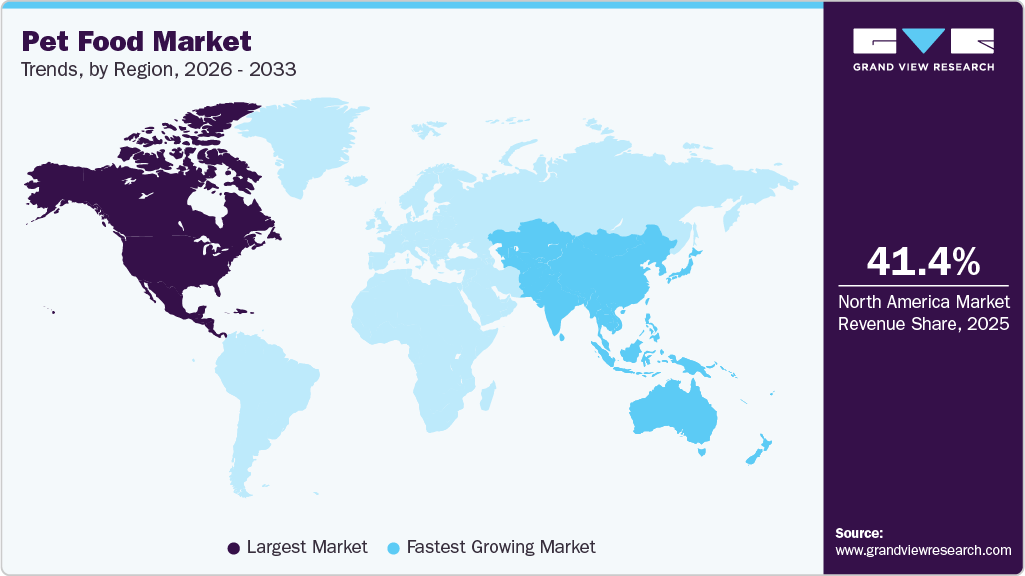
The global pet food market size was valued at USD 128.7 billion in 2025 and is projected to grow from USD 135.0 billion in 2026 to USD 191.2 billion by 2033, at a CAGR of 5.1% from 2026 to 2033. North America accounted for the largest revenue share of 41.4% in 2025. The demand for pet food products is anticipated to be driven by growing consumer inclination toward the adoption of pets, along with rising concerns regarding pet health and wellness.

Key Market Trends & Insights
- By product: Dry pet food segment dominated the market with a revenue share of 59.1% in 2025.
- By pet type: Dogs segment held the largest revenue share of 60.7% in 2025.
- By category: Traditional pet food segment held the largest revenue share of 86.2% in 2025.
Regional Highlights
- Largest regional market: North America (41.4% revenue share, 2025)
- Fastest-growing regional market: Asia Pacific (highest CAGR, 2026-2033)
- By country: The U.S. pet food market held the largest share of North America in 2025.
Market Size & Forecast
- Market size in 2025: USD 128.7 Billion
- Estimated market size in 2026: USD 135.0 Billion
- Projected market size by 2033: USD 191.2 Billion
- CAGR (2026-2033): 5.1%
Improvements in overall digestion and the performance of pet animals owing to the consumption of nutritious food are also likely to boost the growth of the pet food and care products market. The pet food products available in the global market rarely vary, prompting manufacturers to include multifunctional and innovative ingredients in their offerings to curb this similarity bias. Convenience is likely to play a vital role in driving this industry, given the increased popularity of prepared pet food and the supporting role of the pet food packaging market.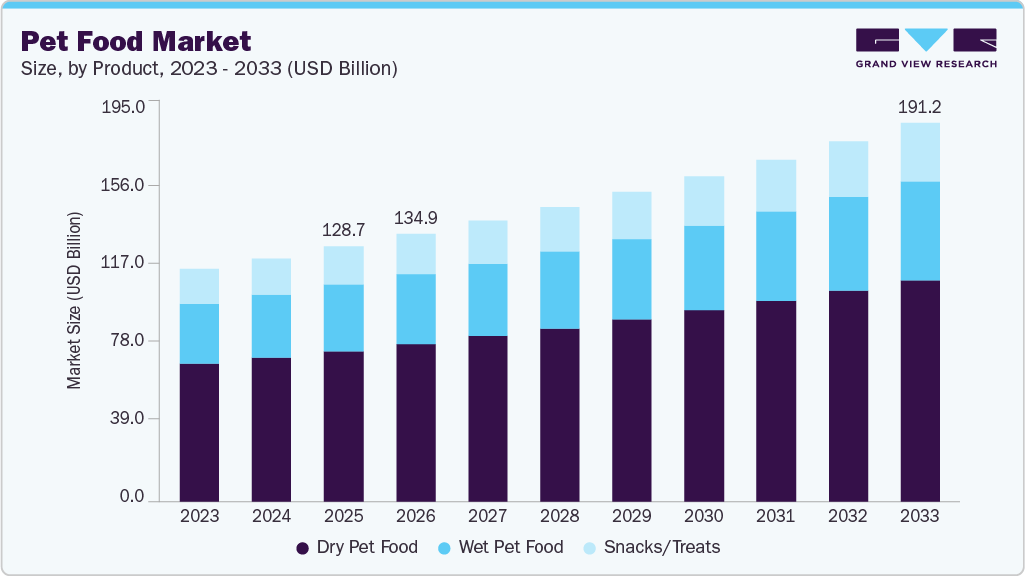
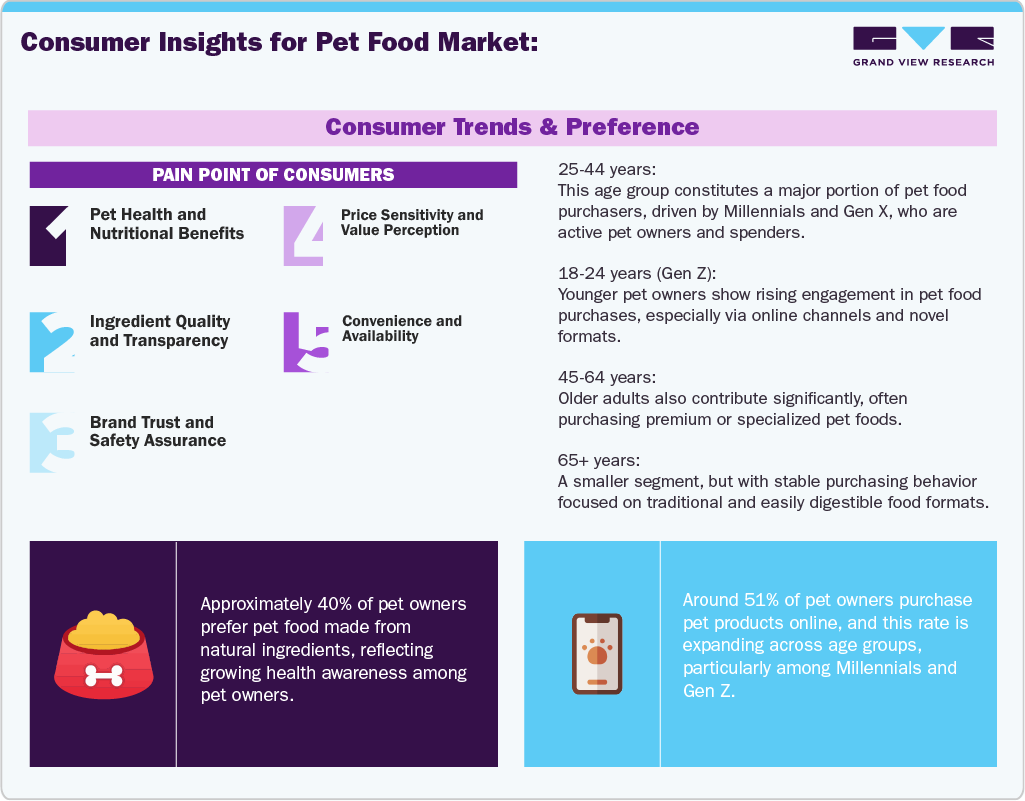
The increasing availability of organic products in a variety of flavors, along with the inclusion of essential ingredients such as probiotics and antioxidants, is likely to have a positive impact on the organic pet food market and the pet food ingredients market. Rising concerns among pet owners have been observed due to various health issues affecting their pets. Joint disease due to a lack of exercise and overfeeding was one of the main reasons pets were overweight. According to the American Pet Products Association (APPA), USD 123.6 billion was spent on pets in the U.S., including pet food & treats, supplies, vet care, and other items. In 2021, the highest sales in the country, amounting to USD 50.0 billion, were attributed to pet food and treats.
Pets also suffer from high blood pressure and diabetes. Pet owners are increasingly adopting nutritious foods manufactured by various companies, driven by rising awareness of the importance of maintaining their pets' health. This shift in consumer preferences is expected to positively impact the pet food additive market over the forecast period.
Diseases, such as osteoarthritis, among dogs and cats have considerably increased, with over 50% of cats and dogs reportedly suffering from it globally. The demand for pet food has grown significantly over the past few years. Large companies manufacture high-quality products, while others are attempting to market less expensive imitations. This is expected to act as a restraining factor for the growth of the frozen pet food market.
The raw materials utilized in every pet food extrusion market segment are primarily commodities and agricultural-based products. Grains, fruits, and animal protein meals, among other ingredients, are procured from various suppliers. The cost, quality, and availability of these key ingredients have fluctuated in the past and are expected to fluctuate in the future as well. For instance, in March 2023, pet food prices in America rose by 15.1% YoY. As a result, residents are considering giving away their pets. Such sudden and sharp increases in the prices of pet food can adversely affect market growth.
Market Dynamics
The growing adoption of pets across both developed and emerging countries continues to play a major role in the expansion of the global pet food market. Factors such as rapid urbanization, smaller family structures, and changing consumer lifestyles have encouraged more individuals to keep companion animals, such as dogs, cats, and others. In many households, pets are increasingly viewed as part of the family, which has significantly influenced spending patterns on pet care and nutrition. According to the American Pet Products Association (APPA), nearly 66% of households in the U.S. owned a pet in 2024, reflecting the strong presence of companion animals in mature markets. At the same time, countries across the Asia-Pacific and Latin America are witnessing a significant rise in pet ownership due to improving income levels and growing middle-class populations. This growing pet population further results in enhancing the demand for nutritionally balanced and premium pet food products.
Furthermore, increasing awareness regarding pet health and wellness further drives the market growth. Consumers are now paying closer attention to ingredient quality, nutritional value, and product safety while purchasing pet food. Demand for premium offerings such as grain-free diets, organic products, high-protein formulations, and functional ingredients has grown considerably in recent years. In addition, online retail platforms and pet specialty stores have made premium brands more accessible to consumers worldwide. The concept of “pet humanization” has also encouraged owners to spend more on customized nutrition and veterinarian-recommended diets. To meet evolving consumer preferences, manufacturers are focusing on product innovation, natural ingredients, and science-based formulations, which is expected to support the continued growth of the global pet food industry over the coming years.
Strict government regulations related to pet food safety, labeling, and ingredient approvals are restricting the growth of the global pet food market. Manufacturers such as The J.M. Smucker Company, Mars Incorporated, WellPet LLC, and others must comply with various standards regarding nutritional content, product testing, packaging, and manufacturing practices before introducing products into the market. These regulations often increase production costs and extend product approval timelines, particularly for small and medium-sized companies. In addition, different regulatory frameworks across countries create challenges for international trade and product standardization. Frequent inspections and the risk of product recalls further add to operational pressure, which ultimately limits the growth of the market.
Product Insights
The dry pet food segment dominated the pet food industry, accounting for a revenue share of over 59.10% in 2025, driven by its superior shelf stability, ease of handling, and economic pricing compared to wet and fresh alternatives. High nutrient density and standardized formulations have supported consistent daily feeding practices, particularly among multi-pet households. Additionally, the widespread availability of dry pet food across supermarkets, specialty pet stores, and e-commerce platforms has reinforced its position as the primary feeding option for cost- and convenience-driven consumers, driving growth in the dry pet food industry.
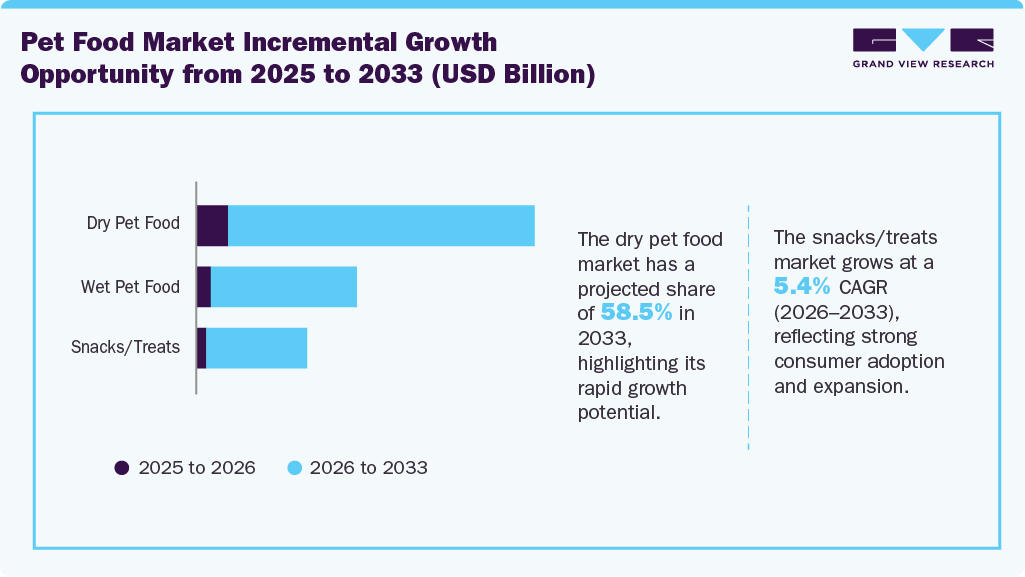
The snacks/treats segment is expected to grow at the fastest CAGR of 5.4% during the forecast period. Growth in the snacks and treats segment has been driven by increasing pet humanization and the use of treats as tools for training, behavioral reinforcement, and emotional bonding. Functional treats that offer dental care, joint support, and digestive benefits have gained traction, supported by pet owners' rising willingness to spend on non-essential but value-added products. Frequent product launches, flavor innovation, and premium positioning have further accelerated demand within this segment.
Pet Type Insights
The dog pet type segment led the pet food market, accounting for the largest revenue share of 60.75% in 2025. The high number of dog owners across Europe is a key factor driving the demand for dog food in Europe. According to the European Pet Food Industry (EPFI), Europe had 340 million pets in 2022, including approximately 106 million dogs, highlighting the increasing demand for dog food. As more households welcome dogs, the need for convenient and nutritious dog food options continues to grow. Concerns about food allergies and sensitivities in dogs are driving the rise of grain-free dog food in the UK and Germany. Brands like Hill’s Science Diet and Purina Pro Plan have responded by launching pet foods for dogs with dietary restrictions, supporting market growth.
The cat pet type is expected to grow at a significant CAGR of 4.7% during the forecast period, 2026 to 2033. The increase in pet ownership, especially cats, is a primary driver of the cat food market in Europe. More households view pets as family members, leading to higher spending on premium pet products. According to the European Pet Food Industry (EPFI), Europe was home to 340 million pets in 2022, including approximately 129 million cats, underscoring the growing demand for wet cat food. Countries such as Germany, France, and the UK have seen a steady rise in cat ownership, with more people adopting cats as companions, particularly in urban areas where cats are preferred for smaller living spaces. This growing pet population is boosting the growth of the wet pet food market.
Category Insights
The traditional pet food segment held the largest revenue share of 86.18% in 2025. The traditional pet food segment has continued to dominate due to established consumer familiarity, affordability, and broad acceptance across diverse income groups. These products benefit from long-standing brand trust, standardized nutritional profiles, and extensive distribution through mass retail channels. Routine feeding habits and limited switching behavior among price-sensitive consumers have further sustained high volume consumption of traditional pet food offerings.
Demand for specialist veterinary nutrition is expected to grow at a significant CAGR of 4.0% over the forecast period, driven by rising awareness of pet health management and increased diagnosis of chronic conditions such as obesity, renal disorders, food sensitivities, and gastrointestinal issues. Veterinarian recommendations and prescription-based feeding have strengthened consumer confidence in clinically formulated diets. Growing emphasis on preventive care and longevity in companion animals has further encouraged the adoption of targeted veterinary nutrition products.
Distribution Channel Insights
Pet specialty stores held the highest revenue share of 28.45% in 2025. Pet specialty stores are staffed with knowledgeable personnel who offer expert advice on pet nutrition, health, and wellness. This personalized service attracts pet owners who prefer tailored recommendations for their pets, particularly for wet food products that cater to specific dietary needs. Fressnapf, one of Europe’s largest pet store chains, operates over 1,700 stores across Germany, Austria, and France. In-store experts provide advice on choosing the right food for pets with special dietary requirements, such as grain-free, hypoallergenic, or senior pet formulas. This personalized service enhances customer trust and drives repeat sales.
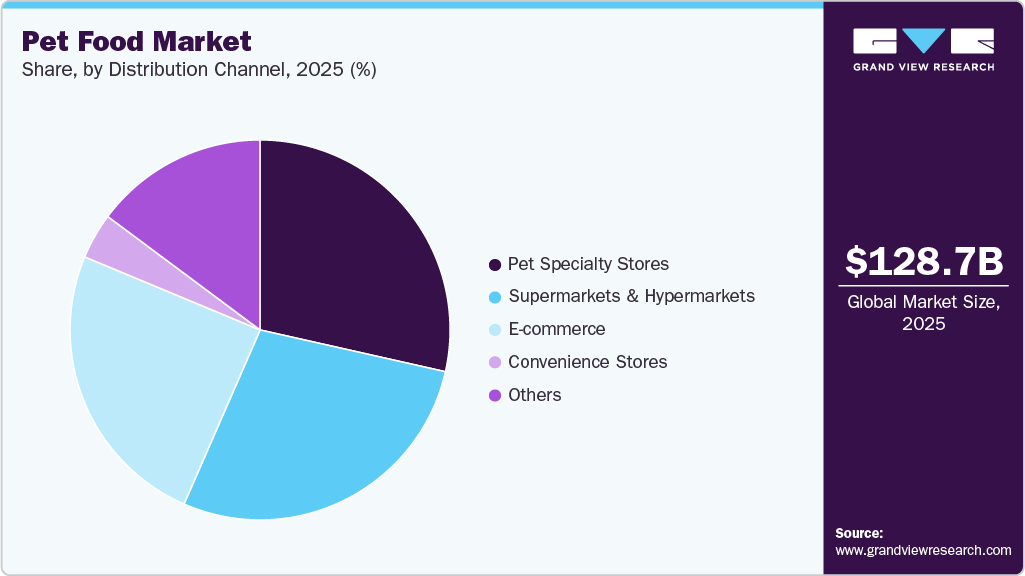
The e-commerce segment is expected to grow at the fastest CAGR of 6.6% over the forecast period. The increasing shift towards online shopping is a significant driver for pet food sales. E-commerce offers unparalleled convenience, allowing customers to order products from home and have them delivered to their doorstep, often with subscription options for recurring purchases. Online pet retailers like Zooplus and Bitiba have established a strong presence across Europe, offering a wide range of pet wet food products. These platforms offer free shipping for bulk orders, subscription models for regular deliveries, and competitive pricing, making them a go-to option for pet owners seeking convenience and savings.
Regional Insights
North America accounted for the largest revenue share of 41.36% in 2025. North America’s strong share has been driven by high pet ownership rates, robust consumer spending on premium pet nutrition, and well-established distribution channels spanning specialty retailers, supermarkets, and online platforms. Advanced e-commerce penetration, widespread adoption of value-added and functional pet food formulations, and greater awareness of pet health and wellness have collectively elevated market demand. Additionally, frequent product innovations and strong brand loyalty among U.S. and Canadian consumers have reinforced North America’s leadership in the global pet food market.
U.S. Pet Food Market Trends
The U.S. pet food industry’s growth is driven by a growing trend of pet humanization, with owners prioritizing nutrition, safety, and premium quality in their purchasing decisions. Rising disposable incomes, growth in single-person and dual-income households, and heightened focus on pet health conditions such as weight management and digestive wellness have driven demand for specialized and premium formulations. The proliferation of online retail and subscription services has further enhanced accessibility and frequency of purchases.
Europe Pet Food Market Trends
The Europe pet food industry is growing due to a combination of trends, including humanization, health consciousness, convenience, and sustainability. These drivers have led to the rise of premium, specialized, and eco-friendly options in the wet pet food category, making it a dynamic and competitive market. Many consumers are willing to spend more on wet pet food that promises superior quality, natural ingredients, and health benefits. Pet food brands are focusing on transparency in ingredients, with products free of artificial additives or preservatives. Brands such as Lily’s Kitchen have gained popularity in Europe by offering wet pet food made from human-grade ingredients with clear, simple labeling. The trend mirrors the clean-eating trend seen in human food markets, driving growth in the fresh pet food market.
The UK pet food market is expected to grow during the forecast period. High demand for vegan and plant-based products with customized meal preferences by owners is estimated to fuel the demand for natural and organic pet food products. According to the UK Pet Food Report 2024, the UK has a total population of 13.5 million and 12.5 million dogs and cats, respectively, and is one of the prominent pet food markets in Europe in 2024. According to the UK Pet Food Manufacturers Association (PFMA), 82 members of the trade body account for more than 90% of the market share. The UK market complies with stringent standards and over 50 different legislations to manufacture wet pet food products of the highest quality and safety.
Asia Pacific Pet Food Market Trends
The Asia Pacific pet food industry is expected to grow at the fastest CAGR of 4.7% in 2025. The rapid growth has been supported by expanding pet ownership, particularly in urban and affluent households, as well as by rising awareness of pet nutrition and welfare. The increased adoption of Western feeding practices and growing middle-class spending on premium and customized pet food products have driven market expansion. E-commerce growth and the rising availability of international brands have also contributed to accelerated regional CAGR.
The China pet food market held a significant share of Asia Pacific in 2025. China has emerged as a key contributor to the regional growth, driven by booming pet ownership, especially among younger urban consumers. A shift toward premium, imported, and functional pet foods, supported by expanding retail and online channels, has strengthened market presence. Rising consumer awareness of pet dietary health and increased expenditure on nutrition, grooming, and healthcare have also enhanced China’s influence within the APAC pet food landscape.
Key Pet Food Company Insights
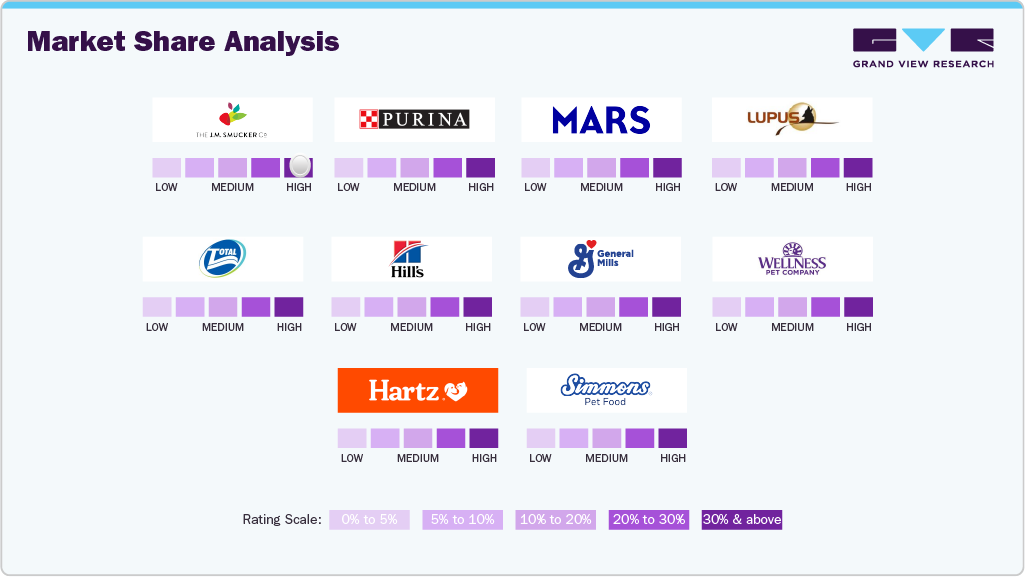
The competitive landscape of this market is moderately consolidated, with multinationals striving to meet high demand from large customers and the end-user base. Key industry participants are inclined to adopt new marketing strategies and use advanced technologies to strengthen their customer base and generate more revenue in the near future. In addition, companies are undertaking expansion, mergers, and acquisitions as part of their strategic initiatives. For example, in September 2023, Superlatus, Inc., a key food distribution and technology firm, merged with TRxADE HEALTH, Inc., and announced its expansion in the pet food industry with plant-based or vegan pet food treats.
Industry participants are inclined to invest heavily in research and technology to advance processes and develop new recipes, which are manufactured with varied and specialized ingredients. Key manufacturers are also focused on developing innovative formulas to offer diverse and high-quality food for pets and farm animals. Industry players also use raw materials to meet demand and regulatory criteria in both domestic and international markets.
Key Pet Food Companies:
The following key companies have been profiled for this study on the pet food market.
- The J.M. Smucker Company
- Nestle Purina
- Mars, Incorporated
- LUPUS Alimentos
- Total Alimentos
- Hill’s Pet Nutrition, Inc.
- General Mills Inc.
- WellPet LLC
- The Hartz Mountain Corporation
- Simmons Foods Inc.
Recent Developments
-
In June 2025, General Mills expanded its Blue Buffalo brand with a fresh, minimally processed pet food line aimed at the rapidly growing fresh pet food category valued at billions and designed to appeal to owners treating pets like family.
-
In 2024, Nestlé Purina PetCare commissioned a 1.3-million-sq-ft advanced manufacturing plant in North Carolina to boost production efficiency, sustainability goals, and capacity for its pet food portfolio.
Pet Food Market Report Scope
Report Attribute
Details
Market size in 2025
USD 128.7 Billion
Estimated Market size in 2026
USD 135.0 Billion
Projected Market size by 2033
USD 191.2 billion
Growth rate
CAGR of 5.1% from 2026 to 2033
Actuals
2021 - 2025
Forecast period
2026 - 2033
Quantitative units
Revenue in USD billion, volume in kilo tons, and CAGR from 2026 to 2033
Report coverage
Revenue forecast, volume forecast, company ranking, competitive landscape, growth factors, and trends
Segments covered
Product, pet type, category, distribution channel, region
Regional scope
North America; Europe; Asia Pacific; Central & South America; Middle East & Africa
Country scope
U.S.; Canada; Mexico; Germany; UK; France; Italy; Spain; China; Japan; Australia; India; South Korea; Brazil; Saudi Arabia
Key companies profiled
The J.M. Smucker Company; Nestle Purina; Mars, Incorporated; LUPUS Alimentos; Total Alimentos; Hill’s Pet Nutrition, Inc.; General Mills Inc.; WellPet LLC; The Hartz Mountain Corporation; Simmons Foods Inc.
Customization scope
Free report customization (equivalent up to 8 analysts’ working days) with purchase. Addition or alteration to country, regional & segment scope.
Pricing and purchase options
Avail customized purchase options to meet your exact research needs. Explore purchase options
Global Pet Food Market Report Segmentation
This report forecasts revenue & volume growth at the global, regional & country levels and provides an analysis of the latest industry trends and opportunities in each of the sub-segments from 2021 to 2033. For this study, Grand View Research has segmented the global pet food market report based on product, pet type, category, distribution channel, and region:
-
Product Outlook (Volume, Kilotons; Revenue, USD Billion, 2021 - 2033)
-
Wet Pet Food
-
Dry Pet Food
-
Snacks/Treats
-
-
Pet Type Outlook (Volume, Kilotons; Revenue, USD Billion, 2021 - 2033)
-
Cats
-
Dogs
-
Others
-
-
Category Outlook (Volume, Kilotons; Revenue, USD Billion, 2021 - 2033)
-
Traditional Pet Food
-
Specialist Veterinary Nutrition
-
-
Distribution Channel Outlook (Volume, Kilotons; Revenue, USD Billion, 2021 - 2033)
-
Supermarkets & Hypermarkets
-
Convenience Stores
-
E-commerce
-
Pet Specialty Stores
-
Others
-
-
Regional Outlook (Volume, Kilotons; Revenue, USD Billion, 2021 - 2033)
-
North America
-
U.S.
-
Canada
-
Mexico
-
-
Europe
-
UK
-
Germany
-
France
-
Italy
-
Spain
-
-
Asia Pacific
-
Japan
-
India
-
China
-
Australia
-
South Korea
-
-
Central & South America
-
Brazil
-
-
Middle East & Africa
-
Saudi Arabia
-
-
Delivered Customizations
This report has been delivered with the following In-depth customizations
Client Request
Customization Delivered
Value Adds
Company Market Share & Regulatory Landscape Analysis
Delivered a detailed company market share analysis of leading players operating in the global pet food market, along with assessment of their product portfolios, regional presence, strategic developments, and competitive positioning. The analysis also covers the regulatory landscape, including key pet food safety regulations, labeling standards, and compliance frameworks impacting market operations globally.
Enables stakeholders to understand the competitive positioning of leading market participants, assess regulatory compliance requirements, identify market entry barriers, and evaluate strategic opportunities across the global pet food industry through detailed company benchmarking and regulatory landscape assessment.
Organic Pet Food Adoption Trend
Delivered detailed insights on the growing adoption of organic pet food, including consumer preference shifts toward natural and clean-label products, increasing demand for chemical-free ingredients, premiumization trends, and the impact of pet humanization on purchasing behavior across major regional markets.
Provided detailed analysis on organic pet food adoption trends, including consumer buying behavior, premium product demand, clean-label ingredient preferences, regional adoption patterns, pricing trends, competitive positioning, and the influence of pet humanization on the growing demand for organic and natural pet nutrition products.
Cross-Segmentation Analysis for Pet Food Across Distribution Channel
The study delivers cross-segmentation analysis of pet food products across key distribution channels, including hypermarkets/supermarkets, convenience stores, e-commerce platforms, pet specialty stores, and others. The analysis highlights channel-wise demand trends, product positioning, consumer purchasing behavior, and sales contribution across each distribution segment.
Enables stakeholders to understand the distribution channel-wise performance of pet food products, identify high-growth sales channels, evaluate consumer purchasing preferences, and assess product penetration across hypermarkets/supermarkets, convenience stores, e-commerce platforms, pet specialty stores, and other retail formats.
Frequently Asked Questions About This Report
North America dominated the global market with the largest revenue share of 41.4% in 2025.
The dry pet food segment dominated the pet food industry, accounting for over 59.1% of revenue in 2025.
The dog pet type segment led the pet food market, accounting for the largest revenue share of 60.7% in 2025.
The traditional pet food segment held the largest revenue share of 86.2% in 2025.
Pet specialty stores held the highest revenue share of 28.4% in 2025.
The global pet food market is expected to witness 5.1% revenue growth from 2026 to 2033 to reach USD 191.24 billion by 2033.
The dry pet food market accounted for the largest share of 59.10% of the revenue in 2025 due to its superior shelf stability, ease of handling, and economic pricing compared to wet and fresh alternatives.
The key market players in the pet food market include The J.M. Smucker Company; Nestle Purina; Mars, Incorporated; LUPUS Alimentos; Total Alimentos; Hill’s Pet Nutrition, Inc.; General Mills Inc.; WellPet LLC; The Hartz Mountain Corporation; Simmons Foods Inc.
Key factors include growing consumer inclination toward the adoption of pets, along with rising concerns regarding pet health and wellness.
The global pet food market size was valued at USD 128.7 billion in 2025 and is expected to reach USD 135.0 billion in 2026.
About the Author(s)
Consumer F&B Research Team
Consumer Goods · Consumer F&BThis report was authored by the consumer f&b research team at Grand View Research - comprising two research analysts, one senior research analyst, and one industry expert - with specialized expertise in the consumer f&b segment of the consumer goods industry. All findings are based on proprietary consumer goods databases, executive interviews, and regulatory analysis, subject to internal peer review prior to publication.
Last Updated:
Speak to Analyst


Customize this report to your needs — add regions, segments, or data points, with 20% free customization.
Or view our licence options:


ISO 9001:2015 & 27001:2022 Certified
We are GDPR and CCPA compliant! Your transaction & personal information is safe and secure. For more details, please read our privacy policy.


