
- Home
- »
- Automotive & Transportation
- »
-
Automotive Balance Shaft Market Size & Share Report, 2033GVR Report cover

Automotive Balance Shaft Market (2026 - 2033)
Size, Share & Trends Analysis Report By Engine (Inline-3 Cyliner, Inline-4 Cylinder), By Manufacturing Process (Forging, Casting), By Application, By Sales Channel, By Region, And Segment Forecasts
Market Size, 2025
$14.3BMarket Estimate, 2026
$14.6BMarket Forecast, 2033
$19.7BCAGR, 2026–2033
4.4%Automotive Balance Shaft Market Summary
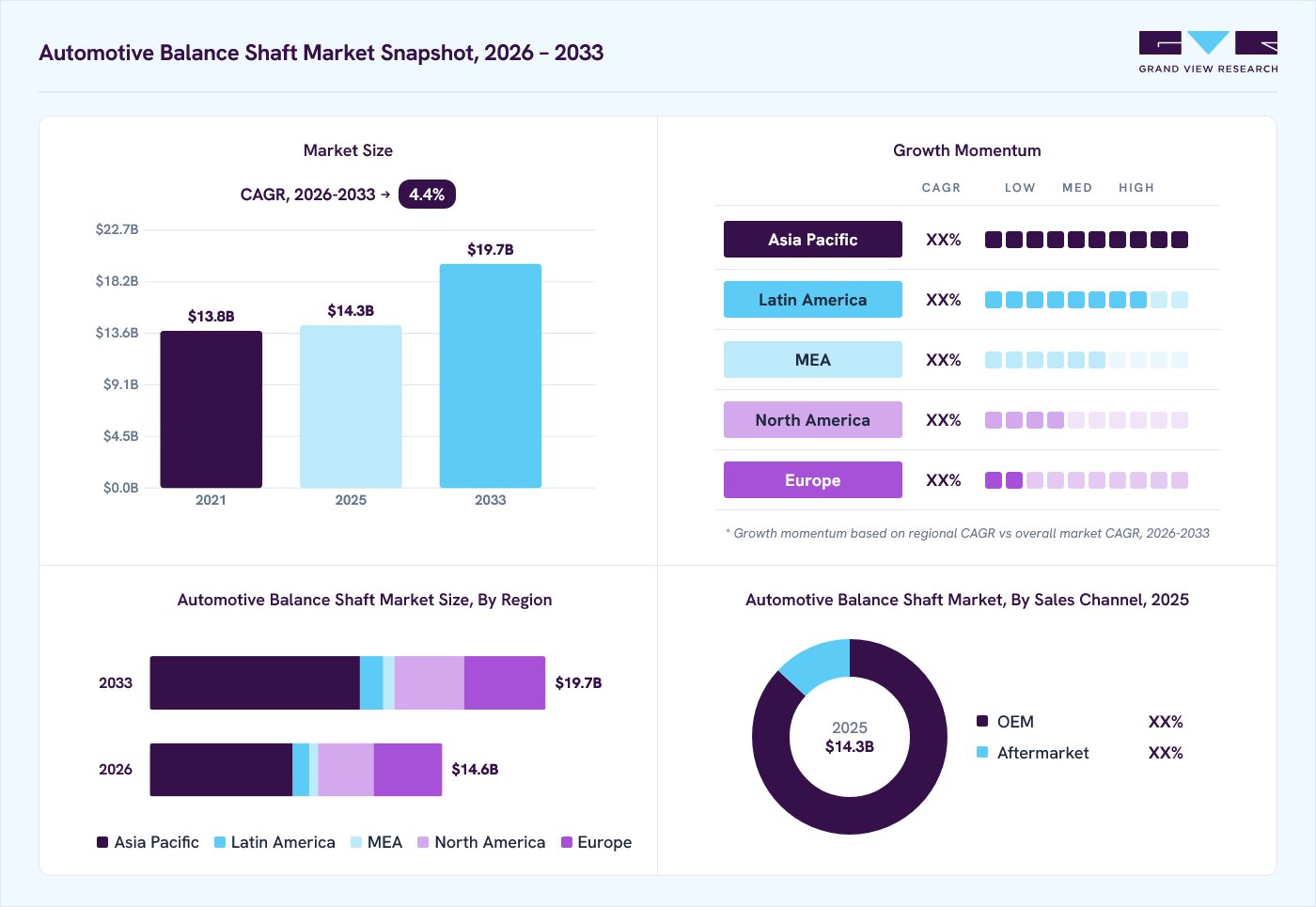
The global automotive balance shaft market size was valued at USD 14.3 billion in 2025 and is projected to grow from USD 14.6 billion in 2026 to USD 19.7 billion by 2033, at a CAGR of 4.4% from 2026 to 2033. Asia Pacific dominated the market, accounting for the largest revenue share of 48.3% in 2025. The global market is driven by the increasing production of passenger and commercial vehicles, particularly those equipped with inline three- and four-cylinder engines that require enhanced vibration control.
 Source: Grand View Research, IR Documents, Primary Interviews, Paid DatabasesTo learn more about this report,
 Download Free Sample Report
Key Market Trends & Insights
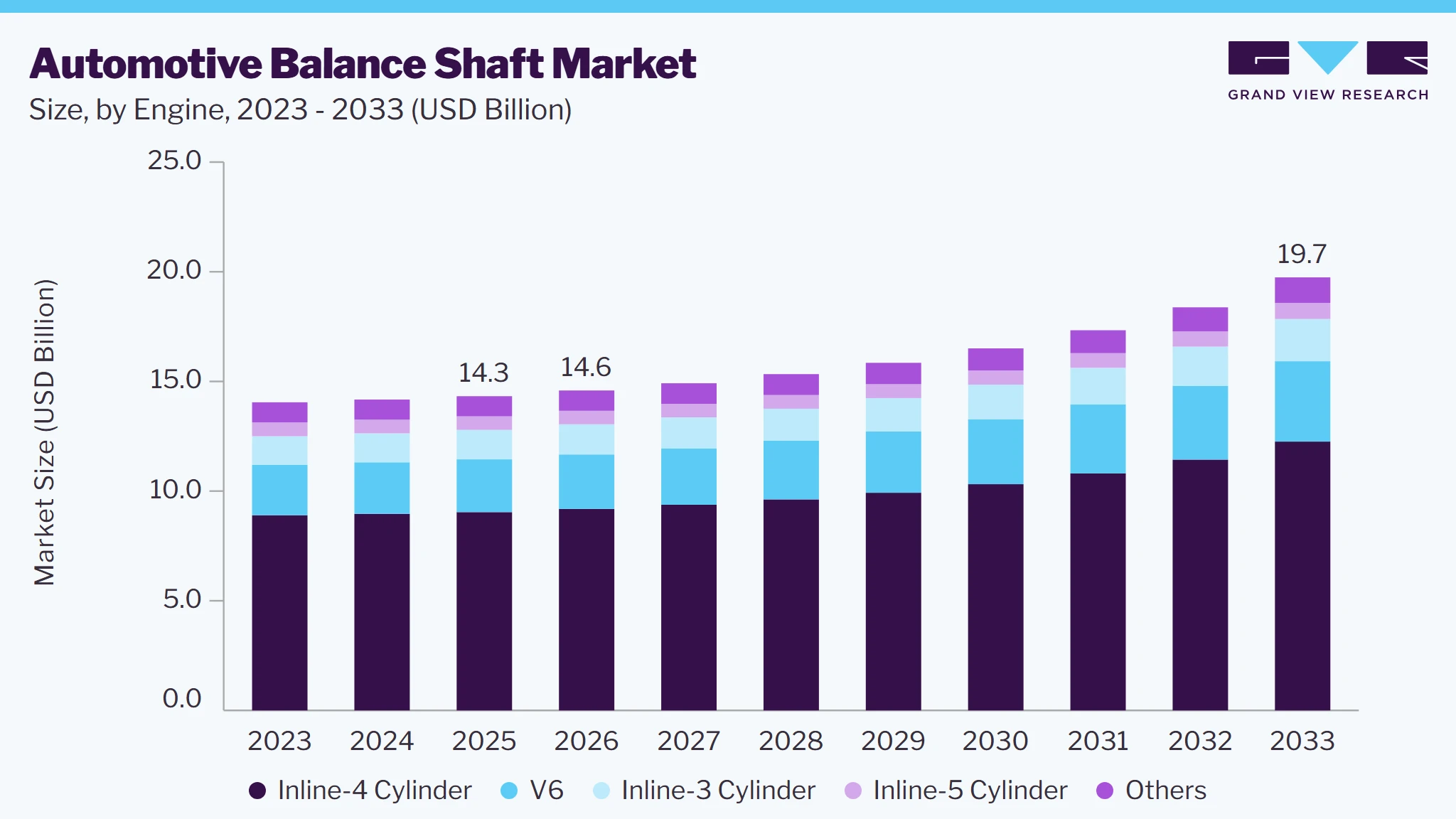
- By engine: The inline-4 cylinder segment dominated the market, with a revenue share of 63.1% in 2025.
- By manufacturing process: The forging segment led the market and accounted for a share of 65.2% in 2025.
- By application: The passenger cars segment dominated the market, with a revenue share of 78.4% in 2025.
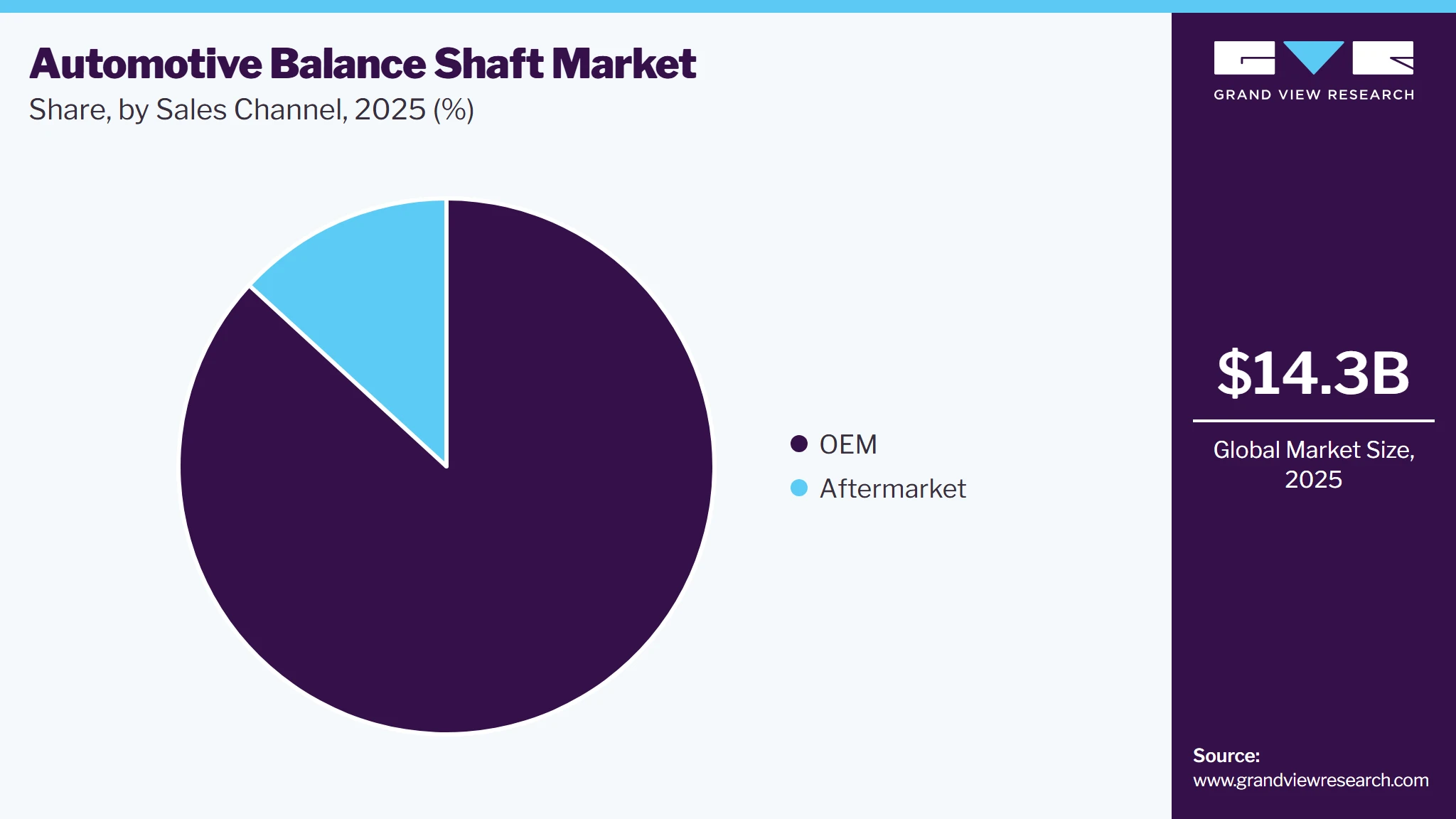
- By sales channel: The OEM segment dominated the market, with a revenue share of 86.8% in 2025.
Regional Highlights
- Largest regional market: Asia Pacific (48.3% revenue share, 2025)
- By country: China held the largest market share in 2025.
Market Size & Forecast
- Market size in 2025: USD 14.3 Billion
- Estimated market size in 2026: USD 14.6 Billion
- Projected market size by 2033: USD 19.7 Billion
- CAGR (2026-2033): 4.4%
Prism AI by Grand View Research Free to tryAsk a question about the automotive balance shaft marketTry asking✓Every figure cited from GVR research Prefer the report? Download free sample →
Growing consumer expectations for improved ride comfort, lower noise levels, and refined engine performance are also driving demand. In addition, engine downsizing and turbocharging trends are increasing the need for effective vibration-management systems, creating opportunities for the adoption of balance shafts across internal combustion and hybrid powertrains.Technological developments in the market are focused on improving the efficiency, compactness, and integration of balance shaft systems. Manufacturers are increasingly adopting lightweight materials, optimized gear and chain-drive mechanisms, and precision manufacturing technologies to reduce friction and rotational losses. Integrated balance shaft modules, improved lubrication systems, and designs tailored for hybrid powertrains are also gaining traction as automakers seek to enhance powertrain efficiency while maintaining low noise, vibration, and harshness (NVH) levels.
 To learn more about this report, Download Free Sample Report
Investments in the automotive balance shaft industry are largely linked to broader investments in advanced powertrain development, manufacturing automation, and hybrid vehicle technologies. Automotive suppliers are investing in precision machining, simulation, testing, and modular component platforms to develop cost-effective and high-performance balancing systems. Continued investment in hybrid powertrains is expected to provide additional opportunities, as combustion engines used in hybrid vehicles must continue to meet stringent requirements for refinement and efficiency.
The regulatory landscape indirectly supports the adoption of advanced balance shaft technologies through increasingly stringent fuel-efficiency and vehicle-emission standards. Regulations encouraging lower CO₂ emissions and improved fuel economy are pushing automakers to optimize engine size, weight, and efficiency. In contrast, noise regulations and vehicle quality standards continue to emphasize reduced vibration and improved refinement. These requirements are encouraging manufacturers to develop balance shaft systems that minimize energy losses and complement advanced engine and hybrid powertrain architectures.
However, the market faces constraints due to the growing shift toward battery-electric vehicles, which do not require conventional engine balance shaft systems. The additional cost, weight, mechanical complexity, and friction associated with balance shaft assemblies can also limit adoption in smaller or highly cost-sensitive vehicle segments. Furthermore, advances in engine design, mounting systems, and alternative vibration-control technologies may reduce the dependence on dedicated balance shaft systems in certain applications, creating longer-term challenges for market growth.
Market Dynamics
The automotive balance shaft industry is shaped by the continued need to improve engine refinement, reduce noise, vibration, and harshness (NVH), and optimize the performance of increasingly compact powertrains. Engine downsizing, turbocharging, and the expansion of hybrid powertrains are supporting demand for efficient vibration-management solutions, while lightweighting and precision manufacturing are reshaping product design. At the same time, the long-term transition to battery-electric vehicles poses a structural challenge, as conventional balance shafts are primarily associated with internal combustion engines.
The increasing adoption of downsized and turbocharged engines is driving the growth of the market. Automakers are under pressure to improve fuel efficiency and reduce emissions while maintaining vehicle performance, leading to the wider adoption of smaller-displacement engines, particularly inline three- and four-cylinder configurations. However, reducing the number of cylinders can increase inherent engine imbalance, leading to higher levels of vibration and harshness. This creates a growing requirement for advanced balancing mechanisms that can maintain acceptable levels of ride comfort and powertrain refinement.
Automotive balance shafts address this challenge by counteracting secondary and, in certain configurations, primary engine vibrations through precisely engineered counter-rotating shafts. Their integration enables automakers to use compact, efficient engine architectures without significantly compromising refinement or perceived vehicle quality. This is particularly important in passenger cars and hybrid vehicles, where engine noise and vibration can become more noticeable during transitions between electric and combustion modes. As automakers continue to optimize engine architectures, demand for lightweight, efficient, and application-specific balance shaft systems is expected to support market growth.
The growing transition to battery-electric vehicles represents a significant long-term restraint on the market. Conventional balance shafts are primarily used in reciprocating internal combustion engines to manage vibrations generated by rotating and reciprocating components. Battery electric powertrains do not utilize piston-based combustion engines and therefore eliminate the fundamental requirement for conventional automotive balance shaft systems. As electric vehicle adoption increases, the addressable market associated with traditional gasoline and diesel engine platforms is expected to face gradual structural pressure.
The downstream effects of this restraint are likely to be most significant in regions and vehicle segments undergoing rapid electrification, particularly in Europe, China, and select premium passenger vehicle markets. Suppliers with a high concentration of revenue from conventional ICE engine programs may face lower long-term production volumes and increased pressure to diversify their product portfolios. The restraint is also expected to affect balance shaft demand differently across vehicle categories, with smaller passenger vehicles potentially transitioning to electrified platforms faster than certain commercial and hybrid applications. Consequently, the expansion of battery electric vehicles may slow the long-term growth trajectory of conventional balance shaft demand and increase the importance of hybrid-compatible applications.
The continued expansion of hybrid and plug-in hybrid powertrains presents a significant opportunity for the market. Hybrid vehicles retain an internal combustion engine while incorporating electric propulsion components, allowing balance shaft systems to remain relevant within the powertrain architecture. In many cases, the refinement requirements of hybrid vehicles are particularly demanding because engine vibration can become more noticeable when the combustion engine starts and stops or operates intermittently alongside the electric motor. Increasing regulatory pressure to reduce fleet emissions while maintaining consumer demand for extended driving range is supporting the adoption of hybrid technologies across multiple vehicle categories.
This opportunity creates growth potential for suppliers capable of developing compact, lightweight, and highly efficient balance shaft modules designed for modern hybrid engine platforms. Companies with strong capabilities in precision machining, forging, casting, gear manufacturing, and integrated powertrain components are well positioned to capture this demand. Inline three-cylinder and inline four-cylinder hybrid engines represent particularly attractive application areas due to their growing use in fuel-efficient vehicle platforms and their need for effective vibration management. The opportunity is also expected to encourage investment in modular balance shaft designs adaptable across multiple engine families and vehicle platforms.
Market Concentration & Characteristics
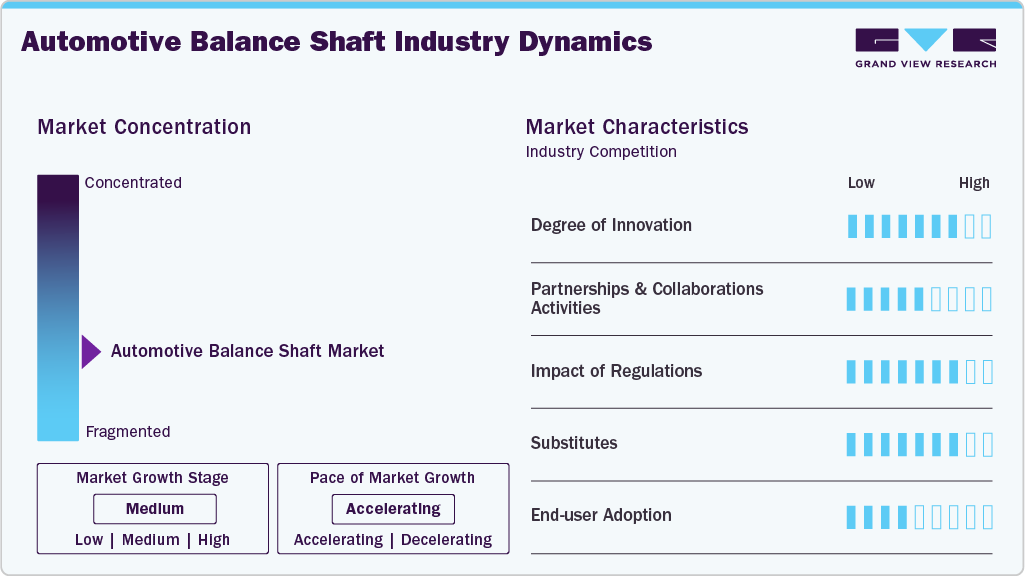
The automotive balance shaft industry is fragmented, with competition distributed among a relatively broad group of global, regional, and specialized automotive component manufacturers. Key participants include American Axle & Manufacturing, Musashi Seimitsu Industry, Hirschvogel Group, OTICS Corporation, Sansera Engineering, SHW AG, and several regional manufacturers. Industry analysts also identify numerous suppliers serving specific OEMs, engine platforms, or geographic markets, indicating that no single company dominates the global competitive landscape.
 To learn more about this report, Download Free Sample Report
This fragmentation is driven by differences in OEM sourcing relationships, regional automotive production, manufacturing capabilities, and specialization in forging, casting, precision machining, and the integration of powertrain components. Established suppliers compete on technology, quality, scale, and long-term OEM contracts, while regional and specialized players compete through cost efficiency and proximity to local vehicle and engine manufacturers. As a result, competitive intensity remains relatively high, with companies focusing on product innovation, capacity expansion, partnerships, and the development of lightweight and hybrid-compatible balance shaft solutions to strengthen their market position.
Analyst Perspective
The market for automotive balance shaft is expected to remain relevant over the medium term as automakers continue to rely on internal combustion and hybrid powertrains across major vehicle markets. Demand is being supported by engine downsizing, increasing NVH requirements, and the need to improve refinement in compact and hybrid engine architectures. Technology development is increasingly focused on lightweight materials, integrated modules, reduced friction, precision manufacturing, and designs optimized for electrified powertrain applications. Looking ahead, investment is expected to focus on hybrid-compatible engine components and modular manufacturing platforms that can support multiple OEM programs.
Engine Insights
The inline-4 cylinder segment dominated the market and accounted for the revenue share of 63.1% in 2025, driven by the widespread use of these engines across passenger cars, SUVs, and light commercial vehicles, particularly as automakers pursue engine downsizing and improved fuel efficiency. Turbocharging and hybridization enable smaller four-cylinder engines to deliver performance levels comparable to larger engines, supporting their continued adoption across a broad range of vehicle platforms. However, inline-4-cylinder engines can generate secondary vibrations, particularly in larger-displacement configurations, creating a demand for balance shaft systems to improve noise, vibration, and harshness (NVH) performance. The increasing use of refined, higher-output four-cylinder engines therefore supports the integration of balance shafts, especially in mid-size and premium vehicles, where ride comfort and powertrain smoothness are important purchase considerations.
The V6 segment is anticipated to grow at the highest CAGR during the forecast period, due to the continued use in premium passenger vehicles, performance-oriented models, SUVs, pickups, and certain commercial applications that require higher power and torque. Automakers increasingly focus on improving powertrain refinement while meeting fuel-efficiency and emissions requirements, creating demand for advanced vibration-management solutions in selected V6 engine architectures. The adoption of turbocharged and hybridized V6 powertrains can further underscore the importance of compact, efficient balancing systems, particularly as automakers seek to reduce NVH without compromising performance or packaging efficiency.
Manufacturing Process Insights
The forging segment dominated the market and accounted for the revenue share of 65.2% in 2025, driven by the increasing requirement for high-strength, durable, and dimensionally precise balance shafts used in modern automotive engines. Forged balance shafts offer superior mechanical properties and fatigue resistance, making them suitable for high-load and high-speed engine applications, including turbocharged and performance-oriented powertrains. The growing emphasis on engine durability, NVH reduction, and long service life is encouraging OEMs to adopt precision-forged components, particularly in passenger vehicles and commercial vehicles where component reliability is critical.
The casting segment is anticipated to grow at a significant CAGR during the forecast period, driven by the need for cost-effective production and greater design flexibility in automotive balance shaft manufacturing. Casting enables manufacturers to produce complex geometries and integrate specific design features while supporting high-volume production, making it suitable for cost-sensitive vehicle platforms. Advances in casting technologies, material formulations, and precision finishing processes are also improving component quality and dimensional accuracy. The continued production of high-volume passenger cars and the need to optimize manufacturing costs are therefore expected to support demand for cast balance shaft components and related assemblies.
Application Insights
The passenger cars segment dominated the market and accounted for the revenue share of 78.4% in 2025, driven by increasing consumer expectations for smoother engine operation, lower noise and vibration, and improved overall driving comfort. The growing use of downsized, turbocharged, and high-output inline three- and four-cylinder engines can increase inherent engine vibrations, creating a need for effective NVH management solutions. Balance shafts help manufacturers improve engine refinement without compromising fuel efficiency or performance, supporting their adoption particularly in mid-size, premium, and performance-oriented passenger vehicles. The continued expansion of hybrid passenger vehicles, where smooth engine start-stop transitions are important, further supports the integration of balance shaft systems.
The light commercial vehicles segment is expected to grow at the fastest CAGR during the forecast period, driven by the need to enhance engine durability, operational reliability, and driver comfort, while supporting higher payloads and more frequent operating cycles. Vans, pickups, and other light-duty commercial vehicles often use four-cylinder and other compact diesel or gasoline engines that can produce significant vibration under varying loads and during prolonged operation. Automotive balance shafts help reduce these vibrations, improving powertrain smoothness and reducing stress on associated engine components.
Sales Channel Insights
The OEM segment dominated the market and accounted for the revenue share of 86.8% in 2025. The growth of the segment is driven by the continued production of internal combustion engines and hybrid vehicles, particularly those equipped with inline three-cylinder, inline four-cylinder, and other engine configurations requiring enhanced vibration control. Automakers are increasingly focused on improving noise, vibration, and harshness (NVH) performance, fuel efficiency, and overall powertrain refinement, supporting the integration of balance shafts during original engine manufacturing. Engine downsizing, turbocharging, and hybridization further strengthen OEM demand, as these technologies increase the need for compact and efficient vibration-management solutions.
 To learn more about this report, Download Free Sample Report
The aftermarket segment is expected to grow at the fastest CAGR during the forecast period, driven by the growing installed base and aging vehicle population equipped with internal combustion engines that use balance shaft systems. Over time, associated components such as gears, chains, bearings, and balance shaft assemblies can wear out, necessitating replacement or repair. Increasing vehicle ownership duration, particularly in price-sensitive and developing automotive markets, further supports demand for replacement powertrain components.
Regional Insights
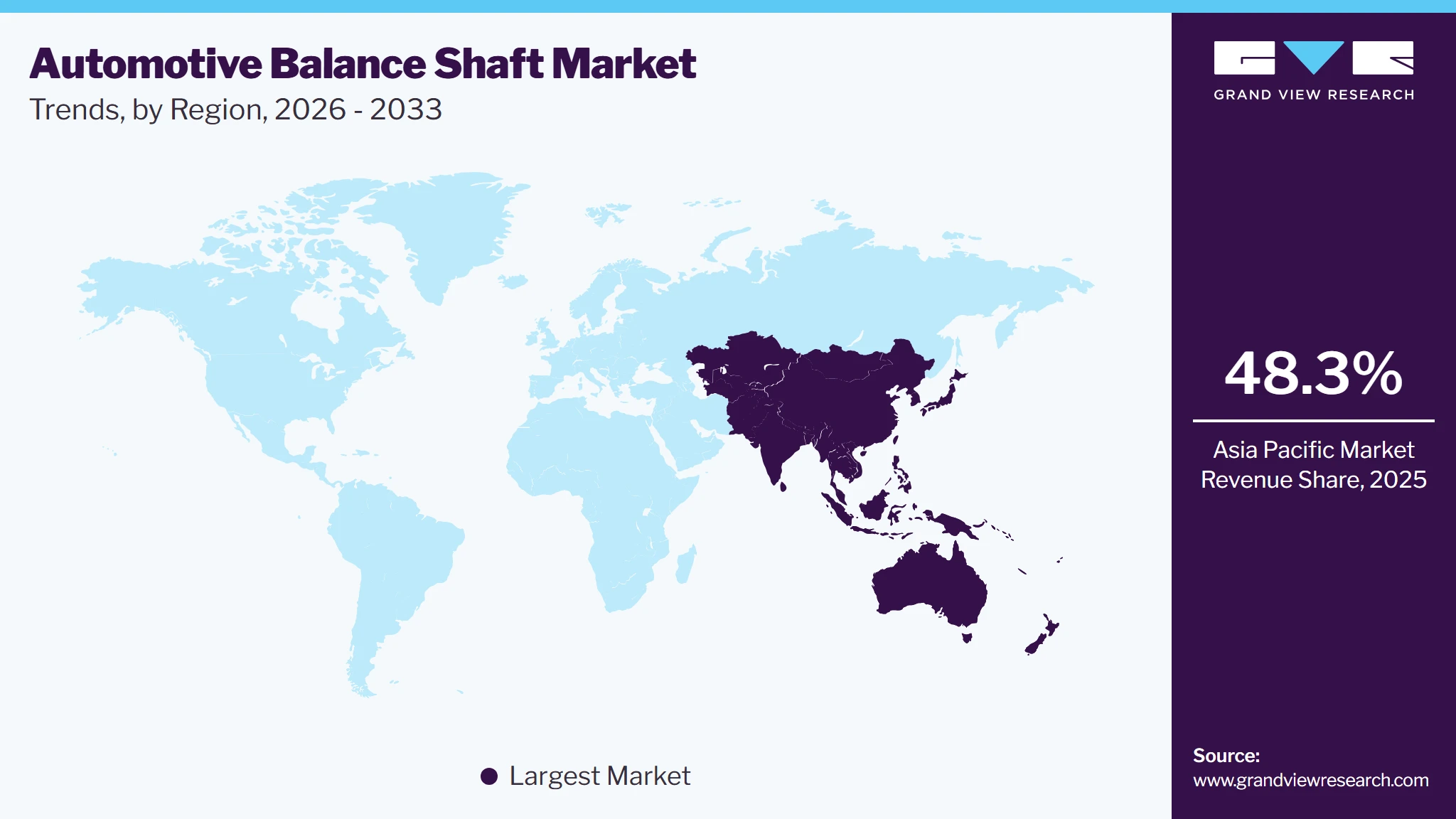
Asia Pacific automotive balance shaft market held the largest revenue share of 48.3% of the global market in 2025. The region is also expected to grow at the fastest CAGR of 5.6% over the forecast period. The growth in the region is attributed to its large-scale vehicle production, extensive automotive manufacturing infrastructure, and strong presence of internal combustion and hybrid vehicle platforms. China, Japan, India, and South Korea collectively support significant demand for engine and precision powertrain components, while rising consumer expectations for vehicle comfort and performance further encourage the adoption of effective NVH solutions.
 To learn more about this report, Download Free Sample Report
China automotive balance shaft industry held a substantial share in 2025 due to the country's position as the world's largest automotive manufacturing hub and its extensive production of passenger cars, commercial vehicles, and hybrid powertrains. High production volumes of compact and mid-sized vehicles equipped with inline three- and four-cylinder engines create a substantial addressable market for balance shaft systems.
The Japan automotive balance shaft industry is expected to grow rapidly in the coming years, driven by the country's strong automotive manufacturing base, global OEM presence, and leadership in hybrid powertrain technology. Japanese automakers continue to emphasize fuel efficiency, reliability, compact engine design, and superior NVH performance, supporting the use of precision-engineered balance shaft systems.
North America Automotive Balance Shaft Market Trends
North America automotive balance shaft industry held a significant share of the global market, accounting for 19.2% share in 2025. The North America market is driven by the region's substantial production of passenger vehicles, SUVs, pickup trucks, and light commercial vehicles, many of which continue to utilize internal combustion and hybrid powertrains. Engine downsizing and the increasing adoption of turbocharged four-cylinder engines are supporting demand for balance shafts to improve NVH performance and maintain powertrain refinement.
U.S. Automotive Balance Shaft Market Trends
The automotive balance shaft industry in the U.S. is expected to grow at a CAGR of 3.0% from 2026 to 2033, driven by its large vehicle manufacturing base and high production of SUVs, pickup trucks, and passenger vehicles. The increasing use of turbocharged and downsized four-cylinder engines, including in larger vehicle platforms, is creating opportunities for balance shaft systems that enhance engine smoothness and reduce vibration.
Europe Automotive Balance Shaft Market Trends
The automotive balance shaft industry in Europe is anticipated to grow considerably from 2026 to 2033 due to the region's strong automotive manufacturing base, advanced engine engineering capabilities, and continued production of hybrid and high-performance vehicles. European automakers are increasingly focusing on powertrain efficiency, lightweighting, and enhanced NVH performance, supporting the adoption of technologically advanced balance shaft systems.
The UK automotive balance shaft industry is expected to grow rapidly in the coming years. The growth in the country is supported by domestic vehicle manufacturing, premium automotive production, and the presence of established engine and powertrain supply chains. Demand is particularly strong for passenger vehicles with four-cylinder engines, as well as for hybrid powertrains that continue to require effective vibration-management solutions.
The Germany automotive balance shaft industry held a substantial market share in 2025 due to the country's position as a major global hub for premium vehicles, engine development, and advanced automotive component manufacturing. German OEMs and suppliers maintain a strong focus on engine refinement, performance, and precision engineering, creating demand for high-quality balance shaft systems in passenger cars and performance-oriented vehicles.
Key Automotive Balance Shaft Company Insights
Key players operating in the automotive balance shaft industry include American Axle & Manufacturing, Inc., Engine Power Components, Hirschvogel Group, Liaoning Borui Machinery Co., Ltd., and MAT Foundry Group Ltd. These companies focus on the development and manufacturing of precision-engineered balance shafts and related powertrain components designed to reduce engine vibration and enhance noise, vibration, and harshness (NVH) performance. Their offerings support various engine configurations and vehicle applications, with a focus on improving engine refinement, durability, manufacturing efficiency, and overall powertrain performance.
-
American Axle & Manufacturing, Inc. is an automotive supplier specializing in driveline and metal-forming technologies for electric, hybrid, and internal combustion vehicles. The company designs, engineers, validates, and manufactures a broad portfolio of automotive components, including axle systems, driveline modules, e-drive technologies, and precision metal-formed components for passenger and commercial vehicle applications. Its metal-forming capabilities and expertise in precision forging and machining are particularly relevant to powertrain components, including balance shafts and other engine-related parts. The company serves major global automotive OEMs and maintains a broad international manufacturing and engineering footprint.
-
Hirschvogel Group is an automotive component manufacturer specializing in forged and machined steel and aluminum components. The company serves major automotive manufacturers and suppliers with a broad portfolio spanning powertrain, transmission, chassis, body, and other vehicle applications. It offers capabilities in hot, warm, and cold forming, machining, and ready-to-install component production. The company supplies precision-engineered powertrain components, including components applicable to engine balancing systems.
Key Automotive Balance Shaft Companies:
The following key companies have been profiled for this study on the automotive balance shaft market:
-
American Axle & Manufacturing, Inc.
-
Engine Power Components
-
Hirschvogel Group
-
Liaoning Borui Machinery Co., Ltd.
-
MAT Foundry Group Ltd.
-
Musashi Seimitsu Industry Co., Ltd.
-
Ningbo Jingda Hardware Manufacture Co., Ltd.
-
OTICS Corp
-
Sansera
-
SHW AG
Competitive Benchmarking
Category
Operating Strategies
Competitive Edge
Weakness
Established Players (American Axle & Manufacturing, Inc., Hirschvogel Group, Musashi Seimitsu Industry Co., Ltd., OTICS Corp)
- These companies primarily focus on long-term OEM relationships, precision manufacturing, global or regional production capabilities, and integration within broader automotive powertrain and drivetrain supply chains. Their strategies include investment in advanced manufacturing technologies, process optimization, product engineering, and expansion into adjacent automotive components.
- Established players benefit from strong manufacturing expertise, proven quality systems, established customer relationships, broad product portfolios, and the ability to support large-scale automotive production programs. Their experience in forging, machining, precision component manufacturing, and powertrain systems provides an advantage in meeting stringent OEM performance and durability requirements.
- High exposure to conventional ICE-related components can create long-term risk as electrification accelerates. Large manufacturing footprints may also lead to higher fixed costs and slower operational adjustments than those of smaller, specialized suppliers.
Emerging Players (Engine Power Components, Liaoning Borui Machinery Co., Ltd.)
- Emerging players generally compete by leveraging specialized manufacturing capabilities, cost competitiveness, regional customer relationships, and targeted expansion within automotive engine and precision-component supply chains. Their strategies are likely to focus on increasing production capacity, improving machining and quality capabilities, and expanding their presence.
- These companies can benefit from lower-cost manufacturing structures, specialization in selected component categories, and greater flexibility in serving regional automotive manufacturers. Their focused operations may enable competitive pricing and faster adaptation to specific customer requirements.
- Emerging players generally face limitations in global scale, customer diversification, brand recognition, and access to major international OEM programs. Compared with established suppliers, they may have narrower product portfolios and lower financial capacity for large-scale R&D, international expansion, and investment in next-generation powertrain technologies.
Recent Developments
- In January 2025, American Axle & Manufacturing (AAM) agreed to combine with Dowlais in a USD 1.44 billion cash-and-stock transaction to create a larger global automotive supplier focused on driveline and metal-forming technologies. The combined company would serve internal-combustion, hybrid, and electric vehicles, giving it a more powertrain-agnostic product portfolio, a broader customer base, and a stronger geographic footprint through AAM’s operations and Dowlais businesses such as GKN Automotive and GKN Powder Metallurgy.
Automotive Balance Shaft Market Report Scope
Report Attribute
Details
Market size in 2025
USD 14.3 billion
Market size in 2026
USD 14.6 billion
Revenue forecast in 2033
USD 19.7 billion
Growth rate
CAGR of 4.4% from 2026 to 2033
Actual data
2021 - 2025
Forecast period
2026 - 2033
Quantitative units
Revenue in USD billion, and CAGR from 2026 to 2033
Report coverage
Revenue forecast, company share, competitive landscape, growth factors, and trends
Segments covered
Engine, manufacturing process, application, sales channel, region
Regional scope
North America; Europe; Asia Pacific; Latin America; MEA
Country scope
U.S.; Canada; Mexico; UK; Germany; France; China; India; Japan; Australia; South Korea; Brazil; UAE; Kingdom of Saudi Arabia; South Africa
Key companies profiled
American Axle & Manufacturing, Inc.; Engine Power Components; Hirschvogel Group; Liaoning Borui Machinery Co., Ltd.; MAT Foundry Group Ltd.; Musashi Seimitsu Industry Co., Ltd.; Ningbo Jingda Hardware Manufacture Co., Ltd.; OTICS Corp; Sansera; SHW AG
Customization scope
Free report customization (equivalent to 8 analysts working days) with purchase. Addition or alteration to country, regional & segment scope.
Pricing and purchase options
Avail customized purchase options to meet your exact research needs. Explore purchase options
Global Automotive Balance Shaft Market Report Segmentation
This report forecasts revenue growth at the global, regional, and country levels and provides an analysis of the latest industry trends in each of the sub-segments from 2021 to 2033. For this study, Grand View Research has segmented the global automotive balance shaft market report based on engine, manufacturing process, application, sales channel, and region.
-
Engine Outlook (Revenue, USD Billion, 2021 - 2033)
-
Inline-3 Cylinder
-
Inline-4 Cylinder
-
Inline-5 Cylinder
-
V6
-
Others
-
-
Manufacturing Process Outlook (Revenue, USD Billion, 2021 - 2033)
-
Forging
-
Casting
-
-
Application Outlook (Revenue, USD Billion, 2021 - 2033)
-
Passenger Cars
-
Light Commercial Vehicles
-
Heavy Commercial Vehicles
-
-
Sales Channel Outlook (Revenue, USD Billion, 2021 - 2033)
-
OEM
-
Aftermarket
-
-
Regional Outlook (Revenue, USD Billion, 2021 - 2033)
-
North America
-
U.S.
-
Canada
-
Mexico
-
-
Europe
-
UK
-
Germany
-
France
-
-
Asia Pacific
-
China
-
India
-
Japan
-
South Korea
-
Australia
-
-
Latin America
-
Brazil
-
-
Middle East & Africa
-
UAE
-
Saudi Arabia
-
South Africa
-
-
Research Methodology
The automotive balance shaft market figures in this report are based on a proven research process that combines executive interviews with secondary research from proprietary databases, company filings, and recognized regulatory and institutional sources. Market size is built through value-chain sizing-reconciling supply-side and demand-side estimates-and triangulated with bottom-up and top-down approaches. Every estimate passes multiple levels of expert validation before publication, with each automotive balance shaft segment quantified using the revenue-capture definitions in the table below.
Segment Definition
Engine
Revenue capture definition
Inline-3 Cylinder
Revenue generated from the sale of balance shafts, balance shaft assemblies, integrated balancing modules, and associated drive components supplied for inline three-cylinder automotive engines through OEM and aftermarket channels.
Inline-4 Cylinder
Revenue generated from balance shaft systems and related components designed for inline four-cylinder engines, including single- or dual-shaft configurations, integrated modules, gears, chains, and associated assemblies.
Inline-5 Cylinder
Revenue generated from balance shaft components and assemblies supplied specifically for inline five-cylinder engine applications, including OEM-installed systems and replacement components sold through the aftermarket.
V6
Revenue generated from balance shaft systems, counterbalance assemblies, and related precision-engineered components used in V6 engine architectures where additional vibration balancing is incorporated into the powertrain design.
Others
Revenue generated from balance shaft products used in other engine configurations, including inline-six, V8, opposed, and other specialized automotive engine architectures where balance shaft technology is required.
Manufacturing Process
Revenue capture definition
Forging
Includes automotive balance shafts manufactured using metal forging processes, where material is shaped under compressive force and subsequently machined, finished, and assembled to meet dimensional, durability, and performance requirements.
Casting
Includes automotive balance shafts or applicable balance shaft components manufactured through casting processes, where molten material is formed within molds and subsequently processed to achieve required mechanical and dimensional specifications.
Application
Revenue capture definition
Passenger Cars
Includes balance shaft systems supplied for passenger vehicles, including sedans, hatchbacks, SUVs, crossovers, and other passenger-oriented vehicle platforms.
Light Commercial Vehicles
Includes balance shaft systems supplied for light-duty commercial vehicles, such as vans, pickups, and utility vehicles, used for commercial transportation and logistics applications.
Heavy Commercial Vehicles
Includes balance shaft systems supplied for medium- and heavy-duty trucks and other commercial vehicle applications requiring internal combustion or hybrid engine configurations utilizing balance shaft technology.
Sales Channel
Revenue capture definition
OEM
Includes revenue generated from automotive balance shafts and related assemblies supplied directly to vehicle manufacturers or their designated Tier 1 powertrain suppliers for installation in new vehicles and engines.
Aftermarket
Includes revenue generated from replacement balance shafts, repair components, and related balancing assemblies sold through independent distributors, service centers, retailers, and other replacement channels after the original vehicle sale.
Estimation Model
Layer
Question
Analysis
Addressable Vehicle Production Base
How many vehicles and engines represent the potential demand base for automotive balance shafts?
This layer estimates the total addressable vehicle production base across passenger cars, light commercial vehicles, and heavy commercial vehicles. Vehicle production is further assessed based on regional manufacturing activity and relevant powertrain configurations. The analysis excludes vehicle categories and powertrains that do not require conventional balance shaft systems. This establishes the initial demand universe for the Automotive Balance Shaft Market.
Engine Configuration Penetration
What proportion of the addressable vehicle fleet utilizes engine architectures requiring balance shafts?
This layer evaluates the penetration of inline three-cylinder, inline four-cylinder, inline five-cylinder, V6, and other relevant engine configurations. Adoption is adjusted based on engine displacement, design characteristics, powertrain technology, and OEM balancing requirements. Not every engine within a specific cylinder configuration necessarily utilizes a balance shaft, making application-specific penetration assumptions necessary. This layer converts the total vehicle base into the estimated volume of balance shaft-equipped engines.
Balance Shaft Content and Volume
How many balance shaft units or assemblies are required per applicable engine?
This layer determines the average balance shaft content per engine based on whether the application uses single-shaft, dual-shaft, or integrated balance shaft modules. The model incorporates variations in component design, manufacturing process, and engine architecture. OEM production requirements are used to estimate original equipment demand, while the installed vehicle base and replacement cycles support aftermarket volume estimation. This produces an estimated unit demand for automotive balance shaft products.
Revenue Conversion and Market Validation
What is the resulting market value after applying product pricing and validating the estimate?
This layer converts estimated balance shaft unit demand into market revenue using average selling prices differentiated by engine, manufacturing process, vehicle application, and sales channel. Pricing assumptions account for differences between OEM supply contracts and aftermarket replacement products. The resulting market estimates are triangulated against supplier revenues, production capacities, industry developments, and broader powertrain component trends. This final layer provides the estimated value of the Automotive Balance Shaft Market and supports forecast development.
Delivered Customization
This report has been delivered with the following In-depth customizations:
Client Request
Customization Delivered
Value Adds
Regional Automotive Balance Shaft Market Opportunity Assessment
Country/region-wise market sizing and forecasts
Analysis of demand, adoption trends, and regulatory landscape
Identification of high-growth regions and investment hotspots
Identified region-specific growth opportunities
Supported expansion and go-to-market strategy
Enabled informed regional investment decisions
Cross-Segmentation Analysis for the Automotive Balance Shaft Market
Criss-cross market analysis by Engine, Manufacturing Process, Application, and Sales Channel
Demand and adoption assessment across key segments
Segment attractiveness and growth potential benchmarking
Identified high-potential market segments
Supported targeted product positioning and marketing strategy
Improved customer and segment prioritization
Competitive Benchmarking and Strategic Positioning in the Automotive Balance Shaft Market
Benchmarking of key competitors across products, pricing, partnerships, and innovation
Comparative assessment of market share, capabilities, and strategies
Analysis of competitive strengths, gaps, and differentiation areas
Identified competitive white spaces and growth gaps
Supported strategic positioning and differentiation
Enabled data-driven competitive strategy development
Frequently Asked Questions About This Report
The global automotive balance shaft market size was valued at USD 14.3 billion in 2025 and is estimated at USD 14.6 billion in 2026.
The global automotive balance shaft market is expected to grow at a compound annual growth rate of 4.4% from 2026 to 2033 to reach USD 19.7 billion by 2033.
The automotive balance shaft market is driven by the increasing production of passenger and commercial vehicles, particularly those equipped with inline three- and four-cylinder engines that require enhanced vibration control.
Inline-4 cylinder segment dominated the global automotive balance shaft market with a share of 63.1% in 2025.
Which manufacturing process segment accounted for the largest automotive balance shaft market share?Forging segment dominated the global automotive balance shaft market with a share of 65.2% in 2025.
Passenger cars segment dominated the global automotive balance shaft market with a share of 78.4% in 2025.
China dominated the Asia Pacific automotive balance shaft market with a share of 46.3% in 2025.
Some key players operating in the automotive balance shaft market include American Axle & Manufacturing, Inc., Engine Power Components, Hirschvogel Group, Liaoning Borui Machinery Co., Ltd., MAT Foundry Group Ltd., Musashi Seimitsu Industry Co., Ltd., Ningbo Jingda Hardware Manufacture Co., Ltd., OTICS Corp, Sansera, SHW AG.
About the Author(s)
Automotive & Transportation Research Team
Technology · Automotive & TransportationThis report was authored by the automotive & transportation research team at Grand View Research - comprising two research analysts, one senior research analyst, and one industry expert - with specialized expertise in the automotive & transportation segment of the technology industry. All findings are based on proprietary technology databases, executive interviews, and regulatory analysis, subject to internal peer review prior to publication.
Last Updated:
Speak to Analyst

Customize this report to your needs - add regions, segments, or data points, with 20% free customization.
Or view our licence options:


ISO 9001:2015 & 27001:2022 Certified
We are GDPR and CCPA compliant! Your transaction & personal information is safe and secure. For more details, please read our privacy policy.


