
- Home
- »
- Advanced Interior Materials
- »
-
Coated Textiles Market Size, Share & Trends Report, 2033GVR Report cover

Coated Textiles Market (2026 - 2033)
Size, Share & Trends Analysis Report By Product (Polyurethane Coated Textiles, Polyvinyl Chloride Coated Textiles, Silicone Coated Textiles), By End-use (Automotive, Construction, Furniture, Industrial), By Region, And Segment Forecasts
Market Size, 2025
$28.5BMarket Estimate, 2026
$29.7BMarket Forecast, 2033
$39.3BCAGR, 2026–2033
4.1%Coated Textiles Market Summary
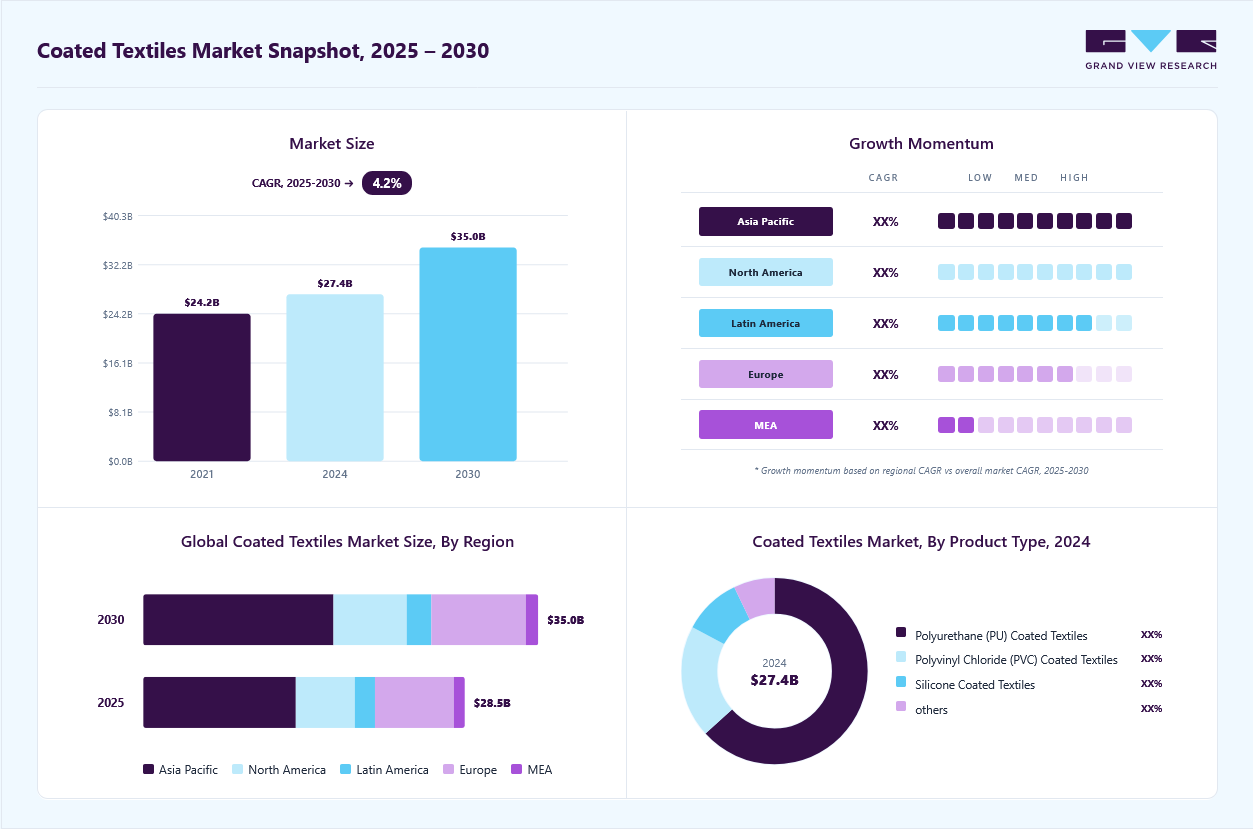
The global coated textiles market size was valued at USD 28.5 billion in 2025 and is projected to grow from USD 29.7 billion in 2026 to USD 39.3 billion by 2033, growing at a CAGR of 4.1% from 2026 to 2033. Asia Pacific dominated the market, accounting for the largest global share of 47.4% in 2025. These textiles, which are coated with substances like rubber, PVC, or polyurethane, offer enhanced durability, water resistance, and resistance to UV and chemical exposure, making them ideal for outdoor and industrial applications.
 Source: Grand View Research, IR Documents, Primary Interviews, Paid DatabasesTo learn more about this report,
 Download Free Sample Report
 Key Market Trends & Insights
- By product: Polyurethane (PU) coated textiles segment held the largest share of 63.4% in 2025.
- By end-use: Automotive segment led the market with the largest revenue share of 31.9% in 2025.
Regional Highlights
- Largest regional market: Asia Pacific (47.4% revenue share, 2025)
- By country: The China held the largest share of Asia Pacific in 2025.
Market Size & Forecast
- Market size in 2025: USD 28.5 Billion
- Estimated market size in 2026: USD 29.7 Billion
- Projected market size by 2033: USD 39.3 Billion
- CAGR (2026-2033): 4.1%
Three ways to get this report
Buy it, customize it, or ask a question.Ask an Analyst
Analyst response in 1 business day
- AccessReport author, directly
- Reply timeWithin 1 working day
- No sales callDirect answer only
- FormatEmail reply
- CostFree, no cost
Get the Full Report
What the study covers
- FormatsPDF · Excel · Dashboard
- Timeline2026–2033 annual, 2025 base
- Coverage20+ countries, 5 regions
- Companies10+ key players profiled
Customize the Report
20% free customization
- IncludeCountries, segments, points
- TailorTo your product definition
- ExtendDeeper competitor detail
- OrA fully bespoke study
- Turnaround5–10 working days
The growing focus on safety, hygiene, and comfort in both consumer and industrial segments is contributing to the increasing adoption of coated fabrics globally. Several key drivers are propelling the demand for coated textiles. Rapid urbanization and infrastructure development fuel the use of coated textiles in roofing, architectural membranes, and transportation. In the automotive industry, coated textiles are increasingly used in airbags, seat covers, and interior materials due to their high-performance characteristics. Additionally, the rise in demand for personal protective equipment (PPE) in sectors such as healthcare, defense, and manufacturing, particularly after the COVID-19 pandemic, has led to an uptick in production and consumption of these materials.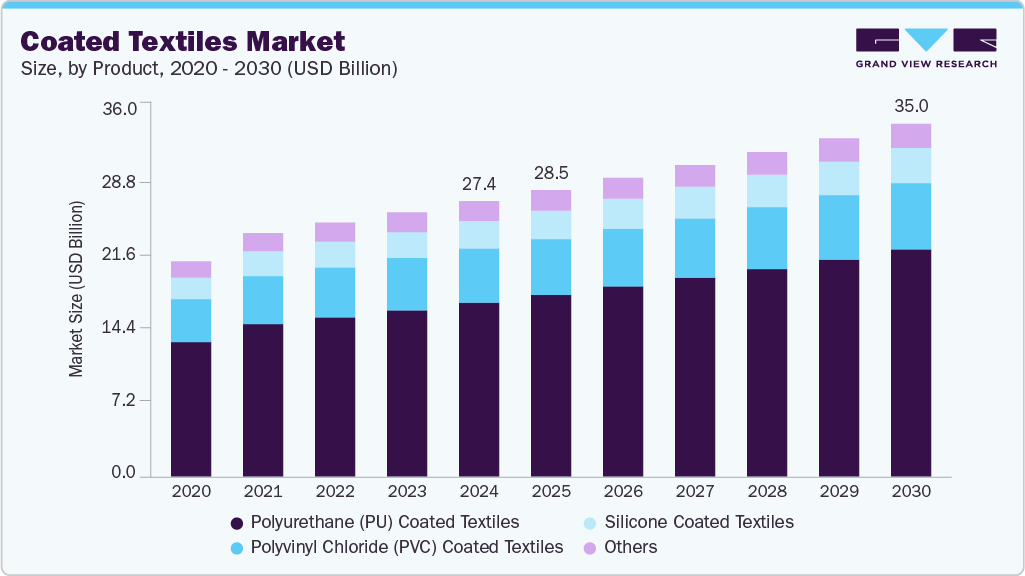 To learn more about this report, Download Free Sample Report
 Innovations in coated textiles are also accelerating market growth. Manufacturers are focusing on developing eco-friendly coatings such as water-based PU and bio-based polymers to address environmental concerns and comply with regulatory standards. Advancements in nanotechnology are enabling the production of coated textiles with enhanced breathability, antibacterial properties, and self-cleaning surfaces. Moreover, smart textiles integrated with sensors and conductive coatings are opening up new applications in sportswear, medical textiles, and wearable technology, further expanding the market potential.
Market Dynamics
The coated textiles market is witnessing robust growth owing to the increasing demand for high-performance, durable, and weather-resistant textile materials across transportation, industrial, construction, healthcare, defense, and protective clothing applications. Coated textiles combine the flexibility of fabrics with the enhanced performance characteristics of polymer coatings such as PVC, PU, silicone, and rubber, making them suitable for applications requiring chemical resistance, waterproofing, flame retardancy, and UV protection. Rising investments in infrastructure, expanding automotive production, stringent workplace safety regulations, and growing adoption of technical textiles are supporting market expansion. In addition, advancements in sustainable coating technologies, bio-based polymers, and lightweight composite fabrics are creating new opportunities for manufacturers worldwide.
The increasing adoption of technical textiles across transportation, industrial manufacturing, healthcare, defense, and construction sectors is one of the primary factors driving the coated textiles market. Automotive manufacturers are utilizing coated fabrics in airbags, seat upholstery, door panels, convertible roofs, and interior components to improve durability, aesthetics, and passenger safety. Similarly, industrial sectors rely on coated textiles for conveyor belts, flexible storage tanks, filtration systems, tarpaulins, and protective covers that withstand harsh operating environments. As industrial automation and infrastructure investments continue globally, demand for coated textile products is steadily increasing.
Growing emphasis on occupational safety and protective equipment is further accelerating market growth. Governments and industries are implementing stricter workplace safety regulations that require protective clothing resistant to chemicals, fire, abrasion, and biological hazards. Healthcare facilities are also increasingly using coated textiles for medical mattresses, surgical curtains, patient transfer systems, and antimicrobial protective fabrics. Rising military modernization programs and increasing procurement of advanced protective gear further support long-term demand for specialized coated textile solutions with enhanced mechanical and environmental performance.
The coated textiles market faces challenges due to tightening environmental regulations governing PVC coatings, volatile organic compound (VOC) emissions, plasticizers, and hazardous chemical usage during manufacturing. Regulatory agencies across North America and Europe are encouraging manufacturers to reduce environmental impact by replacing conventional coatings with sustainable alternatives. Compliance with evolving environmental standards often requires significant investments in cleaner production technologies, reformulation of coating materials, and additional certification costs, increasing operational expenses for manufacturers.
The growing development of sustainable coated textiles using water-based coatings, bio-based polymers, recyclable materials, and solvent-free processing technologies presents substantial opportunities for market participants. At the same time, increasing innovation in smart textiles incorporating antimicrobial coatings, self-cleaning surfaces, conductive fabrics, temperature regulation, and sensor integration is expanding coated textile applications across healthcare, wearable electronics, transportation, and defense sectors. As industries increasingly prioritize lightweight, multifunctional, and environmentally responsible materials, manufacturers investing in advanced coating technologies and sustainable product development are expected to gain a significant competitive advantage.
Market Concentration & Characteristics
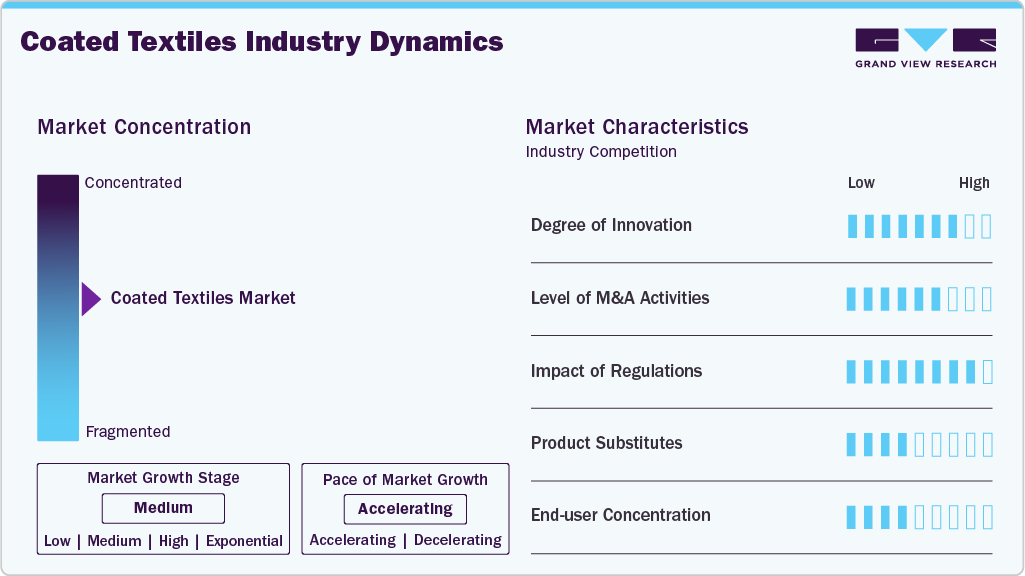
The industry is moderately to highly concentrated, with a few dominant global players holding substantial market shares due to their advanced manufacturing capabilities, broad product portfolios, and strong distribution networks. Companies like Trelleborg AB, Saint-Gobain, Continental AG, and TenCate Protective Fabrics lead the market by consistently investing in R&D and expanding their geographical reach.
The industry also includes regional manufacturers that cater to niche demands and localized applications. Strategic partnerships, mergers, and acquisitions are common in this space, further consolidating market power among key players and creating high entry barriers for new entrants.
 To learn more about this report, Download Free Sample Report
 Despite their strong performance, coated textiles face competition from product substitutes such as laminates, composite materials, and advanced synthetic fabrics. For some applications, especially in lightweight packaging or disposable protective gear, nonwoven fabrics and polymer films may serve as cost-effective alternatives. Additionally, advancements in nanofibers and biodegradable materials are offering greener substitutes that appeal to environmentally conscious consumers and industries.
However, the superior mechanical strength, chemical resistance, and customizability of coated textiles often provide them with a competitive edge, limiting the impact of substitutes in high-performance applications.
Analyst Perspective
The coated textiles market is shifting toward advanced, technology-driven solutions focused on sustainability, high-performance polymers, multifunctional fabrics, lightweight materials, and smart textile innovations. Growth is being driven by demand from automotive, construction, industrial, healthcare, defense, furniture, and protective clothing applications. Companies that develop sustainable, low-VOC, lightweight, durable, recyclable, and application specific coating solutions-supported by strong R&D, proprietary technologies, integrated manufacturing, and strategic partnerships are expected to gain a competitive advantage and capture long-term market growth.
Product Insights
Based on product, the polyurethane (PU) coated textiles segment led the market with the largest revenue share of 63.4% in 2025 and is expected to grow at a CAGR of 4.4% over the forecast period, due to their superior performance characteristics, including flexibility, breathability, abrasion resistance, and eco-friendliness compared to other coatings. PU-coated fabrics are widely used in automotive interiors, upholstery, sportswear, and medical textiles, where comfort and durability are critical. Their lightweight nature and compatibility with various fabrics like polyester, nylon, and cotton have made them a preferred choice across industries. Additionally, increasing consumer and regulatory pressure for sustainable and non-toxic materials has further boosted the adoption of PU coatings over traditional alternatives like PVC.
Polyvinyl Chloride (PVC) coated textiles are emerging as the significant segment, especially in construction, transportation, and signage sectors. PVC coatings offer excellent waterproofing, fire resistance, and durability, making them ideal for heavy-duty outdoor applications such as tarpaulins, tents, roofing membranes, and advertising banners. Their cost-effectiveness and ability to perform under extreme weather conditions are driving demand, particularly in emerging markets. Advances in formulation, such as phthalate-free and more flexible PVC options, are also helping the material overcome its environmental drawbacks, contributing to its rapid market growth.
End-use Insights
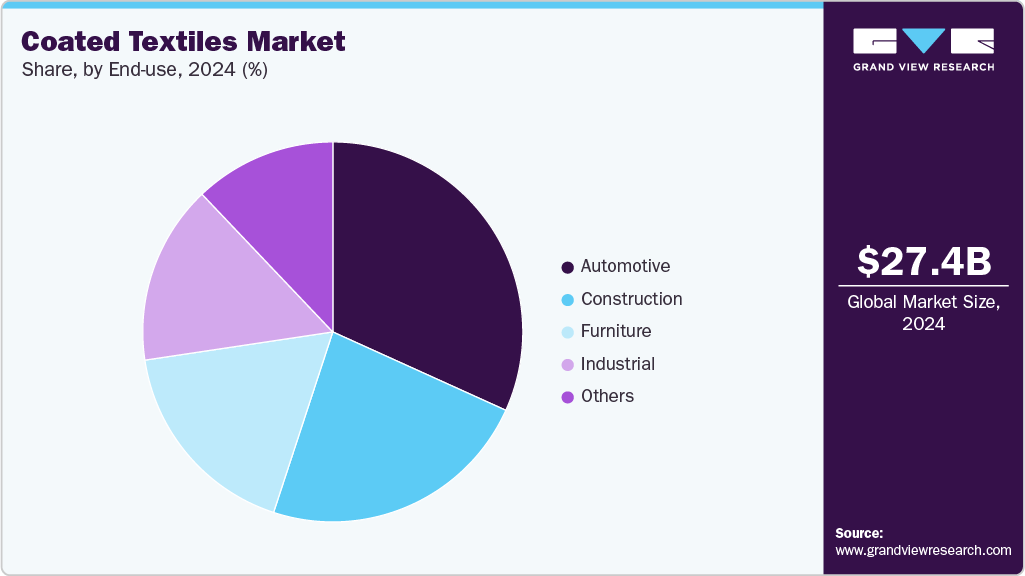
Based on end-use, the automotive segment led the market with the largest revenue share of 31.9% in 2025 and is expected to grow at a CAGR of 4.4% over the forecast period. Coated textiles, especially those with polyurethane and PVC coatings, provide essential features like durability, abrasion resistance, UV stability, and easy cleanability, making them ideal for automotive applications. As automakers prioritize lightweight materials to improve fuel efficiency and reduce emissions, coated textiles offer a strong alternative to heavier traditional materials. Additionally, the increasing demand for premium and customized interiors in both passenger and commercial vehicles continues to drive growth in this segment.
 To learn more about this report, Download Free Sample Report
 The construction segment is emerging as the significant-growing application area for coated textiles, propelled by global infrastructure development and urbanization. These materials are being widely adopted in architectural membranes, roofing, scaffolding nets, and protective coverings due to their strength, weather resistance, and flexibility. The rise of smart buildings, green construction practices, and modular infrastructure has further increased the appeal of coated textiles, particularly those that are fire-retardant and energy efficient. With growing investments in commercial and residential construction, especially in Asia-Pacific and Middle Eastern regions, demand for coated textiles in this sector is rapidly expanding.
Regional Insights
North America coated textiles industry is driven by the high demand for advanced materials in the automotive, defense, and healthcare sectors. The region’s focus on innovation, safety standards, and durable consumer goods fuels the adoption of high-performance coated fabrics. Demand for customized, high-spec textiles is also growing. Additionally, stricter environmental regulations are encouraging shifts toward greener coatings.
U.S. Coated Textiles Market Trends
The coated textiles market in the U.S. leads the North American region, driven by its large automotive industry, military procurement, and strong infrastructure investment. There is an increasing use of coated textiles in protective clothing, home furnishings, and industrial applications. The U.S. also houses several key coated textile manufacturers with advanced R&D capabilities. Its emphasis on domestic production is driving technological investment.
Asia Pacific Coated Textiles Market Trends
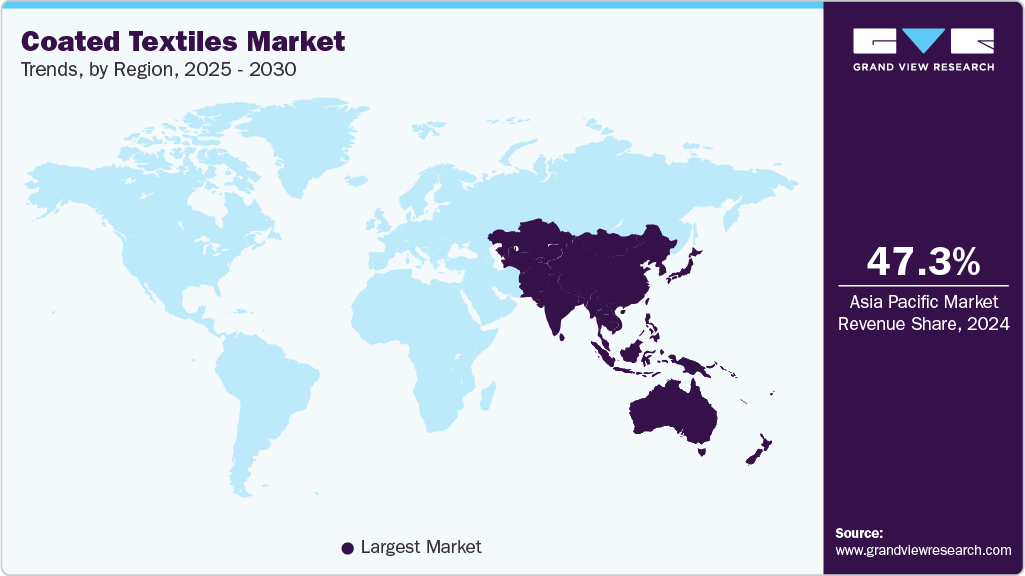
Asia Pacific dominated the coated textiles market with the largest revenue share of 47.4% in 2025, driven by rapid industrialization, a booming automotive sector, and expanding construction activities. Countries like China, India, and Japan are major contributors due to their large manufacturing bases and growing demand for protective clothing, technical textiles, and industrial fabrics. The region also benefits from cost-effective labor, abundant raw materials, and strong export capabilities, making it a global hub for coated textile production.
 To learn more about this report, Download Free Sample Report
 The coated textiles market in China held the largest share in the Asia Pacific region in 2025. China coated textiles market plays a central role in the Asia Pacific market, accounting for a significant share of global coated textile output. It has a robust textile manufacturing ecosystem and strong demand from domestic industries such as automotive, infrastructure, and healthcare. China is also emerging as a global leader in coated fabric exports. Its investment in smart textiles and sustainable manufacturing practices is accelerating.
Europe Coated Textiles Market Trends
The coated textiles market in Europe is known for its strong technical textile industry and stringent environmental regulations. The region is investing in sustainable coatings and high-performance applications, especially in automotive interiors, architecture, and industrial safety. EU initiatives supporting the circular economy and textile recycling are also impacting coated textile innovation. European consumers are demanding more bio-based and recyclable fabrics.
Germany coated textiles market is backed by its leadership in automotive manufacturing, engineering, and industrial machinery. German companies are at the forefront of innovation, developing advanced coated fabrics for precision-driven sectors like aerospace and medical textiles. Germany also serves as a key exporter of coated fabrics to the EU and beyond. Its sustainability-driven policies are encouraging greener product development.
Central & South America Coated Textiles Market Trends
The coated textiles market in Central & South America is developing with growing demand for coated textiles in construction, agriculture, and automotive applications. Countries like Brazil and Argentina are witnessing rising investments in infrastructure, which is boosting demand for durable and weather-resistant fabrics. However, supply chain constraints and reliance on imports limit growth. Efforts to boost local manufacturing are underway, especially in Brazil.
Middle East & Africa Coated Textiles Market Trends
The coated textiles market in the Middle East & Africa is an emerging market where infrastructure development, industrial expansion, and increasing urbanization are driving demand for coated textiles. The construction boom in the Gulf countries, along with growing use in oil & gas, transportation, and protective clothing, is supporting market growth. Hot climate and harsh conditions in the region also necessitate high-performance coated fabrics. Government infrastructure projects are expected to boost long-term demand.
Key Coated Textiles Company Insights
Key players operating in the coated textiles market are undertaking various initiatives to strengthen their presence and increase the reach of their products and services. Strategies such as expansion activities and partnerships are key in propelling the market growth.
Key Coated Textiles Companies
The following key companies have been profiled for this study on the coated textiles market.
-
Trelleborg AB
-
BASF SE
-
Continental AG
-
Saint-Gobain S.A.
-
OMNOVA Solutions Inc.
-
Serge Ferrari Group.
-
Seaman Corporation.
-
Sioen Industries NV
-
SRF Limited
-
Spradling International Inc.
Competitive Benchmarking
Category
Operating Strategies
Competitive Edge
Weakness
Established Players (Trelleborg AB, BASF SE, Continental AG, Saint-Gobain S.A., OMNOVA Solutions Inc.)
- Focus on developing high-performance coated textiles for automotive, aerospace, industrial, construction, and defense applications.
- Invest heavily in sustainable coating technologies, including water-based, solvent-free, and bio-based polymer coatings to comply with evolving environmental regulations.
- Expand global manufacturing capacity and strengthen distribution networks through strategic acquisitions, partnerships, and long-term OEM supply agreements.
- Extensive global manufacturing footprint with integrated raw material sourcing and advanced coating technologies.
- Strong R&D capabilities enabling continuous innovation in flame-retardant, chemical-resistant, antimicrobial, and lightweight coated textile solutions.
- Well-established relationships with automotive OEMs, industrial equipment manufacturers, and construction companies, ensuring stable long-term demand.
- High dependence on volatile petrochemical-based raw materials such as PVC, PU, and specialty polymers, affecting production costs.
- Large manufacturing operations often result in slower commercialization of niche or customized coated textile products.
- Increasing compliance costs associated with stringent environmental regulations governing VOC emissions and hazardous chemicals.
Emerging Players (Serge Ferrari Group, Seaman Corporation, Sioen Industries NV, SRF Limited, Spradling International Inc.)
- Focus on niche applications such as architectural membranes, premium upholstery, protective clothing, marine textiles, and specialty industrial fabrics.
- Develop customized coated textile solutions tailored to specific customer requirements while emphasizing product flexibility and shorter lead times.
- Expand presence in high-growth regions through distributor partnerships, regional manufacturing facilities, and application-specific product portfolios.
- Greater flexibility in product customization and faster response to evolving customer requirements.
- Strong specialization in high-value technical textiles and innovative coating formulations for targeted end-use industries.
- Competitive pricing and agile manufacturing enable rapid penetration into regional and emerging markets.
- Limited global brand recognition and smaller manufacturing capacities compared to multinational competitors.
- Lower R&D budgets may restrict the development of next-generation smart and sustainable coated textile technologies.
- Greater exposure to regional economic fluctuations and customer concentration risks due to a relatively narrow geographic footprint.
Recent Developments
-
In September 2024, Freudenberg Performance Materials acquired major parts of the Heytex Group, including three production locations in Germany and China, to strengthen its position in the coated technical textiles market.
-
In March 2023, the Trelleborg Engineered Coated Fabrics manufacturing facility in Nottingham, England, received a patent for its Dartex Zoned Coatings. These coatings offer the ability to ‘zone’ different polyurethane coatings on support surface covers used in healthcare and medical applications, allowing a single fabric to perform multiple functions.
Coated Textiles Market Report Scope
Report Attribute
Details
Market size value in 2025
USD 28.5 billion
Market size value in 2026
USD 29.7 billion
Revenue forecast in 2033
USD 39.3 billion
Growth rate
CAGR of 4.1% from 2026 to 2033
Base year for estimation
2025
Historical data
2021 - 2024
Forecast period
2026 - 2033
Quantitative units
Revenue in USD million/billion, and CAGR from 2026 to 2033
Report coverage
Revenue forecast, company ranking, competitive landscape, growth factors, and trends
Segments covered
Product, end-use, region
Regional scope
North America; Europe; Asia Pacific; Central & South America; Middle East & Africa
Country scope
U.S.; Canada; Mexico; UK; Germany; France; Italy; Spain; China; India; Japan; South Korea
Key companies profiled
Trelleborg AB; BASF SE; Continental AG; Saint-Gobain S.A.; OMNOVA Solutions Inc.; Serge Ferrari Group; Seaman Corporation; Sioen Industries NV; SRF Limited; Spradling International Inc.
Customization scope
Free report customization (equivalent up to 8 analysts' working days) with purchase. Addition or alteration to country, regional & segment scope.
Pricing and purchase options
Avail customized purchase options to meet your exact research needs. Explore purchase options
Global Coated Textiles Market Report Segmentation
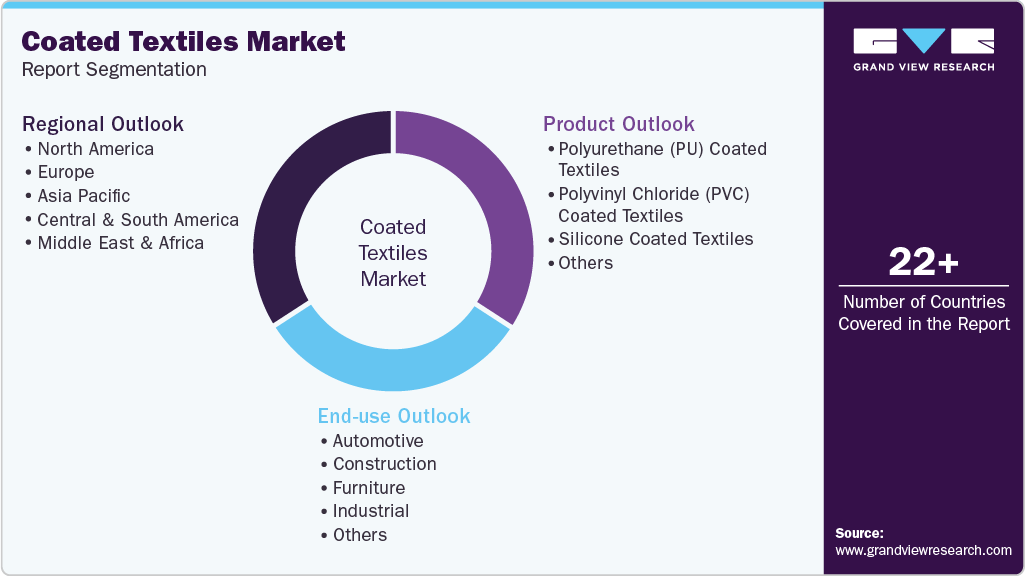
This report forecasts revenue growth at the global, regional, and country levels and provides an analysis of the latest industry trends in each of the sub-segments from 2021 to 2033. For this study, Grand View Research has segmented the global coated textiles market report based on product, end-use, and region:
 To learn more about this report, Download Free Sample Report
 -
Product Outlook (Revenue, USD Million, 2021 - 2033)
-
Polyurethane (PU) Coated Textiles
-
Polyvinyl Chloride (PVC) Coated Textiles
-
Silicone Coated Textiles
-
Others
-
-
End-use Outlook (Revenue, USD Million, 2021 - 2033)
-
Automotive
-
Construction
-
Furniture
-
Industrial
-
Others
-
-
Regional Outlook (Revenue, USD Million, 2021 - 2033)
-
North America
-
U.S.
-
Canada
-
Mexico
-
-
Europe
-
Germany
-
UK
-
France
-
Italy
-
Spain
-
-
Asia Pacific
-
China
-
Japan
-
India
-
South Korea
-
-
Central & South America
-
Middle East & Africa
-
Research Methodology
The coated textiles market figures in this report are based on a proven research process that combines executive interviews with secondary research from proprietary databases, company filings, and recognized regulatory and institutional sources. Market size is built through value-chain sizing - reconciling supply-side and demand-side estimates - and triangulated with bottom-up and top-down approaches. Every estimate passes multiple levels of expert validation before publication, with each coated textiles segment quantified using the revenue-capture definitions in the table below.
Segment Definition
Segment - Product
Revenue capture definition
Polyurethane (PU) Coated Textiles
Revenue generated from the sale of polyurethane (PU)-coated textiles used in applications requiring flexibility, abrasion resistance, lightweight performance, and superior aesthetics. This segment includes revenues from PU-coated polyester, nylon, cotton, and blended fabrics utilized in automotive interiors, artificial leather, protective clothing, luggage, footwear, upholstery, medical textiles, and industrial fabrics worldwide.
Polyvinyl Chloride (PVC) Coated Textiles
Revenue generated from the sale of polyvinyl chloride (PVC)-coated textiles designed for waterproofing, chemical resistance, durability, and outdoor performance. This segment includes revenues from PVC-coated fabrics supplied for truck covers, tarpaulins, architectural membranes, tents, awnings, inflatable structures, conveyor belts, industrial curtains, protective covers, and transportation applications across global markets.
Silicone Coated Textiles
Revenue generated from the sale of silicone-coated textiles used in high-temperature, flame-resistant, electrical insulation, and specialty industrial applications. This segment includes revenues from silicone-coated fiberglass, aramid, polyester, and other technical fabrics utilized in aerospace, automotive, fire protection, welding blankets, insulation systems, expansion joints, and industrial protective equipment worldwide.
Others
Revenue generated from the sale of coated textiles utilizing alternative coating materials such as acrylic, rubber, polyethylene (PE), fluoropolymer (PTFE), neoprene, and other specialty coatings. This segment includes revenues from coated fabrics used in filtration, marine, agriculture, defense, packaging, protective apparel, and various industrial and technical textile applications globally.
Segment - End Use
Revenue capture definition
Automotive
Revenue generated from coated textiles supplied to the automotive industry for interior and exterior vehicle applications. This segment includes revenues from coated fabrics used in seat upholstery, airbags, door panels, headliners, convertible roofs, cargo covers, steering wheel coverings, protective covers, and interior trim components for passenger and commercial vehicles worldwide.
Construction
Revenue generated from coated textiles used in residential, commercial, and infrastructure construction projects. This segment includes revenues from architectural membranes, tensile structures, roofing systems, awnings, canopies, scaffolding covers, waterproof barriers, façade materials, and protective construction fabrics supplied globally.
Furniture
Revenue generated from coated textiles utilized in residential, commercial, healthcare, and hospitality furniture manufacturing. This segment includes revenues from coated upholstery fabrics, artificial leather, mattress covers, office seating, hospital furniture, outdoor furniture, and decorative furnishing materials requiring durability, stain resistance, and ease of maintenance.
Industrial
Revenue generated from coated textiles supplied for industrial manufacturing, material handling, and heavy-duty applications. This segment includes revenues from conveyor belts, filtration media, flexible storage tanks, protective curtains, industrial covers, ducting, expansion joints, protective clothing, and process equipment fabrics used across manufacturing, mining, oil & gas, chemical, and power industries.
Others
Revenue generated from coated textiles used across additional sectors including healthcare, defense, aerospace, marine, agriculture, sports & leisure, packaging, and consumer goods. This segment includes revenues from medical mattresses, military protective gear, marine covers, inflatable boats, agricultural covers, sports equipment, luggage, and specialty technical textile applications worldwide.
Estimation Model
Layer Name
Key Question
Description
Raw Material & Coating Material Assessment
What is the availability and consumption of raw materials used in coated textiles?
Estimates demand based on the production and consumption of base fabrics (polyester, nylon, cotton, fiberglass, aramid) and coating materials such as polyurethane (PU), polyvinyl chloride (PVC), silicone, acrylic, rubber, PTFE, and other specialty polymers. Raw material pricing, production capacities, and supply chain trends are incorporated into the analysis.
Manufacturing & Product Output Assessment
How much coated textile production is generated across different product categories?
Evaluates coated textile manufacturing volumes by product type, including PU-coated textiles, PVC-coated textiles, silicone-coated textiles, and other coated textiles. The assessment considers manufacturing capacities, coating technologies, production efficiency, regional output, imports, exports, and utilization rates.
End-use Industry Demand Assessment
Which industries are driving coated textile consumption?
Measures coated textile demand across automotive, construction, furniture, industrial, and other end-use industries. The model evaluates application-wise penetration, replacement cycles, infrastructure investments, automotive production, industrial manufacturing activity, and demand for protective and technical textiles.
Revenue Validation & Market Forecast
What is the total market revenue generated from coated textiles?
Final market size is validated using average selling prices (ASPs), regional demand patterns, company revenues, trade statistics, product mix, and primary industry interviews. Forecasts incorporate technological advancements, sustainability trends, regulatory developments, macroeconomic indicators, and future demand across major end-use sectors.
Delivered Customizations
This report has been delivered with the following In-depth customizations
Client Request
Customization Delivered
Value Adds
Technology & Sustainable Coating Assessment
Comprehensive evaluation of coating technologies, water-based and solvent-free coatings, bio-based polymers, smart textiles, and advanced functional fabric innovations.
Supports technology roadmap development, product innovation strategies, and sustainability-focused decision-making.
Regional Demand & End-user Opportunity Analysis
In-depth assessment of regional demand trends, manufacturing hubs, import-export dynamics, end-user industries, regulatory landscape, and growth opportunities across major markets.
Assists market expansion planning, capacity allocation, regional prioritization, and strategic business development initiatives.
Supply Chain & Raw Material Cost Analysis
Comprehensive assessment of the coated textiles value chain covering raw material sourcing, polymer coating suppliers (PU, PVC, silicone, and specialty coatings), base fabric procurement, manufacturing processes, logistics, distribution channels, import-export flows, and raw material price trends.
Helps clients optimize sourcing strategies, reduce procurement risks, improve supply chain resilience, manage raw material price volatility, identify cost-saving opportunities, and strengthen long-term supplier partnerships while enhancing overall operational efficiency.
Frequently Asked Questions About This Report
Asia Pacific held the highest revenue market share of 47.4% in 2025, owing to its strong textile manufacturing base, rapid industrialization, expanding automotive production, and significant investments in construction and technical textile industries.
Polyurethane (PU) coated textiles is the fastest-growing product segment in the coated textiles market.
The industrial segment is the fastest growing end use in the coated textiles market.
The automotive segment accounted for the largest revenue share of 31.9% in 2025, driven by rising vehicle production and the extensive use of coated textiles in airbags, seat upholstery, interior trim, and protective components requiring durability and enhanced performance.
The coated textiles market size was valued at USD 28.5 billion in 2025 and is estimated at USD 29.7 billion in 2026.
The coated textiles market is expected to grow at a compound annual growth rate of 4.1% from 2026 to 2033 to reach USD 39.3 billion by 2033.
The polyurethane (PU) coated textiles segment held the highest revenue market share of 63.4% in 2025, owing to its superior flexibility, abrasion resistance, lightweight properties, and widespread adoption across automotive, furniture, apparel, and industrial applications.
Some of the key players operating in the coated textiles market include Trelleborg AB, BASF SE, Continental AG, Saint-Gobain S.A., OMNOVA Solutions Inc., Serge Ferrari Group, Seaman Corporation, Sioen Industries NV, SRF Limited, and Spradling International Inc.
Key factors driving the coated textiles market include increasing demand for durable technical textiles, expanding automotive and construction industries, stringent safety regulations, and advancements in sustainable, high-performance coating technologies.
About the Author(s)
Advanced Interior Materials Research Team
Advanced Materials · Advanced Interior MaterialsThis report was authored by the advanced interior materials research team at Grand View Research - comprising two research analysts, one senior research analyst, and one industry expert - with specialized expertise in the advanced interior materials segment of the advanced materials industry. All findings are based on proprietary advanced materials databases, executive interviews, and regulatory analysis, subject to internal peer review prior to publication.
Last Updated:
Speak to Analyst

Customize this report to your needs - add regions, segments, or data points, with 20% free customization.
Or view our licence options:


ISO 9001:2015 & 27001:2022 Certified
We are GDPR and CCPA compliant! Your transaction & personal information is safe and secure. For more details, please read our privacy policy.


