
- Home
- »
- Clinical Diagnostics
- »
-
Direct-to-Consumer Testing Market Size Report, 2026-2033GVR Report cover

Direct-to-Consumer Testing Market (2026 - 2033)
Size, Share & Trends Analysis Report By Test Type (Genetic Testing, Infectious Disease, Allergy Testing, Hormone & Fertility) By Sample Type, By End-use, By Distribution Channel, By Region, And Segment Forecasts
Market Size, 2025
$4.7BMarket Estimate, 2026
$5.4BMarket Forecast, 2033
$16.1BCAGR, 2026–2033
14.5%Direct-to-Consumer Testing Market Summary
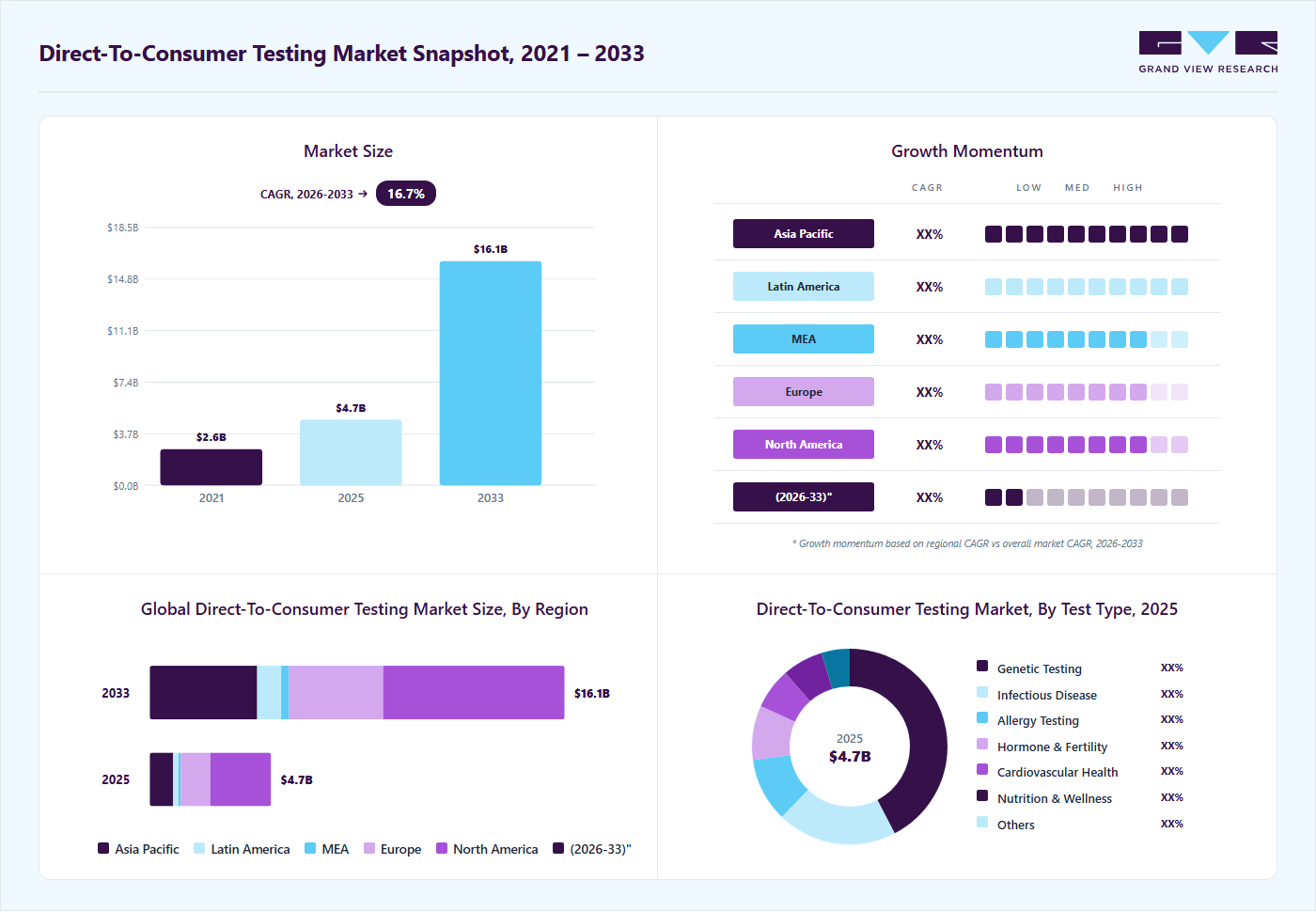
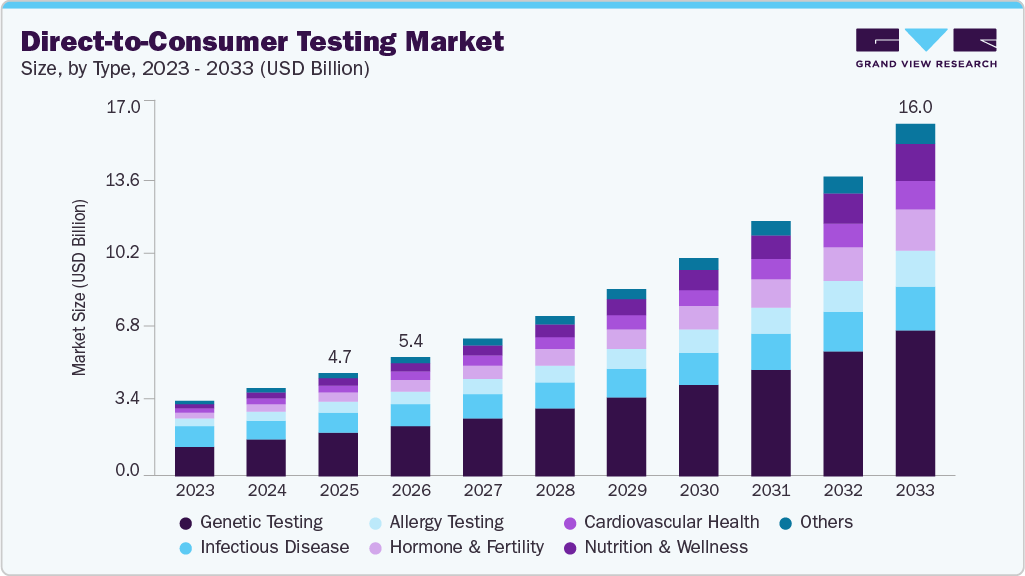
The global direct-to-consumer testing market size was valued at USD 4.7 billion in 2025 and is projected to grow from USD 5.4 billion in 2026 to USD 16.1 billion by 2033, at a CAGR of 14.51% from 2026 to 2033. The North America market held the largest share of 50.13% of the global market in 2025. This growth is driven by the rising prevalence of chronic diseases, an increasing emphasis on preventive and personalized healthcare, and ongoing technological advancements in diagnostics and testing.
 Source: Grand View Research, IR Documents, Primary Interviews, Paid DatabasesTo learn more about this report,
 Download Free Sample Report
 Key Market Trends & Insights
- By test type: The genetic testing segment dominated the market, accounting for the largest revenue share of 42.32% in 2025.
- By sample type: The blood sample segment dominated the direct-to-consumer testing market, accounting for the largest share of 47.83% in 2025.
- By end use: The individual consumer segment led the direct-to-consumer testing market, accounting for 57.34% of revenue.
Regional Highlights
- Largest regional market: North America (50.13% revenue share, 2025)
- Fastest-growing regional market: Asia Pacific (highest CAGR, 2026-2033)
- By country: The U.S. held the largest market share in 2025.
Market Size & Forecast
- Market size in 2025: USD 4.70 Billion
- Estimated market size in 2026: USD 5.4 Billion
- Projected market size by 2033: USD 16.1 Billion
- CAGR (2025-2033): 14.51%
Three ways to get this report
Buy it, customize it, or ask a question.Ask an Analyst
Analyst response in 1 business day
- AccessReport author, directly
- Reply timeWithin 1 working day
- No sales callDirect answer only
- FormatEmail reply
- CostFree, no cost
Get the Full Report
What the study covers
- FormatsPDF · Excel · Dashboard
- Timeline2026–2033 annual, 2025 base
- Coverage20+ countries, 5 regions
- Companies10+ key players profiled
Customize the Report
20% free customization
- IncludeCountries, segments, points
- TailorTo your product definition
- ExtendDeeper competitor detail
- OrA fully bespoke study
- Turnaround5–10 working days
In addition, the convenience and accessibility of at-home testing are further accelerating market demand. Moreover, expanding applications across genetic testing, nutrition, and disease risk assessment are enhancing the overall value proposition. As a result, the direct-to-consumer testing market is evolving into a key component of consumer-driven healthcare, with strong growth potential across both developed and emerging regions.
 To learn more about this report, Download Free Sample Report
 The growth of the direct-to-consumer testing market is driven by the rising prevalence of chronic diseases. Chronic conditions require continuous monitoring, creating a strong demand for accessible diagnostic solutions that patients can use at home. According to the World Health Organization, non-communicable diseases account for over 74% of global deaths, underscoring the need for early detection and preventive care. direct-to-consumer testing enables individuals to assess genetic predisposition to conditions such as BRCA-related breast cancer, heart disease, and metabolic disorders, facilitating timely lifestyle modifications and medical intervention This trend is accelerating the adoption of accessible, at-home diagnostic tools and reinforcing the role of direct-to-consumer testing in preventive healthcare.
The growing emphasis on preventive and personalized healthcare is a major driver of the direct-to-consumer testing market's expansion. Healthcare systems are increasingly shifting from a reactive, treatment-focused model to a proactive approach that prioritizes early detection, risk assessment, and individualized care. Organizations such as the Centers for Disease Control and Prevention highlight prevention as a key strategy to reduce long-term healthcare costs and disease burden. direct-to-consumer testing supports this transition by providing insights into genetic risk factors, drug response (pharmacogenomics), and nutrition or fitness predispositions, enabling more informed health decisions. Consumers are becoming more engaged in understanding how their individual biology influences health outcomes, supported by rising digital health awareness and improved health literacy. For instance, in June 2025 according to a recent article published in MDPI, remote patient monitoring (RPM) platforms leverage wearable devices, biosensors, and AI-driven analytics to continuously collect and analyze home-based physiological and biomarker data, enabling real-time insights and timely clinical interventions. These systems support personalized care, enhance patient engagement, and facilitate early detection of disease progression, ultimately improving outcomes and reducing healthcare costs, thereby accelerating the adoption of at-home biomarker testing solutions and significantly expanding the market.
Technological advancements in diagnostics and testing are driving significant growth in the direct-to-consumer testing market. Innovations such as Next-Generation Sequencing (NGS), SNP-based genotyping, and AI-driven data interpretation have enhanced the accuracy, speed, and affordability of genetic analysis, enabling scalable and consumer-friendly testing solutions. Organizations like the National Human Genome Research Institute highlight that the cost of genome sequencing has declined substantially, making advanced genetic testing increasingly accessible for direct-to-consumer use. For instance, in March 2026, 23andMe enhanced its health reports by leveraging advanced genotyping and AI-based tools to provide more precise, actionable insights.
The convenience and accessibility of at-home testing are among the most significant drivers of growth in the direct-to-consumer testing market. Consumers can order test kits online, collect samples such as saliva or finger-prick blood at home, and receive results digitally without visiting healthcare facilities. This model aligns with the rapid expansion of digital health ecosystems and telemedicine, improving accessibility and user experience.
Market Concentration & Characteristics
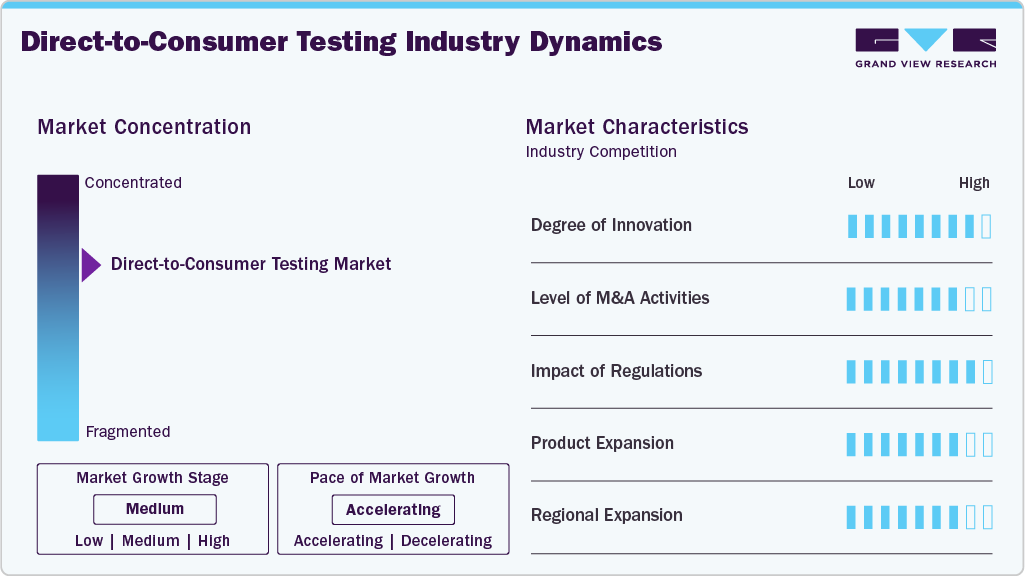
The direct-to-consumer testing market demonstrates a high degree of innovation, driven by continuous advancements in genomic technologies, data analytics, and digital health integration. Technologies such as Next-Generation Sequencing (NGS) and advanced genotyping platforms have significantly improved the speed, accuracy, and affordability of genetic testing, enabling large-scale consumer adoption. The integration of artificial intelligence further supports the interpretation of complex genetic data, enabling personalized and actionable insights. These innovations, along with integration into digital health platforms, are improving accessibility, user engagement, and clinical utility, thereby significantly accelerating the adoption and growth of direct-to-consumer testing.
M&A activities in the direct-to-consumer testing market are moderate and play a crucial role in driving growth and innovation. These activities enable companies to expand technological capabilities, enhance consumer genetic databases, and strengthen their direct-to-consumer service offerings. Additionally, mergers and acquisitions allow companies to integrate complementary services such as digital health platforms, tele-genetic counseling, and AI-driven analytics, improving overall customer engagement and value proposition. They also facilitate geographic expansion and regulatory alignment, enabling companies to enter new markets more efficiently. These strategic transactions highlight the growing value of consumer genetic data and support innovation, service expansion, and market consolidation within the direct-to-consumer testing industry.
 To learn more about this report, Download Free Sample Report
 The regulatory impact on the direct-to-consumer testing market is moderate to high, as evolving frameworks both enhance consumer trust and impose compliance requirements specific to direct-to-consumer genetic services. Regulatory bodies such as the U.S. Food and Drug Administration and standards under the Clinical Laboratory Improvement Amendments play a critical role in ensuring the safety, accuracy, and reliability of direct-to-consumer tests offered directly to consumers. These regulations directly influence product approvals, data handling, and market entry, thereby shaping innovation and growth strategies within the direct-to-consumer testing market.
Product expansion in the direct-to-consumer testing market is high, driven by continuous diversification of offerings beyond traditional genetic testing. Companies are increasingly introducing specialized and clinically relevant products to meet evolving consumer needs. For instance, in March 2024, Nucleus Genomics launched a comprehensive whole-genome sequencing direct-to-consumer test in collaboration with Illumina, enabling consumers to access deeper and more detailed genetic insights compared to standard genotyping tests. In addition, CircleDNA expanded its product portfolio by offering advanced health screening reports covering areas such as cancer risk, cardiovascular health, and lifestyle traits through a single test. These developments reflect a clear shift toward multi-dimensional testing solutions that combine genetic, health, and wellness insights.
Regional expansion in the direct-to-consumer testing market is significant, driven by increasing awareness of preventive healthcare, rising disposable incomes, and growing digital health adoption across emerging markets. Companies are actively expanding their presence beyond North America and Europe into Asia-Pacific and other high-growth regions. Additionally, Mapmygenome has been strengthening its presence in India and the Middle East by offering localized genetic testing solutions tailored to regional populations. These expansions are supported by increasing internet penetration and growing consumer interest in personalized health insights.
Test Type Insights
The genetic testing segment dominated the market, accounting for the largest revenue share of 42.32% in 2025. The segment’s dominance is primarily attributed to its strong clinical relevance, wide application scope, and increasing consumer demand for personalized health insights. Genetic tests provide actionable information on disease risk, ancestry, and wellness, making them more valuable compared to other testing types. Additionally, advancements in sequencing and genotyping technologies have improved accessibility and affordability, further supporting segment growth. The growing demand for preventive healthcare, as genetic testing enables early identification of conditions such as cancer, cardiovascular diseases, and metabolic disorders. For instance, in 2025, Natera expanded its genetic testing capabilities, including non-invasive screening solutions that enhance early disease detection and risk assessment. Such developments highlight the increasing reliance on genetic testing for proactive health management, thereby reinforcing the dominance of the direct-to-consumer genetic testing market.
The nutrition & wellness segment is projected to grow at the fastest rate of 20.02% during the forecast period. The nutrition & wellness segment is projected to grow at the fastest rate due to increasing consumer focus on preventive healthcare, lifestyle management, and personalized nutrition. Unlike traditional diagnostic testing, this segment offers continuous and actionable insights related to diet, micronutrient levels, hormones, and overall wellness, making it highly relevant for everyday health management. Furthermore, growth of this segment is supported by the increasing shift toward self-directed health monitoring and personalized wellness solutions. For instance, in April 2025, Viome expanded its microbiome-based testing services to provide personalized nutrition and supplement recommendations based on gut health analysis.
Sample Type Insights
The blood sample segment dominated the direct-to-consumer testing market, accounting for the largest share of 47.83% in 2025, due to its high clinical accuracy, wide diagnostic applicability, and ability to detect a broad range of biomarkers. Blood-based testing enables comprehensive analysis of key health indicators such as cholesterol, glucose levels, hormones, vitamin deficiencies, and infectious diseases, making it more reliable compared to saliva or urine-based tests. Additionally, the increasing demand for preventive healthcare and routine health monitoring is driving the adoption of blood-based at-home testing kits. For instance, in March 2024, LetsGetChecked expanded its range of at-home blood testing kits, including tests for cardiovascular health, hormone levels, and general wellness panels, supported by physician-reviewed results and telehealth consultations. This highlights the growing preference for clinically reliable, blood-based diagnostics in a home setting. Furthermore, the segment continues to gain strong consumer trust and adoption, making it a cornerstone of the direct-to-consumer laboratory testing market.
The hair and nails segment is likely to grow at the fastest rate over the forecast period, driven by increasing demand for non-invasive, convenient, and long-term health monitoring solutions. Unlike blood or saliva samples, hair and nail testing provide insights into chronic exposure to minerals, toxins, and nutritional deficiencies over time, making them particularly useful for lifestyle and wellness analysis. The rising consumer focus on preventive healthcare and personalized wellness is further accelerating adoption, as these tests are easy to use and do not require invasive sample collection. Moreover, the segment is gaining traction among health-conscious consumers, positioning it as a rapidly expanding category within the direct-to-consumer testing market.
End Use Insights
In 2025, the individual consumer segment led the direct-to-consumer testing market, accounting for 57.34% of revenue, and is expected to grow steadily over the forecast period. The segment’s dominance is primarily driven by a growing preference for direct access to health information without clinical or institutional involvement. Individual users form the core customer base of direct-to-consumer testing, as these services are designed for personal use, convenience, and privacy. The availability of easy-to-use at-home testing kits, combined with online ordering and digital result access, has significantly increased adoption among individual consumers. Furthermore, the growing adoption of digital health solutions and rising awareness of preventive healthcare are expected to sustain long-term demand. As a result, the segment is expected to continue playing a critical role in shaping the future growth of the direct-to-consumer testing market.
The corporate wellness segment is expected to register the fastest growth over the forecast period, driven by the increasing adoption of employee health and wellness programs by organizations aiming to improve productivity and reduce healthcare costs. Companies are increasingly integrating direct-to-consumer testing solutions into their wellness initiatives to provide employees with convenient access to health screening, preventive diagnostics, and personalized wellness insights. These programs enable early detection of health risks, reduce absenteeism, and support overall workforce well-being.
Distribution Channel Insights
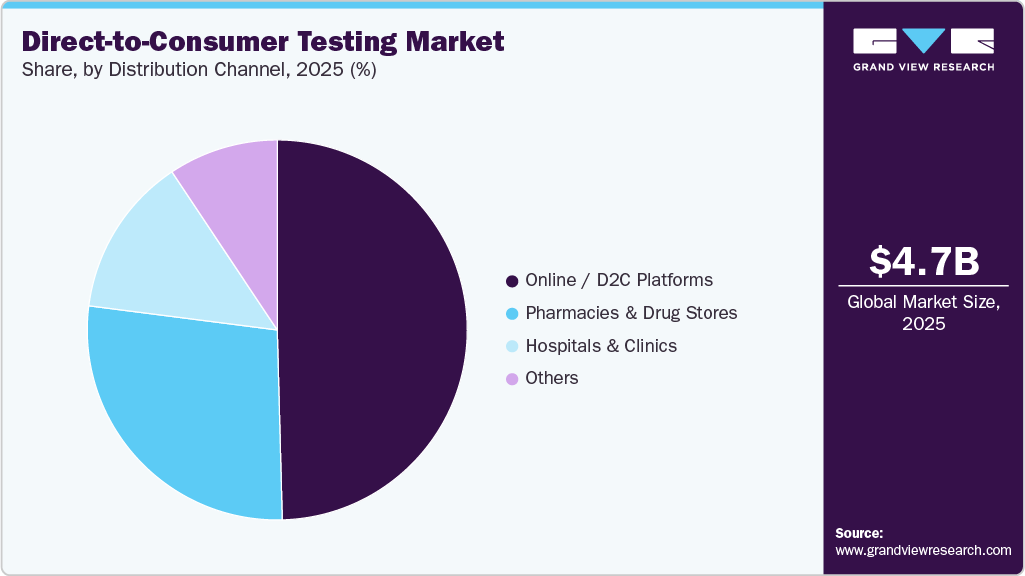
The online/direct-to-consumer platforms segment accounted for 49.58% of the market in 2025 and is anticipated to grow over the forecast period. This dominance is primarily driven by the direct-to-consumer nature of testing services, which rely heavily on digital platforms for product discovery, purchase, and result delivery. Online channels enable consumers to conveniently order test kits, access digital health reports, and receive personalized insights without visiting healthcare facilities. The increasing penetration of e-commerce, along with rising digital health adoption, has further strengthened this segment. For instance, in June 2025, MyLAB Box expanded its online distribution model by offering a wide range of at-home health tests, including sexual health and wellness kits, directly through its digital platform with discreet home delivery. Similarly, LetsGetChecked strengthened its e-commerce presence by enabling users to access test results and follow-up consultations through its integrated mobile application.
 To learn more about this report, Download Free Sample Report
 The hospitals & clinics segment is anticipated to grow at the fastest rate over the forecast period. This growth is driven by the increasing use of direct-to-consumer testing services within clinical settings, where healthcare providers are incorporating patient-initiated test results into consultations and treatment decisions. Hospitals and clinics are leveraging direct-to-consumer testing to support follow-up diagnostics, validation of consumer-generated data, and improved patient engagement. Additionally, the growing acceptance of consumer-ordered test results in clinical evaluation is accelerating adoption within healthcare settings. For instance, in March 2022, Helix partnered with health systems to deliver DNA-based testing programs that combine consumer access with clinical support, bridging the gap between direct-to-consumer and traditional healthcare.
Regional Insights
North America direct-to-consumer Testing Market dominated the global market and accounted for 50.13% of revenue share in 2025. Growth in the region is supported by high consumer awareness, advanced healthcare infrastructure, and strong adoption of digital health. The region benefits from advanced genomics research, strong e-commerce penetration, and a mature regulatory environment that supports consumer genetic testing. Consumers increasingly opt for at-home testing solutions for convenience, privacy, and faster access to results. Additionally, favorable regulatory clarity for certain genetic tests and high healthcare spending support market growth. The presence of leading industry players and continuous product innovation further strengthen the region’s position. Moreover, integrating direct-to-consumer testing with telehealth services is enhancing accessibility and the user experience, contributing to sustained demand across the region.
 To learn more about this report, Download Free Sample Report
 U.S. Direct-to-Consumer Testing Market Trends
The U.S. represents the largest market within North America, driven by high adoption of personalized healthcare and strong consumer demand for genetic and wellness testing. The country’s advanced digital infrastructure enables seamless online ordering, result delivery, and telehealth integration. Consumers increasingly use direct-to-consumer testing for genetic insights, chronic disease risk assessment, and routine health monitoring. Regulatory oversight by agencies such as the FDA ensures product reliability, enhancing consumer trust. Additionally, the growing trend of self-directed healthcare and rising awareness of preventive diagnostics are accelerating adoption. The U.S. market also benefits from continuous innovation and strong investments in genomics and digital health, positioning it as a key hub for direct-to-consumer testing advancements.
Europe Direct-to-Consumer Testing Market Trends
Europe is a significant market for direct-to-consumer testing, supported by growing awareness of genetic testing and preventive healthcare. The region’s growth is driven by rising health consciousness, expanding digital health ecosystems, and increasing demand for personalized medicine. However, stricter data privacy regulations, particularly under the GDPR, shape how companies operate and manage consumer genetic data. Despite regulatory complexity, consumer interest in ancestry and health-related genetic testing continues to grow. Additionally, the expansion of online healthcare platforms and cross-border digital services is improving accessibility. The market is also seeing increased collaboration between healthcare providers and direct-to-consumer companies, supporting the integration of consumer-generated data into broader healthcare systems.
The UK Direct-to-Consumer testing market is growing steadily, driven by rising consumer awareness and strong digital health adoption. The presence of a well-established healthcare system encourages the use of direct-to-consumer testing as a complementary tool for preventive care. Consumers are increasingly interested in genetic insights related to ancestry, nutrition, and health risks. Regulatory oversight ensures data protection and test accuracy, which supports consumer confidence. Additionally, the rise of digital health platforms and mobile health applications is facilitating easy access to testing services. The UK market also benefits from a growing focus on personalized medicine and public health initiatives, which are encouraging individuals to take a more proactive approach to health management.
The Germany Direct-to-Consumer testing market represents a key market in Europe, characterized by high healthcare standards and increasing demand for preventive diagnostics. The market is driven by a strong focus on data privacy and regulatory compliance, which ensures high-quality testing services but can limit rapid market expansion. Consumers are gradually adopting direct-to-consumer testing, particularly for wellness and genetic insights. The country’s advanced healthcare infrastructure supports the integration of direct-to-consumer testing into broader health management practices. Additionally, increasing awareness of personalized healthcare and the benefits of early diagnosis is contributing to market growth. The rise of digital health solutions and online platforms is further enhancing accessibility and convenience for consumers.
Asia Pacific Direct-to-Consumer Testing Market Trends
Asia Pacific is expected to see the fastest growth in the direct-to-consumer testing market, driven by a large population base, rising disposable incomes, and growing awareness of preventive healthcare. Rapid digitalization and expanding internet penetration are enabling broader access to online testing platforms. Consumers in the region are increasingly adopting direct-to-consumer testing for wellness, nutrition, and genetic insights. Governments are also promoting digital health initiatives that support market expansion. Additionally, the growing burden of chronic diseases is encouraging early detection and health monitoring. The presence of emerging local players and increasing investment in healthcare technology further contribute to the region’s strong growth potential.
The Japan Direct-to-Consumer testing market is expanding due to a strong focus on preventive healthcare and an aging population that prioritizes early diagnosis and health monitoring. Consumers are increasingly adopting genetic and wellness testing to manage long-term health risks. The country’s advanced technological infrastructure supports digital health integration, enabling convenient access to testing services. Regulatory frameworks ensure high standards of data privacy and test reliability, enhancing consumer trust. Additionally, growing interest in personalized nutrition and lifestyle management is driving demand. Japan’s emphasis on innovation and healthcare quality continues to support the steady growth of direct-to-consumer testing solutions.
China is rapidly emerging as a major market for direct-to-consumer testing, supported by rising health awareness, a large consumer base, and rapid digital adoption. The widespread use of e-commerce platforms makes testing kits easy to access, while mobile health applications enhance user engagement. Consumers are increasingly interested in genetic testing for wellness, ancestry, and disease risk assessment. Government support for biotechnology and digital health innovation further drives market growth. However, evolving regulatory frameworks governing genetic data and privacy play a critical role in shaping the market landscape. Overall, strong technological adoption and growing health consciousness are key drivers of demand in China.
Latin America Direct-to-Consumer Testing Market Trends
The direct-to-consumer testing market in Latin America is gradually expanding, driven by rising awareness of preventive healthcare and improved access to digital platforms. Increasing internet penetration and e-commerce adoption are making at-home testing services easier to access. However, market growth is somewhat constrained by limited awareness in certain regions and by varying regulatory frameworks. Despite these challenges, interest in wellness and genetic testing is growing, particularly among urban populations. The expansion of healthcare infrastructure and a growing focus on early diagnosis are expected to support future growth. Additionally, partnerships between local and global companies are improving accessibility and market reach.
Middle East and Africa Direct-to-Consumer Testing Market Trends
The MEA region is seeing gradual growth in the direct-to-consumer testing market, driven by rising healthcare awareness and adoption of digital health solutions. Demand for convenient, accessible diagnostic services is growing, particularly in urban areas. Governments in the region are investing in healthcare infrastructure and digital transformation, supporting market development. However, limited awareness and regulatory variability may constrain growth in certain areas. Despite these challenges, growing interest in preventive healthcare and wellness is driving adoption. The expansion of online platforms and mobile health technologies is further improving accessibility, positioning the region for steady growth over the forecast period.
The Saudi Arabia Direct-to-Consumer testing market is expanding, supported by government initiatives promoting genomics and preventive healthcare under Vision 2030. For instance, the Saudi Human Genome Program continues to advance in 2024-2025, focusing on genetic mapping and personalized medicine. These efforts, combined with growing digital health adoption and awareness of early disease detection, are encouraging the uptake of consumer-oriented genetic testing solutions, positioning the country as a key growth market in the region.
Key Direct-to-Consumer Testing Company Insights
The direct-to-consumer testing market is highly fragmented, with a mix of global and regional players competing across genetic testing, wellness diagnostics, and at-home health solutions. Leading companies such as 23andMe and AncestryDNA maintain a strong presence due to their extensive consumer databases, strong brand recognition, and advanced testing capabilities. These companies leverage large-scale genetic data to enhance accuracy, improve user insights, and expand service offerings. Other key players, including MyHeritage and Helix, are focusing on product innovation and strategic collaborations to strengthen their market position. The competitive landscape is characterized by continuous advancements in technology, expansion of test portfolios, and increasing integration with digital health platforms. As a result, while established players hold a significant share, the market remains dynamic, allowing emerging companies to capture niche opportunities and drive innovation.
Key Direct-to-Consumer Testing Companies:
The following key companies have been profiled for this study on the direct-to-consumer testing market.
- 23andMe
- AncestryDNA.
- MyHeritage Ltd
- Gene by Gene, Ltd.
- Living DNA Ltd
- Color Health, Inc
- CircleDNA.
- Dante Labs
- Helix, Inc.
- Mapmygenome
Recent Developments
-
In January 2025, 23andMe initiated strategic restructuring efforts to address declining revenues and operational challenges. The company focused on cost optimization and exploring new partnerships to stabilize its business model. This reflects broader industry pressure to move beyond one-time kit sales toward sustainable revenue streams. It also indicates a shift toward long-term profitability and consolidation in the market.
-
In Nov 2025, TytoCare integrated its FDA-cleared home diagnostic technology with Teladoc Health’s Primary360 and 24/7 Care programs, strengthening virtual primary and urgent care delivery and expanding in-home clinical capabilities.
-
In April 2022, LabCorp expanded its direct-to-consumer testing services through its platform by offering more at-home collection kits. These include tests for general wellness, chronic conditions, and routine health monitoring. The move aims to capture growing demand for convenient, home-based diagnostics. It also indicates the entry of traditional diagnostics players into the direct-to-consumer space.
Direct-to-Consumer Testing Market Report Scope
Report Attribute
Details
Market size in 2025
USD 4.7 Billion
Estimated market size in 2026
USD 5.4 billion
Projected market size by 2033
USD 16.1 billion
Growth rate
CAGR of 14.51% from 2026 to 2033
Actual data
2021 - 2024
Forecast period
2026 - 2033
Quantitative units
Revenue in USD million/billion and CAGR from 2026 to 2033
Report coverage
Revenue forecast, company ranking, competitive landscape, growth factors, and trends
Segments covered
Test Type, sample type, end use, distribution channel, region
Regional scope
North America; Europe; Asia Pacific; Latin America; MEA
Country scope
U.S.; Canada; Mexico; UK; Germany; France; Italy; Spain; Norway; Denmark; Sweden; China; Japan; India; Australia; Thailand; South Korea; Brazil; Argentina; South Africa; Saudi Arabia; UAE; Kuwait
Key companies profiled
23andMe; AncestryDNA; MyHeritage Ltd; Gene by Gene, Ltd.; Living DNA Ltd; Color Health Inc; CircleDNA; Dante Labs; Helix, Inc.; Mapmygenome
Customization scope
Free report customization (equivalent up to 8 analyst working days) with purchase. Addition or alteration to country, regional & segment scope.
Pricing and purchase options
Avail customized purchase options to meet your exact research needs. Explore purchase options
Global Direct-to-Consumer Testing Market Report Segmentation
This report forecasts revenue growth at country levels and provides an analysis on the latest industry trends and opportunities in each of the sub-segments from 2021 to 2033. For the purpose of this study, Grand View Research has segmented the direct-to-consumer testing market report on the basis of test type, sample type, end use, distribution channel, and region:
-
Test Type Outlook (Revenue, USD Million, 2021 - 2033)
-
Genetic Testing
-
Infectious Disease
-
Allergy Testing
-
Hormone & Fertility
-
Cardiovascular Health
-
Nutrition & Wellness
-
Others
-
-
Sample Type Outlook (Revenue, USD Million, 2021 - 2033)
-
Blood
-
Saliva/Buccal Swab
-
Urine
-
Hair/Nails
-
Others
-
-
End Use Outlook (Revenue, USD Million, 2021 - 2033)
-
Individual Consumers
-
Corporate Wellness
-
Pharmacies & Retail
-
Others
-
-
Distribution Channel Outlook (Revenue, USD Million, 2021 - 2033)
-
Online / D2C Platforms
-
Pharmacies & Drug Stores
-
Hospitals & Clinics
-
Others
-
-
Regional Outlook (Revenue, USD Million, 2021 - 2033)
-
North America
-
U.S.
-
Canada
-
Mexico
-
-
Europe
-
UK
-
Germany
-
France
-
Italy
-
Spain
-
Norway
-
Denmark
-
Sweden
-
Rest of Europe
-
-
Asia Pacific
-
Japan
-
China
-
India
-
Australia
-
South Korea
-
Thailand
-
Rest of Asia Pacific
-
-
Latin America
-
Brazil
-
Argentina
-
Rest of Latin America
-
-
Middle East & Africa
-
South Africa
-
Saudi Arabia
-
UAE
-
Kuwait
-
Rest of Middle East & Africa
-
-
Frequently Asked Questions About This Report
Asia Pacific is the fastest-growing region over the forecast period.
The genetic testing segment led with a 42.3% revenue share in 2025, while nutrition & wellness is the fastest-growing segment.
The blood sample segment held the highest market share of 47.8% in 2025. while hair and nails is the fastest-growing segment.
The individual consumer segment held the highest market share of 57.3% in 2025, while corporate wellness is the fastest-growing segment.
The global direct-to-consumer testing market size was estimated at USD 4.7 billion in 2025 and is expected to reach USD 5.4 billion in 2026.
North America dominated with a 50.1% revenue share in 2025.
Some key players operating in the direct-to-consumer testing market include 23andMe, AncestryDNA, MyHeritage Ltd, Gene by Gene, Ltd., Living DNA Ltd, Color Health, Inc, CircleDNA, Dante Labs, Helix, Inc., and Mapmygenome
Key factors driving the direct-to-consumer testing market growth include rising prevalence of chronic diseases, an increasing emphasis on preventive and personalized healthcare, and ongoing technological advancements in diagnostics and testing.
The global direct-to-consumer testing market is expected to witness a compound annual growth rate of 14.5% from 2026 to 2033 to reach USD 16.1 billion in 2033.
About the Author(s)
Clinical Diagnostics Research Team
Healthcare · Clinical DiagnosticsThis report was authored by the clinical diagnostics research team at Grand View Research - comprising two research analysts, one senior research analyst, and one industry expert - with specialized expertise in the clinical diagnostics segment of the healthcare industry. All findings are based on proprietary healthcare databases, executive interviews, and regulatory analysis, subject to internal peer review prior to publication.
Last Updated:
Speak to Analyst

Customize this report to your needs - add regions, segments, or data points, with 20% free customization.
Or view our licence options:


ISO 9001:2015 & 27001:2022 Certified
We are GDPR and CCPA compliant! Your transaction & personal information is safe and secure. For more details, please read our privacy policy.


