
- Home
- »
- Clinical Diagnostics
- »
-
High-throughput Genomic Screening For Preventive Healthcare Market Report, 2026-2033GVR Report cover

High-throughput Genomic Screening For Preventive Healthcare Market (2026 - 2033)
Size, Share & Trends Analysis Report By Test type (Carrier Screening, Newborn Screening), By Technology (Next-generation Sequencing), By Application (Oncology), By End-use, By Region, And Segment Forecasts
Market Size, 2025
$846.1MMarket Estimate, 2026
$944.9MMarket Forecast, 2033
$2,169.7MCAGR, 2026–2033
12.6%High-throughput Genomic Screening For Preventive Healthcare Market Summary
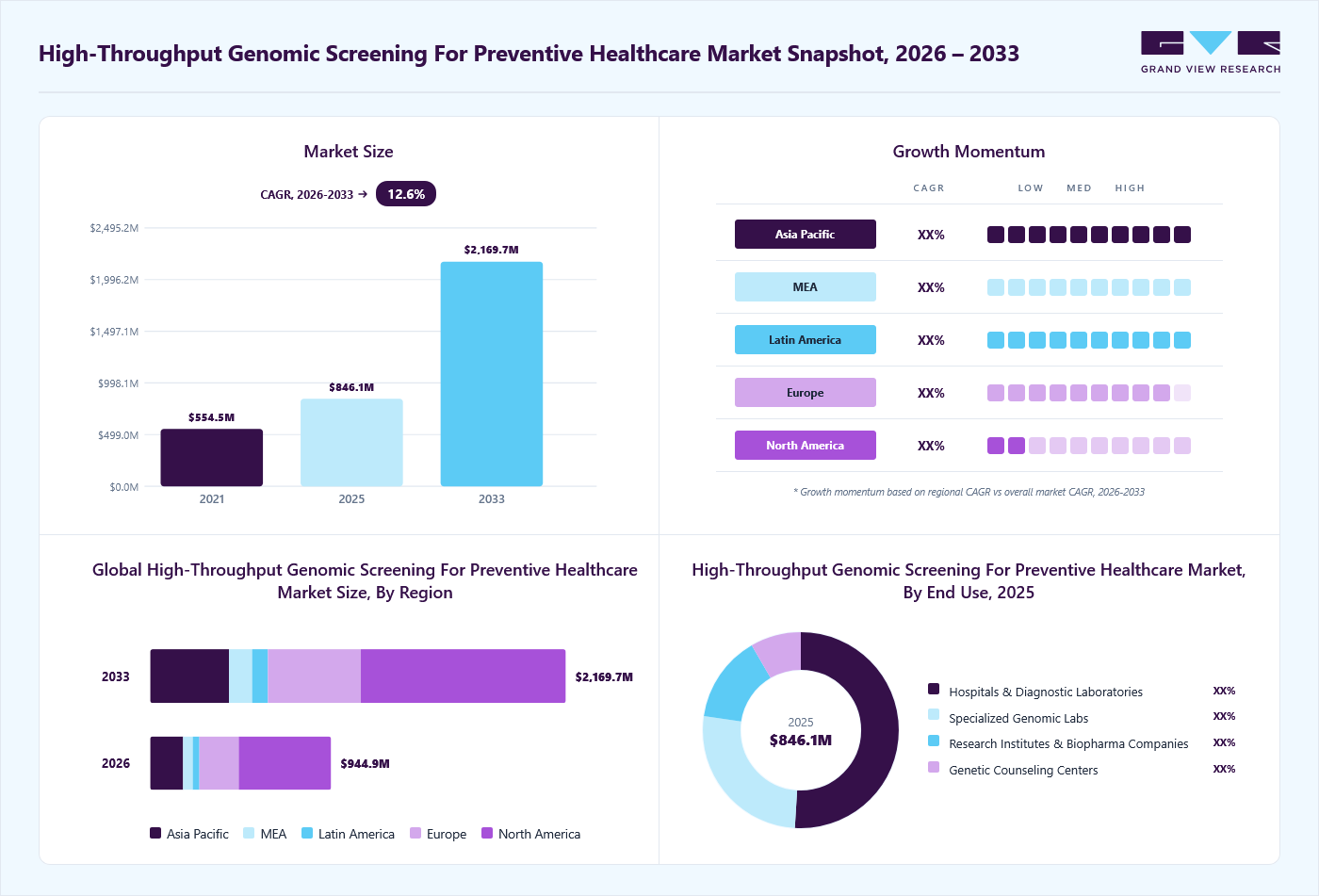
The global high-throughput genomic screening for preventive healthcare market size was valued at USD 846.1 million in 2025 and is projected to grow from USD 944.9 million in 2026 to USD 2,169.7 million by 2033, at a CAGR of 12.6% from 2026 to 2033. The North America held the largest share of 51.3% of the global market in 2025. The market growth is driven by the transition from reactive treatment to personalized prevention supported by preventive and precision medicine.
 Source: Grand View Research, IR Documents, Primary Interviews, Paid DatabasesTo learn more about this report,
 Download Free Sample Report
Key Market Trends & Insights
- By test type: Non-invasive prenatal testing (NIPT) segment held the largest market share of 30.5% in 2025.
- By technology: Next-Generation sequencing segment held the largest market share of 42.3% in 2025.
- By application: Reproductive health & fertility segment held the largest market share of 27.9% in 2025.
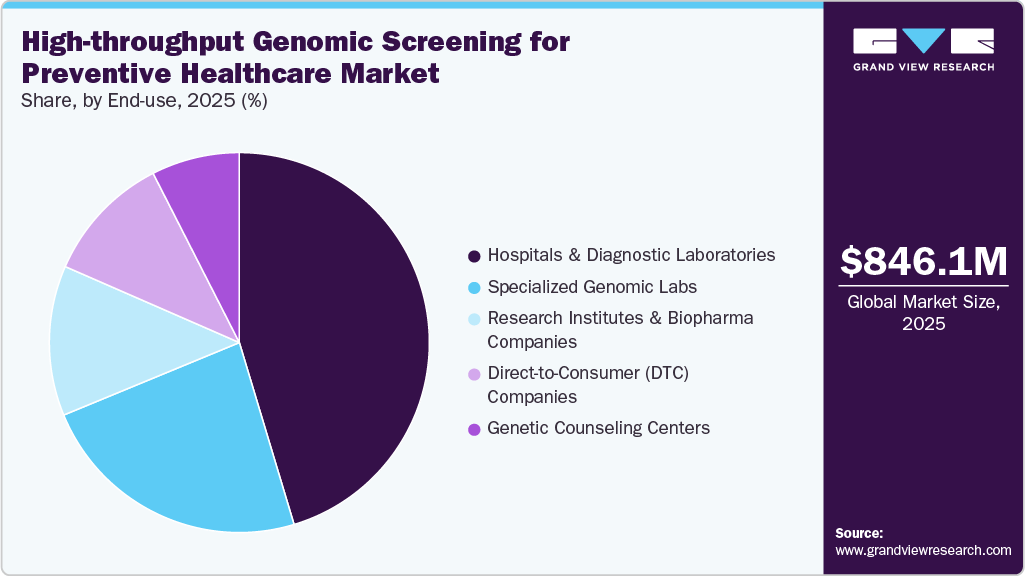
- By end-use: Hospitals and diagnostic laboratories segment held the largest market share of 45.4% in 2025.
Regional Highlights
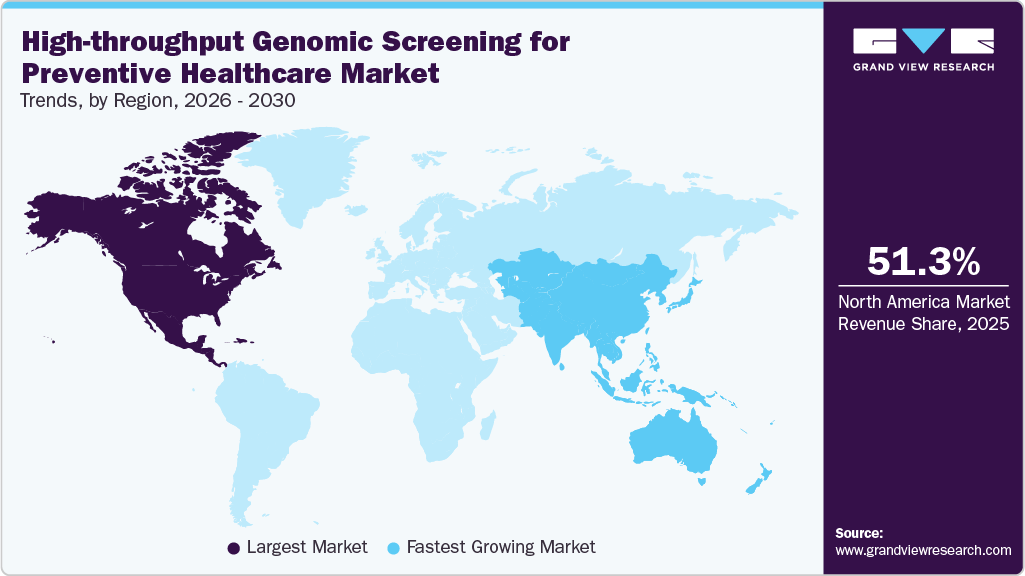
- Largest regional market: North America (51.3% revenue share, 2025)
- Fastest-growing regional market: Asia Pacific (highest CAGR, 2026-2033)
- By country: The U.S. held the largest share in 2025
Market Size & Forecast
- Market size in 2025: USD 846.1 Million
- Estimated market size in 2026: USD 944.9 Million
- Projected market size by 2033: USD 2,169.7 Million
- CAGR (2026-2033): 12.6%
Prism AI by Grand View Research Free to tryAsk a question about the high-throughput genomic screening for preventive healthcare marketTry asking✓Every figure cited from GVR research Prefer the report? Download free sample →
Advancements in high-throughput genomic technologies are further accelerating market expansion by enabling faster, scalable, and more accurate genetic analysis. For instance, in 2025, BGI Genomics and the Thalassemia International Federation highlighted that high‑throughput sequencing improved the accuracy of carrier and at-risk couple identification in thalassemia prevention programs. This advancement strengthens the preventive healthcare paradigm by enabling scalable, precise genetic risk assessments, further accelerating the growth of the high-throughput genomic screening market for preventive healthcare.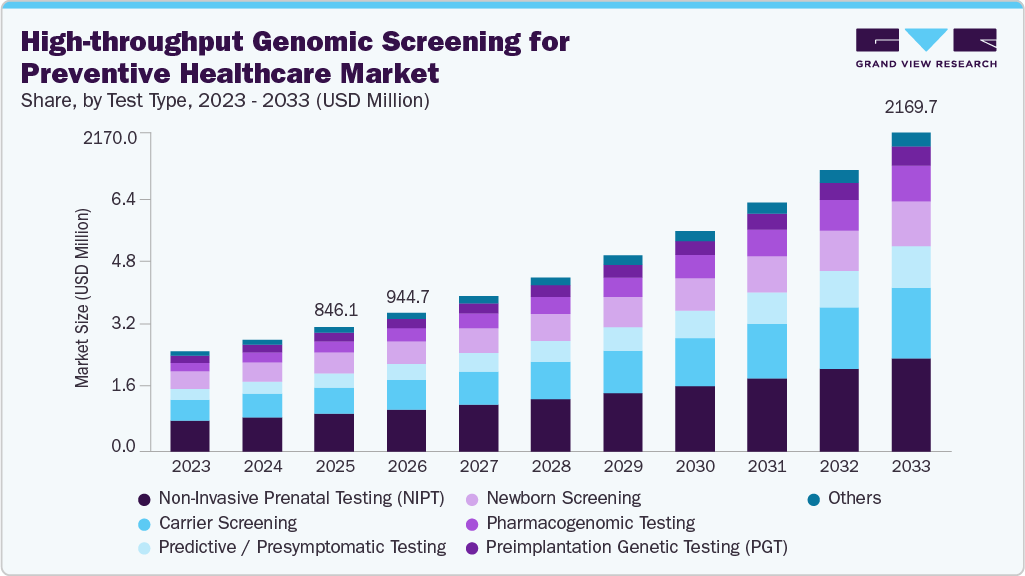 To learn more about this report, Download Free Sample Report
Rising consumer awareness and demand for genomic insights are primary drivers of the global high-throughput genomic screening market for preventive healthcare. Individuals are increasingly seeking actionable genetic information to anticipate and mitigate health risks, and this demand is directly driving the adoption of genomic screening technologies such as multi-gene panels and next-generation sequencing, which enables comprehensive risk profiling before symptoms arise. For instance, in 2026, a recent study from 23andMe demonstrated the real-world impact of consumer genomic insights on preventive healthcare: 82% of participants had no prior clinical genetic testing and were unaware of their genetic health risks before using a direct-to-consumer test. After sharing results with healthcare providers, 86% received one or more medical recommendations, including earlier screenings, medications, or preventive surgeries, and 88% of these recommendations were followed. Such real-world adoption demonstrates that consumer-driven demand for genomic insights is not only shaping individual health decisions but also accelerating the overall expansion of the preventive genomic screening market.
The shift from reactive treatment to personalized prevention is driving growth of the high-throughput genomic screening market, as it emphasizes early detection and individualized healthcare. Genetic screening enables the identification of monogenic diseases, hereditary cancer risks such as BRCA1/2 and Lynch syndrome, and metabolic conditions before symptoms appear. Proactive testing, particularly between ages 40-50, targets a critical window when chronic diseases or early-stage cancers often begin to develop. Notably, approximately 50 % of high-risk individuals for hereditary cancers lack a clear family history, meaning traditional reactive approaches would miss them. Tests such as BRCA1/2, CHEK2, and Lynch syndrome panels support personalized surveillance strategies, including earlier mammograms, colonoscopies, or prophylactic interventions. Pharmacogenomic screening further enhances prevention by guiding drug selection and dosage. Providing actionable insights before disease onset, this shift toward precision-based care is directly driving demand for high-throughput genomic screening technologies. For instance, in 2025, international healthcare provider Bupa’s My Genomic Health program in the UK and Spain identified high-risk variants in 4 % of participants and polygenic risk markers in 75 %, enabling early preventive care. This initiative demonstrates how the move from reactive treatment to personalized prevention delivers tailored risk insights, drives adoption of genomic screening, and expands the preventive healthcare market.
Advancements in high‑throughput genomic screening technologies are rapidly expanding the preventive healthcare market by enabling faster, more accurate, and cost-effective comprehensive genomic analysis. For instance, in 2025, Illumina launched the NovaSeq X Plus platform, capable of sequencing up to 48 human genomes per day with high accuracy and lower per-genome cost. This enables large-scale population screening programs and allows healthcare providers to identify genetic risks before symptoms appear, demonstrating how technological innovation drives adoption of high-throughput genomic screening. Automation, robotics, and AI-driven bioinformatics are further transforming workflows, allowing thousands of samples to be processed daily with minimal manual intervention and faster turnaround times. Collectively, these innovations support proactive, precision-based healthcare and the broader integration of preventive genomics into routine clinical practice.
The growing integration of genomics into healthcare systems and insurance coverage is driving growth in the high-throughput genomic screening market for preventive healthcare. As healthcare providers and insurers increasingly recognize the value of early detection, coverage for genomic tests is expanding, reducing financial barriers and enabling broader adoption. Population-scale programs implemented by hospitals and health networks allow identification of individuals at risk for hereditary cancers, cardiovascular diseases, and metabolic disorders before symptoms arise. For Instance, in 2025, the UK’s NHS Genomic Medicine Service expanded its population-based genomic screening program, offering multi-gene panels for hereditary cancers and rare diseases, enabling early intervention and personalized care planning. In the United States, several private insurers now reimburse pharmacogenomic and hereditary cancer panels, encouraging providers and patients to utilize preventive genomic testing. This integration of genomics into routine healthcare pathways and coverage plans is directly driving market growth, making high-throughput genomic screening more accessible and accelerating the adoption of precision preventive medicine.
Market Concentration & Characteristics
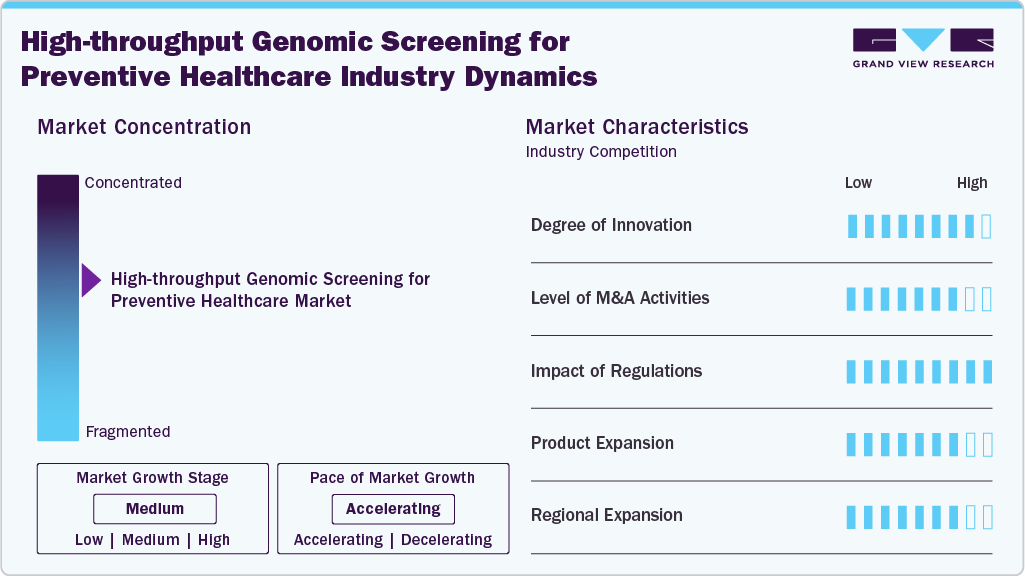
The degree of innovation in the high-throughput genomic screening for preventive healthcare market is high, driven by the shift from reactive treatment to proactive, predictive care. The integration of next-generation sequencing (NGS), artificial intelligence, and multi-omics enables rapid analysis of large-scale genetic data, facilitating the early identification of disease susceptibility before clinical symptoms emerge. This supports timelier and personalized interventions for conditions such as cancer and cardiovascular diseases. In addition, high-throughput CRISPR screening is accelerating the discovery of essential genes and potential therapeutic targets, further strengthening preventive healthcare strategies. Continuous technological advancements, coupled with expanding data-sharing infrastructure and improved computational capabilities, are enhancing the accuracy, scalability, and clinical applicability of genomic screening. Collectively, these developments position high-throughput genomic screening as a highly innovative and transformative approach in modern healthcare.
The level of mergers and acquisitions (M&A) activity in the high-throughput genomic screening for preventive healthcare market is moderate to high, driven by the need to expand capabilities in next-generation sequencing (NGS), AI-driven analysis, and large-scale genomic screening. Companies are strategically acquiring specialized firms to enhance technology platforms and accelerate innovation. For instance, in May 2025, QIAGEN acquired Genoox, a company specializing in AI-powered genomic data interpretation, enabling faster and more accurate high-throughput analyses for early disease detection and personalized preventive interventions. Moreover, in 2026, Swiss Rockets AG acquired Complete Genomics, strengthening its high-throughput sequencing capabilities and expanding its capacity to identify genetic risks for diseases such as cancer and cardiovascular conditions. These acquisitions underscore how strategic M&A is accelerating technological advancement and shaping the future of preventive genomic healthcare.
 To learn more about this report, Download Free Sample Report
The impact of regulation on high-throughput genomic screening in the preventive healthcare market is significant, as regulatory frameworks ensure the accuracy, safety, and ethical use of genomic data. Compliance with agencies such as the U.S. Food and Drug Administration (FDA) and the European Medicines Agency (EMA) governs the approval of diagnostic tests, sequencing platforms, and data interpretation software. Regulations also address privacy, data security, and patient consent. While these requirements can increase development timelines and costs, they enhance trust among patients and healthcare providers, ensuring that genomic screening is reliable, clinically valid, and ethically implemented. For instance, in early 2025, the Canadian Genomics Strategy allocated $175 million to advance research, adoption, and the development of personalized diagnostic tools, supporting large-scale preventive genomic screening. This illustrates how regulation and government initiatives together drive market growth and innovation.
High-throughput genomic screening companies are actively expanding their product portfolios to enhance preventive healthcare. Multi-Cancer Early Detection (MCED) blood tests are expanding coverage from 10 to more than 14 cancer types, and AI integration is reducing reliance on invasive follow-up procedures such as colonoscopies and CT scans. AI-driven genomic interpretation platforms, such as Strand’s Strandomics v2 and CytoRx AI, are becoming central tools for rapid variant classification and disease risk prediction. Low-pass whole genome sequencing (WGS) is being adopted for cost-effective population screening, producing low-coverage genomes that are computationally imputed to full coverage. Companies are also adding long-read sequencing technologies from PacBio and Oxford Nanopore to better detect structural variants and repeat expansions. Furthermore, integrated multi-omics and spatial genomics products combine genomics with transcriptomics and proteomics to provide deeper disease insights. Advanced liquid biopsy platforms using cell-free DNA (cfDNA) are now capable of high-throughput screening, detecting actionable mutations, and monitoring treatment responses, processing hundreds of thousands of tests annually.
Regional expansion is a key strategy driving growth in the high-throughput genomic screening market. Companies are expanding into emerging markets and untapped regions to improve access to preventive genomic testing. By establishing local sequencing facilities, forming hospital partnerships, and collaborating with government health initiatives, firms can offer faster, cost-effective screening and population-level disease risk assessments. U.S. and European companies are entering the Asia-Pacific and Latin American markets, leveraging growing healthcare infrastructure and rising awareness of preventive care.
Test Type Insights
The non-invasive prenatal testing (NIPT) segment dominated the market, accounting for the largest revenue share of 30.5% in 2025, driven by its ability to provide early and highly accurate detection of chromosomal abnormalities using a simple maternal blood sample. Its non-invasive nature eliminates the miscarriage risks associated with traditional procedures, significantly increasing patient and clinician preference. Rapid advancements in next-generation sequencing technologies have enhanced test accuracy, scalability, and multi-condition detection, making NIPT suitable for large-scale screening. In addition, rising maternal age and increasing awareness of prenatal health have fueled global demand. The expansion of NIPT into average-risk pregnancies, supported by clinical recommendations from organizations such as the American College of Obstetricians and Gynecologists, has further accelerated adoption. These developments highlight the growing integration of NIPT into routine prenatal care, supporting early diagnosis and improved maternal-fetal outcomes.
The pharmacogenomic testing segment is expected to grow at the fastest CAGR over the forecast period, driven by expanding applications across oncology, cardiology, and neurology. In addition, over 65% of healthcare systems have begun integrating pharmacogenomic testing to optimize drug response and reduce adverse reactions, highlighting its growing clinical adoption. This growth is further supported by the increasing adoption of personalized medicine and the need to enhance drug efficacy while minimizing adverse drug reactions. Recent initiatives are accelerating this trend. For instance, in 2026, AIIMS Bhopal partnered with Erasmus Medical Center in Netherlands to enhance pharmacogenomics research and implement personalized drug therapy models across India. Moreover, companies such as Thermo Fisher are launching high-throughput PCR-and sequencing-based pharmacogenomic assays, improving scalability and accuracy for routine clinical use.
Technology Insights
The Next-Generation Sequencing (NGS) segment captured the largest revenue share of 42.3% in 2025 and is anticipated to grow over the forecast period. NGS allows rapid, large-scale analysis of multiple genes in a single test, offering high accuracy for detecting rare and complex genetic variations, which is critical for preventive health, carrier screening, prenatal testing, and oncology. Its scalability enables laboratories to process hundreds or thousands of samples efficiently, reducing per-test costs and supporting population-level screening programs. For instance, Illumina’s NovaSeq platform has been widely adopted in large genomic initiatives such as the All of Us Research Program, Thermo Fisher Scientific’s Ion Torrent systems are extensively used in clinical settings for carrier and prenatal screening. Moreover, in 2025, Illumina announced continued expansion of its high-throughput sequencing solutions and collaborations aimed at accelerating population-scale genomics and clinical adoption. These advancements and real-world implementations highlight NGS as a cornerstone technology in high-throughput genomic screening, driving the adoption of precision medicine and preventive healthcare globally.
CRISPR-based screening platforms are expected to exhibit strong growth over the forecast period, driven by their ability to enable precise, efficient, and scalable genome editing for functional genomics, drug target discovery, and emerging preventive health applications. These platforms facilitate high-throughput loss- and gain-of-function studies, accelerating the identification of disease-associated genes and therapeutic targets. Continuous advancements in CRISPR technology, including improved delivery systems and enhanced specificity, have expanded their adoption across research and early clinical development. In addition, increasing investments by biotechnology companies, integration into large-scale genomic research initiatives, and expanding applications in oncology and rare genetic disorders are further supporting market growth. Their growing use in oncology to identify novel targets and understand immune response mechanisms is contributing to the development of precision therapies. Moreover, rising pharmaceutical collaborations leveraging CRISPR for drug discovery are accelerating innovation and commercialization, reinforcing the importance of these platforms in next-generation biomedical research and healthcare.
Application Insights
The reproductive health & fertility segment captured the largest revenue share of 27.9% in 2025 and is anticipated to grow steadily over the forecast period, driven by increasing demand for advanced technologies, growing awareness of genetic risks, and the rising adoption of preventive genomic screening. The segment benefits from fertility clinics offering preconception and prenatal genetic tests, including targeted and expanded carrier screening, helping couples make informed decisions. For instance, in February 2025, American College of Obstetricians and Gynecologists reinforced clinical guidance recommending expanded carrier screening for a broader population, supporting its integration into routine reproductive care. Similarly, in April 2025, Natera expanded access to its Horizon carrier screening panel through partnerships with fertility clinics and healthcare providers, promoting early genetic risk assessment among prospective parents. In addition, advances in high-throughput sequencing and personalized medicine, along with supportive clinical guidelines, have enhanced accuracy, scalability, and accessibility, fueling continued growth in this segment.
The metabolic and chronic disease risk profiling segment is expected to grow at the fastest rate over the forecast period, driven by the increasing prevalence of lifestyle-related disorders such as diabetes, cardiovascular diseases, and obesity. Rising awareness of preventive healthcare is encouraging individuals to undergo genomic and biomarker-based screening to identify predispositions early. Technological advancements in high-throughput genomic platforms, multi-omics analysis, and bioinformatics have improved accuracy and scalability, enabling large-scale population screening. For instance, in February 2025, Genomics England expanded its population health initiatives by incorporating polygenic risk scores for cardiometabolic diseases into research and pilot screening programs. These initiatives highlight the increasing integration of genomic risk profiling into routine preventive healthcare, enhancing early detection, personalized interventions, and overall population health management.
End-use Insights
The hospitals and diagnostic laboratories segment accounted for the largest revenue share of 45.4% in 2025 and is anticipated to grow steadily over the forecast period, driven by increasing demand for high-throughput genomic screening in preventive healthcare, prenatal testing, and personalized medicine. Hospitals and laboratories serve as primary access points for large-scale genomic testing, including carrier screening, pharmacogenomics, and metabolic risk profiling, enabling rapid sample processing and accurate reporting. For instance, in February 2025, Mayo Clinic (U.S.) expanded its genomic testing services to include large-scale carrier and pharmacogenomic panels. Similarly, In May 2025, Apollo Hospitals (India) upgraded its diagnostic infrastructure, including initiatives to launch the Apollo Genomics Institute and implement advanced technologies such as Roche's Navify Algorithm Suite, to bolster nationwide preventive health screening, genetic testing, and precision medicine initiatives. These advancements, combined with automation and integrated bioinformatics, are enhancing accessibility, efficiency, and adoption of genomic testing globally.
 To learn more about this report, Download Free Sample Report
The Direct-to-Consumer (DTC) companies segment is expected to exhibit lucrative growth over the forecast period, driven by increasing consumer awareness of genetic health, growing interest in preventive healthcare, and the convenience of at-home testing kits. DTC companies offer genomic testing for carrier status, ancestry, pharmacogenomics, and lifestyle-related health risks, empowering individuals to make informed health decisions without visiting a clinic. Technological advancements, simplified sample collection methods, and affordable pricing have further boosted adoption. For instance, in August 2022, Prenetics (Hong Kong) launched at-home pharmacogenomic and wellness tests in Southeast Asia. These developments, coupled with growing social media influence and wellness trends, are accelerating the DTC genomic testing market globally.
Regional Insights
North America high-throughput genomic screening for preventive healthcare market dominated and accounted for a 51.3% share in 2025 due to its advanced healthcare infrastructure, strong R&D ecosystem, and widespread adoption of next‑generation sequencing technologies, which have become more affordable and scalable for clinical use. The U.S. and Canada benefit from favorable reimbursement frameworks and insurance coverage, encouraging the integration of genomic risk assessments into routine care and preventive strategies. Government and private initiatives, such as expanded population genomics research programs, employer-led wellness genomics platforms, and increased uptake of direct-to-consumer screening, are driving demand and innovation. High consumer awareness of personalized medicine, coupled with robust investment from biotech and diagnostic firms, continues to support market growth. Government and private initiatives are further accelerating growth. For instance, Canada’s National Genomics Strategy supports genomics innovation and commercialization; the Canadian Precision Health Initiative (CPHI) is investing USD 200 million to sequence over 100,000 genomes for research and preventive applications; and the Pan‑Canadian Genome Library provides centralized genomic data access for clinical and research use.
 To learn more about this report, Download Free Sample Report
U.S. High-throughput Genomic Screening For Preventive Healthcare Market Trends
The U.S. holds the largest share of the North America high-throughput genomic screening for preventive healthcare market, driven by advanced healthcare infrastructure, widespread adoption of next‑generation sequencing, and strong R&D investment. Favorable reimbursement policies, including insurance and Medicare/Medicaid recognition of CPT codes for genomic tests, reduce patient costs and encourage clinical adoption. Employer-led wellness genomics platforms and direct-to-consumer screening are also expanding awareness and uptake. Combined with high consumer demand for personalized medicine and significant investment from biotech and diagnostic firms, these initiatives are reinforcing North America’s leadership in preventive genomic healthcare and driving scalable adoption of high-throughput genomic screening. NIH’s All of Us Research Program, enrolling over 1 million participants to build a large-scale genomic and health dataset. It integrates genomic, electronic health record, wearable, and lifestyle data to enable early risk detection and personalized preventive care. Together, these factors position the U.S. at the forefront of preventive genomic healthcare, accelerating innovation, accessibility, and the integration of high-throughput genomic screening into routine clinical practice.
Europe High-throughput Genomic Screening For Preventive Healthcare Market Trends
Europe’s high-throughput genomic screening market for preventive healthcare is expanding rapidly, driven by multinational initiatives, national strategies, and large-scale cohort programs. The EU’s 1+ Million Genomes project enables federated access to genomic and clinical data across member states, supporting research, personalized treatment, and disease prevention. National programs such as Germany’s genomDE strategy standardize genomic infrastructure, data governance, and clinical adoption, particularly for cancer and rare-disease prevention. The UK’s Our Future Health program recruits millions of participants to enable early detection of disease risk and the development of preventive interventions. In addition, coalitions such as the European Coalition for Access to Comprehensive Genomic Profiling (ECGP) advocate for improved funding, reimbursement frameworks, and broader access to genomic screening. Rising awareness of personalized medicine, coupled with investments from biotech firms and healthcare systems, further drives adoption. These initiatives collectively position Europe as a growing hub for high-throughput genomic screening in preventive healthcare, accelerating research translation and patient access.
High‑throughput genomic screening market in the UK for preventive healthcare is gaining momentum as genomic technologies become embedded in national health strategy and care pathways. Under the Genome UK strategy, the UK government and the NHS are advancing predictive medicine by integrating genomic sequencing into routine healthcare to improve early disease detection, prevention, and personalized interventions. NHS England’s Genomic Medicine Service has committed to offering whole‑genome sequencing as part of routine care, including expanded access for cancer and rare disease patients, and as a foundation for future preventive screening models. The NHS 10‑Year Health Plan also proposes a Genomic Population Health Service that leverages polygenic risk scores to target chronic disease prevention. Complementing these efforts, Genomics England’s Generation Study is sequencing thousands of newborn genomes to evaluate clinical utility and inform future newborn screening policies. In parallel, private clinical tools such as Genomics’ predictive risk tests are expanding nationwide availability, enhancing early risk stratification and preventive care delivery across the UK.
High-throughput genomic screening market in Germany for preventive healthcare is growing significantly, driven by national initiatives such as genomDE, which aims to standardize genomic infrastructure, data governance, and clinical implementation. Whole-genome and targeted sequencing are increasingly integrated into routine care for cancer and rare diseases, as well as for risk assessment of chronic diseases. Supportive reimbursement policies, rising adoption of personalized medicine, and strong investment from biotech and diagnostic firms are further accelerating market expansion, enabling early detection, preventive interventions, and broader access to genomics-driven healthcare solutions nationwide.
Asia Pacific High-throughput Genomic Screening For Preventive Healthcare Market Trends
High-throughput genomic screening for the preventive healthcare market in the Asia-Pacific region is expected to grow rapidly in the coming years, driven by increasing government initiatives, rising healthcare expenditure, and expanding adoption of next-generation sequencing technologies. Countries such as China, Japan, and India are investing in national genomics programs and large-scale population screening projects, while improving healthcare infrastructure and reimbursement frameworks. Growing awareness of personalized medicine, coupled with private-sector investments in biotech and diagnostics, is further accelerating the adoption of high-throughput genomic screening for early disease detection and preventive healthcare across the region.
China high‑throughput genomic screening market for preventive healthcare is growing rapidly, fueled by technological advances in next‑generation sequencing (NGS) and increasing demand for early disease risk detection. The broader gene testing sector in China is expanding at over 20% annually, driven by decreasing sequencing costs and rising integration of genomic tests into clinical and preventive care settings. High‑throughput sequencing is used widely for carrier screening, newborn screening, and cancer early detection, with expert consensus supporting NGS applications in nationwide newborn genetic panels. In addition, national bioeconomy plans under the 14th Five‑Year Plan emphasize genetic testing and early screening for major diseases, aligning policy support with industry expansion. Leading domestic players like BGI Genomics and Genetron Health are advancing cancer and hereditary risk assays, while large‑scale population studies reveal high prevalence of actionable genomic findings, underscoring demand for preventive genomic screening in China.
High‑throughput genomic screening market in Japan for preventive healthcare is anticipated to grow significantly as next‑generation sequencing (NGS) technologies become more accessible and integrated into clinical practice. The broader DNA testing market in Japan is projected to expand at a strong pace, supported by declining sequencing costs, an aging population driving demand for early disease detection and personalized medicine, and rising adoption of direct‑to‑consumer genetic testing services. Government and health institutions are also advancing initiatives and large‑scale genomic screening projects that enhance research and preventive applications. These factors, combined with increasing healthcare investments and industry engagement, are expected to fuel market growth in genomic screening for preventive health in Japan.
Latin America High-throughput Genomic Screening For Preventive Healthcare Market Trends
The Latin America high‑throughput genomic screening market for preventive healthcare is rapidly expanding as genomic technologies become more accessible and healthcare systems recognize their preventive value. Regional initiatives, such as the PAHO/WHO PAHOHumanGen portal, are promoting genomics for health and fostering collaboration across multiple countries. Growing clinician interest, laboratory partnerships, and the adoption of next‑generation sequencing in clinical and preventive care are driving market uptake. Investments from biotech firms and research organizations, alongside government support for population genomics programs, are further enabling early disease risk detection and personalized preventive healthcare solutions across the region.
The high‑throughput genomic screening for preventive healthcare market in Brazil is anticipated to grow as the country expands its genomic sequencing infrastructure and partnerships that enable broader access to advanced genomic testing. Strategic collaborations, such as MGI Tech’s alliance with Dasa, Brazil’s largest diagnostics company, are bringing state‑of‑the‑art sequencing platforms into clinical practice, enhancing precision genomic diagnostics and making preventive screening more accessible and efficient for patients. In addition, Brazil’s Genomas Brazil project, supported by MGI’s high‑throughput technology, has built one of the country’s largest genetic databases to support early diagnosis of hereditary and rare diseases, while initiatives with major labs like Sabin Group are expanding genomic test offerings nationwide. These efforts are accelerating the adoption of genomic screening for early risk detection and personalized preventive healthcare throughout Brazil.
Middle East and Africa High-throughput Genomic Screening For Preventive Healthcare Market Trends
The Middle East and Africa (MEA) high‑throughput genomic screening for preventive healthcare market is emerging as healthcare systems invest in advanced genomics and precision medicine, despite infrastructure and access challenges. The broader precision genomic testing market in MEA is expanding, supported by rising adoption of next‑generation sequencing and growing demand for early disease risk detection and personalized care. Governments and research institutions in countries such as Saudi Arabia, the UAE, Qatar, and South Africa are establishing genomic facilities and national genome projects to enhance local sequencing capacity and reduce reliance on offshore testing, driving regional capability for preventive genomic screening. Collaborative efforts with global firms and increased focus on genomic data integration into healthcare are further accelerating awareness and uptake. These trends, alongside rising healthcare investments and greater emphasis on genomics within molecular diagnostics, are contributing to the growth of high‑throughput genomic screening in the Middle East and Africa
South Africa’s high‑throughput genomic screening for preventive healthcare market is driven by national precision medicine initiatives, significant investment in sequencing infrastructure, and strategic public‑private partnerships. The South African 110,000 Human Genome Program, a collaboration between the Department of Science, Technology and Innovation (DSTI), the South African Medical Research Council (SAMRC), and partners like Illumina and MGI Tech, aims to sequence 110,000 genomes and establish the country’s first national genomic reference database to support disease risk research and tailored health interventions. Local facilities such as the Center for Proteomic and Genomic Research (CPGR) provide advanced NGS platforms and bioinformatics capabilities, enabling large‑scale sequencing for clinical diagnostics and population health studies. These combined efforts enhance early disease detection, precision care, and preventive strategies, positioning South Africa as a leading genomics hub in the region.
Key High‑throughput Genomic Screening For The Preventive Healthcare Company Insights
The global high‑throughput genomic screening for the preventive healthcare industry is highly competitive, with numerous companies striving to maintain leadership through innovation, Test type development, strategic collaborations, and geographic expansion. Leading players offer extensive genomic test portfolios, large-scale sequencing operations, and robust distribution networks, serving both clinical and direct-to-consumer markets. Their expertise in regulatory approvals, bioinformatics integration, and high-throughput sequencing ensures reliability and scalability. To stay ahead, many industry leaders are making substantial R&D investments to introduce advanced preventive genomic screening solutions, including multi-gene panels, population-level sequencing, and AI-powered interpretation platforms. Strategic partnerships and collaborations are also common. For instance, in 2025, Illumina partnered with MyOme to support clinical trials demonstrating the clinical impact and cost benefits of early genomic screening and integrated preventive care.
Key High‑throughput Genomic Screening For The Preventive Healthcare Companies:
The following key companies have been profiled for this study on the high-throughput genomic screening for preventive healthcare market.
- Illumina, Inc.
- Thermo Fisher Scientific Inc.
- BGI Genomics
- 10x Genomics
- Pacific Biosciences
- Natera, Inc.
- Myriad Genetics, Inc.
- Fulgent Genetics
- Exact Sciences Corporation
- 23andMe
- Color Health, Inc
Recent Developments
-
In March 2026, Illumina partnered with Veritas Genetics, powered by Fuze Health, to establish a preventive genomics consortium, integrating population‑scale whole genome sequencing (WGS) into routine healthcare via insurance plans. The initiative focuses on early hereditary risk detection, personalized prevention pathways, and integrated care plans, while supporting large‑scale research on genetic risk factors, population health trends, and data‑driven interventions to advance predictive and preventive medicine.
-
In March 2026, the Alliance for Genomic Discovery, originally led by Illumina, expanded by adding the Regeneron Genetics Center and incorporating new proteomic datasets, growing its resource to 312,000 whole genomes. This expansion enables comprehensive multi‑omic analyses, supporting preventive health research, population-level risk assessment, and the development of personalized interventions based on integrated genomic and proteomic insights.
-
In December 2025, Illumina formed a strategic collaboration and investment in MyOme to support clinical trial programs evaluating the clinical impact and cost-effectiveness of early genomic screening. The partnership focuses on integrating genomic insights into preventive care workflows, demonstrating how proactive genetic risk assessment can guide personalized interventions and improve health outcomes while optimizing healthcare resource utilization.
-
In April 2025, GeneDx, LLC acquired Fabric Genomics, a leader in AI‑driven genomic interpretation, combining sequencing with advanced analytics for scalable, decentralized testing. The acquisition enhances GeneDx’s capacity to deliver comprehensive newborn screening, rare disease diagnostics, and preventive genomic medicine solutions worldwide, integrating cutting-edge interpretation tools to support early detection and personalized healthcare initiatives.
-
In September 2023, the FDA granted de novo marketing authorization to the Invitae Common Hereditary Cancers Panel, a next‑generation sequencing (NGS) test that evaluates predisposition to multiple cancer types by analyzing 47 cancer‑associated genes. This marked the first FDA authorization specifically for genetic risk assessment, distinguishing it from tests intended solely for diagnosing existing disease.
High‑throughput Genomic Screening For Preventive Healthcare Market Report Scope
Report Attribute
Details
Market size in 2025
USD 846.1 million
Estimated market size in 2026
USD 944.9 million
Projected market size by 2033
USD 2,169.7 million
Growth rate
CAGR of 12.6% from 2026 to 2033
Base year for estimation
2025
Historical data
2021 - 2024
Forecast period
2025 - 2033
Quantitative units
Revenue in USD million/billion and CAGR from 2025 to 2033
Report coverage
Revenue forecast, company ranking, competitive landscape, growth factors, and trends
Segments covered
Test type, technology, application, end-use
Regional scope
North America; Europe; Asia Pacific; Latin America; MEA
Country scope
U.S.; Canada; Mexico; Germany; UK; France; Spain; Italy; Denmark; Norway; Sweden; Japan; China; India; Australia; South Korea; Thailand; Brazil; Argentina; South Africa; Saudi Arabia; UAE; Kuwait
Key companies profiled
Illumina, Inc; Thermo Fisher Scientific Inc; BGI Genomics; 10x Genomics; Pacific Biosciences; Natera, Inc.; Myriad Genetics; Fulgent Genetics; Exact Sciences Corporation; 23andMe; Color Health Inc
Customization scope
Free report customization (equivalent to 8 analyst’s working days) with purchase. Addition or alteration to country, regional & segment scope.
Global High-throughput Genomic Screening For Preventive Healthcare Market Report Segmentation
This report forecasts revenue growth at global, regional & country levels and provides an analysis on the industry trends in each of the sub-segments from 2021 to 2033. For this study, Grand View Research has segmented the global high-throughput genomic screening for preventive healthcare market report based on test type, technology, application, end-use, and region:
-
Type Outlook (Revenue, USD Million, 2021 - 2033)
-
Carrier Screening
-
Expanded Carrier Screening (ECS)
-
Targeted Carrier Screening
-
-
Predictive / Presymptomatic Testing
-
Non-Invasive Prenatal Testing (NIPT)
-
Preimplantation Genetic Testing (PGT)
-
Newborn Screening
-
Pharmacogenomic Testing
-
Others
-
-
Outlook (Revenue, USD Million, 2021 - 2033)
-
Next-Generation Sequencing (NGS)
-
Microarray-based analysis
-
PCR (Polymerase Chain Reaction)
-
FISH (Fluorescence in situ hybridization)
-
CRISPR-based screening platforms
-
Others
-
-
Outlook (Revenue, USD Million, 2021 - 2033)
-
Oncology
-
Cardiovascular diseases
-
Reproductive health & fertility
-
Neurodegenerative disorders
-
Rare genetic diseases
-
Metabolic & chronic disease risk profiling
-
Others
-
-
End-use Outlook (Revenue, USD Million, 2021 - 2033)
-
Hospitals & Diagnostic Laboratories
-
Specialized Genomic Labs
-
Direct-to-Consumer (DTC) Companies
-
Research Institutes & Biopharma Companies
-
Genetic Counseling Centers
-
-
Regional Outlook (Revenue, USD Million, 2021 - 2033)
-
North America
-
U.S.
-
Canada
-
Mexico
-
-
Europe
-
UK
-
Germany
-
France
-
Italy
-
Spain
-
Denmark
-
Sweden
-
Norway
-
-
Asia Pacific
-
China
-
Japan
-
India
-
Australia
-
Thailand
-
South Korea
-
-
Latin America
-
Brazil
-
Argentina
-
-
Middle East & Africa
-
South Africa
-
Saudi Arabia
-
UAE
-
-
Frequently Asked Questions About This Report
North America dominated with a 51.3% revenue share in 2025.
The next-generation sequencing (NGS) segment led with a 42.3% revenue share in 2025, while the CRISPR-based screening platforms segment is the fastest-growing.
The reproductive health & fertility segment led with a 27.9% revenue share in 2025, while the metabolic and chronic disease risk profiling segment is the fastest-growing.
Hospitals and diagnostic laboratories segment held the largest share (over 45.0%) in 2025, while the Direct-to-Consumer (DTC) companies segment is the fastest-growing.
The global high-throughput genomic screening for preventive healthcare market size was estimated at USD 846.1 million in 2025 and is expected to reach USD 944.9 million in 2026.
What are the factors driving the high-throughput genomic screening for preventive healthcare market?Key factors driving the high-throughput genomic screening for preventive healthcare market growth are driven by the transition from reactive treatment to personalized prevention supported by preventive and precision medicine.
The global high-throughput genomic screening for preventive healthcare market is expected to witness a compound annual growth rate of 12.6% from 2026 to 2033 to reach USD 2,169.7 million in 2033.
The non-invasive prenatal testing (NIPT) segment held the largest share of 30.5% in 2025 due to its ability to provide early and highly accurate detection of chromosomal abnormalities using a simple maternal blood sample.
Some key players operating in the laser-induced fluorescence detection instruments market include Illumina, Inc., Thermo Fisher Scientific Inc., BGI Genomics, 10x Genomics, Pacific Biosciences, Natera, Inc., Myriad Genetics, Inc., Fulgent Genetics, Exact Sciences Corporation, 23andMe, and Color Health, Inc.
About the Author(s)
Clinical Diagnostics Research Team
Healthcare · Clinical DiagnosticsThis report was authored by the clinical diagnostics research team at Grand View Research - comprising two research analysts, one senior research analyst, and one industry expert - with specialized expertise in the clinical diagnostics segment of the healthcare industry. All findings are based on proprietary healthcare databases, executive interviews, and regulatory analysis, subject to internal peer review prior to publication.
Last Updated:
Speak to Analyst

Customize this report to your needs - add regions, segments, or data points, with 20% free customization.
Or view our licence options:


ISO 9001:2015 & 27001:2022 Certified
We are GDPR and CCPA compliant! Your transaction & personal information is safe and secure. For more details, please read our privacy policy.


