
- Home
- »
- Pharmaceuticals
- »
-
Monoclonal Antibodies Contract Manufacturing Market Report 2033GVR Report cover

Monoclonal Antibodies Contract Manufacturing Market (2026 - 2033)
Size, Share & Trends Analysis Report By Type (Murine, Humanized, Fully Human), By Source (Mammalian, Microbial), By Service (Logistics & Storage, Regulatory Affairs), By Workflow, By End-use, By Region, And Segment Forecasts
Market Size, 2025
$15.1BMarket Estimate, 2026
$16.5BMarket Forecast, 2033
$35.9BCAGR, 2026–2033
11.8%Monoclonal Antibodies Contract Manufacturing Market Summary
The global monoclonal antibodies contract manufacturing market size was valued at USD 15.1 billion in 2025 and is projected to grow from USD 16.5 billion in 2026 to USD 35.9 billion by 2033, at a CAGR of 11.8% from 2026 to 2033. North America dominated the market, accounting for a revenue share of 35.3% in 2025. Market growth is due to the expansion of monoclonal antibodies' clinical and commercial pipelines, increasing outsourcing of complex biologics manufacturing to specialized CDMOs, and growing demand for scalable mammalian cell culture and integrated manufacturing capabilities.
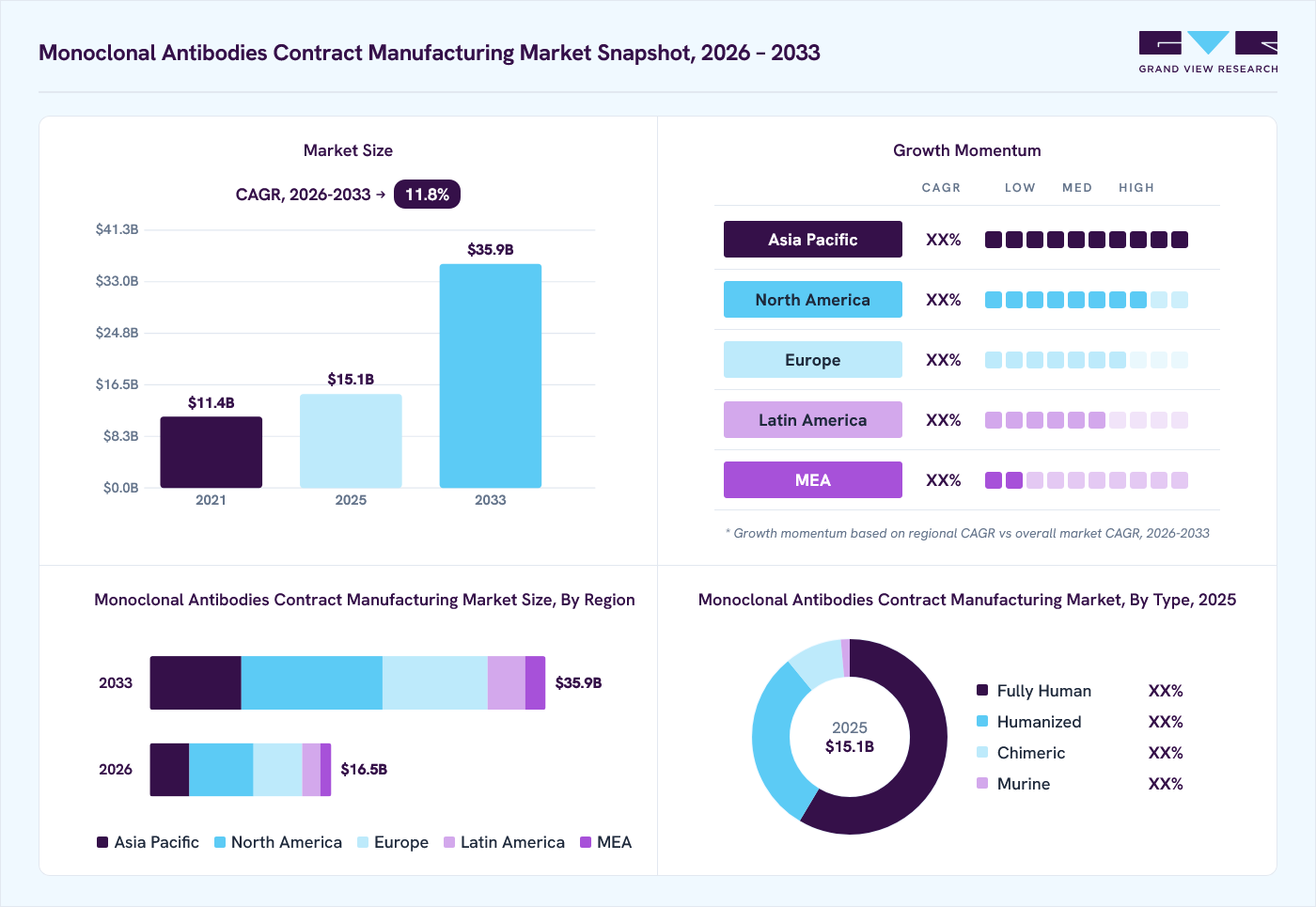 Source: Grand View Research, IR Documents, Primary Interviews, Paid DatabasesTo learn more about this report,
 Download Free Sample Report
Key Market Trends & Insights
- By type: Fully human segment held the largest market share of 58.5% in 2025.
- By source: Mammalian segment held the largest market share of 61.6% in 2025.
- By service: Finished drug products manufacturing accounted for the largest share of 41.6% in 2025.
- By workflow: Commercial manufacturing accounts for the largest segment of 86.5% in 2025.
- By end-use: Large pharmaceutical and biotechnology companies represented the largest segment with a share of 46.5% in 2025.
Regional Highlights
- Largest regional market: North America (35.3% revenue share, 2025)
- Fastest-growing regional market: Asia Pacific (highest CAGR, 2026-2033)
- By country: The U.S. held the largest market share in 2025
Market Size & Forecast
- Market size in 2025: USD 15.1 Billion
- Estimated market size in 2026: USD 16.5 Billion
- Projected market size by 2033: USD 35.9 Billion
- CAGR (2026-2033): 11.8%
Prism AI by Grand View Research Free to tryAsk a question about the monoclonal antibodies contract manufacturing marketTry asking✓Every figure cited from GVR research Prefer the report? Download free sample →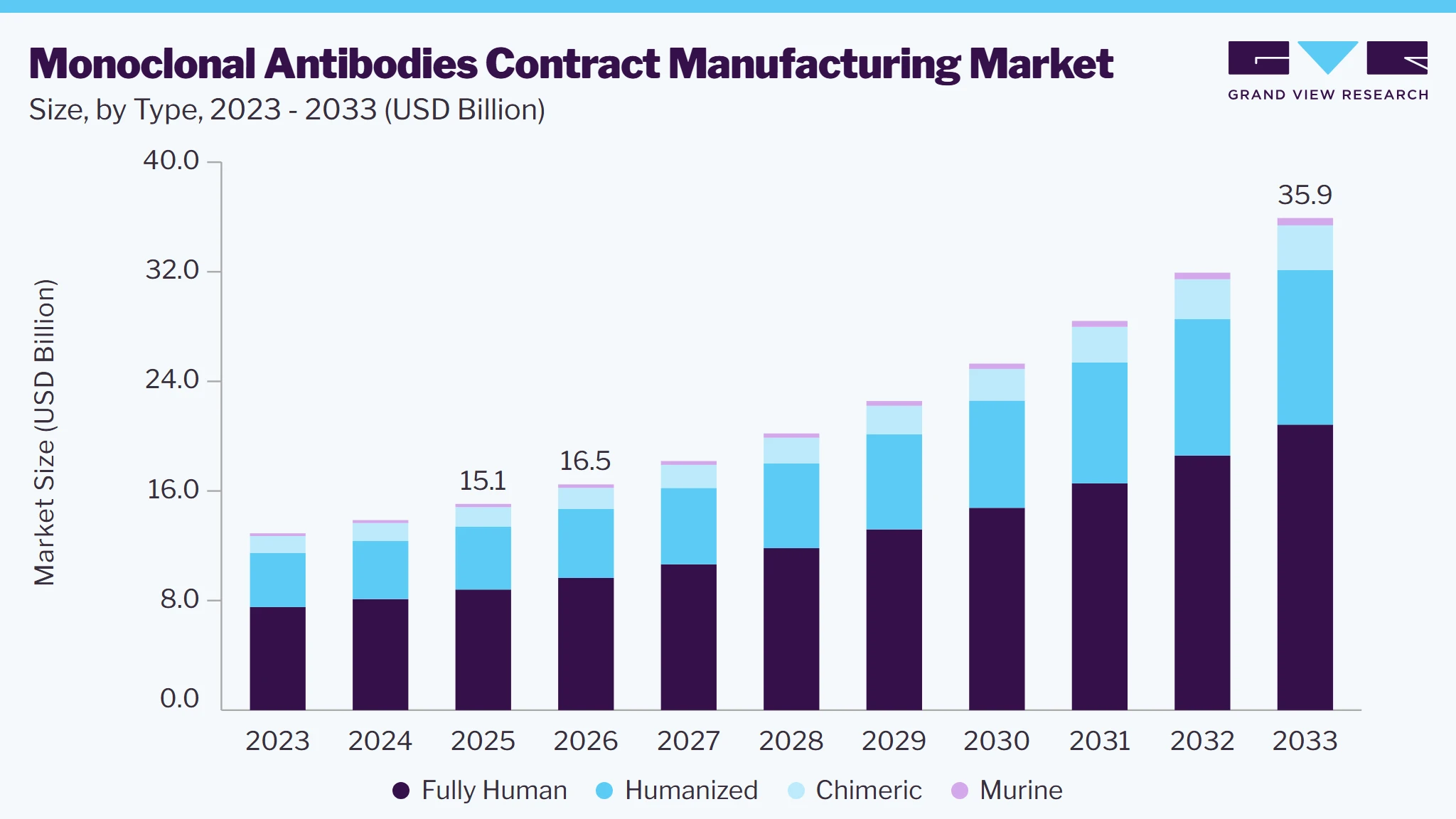 To learn more about this report, Download Free Sample Report
Market Dynamics
The market is driven by the expanding clinical and commercial pipeline of antibody therapeutics and pharmaceutical companies’ increasing use of external manufacturing infrastructure. Besides this, manufacturing mAbs requires specialized mammalian cell culture systems, purification technologies, aseptic processing, analytical capabilities, and stringent GMP controls. Thus, pharmaceutical and biotechnology companies engage CDMOs to access established technical expertise and production capacity while limiting capital-intensive facility investments. In addition, small and mid-sized biotechnology companies represent an important demand base because many lack the internal infrastructure required to transition antibody candidates from clinical development to commercial production.
In addition, demand is also transformed by the transition of antibody programs from clinical batches to commercial-scale supply, requiring scalable drug substance production, formulation, fill-finish, quality testing, packaging, storage, and distribution capabilities. However, complex technology transfer, lengthy process validation, regulatory compliance requirements, and dependence on specialized manufacturing capacity can constrain outsourcing decisions. Sponsors must maintain consistent product quality and process control when transferring manufacturing activities between internal operations and external partners.
Furthermore, growth opportunities are associated with integrated service models spanning cell-line development, process development, API manufacturing, sterile drug product manufacturing, analytical testing, packaging, regulatory support, and supply services. CDMOs capable of supporting programs across development stages can address evolving manufacturing requirements as mAb candidates progress toward commercialization.
Increasing outsourcing by pharmaceutical and biotechnology companies is driving demand for monoclonal antibody contract manufacturing services. The production of mAbs requires specialized cell culture infrastructure, downstream purification systems, process development capabilities, analytical testing, and GMP-compliant operations. In addition, establishing and maintaining these capabilities internally involves substantial capital investment, specialized personnel, and continuous facility utilization. CDMOs provide sponsors access to existing infrastructure and technical capabilities across drug substance production, formulation, sterile fill-finish, packaging, testing, and commercial supply.
The outsourcing model is particularly relevant for small and mid-sized pharmaceutical and biotechnology companies requiring external infrastructure, capacity, and technical expertise to advance mAb candidates through clinical development and subsequent commercialization. Large pharmaceutical companies also use contract manufacturers to supplement internal capacity and address portfolio-specific supply requirements. For instance, in March 2026, Lonza announced an expansion of its strategic collaboration with a leading U.S. biopharmaceutical company, involving additional large-scale mammalian manufacturing capacity. Such a development indicates continued sponsor demand for external commercial biologics production and long-term manufacturing capacity. This trend supports contract manufacturing revenue through greater utilization of specialized facilities and longer-duration mAb supply agreements.
One of the market restraints is complex technology transfer and regulatory requirements that can restrain the adoption of contract manufacturing for monoclonal antibodies. Besides this, transferring an mAb process from a sponsor to a CDMO requires alignment of cell culture conditions, purification parameters, analytical methods, raw materials, equipment, and quality systems. In addition, process variations can affect critical quality attributes, making comparability assessment, validation, and documentation essential before routine manufacturing begins. Moreover, clinical and commercial manufacturing requires GMP-compliant production, testing, stability activities, and quality controls across different development stages.
In addition, regulatory requirements face complexity because outsourced manufacturers must support CMC documentation, manufacturing changes, dossier preparation, agency interactions, and compliance documentation associated with contracted production. Furthermore, technology transfer delays or unsuccessful validation can extend manufacturing timelines and increase development expenditure. Thus, sponsors may retain selected processes internally or divide manufacturing activities among established suppliers, limiting the extent and speed of outsourcing despite growing demand for external mAb production capacity.
Opportunity - Expansion of Large-Scale Mammalian Manufacturing Capacity and Integrated CDMO Networks
Expansion of large-scale mammalian manufacturing infrastructure presents a significant opportunity for monoclonal antibody contract manufacturers as sponsors seek flexible capacity for increasingly diverse clinical and commercial portfolios. The mammalian systems, including CHO and other cell-based platforms, are central to producing complex mAbs requiring appropriate protein folding, assembly, and post-translational modifications. In addition, CDMOs that expand bioreactor capacity while integrating drug substance production with formulation, sterile fill-finish, analytical testing, packaging, and supply services can capture programs across multiple development stages.
This creates opportunities for longer-term contracts as products transition from clinical manufacturing to routine commercial supply. Furthermore, continued investment in scalable mammalian infrastructure can help manufacturers accommodate increasing batch requirements and strengthen their ability to serve pharmaceutical companies seeking external production capacity.
Impact of U.S. Tariffs on Monoclonal Antibodies Contract Manufacturing Industry
U.S. pharmaceutical tariffs are expected to influence monoclonal antibody contract manufacturing through changes in manufacturing location, sourcing strategies, and CDMO capacity allocation. For instance, in April 2026, the U.S. administration established Section 232 tariffs of 100% on specified patented pharmaceuticals and associated ingredients, with differentiated treatment for companies pursuing approved U.S. onshoring plans and for products originating from certain trade partners. Generic pharmaceuticals, including biosimilars, are currently excluded from these Section 232 tariffs.
For mAb sponsors importing patented products or covered pharmaceutical ingredients, higher duties can increase landed costs and encourage reassessment of overseas contract manufacturing arrangements. Thus, pharmaceutical companies may increasingly favor CDMOs with U.S.-based mammalian biologics capacity, fill-finish infrastructure, or integrated domestic supply networks. This can generate capacity expansion opportunities for U.S. contract manufacturers while encouraging global CDMOs to establish or enlarge domestic facilities.
However, the impact will vary considerably by product origin and company strategy. Patented pharmaceutical imports from the EU, Japan, South Korea, Switzerland, and Liechtenstein are subject to a 15% rate under specified arrangements, while qualifying onshoring and pricing agreements can receive preferential treatment. Furthermore, the exclusion of biosimilars reduces direct tariff exposure for that segment. Thus, tariffs can accelerate localization of mAb manufacturing while increasing supply-chain planning complexity for globally distributed CDMO networks.
Market Concentration & Characteristics
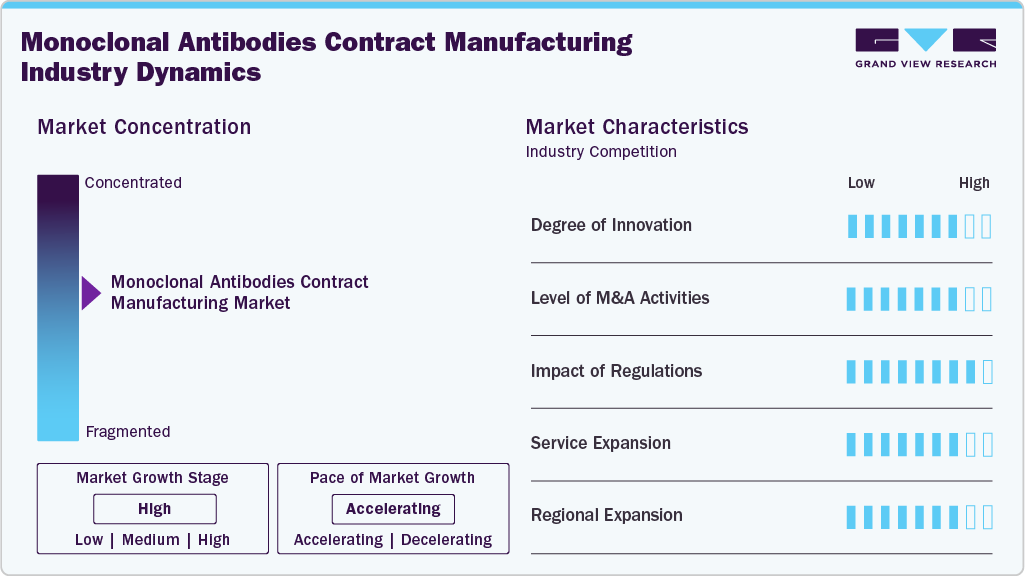
The monoclonal antibodies contract manufacturing industry is characterized by high technical complexity, capital-intensive infrastructure, stringent regulatory requirements, specialized manufacturing expertise, and long-term sponsor-CDMO relationships. Manufacturing spans mammalian or microbial production, drug substance processing, sterile fill-finish, packaging, and associated services. Capacity availability, technology transfer capabilities, scalable bioreactors, quality systems, and integrated service offerings influence competitive positioning and outsourcing decisions.
The market exhibits a high degree of innovation, driven by advances in high-titer cell lines, intensified bioprocessing, single-use systems, continuous manufacturing, automation, and advanced analytical technologies. CDMOs are expanding capabilities across cell-line development, process development, analytical testing, technology transfer, drug substance production, and sterile fill-finish to address increasingly complex monoclonal antibody programs across clinical and commercial stages.
 To learn more about this report, Download Free Sample Report
The market experiences a moderate to high level of M&A activity as CDMOs seek additional biologics capacity, technical capabilities, geographical coverage, and integrated service offerings. Acquisitions can provide access to established manufacturing facilities, specialized workforce, fill-finish capabilities, and client portfolios. Besides this, consolidation also allows larger participants to offer broader development-to-commercialization services and address sponsor requirements through fewer manufacturing relationships.
Regulations have a high impact on monoclonal antibody contract manufacturing owing to stringent requirements governing GMP production, process validation, quality control, documentation, and product release. CDMOs must support CMC documentation, regulatory submissions, manufacturing changes, dossier preparation, and agency interactions. Compliance capabilities influence technology transfer timelines, facility qualification, commercial supply continuity, and sponsors’ selection of manufacturing partners.
Service expansion is a major competitive strategy as CDMOs broaden capabilities beyond drug substance manufacturing toward integrated development and manufacturing solutions. The offerings encompass process development, analytical characterization, formulation, sterile fill-finish, lyophilization, packaging, labeling, storage, logistics, and regulatory support. Broader service portfolios allow manufacturers to support mAb programs through multiple development stages and capture additional outsourced activities.
Regional expansion is characterized by investments in biologics facilities and capacity additions across established and emerging manufacturing locations. CDMOs expand regional footprints to increase mammalian production capacity, improve proximity to pharmaceutical clients, diversify supply networks, and address commercial demand. Large-scale facilities in North America, Europe, and Asia are particularly relevant for sponsors seeking alternative manufacturing locations and geographically diversified monoclonal antibody supply arrangements.
Analyst Perspective
The market is transitioning toward integrated, capacity-secured outsourcing models as biopharmaceutical companies seek specialized infrastructure across clinical and commercial production. In addition, mammalian manufacturing remains central, while investments in high-titer platforms, single-use bioreactors, intensified processing, automation, and advanced analytics are improving operational flexibility. In addition, large CDMOs are expanding geographically and securing multi-year commercial agreements, while emerging providers compete through specialized capabilities and flexible engagement models. Increasing requirements for supply-chain resilience are encouraging geographically diversified manufacturing networks. Furthermore, regulatory inspection readiness, technology-transfer efficiency, scalable capacity, and integrated drug substance-to-finished product services are expected to remain major competitive factors.
Technological Advancements
 To learn more about this report, Download Free Sample Report
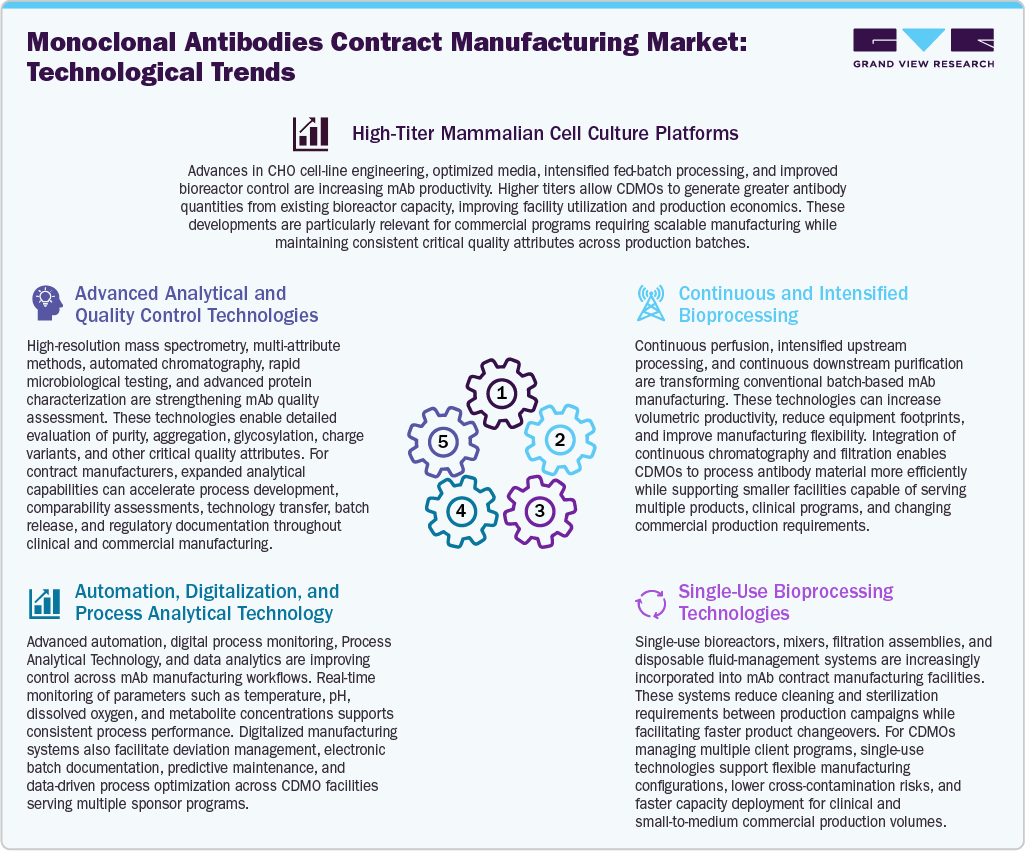
The technological advancements are improving productivity, flexibility, and quality control across the market. High-titer CHO cell lines, optimized media, and intensified fed-batch processes enable greater antibody output from existing bioreactor capacity. In addition, continuous and intensified bioprocessing, including perfusion culture and continuous purification, supports higher volumetric productivity and more efficient facility utilization. In addition, single-use bioreactors, mixers, filtration assemblies, and fluid-management systems facilitate faster product changeovers while reducing cleaning requirements and cross-contamination risks.
Moreover, automation, process analytical technology, digital monitoring, and advanced data analytics enable real-time control of critical process parameters and support electronic batch management, deviation assessment, and predictive maintenance. Furthermore, advanced analytical technologies, including high-resolution mass spectrometry, multi-attribute methods, automated chromatography, and rapid microbiological testing, further improve characterization of purity, aggregation, glycosylation, and charge variants. Thus, these technologies enable CDMOs to improve process scalability, accelerate technology transfer, enhance manufacturing consistency, and accommodate diverse clinical and commercial mAb programs.
Pricing Model Analysis
 To learn more about this report, Download Free Sample Report
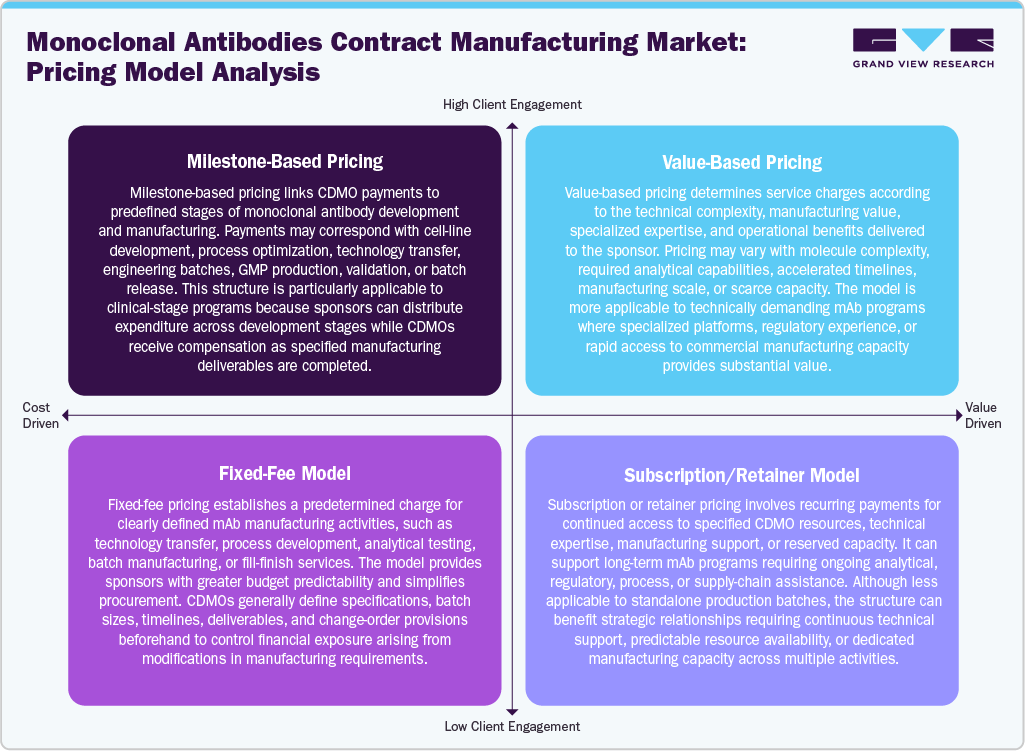
Pricing models in monoclonal antibody contract manufacturing vary according to project stage, technical complexity, manufacturing scale, and contractual duration. Milestone-based pricing distributes payments across predefined activities such as cell-line development, process optimization, technology transfer, GMP manufacturing, validation, and batch release, making it suitable for clinical-stage programs. Value-based pricing determines charges according to molecule complexity, specialized manufacturing capabilities, accelerated timelines, analytical requirements, and access to constrained production capacity. Fixed-fee models establish predetermined charges for clearly specified services, including process development, analytical testing, batch production, and fill-finish, providing greater budget predictability for sponsors.
Subscription or retainer models involve recurring payments for continued access to technical expertise, reserved manufacturing capacity, analytical support, regulatory assistance, or supply services. This approach is more applicable to long-term strategic CDMO relationships than individual production batches. Overall, pricing structures are selected according to development risk, service requirements, production complexity, capacity commitments, and sponsor-CDMO contractual arrangements.
Type Insights
The fully human monoclonal antibodies type represented the largest segment with a share of 58.5% in 2025, supported by their extensive adoption across modern therapeutic pipelines and commercial biologic portfolios. Their human antibody sequences can reduce immunogenicity concerns associated with earlier murine and chimeric formats, supporting repeated administration across chronic therapeutic settings. The contract manufacturers benefit from demand spanning cell-line development, mammalian cell culture, purification, analytical characterization, formulation, and commercial-scale production. The segment also generates opportunities because successful molecules require sterile fill-finish, packaging, testing, and ongoing commercial supply. Thus, the growing commercial base of fully human antibodies sustains recurring manufacturing volumes and encourages CDMOs to expand integrated capabilities for large-scale antibody production.
The humanized monoclonal antibody type is anticipated to register the fastest growth over the forecast period, as pharmaceutical companies continue advancing antibody candidates designed to combine targeted antigen recognition with predominantly human antibody sequences. According to ClinicalTrials.gov, humanized monoclonal antibodies constituted the highest number of clinical trials, accounting for approximately 2,327 amongst other types. In addition, growth in clinical pipelines creates requirements for process development, scale-up, GMP batch production, analytical characterization, and subsequent commercial manufacturing. CDMOs capable of supporting molecules from clinical development through market supply can benefit as successful humanized candidates progress toward larger production volumes. In addition, increasing therapeutic complexity creates demand for specialized purification, formulation, analytical, and aseptic processing expertise, expanding outsourcing opportunities across the manufacturing lifecycle.
Source Insights
The mammalian segment accounted for the largest source segment, constituting a share of 61.6% in 2025, because most conventional therapeutic mAbs require complex protein folding, assembly, and post-translational modifications that mammalian cells can provide. Besides this, CHO, NS0, HEK293, and related platforms support clinical and commercial antibody drug substance production within the defined market scope. Some of the established CMOs have invested in large-scale mammalian bioreactors, high-titer cell lines, purification infrastructure, and process-control systems. Furthermore, sponsors seek manufacturing partners in large numbers capable of combining mammalian drug substance production with analytical testing and fill-finish, making large-scale mammalian infrastructure an important component of competitive positioning in global mAb contract manufacturing.
Microbial manufacturing is expected to grow at the fastest rate over the forecast period, as bacterial and yeast expression systems gain relevance for applicable antibody formats and fragments where complex mammalian post-translational processing is unnecessary. The segment includes E. coli, yeast, and other microbial hosts used under outsourced manufacturing arrangements. In addition, microbial platforms can provide comparatively rapid cultivation cycles, high productivity, and flexible scale-up for suitable molecules, supporting their adoption within specialized antibody programs. Furthermore, the growing development of antibody fragments and recombinant formats creates additional opportunities for CDMOs possessing fermentation and downstream purification expertise. However, applicability remains molecule-dependent, meaning microbial systems complement rather than replace mammalian manufacturing for conventional full-length therapeutic mAbs.
Service Insights
The finished drug products manufacturing accounted for the largest share of 41.6% in 2025, as expanding mAb pipelines create increasing requirements for formulation, sterile filtration, aseptic filling, lyophilization, vial filling, prefilled syringes, cartridges, device assembly, inspection, testing, and product release. In addition, biopharmaceutical companies frequently require specialized sterile infrastructure that is capital-intensive to establish and maintain internally. Furthermore, growth in commercial antibody volumes and diversified delivery formats further increases demand for external fill-finish capacity. CDMOs are consequently expanding integrated drug product facilities and flexible filling technologies to accommodate different batch sizes and container formats.
API manufacturing is expected to register the second-fastest growth, driven by expanding antibody pipelines and increasing demand for outsourced drug substance capacity. Some of the services include cell culture or fermentation, harvesting, purification, chromatography, filtration, bulk formulation, process validation, analytical testing, quality control, and drug substance release. In addition, growing mAb titers and commercial volumes require scalable upstream and downstream infrastructure, encouraging sponsors to access external bioreactor capacity rather than construct dedicated facilities for every program. Moreover, technology transfer and process optimization requirements increase the value of experienced manufacturing partners. CDMOs expanding mammalian production capacity can capture clinical programs early and retain successful molecules as they transition toward larger commercial batches.
Workflow Insights
Commercial manufacturing accounts for the largest segment of 86.5% in 2025, because approved monoclonal antibodies require recurring, large-scale production and continuous supply throughout their marketed lifecycle. The services encompass commercial-scale drug substance manufacturing, formulation, fill-finish, packaging, labeling, quality testing, release, storage, logistics, and ongoing supply. In addition, commercial products can generate predictable manufacturing requirements over multiple years, making long-term supply agreements strategically important for both sponsors and CDMOs. Furthermore, growing portfolios of marketed antibodies and biosimilars further increase demand for validated manufacturing capacity.
Clinical manufacturing is anticipated to grow at the fastest rate as expanding mAb development pipelines generate demand for GMP material across Phase I, Phase II, and Phase III studies. The segment encompasses GMP batches, scale-up, process development, clinical fill-finish, packaging, labeling, testing, and stability activities. Biotechnology companies frequently outsource these activities because early-stage programs require specialized infrastructure without sufficient volumes to justify dedicated internal facilities. Flexible single-use systems and smaller bioreactor configurations further support CDMO participation in clinical programs. Early CDMO involvement can also facilitate subsequent technology transfer and scale-up, creating opportunities for manufacturing partners to retain successful candidates as they progress toward regulatory approval and eventual commercial production.
End-use Insights
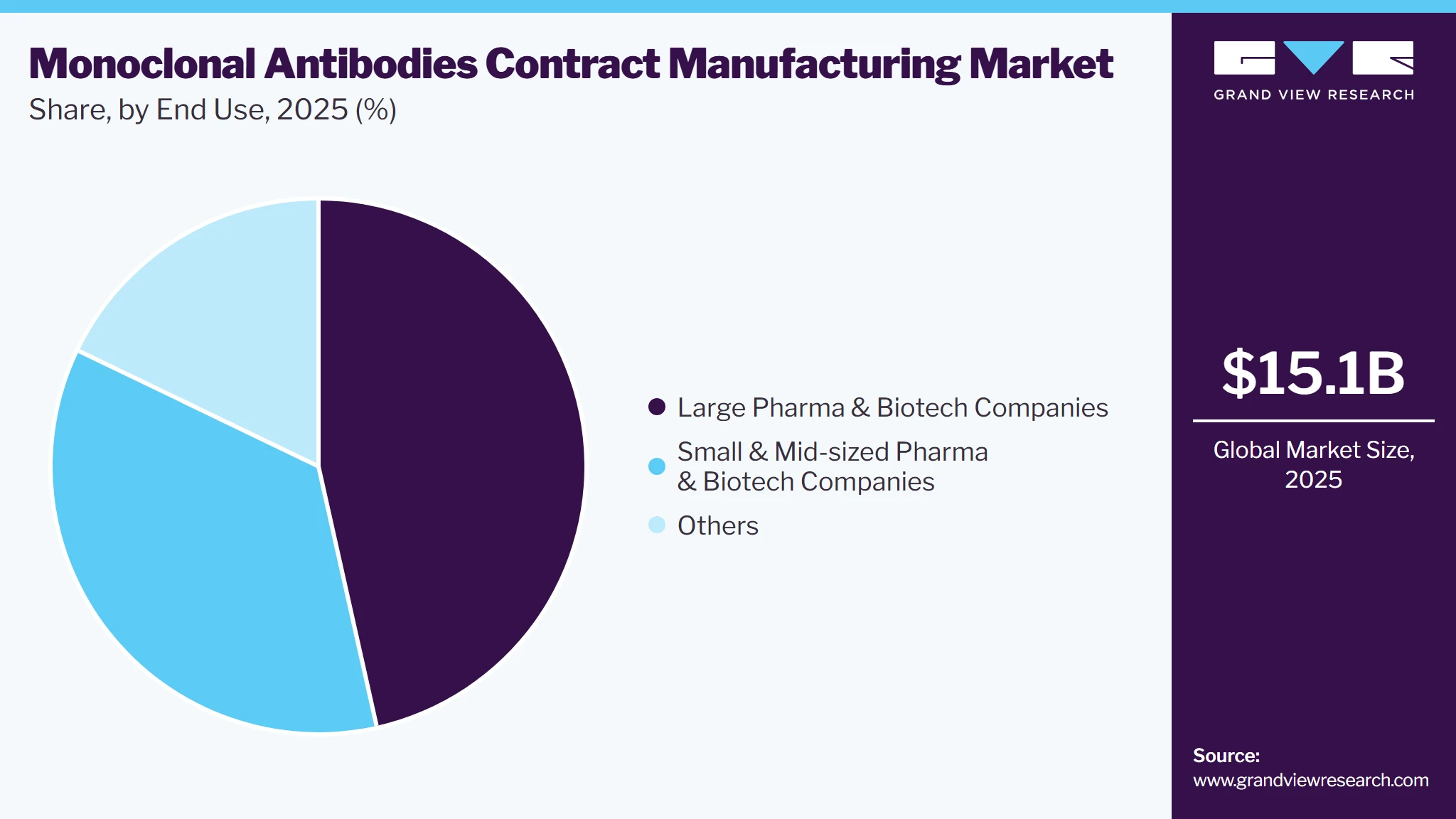
The large pharmaceutical and biotechnology companies represented the largest segment with a share of 46.5% in 2025, owing to their extensive mAb portfolios, commercial production volumes, and requirement for supplementary external capacity. These companies use CDMOs to complement internal infrastructure, access specialized technologies, manage supply requirements, and manufacture selected antibody portfolios. In addition, large companies also establish long-term capacity agreements to secure manufacturing availability and diversify supply networks. For instance, in September 2026, mAbxience partnered with Sandoz to develop and manufacture an emicizumab biosimilar at GMP facilities in Spain and Argentina, supporting global biosimilar manufacturing and commercialization. In addition, large pharmaceutical and biotechnology companies' ability to advance multiple antibody programs simultaneously generates substantial contract values and recurring commercial volumes, making this customer group a major contributor to global CDMO facility utilization and capacity investment.
 To learn more about this report, Download Free Sample Report
The small and mid-sized pharmaceutical and biotechnology companies are anticipated to represent the fastest-growing end-use segment because many emerging antibody developers lack internal GMP manufacturing infrastructure. These companies use external providers for clinical development, drug substance production, fill-finish, packaging, testing, regulatory support, and eventual commercial manufacturing. In addition, growing biotechnology pipelines translate directly into opportunities for CDMOs offering flexible batch sizes and development-to-commercial services. As candidates advance clinically, manufacturing requirements expand from development batches toward validation and commercial production, increasing revenue potential for CDMOs that establish relationships during early development stages.
Regional Insights
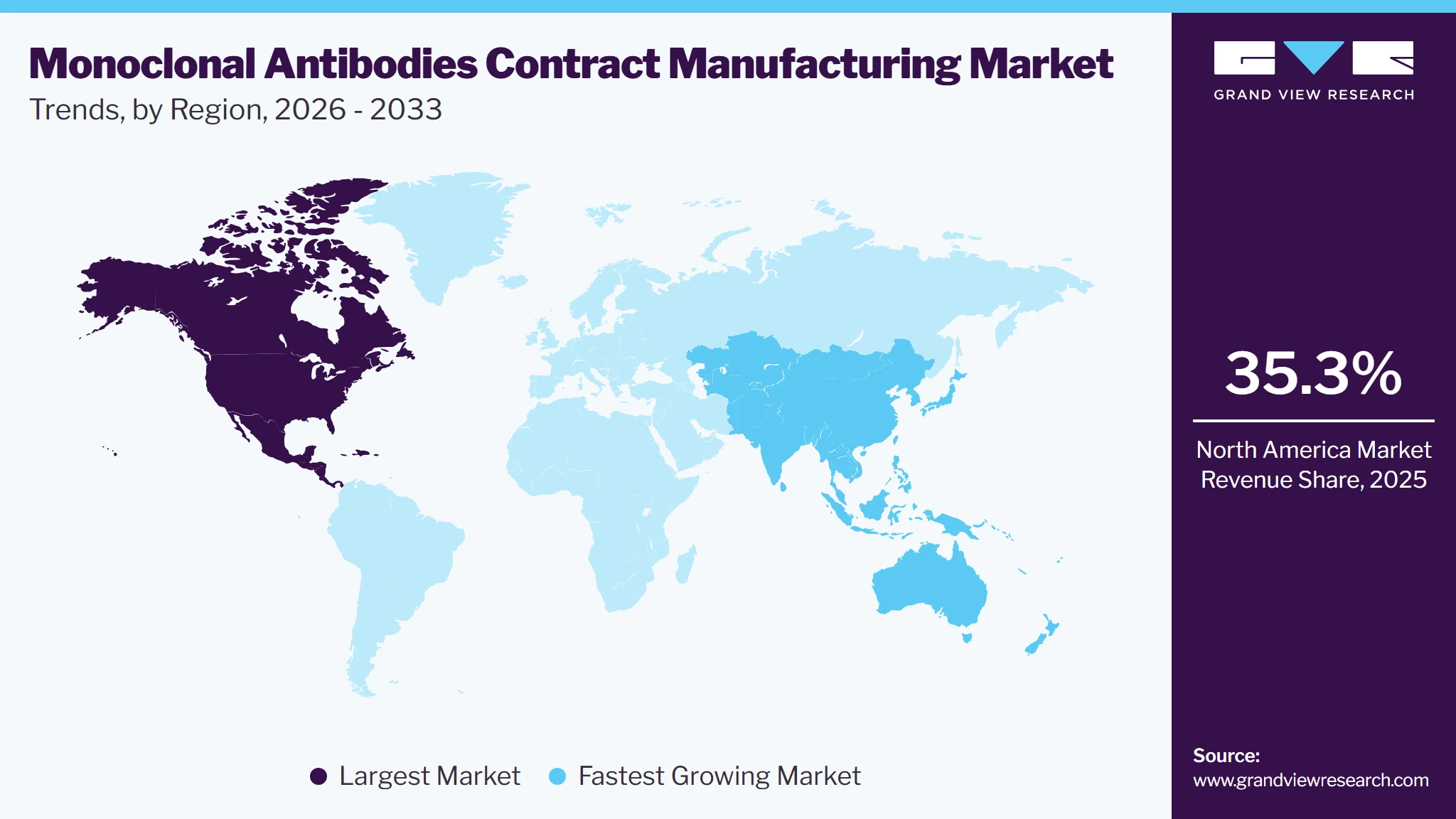
North America monoclonal antibodies contract manufacturing market held the largest segment share of 35.3% in 2025, driven by substantial biopharmaceutical R&D activity, established commercial monoclonal antibodies portfolios, and demand for large-scale mammalian and fill-finish capacity. Besides this, competition involves global CDMOs expanding domestic infrastructure to secure clinical and commercial programs. The trend toward supply-chain localization is becoming more prominent. For instance, in June 2026, the FDA selected seven companies for its PreCheck Pilot Program to facilitate new U.S. pharmaceutical manufacturing facilities through earlier regulatory engagement. Regulatory requirements concerning BLAs, GMP compliance, CMC controls, validation, and manufacturing quality continue shaping CDMO selection.
 To learn more about this report, Download Free Sample Report
U.S. Monoclonal Antibodies Contract Manufacturing Market Trends
The monoclonal antibodies contract manufacturing market in the U.S. remains a major center for monoclonal antibody contract manufacturing, supported by extensive biopharmaceutical pipelines, commercial biologics demand, and investment in domestic manufacturing capacity. In addition, competition centers on large-scale mammalian production, integrated drug substance and fill-finish services, advanced analytics, and capacity security. In addition, localization and supply-chain resilience are influencing facility investments. Furthermore, FDA oversight requires robust GMP, process validation, CMC documentation, and manufacturing comparability, favoring CDMOs with established regulatory inspection records and experience supporting clinical-to-commercial technology transfers.
Canada monoclonal antibodies contract manufacturing market is developing alongside national investment in domestic biomanufacturing infrastructure, knowledge transfer, and biologics production capacity. In addition, government initiatives supporting comprehensive biomanufacturing create opportunities for specialized CDMOs and technology providers. In addition, Health Canada applies biologics-specific GMP requirements covering monoclonal antibodies, including controls for source cells, cell lines, viral safety, production cycles, and validated manufacturing parameters. These requirements create demand for manufacturers possessing strong quality-risk management, analytical characterization, cell-bank control, and regulatory documentation capabilities.
Europe Monoclonal Antibodies Contract Manufacturing Market Trends
The monoclonal antibodies contract manufacturing market in Europe is supported by biologics expertise, biosimilar development, sterile manufacturing infrastructure, and multinational CDMO networks. Competition centers on technical capabilities, integrated drug substance-to-drug product services, capacity availability, and regulatory experience. In addition, biosimilar manufacturing and strategic collaborations are important trends as biologic exclusivity expirations generate outsourcing opportunities. EMA requirements concerning development, production, characterization, and specifications establish stringent quality expectations for mAbs. The regulatory environment favors CDMOs possessing validated processes, strong analytical capabilities, technology-transfer expertise, and experience managing manufacturing changes across clinical and commercial programs.
The UK monoclonal antibodies contract manufacturing market held a significant share in 2025. The country’s market growth is due to combined biotechnology research activity with established biologics development and manufacturing capabilities, generating demand for clinical-stage mAb production and specialized contract services. In addition, MHRA authorization requirements maintain stringent controls over biological investigational medicinal product manufacturing. For instance, in July 2026, MHRA authorized Lonza Biologics’ Slough site to cover monoclonal antibodies, recombinant proteins, biological starting materials, and quality-control testing, demonstrating the country’s established specialized manufacturing infrastructure.
The monoclonal antibodies contract manufacturing market in Germany is anticipated to grow significantly over the forecast period. Germany benefits from an established pharmaceutical manufacturing base and integration within Europe’s biologics ecosystem, supporting clinical and commercial mAb outsourcing. Competitive differentiation centers on process development, mammalian production expertise, automation, analytical services, and sterile manufacturing. In addition, the increasing complexity of antibody formats and demand for flexible manufacturing are creating opportunities for specialized facilities capable of supporting technology transfer, validated production, and multi-product biologics operations.
Asia Pacific Monoclonal Antibodies Contract Manufacturing Market Trends
The monoclonal antibodies contract manufacturing market in the Asia Pacific is expected to be the fastest growing, with the highest CAGR over the forecast period, as it is expanding as a global monoclonal antibodies manufacturing base, supported by increasing biologics capacity across China, South Korea, India, Japan, and Singapore. Some of the trends driving the region include larger bioreactor networks, flexible capacity allocation, integrated development-to-commercial manufacturing, and increasing participation in global supply programs. In addition, regulatory expectations are becoming progressively aligned with international GMP and quality standards, increasing requirements for validated manufacturing, analytical characterization, and inspection readiness among CDMOs serving multinational sponsors.
China monoclonal antibodies contract manufacturing market is expected to grow over the forecast period. The growth of the market is due to substantial biologics outsourcing capabilities through expanding bioreactor capacity, integrated development platforms, and a broad base of biotechnology companies. In addition, competition spans cell-line development, process optimization, clinical manufacturing, commercial drug substance, and fill-finish, while increasing domestic antibody pipelines provide additional capacity utilization. Furthermore, regulatory requirements place responsibility on marketing authorization holders for product quality and require manufacturers to maintain compliant production and quality systems.
The monoclonal antibodies contract manufacturing market in Japan is witnessing significant growth over the forecast period. Market growth is due to established pharmaceutical companies, increasing biologics development, and demand for domestic production capacity capable of supporting complex therapeutic antibodies. In addition, industry activity is moving toward greater localization of biologics manufacturing and access to flexible CDMO infrastructure.
India monoclonal antibodies contract manufacturing market is witnessing considerable growth due to growing investments in complex drug manufacturing, which indicates increasing CDMO participation in higher-value modalities. In addition, for mAbs, opportunities center on process development, analytical services, biosimilar manufacturing, and scalable biologics infrastructure, while regulatory compliance and global inspection readiness remain important for securing multinational outsourcing contracts.
Latin America Monoclonal Antibodies Contract Manufacturing Market Trends
The monoclonal antibodies contract manufacturing market in Latin America is projected to grow over the forecast period. The region remains an emerging contract manufacturing location, with Argentina representing an important biologics production base. Some of the regional opportunities are associated with biosimilars, technology transfer, manufacturing localization, and partnerships connecting local production with international commercialization networks. In addition, competition remains comparatively concentrated among companies possessing GMP biologics infrastructure and international regulatory approvals.
Brazil monoclonal antibodies contract manufacturing market is expected to grow over the forecast period. The growth is due to its pharmaceutical manufacturing base and demand for greater domestic production capabilities. mAb contract manufacturing opportunities are associated with biosimilars, technology transfer, fill-finish, and partnerships connecting international technologies with regional supply. In addition, ANVISA’s GMP framework is aligned with PIC/S standards, including dedicated provisions for sterile medicines, biological inputs, and medicinal products. Thus, manufacturers seeking global and domestic contracts require compliant biologics infrastructure, validated processes, quality systems, and strong technology-transfer capabilities.
Middle East and Africa Monoclonal Antibodies Contract Manufacturing Market Trends
The monoclonal antibodies contract manufacturing market in MEA is developing from a comparatively limited biologics manufacturing base, with localization initiatives creating opportunities for future contract manufacturing. Saudi Arabia, the UAE, and Saudi Africa are pursuing biotechnology manufacturing, technology transfer, workforce development, and pharmaceutical supply security. In addition, competition currently centers on establishing domestic capabilities and attracting international partnerships rather than extensive mature mAb CDMO capacity. In addition, regulatory development, GMP capability, skilled biomanufacturing personnel, and technology-transfer infrastructure will influence expansion. In Africa, WHO-supported biomanufacturing workforce initiatives and national localization partnerships are strengthening capabilities applicable to broader biotherapeutic production.
South Africa monoclonal antibodies contract manufacturing market is witnessing growth, where existing biotechnology infrastructure provides a foundation for future mAb outsourcing. In addition, local capabilities include recombinant and monoclonal antibody production alongside sterile filling at specialized facilities. Furthermore, market development is therefore associated with technology transfer, workforce capabilities, regional supply requirements, and investment in scalable biologics infrastructure rather than extensive large-scale global CDMO capacity.
The monoclonal antibodies contract manufacturing market in Saudi Arabia is an emerging opportunity as pharmaceutical localization and biotechnology development gain strategic attention. The market remains earlier in its manufacturing evolution than established U.S., European, and Asian CDMO centers, creating scope for technology-transfer partnerships and new biologics infrastructure. In addition, expansion of domestic technical capabilities could progressively create opportunities for regional biologics manufacturing partnerships.
Key Monoclonal Antibodies Contract Manufacturing Company Insights
The market is characterized by established global CDMOs, including Lonza, Samsung Biologics, WuXi Biologics, FUJIFILM, Boehringer Ingelheim, AGC Biologics, Thermo Fisher Scientific, Catalent, AbbVie, and mAbxience. Competitive positioning is influenced by mammalian manufacturing capacity, integrated service portfolios, commercial-scale capabilities, regulatory track records, geographical footprint, and long-term manufacturing agreements with biopharmaceutical sponsors. For instance, in July 2026, AGC Biologics secured a multi-year commercial agreement allocating half of its Yokohama facility’s mammalian capacity, indicating strong demand for geographically diversified CDMO capacity and resilient global biologics supply chains.
Key Monoclonal Antibodies Contract Manufacturing Companies:
The following key companies have been profiled for this study on the monoclonal antibodies contract manufacturing market:
-
Lonza
-
Samsung Biologics
-
WuXi Biologics
-
FUJIFILM Holdings Corporation
-
Boehringer Ingelheim International GmbH
-
AGC Biologics
-
Thermo Fisher Scientific (Patheon)
-
Catalent, Inc.
-
AbbVie Inc.
-
mAbxience
Competitive Benchmarking
Operating Strategies
Competitive Edge
Weaknesses
Mature Players: Lonza
- Mature players pursue integrated development-to-commercial manufacturing strategies covering cell-line development, process optimization, drug substance production, fill-finish, analytical testing, and commercial supply. They invest in large-scale mammalian capacity, and geographically diversified facilities. Long-term capacity reservations, and facility expansions help secure recurring programs enabling sponsors to consolidate manufacturing activities with fewer CDMO partners.
- Established players benefit from established GMP infrastructure, extensive regulatory inspection experience, large bioreactor networks, and proven commercial manufacturing capabilities.
- Their ability to support clinical candidates through scale-up, validation, and recurring commercial production strengthens customer retention. Broad geographical footprints provide supply flexibility, while integrated upstream, downstream, analytical, and drug product capabilities.
- Mature organizations face high fixed costs associated with maintaining large biologics facilities, specialized personnel, quality systems, and advanced equipment.
- Capacity commitments can reduce flexibility when demand patterns change, while complex organizational structures may lengthen contracting and technology-transfer processes.
Emerging Players: AGC Biologics
- Emerging players focus on specialized manufacturing services, flexible production capacity, strategic partnerships, and technology adoption. Their strategies include expanding mammalian cell culture capabilities, establishing integrated development and manufacturing platforms, securing long-term supply agreements, and targeting mid-sized biotechnology companies. Regional expansion and biosimilar manufacturing partnerships further support customer acquisition and revenue diversification.
- Emerging players benefit from operational flexibility, competitive pricing, specialized technical expertise, and customized manufacturing solutions. Their smaller organizational structures facilitate decision-making, personalized client engagement, and adaptable production schedules. Investments in single-use bioreactors, advanced analytical technologies, and specialized biologics platforms allow these companies to address niche manufacturing requirements and attract biotechnology sponsors.
- Emerging players often [face] substantial capital requirements, limited commercial-scale manufacturing capacity, and comparatively restricted geographical coverage.
- Their smaller financial resources can constrain facility expansion, advanced technology adoption, and regulatory investments.
Recent Developments
- In September 2026,
Samsung Biologics signed an eight-year biologics manufacturing agreement valued at approximately USD 262 million with a European pharmaceutical company, supporting long-term utilization of its Songdo capacity and continued demand for outsourced commercial biologics manufacturing.
-
In September 2026, WuXi Biologics’ Wuxi Mashan drug substance and drug product facilities passed an FDA GMP inspection covering mAbs and other biologics, strengthening regulatory credibility and supporting reliable outsourced commercial supply for global biopharmaceutical companies.
-
In July 2026, FUJIFILM Biotechnologies’ Holly Springs facility joined the FDA’s PreCheck Pilot Program while expanding mammalian capacity, supporting regulatory predictability, faster manufacturing readiness, and increasing availability of U.S.-based capacity for outsourced monoclonal antibody production.
Monoclonal Antibodies Contract Manufacturing Market Report Scope
Report Attribute
Details
Market size value in 2025
USD 15.1 billion
Market size value in 2026
USD 16.5 billion
Revenue forecast in 2033
USD 35.9 billion
Growth rate
CAGR of 11.8% from 2026 to 2033
Historical data
2021 - 2025
Forecast period
2026 - 2033
Quantitative units
Revenue in USD million/billion and CAGR from 2026 to 2033
Report coverage
Revenue forecast, company ranking, competitive landscape, growth factors, and trends
Segments covered
Type, source, service, workflow, end-use, region
Regional scope
North America; Europe; Asia Pacific; Latin America; MEA
Country scope
U.S.; Canada; Mexico; Germany; UK; France; Italy; Spain; Norway; Denmark; Sweden; China; Japan; India; South Korea; Australia; Thailand; Brazil; Argentina; Saudi Arabia; South Africa; UAE; Kuwait; Oman; Qatar.
Key companies profiled
Lonza; Samsung Biologics; WuXi Biologics; FUJIFILM Holdings Corporation; Boehringer Ingelheim International GmbH; AGC Biologics; Thermo Fisher Scientific (Patheon); Catalent, Inc.; AbbVie Inc.; mAbxience
Customization scope
Free report customization (equivalent up to 8 analysts' working days) with purchase. Addition or alteration to country, regional & segment scope.
Pricing and purchase options
Avail customized purchase options to meet your exact research needs. Explore purchase options
Global Monoclonal Antibodies Contract Manufacturing Market Report Segmentation
This report forecasts revenue growth at global, regional, and country levels and provides an analysis of the latest industry trends in each of the sub-segments from 2021 to 2033. For this study, Grand View Research has segmented the global monoclonal antibodies contract manufacturing market based on type, source, service, workflow, end-use, and region:
-
Type Outlook (Revenue, USD Billion, 2021 - 2033)
-
Murine
-
Chimeric
-
Humanized
-
Fully Human
-
-
Source Outlook (Revenue, USD Billion, 2021 - 2033)
-
Mammalian
-
Microbial
-
-
Service Outlook (Revenue, USD Billion, 2021 - 2033)
-
API Manufacturing
-
Finished Drug Products Manufacturing
-
Packaging and Labeling
-
Logistics & Storage
-
Regulatory Affairs
-
Others
-
-
Workflow Outlook (Revenue, USD Billion, 2021 - 2033)
-
Clinical Manufacturing
-
Commercial Manufacturing
-
-
End-use Outlook (Revenue, USD Billion, 2021 - 2033)
-
Large Pharma & Biotech Companies
-
Small & Mid-sized Pharma & Biotech Companies
-
Others
-
-
Regional Outlook (Revenue, USD Billion, 2021 - 2033)
-
North America
-
U.S.
-
Canada
-
Mexico
-
-
Europe
-
UK
-
Germany
-
France
-
Italy
-
Spain
-
Denmark
-
Sweden
-
Norway
-
-
Asia Pacific
-
China
-
Japan
-
India
-
Australia
-
South Korea
-
Thailand
-
-
Latin America
-
Brazil
-
Argentina
-
-
Middle East and Africa (MEA)
-
South Africa
-
Saudi Arabia
-
UAE
-
Kuwait
-
Oman
-
Qatar
-
-
Segment Definition
Category
Segment
Revenue Capture Definition
Type
Murine
Contract manufacturing services for monoclonal antibodies derived entirely from mouse antibody sequences, supporting outsourced development, production, formulation, filling, packaging, and related manufacturing activities.
Chimeric
Contract manufacturing services for monoclonal antibodies combining non-human variable regions with human constant regions, covering outsourced production and associated manufacturing activities across clinical and commercial stages.
Humanized
Contract manufacturing services for monoclonal antibodies containing predominantly human antibody sequences with selected non-human antigen-binding regions, spanning outsourced clinical and commercial manufacturing activities.
Fully Human
Contract manufacturing services for monoclonal antibodies comprising fully human antibody sequences, covering outsourced development, production, formulation, fill-finish, packaging, and related clinical or commercial manufacturing activities.
Category
Segment
Revenue Capture Definition
Source
Mammalian
Contract manufacturing of monoclonal antibodies using mammalian cell-based expression systems capable of producing complex proteins with appropriate folding, assembly, and post-translational modifications.
Microbial
Contract manufacturing using bacterial, yeast, or other microbial expression platforms for producing antibody molecules or applicable antibody formats suitable for clinical and commercial development.
Category
Segment
Revenue Capture Definition
Service
API Manufacturing
Outsourced production of monoclonal antibody drug substance, encompassing upstream cell culture or fermentation, downstream purification, process control, bulk formulation, testing, and release activities.
Finished Drug Products Manufacturing
Contract manufacturing activities converting monoclonal antibody drug substance into finished dosage forms suitable for clinical or commercial administration through formulation, sterile processing, filling, and finishing.
Packaging and Labeling
Outsourced secondary manufacturing services involving packaging and labeling of monoclonal antibody products for clinical trials or commercial distribution while maintaining regulatory and product-specific requirements.
Logistics & Storage
Contract services supporting controlled storage, inventory management, transportation, and distribution of monoclonal antibody drug substances and finished products under required temperature and handling conditions.
Regulatory Affairs
Outsourced regulatory support associated with monoclonal antibody manufacturing, helping sponsors prepare manufacturing documentation, maintain compliance, manage submissions, and address regulatory requirements for finished drug products manufactured.
Others
Other outsourced services directly supporting monoclonal antibody manufacturing that are not classified under API manufacturing, finished products, packaging, logistics, storage, or regulatory affairs.
Category
Segment
Revenue Capture Definition
Workflow
Clinical Manufacturing
Contract manufacturing services supporting monoclonal antibody candidates during clinical development, including GMP material production and associated activities required for clinical studies and development progression.
Commercial Manufacturing
Contract manufacturing services supporting routine production and supply of approved monoclonal antibody products after commercialization, including drug substance, finished product, and associated manufacturing activities.
Category
Segment
Revenue Capture Definition
End Use
Large Pharma & Biotech Companies
Contract manufacturing services utilized by large pharmaceutical and biotechnology companies to supplement internal capacity, access specialized technologies, manage supply requirements, or manufacture monoclonal antibody portfolios.
Small & Mid-sized Pharma & Biotech Companies
Contract manufacturing services utilized by small and mid-sized pharmaceutical or biotechnology companies requiring external infrastructure, technical capabilities, capacity, or expertise for monoclonal antibody development and production.
Others
Contract manufacturing demand from organizations outside large, small, and mid-sized pharmaceutical or biotechnology companies that require external monoclonal antibody manufacturing or associated services.
Estimation Model
Model
Description
Company-Level Revenue Model
The market can be estimated by identifying revenues generated by major CDMOs from biologics manufacturing and determining the proportion attributable to monoclonal antibody contracts. Company filings, manufacturing agreements, facility utilization, service portfolios, and commercial production activities can support allocation. Revenues across identified participants are aggregated, followed by adjustments for private, regional, and emerging contract manufacturers to estimate the global market.
Manufacturing Capacity and Utilization Model
This model estimates market revenue using installed mammalian and applicable microbial manufacturing capacity across contract manufacturers. Bioreactor capacity, batch frequency, utilization rates, production yields, manufacturing duration, and estimated contract value per batch are assessed. Clinical and commercial capacity are treated separately to account for differences in scale and pricing. Aggregating estimated utilized capacity across CDMOs provides a capacity-derived market estimate.
Pipeline-Based Model
The model evaluates clinical and commercial monoclonal antibody pipelines and estimates the proportion of programs using external manufacturing. Programs are classified by development stage, molecule type, production source, workflow, and expected manufacturing requirements. Stage-specific outsourcing penetration and contract manufacturing expenditure are applied to eligible programs. Commercially approved antibodies receive recurring production assumptions, while clinical candidates receive phase-specific batch and manufacturing expenditure assumptions.
Service-Level Bottom-Up Estimation Model
Market revenue is estimated independently across API manufacturing, finished drug product manufacturing, packaging and labelling, logistics and storage, regulatory affairs, and other services. Contract volumes and average service expenditure are assessed for clinical and commercial workflows. Service-level estimates are aggregated and reconciled against company revenues and manufacturing capacity to minimize double counting and establish the final market estimate.
The monoclonal antibodies contract manufacturing market is estimated using four complementary models: company revenue-based analysis, manufacturing capacity and utilization assessment, mAb pipeline-based estimation, and service-level bottom-up analysis. The methodology evaluates CDMO biologics revenues, mAb contract manufacturing, mAb production penetration, installed bioreactor capacity, utilization, batch volumes, clinical and commercial production penetration, and expenditure across API manufacturing, finished drug products, packaging, logistics, and regulatory services. Results are triangulated across models to minimize double counting and establish market estimates.
Delivered Customizations
This report has been delivered with the following In-depth customizations
Client Request
Customization Delivered
Value Adds
Detailed assessment of monoclonal antibody manufacturing outsourcing across the development lifecycle
It provides customized analysis covering API manufacturing, finished drug product manufacturing, packaging and labelling, logistics and storage, regulatory affairs, and other services across clinical and commercial workflows. The assessment evaluates outsourcing requirements from process transfer and scale-up through commercial supply, allowing clients to understand where external manufacturing participation is concentrated across the mAb value chain.
This provides a structured view of outsourcing opportunities across individual manufacturing stages. The analysis helps identify service categories with higher outsourcing potential, understand transitions from clinical to commercial production, assess integrated CDMO requirements, and evaluate areas where manufacturing complexity, specialized infrastructure, and regulatory requirements create opportunities for contract manufacturers.
Competitive Benchmarking & Company Profiling
It provides customized company assessment covering Lonza, Samsung Biologics, WuXi Biologics, FUJIFILM, Boehringer Ingelheim, AGC Biologics, Thermo Fisher Scientific, Catalent, AbbVie, and mAbxience. Benchmarking can include manufacturing footprint, mammalian capacity, service portfolio, geographic presence, commercial capabilities, strategic agreements, facility expansions, regulatory track record, and recent investments relevant to monoclonal antibody manufacturing.
This enables clients to compare competitors across operational scale, service breadth, manufacturing technologies, regulatory experience, and geographic reach. The assessment supports identification of competitive gaps, partnership opportunities, capacity expansion strategies, and potential differentiation areas while providing visibility into how major CDMOs are positioning their networks for long-term biologics outsourcing demand.
Regional Market Assessment
It provides customized geographic analysis covering the U.S., Canada, Germany, UK, Japan, China, India, Brazil, South Africa, and Saudi Arabia. Each country assessment examines biologics manufacturing infrastructure, mAb outsourcing trends, CDMO competition, capacity investments, localization initiatives, supply-chain considerations, and relevant regulatory requirements affecting clinical and commercial contract manufacturing activities.
This helps clients evaluate geographic manufacturing strategies without treating markets as operationally identical. Country-specific analysis supports decisions concerning facility expansion, regional partnerships, technology transfer, customer targeting, and supply-chain diversification. It also provides visibility into markets developing domestic biologics capabilities and established locations offering mature regulatory systems, technical expertise, and commercial manufacturing infrastructure.
Frequently Asked Questions About This Report
The factors driving market growth is due to expansion of monoclonal antibodies clinical and commercial pipelines, increasing outsourcing of complex biologics manufacturing to specialized CDMOS and growing demand for scalable mammalian cell culture and integrated manufacturing capabilities.
Some of the key players include Lonza, Samsung Biologics, WuXi Biologics, FUJIFILM Holdings Corporation, Boehringer Ingelheim International GmbH, AGC Biologics, Thermo Fisher Scientific (Patheon), Catalent, Inc., AbbVie Inc., mAbxience.
Asia Pacific is the fastest-growing region over the forecast period.
The global monoclonal antibodies contract manufacturing market size was valued at USD 15.1 billion in 2025 and is estimated at USD 16.5 billion in 2026.
The global monoclonal antibodies contract manufacturing market is is expected to grow at a CAGR of 11.8% from 2026 to 2033, reaching USD 35.9 billion by 2033.
The fully human segment held the largest market share of 58.5% in 2025, while humanized monoclonal antibody type is the fastest-growing segment.
North America dominated the market, accounting for a revenue share of 35.3% in 2025.
The mammalian segment accounted for the largest source segment, constituting a share of 61.6% in 2025, while microbial manufacturing is the fastest-growing segment.
Which service segment dominated for the largest monoclonal antibodies contract manufacturing market?The finished drug products manufacturing accounted for the largest share of 41.6% in 2025, while API manufacturing is the fastest-growing segment.
About the Author(s)
Pharmaceuticals Research Team
Healthcare · PharmaceuticalsThis report was authored by the pharmaceuticals research team at Grand View Research - comprising two research analysts, one senior research analyst, and one industry expert - with specialized expertise in the pharmaceuticals segment of the healthcare industry. All findings are based on proprietary healthcare databases, executive interviews, and regulatory analysis, subject to internal peer review prior to publication.
Last Updated:
Speak to Analyst

Customize this report to your needs - add regions, segments, or data points, with 20% free customization.
Or view our licence options:


ISO 9001:2015 & 27001:2022 Certified
We are GDPR and CCPA compliant! Your transaction & personal information is safe and secure. For more details, please read our privacy policy.


