
- Home
- »
- Biotechnology
- »
-
Prime Editing Market Size, Share, Growth Report, 2026-2033GVR Report cover
![Prime Editing Market (2026 - 2033)Report]()
Prime Editing Market (2026 - 2033)
Size, Share & Trends Analysis Report By Component (Reagents & Kits, Instruments/Platforms, Services), By Application (Therapeutics Development, Cell Line & Biomanufacturing), By End User, By Region, And Segment Forecasts
Market Size, 2025
$861.7MMarket Estimate, 2026
$1,068.0MMarket Forecast, 2033
$5,076.8MCAGR, 2026–2033
24.9%Prime Editing Market Summary
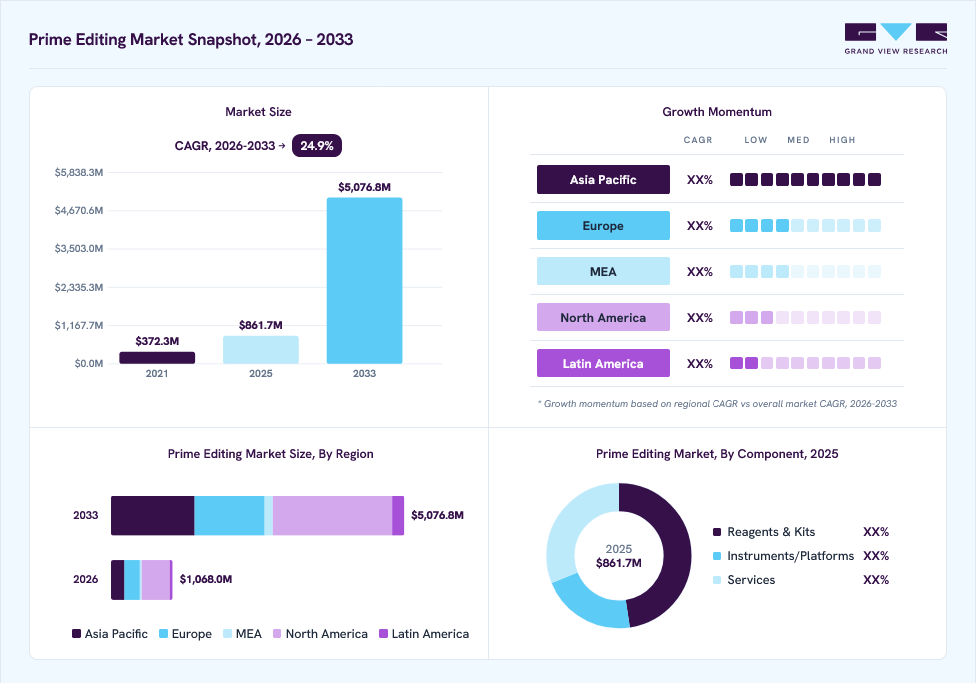
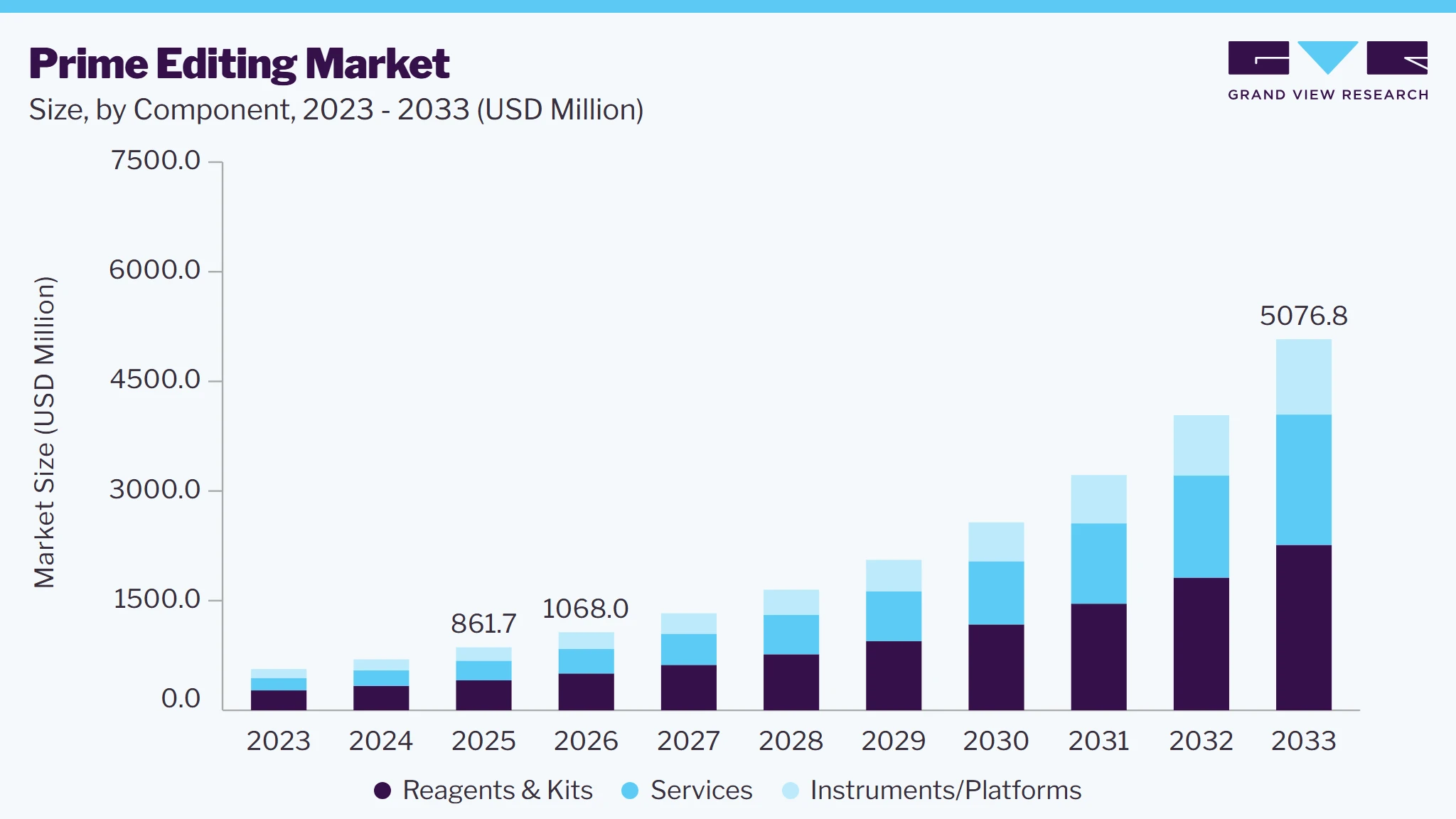
The global prime editing market size was valued at USD 861.7 million in 2025 and is projected to grow from USD 1,068.0 million in 2026 to USD 5,076.8 million by 2033, at a CAGR of 24.9% from 2026 to 2033. North America dominated the market, accounting for the largest share of 46.0% of the global market in 2025. Market growth is driven by the increasing adoption of prime editing for precise genome modification, rising research and development activities in gene editing and genetic disease research, and advancements in CRISPR-based technologies, delivery systems, and therapeutic applications.
Key Market Trends & Insights
- By component: Reagents & kits segment held the highest market share of 47.5% in 2025.
- By application: Therapeutics development segment held the highest market share in 2025.
- By end user: Biotechnology & pharmaceutical companies segment held the highest market share in 2025.
Regional Highlights
- Largest regional market: North America (46.0% revenue share, 2025)
- Fastest-growing regional market: Asia Pacific (highest CAGR, 2026-2033)
- By country: The U.S. held the largest market share in 2025.
Market Size & Forecast
- Market Size in 2025: USD 861.7 Million
- Estimated market size in 2026: USD 1,068.0 Million
- Projected Market Size by 2033: USD 5,076.8 Million
- CAGR (2026-2033): 24.9%
Market Dynamics
The prime editing market is experiencing strong growth, driven by rising investments in precision genome editing, genetic medicine, and functional genomics, as well as advancements in prime editor technologies and delivery systems. The growing development of next-generation editing platforms and the increasing translation of prime editing into therapeutic applications are expected to support market expansion. Moreover, advancements in in vivo delivery, pegRNA optimization, and high-throughput editing platforms, coupled with rising applications in genetic disease research, personalized medicine, and agricultural biotechnology, are creating new opportunities for market growth.
The rising demand for precise genome-editing technologies is driving growth in the prime editing market, as researchers increasingly seek accurate, flexible approaches to introduce base substitutions, insertions, and deletions while minimizing unintended genetic alterations. Prime editing can perform these modifications without generating double-strand DNA breaks, supporting its growing application in genetic disease research, functional genomics, drug discovery, and therapeutic development.
According to an article published by Nature in September 2025, researchers developed a next-generation, very precise prime editor (vPE) that substantially reduced editing errors while maintaining editing efficiency. The approach reduced indel errors by up to 60-fold, demonstrating improved precision in prime editing and strengthening its potential for future genetic medicine applications.
Prime editing workflows are technically complex because successful editing depends on the precise design and optimization of multiple components, including the prime editor, pegRNA, primer-binding site (PBS), and reverse-transcription template (RTT). Editing efficiency can vary substantially depending on target sequence, PBS and RTT length, sequence context, and cellular conditions, often requiring multiple pegRNA designs and experimental validation. This increases the time, expertise, and resources required for prime editing experiments, particularly for laboratories with limited genome-editing capabilities.
The complexity is further amplified by the need to optimize editing outcomes for different cell types and target sites. According to an article published in Nature Biotechnology in August 2026, achieving efficient prime editing in challenging cell types can require evaluating hundreds or thousands of combinations of pegRNA design parameters. Such optimization requirements can increase research costs and slow workflow implementation, thereby restraining broader adoption of prime editing technologies across academic research, biotechnology, and therapeutic development.
The development of in vivo delivery technologies represents a significant opportunity for the prime editing market by enabling prime editing components to be delivered directly into targeted tissues, reducing the need for ex vivo cell manipulation. Advances in lipid nanoparticles (LNPs), viral vectors, and other non-viral delivery systems can improve tissue targeting, editing efficiency, and transient expression, supporting the application of prime editing in genetic disease therapies.
Improved delivery systems can also expand the range of tissues and genetic conditions accessible to prime editing, while potentially enhancing safety and reducing off-target effects. Continued development of targeted and efficient delivery technologies is therefore expected to create opportunities for the commercialization of prime editing platforms across in vivo therapeutic development, rare disease treatment, and personalized medicine.
Market Concentration & Characteristics
The prime editing industry is characterized by a high degree of innovation, driven by advances in editor engineering, pegRNA optimization, delivery technologies, and AI-enabled guide design. Companies and research institutions are developing more efficient and precise editing platforms to expand therapeutic applications. For instance, in August 2026, Broad Institute researchers introduced OptiPrime, an AI model designed to predict prime-editing guide RNA performance and reduce the need for extensive laboratory testing.
“Our goal with OptiPrime is to make prime editing as easy to use as possible for other researchers, who might not be gene-editing experts and who want to do fewer experiments to develop prime editing solutions that meet their needs.”
- David Liu, core institute member, Richard Merkin Professor, vice chair of the faculty, and director of the Merkin Institute of Transformative Technologies in Healthcare at the Broad Institute of MIT and Harvard
The prime editing industry is experiencing moderate M&A activity, with strategic collaborations, licensing agreements, and partnerships being more prevalent than large-scale acquisitions. Companies are increasingly pursuing external collaborations to access complementary gene-editing technologies, expand therapeutic pipelines, and accelerate commercialization.
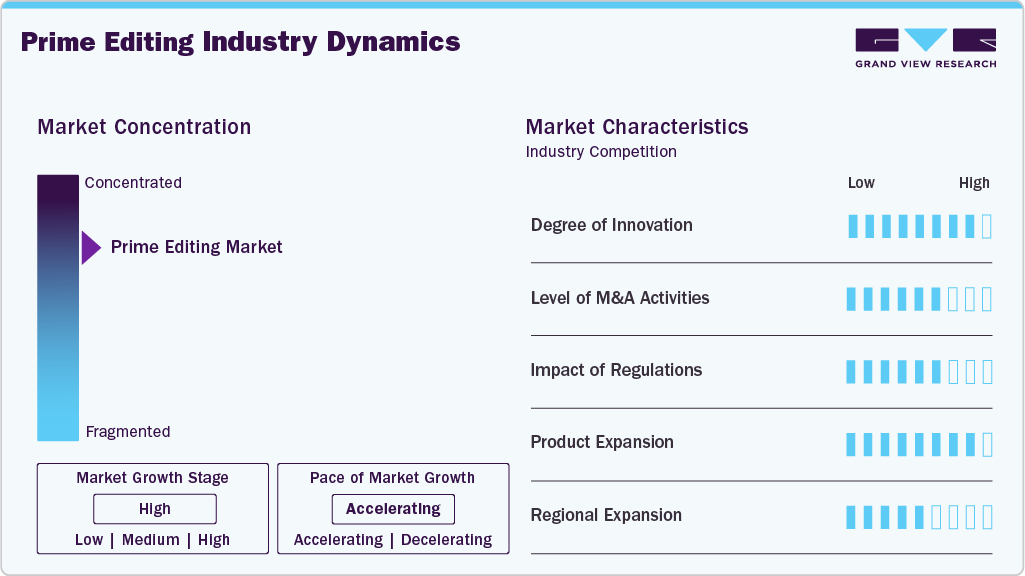
Regulatory requirements have a moderate impact on the market, particularly as prime editing moves from research toward clinical applications. Requirements related to safety, off-target effects, manufacturing quality, and clinical validation increase development timelines and costs. The regulatory landscape is becoming increasingly relevant as companies advance in vivo prime-editing candidates into clinical trials. For instance, in June 2026, New Zealand's Medsafe cleared Prime Medicine's clinical trial application for PM577a, its first in vivo prime-editing therapy.
The market is witnessing rapid product and platform expansion, with companies extending prime editing from research applications to therapeutic modalities across multiple disease indications. For instance, in July 2026, Prime Medicine announced that its PM647 program for alpha-1 antitrypsin deficiency was cleared for continued development following a positive arbitration resolution, with an IND and/or CTA filing planned for Q3 2026.
“Our goal has always been to leverage the Prime Platform to develop differentiated medicines for patients. We believe Prime Editing is the optimal approach to correcting the genetic cause of AATD by restoring normal protein function.”
- Allan Reine, M.D., Chief Executive Officer of Prime Medicine
The prime editing industry is witnessing moderate regional expansion, supported by increasing investments in genome-editing research, clinical development, and biotechnology infrastructure across emerging markets. The expansion of research capabilities and the growing adoption of precision medicine are enabling companies to expand prime editing applications across key international markets.
Analyst Perspective
The prime editing market is expected to grow strongly, driven by increasing demand for precise and versatile genome-editing technologies across genetic disease research, drug discovery, and therapeutic development. Growing investments in gene-editing research and advancements in prime-editing platforms are expanding applications for correcting a broad range of genetic mutations with improved precision. Rising collaborations between biotechnology companies and research institutions, coupled with the increasing clinical translation of gene-editing technologies, are expected to support market expansion.
Component Insights
The reagents & kits segment accounted for the largest revenue share, over 47.5% in 2025, driven by increasing demand for prime editing enzymes, pegRNAs, guide RNAs, nucleic acid reagents, and associated molecular biology components required for genome-editing workflows. Their extensive use across academic research, functional genomics, drug discovery, and therapeutic development continues to support segment growth. According to an article published in Nature Catalysis in October 2025, researchers developed an enhanced prime-editing approach that improved editing efficiency for previously challenging targets, supporting the demand for optimized reagents and editing components.
The services segment is expected to register the fastest CAGR over the forecast period, driven by increasing demand for specialized prime editing design, genome engineering, screening, validation, and optimization services. Growing complexity of prime editing workflows and the need for specialized expertise are encouraging biotechnology and pharmaceutical companies to outsource editing activities, particularly for therapeutic development, functional genomics, and drug discovery applications.
Application Insights
The therapeutics development segment dominated the market with a 44.6% share in 2025 and is expected to grow at fastest CAGR during the forecast period, driven by the increasing use of prime editing for precise correction of disease-causing genetic mutations and the growing development of genetic medicines for rare and inherited disorders. Its ability to introduce targeted substitutions, insertions, and deletions without creating double-strand DNA breaks further supports its potential in therapeutic development.
The cell line & biomanufacturing segment is expected to register a significant CAGR over the forecast period, driven by the increasing use of prime editing for precise cell line engineering, functional gene modification, and optimization of cellular characteristics. Growing adoption of engineered cell models in biopharmaceutical research and production, along with advancements in genome-editing technologies, is expected to support segment growth.
End User Insights
The biotechnology & pharmaceutical companies segment dominated the market with a share of 47.0% in 2025 and is expected to grow at fastest CAGR during the forecast period, driven by increasing investments in gene-editing research, therapeutic development, and precision medicine. Growing adoption of prime editing for drug discovery, genetic disease research, and the development of next-generation genetic medicines is further supporting segment growth.
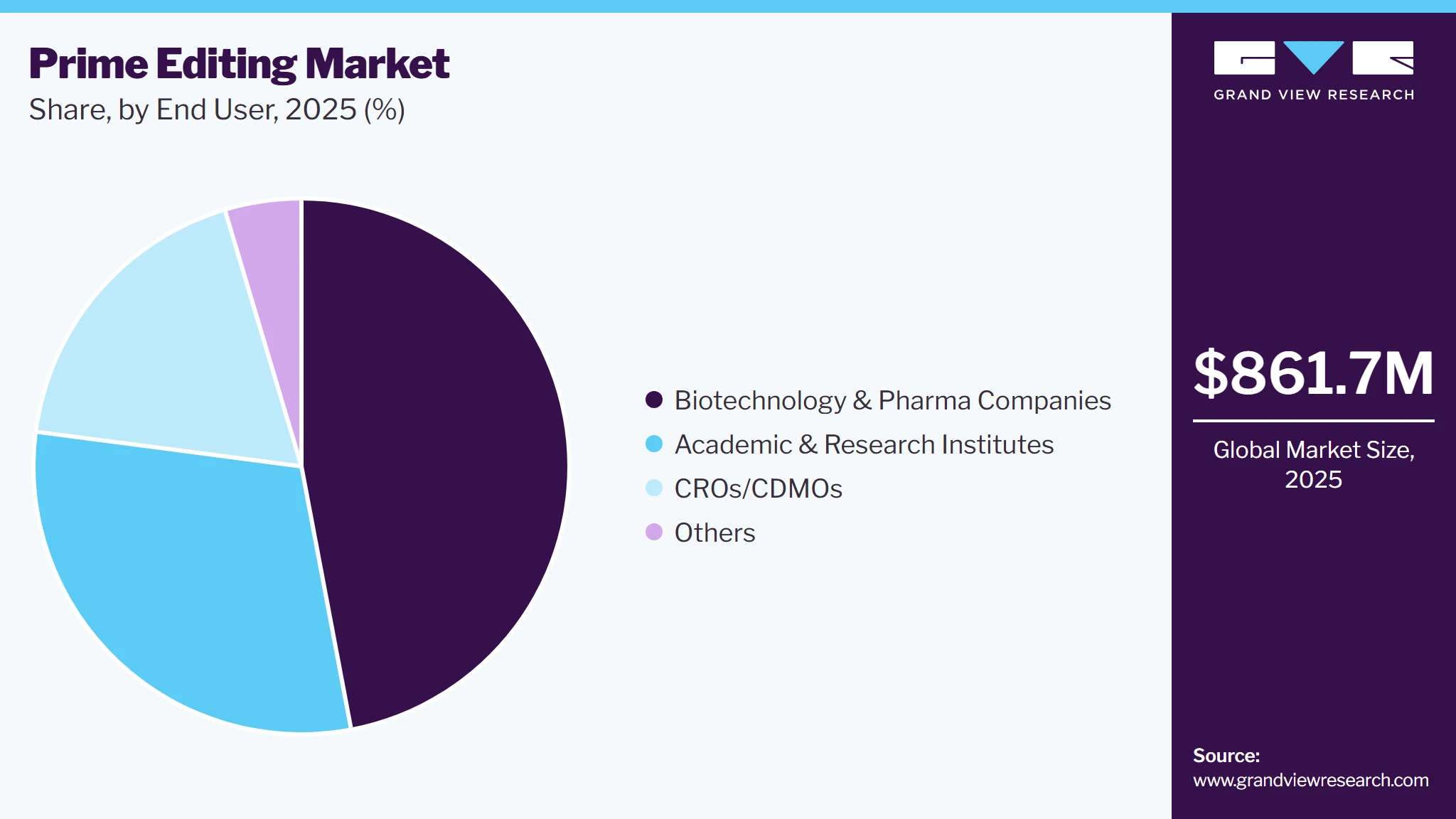
The CROs/CDMOs segment is expected to register a significant CAGR over the forecast period, driven by increasing outsourcing of prime editing research, genome engineering, assay development, and preclinical development activities by biotechnology and pharmaceutical companies. Growing demand for specialized expertise, advanced editing platforms, and scalable research capabilities is further supporting the adoption of CRO/CDMO services.
Regional Insights
North America dominated the prime editing industry, accounting for the largest revenue share of 46.0% in 2025, supported by a strong biotechnology ecosystem, advanced genome-editing research, and increasing clinical translation of prime-editing therapies. For instance, in July 2026, the U.S. FDA cleared Prime Medicine’s IND for PM577a, enabling a Phase 1/2 clinical program for Wilson disease and strengthening the region’s position in therapeutic prime editing.
"Wilson disease is a serious, progressive disorder with no approved curative option, and today's standard of care requires lifelong therapy burdened by significant side effects and low adherence."
- Allan Reine, M.D., Chief Executive Officer of Prime Medicine

U.S. Prime Editing Market Trends
Prime editing industry in the U.S. is expected to grow over the forecast period, driven by extensive academic research, biotechnology investments, and increasing development of clinical-stage genome-editing therapies. According to the study published by the NIH in March 2026, Prime Medicine’s prime-editing therapy reported clinical results for chronic granulomatous disease, supporting the transition of prime editing toward clinical applications.
Europe Prime Editing Market Trends
The prime editing market in Europe was identified as a lucrative region in this industry, supported by its established genomics research infrastructure, strong biotechnology ecosystem, and growing focus on precision medicine. Increasing investments in gene-editing research and clinical development are expected to further support the adoption of next-generation editing technologies across the region.
The UK market is supported by its advanced gene therapy research ecosystem and growing interest in precision genome engineering. Increasing research into prime editing for inherited diseases and therapeutic applications is expected to support market development.
The prime editing market in Germany is anticipated to grow significantly over the forecast period, supported by strong biotechnology research and genome-engineering capabilities. The increasing development of optimized prime-editing systems and research collaborations are expected to expand applications in therapeutic and functional genomics.
Asia Pacific Prime Editing Market Trends
Asia Pacific is expected to grow at the fastest CAGR of 29.8% during the forecast period, supported by expanding genome-editing research, increasing biotechnology investments, and growing applications in therapeutics and agricultural biotechnology. Rising research capabilities, improving biotechnology infrastructure, and increasing focus on precision medicine are expected to further support the adoption of prime editing technologies across the region.
China is emerging as an important center for prime-editing research, supported by strong academic and agricultural biotechnology capabilities. According to an article published by NIH in September 2025, researchers at China Agricultural University developed two efficient prime-editing systems based on the Csy4 CRISPR endonuclease, expanding the potential application of prime editing in crop genome modification.
The prime editing market in Japan is expected to grow steadily, supported by advanced molecular biology research and increasing applications of genome editing in biotechnology. Growing research into precise genetic modification is expected to create opportunities for prime-editing technologies.
Latin America Prime Editing Market Trends
The Latin America prime editing market is expected to grow gradually, as biotechnology research capabilities and genome-editing applications expand. Increasing use of precision genome engineering in agricultural research and crop improvement is expected to create opportunities for prime-editing solutions.
MEA Prime Editing Market Trends
The MEA market is expected to grow steadily, supported by expanding biotechnology research and increasing interest in precision medicine and agricultural genomics. Increasing research collaborations and investment in advanced genetic technologies are expected to improve regional adoption of prime editing.
Key Prime Editing Company Insights
Several well-established companies operate in the prime editing market, supported by their portfolios of prime editing platforms, genome-editing reagents, nucleic acid products, enzymes, and research solutions. Leading players such as Prime Medicine, Inc., Thermo Fisher Scientific Inc., Merck KGaA, Integrated DNA Technologies, Inc., GenScript, Synthego, Agilent Technologies, Inc., ToolGen, Inc., Takara Bio Inc., and New England Biolabs maintain a strong market presence through product innovation, development of advanced genome-editing technologies, reagent expansion, platform optimization, and strategic initiatives focused on improving editing precision, efficiency, scalability, and therapeutic applications.
Key Prime Editing Companies
The following key companies have been profiled for this study on the prime editing market.
-
Prime Medicine, Inc.
-
Thermo Fisher Scientific Inc.
-
Merck KGaA
-
Integrated DNA Technologies, Inc.
-
GenScript
-
Synthego
-
Agilent Technologies, Inc.
-
ToolGen, Inc.
-
Takara Bio Inc.
-
New England Biolabs
Competitive Benchmarking
Category
Operating Strategies
Competitive Edge
Weakness
Established Players (Prime Medicine, Inc., Thermo Fisher Scientific Inc., Merck KGaA, GenScript, Agilent Technologies, Inc., Takara Bio Inc., New England Biolabs, etc.)
- Strengthen market presence through strategic collaborations, R&D investments, and integration of prime editing with broader CRISPR and synthetic biology platforms.
- Strong genome engineering expertise, R&D capabilities, and established customer networks across pharmaceutical, biotechnology, and academic research sectors.
- Prime editing remains an emerging technology with limited clinical and commercial validation compared with established gene-editing approaches.
Emerging Players (Synthego, ToolGen, Inc., Integrated DNA Technologies Inc.)
- Expand adoption through research partnerships, customized services, and applications in therapeutic development and functional genomics.
- Strong specialization and technical expertise in CRISPR-based gene editing and customized genome engineering solutions.
- Limited global scale, financial resources, and product breadth compared with major life science companies.
Recent Developments
-
In July 2026, Prime Medicine announced a favorable resolution to its arbitration with Beam Therapeutics, reaffirming its rights concerning prime-editing intellectual property and supporting continued development of its prime-editing therapeutic programs.
- In March 2025, GenScript signed a licensing agreement with the Broad Institute to access Prime Editing technology, enabling the manufacture and commercialization of prime-editing components, including nucleases and customized synthetic guides, for biopharmaceutical companies engaged in preclinical research and development.
"This partnership with the Broad Institute marks an exhilarating new chapter for GenScript Life Science. For years, we have been deeply passionate about the extraordinary strides and transformative potential of gene editing. We see great potential for prime editing, and we're excited to contribute to the scientific community's evaluation of this technology."
- Dr. Ray Chen, President of the Life Science Group at GenScript
-
In September 2024, Prime Medicine entered into a strategic research collaboration and license agreement with Bristol Myers Squibb to develop and commercialize prime-edited ex vivo T-cell therapies, combining Prime Medicine’s editing capabilities with BMS’s cell therapy development expertise.
Prime Editing Market Report Scope
Report Attribute
Details
Market size in 2025
USD 861.7 million
Estimated market size in 2026
USD 1,068.0 million
Projected market size by 2033
USD 5,076.8 million
Growth rate
CAGR of 24.9% from 2026 to 2033
Historical data
2021 - 2025
Forecast period
2026 - 2033
Quantitative units
Revenue in USD million, and CAGR from 2026 to 2033
Report coverage
Revenue forecast, company ranking, competitive landscape, growth factors, and trends
Segments covered
Component, application, end user, region
Regional scope
North America; Europe; Asia Pacific; Latin America; MEA
Country scope
U.S.; Canada; Mexico; UK; Germany; France; Italy; Spain; Norway; Denmark; Sweden; China; Japan; India; South Korea; Australia; Thailand; Brazil; Argentina; Saudi Arabia; South Africa; UAE; Kuwait
Key companies profiled
Prime Medicine, Inc.; Thermo Fisher Scientific Inc.; Merck KGaA; Integrated DNA Technologies, Inc.; GenScript; Synthego; Agilent Technologies, Inc.; ToolGen, Inc.; Takara Bio Inc.; New England Biolabs
Customization scope
Free report customization (equivalent up to 8 analysts' working days) with purchase. Addition or alteration to country, regional & segment scope.
Pricing and purchase options
Avail customized purchase options to meet your exact research needs. Explore purchase options
Global Prime Editing Market Report Segmentation
This report forecasts revenue growth and provides an analysis on the latest trends in each of the sub-segments from 2021 to 2033. For this report, Grand View Research has segmented the global prime editing market report on the basis of component, application, end user, and region:
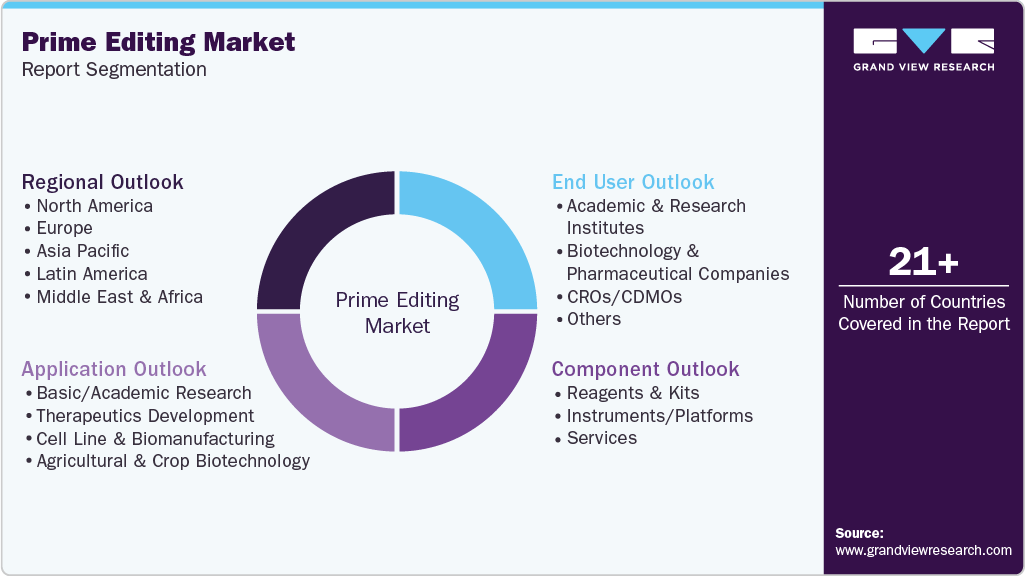
-
Component Outlook (Revenue, USD Million, 2021 - 2033)
-
Reagents & Kits
-
Instruments/Platforms
-
Services
-
-
Application Outlook (Revenue, USD Million, 2021 - 2033)
-
Basic/Academic Research
-
Therapeutics Development
-
Cell Line & Biomanufacturing
-
Agricultural & Crop Biotechnology
-
-
End User Outlook (Revenue, USD Million, 2021 - 2033)
-
Academic & Research Institutes
-
Biotechnology & Pharmaceutical Companies
-
CROs/CDMOs
-
Others
-
-
Regional Outlook (Revenue, USD Million, 2021 - 2033)
-
North America
-
U.S.
-
Canada
-
Mexico
-
-
Europe
-
UK
-
Germany
-
France
-
Italy
-
Spain
-
Denmark
-
Sweden
-
Norway
-
-
Asia Pacific
-
Japan
-
China
-
India
-
Australia
-
Thailand
-
South Korea
-
-
Latin America
-
Brazil
-
Argentina
-
-
Middle East and Africa (MEA)
-
South Africa
-
Saudi Arabia
-
UAE
-
Kuwait
-
-
Research Methodology
The prime editing market figures in this report are based on a proven research process that combines executive interviews with secondary research from proprietary databases, company filings, and recognized regulatory and institutional sources. Market size is built through value-chain sizing - reconciling supply-side and demand-side estimates - and triangulated with bottom-up and top-down approaches. Every estimate passes multiple levels of expert validation before publication, with each prime editing segment quantified using the revenue-capture definitions in the table below.
Segment Definition
Segment- Component
Revenue Capture Definition
Reagents & Kits
Revenue generated from reagents, enzymes, guide RNA components, DNA templates, and ready-to-use kits required for designing, performing, and optimizing prime editing workflows. These products support target-specific genome modification, editing efficiency assessment, and validation across research and therapeutic development applications.
Instruments/Platforms
This segment captures income from laboratory instruments, automated systems, and specialized platforms used to design, execute, monitor, and analyze prime editing experiments. Such solutions facilitate precise genome editing workflows across research, cell engineering, and biomanufacturing environments.
Services
Market value in this category stems from outsourced prime editing services, including guide design, editing optimization, cell engineering, genome modification, assay development, and analytical validation performed for research and commercial development programs.
Segment- Application
Revenue Capture Definition
Basic/Academic Research
Revenue derived from prime editing solutions used to investigate gene function, genetic mechanisms, disease biology, and genome engineering principles in academic and fundamental research programs.
Therapeutics Development
This segment reflects income from prime editing technologies applied to the development of genetic medicines, including correction of disease-causing mutations, therapeutic cell engineering, target validation, and preclinical evaluation of genome-editing approaches.
Cell Line & Biomanufacturing
Revenue originates from prime editing applications used to engineer and optimize cell lines for biopharmaceutical production, improve cellular characteristics, and support the development of biologics and other biotechnology manufacturing processes.
Agricultural & Crop Biotechnology
This category captures earnings from prime editing applications in crop and agricultural biotechnology, including targeted modification of plant genomes to improve traits such as yield, quality, disease resistance, stress tolerance, and nutritional characteristics.
Segment- End User
Revenue Capture Definition
Academic & Research Institutes
Revenue generated from prime editing products and services utilized by universities, government laboratories, and research institutions conducting genome engineering, genetic disease, molecular biology, and functional genomics studies.
Biotechnology & Pharmaceutical Companies
This segment captures income from prime editing technologies adopted by biotechnology and pharmaceutical companies for therapeutic discovery, genetic medicine development, target validation, cell engineering, and preclinical research programs.
CROs/CDMOs
Market value in this category stems from prime editing solutions utilized by contract research and contract development and manufacturing organizations to provide genome editing, assay development, cell engineering, process development, and related outsourced services to life sciences companies.
Others
Includes revenue generated from prime editing adoption by agricultural biotechnology companies, diagnostic organizations, government agencies, and other specialized users involved in genome engineering and related applications.
Estimation Model
Methodology
Description
Top-Down - Commodity Flow Analysis
Market size was estimated by analyzing revenues generated by key prime editing technology providers, including gene editing platforms, reagents, kits, and associated research products. Company annual reports, investor presentations, product portfolios, industry databases, and primary research were used to assess revenue contributions from both public and private companies and derive the overall market value.
Parent Market & Penetration-Based Analysis
The prime editing market was evaluated within the broader biotechnology market, considering the penetration of gene editing technologies across research, drug discovery, therapeutic development, genetic disease research, and agricultural biotechnology. Adoption rates and technology utilization trends were assessed to establish the addressable market and segment-level opportunities.
Country-Level Segment Share Modeling
Market shares for component, application, and end-user segments were derived using country-specific biotechnology R&D expenditure, gene editing research activity, clinical development pipelines, academic research funding, and adoption of advanced genome editing technologies. Weighted average calculations were applied to determine regional and global segment distributions.
Data Triangulation & Validation Model
Market estimates were validated through triangulation of secondary research, primary interviews, company-level revenue assessments, technology adoption analysis, research activity, and demand-side indicators to ensure consistency and accuracy across market segments and geographies.
Forecasting & CAGR Modeling
Market forecasts were developed using historical trends in genome editing research, increasing investment in biotechnology R&D, expansion of genetic medicine pipelines, adoption of precision gene editing technologies, clinical research activity, and technological advancements in prime editing. Regression-based analysis and trend modeling were applied to project future market growth and CAGR.
Delivered Customizations
This report has been delivered with the following In-depth customizations
Client Request
Customization Delivered
Value Adds
Prime Editing Technology & Platform Assessment
Comprehensive assessment of prime editing platforms, including reagent and kit development, editing platforms/instruments, and supporting services. Evaluation of technology maturity, editing efficiency, scalability, workflow integration, and adoption trends across research and commercial settings.
Helps clients assess technology readiness, identify platform innovation opportunities, benchmark emerging approaches, and prioritize investments in high-potential prime editing technologies.
Prime Editing Therapeutic Pipeline & Application Opportunity Assessment
Analysis of prime editing applications across therapeutics development, basic research, cell line engineering, biomanufacturing, and agricultural biotechnology. Includes assessment of disease targets, preclinical programs, emerging therapeutic applications, and potential use of prime editing for genetic modification and pathway engineering.
Enables clients to identify high-potential therapeutic and industrial applications, evaluate future demand, prioritize R&D opportunities, and align product development with emerging prime editing use cases.
Prime Editing Commercialization & Scale-up Assessment
Evaluation of the transition of prime editing from academic research toward commercial applications, including technology licensing, partnerships, manufacturing capabilities, workflow scalability, regulatory considerations, and adoption by biotechnology & pharmaceutical companies, CROs/CDMOs, and research institutes.
Supports commercialization planning, partnership and licensing strategies, assessment of scale-up potential, and identification of market-entry opportunities in the expanding prime editing ecosystem.
Frequently Asked Questions About This Report
The global prime editing market size was valued at USD 861.7 million in 2025 and is estimated at USD 1,068.0 million for 2026.
The global prime editing market is expected to grow at a CAGR of 24.9% from 2026 to 2033, reaching USD 5,076.8 million by 2033.
The reagents & kits segment led with a 47.5% revenue share in 2025.
North America dominated with a 46.0% revenue share in 2025.
Market growth is driven by the increasing adoption of prime editing for precise genome modification, rising research and development activities in gene editing and genetic disease research, and advancements in CRISPR-based technologies, delivery systems, and therapeutic applications.
Key players include Prime Medicine, Inc., Thermo Fisher Scientific Inc., Merck KGaA, Integrated DNA Technologies, Inc., GenScript, Synthego, Agilent Technologies, Inc., ToolGen, Inc., Takara Bio Inc., and New England Biolabs
Asia Pacific is the fastest-growing region over the forecast period.
The therapeutics development segment led with a 44.6% revenue share in 2025.
The biotechnology & pharmaceutical companies segment led with a 47.0% revenue share in 2025.
About the Author(s)
Biotechnology Research Team
Healthcare · BiotechnologyThis report was authored by the biotechnology research team at Grand View Research - comprising two research analysts, one senior research analyst, and one industry expert - with specialized expertise in the biotechnology segment of the healthcare industry. All findings are based on proprietary healthcare databases, executive interviews, and regulatory analysis, subject to internal peer review prior to publication.
Last Updated:
Speak to Analyst


Customize this report to your needs — add regions, segments, or data points, with 20% free customization.
Or view our licence options:


ISO 9001:2015 & 27001:2022 Certified
We are GDPR and CCPA compliant! Your transaction & personal information is safe and secure. For more details, please read our privacy policy.


