
- Home
- »
- Biotechnology
- »
-
Stem Cell Assays Market Size, Share, Industry Report, 2033GVR Report cover
![Stem Cell Assays Market Size, Share & Trends Report]()
Stem Cell Assays Market (2025 - 2033) Size, Share & Trends Analysis Report By Product (Instruments, Kits & Reagents), By Assay Type (Cell Viability Assay, Differentiation Assay, Proliferation Assay, Apoptosis Assay), By Cell Type, By Application, By End-use, By Region, And Segment Forecasts
Market Size, 2024
$3.9BMarket Estimate, 2026
$4.3BMarket Forecast, 2033
$12.9BCAGR, 2025–2033
14.8%Stem Cell Assays Market Summary
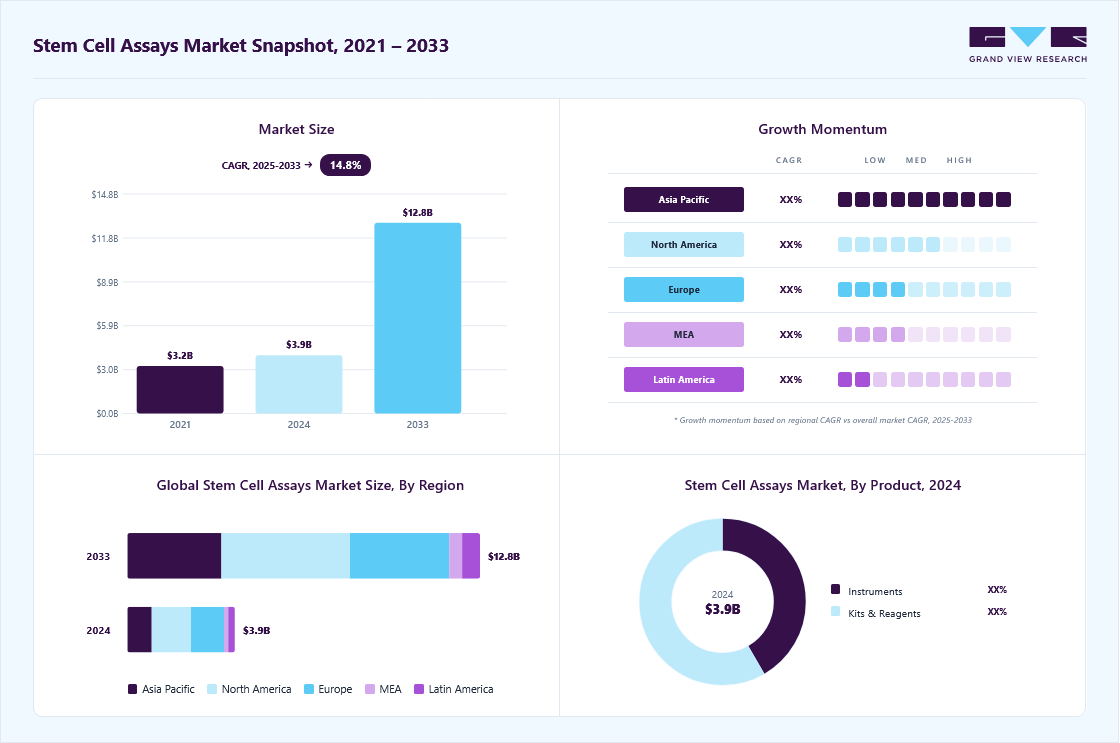
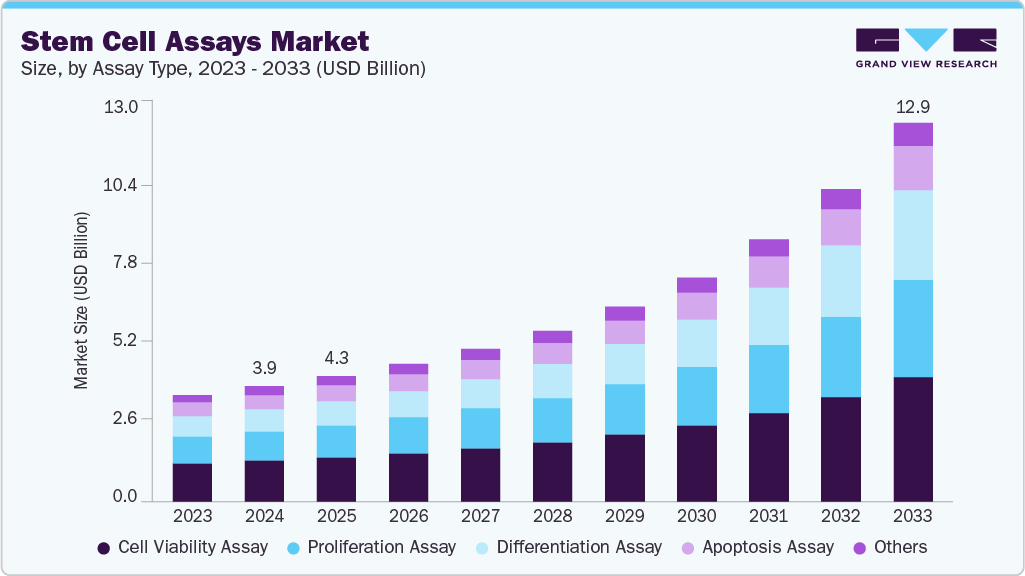
The global stem cell assays market size was estimated at USD 3.92 billion in 2024 and is projected to reach USD 12.85 billion by 2033, growing at a CAGR of 14.80% from 2025 to 2033. The growing need for physiologically relevant models in drug discovery, disease modeling, and regenerative medicine is the main factor propelling the market growth.
Key Market Trends & Insights
- The North America stem cell assays industry held the largest global revenue share of 36.54% in 2024.
- The U.S. stem cell assays industry is expected to grow significantly from 2025 to 2033.
- By product, the kits & reagents segment held the highest market share in 2024.
- By assay type, the cell viability assay segment held the highest market share in 2024.
- By cell type, the adult stem cells segment held the highest market share in 2024.
Market Size & Forecast
- 2024 Market Size: USD 3.92 Billion
- 2033 Projected Market Size: USD 12.85 Billion
- CAGR (2025-2033): 14.80%
- North America: Largest Market in 2024
- Asia Pacific: Fastest Growing Market
Pharmacies and researchers are looking for trustworthy platforms resembling human tissues more closely than conventional models, like organoid and iPSC-based systems. By improving drug efficacy and safety prediction, these assays lower late-stage failure rates and speed up the creation of novel treatments.
Growing Stem Cell Research across the Globe
Expanding stem cell research globally is one of the primary growth drivers of the stem cell assay industry. Governments, academic institutions, and biotech companies are investing increasingly in stem cell studies to investigate regenerative medicine, disease modeling, and drug discovery. Initiatives, including government funding programs, research grants, and partnerships that offer labs financial and infrastructural support for the adoption of cutting-edge stem cell assays, are helping to support this growth.
In addition, the rising number of clinical trials using stem cells, particularly iPSCs and adult stem cells, has increased the need for reliable, standardized assays to evaluate cell viability, differentiation, and potency. As research projects become more complex and translational, laboratories adopt comprehensive assay platforms and automated systems to ensure reproducibility and precision, fueling the demand for advanced stem cell assay solutions.
Academic institutions and industrial labs are investing in comprehensive assay platforms due to the increased emphasis on efficiency and precision. Another important driver is adopting innovative assay technologies that facilitate automation, high-content analysis, and high-throughput screening. Stem cell culture, differentiation, and viability testing tools and kits simplify intricate processes, increase reproducibility, and lower human error.
Furthermore, growing funding for stem cell research and international partnerships support market expansion. Across North America, Europe, and Asia Pacific; governments, biotech companies, and academic institutions are investing more in cell therapy, precision medicine, and regenerative medicine projects. Standardized, dependable, and adaptable stem cell assay solutions are still in high demand due to the growing number of clinical trials and technological advancements in stem cell culture and assay development.
Market Concentration & Characteristics
The stem-cell assays market is highly innovation-driven. The rapid advancements in iPSC-derived models, organoids, microfluidics, bioprinting, and organ-on-chip platforms are pushing assays from low-throughput, bespoke lab tests to more automated, multiplexed screening tools that pharma and CROs can actually scale. That shift is creating new premium segments and blurring the line between research reagents and translational/clinical assay products.
Established reagent and instrument companies are buying niche cell-handling, sorting, and assay platform startups to plug capability gaps (for example, recent acquisitions by large cell-biology players), while big pharma is also snapping up cell-therapy enabling firms to secure downstream testing and development capabilities, a pattern that concentrates capabilities in a handful of platform owners even as many specialist innovators remain attractive targets.
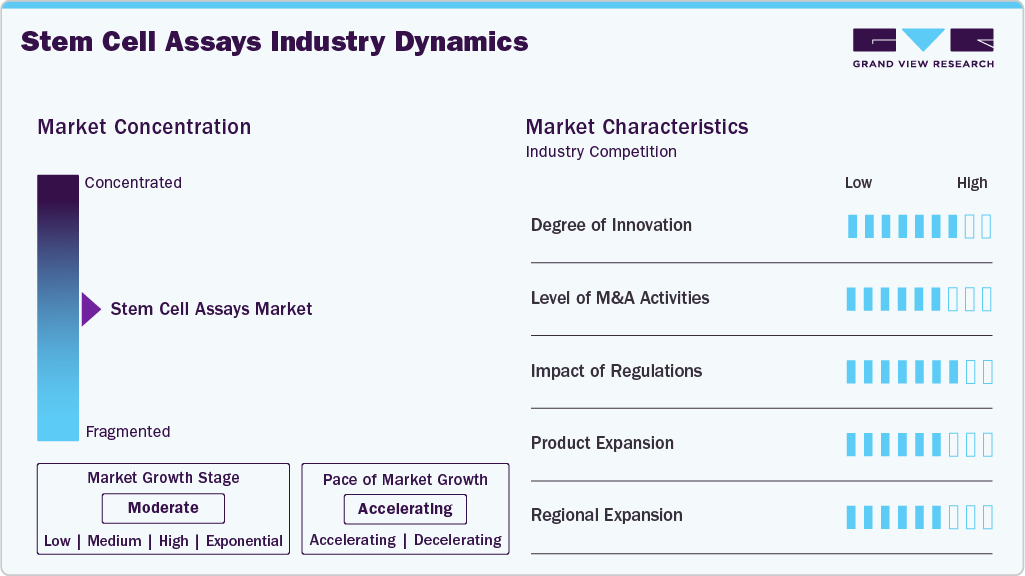
Guidance for cellular and gene therapies and stricter validation expectations for assays mean vendors must invest in reproducibility, comparability studies, and documentation to serve clinical or regulated drug-development workflows. That raises barriers for small vendors aiming for clinical markets (driving partnerships or acquisition) but benefits established firms that can shoulder validation costs and regulatory support.
Companies in the stem cell assays industry are moving beyond selling single reagents and now offering complete solutions. These include ready-to-use iPSC lines with matching differentiation kits, automated testing workflows, and software for advanced analysis. By packaging these products together, vendors make it easier for customers to stay within their ecosystem, which boosts sales. It also allows them to branch into related areas such as cell growth and cell-therapy production.
The market is expanding quickly beyond its traditional strongholds. North America continues to lead, owing to deep R&D funding and active clinical pipelines, but Asia-Pacific is showing the fastest growth, driven by heavy investments in stem cell research, government support, and expanding biotech hubs in countries like China, Japan, and South Korea. Europe remains an important region, especially for setting regulatory standards and hosting strong translational research centers. To capture these opportunities, companies are tailoring their strategies by setting up local supply chains, forming partnerships with regional CROs and academic institutes, and adapting to country-specific regulations.
Product Insights
Kits & reagents dominated the stem cell assays market, with the largest revenue share in 2024.The rising demand for standardized, ready-to-use solutions that save researchers time and improve reproducibility. As stem cell research expands into drug discovery, toxicity testing, and regenerative medicine, labs are looking for high-quality assay kits and reagents that simplify complex workflows like stem cell differentiation, proliferation, and viability testing. The growing shift toward iPSC- and 3D-organoid-based models is also fueling demand for specialized reagents that support advanced cell culture and analysis.
The instruments segment is expected to grow at the fastest CAGR from 2025 to 2033. As researchers increasingly use iPSCs, organoids, and 3D models, there’s a growing need for instruments that enable precise imaging, live-cell monitoring, and multiplexed readouts at scale. Automation also reduces human error and speeds up workflows, which is critical for drug discovery and translational research. These factors are prompting pharma companies, CROs, and academic labs to invest in advanced instruments, making them a key growth driver for the market.
Assay Type Insights
The cell viability assay segment led the stem cell assays industry in 2024, with the largest revenue share of 35.56%. Reliable viability assays are necessary to ensure the effectiveness and reproducibility of experiments because stem cells are extremely sensitive and susceptible to changes in culture conditions. In drug discovery and toxicity testing, these assays help determine how compounds affect stem cell function, making them indispensable for safety and efficacy evaluations. The growing use of iPSC- and 3D-organoid models further boosts demand, since more advanced assays are needed to assess viability in complex, physiologically relevant systems.
The differentiation assay segment is expected to grow at the fastest CAGR over the forecast period. The increasing need to monitor and verify how stem cells differentiate into particular cell types for application in drug discovery, disease modeling, and regenerative medicine is a major factor propelling the differentiation assay segment. Reliable assays are crucial to verify lineage commitment and functional maturity as iPSCs and embryonic stem cells are used more and more to create cardiomyocytes, neurons, or hepatocytes for research and therapeutic purposes. There is a constant need for differentiation assay solutions because pharmaceutical companies and academic labs depend on these assays to ensure consistency, lower variability, and accelerate translational applications.
Cell Type Insights
The adult stem cells segment led the market in 2024, accounting for the largest revenue share of 52.34%. The rising focus on regenerative therapies and personalized medicine, where adult stem cells like mesenchymal and hematopoietic stem cells play a central role. These cells are more widely accepted ethically compared to embryonic stem cells and are being actively studied for applications in tissue repair, immune modulation, and treatment of degenerative diseases. The growing number of clinical trials using adult stem cells, coupled with advancements in culture systems and assays to evaluate their potency, viability, and differentiation capacity, is pushing demand for specialized assays tailored to adult stem cell research and therapeutic development.
The induced pluripotent stem cells segment is expected to grow at the significant CAGR over the forecast period. iPSCs can be derived from patient-specific cells and reprogrammed into almost any cell type, making them highly valuable for personalized therapies and for studying conditions that are difficult to replicate with animal models. The rise of 3D organoid systems and high-content screening technologies is further boosting demand for assays that can validate iPSC quality, differentiation efficiency, and functional maturity. This flexibility, combined with growing pharma and biotech investments in iPSC-based platforms, is positioning iPSCs as a key growth driver for assay development.
Application Insights
The drug discovery segment led the stem cell assays market in 2024, accounting for the largest revenue share of 45.64%. Stem cell-derived models, including iPSC- and organoid-based systems, allow researchers to test compounds on human-like tissues, improving the accuracy of toxicity, efficacy, and disease modeling studies. This is particularly important for complex diseases such as neurodegenerative disorders, cardiovascular conditions, and liver toxicity, where traditional animal models often fall short. As pharmaceutical and biotech companies prioritize faster, safer, and more cost-effective pipelines, demand for robust stem cell assays in drug discovery continues to rise sharply.
The regenerative medicine & therapy development segment is expected to grow at the fastest CAGR over the forecast period. As clinical applications of adult stem cells, iPSCs, and other cell types expand into areas like tissue repair, organ regeneration, and immune modulation, reliable assays are essential for evaluating differentiation, viability, and therapeutic efficacy. Regulatory requirements for validated testing in preclinical and clinical settings further boost demand for specialized assays, while the growing number of biotech startups and clinical trials in regenerative medicine is accelerating the adoption of advanced stem cell assay platforms.
End-use Insights
The pharmaceutical and biotechnology companies segment led the stem cell assays industry with the largest revenue share of 47.95% in 2024. Pharmaceutical and biotechnology companies in the stem cell assay market have a growing demand for reliable, human-relevant models to accelerate drug development and reduce attrition rates. These companies increasingly rely on stem cell-derived assays, particularly iPSC- and organoid-based systems, to test drug efficacy, toxicity, and mechanism of action in disease-relevant cell types. The ability to generate patient-specific models also supports precision medicine initiatives, while the push for high-throughput and automated workflows helps scale testing across large compound libraries. Together, these factors make stem cell assays an essential tool for pharma and biotech firms aiming to streamline R&D and improve success rates.
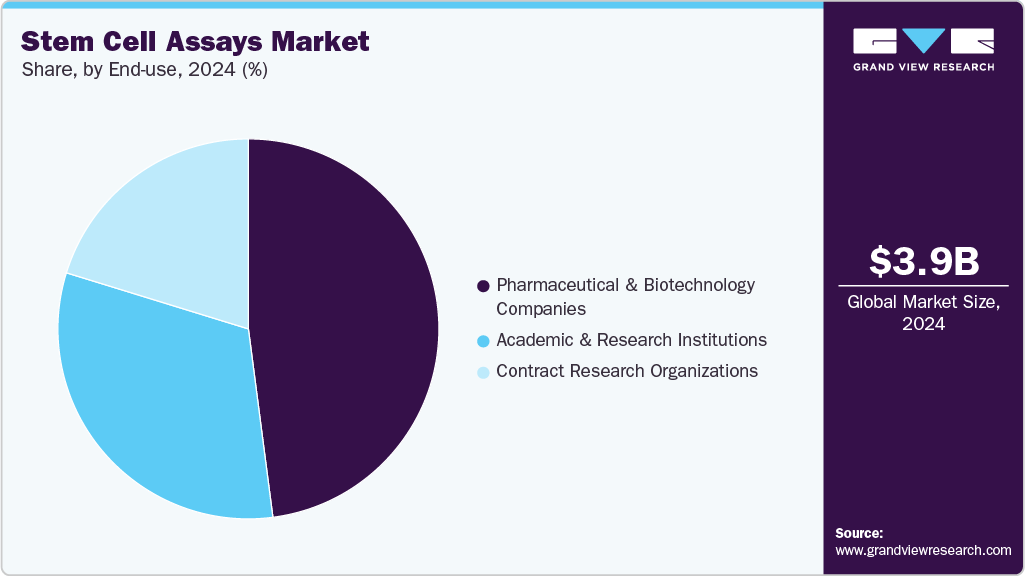
The academic and research institutions segment is projected to grow at the fastest CAGR during the forecast period, driven by the increasing funding and emphasis on stem cell research. For instance, the National Institutes of Health (NIH) allocated approximately USD 2.1 billion to stem cell research in fiscal year 2020, underscoring the growing commitment to this field. This financial support enables institutions to invest in advanced assay technologies, facilitating the exploration of stem cell applications in regenerative medicine, disease modeling, and drug discovery. Moreover, the rising prevalence of chronic diseases and the demand for personalized medicine further propel the need for reliable and reproducible stem cell assays. Consequently, academic and research institutions are increasingly adopting these assays to advance scientific understanding and therapeutic development.
Regional Insights
North America stem cell assays market dominated and held the largest revenue share of 36.54% in 2024, owing to strong R&D infrastructure, substantial biotech and pharmaceutical investment, and a high number of clinical trials involving stem cells. The presence of top-tier research institutions and favorable funding from government agencies like the NIH further accelerates the adoption of advanced assays for drug discovery, regenerative medicine, and translational research.

U.S. Stem Cell Assays Market Trends
The U.S. market is driven by extensive federal and private funding for stem cell research, particularly in regenerative medicine and disease modeling. The country’s focus on precision medicine and high-throughput screening platforms encourages pharma and academic institutions to adopt robust, validated stem cell assays to support preclinical and clinical pipelines.
Europe Stem Cell Assays Market Trends
Europe’s growth is supported by a combination of regulatory frameworks that emphasize standardized and reproducible stem cell research, strong academic networks, and increasing investment in translational medicine. Programs funded by the EU and national research bodies are driving the adoption of assays for drug development and regenerative therapies across the continent.
In the UK stem cell assays market, the adoption is fueled by government-backed initiatives like the UK Regenerative Medicine Platform and strong university-led translational research programs. These initiatives focus on bridging basic stem cell research with clinical applications, making reliable assays essential for both academic and industrial use.
Thestem cell assays market in Germanyis witnessing growth,driven by its well-established pharmaceutical and biotech sectors, coupled with significant investments in advanced cell therapies and regenerative medicine. The country emphasizes compliance with stringent EU regulations, which increases demand for validated stem cell assays to ensure quality and reproducibility in research and therapeutic development.
Asia Pacific Stem Cell Assays Market Trends
The Asia Pacific stem cell assays industry is experiencing rapid growth due to expanding research infrastructure, increasing government support, and a surge in clinical trials for regenerative therapies. Countries like China, Japan, and South Korea are investing heavily in iPSC and organoid technologies, which drives demand for sophisticated assays.
The growth of China’s stem cell assays market is propelled by large-scale government initiatives, rising biotech investments, and a strong focus on regenerative medicine and drug discovery. The government’s support for stem cell research and translational studies is encouraging both domestic and international players to supply validated assays for research and clinical applications.
The stem cell assays market in India is expected to grow over the forecast period. In India, stem cell assay adoption is growing thanks to expanding academic research programs, increasing clinical trials, and government support for biotechnology innovation. Cost-effective assay solutions are particularly attractive for local universities, hospitals, and startups working in regenerative medicine and disease modeling.
Middle East & Africa Stem Cell Assays Market Trends
The MEA stem cell assays industry’s growth is driven by strategic investments in biotech hubs and clinical research centers in countries like Saudi Arabia and the UAE. Governments are funding stem cell research initiatives to develop regenerative therapies, creating demand for validated and reproducible stem cell assay platforms.
The Kuwait stem cell assays marketis expected to grow during the forecast period.In Kuwait, growing government and private investment in biomedical research, particularly in regenerative medicine and translational science, is encouraging the adoption of advanced stem cell assays. Academic institutions and healthcare centers are increasingly incorporating these assays to support local research and therapeutic development initiatives.
Key Stem Cell Assays Company Insights
Thermo Fisher Scientific Inc.; Merck KGaA; STEMCELL Technologies Inc.; and Corning Incorporated are all strongly positioned in the stem cell assay market through a combination of diverse product offerings, global presence, and strategic initiatives. Thermo Fisher leverages its broad portfolio, including Gibco CTS reagents, PeproTech growth factors, and differentiated cell lines, alongside partnerships like its collaboration with Sanofi, to provide integrated solutions across drug discovery, regenerative medicine, and disease modeling. Merck KGaA has strengthened its market presence through acquisitions such as HUB Organoids, enhancing its 2D and 3D cell culture capabilities and expanding into emerging markets.
STEMCELL Technologies has bolstered its offerings via the acquisition of Cellular Highways Ltd. and partnerships like the ISSCR course on stem cell standards, supporting advanced cell sorting, cell and gene therapy, and global research applications. Corning Incorporated continues to innovate in automation and 3D cell culture technologies, actively engaging with research communities through events like the Society for Laboratory Automation and Screening. Collectively, these companies combine comprehensive product portfolios, regional expansion, and strategic collaborations to maintain leadership and drive growth of the stem cell assay industry.

Key Stem Cell Assays Companies:
The following are the leading companies in the stem cell assays market. These companies collectively hold the largest market share and dictate industry trends.
- Thermo Fisher Scientific Inc.
- Merck KGaA
- STEMCELL Technologies Inc.
- Corning Incorporated
- Danaher Corporation
- Lonza
- Bio-Rad Laboratories, Inc.
- PerkinElmer, Inc.
- PromoCell GmbH
- Bio-Techne Corporation
Recent Developments
-
In August 2025, Designer stem cells powered the development of new R&D assay systems. These engineered cells enabled more precise, high-throughput testing, accelerating research and discovery across drug development and regenerative medicine.
-
In April 2025, Gene Solutions and Element Biosciences signed a Memorandum of Understanding (MoU) to establish a collaboration. The partnership aims to combine Element Biosciences’ innovative sequencing platforms with Gene Solutions’ advanced genetic technologies to create meaningful synergies and drive impactful developments.
Stem Cell Assays Market Report Scope
Report Attribute
Details
Market size value in 2025
USD 4.26 billion
Revenue forecast in 2033
USD 12.85 billion
Growth rate
CAGR of 14.80% from 2025 to 2033
Base year for estimation
2024
Historical data
2021 - 2023
Forecast period
2025 - 2033
Quantitative units
Revenue in USD million/billion, and CAGR from 2025 to 2033
Report coverage
Revenue forecast, company ranking, competitive landscape, growth factors, and trends
Segments covered
Product, assay type, cell type, application, end-use, region
Regional scope
North America; Europe; Asia Pacific; Latin America; MEA
Country scope
U.S.; Canada; Mexico; UK; Germany; France; Italy; Spain; Denmark; Sweden; Norway; India; China; Japan; Australia; South Korea; Thailand; Brazil; Argentina; Saudi Arabia; UAE; South Africa; Kuwait
Key companies profiled
Thermo Fisher Scientific Inc.; Merck KGaA; STEMCELL Technologies Inc.; Corning Incorporated; Danaher Corporation; Lonza; Bio-Rad Laboratories, Inc.;
PerkinElmer, Inc.; PromoCell GmbH; Bio-Techne Corporation
Customization scope
Free report customization (equivalent up to 8 analyst’s working days) with purchase. Addition or alteration to country, regional & segment scope.
Pricing and purchase options
Avail customized purchase options to meet your exact research needs. Explore purchase options
Global Stem Cell Assays Market Report Segmentation
This report forecasts revenue growth and provides an analysis on the latest trends in each of the sub-segments from 2021 to 2033. For this study, Grand View Research has segmented the global stem cell assays market report based on product, assay type, cell type, application, end-use, and region:
-
Product Outlook (Revenue, USD Million, 2021 - 2033)
-
Instruments
-
Kits & Reagents
-
-
Assay Type Outlook (Revenue, USD Million, 2021 - 2033)
-
Cell Viability Assay
-
Differentiation Assay
-
Proliferation Assay
-
Apoptosis Assay
-
Others
-
-
Cell Type Outlook (Revenue, USD Million, 2021 - 2033)
-
Adult stem cells
-
embryonic stem cells
-
induced pluripotent stem cells
-
-
Application Outlook (Revenue, USD Million, 2021 - 2033)
-
Regenerative Medicine & Therapy Development
-
Drug Discovery
-
Toxicity Testing
-
Clinical Research
-
Others
-
-
End-use Outlook (Revenue, USD Million, 2021 - 2033)
-
Academic and Research Institutions
-
Pharmaceutical and Biotechnology Companies
-
Contract Research Organizations
-
-
Regional Outlook (Revenue, USD Million, 2021 - 2033)
-
North America
-
U.S.
-
Canada
-
Mexico
-
-
Europe
-
Germany
-
UK
-
France
-
Italy
-
Spain
-
Denmark
-
Sweden
-
Norway
-
-
Asia Pacific
-
China
-
Japan
-
India
-
South Korea
-
Australia
-
Thailand
-
-
Latin America
-
Brazil
-
Argentina
-
-
MEA
-
South Africa
-
Saudi Arabia
-
UAE
-
Kuwait
-
-
Frequently Asked Questions About This Report
The global stem cell assays market size was estimated at USD 3.92 billion in 2024 and is expected to reach USD 4.26 billion in 2025.
The global stem cell assays market is expected to grow at a compound annual growth rate of 14.80% from 2025 to 2033 to reach USD 12.85 billion by 2033.
North America dominated the stem cell assays industry with the largest revenue share of 36.54% in 2024, owing to strong R&D infrastructure, substantial biotech and pharmaceutical investment, and a high number of clinical trials involving stem cells.
Some key players operating in the stem cell assays market include Thermo Fisher Scientific Inc., Merck KGaA, STEMCELL Technologies Inc., Corning Incorporated, Danaher Corporation, Lonza, Bio-Rad Laboratories, Inc., PerkinElmer, Inc., PromoCell GmbH, Bio-Techne Corporation
The growing need for physiologically relevant models in drug discovery, disease modeling, and regenerative medicine is the main factor propelling the market for stem cell assays.
About the Author(s)
Biotechnology Research Team
Healthcare · BiotechnologyThis report was authored by the biotechnology research team at Grand View Research - comprising two research analysts, one senior research analyst, and one industry expert - with specialized expertise in the biotechnology segment of the healthcare industry. All findings are based on proprietary healthcare databases, executive interviews, and regulatory analysis, subject to internal peer review prior to publication.
Last Updated:
Speak to Analyst

Need a Tailored Report?
Customize this report to your needs — add regions, segments, or data points, with 20% free customization.
Or view our licence options:


ISO 9001:2015 & 27001:2022 Certified
We are GDPR and CCPA compliant! Your transaction & personal information is safe and secure. For more details, please read our privacy policy.












