
- Home
- »
- Advanced Interior Materials
- »
-
Wood Bio-Products Market Size, Growth Report, 2026-2033GVR Report cover

Wood Bio-Products Market (2026 - 2033)
Size, Share & Trends Analysis Report By Product Type (Bio-based Materials, Biochemicals, Biofuels, Pulp & Fiber-based Products), By End Use (Construction, Pulp & Paper, Energy & Utilities, Chemicals), By Region, And Segment Forecasts
Market Size, 2025
$328.6BMarket Estimate, 2026
$351.6BMarket Forecast, 2033
$572.0BCAGR, 2026–2033
7.2%Wood Bio-Products Market Summary
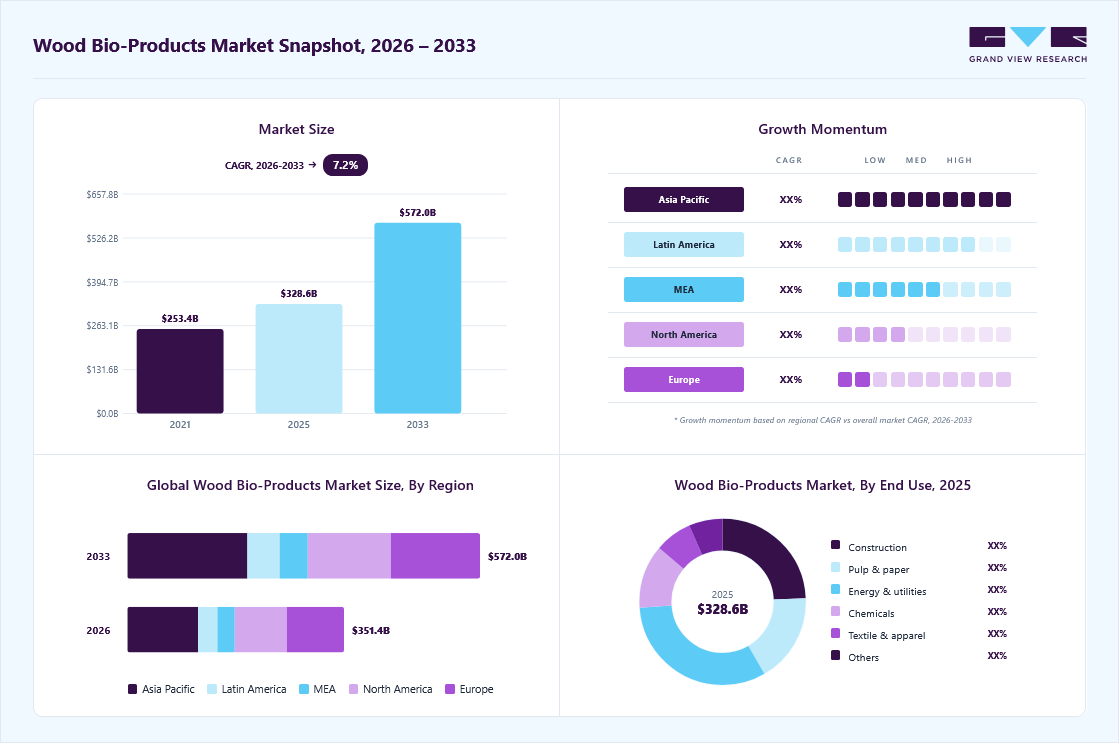
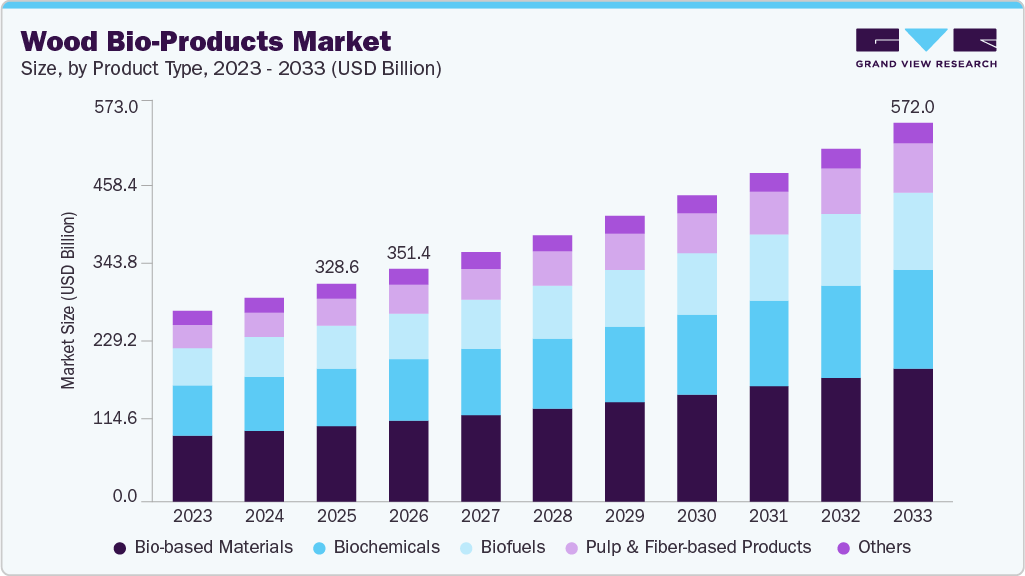
The global wood bio-products market size was valued at USD 328.6 billion in 2025 and is projected to grow from USD 351.4 billion in 2026 to USD 572.0 billion by 2033, at a CAGR of 7.2% from 2026 to 2033. Asia Pacific dominated the global market, accounting for the largest revenue share of 32.5% in 2025. The demand for wood bio-products is rising significantly due to the global shift toward sustainable and renewable materials across industries.
 Source: Grand View Research, IR Documents, Primary Interviews, Paid DatabasesTo learn more about this report,
 Download Free Sample Report
Key Market Trends & Insights
- By Product Type: Pulp & fiber-based products segment is expected to grow at a CAGR of 8.1% over the forecast period.
- By end use: Energy & utilities segment dominated the market with a revenue share of 32.6% in 2025.
Regional Highlights
- Largest regional market: Asia Pacific (32.5% revenue share, 2025)
- By country: The China wood bio-products industry is a major contributor to the global market.
Market Size & Forecast
- Market size in 2025: USD 328.6 Billion
- Estimated market size in 2026: USD 351.4 Billion
- Projected market size by 2033: USD 572.0 Billion
- CAGR (2026-2033): 7.2%
Three ways to get this report
Buy it, customize it, or ask a question.Ask an Analyst
Analyst response in 1 business day
- AccessReport author, directly
- Reply timeWithin 1 working day
- No sales callDirect answer only
- FormatEmail reply
- CostFree, no cost
Get the Full Report
What the study covers
- FormatsPDF · Excel · Dashboard
- Timeline2026–2033 annual, 2025 base
- Coverage20+ countries, 5 regions
- Companies10+ key players profiled
Customize the Report
20% free customization
- IncludeCountries, segments, points
- TailorTo your product definition
- ExtendDeeper competitor detail
- OrA fully bespoke study
- Turnaround5–10 working days
Increasing concerns about carbon emissions and environmental degradation are pushing manufacturers to replace petroleum-based products with bio-based alternatives derived from wood. The construction, packaging, and textile sectors are increasingly adopting wood-derived chemicals, fibers, and composites to meet sustainability goals.
Additionally, growing consumer awareness regarding eco-friendly products is influencing purchasing behavior, further boosting demand. Governments and corporations are also committing to net-zero targets, accelerating the transition toward bio-based economies. The rising adoption of green building materials and biodegradable packaging solutions is another key contributor. As industries seek circular economy solutions, wood bio-products are gaining traction as a viable alternative.
 To learn more about this report, Download Free Sample Report
Key drivers include advancements in biomass processing technologies and the increasing availability of sustainably managed forestry resources. The growing demand for biofuels, bioplastics, and engineered wood products is fueling market expansion. Industries such as pulp & paper, construction, and chemicals are actively integrating wood-based bio-products to reduce dependency on fossil fuels. Additionally, cost competitiveness is improving as production technologies scale up, making these products more accessible. Corporate sustainability commitments and ESG-driven investments are also playing a crucial role in driving demand. The rise in demand for lightweight and high-strength materials in automotive and construction sectors further supports growth.
The market is witnessing rapid innovation in lignin valorization, nanocellulose production, and bio-based composites. Advanced bio-refining technologies are enabling the extraction of high-value chemicals from wood biomass. The development of cross-laminated timber (CLT) and mass timber construction is transforming the building industry. Nanocellulose is gaining popularity due to its high strength, lightweight properties, and biodegradability, making it suitable for packaging and electronics applications. Additionally, companies are exploring wood-based textiles as alternatives to synthetic fibers. Integration of digital technologies and AI in forestry management is improving supply chain efficiency.
Market Concentration & Characteristics
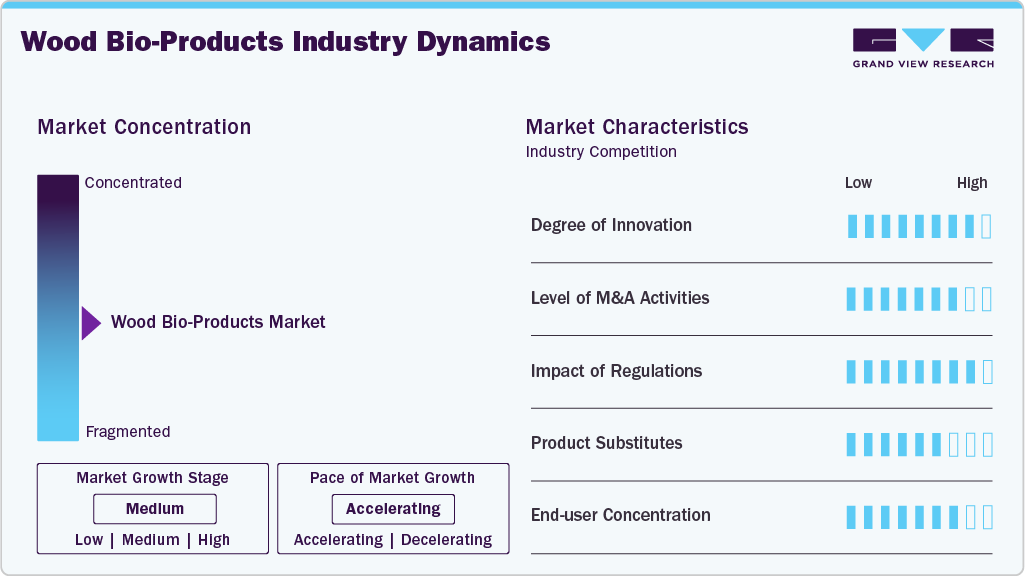
The wood bio-products market exhibits a moderately fragmented structure with the presence of several global and regional players. Large multinational companies dominate segments such as pulp, paper, and engineered wood products, while smaller firms focus on niche bio-based chemicals and specialty materials. Strategic collaborations, mergers, and acquisitions are common as companies aim to expand their technological capabilities and geographic reach. Vertical integration across the value chain from forestry to end-product manufacturing is also observed among key players. Innovation-driven competition is intense, particularly in advanced materials like nanocellulose and lignin derivatives. The market is gradually consolidating as leading players invest heavily in bio-refinery infrastructure.
 To learn more about this report, Download Free Sample Report
Wood bio-products face competition from petroleum-based plastics, metals, and alternative bio-based materials such as agricultural residues. Conventional plastics remain a strong substitute due to their low cost and established infrastructure. However, increasing environmental regulations and consumer preference for sustainable products are reducing their dominance. Other bio-based materials, such as bamboo and hemp, also offer competitive alternatives. Technological limitations and cost challenges in certain applications may hinder adoption. Despite these challenges, wood bio-products are gaining a competitive edge due to their renewability and lower carbon footprint.
Product Type Insights
The bio-based materials segment accounted for the highest revenue share of 34.8% in 2025, driven by extensive applications across packaging, construction, textiles, and consumer goods. These materials, including bioplastics, nanocellulose, and engineered wood, are increasingly preferred as sustainable substitutes for fossil-based products. Growing regulatory pressure to reduce plastic usage and carbon emissions has accelerated adoption, particularly in packaging and building materials. Additionally, advancements in material performance, such as improved strength and biodegradability, have enhanced their commercial viability. Strong demand from end-use industries and increasing corporate sustainability commitments further support the dominance of this segment.
The pulp & fiber-based products segment is expected to grow at a CAGR of 8.1% over the forecast period, driven by rising demand for sustainable packaging and hygiene products. Increasing e-commerce activity and the shift toward recyclable materials are boosting the consumption of paper-based packaging solutions. Moreover, growing awareness regarding environmental sustainability is encouraging the replacement of plastic with fiber-based alternatives. Innovations in high-strength and lightweight fiber materials are expanding their application scope across industries. The textile sector is also contributing to growth through the rising use of wood-based fibers such as viscose and lyocell.
End Use Insights
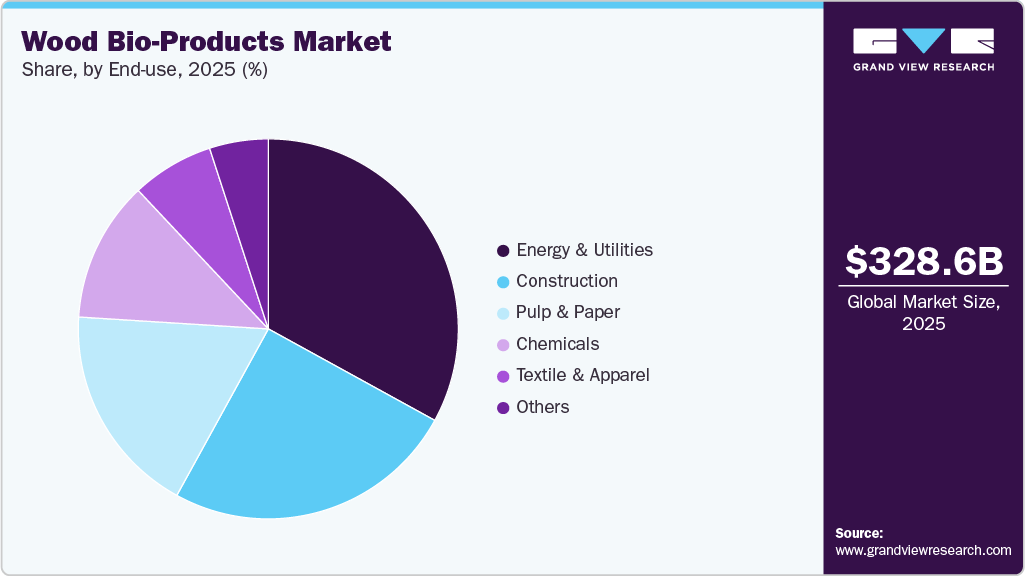
The energy & utilities segment dominated the market with a 32.6% revenue share in 2025, primarily due to the growing use of biomass for renewable energy generation. Wood pellets, chips, and residues are widely utilized as alternatives to coal in power plants, supporting global decarbonization goals. Government incentives and renewable energy targets are further encouraging the adoption of biomass energy. Additionally, the integration of bioenergy solutions into existing energy infrastructure enhances cost efficiency and scalability. The growing focus on energy security and the reduction of greenhouse gas emissions continues to drive demand in this segment.
 To learn more about this report, Download Free Sample Report
The chemicals segment is expected to grow at a CAGR of 8.3% over the forecast period, supported by the increasing demand for bio-based chemicals as alternatives to petrochemicals. Products such as lignin, tall oil, and cellulose derivatives are gaining traction in applications including adhesives, coatings, and industrial processing. Advancements in biorefinery technologies are enabling the production of high-value specialty chemicals from wood biomass. Regulatory pressure to reduce carbon footprint and the shift toward green chemistry are further driving adoption. Expanding applications in the pharmaceutical, agricultural, and personal care industries are also contributing to the segment’s growth trajectory.
Regional Insights
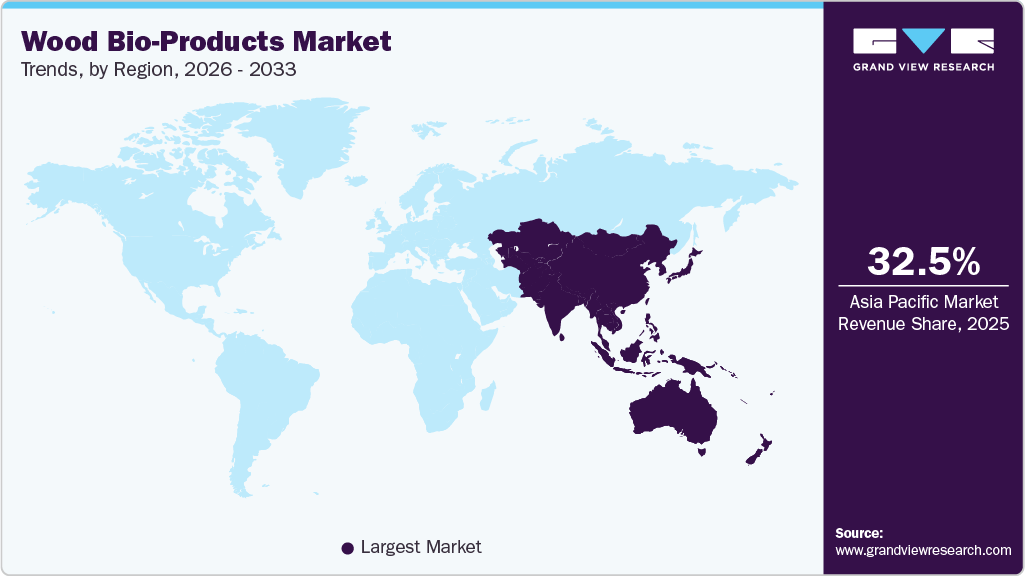
Asia Pacific dominated the global wood bio-products market, accounting for the largest revenue share of 32.5% in 2025, driven by abundant forestry resources and strong industrial demand. Countries like China, India, and Japan are investing heavily in bio-based industries and sustainable materials. Rapid urbanization and infrastructure development are driving the use of engineered wood products. The packaging and textile industries are also significant contributors to regional demand. Government policies supporting green manufacturing further boost growth. The presence of large-scale manufacturing facilities and low production costs enhances regional competitiveness. Increasing exports of wood-based products also supports market expansion.
 To learn more about this report, Download Free Sample Report
China Wood Bio-Products Market Trends
China is a major player due to its extensive manufacturing base and strong government support for bioeconomy initiatives. The country is investing in advanced bio-refineries and sustainable forestry practices. Growing demand for eco-friendly packaging and construction materials is driving adoption. The textile industry is increasingly using wood-based fibers as alternatives to synthetic materials. Technological advancements in biomass processing are improving efficiency. Domestic companies are expanding production capacities to meet both local and international demand.
North America Wood Bio-Products Market Trends
North America is witnessing steady growth driven by strong sustainability regulations and technological advancements. The U.S. and Canada have well-established forestry industries and bio-refinery infrastructure. Demand for mass timber construction and bio-based chemicals is increasing. Government support for renewable energy and materials further accelerates adoption. The presence of major industry players and ongoing R&D activities strengthens the market. The increasing use of wood-based materials in packaging and the automotive sectors also contributes to growth.
The U.S. wood bio-products industry is characterized by high innovation and strong investment in bio-based technologies. Companies are focusing on developing advanced wood-derived chemicals and materials. The construction sector is adopting mass timber solutions for sustainable building practices. Government incentives and funding programs support research and commercialization. Increasing demand for biodegradable packaging is also driving growth. Collaboration between industry and research institutions is fostering innovation.
Europe Wood Bio-Products Market Trends
Europe is a leading region in sustainability initiatives and circular economy adoption. Strict environmental regulations are promoting the use of bio-based materials. Countries such as Sweden, Finland, and Germany are at the forefront of innovation in wood bio-products. The construction and packaging industries are key demand drivers. Investments in bio-refineries and green technologies are expanding market opportunities. Consumer preference for eco-friendly products further supports growth. The region is also a hub for advanced research in biomass utilization.
The Germany wood bio-products industry plays a significant role due to its strong industrial base and focus on sustainability. The country is investing in bio-based chemicals and advanced materials derived from wood. The automotive and construction sectors are key consumers of wood bio-products. Government policies supporting renewable materials drive adoption. Research institutions and companies are collaborating on innovative solutions. The market is characterized by high technological advancement and strong regulatory support.
Central and South America Wood Bio-Products Market Trends
Central and South America is emerging as a key market due to abundant forest resources and growing industrialization. Countries like Brazil and Chile are major producers of wood-based products. Increasing investments in bio-refineries and sustainable forestry are driving growth. Export opportunities play a crucial role in market expansion. The packaging and pulp industries are major contributors. Government initiatives promoting sustainable resource utilization further support the market.
Middle East & Africa Wood Bio-Products Market Trends
The Middle East & Africa region is gradually adopting wood bio-products, driven by sustainability goals and diversification efforts. Limited forest resources are balanced by increasing imports and investments in bio-based industries. The construction sector is a key driver, particularly in green building projects. Governments are focusing on reducing dependency on fossil fuels, creating opportunities for bio-based materials. Growing awareness of environmental sustainability is supporting market growth. Partnerships with global players are helping in technology transfer and market development.
Key Wood Bio-Products Company Insights
Some of the key players operating in the market include UPM and Stora Enso
-
UPM is a leading player in the wood bio-products market, focusing on advanced bio-refining, sustainable forestry, and renewable materials. The company is активно expanding into biofuels, biochemicals, and wood-based biomaterials to reduce dependence on fossil-based products.
-
Stora Enso is a major provider of renewable materials, specializing in wood-based packaging, biomaterials, and engineered wood products. The company is actively replacing fossil-based materials with low-carbon alternatives, with a strong focus on circular economy solutions. Its innovations in lignin and cellulose-based products make it a significant player in sustainable material development.
Drax Group plc and Canadian Forest Products Ltd. are some of the emerging market participants in the wood bio-products market.
-
Drax Group is a key participant in the wood bio-products ecosystem through its focus on biomass energy and sustainable wood pellet production. The company supports decarbonization by supplying renewable biomass fuels and investing in carbon capture technologies. Its operations link forestry resources with energy generation, strengthening the bioenergy value chain.
-
Canadian Forest Products (Canfor) is a prominent North American producer of sustainable wood and bio-based products. The company is involved in lumber, pulp, and bioenergy production, with a growing emphasis on maximizing value from wood residues.
Key Wood Bio-Products Companies:
The following key companies have been profiled for this study on the wood bio-products market.
- UPM
- Stora Enso
- West Fraser Timber Co.
- Enviva Inc.
- Metsä Group
- Sappi Ltd
- Canadian Forest Products Ltd.
- Drax Group plc
- Georgia-Pacific LLC
- Borregaard ASA
Recent Developments
-
In May 2025, Georgia-Pacific introduced new sustainable packaging and tissue products incorporating recycled and bio-based fibers to meet regulatory and consumer sustainability demands.
-
In February 2025, Borregaard expanded its range of lignin-based biopolymers and specialty cellulose, targeting high-value applications in construction chemicals, agriculture, and batteries.
Wood Bio-Products Market Report Scope
Report Attribute
Details
Market size in 2025
USD 328.6 billion
Estimated Market size in 2026
USD 351.4 billion
Projected Market size by 2033
USD 572.0 billion
Growth rate
CAGR of 7.2% from 2026 to 2033
Base year for estimation
2025
Actual estimates/Historical data
2021 - 2025
Forecast period
2026 - 2033
Quantitative units
Revenue in USD billion and CAGR from 2026 to 2033
Report coverage
Revenue forecast, company ranking, competitive landscape, growth factors, and trends
Segments covered
Product type, end use, region.
Regional scope
North America, Europe, Asia Pacific, Central & South America, Middle East & Africa
Country scope
U.S.; Canada; Mexico; Germany; UK; France; Italy; Spain; China; Japan; India
Key companies profiled
UPM; Stora Enso; West Fraser Timber Co.; Enviva Inc.; Metsä Group; Sappi Ltd; Canadian Forest Products Ltd.; Drax Group plc; Georgia-Pacific LLC; Borregaard ASA
Customization scope
Free report customization (equivalent up to 8 analysts working days) with purchase. Addition or alteration to country, regional & segment scope.
Pricing and purchase options
Avail customized purchase options to meet your exact research needs. Explore purchase options
Global Wood Bio-Products Market Report Segmentation
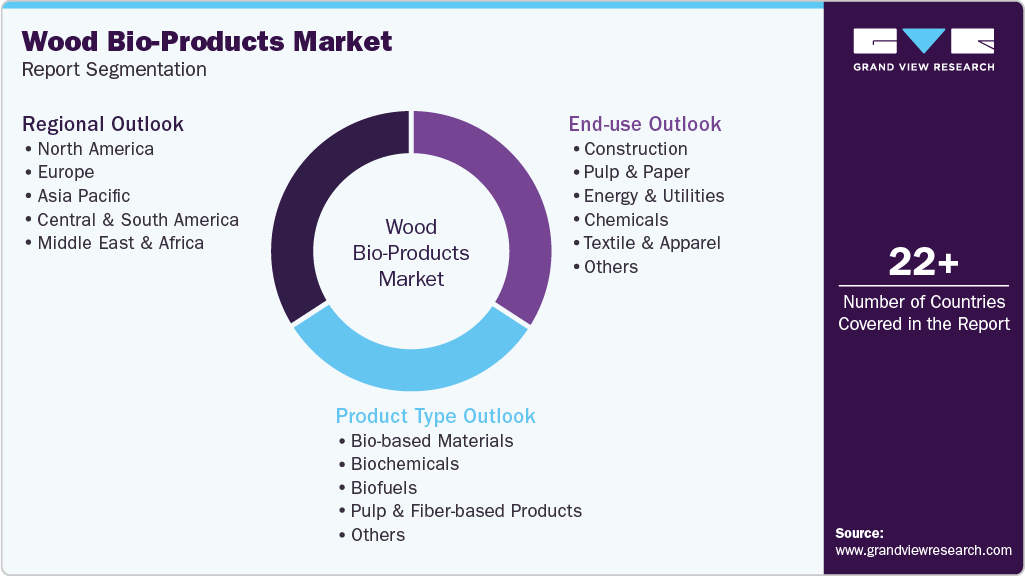
This report forecasts revenue growth at regional & country levels and provides an analysis on the industry trends in each of the sub-segments from 2021 to 2033. For the purpose of this study, Grand View Research has segmented the global wood bio-products market report on the basis of product type, end use, and region:
 To learn more about this report, Download Free Sample Report
-
Product Type Outlook (Revenue, USD Billion, 2021 - 2033)
-
Bio-based materials
-
Biochemicals
-
Biofuels
-
Pulp & fiber-based products
-
Others
-
-
End Use Outlook (Revenue, USD Billion, 2021 - 2033)
-
Construction
-
Pulp & paper
-
Energy & utilities
-
Chemicals
-
Textile & apparel
-
Others
-
-
Regional Outlook (Revenue, USD Billion, 2021 - 2033)
-
North America
-
U.S.
-
Canada
-
Mexico
-
-
Europe
-
UK
-
Germany
-
France
-
Italy
-
Spain
-
-
Asia Pacific
-
China
-
Japan
-
India
-
-
Central and South America
-
Middle East and Africa
-
Frequently Asked Questions About This Report
Asia Pacific dominated with a 32.5% revenue share in 2025.
The energy & utilities segment led with a 32.6% revenue share in 2025.
The global wood bio-products market size was valued at USD 328.6 billion in 2025 and is estimated at USD 351.4 billion for 2026.
The global wood bio-products market is expected to grow at a CAGR of 7.2% from 2026 to 2033, reaching USD 572.0 billion by 2033.
The bio-based materials segment held the highest revenue share of 34.8% in 2025, due to its extensive application across packaging, construction, textiles, and consumer goods.
Key players include UPM; Stora Enso; West Fraser Timber Co.; Enviva Inc.; Metsä Group; Sappi Ltd; Canadian Forest Products Ltd.; Drax Group plc; Georgia-Pacific LLC; Borregaard ASA.
Rising demand for sustainable, low-carbon alternatives to fossil-based materials, supported by stringent environmental regulations, advancements in bio-refining technologies, and growing adoption of circular economy practices, is driving the wood bio-products market.
About the Author(s)
Advanced Interior Materials Research Team
Advanced Materials · Advanced Interior MaterialsThis report was authored by the advanced interior materials research team at Grand View Research - comprising two research analysts, one senior research analyst, and one industry expert - with specialized expertise in the advanced interior materials segment of the advanced materials industry. All findings are based on proprietary advanced materials databases, executive interviews, and regulatory analysis, subject to internal peer review prior to publication.
Last Updated:
Speak to Analyst

Customize this report to your needs - add regions, segments, or data points, with 20% free customization.
Or view our licence options:


ISO 9001:2015 & 27001:2022 Certified
We are GDPR and CCPA compliant! Your transaction & personal information is safe and secure. For more details, please read our privacy policy.


