
- Home
- »
- Advanced Interior Materials
- »
-
Bioleaching Market Size, Share & Trends Report, 2025-2033GVR Report cover
![Bioleaching Market (2025 - 2033)Report]()
Bioleaching Market (2025 - 2033)
Size, Share & Trends Analysis Report By Metal (Copper, Gold, Zinc & Nickel), By Source (Primary Ores, Mine Tailings), By Region (North America, Europe, Asia Pacific), And Segment Forecasts
Market Size, 2024
$10.1BMarket Estimate, 2026
$11.6BMarket Forecast, 2033
$21.4BCAGR, 2025–2033
8.9%Bioleaching Market Summary
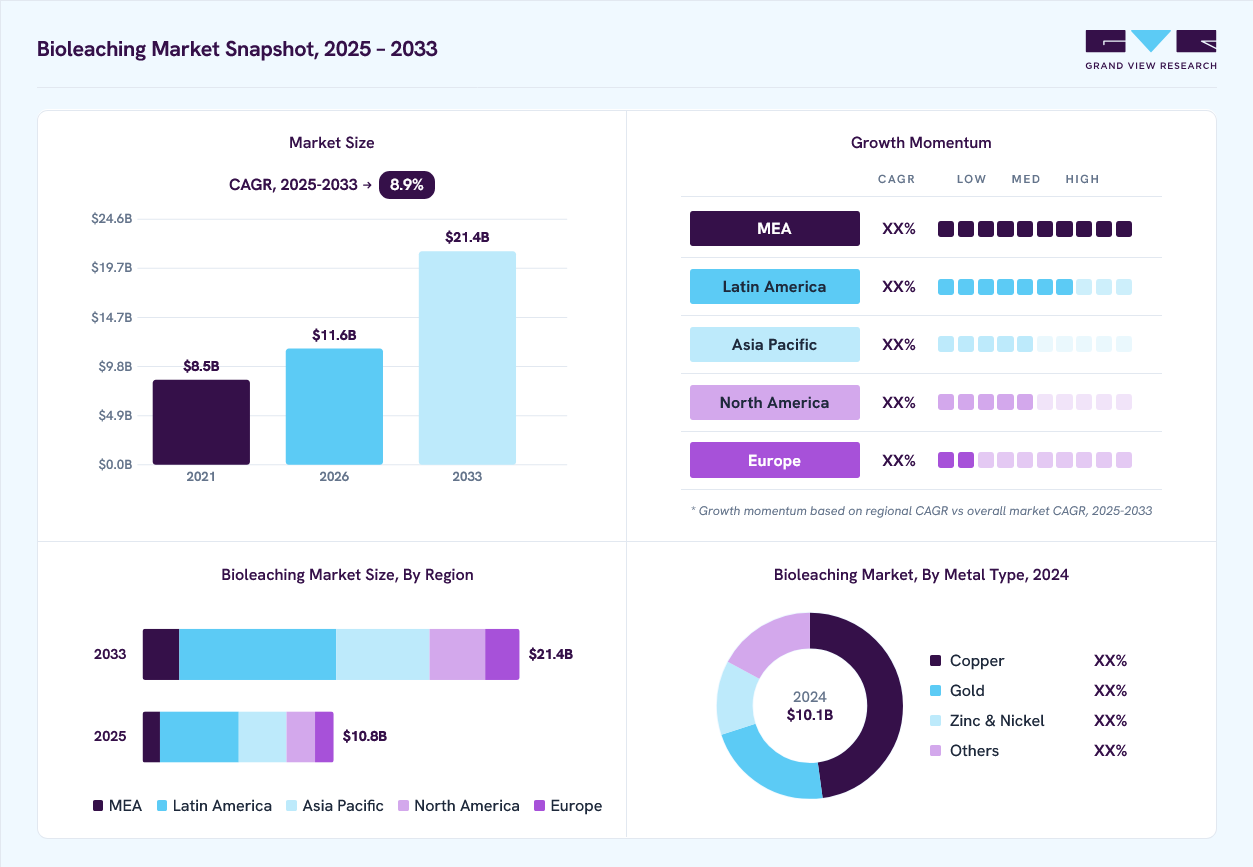
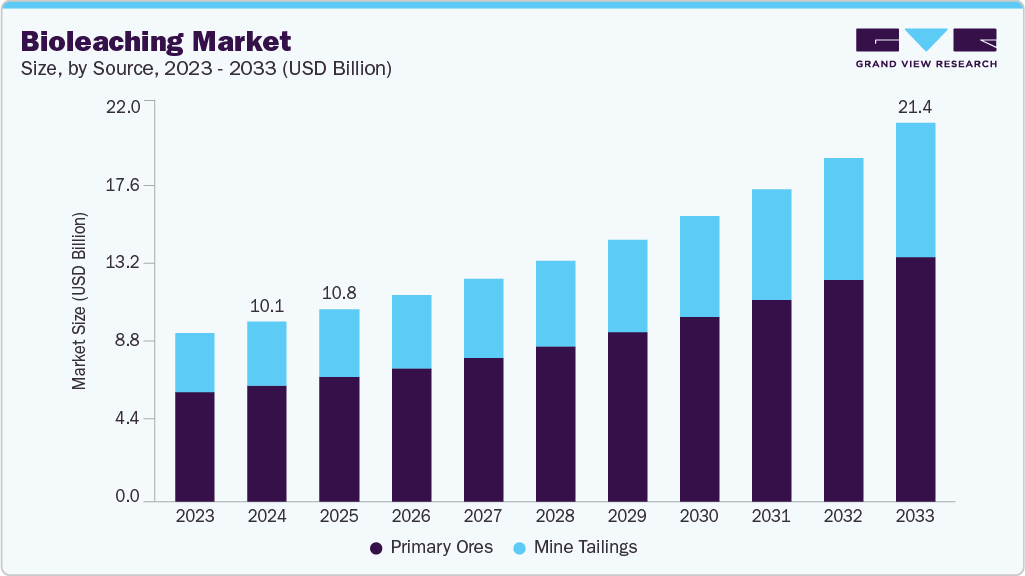
The global bioleaching market size was valued at USD 10.1 billion in 2024 and is projected to grow from USD 11.6 billion in 2026 to USD 21.4 billion by 2033, at a CAGR of 8.9% from 2025 to 2033. Latin America dominated the market, accounting for a revenue share of 41.2% in 2024. The market is experiencing robust growth due to the global shift toward sustainable mining practices.
Key Market Trends & Insights
- The U.S. bioleaching industry is home to substantial reserves of critical metals, including copper, gold, and rare earth elements, which are essential for various industries such as electronics, renewable energy, and defense.
- By source, the primary ores segment held the revenue share of 64.9% in 2024.
- By metal, the copper segment accounted for the largest market revenue share of over 47.8% in 2024.
Market Size & Forecast
- 2024 Market Size: USD 10.1 Billion
- 2033 Projected Market Size: USD 21.4 Billion
- CAGR (2025-2033): 8.9%
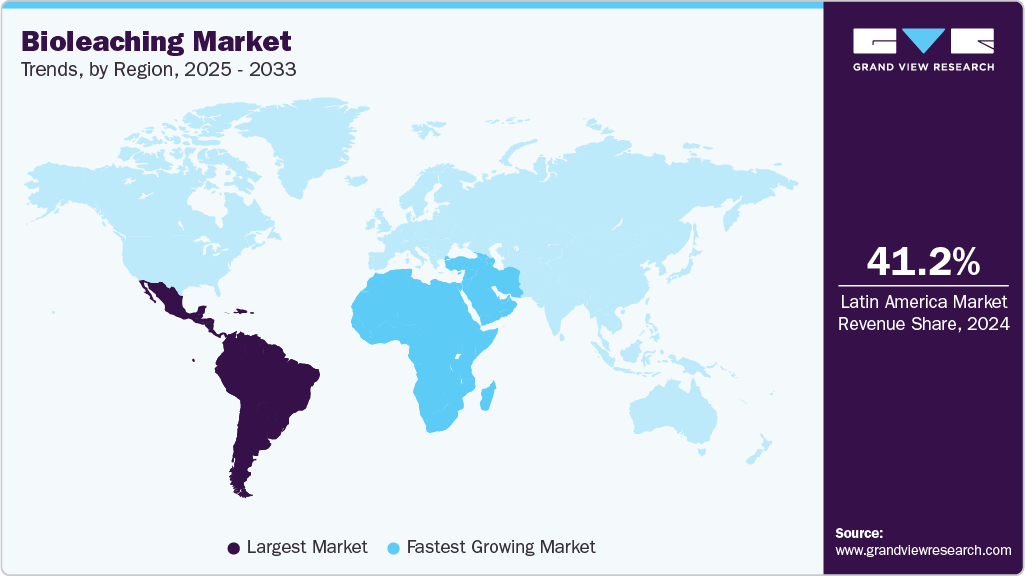
- Latin America: Largest Market in 2024
- Middle East & Africa: Fastest growing market
Traditional extraction methods often cause significant environmental damage, including air and water pollution, soil contamination, and the generation of toxic byproducts. These methods can also lead to long-term ecological degradation, affecting biodiversity and local communities. Bioleaching, which uses microorganisms to extract metals from ores, offers a much more environmentally friendly alternative. It reduces the need for harsh chemicals, lowers energy consumption, and produces fewer harmful emissions. This alignment with stricter environmental regulations and the growing demand for greener industrial operations makes bioleaching an attractive choice for mining companies seeking to minimize their ecological footprint while maintaining profitability and operational efficiency.Another key driver is the depletion of high-grade ore deposits, which has become a pressing challenge for the global mining industry. As easily accessible mineral resources decline, mining companies must increasingly turn to lower-grade ores, mining residues, and tailings, which are often difficult and expensive to process using conventional methods. Bioleaching enables the recovery of valuable metals from these challenging sources in a cost-effective manner, allowing mining operations to remain viable despite declining ore quality. This capability is particularly important for metals like copper, gold, nickel, and uranium, which are critical for multiple industrial and technological applications. By unlocking resources that would otherwise remain uneconomical, bioleaching helps extend the lifespan of existing mines and reduces the need for new, environmentally disruptive mining projects.
Technological advancements in microbial and genomic research have further boosted the market by significantly enhancing process efficiency and metal recovery rates. Scientists have developed genetically engineered microorganisms with improved metal-extracting capabilities, optimized metabolic pathways, and increased tolerance to harsh operational conditions. Innovations in reactor design, process monitoring, and automation have also allowed for more precise control over bioleaching conditions, reducing operational costs and increasing scalability. These developments make bioleaching a competitive alternative to conventional mining methods, particularly for complex ores, low-grade deposits, and polymetallic sources. The integration of biotechnology with mining operations has also opened new possibilities for resource recovery from waste streams, making bioleaching a critical component of modern sustainable mining strategies.
The rising global demand for metals is another significant factor driving market growth. Metals such as copper, gold, nickel, cobalt, and rare earth elements are essential components in electronics, renewable energy technologies, electric vehicles, batteries, and infrastructure projects. Rapid industrialization, urbanization, and the transition to clean energy systems have intensified the need for these metals, creating pressure on traditional mining operations. Bioleaching provides a practical and sustainable solution to meet these growing metal requirements. Its ability to efficiently process low-grade ores and mining wastes allows industries to maintain a stable supply of critical metals, reduce dependency on high-grade deposits, and minimize environmental impacts associated with conventional mining, supporting both economic growth and sustainable development goals.
Drivers, Opportunities & Restraints
The bioleaching industry is driven by increasing environmental awareness and the global push for sustainable mining practices. Traditional metal extraction methods generate significant environmental pollution, including air and water contamination, soil degradation, and hazardous waste. Bioleaching, which employs microorganisms to extract metals from ores, offers an eco-friendly alternative with lower energy requirements and minimal chemical usage. In addition, the depletion of high-grade ores has forced mining companies to explore low-grade ores and mining residues, which are more effectively processed through bioleaching. Rising demand for critical metals such as copper, gold, nickel, and cobalt, fueled by industrialization, renewable energy adoption, and electronics production, further supports market growth.
The market presents substantial opportunities due to technological advancements and emerging applications. Innovations in microbial engineering, genomic research, and process automation have improved the efficiency and scalability of bioleaching operations, enabling higher metal recovery rates and reduced operational costs. Expanding applications in electronic waste recycling and industrial byproduct processing offer new revenue streams for companies, allowing them to recover valuable metals from unconventional sources. The growing adoption of sustainable mining practices, especially in regions like Asia Pacific with large mineral reserves and expanding industrial sectors, also creates potential for strategic partnerships, investments, and market expansion.
Despite its growth potential, the bioleaching industry faces certain restraints. The process is generally slower than conventional extraction methods, which can increase production timelines and affect short-term profitability. Operational conditions such as pH, temperature, and microbial activity require careful control, making large-scale implementation technically challenging in some regions.
Source Insights
Primary ores segment held the revenue share of 64.9% in 2024. Primary ores, which contain naturally occurring concentrations of valuable metals, are becoming harder to access, prompting the need for more efficient and sustainable extraction techniques. Bioleaching offers a cost-effective and environmentally friendly solution by using microorganisms to extract metals directly from these ores, reducing the reliance on harsh chemicals and energy-intensive processes.
The mine tailings segment is experiencing growth as mining companies seek sustainable methods to recover valuable metals from waste materials. Tailings, which are the leftover materials after ore extraction, often contain significant amounts of metals that are uneconomical to recover using conventional methods. Bioleaching provides an efficient and eco-friendly solution by employing microorganisms to extract metals from these residues, reducing environmental hazards associated with tailings storage and minimizing resource wastage.
Metal Insights
Copper segment held the revenue share of 47.8% in 2024. The copper segment in the market is witnessing significant growth due to increasing global demand for copper across multiple industries. Copper is a critical component in electrical wiring, electronics, renewable energy systems, and electric vehicles, all of which are experiencing rapid expansion worldwide. Traditional mining methods for copper extraction are becoming less sustainable due to environmental concerns and the declining availability of high-grade ores. Bioleaching offers an eco-friendly and cost-effective alternative for extracting copper from low-grade ores and mining residues, enabling mining companies to meet the rising demand while reducing environmental impact.

The zinc & nickel segment is anticipated to register the fastest CAGR over the forecast period. Zinc is widely used in galvanization, batteries, and alloys, while nickel is critical for stainless steel production and lithium-ion battery cathodes in electric vehicles. Conventional extraction methods for low-grade ores and mining residues are costly and environmentally damaging. Bioleaching offers an eco-friendly and efficient alternative, enabling the recovery of these metals from ores, tailings, and industrial waste. Technological advancements in microbial engineering, reactor design, and process optimization have further enhanced metal recovery rates, while increasing focus on sustainable mining and recycling practices provides new opportunities for both zinc and nickel extraction.
Regional Insights
Latin America accounted for the largest market revenue share of 41.2% in 2024.The bioleaching industry in Latin America is experiencing notable growth due to the region's abundant mineral resources and the rising emphasis on sustainable mining practices. Countries such as Chile, Peru, and Brazil possess vast deposits of copper and gold, which are critical to the global mining industry. For instance, Chile and Peru together account for 34% of the world's copper reserves, providing a solid foundation for the adoption of bioleaching technologies. As conventional extraction methods face challenges with declining ore grades, bioleaching provides an environmentally friendly alternative by using microorganisms to extract metals from low-grade ores.
Asia Pacific Bioleaching Market Trends
The bioleaching industry in the Asia Pacific region is witnessing strong growth due to the region's abundant mineral resources and increasing focus on sustainable mining practices. Countries such as China, India, and Australia have vast deposits of metals, including copper, gold, and rare earth elements, which are essential for industrial and technological applications. As conventional mining methods face challenges like declining ore grades and environmental concerns, bioleaching provides an eco-friendly alternative by using microorganisms to extract metals from low-grade ores. This method helps reduce the environmental footprint of mining activities and aligns with regulatory pressures for cleaner extraction technologies.
North America Bioleaching Market Trends
The bioleaching industry in North America is experiencing notable growth, driven by several key factors. The region's established mining infrastructure and strong regulatory frameworks support the adoption of sustainable mining practices. Countries like the U.S. and Canada are investing in environmentally responsible operations, integrating bioleaching to enhance metal recovery from low-grade ores and mining waste. This approach aligns with the growing demand for eco-efficient extraction methods and waste reduction in the mining industry. In addition, the increasing prices of metals, particularly copper and gold, are compelling miners to seek more efficient extraction methods, further driving the need for bioleaching techniques.
U.S. Bioleaching Market Trends
The U.S. bioleaching industry is home to substantial reserves of critical metals, including copper, gold, and rare earth elements, which are essential for various industries such as electronics, renewable energy, and defense. As traditional mining methods face challenges like declining ore grades and increasing environmental concerns, bioleaching offers a sustainable alternative by utilizing microorganisms to extract metals from low-grade ores and mining waste.
Europe Bioleaching Market Trends
The bioleaching industry in Europe is experiencing significant growth, driven by a combination of regulatory initiatives and technological advancements. The European Union's Green Deal, which aims to reduce greenhouse gas emissions by at least 55% by 2030 compared to 1990 levels, has placed a strong emphasis on minimizing environmental impact across various industries, including mining. This regulatory pressure has led companies to adopt eco-friendly methods, with bioleaching emerging as a viable alternative to traditional mining practices.
Middle East & Africa Bioleaching Market Trends
The bioleaching industry in the Middle East and Africa is experiencing gradual growth, driven by the region's expanding mining activities and increasing focus on sustainable extraction methods. Countries like Saudi Arabia and the UAE are exploring bioleaching to support mineral diversification and sustainable development goals. This interest is particularly evident in regions where mining is expanding into lower-grade deposits, making traditional extraction methods less viable. The adoption of bioleaching offers a more environmentally friendly alternative, aligning with global trends towards greener industrial practices.
Key Bioleaching Company Insights
Some of the key players operating in the market include BacTech Environmental Corporation, Anglo American plc, and others
-
Anglo American plc is a leading global mining company headquartered in London, with a diverse portfolio spanning copper, diamonds, platinum, and other essential metals. The company is at the forefront of integrating innovative technologies to enhance the sustainability and efficiency of its operations. Anglo American's commitment to reducing environmental impact is evident in its development of the SandLix heap leaching process, which utilizes microorganisms to extract metals from low-grade ores. This method not only increases resource utilization by economically processing previously uneconomical materials but also reduces water and energy consumption and minimizes the volume of wet tailings requiring storage.
-
BacTech Environmental Corporation is a Canadian cleantech company specializing in the application of bioleaching to remediate toxic mining sites and recover valuable metals. The company employs naturally occurring bacteria to oxidize sulfides in mine tailings, a process that neutralizes toxic substances like arsenic and converts them into environmentally benign compounds. This bioremediation approach not only recovers metals but also addresses long-standing environmental hazards associated with historic mining activities.
Key Bioleaching Companies:
The following are the leading companies in the bioleaching market. These companies collectively hold the largest market share and dictate industry trends.
- Anglo American plc
- BacTech Environmental
- BHP Group
- Denison Mines Corp
- Freeport-McMoRan Inc.
- Newmont Corporation
- Rio Tinto Plc
- Teck Resources Ltd
- Terrafame Ltd
- Zijin Mining Group
Recent Development
-
In October 2025, BacTech Environmental expanded its bioleaching operations in Ecuador, announcing the construction of a new owner-operated bioleaching facility near Tenguel - Ponce Enriquez, a region known for gold ores with high arsenic content (arsenopyrite). The company’s bioleaching technology uses bacteria to extract valuable metals such as gold, silver, copper, and cobalt from complex ores in an environmentally sustainable way, avoiding toxic chemicals like cyanide.
Bioleaching Market Report Scope
Report Attribute
Details
Market size in 2024
USD 10.1 billion
Estimated market size in 2026
USD 11.6 billion
Projected market size by 2033
USD 21.4 billion
Growth rate
CAGR of 8.9% from 2025 to 2033
Base year for estimation
2024
Historical data
2021 - 2023
Forecast period
2025 - 2033
Quantitative Units
Revenue in USD million/billion and CAGR from 2025 to 2033
Report coverage
Revenue forecast, competitive landscape, growth factors, and trends
Segments covered
Metal, source, region
Regional scope
North America; Europe; Asia Pacific; Latin America; Middle East & Africa
Country scope
U.S.; Canada; Mexico; Germany; UK; France; China; India; Japan; Brazil; Saudi Arabia, UAE
Key companies profiled
BacTech Environmental; Terrafame Ltd; Zijin Mining Group; Anglo American plc; BHP Group; Teck Resources Ltd; Rio Tinto Plc; Freeport-McMoRan Inc.; Newmont Corporation; Denison Mines Corp
Customization scope
Free report customization (equivalent up to 8 analysts working days) with purchase. Addition or alteration to country, regional & segment scope.
Pricing and purchase options
Avail customized purchase options to meet your exact research needs. Explore purchase options
Global Bioleaching Market Report Segmentation
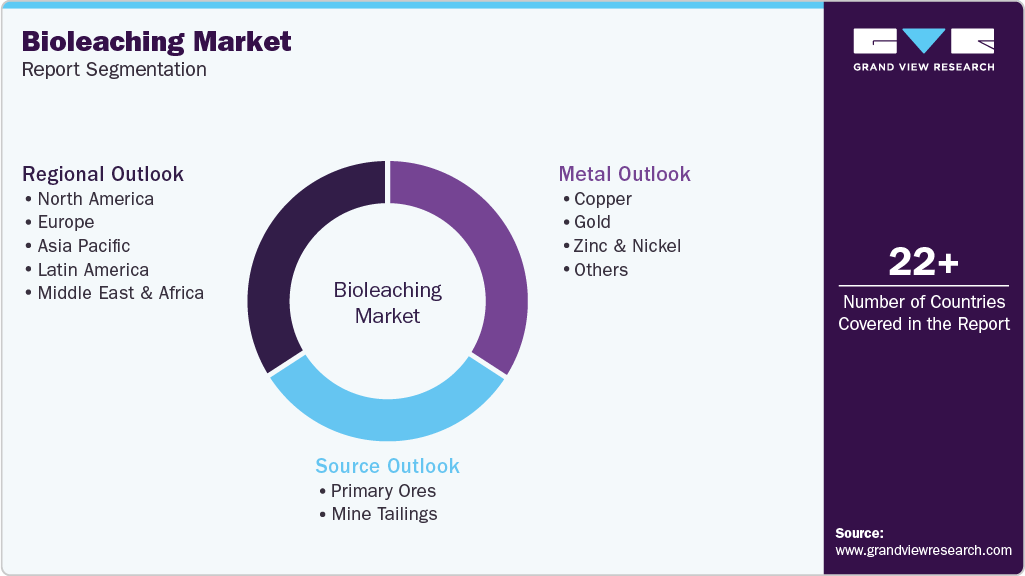
This report forecasts revenue and volume growth at global, regional, and country levels and provides an analysis of the latest industry trends in each of the sub-segments from 2021 to 2033. For this study, Grand View Research has segmented the global bioleaching market report based on metal, source, and region:
-
Metal Outlook (Revenue, USD Million, 2021 - 2033)
-
Copper
-
Gold
-
Zinc & Nickel
-
Others
-
-
Source Outlook (Revenue, USD Million, 2021 - 2033)
-
Primary Ores
-
Mine Tailings
-
-
Regional Outlook (Revenue, USD Million, 2021 - 2033)
-
North America
-
U.S.
-
Canada
-
Mexico
-
-
Europe
-
Germany
-
UK
-
France
-
-
Asia Pacific
-
China
-
India
-
Japan
-
-
Latin America
-
Brazil
-
-
Middle East & Africa
-
Saudi Arabia
-
UAE
-
-
Frequently Asked Questions About This Report
The global bioleaching market size was estimated at USD 10.14 billion in 2024 and is expected to reach USD 10.83 billion in 2025.
The global bioleaching market is expected to grow at a compound annual growth rate of 8.9% from 2025 to 2033 to reach USD 21.37 billion by 2033.
The copper segment dominated the market with a revenue share of 47.8% in 2024.
Some of the key players of the global bioleaching market are BacTech Environmental, Terrafame Ltd, Zijin Mining Group, Anglo American plc, BHP Group, Teck Resources Ltd, Rio Tinto Plc, Freeport-McMoRan Inc., Newmont Corporation, Denison Mines Corp, and others.
The key factor driving the growth of the global bioleaching market is the increasing demand for environmentally friendly and cost-effective metal extraction methods from low-grade ores and mining waste.
About the Author(s)
Advanced Interior Materials Research Team
Advanced Materials · Advanced Interior MaterialsThis report was authored by the advanced interior materials research team at Grand View Research - comprising two research analysts, one senior research analyst, and one industry expert - with specialized expertise in the advanced interior materials segment of the advanced materials industry. All findings are based on proprietary advanced materials databases, executive interviews, and regulatory analysis, subject to internal peer review prior to publication.
Last Updated:
Speak to Analyst

Need a Tailored Report?
Customize this report to your needs — add regions, segments, or data points, with 20% free customization.
Or view our licence options:


ISO 9001:2015 & 27001:2022 Certified
We are GDPR and CCPA compliant! Your transaction & personal information is safe and secure. For more details, please read our privacy policy.












