
- Home
- »
- Next Generation Technologies
- »
-
Edge AI Accelerator Market Size & Share Report, 2026-2033GVR Report cover

Edge AI Accelerator Market (2026 - 2033)
Size, Share & Trends Analysis Report By Processor (CPU, GPU, ASIC, FPGA), By Device (Smartphones, IoT Devices, Cameras, Robots), By End-use (Healthcare, Automotive, Retail), By Region, And Segment Forecasts
Market Size, 2025
$10.0BMarket Estimate, 2026
$13.1BMarket Forecast, 2033
$88.4BCAGR, 2026–2033
31.4%Edge AI Accelerator Market Summary
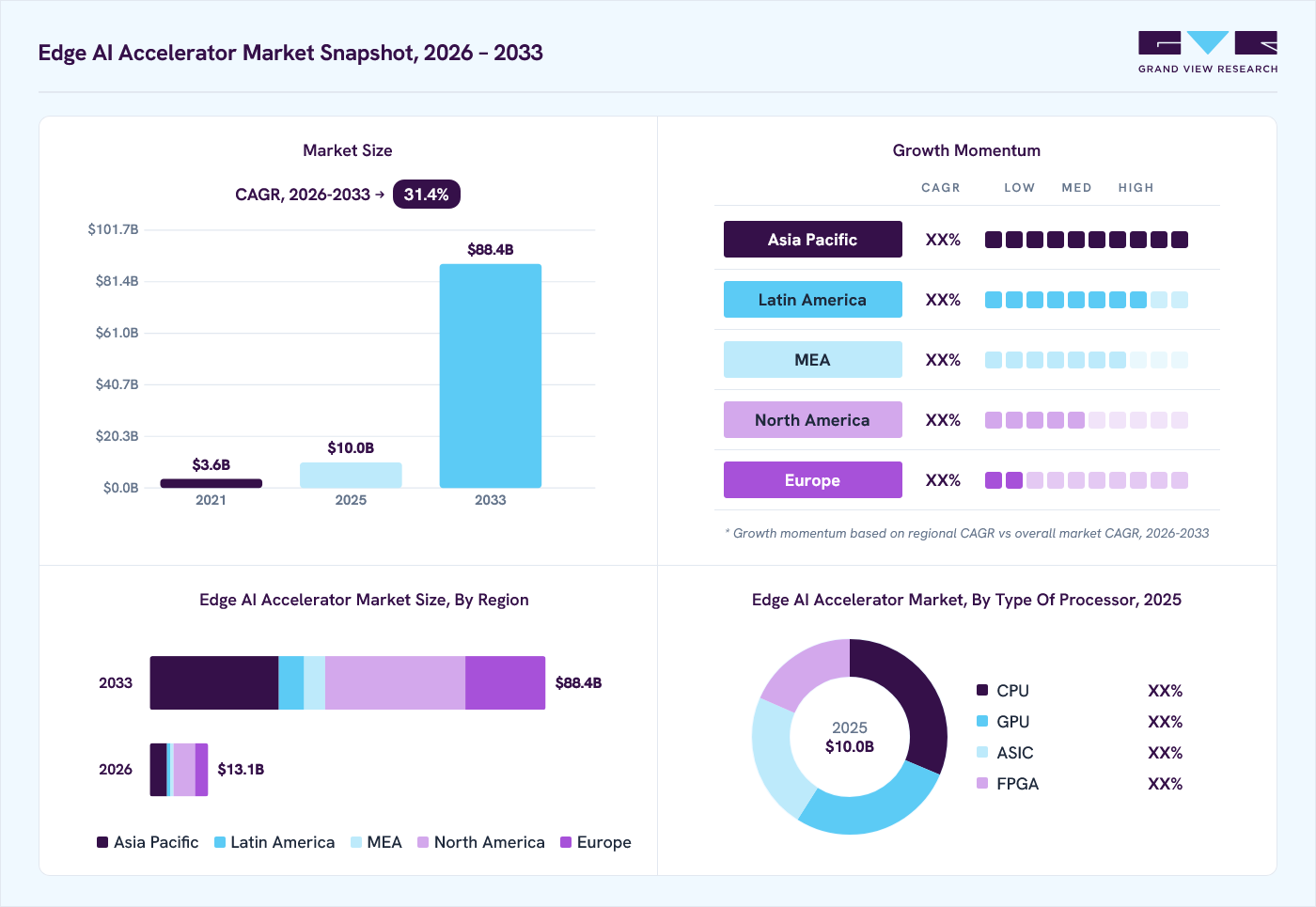
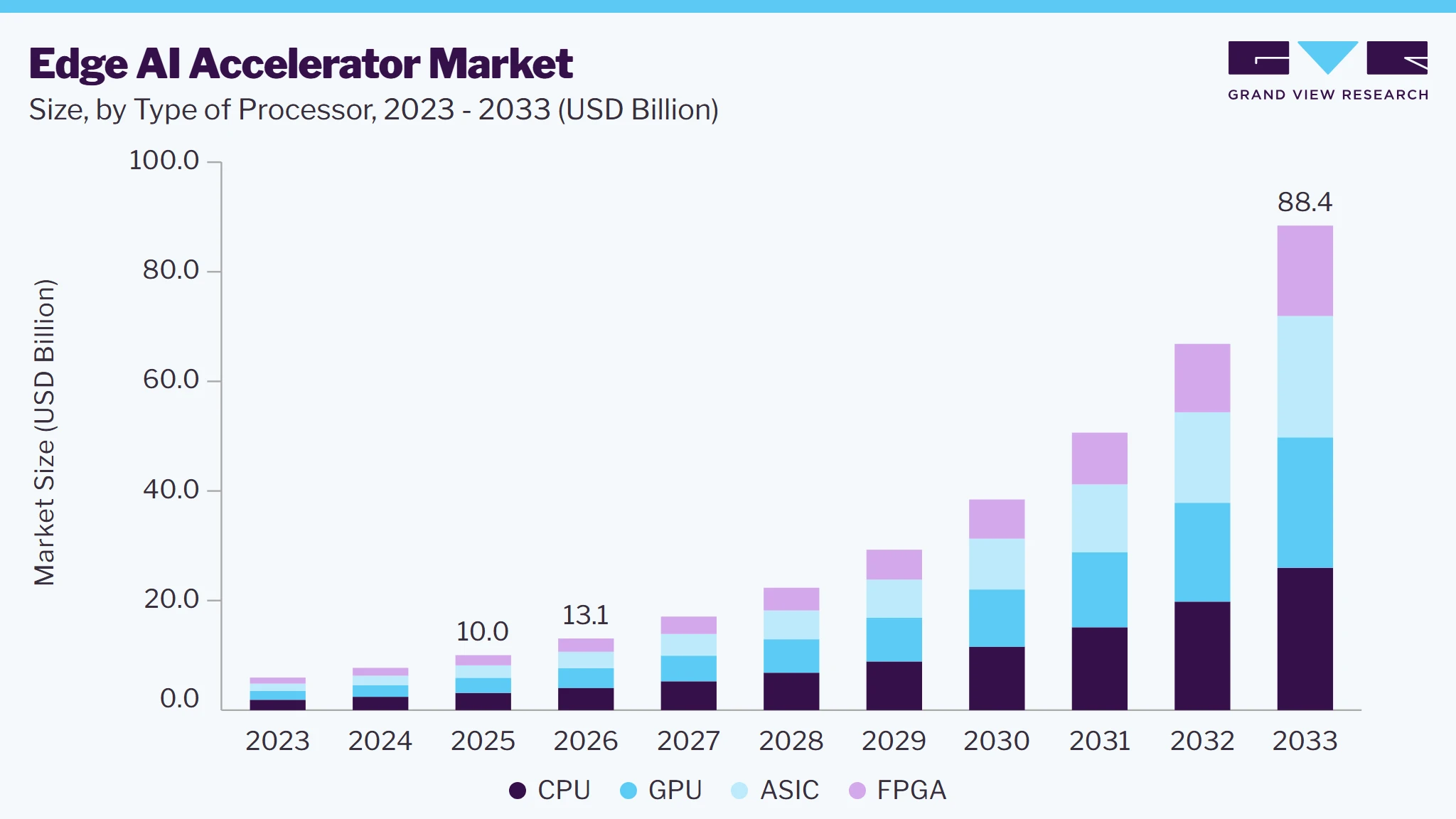
The global edge AI accelerator market size was valued at USD 10.0 billion in 2025 and is projected to grow from USD 13.1 billion in 2026 to USD 88.4 billion by 2033, at a CAGR of 31.4% from 2026 to 2033. North America dominated the market, accounting for a revenue share of 37.0% in 2025. The market is driven by the increasing deployment of AI-enabled edge devices, rising demand for real-time data processing with low latency, growing adoption of intelligent IoT ecosystems, advancements in specialized AI chip architectures, and expanding investments in autonomous systems across automotive, industrial, healthcare, and smart city applications.
 Source: Grand View Research, IR Documents, Primary Interviews, Paid DatabasesTo learn more about this report,
 Download Free Sample Report
 Key Market Trends & Insights
- By processor: CPU segment dominated the market, with a revenue share of 31.3% in 2025.
- By device: Smartphones segment held the largest market share of 37.9% in 2025.
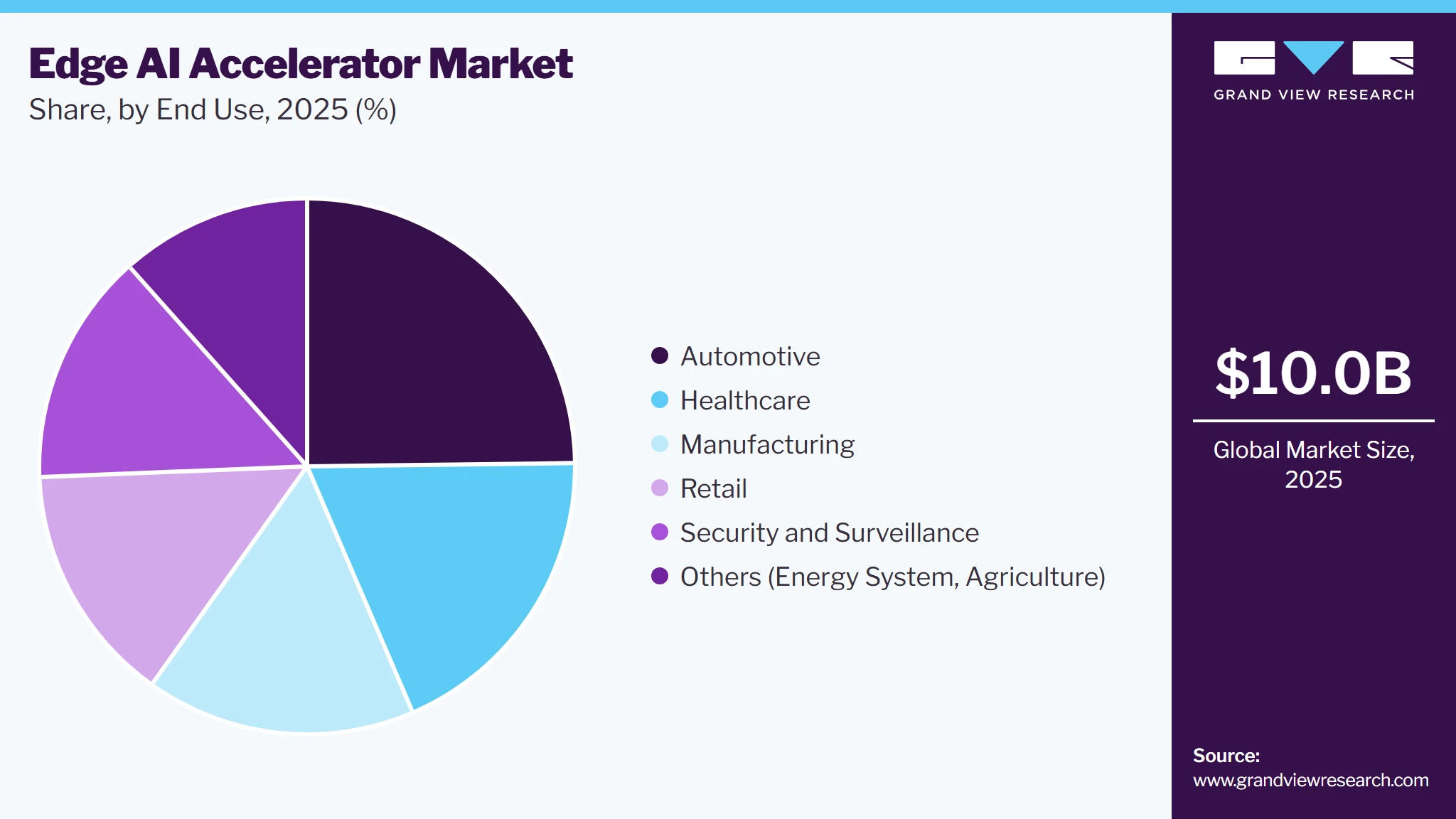
- By end use: Automotive segment held the largest revenue share of 24.8% in 2025.
Regional Highlights
- Largest regional market: North America (37.0% revenue share, 2025)
- Fastest growing regional market: Asia Pacific (highest CAGR, 2026-2033)
- By country: The U.S. held the largest market share in 2025.
Market Size & Forecast
- Market size in 2025: USD 10.0 Billion
- Estimated market size in 2026: USD 13.1 Billion
- Projected market size by 2033: USD 88.4 Billion
- CAGR (2026-2033): 31.4%
Three ways to get this report
Buy it, customize it, or ask a question.Ask an Analyst
Analyst response in 1 business day
- AccessReport author, directly
- Reply timeWithin 1 working day
- No sales callDirect answer only
- FormatEmail reply
- CostFree, no cost
Get the Full Report
What the study covers
- FormatsPDF · Excel · Dashboard
- Timeline2026–2033 annual, 2025 base
- Coverage20+ countries, 5 regions
- Companies10+ key players profiled
Customize the Report
20% free customization
- IncludeCountries, segments, points
- TailorTo your product definition
- ExtendDeeper competitor detail
- OrA fully bespoke study
- Turnaround5–10 working days
As more devices connect to the internet, the need for instant analysis becomes critical across various industries. Traditional cloud computing methods face challenges like latency, bandwidth limitations, and data privacy concerns, pushing organizations to seek localized solutions.For instance, NVIDIA Jetson, developed by NVIDIA Corporation, is an AI edge computing platform for real-time processing in robotics, automation, and industry. It is widely used in autonomous vehicles, robotics, and industrial automation. Jetson's edge AI accelerators enable real-time data processing by running AI models directly on devices, reducing the need for cloud computing. This capability enhances operational efficiency and responsiveness in applications ranging from autonomous vehicles to smart factories. Furthermore, advancements in AI algorithms and hardware technologies continue to improve the performance and affordability of these accelerators. As a result, more companies are using edge AI solutions to stay ahead of the competition.
 To learn more about this report, Download Free Sample Report
 AI accelerators are being integrated into compact devices, enabling real-time processing at the edge. This reduces dependence on external GPUs and cloud computing, allowing for faster and more efficient operations. By processing data locally, devices experience lower latency, improved security, and reduced bandwidth usage. These benefits make edge AI more practical for applications across various industries, including IoT, robotics, and industrial automation. As adoption increases, businesses are leveraging edge AI to enhance decision-making, optimize resource utilization, and enable autonomous systems.
The growing demand for intelligent, low-power computing solutions is driving further advancements in AI hardware and software. For instance, in September 2024, Raspberry Pi Foundation, a U.K. nonprofit promoting computing education, and Sony launched a $70 AI-powered camera module featuring the Sony IMX500 image sensor and an onboard AI accelerator for real-time image processing. It enables neural network models to run directly on the device, simplifying edge AI applications such as object detection and pose estimation without requiring external GPUs.
The growth of the Internet of Things (IoT) significantly contributes to the expansion of the edge AI accelerator market. The proliferation of IoT devices generates massive amounts of data that require immediate processing for effective insights and actions. Edge AI accelerators enable these devices to perform complex computations locally, reducing reliance on cloud infrastructure. This shift helps manage data more securely and efficiently, addressing privacy concerns associated with transmitting sensitive information over the internet. As industries embrace digital transformation, integrating AI capabilities into IoT devices becomes essential for achieving smart operations. The combination of IoT and edge AI accelerators opens up new opportunities for automation, predictive maintenance, and enhanced user experiences. Consequently, businesses are investing in edge AI technologies to capitalize on the potential of their IoT ecosystems fully.
The increasing focus on energy efficiency is driving the adoption of edge AI accelerators across various industries. These accelerators consume less power than traditional cloud-based processing, making them ideal for resource-constrained environments. Google’s Coral Edge TPU supports real-time AI processing with minimal energy use, benefiting applications such as IoT, smart cameras, and industrial automation. Reducing reliance on cloud computing helps lower energy consumption and enhances data privacy by processing information locally. Industries face mounting pressure to adopt sustainable technologies that align with environmental regulations and corporate sustainability goals. As organizations focus on energy efficiency, demand for edge AI accelerators is expected to grow, driving AI adoption.
Market Dynamics
The edge AI accelerator market is experiencing robust growth, driven by the increasing deployment of edge computing, artificial intelligence (AI), and Internet of Things (IoT) technologies across connected devices and industrial environments. Rising demand for real-time inferencing, low-latency data processing, and enhanced data privacy is accelerating the adoption of specialized AI accelerators, including GPUs, NPUs, FPGAs, and ASICs at the network edge. The market is further supported by expanding applications in autonomous vehicles, smart manufacturing, healthcare monitoring, video analytics, and intelligent surveillance systems. Continuous advancements in semiconductor design, energy-efficient AI chip architectures, and on-device machine learning capabilities are improving edge AI performance while reducing power consumption. Additionally, growing investments in 5G infrastructure, intelligent automation, and smart city initiatives are creating significant opportunities for edge AI accelerator deployment across both enterprise and consumer applications.
The increasing adoption of AI-powered video analytics, computer vision, and machine perception technologies is a key driver accelerating the growth of the edge AI accelerator market. Organizations are deploying intelligent vision solutions across manufacturing facilities, transportation networks, retail environments, and public infrastructure to enable real-time object detection and behavioral analysis. This trend is generating strong demand for high-performance edge AI accelerators capable of processing complex neural network workloads directly on endpoint devices. The growing use of deep neural networks (DNNs) and advanced image recognition models is further increasing computational requirements at the edge. As enterprises prioritize faster decision-making and operational intelligence, demand for dedicated edge AI processing hardware continues to expand across multiple industry verticals.
The proliferation of smart cameras, autonomous inspection systems, and intelligent monitoring platforms is creating substantial opportunities for accelerator vendors. Edge-based processing enables continuous analysis of high-volume visual data while minimizing bandwidth consumption and cloud dependency. Advancements in computer vision processors, low-power AI modules, and embedded inference engines are improving the efficiency of vision-centric edge deployments. In addition, growing investments in predictive maintenance, automated quality inspection, and intelligent traffic management are strengthening market demand. These developments are positioning edge AI accelerators as a critical technology component for next-generation intelligent vision ecosystems.
The edge AI accelerator market faces challenges due to the increasing complexity associated with designing, deploying, and integrating specialized AI hardware across diverse edge environments. Organizations often encounter difficulties in optimizing machine learning models, software frameworks, and hardware architectures for specific edge computing applications. The lack of standardized development platforms and interoperability across heterogeneous computing environments further complicates deployment processes. Additionally, balancing processing performance, power efficiency, thermal management, and device footprint remains a significant engineering challenge for manufacturers. These factors can increase implementation timelines and development costs, limiting adoption among cost-sensitive end users.
The rapid evolution of AI algorithms and semiconductor technologies also creates concerns regarding hardware obsolescence and long-term scalability. Many enterprises face difficulties in selecting accelerator architectures that can support future workloads while maintaining compatibility with existing infrastructure. Limited availability of skilled professionals with expertise in embedded AI, accelerator optimization, and edge system design further restrains market expansion. Moreover, extensive validation and testing requirements for mission-critical applications increase deployment complexity across industries such as automotive, healthcare, and industrial automation. As a result, integration barriers and technical challenges continue to act as key restraints on broader edge AI accelerator adoption.
The growing adoption of Industry 4.0, industrial IoT (IIoT), and intelligent factory automation presents a significant opportunity for the edge AI accelerator market. Manufacturers are increasingly deploying AI-enabled edge systems to support predictive maintenance, process optimization, robotic automation, and real-time operational monitoring. This trend is driving demand for high-performance accelerators capable of executing advanced analytics and AI workloads directly within industrial environments. The increasing integration of connected sensors, autonomous machines, and intelligent control systems is further strengthening the need for efficient edge-based AI processing. As industrial enterprises continue their digital transformation initiatives, edge AI accelerators are becoming essential for enabling faster and more reliable decision-making.
The emergence of digital twins, autonomous robotics, and AI-driven production management platforms is creating new growth avenues for market participants. Edge AI accelerators enable localized intelligence, reducing network latency and supporting mission-critical industrial applications that require immediate response times. Advancements in ruggedized AI hardware, industrial-grade embedded computing platforms, and real-time analytics capabilities are expanding deployment opportunities across manufacturing facilities worldwide. In addition, increasing investments in smart factories, connected production lines, and industrial cybersecurity are accelerating the adoption of intelligent edge infrastructure. These developments position industrial automation as one of the most attractive long-term growth opportunities for the edge AI accelerator market.
Market Concentration & Characteristics
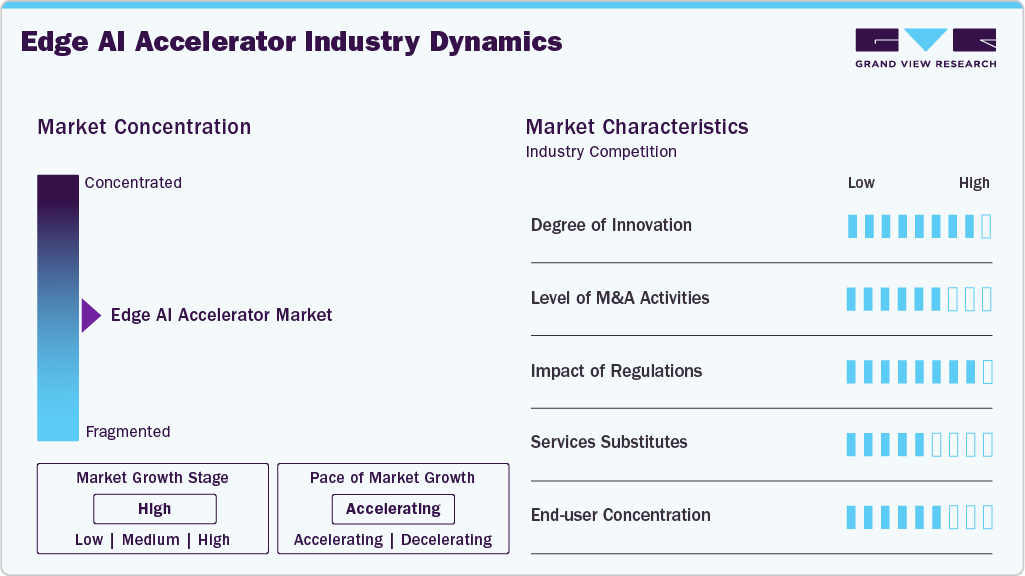
The edge AI accelerator market exhibits a moderately concentrated competitive structure, with leading semiconductor companies, AI chip developers, and computing platform providers accounting for a significant share of global revenue. Major participants compete through continuous advancements in neural processing units (NPUs), application-specific integrated circuits (ASICs), edge GPUs, and low-power AI computing architectures. The market is characterized by a high degree of technological differentiation, creating barriers to entry related to research and development capabilities, semiconductor expertise, and manufacturing scale. As demand for intelligent edge processing continues to rise, established players are strengthening their positions through product innovation, strategic partnerships, and ecosystem expansion.
 To learn more about this report, Download Free Sample Report
 The market demonstrates a high growth stage with accelerating momentum, supported by increasing adoption of edge intelligence across industrial automation, smart devices, automotive systems, healthcare equipment, and intelligent surveillance applications. Innovation levels remain high as vendors focus on improving inference performance, energy efficiency, model optimization, and on-device AI capabilities. Merger and acquisition activity is moderate, driven by the need to acquire specialized AI hardware technologies, software frameworks, and edge computing expertise. While end-user demand is expanding across multiple industries, limited service substitutes and growing regulatory emphasis on data privacy and localized processing continue to reinforce the long-term growth potential of the edge AI accelerator market.
Analyst Perspective
The edge AI accelerator market is entering a high-growth phase as organizations increasingly prioritize real-time artificial intelligence processing at the device level to improve speed, efficiency, and data privacy. Growing adoption of intelligent edge devices, autonomous systems, computer vision applications, and industrial automation solutions is accelerating demand for specialized AI acceleration hardware. Continuous advancements in neural processing architectures, energy-efficient semiconductor technologies, and on-device machine learning capabilities are strengthening the performance and scalability of edge AI deployments. The expansion of 5G networks, connected infrastructure, and smart manufacturing initiatives is further creating favorable conditions for market growth across both enterprise and consumer segments. As industries continue to shift toward decentralized intelligence and low-latency computing environments, edge AI accelerators are expected to play a critical role in enabling next-generation digital transformation strategies.
Processors Insights
Based on processor, the CPU segment led the market with the largest revenue share of 31.3% in 2025. Central Processing Unit (CPU) is a dominant force in AI, driving advancements across industries with its ability to process and analyze large volumes of data efficiently. Its applications, ranging from image recognition to autonomous systems, have revolutionized traditional processes. The development of advanced neural network architectures has further expanded its capabilities, enabling breakthroughs in complex problem-solving. Major Processor companies and research institutions continue to invest heavily in Central Processing Unit (CPU), ensuring its dominance in AI innovation. This widespread adoption has made Central Processing Unit (CPU) integral to industries such as healthcare, finance, and entertainment.
Application-Specific Integrated Circuits (ASICs) are experiencing significant growth in the edge AI accelerator industry due to their efficiency and performance. These processors are designed for specific AI workloads, offering faster processing speeds and lower power consumption compared to general-purpose chips. Their compact design makes them ideal for edge devices, enabling real-time AI processing without relying on cloud computing. Industries such as automotive, healthcare, and consumer electronics are increasingly adopting ASICs for AI-driven applications. The demand for energy-efficient AI solutions is pushing companies to invest in ASIC development for edge computing. Advancements in semiconductor technology are enhancing ASIC capabilities, improving processing efficiency and cost-effectiveness.
Device Insights
Based on device, the smartphones segment led the market with the largest revenue share of 37.9% in 2025. Smartphones lead the market because of their extensive adoption and the incorporation of sophisticated AI capabilities. They are equipped with powerful CPUs and GPUs, enabling efficient processing of AI tasks directly on the device. The convenience of having AI capabilities readily available enhances the overall smartphone experience, driving demand. Moreover, the continuous innovation in smartphone technology, such as improved camera systems and voice recognition, relies heavily on edge AI processing. Manufacturers are increasingly adding edge AI accelerators to improve functionality and user experience, strengthening smartphones' leading position in the market.
The IoT devices segment is predicted to foresee significant growth in the forecast period due to their increasing prevalence in various industries, including healthcare, agriculture, and smart cities. AI processing is increasingly integrated into IoT devices for real-time decision-making. This reduces reliance on cloud computing and enhances efficiency. This trend is driving the demand for edge AI accelerators. Companies are developing specialized hardware to optimize performance in resource-constrained environments. For instance, in January 2025, Synaptics Incorporated, a U.S.-based computer manufacturing company, and Google LLC are collaborating to integrate Google's Graphics Processing Unit (GPU) core with Synaptics Astra hardware for Edge AI in IoT. This collaboration aims to accelerate AI device development for applications involving vision, voice, and other data processing needs.
End-use Insights
Based on end use, the automotive segment led the market with the largest revenue share of 24.8% in 2025. due to the growing adoption of real-time AI processing for autonomous driving and advanced driver-assistance systems (ADAS). Automakers increasingly integrated edge AI accelerators to enhance vehicle safety, improve navigation, and optimize energy efficiency. The rising demand for electric vehicles (EVs) further drove the need for AI-powered systems to manage battery performance and predictive maintenance. Regulatory requirements for enhanced safety features also encouraged manufacturers to invest in AI-driven solutions. Moreover, consumer expectations for smarter, more connected vehicles accelerated the adoption of edge AI technologies. These factors collectively positioned the automotive segment as the highest revenue contributor in the market.
 To learn more about this report, Download Free Sample Report
 The manufacturing is projected to grow significantly over the forecast period due to the increasing push for automation and smart factories. Edge AI enables real-time data processing, which is essential for optimizing production processes and enhancing efficiency. As manufacturers adopt predictive maintenance strategies, edge AI accelerators facilitate quick analysis of equipment data, minimizing downtime and reducing operational costs. Furthermore, the integration of AI technologies allows for improved quality control and supply chain management, leading to better overall performance. The ongoing digital transformation in manufacturing is driving the adoption of edge AI solutions, making it a key area for market expansion.
Regional Insights
North America dominated the edge AI accelerator market with the largest revenue share of 37.0% in 2025. In North America, the market growth is driven by significant technological advancements and a strong presence of key players in the semiconductor and AI industries. The region benefits from substantial investments in research and development, leading to innovations in AI applications across various sectors, including automotive and healthcare. The widespread adoption of smart devices and IoT technologies further fuels demand for edge AI solutions, enabling real-time data processing and analytics.
 To learn more about this report, Download Free Sample Report
 U.S. Edge AI Accelerator Market Trends
The edge AI accelerator market in the U.S. held the largest share in the North America region in 2025. The U.S. holds a dominant position in the edge AI accelerator market, fueled by its robust technology ecosystem and a high concentration of key industry players. The region is home to leading semiconductor manufacturers and tech companies that are at the forefront of AI innovation, driving advancements in edge computing solutions. A focus on research and development encourages innovation, speeding up the use of edge AI in areas like healthcare, automotive, and smart cities.
Europe Edge AI Accelerator Market Trends
Europe is witnessing steady growth in the edge AI accelerator industry, primarily fueled by initiatives aimed to digital transformation and Industry 4.0. The region's focus on sustainability and energy efficiency drives the integration of edge AI solutions into manufacturing and smart city projects. Security and Surveillances are supporting innovation through funding and policies that promote AI research and development, which enhances the competitive sector. Moreover, European automotive manufacturers are increasingly adopting edge AI technologies to develop advanced driver-assistance systems and autonomous vehicles.
Asia Pacific Edge AI Accelerator Market Trends
Asia Pacific edge AI accelerator market is anticipated to register the fastest CAGR over the forecast period. The Asia Pacific region is rapidly emerging as a significant player in the edge AI accelerator market, driven by a surge in manufacturing and technology adoption. Countries such as China, Japan, and South Korea are investing heavily in AI research, particularly in sectors such as automotive, electronics, and telecommunications. The region's growing IoT ecosystem is creating vast opportunities for edge AI applications, facilitating improved operational efficiency and real-time data analysis. Moreover, the rising demand for smart devices and consumer electronics is propelling market growth as manufacturers seek to incorporate advanced AI capabilities.
Key Edge AI Accelerator Company Insights
Some of the key companies in the edge AI accelerators industry include Apple Inc.; Google LLC; IBM Corporation; Intel Corporation; and Microsoft. Organizations are focusing on increasing customer base to gain a competitive edge in the industry. Therefore, key players are taking several strategic initiatives, such as mergers and acquisitions, and partnerships with other major companies.
-
NVIDIA Corporation has expanded its edge AI accelerator offerings with powerful GPUs and system-on-modules designed for real-time AI processing. Its Jetson platform enables efficient AI computing for robotics, autonomous vehicles, and smart cities. The company continues to enhance AI inference capabilities with software optimizations and partnerships in various industries. These advancements strengthen NVIDIA’s position in delivering high-performance edge AI solutions.
-
Qualcomm Technologies, Inc. has integrated edge AI accelerators into its Snapdragon processors to enhance AI capabilities in mobile devices, IoT, and automotive applications. Its AI Engine improves on-device processing for tasks such as computer vision and voice recognition. The company has also collaborated with partners to optimize AI workloads for energy-efficient, low-latency performance. These developments reinforce Qualcomm’s role in advancing edge AI across multiple sectors.
Key Edge AI Accelerator Companies:
The following key companies have been profiled for this study on the edge AI accelerator market.
- Apple Inc.
- EdgeCortix Inc.
- Hailo Technologies Ltd.
- Huawei Technologies Co., Ltd.
- International Business Machines Corporation (IBM)
- Intel Corporation
- Google LLC
- NVIDIA Corporation
- Qualcomm Technologies, Inc.
- Rapidus Corporation
Competitive Benchmarking
Operating Strategies
Competitive Edge
Weaknesses
Mature Players: NVIDIA Corporation, Intel Corporation, Qualcomm Technologies, Inc., Google LLC, and Huawei Technologies Co., Ltd.
- Mature players focus on high-performance AI accelerator development, edge inference optimization, energy-efficient chip architectures, and strategic partnerships with OEMs and cloud providers. Their strategies emphasize scalable AI platforms, software ecosystem expansion, and deployment across automotive, industrial, and intelligent device applications.
- Their competitive advantage stems from strong semiconductor expertise, extensive R&D capabilities, established customer relationships, and integrated hardware-software ecosystems. Broad product portfolios enable them to serve diverse edge AI workloads and end-user requirements.
These companies often face longer product development cycles and higher exposure to supply chain complexities. Dependence on large-scale commercial deployments can also reduce agility in addressing niche market opportunities. Emerging Players: Hailo Technologies Ltd., EdgeCortix Inc., Rapidus Corporation, Apple Inc, and International Business Machines Corporation (IBM)
- Emerging players emphasize specialized AI acceleration technologies, low-power edge processing, and application-specific AI solutions. Their strategies focus on innovation, rapid commercialization, and targeting high-growth edge AI use cases across smart devices, robotics, and intelligent vision systems.
- Their competitive edge is driven by agile development processes, advanced AI-centric architectures, and the ability to deliver optimized performance for specific edge computing applications. Focused technology offerings allow faster adaptation to evolving market requirements.
- Limited global market presence and smaller ecosystem support can restrict large-scale adoption opportunities. Lower financial resources and narrower product portfolios may also challenge long-term expansion and competitive positioning.
Recent Developments
-
In July 2024, EdgeCortix Inc., an edge AI company in Japan, introduced the SAKURA-II edge AI accelerator optimized for energy-efficient processing of generative AI tasks. This next-generation accelerator delivers 60 trillion operations per second at just 8 W. It features advanced capabilities such as sparse computation and high DRAM capacity, making it a powerful solution for industries such as manufacturing, security, and telecommunications.
-
In June 2024, ADLINK Technology Inc. is showcasing innovative edge AI solutions at COMPUTEX 2024, collaborating with NVIDIA Corporation to enhance applications in smart manufacturing, healthcare, smart transportation, and AI graphics. Key products include the DLAP-211-Orin Series for optimizing smart parking, MLB-IGX medical box PC for real-time medical navigation, and the NEON-2000-ONO Series AI smart camera to improve manufacturing efficiency, all utilizing NVIDIA's advanced AI and GPU technologies for edge computing.
-
In June 2024, Raspberry Pi collaborated with HAILO TECHNOLOGIES LTD to launch the Raspberry Pi AI Kit. This kit combines the Raspberry Pi 5 with a Hailo-8L accelerator for efficient AI processing at the edge. It targets both industrial users and enthusiasts, offering high computing power with low energy consumption.
-
In July 2023, Silicom Ltd. launched its first Edge AI product line in collaboration with HAILO TECHNOLOGIES LTD, an Israeli AI technology company. Hailo’s AI accelerators are integrated into Silicom’s Edge platforms to enhance performance for various AI use cases at an attractive price. This partnership aims to unlock new applications such as behavior analytics, facial recognition, and vehicle analytics.
Edge AI Accelerator Market Report Scope
Report Attribute
Details
Market size in 2025
USD 10.0 billion
Estimated market size in 2026
USD 13.1 billion
Projected market size by 2033
USD 88.4 billion
Growth rate
CAGR of 31.4% from 2026 to 2033
Base year for estimation
2025
Historical data
2021 - 2024
Forecast period
2026 - 2033
Quantitative units
Revenue in USD million/billion and CAGR from 2026 to 2033
Report coverage
Revenue forecast, company ranking, competitive landscape, growth factors, and trends
Segments covered
Processor, device, end-use, region
Regional scope
North America; Europe; Asia Pacific; Latin America; MEA
Country scope
U.S.; Canada; Mexico; Germany; UK; France; China; Japan; India; South Korea; Australia; Brazil; Saudi Arabia; South Africa; UAE
Key companies profiled
Apple Inc.; EdgeCortix Inc.; Hailo Technologies Ltd.; Huawei Technologies Co., Ltd.; International Business Machines Corporation (IBM); Intel Corporation; Google LLC; NVIDIA Corporation; Qualcomm Technologies, Inc.; Rapidus Corporation
Customization scope
Free report customization (equivalent up to 8 analysts' working days) with purchase. Addition or alteration to country, regional & segment scope.
Pricing and purchase options
Avail customized purchase options to meet your exact research needs. Explore purchase options
Global Edge AI Accelerator Market Report Segmentation
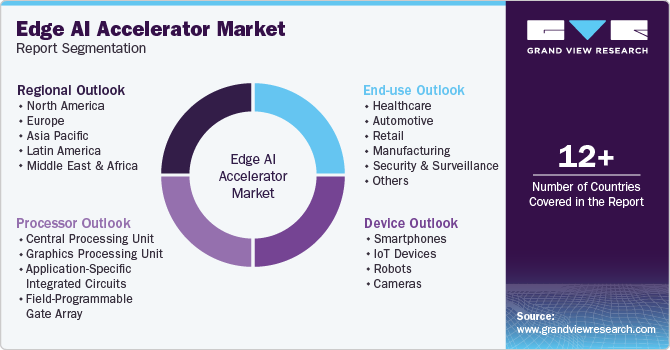
This report forecasts revenue growth at global, regional, and country levels and provides an analysis of the latest industry trends and opportunities in each of the sub-segments from 2021 to 2033. For this study, Grand View Research has segmented the global edge AI accelerator market report based on processor, device, end use, and region:
 To learn more about this report, Download Free Sample Report
 -
Processor Outlook (Revenue, USD Million, 2021 - 2033)
-
Central Processing Unit (CPU)
-
Graphics Processing Unit (GPU)
-
Application-Specific Integrated Circuits (ASICs)
-
Field-Programmable Gate Array (FPGA)
-
-
Device Outlook (Revenue, USD Million, 2021 - 2033)
-
Smartphones
-
IoT Devices
-
Robots
-
Cameras
-
-
End-use Outlook (Revenue, USD Million, 2021 - 2033)
-
Healthcare
-
Automotive
-
Retail
-
Manufacturing
-
Security and Surveillance
-
Others
-
-
Regional Outlook (Revenue, USD Million, 2021 - 2033)
-
North America
-
U.S.
-
Canada
-
Mexico
-
-
Europe
-
UK
-
Germany
-
France
-
-
Asia Pacific
-
China
-
Japan
-
India
-
Australia
-
South Korea
-
-
Latin America
-
Brazil
-
-
Middle East & Africa (MEA)
-
KSA
-
UAE
-
South Africa
-
-
Research Methodology
The Edge AI accelerator market figures in this report are based on a proven research process that combines executive interviews with secondary research from proprietary databases, company filings, and recognized regulatory and institutional sources. Market size is built through value-chain sizing - reconciling supply-side and demand-side estimates - and triangulated with bottom-up and top-down approaches. Every estimate passes multiple levels of expert validation before publication, with each Edge AI accelerator segment quantified using the revenue-capture definitions in the table below.
Segment Definition
Segment - Processor
Revenue capture definition
Central Processing Unit (CPU)
The Central Processing Unit (CPU) serves as the primary computing component responsible for executing general-purpose instructions and managing system operations within edge AI devices. It supports AI workloads alongside application processing, control functions, and operating system management.
Graphics Processing Unit (GPU)
The Graphics Processing Unit (GPU) is designed to perform parallel computations efficiently, making it well-suited for machine learning inference and data-intensive AI tasks. Its architecture enables accelerated processing of neural networks, computer vision algorithms, and real-time analytics applications.
Application-Specific Integrated Circuits (ASICs)
This segment comprises custom-designed semiconductor chips developed to execute specific AI functions with high efficiency and low power consumption. ASICs are optimized for dedicated workloads, delivering superior performance for edge inferencing compared to general-purpose processors.
Field-Programmable Gate Array (FPGA)
Field-Programmable Gate Arrays (FPGAs) are reconfigurable integrated circuits that can be customized after manufacturing to support evolving AI workloads. Their flexibility allows developers to optimize hardware configurations for specific edge computing and machine learning applications.
Segment - Device
Revenue capture definition
Smartphones
The smartphones segment includes mobile devices equipped with embedded AI acceleration capabilities for on-device processing and intelligent user experiences. These devices utilize edge AI to support applications such as image enhancement, voice assistants, and real-time translation.
IoT Devices
IoT devices refer to connected endpoints that collect, process, and exchange data across industrial, commercial, and consumer environments. Edge AI accelerators enable these devices to perform localized analytics and autonomous decision-making without relying heavily on cloud infrastructure.
Robots
This segment encompasses industrial, commercial, and service robots that utilize AI processing for navigation, object recognition, and autonomous operations. Edge AI acceleration enhances responsiveness by enabling real-time data interpretation directly within robotic systems.
Cameras
The cameras segment includes intelligent imaging systems deployed for surveillance, monitoring, inspection, and machine vision applications. Embedded AI processors enable advanced functionalities such as facial recognition, object tracking, and event detection at the device level.
Segment - End Use
Revenue capture definition
Healthcare
The healthcare segment involves the use of edge AI accelerators in medical devices, diagnostic systems, patient monitoring equipment, and clinical imaging platforms. These solutions facilitate real-time analysis of healthcare data while supporting privacy-sensitive processing requirements.
Automotive
Automotive applications utilize edge AI accelerators to power advanced driver-assistance systems (ADAS), autonomous driving functions, and intelligent vehicle management platforms. Localized AI processing improves safety, responsiveness, and operational reliability in connected vehicles.
Retail
This segment covers AI-enabled solutions used for customer analytics, inventory management, smart checkout systems, and in-store optimization. Edge-based intelligence allows retailers to process consumer and operational data rapidly within physical store environments.
Manufacturing
Manufacturing incorporates edge AI accelerators into production equipment, industrial automation systems, and predictive maintenance platforms. These technologies support real-time monitoring and process optimization to improve productivity and operational efficiency.
Security and Surveillance
The security and surveillance segment includes intelligent monitoring systems that leverage AI for threat detection, video analytics, and situational awareness. Edge processing enables continuous analysis of visual data while reducing network bandwidth requirements and response times.
Others
Others include additional application areas such as telecommunications, smart cities, agriculture, energy management, and transportation infrastructure. These sectors utilize edge AI accelerators to enhance operational intelligence, automation, and real-time decision-making capabilities.
Estimation Model
Layer Name
Key Questions
Description
AI-Capable Device & Infrastructure Layer
Where can Edge AI accelerators be deployed?
Identify deployment environments utilizing AI-capable devices and intelligent infrastructure, including smartphones, IoT devices, industrial equipment, surveillance systems, robotics platforms, automotive electronics, healthcare devices, and smart consumer products. This layer establishes the total addressable base for Edge AI accelerator adoption.
Edge Computing & Intelligent Workload Adoption Layer
Which systems require local AI processing capabilities?
Apply adoption rates of edge computing architectures, computer vision applications, intelligent monitoring systems, autonomous machines, connected devices, and real-time analytics platforms. This layer estimates the transition from conventional processing systems to AI-enabled edge computing environments.
AI Accelerator Penetration Layer
Where are dedicated Edge AI accelerators being integrated?
Assess penetration of GPUs, ASICs, FPGAs, NPUs, and other AI acceleration technologies across edge devices and intelligent systems. This layer captures the deployment of specialized hardware designed to support machine learning inference, neural network processing, and low-latency AI workloads at the edge.
Edge AI Accelerator Revenue Realization Layer
How much revenue is generated from Edge AI accelerator deployment?
Estimate market revenue by multiplying active AI accelerator deployments by average accelerator value per device/system, including hardware components, embedded AI modules, software toolchains, development platforms, optimization frameworks, and support services. This layer captures total Edge AI accelerator market revenue generation.
Delivered Customizations
This report has been delivered with the following In-depth customizations
Client Request
Customization Delivered
Value Adds
Edge AI Accelerator Technology Adoption & Growth Assessment
Performed a comprehensive analysis of Edge AI accelerator market trends, including edge computing, AI inference acceleration, neural processing units (NPUs), computer vision technologies, machine learning deployment, low-power AI chip architectures, and intelligent edge device adoption across major industry verticals.
This assessment enables stakeholders to identify high-growth technology segments, evaluate accelerator adoption trends, prioritize product development initiatives, and strengthen competitive positioning within the rapidly evolving edge AI accelerator landscape.
Industry-Specific Edge AI Accelerator Deployment Analysis
Assessed demand for Edge AI accelerators across automotive, healthcare, manufacturing, retail, security & surveillance, robotics, and IoT device sectors, including intelligent automation, real-time analytics, autonomous systems, and AI-enabled operational optimization applications.
Provides strategic insights into industry-specific deployment patterns, AI processing requirements, and long-term revenue opportunities, supporting targeted market expansion and investment strategies.
AI Processing, Intelligent Devices & Edge Computing Opportunity Assessment
Evaluated adoption trends for intelligent edge devices, computer vision platforms, autonomous robotics, AI-powered surveillance systems, industrial automation solutions, smart consumer electronics, and next-generation connected infrastructure across global markets.
Supports innovation and growth strategies by identifying emerging deployment opportunities, accelerating technology roadmaps, and enabling data-driven decision-making across high-growth segments of the edge AI accelerator market.
Frequently Asked Questions About This Report
North America dominated with a 37.0% revenue share in 2025.
Some key players operating in the edge AI accelerator market include Apple Inc., EdgeCortix Inc., Hailo Technologies Ltd., Huawei Technologies Co., Ltd., International Business Machines Corporation (IBM), Intel Corporation, Google LLC, NVIDIA Corporation, Qualcomm Technologies, Inc., and Rapidus Corporation.
Key factors that are driving the market growth include the surge in demand for high-performance computing, technological advancements in AI accelerators, integration of AI with edge computing, the proliferation of IoT devices, and the growing need for real-time processing across various industries.
CPU segment dominated the market, with a revenue share of 31.3% in 2025.
Automotive segment led the market with the largest revenue share of 24.8% in 2025.
Asia Pacific is the fastest-growing region over the forecast period.
Smartphones segment led the market with the largest revenue share of 37.9% in 2025 while IoT devices segment is second fastest growing market.
The global edge AI accelerator market size was valued at USD 10.0 billion in 2025 and is estimated at USD 13.1 billion for 2026.
The global edge AI accelerator market market is expected to grow at a CAGR of 31.4% from 2026 to 2033, reaching USD 88.4 billion by 2033.
About the Author(s)
Next Generation Technologies Research Team
Technology · Next Generation TechnologiesThis report was authored by the next generation technologies research team at Grand View Research - comprising two research analysts, one senior research analyst, and one industry expert - with specialized expertise in the next generation technologies segment of the technology industry. All findings are based on proprietary technology databases, executive interviews, and regulatory analysis, subject to internal peer review prior to publication.
Last Updated:
Speak to Analyst

Customize this report to your needs - add regions, segments, or data points, with 20% free customization.
Or view our licence options:


ISO 9001:2015 & 27001:2022 Certified
We are GDPR and CCPA compliant! Your transaction & personal information is safe and secure. For more details, please read our privacy policy.


