
- Home
- »
- Food Additives & Nutricosmetics
- »
-
Glutamic Acid Market Size And Share Report, 2026-2023GVR Report cover
![Glutamic Acid Market (2026 - 2033)Report]()
Glutamic Acid Market (2026 - 2033)
Size, Share & Trends Analysis Report By Application (Food & Beverage, Animal Feed, Pharmaceuticals), By Region (North America, Europe, Asia Pacific, Latin America, Middle East And Africa), And Segment Forecasts
Market Size, 2025
$13.5BMarket Estimate, 2026
$14.6BMarket Forecast, 2033
$27.1BCAGR, 2026–2033
9.2%Glutamic Acid Market Size & Trends
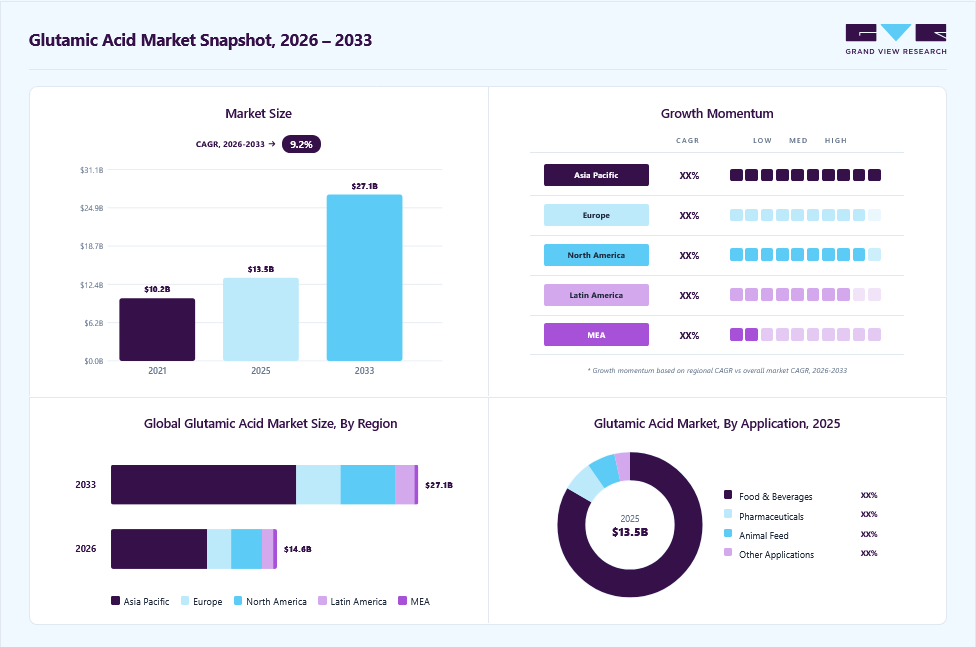
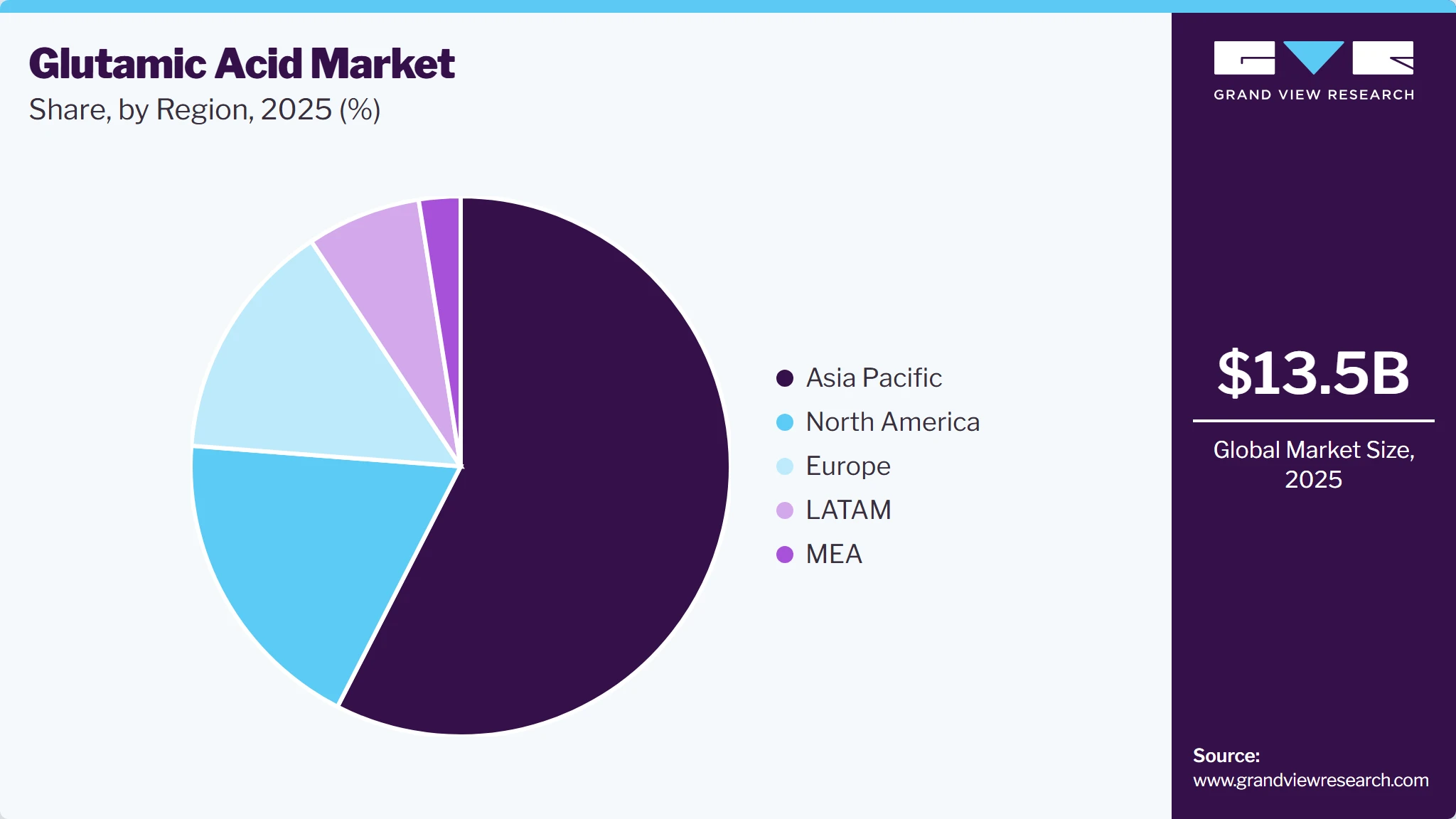
The global glutamic acid market size was valued at USD 13.5 billion in 2025 and is projected to grow from USD 14.6 billion in 2026 to USD 27.1 billion by 2033, at a CAGR of 9.2% from 2026 to 2033. Asia Pacific dominated the global market with the largest revenue share of 57.5% in 2025. Asia Pacific dominated the market, accounting for a revenue share of 57.1% in 2024. This growth is driven by the increasing demand for glutamic acid in the food and beverage industry, where it is used as a flavor enhancer and stabilizer, a major growth driver.
Key Market Trends & Insights
- By application: Food & beverages segment led the market with the largest revenue share of 83.3% in 2025.
Regional Highlights
- Largest regional market: Asia Pacific (57.5% revenue share, 2025)
- By country: China accounted for a dominating revenue share of 78.1% of the Asia Pacific glutamic acid market in 2025.
Market Size & Forecast
- Market size in 2025: USD 13.5 Billion
- Estimated market size in 2026: USD 14.6 Billion
- Projected market size by 2033: USD 27.1 Billion
- CAGR (2026-2033): 9.2%
In addition, the rising health consciousness among consumers is boosting the use of glutamic acid in nutritional supplements and protein powders. The expanding pharmaceutical industry, which utilizes glutamic acid in drug formulations, further contributes to market growth. The increasing consumption of processed foods and the growing demand for animal feed additives drive the glutamic acid market. Key technological advancements significantly influence the glutamic acid market, enhancing production efficiency and expanding applications. Advanced fermentation technologies are at the forefront, allowing for more efficient and sustainable production processes. These methods improve yield and reduce the environmental impact of glutamic acid manufacturing by optimizing the fermentation conditions and utilizing renewable resources. In addition, biotechnology innovations, such as genetically modified organisms (GMOs) and synthetic biology, enable the development of high-yield strains that can produce glutamic acid more effectively, lowering production costs and increasing availability.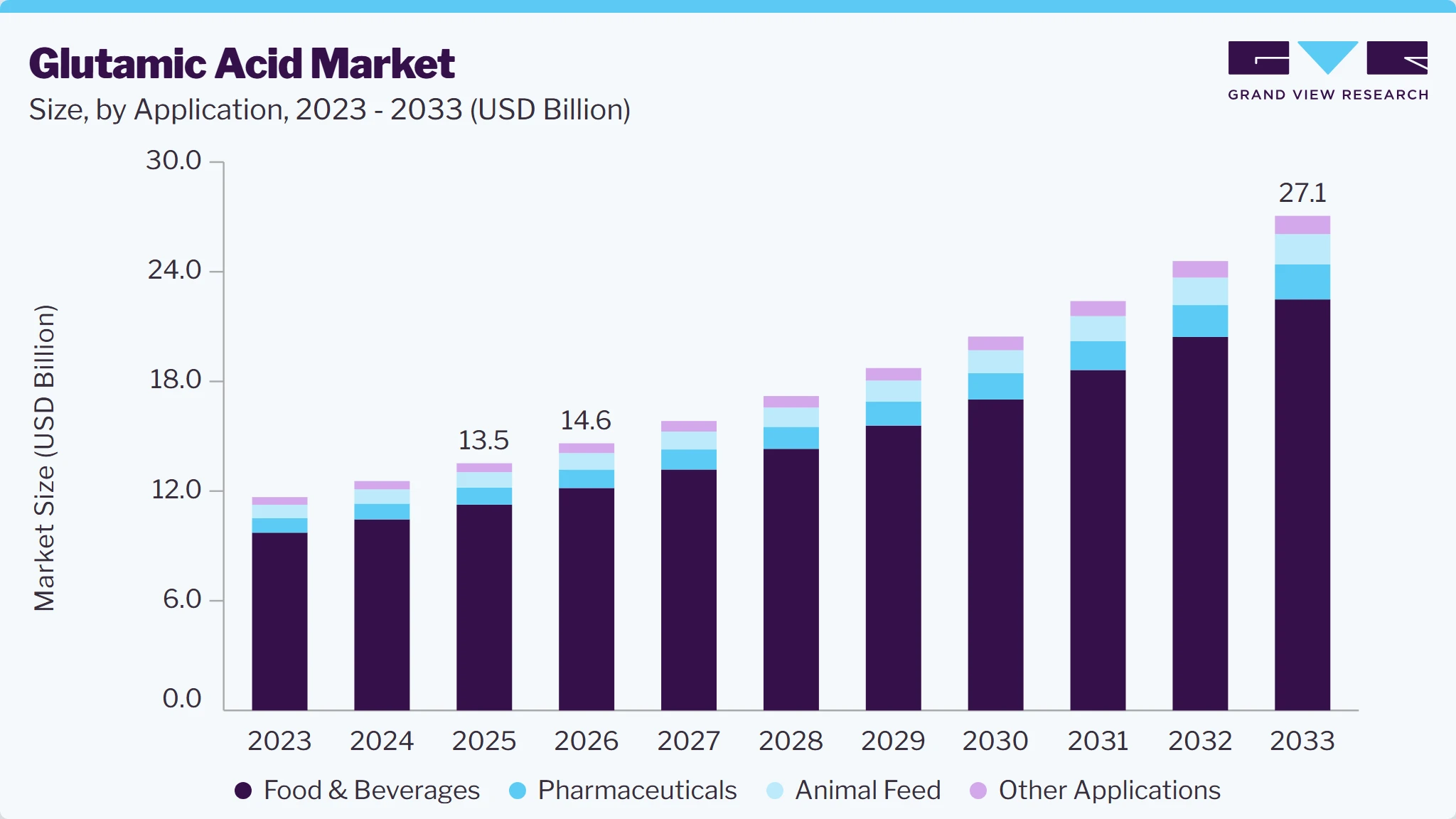
Moreover, automation and process optimization in industrial synthesis have streamlined operations, reducing labor costs and minimizing human error during production. These advancements contribute to a more consistent product quality, which is crucial for applications in pharmaceuticals and food additives. The integration of AI and machine learning in monitoring and controlling fermentation processes further enhances efficiency by predicting optimal conditions for maximum output. Together, these technological developments drive growth in the glutamic acid market by meeting rising demand across various sectors while promoting sustainability.
Market Dynamics
Glutamic acid is a non-essential amino acid widely utilized across food & beverage, pharmaceutical, animal nutrition, and industrial applications. It serves as a key precursor for monosodium glutamate (MSG), amino acid-based formulations, nutritional supplements, and various biochemical products. The growing demand for flavor enhancers, protein-rich nutrition products, and fermentation-derived ingredients continues to support market growth globally.
The increasing consumption of processed, packaged, and convenience foods is a major factor driving the glutamic acid market. Glutamic acid serves as the primary raw material for monosodium glutamate (MSG), one of the most widely used flavor enhancers in the global food industry. Rising urbanization, changing dietary habits, and growing demand for ready-to-eat food products continue to support consumption across both developed and emerging economies.
In addition, expanding food manufacturing activities and increasing demand for taste-enhancing ingredients are contributing to market growth. Food producers continue to incorporate glutamic acid-derived ingredients into a wide range of products to improve flavor profiles and consumer acceptance, further strengthening demand worldwide.
Fluctuations in the prices of feedstocks such as corn, sugarcane, molasses, and other fermentation substrates can impact glutamic acid production economics. Variations in agricultural commodity prices, energy costs, and supply chain conditions may influence manufacturing margins and overall market profitability. Furthermore, fermentation-based production processes require significant operational inputs and quality control measures. These factors can increase production costs and create pricing pressures for manufacturers operating in highly competitive global markets.
Growing consumer focus on health, nutrition, and functional ingredients is creating significant opportunities for glutamic acid manufacturers. The amino acid is increasingly utilized in nutritional supplements, clinical nutrition products, and pharmaceutical formulations due to its important role in metabolism and protein synthesis. Also, the increasing investments in biotechnology, amino acid production technologies, and specialty nutrition products are expected to expand the commercial applications of glutamic acid. These developments are likely to create new revenue streams beyond traditional food industry demand.
Analyst Perspective
The glutamic acid market is increasingly being influenced by the growing demand for fermentation-derived ingredients and the expansion of value-added food additive applications. While food processing remains the primary demand center, emerging opportunities are developing across animal nutrition, pharmaceuticals, and biotechnology sectors where amino acid-based products are gaining importance. Manufacturers are focusing on process optimization, yield enhancement, and sustainable fermentation technologies to improve competitiveness and reduce production costs. Also, the rising consumer preference for naturally derived ingredients and increasing investments in industrial biotechnology are expected to support long-term market growth.
Application Insights
Based on application, the food & beverages segment led the market with the largest revenue share of 83.3% in 2025, due to the extensive use of glutamic acid as a flavor enhancer, particularly in the form of monosodium glutamate (MSG). Widely employed in various cuisines, especially in Asian dishes, MSG is known for enhancing the umami taste, making food more palatable. The increasing consumer demand for savory and processed foods, coupled with the growing popularity of convenience foods, has significantly bolstered the demand for glutamic acid in this segment. In addition, glutamic acid's role as a stabilizer and pH adjuster in beverages further adds to its widespread application in the food and beverage industry. The rising trend of clean-label products has also spurred the demand for natural flavor enhancers, thereby contributing to the segment's substantial market share.
The pharmaceuticals segment is expected to grow at a CAGR of 9.1% from 2025 to 2030. This robust growth can be attributed to the increasing use of glutamic acid in drug formulations, which is an essential component in various medications. Glutamic acid is used as an excipient in tablet formulations, acting as a binder and disintegrant to ensure proper drug delivery and efficacy. Its role in the synthesis of active pharmaceutical ingredients (APIs) and as a precursor to neurotransmitters like glutamate and GABA (gamma-aminobutyric acid) makes it invaluable in the treatment of neurological disorders. The rising prevalence of chronic diseases, coupled with the growing demand for effective and safe pharmaceuticals, is driving the expansion of this segment. Furthermore, ongoing research and development activities to explore new therapeutic applications of glutamic acid are expected to contribute significantly to the segment's growth over the forecast period.
Regional Insights
North America accounted for a significant share of the global glutamic acid market in 2024. This substantial share can be attributed to the region's well-established food and beverage industry, which is one of the largest consumers of glutamic acid, particularly in the form of monosodium glutamate (MSG). The increasing health consciousness among consumers has also driven the demand for glutamic acid in dietary supplements and protein powders. In addition, the presence of major pharmaceutical companies and ongoing research and development activities in the region contribute to the market's growth. The use of glutamic acid in animal feed additives is another factor supporting the market's expansion in North America.
U.S. Glutamic Acid Market Trends
The U.S. held the largest revenue share of the North American glutamic acid market in 2024 driven by the country's advanced food processing industry and the widespread use of glutamic acid as a flavor enhancer and stabilizer in various food products. The U.S. also has a significant pharmaceutical sector that utilizes glutamic acid in drug formulations, further contributing to the market's revenue. The increasing trend towards healthy eating and the demand for natural flavor enhancers have boosted the use of glutamic acid in the U.S.
Europe Glutamic Acid Market Trends
The glutamic acid market in Europe is anticipated to grow at a CAGR of 8.6% over the forecast period, driven by the region's focus on sustainable and natural food ingredients, which has led to an increased demand for glutamic acid as a flavor enhancer. European consumers are increasingly seeking clean-label products, boosting the use of natural ingredients like glutamic acid. The region's robust pharmaceutical industry also contributes to market growth, with glutamic acid being used in various drug formulations. Moreover, the expanding use of glutamic acid in animal feed to improve livestock health and productivity is driving market expansion in Europe.
Asia Pacific Glutamic Acid Market Trends
Asia Pacific dominated the glutamic acid market with the largest revenue share of 57.5% in 2025, due to the extensive use of glutamic acid in the food and beverage industry, particularly in countries like China and Japan, where MSG is a staple ingredient. The region's large population and increasing disposable incomes drive the demand for processed and convenience foods, further supporting market growth. In addition, the expanding pharmaceutical and nutraceutical industries in Asia Pacific contribute to the high demand for glutamic acid. The presence of major manufacturers and ongoing investments in production capacities also enhance the market's growth prospects in the region.

China accounted for a dominating revenue share of 78.1% of the Asia Pacific glutamic acid market in 2025.
Key Glutamic Acid Company Insights
Some of the key companies in the Glutamic acid market include Ajinomoto Co., Inc., Akzo Nobel N.V., Evonik Industries AG, Sichuan Tongsheng Amino acid Co., Ltd., and others.
-
Ajinomoto Co., Inc. develops and offers innovative amino acid-based surfactants for the personal care industry. Their high-quality ingredients are used by over 3,000 companies in nearly 50 countries worldwide.
-
Evonik Industries AG provides glutamic acid for various applications, including food additives, pharmaceuticals, and animal feed.
Key Glutamic Acid Companies
The following key companies have been profiled for this study on the glutamic acid market.
-
Ajinomoto Co., Inc.
-
Akzo Nobel N.V.
-
Evonik Industries AG
-
Sichuan Tongsheng Amino acid Co., Ltd.
-
KYOWA HAKKO BIO CO., LTD.
-
Ottokemi; Hefei TNJ Chemical Industry Co., Ltd.
-
Suzhou Yuanfang Chemical Co., Ltd.
-
Global Bio-chem Technology Group Company Limited
-
Ningxia Yipin Biological Technology Co., Ltd.
Competitive Benchmarking
Category
Operating Strategies
Competitive Edge
Weakness
Established Players (Ajinomoto Co., Inc., Akzo Nobel N.V., Evonik Industries AG, KYOWA HAKKO BIO CO., LTD., Global Bio-chem Technology Group Company Limited)
- Expanding amino acid production capacities to meet growing demand from food and industrial sectors.
- Investing in advanced fermentation technologies to improve production efficiency and product quality.
- Strong manufacturing capabilities support large-scale production and global market supply requirements.
- Extensive expertise in amino acid technologies enables consistent product quality and innovation.
- Exposure to agricultural feedstock price volatility can impact profitability and operating margins.
- Stringent environmental regulations may increase compliance and operational costs significantly.
Emerging Players (Sichuan Tongsheng Amino acid Co., Ltd., Ottokemi, Hefei TNJ Chemical Industry Co., Ltd., Suzhou Yuanfang Chemical Co., Ltd., Ningxia Yipin Biological Technology Co., Ltd.)
- Strengthening regional production capabilities to address increasing domestic and export demand.
- Expanding product portfolios and distribution networks to improve competitiveness in international markets.
- Competitive manufacturing costs support strong positioning in price-sensitive regional markets.
- Flexible production operations enable quick response to evolving customer and market requirements.
- Limited global brand recognition may restrict penetration into premium international markets.
- Smaller operational scale compared to market leaders can reduce economies of scale advantages.
Recent Developments
-
In July 2024, GRO Biosciences Inc. recently secured USD 60.3 million in Series B funding to accelerate its drug development pipeline. The funds will be allocated to advancing its lead gout treatment into clinical trials, expanding its therapeutic portfolio, and enhancing its GRO platform for producing innovative, multiple non-standard amino acids (NSAAs).
-
In March 2024, Pearl Bio announced a strategic partnership with Merck (MSD). This collaboration aims to leverage synthetic biology to discover and develop innovative biological therapies that incorporate non-standard amino acids. The agreement covers territories outside the U.S. and Canada.
Glutamic Acid Market Report Scope
Report Attribute
Details
Market size value in 2025
USD 13.5 billion
Estimated market size in 2026
USD 14.6 billion
Projected market size by 2033
USD 27.1 billion
Growth rate
CAGR of 9.2% from 2026 to 2033
Base year for estimation
2025
Historical data
2021 - 2024
Forecast period
2026 - 2033
Quantitative units
Revenue in USD million/billion, volume in kilotons, and CAGR from 2026 to 2033
Report coverage
Revenue forecast, company ranking, competitive landscape, growth factors, and trends
Segments covered
Application, region
Regional scope
North America; Europe; Asia Pacific; Latin America; MEA
Country scope
U.S.; Canada; Mexico; Germany; UK; France; Italy; China; Japan; India; Brazil; Argentina; South Africa; Saudi Arabia
Key companies profiled
Ajinomoto Co., Inc.; Akzo Nobel N.V.; Evonik Industries AG; Sichuan Tongsheng Amino Acid Co., Ltd.; KYOWA HAKKO BIO CO., LTD.; Ottokemi; Hefei TNJ Chemical Industry Co., Ltd.; Suzhou Yuanfang Chemical Co., Ltd.; Global Bio-chem Technology Group Company Limited; Ningxia Yipin Biological Technology Co., Ltd.
Customization scope
Free report customization (equivalent up to 8 analysts' working days) with purchase. Addition or alteration to country, regional & segment scope.
Pricing and purchase options
Avail customized purchase options to meet your exact research needs. Explore purchase options
Global Glutamic Acid Market Report Segmentation
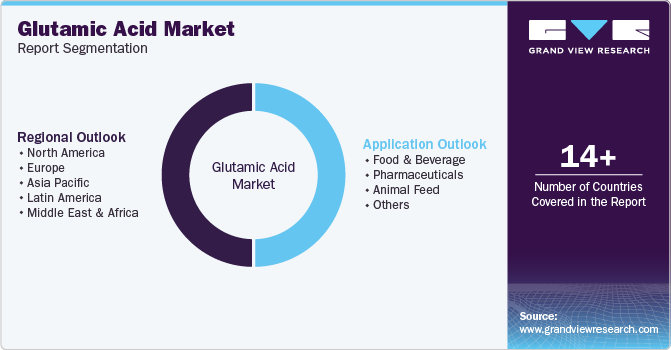
This report forecasts revenue growth at global, regional, and country levels and provides an analysis of the latest industry trends in each of the sub-segments from 2021 to 2033. For this study, Grand View Research has segmented the global glutamic acid market report based on application, source, product, and region.
-
Application Outlook (Volume, Kilotons; Revenue, USD Million, 2021 - 2033)
-
Food & Beverage
-
Pharmaceuticals
-
Animal Feed
-
Others
-
-
Regional Outlook (Volume, Kilotons; Revenue, USD Million, 2021 - 2033)
-
North America
-
U.S.
-
Canada
-
Mexico
-
-
Europe
-
UK
-
Germany
-
France
-
-
Asia Pacific
-
Japan
-
China
-
India
-
-
Latin America
-
Brazil
-
Argentina
-
-
Middle East and Africa (MEA)
-
Saudi Arabia
-
South Africa
-
-
Research Methodology
The glutamic acid market figures in this report are based on a proven research process that combines executive interviews with secondary research from proprietary databases, company filings, and recognized regulatory and institutional sources. Market size is built through value-chain sizing - reconciling supply-side and demand-side estimates - and triangulated with bottom-up and top-down approaches. Every estimate passes multiple levels of expert validation before publication, with each glutamic acid segment quantified using the revenue-capture definitions in the table below.
Segment Definition
Segment - Application
Revenue capture definition
Food & Beverages
As the dominant application segment, revenue is primarily generated through the use of glutamic acid in MSG production, flavor enhancers, seasonings, processed foods, snacks, soups, sauces, and convenience food products. Large-scale food manufacturing drives substantial market consumption.
Pharmaceuticals
Revenue is supported by the incorporation of glutamic acid into pharmaceutical formulations, clinical nutrition products, and specialty therapeutic applications. Growing investments in healthcare and nutritional science continue to support commercial demand within this segment.
Animal Feed
Market value is derived from the use of glutamic acid and related amino acid products in livestock, poultry, aquaculture, and pet nutrition formulations. Demand is influenced by feed efficiency objectives and expanding global animal protein production.
Other Applications
This segment captures revenue from industrial biotechnology, fermentation processes, cosmetics, personal care products, and specialty chemical applications utilizing glutamic acid as a functional ingredient or intermediate.
Estimation Model
Layer Name
Key Question
Description
Demand Base Layer
What forms the addressable market?
Identify global demand for amino acids and fermentation-derived ingredients across food processing, healthcare, animal nutrition, and industrial biotechnology sectors utilizing glutamic acid-based products.
Application Adoption Layer
Where is glutamic acid utilized?
Estimate the proportion of food, pharmaceutical, feed, and industrial formulations incorporating glutamic acid as a flavor enhancer, nutritional ingredient, biochemical intermediate, or functional additive.
Consumption Intensity Layer
How much glutamic acid is consumed?
Analyze formulation inclusion rates, manufacturing volumes, end-product production levels, and regional demand patterns to determine annual glutamic acid consumption across major applications.
Revenue Layer
How is market revenue generated?
Market revenue is quantified through the sale of glutamic acid supplied to food manufacturers, pharmaceutical companies, animal feed producers, and industrial users for incorporation into commercial products and production processes.
Delivered Customizations
This report has been delivered with the following In-depth customizations
Client Request
Customization Delivered
Value Adds
Regional Segmentation
The study delivers detailed analysis across major glutamic acid-producing and consuming countries including Indonesia, Thailand, and the other ASEAN countries, covering production capacities, consumption patterns, trade dynamics, and demand outlooks.
Enables stakeholders to identify regional growth hotspots, assess supply-demand balances, and formulate expansion strategies aligned with food processing and amino acid consumption trends.
Trade Assessment
The report delivers comprehensive historical trade analysis covering glutamic acid imports, exports, major supplying countries, and regional supply chain dynamics influencing market competitiveness and availability.
Provides valuable insights into global trade dependencies, export opportunities, sourcing strategies, and regional market attractiveness for manufacturers and distributors.
Competitive Benchmarking
The study delivers detailed benchmarking of leading and emerging manufacturers based on production capacity, fermentation expertise, product portfolio strength, geographic reach, and strategic developments within the amino acid industry.
Assists companies in evaluating competitive positioning, identifying market gaps, benchmarking operational capabilities, and supporting informed investment and expansion decisions.
Frequently Asked Questions About This Report
The food & beverage segment led the glutamic acid market in 2025, accounting for 83.3% of market revenue.
Increasing demand for animal feed, coupled with the growing utilization of food additives and food enhancers in the food & beverages industry, is estimated to drive glutamic acid market growth.
Fluctuations in raw material prices and production costs act as a key restraint for the glutamic acid market, impacting profit margins and creating challenges for manufacturers in maintaining stable pricing.
Growing demand for amino acid-based ingredients in pharmaceutical, nutraceutical, and functional food applications presents a significant opportunity for market expansion, supported by increasing health and wellness awareness globally.
The global glutamic acid market size was valued at USD 13.5 billion in 2025 and is expected to reach USD 14.6 billion in 2026.
The global glutamic acid market size is projected to grow at a compound annual growth rate (CAGR) of 9.2% in terms of revenue from 2026 to 2023 to reach USD 27.1 billion by 2033.
Some prominent players in the glutamic acid market include Ajinomoto Co., Inc., Akzo Nobel N.V., Evonik Industries AG, Sichuan Tongsheng Amino acid Co., Ltd., KYOWA HAKKO BIO CO., LTD., Ottokemi, Hefei TNJ Chemical Industry Co., Ltd., Suzhou Yuanfang Chemical Co., Ltd., Global Bio-chem Technology Group Company Limited, and Ningxia Yipin Biological Technology Co., Ltd.
About the Author(s)
Food Additives & Nutricosmetics Research Team
Specialty & Chemicals · Food Additives & NutricosmeticsThis report was authored by the food additives & nutricosmetics research team at Grand View Research - comprising two research analysts, one senior research analyst, and one industry expert - with specialized expertise in the food additives & nutricosmetics segment of the specialty & chemicals industry. All findings are based on proprietary specialty & chemicals databases, executive interviews, and regulatory analysis, subject to internal peer review prior to publication.
Last Updated:
Speak to Analyst

Need a Tailored Report?
Customize this report to your needs — add regions, segments, or data points, with 20% free customization.
Or view our licence options:


ISO 9001:2015 & 27001:2022 Certified
We are GDPR and CCPA compliant! Your transaction & personal information is safe and secure. For more details, please read our privacy policy.












