
- Home
- »
- Clinical Diagnostics
- »
-
High-performance Liquid Chromatography Market Report, 2033GVR Report cover
![High-performance Liquid Chromatography Market (2026 - 2033)Report]()
High-performance Liquid Chromatography Market (2026 - 2033)
Size, Share & Trends Analysis Report By Product (Instruments, Consumables & Accessories, Software), By Application (Clinical Research Applications, Diagnostic Applications, Forensic Applications), By End-use, By Region, And Segment Forecasts
Market Size, 2025
$5.3BMarket Estimate, 2026
$5.6BMarket Forecast, 2033
$8.4BCAGR, 2026–2033
6.1%High-Performance Liquid Chromatography Market Summary
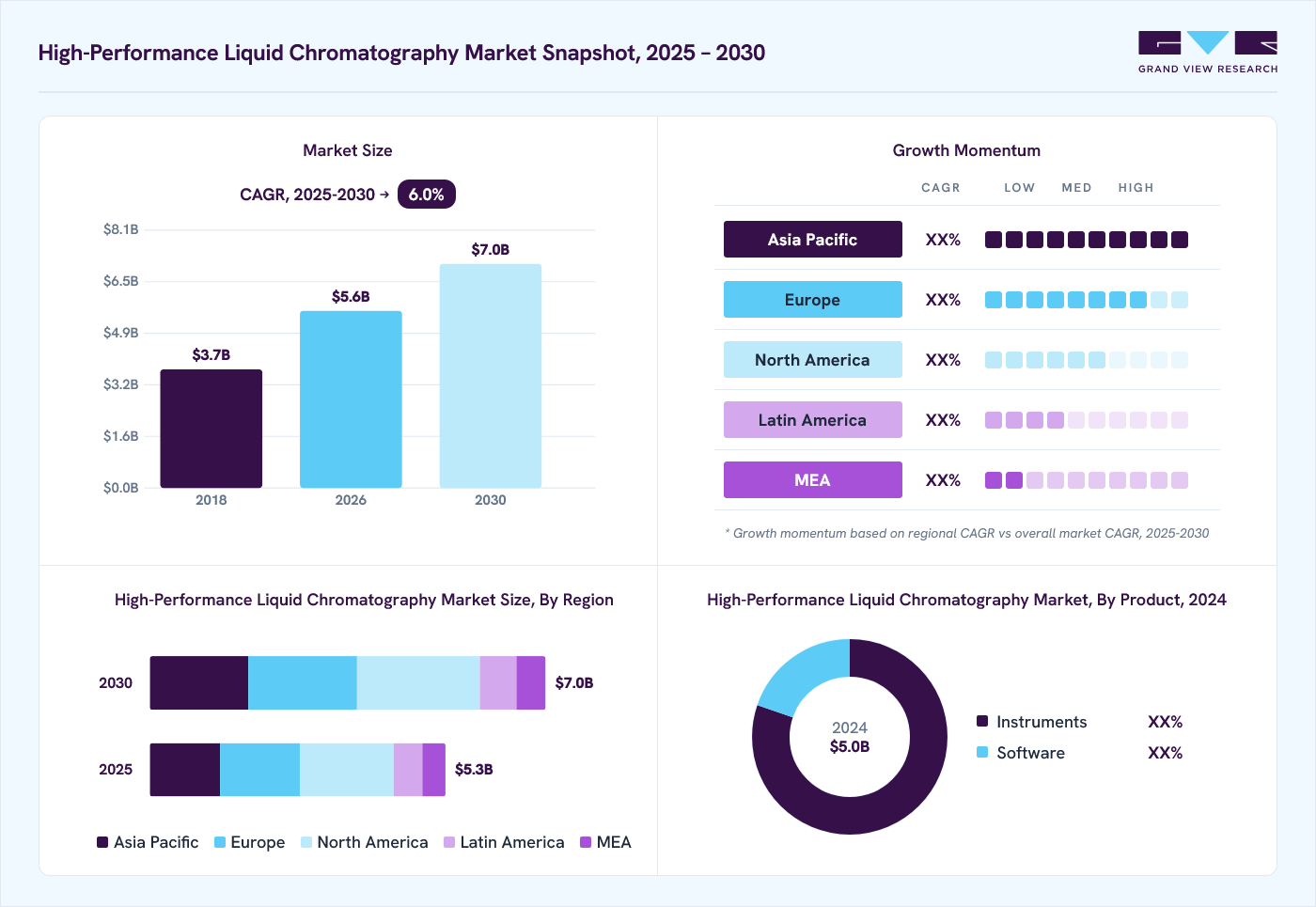
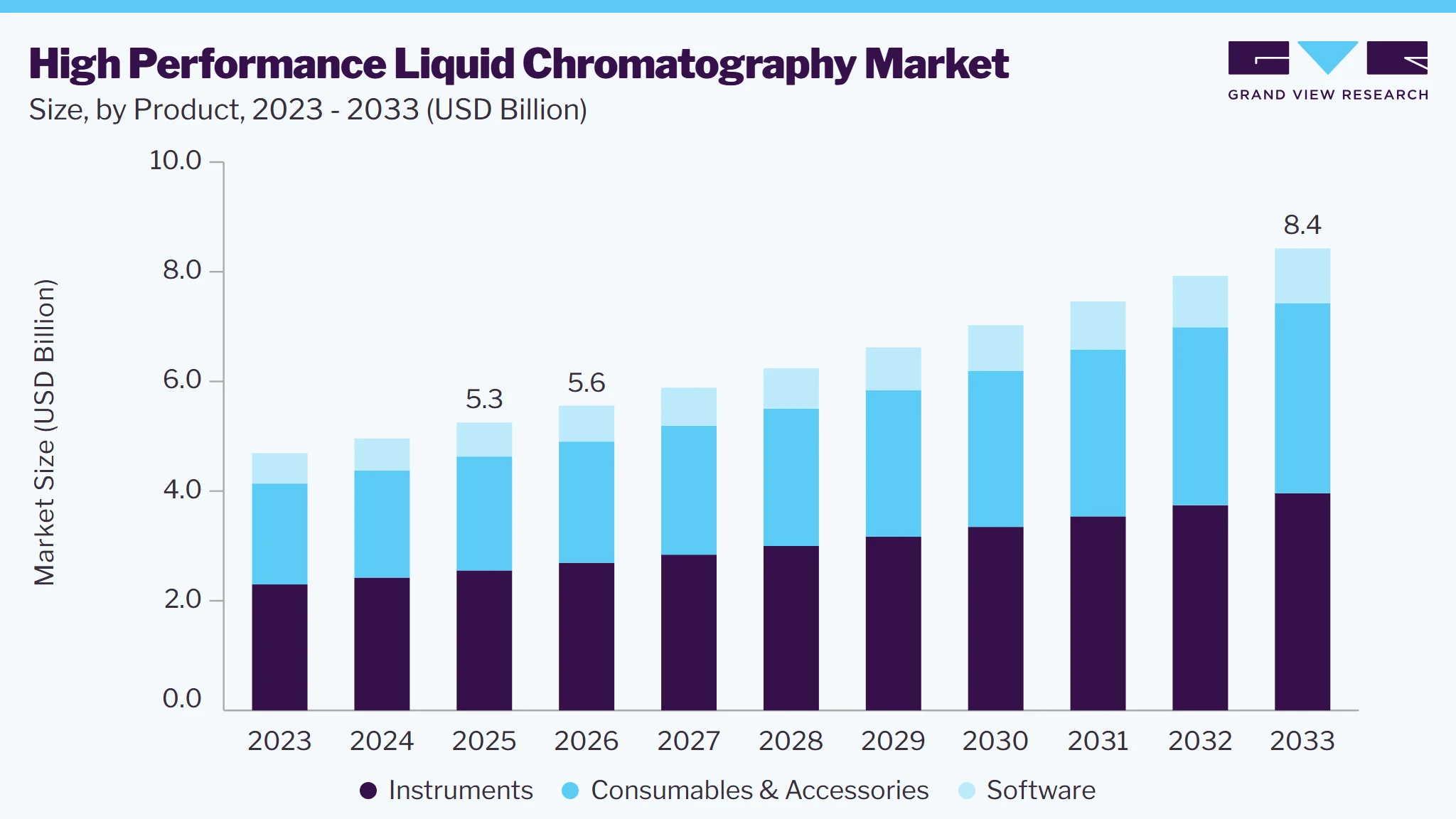
The global high-performance liquid chromatography market size was valued at USD 5.3 billion in 2025 and is projected to grow from USD 5.6 billion in 2026 to USD 8.4 billion by 2033, growing at a CAGR of 6.1% from 2026 to 2033. North America dominated the market, accounting for the largest global share of 31.9% in 2025. The market's growth is anticipated as a result of advancements in high-performance liquid chromatography (HPLC) technology, which have enhanced the reliability and effectiveness of liquid chromatography processes.
Key Market Trends & Insights
- By product: Instruments segment held the largest revenue share of 48.6% in 2025.
- By application: Clinical research applications segment held the largest share of 40.4% in 2025.
- By end-use: Pharmaceutical & biotechnology companies segment held the largest share of 42.0% in 2025.
Regional Highlights
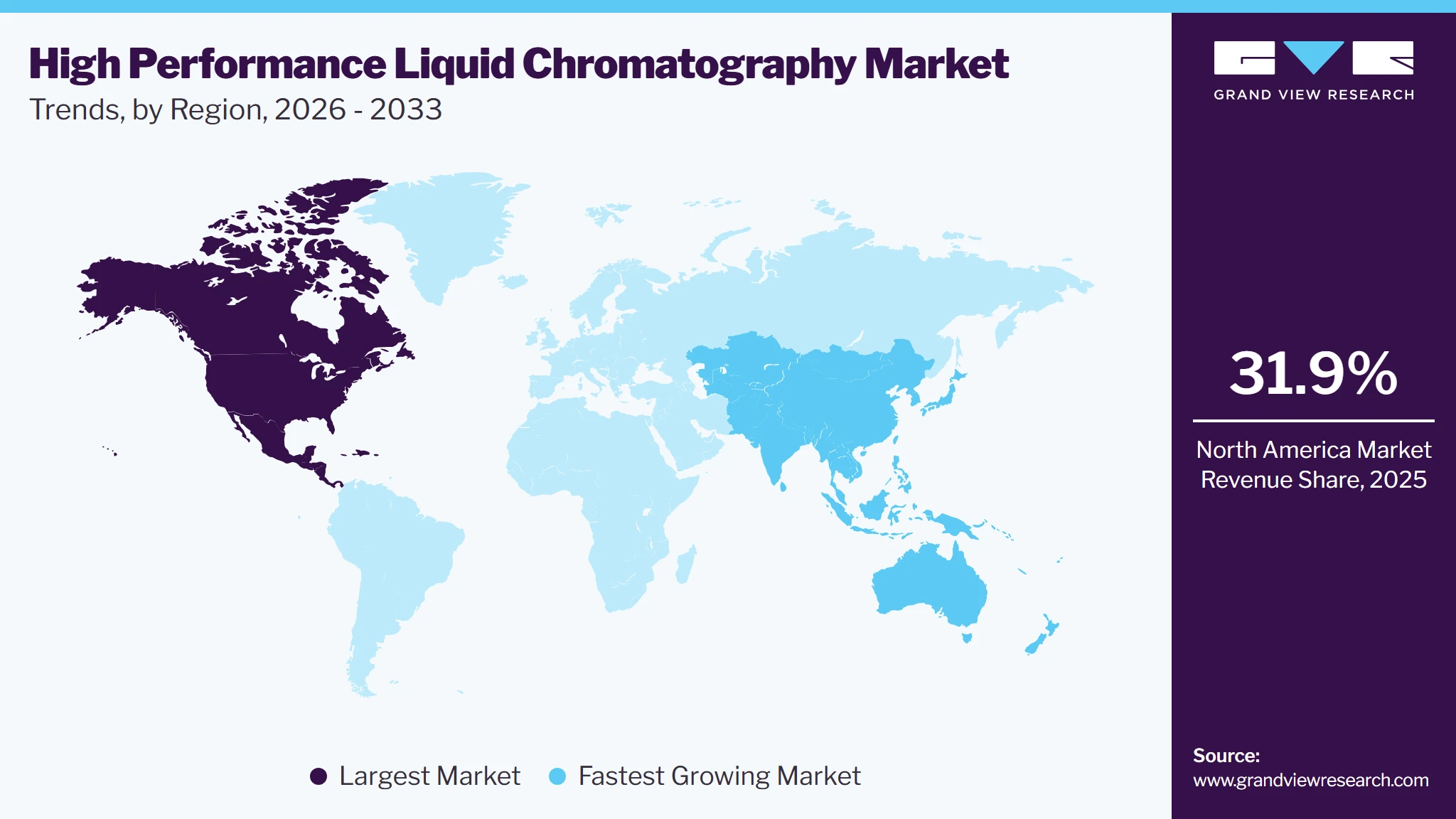
- Largest regional market: North America (31.9% revenue share, 2025)
- Fastest-growing regional market: Asia Pacific (fastest CAGR, 2026-2033)
- By country: The U.S. held the largest share of North America in 2025.
Market Size & Forecast
- Market size in 2025: USD 5.3 Billion
- Estimated market size in 2026: USD 5.6 Billion
- Projected market size by 2033: USD 8.4 Billion
- CAGR (2026-2033): 6.1%
For instance, modern HPLC systems feature dual-injection setups, multidimensional functionalities, and intermediate pressure options, thereby expanding the technique's applicability across diverse research applications.Moreover, the COVID-19 pandemic has expedited the integration of HPLC systems in developing new therapeutics, vaccines, and accurate diagnostic methods for the virus. For example, a study published in the Microchemical Journal in October 2021 introduced an innovative HPLC-based technique for quantifying favipiravir, a promising antiviral treatment for COVID-19. Additionally, as concerns regarding SARS-CoV-2 mutations grow, the application of HPLC for epidemiological studies specifically in characterizing viral proteins associated with emerging serotypes, is expected to increase. These developments are projected to have a favorable impact on market growth.
The market is further propelled by major HPLC manufacturers broadening their product offerings for specialized applications, including preparative purification, amino acid analysis, two-dimensional liquid chromatography, method development, and clinical diagnostics. For instance, in October 2021, Novasep introduced its Hipersep Process M HPLC system designed for the commercial-scale purification of oligonucleotides, peptides, insulin, and other pharmaceutically significant molecules. Furthermore, the growing adoption of protein-based therapeutics, such as bispecific antibodies and antibody-drug conjugates, is likely to enhance the role of HPLC within the biopharmaceutical sector.
The introduction of various liquid chromatography method development systems and supporting software in recent years is anticipated to enhance the usability and productivity of HPLC systems. For example, in August 2021, Thermo Fisher Scientific, Inc. partnered with ChromSword to unveil the Thermo Fisher Vanquish HPLC and UHPLC method development system. Similarly, in April 2022, Shimadzu Corporation introduced its LabSolutions MD software for HPLC platforms to aid in analytical method development. The release of such products is expected to boost the market penetration of HPLC systems and drive market growth.
Market Dynamics
The High-performance Liquid Chromatography (HPLC) market is driven by increasing demand for precise analytical techniques in pharmaceuticals, biotechnology, food safety, environmental testing, and clinical diagnostics. Growing investments in drug discovery, quality control, and research activities are boosting market growth. Technological advancements, including ultra-high-performance liquid chromatography (UHPLC), automation, and enhanced detection systems, are improving efficiency and accuracy, further supporting adoption. Regulatory requirements for product quality and safety also encourage widespread use of HPLC systems. However, high equipment and maintenance costs, along with the need for skilled professionals, may restrain market expansion. Emerging economies present significant growth opportunities due to expanding healthcare infrastructure and research capabilities. Additionally, rising applications in proteomics, metabolomics, and personalized medicine are expected to strengthen demand, making HPLC a critical tool across multiple industries.
The major driver of the HPLC market is the increasing use of analytical testing in pharmaceutical development and regulatory compliance. The U.S. FDA (2023-2025 guidance updates) emphasizes validated analytical methods for drug safety, purity, and impurity profiling, which directly increases HPLC adoption across laboratories. HPLC is widely used in pharmaceutical quality control because it provides high precision in separating complex compounds used in drug formulations. According to the U.S. National Institutes of Health report in 2024, modern drug development involves multiple stages of compound screening and validation, where chromatographic techniques remain essential for ensuring reproducibility and accuracy.
In addition, pharmaceutical R&D activity continues to expand globally, supported by innovation in biologics and generics. The World Health Organization report published in May 2024, highlights increasing complexity in drug molecules and stricter global quality standards, both of which require advanced analytical systems like HPLC for impurity detection and stability testing. This regulatory and scientific environment continues to strengthen HPLC adoption across pharmaceutical laboratories worldwide.
A key restraint in the HPLC market is the high cost of equipment and operational requirements. According to U.S. National Institute of Standards and Technology in 2024 report, laboratory instrumentation documentation, advanced analytical systems like HPLC require significant capital investment along with continuous maintenance, calibration, and consumables usage. These recurring operational needs make adoption difficult for small-scale laboratories and academic institutions with limited funding.
Another challenge is the requirement for trained professionals to operate and interpret HPLC results. The Organisation for Economic Co-operation and Development notes a persistent global shortage of advanced laboratory technicians skilled in analytical chemistry techniques. This shortage affects developing economies more severely, where limited training infrastructure slows down adoption and efficient use of chromatographic technologies. Together, cost barriers and skill gaps continue to restrict broader market penetration of HPLC systems.
A key opportunity for the HPLC market is the rapid expansion of biologics and precision medicine research. The U.S. National Institutes of Health in 2024, reports a steady rise in biologic-based drug development, including monoclonal antibodies and protein-based therapies, which require highly accurate separation and purification techniques. HPLC is widely used for protein characterization, peptide mapping, and impurity analysis, making it essential in modern biopharmaceutical workflows. The increasing complexity of these molecules is pushing laboratories to adopt high-resolution chromatographic systems to ensure safety, efficacy, and regulatory compliance in drug development pipelines.
In addition, precision medicine is accelerating demand for advanced analytical tools. The World Health Organization in 2024 highlights the growing shift toward personalized treatment approaches, where detailed molecular profiling is necessary for patient-specific therapies. HPLC supports this shift by enabling detailed analysis in proteomics and metabolomics research. Furthermore, global investment in life sciences research infrastructure, especially in emerging economies, is expanding laboratory capabilities, creating strong long-term growth opportunities for HPLC adoption across academic, clinical, and pharmaceutical sectors.
Analyst Perspective
The High-Performance Liquid Chromatography (HPLC) Market is expected to grow steadily due to its widespread use in pharmaceuticals, biotechnology, clinical diagnostics, food safety, and environmental testing. Rising regulatory requirements and growing demand for biologics, biosimilars, and complex drug formulations are increasing the need for accurate and sensitive analytical technologies. Advancements in automation, AI-powered data analysis, remote monitoring, and UHPLC systems are improving laboratory efficiency. Despite high equipment costs and skilled-labor shortages, increasing pharmaceutical manufacturing, life sciences research, and precision medicine adoption are creating long-term opportunities, particularly across Asia-Pacific.
Product Insights
Based on product, the instruments segment led the market with the largest revenue share of 48.6% in 2025, due to the increasing dominance of integrated HPLC systems and the availability of advanced detectors. Manufacturers in this sector concentrate on developing systems that provide enhanced productivity and application specificity. A notable example is Shimadzu Corporation's launch of the new i-Series LC-2050/LC-2060 integrated HPLC systems in February 2021. These systems feature high-speed sampling capabilities and minimal carryover, making them suitable for quality control applications. Additionally, detectors like Activated Research Company’s Solvere carbon selective detector, which accommodates both aqueous and organic solvents, are expanding the versatility of HPLC techniques for a diverse range of sample types.
Consumables and accessories segment is projected grow at a CAGR of 6.6% over the forecast period. Reasons being increased demand due to advancements in column chemistries and packing materials, as well as the growing importance of filtration techniques to safeguard HPLC columns from particulate contamination. The rising need for chromatography operations with enhanced sensitivity has heightened the focus on minimizing analyte-metal interactions that may compromise results. This can be achieved through advanced metal passivation techniques or by using PEEK (polyetheretherketone)-lined stainless steel columns. For example, Agilent Technologies, Inc. offers AdvanceBio SEC PEEK-lined stainless steel columns. These columns are expected to show significant growth potential and contribute positively to market growth.
Application Insights
Based on application, the clinical research applications segment led the market with the largest revenue share of 40.4% in 2025 and likely to grow with the fastest CAGR over the forecast period. This growth can be linked to the increasing scope of clinical trial activities, a rise in biopharmaceutical research and development, and a growing demand for high-throughput analytical techniques. Additionally, the advantages provided by HPLC in clinical research-including high analytical specificity, short analysis times, the ability to conduct multi- and mega-parametric tests, and its suitability for thermolabile, polar, and high-molecular weight compounds-position it as a leading alternative to other analytical methods. These factors are expected to enhance the use of HPLC in clinical research applications.
Diagnostic applications of HPLC are primarily driven by its ability to identify and quantify biomarkers crucial for the early detection of chronic diseases. This technique enhances diagnostic accuracy by differentiating between similar diseases. Moreover, HPLC serves as an excellent method for metabolite analysis and is particularly utilized in the assessment of vitamin D and HbA1c hemoglobin due to its reproducibility and low coefficient of variation. With the rising incidence of chronic diseases and the growing demand for reliable diagnostic techniques, the use of HPLC in diagnostic applications is anticipated to expand significantly over the forecast period.
End-use Insights
Based on end-use, the pharmaceutical & biotechnology companies segment led the market with the largest revenue share of 42.0% in 2025. Within these companies, HPLC methods are employed for various applications, including quality control, drug purity determination, characterization of drug candidates, and evaluation of the stability of active ingredients in pharmaceuticals. The segment is poised for growth, particularly due to the compatibility of HPLC with mass spectrometry, which significantly enhances the detection capabilities and selectivity of the technique. This synergy is expected to increase the adoption of HPLC for biopharmaceutical applications, further propelling market growth.
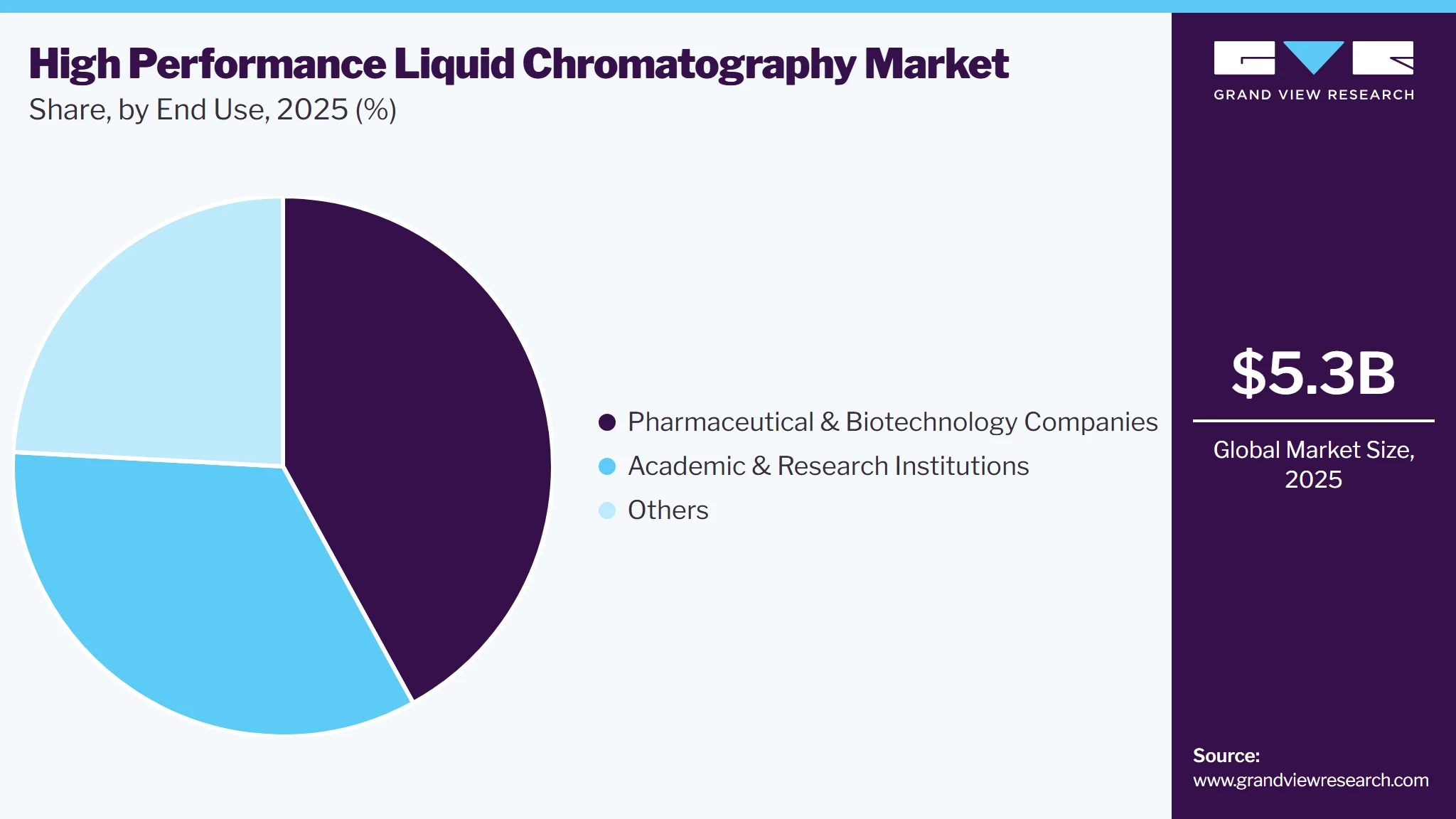
Academic and research institutions are projected to grow at a CAGR of 6.6% over the forecast period, driven by several factors. Increased government funding for academic research and the growing integration of analytical instrumentation in educational programs contribute significantly to this trend. Additionally, academic institutions play a vital role in research and development activities, with approximately 50% of basic research and 10% to 15% of overall R&D conducted in the U.S. within these settings. In 2020, research and development spending by academic institutions in the U.S. exceeded USD 86.4 billion. This strong investment underscores the high potential for adopting HPLC infrastructure in academic settings, which is likely to accelerate market growth in the coming years.
Regional Insights
North America high-performance liquid chromatography industry accounted for the largest revenue share of 31.9% in 2025. This growth can be attributed to the rapid expansion of the pharmaceutical industry, substantial investment in research and development, and the rising demand for clinical diagnostic applications. The presence of major players such as Thermo Fisher Scientific, Inc., Agilent Technologies, Inc., and Bio-Rad Laboratories, Inc. in the region also contributes significantly to market growth. Additionally, a high level of scientific awareness and the availability of skilled professionals in the area further enhance the adoption of HPLC applications.
U.S. High-performance Liquid Chromatography Market Trends
The high-performance liquid chromatography market in the U.S. held the largest share in the North America region in 2025, fueled by the presence of key players. The HPLC market in the U.S. is experiencing significant growth due to several key factors. The robust pharmaceutical and biotechnology sectors are driving demand for high-quality analytical techniques for drug development and quality control. Increased government funding for research and development further supports innovation in the field. Additionally, the rising prevalence of chronic diseases fuels the need for efficient diagnostic tools. The presence of leading companies, advanced technological infrastructure, and a highly skilled workforce also contribute to the market's expansion, ensuring that HPLC remains a critical component in various scientific and clinical applications across the nation.
Europe High-performance Liquid Chromatography Market Trends
Europe high-performance liquid chromatography market is experiencing significant growth. The region boasts a strong pharmaceutical and biotechnology industry, with a significant focus on research and development, which increases the need for advanced analytical techniques like HPLC. Additionally, rising public health concerns and a growing prevalence of chronic diseases necessitate accurate diagnostic tools, further propelling the market.
The UK High-performance Liquid Chromatography market is experiencing significant growthdue to healthcare improvements and technological advancements. Rising healthcare expenditures and a growing emphasis on personalized medicine are fueling the demand for precise analytical methods. Regulatory requirements for quality control and safety in pharmaceuticals also enhance the adoption of HPLC systems, positioning the UK as a key market in the global HPLC landscape.
Germany high-performance liquid chromatography market is experiencing significant growth, driven by robust pharmaceutical and biotechnology industry, with numerous companies engaged in drug discovery and development. This creates a high demand for the high-performance liquid chromatography market.
Asia Pacific High-performance Liquid Chromatography Market Trends
The high-performance liquid chromatography market in the Asia Pacific is experiencing the fastest growth,driven by significant innovations in healthcare infrastructure and technology. The expansion of the pharmaceutical and biotechnology industries, particularly in countries like China and India, is a significant contributor, as these sectors increasingly rely on advanced analytical techniques for drug development and quality control.
China High-Performance Liquid Chromatography market is growing, driven by the rapid expansion of its biotechnology and pharmaceutical industries. As one of the largest pharmaceutical markets globally, China increasingly relies on advanced analytical techniques like HPLC for drug development, quality control, and regulatory compliance. The government’s strong support for research and development, including substantial investments in healthcare and biopharmaceutical innovation, further fuels market growth.
Latin America High-performance Liquid Chromatography Market Trends
High-performance liquid chromatography market in Latin Americais experiencing significant growth,owing to increasing investments in pharmaceutical and biotechnology sectors, particularly in countries like Brazil, Mexico, and Argentina. Additionally, rising research and development activities, supported by government initiatives and funding, are fostering innovation in drug discovery and diagnostics. The growing prevalence of chronic diseases, coupled with the demand for accurate and efficient diagnostic tools, further enhances the market potential for HPLC applications
Middle East & Africa High-performance Liquid Chromatography Market Trends
The MEA high-performance liquid chromatography marketis growing driven by increasing investment in healthcare and life sciences in countries like Saudi Arabia, and the UAE.
The Saudi Arabia high-performance liquid chromatography market is expanding due to increased healthcare investment and improved infrastructure. Additionally, growing investments in research and development, supported by government initiatives, are fostering advancements in biotechnology and pharmaceuticals. Furthermore, international collaborations and partnerships are helping to introduce advanced HPLC technologies in the country.
Key High-performance Liquid Chromatography Company Insights
The competitive scenario in the high-performance liquid chromatography market is high, with key players such as Waters Corporation, Thermo Fisher Scientific, Inc., Agilent Technologies, Inc., Shimadzu Corporation holding significant positions. Leading companies in the market are actively seeking to expand their customer base through mergers, acquisitions, and strategic partnerships with other key players.
Key High-performance Liquid Chromatography Companies
The following key companies have been profiled for this study on the high-performance liquid chromatography market.
-
Waters Corporation
-
Thermo Fisher Scientific, Inc.
-
Agilent Technologies, Inc.
-
Shimadzu Corporation
-
Sartorius AG
-
PerkinElmer, Inc.
-
Bio-Rad Laboratories, Inc.
-
Merck KGaA
-
Tosoh Bioscience GmbH
-
Gilson, Inc.
-
Danaher Corporation
Competitive Benchmarking
Category
Operating Strategies
Competitive Edge
Weakness
Well-Established Players (Agilent Technologies, Waters Corporation, Shimadzu Corporation, Thermo Fisher Scientific, PerkinElmer, Bio-Rad Laboratories)
- Focus on expanding advanced HPLC and UHPLC portfolios, integrating automation, software analytics, and high-sensitivity detection technologies.
- Invest in pharmaceutical, biotechnology, environmental, food safety, and clinical testing applications.
- Strengthen global distribution networks, service capabilities, and strategic collaborations with research institutes and pharmaceutical manufacturers.
- Strong global brand recognition, extensive installed base, broad product portfolios, robust R&D capabilities, comprehensive service networks, and long-term customer relationships.
- Ability to meet stringent regulatory requirements and support high-volume analytical workflows across multiple industries.
- High manufacturing and R&D costs, exposure to fluctuations in capital equipment spending, lengthy product development cycles, and dependence on pharmaceutical and research funding.
- Large organizational structures may reduce flexibility in responding quickly to niche market demands.
Emerging & Regional Players (Jasco Corporation, Young In Chromass, Knauer Wissenschaftliche Geräte, regional chromatography instrument manufacturers and specialty suppliers)
- Focus on cost-effective HPLC systems, niche analytical applications, customized chromatography solutions, and regional distribution expansion.
- Emphasize partnerships with universities, contract research organizations (CROs), and local pharmaceutical manufacturers while offering application-specific solutions and technical support.
- Greater operational flexibility, competitive pricing, customized product offerings, faster response to regional customer requirements, and specialization in selected chromatography applications.
- Ability to serve underserved markets and small-to-medium laboratories effectively.
- Limited global presence, smaller R&D budgets, narrower product portfolios, lower brand recognition, and restricted service infrastructure.
- Dependence on regional demand and distribution partnerships may limit scalability and competitive positioning against multinational manufacturers.
Recent Developments
-
In April 2024, Waters Corporation has introduced the Alliance iS Bio HPLC System, designed to tackle the operational and analytical challenges faced by biopharma quality control (QC) laboratories. This innovative HPLC system integrates advanced bio-separation technology with built-in instrument intelligence features, aimed at enhancing efficiency for biopharma QC analysts. By utilizing this system, users can potentially reduce common errors by up to 40%, thereby minimizing the time spent on investigating issues related to failed runs and out-of-specification results.
High-performance Liquid Chromatography Market Report Scope
Report Attribute
Details
Market size value in 2025
USD 5.3 billion
Market size value in 2026
USD 5.6 billion
Revenue forecast in 2033
USD 8.4 billion
Growth rate
CAGR of 6.1% from 2026 to 2033
Historical data
2021 - 2024
Forecast period
2026 - 2033
Quantitative units
Revenue in USD million/billion, and CAGR from 2026 to 2033
Report coverage
Revenue forecast, company ranking, competitive landscape, growth factors, and trends
Segments covered
Application, product, end-use, regional
Regional scope
North America; Europe; Asia Pacific; Latin America; MEA
Country scope
U.S.; Canada; Mexico; Germany; UK; France; Italy; Spain; Denmark; Sweden; Norway; Japan; China; India; South Korea; Australia; Thailand; Brazil; Argentina; South Africa; Saudi Arabia; UAE; and Kuwait
Key companies profiled
Waters Corporation; Thermo Fisher Scientific, Inc.; Agilent Technologies, Inc.; Shimadzu Corporation; Sartorius AG; PerkinElmer, Inc.; Bio-Rad Laboratories, Inc.; Merck KGaA; Tosoh Bioscience GmbH; Gilson, Inc.; Danaher Corporation
Customization scope
Free report customization (equivalent up to 8 analysts' working days) with purchase. Addition or alteration to country, regional & segment scope.
Pricing and purchase options
Avail customized purchase options to meet your exact research needs. Explore purchase options
Global High-performance Liquid Chromatography Market Report Segmentation
This report forecasts revenue growth at country levels and provides an analysis on the latest industry trends and opportunities in each of the sub-segments from 2021 to 2033. For this study, Grand View Research has segmented the high-performance liquid chromatography market report based on product, application, end-use and region.
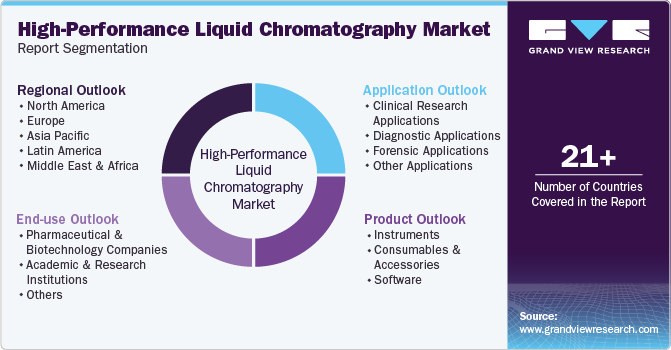
-
Product Outlook (Revenue, USD Billion, 2021 - 2033)
-
Instruments
-
HPLC Systems
-
Pumps
-
Detectors
-
Others
-
-
Consumables & Accessories
-
Columns
-
Reverse-phase HPLC Columns
-
Normal-phase HPLC Columns
-
Ion Exchange HPLC Columns
-
Size Exclusion HPLC Columns
-
Other HPLC Columns
-
-
Filters
-
Vials
-
Tubes
-
Others
-
-
Software
-
-
Application Outlook (Revenue, USD Billion, 2021 - 2033)
-
Clinical Research Applications
-
Diagnostic Applications
-
Forensic Applications
-
Other Applications
-
-
End-use Outlook (Revenue, USD Billion, 2021 - 2033)
-
Pharmaceutical & Biotechnology Companies
-
Academic & Research Institutions
-
Others
-
-
Regional Outlook (Revenue, USD Billion, 2021 - 2033)
-
North America
-
U.S.
-
Canada
-
Mexico
-
-
Europe
-
UK
-
Germany
-
France
-
Italy
-
Spain
-
Norway
-
Denmark
-
Sweden
-
-
Asia Pacific
-
Japan
-
China
-
India
-
Australia
-
South Korea
-
Thailand
-
-
Latin America
-
Brazil
-
Argentina
-
-
Middle East & Africa
-
South Africa
-
Saudi Arabia
-
UAE
-
Kuwait
-
-
Research Methodology
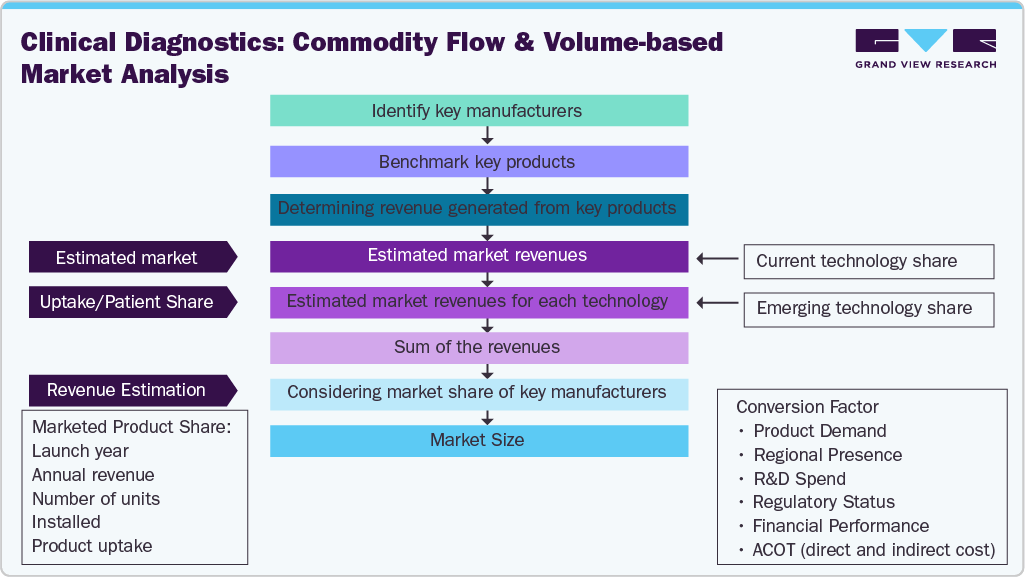
The high-performance liquid chromatography market figures in this report are based on a proven research process that combines executive interviews with secondary research from proprietary databases, company filings, and recognized regulatory and institutional sources. Market size is built through value-chain sizing - reconciling supply-side and demand-side estimates - and triangulated with bottom-up and top-down approaches. Every estimate passes multiple levels of expert validation before publication, with each high-performance liquid chromatography segment quantified using the revenue-capture definitions in the table below.
Segment Definition
Segment - Product
Revenue capture definition
Instruments
Revenue captured from the sale of HPLC systems, including pumps, detectors, autosamplers, columns, and integrated chromatographic platforms used across analytical applications.
Consumables & Accessories
Revenue generated from HPLC consumables and accessories, including columns, solvents, reagents, vials, filters, tubing, fittings, and replacement components required for operations.
Software
Revenue derived from chromatography software solutions used for instrument control, data acquisition, processing, reporting, compliance management, and laboratory workflow optimization.
Segment - Application
Revenue capture definition
Clinical Research Applications
Revenue captured from HPLC systems, consumables, and services used in clinical research for drug development, biomarker analysis, pharmacokinetic studies, and therapeutic monitoring applications.
Diagnostic Applications
Revenue generated from HPLC products and related services utilized in diagnostic laboratories for disease detection, metabolic disorder screening, and clinical sample analysis.
Forensic Applications
Revenue derived from HPLC instruments, columns, reagents, and support services used in forensic investigations, toxicology testing, drug identification, and evidence analysis.
Other Applications
Revenue earned from HPLC usage in environmental testing, food and beverage analysis, academic research, chemical manufacturing, and various industrial quality-control applications.
Segment - End Use
Revenue capture definition
Pharmaceutical & Biotechnology Companies
Revenue captured from HPLC products and services purchased by pharmaceutical and biotechnology companies for drug discovery, development, manufacturing, quality control, and compliance testing.
Academic & Research Institutions
Revenue generated from HPLC systems, consumables, software, and services utilized by universities, research centers, and government laboratories for scientific studies.
Estimation Model
The High-Performance Liquid Chromatography (HPLC) market size is estimated using a combination of bottom-up and top-down approaches. The bottom-up methodology assesses revenue generated by manufacturers of HPLC instruments, consumables, accessories, and software across key regions. Revenue data is collected from company annual reports, regulatory filings, investor presentations, and publicly available financial disclosures. The aggregated revenues attributable to HPLC-related products are then adjusted for regional demand patterns, product mix, and distribution channels to derive the overall market size.
The top-down approach validates market estimates by analyzing spending across major end-use industries, including pharmaceutical and biotechnology companies, academic and research institutions, clinical laboratories, food testing facilities, and forensic laboratories. Industry adoption rates, laboratory infrastructure growth, pharmaceutical R&D expenditure, and regulatory requirements are evaluated to determine HPLC demand across applications. Market penetration levels are assessed for different product categories such as instruments, consumables, and software to ensure consistency with industry utilization trends.
Delivered Customizations
This report has been delivered with the following In-depth customizations
Client Request
Customization Delivered
Value Adds
LDT Competitive Landscape & Technology Assessment – Molecular, Genomics & Specialty Diagnostics
Assessed global LDT ecosystem across clinical genomics, oncology, infectious disease, rare disease, and companion diagnostics. Evaluated key laboratory networks, hospital-based CLIA labs, NGS-based testing providers, and emerging precision diagnostics players.
Enabled benchmarking of leading lab providers and high-growth test segments, identified expansion opportunities in specialty and precision medicine testing, and assessed shift toward decentralized molecular diagnostics.
LDT Regulatory, Compliance & Reimbursement Landscape Assessment
Analyzed evolving regulatory framework including CLIA oversight, FDA proposed LDT regulations, and reimbursement pathways across CMS and private payers. Evaluated compliance readiness of major lab-developed test providers and impact on test commercialization.
Supported regulatory risk mapping, identified compliance gaps and readiness across lab operators, and highlighted implications of tightening oversight on innovation and market entry barriers.
LDT Innovation & Technology Assessment – NGS, PCR, Liquid Biopsy & AI-Enabled Diagnostics
Assessed adoption of next-generation sequencing (NGS), multiplex PCR, liquid biopsy, digital pathology, and AI-enabled diagnostic interpretation within LDT workflows. Evaluated automation, lab informatics integration, and turnaround time optimization trends.
Highlighted high-growth innovation segments, identified leaders in advanced molecular diagnostics, and assessed competitive positioning in precision, high-throughput, and AI-driven testing solutions.
Frequently Asked Questions About This Report
High-performance liquid chromatography market in the Asia Pacific is experiencing the fastest growth, driven by significant innovations in healthcare infrastructure and technology.
The instruments segment held the largest revenue share of 48.6% in 2025, due to the increasing dominance of integrated HPLC systems and the availability of advanced detectors. Manufacturers in this sector concentrate on developing systems that provide enhanced productivity and application specificity.
Clinical research applications accounted for the largest revenue share of 40.4% in 2025 and likely to grow with the fastest CAGR over the forecast period. This growth can be linked to the increasing scope of clinical trial activities, a rise in biopharmaceutical research and development, and a growing demand for high-throughput analytical techniques.
A key opportunity for the HPLC market is the rapid expansion of biologics and precision medicine research. The U.S. National Institutes of Health in 2024, reports a steady rise in biologic-based drug development, including monoclonal antibodies and protein-based therapies, which require highly accurate separation and purification techniques.
The global high-performance liquid chromatography market is expected to grow at a compound annual growth rate of 6.1% from 2026 to 2033 to reach USD 8.4 billion by 2033.
North America dominated the HPLC market with a share of 31.9% in 2025. This is attributable to the rapid growth in the pharmaceutical industry, high research and development spending, increasing demand for clinical diagnostic applications, and the presence of key players such as Thermo Fisher Scientific, Inc., Agilent Technologies, Inc., Bio-Rad Laboratories, Inc., and others in the region.
Some key players operating in the HPLC market include Waters Corporation; Thermo Fisher Scientific, Inc.; Agilent Technologies, Inc.; Shimadzu Corporation; Sartorius AG; PerkinElmer, Inc.; Bio-Rad Laboratories, Inc.; Merck KGaA; Tosoh Bioscience GmbH; Gilson, Inc. and Danaher Corporation.
Key factors that are driving the high-performance liquid chromatography market growth include rapid growth in pharmaceuticals production, stringent regulatory norms for drug purity, increasing adoption of HPLC techniques for diagnostics and research purposes, and technological advancements in HPLC systems that are expanding its scope of applications.
The global high-performance liquid chromatography market size was valued at USD 5.3 billion in 2025 and is estimated at USD 5.6 billion in 2026.
About the Author(s)
Clinical Diagnostics Research Team
Healthcare · Clinical DiagnosticsThis report was authored by the clinical diagnostics research team at Grand View Research - comprising two research analysts, one senior research analyst, and one industry expert - with specialized expertise in the clinical diagnostics segment of the healthcare industry. All findings are based on proprietary healthcare databases, executive interviews, and regulatory analysis, subject to internal peer review prior to publication.
Last Updated:
Speak to Analyst


Customize this report to your needs — add regions, segments, or data points, with 20% free customization.
Or view our licence options:


ISO 9001:2015 & 27001:2022 Certified
We are GDPR and CCPA compliant! Your transaction & personal information is safe and secure. For more details, please read our privacy policy.


