
- Home
- »
- Medical Devices
- »
-
Inhaled Drugs Contract Manufacturing Market Report, 2033GVR Report cover

Inhaled Drugs Contract Manufacturing Market (2026 - 2033)
Size, Share & Trends Analysis Report By Service (Clinical Manufacturing, Commercial Manufacturing, Packaging & Labeling), By Product (Active Pharmaceutical Ingredient), By End-use, By Region, And Segment Forecasts
Market Size, 2025
$5.9BMarket Estimate, 2026
$6.5BMarket Forecast, 2033
$12.6BCAGR, 2026–2033
9.8%Inhaled Drugs Contract Manufacturing Market Summary
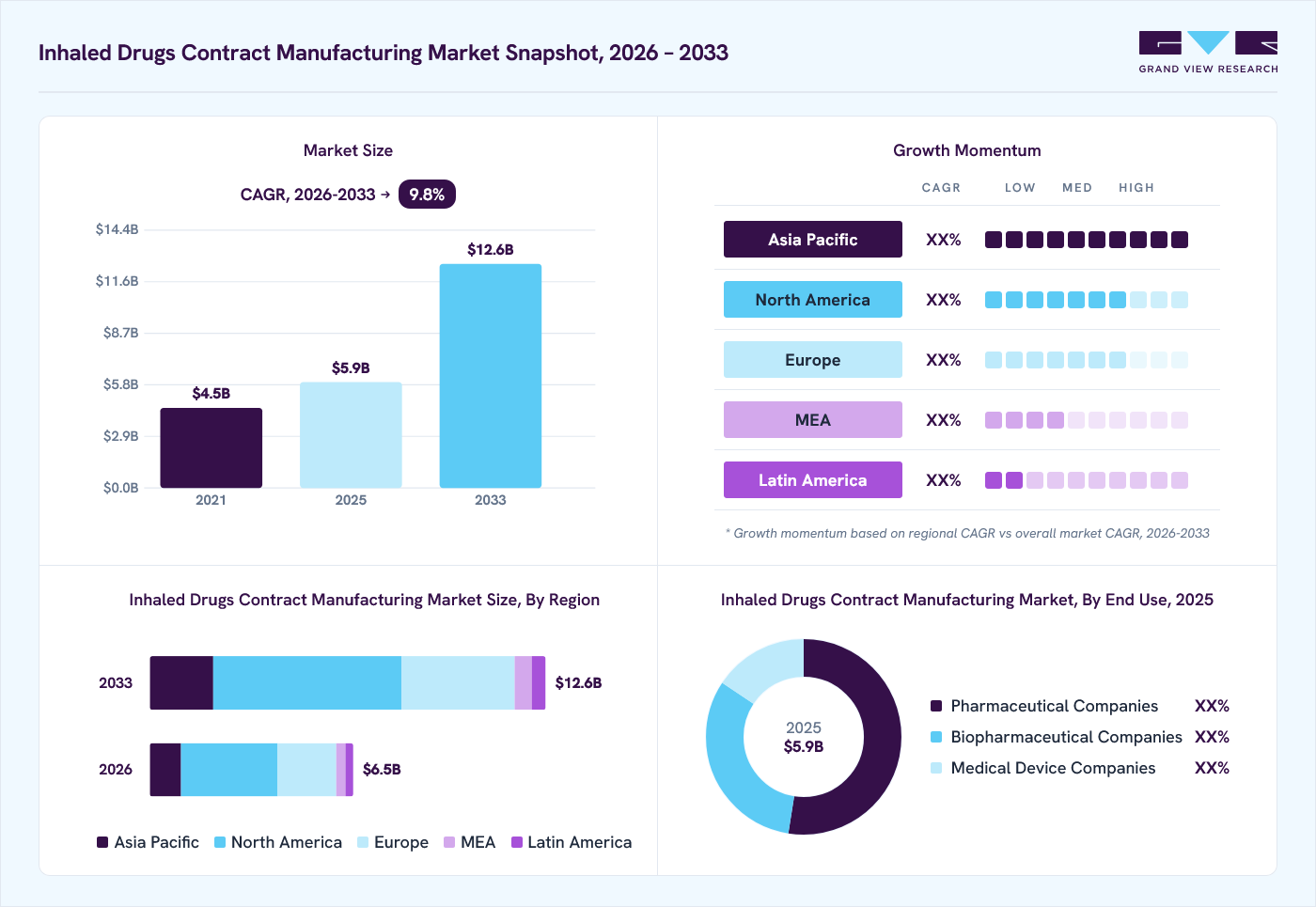
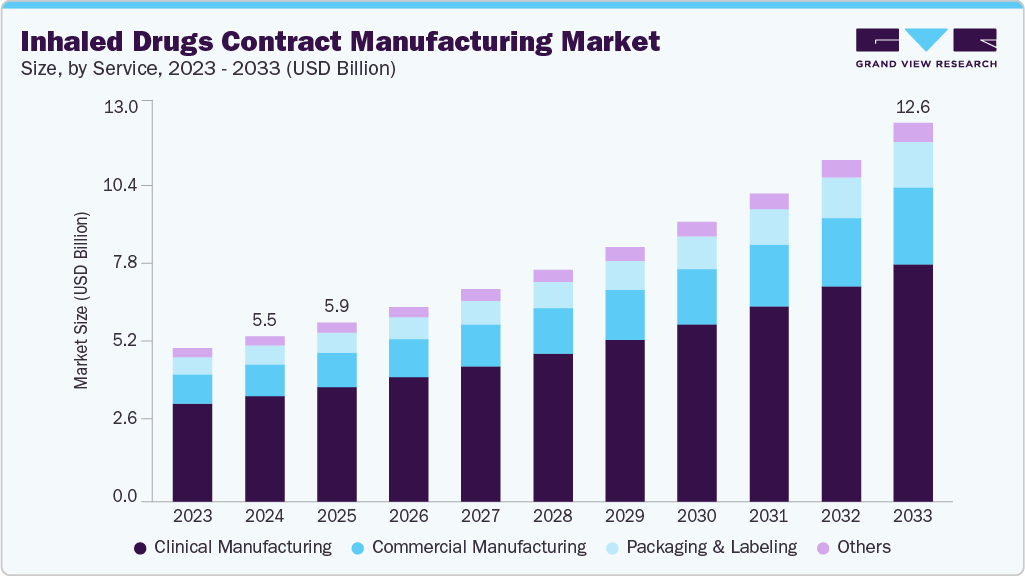
The global inhaled drugs contract manufacturing market size was valued at USD 5.9 billion in 2025 and is projected to grow from USD 6.5 billion in 2026 to USD 12.6 billion by 2033, at a CAGR of 9.8% from 2026 to 2033. North America market dominated, with a revenue share of 47.4% in 2025. The market growth is driven due to the rising prevalence of respiratory disorders such as asthma and chronic obstructive pulmonary disease (COPD), which is fueling the demand for effective and targeted therapeutic options.
 Source: Grand View Research, IR Documents, Primary Interviews, Paid DatabasesTo learn more about this report,
 Download Free Sample Report
Key Market Trends & Insights
- By service: Commercial manufacturing segment led the market with the largest revenue share of 63.9% in 2025.
- By product: Active pharmaceutical ingredient (API) segment led the market with the largest revenue share of 87.8% in 2025.
- By end-use: Pharmaceutical companies segment led the market with the largest revenue share of 52.5% in 2025.
Regional Highlights
- Largest regional market: North America (47.4% revenue share, 2025)
- Fastest-growing regional market: Asia Pacific (highest CAGR, 2026-2033)
- By country: The U.S. held the largest market share in 2025.
Market Size & Forecast
- Market size in 2025: USD 5.9 Billion
- Estimated market size in 2026: USD 6.5 Billion
- Projected market size by 2033: USD 12.6 Billion
- CAGR (2026-2033): 9.8%
Prism AI by Grand View Research Free to tryAsk a question about the inhaled drugs contract manufacturing marketTry asking✓Every figure cited from GVR research Prefer the report? Download free sample →
The growing clinical need, coupled with the expanding adoption of advanced inhalation therapies, is prompting pharmaceutical and biopharmaceutical companies to increasingly outsource drug development and manufacturing processes to specialized contract manufacturing, which is contributing to the growth of the inhaled drugs contract manufacturing industry.In addition, the rising patient population suffering from chronic respiratory conditions, including asthma, COPD, among others, has accelerated the demand for effective inhalation therapies, including dry powder inhalers (DPIs), metered-dose inhalers (MDIs), and nebulizers. This growing therapeutic need is pushing pharmaceutical companies to expand their product pipelines and bring novel inhaled formulations to market faster. Developing these therapies requires specialized expertise in formulation, particle size optimization, and device compatibility, along with precision in dose delivery. Therefore, pharmaceutical companies are increasingly partnering with contract manufacturers organizations (CMOs) to leverage their technical capabilities, advanced infrastructure, and regulatory experience to enable faster development timelines and reduced capital expenditure. Thus, the aforementioned factors are driving the expansion of the inhaled drugs contract manufacturing market.
 To learn more about this report, Download Free Sample Report
Furthermore, the need for cost optimization and operational efficiency is further accelerating the demand for contract manufacturing services in this market. Inhaled drug manufacturing involves high capital investment in device integration, cleanroom facilities, and aerosol testing, which can strain in-house resources. CDMOs with end-to-end capabilities, including formulation development, device engineering, and commercial-scale manufacturing, enable drug developers to minimize capital expenditure and accelerate time-to-market. This strategic outsourcing allows pharmaceutical companies to focus on core competencies such as research and marketing. At the same time, contract manufacturers benefit from long-term partnerships and recurring production contracts, contributing to sustained market growth.
Market Dynamics
The inhaled drugs contract manufacturing market is witnessing shifting trends from capacity-led outsourcing to specialized technical services market. Sponsors are increasingly prioritizing CMOs that can manage the full complexity of inhaled product development, including API particle engineering, formulation optimization, device compatibility, filling, assembly, analytical testing, and commercial supply. Besides, the demand is fueled by rising respiratory disease prevalence, generic inhaler opportunities, and growing interest in pulmonary delivery for complex molecules. Inhaled products require a high level of process control because small changes in particle size, blend uniformity, propellant behavior, or device performance can influence dose delivery and patient outcomes.
The market benefits from increasing sponsor preference for integrated partners that can reduce vendor fragmentation and accelerate clinical-to-commercial transition. CDMOs with proven regulatory experience, robust quality systems, and flexible manufacturing models are gaining strategic importance. Regional supply diversification, sustainable MDI reformulation, and advanced DPI development are further shaping investment priorities. Thus, market is shifting toward capability depth, technology differentiation, and lifecycle support. Such factors are expected to drive the market growth.
One of the key driver of the inhaled drugs contract manufacturing market is the rising demand for specialized outsourcing driven by the technical complexity of inhalation products. Inhaled therapies require precise control over particle size, aerodynamic performance, dose delivery, formulation-device compatibility, and stability, making them more complex than conventional dosage forms. Pharmaceutical and biopharmaceutical companies increasingly rely on external partners with dedicated capabilities in micronization, spray drying, powder blending, MDI filling, DPI assembly, nebulized formulation, analytical testing, and regulatory documentation. This is particularly important for companies developing respiratory therapies, generic inhalers, and complex drug-device combinations, where in-house manufacturing investment can be capital-intensive and time-consuming. Outsourcing also enables sponsors to reduce development risk, accelerate clinical supply timelines, and access commercial-scale infrastructure without building dedicated inhalation facilities. As pipelines expand across asthma, COPD, infectious respiratory diseases, and systemic pulmonary delivery, demand for inhalation-focused CMOs is expected to strengthen, supporting the market growth.
A major restraint in the inhaled drugs contract manufacturing market is the high technical and regulatory complexity associated with inhalation drug-device products. Unlike standard formulations, inhaled products must demonstrate consistent emitted dose, aerodynamic particle-size distribution, device performance, formulation stability, and patient-use reliability. These requirements increase development timelines, validation burden, and manufacturing costs. Any variation in API particle size, excipient blending, device components, propellant behavior, or filling process can affect therapeutic performance and regulatory acceptability. For CDMOs, maintaining specialized equipment, trained personnel, containment systems, analytical infrastructure, and GMP-compliant inhalation manufacturing lines requires significant capital investment. Smaller sponsors may face higher project costs and limited access to suitable manufacturing slots, while CDMOs may experience capacity bottlenecks for commercial-scale MDI and DPI production. In addition, evolving environmental expectations around propellants and increasing scrutiny of combination products can create additional compliance requirements. These factors may restrain faster adoption, particularly among early-stage companies with limited funding.
Opportunity Analysis
The inhaled drugs contract manufacturing market is expected to witness new growth opportunities as pharmaceutical and biopharmaceutical companies increasingly outsource complex inhalation development and manufacturing activities. A major opportunity exists in complex generic inhalers, where sponsors require specialized support for formulation equivalence, device compatibility, emitted dose consistency, and aerodynamic particle-size performance. Patent expiries of branded respiratory products and rising demand for affordable asthma and COPD therapies are expected to strengthen this opportunity.
Besides, advanced inhaled therapies, including inhaled biologics, peptides, anti-infectives, and systemic pulmonary delivery products, offer one of the emerging opportunities. These therapies require expertise in particle engineering, spray drying, sterile processing, and stability optimization, creating demand for technically advanced CDMOs.
Moreover, sustainable MDI reformulation offers strong growth potential as companies transition toward low-global-warming-potential propellants. This creates outsourcing demand for reformulation, comparability studies, device testing, validation, and commercial transition support.
Further opportunities arise in integrated clinical-to-commercial manufacturing, where sponsors prefer partners that offer API processing, formulation development, device filling, packaging, labeling, analytical testing, and regulatory support under a single platform. Regional supply chain diversification across North America, Europe, and the Asia Pacific also supports CDMO expansion. Thus, opportunities will favor partners with inhalation-specific technical depth, scalable capacity, regulatory expertise, and differentiated drug-device manufacturing capabilities.
The inhaled drugs contract manufacturing market is the growing demand for complex generic and differentiated inhaler manufacturing. Inhaled generics are technically challenging because sponsors must demonstrate device equivalence, emitted dose consistency, aerodynamic performance, formulation stability, and comparable therapeutic delivery. This is expected to drive the demand for CDMOs with proven capabilities across MDI, DPI, and nebulizer development, including formulation optimization, analytical testing, device integration, clinical batch manufacturing, scale-up, validation, and commercial production. The opportunity is further supported by patent expiries, payer pressure for affordable respiratory therapies, and rising demand for asthma and COPD treatment options. In addition, differentiated inhalers with improved usability, sustainability, dose delivery, or patient adherence can offer strategic value to sponsors. CDMOs with inhalation science expertise, regulatory documentation capability, and commercial-scale manufacturing infrastructure are well positioned to capture this opportunity as companies increasingly outsource complex inhaler programs instead of investing in dedicated internal facilities.
Market Characteristics
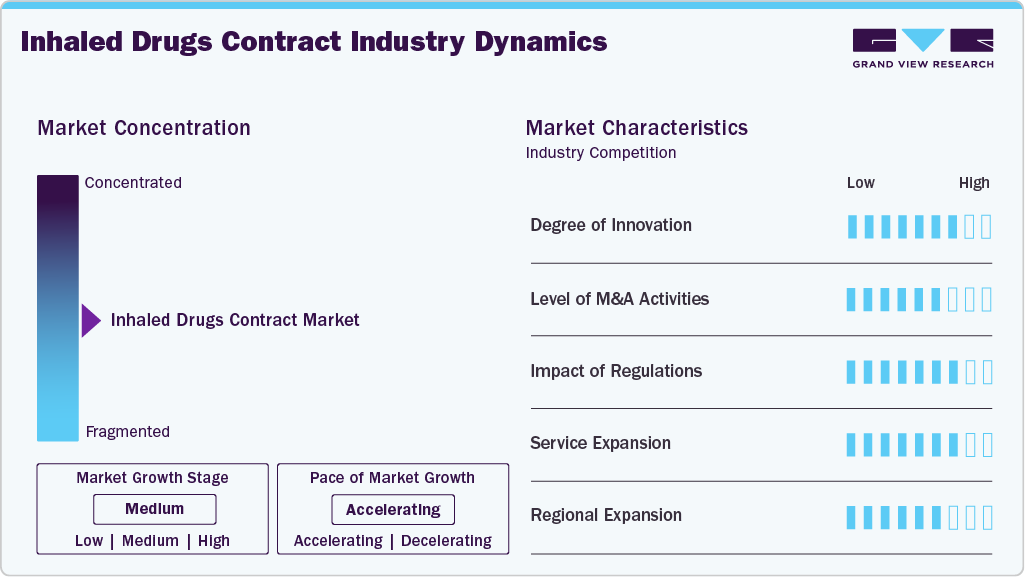
The inhaled drugs contract manufacturing market growth stage is medium, and growth is accelerating. The market is characterized by the degree of innovation, level of M&A activities, regulatory impact, service expansion, and regional expansion.
Innovation in the inhaled drugs contract manufacturing market is increasing through particle engineering, spray drying, advanced powder blending, sustainable propellant development, and digital process monitoring. CDMOs are also supporting complex inhaled biologics, peptides, and systemic pulmonary therapies. These innovations improve dose consistency, lung deposition, formulation stability, and device compatibility, making technical capability a key differentiator for outsourcing partnerships.
 To learn more about this report, Download Free Sample Report
The market is witnessing M&A activity in the market due to growing specialized inhalation capabilities, commercial-scale capacity, and drug-device expertise. Larger CDMOs are pursuing partnerships or acquisitions to expand respiratory manufacturing, particle engineering, sterile filling, and packaging capabilities. Such consolidation improves service breadth, strengthens global supply networks, and enables providers to support sponsors from early development through commercial launch.
Regulatory requirements have a significant impact because inhaled products must demonstrate consistent quality, dose delivery, aerosol performance, device compatibility, and stability. Authorities place strong emphasis on emitted dose, aerodynamic particle-size distribution, manufacturing controls, and combination product documentation. As a result, sponsors prefer CDMOs with strong quality systems, inhalation-specific analytical capabilities, validation expertise, and proven experience supporting regulated submissions.
Service expansion is occurring as CDMOs move beyond basic manufacturing into integrated inhalation development and lifecycle support. Providers are adding capabilities in formulation screening, API micronization, spray drying, device compatibility, clinical manufacturing, commercial supply, packaging, serialization, and regulatory documentation. This broader service model supports sponsors reduce vendor complexity and supports smoother transition from development to commercialization.
Regional expansion is being driven by sponsor demand for supply chain resilience, localized manufacturing, and access to regulated-market capabilities. North America and Europe remain important due to mature respiratory portfolios and regulatory expertise, while Asia Pacific is gaining relevance for cost-efficient manufacturing and expanding pharmaceutical infrastructure. CDMOs are expanding facilities and partnerships to support multi-region supply strategies.
Analyst Perspective
The inhaled drugs contract manufacturing market is expected to grow as sponsors increasingly outsource intricate processes like formulation, particle engineering, device integration, and commercial supply to specialized partners. Unlike oral dosage forms, inhaled products require close coordination between formulation performance, device design, aerosol behavior, dose uniformity, and regulatory requirements, enhancing the value of experienced Contract Manufacturing Organizations (CMOs) with integrated capabilities across API processing, finished dose manufacturing, testing, packaging, and lifecycle support. Demand is also driven by rising respiratory disease prevalence, interest in inhaled delivery for systemic therapies, generic inhalers, and low-risk commercial supply platforms. Metered Dose Inhalers (MDIs) and Dry Powder Inhalers (DPIs) remain key revenue-generating formats, while nebulized, soft mist, and biologic formats offer new opportunities. Sponsors favor partners with robust GMP infrastructure, inhalation-specific testing, regulatory expertise, and scalable models, making technical capability, quality compliance, and supply reliability stronger differentiators than cost alone.
Impact of U.S. Tariffs on Inhaled Drugs Contract Manufacturing Market
U.S. tariffs can affect the global inhaled drugs contract manufacturing market by increasing costs across imported raw materials, device components, packaging materials, specialized equipment, and selected pharmaceutical inputs. Inhaled products are particularly exposed because MDIs, DPIs, and nebulizer formats depend on integrated supply chains involving APIs, excipients, canisters, valves, actuators, capsules, blisters, pumps, and precision filling equipment. Any tariff-related increase in component or equipment costs can raise manufacturing expenses for CDMOs and reduce pricing flexibility for sponsors.
The impact is likely to be more visible for companies relying on cross-border sourcing between the U.S., Europe, and Asia. Sponsors may respond by qualifying alternate suppliers, increasing dual sourcing, localizing selected manufacturing steps, or negotiating longer-term supply agreements to stabilize costs. Tariffs may also encourage regional manufacturing strategies, particularly for high-volume commercial inhaler products where supply continuity and cost control are critical. However, due to the specialized nature of inhalation manufacturing, supplier switching may be slow because components and processes require validation, regulatory documentation, and performance testing. Overall, tariffs may increase near-term cost pressure while accelerating supply chain diversification and regionalization strategies.
Technological Advancements
 To learn more about this report, Download Free Sample Report
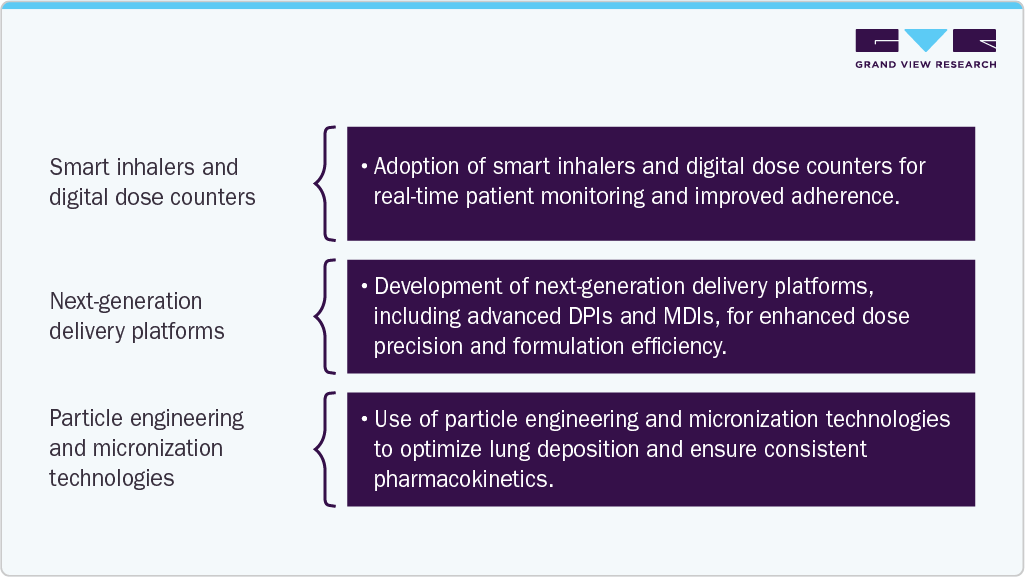
Technological advancement in the inhaled drugs contract manufacturing market is being driven by the need to improve formulation performance, manufacturing consistency, device compatibility, and regulatory compliance. Particle engineering remains a critical capability, particularly for DPIs and complex inhaled therapies, as aerodynamic particle size directly influences lung deposition and dose performance. Automated filling, device assembly, crimping, and capsule or blister-filling systems are strengthening commercial scalability while reducing batch-to-batch variability. Digital quality tools, process analytical technologies, and electronic batch records are also gaining importance as CDMOs seek to improve traceability, deviation management, and release efficiency.
Sustainable MDI reformulation is another major technology shift, with increasing focus on lower-global-warming-potential propellants and related compatibility testing. At the same time, inhaled biologics, peptides, anti-infectives, and systemic pulmonary therapies are creating demand for more advanced stabilization, aseptic handling, spray drying, and analytical characterization capabilities. Collectively, these technologies are moving inhalation CDMOs from basic manufacturing partners to specialized development and lifecycle management providers.
Pricing Model Analysis
 To learn more about this report, Download Free Sample Report
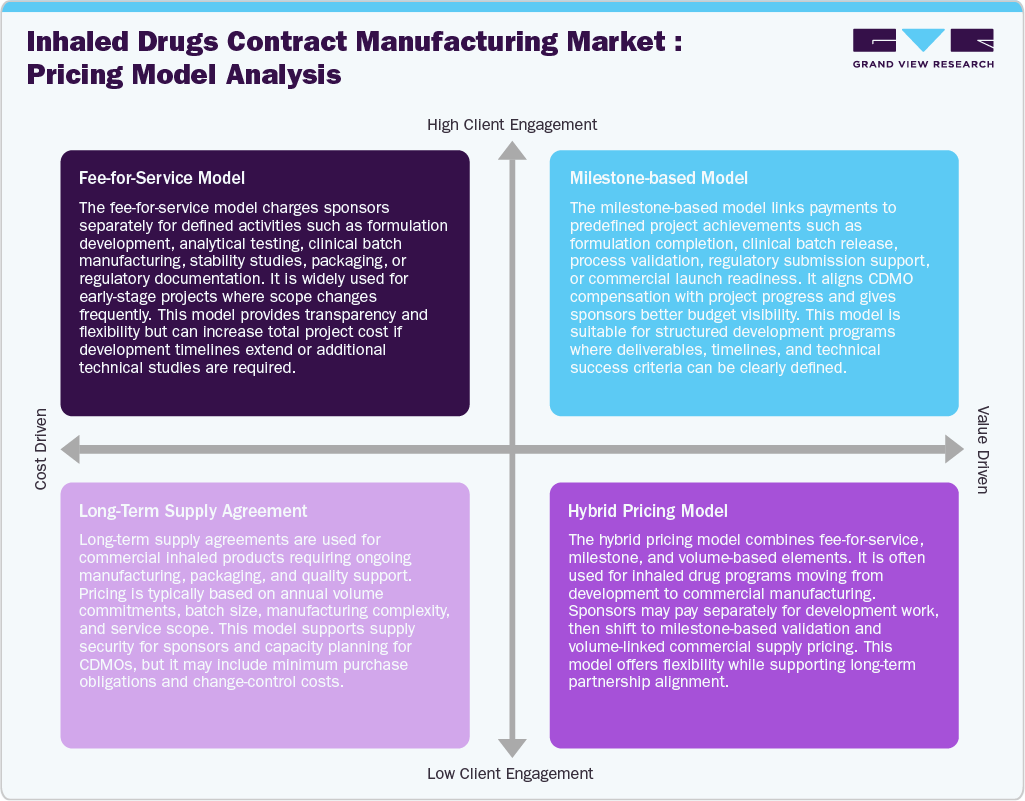
Pricing in the inhaled drugs contract manufacturing market is shaped by technical complexity, product format, batch scale, regulatory requirements, and the level of CDMO integration required. Fee-for-service models are common in early development, where sponsors require formulation screening, analytical testing, pilot batches, and device compatibility work. Milestone-based pricing is typically applied to structured programs involving clinical manufacturing, process validation, regulatory documentation, or technology transfer. For marketed inhalation products, long-term supply agreements are preferred because they provide manufacturing continuity, capacity reservation, and predictable commercial supply.
Hybrid pricing is gaining traction as sponsors seek flexible models that cover development, scale-up, validation, and commercial production under one framework. Pricing premiums are generally higher for complex DPIs, MDIs, sterile nebulized solutions, inhaled biologics, and products requiring specialized particle engineering or device integration. Overall, pricing is increasingly linked to technical value, risk reduction, regulatory support, and supply reliability rather than manufacturing cost alone.
Service Insights
Based on service, the commercial manufacturing segment led the market with the largest revenue share of 63.9% in 2025. The segment's growth is due to increasing demand for large-scale production of inhaled therapies, rising outsourcing trends among pharmaceutical companies, and the need for cost-efficient, high-quality manufacturing solutions. Contract manufacturers with advanced facilities and expertise in scaling up formulations are increasingly relied upon to meet commercial supply requirements, ensuring consistent product quality and timely market availability. Thus, these factors are contributing to the segment’s market growth.
The packaging & labeling segment is anticipated to grow at the fastest CAGR during the forecast period. The segment growth is driven due to the increasing regulatory requirements for accurate labeling, serialization, and traceability of inhaled drug products. Rising demand for patient-centric packaging, including user-friendly inhaler devices and tamper-evident solutions, further supports market expansion.
Product Insights
Based on product, the active pharmaceutical ingredient (API) segment led the market with the largest revenue share of 87.8% in 2025 and is expected to grow at the fastest CAGR over the forecast period. The segment growth can be attributed to the increasing demand for high-quality, specialized APIs required for inhaled therapies, including complex formulations for asthma, COPD, and other respiratory disorders. Pharmaceutical companies are increasingly outsourcing API production to contract manufacturers to leverage their technical expertise, advanced facilities, and compliance with stringent regulatory standards. This enables faster development timelines, consistent product quality, and scalability which is further contributing to the segments market growth.
The finished drug product segment is anticipated to grow at a considerable CAGR during the forecast period. The segment’s growth is due to the rising demand for ready-to-use inhaled therapies, increasing preference for outsourcing end-to-end production, and the need for efficient scale-up from clinical to commercial supply. Contract manufacturers offering comprehensive capabilities in formulation, device integration, and quality control enable pharmaceutical companies to ensure timely product availability, regulatory compliance, and consistent therapeutic performance. These factors are contributing to the steady expansion of the finished drug product segment.
End-use Insights
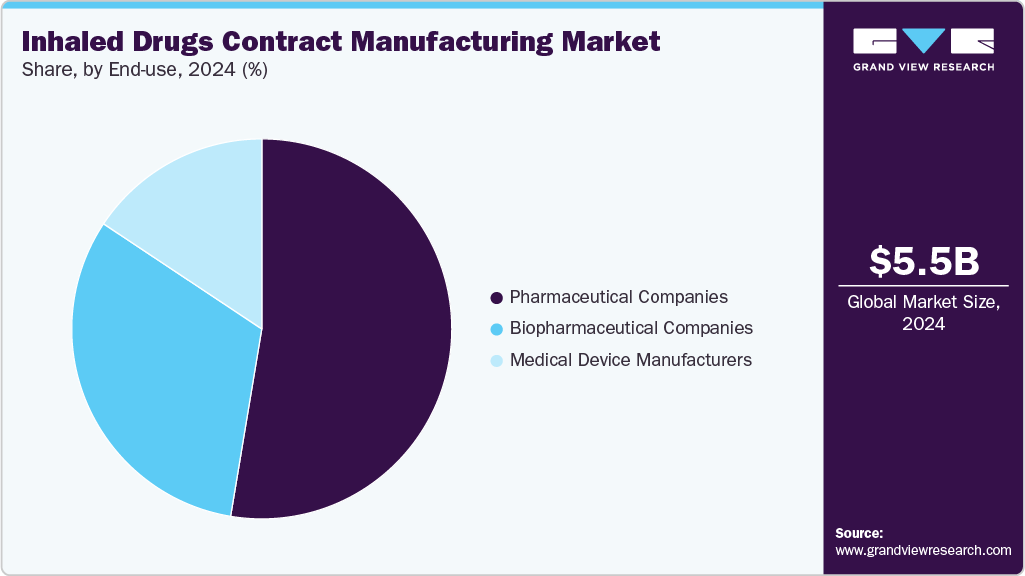
Based on end-use, the pharmaceutical companies segment led the market with the largest revenue share of 52.5% in 2025, owing to the growing demand for large-scale production of inhaled therapies to meet the growing needs of patient. Pharmaceutical companies are increasingly outsourcing commercial manufacturing to contract manufacturers with advanced capabilities in formulation, device integration, and regulatory compliance. This ensures consistent product quality, efficient scale-up, and timely market supply. Thus, the aforementioned factors are contributing to market growth.
 To learn more about this report, Download Free Sample Report
Biopharmaceutical companies segment is anticipated to grow at the fastest CAGR over the forecast period. The segment growth is driven due to the rising development of inhalable biologics, including protein- and peptide-based therapies, which require specialized manufacturing expertise. Contract manufacturers with advanced capabilities in aseptic processing, formulation development, and regulatory compliance are increasingly being relied upon to support the production of these complex therapies. This trend enables biopharmaceutical companies to accelerate time-to-market, ensure consistent product quality, and scale up efficiently, further contributing to the market growth.
Regional Insights
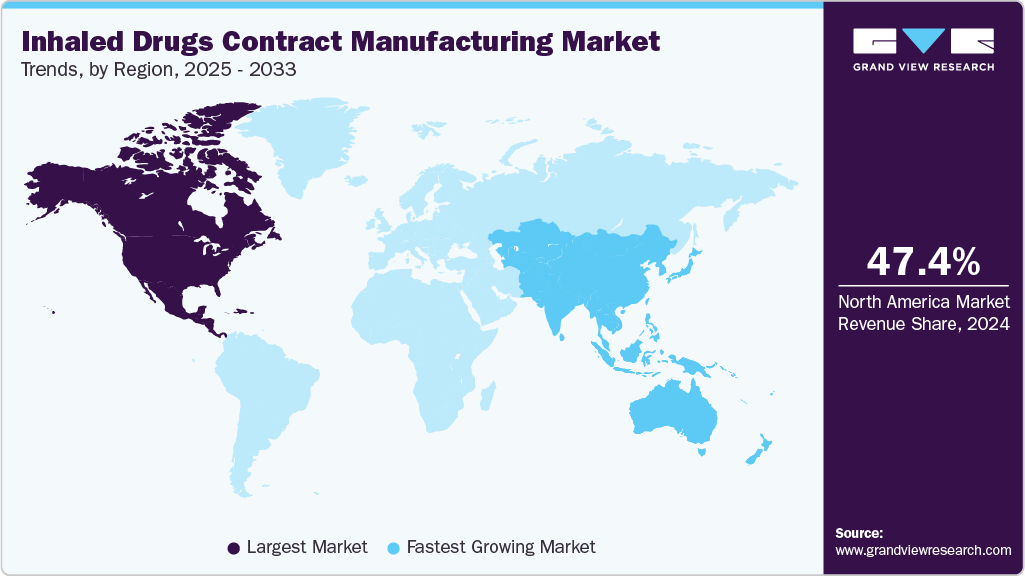
North America dominated the inhaled drugs contract manufacturing market with the largest revenue share of 47.4% in 2025. This is attributed to the regions advanced manufacturing facilities, higher concentration of clinical trials, and growing spending in research and development activities by the pharmaceutical companies.
 To learn more about this report, Download Free Sample Report
U.S. Inhaled Drugs Contract Manufacturing Market Trends
The inhaled drugs contract manufacturing market in the U.S. held the largest share in the North America region in 2025. The country’s growth is due to high R&D spending, strong venture funding, and a well-established pharmaceutical and biotechnology infrastructure that supports innovation in inhaled therapies. In addition, favorable government policies, robust healthcare infrastructure, and a growing patient population with respiratory disorders is further contributing to the country’s dominance.
Europe Inhaled Drugs Contract Manufacturing Market Trends
The inhaled drugs contract manufacturing industry in Europe is expected to grow significantly due to increasing investments in pharmaceutical R&D, the presence of advanced manufacturing infrastructure, and stringent regulatory standards which is driving the demand for specialized contract manufacturing services.
The inhaled drugs contract manufacturing market in Germany held the significant share in 2024, owing to the country’s well-established pharmaceutical and biotechnology sector, strong focus on innovation, and advanced manufacturing infrastructure. Moreover, high R&D investments in respiratory therapies, coupled with strict regulatory standards for quality and safety, drive pharmaceutical companies to partner with experienced contract manufacturers.
The UK inhaled drugs contract manufacturing market held the significant share in 2024. The growth is due to the presence of leading contract manufacturing organizations with expertise in complex inhalation therapies, strong biopharmaceutical research clusters, and strategic partnerships between CMOs and pharmaceutical companies for innovative respiratory treatments. The U.K.’s emphasis on precision medicine and ongoing investment in advanced inhalation technology development further supports the expansion of the market.
Asia Pacific Inhaled Drugs Contract Manufacturing Market
The Asia Pacific inhaled drugs contract manufacturing industry is anticipated to witness the fastest CAGR over the estimated timeline. The regional growth is due to the increasing prevalence of respiratory diseases, increasing demand for advanced inhalation therapies, and expanding pharmaceutical R&D and manufacturing capabilities in countries such as China, India, and Japan. In addition, cost-efficient manufacturing, favorable government policies, and growing adoption of contract manufacturing services by local and multinational pharmaceutical companies are fueling the regional market expansion.
The inhaled drugs contract manufacturing market in China held the largest revenue share in 2024. The growth is due to the country’s robust pharmaceutical manufacturing infrastructure, increasing demand for inhaled therapies, and rising investments in advanced R&D for respiratory treatments. Moreover, supportive government initiatives, a large patient population, and the presence of cost-competitive contract manufacturers is also one of the factors contributing to the country’s leading position in the regional market.
The Japan inhaled drugs contract manufacturing market is expected to grow over the forecast period. The country’s growth is due toincreasing focus on advanced drug delivery systems, rising prevalence of asthma and COPD, and strong collaboration between domestic pharmaceutical companies and specialized contract manufacturers. Japan’s well-established regulatory framework, high adoption of innovative inhalation technologies, and continuous investment in precision medicine further support the market’s expansion.
The inhaled drugs contract manufacturing market in India is anticipated to grow at the lucrative CAGR over the forecast period. The country’s market growth is due to the lower operational costs, skilled scientific workforce, and growing R&D investments from both domestic and multinational companies.
Key Inhaled Drugs Contract Manufacturing Company Insights
The major players operating across the market are focused on adopting inorganic strategic initiatives such as mergers, partnerships, acquisitions, etc. Moreover, companies focus on technological innovations to augment their market position.
Key Inhaled Drugs Contract Manufacturing Companies
The following key companies have been profiled for this study on the inhaled drugs contract manufacturing market.
- Lonza Group
- Catalent Inc.
- Recipharm AB
- Hovione
- Kindeva Drug Delivery
- AptarGroup Inc.
- Vectura Group Ltd.
- Siegfried Holding AG
- CordenPharma
- PCI Pharma Services
Competitive Benchmarking
Category
Operating Strategies
Competitive Edge
Weakness
Established Players (
Lonza Group, Catalent Inc., Recipharm AB)
- Established players focus on integrated service portfolios, long-term supply agreements, global GMP networks, capacity expansion, and technology transfer capabilities. Their strategies emphasize commercial-scale reliability, regulatory compliance, multi-region supply continuity, and support for complex inhaled drug-device products from development through lifecycle management.
- Established players benefit from proven regulatory track records, broader manufacturing infrastructure, commercial-scale capacity, strong quality systems, and relationships with large pharmaceutical sponsors. Their ability to support API, finished dose, packaging, validation, and global supply makes them preferred partners for high-volume and regulated inhalation programs.
- Established players may face challenges for operating costs, less pricing flexibility, longer onboarding timelines, and capacity constraints due to large commercial commitments. Their standardized processes may also limit flexibility for early-stage innovators requiring rapid formulation iteration, niche device support, or customized development models.
Emerging Players (Hovione,Kindeva Drug Delivery,Vectura Group Ltd.)
- Emerging and specialized players focus on niche inhalation technologies, flexible development models, formulation expertise, device-specific capabilities, and rapid clinical-stage support. Their strategies often target complex DPIs, MDIs, particle engineering, spray drying, and customized inhaled product development for small and mid-sized sponsors.
- Emerging players offer agility, technical specialization, faster decision-making, and customized support for complex inhalation programs. Their focused capabilities in formulation science, inhaler technologies, and development-stage manufacturing enable sponsors to access specialized expertise without engaging larger, less flexible commercial-scale providers.
- Emerging players may have limited commercial capacity, smaller geographic footprints, narrower service portfolios, and higher dependence on selected technologies or customer accounts. Limited scale can restrict their ability to support global launches, multi-market regulatory needs, and high-volume commercial supply requirements.
Recent Developments
-
In April 2025, Lonza entered into a collaboration agreement with Ethris, a clinical-stage biotechnology company to develop a room-temperature stable, spray-dried formulations of mRNA-based vaccine candidates. This approach holds significant promise for combating respiratory diseases.
-
In September 2025, Kindeva announced to expand its service offerings by opening a new facility in UK. This expansion aims to test and develop next-generation propellants (NGP), aligning with the industry’s transition toward sustainable inhalation products. This strategic expansion strengthens Kindeva’s position in the market by meeting the growing demand for eco-friendly inhalation solutions.
Inhaled Drugs Contract Manufacturing Market Report Scope
Report Attribute
Details
Market size in 2025
USD 5.9 billion
Estimated market size in 2026
USD 6.5 billion
Projected market size by 2033
USD 12.6 billion
Growth rate
CAGR of 9.8% from 2026 to 2033
Historical data
2021 - 2025
Forecast period
2026 - 2033
Quantitative units
Revenue in USD million/billion and CAGR from 2026 to 2033
Report coverage
Revenue forecast, company ranking, competitive landscape, growth factors, and trends
Segments covered
Service, product, end-use, region
Regional scope
North America; Europe; Asia Pacific; Latin America; MEA
Country scope
U.S., Canada, Mexico, UK, Germany, France, Italy, Spain, Denmark, Sweden, Norway, Japan, China, India, Thailand, South Korea, Australia, Brazil, Argentina, South Africa, Saudi Arabia, UAE, Kuwait, Oman, Qatar
Key companies profiled
Lonza Group; Catalent Inc.; Recipharm AB; Hovione; Kindeva Drug Delivery; AptarGroup Inc.; Vectura Group Ltd.; Siegfried Holding AG; CordenPharma; PCI Pharma Services
Customization scope
Free report customization (equivalent up to 8 analysts' working days) with purchase. Addition or alteration to country, regional & segment scope.
Pricing and purchase options
Avail customized purchase options to meet your exact research needs. Explore purchase options
Global Inhaled Drugs Contract Manufacturing Market Report Segmentation
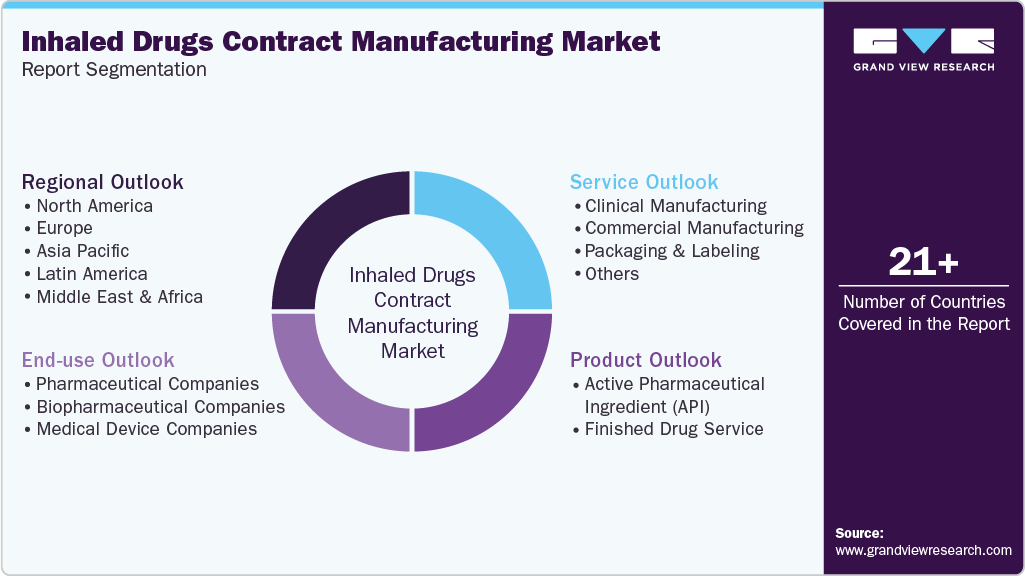
This report forecasts revenue growth at the global, regional, and country levels and provides an analysis of the latest industry trends in each of the sub-segments from 2021 to 2033. For this study, Grand View Research has segmented the global inhaled drugs contract manufacturing market report based on service, product, end-use, and region:
 To learn more about this report, Download Free Sample Report
-
Service Outlook (Revenue, USD Million, 2021 - 2033)
-
Clinical Manufacturing
-
Commercial Manufacturing
-
Packaging & Labeling
-
Others
-
-
Product Outlook (Revenue, USD Million, 2021 - 2033)
-
Active Pharmaceutical Ingredient (API)
-
Finished Drug Service
-
Metered- dose inhalers (MDIs)
-
Dry Powder Inhalers
-
Nebulizers
-
Others
-
-
End-use Outlook (Revenue, USD Million, 2021 - 2033)
-
Pharmaceutical Companies
-
Biopharmaceutical Companies
-
Medical Device Companies
-
-
Regional Outlook (Revenue, USD Million, 2021 - 2033)
-
North America
-
U.S.
-
Canada
-
Mexico
-
-
Europe
-
UK
-
Germany
-
France
-
Italy
-
Spain
-
Denmark
-
Norway
-
Sweden
-
-
Asia Pacific
-
Japan
-
China
-
India
-
Australia
-
South Korea
-
Thailand
-
-
Latin America
-
Brazil
-
Argentina
-
-
Middle East and Africa (MEA)
-
South Africa
-
Saudi Arabia
-
UAE
-
Kuwait
-
Oman
-
Qatar
-
-
Research Methodology
The inhaled drugs contract manufacturing market figures in this report are based on a proven research process that combines executive interviews with secondary research from proprietary databases, company filings, and recognized regulatory and institutional sources. Market size is built through value-chain sizing-reconciling supply-side and demand-side estimates-and triangulated with bottom-up and top-down approaches. Every estimate passes multiple levels of expert validation before publication, with each inhaled drugs contract manufacturing segment quantified using the revenue-capture definitions in the table below.
Segment Definition
Segment - Service
Definition
Clinical Manufacturing
The segment captures revenue generated by providing services for inhaled drugs contract manufacturing clinical manufacturing to end users. The segment includes small-batch GMP manufacturing, clinical trial material production, formulation scale-up, process transfer, stability batch manufacturing, device-filling support, and supply of inhaled drug products for early- and late-stage clinical studies.
Commercial Manufacturing
The segment covers revenue generated by providing services for inhaled drugs contract manufacturing commercial manufacturing to end users. The segment includes large-scale GMP production, process validation, routine batch manufacturing, aseptic or non-aseptic filling, device assembly, lifecycle manufacturing support, quality control testing, and supply continuity for marketed inhalation products.
Packaging & Labeling
The segment includes revenue generated by providing services for inhaled drugs contract manufacturing packaging and labeling to end users. The segment includes primary and secondary packaging, inhaler labeling, serialization, patient information leaflets, regulatory-compliant labeling, kit assembly, cold-chain or controlled storage support, and market-specific packaging for clinical and commercial distribution.
Others
The segment captures revenue generated by providing other inhaled drugs contract manufacturing services to end users. The segment includes analytical testing, stability studies, regulatory support, technology transfer, device compatibility testing, formulation troubleshooting, supply chain support, validation documentation, and niche support services not classified under clinical, commercial, or packaging services.
Segment - Product
Revenue capture definition
Active Pharmaceutical Ingredient (API)
The segment captures revenue generated by providing services for inhaled drugs contract manufacturing API to end users. The segment includes API synthesis, micronization, particle engineering, spray drying, crystallization, controlled particle-size development, analytical characterization, stability testing, and GMP supply of APIs suitable for inhalation formulations.
Metered- dose inhalers (MDIs)
The segment includes revenue generated by providing services for inhaled drugs contract manufacturing metered-dose inhalers to end users. The segment includes formulation with propellants, canister filling, valve crimping, actuator integration, dose uniformity testing, leak testing, stability testing, and commercial or clinical manufacturing of pressurized inhalation aerosols.
Dry Powder Inhalers
The segment captures revenue generated by providing services for inhaled drugs contract manufacturing dry powder inhalers to end users. The segment includes powder formulation, blending, spray drying, capsule filling, reservoir filling, device assembly, aerodynamic particle-size testing, emitted dose testing, and GMP manufacturing of inhalable powder products.
Nebulizers
The segment covers revenue generated by providing services for inhaled drugs contract manufacturing nebulizer products to end users. The segment includes sterile or non-sterile liquid formulation, solution or suspension manufacturing, ampoule or vial filling, preservative optimization, device compatibility studies, microbial testing, and packaging of nebulized inhalation therapies.
Others
The segment captures revenue generated by providing services for other inhaled drug products to end users. The segment includes soft mist inhalers, nasal inhalation products, combination drug-device formats, rescue inhalation systems, specialty pulmonary delivery products, reformulated inhalation therapies, and emerging inhaled biologic or systemic delivery platforms.
Finished Drug Product
The segment covers revenue generated by providing services for inhaled drugs contract manufacturing finished drug services to end users. The segment includes finished dosage formulation, filling, device integration, assembly, quality testing, packaging, labeling, release testing, and commercial supply of inhaled drug-device products.
Segment - End Use
Revenue capture definition
Pharmaceutical Companies
The segment captures revenue generated by providing inhaled drugs contract manufacturing services to pharmaceutical companies. The segment includes outsourced API manufacturing, formulation development, clinical and commercial manufacturing, packaging, labeling, regulatory support, lifecycle management, and supply services for branded, generic, and specialty inhalation products.
Biopharmaceutical Companies
The segment covers revenue generated by providing inhaled drugs contract manufacturing services to biopharmaceutical companies. The segment includes formulation and manufacturing support for inhaled biologics, peptides, nucleic acid-based products, respiratory biologics, specialty therapies, clinical trial supply, analytical testing, and scalable GMP production for complex inhalation pipelines.
Medical Device Companies
The segment includes revenue generated by providing inhaled drugs contract manufacturing services to medical device companies. The segment includes drug-device combination support, inhaler component integration, device filling, assembly, compatibility testing, packaging, labeling, regulatory documentation support, and manufacturing services for companies developing inhalation delivery platforms.
Estimation Model
Approach
Description
Top-Down Approach
The top-down model begins with the broader inhalation CDMO, pharmaceutical contract manufacturing, or respiratory drug manufacturing market and allocates revenue based on service type, product format, end-use demand, and regional outsourcing penetration. Share splits are validated using company revenues, inhalation capacity, product pipelines, and regional manufacturing activity. This approach is useful when market-level benchmarks are available and segment-level disclosure is limited.
Bottom-Up Approach
The bottom-up model estimates the market by aggregating revenues from key inhaled drug contract manufacturers, inhalation CDMOs, API specialists, device-filling providers, and packaging partners. Company-level service portfolios, inhalation capacity, manufacturing sites, commercial contracts, and clinical supply activity are assessed. Revenues are then normalized to avoid double counting across API, finished dose, packaging, and development services.
Demand-Side Estimation
Demand-side estimation evaluates outsourcing demand from pharmaceutical, biopharmaceutical, and medical device companies developing respiratory and inhaled therapies. Inputs include respiratory pipeline volume, marketed inhaled products, clinical trial activity, patent expiries, generic inhaler opportunities, and sponsor outsourcing ratios. This model captures demand shifts toward complex drug-device combinations, capacity constraints, and rising dependence on specialized external manufacturing partners.
Supply-Side Validation
Supply-side validation cross-checks market estimates against available CDMO capacity, inhalation manufacturing lines, spray drying capabilities, micronization capacity, commercial filling lines, and packaging infrastructure. It also considers expansion announcements, facility utilization, regulatory approvals, and technology platforms. This model strengthens estimate reliability by confirming whether projected demand can be realistically supported by installed and announced manufacturing capacity.
Delivered Customizations
This report has been delivered with the following In-depth customizations
Client Request
Customization Delivered
Value Adds
Inhalation Product & Device-level Segmentation
Conducted detailed segmentation across inhaled drug product formats, including metered-dose inhalers, dry powder inhalers, nebulizers, soft mist inhalers, APIs, and finished drug services. The customization also covered clinical versus commercial manufacturing demand and product-level outsourcing trends.
Enabled identification of high-growth inhalation formats, device-specific outsourcing opportunities, API versus finished dose demand, and priority product segments for pharmaceutical, biopharmaceutical, and medical device companies.
Inhalation Manufacturing Capability & Capacity Mapping
Assessed CDMO capabilities across inhalation-specific manufacturing services, including micronization, spray drying, powder blending, propellant-based MDI filling, DPI capsule/blister filling, sterile nebulizer filling, device assembly, packaging, labeling, and quality testing.
Supported evaluation of suitable manufacturing partners, facility-level capacity strength, GMP readiness, capacity availability, and regional gaps in specialized inhaled drug manufacturing infrastructure.
Regional Expansion & Country-level Market Assessment
Evaluated country-level opportunities across North America, Europe, Asia Pacific, Latin America, and MEA, including the U.S., Canada, Mexico, UK, Germany, France, Italy, Spain, Japan, China, India, Brazil, Saudi Arabia, UAE, and other target markets.
Supported regional prioritization, market entry planning, local manufacturing feasibility, supply chain diversification, and identification of countries with strong demand for inhalation-focused CDMO services.
Market Entry & Competitive Intelligence Review
Benchmarked inhaled drug contract manufacturers based on service portfolio, product specialization, technical capabilities, regional presence, clinical-to-commercial support, regulatory expertise, and commercialization readiness.
Delivered strategic clarity on partner selection, competitive positioning, white-space opportunities, capacity gaps, differentiated service offerings, and growth routes for inhaled drug CDMOs and sponsors.
Frequently Asked Questions About This Report
Key players include Lonza Group, Catalent Inc., Recipharm AB, Hovione, Kindeva Drug Delivery, AptarGroup Inc., Vectura Group Ltd., Siegfried Holding AG, CordenPharma, PCI Pharma Services.
Key factors driving the market growth include the rising prevalence of respiratory disorders such as asthma and chronic obstructive pulmonary disease (COPD) globally, coupled with the expanding adoption of advanced inhalation therapies.
Asia Pacific is the fastest-growing region over the forecast period.
Commercial manufacturing segment led the market with the largest revenue share of 63.9% in 2025.
Active pharmaceutical ingredient (API) segment led the market with the largest revenue share of 87.8% in 2025.
Pharmaceutical companies segment led the market with the largest revenue share of 52.5% in 2025.
The global inhaled drugs contract manufacturing market size was valued at USD 5.9 billion in 2025 and is estimated at USD 6.5 billion in 2026.
The global inhaled drugs contract manufacturing market is expected to grow at a CAGR of 9.8% from 2026 to 2033, reaching USD 12.6 billion by 2033.
North America market dominated, with a revenue share of 47.4% in 2025.
About the Author(s)
Medical Devices Research Team
Healthcare · Medical DevicesThis report was authored by the medical devices research team at Grand View Research - comprising two research analysts, one senior research analyst, and one industry expert - with specialized expertise in the medical devices segment of the healthcare industry. All findings are based on proprietary healthcare databases, executive interviews, and regulatory analysis, subject to internal peer review prior to publication.
Last Updated:
Speak to Analyst

Customize this report to your needs - add regions, segments, or data points, with 20% free customization.
Or view our licence options:


ISO 9001:2015 & 27001:2022 Certified
We are GDPR and CCPA compliant! Your transaction & personal information is safe and secure. For more details, please read our privacy policy.


