
- Home
- »
- Catalysts & Enzymes
- »
-
Marine Enzymes Market Size, Share & Trends Report, 2033GVR Report cover

Marine Enzymes Market (2026 - 2033)
Size, Share & Trends Analysis Report By Product (Proteases, Lipases, Amylases, Xylanases & Hemicellulase, Pectinase), By Application (Food & Beverage, Pharmaceuticals & Healthcare, Nutraceuticals), By Region, Forecasts
Market Size, 2025
$297.6MMarket Estimate, 2026
$315.6MMarket Forecast, 2033
$503.0MCAGR, 2026–2033
6.9%Marine Enzymes Market Summary
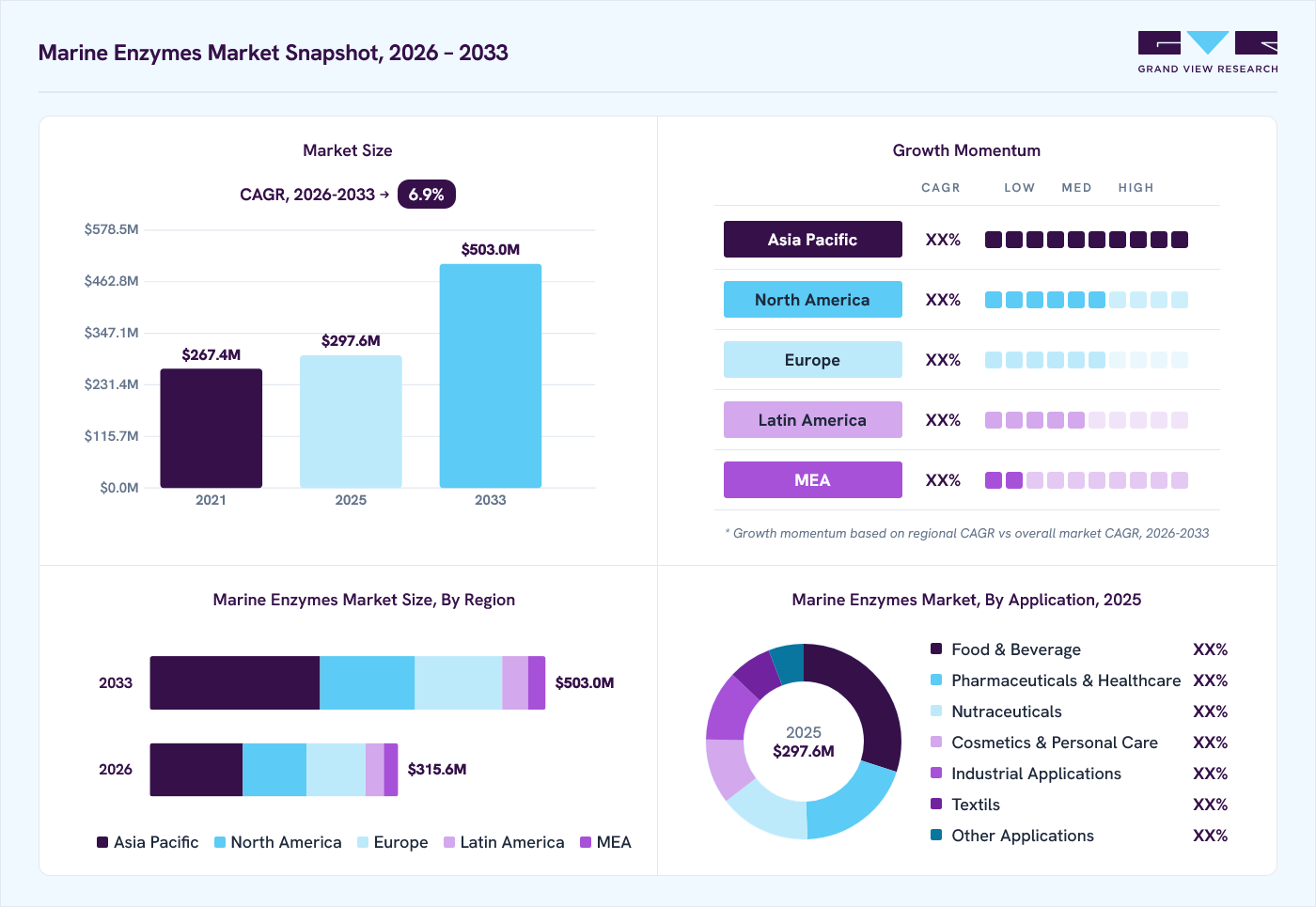
The global marine enzymes market size was valued at USD 297.6 million in 2025 and is expected to grow from USD 315.6 million in 2026 to USD 503.0 million by 2033, at a CAGR of 6.9% from 2026 to 2033. Asia Pacific dominated the market, accounting for a revenue share of 36.8% in 2025. Increasing valorization of seafood, fish, shellfish, and seaweed residues is creating demand for proteases, chitinases, lipases, and other biocatalysts used to recover high-value proteins, peptides, collagen, chitin, and bioactive compounds.
 Source: Grand View Research, IR Documents, Primary Interviews, Paid DatabasesTo learn more about this report,
 Download Free Sample Report
 Key Market Trends & Insights
- By product: Proteases held the largest revenue share of 31.0% in 2025.
- By application: Food & beverage segment dominated with a share of 30.0% 2025.
Regional Highlights
- Largest Region: Asia Pacific (36.8% revenue share, 2025)
- Fastest-growing regional market: Asia Pacific (highest CAGR, 2026-2033)
- By country: China held the largest market share in 2025.
Market Size & Forecast
- Market size in 2025: USD 297.6 Million
- Estimated market size in 2026: USD 315.6 Million
- Projected market size by 2033: USD 503.0 Million
- CAGR (2026-2033): 6.9%
Three ways to get this report
Buy it, customize it, or ask a question.Ask an Analyst
A direct answer, usually in 1 working day
- AccessReport author, directly
- Reply timeWithin 1 working day
- No sales callDirect answer only
- FormatEmail reply
- CostFree, no cost
Get the Full Report
What the study covers
- FormatsPDF · Excel · Dashboard
- Timeline2026–2033 annual, 2025 base
- Coverage20+ countries, 5 regions
- Companies10+ key players profiled
Customize the Report
20% free customization
- IncludeCountries, segments, points
- TailorTo your product definition
- ExtendDeeper competitor detail
- OrA fully bespoke study
- Turnaround5–10 working days
Growing utilization of fish, shellfish, algae, and other marine-derived resources across food processing, nutraceuticals, pharmaceuticals, aquaculture, cosmetics, and biotechnology is expanding the addressable application base. Enzymes such as proteases, lipases, chitinases, and carbohydrases are increasingly being incorporated into seafood processing, protein hydrolysis, waste conversion, and extraction processes because of their ability to operate under application-specific conditions while improving yield and product quality. In parallel, advances in marine biotechnology and enzyme discovery are enabling manufacturers to commercialize specialized biocatalysts with improved stability, selectivity, and performance, creating additional avenues for premium-value applications.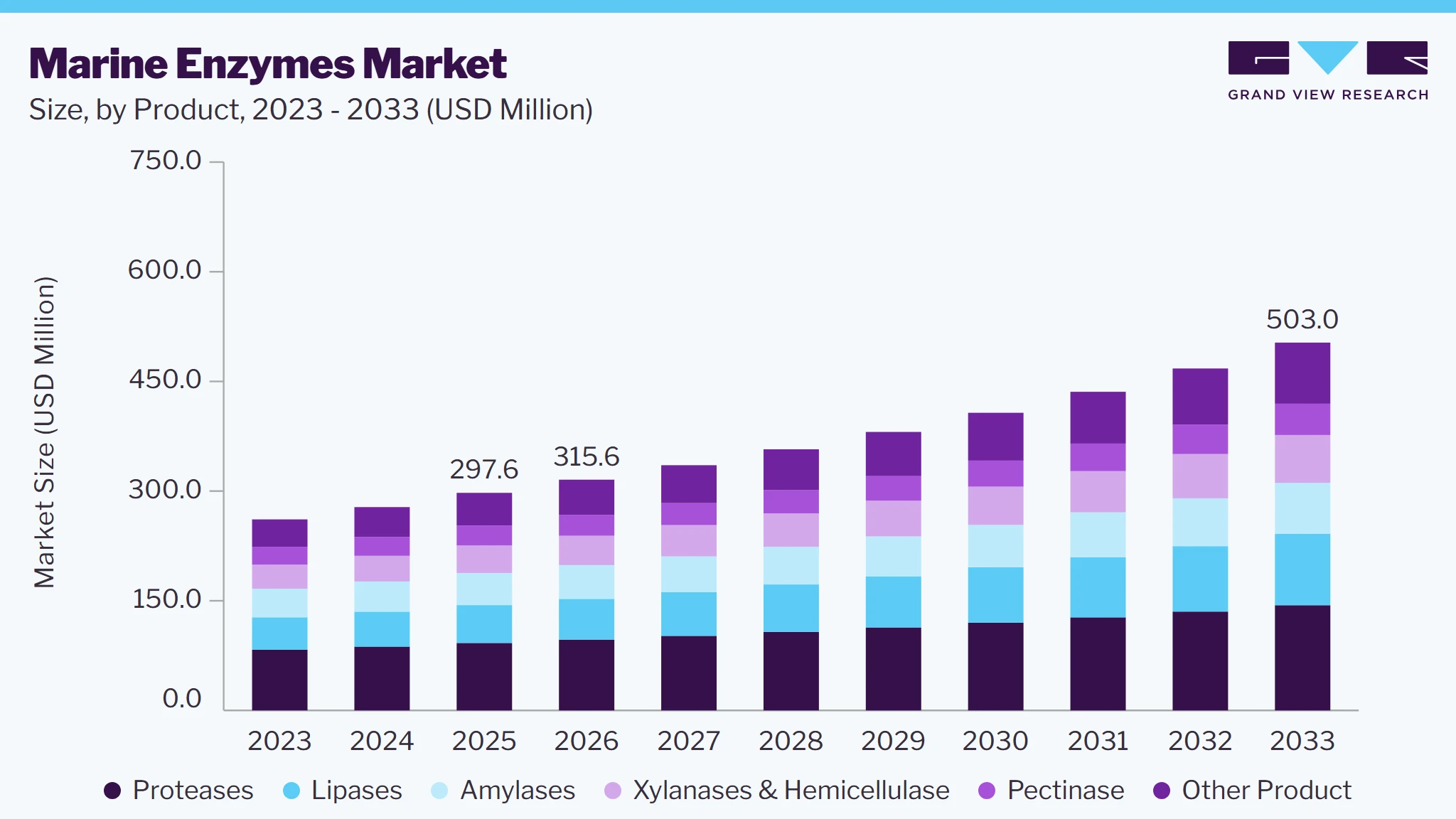 To learn more about this report, Download Free Sample Report
 Large volumes of fish, crustacean, and seaweed by-products can serve as feedstocks for recovering proteins, peptides, chitin, collagen, oils, and other commercially valuable compounds, creating demand for enzymes that can facilitate selective extraction and conversion. The expansion of aquaculture also provides an opportunity for enzyme manufacturers to develop solutions supporting feed utilization, animal health, and resource efficiency. The increasing emphasis on replacing energy-intensive and chemically driven processes with biological alternatives is encouraging investment in enzyme-based technologies. Companies that can develop marine enzymes with scalable production economics, consistent performance, and application-specific functionality are well positioned to capture emerging demand, particularly through partnerships with seafood processors, biotechnology companies, pharmaceutical manufacturers, and producers of functional ingredients.
Market Dynamics
Rising demand for sustainable bioprocessing solutions across food, pharmaceuticals, nutraceuticals, aquaculture, cosmetics, and biotechnology. Increasing utilization of marine biomass and seafood-processing by-products is encouraging manufacturers to adopt enzymes that improve extraction yields, accelerate hydrolysis, and facilitate the recovery of high-value compounds. Technological advances in enzyme engineering are further supporting the development of biocatalysts with enhanced stability, selectivity, and performance under specialized processing conditions. At the same time, growing environmental scrutiny of chemical-intensive production methods is strengthening the business case for enzymatic alternatives. Opportunities also emerging from the conversion of fish, shellfish, and seaweed residues into proteins, peptides, chitin, collagen, and bioactive ingredients, supporting circular-economy initiatives. However, high development costs, challenges associated with consistent raw-material availability, complex extraction processes, and difficulties in scaling marine-derived enzymes can constrain commercial adoption. Competitive intensity is therefore expected to center on production efficiency, formulation capabilities, application expertise, and product differentiation.
The shift toward sustainable manufacturing is strengthening demand for enzymatic solutions across food processing, pharmaceuticals, nutraceuticals, aquaculture, cosmetics, and biotechnology. Enzymes derived from or applicable to marine biological resources can facilitate selective reactions under comparatively mild operating conditions, potentially reducing dependence on harsh chemicals, excessive heat, and energy-intensive processing steps. Seafood processors are increasingly exploring enzymatic approaches for protein hydrolysis, oil recovery, collagen extraction, and conversion of residual biomass into higher-value ingredients. This transition aligns with corporate sustainability targets focused on resource efficiency, waste reduction, and lower environmental impact, encouraging industrial users to evaluate biocatalysts as alternatives to conventional processing methods.
The growing emphasis on circular resource utilization is further reinforcing this demand. Fish, shellfish, algae, and other aquatic biomass generate substantial quantities of processing residues that can be transformed into proteins, peptides, chitin, collagen, oils, and bioactive compounds. Enzymatic treatment enables controlled breakdown of complex biological materials, improving the recovery and functionality of these compounds while supporting higher-value utilization of resources that might otherwise be discarded.
A major constraint is the high cost and technical complexity associated with developing and commercializing specialized enzymes. Marine-derived biological resources can exhibit substantial variability in species, geographic origin, seasonal availability, and biochemical composition, making it difficult to maintain consistent feedstock characteristics during enzyme discovery and application development. Identifying commercially viable strains or enzyme candidates often requires extensive screening, characterization, optimization, and stability testing. Subsequent scale-up from laboratory fermentation to industrial production can introduce additional challenges, including maintaining enzyme activity, controlling fermentation parameters, achieving consistent yields, and developing formulations that remain stable during storage and transportation. These requirements increase research expenditure and lengthen commercialization timelines, particularly for smaller manufacturers with limited production infrastructure.
The conversion of underutilized aquatic biomass into commercially valuable products represents a significant growth avenue for enzyme manufacturers. Seafood-processing residues, including fish frames, skin, scales, viscera, and crustacean shells, contain proteins, collagen, chitin, minerals, lipids, and other compounds with applications across nutrition, pharmaceuticals, agriculture, and personal care. Tailored proteases, chitinases, lipases, and carbohydrases can facilitate selective separation and hydrolysis, allowing processors to obtain multiple value streams from a single feedstock. Developing enzyme formulations specifically optimized for these substrates could therefore create new revenue opportunities while helping processors improve material utilization and reduce disposal costs.
Commercial potential is also emerging from the expansion of algae and seaweed-based industries. As demand grows for functional ingredients, alternative proteins, bioactive compounds, and biomaterials derived from aquatic resources, specialized biocatalysts can support extraction, purification, and structural modification. Enzyme producers with capabilities in strain development, fermentation, formulation, and application-specific customization can establish partnerships with seafood processors, ingredient companies, and biotechnology firms to develop integrated valorization platforms.
Market Concentration & Characteristics
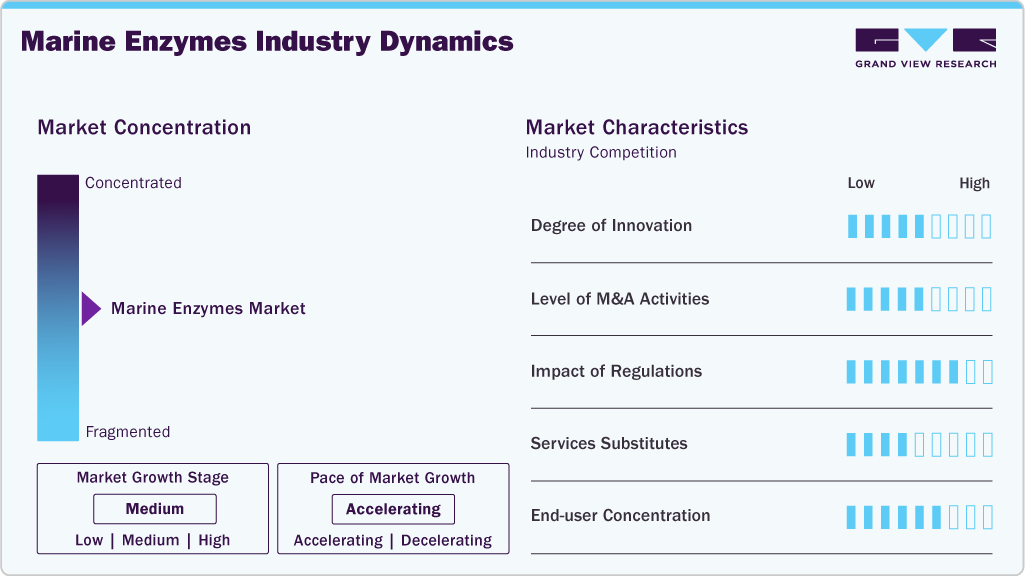
The competitive environment is characterized by a combination of established enzyme manufacturers, specialized biotechnology companies, and emerging biocatalyst developers. Leading participants are leveraging extensive research capabilities, proprietary enzyme technologies, fermentation expertise, and established distribution networks to address applications across seafood processing, aquaculture, food and beverage, pharmaceuticals, nutraceuticals, and biotechnology. Companies are increasingly differentiating their offerings through enzyme specificity, improved stability, optimized operating conditions, and customized formulations. Established players benefit from broad product portfolios and international manufacturing infrastructure, while specialized firms compete through expertise in marine-derived organisms and niche applications.
 To learn more about this report, Download Free Sample Report
 Product development and capacity enhancement remain important competitive strategies as manufacturers seek to address growing demand for sustainable processing solutions. Participants are investing in enzyme discovery, protein engineering, fermentation optimization, and application testing to improve commercial performance and reduce production costs. Acquisitions and partnerships are additionally enabling companies to strengthen technological capabilities and geographical reach. Emerging participants are focusing on specialized enzymes for marine biomass valorization, including the conversion of fish, shellfish, and seaweed residues into proteins, peptides, chitin, collagen, and other value-added compounds.
Analyst Perspective
The market is moving beyond niche applications as industries increasingly recognize enzymes as practical tools for improving marine resource utilization. Demand is likely to strengthen as seafood processors and biotechnology companies seek efficient ways to convert underused biomass into higher-value products. Advances in enzyme engineering should support more targeted solutions with better stability, selectivity, and commercial performance. The strongest opportunities are expected in seafood processing, aquaculture, nutraceuticals, and marine biomass valorization. However, high development costs and scale-up challenges may limit adoption among smaller manufacturers.
Product Insights
Proteases segment dominated with a revenue share of 31.0% in 2025. Due to its broad applicability across food processing, pharmaceuticals, nutraceuticals, cosmetics, and biotechnology. Marine-derived proteases can retain activity under conditions such as varying salinity, temperature, and pH, creating advantages for specialized processing environments. Demand is also supported by applications in protein hydrolysis, seafood processing, functional ingredients, and pharmaceutical and biomedical processes. The broadest application base among marine enzyme categories supports its relatively high market contribution.
Lipases segment is the fastest growing with a CAGR of 8.3% in the forecast period. This is due to increasing demand for enzymatic modification and processing of fats and oils across food, nutraceutical, cosmetics, and specialty chemical applications. Marine lipases offer distinctive catalytic characteristics and can perform effectively under selected temperature, salinity, and substrate conditions. Increasing use in lipid modification, esterification, flavor development, and production of value-added lipid ingredients is expanding their application base. Growth in functional foods and specialty biocatalysis is expected to further support adoption.
Application Insights
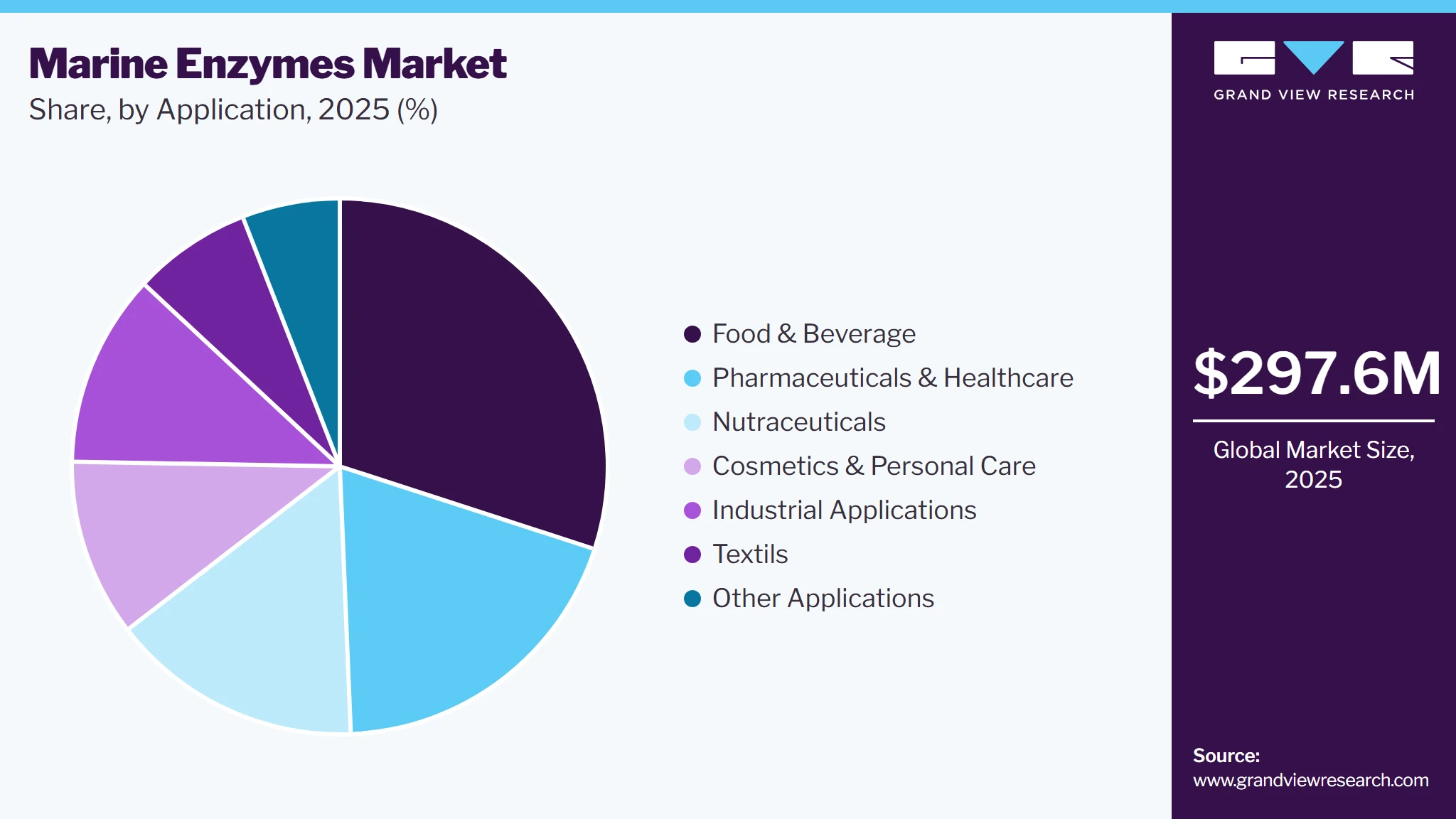
Food & beverage segment dominated with a share of 30.0% in 2025 due to enzymes are extensively used in protein hydrolysis, starch processing, lipid modification, fermentation, flavor development, and processing of marine-derived raw materials. Marine enzymes can provide useful activity under specific processing conditions, including low temperatures and varying salt concentrations. Growing demand for functional foods, protein-rich ingredients, clean-label processing, and improved utilization of seafood and marine by-products is creating additional opportunities. The relatively broad range of food-processing applications supports the segment's leading position.
 To learn more about this report, Download Free Sample Report
 Nutraceutical is the fastest growing, with a CAGR of 8.2% from 2026 to 2033. due to increasing demand for bioactive ingredients, protein and peptide hydrolysates, digestive enzymes, and functional nutritional products. Marine-derived enzymes are particularly relevant where controlled hydrolysis is required to produce peptides and other value-added nutritional ingredients. Growing consumer interest in preventive nutrition and functional formulations is expanding the potential application base. Increasing utilization of marine biomass and processing by-products for higher-value ingredients is also creating opportunities for enzyme-based processing.
Region Insights
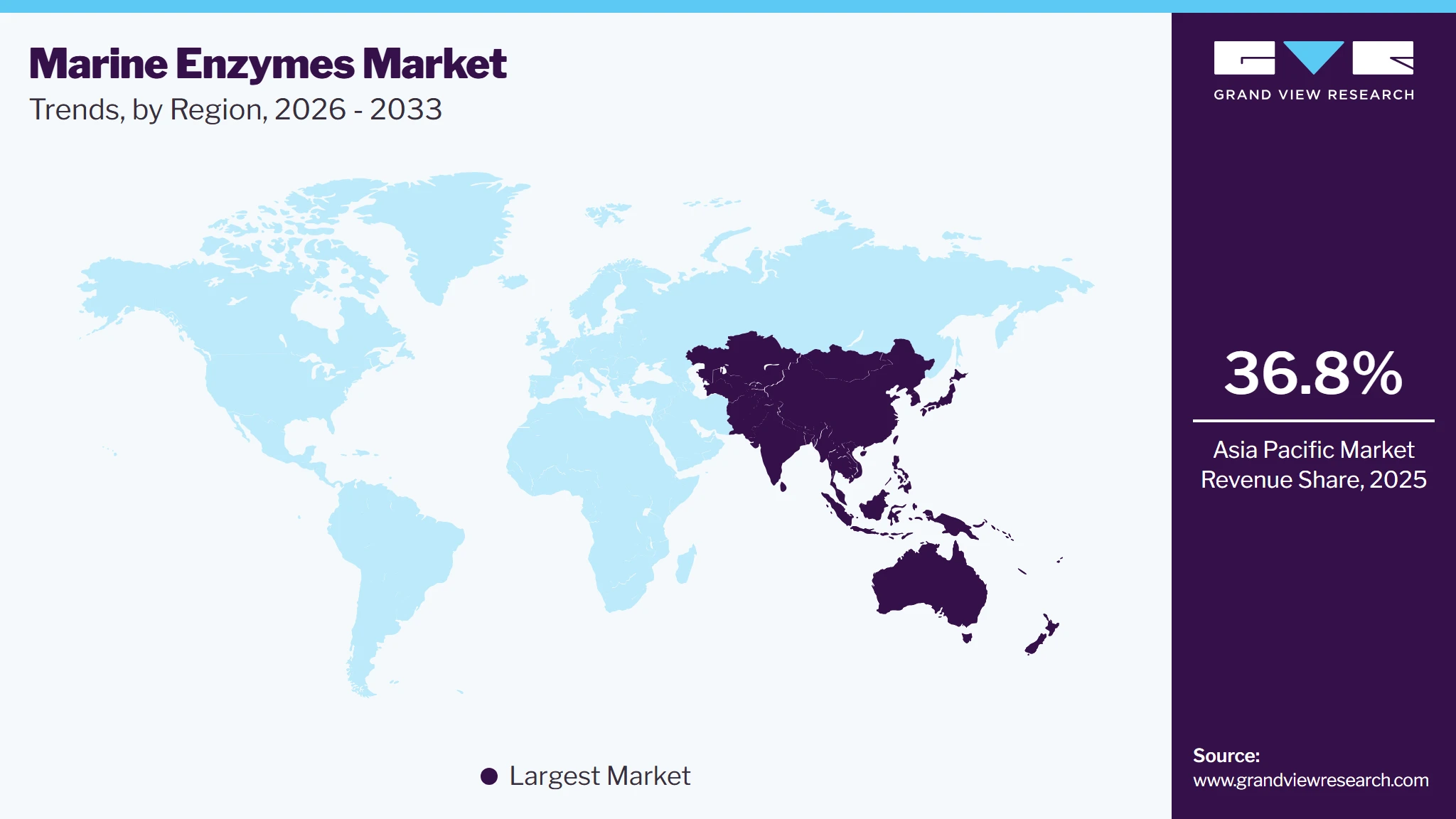
Asia Pacific dominated the market with a revenue share of 36.8% in 2025, supported by its large seafood-processing base, expanding aquaculture industry, and substantial availability of marine biomass. China, Japan, India, South Korea, and Southeast Asian economies are investing in biotechnology and value-added utilization of fisheries and aquaculture residues. Rising demand for functional proteins, peptides, collagen, chitin, and other marine-derived ingredients is creating additional applications for proteases, chitinases, lipases, and related biocatalysts. Local enzyme manufacturers are also strengthening fermentation capabilities and developing application-specific formulations, improving the region's supply potential.
 To learn more about this report, Download Free Sample Report
 China Marine Enzymes Market Trends
China is expected to grow with a compound annual growth rate of 8.8%, during the forecast period. China is a major contributor owing to its extensive fisheries, aquaculture production, seafood-processing infrastructure, and growing biotechnology sector. The availability of fish and crustacean processing residues provides a substantial feedstock base for enzymatic recovery of proteins, peptides, chitin, and other compounds. Domestic manufacturers are expanding their enzyme portfolios for food, feed, aquaculture, and industrial applications, while investments in fermentation and synthetic biology are supporting product development. Increasing emphasis on resource efficiency and conversion of processing waste into higher-value outputs is expected to create further commercial opportunities.
North America Marine Enzymes Market Trends
North America benefits from strong biotechnology capabilities, sophisticated food-processing infrastructure, and increasing investment in sustainable production technologies. Demand is supported by seafood processing, aquaculture, nutraceuticals, pharmaceutical research, and biotechnology applications. Companies operating in the region are emphasizing enzyme engineering, fermentation optimization, and customized biocatalysts designed for specific industrial processes. Growing interest in circular-economy models is also encouraging the conversion of seafood residues into proteins, peptides, collagen, chitin, and functional ingredients, creating opportunities for specialized enzyme developers.
The U.S. is the principal contributor within North America, supported by its advanced biotechnology ecosystem, established food and pharmaceutical industries, and increasing focus on sustainable resource utilization. Research institutions and commercial developers are exploring marine microorganisms and other aquatic biological resources for novel enzymes with distinctive catalytic properties. Applications in seafood processing, aquaculture feed, functional ingredients, and biopharmaceutical development are gaining commercial relevance. Strong venture activity, R&D infrastructure, and availability of specialized manufacturing capabilities provide favorable conditions for product innovation and commercialization.
Europe Marine Enzymes Market Trends
Europe has a well-developed biotechnology ecosystem and stringent sustainability priorities, which support adoption of enzymatic processing technologies. The region's seafood, aquaculture, food ingredients, pharmaceutical, and cosmetics industries provide diverse application avenues. Companies are increasingly focusing on marine biomass valorization, resource efficiency, and replacement of conventional chemical processes with biological alternatives. Northern European countries, particularly Norway, Denmark, Sweden, and Iceland, benefit from strong fisheries and aquaculture industries, while Western Europe contributes advanced enzyme engineering, fermentation, and commercialization expertise.
Germany serves as an important European hub due to its strong chemical and biotechnology industries, advanced manufacturing infrastructure, and emphasis on sustainable industrial processes. Demand for specialty enzymes is supported by food processing, animal nutrition, biotechnology, and pharmaceutical applications, with marine-related opportunities emerging through seafood processing and biomass conversion. Established enzyme producers and technology companies benefit from extensive R&D capabilities and international supply networks. The country's focus on industrial biotechnology and resource-efficient production should encourage development of higher-performance biocatalysts and broaden their industrial use.
Middle East & Africa Marine Enzymes Market Trends
The Middle East & Africa region presents emerging opportunities, particularly through expanding aquaculture, seafood processing, and food-security initiatives. Countries such as Saudi Arabia, the United Arab Emirates, Egypt, and South Africa are increasing investments in aquaculture and related processing infrastructure, creating potential demand for technologies that improve feed efficiency and maximize resource utilization. Enzymatic conversion of fish and shellfish residues can support the production of protein hydrolysates, oils, collagen, and other value-added materials. Adoption remains comparatively nascent, however, due to limited local enzyme manufacturing, uneven biotechnology infrastructure, and varying levels of technological investment across countries.
Latin America Marine Enzymes Market Trends
Latin America offers considerable potential because of its abundant fisheries resources, expanding aquaculture sector, and growing food-processing industry. Brazil, Chile, Peru, Ecuador, and Mexico provide significant opportunities for enzyme applications associated with fish, shrimp, seafood by-products, and marine biomass. Increasing interest in extracting higher-value compounds from processing residues is encouraging investment in technologies for protein hydrolysis, chitin recovery, collagen extraction, and other conversion processes. Development of local biotechnology capabilities and greater adoption of sustainable manufacturing practices could further strengthen demand, particularly among seafood exporters seeking to improve resource efficiency and product diversification.
Key Marine Enzymes Company Insights
Companies are strengthening their competitive positions through product innovation, enzyme engineering, capacity expansion, and application-specific solutions tailored to seafood processing, aquaculture, and marine biomass valorization. Strategic partnerships, acquisitions, and collaborations with biotechnology firms and research institutions are also being pursued to accelerate commercialization, broaden technological capabilities, and access new customer segments.
-
Kemin Industries is a diversified global ingredient manufacturer with a strong position in biotechnology-based solutions for food, feed, aquaculture, and related industries. Its enzyme capabilities complement its broader portfolio of nutritional and functional ingredients, enabling the company to address applications involving feed efficiency, digestibility, and resource utilization. Its global R&D and manufacturing infrastructure, supported by operations across multiple regions, provides a foundation for developing and commercializing specialized enzyme solutions. The company’s presence in aquaculture and animal nutrition also creates opportunities to participate in the growing adoption of biocatalysts for sustainable marine-resource utilization.
-
Biocatalysts: Biocatalysts is a specialist enzyme developer and manufacturer focused on customized biocatalytic solutions for food, pharmaceutical, chemical, and industrial applications. The company combines enzyme discovery, protein engineering, fermentation, formulation, and scale-up capabilities, allowing it to develop application-specific products rather than compete solely through standardized enzyme offerings. Its growing focus on seaweed and marine biomass utilization strengthens its relevance to this space, particularly as industries seek efficient methods for converting aquatic resources into higher-value products. Its specialized technology base and collaborative approach position it well to capture emerging opportunities in marine biomass processing and sustainable biomanufacturing.
Key Marine Enzymes Companies:
The following key companies have been profiled for the study on the marine enzymes market:
-
ArcticZymes Technologies
-
Enzymatica
-
Biocatalysts
-
Novonesis
-
AB Enzymes
-
Nagase Viita
-
Amano Enzyme
-
Advanced Enzyme Technologies
-
Kemin Industries
-
BASF
-
Sunson Industry Group
-
Jinan Bestzyme
Competitive Benchmarking
Operating Strategies
Competitive Edge
Weaknesses
Mature Players: Novonesis, BASF, Kemin Industries, AB Enzymes, Amano Enzyme, Nagase Viita, Advanced Enzyme Technologies, ArcticZymes Technologies, Enzymatica, Biocatalysts
- Invest in enzyme R&D, protein engineering, and fermentation technologies.
- Utilize established manufacturing and distribution networks to maintain global supply.
- Develop application-specific solutions for seafood processing, aquaculture, and biomass valorization.
- Pursue acquisitions, partnerships, and technology collaborations to broaden capabilities.
- Strong brand recognition and established customer relationships.
- Extensive manufacturing infrastructure and scalable production capabilities.
- Diverse enzyme portfolios supporting multiple end-use industries.
- Significant R&D resources and technical expertise for product customization.
- Large organizational structures can slow decision-making and commercialization.
- Higher operating and development costs can affect pricing flexibility.
- Marine-specific applications may receive less strategic focus within diversified portfolios.
- Global operations can increase exposure to supply-chain and regulatory disruptions.
Emerging Players: Sunson Industry Group, Jinan Bestzyme
- Focus on specialized enzyme applications with strong differentiation potential.
- Collaborate with research institutions and biotechnology companies to accelerate innovation.
- Expand production capacity progressively according to market demand.
- Target high-growth areas such as marine biomass valorization and aquaculture.
- Greater operational flexibility and faster response to customer requirements.
- Specialized expertise in niche enzyme technologies.
- Leaner structures can support competitive pricing and agile commercialization.
- Greater focus on emerging technologies such as synthetic biology and enzyme engineering.
- Limited production capacity may restrict large-volume customer contracts.
- Smaller financial resources can constrain R&D and international expansion.
- Lower brand visibility compared with established multinational manufacturers.
- Greater reliance on external partners for distribution, technology, or manufacturing.
Recent Developments
-
In April 2026, Novonesis agreed to acquire a production facility in Rayong, Thailand from Meihua for approximately USD 50 million. The transaction strengthens its fermentation capabilities in Southeast Asia and expands its ability to serve both regional and international customers.
-
In March 2026, Enzymatica signed a partnership with STADA Arzneimittel covering the launch and distribution of its ColdZyme oral-spray technology in Germany and Austria. The arrangement combines Enzymatica's enzyme-based technology with STADA's commercial platform to expand geographic reach.
Marine Enzymes Market Report Scope
Report Attribute
Details
Market size in 2025
USD 297.6 million
Estimated market size in 2026
USD 315.6 million
Projected market size by 2033
USD 503.0 million
Growth rate
CAGR of 6.9% from 2026 to 2033
Base year for estimation
2025
Historical data
2021 - 2024
Forecast period
2026 - 2033
Quantitative units
Revenue in USD million and CAGR from 2026 to 2033
Report coverage
Revenue forecast, volume forecast, company ranking, competitive landscape, growth factors, and trends
Segments covered
Product, application, region
Regional scope
North America; Europe; Asia Pacific; Latin America; Middle East & Africa
Country scope
U.S.; Canada; Mexico; Germany; UK; France; Italy; Spain; China; India; Japan; South Korea; Brazil; Argentina; Saudi Arabia; South Africa
Key companies profiled
ArcticZymes Technologies; Enzymatica; Biocatalysts; Novonesis; AB Enzymes; Nagase Viita; Amano Enzyme; Advanced Enzyme Technologies; Kemin Industries; BASF; Sunson Industry Group; Jinan Bestzyme
Customization scope
Free report customization (equivalent up to 8 analysts’ working days) with purchase. Addition or alteration to country, regional & segment scope.
Pricing and purchase options
Avail customized purchase options to meet your exact research needs. Explore purchase options
Global Marine Enzymes Market Report Segmentation
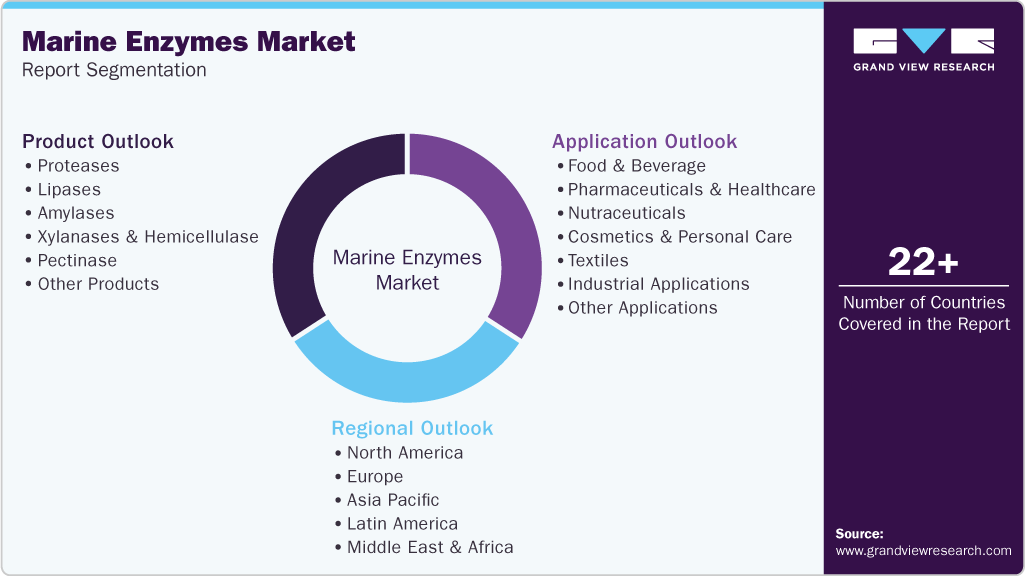
This report forecasts volume & revenue growth at regional, and country levels and provides an analysis of the latest industry trends in each of the sub-segments from 2021 to 2033. For this study, Grand View Research has segmented the marine enzymes market report based on product, application and region:
 To learn more about this report, Download Free Sample Report
 -
Product Outlook (Revenue, USD Million, 2021 - 2033)
-
Proteases
-
Lipases
-
Amylases
-
Xylanases & Hemicellulase
-
Pectinase
-
Other Products
-
-
Application Outlook (Revenue, USD Million, 2021 - 2033)
-
Food & Beverage
-
Pharmaceuticals & Healthcare
-
Nutraceuticals
-
Cosmetics & Personal Care
-
Textiles
-
Industrial Applications
-
Other Applications
-
-
Regional Outlook (Revenue, USD Million, 2021 - 2033)
-
North America
-
U.S.
-
Canada
-
Mexico
-
-
Europe
-
UK
-
Germany
-
France
-
Italy
-
Spain
-
-
Asia Pacific
-
China
-
Japan
-
India
-
South Korea
-
-
Latin America
-
Brazil
-
Argentina
-
-
Middle East and Africa (MEA)
-
South Africa
-
Saudi Arabia
-
-
Research Methodology
The marine enzymes market figures in this report are based on a proven research process that combines executive interviews with secondary research from proprietary databases, company filings, and recognized regulatory and institutional sources. Market size is built through value-chain sizing-reconciling supply-side and demand-side estimates-and triangulated with bottom-up and top-down approaches. Every estimate passes multiple levels of expert validation before publication, with each marine enzymes segment quantified using the revenue-capture definitions in the table below.
Segment Definition
Segment - Source
Revenue capture definition
Plant Based
Revenue is generated through customer purchases of ingredients derived from vegetable oils, nuts, seeds, fruits, and other botanical feedstocks. Demand is supported by their use as emollients, emulsifiers, conditioning materials, and other formulation components across personal-care products, with value influenced by sourcing, purity, processing, and functional performance.
Animal Based
Value is captured from ingredients obtained from marine and animal-derived sources, including fish oils, lanolin, and their derivatives. These materials are utilized for moisturizing, conditioning, texture enhancement, and other formulation functions, with demand shaped by performance requirements and preferences regarding sourcing and product positioning.
Algae-Based
Income stems from cosmetic ingredients cultivated or extracted from algae and marine biomass, including specialty oils, polysaccharides, extracts, and bioactive compounds. Their adoption is encouraged by interest in renewable feedstocks, marine-derived actives, and differentiated formulations offering moisturizing, antioxidant, soothing, or skin-conditioning benefits.
Insect-Based
Commercial returns originate from materials derived from insects and insect-processing streams, including specialty lipids, proteins, chitin, and chitosan-based ingredients. Their utilization is associated with emerging sustainable formulation approaches and interest in alternative biological feedstocks with functional and film-forming properties.
Synthetic / Bio-Synthetic
Sales are associated with synthetically produced or biotechnology-enabled ingredients designed to deliver controlled formulation performance. These materials support functions such as emollience, emulsification, cleansing, conditioning, stabilization, and texture modification, with purchasing decisions influenced by consistency, efficacy, scalability, and regulatory suitability.
Other Sources
Additional revenue comes from ingredients derived through less conventional sources, including fermentation, minerals, microbial processes, and hybrid natural-technological pathways. These products generally address specialized formulation requirements and can command higher value when they offer distinctive performance, sustainability attributes, or difficult-to-replicate functionalities.
Segment - Application
Revenue capture definition
Skincare
Spending is associated with ingredients incorporated into facial and body skincare formulations such as moisturizers, serums, cleansers, creams, and treatments. Demand is supported by requirements for hydration, barrier support, skin conditioning, sensory enhancement, and targeted functional benefits.
Haircare
Economic activity comes from ingredients used in shampoos, conditioners, treatments, styling products, and hair masks. Surfactants, conditioning agents, emollients, oils, and texture modifiers are increasingly selected to improve cleansing efficiency, manageability, softness, shine, and overall hair feel.
Makeup / Color Cosmetics
Value generation results from ingredients incorporated into foundations, lip products, mascaras, concealers, and other color-cosmetic formulations. Emollients, emulsifiers, oils, texture modifiers, and stabilizing materials contribute to spreadability, pigment dispersion, consistency, adhesion, and sensory characteristics.
Suncare
Customer purchases cover ingredients used in sunscreens, after-sun products, and other UV-protection formulations. Emollients, emulsifiers, texture enhancers, film-forming materials, and supporting functional ingredients help achieve uniform application, pleasant skin feel, formulation stability, and effective product delivery.
Bath & Body Care
Revenue is derived from ingredients incorporated into body washes, soaps, shower products, lotions, scrubs, and other bath-and-body formulations. Demand is linked to cleansing performance, moisturization, conditioning, fragrance delivery, texture, and consumer preference for naturally derived or skin-friendly components.
Other Applications
Commercial expenditure reflects ingredient consumption in products such as oral care, deodorants, fragrances, personal hygiene products, and specialty beauty formulations. Suppliers capture value by providing materials that deliver targeted sensory, functional, stability, cleansing, or conditioning properties across these applications.
Segment - Function
Revenue capture definition
Emollients
The primary spending base comes from ingredients that soften and smooth the skin or hair while improving formulation feel and spreadability. Plant oils, esters, specialty lipids, and synthetic alternatives are selected according to sensory profile, absorption characteristics, stability, and desired moisturizing performance.
Surfactants & Cleansing Agents
Customer demand is linked to ingredients responsible for cleansing, foaming, solubilization, and dispersion in shampoos, facial cleansers, body washes, and other rinse-off products. Growth in gentle and sulfate-free formulations is encouraging development of milder, naturally derived, biodegradable, and high-performance alternatives.
Emulsifiers
Commercial value is associated with ingredients that enable stable combinations of oil and water phases in creams, lotions, sunscreens, makeup, and other formulations. Demand is influenced by the need for improved stability, attractive textures, sensory performance, and compatibility with natural-origin formulation systems.
Occlusive Agents
Expenditure arises from materials that form protective layers on the skin and reduce moisture loss, particularly in creams, balms, ointments, and intensive moisturizers. Demand is supported by growing attention to skin-barrier care and formulations designed to provide prolonged hydration and protection from environmental stressors.
Texture & Consistency Modifiers
Incremental sales originate from ingredients used to control viscosity, consistency, spreadability, suspension, and overall sensory characteristics. Their importance spans skincare, haircare, makeup, and suncare, where precise rheological properties help manufacturers achieve desirable product appearance, stability, and consumer experience.
Conditioning Agents
Revenue is generated from ingredients that improve softness, smoothness, manageability, and surface characteristics of skin and hair. These materials are widely incorporated into conditioners, shampoos, skin creams, and treatment products, with demand influenced by performance expectations and the growing use of naturally derived alternatives.
Stabilizers
Spending is associated with ingredients that preserve formulation integrity by improving resistance to separation, oxidation, degradation, or changes in viscosity during storage. Their use supports longer shelf life, consistent product quality, and reliable performance across a wide range of personal-care formulations.
Other Functional Roles
Additional commercial value comes from ingredients serving specialized purposes such as film formation, solubilization, preservation support, opacification, pigment dispersion, fragrance delivery, and skin or hair protection. Demand is driven by increasingly complex formulations requiring multiple performance attributes within a single product.
Estimation Model
Layer Name
Key Question
Description
Raw Material & Production Layer
What forms the supply base?
Assess the biological sources and production systems supporting marine enzyme manufacturing, including marine microorganisms, algae, fish, shellfish, sponges, mollusks, crustaceans, and other aquatic organisms, alongside recombinant and fermentation-based inputs. Examine collection and cultivation practices, strain screening, enzyme extraction, isolation, purification, concentration, stabilization, formulation, and fermentation technologies. The assessment also covers feedstock accessibility, seasonal variability, bioprospecting considerations, traceability, quality assurance, production capacity, storage, and regulatory compliance.
Application Adoption Layer
Where are marine enzymes utilized?
Evaluate demand across seafood processing, aquaculture, food and beverage, pharmaceuticals, nutraceuticals, cosmetics, biotechnology, detergents, and industrial bioprocessing. Enzymes such as proteases, lipases, chitinases, carbohydrases, and nucleases are applied for protein hydrolysis, extraction, waste conversion, feed optimization, active-ingredient processing, and other specialized functions. Adoption is influenced by processing efficiency, sustainability objectives, enzyme specificity, regulatory acceptance, and the need for alternatives to conventional chemical methods.
Consumption Intensity Layer
How extensively are marine enzymes consumed?
Analyze utilization according to enzyme class, application, substrate type, formulation, dosage, processing volume, and end-product requirements. Consumption levels vary depending on enzyme activity, substrate characteristics, reaction conditions, process duration, and whether the biocatalyst performs a primary conversion or supports a downstream operation. Demand is further shaped by seafood-processing volumes, aquaculture production, marine biomass availability, adoption of enzymatic hydrolysis, recovery of value-added compounds, and increasing emphasis on resource-efficient manufacturing.
Revenue Layer
How is market revenue generated?
Revenue is generated through the sale of specialty enzymes, enzyme preparations, customized biocatalysts, and application-specific formulations to processors, biotechnology companies, ingredient manufacturers, pharmaceutical firms, and other industrial users. Commercial value depends on enzyme activity, purity, source, production technology, formulation stability, application performance, customization, and supply reliability. Premium opportunities arise from high-specificity products, recombinant and engineered enzymes, marine biomass valorization solutions, technical support, contract development, and long-term supply agreements.
Delivered Customizations
This report has been delivered with the following In-depth customizations
Client Request
Customization Delivered
Value Adds
Regional segmentation
The assessment delivers country-level market sizing and forecasts, supported by an evaluation of seafood processing, aquaculture production, marine biomass availability, biotechnology infrastructure, enzyme manufacturing capacity, trade flows, regulatory conditions, and R&D activity. It examines regional supply chains, access to marine feedstocks, fermentation and purification capabilities, industrial clusters, sustainability initiatives, and adoption patterns across priority countries.
Facilitates market-entry planning, geographic prioritization, sourcing strategy, capacity allocation, supplier identification, and distribution planning by highlighting countries with strong aquatic-resource bases, established processing ecosystems, advanced biotechnology capabilities, and favorable demand conditions.
Opportunity Assessment
The study evaluates emerging prospects across seafood processing, aquaculture, food ingredients, nutraceuticals, pharmaceuticals, cosmetics, biotechnology, and marine biomass valorization. It investigates opportunities associated with proteases, lipases, chitinases, carbohydrases, recombinant enzymes, and other specialized biocatalysts, while assessing the impact of circular-economy initiatives, sustainable processing, enzyme engineering, waste conversion, and demand for high-value marine-derived compounds.
Helps pinpoint high-potential applications, enzyme categories, end users, and geographic markets by assessing technology adoption, processing requirements, sustainability objectives, and evolving purchasing priorities. The findings can guide product development, portfolio diversification, manufacturing investments, strategic alliances, and entry into underserved application areas.
Competitive Benchmarking
The analysis compares prominent manufacturers according to enzyme portfolio depth, marine-source expertise, production scale, fermentation infrastructure, application coverage, geographic reach, innovation capabilities, technical services, supply consistency, and sustainability initiatives. It also tracks recent product launches, facility investments, acquisitions, collaborations, technology developments, and efforts to commercialize marine biomass-derived solutions.
Enables stakeholders to identify competitive strengths, capability shortfalls, differentiation avenues, and strategic priorities across the supplier landscape. The insights assist with decisions involving R&D investment, production expansion, technology acquisition, partnership formation, M&A, customer targeting, product positioning, and strengthening long-term market presence.
Frequently Asked Questions About This Report
The marine enzymes market size was valued at USD 297.6 million in 2025 and is estimated at USD 315.6 million in 2026.
The marine enzymes market is expected to grow at a CAGR of 6.9% from 2026 to 2033, reaching USD 503.0 million by 2033.
Increasing utilization of seafood and marine biomass by-products is driving demand for enzymes that enable efficient recovery of proteins, peptides, collagen, chitin, oils, and other high-value compounds.
The key players include ArcticZymes Technologies; Enzymatica; Biocatalysts; Novonesis; AB Enzymes; Nagase Viita; Amano Enzyme; Advanced Enzyme Technologies; Kemin Industries; BASF; Sunson Industry Group; Jinan Bestzyme.
Proteases segment dominated with a revenue share of 31.0% in 2025, while lipases segment is the fastest growing product.
Asia Pacific dominated the market, accounting for a revenue share of 36.8% in 2025.
Food & beverage segment dominated with a share of 30.0% in 2025, while nutraceutical is the fastest growing application.
About the Author(s)
Catalysts & Enzymes Research Team
Specialty & Chemicals · Catalysts & EnzymesThis report was authored by the catalysts & enzymes research team at Grand View Research - comprising two research analysts, one senior research analyst, and one industry expert - with specialized expertise in the catalysts & enzymes segment of the specialty & chemicals industry. All findings are based on proprietary specialty & chemicals databases, executive interviews, and regulatory analysis, subject to internal peer review prior to publication.
Last Updated:
Speak to Analyst

Customize this report to your needs - add regions, segments, or data points, with 20% free customization.
Or view our licence options:


ISO 9001:2015 & 27001:2022 Certified
We are GDPR and CCPA compliant! Your transaction & personal information is safe and secure. For more details, please read our privacy policy.


