
- Home
- »
- Healthcare IT
- »
-
Pharma 5.0 Market Size, Share & Trends Report, 2026-2033GVR Report cover
![Pharma 5.0 Market (2026 - 2033)Report]()
Pharma 5.0 Market (2026 - 2033)
Size, Share & Trends Analysis Report By Type (Software, Services), By Technology (Advanced Robotics, Digital Twin & Process Simulation Technologies), By Application, By End-use (CDMOs, CROs), By Region, And Segment Forecasts
Market Size, 2025
$7.9BMarket Estimate, 2026
$9.4BMarket Forecast, 2033
$37.6BCAGR, 2026–2033
21.9%Pharma 5.0 Market Summary
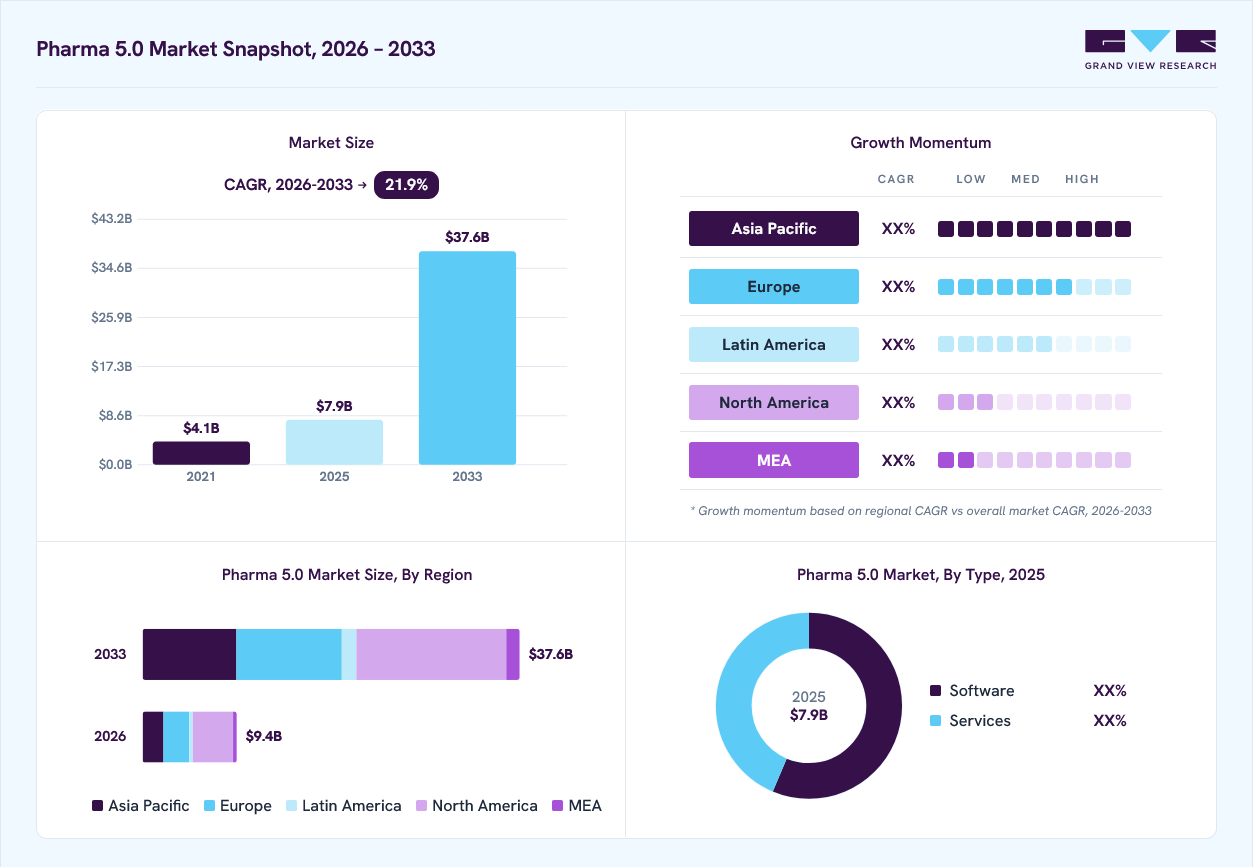
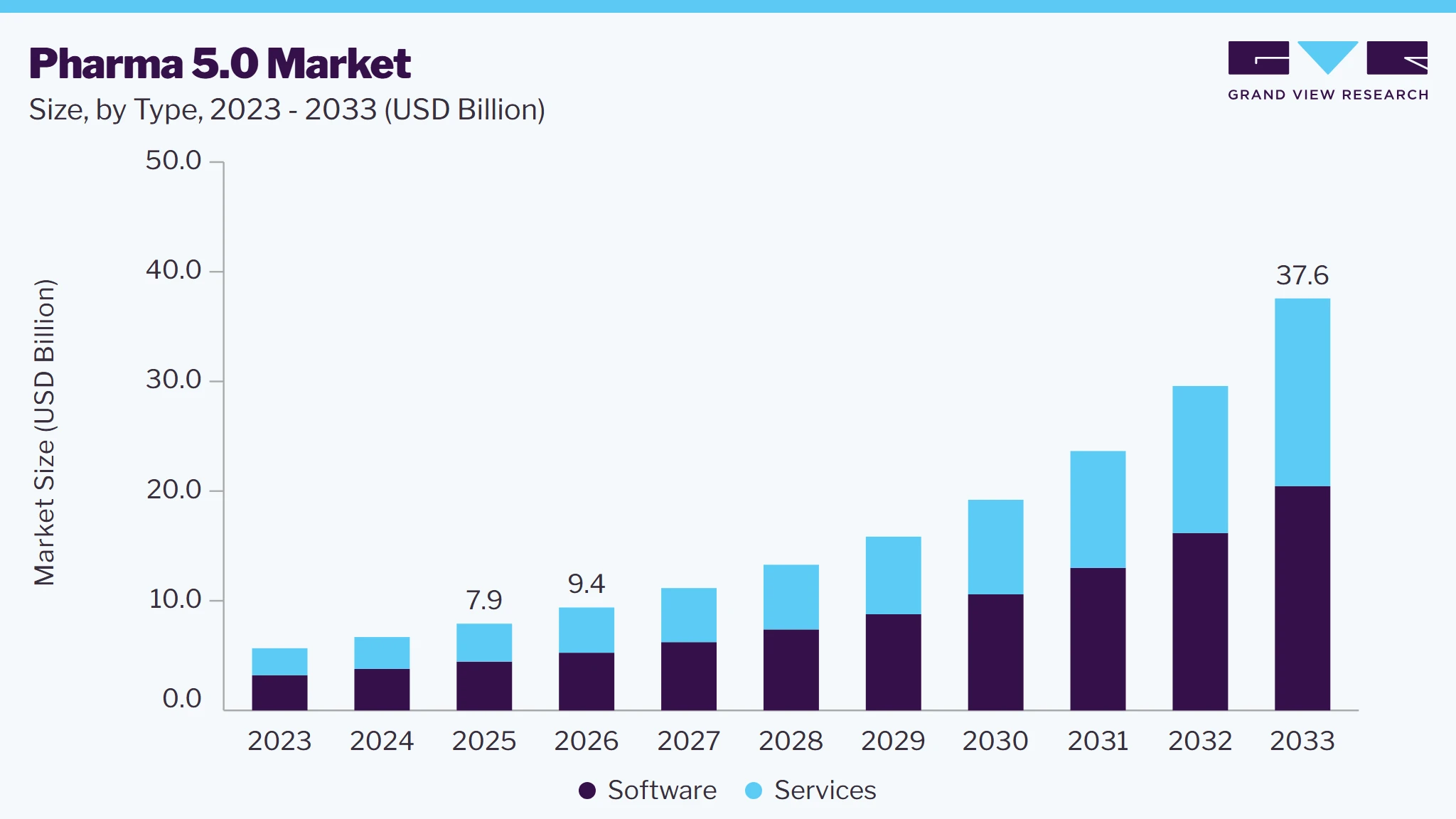
The global pharma 5.0 market size was valued at USD 7.9 billion in 2025 and is projected to grow from USD 9.4 billion in 2026 to USD 37.6 billion by 2033, at a CAGR of 21.9% from 2026 to 2033. North America dominated the market, accounting for a revenue share of 43.1% in 2025. The market growth is driven by the increasing adoption of AI, digital twins, advanced robotics, genomics, intelligent supply chain solutions, and sustainable manufacturing technologies to enhance pharmaceutical innovation, operational efficiency, and patient-centric care.
Key Market Trends & Insights
- By type: Software segment held the largest market share of 56.3% in 2025.
- By technology: Artificial intelligence (AI) & generative AI segment held the largest market share of 28.9% in 2025.
- By application: Drug discovery & development segment held the largest market share of 29.5% in 2025.
- By end-use: Pharmaceutical companies held the largest market revenue share of 42.0% in 2025.
Regional Highlights
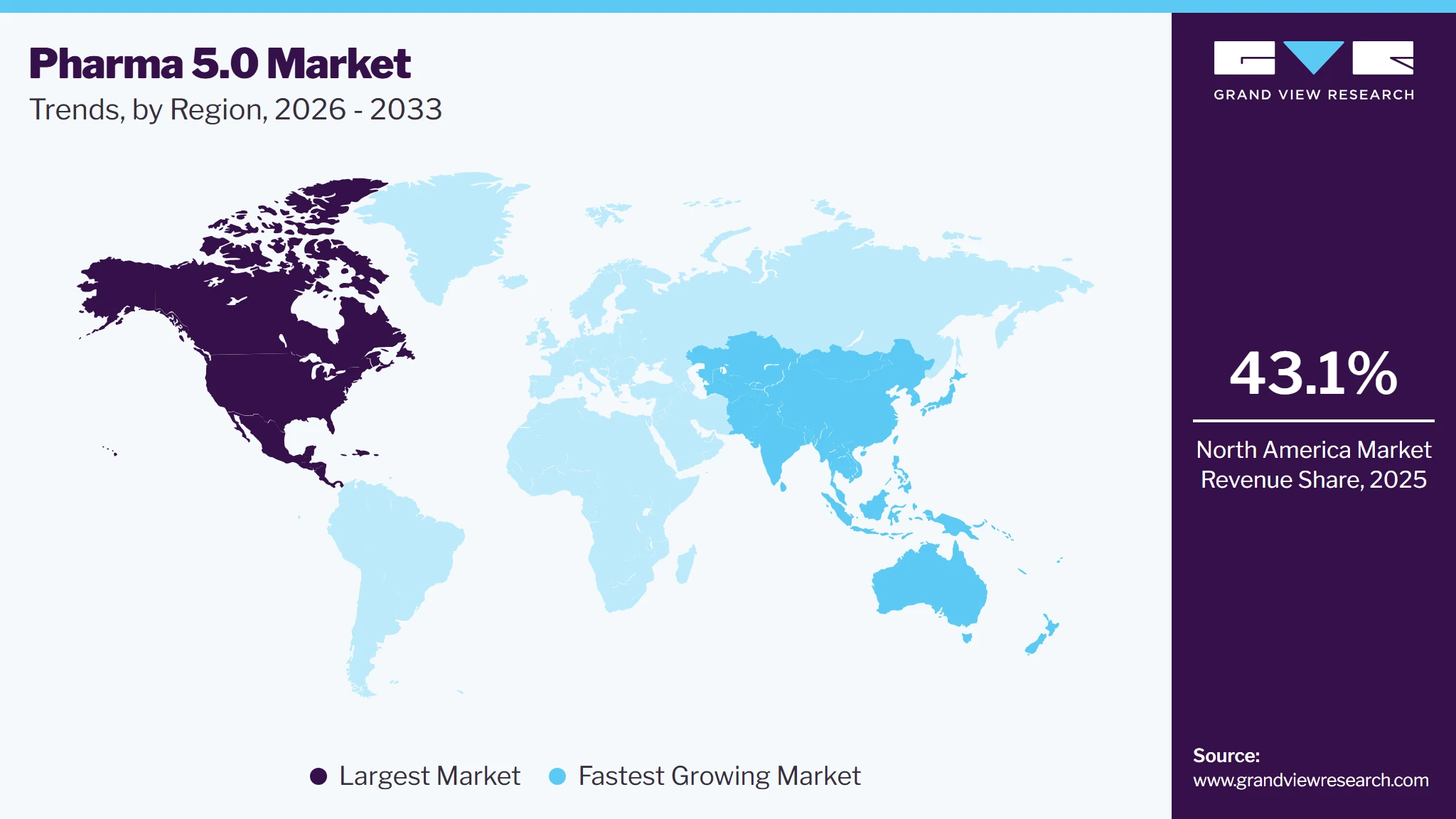
- Largest regional market: North America (43.1% revenue share, 2025)
- Fastest-growing regional market: Asia Pacific (highest CAGR, 2026-2033)
- By country: The U.S. held the largest market share in 2025.
Market Size & Forecast
- Market size in 2025: USD 7.9 Billion
- Estimated market size in 2026: USD 9.4 Billion
- Projected market size by 2033: USD 37.6 Billion
- CAGR (2026-2033): 21.9%
Three ways to get this report
Buy it, customize it, or ask a question.Get the Full Report
What the study covers
- FormatsPDF · Excel · Dashboard
- Timeline2026–2033 annual, 2025 base
- Coverage20+ countries, 5 regions
- Companies10+ key players profiled
Customize the Report
20% free customization
- IncludeCountries, segments, points
- TailorTo your product definition
- ExtendDeeper competitor detail
- OrA fully bespoke study
- Turnaround5–10 working days
Ask Prism AI
A cited answer in seconds
- Corpus30K studies, 1.2M points
- ScopeAll markets, not just this
- CitationTraced to report & table
- HonestySays "not covered" if so
- SpeedSeconds, not days
Market Dynamics
The Pharma 5.0 market is witnessing rapid growth, driven by the increasing adoption of artificial intelligence, generative AI, advanced robotics, genomics, multi-omics, and intelligent automation across the pharmaceutical value chain. Rising investments in digital transformation, growing demand for personalized medicine, and increasing integration of AI-powered technologies in drug discovery and clinical development are supporting market expansion. Moreover, the growing focus on sustainable manufacturing, supply chain resilience, human-machine collaboration, and patient-centric healthcare is expected to sustain market growth over the forecast period.
The increasing adoption of digital twins and process simulation technologies is driving the growth of the Pharma 5.0 industry by enabling pharmaceutical companies to create virtual representations of manufacturing processes, facilities, and equipment. These technologies allow manufacturers to simulate process conditions, optimize production workflows, predict performance, and identify potential bottlenecks before physical implementation. Consequently, digital twins help reduce development time, minimize material waste, improve process quality, and support faster scale-up from laboratory to commercial production, aligning with the Pharma 5.0 focus on intelligent and sustainable operations.
The growing adoption of these technologies is also reflected in recent developments across the pharmaceutical manufacturing sector. For instance, in July 2026, Siemens highlighted the use of simulation and executable digital twins to accelerate pharmaceutical process design, manufacturing scale-up, and time-to-market. Such advancements are expected to support the transition toward more predictive, connected, and increasingly autonomous pharmaceutical manufacturing environments, thereby contributing to the adoption of Pharma 5.0 technologies.
The growing integration of AI, cloud platforms, connected devices, digital twins, and IoT-enabled systems in pharmaceutical operations is increasing the volume of sensitive data generated and exchanged across the value chain. The handling of patient information, genomic data, clinical trial records, and proprietary drug development data creates significant privacy and cybersecurity risks. Concerns regarding data breaches, unauthorized access, and cyberattacks may discourage pharmaceutical companies from adopting advanced Pharma 5.0 technologies.
Moreover, the increasing connectivity of manufacturing and supply chain systems expands the potential attack surface for cyber threats. Pharmaceutical companies are therefore required to implement robust data governance, encryption, access controls, and cybersecurity frameworks, which can increase implementation costs and operational complexity. These factors may restrain the global adoption of Pharma 5.0 technologies, particularly among organizations with limited digital infrastructure and cybersecurity capabilities.
Integrating AI, robotics, digital twins, and other advanced technologies with existing pharmaceutical workflows remains a key challenge for the Pharma 5.0 market. Many pharmaceutical companies continue to operate with legacy systems and established processes that may lack compatibility with newer digital platforms. Integrating these technologies with existing R&D, manufacturing, quality control, and supply chain systems can be complex and require substantial investments in infrastructure and system upgrades.
Moreover, the adoption of AI and automation requires organizations to redesign workflows, establish effective human-machine collaboration, and train employees to operate advanced technologies. Ensuring seamless interoperability while maintaining regulatory compliance, data integrity, and uninterrupted operations can further increase implementation complexity. These challenges may slow the pace of Pharma 5.0 adoption, particularly among companies with highly complex and highly regulated operational environments.
Market Concentration & Characteristics
The Pharma 5.0 market is characterized by a high degree of innovation, driven by the integration of artificial intelligence, generative AI, robotics, genomics, automation, and connected technologies across pharmaceutical R&D and manufacturing. Companies are increasingly developing intelligent solutions to accelerate drug discovery, enhance production efficiency, enable personalized medicine, and improve patient outcomes. For instance, in January 2026, NVIDIA and Lilly announced an expanded collaboration to establish an AI co-innovation laboratory focused on advancing AI applications in drug discovery and pharmaceutical research, highlighting the growing role of AI in transforming the pharmaceutical industry.
The Pharma 5.0 market is witnessing a moderate to high level of M&A and strategic collaborations, as companies seek to strengthen their digital capabilities, expand AI-driven drug discovery platforms, and enhance automation and data analytics offerings. Strategic partnerships also enable pharmaceutical companies and technology providers to combine domain expertise with advanced digital technologies. For instance, in June 2025, XtalPi acquired Liverpool ChiroChem (LCC) to strengthen its AI- and robotics-enabled drug discovery capabilities, reflecting the industry's focus on integrating advanced technologies to accelerate pharmaceutical innovation.
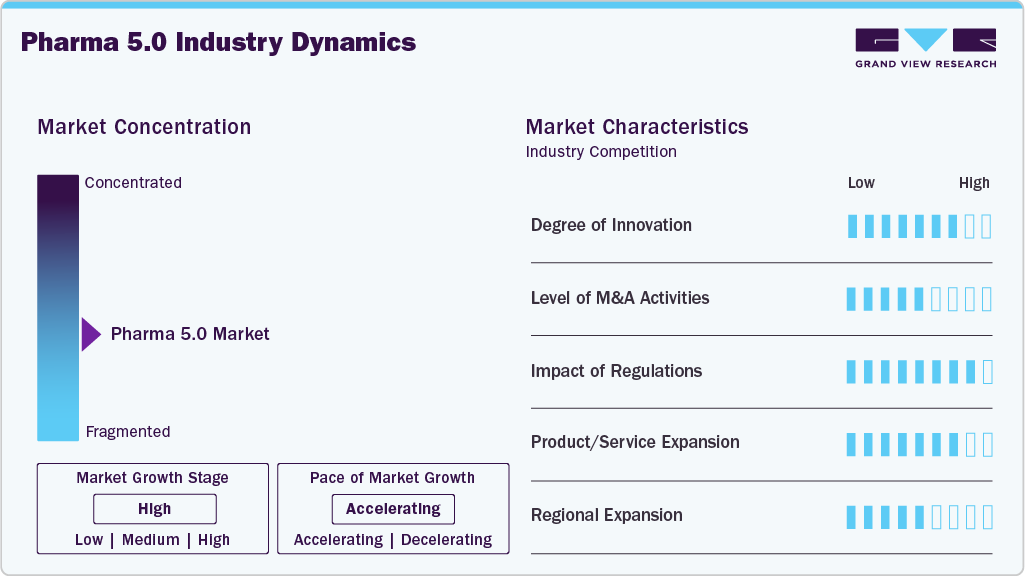
The regulatory impact on the market is significant, as regulatory agencies are increasingly establishing frameworks for the safe and reliable use of AI and other advanced technologies in pharmaceutical development. For instance, in January 2025, the U.S. FDA issued draft guidance on the use of AI in drug and biological product submissions, while the EMA adopted a reflection paper addressing AI applications across the medicine lifecycle. These initiatives are expected to improve regulatory clarity while emphasizing data governance, model credibility, transparency, and risk-based assessment.
The Pharma 5.0 industry is witnessing high product/service expansion, supported by the introduction of AI-powered drug discovery platforms, generative AI tools, intelligent automation solutions, and connected manufacturing technologies. For instance, in July 2026, Bristol Myers Squibb announced the acquisition of NVIDIA's next-generation DGX SuperPOD computing system to support its growing AI-driven drug discovery and development activities, reflecting the expansion of advanced technology adoption within pharmaceutical R&D.
The Pharma 5.0 market is witnessing a moderate to high level of regional expansion, driven by increasing digital transformation investments, growing pharmaceutical R&D capabilities, and the development of AI, automation, and biotechnology ecosystems across emerging markets. The rising adoption of advanced technologies in drug discovery, manufacturing, supply chain management, and precision medicine is further driving market penetration across key geographic regions.
Analyst Perspective
The Pharma 5.0 market is expected to witness rapid growth, driven by the increasing integration of artificial intelligence (AI), digital twins, advanced robotics, automation, and data-driven technologies across pharmaceutical research and manufacturing. Growing demand for personalized medicine, faster drug development, and efficient production workflows are supporting the adoption of smart and connected solutions. Rising investments in digital transformation, precision healthcare, and advanced bioprocessing are expected to support long-term market expansion, while market participants focus on technological innovation, strategic collaborations, and integrated platforms to enhance operational efficiency and strengthen competitiveness.
Type Insights
The software segment accounted for the largest revenue share of 56.3% in 2025, driven by the growing adoption of AI and generative AI platforms, digital twins, genomics analytics, intelligent supply chain solutions, and connected workforce software across the pharmaceutical value chain. For instance, in April 2025, Siemens announced the acquisition of Dotmatics for USD 5.1 billion, strengthening its life sciences software capabilities and supporting the integration of AI and digital technologies across pharmaceutical R&D and manufacturing.
The services segment is expected to grow at the fastest CAGR over the forecast period, driven by the growing demand for AI implementation and consulting, digital transformation, system integration, cloud-based solutions, and managed services. Increasing complexity in deploying and integrating advanced technologies such as AI, robotics, digital twins, and intelligent supply chain platforms is encouraging pharmaceutical companies to seek specialized service providers for implementation, maintenance, optimization, and workforce training, thereby supporting segment growth.
Technology Insights
The artificial intelligence (AI) & generative AI segment dominated the Pharma 5.0 market with a share of 28.9% in 2025, driven by the rapid integration of AI-powered drug discovery, predictive analytics, clinical development, and decision-support solutions across the pharmaceutical value chain. The ability of AI technologies to support research processes, improve data-driven decision-making, and enhance operational efficiency is contributing to their global adoption across the industry.
The digital twin & process simulation technologies segment is expected to grow at the fastest CAGR over the forecast period, supported by the growing need for predictive process modeling, virtual commissioning, and real-time optimization to enhance manufacturing flexibility, reduce production costs, and accelerate technology transfer. The increasing shift toward smart factories and data-driven pharmaceutical production is further supporting the adoption of these technologies across the industry.
Application Insights
The drug discovery & development segment dominated the Pharma 5.0 industry with a share of 29.5% in 2025, supported by the increasing use of AI, machine learning, generative AI, genomics, and advanced analytics to accelerate target identification, compound screening, and clinical development. The growing need to reduce drug development timelines and improve R&D productivity is further driving the integration of Pharma 5.0 technologies across the pharmaceutical development lifecycle. For instance, in January 2026, Eli Lilly and NVIDIA announced an AI co-innovation laboratory to advance AI applications in drug discovery and pharmaceutical manufacturing, highlighting the increasing integration of intelligent technologies into pharmaceutical R&D.
The smart manufacturing & process optimization segment is expected to grow at the fastest CAGR over the forecast period, supported by the growing shift toward connected and automated pharmaceutical production. Increasing emphasis on real-time monitoring, predictive maintenance, process efficiency, waste reduction, and quality consistency is encouraging manufacturers to adopt intelligent technologies and accelerate the transition toward Pharma 5.0-enabled manufacturing environments.
End-use Insights
The pharmaceutical companies segment dominated the market with a 42.0% share in 2025, driven by the increasing adoption of AI, automation, advanced analytics, and digital technologies to streamline drug discovery, optimize manufacturing processes, strengthen supply chain operations, and improve patient-centric outcomes. Growing investments in digital transformation and intelligent infrastructure are further supporting technology adoption among pharmaceutical companies.
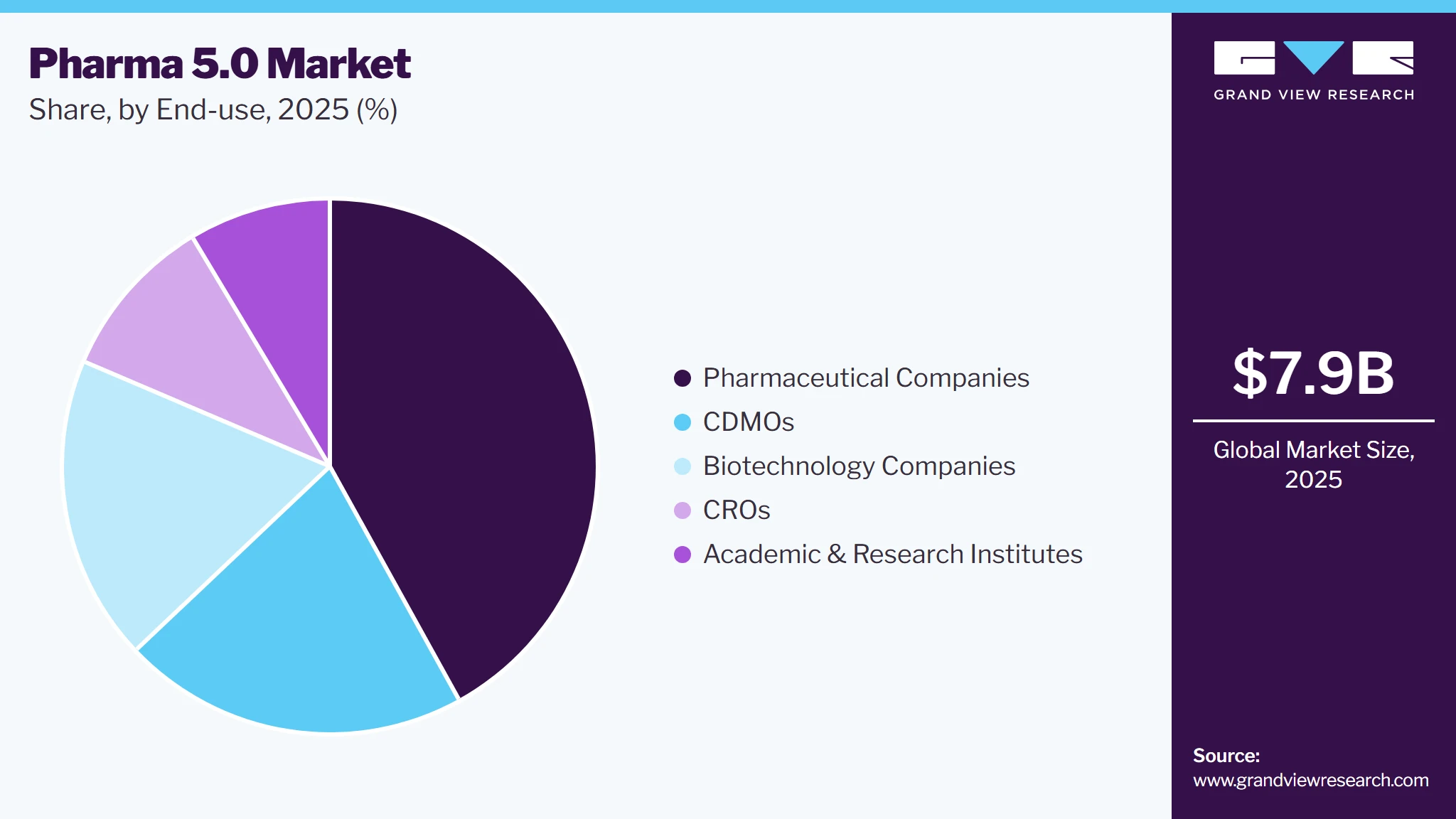
The biotechnology companies’ segment is projected to grow at the fastest CAGR over the forecast period, as these organizations increasingly leverage Pharma 5.0 technologies to accelerate research, enhance laboratory automation, and improve the efficiency of drug development. The growing focus on precision medicine, complex biologics, and AI-enabled R&D, coupled with rising investments in biotechnology innovation, is expected to further drive segment growth.
Regional Insights
North America dominated the Pharma 5.0 market, accounting for a revenue share of 43.1% in 2025, supported by strong pharmaceutical R&D capabilities, advanced digital infrastructure, and high investments in AI and automation. For instance, in January 2026, NVIDIA and Eli Lilly announced an AI co-innovation lab focused on AI, robotics, and accelerated computing for drug discovery and pharmaceutical production.
U.S. Pharma 5.0 Market Trends
The U.S. Pharma 5.0 industry is expected to grow significantly, driven by the rapid adoption of AI-enabled drug development, advanced analytics, and intelligent manufacturing. The strong presence of technology providers and pharmaceutical companies is further supporting the integration of digital technologies across the pharmaceutical value chain.
Europe Pharma 5.0 Market Trends
Europe was identified as a lucrative region for the Pharma 5.0 industry, supported by increasing regulatory focus on responsible AI adoption, advanced pharmaceutical R&D infrastructure, and growing digitalization across the medicine lifecycle. The region's emphasis on integrating AI, data analytics, automation, and precision medicine into drug development and healthcare is expected to support market growth. For instance, in March 2025, the EMA issued its first Qualification Opinion on an AI-based methodology, highlighting the growing integration of AI into pharmaceutical development and regulatory processes and supporting the adoption of Pharma 5.0 technologies across Europe.
The UK Pharma 5.0 market held a significant share, supported by strong government initiatives promoting AI adoption, digital transformation, and innovation across the life sciences sector. The country's established pharmaceutical R&D ecosystem and growing focus on AI-enabled drug discovery, clinical development, and smart manufacturing are further supporting market growth. For instance, in June 2026, the UK Government published an AI Adoption Plan for Life Sciences, outlining measures to accelerate the deployment of AI across the sector and strengthen the UK's position as a leader in technology-driven life sciences innovation.
The pharma 5.0 market in Germany is anticipated to grow significantly over the forecast period, supported by its strong pharmaceutical manufacturing base, industrial automation capabilities, and research ecosystem. The country's established expertise in engineering and life sciences is creating opportunities for the adoption of AI, robotics, and smart manufacturing solutions.
Asia Pacific Pharma 5.0 Market Trends
The Asia Pacific Pharma 5.0 industry is expected to grow at the fastest CAGR of 24.0% during the forecast period, driven by expanding pharmaceutical manufacturing, rising investments in digital transformation, and increasing adoption of AI-enabled R&D. The region's growing biotechnology ecosystem and availability of skilled technical talent are further supporting Pharma 5.0 adoption.
The China Pharma 5.0 market is expanding rapidly, supported by strong investments in biotechnology and AI-driven drug discovery. For instance, in July 2026, Insilico Medicine reported reducing drug discovery timelines to approximately one year through the combination of AI technologies and China's research ecosystem, highlighting the country's growing role in AI-enabled pharmaceutical innovation.
The Pharma 5.0 market in Japan is witnessing rapid growth due to the increasing adoption of advanced technologies across pharmaceutical R&D and healthcare. Growing interest in AI-enabled drug discovery, robotics, and precision medicine, supported by the country's established pharmaceutical and technology sectors, is expected to drive market development.
Latin America Pharma 5.0 Market Trends
The Latin America Pharma 5.0 industry is expected to experience steady growth over the forecast period, supported by the increasing digitalization of healthcare and pharmaceutical operations, expanding biotechnology research, and the gradual adoption of AI and data-driven technologies. Investments in healthcare infrastructure and growing collaborations with global technology and pharmaceutical companies are expected to strengthen regional adoption.
MEA Pharma 5.0 Market Trends
The MEA Pharma 5.0 industry is expected to grow gradually over the forecast period, supported by increasing investments in healthcare digitalization, AI-enabled solutions, and pharmaceutical infrastructure. Growing efforts to modernize healthcare systems and improve access to advanced technologies are expected to create opportunities for the adoption of Pharma 5.0, although limited R&D capabilities, uneven digital infrastructure, and limited access to technology may constrain market growth in some countries.
Key Pharma 5.0 Company Insights
Leading companies in the Pharma 5.0 market are strengthening their positions through advanced capabilities in AI, digital twins, genomics, robotics, intelligent supply chains, and sustainable technologies. Key players such as NVIDIA Corporation, Microsoft, Siemens, Dassault Systèmes, Illumina, Inc., Thermo Fisher Scientific Inc., ABB, SAP SE, and Merck KGaA are expanding their technology portfolios and strategic collaborations to accelerate digital transformation across pharmaceutical R&D, manufacturing, and supply chain operations.
Key Pharma 5.0 Companies:
The following key companies have been profiled for this study of the pharma 5.0 market.
-
NVIDIA Corporation
-
Microsoft
-
Siemens
-
Dassault Systèmes
-
Illumina, Inc.
-
Thermo Fisher Scientific Inc.
-
ABB
-
SAP SE
-
Blue Yonder Group, Inc. (Acquired By Panasonic Holdings Corporation)
-
IBM
-
IQVIA Inc.
-
Merck KGaA
-
Relay Therapeutics
-
Certara
-
XtalPi
Competitive Benchmarking
Category
Operating Strategies
Competitive Edge
Weakness
Established Players (NVIDIA Corporation, Microsoft, Siemens, Dassault Systèmes, etc.)
- Focus on integrating AI, digital twins, automation, cloud computing, genomics, and advanced analytics to enable intelligent, connected, and personalized pharmaceutical manufacturing and R&D.
- Strong global presence, extensive technology portfolios, and established relationships with leading pharmaceutical and biotechnology companies.
- High implementation costs and complexity associated with integrating advanced digital technologies into legacy pharmaceutical infrastructure.
Emerging Players (Relay Therapeutics, Certara, XtalPi)
- Focus on specialized applications of AI, computational modeling, digital drug discovery, and advanced analytics to accelerate pharmaceutical R&D and clinical development.
- Strong specialization in AI-driven drug discovery, computational chemistry, modeling, and simulation, enabling faster and more data-driven R&D.
- High dependence on successful technology adoption, availability of high-quality datasets, and the evolving regulatory acceptance of AI-driven pharmaceutical applications.
Recent Developments
-
In April 2026, AWS launched Amazon Bio Discovery, an AI-powered application that enabled scientists to accelerate drug design and testing through biological foundation models, AI agents, and integrated laboratory workflows, thereby supporting faster and more efficient pharmaceutical research and development.
-
In April 2026, PAGE and 8Chili partnered to launch India’s first AI- and VR-powered pharmaceutical training platform, integrating immersive learning with artificial intelligence to enhance workforce development, technical training, and operational preparedness across the pharmaceutical industry.
-
In April 2026, Trinity launched InsightsEDGE, a digital twin and generative AI platform designed to provide continuous intelligence for life sciences commercial teams. The platform enabled advanced data analysis, scenario modeling, and decision-making to support commercial strategy and operational effectiveness.
-
In April 2026, Amazon launched an AI-powered drug discovery platform designed to support pharmaceutical research by integrating advanced artificial intelligence capabilities. The platform enabled researchers to accelerate drug development processes, improve molecular analysis, and enhance decision-making across various stages of pharmaceutical research.
-
In January 2026, WuXi Biologics launched the PATROLAB digital twin platform to enhance biologics manufacturing through real-time process monitoring, predictive analytics, and virtual modeling. The platform supported process optimization, improved operational efficiency, and facilitated data-driven decision-making across manufacturing operations.
-
In January 2026, Revvity and Eli Lilly launched an AI-powered drug discovery platform designed to support biotechnology and pharmaceutical laboratories. The platform integrated artificial intelligence with advanced research capabilities, enabling scientists to accelerate drug discovery, enhance experimental workflows, and improve research productivity.
Pharma 5.0 Market Report Scope
Report Attribute
Details
Market size in 2025
USD 7.9 billion
Estimated market size in 2026
USD 9.4 billion
Projected market size by 2033
USD 37.6 billion
Growth rate
CAGR of 21.9% from 2026 to 2033
Historical data
2021 - 2025
Forecast period
2026 - 2033
Quantitative units
Revenue in USD Million and CAGR from 2026 to 2033
Report coverage
Revenue forecast, company ranking, competitive landscape, growth factors, and trends
Segments covered
Type, technology, application, end-use, region
Regional scope
North America; Europe; Asia Pacific; Latin America; MEA
Country scope
U.S.; Canada; Mexico; UK; Germany; France; Italy; Spain; Norway; Denmark; Sweden; China; Japan; India; South Korea; Australia; Thailand; Brazil; Argentina; Saudi Arabia; South Africa; UAE; Kuwait
Key companies profiled
NVIDIA Corporation; Microsoft; Siemens; Dassault Systèmes; Illumina, Inc.; Thermo Fisher Scientific Inc.; ABB; SAP SE; Blue Yonder Group, Inc. (Acquired By Panasonic Holdings Corporation); IBM; IQVIA Inc.; Merck KGaA; Relay Therapeutics; Certara; XtalPi
Customization scope
Free report customization (equivalent up to 8 analysts' working days) with purchase. Addition or alteration to country, regional & segment scope.
Pricing and purchase options
Avail customized purchase options to meet your exact research needs. Explore purchase options
Global Pharma 5.0 Market Report Segmentation
This report forecasts revenue growth and provides an analysis of the latest trends in each of the sub-segments from 2021 to 2033. For this study, Grand View Research has segmented the global Pharma 5.0 market report based on type, technology, application, end-use, and region:
-
Type Outlook (Revenue, USD Million, 2021 - 2033)
-
Software
-
Services
-
-
Technology Outlook (Revenue, USD Million, 2021 - 2033)
-
Artificial Intelligence (AI) & Generative AI
-
Digital Twin & Process Simulation Technologies
-
Genomics & Multi-omics Technologies
-
Advanced Robotics
-
Intelligent Supply Chain Technologies
-
Sustainable Manufacturing Technologies
-
Others (AR, VR, MR, Connected Workforce Technologies)
-
-
Application Outlook (Revenue, USD Million, 2021 - 2033)
-
Drug Discovery & Development
-
Smart Manufacturing & Process Optimization
-
Personalized Medicine Development & Manufacturing
-
Supply Chain Management & Logistics
-
Quality Management & Regulatory Compliance
-
Sustainability & Resource Optimization
-
-
End-use Outlook (Revenue, USD Million, 2021 - 2033)
-
Pharmaceutical Companies
-
Biotechnology Companies
-
CDMOs
-
CROs
-
Academic & Research Institutes
-
-
Regional Outlook (Revenue, USD Million, 2021 - 2033)
-
North America
-
U.S.
-
Canada
-
Mexico
-
-
Europe
-
UK
-
Germany
-
France
-
Italy
-
Spain
-
Denmark
-
Sweden
-
Norway
-
-
Asia Pacific
-
Japan
-
China
-
India
-
Australia
-
Thailand
-
South Korea
-
-
Latin America
-
Brazil
-
Argentina
-
-
Middle East and Africa (MEA)
-
South Africa
-
Saudi Arabia
-
UAE
-
Kuwait
-
-
Research Methodology
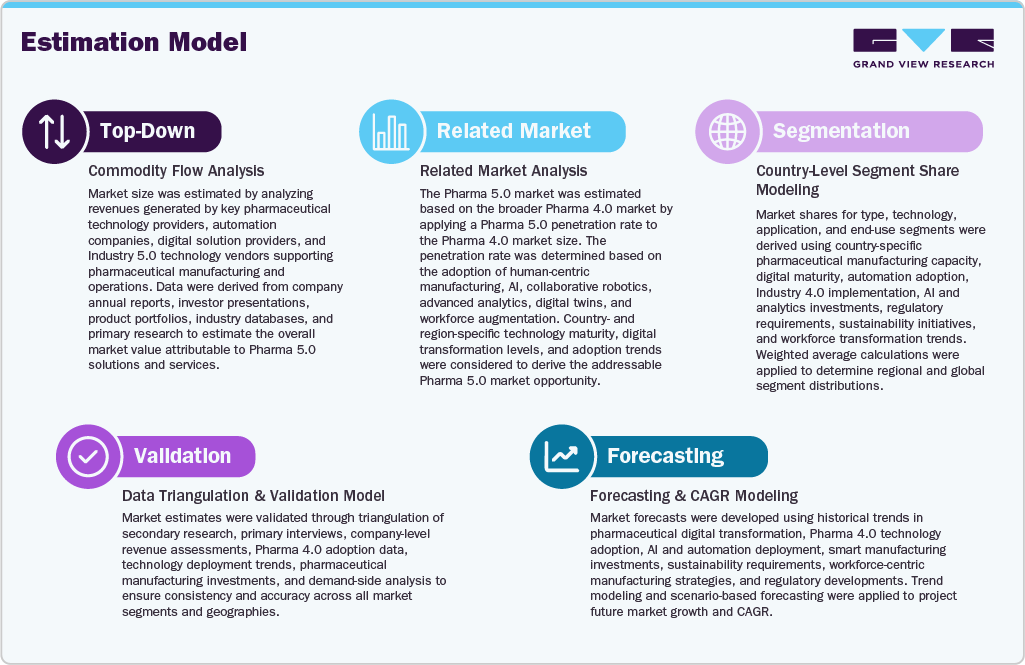
The pharma 5.0 market figures in this report are based on a proven research process that combines executive interviews with secondary research from proprietary databases, company filings, and recognized regulatory and institutional sources. Market size is built through value-chain sizing-reconciling supply-side and demand-side estimates-and triangulated with bottom-up and top-down approaches. Every estimate passes multiple levels of expert validation before publication, with each pharma 5.0 segment quantified using the revenue-capture definitions in the table below.
Segment Definition
Segment - Type
Revenue Capture Definition
Software
Revenue generated from software solutions that enable the integration of intelligent, connected, and data-driven technologies across pharmaceutical and biotechnology value chains. This segment includes platforms and applications supporting AI and generative AI, digital twins, process simulation, genomics and multi-omics analysis, robotics and industrial automation, intelligent supply chains, sustainability management, and connected workforce capabilities.
Services
This segment captures income from professional and managed services that support the implementation, integration, customization, maintenance, and operation of Pharma 5.0 technologies. These services enable organizations to deploy intelligent manufacturing, digital transformation, data analytics, automation, supply chain optimization, sustainability, and connected workforce solutions across pharmaceutical operations.
Segment - Technology
Revenue Capture Definition
Artificial Intelligence (AI) & Generative AI
Revenue derived from AI-driven technologies applied across pharmaceutical R&D and operations to accelerate decision-making, automate workflows, and improve productivity. The segment encompasses AI drug discovery and generative AI platforms, AI copilots, machine learning and predictive analytics solutions, computer vision and natural language processing platforms, AI-assisted clinical development tools, and AI-powered decision-support systems.
Digital Twin & Process Simulation Technologies
This segment captures income from digital technologies that create virtual representations and simulations of pharmaceutical processes, facilities, and manufacturing environments. It includes digital twin platforms, process simulation and predictive modeling software, virtual manufacturing and factory simulation solutions, process optimization tools, and virtual commissioning technologies used to improve operational efficiency and process performance.
Genomics & Multi-omics Technologies
Market value in this category stems from technologies that analyze and integrate genomic and multi-omics data to support precision medicine, biomarker discovery, patient stratification, and pharmaceutical R&D. The segment includes genomics, transcriptomics, proteomics, and metabolomics analysis platforms, multi-omics integration solutions, genomic interpretation tools, and patient stratification technologies.
Advanced Robotics
Revenue originates from robotic and intelligent automation technologies used to automate pharmaceutical manufacturing, laboratory, logistics, and operational workflows. The segment includes robotic control and programming software, robotic process automation, fleet management platforms, manufacturing and industrial automation systems, machine vision, robotic simulation and orchestration solutions, human-robot collaboration technologies, and industrial IoT-enabled automation platforms.
Intelligent Supply Chain Technologies
This segment reflects earnings from digital technologies that enhance visibility, planning, traceability, and operational efficiency across pharmaceutical supply chains. Solutions include supply chain planning and inventory optimization software, warehouse management systems, demand forecasting platforms, serialization and track-and-trace solutions, cold-chain monitoring, and logistics visibility technologies.
Sustainable Manufacturing Technologies
Revenue generated from technologies that support environmentally sustainable and resource-efficient pharmaceutical manufacturing. This segment encompasses energy management, carbon emissions monitoring, water optimization, waste reduction, resource optimization, sustainability analytics, and environmental monitoring solutions.
Others (AR, VR, MR & Connected Workforce Technologies)
This category includes revenue from immersive and connected workforce technologies that enhance employee training, operational guidance, maintenance, collaboration, and remote support. Solutions include augmented reality work instruction platforms, virtual reality training, mixed reality maintenance applications, connected worker platforms, digital work instructions, remote assistance, and workforce collaboration technologies.
Segment - Application
Revenue Capture Definition
Drug Discovery & Development
Revenue generated from Pharma 5.0 technologies deployed across drug discovery and development workflows to accelerate target identification, lead optimization, preclinical research, clinical development, and decision-making. Applications include AI-enabled discovery, predictive analytics, generative AI, digital modeling, multi-omics analysis, and intelligent platforms that improve development efficiency and reduce time to market.
Smart Manufacturing & Process Optimization
This segment captures income from technologies used to digitize, automate, monitor, and optimize pharmaceutical manufacturing processes. Applications include digital twins, process simulation, advanced robotics, industrial automation, predictive process modeling, real-time monitoring, and intelligent decision-support solutions designed to improve productivity, quality, and manufacturing efficiency.
Personalized Medicine Development & Manufacturing
Market value in this category stems from the use of Pharma 5.0 technologies to develop and manufacture patient-specific and targeted therapies. Applications leverage genomics, multi-omics, AI, biomarker analysis, and patient stratification technologies to support precision medicine, individualized treatment development, and personalized therapeutic manufacturing.
Supply Chain Management & Logistics
Revenue originates from the application of intelligent digital and automation technologies to improve pharmaceutical supply chain planning, inventory management, warehousing, distribution, traceability, and logistics. These solutions enhance end-to-end visibility, demand forecasting, cold-chain monitoring, serialization, and operational resilience.
Quality Management & Regulatory Compliance
This segment reflects earnings from Pharma 5.0 technologies that support quality assurance, regulatory compliance, data integrity, process monitoring, and risk management across pharmaceutical operations. Digital analytics, AI-enabled decision support, connected systems, and automated workflows help organizations maintain quality standards and meet evolving regulatory requirements.
Sustainability & Resource Optimization
This category captures revenue from technologies applied to reduce environmental impact and optimize the use of energy, water, materials, and other resources across pharmaceutical operations. Applications include emissions monitoring, energy management, waste reduction, resource optimization, environmental monitoring, and sustainability analytics.
Segment - End Use
Revenue Capture Definition
Pharmaceutical Companies
Revenue generated from Pharma 5.0 technologies and services adopted by pharmaceutical companies to enhance drug discovery, clinical development, manufacturing, quality management, supply chain operations, sustainability, and regulatory compliance.
Biotechnology Companies
This segment captures income from the deployment of Pharma 5.0 solutions by biotechnology companies across R&D, biologics development, precision medicine, manufacturing, data analysis, and operational workflows. These technologies enable greater automation, data-driven decision-making, and integration of advanced digital capabilities.
CDMOs
Market value in this category stems from Pharma 5.0 technologies and services utilized by contract development and manufacturing organizations to improve outsourced drug development and manufacturing operations. Applications include smart manufacturing, process optimization, automation, quality management, supply chain management, and sustainable production.
CROs
Revenue originates from the adoption of Pharma 5.0 solutions by contract research organizations to enhance outsourced research and development activities. Technologies support drug discovery, clinical research, data analytics, AI-enabled workflows, patient stratification, and other research services delivered to pharmaceutical and biotechnology clients.
Academic & Research Institutes
This segment reflects earnings from Pharma 5.0 technologies used by universities, academic institutions, and research organizations for pharmaceutical research, drug discovery, genomics and multi-omics studies, advanced analytics, automation, and technology-driven scientific investigations.
Estimation Model
Delivered Customizations
This report has been delivered with the following In-depth customizations
Client Request
Customization Delivered
Value Adds
Cross-Segmentation Analysis of Pharma 5.0 Technologies Across Applications
Detailed cross-segmentation analysis mapping key Pharma 5.0 technologies, including AI & Generative AI, digital twins, genomics & multi-omics, advanced robotics, intelligent supply chains, and sustainable manufacturing, across applications such as drug discovery, smart manufacturing, personalized medicine, supply chain management, quality compliance, and sustainability.
Enables clients to identify high-growth technology-application combinations, uncover emerging adoption opportunities, assess technology readiness across pharmaceutical and biotechnology organizations, and prioritize investments in high-potential Pharma 5.0 use cases.
Regional Market Opportunity & Technology Adoption Assessment
Customized regional and country-level analysis covering market size, growth outlook, technology adoption, digital infrastructure, R&D intensity, regulatory landscape, pharmaceutical manufacturing capabilities, and investments in AI, automation, genomics, and sustainable production across major geographic markets.
Helps clients identify high-growth regions, compare market attractiveness, prioritize geographic expansion, and align technology deployment and commercialization strategies with regional Pharma 5.0 adoption trends.
Competitive Benchmarking & Strategic Positioning of Pharma 5.0 Ecosystem Players
Comprehensive benchmarking of key technology providers, pharmaceutical companies, biotechnology companies, CROs, CDMOs, and other ecosystem participants based on technology portfolios, AI and automation capabilities, digital transformation initiatives, partnerships, R&D investments, geographic presence, and strategic developments.
Supports clients in assessing competitive positioning, identifying technology and capability gaps, evaluating potential partnerships or acquisition opportunities, and developing differentiated strategies for entering and expanding within the Pharma 5.0 ecosystem.
Frequently Asked Questions About This Report
The global pharma 5.0 market size was valued at USD 7.9 billion in 2025 and is estimated at USD 9.4 billion in 2026.
Key factors that are driving the market growth include increasing adoption of AI, digital twins, advanced robotics, genomics, intelligent supply chain solutions, and sustainable manufacturing technologies to enhance pharmaceutical innovation, operational efficiency, and patient-centric care.
Key players include NVIDIA Corporation, Microsoft, Siemens, Dassault Systèmes, Illumina, Inc., Thermo Fisher Scientific Inc., ABB, SAP SE, Blue Yonder Group, Inc. (Acquired By Panasonic Holdings Corporation), IBM, IQVIA Inc., Merck KGaA, Relay Therapeutics, Certara, XtalPi
The software segment accounted for the largest revenue share of 56.3% in 2025, while services segment is the fastest-growing type.
Asia Pacific is the fastest-growing region over the forecast period.
The global pharma 5.0 market is expected to grow at a CAGR of 21.9% from 2026 to 2033, reaching USD 37.6 billion by 2033.
The artificial intelligence (AI) & generative AI segment held the highest market share of 28.9% in 2025, while digital twin & process simulation technologies segment is the fastest-growing technology.
North America dominated the market, accounting for a revenue share of 43.1% in 2025.
The pharmaceutical companies segment dominated the market with a share of 42.0% in 2025, while biotechnology companies’ segment is the fastest-growing end-use.
About the Author(s)
Healthcare IT Research Team
Healthcare · Healthcare ITThis report was authored by the healthcare it research team at Grand View Research - comprising two research analysts, one senior research analyst, and one industry expert - with specialized expertise in the healthcare it segment of the healthcare industry. All findings are based on proprietary healthcare databases, executive interviews, and regulatory analysis, subject to internal peer review prior to publication.
Last Updated:
Speak to Analyst


Customize this report to your needs - add regions, segments, or data points, with 20% free customization.
Or view our licence options:


ISO 9001:2015 & 27001:2022 Certified
We are GDPR and CCPA compliant! Your transaction & personal information is safe and secure. For more details, please read our privacy policy.


