
- Home
- »
- Biotechnology
- »
-
Precision Psychiatry Market Size, Industry Report, 2033GVR Report cover
![Precision Psychiatry Market Size, Share & Trends Report]()
Precision Psychiatry Market (2025 - 2033) Size, Share & Trends Analysis Report By Service Type (Genetic Testing, Biomarker Analysis), By Technology (Immunoassay, Polymerase Chain Reaction), By Therapeutic Area (Hospitals & Clinics, Clinical Laboratories), By End-user, By Region, And Segment Forecasts
Market Size, 2024
$825.6MMarket Estimate, 2026
$940.5MMarket Forecast, 2033
$2,858.0MCAGR, 2025–2033
14.9%Precision Psychiatry Market Summary
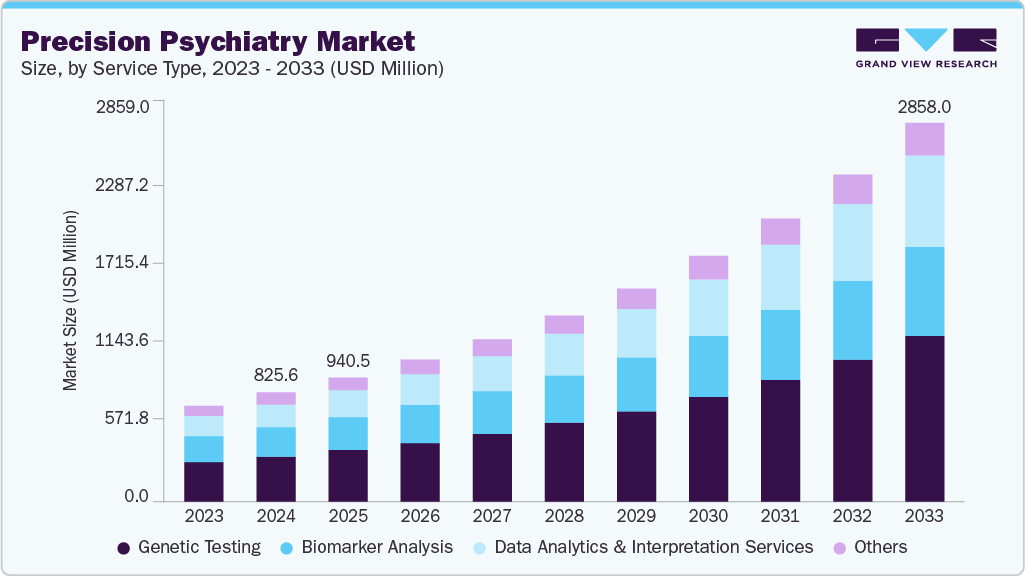
The global precision psychiatry market size was estimated at USD 825.6 million in 2024 and is projected to reach USD 2,858.0 million by 2033, growing at a CAGR of 14.91% from 2025 to 2033. The market growth is driven by the rising prevalence of mental health disorders, increasing demand for personalized treatment approaches, genomics and biomarker research advancements, and growing adoption of artificial intelligence (AI) and digital health tools to improve diagnostic accuracy and treatment outcomes.

Key Market Trends & Insights
- The North America precision psychiatry market held the largest share of 40.66% of the global market in 2024.
- The precision psychiatry industry in the U.S. is expected to grow significantly over the forecast period.
- By service type, the genetic testing segment held the highest market share of 41.21% in 2024.
- Based on technology, the next-generation sequencing (NGS) segment held the highest market share of 46.52% in 2024.
- By therapeutic area, the depression and anxiety disorders segment held the highest market share of 33.89% in 2024.
Market Size & Forecast
- 2024 Market Size: USD 825.6 Million
- 2033 Projected Market Size: USD 2,858.0 Million
- CAGR (2025-2033): 14.91%
- North America: Largest market in 2024
- Asia Pacific: Fastest growing market
High burden of mental health disorders
The growing prevalence of mental health disorders worldwide is one of the main factors driving the precision psychiatry industry. Stressful lifestyles, social pressures, and genetic predispositions are contributing to the alarming rise in conditions like depression, anxiety, schizophrenia, and bipolar disorder. According to the National Alliance on Mental Health, one in five Americans experiences mental illness each year. Healthcare systems are under a lot of stress due to this rising prevalence. It generates a high demand for novel strategies outperforming traditional treatment outcomes and sustainability techniques.

The need for precision-based solutions has also increased due to the shortcomings of conventional psychiatric care. Present-day treatment models frequently employ a trial-and-error methodology, in which patients undergo several different drugs and therapies before finding relief. Higher treatment resistance, longer recovery periods, and higher medical expenses result from this. Precision psychiatry provides a means of customizing interventions to each person's distinct biological and psychological profile by utilizing genetic insights, biomarker analysis, and sophisticated digital tools. Strong market growth is driven by the growing recognition that this individualized approach is crucial to raising response rates, lowering side effects, and meeting patients' unmet needs globally.
Advances in genomics and biomarkers
Another important factor propelling the market is the quick development of genomics and biomarker research. The use of molecular profiling and genetic testing in psychiatry is growing, giving medical professionals a better understanding of the biological causes of mental health conditions. More precise patient stratification and treatment selection are made possible by identifying biomarkers linked to neurotransmitter activity, brain circuitry, and genetic variations. Pharmacogenomic testing, for instance, can forecast a person's psychiatric medication metabolism and response, reducing the need for trial-and-error prescribing and the likelihood of negative drug reactions.
These developments are changing the generalized model of psychiatric care into a more individualized, evidence-based framework that is rapidly being adopted in clinical and research settings. The clinical utility of biomarker validation and companion diagnostics is further expanded by increasing investments from biotechnology companies, academic institutions, and healthcare providers. The use of genomics in psychiatry is anticipated to grow as the cost of sequencing technologies keeps falling and biomarker-driven solutions become more accessible, sustaining demand and propelling market expansion.
Market Concentration & Characteristics
The precision psychiatry industry is characterized by a high degree of innovation, driven by integrating advanced technology and personalized treatment approaches. For instance, in January 2024, Circular Genomics in the U.S. secured USD 8.3 million in Series A funding to launch the first circular RNA-based clinical assay, advancing precision psychiatry for depression treatment. Clinicians can now customize interventions based on a patient's genetic, molecular, and behavioral profile because of genomics, neuroimaging, biomarker identification, and artificial intelligence (AI) developments. Wearable technology and mobile health apps are cutting-edge digital tools that improve real-time monitoring, early diagnosis, and treatment optimization.
The precision psychiatry industry has witnessed growing mergers and acquisitions (M&A) activity, reflecting the strategic importance of expanding personalized mental health care capabilities. For instance, in September 2025, HOPE Therapeutics acquired Dura Medical in Florida, expanding precision psychiatry services for depressionand PTSD, integrating advanced therapies like Ketamine and TMS. Businesses can increase their market presence, access cutting-edge technologies, diversify their product lines, and speed up research and development thanks to these M&A activities. As companies look to take advantage of the growing need for precision psychiatry solutions and maintain their competitiveness in a market that is changing quickly, the trend toward consolidation is predicted to continue.
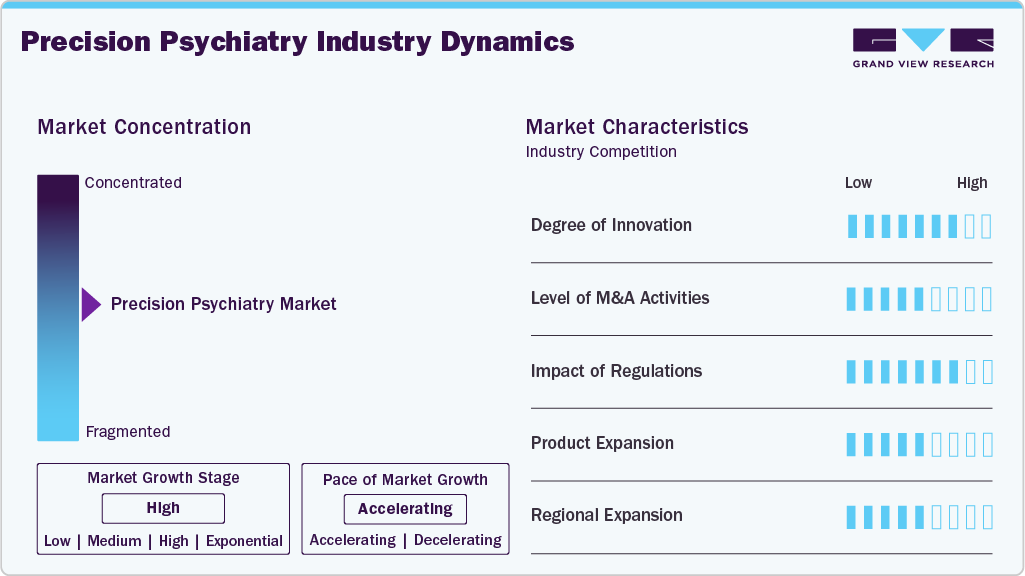
Regulations play a crucial role in shaping the growth of the precision psychiatry industry by ensuring the safety, efficacy, and quality of innovative therapies and diagnostic tools. Regulatory frameworks in major markets, such as the U.S. FDA, European EMA, and Japan’s PMDA, provide guidelines for developing and approving genomics-based diagnostics, digital therapeutics, and pharmacogenomic testing. Favorable regulations and incentives for personalized medicine projects stimulate investment and innovation in the field and further expand the market.
Product expansion is a key driver of growth in the precision psychiatry industry, as companies focus on diversifying their portfolios to address a wider range of mental health disorders and patient needs. Top biotech and pharmaceutical companies are creating new companion diagnostics, personalized therapies, AI-enabled digital tools, and genomics-based diagnostics to improve treatment efficacy and precision. For instance, in September 2024, Circular Genomics in the U.S. launched MindLight, the first circular RNA-based blood test predicting SSRI antidepressant response, enabling personalized depression treatment and faster clinical decision-making.
Regional expansion is a significant growth driver in the precision psychiatry industry, as companies seek to tap into emerging markets with rising mental health awareness and increasing healthcare investments. In areas like Asia-Pacific, Latin America, and the Middle East, where access to individualized psychiatric care is scarce and the prevalence of mental health disorders is rising, organizations are setting up operations, collaborations, and distribution networks. Businesses can use cost savings, regulatory incentives, and local research capabilities to grow clientele by entering new markets. This calculated regional outreach is anticipated to boost global market share, hasten market adoption, and foster long-term expansion in the precision psychiatry industry.
Service Type Insights
The genetic testing segment accounted for the largest market share of 41.21% in 2024 due to the growing adoption of genomics-based diagnostics, increasing awareness of personalized mental health treatments, and the ability of genetic tests to predict patient response to psychiatric medications. These tests are preferred for patients and healthcare providers because they allow clinicians to customize interventions, decrease trial-and-error prescribing, and enhance overall treatment outcomes. For instance, in September 2025, a meta-analysis published by Myriad Genetics in the United States showed that genetic testing using the GeneSight Psychotropic test significantly improved depression outcomes, increasing response by 30% and remission by 41% compared to standard care.
The data analytics & interpretation services segment is expected to grow fastest over the forecast period. The growing use of artificial intelligence (AI) and machine learning in psychiatry, the requirement to analyze complex genetic and clinical data, and the rising demand for individualized treatment recommendations are expected to propel the data analytics & interpretation services segment's growth. These services are crucial to precision psychiatry because they allow researchers and clinicians to extract useful information from sizable datasets, enhance patient care, and improve treatment results.
Technology Insights
The next-generation sequencing (NGS) segment dominated the market in 2024 with the share of 46.52%, because of its high accuracy, capacity to analyze multiple genes at once, and expanding use in identifying genetic variations associated with mental illnesses. In precision psychiatry, NGS is a preferred technology for researchers and clinicians because it facilitates early diagnosis, personalized treatment planning, and better patient outcomes.
The mass spectrometry segment is expected to grow significantly during the forecast period. Its ability to provide extremely sensitive and accurate analysis of biomarkers, metabolites, and proteins associated with psychiatric disorders drives it. Technology makes advanced research, early diagnosis, and customized treatment plans possible, and its growing integration with genomics and bioinformatics platforms is speeding up adoption in both clinical and research settings.
Therapeutic Area Insights
The depression and anxiety disorders segment dominated the market with a share of 33.89% in 2024, because of the high prevalence of these conditions worldwide, growing awareness of mental health issues, and the growing use of individualized treatment approaches. The need for precision psychiatry solutions in the treatment of anxiety and depression has increased as a result of developments in digital therapeutics, genetic testing, and biomarker identification that have made it possible for more accurate diagnoses and focused interventions.
The schizophrenia and psychotic disorders segment is expected to grow with the fastest CAGR during the forecast period, due to the rising prevalence of schizophrenia and related psychotic disorders and increasing awareness of early diagnosis. The market is expanding in this sector owing to precision psychiatry techniques such as genetic testing, neuroimaging, and AI-driven analytics, which allow for more focused and efficient treatment of these complicated illnesses.
End-user Insights
The hospitals & clinics segment captured the largest market share of 55.72% in 2024, due to the high concentration of psychiatric care services in these settings, the availability of sophisticated diagnostic tools, and the presence of qualified specialists capable of implementing precision psychiatry solutions. Patients and healthcare professionals prefer hospitals and clinics because they are the main locations for genetic testing, biomarker analysis, and individualized treatment planning.
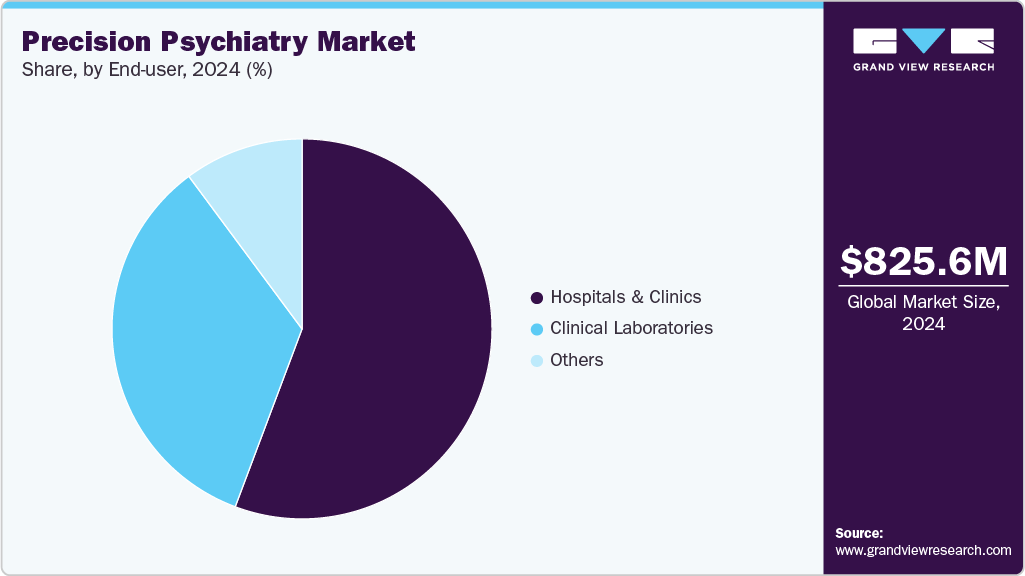
The clinical laboratories segment is projected to grow fastest during the forecast period, driven by the rising demand for advanced diagnostic testing, increasing adoption of genetic and biomarker-based assays, and the integration of next-generation sequencing (NGS) and mass spectrometry technologies. Clinical labs are essential to precision psychiatry because they offer large-scale, accurate, and reasonably priced testing services that facilitate early diagnosis and individualized treatment planning.
Regional Insights
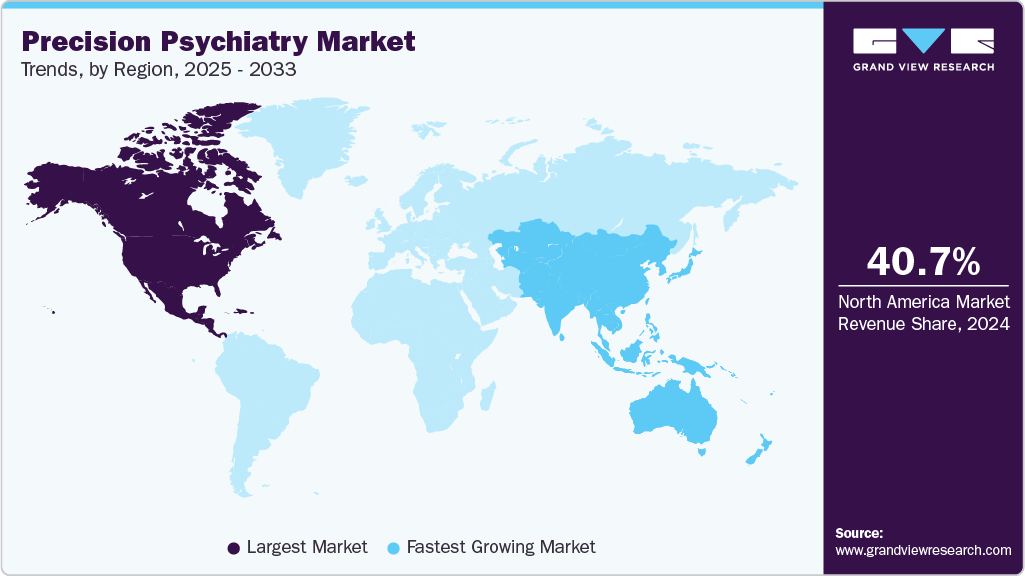
North America dominated the global precision psychiatry market with 40.66% in 2024, driven by high healthcare spending, strong private & public R&D investment, rapid clinical adoption of genomics and digital therapeutics. It established reimbursement pathways for novel diagnostics and prescription digital therapeutics. For instance, in September 2025, NeuroKaire in the U.S. launched BrightKaire. This first-of-its-kind blood-based precision psychiatry test uses patient-derived neurons and genetic data to match antidepressants, reducing trial-and-error prescribing.
U.S. Precision Psychiatry Market Trends
The precision psychiatry market in the U.S. leads to the adoption of precision psychiatry tools due to a dense concentration of research hospitals, active venture capital funding, and an evolving regulatory environment that has begun to clear prescription digital therapeutics and companion diagnostics for mental-health indications. For instance, in April 2023, Columbia University in the U.S. launched the Stavros Niarchos Foundation (SNF) Center for Precision Psychiatry and Mental Health with USD 75 million in funding, advancing genomic, AI, and neuroscience-driven approaches to mental illness. Major clinical trial programs, biotech startups (including companies developing genomics-guided drugs and digital therapeutics), and increasing FDA activity around DTx/regulatory pathways underpin continued growth.
Europe Precision Psychiatry Market Trends
The precision psychiatry market in Europe shows steady growth driven by well-established clinical research networks and regulatory paths supporting evidence-based digital therapeutics. European academic centers and biotech clusters are focused on biomarker discovery, harmonized large cohort studies, and implementation science that link biology to care pathways, positioning Europe to lead in evidence generation and guideline development for precision psychiatry. For instance, in June 2023, Rice University's Baker Institute for Public Policy experts proposed a precision psychiatry initiative to transform mental health care by integrating genomics, imaging, AI, and multimodal data, positioning Europe as a global leader.
The UK precision psychiatry market benefits from Active academic-industry partnerships, national genomic initiatives, and a robust NHS research infrastructure. Targeted venture funding and translational programs are expediting companion-diagnostic development and trials in treatment-resistant depression and other complex disorders. Payer and regulatory engagement through NHS pilot programs supports early adoption in clinical pathways.
The precision psychiatry market in Germany is expected to grow significantly over the forecast period. Germany’s robust biopharma R&D ecosystem and strong clinical trial capacity make it an important market for precision psychiatry, especially for biologically targeted therapeutics and companion diagnostics. German companies and academic centers increasingly participate in biomarker-driven trials and commercialize diagnostics and DTx solutions. Recent clinical successes in genetically stratified psychiatric trials are raising the profile of precision approaches in Germany and wider Europe.
Asia Pacific Precision Psychiatry Market Trends
The precision psychiatry market in the Asia Pacific region is anticipated to grow fastest, exhibiting the highest CAGR of 15.99% in the forecast period. Governments and private investors in several APAC markets actively support digital mental-health platforms, increase telepsychiatry services, and fund local studies to validate DTx and biomarker-based diagnostics. This has led to a conducive environment wherein local startups and global vendors can establish a foothold in these markets. For instance, in July 2025, the National Institute of Mental Health and Neurosciences (NIMHANS) in India partnered with the University of Oslo in Norway to launch PrecInNor. This bilateral precision psychiatry initiative seeks to leverage clinical infrastructure, genomics, and imaging expertise to accelerate mental health innovation globally.
China precision psychiatry market is becoming important, with fast regulatory approval processes for digital therapeutics and strong government support for genomics and mental-health technology. National digital-health companies and academic institutions are quickly developing AI-based psychiatry technologies and digital biomarker programs targeting local populations that may expedite large-scale deployment.
The precision psychiatry market in Japan is expected to grow significantly. Japan’s advanced biomedical research base, aging population, and focus on personalized medicine underpin demand for precision psychiatry solutions targeted at late-life mood disorders and neurocognitive comorbidities. Academic breakthroughs in neurobiology and growth in translational partnerships support clinical trials and early commercialization. Academia-industry collaborations reinforce Japan’s position as a key Asia-Pacific market.
MEA Precision Psychiatry Market Trends
The precision psychiatry market in the Middle East and Africa is an early-stage but accelerating market. Rising mental health awareness, investments in telepsychiatry and training, and selecting national initiatives to localize biomanufacturing and digital therapeutics are strengthening capacity. Public-private collaborations and international partnerships are beginning to deliver pilot programs for digital care and genetics-informed workflows. However, infrastructure gaps and workforce shortages mean adoption will likely be concentrated in major urban centers and hub hospitals in the near term.
Kuwait precision psychiatry market is developing but shows potential, driven by government healthcare modernization, strategic investments in biotech and digital health, and growing interest in precision medicine pilot projects. Early collaborations with international research organizations and private health systems are helping introduce advanced diagnostics and telepsychiatry services.
Key Precision Psychiatry Company Insights
The precision psychiatry industry is populated by notable companies that can maintain a sustained presence through extensive diagnostic offerings, financings, and a diverse collaboration strategy. Prominent companies such as Invitae Corporation, Myriad Genetics, GeneDx, LabCorp, and Quest Diagnostics support a large market share related to advanced genetic testing, biomarker analysis platforms, and a worldwide distribution model. They simultaneously provide clinicians with a huge breadth of information to elucidate treatment pathways specific to patients, especially for complicated psychiatric presentations.
Organizations like Polaris Genomics, Genomind, CNSDose, MedGenome, and GeneHealth Global Research & Diagnostics are expanding their footprints by delivering new precision psychiatry solutions, including pharmacogenomic testing, artificial intelligence-powered analytics, and personalized interpretation. These firms focus on catering to the growing needs of research institutions, mental health practitioners, and biopharmaceutical companies seeking personalized approaches to psychiatric care.
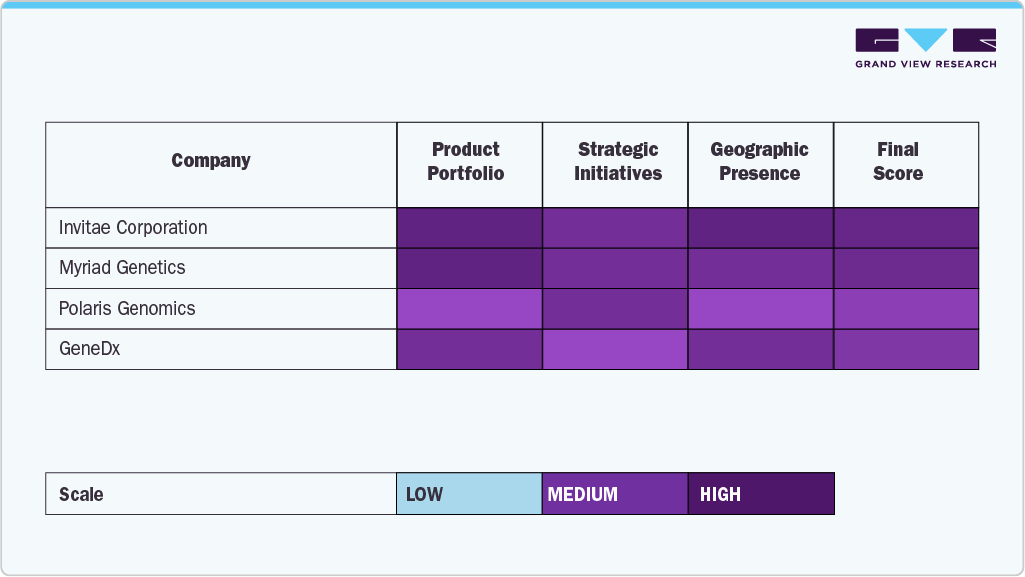
As the world continues to embrace personalized medicine, digital therapeutics, and companion diagnostics, the competitive landscape will exist almost exclusively around accessibility, affordability, and clinical integration. The precision psychiatry market is also experiencing a shifting landscape where established expertise aligns with new entrepreneurial organizations. Mergers and acquisitions, cross-sector collaborations, and advancements in AI-powered decision support systems are fueling competition and accelerating adoption.
Key Precision Psychiatry Companies:
The following are the leading companies in the precision psychiatry market. These companies collectively hold the largest market share and dictate industry trends.
- Invitae Corporation
- Myriad Genetics
- Polaris Genomics
- GeneDx
- Genomind
- CNSDose
- MedGenome
- LabCorp
- GeneHealth Global Research & Diagnostics
- Quest Diagnostics
Recent Developments
-
In July 2025, Polaris Genomics, a U.S.-based company, secured a second USD 100K Maryland Industrial Partnership grant to advance the validation of its PTSD genomic test, accelerating the commercialization of precision psychiatry diagnostics.
-
In June 2025, U.S.-based GeneDx published the SeqFirst study results in The Journal of Pediatrics. The results showed that rapid genomic testing reduced pediatric diagnostic times from 289 days to 13, supporting broader adoption.
Precision Psychiatry Market Report Scope
Report Attribute
Details
Market size value in 2025
USD 940.5 million
Revenue forecast in 2033
USD 2,858.0 million
Growth rate
CAGR of 14.91% from 2025 to 2033
Base year for estimation
2024
Historical data
2021 - 2023
Forecast period
2025 - 2033
Quantitative units
Revenue in USD million/billion and CAGR from 2025 to 2033
Report coverage
Revenue forecast, company ranking, competitive landscape, growth factors, and trends
Segments covered
Service type, technology, therapeutic area, end-user, region
Regional scope
North America; Europe; Asia Pacific; Latin America; MEA
Country scope
U.S.; Canada; Mexico; UK; Germany; France; Italy; Spain; Denmark; Sweden; Norway; India; China; Japan; Australia; South Korea; Thailand; Brazil; Argentina; Saudi Arabia; UAE; South Africa; Kuwait
Key companies profiled
Invitae Corporation; Myriad Genetics; Polaris; Genomics; GeneDx; Genomind; CNSDose; MedGenome; LabCorp; GeneHealth Global Research & Diagnostics; Quest Diagnostics
Customization scope
Free report customization (equivalent up to 8 analyst’s working days) with purchase. Addition or alteration to country, regional & segment scope.
Global Precision Psychiatry Market Report Segmentation
This report forecasts revenue growth and provides an analysis of the latest trends in each of the sub-segments from 2021 to 2033. For this report, Grand View Research has segmented the global precision psychiatry market based on service type, technology, therapeutic area, end-user, and region:
-
Service Type Outlook (Revenue, USD Million, 2021 - 2033)
-
Genetic Testing
-
Biomarker Analysis
-
Data Analytics & Interpretation Services
-
Others
-
-
Technology Outlook (Revenue, USD Million, 2021 - 2033)
-
Next-Generation Sequencing (NGS)
-
Polymerase Chain Reaction (PCR)
-
Immunoassay
-
Mass Spectrometry
-
Others
-
-
Therapeutic Area Outlook (Revenue, USD Million, 2021 - 2033)
-
Depression and Anxiety Disorders
-
Schizophrenia and Psychotic Disorders
-
Bipolar Disorder
-
Substance Use Disorders
-
Others
-
-
End-user Outlook (Revenue, USD Million, 2021 - 2033)
-
Hospitals & Clinics
-
Clinical Laboratories
-
Others
-
-
Regional Outlook (Revenue, USD Million, 2021 - 2033)
-
North America
-
U.S.
-
Canada
-
Mexico
-
-
Europe
-
Germany
-
UK
-
France
-
Italy
-
Spain
-
Denmark
-
Sweden
-
Norway
-
-
Asia Pacific
-
China
-
India
-
Japan
-
South Korea
-
Australia
-
Thailand
-
-
Latin America
-
Brazil
-
Argentina
-
-
Middle East and Africa (MEA)
-
South Africa
-
Saudi Arabia
-
UAE
-
Kuwait
-
-
Frequently Asked Questions About This Report
The global precision psychiatry market size was estimated at USD 825.6 million in 2024 and is expected to reach USD 940.5 million in 2025.
The global precision psychiatry market is expected to grow at a compound annual growth rate of 14.91% from 2025 to 2033 to reach USD 2,858.0 million by 2033.
North America dominated the precision psychiatry market with a share of 40.66% in 2024. This is driven by the growing adoption of genomic and digital biomarkers, enabling more personalized treatment plans for mental health disorders. Additionally, strong investment from the NIH, leading academic institutions, and biotech companies is fueling clinical research and technology development, further accelerating the integration of precision psychiatry into mainstream healthcare.
Some key players operating in the precision psychiatry market include Shaklee Corporation, Decode Age,Thorne, GNC Holdings, LLC, Life Extension, Nu Skin Enterprises, Nutrova, Cureveda, Tru Niagen, Oziva
Rising adoption of genomic testing and digital biomarkers is enabling more personalized mental health treatments. Growing investment from research institutions and biotech firms is accelerating innovation and clinical adoption of precision psychiatry solutions.
About the Author(s)
Biotechnology Research Team
Healthcare · BiotechnologyThis report was authored by the biotechnology research team at Grand View Research - comprising two research analysts, one senior research analyst, and one industry expert - with specialized expertise in the biotechnology segment of the healthcare industry. All findings are based on proprietary healthcare databases, executive interviews, and regulatory analysis, subject to internal peer review prior to publication.
Last Updated:
Speak to Analyst

Need a Tailored Report?
Customize this report to your needs — add regions, segments, or data points, with 20% free customization.
Or view our licence options:


ISO 9001:2015 & 27001:2022 Certified
We are GDPR and CCPA compliant! Your transaction & personal information is safe and secure. For more details, please read our privacy policy.












