
- Home
- »
- Clinical Diagnostics
- »
-
U.S. Clinical Laboratory Services Market Size Report, 2033GVR Report cover

U.S. Clinical Laboratory Services Market (2026 - 2033)
Size, Share & Trends Analysis Report By Test (Genetic Testing, Clinical Chemistry, Medical Microbiology Testing), By End-use (Emergency Department, Urgent Care, Physician Office), And Segment Forecasts
Market Size, 2025
$73.9BMarket Estimate, 2026
$75.8BMarket Forecast, 2033
$95.9BCAGR, 2026–2033
3.4%U.S. Clinical Laboratory Services Market Summary
The U.S. clinical laboratory services market size was valued at USD 73.9 billion in 2025 and is projected to grow from USD 75.8 billion in 2026 to USD 95.9 billion by 2033, at a CAGR of 3.4% from 2026 to 2033. The market is primarily driven by the increasing burden of chronic diseases, which has intensified the demand for routine and specialized diagnostic testing across care settings.
Key Market Trends & Insights
- By test: Clinical chemistry segment held the largest market share of around 43.9% in 2025.
- By end use: Diagnostics laboratories segment held the largest market share of 44.2% in 2025.
Market Size & Forecast
- Market size in 2025: USD 73.9 Billion
- Estimated Market Size in 2026: USD 75.8 Billion
- Projected Market Size by 2033: USD 95.9 Billion
- CAGR (2026-2033): 3.4%
Three ways to get this report
Buy it, customize it, or ask a question.Ask an Analyst
Analyst response in 1 business day
- AccessReport author, directly
- Reply timeWithin 1 working day
- No sales callDirect answer only
- FormatEmail reply
- CostFree, no cost
Get the Full Report
What the study covers
- FormatsPDF · Excel · Dashboard
- Timeline2026–2033 annual, 2025 base
- Coverage20+ countries, 5 regions
- Companies10+ key players profiled
Customize the Report
20% free customization
- IncludeCountries, segments, points
- TailorTo your product definition
- ExtendDeeper competitor detail
- OrA fully bespoke study
- Turnaround5–10 working days
Rising emphasis on early diagnosis and preventive screening has further accelerated the use of clinical laboratory services, particularly for conditions such as diabetes, cardiovascular disorders, and cancer. Source: Grand View Research, IR Documents, Primary Interviews, Paid DatabasesTo learn more about this report,
 Download Free Sample Report
Market Dynamics
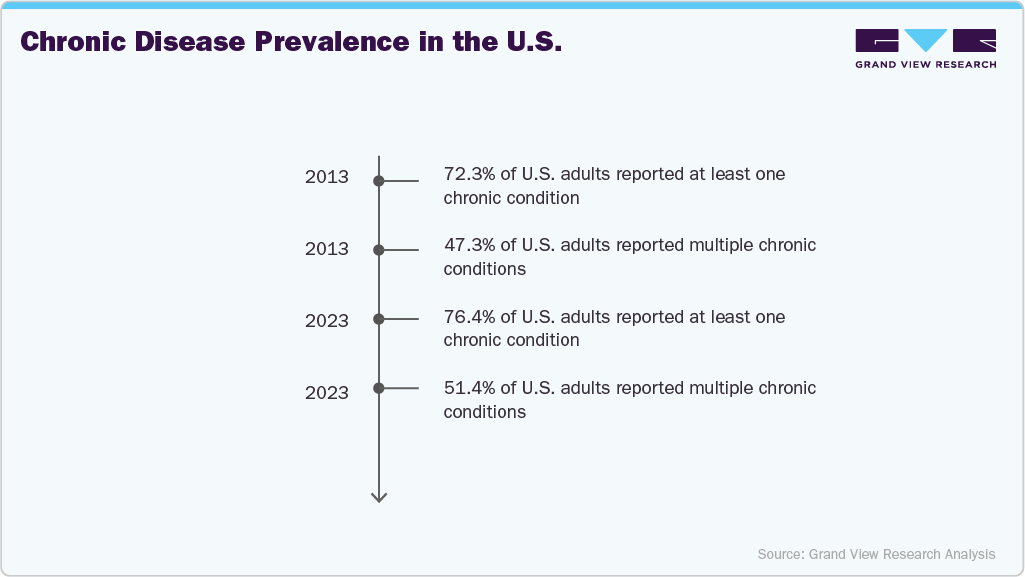
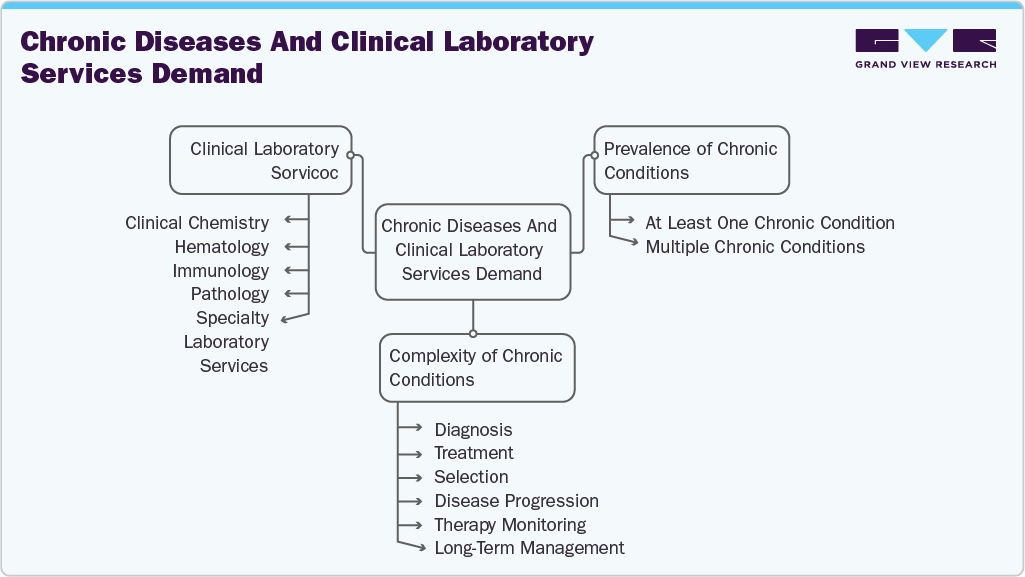
The growing prevalence and complexity of chronic diseases are expected to drive demand for clinical laboratory services in the U.S. Chronic conditions require repeated laboratory assessments for diagnosis, treatment selection, disease progression, therapy monitoring, and long-term disease management. According to a CDC analysis of Behavioral Risk Factor Surveillance System data, 76.4% of U.S. adults, representing approximately 194 million people, reported at least one of 12 selected chronic conditions in 2023, while 51.4%, or approximately 130 million adults, reported multiple chronic conditions. The prevalence of at least one chronic condition increased from 72.3% in 2013 to 76.4% in 2023, while multiple chronic conditions increased from 47.3% to 51.4%. This expanding and increasingly complex patient population provides a substantial recurring testing base for clinical chemistry, hematology, immunology, pathology, and specialty laboratory services. The growing number of patients requiring longitudinal disease management is also expected to increase the frequency of laboratory assessments across multiple stages of care. Consequently, sustained demand for diagnostic monitoring and treatment-related testing is expected to support laboratory testing volumes and market growth.
 To learn more about this report, Download Free Sample Report
The substantial healthcare and disease burden associated with chronic conditions is also reinforcing the importance of laboratory-supported disease management. The CDC reported in May 2026 that 90% of the U.S. healthcare expenditure, totaling USD 5.3 trillion annually, is associated with people with chronic and mental health conditions. In addition, more than 850,000 Americans died from heart disease or stroke in 2024, accounting for more than one in four U.S. deaths. Cancer represents another major source of diagnostic demand, requiring laboratory support throughout screening, diagnosis, treatment selection, and monitoring. The scale of these conditions supports continued utilization of clinical chemistry, pathology, cytology, molecular diagnostics, biomarker testing, and other specialized laboratory services, while the growing complexity of disease management creates opportunities for laboratories to expand higher-value testing capabilities.
The persistent burden of noncommunicable diseases is consequently expected to sustain demand for laboratory testing throughout the patient care pathway. According to a World Health Organization report published in September 2025, noncommunicable diseases accounted for 75% of deaths in the U.S. in 2021, representing approximately 2.67 million deaths. Cardiovascular diseases, cancers, diabetes, and chronic respiratory diseases require laboratory-supported assessment across screening, diagnosis, treatment monitoring, and follow-up. Accordingly, the expanding chronic disease burden is expected to generate recurring rather than episodic testing demand, supporting volumes across routine and specialized services. The continued need to monitor disease progression, treatment response, metabolic status, organ function, and therapy-related risks is expected to strengthen utilization of clinical chemistry, hematology, immunology, pathology, microbiology, genetic testing, and advanced specialty assays, thereby supporting growth of the market.
 To learn more about this report, Download Free Sample Report
Reimbursement pressure under the Medicare Clinical Laboratory Fee Schedule (CLFS) is expected to constrain revenue growth and profitability across U.S. clinical laboratories. Medicare reimburses applicable clinical diagnostic laboratory tests under the CLFS, with payment rates established using private-payer data collected under the Protecting Access to Medicare Act (PAMA). CMS has stated that no payment reductions will be applied under the PAMA phase-in for year 2026, while reductions are scheduled to resume from 2027 through 2029, subject to a 15% annual cap relative to the applicable payment amount for the preceding year. This reimbursement framework creates uncertainty regarding future payment levels, particularly for laboratories with significant exposure to Medicare-funded testing.
Pressure on reimbursement rates can constrain laboratory margins, particularly for high-volume routine testing services. Laboratory providers must manage reimbursement levels against operating expenses associated with personnel, reagents, instrumentation, information systems, quality assurance, facilities, and regulatory compliance. As Medicare payment rates are influenced by private-payer pricing data and testing volumes, changes in market-based reimbursement levels can affect the payments laboratories receive for applicable tests. The resulting pressure on test-level economics can encourage laboratories to pursue greater operational efficiency, workflow automation, cost optimization, and scale advantages to maintain profitability.
Reimbursement constraints may also limit the financial flexibility of laboratories to invest in capacity expansion and advanced testing capabilities. Lower or uncertain payment rates can affect investment decisions related to automation, specialized analytical platforms, information technology infrastructure, workforce development, and laboratory expansion. Smaller and independent laboratories may face greater pressure because they generally have fewer opportunities to offset lower reimbursement through economies of scale or diversified service portfolios. Consequently, continued uncertainty surrounding Medicare laboratory reimbursement is expected to place pressure on laboratory revenues and margins and may moderate investment in capacity and advanced services, thereby restraining the growth of the market.
The expanding adoption of precision medicine is creating opportunities for U.S. clinical laboratories to broaden their molecular, genetic, and biomarker testing portfolios. Precision medicine relies on genomic and biomarker information to support disease characterization, treatment selection, and patient monitoring, particularly in oncology, neurology, and other areas requiring specialized diagnostics. The shift toward more individualized disease management is expected to increase demand for specialized laboratory services beyond conventional routine testing, enabling laboratories with advanced molecular, sequencing, and biomarker capabilities to capture higher-value testing opportunities. The growing availability of blood-based biomarkers is further expanding the role of laboratories by providing less invasive approaches for assessing disease-specific biological markers and supporting emerging diagnostic pathways.
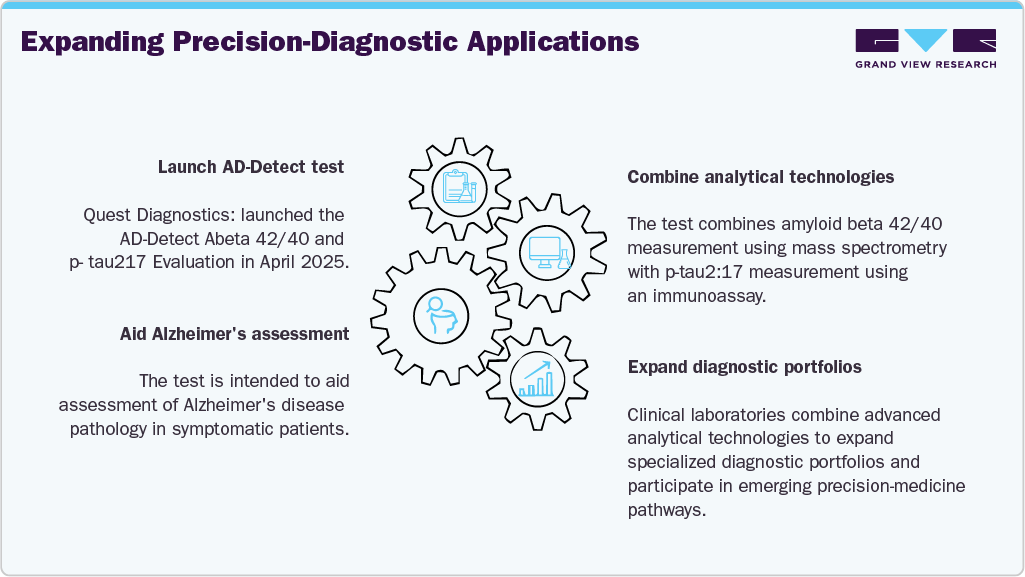
The expansion of blood-based biomarker testing demonstrates the potential for clinical laboratories to participate in emerging precision-diagnostic applications. In April 2025, Quest Diagnostics launched the AD-Detect Abeta 42/40 and p-tau217 Evaluation, a laboratory-developed test combining amyloid beta 42/40 measurement using mass spectrometry with p-tau217 measurement using an immunoassay. The test is intended to aid the assessment of Alzheimer's disease pathology in symptomatic patients. The introduction of a multi-biomarker laboratory service demonstrates how clinical laboratories can combine advanced analytical technologies to deliver specialized diagnostic information and expand their test portfolios into emerging areas of precision medicine. Such developments can create additional testing opportunities as biomarkers become increasingly integrated into clinical assessment and disease-management pathways.
The increasing availability of specialized biomarkers can also enable clinical laboratories to develop differentiated testing services across diagnosis and patient management. Laboratory-based biomarkers such as p-tau217 can provide biological information relevant to Alzheimer's disease assessment and complement established clinical evaluation approaches. As precision medicine incorporates molecular and biomarker information at different stages of care, laboratories with validated assays, advanced instrumentation, and specialized analytical capabilities can expand their role in disease characterization and monitoring. This shift creates opportunities to increase utilization of specialized laboratory services while enabling providers to develop higher-value testing offerings that address increasingly specific clinical requirements.
 To learn more about this report, Download Free Sample Report
Continued development of molecular and biomarker-based services is therefore expected to provide clinical laboratories with opportunities to diversify their testing portfolios and increase exposure to higher-value diagnostic segments. Expansion into genomic profiling, blood-based biomarkers, companion diagnostics, and other precision-diagnostic applications can enable laboratories to address specialized clinical requirements while leveraging existing analytical infrastructure and patient-access networks. The opportunity is particularly significant for laboratories with the scale and technical capabilities required to invest in advanced instrumentation, assay development, validation, and clinical interpretation. As precision medicine expands across clinical practice, increasing demand for molecular and biomarker information is expected to support service diversification and create incremental revenue opportunities.
The concentration of chronic conditions among older adults further supports recurring laboratory utilization. According to a CDC report published in April 2025, 93.0% of U.S. adults aged 65 years and older reported at least one selected chronic condition, while 78.8% reported multiple chronic conditions, compared with 59.5% and 27.1%, respectively, among adults aged 18-34 years. The greater prevalence of multimorbidity among older adults increases the need for periodic assessment of metabolic parameters, organ function, disease progression, and treatment response. The growing complexity of care among older patients also increases the frequency and breadth of diagnostic testing required across multiple disease categories. As chronic conditions frequently require ongoing monitoring rather than one-time diagnostic evaluation, the growing number of patients managing multiple diseases is expected to sustain testing volumes across hospital-based, stand-alone, and clinic-based laboratories. This demographic and disease-profile shift is therefore expected to support continued utilization of routine and specialized laboratory services. The U.S. clinical laboratory services market is experiencing growing demand for laboratory automation. Automated laboratory systems offer advantages such as increased efficiency, fewer human errors, and faster turnaround times for test results. As healthcare providers aim to deliver faster, more accurate diagnoses, integrating automated systems has become more important. Lab automation streamlines processes, boosts productivity, and enables broader testing capabilities.
In addition, the growing volume of sample testing has led to notable improvements in data management and sample preparation, supporting more efficient laboratory workflows and broader test availability. These enhancements are helping laboratories reduce turnaround times, improve diagnostic accuracy, and handle rising demand across various healthcare settings. Integration of automated systems and digitized reporting tools is also strengthening operational capacity, enabling faster delivery of results and better coordination between clinicians and lab professionals.
The market is also witnessing continued investment by established market participants aiming to capitalize on the sector’s strong potential. For instance, in May 2026, Natera, Inc. announced expansion plans, including a dedicated sequencing facility to increase capacity and additional space in a second building to support operational growth. Similarly, in February 2026, Labcorp announced a multi-year plan to build a new, advanced facility in Brownsburg, Indiana, dedicated to Central Laboratory Services (CLS) operations. These investments reflect the expanding scope of specialized testing and the increasing role of innovation in shaping future clinical laboratory services.
Moreover, the evolving regulatory environment and focus on value-based care are further influencing the development of clinical laboratory services in the U.S. Laboratories are increasingly aligning with quality standards set by organizations such as CLIA and CAP to maintain compliance and enhance credibility. At the same time, payers' emphasis on cost-effectiveness and clinical utility encourages labs to adopt more targeted testing strategies. This shift reinforces the need for evidence-backed diagnostics that support clinical decision-making and contribute to improved patient outcomes and optimized healthcare spending.
Prior to the COVID-19 pandemic, over 13 billion clinical tests were conducted annually across more than 200,000 CLIA-certified laboratories, highlighting the essential role of diagnostics in the healthcare system. This infrastructure plays a key role in managing chronic conditions, with approximately 76% of U.S. adults, representing about 194 million people, living with at least one chronic condition in 2023, according to the U.S. Centers for Disease Control and Prevention (CDC). The clinical demand for routine and specialized testing continues to rise with the country’s aging population and the shift toward preventive care.
The pandemic further underscored the critical role of diagnostics, with over 1.17 billion COVID-19 tests performed in the U.S. by March 2023. This surge in testing capacity has strengthened public health preparedness and accelerated investment in lab infrastructure. New entrants are actively tapping into the market’s potential. For instance, in November 2024, ProPhase Labs introduced DNA Complete, Inc., a direct-to-consumer DNA testing platform reflecting the market's growing orientation toward personalized diagnostics. Rising cancer incidence, projected to exceed 2 million new cases in 2024, further reinforces the ongoing demand for advanced laboratory services, particularly in oncology-focused testing.
Market Concentration & Characteristics
The market is characterized by continuous innovation across core segments, including genetic testing, clinical chemistry, and bioanalytical services. Advancements in automation, next-generation sequencing, and AI-driven diagnostics are enhancing accuracy and efficiency. Emerging areas like cell & gene therapy-related services, toxicology testing, and drug development support are also benefiting from improved assay sensitivity and digital integration. These innovations are expanding the clinical value of laboratory services and aligning them more closely with precision medicine goals.
Mergers and acquisitions are active, with a focus on consolidation, service diversification, and geographic expansion. Larger entities are acquiring regional and specialized labs to strengthen capabilities in genetic testing, toxicology, and bioanalytical services. Strategic acquisitions are also targeting emerging areas such as cell & gene therapy-related diagnostics and clinical trial support. While the market remains competitive, M&A activity is largely driven by the need to scale operations, expand service portfolios, and improve access to advanced diagnostic technologies.
 To learn more about this report, Download Free Sample Report
Regulatory oversight is a foundational aspect of the market, primarily guided by frameworks such as the Clinical Laboratory Improvement Amendments (CLIA) and enforced by the Centers for Medicare & Medicaid Services (CMS). These standards govern lab quality, personnel qualifications, and testing accuracy across all service categories. Additional certification from bodies like the College of American Pathologists (CAP) enhances compliance and credibility. Evolving policies under the Protecting Access to Medicare Act (PAMA) impact reimbursement rates, especially for genetic testing and clinical chemistry services. While regulations promote reliability and patient safety, ongoing changes in coding, pricing, and reporting requirements can present operational challenges for both large and mid-sized labs.
The market is experiencing steady service expansion across specialized and high-demand testing areas. Laboratories are broadening offerings to meet evolving clinical needs. Services related to cell & gene therapy, preclinical trials, and drug development are also being integrated to support personalized medicine and biopharma research. In addition, labs are incorporating comprehensive panels, multiplex assays, and companion diagnostics to address complex disease profiles. This expansion enhances clinical utility and allows providers to serve a wider range of patient populations and research applications.
Regional expansion in the U.S. is focused on increasing access in underserved and rural areas through satellite labs, mobile units, and digital platforms. While urban centers continue to offer advanced services in genetic testing, clinical chemistry, and molecular diagnostics, smaller markets are seeing investments to decentralize testing capabilities. Collaborations with regional healthcare systems and retail clinics are also expanding service reach. These efforts help reduce geographic disparities in diagnostic access and support more timely and localized care delivery across the country.
Analyst Perspective
The market is characterized by a broad testing portfolio spanning clinical chemistry, genetic testing, microbiology, hematology, immunology, cytology, and specialized testing. Market expansion is supported by growing diagnostic testing volumes, adoption of advanced laboratory technologies, increasing test complexity, and broader utilization across hospitals, stand-alone laboratories, and ambulatory care settings. Clinical chemistry remains a core contributor due to its extensive use in routine diagnosis and disease monitoring, while genetic and specialized testing benefit from precision medicine adoption. Competitive positioning is influenced by test-menu breadth, laboratory infrastructure, automation, geographic reach, turnaround time, and capabilities in high-complexity testing.
Test Insights
The clinical chemistry segment dominated the market in 2025, accounting for the largest revenue share of 43.9%. This leadership is driven by the segment’s foundational role in routine diagnostics, which covers a wide range of tests, including blood glucose, lipid panels, liver enzymes, and kidney function. The high testing volume, supported by chronic disease management and regular health screenings, continues to sustain demand. In addition, advancements in automated analyzers and integration with laboratory information systems have enhanced workflow efficiency and result accuracy, reinforcing the segment’s prominence across hospital labs, independent facilities, and physician offices.
The genetic testing segment is projected to grow at the fastest CAGR over the forecast period. This growth is supported by the expanding adoption of precision medicine, growing demand for early and accurate disease diagnosis, increasing use of genomic testing for inherited disorders and cancer, and broader integration of molecular diagnostics into clinical care. Rising availability of advanced sequencing technologies, including next-generation sequencing, is enabling laboratories to offer more comprehensive and complex genetic analyses. In addition, growing physician awareness and expanding applications in disease-risk assessment, treatment selection, and reproductive health are contributing to test utilization.
End Use Insights
The diagnostics laboratories segment dominated the market, accounting for the largest share of 44.2% in 2025. This segment comprises independent and reference laboratories that provide routine and specialized diagnostic testing for physicians, hospitals, health systems, and other healthcare providers. The segment benefits from high testing volumes, broad test menus, centralized laboratory infrastructure, and the ability to process complex and specialized tests at scale. Revenue is primarily captured through physician- and institution-ordered testing, reference laboratory services, specialized diagnostic assays, and outsourced laboratory operations. The expansion of laboratory outsourcing and integrated diagnostic service models is further supporting segment growth. For instance, in January 2026, Quest Diagnostics and Corewell Health completed their laboratory-services joint venture, Diagnostic Lab of Michigan, LLC. The arrangement includes Quest's laboratory management services across all 21 Corewell Health hospitals and plans for a 100,000-square-foot laboratory facility in Michigan, strengthening centralized and high-throughput diagnostic capabilities.
 To learn more about this report, Download Free Sample Report
The hospital segment is expected to grow lucratively over the forecast period, driven by the high volume and complexity of diagnostic testing required across inpatient, outpatient, emergency, and critical-care settings. The aging population and growing burden of chronic and infectious diseases are further supporting laboratory utilization. In addition, hospitals are investing in automated laboratory systems, advanced molecular and genetic testing, and integrated diagnostic workflows to improve turnaround times and clinical decision-making. The expansion of in-house testing capabilities also helps hospitals reduce reliance on external laboratories for specialized investigations. These factors are expected to sustain demand for hospital-based clinical laboratory services throughout the forecast period.
State/Province Insights
California Clinical Laboratory Services Market Trends
California clinical laboratory services market accounted for the largest market share of 5.4% in 2025. The state has a diversified competitive landscape comprising national reference laboratories, major hospital systems, academic medical centers, independent laboratories, and public health facilities. Key participants include Labcorp, Quest Diagnostics, Baylor Scott & White Health, Houston Methodist, HCA Healthcare, UT Southwestern, and Texas Health Resources. Private laboratory expansion is further strengthening the competitive environment.
South Dakota Clinical Laboratory Services Market Trends
South Dakota clinical laboratory services market is projected to register the fastest CAGR of 4.0%, supported by the state’s expanding diagnostic infrastructure, growing demand for routine and specialized testing, and increasing utilization of laboratory services across hospitals, physician offices, and independent diagnostic facilities. The state’s geographically dispersed population also creates demand for accessible and efficient laboratory testing, particularly for chronic disease monitoring, preventive screening, and infectious disease diagnosis. In addition, the adoption of advanced diagnostic technologies and the expansion of specialized testing capabilities are expected to improve access to timely laboratory services and support higher testing volumes. These factors are expected to strengthen the growth prospects of the South Dakota clinical laboratory services market over the forecast period.
Key U.S. Clinical Laboratory Services Company Insights
Key players operating in the U.S. clinical laboratory services market are adopting various strategies to compete with their peers and drive growth. Companies are involved in expanding their market presence by entering into partnerships, collaborations and agreements with other players to expand their product portfolio and geographic reach. Emerging participants are employing various strategies to expand their footprint and grow at a fast pace. Customer acquisition strategies are being adopted by partnering with hospitals and clinics.
Key U.S. Clinical Laboratory Services Companies
-
Laboratory Corporation of America Holdings (LabCorp)
-
Abbott
-
Eurofins Scientific
-
Natera, Inc.
-
Myriad Genetics, Inc.
-
BioReference Health, LLC (OPKO Health)
-
QIAGEN
-
Siemens Healthcare AG
-
Quest Diagnostics Incorporated
-
NeoGenomics Laboratories
-
Fresenius Medical Care
-
ARUP Laboratories
-
Sonic Healthcare Limited
-
Charles River Laboratories
-
Mayo Clinic Laboratories
Competitive Benchmarking
Operating Strategies
Competitive Edge
Weaknesses
Established Players: Laboratory Corporation of America Holdings (LabCorp); Abbott; Quest Diagnostics Incorporated; QIAGEN; Mayo Clinic Laboratories; Charles River Laboratories; ARUP Laboratories; Fresenius Medical Care
- Maintain extensive test menus covering routine and specialized diagnostics across broad provider networks.
- Expand laboratory scale through acquisitions, partnerships, and integrated laboratory management models.
- Invest in automation, digital connectivity, advanced diagnostics, and high-throughput laboratory infrastructure.
- Established brand recognition and long-standing relationships with hospitals, physicians, payers, and patients.
- Extensive geographic coverage and high testing volumes support economies of scale.
- Broad test portfolios and specialized capabilities enable comprehensive diagnostic service offerings.
- Large-scale operations can create complex workflows and higher operating costs.
- Established laboratory infrastructure may make rapid adoption of emerging technologies more challenging.
- Dependence on reimbursement rates, regulatory requirements, and high-volume testing can constrain margins.
Emerging Players: Natera, Inc.; Myriad Genetics, Inc.; BioReference Health, LLC; Eurofins Scientific; Siemens Healthineers AG; NeoGenomics Laboratories; Sonic Healthcare Limited
- Focus on specialized and high-growth testing areas such as oncology, reproductive health, precision medicine, and molecular diagnostics.
- Accelerate growth through innovative test development, strategic partnerships, and expansion of clinical applications.
- Leverage advanced molecular, genomic, digital, and data-driven technologies to differentiate laboratory services.
- Specialized expertise enables differentiated testing capabilities in targeted clinical applications.
- Greater operational flexibility can support faster commercialization of innovative laboratory tests.
- Technology-focused portfolios position these players to address emerging diagnostic and precision-medicine opportunities.
- Smaller scale and narrower geographic coverage compared with established national laboratories.
- High investment requirements for test development, validation, regulatory compliance, and commercialization.
- Dependence on adoption, reimbursement, and clinical guideline acceptance can affect the pace of market penetration.
Recent Developments
-
In August 2026, Labcorp announced the launch of a new hepatitis D reflex testing option in its Hepatitis Testing portfolio, expanding its offerings. This is designed to enable clinicians to select automatic hepatitis D testing for the original blood sample from patients who tested positive for HBsAg and address underdiagnoses and delays in care delivery.
-
In July 2026, Myriad Genetics, Inc. announced the launch of FirstGene Multiple Prenatal Screen, entering the reproductive diagnostics sector. The roll-out included the commercial laboratory assay equipped with the capacity to process four separate prenatal genetic screens simultaneously from a single maternal blood draw.
-
In May 2026, ARUP Laboratories launched its National Infectious Disease Test Positivity Trends Dashboard to track test positivity for pathogens. The dashboard uses deidentified test results to show trends that may assist clinical laboratories and clinicians in detecting patterns, shifts, and emerging activity associated with infectious diseases earlier.
-
In March 2026, Abbott acquired Exact Sciences, strengthening its position as a key participant in the multi-cancer early detection market and the diagnostics industry. This development is expected to provide Abbott with a competitive advantage in the coming years.
-
In February 2026, Labcorp completed the acquisition of select assets of the clinical laboratory business segment of New York-based Empire City Laboratories, Inc. This includes some of its existing patient service centers (PSCs). This is expected to provide additional benefits to Empire City’s providers and patients, including Labcorp’s extensive menu of tests.
-
In February 2025, Labcorp unveiled a major 110,000 sq. ft. laboratory expansion in Raritan, New Jersey, which will support increased capacity for diagnostic testing and scientific innovation, including pathology and genomic testing.
-
In April 2024, Labcorp expanded its molecular bioanalytical laboratory in Greenfield, Indiana, to support accelerated development of cell and gene therapies, enhancing its capabilities in bioanalytical and molecular testing.
-
In February 2024, Quest launched a comprehensive 88-compound test panel for detecting novel psychoactive substances (NPS), including synthetic cannabinoids and designer drugs, to support clinical toxicology and forensic investigations.
U.S. Clinical Laboratory Services Market Report Scope
Report Attribute
Details
Market size in 2025
USD 73.9 billion
Estimated market size in 2026
USD 75.8 billion
Projected market size by 2033
USD 95.9 billion
Growth rate
CAGR of 3.4% from 2026 to 2033
Actual data
2021 - 2025
Forecast period
2026 - 2033
Quantitative units
Revenue in USD billion and CAGR from 2026 to 2033
Report coverage
Revenue forecast, company ranking, competitive landscape, growth factors, and trends
Segments covered
Test, end use, state/ province
Country scope
U.S.
Key companies profiled
Laboratory Corporation of America Holdings (LabCorp); Abbott; Eurofins Scientific; Natera, Inc.; Myriad Genetics, Inc.; BioReference Health, LLC (OPKO Health); QIAGEN; Siemens Healthcare AG; Quest Diagnostics Incorporated; NeoGenomics Laboratories; Fresenius Medical Care; ARUP Laboratories; Sonic Healthcare Limited; Charles River Laboratories; Mayo Clinic Laboratories.
Customization scope
Free report customization (equivalent up to 8 analyst’s working days) with purchase. Addition or alteration to country, regional & segment scope.
Pricing and purchase options
Customized purchase options are available to meet specific research requirements to meet your exact research needs. Explore purchase options
U.S. Clinical Laboratory Services Market Report Segmentation
This report forecasts revenue growth at the country level and provides an analysis of the latest industry trends and opportunities in each of the sub-segments from 2021 to 2033. For this study, Grand View Research has segmented the U.S. clinical laboratory services market report based on test, end use, and state:
-
Test Outlook (Revenue, Billion, 2021 - 2033)
-
Genetic Testing
-
Carrier Testing
-
Prenatal & Newborn Screening
-
Predictive & Presymptomatic Testing
-
Other Clinical Genetic Testing
-
-
Clinical Chemistry
-
Electrolyte Testing
-
Enzyme Testing
-
Blood Glucose Testing
-
Others Clinical Chemistry Testing
-
-
Medical Microbiology Testing
-
Bacteriology Testing
-
Virology Testing
-
Antimicrobial Susceptibility Testing
-
Other Microbiology Testing
-
-
Hematology & Coagulation Testing
-
Complete Blood Count (CBC)
-
Coagulation Testing
-
Blood Typing & Crossmatching
-
Other Hematology & Coagulation Testing
-
-
Immunology & Immunoassay Testing
-
Autoimmune Testing
-
Allergy Testing
-
Immunoglobulin Testing
-
Other Immunology & Immunoassay Testing
-
-
Cytology Testing
-
Pap Smear Testing
-
Fine Needle Aspiration (FNA)
-
Body Fluid Cytology
-
Urine Cytology
-
Other Cytology Testing
-
-
Toxicology & Drug Testing
-
Drug of Abuse Testing
-
Clinical Toxicology Testing
-
Other Toxicology Testing
-
-
Others
-
Histopathology
-
Flow Cytometry
-
Nutritional Testing
-
Others
-
-
-
End Use Outlook (Revenue, USD Billion, 2021 - 2033)
-
Hospital
-
Emergency Department
-
Urgent Care
-
Physician Office
-
Diagnostics Laboratories
-
Research Institutes
-
Others
-
-
State/ Province Outlook (Revenue, USD Billion, 2021 - 2033)
-
Alabama
-
Alaska
-
Arizona
-
Arkansas
-
California
-
Colorado
-
Connecticut
-
Delaware
-
Florida
-
Georgia
-
Hawaii
-
Idaho
-
Illinois
-
Indiana
-
Iowa
-
Kansas
-
Kentucky
-
Louisiana
-
Maine
-
Maryland
-
Massachusetts
-
Michigan
-
Minnesota
-
Mississippi
-
Missouri
-
Montana
-
Nebraska
-
Nevada
-
New Hampshire
-
New Jersey
-
New Mexico
-
New York
-
North Carolina
-
North Dakota
-
Ohio
-
Oklahoma
-
Oregon
-
Pennsylvania
-
Rhode Island
-
South Carolina
-
South Dakota
-
Tennessee
-
Texas
-
Utah
-
Vermont
-
Virginia
-
Washington
-
West Virginia
-
Wisconsin
-
Wyoming
-
Research Methodology
The U.S. clinical laboratory services market figures in this report are based on a proven research process that combines executive interviews with secondary research from proprietary databases, company filings, and recognized regulatory and institutional sources. Market size is built through value-chain sizing-reconciling supply-side and demand-side estimates-and triangulated with bottom-up and top-down approaches. Every estimate passes multiple levels of expert validation before publication, with each U.S. clinical laboratory services segment quantified using the revenue-capture definitions in the table below.
Segment Definition
Test
Revenue capture definition
Clinical Chemistry Testing
Covers laboratory analysis of chemical constituents in blood, urine, and other specimens to support disease diagnosis, screening, and monitoring. Revenue flows from routine biochemical tests, panels, and specialized chemistry assays.
Genetic Testing
Encompasses laboratory analysis of DNA, RNA, and genetic variants to identify inherited conditions, disease predisposition, or clinically relevant genomic characteristics. Commercial value is captured through molecular, genomic, and sequencing-based tests.
Medical Microbiology Testing
Includes laboratory examination of clinical specimens to detect, identify, and characterize microorganisms associated with disease. Billing is driven by culture, molecular, antigen, and other microbiological testing performed for clinical diagnosis.
Immunology & Immunoassay Testing
Covers laboratory assessment of antibodies, antigens, immune responses, and immune-related biomarkers for diagnosing and monitoring diseases. Revenue is primarily captured through immunoassays and other immune-based laboratory examinations.
Hematology & Coagulation Testing
Encompasses laboratory evaluation of blood cells, blood components, and hemostatic functions to diagnose and monitor hematologic and bleeding disorders. Revenue is generated through blood-cell analyses, coagulation assays, and related testing services.
Cytology Testing
Covers examination of individual cells obtained from clinical specimens to identify abnormal, precancerous, or malignant changes. Revenue flows from specimen preparation, cytological examination, automated analysis, interpretation, and diagnostic reporting.
Toxicology & Drug Testing
Includes laboratory analysis of drugs, metabolites, toxic substances, and chemical exposures in biological specimens. Commercial value is captured through screening, confirmatory, therapeutic drug monitoring, and other toxicological testing services.
Others
Comprises clinical laboratory testing not classified within clinical chemistry, genetic, microbiology, immunology, hematology and coagulation, cytology, or toxicology and drug testing. Billing is driven by specialized diagnostic examinations outside these categories.
End use
Revenue capture definition
Hospital
Covers clinical laboratory services performed within hospitals to support inpatient, outpatient, surgical, and critical-care diagnosis and monitoring. Revenue flows from laboratory tests ordered and processed as part of hospital-based patient care.
Emergency Department
Includes diagnostic laboratory services supporting patients receiving immediate evaluation and treatment in emergency departments. Billing is driven by rapid testing for acute conditions, including hematology, chemistry, microbiology, cardiac, and other diagnostic assessments.
Urgent Care
Covers laboratory testing provided within urgent care centers for patients requiring same-day diagnosis without hospital-level emergency services. Revenue is primarily captured through onsite and referred tests supporting acute and minor medical conditions.
Physician Office
Encompasses laboratory services performed within physician practices for diagnosis, screening, and patient monitoring during ambulatory consultations. Commercial value is captured through point-of-care and other tests ordered as part of office-based clinical care.
Diagnostics Laboratories
Includes independent and reference laboratories providing routine, specialized, and high-complexity testing to healthcare providers and patients. Revenue flows from physician-ordered, institutional, referred, and specialized diagnostic laboratory services.
Research Institutes
Covers laboratory testing conducted by research institutions to support clinical research, translational studies, disease investigations, and diagnostic research activities. Revenue is captured through research-funded testing, analytical services, and commissioned laboratory studies.
Others
Includes clinical laboratory services delivered through settings not classified as hospitals, emergency departments, urgent care centers, physician offices, diagnostic laboratories, or research institutes. Revenue is derived from testing provided across these additional care settings.
Estimation Model
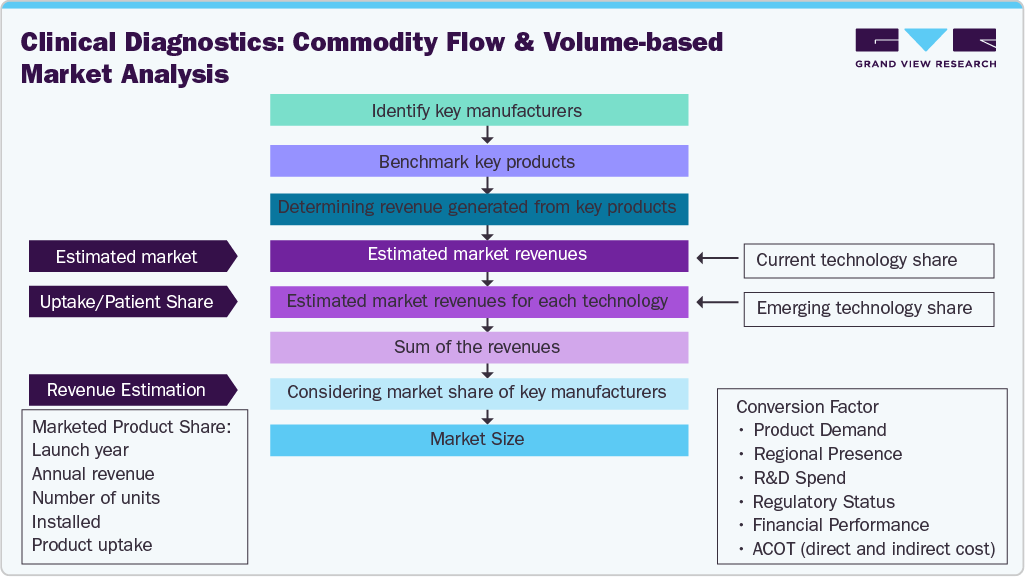
The market size is estimated using a bottom-up approach, beginning with the identification of key manufacturers and benchmarking their products to determine product-level revenue contributions. These revenues are aggregated by technology and adjusted using market share and uptake/patient-share assessments to derive the overall market size. The methodology further incorporates existing market revenues and manufacturer market shares to validate and refine the final market estimate.
 To learn more about this report, Download Free Sample Report
Delivered Customizations
This report has been delivered with the following In-depth customizations
CLIENT REQUEST
CUSTOMIZATION DELIVERED
VALUE ADDS
U.S. Clinical Laboratory Services Market Competitive Landscape & Technology Assessment
Assessed the U.S. clinical laboratory services market across clinical chemistry, genetic testing, hematology, immunology, microbiology, cytology, toxicology, and other specialized testing services. Evaluated major laboratory service providers based on test portfolios, geographic reach, laboratory infrastructure, automation, digitalization, advanced diagnostics, strategic initiatives, and competitive positioning.
Enabled the client to benchmark leading clinical laboratory service providers, assess service diversification, identify high-growth testing areas, understand technology and innovation trends, and evaluate competitive opportunities across the U.S. diagnostic laboratory ecosystem.
U.S. Clinical Laboratory Services Market Test-Type & Performance Analysis
Conducted comparative analysis of major test types, including clinical chemistry, genetic testing, hematology, immunology, microbiology, cytology, toxicology & drug testing, and other laboratory services. Assessed testing volumes, clinical applications, technological adoption, automation, specialized testing capabilities, and growth potential across major segments.
Helped the client identify high-value and high-growth testing segments, benchmark service capabilities, understand technology-driven differentiation, and prioritize opportunities across routine, specialized, and precision diagnostic testing.
U.S. Clinical Laboratory Services Market End-Use & Service Provider Assessment
Assessed laboratory service delivery across hospitals, emergency departments, urgent care centers, physician offices, diagnostic laboratories, and other healthcare settings. Evaluated testing workflows, decentralization, outsourcing, reference laboratory utilization, laboratory consolidation, digital connectivity, and adoption of advanced diagnostic services across end users.
Supported market-entry and expansion planning by identifying high-volume end users, evaluating decentralization and outsourcing opportunities, understanding laboratory procurement and service-delivery models, and assessing growth opportunities across U.S. healthcare settings.
Frequently Asked Questions About This Report
The U.S. clinical laboratory services market size was estimated at USD 9.42 billion in 2024 and is expected to reach USD 9.88 billion in 2025.
The U.S. clinical laboratory services market is expected to grow at a compound annual growth rate of 5.07% from 2025 to 2033 to reach USD 14.68 billion by 2033.
The clinical chemistry segment dominated the U.S. clinical laboratory service market in 2024, accounting for the largest revenue share of 44.82% This leadership is driven by the segment’s foundational role in routine diagnostics, covering a wide range of tests such as blood glucose, lipid panels, liver enzymes, and kidney function.
Some key players operating in the U.S. clinical laboratory services market include Laboratory Corporation of America Holdings (LabCorp); QIAGEN NV; Eurofins Scientific SE; Quest Diagnostics Incorporated; OPKO Health, Inc; Siemens Medical Solutions USA, Inc.; NeoGenomics Laboratories; Fresenius Medical Care; ARUP Laboratories; Sonic Healthcare; Charles River Laboratories International, Inc; SYNLAB International GmbH; Mayo Clinic Laboratories; Unilabs
Key factors that are driving the market growth include the increasing burden of chronic diseases, which has intensified the demand for routine and specialized diagnostic testing across care settings. Rising emphasis on early diagnosis and preventive screening has further accelerated the use of clinical laboratory services, particularly for conditions such as diabetes, cardiovascular disorders, and cancer.
About the Author(s)
Clinical Diagnostics Research Team
Healthcare · Clinical DiagnosticsThis report was authored by the clinical diagnostics research team at Grand View Research - comprising two research analysts, one senior research analyst, and one industry expert - with specialized expertise in the clinical diagnostics segment of the healthcare industry. All findings are based on proprietary healthcare databases, executive interviews, and regulatory analysis, subject to internal peer review prior to publication.
Last Updated:
Speak to Analyst

Customize this report to your needs - add regions, segments, or data points, with 20% free customization.
Or view our licence options:


ISO 9001:2015 & 27001:2022 Certified
We are GDPR and CCPA compliant! Your transaction & personal information is safe and secure. For more details, please read our privacy policy.


