
- Home
- »
- Clinical Diagnostics
- »
-
U.S. Microarray Market Size & Share, Industry Report, 2033GVR Report cover
![U.S. Microarray Market Size, Share & Trends Report]()
U.S. Microarray Market (2025 - 2033) Size, Share & Trends Analysis Report By Product & Services (Instruments, Consumables, Software & Services), By Type (DNA Microarray, Protein Microarray), By Application, By End Use, And Segment Forecasts
U.S. Microarray Market Size & Trends
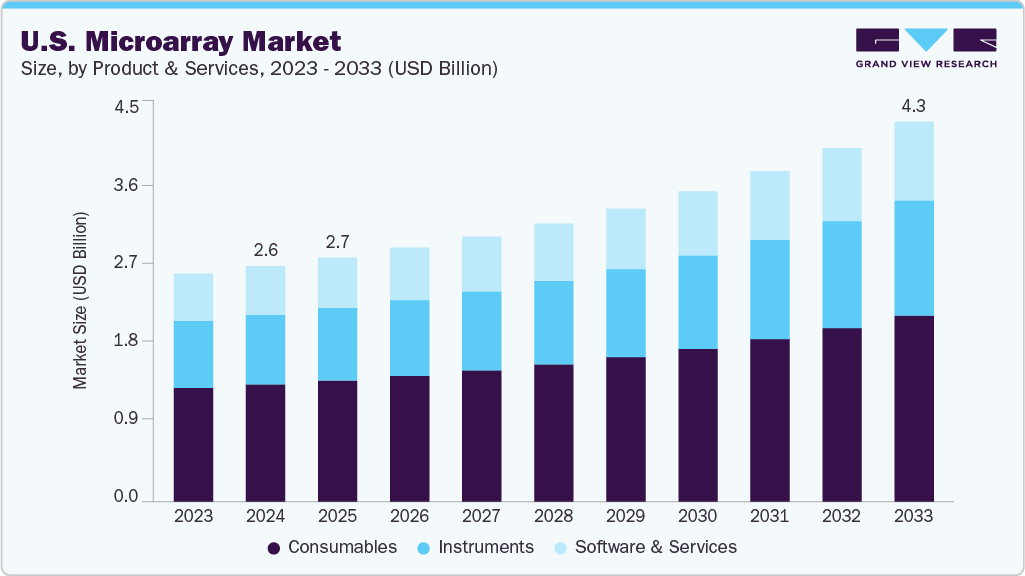
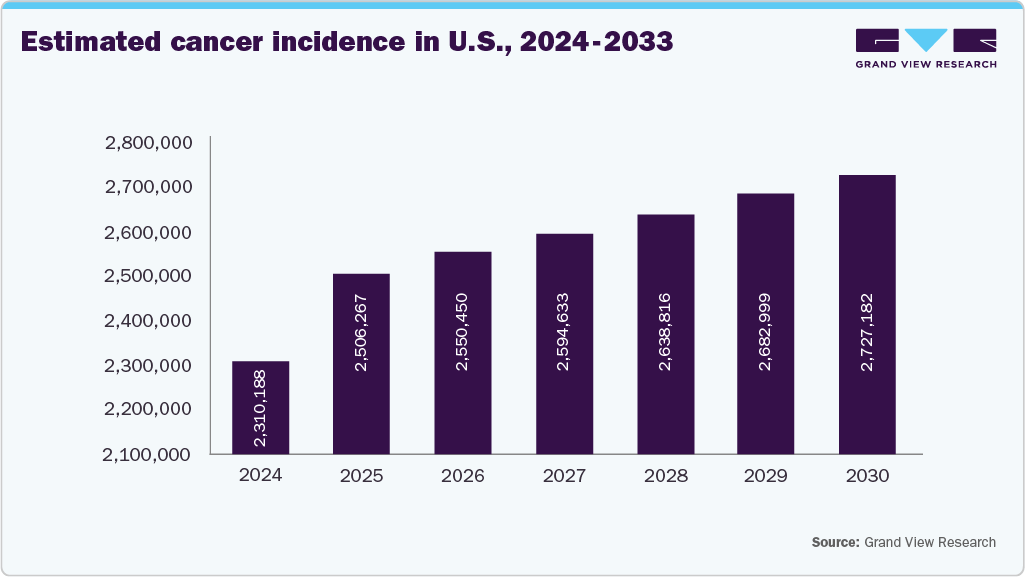
The U.S. microarray market size was estimated at USD 2.65 billion in 2024 and is projected to grow at a CAGR of 5.7% from 2025 to 2033. The market is driven by the surging demand for personalized medicine, especially in precision oncology and pharmacogenomics. With rising investments from the NIH, universities, and biotech firms, microarrays are invaluable for identifying biomarkers, profiling gene expression, and tailoring therapeutic regimens-ultimately improving patient outcomes. In addition, the escalating prevalence of cancer and chronic diseases further enhances reliance on high-throughput genomic tools like microarrays for early detection and drug discovery.
Recent advancements in cancer research have significantly leveraged microarray instruments and reagents to enhance diagnostic accuracy and molecular profiling. Microarray platforms are increasingly used for gene expression profiling, allowing researchers to identify cancer-specific biomarkers, predict prognosis, and guide targeted therapies. In the U.S., companies such as Thermo Fisher Scientific, Agilent Technologies, and Illumina have introduced updated reagent kits optimized for high-throughput assays and low input RNA/DNA samples-critical for analyzing tumor biopsies. For instance, Thermo Fisher's GeneChip reagents support whole-transcriptome analysis in oncology research, while Agilent’s SureTag DNA labeling kits enable robust hybridization for comparative genomic hybridization (CGH) in cancer cytogenetics. Illumina’s Infinium assay kits, widely compatible with the iScan system, allow for simultaneous interrogation of methylation and SNP profiles, aiding in epigenetic cancer studies.
Growing investment and innovation in U.S.-based microarray technologies are poised to accelerate market growth, particularly in next-generation applications such as intradermal patch delivery. In March 2023, Vaxess Technologies, a Massachusetts-based biotech firm, secured an additional USD 9 million in funding to advance its MIMIX sustained-release intradermal microarray patch platform. This novel platform aims to revolutionize vaccine and therapeutic delivery by enabling self-administered, extended-release dosing through a skin patch. The funding, led by prominent U.S. investors such as RA Capital Management and The Engine (MIT’s venture fund), will support ongoing clinical trials for influenza and COVID-19 vaccines and broaden the platform’s applications into oncology, autoimmune diseases, and metabolic disorders.
Beyond healthcare, microarray technologies are gaining momentum in U.S. agriculture and environmental science. In precision farming, microarrays are used to decode plant genomes and identify traits that enhance resistance to pests and climate stressors, which are addressing U.S. food security challenges. Additionally, environmental agencies and academic institutions are increasingly using microarray-based toxicogenomic assays to evaluate the impact of pollutants on gene expression in local ecosystems. This multifaceted applicability-from clinical research to sustainability continues to expand the role of microarray instruments and reagents in driving innovation across sectors in the United States.
Some of the Leading Microarray Instruments Available in the U.S.:
Instrument
Manufacturer
Key Features
GeneChip System 3000Dx v.2
Thermo Fisher Scientific
High-density DNA microarrays for gene expression and genotyping studies.
SureScan Microarray Scanner
Agilent Technologies
High-resolution scanning with rapid data acquisition for various applications.
iScan System
Illumina
High-throughput BeadArray scanner; supports >750,000 SNPs/sample; automated workflows
ScanArray Express Microarray Scanner
PerkinElmer
Flexible scanning system suitable for both DNA and protein microarrays.
InnoScan Series (710, 910, 1100)
Innopsys Inc.
Compact, dual/triple-channel systems; high resolution (0.5–3 µm); energy efficient
Market Concentration & Characteristics
The U.S. microarray is experiencing significant innovation, driven by continuous advancements in genomics, proteomics, and personalized medicine. Companies are increasingly investing in the development of high-throughput platforms, multiplex assays, and AI-integrated data analysis tools that enhance the precision and speed of diagnostics and research. In August 2023, Thermo Fisher Scientific introduced the Applied Biosystems CytoScan HD Accel array, a chromosomal microarray fully available in the U.S., designed to accelerate cytogenetic workflows with a two-day turnaround time significantly. Aimed at prenatal, postnatal, and oncology research, this array provides enhanced genome-wide coverage targeting over 5,000 critical regions.
The U.S. market has witnessed a moderate but strategic level of M&A activity, aimed at expanding diagnostic portfolios and technological capabilities. A key development includes such as Agilent’s 2021 supply agreement with Oxford BioDynamics for a high-resolution 3D genome profiling array, and SCHOTT's acquisition of Applied Microarrays to enhance U.S. manufacturing of microarray consumables. These moves bolster portfolios in diagnostics and point-of-care utilities.
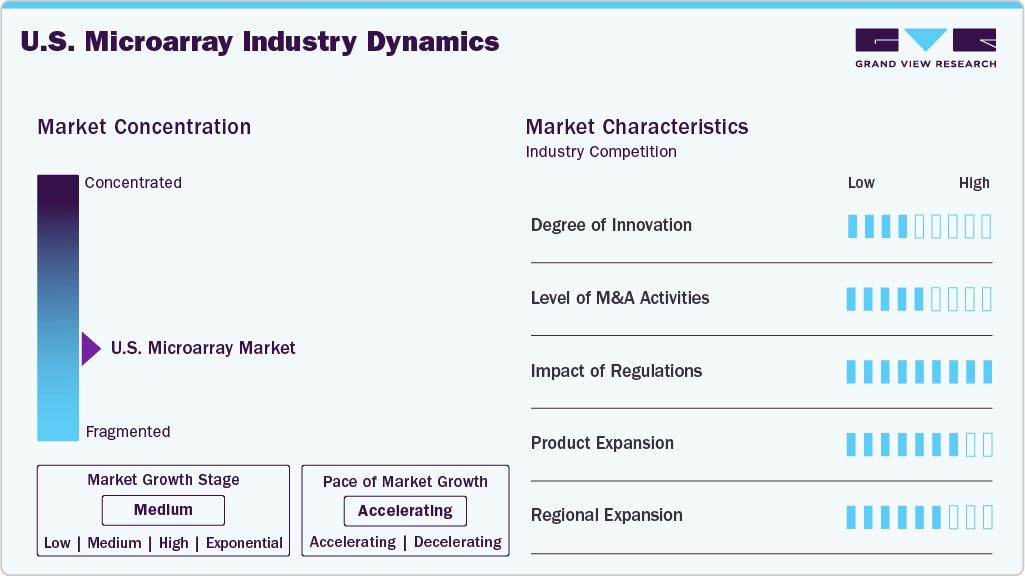
Regulatory frameworks in the U.S., particularly those from the FDA and CLIA (Clinical Laboratory Improvement Amendments), strongly influence product development, validation, and commercialization. Devices and assays intended for clinical diagnostics must undergo rigorous validation for sensitivity, specificity, and reproducibility. For instance, Thermo Fisher’s CytoScan platform is CLIA-certified, enhancing its adoption in clinical cytogenetic workflows. Additionally, the FDA’s focus on companion diagnostics and personalized medicine further incentivizes microarray manufacturers to align with regulatory pathways that facilitate faster approval and broader adoption.
Product expansion is a central growth driver in the U.S. microarray market. Major players such as Thermo Fisher, Agilent Technologies, and Illumina have diversified their portfolios to include integrated hardware-software solutions, high-throughput scanners, customizable array designs, and advanced data analysis platforms. These companies are also investing in expanded reagent offerings tailored for oncology, infectious disease, and prenatal screening. The recent launch of microarrays with reduced DNA input requirements, improved resolution, and multi-application versatility underscores the market’s focus on accessibility, cost-efficiency, and precision.
Regional expansion of microarray in the U.S. is robust, with strong growth across the West Coast (California, Washington), Midwest (Illinois, Minnesota), and Southeast (North Carolina, Georgia)-regions known for their concentration of biotech clusters, academic research centers, and advanced healthcare infrastructure. California, home to multiple research universities and biotech firms, remains a hub for microarray innovation and commercialization. Similarly, states like North Carolina benefit from government-supported biotech parks and public-private partnerships that encourage the adoption of cutting-edge molecular diagnostics technologies.
Product & Services Insights
Consumables held the largest share of 49.73% of the microarray market in 2024. This growth is primarily attributed to the routine need for reagents, slides, chips, and labeling kits in both clinical and research microarray workflows. The high frequency of use and short shelf life of these consumables ensure consistent demand across diagnostics and academic sectors. Additionally, companies such as Agilent Technologies and Thermo Fisher Scientific have expanded their consumable offerings to support high-density and customized arrays, particularly for oncology, prenatal, and infectious disease diagnostics. In February 2024, Thermo Fisher introduced a new range of cytogenetics-targeted consumables designed for compatibility with its CytoScan HD Accel platform, reducing experimental variability and enhancing turnaround times.
Instruments expected to grow at the fastest rate over the forecast period, driven by advancements in automation, resolution, throughput, and integrated bioinformatics. For instance, Thermo Fisher's 2023 launch of the CytoScan HD Accel array system, with a 2-day turnaround, significantly improved lab efficiency and data accuracy, which is attracting more clinical diagnostic labs to invest in upgraded systems. Furthermore, ongoing development in AI-driven microarray imaging and automated reporting software is making instrument adoption more attractive for high-throughput and clinical environments.
Type Insights
DNA microarray segment accounted for the largest revenue share of the microarray market in 2024. Reflecting their widespread adoption in gene expression profiling, SNP genotyping, and comparative genomic hybridization (CGH). The affordability and maturity of this technology make it suitable for both large-scale genomic research and clinical applications. For example, Illumina’s iScan System continues to be widely used in population-scale genotyping studies, with enhanced BeadChip arrays supporting up to 750,000 SNPs per sample.
Protein microarray is expected to grow at the fastest rate over the forecast period, fueled by their expanding application in biomarker discovery, drug screening, and immunoassay development. The increasing demand for proteomic profiling in cancer, autoimmune diseases, and vaccine development is accelerating their use. In a notable 2023 initiative, PerkinElmer partnered with research institutes to optimize protein microarrays for COVID-19 immune response profiling, which highlighted their diagnostic and therapeutic value beyond genomic studies.
Application Insights
Research applications segment dominated the microarray market in 2024, supported by strong investments in genomic research, rising academic collaborations, and federal funding initiatives. Government support from bodies like the NIH and NSF for genomic research projects continues to stimulate academic and translational research using microarray technologies. Universities and biotech startups use these tools to discover gene-disease relationships, environmental toxicology, and agricultural genomics.
Disease diagnostics segment is anticipated to grow at the fastest rate over the forecast period, driven by the rising adoption of microarrays in prenatal screening, oncology diagnostics, infectious disease testing, and pharmacogenomics. Recent innovations such as Thermo Fisher's CLIA-certified platforms and Agilent’s targeted methylation and miRNA arrays are enabling precise, multi-marker diagnostics. The 2023 rollout of Illumina's Global Screening Array with disease-specific modules reflects the growing market preference for customized diagnostic tools.
End Use Insights
Research and academic institutes accounted for the largest revenue share of the microarray market in 2024 segment held the largest market share in 2024, largely due to their extensive use of microarray platforms for genomics, proteomics, and translational research. Institutions such as the Broad Institute, Mayo Clinic, and various NIH-funded centers regularly use microarrays for high-throughput screening, supported by government funding and collaborative grants. Their role in generating open-access genomic data also supports secondary clinical research and tool development.
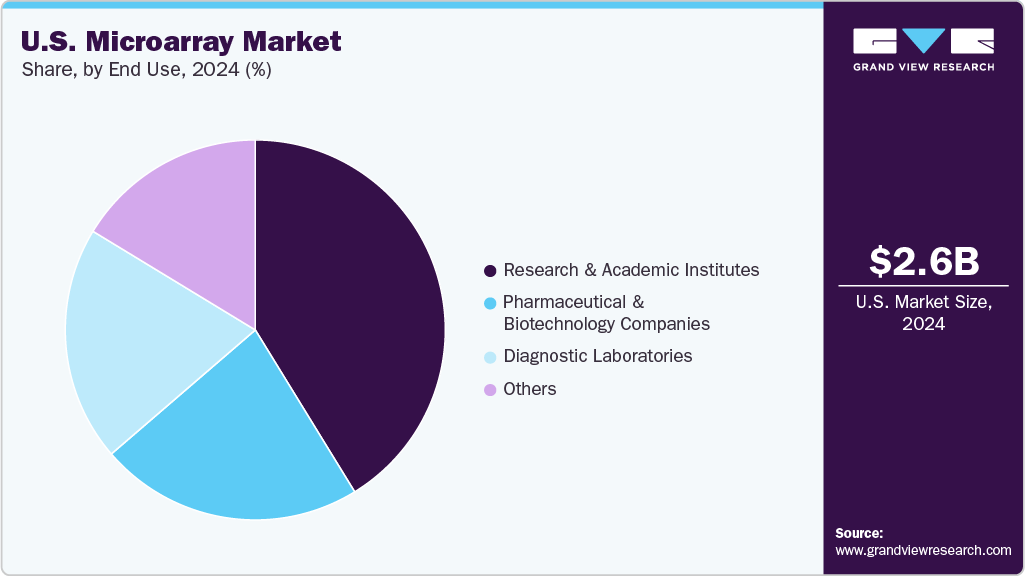
Diagnostic laboratories segment is expected to grow at the fastest CAGR during the forecast period. This growth is fueled by the increasing adoption of microarrays in clinical cytogenetics, personalized medicine, and routine screening tests. Companies like Agilent and Thermo Fisher are strengthening their market position by offering end-to-end solutions from sample preparation to automated interpretation-specially tailored for labs seeking to integrate high-complexity genomic testing services. Additionally, the inclusion of AI-based software tools such as CytoScan AIR is helping laboratories reduce manual interpretation times and improve diagnostic throughput.
Key U.S. Microarray Companies:
- Thermo Fisher Scientific Inc (Applied Biosystems)
- Agilent Technologies, Inc
- Illumina, Inc
- PerkinElmer Inc.
- Merck KGaA
- Schott (Applied Microarrays)
- Danaher Corporation
- Arrayit Corporation (ARYC)
- Bio-Rad Laboratories, Inc
- Microarrays Inc
Three ways to get this report
Buy it, customize it, or ask a question.Get the Full Report
What the study covers
- FormatsPDF · Excel · Dashboard
- Timeline2025–2033 annual, 2024 base
- Coverage20+ countries, 5 regions
- Companies10+ key players profiled
Customize the Report
20% free customization
- IncludeCountries, segments, points
- TailorTo your product definition
- ExtendDeeper competitor detail
- OrA fully bespoke study
- Turnaround5–10 working days
Ask Prism AI
A cited answer in seconds
- Corpus30K studies, 1.2M points
- ScopeAll markets, not just this
- CitationTraced to report & table
- HonestySays "not covered" if so
- SpeedSeconds, not days
Recent Developments
-
In February 2025, PathogenDx launched its rebranded D3 Array assays, including Combined, Bacterial, and Fungal versions, to replace its previous DetectX line. The D3 Array technology enables multiplex detection of up to 100 targets in a single test, offering rapid, cost-effective, and high-throughput solutions for agriculture, food safety, environmental, and clinical testing. The assays provide both quantitative and qualitative results with high sensitivity and specificity, enhancing laboratory efficiency and return on investment.
-
In April 2025, AliveDx announced that it has submitted a 510(k) premarket notification to the U.S. Food and Drug Administration (FDA) for its MosaiQ Autoimmune Plex (AIPlex) Connective Tissue Diseases (CTDplus) Multiplex Microarray. The AIPlex CTDplus microarray is designed to aid in the diagnosis of autoimmune connective tissue diseases through multiplex detection of multiple biomarkers from a single patient sample.
-
In August 2023, Thermo Fisher Scientific introduced the Applied Biosystems CytoScan HD Accel array, a chromosomal microarray designed to enhance cytogenetic research productivity. The array offers a two-day turnaround time and improved coverage across over 5,000 critical genomic regions. It requires up to 50% less DNA input compared to other arrays and supports a wide range of sample types, including buccal swabs, saliva, and blood. This innovation addresses the growing demand for efficient laboratory services amid a shortage of trained professionals.
U.S. Microarray Market Report Scope
Report Attribute
Details
Market size value in 2025
USD 2.75 billion
Revenue forecast in 2033
USD 4.27 billion
Growth rate
CAGR of 5.7% from 2025 to 2033
Actual data
2021 - 2024
Forecast period
2025 - 2033
Quantitative units
Revenue in USD million/billion and CAGR from 2025 to 2033
Report coverage
Revenue forecast, company ranking, competitive landscape, growth factors, and trends
Segments covered
Product & services, type, application, end use
Key companies profiled
Thermo Fisher Scientific Inc (Applied Biosystems); Agilent Technologies, Inc.; Illumina, Inc.; PerkinElmer; Merck KGaA; Schott (Applied Microarrays); Danaher Corporation; Arrayit Corporation; Bio-Rad Laboratories, Inc.; Microarrays Inc.
Customization scope
Free report customization (equivalent up to 8 analysts working days) with purchase. Addition or alteration to country, regional & segment scope.
Pricing and purchase options
Avail customized purchase options to meet your exact research needs. Explore purchase options
U.S. Microarray Market Report Segmentation
This report forecasts revenue growth at country levels and provides an analysis of the latest industry trends in each of the sub-segments from 2021 to 2033. For this study, Grand View Research has segmented the U.S. microarray market report based on products and services, type, application, and end use.
-
Product and Services Outlook (Revenue, USD Million, 2021 - 2033)
-
Consumables
-
Software and Services
-
Instruments
-
-
Type Outlook (Revenue, USD Million, 2021 - 2033)
-
DNA Microarrays
-
Protein Microarrays
-
Others
-
-
Application Outlook (Revenue, USD Million, 2021 - 2033)
-
Research Applications
-
Drug Discovery
-
Disease Diagnostics
-
Others
-
-
End Use Outlook (Revenue, USD Million, 2021 - 2033)
-
Research & Academic Institutes
-
Pharmaceutical & Biotechnology Companies
-
Diagnostic Laboratories
-
Others
-
Frequently Asked Questions About This Report
The U.S. microarray market size was estimated at USD 2.65 billion in 2025 and is expected to reach USD 2.74 billion in 2025.
The U.S. microarray market is expected to grow at a compound annual growth rate of 5.69% from 2025 to 2033 to reach USD 4.27 billion by 2033.
Consumables held the largest share of 49.73% of the microarray market in 2024. This growth is primarily attributed to the routine need for reagents, slides, chips, and labeling kits in both clinical and research microarray workflows.
Some key players operating in the U.S. microarray market include Thermo Fisher Scientific Inc (Applied Biosystems), Agilent Technologies, Inc., Illumina, Inc., PerkinElmer, Merck KGaA, Schott (Applied Microarrays), Danaher Corporation, Arrayit Corporation, Bio-Rad Laboratories, Inc., and Microarrays Inc
Key factors that are driving the market growth include surging demand for personalized medicine, especially in precision oncology and pharmacogenomics. With rising investments from the NIH, universities, and biotech firms, microarrays are invaluable for identifying biomarkers, profiling gene expression, and tailoring therapeutic regimens—ultimately improving patient outcomes.
About the Author(s)
Clinical Diagnostics Research Team
Healthcare · Clinical DiagnosticsThis report was authored by the clinical diagnostics research team at Grand View Research - comprising two research analysts, one senior research analyst, and one industry expert - with specialized expertise in the clinical diagnostics segment of the healthcare industry. All findings are based on proprietary healthcare databases, executive interviews, and regulatory analysis, subject to internal peer review prior to publication.
Last Updated:
Speak to Analyst


Customize this report to your needs - add regions, segments, or data points, with 20% free customization.
Or view our licence options:


ISO 9001:2015 & 27001:2022 Certified
We are GDPR and CCPA compliant! Your transaction & personal information is safe and secure. For more details, please read our privacy policy.


