
- Home
- »
- Nutraceuticals & Functional Foods
- »
-
Asia Pacific Protein Ingredients Market, Industry Report 2033GVR Report cover
![Asia Pacific Protein Ingredients Market Size, Share & Trends Report]()
Asia Pacific Protein Ingredients Market (2025 - 2033) Size, Share & Trends Analysis Report By Product (Plant Proteins, Insect Protein, Animal/Dairy Protein), By Application (Food & Beverages, Animal Feed, Infant Formulations, Clinical Nutrients), By Country, And Segment Forecasts
- Report ID: GVR-4-68040-318-3
- Number of Report Pages: 110
- Format: PDF
- Historical Range: 2021 - 2024
- Forecast Period: 2025 - 2033
- Industry: Consumer Goods
- Report Summary
- Table of Contents
- Segmentation
- Methodology
- Download FREE Sample
-
 Download Sample Report
Asia Pacific Protein Ingredients Market Summary
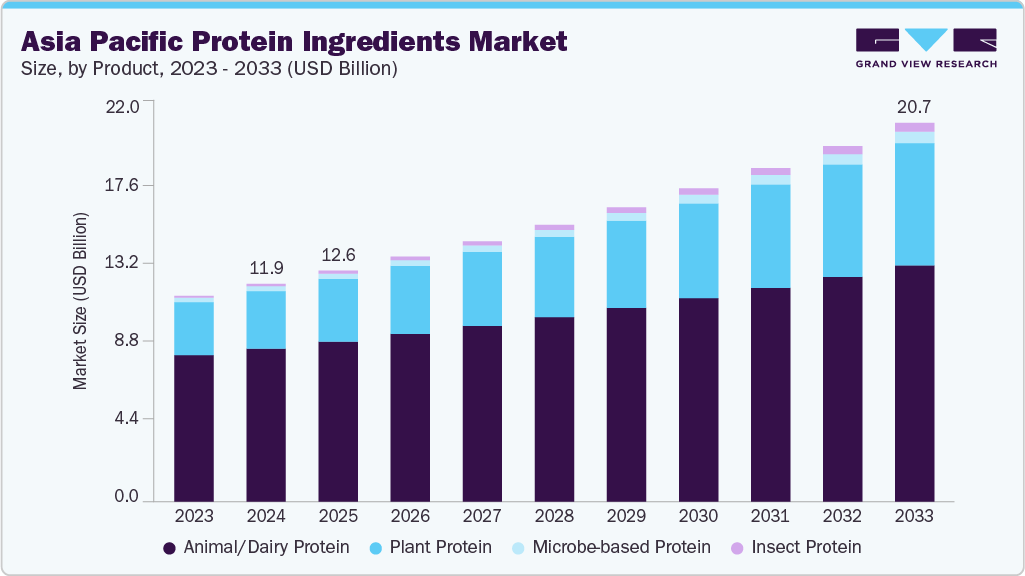
The Asia Pacific protein ingredients market size was estimated at USD 11,916.8 million in 2024 and is anticipated to reach USD 20,721.1 million in 2033, growing at a CAGR of 6.4% from 2025 to 2033. The rapidly expanding population in the region, coupled with an increasing focus on following healthy lifestyle patterns among citizens, is a major factor aiding the demand for protein ingredients in Asia Pacific.
Key Market Trends & Insights
- By product, the animal/ dairy protein segment in the Asia Pacific protein ingredients market accounted for a share of 70.2% in 2024.
- By application, the food & beverages segment accounted for the largest market share of 58.8% in 2024.
Market Size & Forecast
- 2024 Market Size: USD 11,916.8 Million
- 2033 Projected Market Size: USD 20,721.1 Million
- CAGR (2025-2033): 6.4%
Moreover, the region is a leading producer of cereals and grains, root vegetables, and legumes, such as peas and soy, all of which form a vital part of the market. Another factor driving the regional market expansion is the increasing incorporation of natural products in the manufacturing of food & beverage items. Manufacturers consistently seek products that enrich the nutritional value of baked goods, fruit juices, cereals, and dietary supplements while maintaining or elevating the taste and texture.The Asia Pacific protein ingredients industry accounted for a revenue share of 22.6% of the global market in 2024. Plant-based and animal-based proteins both showcase several health benefits that have been proven through scientific studies. This major factor has driven demand for protein ingredients in food & beverage items, infant formulas, and animal feed formulations. For instance, soy comprises 38% protein, 18% unsaturated oil, 30% carbohydrate, and 14% moisture. Moreover, it has all nine essential amino acids that are needed for optimal well-being and health.
Research has revealed that consuming 25 grams of soy protein daily helps prevent various ailments, including CVDs, diabetes, and obesity. Also, product innovations and technological advancements have aided in steady market progress in the region. Technological advancements have enabled the use of dairy & plant proteins in beverage powders, concentrated frozen desserts, sour cream, and sour cream dips. Moreover, soy protein is extensively used in emulsion cheese types to substitute around 50% of sodium caseinate. Major companies, including Archer Daniels Midland and Cargill, continually invest in R&D to introduce new products in the plant & dairy protein market.
In Asia Pacific, as urbanization gains prominence and lifestyles become westernized, there is a noticeable shift towards diets that include more protein. This is especially true in countries such as China and India, where conventional diets may have been more plant-based, but now include other emerging protein sources. In addition, there is a growing recognition among governments regarding the need to enhance food security in regional economies. Protein ingredients, such as soybeans and pulses, are notable sources of affordable and sustainable nutrition, particularly as the region faces the mounting challenges of climate change and resource constraints.
Insect protein is another promising area that has found its footing in leading countries but still possesses significant untapped potential. Government support and a strong policy structure are expected to shape regional growth. Although insects are considered a delicacy in various Southeast Asian countries, such as China and Thailand, consumers in other economies still possess a lack of awareness regarding their nutritional value. This is expected to provide a significant avenue for manufacturers to boost their presence in this space in the coming years.
Product Insights
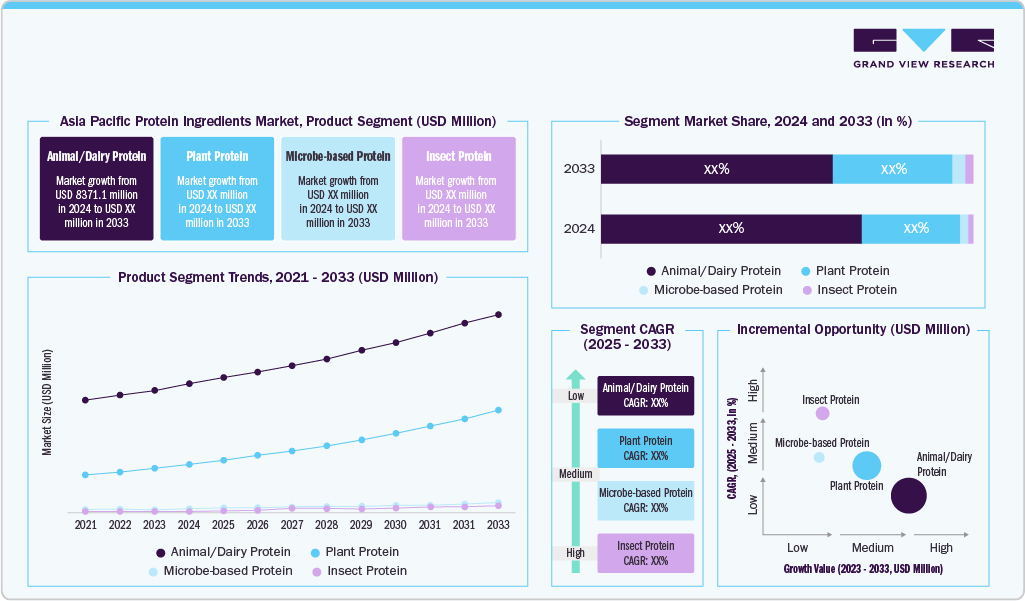
The animal/dairy protein segment led the Asia Pacific protein ingredients market with the largest revenue share of 70.2% in 2024. The accelerated demand for functional food and dietary supplement products has led to the rising usage of ingredients, such as collagen peptides, gelatin, whey protein isolate, and egg protein. For instance, egg protein is an excellent and economical source of high-quality protein. These ingredients are being increasingly utilized in fortified food & beverage products, including ice cream, meat, and bakery items, owing to their ability to address nutritional deficiencies.
A substantial number of manufacturers of egg protein ingredients are located in Japan since the country is a major manufacturing hub for egg-related products. On the other hand, milk protein concentrates and isolates are utilized in the production of bakery products, liquid nutritional supplements, and fortified food items. The rapid growth of the food & beverage sector, primarily in the Asia Pacific economies of India, China, Malaysia, and Indonesia, is expected to boost the demand for these ingredients in the coming years.
The insect protein segment is anticipated to grow at the fastest CAGR of 15.2% from 2025 to 2033. Insects are highly nutritious and rich in protein, vitamins, healthy fats, minerals, and fiber. They function as a notable source of essential amino acids, making them a valuable dietary supplement, particularly in areas where malnutrition and undernutrition are major concerns.
Moreover, insect proteins offer a sustainable and environment-friendly alternative to conventional animal proteins, with a lower environmental footprint concerning water consumption, land use, and greenhouse gas emissions. Products, such as protein bars, increasingly incorporate insect proteins in the powdered form to improve the product's flavor profile and nutritional value. The regional food industry is undergoing technological changes and integrating alternative ingredients in the manufacturing of food & beverage products, which is expected to positively impact this segment’s expansion.
Application Insights
The food & beverage segment led the Asia Pacific protein ingredients industry with the largest revenue share of 58.8% in 2024. The segment is likely to witness the fastest CAGR of 6.8% from 2025 to 2033, due to increasing urbanization, rising disposable income of consumers, expansion of hypermarket & supermarket stores, supportive economic factors, and the availability of easy finance. Factors, such as the growing food & beverage industry in the region, trending ‘on-the-go’ lifestyle, and rising number of restaurants, cafes, and bakeries in fast-developing economies, such as India, Malaysia, and China, are likely to augment demand for these products in the coming years. Furthermore, the younger demographic in the region is increasingly focusing on weight management and fitness routines, creating growth opportunities for this industry. The rising popularity of dietary supplements is further anticipated to solidify demand for protein ingredients.
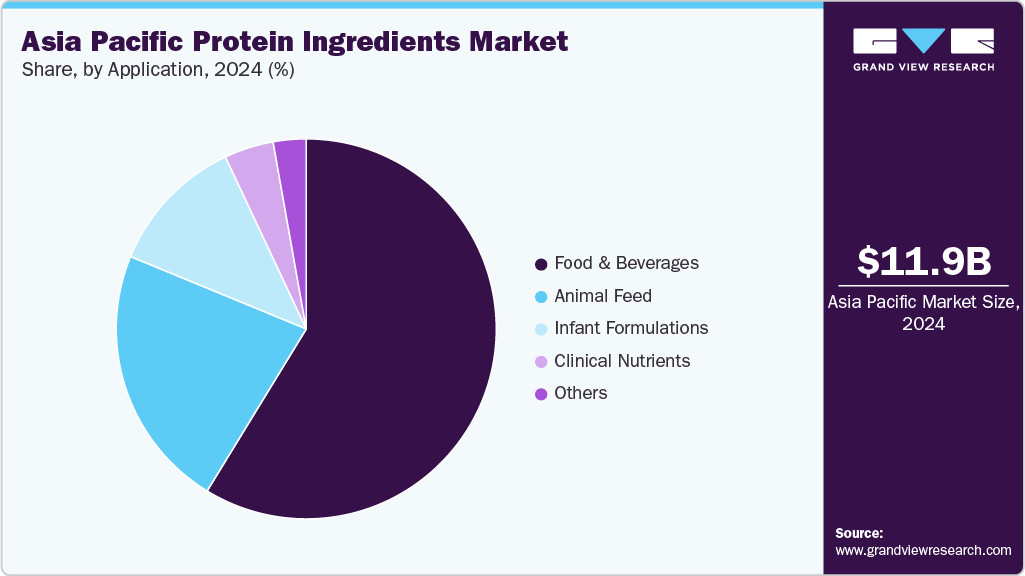
The animal feed segment is projected to maintain its position as the second-largest contributor to regional revenue, growing at a CAGR of 6.2% from 2025 to 2033. The increasing consumption of meat in economies of the Asia Pacific region is a leading factor driving the usage of plant & animal protein ingredients in animal feed applications. In addition, the growing demand for protein-rich meat and rising awareness concerning the quality of meat products in promising regional economies, such as China, India, and Japan, is anticipated to boost the market for protein ingredients in the coming years. There has been significant ongoing research regarding the development of feed solutions that use sources with high protein content and have an optimal presence of essential amino acids, which is another factor anticipated to drive industry expansion in the Asia Pacific.
Country Insights
The China protein ingredients market accounted for the leading revenue share of 35.0% in 2024. Rising demand for protein-rich products from Chinese consumers has led to an increase in the development of protein shakes, bars, and powders. Moreover, investments in launching new protein products in China by major multinational players are anticipated to expand the penetration of protein-based products.
The rising demand for sports nutrition products in the economy presents another avenue for market growth, as the government and other private bodies are actively encouraging people to adopt an active lifestyle and reduce the incidence of disorders, such as obesity and diabetes. Consequently, a growing younger demographic in China is participating in sports and fitness programs, while older people are embracing physical activities. This is expected to bolster the demand for ingredients, such as clear whey protein isolates, in ready-to-drink (RTD) sports and protein beverages.
The Japan protein ingredient market is driven by its aging population, which demands functional foods and supplements rich in protein. The country also prioritizes plant-based diets and clean-label products. Technological innovation in food processing and a growing sports nutrition segment further fuel the adoption of high-quality protein ingredients across consumer categories.
In addition, the government's focus on health promotion and disease prevention encourages protein fortification in everyday foods. Moreover, local companies collaborate with global players to introduce novel protein formats, including insect and algae-based proteins. Convenience foods infused with protein are gaining popularity among busy urban consumers seeking balanced nutrition.
The India protein ingredient market is anticipated to advance at the fastest CAGR of 7.2% from 2025 to 2033. Rising health awareness among consumers in the economy has led to changes in food consumption patterns in the past few years. The introduction of the National Food Security Act by the Indian government has played a key role in changing the dietary patterns of citizens. A significant rise in the consumption of protein-rich foods has been observed in recent years, and this trend is anticipated to continue during the forecast years. In addition, the augmented demand for nutritional food & beverage items among customers in India is projected to positively impact the protein ingredients market.
Consumers from the middle class are willing to pay a premium for high-quality and healthier food products, including those made with premium protein ingredients, such as whey protein, pea protein, and collagen peptides. Wheat proteins are produced significantly, as India is a major producer and exporter of wheat in the region. An abundance of raw materials and easy isolation of several protein contents, such as albumins & globulins, gluten, and gliadins, fuel the segment growth.
The Australia and New Zealand protein ingredients market benefits from strong dairy production and high protein awareness among health-conscious consumers. Demand for whey, casein, and plant-based protein in functional foods, beverages, and sports supplements is rising in countries. Clean-label trends, export-driven growth, and innovations in sustainable protein sourcing support continued market expansion.
Moreover, export opportunities, especially to Asia, drive investment in high-purity and specialty protein ingredients from Australia and New Zealand. Due to sustainability concerns, the region also shows increasing interest in alternative proteins, such as pea and hemp. Government support for food innovation and clean agriculture practices accelerates the growth of this sector.
Key Asia Pacific Protein Ingredients Company Insights
Some of the major players that are involved in the development of protein ingredients in the Asia Pacific include Cargill, Kerry, Ingredion, DSM, and Wilmar, among several other global and regional manufacturers. These companies are mainly focusing on capacity expansion and R&D investments to gain a competitive advantage.
-
Ingredion Incorporated is engaged in the manufacturing and marketing of sweeteners, starches, nutrition ingredients, and biomaterials for various end-user industries, including food & beverages, paper, and pharmaceuticals. The company’s specialty ingredients portfolio, which includes plant-based proteins, sugar reduction, specialty sweeteners, and starch-based texturizers, accounts for a significant proportion of the overall sales volume. The company has an extensive presence in major economies of the Asia Pacific, such as China, Japan, India, Australia, New Zealand, Thailand, and Malaysia.
Key Asia Pacific Protein Ingredients Companies:
- Cargill, Incorporated.
- Glanbia PLC
- Kerry Group plc
- Tate & Lyle
- Ingredion
- dsm-firmenich
- Roquette Frères
- Proeon
- Wilmar International Ltd
- ETChem
- AP Protein Pty Ltd
- Entobel
- Shandong Jianyuan group
Recent Developments
-
In May 2024, Proeon, an innovator in the food ingredients space located in India, introduced the PROEON PEANUT80. This premium-quality protein isolate has been sourced from the sidestream of the peanut oil industry. The company claims that the product offers a significant protein purity of 80%, while also improving upon the taste and texture of the product. The product has been indicated for use in a variety of applications, including protein powders and high-protein cereals, as well as granola bars, peanut butter, and peanut bars.
-
In November 2023, Entobel announced the opening of the largest-ever black soldier fly (“BSF”) production plant in Asia, located in the city of Vũng Tàu in Vietnam. The facility boasts vertical rearing at 50 levels, integrating automation through robotics, advanced sensors, and data analytics tools to enhance productivity. This is the company’s second industrial-scale production facility in the country and is estimated to have a yearly production capacity worth 10000 metric tons of insect protein.
-
In June 2023, Tate & Lyle announced the opening of a Customer Innovation and Collaboration Centre in the Indonesian capital of Jakarta. The company’s objective through this development is to support a healthier lifestyle in the country by leveraging innovations in food science and ingredient solutions. Tate & Lyle also aims to expand its geographical presence in this region through the establishment of this cutting-edge facility.
Asia Pacific Protein Ingredients Market Report Scope
Report Attribute
Details
Market size value in 2025
USD 12,631.0 million
Revenue forecast in 2033
USD 20,721.1 million
Growth rate
CAGR of 6.4% from 2025 to 2033
Actual data
2021 - 2024
Forecast period
2025 - 2033
Quantitative units
Revenue in USD million/billion, volume in kilotons and CAGR from 2025 to 2033
Report coverage
Revenue forecast, volume forecast, company ranking, competitive landscape, growth factors, and trends
Segments covered
Product, application, country
Regional Scope
Asia Pacific
Country scope
China; Japan; India; Australia & New Zealand
Key companies profiled
Cargill, Incorporated.; Glanbia PLC; Kerry Group plc; Tate & Lyle; Ingredion; dsm-firmenich; Roquette Frères; Proeon; Wilmar International Ltd; ETChem; AP Protein Pty Ltd; Entobel; Shandong Jianyuan group
Customization scope
Free report customization (equivalent up to 8 analysts’ working days) with purchase. Addition or alteration to country, regional & segment scope.
Pricing and purchase options
Avail customized purchase options to meet your exact research needs. Explore purchase options
Asia Pacific Protein Ingredients Market Report Segmentation
This report forecasts volume & revenue growth at country levels and provides an analysis of the latest trends and opportunities in each of the sub-segments from 2021 to 2033. For this study, Grand View Research has segmented the Asia Pacific protein ingredients market report based on product, application, and country:
-
Product Outlook (Volume, Kilotons; Revenue, USD Million, 2021 - 2033)
-
Plant Protein
-
Cereals
-
Wheat
-
Wheat Protein Concentrates
-
Wheat Protein Isolates
-
Textured Wheat Protein
-
Hydrolyzed Wheat Protein
-
HMEC/HMMA Wheat Protein
-
-
Rice
-
Rice Protein Isolates
-
Rice Protein Concentrates
-
Hydrolyzed Rice Protein
-
Others
-
-
Oats
-
Oat Protein Concentrates
-
Oat Protein Isolates
-
Hydrolyzed Oat Protein
-
Others
-
-
-
Legumes
-
Soy
-
Soy Protein Concentrates
-
Soy Protein Isolates
-
Textured Soy Protein
-
Hydrolyzed Soy Protein
-
HMEC/HMMA Soy Protein
-
-
Pea
-
Soy Protein Concentrates
-
Soy Protein Isolates
-
Textured Soy Protein
-
Hydrolyzed Soy Protein
-
HMEC/HMMA Soy Protein
-
-
Lupine
-
Chickpea
-
Others
-
-
Roots
-
Potato
-
Potato Protein Concentrate
-
Potato Protein Isolate
-
-
Maca
-
Others
-
-
Ancient Grains
-
Hemp
-
Quinoa
-
Sorghum
-
Amaranth
-
Chia
-
Others
-
-
Nuts & Seeds
-
Canola
-
Almond
-
Flaxseeds
-
Others
-
-
-
Animal/Dairy Protein
-
Egg Protein
-
Milk Protein Concentrates/Isolates
-
Whey Protein Concentrates
-
Whey Protein Hydrolysates
-
Whey Protein Isolates
-
Gelatin
-
Casein/Caseinates
-
Collagen Peptides
-
-
Microbe-based Protein
-
Algae
-
Bacteria
-
Yeast
-
Fungi
-
-
Insect Protein
-
Coleoptera
-
Lepidoptera
-
Hymenoptera
-
Orthoptera
-
Hemiptera
-
Diptera
-
Others
-
-
-
Application Outlook (Volume, Kilotons; Revenue, USD Million, 2021 - 2033)
-
Food & Beverages
-
Bakery & Confectionary
-
Beverages (Non-Dairy Alternatives)
-
Breakfast Cereals
-
Dairy Alternatives
-
Beverages
-
Cheese
-
Snacks
-
Others
-
-
Dietary Supplements/Weight Management
-
Meat Alternatives & Extenders
-
Poultry
-
Beef
-
Pork
-
Others
-
-
Snacks (Non-Dairy Alternatives)
-
Sports Nutrition
-
Others
-
-
Infant Formulations
-
Clinical Nutrients
-
Animal Feed
-
Others
-
-
Country Outlook (Volume, Kilotons; Revenue, USD Million, 2021 - 2033)
-
China
-
Japan
-
India
-
Australia and New Zealand
-
Frequently Asked Questions About This Report
b. The Asia Pacific protein ingredients market is worth USD 11,916.8 million by revenue in 2024 and is projected to reach USD 20,721.1 million in 2033.
b. The Asia Pacific protein ingredients market is expected to grow at a compound annual growth rate of 6.4% from 2025 to 2033.
b. The animal/dairy proteins segment accounted for the largest revenue share of over 70% in 2024, owing to the high protein concentrations.
b. Some of the key players in the Protein Ingredients market are Cargill, Incorporated.; Glanbia PLC; Kerry Group plc; Tate & Lyle; Ingredion; dsm-firmenich; Roquette Frères; Proeon; Wilmar International Ltd; ETChem; AP Protein Pty Ltd.
b. Expanding population in the region, coupled with an increasing focus on following healthy lifestyle patterns among citizens, is a major factor aiding the demand for protein ingredients in Asia Pacific.


Share this report with your colleague or friend.
Need a Tailored Report?
Customize this report to your needs — add regions, segments, or data points, with 20% free customization.


ISO 9001:2015 & 27001:2022 Certified
We are GDPR and CCPA compliant! Your transaction & personal information is safe and secure. For more details, please read our privacy policy.
Trusted market insights - try a free sample
See how our reports are structured and why industry leaders rely on Grand View Research. Get a free sample or ask us to tailor this report to your needs.













