
- Home
- »
- Consumer F&B
- »
-
Fortified Dairy Products Market Size, Share Report, 2033GVR Report cover

Fortified Dairy Products Market (2026 - 2033)
Size, Share & Trends Analysis Report By Product (Milk, Yogurt, Cheese), By Ingredient (Probiotic & Prebiotic, Protein), By Distribution Channel (Hypermarket/ Supermarket), By Region, And Segment Forecasts
Market Size, 2025
$95.5BMarket Estimate, 2026
$100.0BMarket Forecast, 2033
$140.2BCAGR, 2026–2033
5.0%Fortified Dairy Products Market Summary
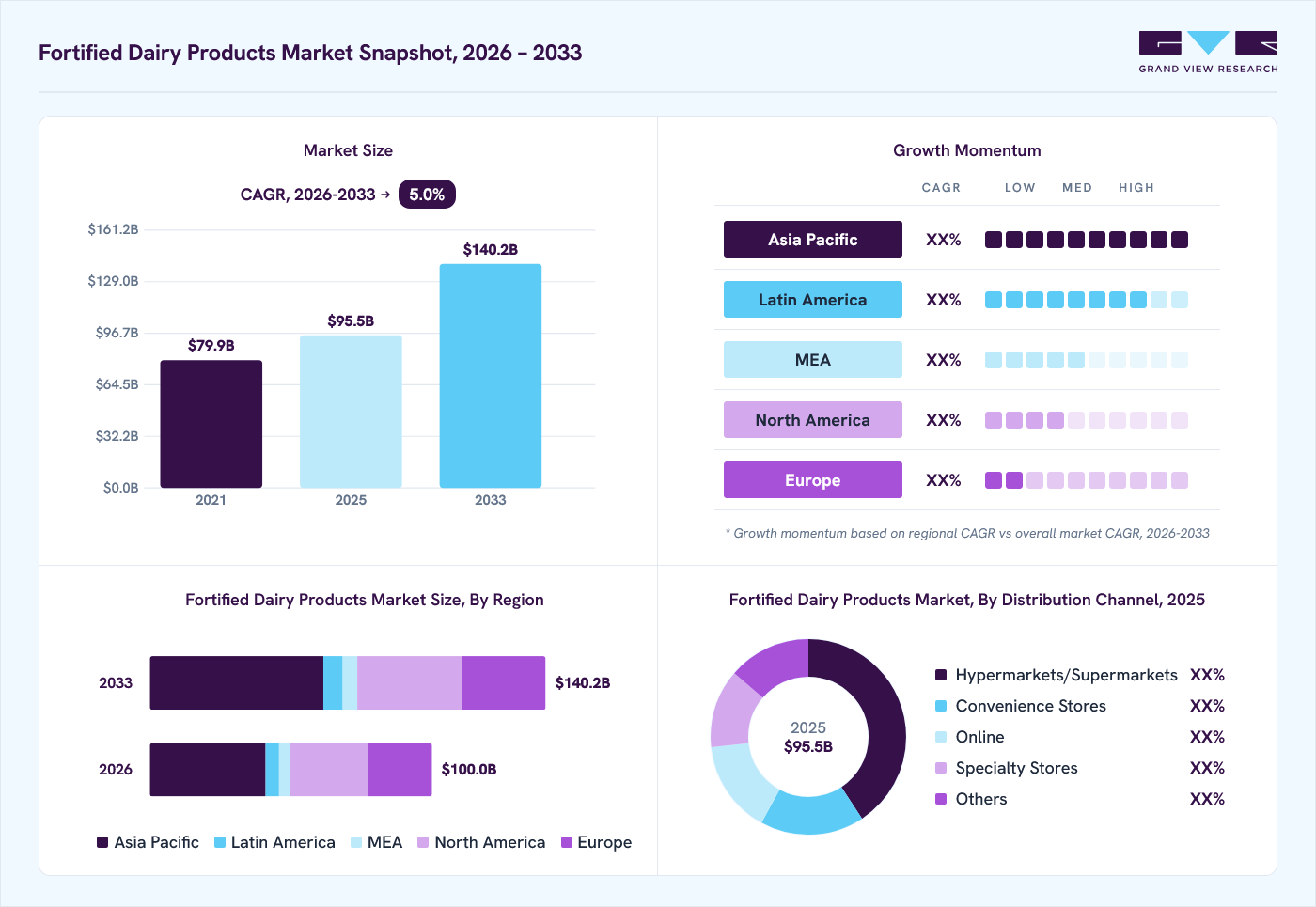
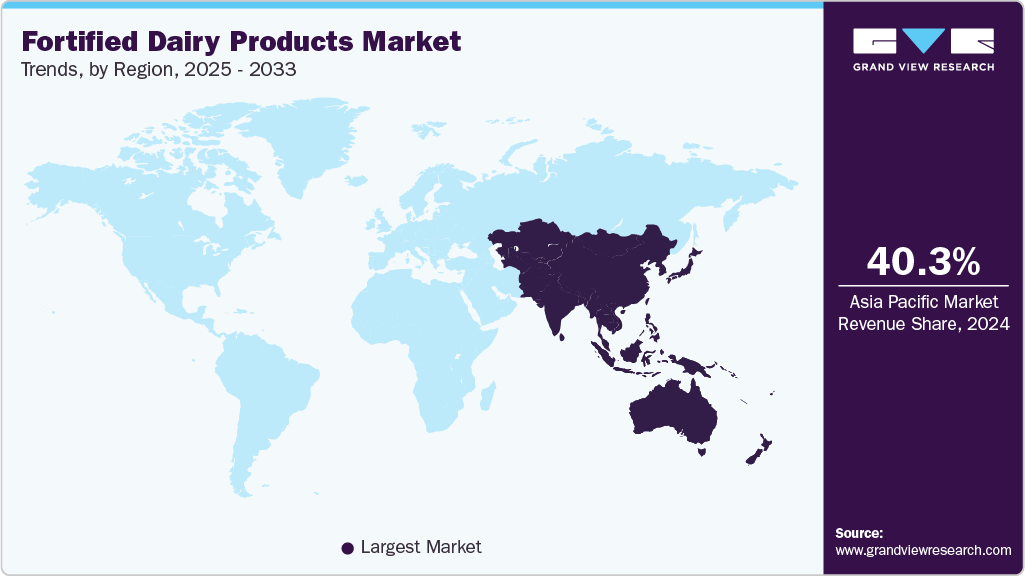
The global fortified dairy products market size was valued at USD 95.5 billion in 2025 and is projected to grow from USD 100.0 billion in 2026 to USD 140.2 billion in 2033, at a CAGR of 5.0% from 2026 to 2033. Asia Pacific dominated the market, accounting for a revenue share of 40.7% in 2025. The growth can be attributed to increasing consumer awareness of the health and nutritional benefits associated with fortified foods and beverages.
 Source: Grand View Research, IR Documents, Primary Interviews, Paid DatabasesTo learn more about this report,
 Download Free Sample Report
Key Market Trends & Insights
- Based on product: Yogurt segment accounted for the largest share of around 48.5% of global revenue in 2025.
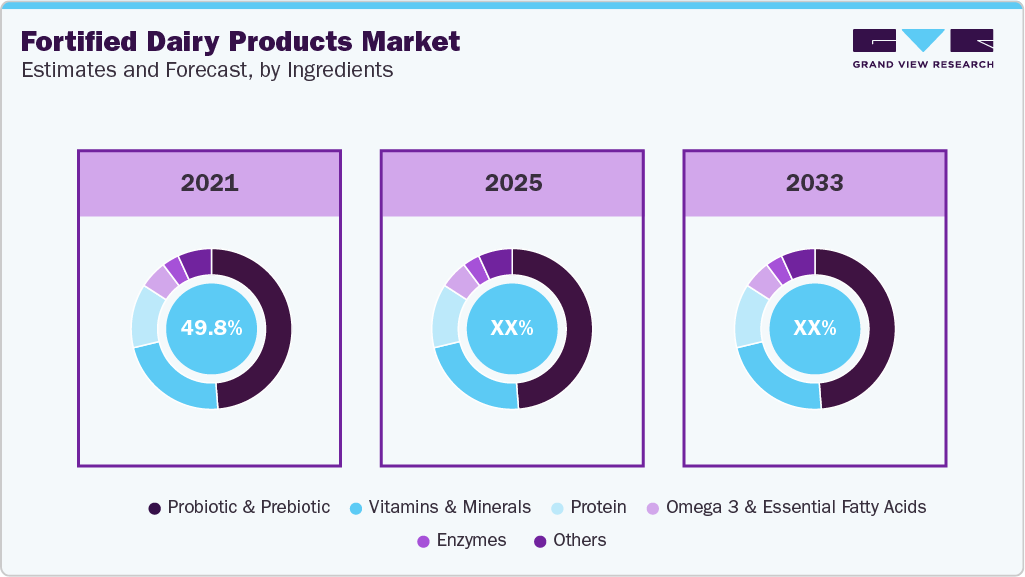
- By ingredients: Probiotic & prebiotic segment accounted for the highest revenue share of over 49.8% in 2025.
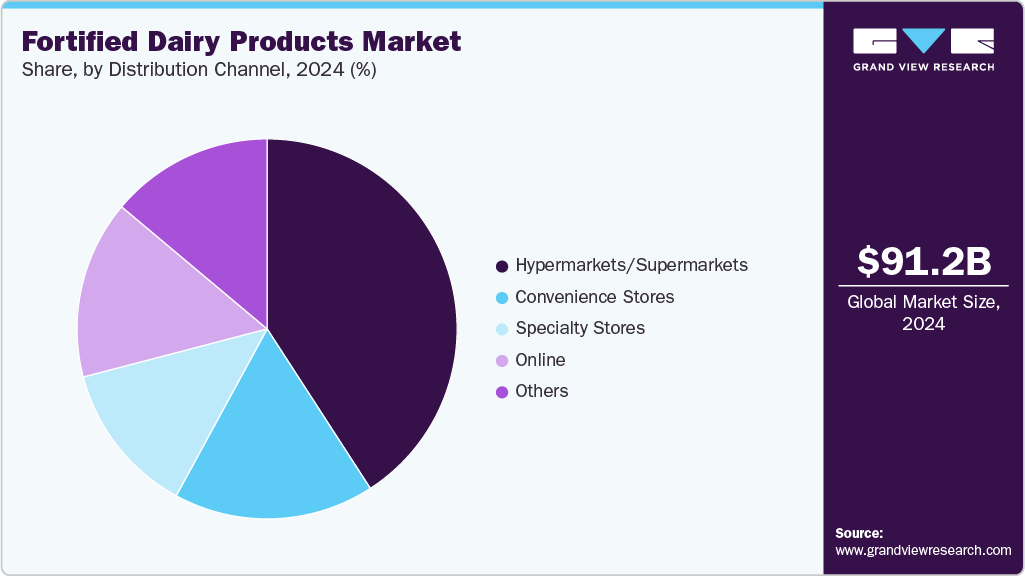
- By distribution channel: The hypermarkets/supermarkets segment accounted for a share of 40.7% in 2025
Regional Highlights
- Largest regional market: Asia Pacific (40.7% revenue share, 2025)
- By country: China held the largest regional share in 2025
Market Size & Forecast
- Market Size in 2025: USD 95.5 Billion
- Estimated Market Size in 2026: USD 100.0 Billion
- Projected Market Size in 2033: USD 140.2 Billion
- CAGR (2026-2033): 5.0%
Three ways to get this report
Buy it, customize it, or ask a question.Ask an Analyst
Analyst response in 1 business day
- AccessReport author, directly
- Reply timeWithin 1 working day
- No sales callDirect answer only
- FormatEmail reply
- CostFree, no cost
Get the Full Report
What the study covers
- FormatsPDF · Excel · Dashboard
- Timeline2026–2033 annual, 2025 base
- Coverage20+ countries, 5 regions
- Companies10+ key players profiled
Customize the Report
20% free customization
- IncludeCountries, segments, points
- TailorTo your product definition
- ExtendDeeper competitor detail
- OrA fully bespoke study
- Turnaround5–10 working days
The growing demand for convenient sources of essential nutrients, rising incidences of nutritional deficiencies, and increasing emphasis on preventive healthcare are further encouraging consumers to incorporate fortified dairy products into their daily diets. A key trend is the rising demand for dairy products enriched with vitamins like D and A, minerals such as calcium and iron, and omega-3 fatty acids. This trend is fueled by a growing population with dietary deficiencies and a desire to proactively improve overall health and well-being. Furthermore, the aging population is a significant demand driver, as older adults seek fortified dairy products to maintain bone health and combat age-related nutritional deficiencies. The increasing adoption of innovative fortification technologies and the diversification of fortified dairy product offerings are driving industry growth. Manufacturers are responding to the demand for healthier options by developing products with reduced sugar and fat content, while simultaneously enhancing them with essential nutrients. Moreover, plant-based fortified dairy alternatives are also gaining traction, catering to the growing vegan and lactose-intolerant populations.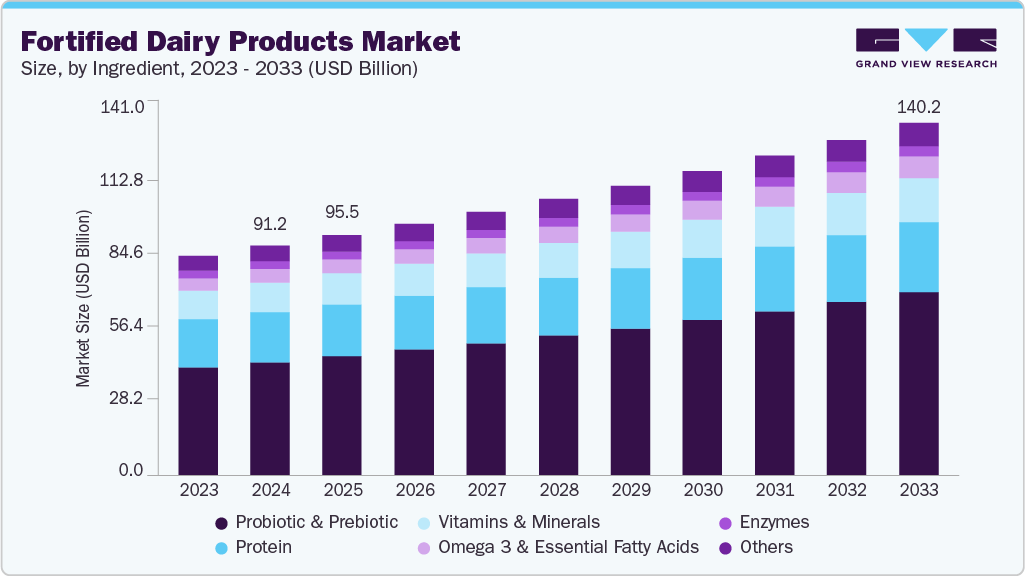 To learn more about this report, Download Free Sample Report
The rising prevalence of celiac disease has significantly influenced consumer preferences. Celiac disease, an autoimmune disorder triggered by gluten consumption, affects approximately 1-2% of the global population, with cases increasing worldwide. Since individuals with celiac disease often suffer from gut dysbiosis and digestive discomfort, there has been a heightened interest in products that promote gut health, leading to a surge in demand for fortified dairy products containing prebiotic and probiotic ingredients.
Market Dynamics
Fortified dairy products such as probiotic yogurts, kefir, and functional milk enriched with prebiotic fibers have gained traction among consumers seeking digestive health benefits. These products not only aid in digestion but also enhance nutrient absorption, which is particularly beneficial for individuals with celiac disease who often struggle with nutrient deficiencies.
Growing awareness regarding preventive healthcare and long-term wellness is driving demand for fortified dairy products. Consumers are preferring nutrient-enhanced dairy offerings that support immunity, digestive health, bone strength, muscle health, and overall nutritional balance. Products fortified with calcium, vitamin D, probiotics, and protein are gaining traction as consumers seek convenient ways to address daily nutritional needs. This trend is encouraging manufacturers to develop multifunctional dairy products that combine nutritional benefits with convenience. For instance, in August 2025, Danone USA launched OIKOS FUSION, a lactose-free cultured dairy drink containing 23g of complete protein, 5g of prebiotic fiber, and vitamins D, B3, and B12. The product was formulated to support muscle maintenance and digestive health, particularly among consumers on weight-loss journeys, including GLP-1 users.
Manufacturers face increasing complexity in complying with evolving food safety regulations, nutrient content claims, and labeling requirements across global markets. Regulatory authorities such as the U.S. Food and Drug Administration and the European Food Safety Authority enforce strict guidelines regarding vitamin fortification levels, health claims, allergen disclosures, and ingredient transparency. Differences in regional compliance standards often require product reformulation, additional testing, and packaging modifications, increasing operational costs and extending product commercialization timelines for dairy manufacturers operating internationally.
The growing adoption of plant-based diets and rising lactose intolerance are expanding opportunities for fortified dairy alternatives. Manufacturers are responding with almond, soy, and oat-based beverages enriched with calcium, vitamin D, and protein, targeting health-conscious consumers and those with dietary restrictions. This shift also supports broader sustainability and ethical consumption trends. For instance, in January 2025, Thailand-based Simple Foods, producer of 137 Degrees, introduced a high-protein almond milk fortified with soy protein isolate, delivering 11g of protein per serving. The vegan- and lactose-free product is available in 180ml packs at THB 29, targeting consumers seeking convenient plant-based protein options.
Analyst Perspective
The industry is evolving from basic nutrient enrichment toward targeted and multifunctional nutrition, with manufacturers incorporating protein, vitamins, minerals, probiotics, and other functional ingredients into familiar dairy formats. Growth opportunities are emerging across fortified milk, high-protein yogurt, functional dairy beverages, nutrient-enriched cheese, lactose-free products, and specialized formulations addressing bone health, immunity, digestive health, and active lifestyles. Competitive differentiation is dependent on nutritional value, product innovation, convenience, clean-label positioning, and premium formulations, while manufacturers must balance fortification costs, taste, affordability, regulatory requirements, and credible health claims. Overall, the market presents opportunities for companies that can integrate everyday dairy consumption with targeted nutritional benefits while responding to evolving consumer preferences.
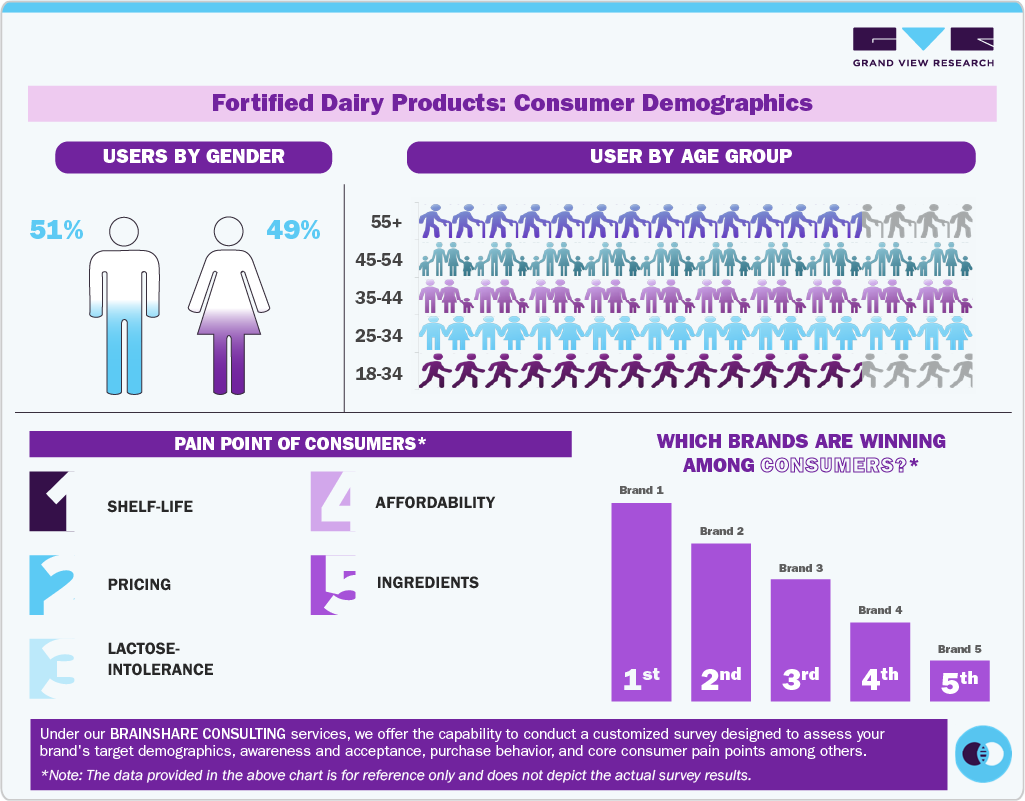
Consumer Insights for the Fortified Dairy Products Home Market:
Fortified dairy products are enhanced with additional nutrients such as vitamins (D, B12), minerals (calcium, iron), probiotics, or omega-3 fatty acids to address dietary gaps and enhance health benefits. These products cater to health-conscious consumers seeking functional foods that go beyond basic nutrition. Several key consumer trends, including an increased focus on health and wellness, dietary deficiencies, and the desire for functional benefits, drive the growing demand for fortified dairy products.
 To learn more about this report, Download Free Sample Report
Consumers are willing to pay a premium for protein-fortified food and beverages, including fortified dairy products that provide enhanced nutritional benefits and support their health goals. Premiumization strategies in fortified dairy involve emphasizing high-quality protein sources, integrating functional ingredients such as probiotics for gut health, and ensuring transparency in labeling. Highlighting added nutrients like calcium, vitamin D, and omega-3s further enhances consumer trust and positions fortified dairy as a valuable addition to a balanced diet.
Product Insights
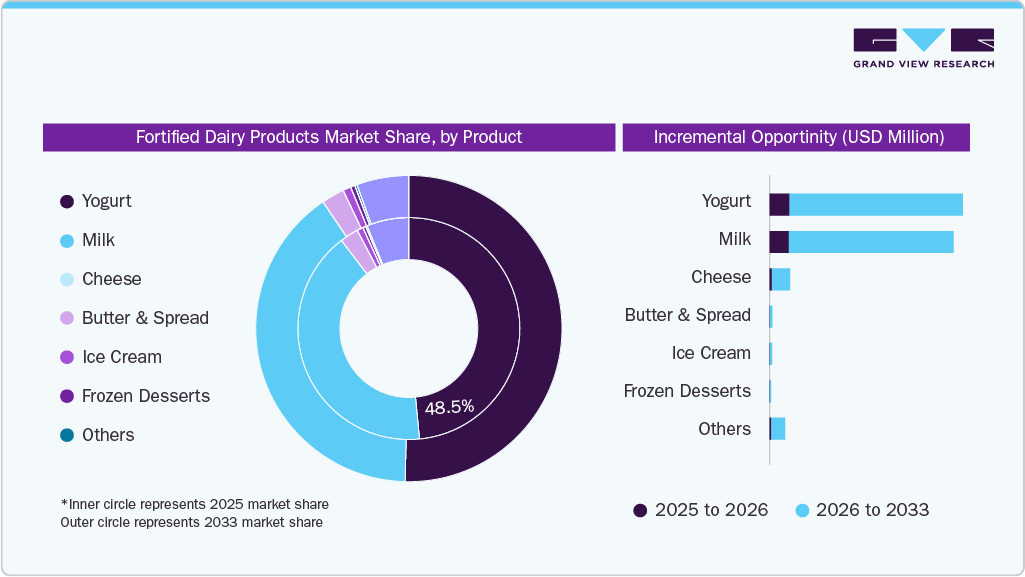
The yogurt segment held the largest share of 48.5% of the global revenue in 2025. Fortified yogurt, particularly that enriched with probiotics and prebiotics, supports digestive health by promoting a balanced gut microbiome. Additionally, vitamin D and calcium fortification cater to concerns about bone health and osteoporosis prevention, especially among aging populations. Moreover, consumers are moving toward personalized nutrition, choosing foods that cater to their specific dietary needs. Fortified yogurts tailored for gut health, heart health, brain function, and bone health are gaining popularity. To attract younger consumers and expand their appeal, brands are launching innovative flavors, functional ingredients, and exotic superfoods in fortified yogurts. The inclusion of turmeric (for anti-inflammatory benefits), matcha (rich in antioxidants), chia seeds (fiber and omega-3s), and adaptogens (stress-relieving properties) has created a new niche of superfood yogurts that appeal to Health-conscious buyer.
 To learn more about this report, Download Free Sample Report
The frozen desserts segment is anticipated to grow at a CAGR of 6.5% from 2026 to 2033. Frozen desserts are incorporating functional nutritional attributes as manufacturers respond to growing demand for healthier indulgence. The availability of protein-enriched frozen desserts through supermarkets and online platforms is expanding consumer access to products that combine indulgence with nutritional benefits. E-commerce and direct-to-consumer channels are also supporting the introduction of differentiated and niche products. For instance, in March 2026, Blue Bell Creameries introduced Blue Bell PRO, a high-protein dairy dessert range providing up to 12g of protein per serving across five flavors. The launch reflects the growing convergence of indulgence and functional nutrition, targeting consumers seeking convenient frozen desserts that support their protein goals.
Ingredient Insights
The probiotics and prebiotics segment held a 49.8% share in 2025 as their inclusion in fortified dairy products aligns with increasing consumer demand for gut health-focused nutrition. These ingredients enhance the effectiveness of fortification by improving the bioavailability of essential nutrients like calcium, vitamin D, and protein. Additionally, the growing interest in functional foods has driven dairy manufacturers to innovate with probiotic yogurts, prebiotic-infused milk, and other gut-friendly dairy options.
 To learn more about this report, Download Free Sample Report
The Omega-3 & essential fatty acids segment is anticipated to grow at a CAGR of 5.7% from 2026 to 2033. Fortifying dairy products with omega-3 and essential fatty acids significantly enhances their nutritional value, offering consumers additional health benefits. These polyunsaturated fats are vital for maintaining optimal health, supporting heart function, brain development, and even skin health. However, the human body cannot synthesize them, necessitating their inclusion through diet. By enriching commonly consumed dairy items like milk, yogurt, and cheese with these essential nutrients, manufacturers provide an accessible means for individuals to meet their dietary requirements. Incorporating omega-3 and essential fatty acids into dairy products not only meets consumer demand for functional foods but also addresses dietary deficiencies prevalent in modern diets. This fortification approach offers a practical solution to enhance public health by providing essential nutrients through familiar and widely consumed food items.
Distribution Channel Insights
The hypermarkets/supermarkets segment accounted for a share of 40.7% in 2025 due to their multiple options and the convenience of buying everything in a single place. The availability of various products also enables customers to choose from multiple options according to their preferences, dietary requirements, and budget. Moreover, consumers are likely to trust the quality of products available at well-established hypermarkets and supermarkets and, therefore, prefer to buy from there. This makes supermarkets a convenient and preferable distribution channel for fortified dairy products.
 To learn more about this report, Download Free Sample Report
The online segment is anticipated to grow at a CAGR of 6.2% from 2026 to 2033. The increasing digitization globally and rising e-commerce are expected to add to the segment’s growth. Online channels offer advantages to both brands and customers, as they eliminate mediators and storage costs and add a personalized shopping experience. These also provide brands with insights into consumer preferences through the integration of big data analytics and help improve their product portfolios. Key players in the fortified dairy products market are shifting to online sales channels to expand their customer base and sales.
Regional Insights
The Asia Pacific fortified dairy products market held a share of 40.7% in 2025 and it is also expected to grow at the fastest CAGR of 5.9% from 2026 to 2033. The region is home to a large population with varying dietary habits, including high rates of lactose intolerance. According to the World Population Review data, lactose intolerance is common in the region, especially in East Asia, where at least 70% of people show signs of lactose intolerance. This has led to a surge in demand for plant-based fortified dairy alternatives, such as almond and soy milk, fortified with essential nutrients like calcium and vitamin D. Furthermore, as the region becomes more health-conscious, manufacturers are focusing on innovative fortified dairy products that cater to both local preferences and global health trends. Companies are investing in research and development to offer products that meet the needs of diverse consumer bases, leading to continuous product launches and the emergence of new fortified dairy options.
 To learn more about this report, Download Free Sample Report
The fortified dairy products market in China held a share of 48.5% of the Asia Pacific in 2025, supported by rising demand for functional nutrition and dairy products with targeted health benefits. Consumers are seeking products enriched with ingredients, encouraging manufacturers to move beyond conventional fortification toward more differentiated nutritional solutions. For instance, in August 2026, Yili launched Bone-Energy High-Calcium Milk in China, combining milk-derived calcium with vitamin D3 and patented lipid-layer encapsulation technology designed to improve calcium retention. The launch highlights the industry's movement toward science-backed fortification and function-oriented dairy products.
The India fortified dairy products market is projected to expand at the fastest CAGR of 7.9% from 2026 to 2033 due to increasing consumer awareness regarding immunity, bone health, and nutritional deficiencies, along with rising demand for functional foods. Government-supported fortification initiatives, including vitamin A and D fortification programs promoted by the Food Safety and Standards Authority of India, are further supporting market expansion. In addition, rapid urbanization and increasing consumption of probiotic yogurt, fortified milk, and protein-based dairy beverages are encouraging manufacturers such as GCMMF and Nestlé to expand their value-added dairy portfolios across India.
North America Fortified Dairy Products Market Trends
The fortified dairy products market in North America is expected to grow at a CAGR of 4.3% from 2026 to 2033. With an increasing focus on health and wellness, consumers in this region are becoming more inclined toward dairy products that offer additional benefits such as improved digestion, immunity, and heart health. The demand for plant-based dairy alternatives, enriched with nutrients such as calcium, vitamins, and probiotics, has gained significant traction, supported by growing vegan and lactose-intolerant populations. For instance, according to the National Institute of Diabetes and Digestive and Kidney Diseases (NIDDK) data, about 36% of Americans have lactose malabsorption.
U.S. Fortified Dairy Products Market Trends
The fortified dairy products market in the U.S. held a regional share of 77.7% in 2025. According to Boston Children’s Hospital Services, approximately 30 to 50 million people in the U.S. are lactose intolerant, supporting demand for lactose-free and nutritionally enhanced dairy products. Fortified milk and yogurt enriched with nutrients are gaining relevance as consumers seek convenient products supporting bone health, digestive health, and overall nutrition. This trend is encouraging manufacturers to expand their value-added dairy portfolios. For instance, in January 2026, Dairy Farmers of America introduced Alta Dena Protein, a lactose-free high-protein milk containing 15g of dairy protein per serving, along with calcium and nine essential nutrients. Available in whole and 2% reduced-fat variants, the product targets families seeking convenient, protein-rich dairy options and is being rolled out through retailers including Walmart and Target.
Europe Fortified Dairy Products Market Trends
The fortified dairy products market in Europe held a share of 23.1% in 2025, primarily driven by increasing consumer interest in maintaining a healthy lifestyle. Europeans are turning to fortified dairy products as part of their daily nutrition, with a focus on digestive health, immunity, and mental well-being. Moreover, the rise of organic and natural products further supports the demand for fortified dairy, as consumers seek options with fewer additives and preservatives while still providing health benefits. Major dairy brands in Europe, including Danone, Arla, and Nestlé, continue to innovate with new fortified dairy products, particularly focusing on benefits such as enhanced immunity and digestive support.
The Germany fortified dairy products market held a share of 20.0% of the European market in 2025. Growing consumer interest in sustainable and ethical food production practices influences purchasing decisions in the country. German consumers are particularly focused on products with natural ingredients and high nutritional value, which drives the demand for fortified dairy products such as milk, yogurt, and cheese enriched with vitamins, minerals, and protein. Additionally, Germany’s well-established dairy industry benefits from a high level of innovation in the dairy sector, with local producers introducing various fortified dairy variants to cater to health-conscious consumers.
Central & South America Fortified Dairy Products Market Trends
The fortified dairy products market in Central & South America is expected to grow at a CAGR of 5.4% from 2026 to 2033. The regional industry is experiencing consistent growth due to increasing demand for fortified milk, probiotic yogurt, and protein-based dairy beverages across key economies, including Brazil. Additionally, expanding middle-class populations, improving purchasing power, and growing adoption of health-oriented diets are contributing to market expansion. The development of organized retail channels and enhanced cold-chain logistics infrastructure is further strengthening product availability and distribution efficiency throughout the region.
Key Fortified Dairy Products Company Insights
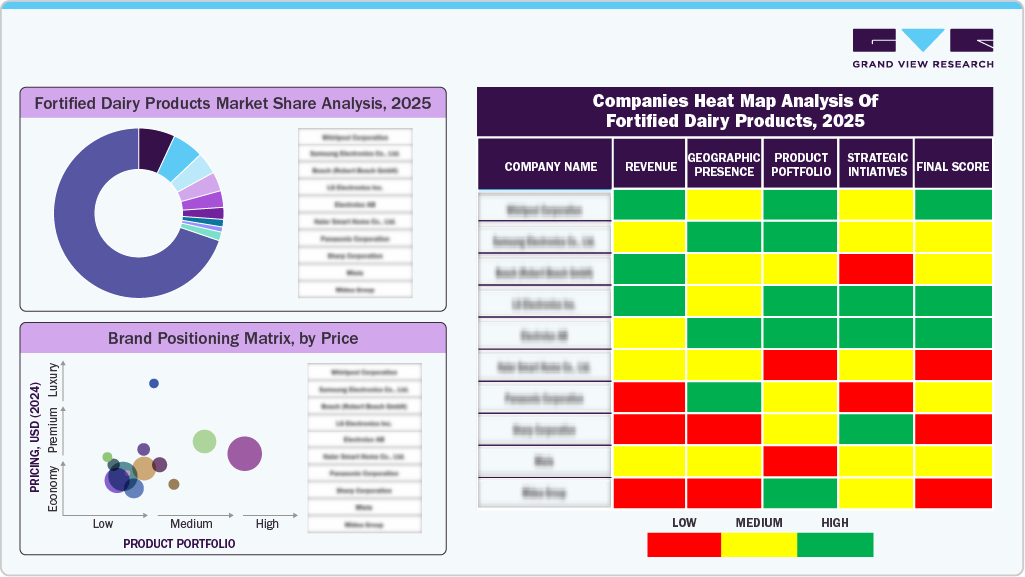
Key players in the fortified dairy products market are focusing on product innovation, portfolio diversification, and the introduction of nutrient-enriched dairy formats to address evolving consumer preferences. Companies are investing in research and development to enhance nutritional profiles, improve product functionality, and target specific health needs. These efforts are expected to intensify competition and support broader market penetration across regions and consumer segments.
 To learn more about this report, Download Free Sample Report
Key Fortified Dairy Products Companies
The following key companies have been profiled for this study on the fortified dairy products market.
-
Nestlé S. A
-
Danone S.A
-
FrieslandCampina
-
LACTALIS
-
The Kraft Heinz Company
-
General Mills Inc.
-
Dairy Farmers of America, Inc.
-
Müller Group
-
Yili Group
-
AMUL (GCMMF)
Competitive Benchmarking
Category
Operating Strategies
Competitive Edge
Weakness
Established Players (Nestlé S.A.; Danone S.A.; FrieslandCampina; Lactalis; Dairy Farmers of America, Inc.; Yili Group; AMUL (GCMMF))
- Expand fortified and functional dairy portfolios through product innovation, nutritional enrichment, premiumization, and broad distribution.
- Strong brands, extensive dairy-processing capabilities, established supply chains, and wide market reach.
- Large-scale operations may limit flexibility in responding quickly to niche consumer preferences and changing market conditions.
Emerging Players (The Kraft Heinz Company; General Mills Inc.; Müller Group)
- Develop differentiated dairy products focused on nutrition, functionality, protein enrichment, and evolving consumer needs.
- Strong brand portfolios, established retail relationships, marketing capabilities, and opportunities to leverage existing dairy platforms.
- Comparatively smaller presence in fortified dairy and greater dependence on selected product categories and market segments.
Recent Developments
-
In February 2026, SEMCAP Food & Nutrition announced a USD 55 million investment in Good Culture, a clean-label cultured dairy company specializing in high-protein dairy products. The investment is intended to support innovation, product expansion, and distribution growth within the functional dairy category.
-
In February 2026, Indian dairy company Milky Mist announced plans to expand production capacity for Greek yogurt, protein-enhanced cottage cheese, and other premium dairy products as part of its 2026 growth strategy. The company is also investing in yogurt and whey protein facilities to strengthen its position in the value-added dairy segment.
-
In March 2025, Mother Dairy introduced Promilk, a high-protein milk containing 40g of protein per liter, approximately 30% more protein than regular milk, and fortified with vitamins A and D and high in calcium. Targeting consumers seeking convenient solutions to meet their daily protein and nutritional requirements.
-
In January 2025, General Mills, Inc. completed the sale of its yogurt business in Canada to Sodiaal. This divesture includes the Canada-based operations of brands such as Yoplait and Liberté and a manufacturing facility located in Saint-Hyacinthe, Québec. The company also plans to sell its U.S. yogurt business to LACTALIS in the same year, subject to regulatory approvals.
Fortified Dairy Products Market Report Scope
Report Attribute
Details
Market size in 2025
USD 95.5 billion
Estimated market size in 2026
USD 100.0 billion
Projected market size in 2033
USD 140.2 billion
Growth rate
CAGR of 5.0% from 2026 to 2033
Actuals
2021 - 2025
Forecast period
2026 - 2033
Quantitative units
Revenue in USD billion, and CAGR from 2026 to 2033
Report coverage
Revenue forecast, company ranking, competitive landscape, growth factors, and trends
Segments covered
Product, ingredients, distribution channel, region
Regional scope
North America; Europe; Asia Pacific; Central & South America, Middle East & Africa
Country scope
U.S.; Canada; Mexico; Germany; UK; France; Italy; Spain; China; India; Japan; Australia & New Zealand; Brazil; Argentina; South Africa; Saudi Arabia
Key companies profiled
Nestlé S. A; Danone S.A; FrieslandCampina; LACTALIS; The Kraft Heinz Company; General Mills Inc.; Dairy Farmers of America, Inc.; Müller Group; Yili Group; AMUL (GCMMF)
Customization scope
Free report customization (equivalent up to 8 analysts working days) with purchase. Addition or alteration to country, regional & segment scope.
Pricing and purchase options
Avail customized purchase options to meet your exact research needs. Explore purchase options
Global Fortified Dairy Products Market Report Segmentation
This report forecasts revenue growth at the global, regional and country levels and provides an analysis of the latest industry trends and opportunities in each of the sub-segments from 2021 to 2033. For this study, Grand View Research has segmented the global fortified dairy products market report on the basis of product, ingredients, distribution channel, and region.
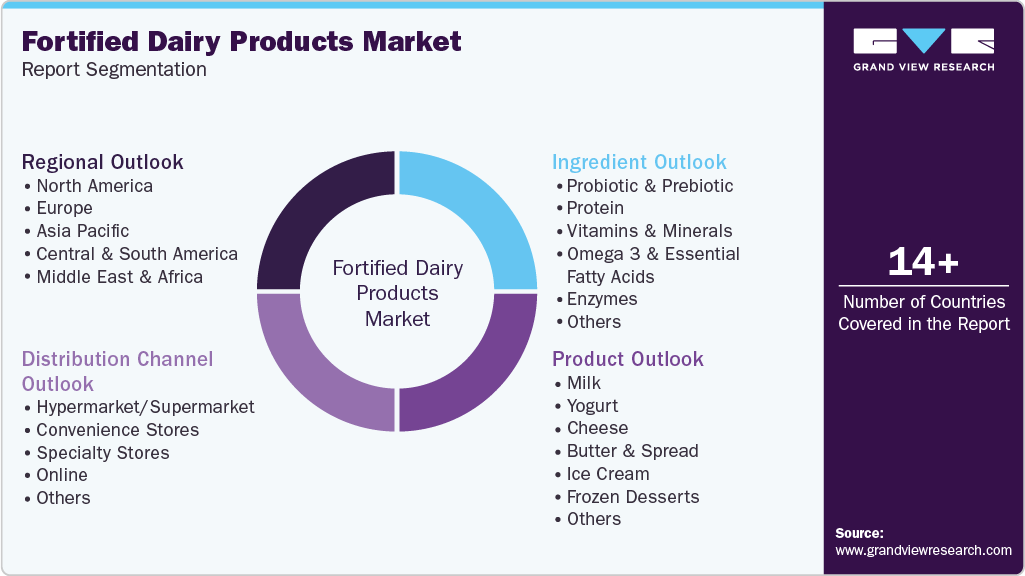 To learn more about this report, Download Free Sample Report
-
Product Outlook (Revenue, USD Billion, 2021 - 2033)
-
Milk
-
Whole Milk
-
Flavored Milk
-
Others
-
-
Yogurt
-
Regular/Traditional
-
Greek
-
Drinkable
-
Plant-based
-
-
Cheese
-
Butter & Spread
-
Ice Cream
-
Frozen Desserts
-
Others
-
-
Ingredients Outlook (Revenue, USD Billion, 2021 - 2033)
-
Probiotic & Prebiotic
-
Protein
-
Vitamins & Minerals
-
Omega 3 & Essential Fatty Acids
-
Enzymes
-
Others
-
-
Distribution Channel Outlook (Revenue, USD Billion, 2021 - 2033)
-
Hypermarkets/Supermarkets
-
Convenience Stores
-
Specialty Stores
-
Online
-
Others
-
-
Regional Outlook (Revenue, USD Billion, 2021- 2033)
-
North America
-
U.S.
-
Canada
-
Mexico
-
-
Europe
-
Germany
-
UK
-
France
-
Italy
-
Spain
-
-
Asia Pacific
-
China
-
India
-
Japan
-
Australia & New Zealand
-
-
Central & South America
-
Brazil
-
Argentina
-
-
Middle East & Africa
-
South Africa
-
Saudi Arabia
-
-
Research Methodology
The fortified dairy products market figures in this report are based on a proven research process that combines executive interviews with secondary research from proprietary databases, company filings, and recognized regulatory and institutional sources. Market size is built through value-chain sizing—reconciling supply-side and demand-side estimates—and triangulated with bottom-up and top-down approaches. Every estimate passes multiple levels of expert validation before publication, with each fortified dairy products segment quantified using the revenue-capture definitions in the table below.
Segment Definition
Segment - Product
Revenue capture definition
Milk
This segment includes the sales of fortified fresh, UHT, flavored, and specialty milk products enriched with additional nutrients.
Yogurt
This segment includes the sales of fortified plain, flavored, Greek, drinking, and specialty yogurt products enriched with additional nutrients.
Cheese
This segment includes the sales of fortified natural, processed, sliced, spreadable, and specialty cheese products enriched with additional nutrients.
Butter & Spreads
This segment includes the sales of fortified butter, dairy spreads, blended spreads, and functional spread products enriched with additional nutrients.
Ice Cream
This segment includes the sales of fortified ice cream products, including protein-enriched, reduced-sugar, and specialty varieties.
Frozen Desserts
This segment includes the sales of fortified frozen yogurt, dairy-based frozen desserts, frozen treats, and specialty products enriched with additional nutrients.
Estimation Model
Layer
Guiding Question
Description
Consumption Profile Layer
Who consumes fortified dairy products?
Captures consumers purchasing fortified dairy products for nutritional, functional, and health‑related benefits. Includes health‑conscious consumers, children, adults, aging populations, active consumers, and individuals seeking specific nutrients such as calcium, vitamin D, and protein.
Market Reach Layer
Where are fortified dairy products available?
Covers distribution through supermarkets, hypermarkets, convenience stores, specialty retailers, pharmacies, foodservice outlets, and e‑commerce platforms. Channel penetration determines consumer accessibility and product availability.
Purchase & Retention Layer
What drives repeat consumption?
Focuses on nutritional benefits, taste, product quality, affordability, convenience, brand trust, fortification claims, product variety, and consumer‑specific health needs that influence purchase frequency and retention.
Value Generation Layer
How is revenue generated from consumers?
Represents monetization through premium pricing, value‑added formulations, high‑protein and vitamin‑enriched products, specialized nutritional offerings, branded products, convenient pack formats, and differentiated dairy categories.
Delivered Customization
This report has been delivered with the following In-depth customizations:
Client Request
Customization Delivered
Value Adds
Global Fortified Dairy Products Market Landscape Assessment
Assessed category dynamics, market maturity, key growth drivers, emerging product trends, and competitive intensity across major fortified dairy product categories.
Supports identification of attractive categories, market opportunities, and strategic priorities for market expansion.
Global Fortified Dairy Products Regulatory & Food Safety Assessment
Reviewed fortification regulations, nutritional labeling requirements, permitted health claims, ingredient standards, and food-safety requirements across priority markets
Helps mitigate regulatory risks, support compliant product positioning, and facilitate market entry across targeted geographies.
Global Fortified Dairy Products Competitive Assessment
Evaluated key market participants, product portfolios, fortification strategies, pricing approaches, distribution footprints, and recent product developments.
Supports competitor benchmarking, differentiation strategies, and identification of potential market gaps.
Frequently Asked Questions About This Report
The global fortified dairy product market size was valued at USD 95.5 billion in 2025 and is estimated at USD 100.0 billion for 2026.
The global fortified dairy product market is expected to grow at a CAGR of 5.0% from 2025 to 2033, reaching USD 140.2 billion by 2033.
Asia Pacific dominated the fortified dairy products market with a share of 40.7% in 2025.
Some of the key players operating in the fortified dairy products market include Dean Foods Company, Nestle S.A, BASF SE., China Modern Dairy Holdings Ltd., General Mills Inc., Arla Foods UK Plc., Danone, CMMF Ltd., Fonterra Group Cooperative Ltd, and Bright Dairy & Foods Co.
Yogurt segment accounted for the largest share of around 48.5% of global revenue in 2025.
Probiotic & prebiotic segment accounted for the highest revenue share of over 49.8% in 2025.
The hypermarkets/supermarkets segment accounted for a share of 40.7% in 2025
Key factors that are driving the fortified dairy products market growth include the rising health consciousness, a growing elderly population concerned with bone health, dietary trends favoring fortified products, regulatory encouragement for nutrient enrichment, and consumer preference for functional dairy products.
About the Author(s)
Consumer F&B Research Team
Consumer Goods · Consumer F&BThis report was authored by the consumer f&b research team at Grand View Research - comprising two research analysts, one senior research analyst, and one industry expert - with specialized expertise in the consumer f&b segment of the consumer goods industry. All findings are based on proprietary consumer goods databases, executive interviews, and regulatory analysis, subject to internal peer review prior to publication.
Last Updated:
Speak to Analyst

Customize this report to your needs - add regions, segments, or data points, with 20% free customization.
Or view our licence options:


ISO 9001:2015 & 27001:2022 Certified
We are GDPR and CCPA compliant! Your transaction & personal information is safe and secure. For more details, please read our privacy policy.


