
- Home
- »
- Plastics, Polymers & Resins
- »
-
Laboratory Plasticware Market Size, Growth Report, 2026-2033GVR Report cover

Laboratory Plasticware Market (2026 - 2033)
Size, Share & Trends Analysis Report By Material (Low Density Polyethylene, High Density Polyethylene, Polystyrene, Polyvinyl Chloride, Polymethylpentene), By End Use, By Region, And Segment Forecasts
Market Size, 2025
$2.4BMarket Estimate, 2026
$2.5BMarket Forecast, 2033
$3.3BCAGR, 2026–2033
4.1%Laboratory Plasticware Market Summary
The global laboratory plasticware market size was valued at USD 2.4 billion in 2025 and is projected to grow from USD 2.5 billion in 2026 to USD 3.3 billion by 2033, at a CAGR of 4.1% from 2026 to 2033. Asia Pacific dominated the global market, accounting for the largest revenue share of 33.6% in 2025. The rise in research and development activities in pharmaceuticals, biotechnology, and healthcare is expected to drive the demand for laboratory plasticware.
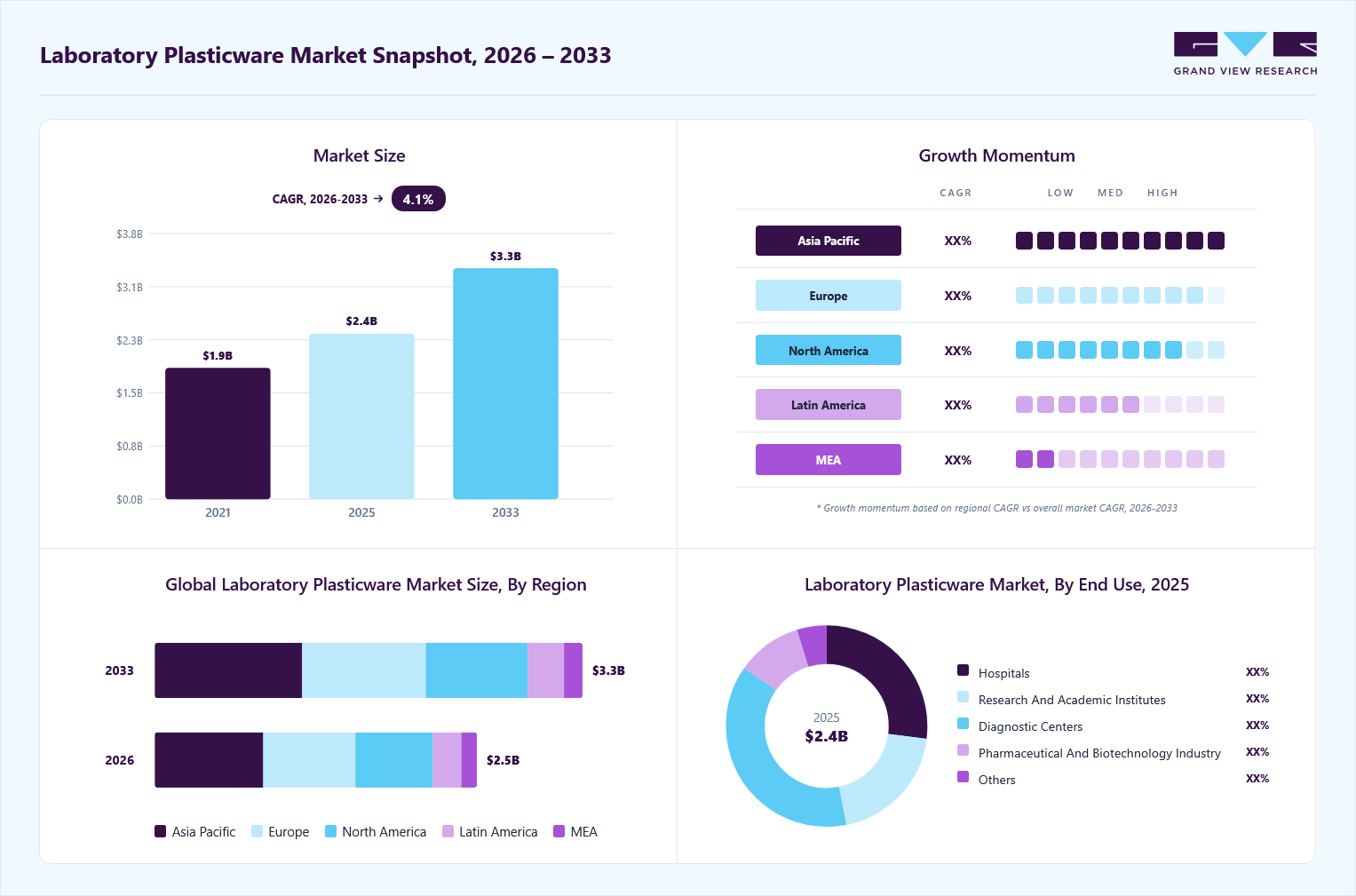 Source: Grand View Research, IR Documents, Primary Interviews, Paid DatabasesTo learn more about this report,
 Download Free Sample Report
 Key Market Trends & Insights
- By material: Low-density polyethylene segment led the market with the largest revenue share of 28.7% in 2025.
- By end use: Diagnostic centers segment is anticipated to grow at the fastest CAGR of 4.6% from 2026 to 2033.
Regional Highlights
- Largest regional market: Asia Pacific (33.6% revenue share, 2025)
- By country: The China laboratory plasticware industry is a major contributor to the global market.
Market Size & Forecast
- Market size in 2025: USD 2.4 Billion
- Estimated market size in 2026: USD 2.5 Billion
- Projected market size by 2033: USD 3.3 Billion
- CAGR (2026-2033): 4.1%
Three ways to get this report
Buy it, customize it, or ask a question.Ask an Analyst
Analyst response in 1 business day
- AccessReport author, directly
- Reply timeWithin 1 working day
- No sales callDirect answer only
- FormatEmail reply
- CostFree, no cost
Get the Full Report
What the study covers
- FormatsPDF · Excel · Dashboard
- Timeline2026–2033 annual, 2025 base
- Coverage20+ countries, 5 regions
- Companies10+ key players profiled
Customize the Report
20% free customization
- IncludeCountries, segments, points
- TailorTo your product definition
- ExtendDeeper competitor detail
- OrA fully bespoke study
- Turnaround5–10 working days
 To learn more about this report, Download Free Sample Report
 Another notable trend in the laboratory plasticware industry is the increasing focus on bio-based plastics, specialized, high-durability polymers. Rising demand for laboratory plasticware has led to the development of new polymers with higher chemical resistance, transparency, and improved durability.
Drivers, Opportunities & Restraints
The laboratory glassware and plasticware market is driven by the rapid growth of the pharmaceutical and biotechnology sectors, including research, development, and manufacturing activities. This growth is driven by the emergence of novel diseases and viral outbreaks, as well as increasing demand for personalized medicines based on genomics and biomarkers. In addition, hospitals and diagnostic centers are expanding due to the rising prevalence of chronic and infectious diseases and a stronger focus on preventive healthcare.
The laboratory plasticware market is undergoing notable changes and new opportunities, particularly in the adoption of bioplastics and recyclable materials. There is a growing emphasis on sustainability, with laboratories increasingly adopting eco-friendly solutions to reduce single-use plastic waste. This includes using bio-based and recycled materials, along with a greater focus on reusable labware to lower costs and minimize environmental impact. The development of high-performance polymers is improving chemical resistance, transparency, and thermal stability, supporting more demanding laboratory applications.
The laboratory plasticware industry faces growing regulatory pressure and environmental scrutiny. In the European Union (EU), stricter rules under the Packaging and Packaging Waste Regulation are pushing manufacturers to use more recycled content and ensure packaging is recyclable or reusable. Quality and safety standards are becoming more demanding. Requirements such as CE marking, ISO certification, and FDA standards for medical-grade plastics add further compliance obligations. As a result, companies must focus on product quality, environmental responsibility, and regulatory compliance to remain competitive in the market.
Market Concentration & Characteristics
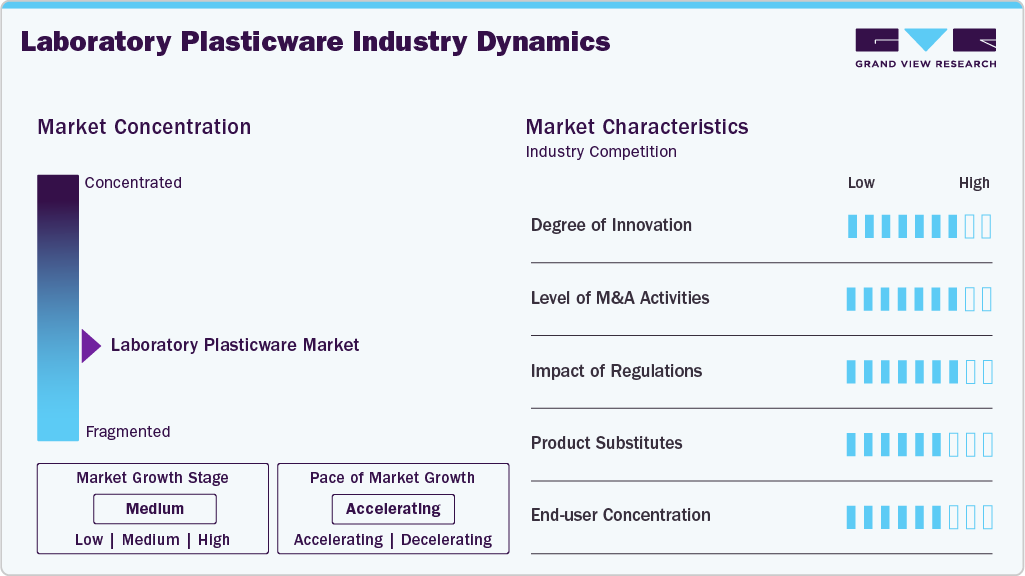
The market growth stage is medium, and growth is accelerating. The market exhibits slight fragmentation, with key players dominating the industry landscape. Major companies such as Thermo Fisher Scientific, Duran Group, Corning Inc., Technosklo Ltd., ISOLAB, Peninsula Plastics, VITLAB GmbH, Gerresheimer, Eppendorf AG, Eurofins, and others play a significant role in shaping the market dynamics. These leading players often drive innovation in the market, introducing new products, technologies, and product types to meet the industry's evolving demands.
The degree of innovation in the laboratory plasticware industry is moderate to high, as manufacturers continue to improve product performance, sustainability, and usability. Innovations such as bio-based plastics, recyclable materials, and reusable designs are helping companies reduce environmental impact while meeting stricter regulations. The development of smart and AI-enabled labware is also enhancing efficiency and traceability. Overall, these innovations are strengthening product value and supporting long-term market growth.
 To learn more about this report, Download Free Sample Report
 Major substitutes in the plastic labware market include glass laboratory ware and reusable materials such as metal, ceramic, silicone, and stainless steel. These alternatives can reduce the demand for plastic products, especially in laboratories that emphasize durability, high chemical resistance, and lower long-term waste. Glassware is commonly preferred for high-temperature and sensitive applications due to its dependable performance and ability to be sterilized multiple times. Despite this, plasticware remains widely used as it is cost-effective, lightweight, and convenient. Therefore, the presence of these substitutes creates competitive pressure, encouraging manufacturers to improve product quality, sustainability, and innovation.
Material Insights
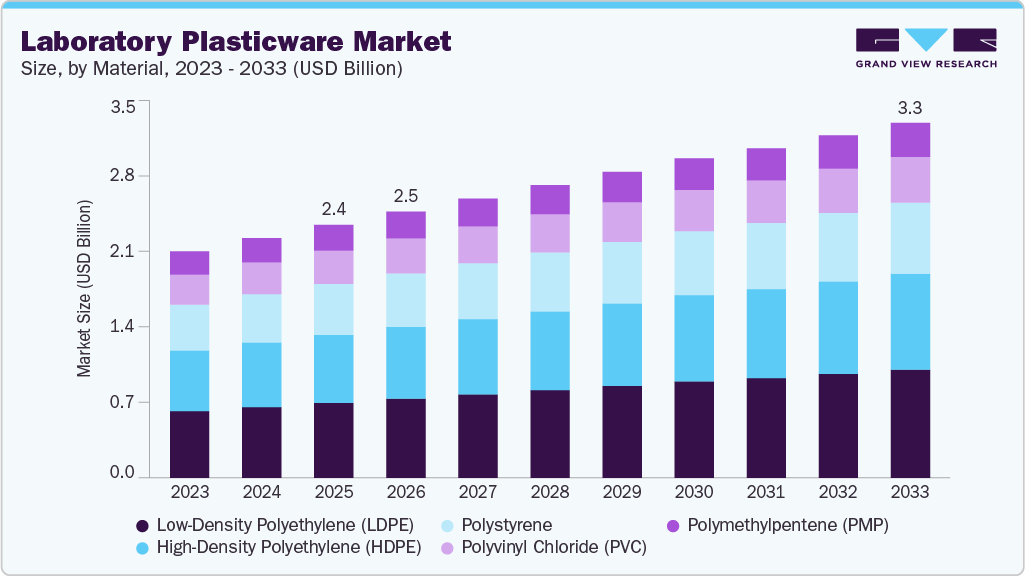
The low-density polyethylene (LDPE) segment led the market with the largest revenue share of 28.7% in 2025, and is expected to grow at the fastest CAGR of 4.6% from 2026 to 2033. This growth is mainly driven by rising demand from the healthcare and pharmaceutical sectors. LDPE is widely used for its flexibility, durability, strong chemical and moisture resistance, and lightweight, transparent properties. In healthcare applications, it is commonly utilized for sterile packaging, disposable bags, and medical tubing. Moreover, increasing retail and e-commerce activities are boosting its use in packaging products such as plastic bags, food wraps, squeeze bottles, and protective films.
The high-density polyethylene (HDPE) segment is projected to grow at a significant CAGR of 4.3% during the forecast period. This growth is mainly driven by rising demand from the labware and medical equipment manufacturing sector. HDPE is widely used for products such as Nalgene bottles, carboys, reagent bottles, and sample containers due to its strong chemical resistance and durability. It is also applied in medical tubing and disposable syringe components due to its high biocompatibility, making it suitable for healthcare and laboratory applications.
End Use Insights
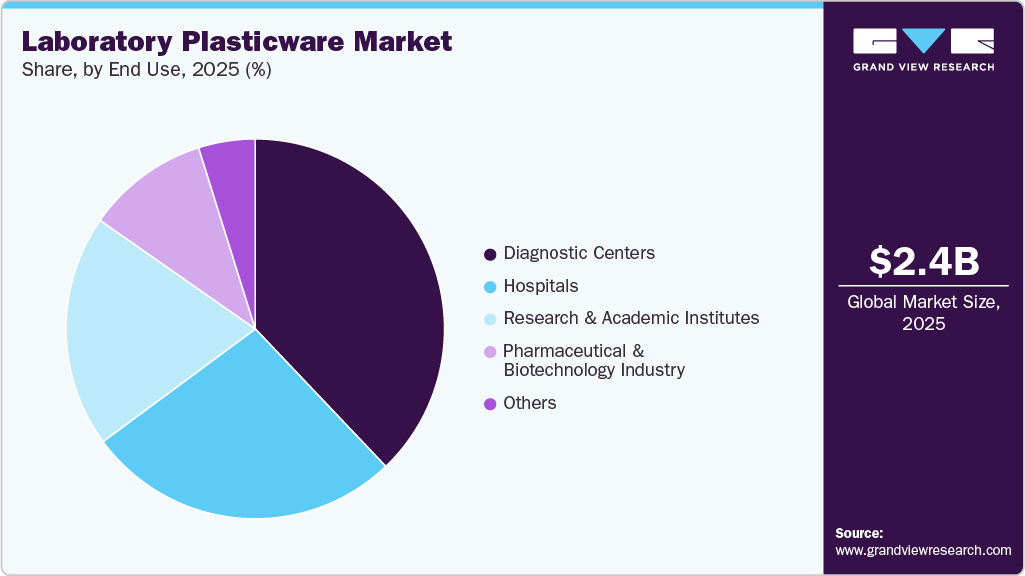
The diagnostic centers segment led the market with the largest revenue share of 37.9% in 2025 and is projected to grow at the fastest CAGR of 4.6%from 2026 to 2033.This can be attributed to the growing elderly population, which drives higher demand for routine diagnostic testing. In addition, the rising prevalence of chronic diseases such as diabetes, cardiovascular conditions, and cancer is increasing the need for routine monitoring and early detection. As a result, diagnostic centers are expected to grow steadily over the forecast period.
 To learn more about this report, Download Free Sample Report
 The hospitals segment is expected to grow at a moderate CAGR of 4.2% during the forecast period. This segment plays a key role in the market, driven by the increasing prevalence of chronic diseases such as diabetes, respiratory disorders, and cancer, which require continuous, long-term, and complex hospital care. In addition, the growing global aging population is increasing the need for frequent and specialized healthcare services. As patient volumes continue to rise, hospitals depend on disposable plastic products such as test tubes, pipettes, sample containers, and waste bins to ensure safety and operational efficiency. The increase in diagnostic testing and patient care activities further supports steady demand for high-quality laboratory plastic products.
Regional Insights
The laboratory plasticware market in North America is experiencing steady growth, supported by the region’s strong infrastructure and a culture that encourages technological innovation. This environment drives the adoption of advanced products within the medical and healthcare sectors. Increasing research activities across fields such as biotechnology, environmental science, materials science, and pharmaceuticals are creating sustained demand for specialized plasticware in academic and research institutions. In addition, the expansion of research organizations, biotech clusters, and innovation hubs in the region is further contributing to market growth.
U.S. Laboratory Plasticware Market Trends
The laboratory plasticware industry in the U.S. is expected to grow steadily over the forecast period. The use of advanced laboratory technology, such as automation systems, high-throughput screening, and sophisticated analytical instruments, is expected to drive the demand for laboratory plasticware in the country.
Asia Pacific Laboratory Plasticware Market Trends
Asia Pacific dominated the global laboratory plasticware industry with the largest revenue share of 33.6% in 2025 and is projected to grow at the fastest CAGR during the forecast period. The region has witnessed a rise in demand for laboratory plasticware materials due to rapid economic expansion in countries such as China, India, and Southeast Asia, which has driven spending in healthcare, research, and manufacturing, and is expected to fuel demand for laboratory plasticware. Furthermore, the expansion of industrial sectors such as pharmaceuticals, chemicals, and manufacturing increases the demand for laboratory plasticware used in quality control, research, and production operations.
 To learn more about this report, Download Free Sample Report
 The laboratory plasticware market inChina accounted for the largest market revenue share in 2025, driven by the rapid expansion of the biotechnology and pharmaceutical manufacturing sectors. Increasing investments in research, drug development, and large-scale production are boosting the demand for essential laboratory consumables such as pipettes, test tubes, petri dishes, and sample containers. These products are widely used in testing, processing, and quality control activities. In addition, the growth of the life sciences industry is driving the use of disposable, contamination-free plasticware in laboratories and production facilities.
Europe Laboratory Plasticware Market Trends
The laboratory plasticware industry in Europe is growing strongly due to high investment in biotechnology and pharmaceutical research, stringent demand for sterile disposable products to reduce cross-contamination, and a growing shift toward sustainable, recyclable plastic options. The expansion of Europe’s pharmaceutical industry, including drug development and manufacturing, is also increasing the need for laboratory plasticware used in research, development, and quality control.
Key Laboratory Plasticware Company Insights
The global laboratory plasticware market is highly competitive, with several key players dominating the landscape. Major companies include Thermo Fisher Scientific, Duran Group, Corning Inc., Technosklo Ltd., ISOLAB, Peninsula Plastics, VITLAB GmbH, Gerresheimer, Eppendorf AG, and Eurofins.
The laboratory plasticware industry is characterized by a competitive landscape with several key players driving innovation and market growth. Major companies in this sector are investing heavily in research and development to enhance the performance, cost-effectiveness, and sustainability of their products.
Key Laboratory Plasticware Companies:
The following key companies have been profiled for this study on the laboratory plasticware market.
- Wacker Chemie AG
- Thermo Fisher Scientific
- Duran Group
- Corning Inc.
- Technosklo Ltd.
- ISOLAB
- Peninsula Plastics
- VITLAB GmbH
- Gerresheimer
- Eppendorf AG
- Eurofins
Recent Developments
-
In June 2025, Sulzer introduced its EcoStyrene technology for the chemical recycling of contaminated polystyrene. This new solution is designed to support the recovery and reuse of polystyrene waste, including material that is difficult to recycle through conventional methods. The launch reflects growing industry efforts to improve recycling efficiency and promote more sustainable waste management practices.Such initiatives are further expected to boost the market growth via easement of regulatory compliance.
-
In November 2025, Borouge Plc announced the launch of its first ABU DHABI, UAE-manufactured LDPE designed for healthcare applications. This development marks a significant step in expanding domestic production capabilities and supporting the growing demand for high-quality medical-grade materials in the region.
Laboratory Plasticware Market Report Scope
Report Attribute
Details
Market size value in 2026
USD 2.5 billion
Revenue forecast in 2033
USD 3.3 billion
Growth rate
CAGR of 4.1% from 2026 to 2033
Base year for estimation
2025
Historical data
2021 - 2024
Forecast period
2026 - 2033
Quantitative units
Revenue in USD million/billion, Volume in kilotons, and CAGR from 2026 to 2033
Report coverage
Revenue forecast, competitive landscape, growth factors, and trends
Segments covered
Material, end use, region
Regional scope
North America; Europe; Asia Pacific; Central & South America; Middle East & Africa
Country Scope
U.S; Canada; Mexico; Germany; UK; France; Italy; Spain; Netherlands; Denmark; China; India; Japan; South Korea; Indonesia; Thailand; Brazil; Argentina; Saudi Arabia; UAE; South Africa
Key companies profiled
Wacker Chemie AG; Thermo Fisher Scientific; Duran Group; Corning Inc.; Technosklo Ltd.; ISOLAB; Peninsula Plastics; VITLAB GmbH; Gerresheimer; Eppendorf AG; Eurofins
Customization scope
Free report customization (equivalent to up to 8 analyst working days) with purchase. Addition or alteration to country, regional & segment scope
Pricing and purchase options
Avail customized purchase options to meet your exact research needs. Explore purchase options
Global Laboratory Plasticware Market Report Segmentation
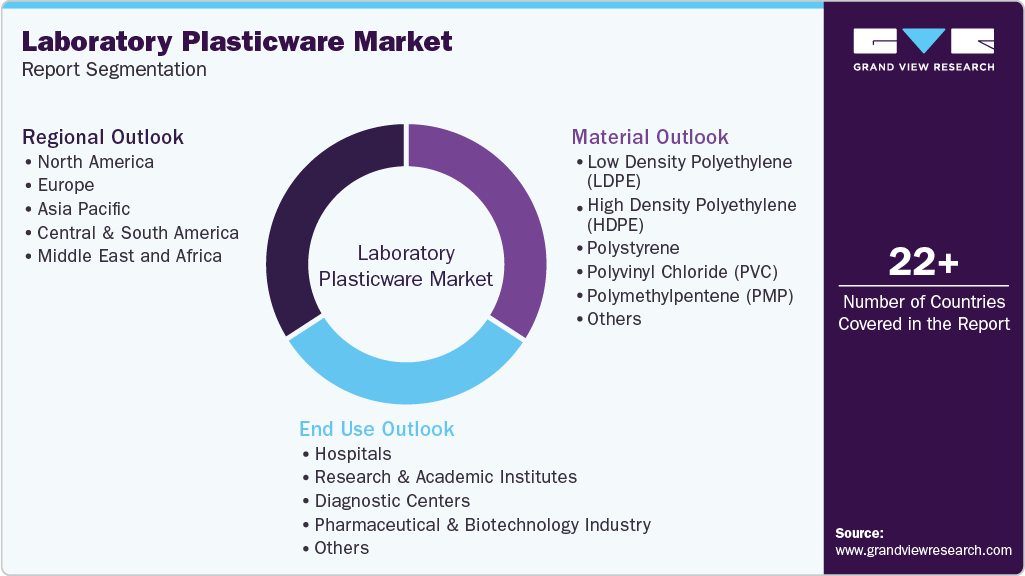
This report forecasts revenue growth at the global, regional, and country levels and provides an analysis of the latest industry trends across sub-segments from 2021 to 2033. For this study, Grand View Research has segmented the global laboratory plasticwaremarket report based on material, end use, and region:
 To learn more about this report, Download Free Sample Report
 -
Material Outlook (Volume, Kilotons; Revenue, USD Million, 2021 - 2033)
-
Low Density Polyethylene (LDPE)
-
High Density Polyethylene (HDPE)
-
Polystyrene
-
Polyvinyl Chloride (PVC)
-
Polymethylpentene (PMP)
-
Others
-
-
End Use Outlook (Volume, Kilotons; Revenue, USD Million, 2021 - 2033)
-
Hospitals
-
Research And Academic Institutes
-
Diagnostic Centers
-
Pharmaceutical And Biotechnology Industry
-
Others
-
-
Regional Outlook (Volume, Kilotons; Revenue, USD Million, 2021 - 2033)
-
North America
-
U.S.
-
Canada
-
Mexico
-
-
Europe
-
Germany
-
UK
-
France
-
Italy
-
Spain
-
Netherlands
-
Denmark
-
-
Asia Pacific
-
China
-
India
-
Japan
-
South Korea
-
Indonesia
-
Thailand
-
-
Central & South America
-
Brazil
-
Argentina
-
-
Middle East and Africa
-
Saudi Arabia
-
UAE
-
South Africa
-
-
Frequently Asked Questions About This Report
The global laboratory plasticware market is expected to grow at a CAGR of 4.1% from 2026 to 2033, reaching USD 3.3 billion by 2033.
The low-density polyethylene (LDPE) segment led the market with the largest revenue share of 28.7% in 2025. LDPE-based laboratory plasticware is frequently used because of its versatility, low cost, and dependability in a variety of laboratory environments. The growth of R&D activities in biotechnology, pharmaceuticals, and clinical diagnostics is a key driver of the LDPE laboratory plasticware market.
Key players include Wacker Chemie AG; Thermo Fisher Scientific; Duran Group; Corning Inc.; Technosklo Ltd.; ISOLAB; Peninsula Plastics; VITLAB GmbH; Gerresheimer; Eppendorf AG; Eurofins.
The rise in research and development activities in pharmaceuticals, biotechnology, and healthcare is expected to drive the demand for laboratory plasticware.
Asia Pacific dominated with a 33.6% revenue share in 2025.
The diagnostic centers segment led with a 37.9% revenue share in 2025, and is the fastest-growing end use.
The global laboratory plasticware market size was valued at USD 2.4 billion in 2025 and is estimated at USD 2.5 billion for 2026.
About the Author(s)
Plastics, Polymers & Resins Research Team
Bulk Chemicals · Plastics, Polymers & ResinsThis report was authored by the plastics, polymers & resins research team at Grand View Research - comprising two research analysts, one senior research analyst, and one industry expert - with specialized expertise in the plastics, polymers & resins segment of the bulk chemicals industry. All findings are based on proprietary bulk chemicals databases, executive interviews, and regulatory analysis, subject to internal peer review prior to publication.
Last Updated:
Speak to Analyst

Customize this report to your needs - add regions, segments, or data points, with 20% free customization.
Or view our licence options:


ISO 9001:2015 & 27001:2022 Certified
We are GDPR and CCPA compliant! Your transaction & personal information is safe and secure. For more details, please read our privacy policy.


