
- Home
- »
- Biotechnology
- »
-
DNA Manufacturing Market Size & Share Report, 2026-2033GVR Report cover
![DNA Manufacturing Market (2026 - 2033)Report]()
DNA Manufacturing Market (2026 - 2033)
Size, Share & Trends Analysis Report By Type (Plasmid, Synthetic), By Grade (GMP, R&D), By Application (Cell & Gene Therapy, Vaccines), By End Use, By Region, And Segment Forecasts
Market Size, 2025
$6.4BMarket Estimate, 2026
$7.4BMarket Forecast, 2033
$23.1BCAGR, 2026–2033
17.8%DNA Manufacturing Market Summary
The global DNA manufacturing market size was valued at USD 6.4 billion in 2025 and is projected to grow from USD 7.4 billion in 2026 to USD 23.1 billion by 2033, at a CAGR of 17.8% from 2026 to 2033. The market in North America dominated with a revenue share of 44.5% in 2025. This growth is driven by increasing demand for gene therapies, personalized medicine, and advancements in synthetic biology.

Key Market Trends & Insights
- By type: Synthetic DNA segment held the largest market share of 60.7% in 2025.
- By grade: GMP-grade DNA manufacturing segment held the largest market share of 56.3% in 2025.
- By application: Cell and gene therapy (CGT) segment held the largest market share of 44.1% in 2025.
- By end use: Pharmaceutical and biotechnology companies segment held the largest market share of 48.8% in 2025.
Regional Highlights
- Largest regional market: North America (44.5% revenue share, 2025)
- Fastest-growing regional market: Asia Pacific (highest CAGR, 2026-2033)
- By country: U.S. held the largest market share in 2025
Market Size & Forecast
- Market size in 2025: USD 6.4 Billion
- Estimated market size in 2026: USD 7.4 Billion
- Projected market size by 2033: USD 23.1 Billion
- CAGR (2026-2033): 17.8%
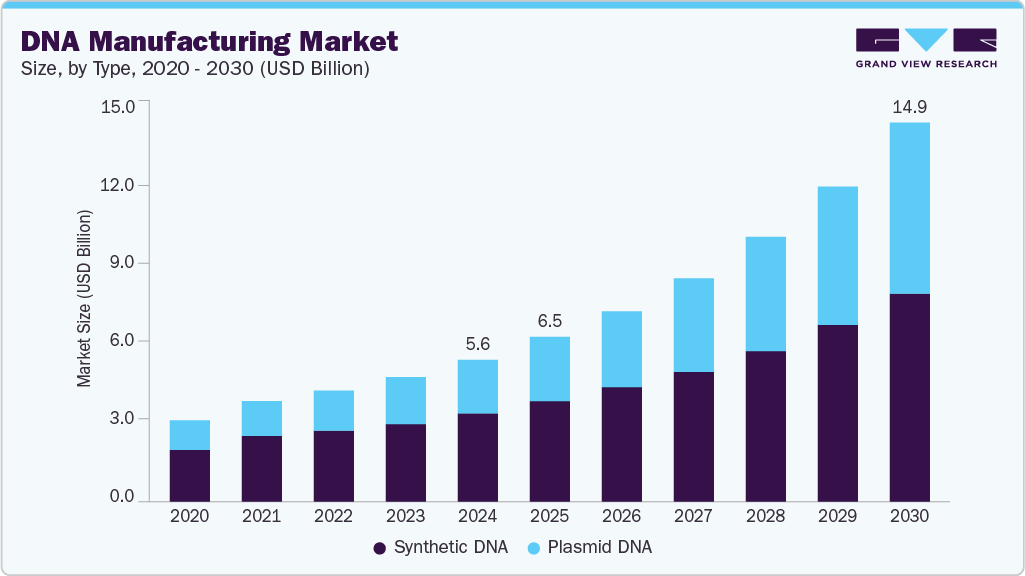
Expanding applications in pharmaceutical research and vaccine development also contribute to market expansion. For instance, in July 2024, GenScript Biotech announced the launch of an advanced DNA synthesis platform that reduces production time, enabling faster development of gene therapies and synthetic vaccines.Growth of Gene Therapy
Gene therapies are transforming the treatment landscape for genetic disorders, rare diseases, and common chronic conditions. Gene therapies directly modify or replace faulty genes within a patient’s cells, offering the potential for long-lasting or curative effects. For instance, in September 2022, GenScript USA Inc. introduced the GenWand Double-Stranded DNA (dsDNA) service, designed to enhance CRISPR-based gene editing in T-cell engineering. This service offers covalently closed, linear DNA templates that are more stable and less prone to endonuclease degradation, thereby improving homology-directed repair (HDR) efficiency and reducing off-target effects compared to traditional PCR-based methods. This innovative approach requires large-scale production of highly precise, pure DNA sequences to develop therapeutic vectors, such as viral carriers or plasmids, that deliver corrective genes into patient cells.
Recent approved gene therapies
Product name
Generic name
Year first approved
Disease(s)
Locations approved
Company
zevorcabtagene autoleucel
zevorcabtagene autoleucel
2024
Relapsed or refractory multiple myeloma
China
CARsgen Therapeutics
Beqvez
fidanacogene elaparvovec
2024
Hemophilia B
Canada
Pfizer
Lyfgenia
lovotibeglogene autotemcel
2023
Sickle cell anemia
U.S.
bluebird bio
inaticabtagene autoleucell
inaticabtagene autoleuce
2023
Acute lymphocytic leukemia
China
Juventas Cell Therapy
Casgevy
exagamglogene autotemcel
2023
Sickle cell anemia; thalassemia
U.S., UK, Bahrain, Saudi Arabia, EU
CRISPR Therapeutics
Fucaso
equecabtagene autoleucel
2023
Multiple myeloma
China
Nanjing IASO Biotechnology
Vyjuvek
beremagene geperpavec
2023
Dystrophic epidermolysis bullosa
U.S.
Krystal Biotech
Elevidys
delandistrogene moxeparvovec
2023
Duchenne muscular dystrophy
U.S.
Sarepta Therapeutics
Source: ASCGT, Primary Interviews, Grand View Research
For instance, in November 2024, NewBiologix launched its Xcell rAAV Production and Analytics Platform. It enables simultaneous screening of multiple rAAV candidates and provides comprehensive data reports that support preclinical and clinical development. Key features include detailed characterization of encapsulated DNA, including full and empty capsid ratios and gene sequence integrity, to accelerate gene therapy development. As more gene therapies progress through clinical trials and receive regulatory approvals, the demand for DNA manufacturing grows exponentially. The complexity and customization required for each treatment drive the need for advanced DNA synthesis technologies capable of producing high-quality DNA at scale and speed. Diseases like spinal muscular atrophy, certain types of inherited blindness, and blood disorders such as beta-thalassemia have experienced successful gene therapy treatments, fueling the market expansion of DNA manufacturing.
Automation and Grade Improvements
Technological advancements and automation are revolutionizing the DNA manufacturing industry by improving accuracy and significantly reducing costs. Innovations such as silicon-based DNA synthesis, microfluidics, and AI-powered design tools enable high-throughput production with enhanced precision and reproducibility. For instance, in November 2023, Twist Bioscience launched Express Genes, a rapid gene synthesis service delivering NGS-verified clonal genes within five to seven days, leveraging its silicon-based platform and expanded manufacturing capacity.
Improvements in sequencing technologies and bioinformatics have further streamlined quality control processes, ensuring that synthetic DNA products consistently meet the stringent standards required for clinical and research use. For instance, in March 2025, WuXi Biologics introduced the EffiX platform, an E. coli-based system designed to enhance recombinant proteins and plasmid DNA production, delivering high yield, stability, scalability, and cost-efficient manufacturing. This platform supports the efficient development and manufacturing of diverse biologics modalities. The continued adoption of automation and advanced technologies is transforming the market landscape by enabling rapid, high-quality production of complex DNA sequences at scale.
Market Concentration & Characteristics
The DNA manufacturing industry is highly innovative, driven by advancements in synthesis technologies, automation, and AI integration. Breakthroughs such as silicon-based and enzymatic DNA synthesis have enabled faster, more scalable, and environmentally sustainable production. Automation and AI tools enhance sequence accuracy and reduce turnaround time, while advances in long, complex DNA synthesis expand applications in gene therapy, synthetic biology, and biotechnology. For instance, in May 2025, researchers highlighted that cell-free DNA synthesis combined with AI-driven design enhanced mRNA therapeutic development, improving sequence optimization, accelerating drug discovery, and enabling scalable production for vaccines, cancer, and genetic disorder treatments. As demand for personalized medicine and genetic engineering grows, these innovations transform DNA manufacturing into a faster, smarter, and more globally accessible industry.
The DNA manufacturing industry is experiencing moderate to high M&A activity, driven by rapid industry growth, technological advancements, and increased demand for gene therapies and personalized medicine. For instance, in March 2025, Integrated DNA Technologies (IDT) and Elegen announced a partnership launching access to the ENFINIA plasmid DNA service, enabling rapid synthesis of long, complex sequences up to 15 kb. These mergers reflect a broader consolidation trend as companies seek to enhance technological capabilities, expand service offerings, and strengthen their competitive positions in a rapidly evolving global market.
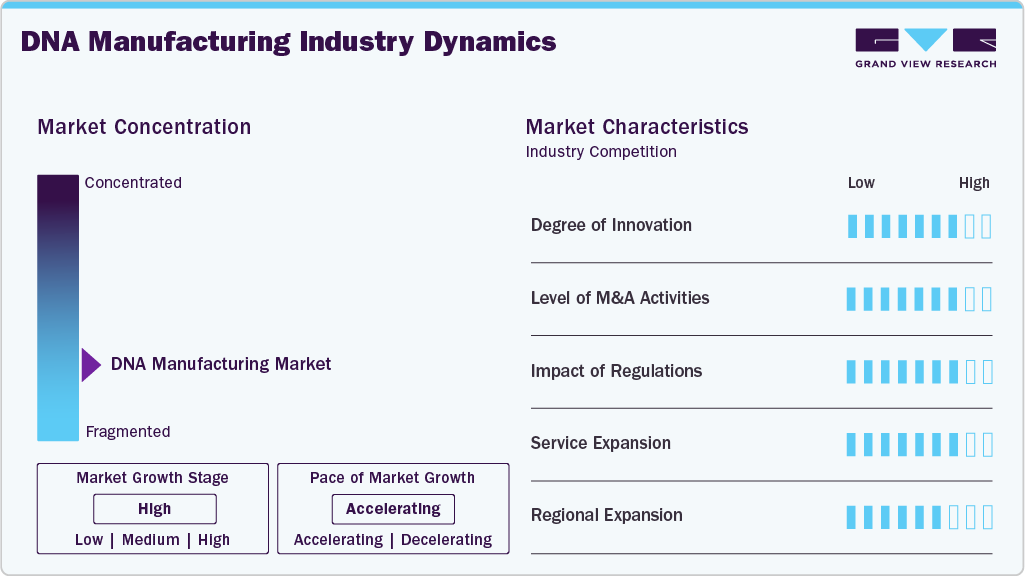
Regulations have a significant dual impact on the DNA manufacturing industry. Strict guidelines from agencies like the FDA and EMA ensure safety, quality, and ethical standards, particularly for clinical applications such as gene therapies and diagnostics, which can increase costs and slow time-to-market. Clear regulatory pathways and supportive policies, including fast-track approvals and public-private partnerships, help foster innovation and commercial growth. Moreover, emerging regulations on biosecurity and genetic data privacy shape how DNA is synthesized and used globally, making compliance challenging and driving trust and long-term market stability.
DNA manufacturing is experiencing significant momentum through continuous product expansion as companies broaden their offerings to meet the increasing demand for healthcare, biotechnology, and synthetic biology. Manufacturers are moving beyond basic gene synthesis to offer custom oligonucleotides, plasmid DNA, gene libraries, and CRISPR components, supporting diverse applications such as gene therapy, diagnostics, and vaccine development. For instance, in May 2025, Oligo Factory expanded its portfolio by introducing low-scale oligonucleotide synthesis, enhancing access to GMP-ready custom nucleotides in quantities as low as 25 mg and supporting therapeutics, diagnostics, and life science applications with improved flexibility. Such expansions strengthen market competitiveness and open new revenue streams across research and commercial sectors.
Regional expansion is a key growth strategy in the DNA manufacturing industry, with North America and Europe leading due to established biotech infrastructure and favorable regulations. Asia-Pacific is rapidly emerging as a major hub driven by government investments and growing demand for genomics and personalized medicine. Companies are expanding their global presence by establishing regional manufacturing sites, forming partnerships, and enhancing distribution networks to improve accessibility and reduce turnaround times. This geographic diversification enables firms to better serve local markets, optimize supply chains, and capitalize on the growing global demand for DNA manufacturing products.
Type Insights
The synthetic DNA segment accounted for the largest revenue share of 60.7% of the market in 2025, driven by increasing applications in gene editing, synthetic biology, diagnostics, and personalized medicine. Chemical synthesis and enzymatic methods have improved the length, accuracy, and scalability of synthetic DNA production, making complex constructs more accessible. For instance, in February 2025, researchers at Michigan Technological University demonstrated direct chemical synthesis of long oligonucleotides exceeding 1700 nucleotides, enabling improved yield, reduced errors, and facilitating advanced synthetic biology and protein engineering applications. Companies are investing heavily in improving synthesis speed, reducing costs, and integrating automation to meet the needs of diverse end-users, driving innovation and market growth.
The plasmid segment is expected to grow at the fastest CAGR over the forecast period, driven by its crucial role in gene therapies and DNA vaccines. Advancements in production technologies, strategic partnerships, and the growing prevalence of genetic disorders necessitate innovative therapeutic solutions. For instance, in June 2024, Thermo Fisher Scientific launched the Thermo Scientific KingFisher PlasmidPro Maxi Processor, the only fully automated maxi-scale plasmid DNA (pDNA) purification system. This system streamlines the purification process by eliminating manual column preparation, centrifugation, and pipetting. The PlasmidPro system can process 100-150 mL of fresh overnight culture, yielding up to 1.5 mg of high-purity plasmid DNA in approximately 75 minutes.
Grade Insights
The GMP-grade DNA manufacturing segment held the largest market share of 56.3% in 2025, driven by its critical role in clinical and therapeutic applications. The strict quality and regulatory standards associated with GMP-grade plasmids ensure safety, consistency, and compliance, making them essential for clinical trials and advanced therapies. This has significantly increased the demand for GMP-grade plasmid DNA across biopharmaceutical development. For instance, in April 2025, ProBio Inc. launched a GMP plasmid DNA manufacturing service capable of delivering clinical-grade DNA within three months, ensuring ≥85% supercoiled content and improved reliability.
The R&D-grade DNA manufacturing segment is expected to grow at the significant CAGR over the forecast period, driven by its essential role in foundational research, drug discovery, and early-stage therapeutic development. Manufactured under standard laboratory conditions, these plasmids are extensively used in applications such as viral vector development and DNA vaccine research. The growing demand for high-quality research materials, along with increasing investments in life sciences research, is expected to drive segment growth.
Application Insights
The cell and gene therapy (CGT) segment accounted for the largest revenue share of 44.1% of the market in 2025. It is driven by its essential role in developing advanced therapies for cancers, genetic disorders, and rare diseases. This segment relies heavily on high-quality DNA products, such as plasmids and synthetic DNA, to produce viral vectors, gene-editing tools, and therapeutic constructs. For instance, in June 2023, GenScript ProBio and Comprehensive Cell Solutions established a strategic partnership to advance cell and gene therapies, delivering integrated solutions from cell sourcing to manufacturing, enhancing scalability, regulatory compliance, and accelerating clinical and commercial development.
The oligonucleotide-based drugs segment is anticipated to grow at the fastest CAGR throughout the forecast period. This is driven by the increasing development of therapies that utilize short DNA or RNA sequences to modulate gene expression. High demand for customized, high-purity oligonucleotides has driven advances in manufacturing technologies, enabling scalable, cost-effective production. As precision medicine and RNA-based therapeutics evolve, oligonucleotide-based drugs continue driving innovation in DNA manufacturing.
End Use Insights
The pharmaceutical and biotechnology companies segment dominated the market with the largest market share of 48.8% in 2025. These companies rely heavily on synthetic DNA, plasmid DNA, and oligonucleotides for drug discovery, gene therapy development, vaccine production, and synthetic biology applications. The increasing focus on personalized medicine, gene editing technologies such as CRISPR, and novel biologics has driven demand for high-quality, scalable DNA manufacturing solutions. Pharmaceutical and biotech firms continue to innovate and expand their pipelines, increasing the demand for advanced DNA manufacturing products and services.
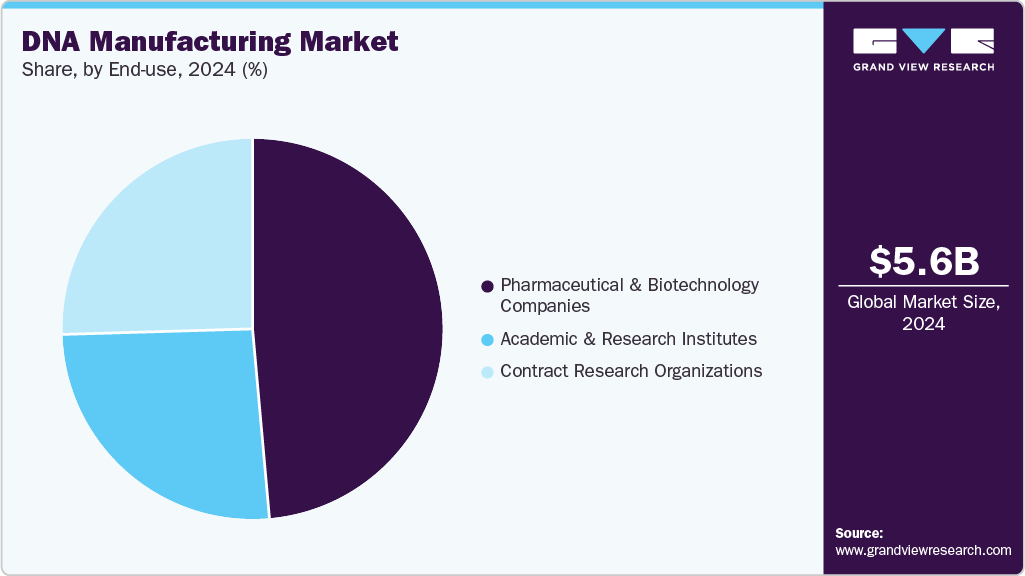
The Contract Research Organizations (CROs) segment is anticipated to grow at the fastest CAGR throughout the forecast period. The increasing trend of outsourcing complex DNA manufacturing processes to CROs allows companies to reduce costs, accelerate timelines, and access specialized expertise and advanced technologies. The growing demand for personalized medicine and innovative therapies further fuels CRO involvement, making them essential partners in driving efficiency and scalability across the DNA manufacturing supply chain.
Regional Insights
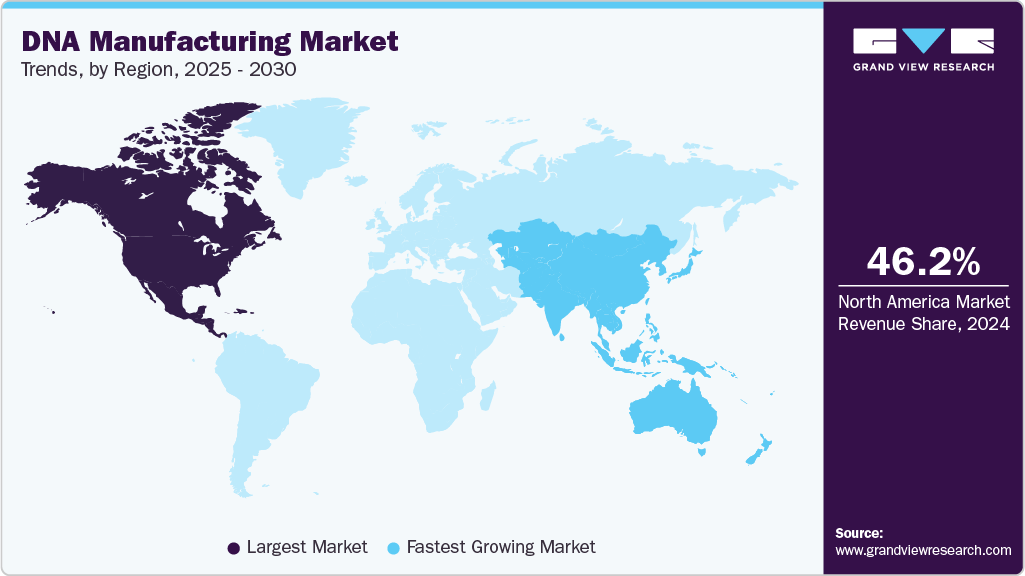
North America dominated the DNA manufacturing industry, with the largest market share of 44.5% in 2025, driven by its robust biotech infrastructure, strong academic research institutions, and advanced healthcare systems. The high demand for gene therapies, precision medicine, and cutting-edge biotech research is driving significant market growth. The presence of leading biotech companies, government support for genomics research, and favorable regulatory frameworks have made the region a global leader in DNA manufacturing. Moreover, the ongoing development of mRNA-based vaccines and genetic therapies is driving demand for synthetic and plasmid DNA, positioning North America as a key market region.
U.S DNA Manufacturing Market Trends
The U.S. DNA manufacturing market remains the largest market for DNA manufacturing, primarily due to its leadership in biotechnology innovation and significant investments in genomic research and therapies. The rise of personalized medicine, gene-editing technologies, and cell and gene therapies has created a sustained need for high-quality DNA products. The FDA’s regulatory support for gene-based therapies and expanding clinical trials has accelerated the demand for DNA manufacturing services. Moreover, the country’s well-established healthcare system and numerous biotech hubs ensure a constant demand for advanced DNA manufacturing technologies.
Europe DNA Manufacturing Market Trends
The DNA manufacturing market in Europe holds a significant share of the global market, driven by the continuous growth of its pharmaceutical and biotechnology sectors. For instance, in March 2023, Catalent opened a state-of-the-art, commercial-scale plasmid DNA (pDNA) manufacturing facility at its European Center of Excellence in Gosselies, Belgium, spanning over 12,000 square feet and featuring multiple cleanrooms designed for CGMP-grade pDNA production for clinical and commercial applications. Moreover, the region benefits from a favorable regulatory environment, with the European Medicines Agency (EMA) supporting the approval of gene-based treatments. The increasing prevalence of genetic diseases, cancer, and rare disorders has fueled demand for gene therapies and synthetic DNA products.
The UK DNA manufacturing market is experiencing strong growth in the DNA manufacturing industry, as the country is home to several world-renowned research institutions, such as the Francis Crick Institute, and has become a leader in gene-editing technologies like CRISPR. The UK government has introduced initiatives such as the Life Sciences Industrial Strategy, which aims to bolster the country’s biotech capabilities, including DNA manufacturing. For instance, in April 2025, 4basebio received GMP certification from the UK’s MHRA, enabling it to manufacture and supply GMP-grade synthetic DNA for clinical trials, particularly in cell and gene therapies and mRNA vaccines. With a growing focus on personalized medicine and cancer treatment, demand for DNA-based therapies and gene synthesis is rising, making the UK a crucial market for DNA manufacturing.
The DNA manufacturing market in Germany is experiencing significant growth, driven by the strong emphasis on pharmaceutical manufacturing and biotech research. The country benefits from advanced infrastructure, a highly skilled workforce, and close collaboration between academia and industry. This collaborative environment is fueling demand for high-quality synthetic DNA. Moreover, the regulatory environment in Germany, supported by the European Medicines Agency (EMA), provides a stable framework for the approval of gene-based treatments, driving demand for plasmid and synthetic DNA products used in clinical applications.
Asia Pacific DNA Manufacturing Market Trends
The DNA manufacturing market in the Asia Pacific is expected to grow at the fastest CAGR of 19.6% during the forecast period, driven by the expanding pharmaceutical and biotechnology industries in countries like China, Japan, and India. The region’s growing emphasis on personalized medicine, gene therapy, and vaccine development has increased demand for DNA manufacturing solutions. In addition, the increasing adoption of cell and gene therapies and strong government support for biotech innovations are poised to further accelerate demand for the DNA manufacturing industry.
China DNA manufacturing market has become one of the largest markets for DNA manufacturing, driven by substantial government investments in genomics and biotechnology research. The Chinese government’s support for the development of gene therapies and the growing healthcare needs of its aging population have accelerated the demand for synthetic DNA and plasmid DNA for gene therapy applications. For instance, in May 2025, Chinese scientists at Fudan University successfully cured thalassemia in children using the domestically developed CS-101 DNA base editing therapy, advancing gene therapy for severe blood disorders in China.
The DNA manufacturing market in Japan is growing rapidly, particularly in regenerative medicine, gene therapies, and cell therapies. The country's regulatory environment, which supports the continuous development and approval of gene therapies, plays a crucial role in driving market expansion. For instance, in December 2023, Synplogen and Ginkgo Bioworks signed a non-binding Memorandum of Understanding to accelerate DNA manufacturing and gene therapy platform services in Japan, aiming to strengthen the local biotech ecosystem. This collaboration seeks to improve the local biotech ecosystem. Moreover, advanced research infrastructure and strong partnerships between academia and industry fuel the market demand.
MEA DNA Manufacturing Market Trends
The DNA manufacturing market in MEA is witnessing growing demand for DNA manufacturing driven by investments in healthcare infrastructure, biotechnology research, and medical advancements. Countries like the United Arab Emirates (UAE) and Saudi Arabia are making significant strides in healthcare innovation, focusing on gene therapies and personalized medicine. Moreover, the demand for vaccines, including mRNA-based vaccines, further expands the market. For instance, in February 2025, EVA Pharma, DNA Script, and Quantoom Biosciences signed an MoU in Africa to develop an mRNA platform producing 100 million vaccine doses annually, strengthening regional manufacturing and health security.
Kuwait DNA manufacturing market is projected to grow steadily, driven by the country's expanding healthcare sector and investments in medical research. The focus on improving healthcare outcomes and diversifying its economy has increased interest in advanced biotechnology. Moreover, collaboration with international biotech companies and research institutions is expected to drive demand for DNA manufacturing solutions.
Key DNA Manufacturing Company Insights
The market is characterized by several established players who dominate through strong product portfolios, strategic collaborations, and consistent R&D investments. Leading companies, including Lonza, Charles River Laboratories, Inc., Thermo Fisher Scientific Inc., and VGXI, Inc., continue to dominate the landscape through a combination of advanced technological capabilities, end-to-end service offerings, and strategic growth initiatives. These organizations have solidified their leadership in the market by addressing the growing demand for high-quality plasmid DNA and other genetic materials used in gene therapies, vaccines, and cell-based treatments.
In addition to these emerging players, companies such as GenScript, Catalent, Inc., and Wuxi AppTec are expanding their footprint in the market through strategic investments, facility expansions, and acquisitions.

Companies such as Charles River Laboratories, Inc., VGXI, Inc., and Lonza are leading the charge by providing advanced contract development and manufacturing services (CDMO) for the biotechnology and pharmaceutical industries. These organizations offer comprehensive solutions ranging from preclinical research and process development to clinical and commercial-scale manufacturing, playing a crucial role in accelerating the development of gene therapies, vaccines, and other biologics.
Key DNA Manufacturing Companies:
The following key companies have been profiled for this study on the DNA manufacturing market.
- Charles River Laboratories, Inc.
- VGXI, Inc.
- Danaher Corporation (Aldevron)
- Thermo Fisher Scientific
- Lonza
- GenScript
- Catalent
- Wuxi AppTec
- Kaneka Corp.
- Eurofins Genomics
Recent Developments
-
In May 2025, VGXI, Inc., a CDMO specializing in nucleic acid-based therapeutics, successfully completed an FDA inspection at its Conroe, Texas, facility. This milestone allows its client to submit a Biologics License Application (BLA) for plasmid DNA used in gene therapies and mRNA vaccines, reinforcing VGXI's leadership in scalable, high-purity plasmid DNA manufacturing.
-
In January 2025, Catalent partnered with Galapagos NV to support decentralized manufacturing of GLPG5101, an investigational CAR-T therapy for relapsed/refractory non-Hodgkin lymphoma. The collaboration aims to streamline delivery by bringing production closer to treatment centers, reducing logistical barriers, and improving patient access. Galapagos' platform enables delivery of fresh, stem-like cell therapy within a median vein-to-vein time of seven days, avoiding cryopreservation and bridging therapy.
“Catalent is passionate about increasing patient access to life-changing cell therapies like those being developed by Galapagos.”
-said, Delara Motlagh, Vice President, Global Cell Therapy and Plasmid DNA at Catalent.
-
In September 2024, Eurofins Genomics US opened a GMP-certified oligonucleotide manufacturing facility in Louisville, Kentucky, to meet rising demand for high-quality synthetic DNA and RNA. Featuring separate RUO and GMP production streams, the facility ensures regulatory compliance and prevents cross-contamination. Advanced automation boosts efficiency, purity, and traceability, especially for NGS applications, nearly doubling production capacity and improving lead times.
DNA Manufacturing Market Report Scope
Report Attribute
Details
Market size in 2025
USD 6.4 billion
Estimated market size in 2026
USD 7.4 billion
Projected market size by 2033
USD 23.1 billion
Growth rate
CAGR of 17.8% from 2026 to 2033
Historical data
2021 - 2024
Forecast period
2026 - 2033
Quantitative units
Revenue in USD million/billion and CAGR from 2026 to 2033
Report coverage
Revenue forecast, company ranking, competitive landscape, growth factors, and trends
Segments covered
Type, grade, application, end use, region
Regional scope
North America; Europe; Asia Pacific; Latin America; MEA
Country scope
U.S., Canada, Mexico, UK, Germany, France, Italy, Spain, Denmark, Sweden, Norway, India, China, Japan, Australia, South Korea, Thailand, Brazil, Argentina, Saudi Arabia, UAE, South Africa, Kuwait
Key companies profiled
Charles River Laboratories; VGXI, Inc.; Danaher (Aldevron); Thermo Fisher Scientific; Lonza; GenScript; Catalent; Wuxi AppTec; Kaneka Corp.; Eurofins Genomics
Customization scope
Free report customization (equivalent up to 8 analyst’s working days) with purchase. Addition or alteration to country, regional & segment scope.
Global DNA Manufacturing Market Report Segmentation
This report forecasts revenue growth and provides an analysis of the latest trends in each of the sub-segments from 2021 to 2033. For this report, Grand View Research has segmented the global DNA manufacturing market based on type, grade, application, end use, and region:
-
Type Outlook (Revenue, USD Million, 2021 - 2033)
-
Plasmid DNA
-
Synthetic DNA
-
Gene Synthesis
-
Oligonucleotide Synthesis
-
-
-
Grade Outlook (Revenue, USD Million, 2021 - 2033)
-
GMP Grade
-
R&D Grade
-
-
Application Outlook (Revenue, USD Million, 2021 - 2033)
-
Cell & Gene Therapy
-
Vaccines
-
Oligonucleotide-based Drugs
-
Others
-
-
End Use Outlook (Revenue, USD Million, 2021 - 2033)
-
Pharmaceutical and Biotechnology Companies
-
Academic & Research Institutes
-
Contract Research Organizations
-
-
Regional Outlook (Revenue, USD Million, 2021 - 2033)
-
North America
-
U.S.
-
Canada
-
Mexico
-
-
Europe
-
UK
-
Germany
-
France
-
Italy
-
Spain
-
Denmark
-
Sweden
-
Norway
-
-
Asia Pacific
-
Japan
-
China
-
India
-
South Korea
-
Australia
-
Thailand
-
-
Latin America
-
Brazil
-
Argentina
-
-
Middle East & Africa
-
South Africa
-
Saudi Arabia
-
UAE
-
Kuwait
-
-
Frequently Asked Questions About This Report
Key factors driving market growth include increasing demand for gene therapies, mRNA vaccines, and personalized medicine in the global DNA manufacturing sector.
The synthetic DNA segment led with a 60.7% revenue share in 2025, while the plasmid segment is the fastest-growing.
The GMP-grade DNA manufacturing segment led with a 56.3% revenue share in 2025.
The cell and gene therapy (CGT) segment led with a 44.1% revenue share in 2025, while the oligonucleotide-based drugs segment is the fastest-growing.
Pharmaceutical and biotechnology companies segment held the largest share (over 48.0%) in 2025, while the contract research organizations (CROs) segment is the fastest-growing.
The global DNA manufacturing market size was valued at USD 6.4 billion in 2025 and is estimated at USD 7.4 billion for 2026.
The global DNA manufacturing market is expected to grow at a CAGR of 17.8% from 2026 to 2033, reaching USD 23.1 billion by 2033.
North America dominated with a 44.5% revenue share in 2025.
Asia Pacific is the fastest-growing region over the forecast period.
Key players include Charles River Laboratories; VGXI, Inc.; Danaher (Aldevron); Thermo Fisher Scientific; Lonza; GenScript; Catalent; Wuxi AppTec; Kaneka Corp.; Eurofins Genomics
About the Author(s)
Biotechnology Research Team
Healthcare · BiotechnologyThis report was authored by the biotechnology research team at Grand View Research - comprising two research analysts, one senior research analyst, and one industry expert - with specialized expertise in the biotechnology segment of the healthcare industry. All findings are based on proprietary healthcare databases, executive interviews, and regulatory analysis, subject to internal peer review prior to publication.
Last Updated:
Speak to Analyst


Customize this report to your needs — add regions, segments, or data points, with 20% free customization.
Or view our licence options:


ISO 9001:2015 & 27001:2022 Certified
We are GDPR and CCPA compliant! Your transaction & personal information is safe and secure. For more details, please read our privacy policy.


