
- Home
- »
- Biotechnology
- »
-
Life Science Tools Market Size & Share Report, 2026-2033GVR Report cover
![Life Science Tools Market (2026 - 2033)Report]()
Life Science Tools Market (2026 - 2033)
Size, Share & Trends Analysis Report By Technology (Cell Biology Technology, Genomic Technology ), By Product & Service (PCR & qPCR, Next-generation Sequencing), By End-use, By Region, And Segment Forecasts
Market Size, 2025
$184.3BMarket Estimate, 2026
$202.6BMarket Forecast, 2033
$401.0BCAGR, 2026–2033
10.2%Life Science Tools Market Summary
The global life science tools market size was valued at USD 184.3 billion in 2025 and is projected to grow from USD 202.6 billion in 2026 to USD 401.0 billion by 2033, at a CAGR of 10.2% from 2026 to 2033. North America dominated the market, accounting for a revenue share of 42.9% in 2025. The growth is supported by rising investments in genomics, proteomics, drug discovery, cell biology, and advanced analytical technologies across pharmaceutical, biotechnology, and academic research institutions.

Key Market Trends & Insights
- By technology: Cell biology technology held the largest revenue share of 32.8% in 2025.
- By product & service: PCR & qPCR held the largest revenue share of 18.4% in 2025.
- By end use: Healthcare held the largest revenue share of 32.0% in 2025.
Regional Highlights
- Largest regional market: North America (42.9% revenue share, 2025)
- Fastest-growing regional market: Asia Pacific (fastest CAGR, 2026-2033)
- By country: The U.S. is the largest market in North America
Market Size & Forecast
- Market size in 2025: USD 184.3 Billion
- Estimated market size in 2026: USD 202.6 Billion
- Projected market size by 2033: USD 401.0 Billion
- CAGR (2026-2033): 10.2%
The increasing demand for precision medicine, biologics development, and high-throughput research is further driving the adoption of advanced life science tools.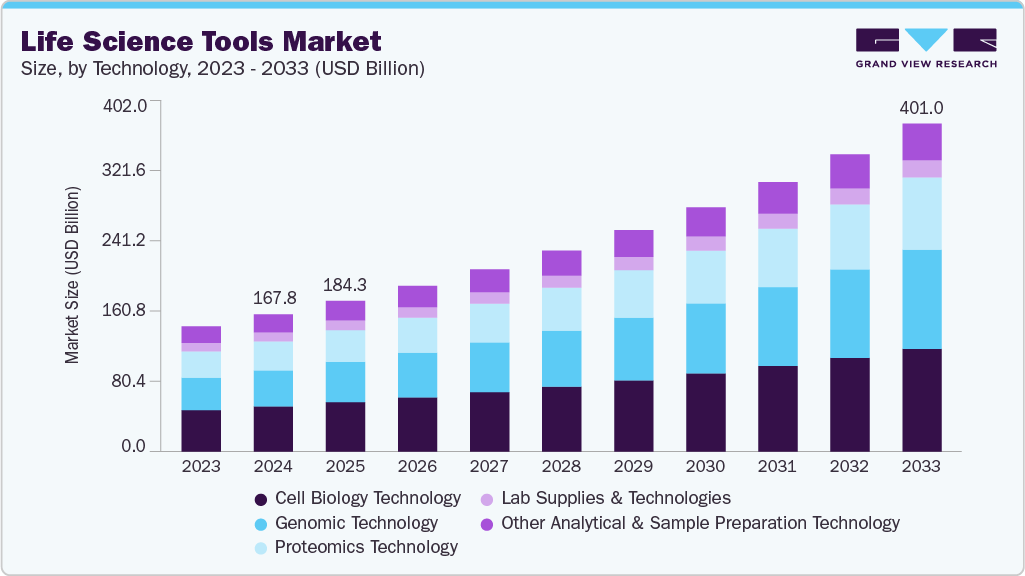
The main drivers of this growth of the life science tools industry are the expanding use of genomic technologies, increasing investments in pharmaceutical and biotechnology R&D, and the growing demand for sophisticated research instruments.
Market Dynamics
The life science tools market is experiencing steady growth, supported by rising demand for advanced research instruments, analytical technologies, consumables, and laboratory solutions across biotechnology, pharmaceutical, clinical diagnostics, and academic research. Increasing investment in drug discovery, genomics, proteomics, cell biology, and precision medicine, alongside the expansion of life sciences R&D activity, is supporting market development. In parallel, advances in automation, next-generation sequencing (NGS), cell analysis, and bioinformatics, coupled with the growing burden of chronic and infectious diseases and increasing emphasis on personalized healthcare and biologics development, are creating further opportunities for market expansion.
Artificial intelligence (AI) is emerging as an important growth driver for the life science tools market by improving data analysis, automating laboratory workflows, and accelerating drug discovery and biological research. Integration of AI with genomics, proteomics, metabolomics, and diagnostic platforms enables researchers to analyze complex biological datasets more efficiently, supporting faster research and reducing time-to-discovery. Machine learning is also increasingly applied to molecular target identification, compound screening, predictive analytics, and diagnostic imaging, expanding the capabilities and applications of life science tools.

The growing complexity and volume of biological data are further driving AI adoption across the life sciences industry, as researchers seek more efficient ways to generate and interpret actionable insights. Companies are increasingly partnering with AI technology providers to develop advanced analytical platforms, while cloud-based AI solutions are making these capabilities more accessible to research institutions and mid-sized organizations. In addition, the integration of AI with next-generation sequencing (NGS), CRISPR, and single-cell analysis is creating new opportunities for research automation, personalized medicine, and data-driven biological discovery, supporting the long-term market growth.
The increasing complexity of advanced life science tools and analytical platforms can create challenges for market adoption. Modern systems, including next-generation sequencing (NGS), mass spectrometry, automated cell analysis, and AI-enabled research platforms, generate large and complex biological datasets that require integration with laboratory information management systems (LIMS), cloud infrastructure, and analytical software. Research institutions and smaller laboratories may struggle to integrate multiple technologies into existing workflows, leading to compatibility issues, operational inefficiencies, and delays in research activities.
In addition, sophisticated life science tools often require skilled personnel for operation and maintenance, regular software updates, and significant investments in IT infrastructure and cybersecurity. The growing use of digital platforms and cloud-based data storage also introduces concerns around data security, interoperability, standardization, and regulatory compliance. These requirements can increase operating costs and create barriers to technology adoption, particularly for small and mid-sized laboratories with limited budgets, technical capabilities, and access to specialized expertise.
Advancements in cloud-based bioinformatics and digital laboratory platforms are creating new growth opportunities for the life science tools market. The expanding use of genomics, proteomics, single-cell analysis, and AI-enabled research workflows is generating increasingly large and complex datasets, strengthening demand for scalable computing infrastructure and integrated digital solutions. Cloud-based bioinformatics platforms allow researchers to store, process, analyze, and share data more efficiently while reducing reliance on costly on-premise systems. These solutions also facilitate collaboration across research teams, streamline workflow automation, and support faster decision-making in drug discovery, diagnostics, and precision medicine.
In May 2025, Illumina launched DRAGEN v4.4 software with enhanced cloud-enabled multiomics analysis capabilities and improved scalability through AWS integration, simplifying genomic data analysis workflows. Such developments highlight the broader shift toward cloud-connected laboratory ecosystems, which can improve research efficiency, facilitate data-intensive workflows, and accelerate innovation across the life science tools industry.
Market Concentration & Characteristics
The life science tools industry is characterized by a high degree of innovation, driven by rapid technological advancements, increased R&D investment, and growing demand for personalized medicine. Developments in genomics, proteomics, cell analysis, and AI-enabled technologies are expanding research capabilities and creating opportunities for new analytical and laboratory solutions. At the same time, collaborations among academic institutions, biotechnology companies, pharmaceutical firms, and healthcare organizations are supporting the development and commercialization of advanced technologies.
Mergers and acquisitions (M&A) remain an important strategy for companies seeking to broaden product portfolios, gain access to advanced technologies, strengthen market presence, and achieve greater economies of scale. Strategic consolidation also enables companies to combine complementary capabilities and accelerate the development of integrated solutions. For instance, in February 2026, Waters Corporation completed the combination of BD’s Biosciences & Diagnostic Solutions business with Waters through a Reverse Morris Trust transaction. The transaction, initially announced in July 2025 at an estimated value of approximately USD 17.5 billion, was valued at approximately USD 18.8 billion upon completion. The transaction was intended to create a life science and diagnostics company focused on regulated, high-volume testing markets. Increasing competition, demand for integrated solutions, and opportunities in high-growth application areas are expected to sustain M&A activity across the industry.

The regulatory environment plays an important role in shaping the development, commercialization, and adoption of life science tools. Regulatory requirements emphasize product quality, safety, performance, and reliability, particularly for tools used in research, diagnostics, and clinical applications. As technologies such as genomics, advanced cell analysis, and AI-enabled platforms continue to evolve, regulatory frameworks are also adapting to address new applications and emerging technologies. While compliance can increase development and commercialization costs, clearer regulatory pathways and harmonized requirements can support market access and facilitate the adoption of innovative tools across regions.
Companies in the life science tools industry are also focusing on product development and portfolio expansion to address evolving research requirements and strengthen their competitive positions. Growing demand for precision medicine, molecular biology, cell analysis, and data-driven research is encouraging manufacturers to introduce more specialized and configurable solutions. For instance, in March 2025, Beckman Coulter Life Sciences launched the CytoFLEX mosaic Spectral Detection Module, a modular spectral flow cytometry solution offering up to 88 detection channels for advanced cellular analysis. Such product enhancements enable companies to address diverse research applications while expanding their presence across pharmaceutical, biotechnology, healthcare, and academic research markets.
Regional expansion remains an important strategy for companies seeking to capture growth opportunities in the global life science tools market. North America and Europe continue to benefit from well-established research infrastructure, substantial investment in biotechnology and pharmaceutical R&D, and strong academic and scientific ecosystems. These regions also have a significant presence of leading industry participants and relatively high adoption of advanced research technologies. At the same time, companies are increasingly expanding into Asia Pacific and other emerging markets, where growing R&D activity, biotechnology investment, and laboratory infrastructure are creating additional opportunities for life science tools.
Analyst Perspective
The life science tools market is expanding as pharmaceutical and biotechnology R&D investment, adoption of genomic and proteomic technologies, and laboratory modernization increase demand for advanced research capabilities. Growing complexity in drug discovery, precision medicine, and molecular research is driving demand for sophisticated instruments, consumables, analytical platforms, and automation. Advancements in next-generation sequencing, mass spectrometry, PCR, flow cytometry, imaging, and high-throughput technologies are improving research efficiency and accuracy. Automation, AI, and digital laboratory platforms are enabling connected workflows and reducing manual intervention, while expanding biotechnology activity in emerging economies, particularly Asia Pacific, creates further opportunities. Manufacturers are focusing on integrated platforms, workflow automation, differentiated technologies, and application-specific solutions, with future growth dependent on R&D investment, innovation, affordability, skilled talent, and scalable research tools.
Case Study
Waters Corporation & BD (Becton, Dickinson and Company) - Strategic Combination to Expand Diagnostics and Analytical Tools
Overview:
In July 2025, Waters Corporation announced a definitive agreement to combine with BD (Becton, Dickinson and Company)’s Biosciences & Diagnostic Solutions business through a Reverse Morris Trust transaction valued at approximately USD 17.5 billion. The transaction aimed to create a leading life science and diagnostics company focused on regulated, high-volume testing markets.
Objective:
The strategic objective of the transaction was to strengthen capabilities in analytical instruments, flow cytometry, molecular diagnostics, and bioanalytical characterization, while expanding access to high-growth life sciences and clinical diagnostics markets.
Key Developments:
-
Combined Waters’ expertise in liquid chromatography and mass spectrometry with BD’s strengths in flow cytometry, molecular diagnostics, and microbiology solutions.
-
Expanded the combined company’s total addressable market to nearly USD 40 billion.
-
Increased recurring revenue contribution to more than 70% through consumables, services, and diagnostic testing solutions.
-
Enabled cross-selling opportunities across pharmaceutical, biologics, clinical diagnostics, and research laboratories.
Business Impact:
The transaction significantly strengthened Waters’ position in the life science tools market by expanding into adjacent high-growth areas, including biologics characterization, multiplex diagnostics, and clinical laboratory automation. The integration also enhanced long-term growth potential by expanding product portfolios, generating recurring revenue streams, and improving global commercial reach.
Market Significance:
This case study highlights the increasing consolidation trend in the life science tools industry, where companies are combining analytical technologies, diagnostic capabilities, and digital laboratory solutions to create integrated platforms that support precision medicine, biologics development, and regulated laboratory workflows.
Technology Insights
The cell biology segment accounted for the largest revenue share of 32.8% in 2025, supported by its broad applications in drug discovery, cancer research, regenerative medicine, and vaccine development. The growing adoption of advanced cell analysis technologies, including flow cytometry and high-content screening, is further strengthening demand in the segment by enabling more detailed and efficient cellular analysis. In addition, increasing investments in stem cell research and biologics development are expanding the application landscape for cell biology tools. Academic institutions and biopharmaceutical companies remain key end users, contributing substantially to segment revenues across major markets.
The genomic technology segment is anticipated to register the fastest CAGR over the forecast period, driven by the growing adoption of personalized medicine, continued advances in next-generation sequencing (NGS), and declining costs associated with genomic analysis. Expanding research in gene therapy, cancer genomics, and rare diseases is broadening the use of genomic technologies across both research and clinical settings. The further integration of genomic tools into clinical diagnostics and precision medicine is expected to accelerate adoption across segments and create significant growth opportunities over the forecast period.
Product & Service Insights
The PCR and qPCR segment accounted for the largest revenue share in 2025, at 18.4%, reflecting its widespread use in molecular biology research, clinical diagnostics, and pharmaceutical development. Its established role in routine and advanced laboratory workflows continues to support broad adoption globally. In addition, ongoing technological improvements are enhancing sensitivity, shortening turnaround times, and increasing automation, enabling laboratories to improve testing efficiency, consistency, and overall workflow performance. These advancements are expected to reinforce the segment’s leading position throughout the forecast period.
The next-generation sequencing segment is projected to register the fastest CAGR during the forecast period, supported by its expanding applications in clinical diagnostics, oncology, and personalized medicine. Improvements in sequencing accuracy, processing speed, and cost efficiency are making NGS increasingly accessible to both research and clinical users. Broader adoption in population genomics, infectious disease surveillance, and biomarker discovery is further expanding the addressable application base. As genomic analysis becomes increasingly integrated into research and healthcare workflows, NGS is expected to emerge as a key technology platform within the evolving life science tools market.
End Use Insights
The healthcare segment dominated the life science tools industry with the largest revenue share, at 32.0% in 2025, reflecting the growing use of advanced life science tools across diagnostics, therapeutic development, and disease monitoring. Increasing investments in precision medicine, biologics, and clinical research are further broadening demand across hospitals, diagnostic laboratories, and pharmaceutical organizations. At the same time, the rising burden of chronic and genetic disorders is encouraging greater adoption of sophisticated analytical and research technologies within healthcare settings. These trends are strengthening the integration of life science tools into clinical and research workflows and supporting the segment’s leading market position.

The biopharmaceutical companies segment is expected to grow at the fastest CAGR over the forecast period, supported by rising demand for biologics such as monoclonal antibodies, cell and gene therapies, and vaccines. Advances in bioprocessing technologies are improving manufacturing efficiency and enabling greater productivity across biopharmaceutical development. In parallel, increasing R&D investments are accelerating innovation and expanding the adoption of sophisticated life science tools. The growing burden of chronic and rare diseases, coupled with regulatory support for novel therapies, is further encouraging biopharmaceutical companies to adopt advanced technologies for research, development, and production.
Regional Insights
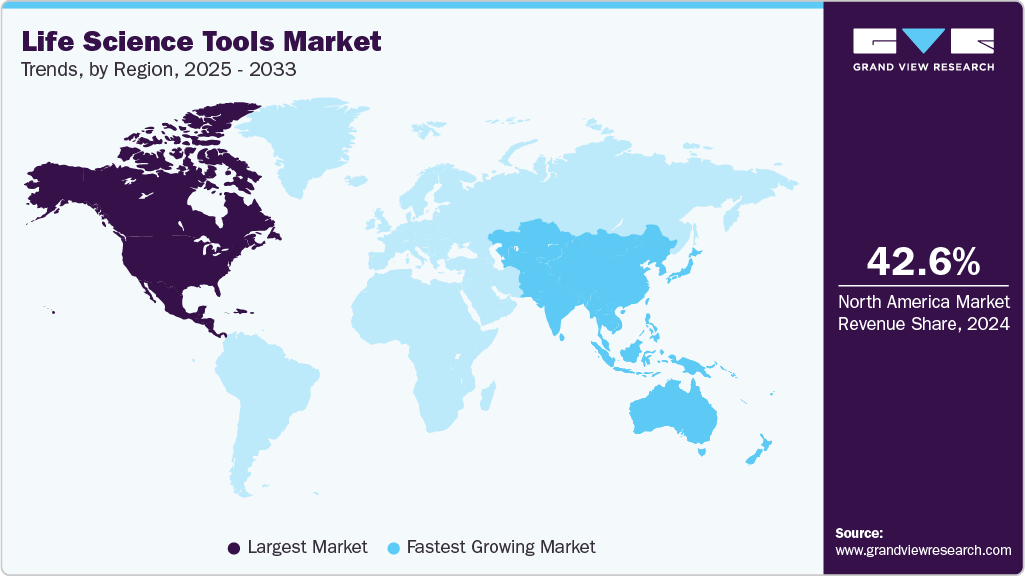
North America dominated the life science tools market, accounting for the largest revenue share of 42.9% in 2025. The region’s leadership is supported by established market participants, sophisticated research infrastructure, and significant government and private-sector funding for biotechnology and pharmaceutical R&D. High adoption of advanced technologies, coupled with a mature regulatory environment, continues to facilitate innovation and accelerate the commercialization of new life science tools.
U.S. Life Science Tools Market Trends
The U.S. life science tools market represented the largest market in North America in 2025, supported by its highly developed healthcare infrastructure and substantial expenditure on biomedical research. A strong ecosystem of biotechnology and pharmaceutical companies, leading academic research institutions, and specialized laboratories further contributes to technology development and the widespread adoption of advanced life science tools.
Europe Life Science Tools Market Trends
Europe represents a significant share of the global life science tools industry, supported by substantial government funding, established research institutions, and a steadily expanding biopharmaceutical industry. Germany, the UK, and France remain key markets, with strong adoption of advanced technologies across genomics, proteomics, and cell biology research. In addition, the region’s focus on sustainable healthcare practices, digitalization, and innovation is supporting the continued integration of sophisticated life science tools across research and clinical applications.
The UK life science tools market is expanding on the back of strong public-sector support, a growing biotechnology startup ecosystem, and a well-developed research infrastructure. Increasing emphasis on genomics, precision medicine, and collaboration between government, academia, and industry is creating a favorable environment for technology adoption and research-driven market development.
The life science tools market in Germany is witnessing significant demand for life science tools, supported by its established pharmaceutical and biotechnology industries, advanced manufacturing capabilities, and high levels of R&D expenditure. Government initiatives promoting scientific innovation, alongside increasing investment in diagnostics and therapeutic development, are further strengthening the adoption of advanced research and analytical technologies across the country.
Asia Pacific Life Science Tools Market Trends
Asia Pacific is expected to grow at the fastest CAGR of 10.8% during the forecast period, supported by rising healthcare expenditure, expanding biotechnology and pharmaceutical industries, and increasing government initiatives to strengthen life sciences research. The region is also attracting global industry participants through its large patient base, improving regulatory environment, and growing pool of skilled scientific talent. For instance, in November 2024, Carl Zeiss AG established its first global capability center in Bengaluru, India, with plans to expand its local workforce to 5,000 employees within three years while strengthening activities in software development, cybersecurity, cloud computing, manufacturing, and research. Such investments are contributing to the development of regional research capabilities and supporting broader adoption of advanced life science tools.
The China life science tools market is expanding rapidly, supported by increasing government investment in biotechnology, growing pharmaceutical R&D activity, and continued development of the healthcare sector. Strategic policies and targeted funding are promoting research across genomics, diagnostics, and drug discovery, while the emergence of domestic biotechnology companies is strengthening the local innovation ecosystem. Partnerships between Chinese firms and global life science companies are also facilitating technology transfer and expanding access to advanced research platforms.
The life science tools market in Japan is significant to the growth of the Asia Pacific region, supported by its strong emphasis on medical research, aging population, and sustained government investment in biotechnology and healthcare innovation. The country’s focus on precision medicine, advanced diagnostics, and regenerative therapies is creating demand for sophisticated life science technologies. In April 2025, U.S.-based Hapatune expanded its presence in Japan by establishing Hapatune GK in Tokyo to support life science marketing solutions for biopharmaceutical and life science tool suppliers across Japan and Asia Pacific. Such industry expansion reflects the growing commercial and technological opportunities within the regional life science ecosystem.
MEA Life Science Tools Market Trends
The Middle East and Africa life science tools industry is expected to witness considerable growth, supported by increasing investments in healthcare infrastructure, rising prevalence of chronic diseases, and growing interest in biomedical research. Governments across the region are increasingly prioritizing healthcare modernization through national development strategies, innovation programs, and public-private partnerships. Improvements in regulatory frameworks and efforts to strengthen local healthcare manufacturing capabilities are also creating a more favorable environment for the adoption of advanced life science technologies. These developments are gradually expanding research and diagnostic capabilities across the region and supporting greater demand for sophisticated laboratory and analytical tools.
The Kuwait life science tools market is progressing steadily, supported by ongoing investments in healthcare infrastructure, increasing demand for advanced diagnostic technologies, and greater emphasis on research and development. The country’s efforts to enhance healthcare quality and incorporate innovative technologies are creating opportunities for life science tool providers. Continued development of research capabilities and modernization of healthcare services are expected to support further market expansion.
Key Life Science Tools Company Insights
The life science tools market is highly competitive, with companies continuously pursuing technological innovation, portfolio expansion, and strategic collaborations to strengthen their market positions. Leading participants are broadening their offerings across genomics, proteomics, cell biology, and bioinformatics to address increasingly complex research requirements. Mergers and acquisitions also remain an important strategic lever, enabling companies to acquire specialized technologies, enter new application areas, and expand their geographic and customer reach.
Artificial intelligence, laboratory automation, and cloud-based platforms are becoming increasingly integrated into life science workflows, enabling more connected, efficient, and user-friendly solutions. Global leaders such as Thermo Fisher Scientific, Danaher Corporation, Agilent Technologies, and Illumina continue to leverage extensive product portfolios, sustained R&D investment, and strategic partnerships to maintain competitive advantages. Meanwhile, emerging companies in Asia and Europe are gaining traction through cost-efficient and innovative offerings, while startups focused on specialized areas such as CRISPR, single-cell analysis, and AI-enabled research platforms are introducing new technologies and attracting increasing investor attention.
Key Life Science Tools Companies
The following key companies have been profiled for this study on the life science tools market.
-
Agilent Technologies, Inc.
-
Becton, Dickinson and Company
-
F. Hoffmann-La Roche Ltd.
-
Bio-Rad Laboratories, Inc.
-
Danaher Corporation
-
Illumina, Inc.
-
Thermo Fisher Scientific, Inc.
-
QIAGEN N.V.
-
Merck KGaA
-
Shimadzu Corporation
-
Hitachi, Ltd.
-
Bruker Corporation
-
Oxford Instruments plc
-
Zeiss International
Competitive Benchmarking
Category
Operating Strategies
Competitive Edge
Weakness
Established Players (Thermo Fisher Scientific, Danaher, Roche, etc.)
- Focus on building integrated life science ecosystems combining instruments, consumables, software, and diagnostic solutions
- Advanced capabilities in genomics, diagnostics, bioprocessing, and high-throughput laboratory automation
- Exposure to biotech funding fluctuations and regulatory compliance complexities
Emerging Players (Shimadzu, Hitachi, Oxford Instruments, etc.)
- Focus on specialized analytical, imaging, and precision instrumentation technologies for research and industrial applications.
- Strong expertise in high-precision imaging, spectroscopy, microscopy, and analytical systems.
- Lower scale and comparatively weaker recurring revenue streams from consumables and services
Recent Developments
-
In August 2026, Shimadzu Scientific Instruments entered into a strategic North American partnership with ePrep to advance integrated analytical workflows. The collaboration combines Shimadzu's chromatography and mass spectrometry technologies with automated sample preparation, supporting more efficient analytical workflows across pharmaceutical, food safety, and chemical testing applications.
-
In March 2026, Shimadzu Scientific Instruments opened a new R&D facility in South San Francisco, California, to accelerate development of analytical instruments, software, applications, and laboratory automation solutions for pharmaceutical and life science customers. The facility focuses on drug delivery systems, including lipid nanoparticles and AAVs, bioprocessing and preparative purification, and cell culture technologies.
-
In July 2025, Bio-Rad Laboratories expanded its Droplet Digital PCR portfolio in the U.S. with the launch of four new platforms, including the QX Continuum and QX700 systems, following its acquisition of Stilla Technologies. The new platforms broadened ddPCR capabilities across translational research, biopharma, cell and gene therapy, and environmental testing applications.
-
In March 2025, Shimadzu Scientific Instruments opened a new R&D laboratory in Boston, Massachusetts, to strengthen customer-driven technology development in the pharmaceutical sector. The facility focuses on mass spectrometry, metabolomics, and collaborative product development, with prototypes evaluated jointly with customers to
Life Science Tools Market Report Scope
Report Attribute
Details
Market size in 2025
USD 184.3 billion
Estimated market size in 2026
USD 202.6 billion
Projected market size by 2033
USD 401.0 billion
Growth rate
CAGR of 10.2% from 2026 to 2033
Historical data
2021 - 2025
Forecast period
2026 - 2033
Quantitative units
Revenue in USD million/billion and CAGR from 2026 to 2033
Report coverage
Revenue forecast, company ranking, competitive landscape, growth factors, and trends
Segments covered
Technology, product & service, end use, region
Regional scope
North America; Europe; Asia Pacific; Latin America; MEA
Country scope
U.S.; Canada; Mexico; UK; Germany; France; Italy; Spain; Norway; Denmark; Sweden; Switzerland; China; Japan; India; South Korea; Australia; Thailand; Singapore; Brazil; Argentina; Saudi Arabia; South Africa; UAE; Kuwait
Key companies profiled
Agilent Technologies, Inc.; Becton, Dickinson and Company; F. Hoffmann-La Roche Ltd.; Bio-Rad Laboratories, Inc.; Danaher Corporation; Illumina, Inc.; Thermo Fisher Scientific, Inc.; QIAGEN N.V.; Merck KGaA; Shimadzu Corporation; Hitachi Ltd.; Bruker Corporation; Oxford Instruments plc; Zeiss International
Customization scope
Free report customization (equivalent up to 8 analysts' working days) with purchase. Addition or alteration to country, regional & segment scope.
Pricing and purchase options
Avail customized purchase options to meet your exact research needs. Explore purchase options
Global Life Science Tools Market Report Segmentation
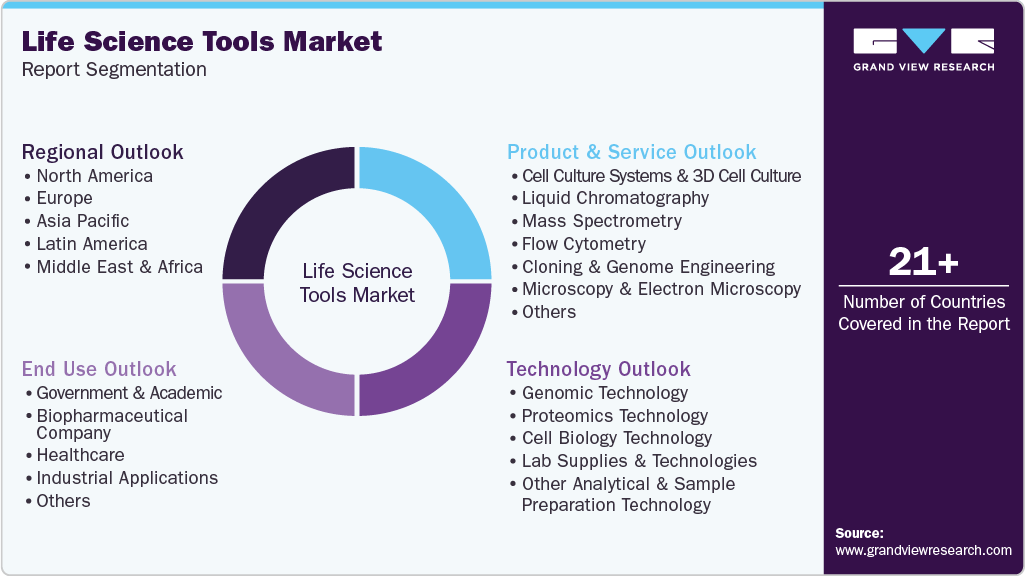
This report forecasts revenue growth and provides an analysis of the latest trends in each of the sub-segments from 2021 to 2033. For this study, Grand View Research has segmented the global life science tools market report based on product & service, technology, end use, and region:
-
Product & Service Outlook (Revenue, USD Million/Billion, 2021 - 2033)
-
Cell Culture Systems & 3D Cell Culture
-
Instruments
-
Consumables
-
Cell & Tissue Culture Services
-
-
Liquid Chromatography
-
Instruments
-
Consumables
-
Services
-
-
Mass Spectrometry
-
Instruments
-
Consumables
-
Services
-
-
Flow Cytometry
-
Instruments
-
Consumables
-
Services
-
-
Cloning & Genome Engineering
-
Kits, Reagents, and Consumables
-
Services
-
-
Microscopy & Electron Microscopy
-
Instruments
-
Consumables
-
Services
-
-
Next Generation Sequencing
-
Instruments
-
Consumables
-
Services
-
-
PCR & qPCR
-
Instruments
-
Consumables
-
Services
-
-
Nucleic Acid Preparation
-
Instruments
-
Consumables
-
Services
-
-
Nucleic Acid Microarray
-
Instruments
-
Consumables
-
Services
-
-
Sanger Sequencing
-
Instruments
-
Consumables
-
Services
-
-
Transfection Devices & Gene Delivery Technologies
-
Equipment
-
Reagents
-
-
NMR
-
Instruments
-
Consumables
-
Services
-
-
Other Separation Technologies
-
Instruments
-
Consumables
-
Services
-
-
Other Products & Services
-
Antibodies
-
General Supplies
-
Others
-
Instruments
-
Consumables
-
Services
-
-
-
-
Technology Outlook (Revenue, USD Million/Billion, 2021 - 2033)
-
Genomic Technology
-
Proteomics Technology
-
Cell Biology Technology
-
Other Analytical & Sample Preparation Technology
-
Lab Supplies & Technologies
-
-
End Use Outlook (Revenue, USD Million/Billion, 2021 – 2033)
-
Government & Academic
-
Biopharmaceutical Company
-
Healthcare
-
Industrial Applications
-
Others
-
-
Regional Outlook (Revenue, USD Million/Billion, 2021 - 2033)
-
North America
-
U.S.
-
Canada
-
Mexico
-
-
Europe
-
UK
-
Germany
-
France
-
Italy
-
Spain
-
Denmark
-
Sweden
-
Norway
-
Switzerland
-
-
Asia Pacific
-
Japan
-
China
-
India
-
South Korea
-
Singapore
-
Australia
-
Thailand
-
-
Latin America
-
Brazil
-
Argentina
-
-
Middle East & Africa
-
South Africa
-
Saudi Arabia
-
UAE
-
Kuwait
-
-
Research Methodology
The life science tools market figures in this report are based on a proven research process that combines executive interviews with secondary research from proprietary databases, company filings, and recognized regulatory and institutional sources. Market size is built through value-chain sizing - reconciling supply-side and demand-side estimates - and triangulated with bottom-up and top-down approaches. Every estimate passes multiple levels of expert validation before publication, with each life science tools segment quantified using the revenue-capture definitions in the table below.
Segment Definition
Segment- Technology
Revenue Capture Definition
Genomic Technology
Revenue is generated from technologies and analytical platforms used for studying genes, DNA, RNA, genetic variation, and genomic sequencing across research, diagnostics, and therapeutic development applications.
Proteomics Technology
This segment reflects income derived from tools and technologies used for protein identification, characterization, expression analysis, and biomarker discovery in life sciences research.
Cell Biology Technology
Market value stems from technologies supporting cell-based research, including cell culture, cellular analysis, imaging, and functional studies used in drug discovery and biological research.
Other Analytical & Sample Preparation Technology
Includes revenue from analytical instruments, sample preparation systems, purification technologies, and supporting laboratory workflows used across molecular and biological research applications.
Lab Supplies & Technologies
Revenue originates from laboratory consumables, general supplies, reagents, and enabling technologies required for routine research, testing, and experimental workflows in life sciences laboratories.
Segment- Product & Service
Revenue Capture Definition
Cell Culture Systems & 3D Cell Culture
Revenue is generated from instruments, consumables, and cell & tissue culture services used for 2D and 3D cell cultivation, tissue engineering, regenerative medicine research, and biologics development applications.
Liquid Chromatography
This segment reflects income derived from chromatography instruments, associated consumables, and analytical support services utilized for compound separation, purification, and characterization across research and pharmaceutical workflows.
Mass Spectrometry
Market value stems from mass spectrometry instruments, workflow consumables, and related analytical services used in proteomics, metabolomics, molecular analysis, and biomarker identification studies.
Flow Cytometry
Revenue originates from flow cytometry instruments, assay consumables, antibodies, reagents, and associated services supporting cellular analysis, immunophenotyping, and cell sorting applications.
Cloning & Genome Engineering
This category captures earnings from cloning and genome engineering kits, reagents, consumables, and specialized services used in gene editing, CRISPR workflows, and molecular engineering research.
Microscopy & Electron Microscopy
Revenue is associated with microscopy and electron microscopy instruments, imaging consumables, accessories, and technical services used for cellular visualization and structural analysis applications.
Next Generation Sequencing
This segment encompasses revenue from NGS instruments, sequencing consumables, library preparation products, and sequencing services that support genomic analysis and precision medicine research.
PCR & qPCR
Income is generated from PCR and qPCR instruments, amplification reagents, assay consumables, and molecular testing services used in gene expression analysis and disease detection workflows.
Nucleic Acid Preparation
Revenue stems from nucleic acid extraction and purification instruments, preparation consumables, and related laboratory services supporting DNA and RNA isolation workflows.
Nucleic Acid Microarray
This category reflects earnings from microarray instruments, chips, probes, reagents, and associated genomic profiling services used for gene expression and molecular analysis studies.
Sanger Sequencing
Revenue is derived from Sanger sequencing instruments, sequencing consumables, and outsourced sequencing services used for targeted DNA analysis and genetic validation applications.
Transfection Devices & Gene Delivery Technologies
Market value is driven by transfection equipment, gene-delivery reagents, vectors, and supporting technologies used in nucleic acid transfer and cell-engineering applications.
NMR
Revenue originates from nuclear magnetic resonance instruments, spectroscopy consumables, and analytical services utilized for molecular structure determination and compound characterization.
Other Separation Technologies
This segment includes revenue from separation technology instruments, consumables, and laboratory services used in purification, filtration, electrophoresis, and analytical separation workflows.
Other Products & Services
Revenue is generated from antibodies, general laboratory supplies, miscellaneous instruments, consumables, and supporting services used across diverse life science research and diagnostic applications.
Segment- End Use
Revenue Capture Definition
Government & Academic
Revenue is generated from life science tools utilized by universities, public research institutes, and government-funded laboratories for scientific research and educational activities.
Biopharmaceutical Company
This segment reflects income derived from life science tools adopted by pharmaceutical and biotechnology companies for drug discovery, biologics development, and manufacturing processes.
Healthcare
Market value stems from the use of life science tools in hospitals, diagnostic laboratories, and clinical settings for disease diagnosis, monitoring, and translational research applications.
Industrial Application
Revenue originates from life science technologies used in food testing, environmental monitoring, agricultural biotechnology, and industrial research applications.
Others
Includes income from contract research organizations, forensic laboratories, and other specialized end users utilizing life science tools across niche applications.
Estimation Model
Category
Sub-Category
Details
Bottom-Up
Commodity Flow Analysis
Market size was estimated by analyzing revenues generated by key life science tools manufacturers across instruments, consumables, reagents, software, and services. Company annual reports, investor presentations, distributor insights, and industry databases were used to assess revenues from both public and private participants, enabling derivation of the overall market value.
Segmentation
Country-Level Segment Share Modeling
Segment shares across technologies, products, applications, and end users were estimated using country-specific indicators such as R&D expenditure, pharmaceuticals manufacturing capacity, academic research intensity, healthcare infrastructure, and biotechnology funding activity. Weighted average calculations were applied to derive regional and global market distributions.
Validation
Data Triangulation & Validation Model
Market estimates were validated through triangulation of secondary research, primary interviews with industry stakeholders, company-level revenue assessments, procurement trends, and demand-side analysis from pharmaceutical, biotechnology, CRO, academic, and diagnostic laboratories to ensure consistency and accuracy across all segments and geographies.
Forecasting
Forecasting & CAGR Modeling
Market forecasts were developed using historical growth trends in pharmaceutical R&D, precision medicine, genomics adoption, laboratory automation, and biotechnology investments. Trend analysis, regression modeling, and demand forecasting techniques were applied to project future market growth and CAGR across segments and regions.
Delivered Customizations
This report has been delivered with the following In-depth customizations
Client Request
Customization Delivered
Value Adds
Technology & Product Cross-Segmentation Analysis for Life Science Tools Market
Detailed cross-segmentation analysis across key life science technologies and product categories, including genomics, proteomics, cell biology, PCR/qPCR, next-generation sequencing (NGS), flow cytometry, chromatography, mass spectrometry, and microscopy. Assessment of adoption trends across end-use industries such as biopharmaceutical companies, healthcare providers, academic institutions, CROs, and diagnostic laboratories in major regions.
Enables clients to identify high-growth technology-product combinations, evaluate commercialization opportunities across research and clinical workflows, benchmark innovation adoption trends, and prioritize investments in fast-growing life science tool categories.
Competitive Benchmarking & Market Share Assessment for Key Life Science Tool Providers
Comprehensive benchmarking of major market participants based on product portfolio strength, geographic footprint, pricing strategy, technology focus, distribution network, R&D intensity, strategic collaborations, and M&A activity. Analysis includes leading companies operating in genomics, analytical instruments, cell analysis, and molecular biology tools.
Supports competitive positioning analysis, identification of whitespace opportunities, evaluation of strategic partnerships and acquisition targets, and development of differentiated market entry and expansion strategies.
Regional Demand & Investment Opportunity Assessment
Customized regional and country-level analysis covering North America, Europe, Asia Pacific, Latin America, and the Middle East & Africa, with detailed evaluation of research funding trends, biotech infrastructure, regulatory landscape, healthcare expenditure, and adoption of advanced life science technologies.
Helps clients identify emerging regional growth hubs, assess country-specific commercialization potential, optimize expansion strategies, and align investment priorities with high-growth research and biopharmaceutical markets.
About the Author(s)
Biotechnology Research Team
Healthcare · BiotechnologyThis report was authored by the biotechnology research team at Grand View Research - comprising two research analysts, one senior research analyst, and one industry expert - with specialized expertise in the biotechnology segment of the healthcare industry. All findings are based on proprietary healthcare databases, executive interviews, and regulatory analysis, subject to internal peer review prior to publication.
Last Updated:
Speak to Analyst


Customize this report to your needs — add regions, segments, or data points, with 20% free customization.
Or view our licence options:


ISO 9001:2015 & 27001:2022 Certified
We are GDPR and CCPA compliant! Your transaction & personal information is safe and secure. For more details, please read our privacy policy.


